Question 1archived
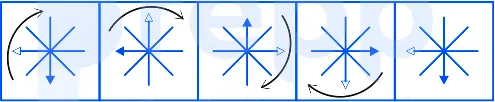
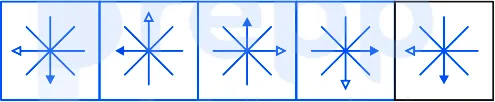
Select the figure that will replace the question mark (?) in the following figure series.

- A
Option A (shown in image)
- B
Option B (shown in image)
- C
Option C (shown in image)
- D
Option D (shown in image)
Show answer
Question 2archived
Which two signs and two numbers should be interchanged to make the following equation correct?
784 ÷ 6 × 9 - 30 + 14 = 528
- A
14 and 6, + and -
- B
784 and 30, + and x
- C
784 and 6, × and -
- D
9 and 6, ÷ and +
Show answer
A. 14 and 6, + and -Analyzing Equation by Interchanging Signs and Numbers
The problem asks us to find which pair of numbers and which pair of signs, when interchanged in the given equation, will make the equation mathematically correct. The given equation is:
$$784 \div 6 \times 9 - 30 + 14 = 528$$
We need to test each option provided to see which interchange results in a true statement when we evaluate the left side of the equation using the BODMAS rule (Brackets, Orders, Division and Multiplication, Addition and Subtraction).
Testing Option 1: Interchange 14 and 6, + and -
Let's apply the interchange proposed in Option 1. We swap the numbers 14 and 6, and the signs + and -.
Original numbers: 6, 14
Interchanged numbers: 14, 6
Original signs: -, +
Interchanged signs: +, -
The new equation after interchanging 14 with 6 and + with - becomes:
$$784 \div 14 \times 9 + 30 - 6$$
Now, let's evaluate this expression using BODMAS:
Division: $$784 \div 14 = 56$$
Multiplication: $$56 \times 9 = 504$$
Addition: $$504 + 30 = 534$$
Subtraction: $$534 - 6 = 528$$
The result of the left side after this interchange is 528. This matches the right side of the original equation (which is also 528). Therefore, interchanging 14 and 6, and + and - makes the equation correct.
Testing Other Options
Although we found the correct interchange, let's quickly check the other options to demonstrate why they are incorrect.
Testing Option 2: Interchange 784 and 30, + and x
Interchanging 784 with 30 and + with x in the original equation $784 \div 6 \times 9 - 30 + 14$ gives:
$$30 \div 6 + 9 - 784 \times 14$$
Evaluate using BODMAS:
Division: $$30 \div 6 = 5$$
Multiplication: $$784 \times 14 = 10976$$
Addition/Subtraction (left to right): $$5 + 9 - 10976 = 14 - 10976 = -10962$$
$-10962 \neq 528$. So, Option 2 is incorrect.
Testing Option 3: Interchange 784 and 6, × and -
Interchanging 784 with 6 and × with - in the original equation $784 \div 6 \times 9 - 30 + 14$ gives:
$$6 \div 784 - 9 \times 30 + 14$$
Evaluate using BODMAS:
Division: $$6 \div 784 \approx 0.00765$$
Multiplication: $$9 \times 30 = 270$$
Addition/Subtraction (left to right): $$0.00765 - 270 + 14 \approx -255.99$$
$-255.99 \neq 528$. So, Option 3 is incorrect.
Testing Option 4: Interchange 9 and 6, ÷ and +
Interchanging 9 with 6 and ÷ with + in the original equation $784 \div 6 \times 9 - 30 + 14$ gives:
$$784 + 9 \div 6 - 30 \times 14$$
Evaluate using BODMAS:
Division: $$9 \div 6 = 1.5$$
Multiplication: $$30 \times 14 = 420$$
Addition/Subtraction (left to right): $$784 + 1.5 - 420 = 785.5 - 420 = 365.5$$
$$365.5 \neq 528$$. So, Option 4 is incorrect.
Only the interchange proposed in Option 1 results in the correct equation.
Revision Table: BODMAS Rule
Order
Operation
1
Brackets
2
Orders (powers, roots)
3
Division and Multiplication (from left to right)
4
Addition and Subtraction (from left to right)
Remembering the correct order of operations is crucial for solving these types of problems accurately.
Additional Information: Solving Equation Interchange Problems
Problems involving interchanging signs and numbers require careful application of the order of operations after performing the specified swaps. It's essentially a trial-and-error method where you test each given option.
Always write down the new equation clearly after the interchange.
Apply the BODMAS/PEMDAS rule step-by-step.
Perform division and multiplication from left to right as they appear.
Perform addition and subtraction from left to right as they appear.
Compare the final result on the left side with the number on the right side of the original equation.
This systematic approach helps avoid errors and efficiently finds the correct combination of interchanges.
Paper & answer key PDF ↗ Question 3archived
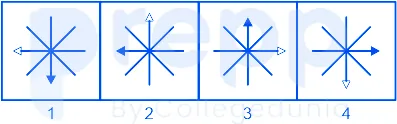
Which of the given figures when placed in the 5th position would continue the series that is established by the first four figures?
- A
Option A (shown in image)
- B
Option B (shown in image)
- C
Option C (shown in image)
- D
Option D (shown in image)
Show answer
Question 4archived
Select the Venn diagram that best illustrates the relationship between the following classes.
Graduates, Educated, Unemployed
- A
Option A (shown in image)
- B
Option B (shown in image)
- C
Option C (shown in image)
- D
Option D (shown in image)
Show answer
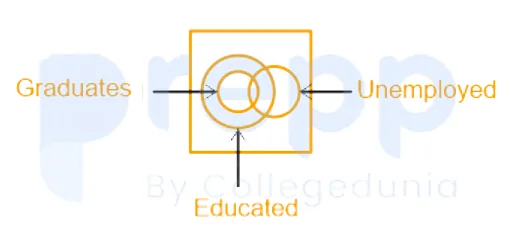
B. Option B (shown in image)The correct Venn diagram representation is :
⇒As all educated are graduates and some graduates are unemployed. Therefore all educated should come in graduates and some part of graduates should be common with unemployed.
⇒Some educated are also unemployed, therefore some educated can be unemployed.
Hence, "Option - (2)" is the correct answer
 Paper & answer key PDF ↗
 Question 5archived
Select the option that represents the correct order of the given words as they would appear in an English dictionary.
1. Monorail
2. Monument
3. Monopoly
4. Monster
5. Monitor
6. Monsoon
- A
3, 1, 6, 4, 2, 5
- B
5, 1, 3, 6, 4, 2
- C
5, 3, 1, 4, 6, 2
- D
5, 3, 1, 6, 4, 2
Show answer
D. 5, 3, 1, 6, 4, 2Finding the Correct Dictionary Order of Words
To arrange words in the correct dictionary order, we compare them letter by letter from the beginning. The word with the letter that comes earlier in the alphabet at the first point of difference will appear earlier in the dictionary.
Here are the given words and their corresponding numbers:
Number
Word
1
Monorail
2
Monument
3
Monopoly
4
Monster
5
Monitor
6
Monsoon
Let's compare these words step-by-step:
All words start with "Mon". So, we look at the fourth letter.
The fourth letters are: 'o' (Monorail, Monopoly, Monsoon), 'u' (Monument), 's' (Monster), 'i' (Monitor).
Comparing these fourth letters ('o', 'u', 's', 'i'), 'i' comes first in the alphabet.
So, Monitor (5) is the first word.
Now we compare the remaining words:
Words starting with "Mono" (fourth letter 'o'): Monorail (1), Monopoly (3), Monsoon (6).
Words starting with "Mons" (fourth letter 's'): Monster (4).
Words starting with "Monu" (fourth letter 'u'): Monument (2).
Comparing 'o', 's', and 'u', 'o' comes next after 'i'. We need to order the words starting with "Mono".
Let's compare Monorail (1), Monopoly (3), and Monsoon (6). All start with "Mono". We look at the fifth letter.
The fifth letters are: 'r' (Monorail), 'p' (Monopoly), 's' (Monsoon).
Comparing these fifth letters ('r', 'p', 's'), 'p' comes first in the alphabet.
So, Monopoly (3) comes before Monorail and Monsoon.
Next is 'r'. So, Monorail (1) comes after Monopoly.
Finally is 's'. So, Monsoon (6) comes after Monorail.
So, the order for the "Mono" words is: Monopoly (3), Monorail (1), Monsoon (6).
Now we place the remaining words based on their fourth letter comparison ('s' and 'u').
After the "Mono" words, comes the word with the fourth letter 's'.
This is Monster (4).
Finally, comes the word with the fourth letter 'u'.
This is Monument (2).
Combining all the words in order:
Monitor (5)
Monopoly (3)
Monorail (1)
Monsoon (6)
Monster (4)
Monument (2)
The correct order of the numbers is 5, 3, 1, 6, 4, 2.
Let's verify with the options provided. The sequence 5, 3, 1, 6, 4, 2 matches one of the given options.
Revision Table: Dictionary Order Principles
Rule
Explanation
Letter by Letter
Compare words starting from the first letter.
First Difference
The word with the letter that comes earlier in the alphabet at the first point of difference comes first.
Shorter Word
If one word is a prefix of another (e.g., "cat" and "catalog"), the shorter word comes first. (Not applicable to this specific set of words).
Alphabetical Sequence
Remember the standard ABC order of letters.
Additional Information: Improving Dictionary Skills
Understanding dictionary order is a fundamental skill for finding words quickly in a dictionary or list. Practice helps improve speed and accuracy. You can practice by taking random lists of words and arranging them alphabetically. Pay close attention when words share common starting letters, as the difference might appear several letters into the word.
Paper & answer key PDF ↗ Question 6archived
Select the option that is related to the fifth letter-cluster in the same way as the second letter-cluster is related to the first letter-cluster and the fourth letter-cluster is related to the third letter cluster.
DISMAY : SIDYAM :: DRIVER : IRDREV :: SAFARI : ?
- A
SAFIAR
- B
IRAFAS
- C
FASIRA
- D
FSAIRA
Show answer
C. FASIRAUnderstanding Letter Cluster Analogy Patterns
This question is a letter cluster analogy problem. We need to find the relationship between the first and second letter clusters in the first pair, and the third and fourth letter clusters in the second pair. Once we identify the pattern, we can apply it to the fifth letter cluster to find the sixth one.
Analyzing the First Letter Cluster Pair: DISMAY and SIDYAM
Let's look at the transformation from DISMAY to SIDYAM:
The original cluster is DISMAY. It has 6 letters.
The transformed cluster is SIDYAM. It also has 6 letters.
Let's compare the positions of the letters:
Position
1
2
3
4
5
6
DISMAY
D
I
S
M
A
Y
SIDYAM
S
I
D
Y
A
M
Looking closely, the first three letters of DISMAY (D, I, S) have become the first three letters of SIDYAM in reverse order (S, I, D). The last three letters of DISMAY (M, A, Y) have become the last three letters of SIDYAM in reverse order (Y, A, M).
So, the pattern appears to be: Reverse the first half of the cluster and reverse the second half of the cluster.
Verifying the Pattern with the Second Letter Cluster Pair: DRIVER and IRDREV
Let's apply the same pattern to DRIVER:
The original cluster is DRIVER. It has 6 letters.
First half: DRI
Second half: VER
Applying the pattern:
Reverse the first half (DRI): IRD
Reverse the second half (VER): REV
Combining the reversed halves gives IRDREV. This matches the given transformed cluster.
The pattern is confirmed: Reverse the first three letters and reverse the last three letters of the cluster.
Applying the Pattern to the Fifth Letter Cluster: SAFARI
Now, we apply the same pattern to SAFARI:
The original cluster is SAFARI. It has 6 letters.
First half (first three letters): SAF
Second half (last three letters): ARI
Applying the pattern:
Reverse the first half (SAF): FAS
Reverse the second half (ARI): IRA
Combining the reversed halves gives FASIRA.
Conclusion
The letter cluster related to SAFARI in the same way is FASIRA.
Let's check the options:
Option 1: SAFIAR
Option 2: IRAFAS
Option 3: FASIRA
Option 4: FSAIRA
Our derived cluster, FASIRA, matches Option 3.
Revision Table: Letter Cluster Analogy
Original Cluster
First Half
Second Half
Reversed First Half
Reversed Second Half
Transformed Cluster
DISMAY
DIS
MAY
SID
YAM
SIDYAM
DRIVER
DRI
VER
IRD
REV
IRDREV
SAFARI
SAF
ARI
FAS
IRA
FASIRA
Additional Information: Letter Pattern Recognition
Letter cluster analogy questions test your ability to identify patterns in sequences of letters. These patterns can involve various transformations:
Reversing the entire cluster or parts of it.
Shifting letters forward or backward in the alphabet (e.g., A to B, B to C, or A to Z, B to A).
Skipping letters in the alphabet.
Swapping positions of letters or blocks of letters.
Applying different rules to odd and even positioned letters.
Combining multiple rules.
To solve these questions effectively, practice is key. Break down the given examples, compare positions and letter changes, and look for consistent rules that apply across the pairs.
Paper & answer key PDF ↗ Question 7archived
Looking at the family picture, Rajan said, "She is my wife's son's father's mother's husband's daughter.' How is the girl in the photo related to Rajan?
- A
Sister
- B
Mother-in-law
- C
Wife's Sister
- D
Daughter-in-law
Show answer
A. SisterUnderstanding Blood Relations: Solving the Puzzle
This question asks us to determine the relationship between a girl in a photo and Rajan, based on a complex statement made by Rajan. To solve blood relation puzzles like this, the best approach is to break down the statement step by step, starting from the person who is speaking (Rajan) and working through the relationships mentioned.
Step-by-Step Analysis of the Statement
Rajan says, "She is my wife's son's father's mother's husband's daughter." Let's analyze this phrase by phrase, starting from "my" which refers to Rajan:
"My wife's son": This refers to Rajan's son. (The son of Rajan's wife is also Rajan's son, assuming they have a typical family structure).
"...son's father": The father of Rajan's son is Rajan himself.
"...father's mother": The mother of Rajan (who is the father of his son) is Rajan's mother.
"...mother's husband": The husband of Rajan's mother is Rajan's father.
"...husband's daughter": The daughter of Rajan's father. The daughters of Rajan's father are Rajan's sisters (or possibly Rajan himself, if the person speaking were female, but Rajan is male).
So, the girl in the photo is the daughter of Rajan's father. This means the girl is Rajan's sister.
Summarizing the Relationship Chain
Phrase
Relationship relative to Rajan
My wife's son
Rajan's son
...son's father
Rajan
...father's mother
Rajan's mother
...mother's husband
Rajan's father
...husband's daughter
Rajan's sister
Therefore, the girl in the photo is Rajan's sister.
Relating to the Options
Let's look at the given options based on our conclusion:
Sister
Mother-in-law
Wife's Sister
Daughter-in-law
Our analysis concludes that the girl is Rajan's sister, which matches option 1.
Final Conclusion
By carefully breaking down the statement provided by Rajan, we determined that the girl in the photo is his sister.
Revision Table: Key Blood Relation Terms
Term
Relationship
Spouse
Husband or Wife
Sibling
Brother or Sister
Parent
Father or Mother
Child
Son or Daughter
Grandparent
Father/Mother of Parent
Aunt
Sister of Parent
Uncle
Brother of Parent
Cousin
Child of Aunt or Uncle
Additional Information: Solving Blood Relation Problems
Blood relation problems test your ability to decipher complex relationships. Here are some tips for tackling them:
Start from the speaker (like "my" or "I") and work outwards.
Break down the statement into smaller, manageable steps.
Identify the core relationships at each step (e.g., parent, child, sibling, spouse).
Mentally (or on paper) substitute the relationship at each step to simplify the statement.
Be careful with gender. "Son's father" could be the husband or the father of the speaker, depending on context, but here it clearly points back to Rajan.
Practice different types of blood relation puzzles to become familiar with common phrasing and relationship chains.
Paper & answer key PDF ↗ Question 8archived
Select the correct mirror image of the given figure when the mirror is placed at PQ as shown below.
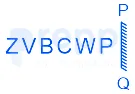
- A
Option A (shown in image)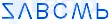
- B
Option B (shown in image)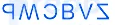
- C
Option C (shown in image)
- D
Option D (shown in image)
Show answer
Question 9archived
Three Statements are given followed by Three conclusions numbered I, II and III. Assuming the statements to be true, even if they seem to be at variance with commonly known facts, decide which of the conclusions logically follow(s) from the statements.
Statements:
All pens are newspapers.
Some newspapers are novels.
No novel is a book.
Conclusions:
I. Some books are pens.
II. Some novels are pens.
III. No book is a pen.
- A
Either conclusion I or III follows.
- B
Both conclusions II and III follow.
- C
Either conclusion II or III follows.
- D
Both conclusions I and II follow.
Show answer
A. Either conclusion I or III follows.Understanding the Syllogism Statements
We are given three statements and three conclusions. We need to determine which conclusions logically follow from the statements, assuming the statements are true.
The statements are:
Statement 1: All pens are newspapers.
Statement 2: Some newspapers are novels.
Statement 3: No novel is a book.
Let's represent these relationships using symbols or visualize them with Venn diagrams.
Statement 1 implies that the set of Pens (P) is a subset of the set of Newspapers (N). We can write this as P $\subseteq$ N.
Statement 2 implies there is an overlap between the set of Newspapers (N) and the set of Novels (V). N $\cap$ V $\neq$ $\emptyset$.
Statement 3 implies that the set of Novels (V) and the set of Books (B) are mutually exclusive, meaning they have no overlap. V $\cap$ B = $\emptyset$.
Analyzing the Conclusions
Now let's analyze each conclusion based on the given statements.
Conclusion I: Some books are pens.
This conclusion claims there is an overlap between the set of Books (B) and the set of Pens (P). B $\cap$ P $\neq$ $\emptyset$.
From the statements, we know:
All Pens are Newspapers.
No Novel is a Book.
Some Newspapers are Novels.
Since No Novel is a Book, any Newspaper that is also a Novel cannot be a Book. However, the statements don't restrict the relationship between the part of Newspapers that are not Novels and Books. Pens are a subset of Newspapers. So, it is possible that the Pens (which are Newspapers) are located in the part of the Newspaper circle that overlaps with Books (and this part of Newspapers would not overlap with Novels, consistent with statement 3).
For example, suppose there are Newspapers that are not Novels. It is possible some of these Newspapers are Books. Since Pens are just a part of Newspapers, it is possible that some Pens are in this overlap region between Newspapers and Books. Therefore, Conclusion I (Some books are pens) is a possibility.
Conclusion II: Some novels are pens.
This conclusion claims there is an overlap between the set of Novels (V) and the set of Pens (P). V $\cap$ P $\neq$ $\emptyset$.
From the statements, we know:
All Pens are Newspapers.
Some Newspapers are Novels.
The statements say Some Newspapers are Novels. Pens are inside Newspapers. The "some newspapers" that are Novels could be the newspapers that are also pens, or they could be newspapers that are *not* pens. The statements do not provide enough information to confirm that the overlap between Newspapers and Novels *must* include Pens.
Consider this possibility: All Pens are Newspapers. The "some newspapers" that are novels happen to be only those newspapers that are *not* pens. In this scenario, no novel would be a pen. Since this scenario is consistent with the statements, Conclusion II does not logically follow from the statements alone.
Conclusion III: No book is a pen.
This conclusion claims there is no overlap between the set of Books (B) and the set of Pens (P). B $\cap$ P = $\emptyset$.
From the statements, we know:
All Pens are Newspapers.
No Novel is a Book.
Some Newspapers are Novels.
As discussed under Conclusion I, the statements allow for the possibility that the Pens (which are Newspapers) are located entirely outside the set of Books. There is no direct statement linking Pens and Books, or linking them indirectly through Novels in a way that forces an overlap or prevents it universally.
Consider this possibility: Pens are inside Newspapers. Novels and Books are separate. The Newspapers that are Novels are separate from Books. The Newspapers that are *not* Novels could potentially contain the Pens, and these Pens could be entirely separate from Books. In this scenario, No Book is a Pen. Therefore, Conclusion III (No book is a pen) is also a possibility.
Checking for Either/Or Case
Let's look at Conclusion I (Some books are pens) and Conclusion III (No book is a pen). These two conclusions form a complementary pair for the relationship between Books and Pens. If "Some books are pens" is true, then "No book is a pen" must be false. If "No book is a pen" is true, then "Some books are pens" must be false.
We found that Conclusion I is possible and Conclusion III is also possible based on the statements. Since these are the only two possibilities for the relationship (either there is some overlap, or there is no overlap), and we cannot definitively prove one to be true while the other is false based solely on the statements, but one of them *must* be true, they form an 'Either/Or' case.
This occurs when a set of statements leads to a situation where a relationship between two terms (here, Books and Pens) is uncertain but must be one of two complementary possibilities (Some are / No are).
Conclusion
Based on the analysis:
Conclusion I (Some books are pens) is possible.
Conclusion II (Some novels are pens) does not logically follow.
Conclusion III (No book is a pen) is possible.
Conclusions I and III form an 'Either/Or' pair because one must be true, and the other must be false, but the statements do not confirm exactly which one is true.
Therefore, either conclusion I or conclusion III follows logically from the statements.
Revision Table: Syllogism Statement Types
Type
Statement Structure
Relationship Implied
A
All X are Y
X $\subseteq$ Y (X is a subset of Y)
E
No X is Y
X $\cap$ Y = $\emptyset$ (X and Y are disjoint)
I
Some X are Y
X $\cap$ Y $\neq$ $\emptyset$ (X and Y overlap)
O
Some X are not Y
Part of X is outside Y
Additional Information: Introduction to Syllogism
A syllogism is a type of logical argument that applies deductive reasoning to arrive at a conclusion based on two or more propositions (statements) that are assumed to be true. In a categorical syllogism, the statements relate categories (like 'pens', 'newspapers', 'novels', 'books'). The structure typically involves two premises and a conclusion, connecting three terms (a major term, a minor term, and a middle term). Validity in syllogism refers to whether the conclusion logically follows from the premises, regardless of whether the statements are factually true in the real world.
The problem above is a classic example of testing logical deduction skills based on provided statements and conclusions.
Paper & answer key PDF ↗ Question 10archived
Select the set in which the numbers are related in the same way as are the numbers of the given sets.
(NOTE: Operations should be performed on the whole numbers, without breaking down the numbers into its constituent digits. E.g. 13 - Operations on 13 such as adding/Subtracting /multiplying etc. to 13 can be performed. Breaking down 13 into 1 and 3 and then performing mathematical operations on 1 and 3 is NOT allowed)
(9, 20, 31)
(38, 49, 60)
- A
(63, 60, 65)
- B
(15, 20, 31)
- C
(25, 69, 45)
- D
(14, 24, 34)
Show answer
D. (14, 24, 34)Solving Number Set Analogy Problems
This question asks us to identify a set of numbers that shares the same underlying relationship as the two given sets: (9, 20, 31) and (38, 49, 60). The key is to first find the pattern or rule connecting the numbers within the given sets.
Analyzing the Given Number Sets
Let's examine the relationship between the numbers in the first set (9, 20, 31):
Difference between the second and first number: $20 - 9 = 11$
Difference between the third and second number: $31 - 20 = 11$
This shows a consistent difference of 11 between consecutive numbers. This type of sequence, where the difference between consecutive terms is constant, is called an arithmetic progression (AP). The common difference here is 11.
Now let's examine the second set (38, 49, 60):
Difference between the second and first number: $49 - 38 = 11$
Difference between the third and second number: $60 - 49 = 11$
Again, we see a consistent difference of 11 between consecutive numbers. This is also an arithmetic progression with a common difference of 11.
The relationship common to both given sets is that they are arithmetic progressions with a common difference of 11. However, the question asks for a set related in the "same way". This often implies the same *type* of relationship, not necessarily the exact same common difference.
Evaluating the Options
We need to find which of the given options is related in the same way, meaning it forms an arithmetic progression.
Option 1: (63, 60, 65)
Difference between 60 and 63: $60 - 63 = -3$
Difference between 65 and 60: $65 - 60 = 5$
The differences are not consistent. This set is not an arithmetic progression.
Option 2: (15, 20, 31)
Difference between 20 and 15: $20 - 15 = 5$
Difference between 31 and 20: $31 - 20 = 11$
The differences are not consistent. This set is not an arithmetic progression.
Option 3: (25, 69, 45)
Difference between 69 and 25: $69 - 25 = 44$
Difference between 45 and 69: $45 - 69 = -24$
The differences are not consistent. This set is not an arithmetic progression.
Option 4: (14, 24, 34)
Difference between 24 and 14: $24 - 14 = 10$
Difference between 34 and 24: $34 - 24 = 10$
The differences are consistent (both are 10). This set is an arithmetic progression with a common difference of 10.
Conclusion
While the common difference is different (10 in Option 4 vs. 11 in the given sets), Option 4 is the only set among the choices that exhibits the same *type* of relationship — being an arithmetic progression. Therefore, the numbers in the set (14, 24, 34) are related in the same way as the numbers in the given sets.
Set
Relationship
Type of Progression
(9, 20, 31)
$+11$, $+11$
Arithmetic Progression ($d=11$)
(38, 49, 60)
$+11$, $+11$
Arithmetic Progression ($d=11$)
(63, 60, 65)
$-3$, $+5$
Not AP
(15, 20, 31)
$+5$, $+11$
Not AP
(25, 69, 45)
$+44$, $-24$
Not AP
(14, 24, 34)
$+10$, $+10$
Arithmetic Progression ($d=10$)
Revision Table: Number Analogy Concepts
Concept
Description
How it applies here
Number Analogy
Finding the relationship between numbers in a given set or pair and applying the same rule to find a missing number or set.
We found the relationship (Arithmetic Progression) in the given sets to find a set with the same relationship.
Arithmetic Progression (AP)
A sequence where the difference between consecutive terms is constant. This constant difference is called the common difference ($d$).
The given sets and the correct option are all examples of arithmetic progressions.
Pattern Recognition
Identifying a repeating sequence, rule, or design.
The core task is to recognize the pattern (common difference) in the given number sets.
Additional Information: Types of Number Patterns
Besides arithmetic progressions, number analogy questions might involve other patterns:
Geometric Progression (GP): Each term after the first is found by multiplying the previous one by a fixed, non-zero number called the common ratio. Example: (2, 4, 8) - common ratio is 2.
Differences Series: The differences between consecutive terms form their own pattern (e.g., an AP or GP).
Perfect Squares/Cubes: Numbers in the set might be squares or cubes, or related to them by addition/subtraction.
Mixed Operations: A combination of arithmetic operations (addition, subtraction, multiplication, division) applied sequentially or between terms.
Digit-based Logic: Although disallowed by the note in this specific question, some problems involve operations on the individual digits of the numbers.
Always read the specific instructions carefully, as they might restrict the types of operations allowed, as seen in this question.
Paper & answer key PDF ↗ Question 11archived
Select the set in which the numbers are related in the same way as are the numbers of the following set.
(NOTE: Operations should be performed on the whole numbers, without breaking down the numbers into its constituent digits.)
(7, 150, 23)
(11, 75, 4)
- A
(4, 108, 16)
- B
(8, 90, 11)
- C
(9, 80, 11)
- D
(15, 140, 13)
Show answer
D. (15, 140, 13)Finding the Number Relation Pattern
The question asks us to identify a set of numbers that shares the same logical relationship as the given sets: (7, 150, 23) and (11, 75, 4). We are told that operations must be performed on the whole numbers themselves, not on their individual digits.
Let's look at the first set: (7, 150, 23).
We need to find a rule connecting the first number (7), the second number (150), and the third number (23).
Let's try some common arithmetic operations:
Adding the first and third numbers: \(7 + 23 = 30\). How is 30 related to 150? We can see that \(30 \times 5 = 150\).
Subtracting the first from the third number: \(23 - 7 = 16\). Is 16 related to 150? Not directly by simple multiplication.
Multiplying the first and third numbers: \(7 \times 23 = 161\). How is 161 related to 150? \(161 - 11 = 150\). This involves subtraction, let's see if this pattern appears in the second set.
Let's test the first potential pattern we found: (First number + Third number) multiplied by 5 equals the Second number.
Using the first set (7, 150, 23):
\((7 + 23) \times 5 = 30 \times 5 = 150\)
This matches the second number in the set (150). This seems like a promising pattern.
Now, let's verify this pattern with the second given set: (11, 75, 4).
According to our pattern, (First number + Third number) multiplied by 5 should equal the Second number.
Using the second set (11, 75, 4):
\((11 + 4) \times 5 = 15 \times 5 = 75\)
This also matches the second number in the set (75).
So, the established number relation pattern is: The sum of the first and third numbers, when multiplied by 5, gives the second number.
In symbolic terms, if the set is (A, B, C), the relationship is \((A + C) \times 5 = B\).
Evaluating Options for the Same Number Relation
Now, we will check each option provided to see which one follows this pattern.
Option 1: (4, 108, 16)
First number (A) = 4
Third number (C) = 16
Calculate \((A + C) \times 5\): \((4 + 16) \times 5 = 20 \times 5 = 100\)
The second number (B) in the set is 108.
Does \(100 = 108\)? No.
Option 1 does not follow the pattern.
Option 2: (8, 90, 11)
First number (A) = 8
Third number (C) = 11
Calculate \((A + C) \times 5\): \((8 + 11) \times 5 = 19 \times 5 = 95\)
The second number (B) in the set is 90.
Does \(95 = 90\)? No.
Option 2 does not follow the pattern.
Option 3: (9, 80, 11)
First number (A) = 9
Third number (C) = 11
Calculate \((A + C) \times 5\): \((9 + 11) \times 5 = 20 \times 5 = 100\)
The second number (B) in the set is 80.
Does \(100 = 80\)? No.
Option 3 does not follow the pattern.
Option 4: (15, 140, 13)
First number (A) = 15
Third number (C) = 13
Calculate \((A + C) \times 5\): \((15 + 13) \times 5 = 28 \times 5 = 140\)
The second number (B) in the set is 140.
Does \(140 = 140\)? Yes.
Option 4 follows the pattern.
Based on our analysis, only Option 4 follows the identified number relation pattern \( (A + C) \times 5 = B \) that was found in the given sets (7, 150, 23) and (11, 75, 4).
Summary of Number Relation Analysis
Set
First (A)
Third (C)
Sum (A + C)
Sum × 5
Second (B)
Matches Pattern?
(7, 150, 23)
7
23
30
\(30 \times 5 = 150\)
150
Yes
(11, 75, 4)
11
4
15
\(15 \times 5 = 75\)
75
Yes
Option 1 (4, 108, 16)
4
16
20
\(20 \times 5 = 100\)
108
No
Option 2 (8, 90, 11)
8
11
19
\(19 \times 5 = 95\)
90
No
Option 3 (9, 80, 11)
9
11
20
\(20 \times 5 = 100\)
80
No
Option 4 (15, 140, 13)
15
13
28
\(28 \times 5 = 140\)
140
Yes
The table clearly shows that only Option 4 satisfies the established number relation.
Revision Table: Key Number Relation Concepts
Concept
Description
Importance in Number Relation Problems
Identifying the Pattern
Analyzing the given sets to find the mathematical rule connecting the numbers.
This is the crucial first step; incorrect pattern identification leads to wrong answers.
Testing the Pattern
Applying the hypothesized pattern to all given examples to ensure consistency.
A pattern must hold true for all sample sets provided in the question.
Applying to Options
Using the confirmed pattern to check each multiple-choice option.
Systematically evaluating each option against the established rule.
Whole Number Operations
Performing calculations using the full value of the numbers, not their digits.
Adhering to the specific constraints mentioned in the question.
Additional Information: Solving Number Analogy Problems
Number analogy or number relation problems are common in reasoning tests. They assess your ability to find mathematical patterns quickly. Here are some tips for solving them:
Start with Basic Operations: First, check for simple addition, subtraction, multiplication, division, or combinations of two numbers resulting in the third.
Consider Squares and Cubes: Sometimes, the relationship involves squares, cubes, or their roots.
Look at Differences/Sums: Check the difference or sum between consecutive numbers or alternate numbers.
Combine Operations: The pattern might be a combination, like (A+C)*k=B, or A*C/k=B, or A^2 - C^2 = B, etc.
Check Constraints: Always pay attention to specific rules mentioned, like 'operations on whole numbers' or 'using constituent digits'.
Systematic Testing: Once a potential pattern is found, test it rigorously on all given examples and then on the options.
Practice: The more you practice, the faster you will become at recognizing common patterns.
Paper & answer key PDF ↗ Question 12archived
In a certain code language, 'RAT' is coded as '39' and 'MICE' is coded as '30'. How will 'ZEBRA' be coded in that language?
- A
53
- B
52
- C
51
- D
50
Show answer
B. 52The correct answer is 52.
Symbol Coding: Letters or words are replaced by symbols. Mixed Coding: Words are coded using both numbers and symbols. Substitution Coding: Words are replaced by other words (e.g., 'red' is called 'blue'). Identifying the correct pattern requires careful observation and analysis of the given examples, similar to how we decoded the pattern for 'RAT', 'MICE', and 'ZEBRA'.
Paper & answer key PDF ↗ Question 13archived
Three of the following four letter-clusters are alike in a certain way and one is different.
Pick the odd one out.
- A
ONL
- B
RQO
- C
HGE
- D
DCB
Show answer
D. DCBSolving the Letter Cluster Odd One Out Question
This question asks us to identify the letter cluster that is different from the other three, based on a certain pattern. To solve this type of problem, we usually look at the position of each letter in the English alphabet.
Analyzing Letter Positions and Patterns
Let's assign the position number to each letter in the given letter clusters:
ONL: O is the 15th letter, N is the 14th letter, L is the 12th letter.
RQO: R is the 18th letter, Q is the 17th letter, O is the 15th letter.
HGE: H is the 8th letter, G is the 7th letter, E is the 5th letter.
DCB: D is the 4th letter, C is the 3rd letter, B is the 2nd letter.
Now, let's examine the difference in alphabetical position between consecutive letters within each cluster:
ONL: From O (15) to N (14) is a difference of $\text{15} - \text{14} = \text{1}$. From N (14) to L (12) is a difference of $\text{14} - \text{12} = \text{2}$. The pattern is $\text{-1}, \text{-2}$.
RQO: From R (18) to Q (17) is a difference of $\text{18} - \text{17} = \text{1}$. From Q (17) to O (15) is a difference of $\text{17} - \text{15} = \text{2}$. The pattern is $\text{-1}, \text{-2}$.
HGE: From H (8) to G (7) is a difference of $\text{8} - \text{7} = \text{1}$. From G (7) to E (5) is a difference of $\text{7} - \text{5} = \text{2}$. The pattern is $\text{-1}, \text{-2}$.
DCB: From D (4) to C (3) is a difference of $\text{4} - \text{3} = \text{1}$. From C (3) to B (2) is a difference of $\text{3} - \text{2} = \text{1}$. The pattern is $\text{-1}, \text{-1}$.
Let's summarize the patterns found:
Letter Cluster
Letter Positions
Pattern (Difference)
ONL
15, 14, 12
-1, -2
RQO
18, 17, 15
-1, -2
HGE
8, 7, 5
-1, -2
DCB
4, 3, 2
-1, -1
Identifying the Odd Letter Cluster
Comparing the patterns, we see that the letter clusters ONL, RQO, and HGE all follow the pattern of decreasing alphabetical positions by 1, then by 2 ($\text{-1}, \text{-2}$).
The letter cluster DCB follows a different pattern, decreasing alphabetical positions by 1, then by 1 ($\text{-1}, \text{-1}$).
Therefore, DCB is the letter cluster that is different from the other three. It is the odd one out.
The odd letter cluster is DCB.
Revision Table: Letter Series Patterns
Concept
Description
Example
Letter Position
The numerical place of a letter in the standard English alphabet (A=1, B=2, ... Z=26).
C is the 3rd letter, so its position is 3.
Pattern Identification
Finding the rule that connects the elements (letters) in a series or cluster.
Differences in letter positions (e.g., +2, -1), skipping letters, etc.
Odd One Out
Identifying the element in a set that does not follow the pattern or rule that the others follow.
In {2, 4, 6, 7}, 7 is odd because others are even.
Additional Information: Solving Reasoning Questions
Reasoning questions involving letter series or clusters often require understanding the English alphabet well. Here are some tips:
Alphabetical Order: Know the order of letters A-Z and their corresponding numerical positions (1-26).
Reverse Order: Sometimes patterns involve the alphabet in reverse order (Z=1, Y=2, etc.).
Skipping Letters: Patterns can involve skipping a fixed number of letters (e.g., A, D, G - skipping 2 letters each time).
Vowels/Consonants: The pattern might be based on whether the letters are vowels or consonants.
Combination Patterns: More complex patterns can combine position shifts, skipping, or vowel/consonant rules.
Practice: Solving many different types of letter series and odd one out questions helps in recognizing common patterns quickly.
Paper & answer key PDF ↗ Question 14archived
Which letter-cluster will replace the question mark (?) to complete the given series?
BZVR, DXWQ, ?, HTYO, JRZN
- A
FXPV
- B
FXPN
- C
FVXP
- D
FVPX
Show answer
C. FVXPLetter-Cluster Series Reasoning Solution
To find the letter-cluster that replaces the question mark in the series BZVR, DXWQ, ?, HTYO, JRZN, we need to analyze the pattern for each letter position across the clusters.
Let's look at the position of each letter in the English alphabet (A=1, B=2, ..., Z=26).
Analysis of Letter Position Patterns
PositionBZVRDXWQ?HTYOJRZNPatternMissing Letter
1st LetterB (\(2\))D (\(4\))F (\(6\))H (\(8\))J (\(10\))\(+2\) for positionsF
2nd LetterZ (\(26\))X (\(24\))V (\(22\))T (\(20\))R (\(18\))\(-2\) for positionsV
3rd LetterV (\(22\))W (\(23\))X (\(24\))Y (\(25\))Z (\(26\))\(+1\) for positionsX
4th LetterR (\(18\))Q (\(17\))P (\(16\))O (\(15\))N (\(14\))\(-1\) for positionsP
Pattern Description for Each Position:
First Letter: The alphabetical positions are 2, 4, 8, 10. This is an arithmetic progression adding 2 each time. \(2, 4, 4+2=6, 8, 10\). The 6th letter is F.
Second Letter: The alphabetical positions are 26, 24, 20, 18. This is an arithmetic progression subtracting 2 each time. \(26, 24, 24-2=22, 20, 18\). The 22nd letter is V.
Third Letter: The alphabetical positions are 22, 23, 25, 26. This is an arithmetic progression adding 1 each time. \(22, 23, 23+1=24, 25, 26\). The 24th letter is X.
Fourth Letter: The alphabetical positions are 18, 17, 15, 14. This is an arithmetic progression subtracting 1 each time. \(18, 17, 17-1=16, 15, 14\). The 16th letter is P.
Combining the Letters
Combining the missing letters for each position (F, V, X, P) gives us the letter-cluster FVXP.
Conclusion
The letter-cluster that replaces the question mark is FVXP, following the identified patterns for each letter position in the series.
Revision Table: Letter Series Patterns
Summary of Letter Progression Rules
Letter PositionPatternMissing Letter
1stAdd 2 to alphabetical positionF
2ndSubtract 2 from alphabetical positionV
3rdAdd 1 to alphabetical positionX
4thSubtract 1 from alphabetical positionP
Additional Information: Solving Letter Series Questions
Letter series questions are common in logical reasoning tests. They require you to identify the rule or pattern that connects the letters in a sequence.
Here are some common types of patterns you might encounter:
Alphabetical Position: The pattern is based on the position of letters in the alphabet (e.g., adding or subtracting a constant number, sequences like prime numbers or squares).
Skipping Letters: The pattern involves skipping a certain number of letters in the alphabet between terms.
Reverse Alphabetical Order: The series moves backward through the alphabet.
Combination of Patterns: In letter clusters, different positions might follow different rules, as seen in this question.
Vowel/Consonant Patterns: The pattern might involve the sequence of vowels or consonants.
To effectively solve these problems, it's helpful to:
Write down the alphabetical positions of the letters.
Look for differences or ratios between the positions.
Analyze each position in a cluster separately.
Practice recognizing common patterns.
Paper & answer key PDF ↗ Question 15archived
Select the option that represents the letters that, when placed from left to right in the blanks below, will complete the letter series.
Z Y R _ Z _ R R Z Y _ R _ Y R _
- A
R Y R Z R
- B
Z R Y Z R
- C
R Z R Y Z
- D
Z R R Y Z
Show answer
A. R Y R Z RCompleting the Letter Series Pattern
The question asks us to find the sequence of letters that completes the given letter series. We are provided with a series containing blanks and several options. To solve this, we need to identify the underlying pattern in the series.
The given letter series is:
Z Y R _ Z _ R R Z Y _ R _ Y R _
Let's count the total positions and the positions of the blanks:
Position: 1 2 3 4 5 6 7 8 9 10 11 12 13 14 15 16
Series: Z Y R _ Z _ R R Z Y _ R _ Y R _
The blanks are at positions 4, 6, 11, 13, and 16. There are 5 blanks.
We need to test the options provided. Let's take the sequence from the option that completes the series:
Sequence to fill blanks: R Y R Z R
Now, let's place these letters into the blanks from left to right:
The 1st letter (R) goes into the 1st blank (Position 4).
The 2nd letter (Y) goes into the 2nd blank (Position 6).
The 3rd letter (R) goes into the 3rd blank (Position 11).
The 4th letter (Z) goes into the 4th blank (Position 13).
The 5th letter (R) goes into the 5th blank (Position 16).
Substituting these letters into the series gives us:
Z Y R R Z Y R R Z Y R R Z Y R R
The completed series is:
Z Y R R Z Y R R Z Y R R Z Y R R
Identifying the Pattern in the Completed Series
Let's examine the completed series to find the repeating pattern. We can try dividing the series into equal parts. The total length is 16 letters. Common divisions for length 16 are 2, 4, 8.
Dividing into blocks of 2: ZY RR ZY RR ZY RR ZY RR - Doesn't show a clear repeating unit.
Dividing into blocks of 4: ZYRR | ZYRR | ZYRR | ZYRR
When divided into blocks of 4 letters, we see that the sequence ZYRR repeats exactly 4 times.
Block 1: Z Y R R
Block 2: Z Y R R
Block 3: Z Y R R
Block 4: Z Y R R
This confirms that the repeating pattern in the series is ZYRR.
Verifying the Blank Positions
Let's see if placing R Y R Z R in the blanks results in this ZYRR pattern throughout the series:
Position
Original Letter
Letter from Option (R Y R Z R)
Completed Series Letter
Pattern (ZYRR)
1
Z
-
Z
Z
2
Y
-
Y
Y
3
R
-
R
R
4
_
R (1st blank)
R
R
5
Z
-
Z
Z
6
_
Y (2nd blank)
Y
Y
7
R
-
R
R
8
R
-
R
R
9
Z
-
Z
Z
10
Y
-
Y
Y
11
_
R (3rd blank)
R
R
12
R
-
R
R
13
_
Z (4th blank)
Z
Z
14
Y
-
Y
Y
15
R
-
R
R
16
_
R (5th blank)
R
R
As the table shows, substituting the letters R Y R Z R into the blanks creates the consistent repeating pattern ZYRR throughout the entire series. Therefore, this sequence of letters correctly completes the series.
Revision Table: Key Concepts in Letter Series
Concept
Description
Example (based on this question)
Letter Series
A sequence of letters following a specific pattern.
Z Y R _ Z _ R R Z Y _ R _ Y R _
Pattern Identification
Finding the rule that generates the sequence. This could be repeating blocks, alphabetical progression, skipping letters, etc.
Identifying the repeating block ZYRR.
Repeating Pattern
A block of letters or numbers that repeats consistently in the series.
The block ZYRR repeats 4 times.
Series Completion
Filling the blanks in a series based on the identified pattern.
Filling the blanks with R Y R Z R to complete the ZYRR pattern.
Additional Information: Strategies for Solving Letter Series
When faced with letter series questions, here are some general strategies you can use:
Count the total number of elements: This can help you determine possible block sizes for repeating patterns (e.g., 12 elements can be blocks of 2, 3, 4, or 6; 16 elements can be blocks of 2, 4, 8).
Look for repeating blocks: Try dividing the series into small, equal-sized blocks. See if any block repeats.
Check for alphabetical or reverse alphabetical sequences: Sometimes the pattern involves letters advancing or receding in the alphabet.
Look at gaps: The pattern might involve skipping a fixed number of letters between elements (e.g., A, C, E, G...).
Combine patterns: Some series might involve a combination of different types of patterns or two interweaving series.
Substitute options: If you are given options, substitute each option into the blanks and see which one creates a logical or repeating pattern. This is often the most effective strategy for multiple-choice questions.
Write down letter positions: Sometimes converting letters to their position in the alphabet (A=1, B=2, ...) can reveal numerical patterns.
In this specific question, the repeating block strategy worked perfectly after substituting the letters from the correct option.
Paper & answer key PDF ↗ Question 16archived
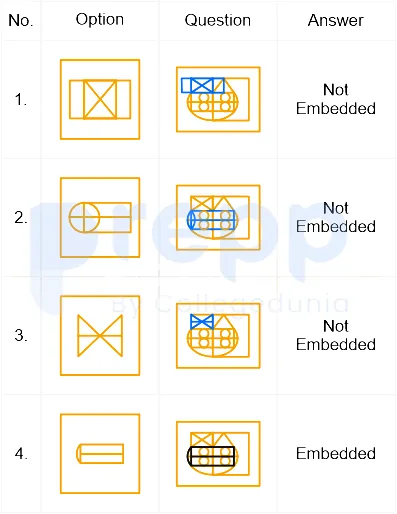
Select the option figure which is embedded in the given figure (rotation is NOT allowed).

- A
Option A (shown in image)
- B
Option B (shown in image)
- C
Option C (shown in image)
- D
Option D (shown in image)
Show answer
D. Option D (shown in image)Given:
The image must not to be rotated
Hence, the correct answer is "Option - (4)".

 Paper & answer key PDF ↗
 Question 17archived
The second number in the given number-pairs is obtained by performing certain mathematical operation(s) on the first number. The same operation(s) is/are followed in all the number-pairs except one. Find that odd number-pair.
- A
128 : 8
- B
288 : 12
- C
350 : 15
- D
18 : 3
Show answer
C. 350 : 15Finding the Odd Number Pair by Identifying Mathematical Patterns
The question asks us to find the number pair that does not follow the same mathematical operation as the others. We are given four number pairs, and we need to discover the relationship between the first and second numbers in each pair.
Let's examine the given number pairs:
128 : 8
288 : 12
350 : 15
18 : 3
We need to find a consistent rule that applies to three of these pairs. Let's try to find a relationship where the first number is derived from the second number using a mathematical operation.
Let's consider operations involving squaring or cubing the second number, possibly combined with multiplication or addition/subtraction. Looking at the pairs, especially 18:3 and 128:8, the first number seems significantly larger than the second number, suggesting operations beyond simple multiplication.
Let's test the hypothesis that the first number is related to the square of the second number. We can try multiplying the square of the second number by a constant.
Let the second number be $x$ and the first number be $y$. We are looking for a pattern like $y = a \cdot x^2$ or $y = a \cdot x^2 + b$, or similar.
Consider the pair 18 : 3. If $x=3$, $x^2 = 9$. $18 / 9 = 2$. So, $18 = 2 \times 3^2$. This suggests the pattern might be $y = 2x^2$.
Let's test this pattern with the other pairs:
Number Pair (y : x)
Second Number (x)
$x^2$
$2 \times x^2$
First Number (y)
Does it fit $y = 2x^2$?
128 : 8
8
$8^2 = 64$
$2 \times 64 = 128$
128
Yes, $128 = 2 \times 8^2$
288 : 12
12
$12^2 = 144$
$2 \times 144 = 288$
288
Yes, $288 = 2 \times 12^2$
350 : 15
15
$15^2 = 225$
$2 \times 225 = 450$
350
No, $350 \neq 2 \times 15^2$ (since $450 \neq 350$)
18 : 3
3
$3^2 = 9$
$2 \times 9 = 18$
18
Yes, $18 = 2 \times 3^2$
Based on this analysis, the pattern $y = 2x^2$ holds true for the number pairs 128:8, 288:12, and 18:3. However, the pair 350:15 does not follow this pattern, as $2 \times 15^2 = 450$, which is not equal to 350.
Therefore, the odd number-pair that does not follow the same operation as the others is 350 : 15.
Revision Table: Checking the Pattern
Pair
First Number
Second Number
Check $2 \times (\text{Second Number})^2$
Matches First Number?
Follows Pattern?
128 : 8
128
8
$2 \times 8^2 = 2 \times 64 = 128$
Yes
Yes
288 : 12
288
12
$2 \times 12^2 = 2 \times 144 = 288$
Yes
Yes
350 : 15
350
15
$2 \times 15^2 = 2 \times 225 = 450$
No ($350 \neq 450$)
No
18 : 3
18
3
$2 \times 3^2 = 2 \times 9 = 18$
Yes
Yes
The pair 350 : 15 is the one that stands out as it does not fit the established mathematical relationship.
Additional Information: Understanding Number Pattern Problems
Number pattern problems are common in logical reasoning and quantitative aptitude tests. They require identifying a rule or sequence that connects the numbers in a set or pairs of numbers. Common patterns involve:
Arithmetic Progression (addition/subtraction of a constant difference).
Geometric Progression (multiplication/division by a constant ratio).
Squares, Cubes, or their roots.
Combinations of operations (e.g., multiply and add, square and multiply).
Differences between consecutive terms forming their own pattern.
Alternating patterns.
To solve these problems, it is helpful to:
Look at the differences or ratios between numbers.
Consider squares, cubes, and prime numbers.
Test simple hypotheses first before moving to more complex ones.
Check the pattern with all given examples to ensure consistency.
Identify the one element that breaks the discovered rule.
In this specific problem, the pattern involved the square of the second number multiplied by a constant, demonstrating a non-linear relationship between the numbers in the pair.
Paper & answer key PDF ↗ Question 18archived
Study the given pattern carefully and select the number that can replace the question mark (?) in it.
First row: 16, 15, 35
Second row: 12, 18, 33
Third row: 8, 17, ?
(NOTE: Operations should be performed on the whole numbers, without breaking down the number into its constituent digits. For example, 13 - Operations on 13 such as adding/subtracting/multiplying etc. to 13 can be performed. Breaking down 13 into 1 and 3 and then performing mathematical operations on 1 and 3 is not allowed.)
- A
31
- B
27
- C
25
- D
30
Show answer
B. 27The correct answer is 27.
Consider squares, cubes, or other powers of numbers or their positions. Test combinations of arithmetic operations (+, -, ×, ÷) between numbers in a set, as seen in this problem involving a row of numbers. Always read the specific instructions carefully, as constraints (like the whole number operation rule here) are crucial. Practice helps in quickly spotting potential patterns and applying the right techniques.
Paper & answer key PDF ↗ Question 19archived
Select the correct mirror image of the given figure when the mirror is placed at the right side of the figure.

- A
Option A (shown in image)
- B
Option B (shown in image)
- C
Option C (shown in image)
- D
Option D (shown in image)
Show answer
A. Option A (shown in image)The correct mirror image of the given figure when mirror is placed at MN is as shown below:
Hence, the correct answer is "Option - (1)".
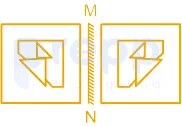 Paper & answer key PDF ↗
 Question 20archived
Select the option that is related to the fifth number in the same way as the second number is related to the first number and the fourth number is related to the third number.
1029 : 7 :: 2187 : 9 :: 24 : ?
- A
3
- B
2
- C
6
- D
4
Show answer
B. 2Logic : (1st number ÷ 3) = Cube of 2nd number
So,
1029 : 7
1029 ÷ 3 = \((7)^3\)
343 = 343 (LHS = RHS)
And,
2187 : 9
2187 ÷ 3 = \((9)^3\)
729 = 729 (LHS = RHS)
Similarly,
24 : ?
24 ÷ 3 = \((?)^3\)
\({ \sqrt{8}}\) = ?
2 = ?
Hence, "2" is the correct answer.
Paper & answer key PDF ↗ Question 21archived
Each vowel in the word "FOREFOOT" is changed to the following letter in the English alphabetical series and each consonant is changed to the previous letter in the English alphabetical series. In the newly formed word, how many alphabets are there in the English alphabetical series between the alphabet which is 2nd from the left and 1st from the right?
- A
Three
- B
Two
- C
One
- D
Four
Show answer
B. TwoUnderstanding the Word Transformation Puzzle
This problem involves transforming the letters of a given word based on specific rules and then analyzing the newly formed word. The word provided is "FOREFOOT". We need to apply two rules:
Each vowel in the word is changed to the following letter in the English alphabetical series.
Each consonant is changed to the previous letter in the English alphabetical series.
After transforming the word, we need to identify two specific letters in the new word: the letter second from the left and the letter first from the right. Finally, the goal is to count how many alphabets are present in the English alphabetical series between these two identified letters.
Step-by-Step Word Transformation of FOREFOOT
Let's transform each letter of the word "FOREFOOT" according to the given rules:
F: F is a consonant. Previous letter in the alphabet is E.
O: O is a vowel. Following letter in the alphabet is P.
R: R is a consonant. Previous letter in the alphabet is Q.
E: E is a vowel. Following letter in the alphabet is F.
F: F is a consonant. Previous letter in the alphabet is E.
O: O is a vowel. Following letter in the alphabet is P.
O: O is a vowel. Following letter in the alphabet is P.
T: T is a consonant. Previous letter in the alphabet is S.
So, the newly formed word is E P Q F E P P S.
Identifying Letters in the New Word
The newly formed word is E P Q F E P P S.
The letter second from the left is the 2nd letter of the word, which is P.
The letter first from the right is the last letter of the word, which is S.
We need to find the number of alphabets between P and S in the English alphabetical series.
Counting Alphabets Between P and S
Let's look at the English alphabetical series:
A B C D E F G H I J K L M N O P Q R S T U V W X Y Z
The letters between P and S are Q and R.
There are two alphabets between P and S in the English alphabetical series.
Conclusion
Based on the transformation and counting steps, there are two alphabets between the letter second from the left (P) and the letter first from the right (S) in the newly formed word.
Original Word
FOREFOOT
Transformation Rule
Vowel → Next Letter, Consonant → Previous Letter
Newly Formed Word
EPQFE PPS
2nd Letter from Left
P
1st Letter from Right
S
Letters between P and S (Alphabetical Series)
Q, R
Count of Letters
2
Revision Table: Key Concepts in Word Puzzles
Concept
Description
Application in Problem
Alphabetical Series
The standard order of letters from A to Z.
Used for finding previous/following letters and counting between letters.
Vowels and Consonants
Classification of letters (Vowels: A, E, I, O, U; Consonants: all others).
Used to apply different transformation rules.
Letter Transformation
Changing a letter based on a specific rule (e.g., next/previous in series).
The core step to create the new word.
Positional Identification
Finding letters based on their position from left or right end of a word.
Used to identify the target letters P and S.
Counting Between Letters
Determining how many letters lie strictly between two specified letters in the alphabet.
The final step to find the answer.
Additional Information: Solving Letter Sequence Problems
Letter sequence and transformation problems are common in logical reasoning sections of various tests. Here are some tips for tackling them:
Always write down the alphabet series A-Z for quick reference, especially when dealing with previous or following letters.
Clearly identify the rules for transformation. Are different rules applied to vowels and consonants? What about digits or symbols if present?
Perform the transformation one letter at a time to avoid errors.
Carefully read what positions in the *new* sequence are required for the final step. Is it from the left, right, middle, etc.?
When counting letters between two letters (say X and Y), remember that X and Y themselves are *not* included in the count. You count only the letters strictly *between* them.
If the alphabet wraps around (e.g., previous letter of A is Z), pay attention to such specific instructions, though not applicable in this particular problem.
Paper & answer key PDF ↗ Question 22archived
Which of the following numbers will replace the question mark (?) in the given series?
27, 38, ?, 68, 87, 110
- A
47
- B
50
- C
51
- D
53
Show answer
C. 51Finding the Missing Number in the Series
The given number series is:
27, 38, ?, 68, 87, 110
To find the missing number, we need to identify the pattern governing the sequence. A common method is to examine the differences between consecutive terms.
Analyzing the Series Pattern
Let's calculate the differences between the terms we know:
Difference between the 2nd term (38) and the 1st term (27): $38 - 27 = 11$
Difference between the 5th term (87) and the 4th term (68): $87 - 68 = 19$
Difference between the 6th term (110) and the 5th term (87): $110 - 87 = 23$
Let the missing number be $X$. The differences involving the missing number would be:
Difference between $X$ and 38: $X - 38$
Difference between 68 and $X$: $68 - X$
So, the sequence of differences between consecutive terms is: $11, (X - 38), (68 - X), 19, 23$.
Identifying the Difference Pattern
Let's look at the known differences: 11, ?, ?, 19, 23. We can check the differences between these differences.
The difference between 19 and 23 is $23 - 19 = 4$.
Let's test the given options for the missing number and see if the sequence of differences reveals a clear pattern.
Missing Number Option
Sequence of Differences (Term - Previous Term)
47
$38-27=11$, $47-38=9$, $68-47=21$, $87-68=19$, $110-87=23$. Sequence: 11, 9, 21, 19, 23.
50
$38-27=11$, $50-38=12$, $68-50=18$, $87-68=19$, $110-87=23$. Sequence: 11, 12, 18, 19, 23.
51
$38-27=11$, $51-38=13$, $68-51=17$, $87-68=19$, $110-87=23$. Sequence: 11, 13, 17, 19, 23.
53
$38-27=11$, $53-38=15$, $68-53=15$, $87-68=19$, $110-87=23$. Sequence: 11, 15, 15, 19, 23.
<br>Now let's analyze the differences between consecutive terms in each of these resulting sequences of differences.
Missing Number Option
Sequence of Differences
Differences Between Differences
47
11, 9, 21, 19, 23
$9-11=-2$, $21-9=12$, $19-21=-2$, $23-19=4$. Sequence: -2, 12, -2, 4.
50
11, 12, 18, 19, 23
$12-11=1$, $18-12=6$, $19-18=1$, $23-19=4$. Sequence: 1, 6, 1, 4.
51
11, 13, 17, 19, 23
$13-11=2$, $17-13=4$, $19-17=2$, $23-19=4$. Sequence: 2, 4, 2, 4.
53
11, 15, 15, 19, 23
$15-11=4$, $15-15=0$, $19-15=4$, $23-19=4$. Sequence: 4, 0, 4, 4.
<br>The sequence of differences between differences for the option 51 shows a clear and repeating pattern: 2, 4, 2, 4. This suggests that the correct sequence of differences is 11, 13, 17, 19, 23.
Calculating the Missing Term
Based on the identified pattern of differences (11, 13, 17, 19, 23), the missing number is found by adding the second difference (13) to the second term (38).
Missing Number $= 38 + 13 = 51$.
Let's verify this by checking the next difference:
The third difference should be 17. $68 - 51 = 17$. This is correct according to the pattern.
The complete series with the calculated missing number is 27, 38, 51, 68, 87, 110.
Pattern Summary
The pattern in this number series is that the difference between consecutive terms increases. The sequence of these differences is 11, 13, 17, 19, 23. The pattern in the increase of these differences (second-order differences) is a repeating sequence of +2, +4.
Revision Table: Number Series Analysis
Term Index
Term Value
Difference from Previous Term
127-
238$38 - 27 = 11$
351$51 - 38 = 13$
468$68 - 51 = 17$
587$87 - 68 = 19$
6110$110 - 87 = 23$
<br>The sequence of differences is 11, 13, 17, 19, 23. Differences between these are: $13-11=2$, $17-13=4$, $19-17=2$, $23-19=4$. Pattern is 2, 4, 2, 4.
Additional Information: Solving Number Series Problems
Number series problems are common in aptitude tests. To solve them, try these approaches:
Calculate first-order differences (difference between consecutive terms).
If the first-order differences don't show a simple pattern, calculate second-order differences.
Look for patterns like arithmetic progression, geometric progression, squares, cubes, prime numbers, or alternating series.
Sometimes, the pattern involves operations (addition, subtraction, multiplication, division) combined with a sequence of numbers.
Testing options can be a useful strategy if direct pattern recognition is difficult.
Practicing different types of series helps in quickly identifying the underlying rule.
Paper & answer key PDF ↗ Question 23archived
In a certain code language, 'CAKE' is written as '6874', 'EASY' is written as '4882'. How will 'MAKE' be written in that language?
- A
5875
- B
5874
- C
5884
- D
5774
Show answer
B. 5874Understanding the Code Language
The problem describes a specific code language where words are represented by numerical codes. We are given two examples of words and their corresponding codes to help us understand the rules of this language:
'CAKE' is coded as '6874'
'EASY' is coded as '4882'
Our goal is to find the code for the word 'MAKE' using the pattern established by these examples.
Decoding the Given Words
Let's analyze the two examples to see if we can determine the numerical value assigned to each letter. We can look for letters that appear in both words.
From 'CAKE' → '6874':
C corresponds to 6
A corresponds to 8
K corresponds to 7
E corresponds to 4
From 'EASY' → '4882':
E corresponds to 4 (This matches the code for E in 'CAKE')
A corresponds to 8 (This matches the code for A in 'CAKE')
S corresponds to 8
Y corresponds to 2
Based on this analysis, we can establish the following letter-to-number mappings:
Letter
Code
C
6
A
8
K
7
E
4
S
8
Y
2
Notice that the letter 'A' and 'S' both share the code '8'. This is possible in certain coding schemes where the mapping is not strictly one-to-one for all letters. However, 'A', 'K', and 'E' seem to have consistent unique codes based on the examples provided.
Finding the Code for 'MAKE'
Now we need to find the code for the word 'MAKE'. The letters in 'MAKE' are M, A, K, and E.
Using the mappings we found:
For A, the code is 8.
For K, the code is 7.
For E, the code is 4.
The only letter whose code is not directly provided in the examples is 'M'. However, we know the codes for A, K, and E are 8, 7, and 4 respectively. Therefore, the code for 'MAKE' must have the structure:
Code for M | Code for A | Code for K | Code for E
Code for M | 8 | 7 | 4
So, the code for 'MAKE' will be a 4-digit number starting with the code for M, followed by 874. We can look at the given options to determine the code for M.
Let's examine the options:
5875
5874
5884
5774
We are looking for a code that ends in 874 (the code for AKE).
Option 1 ends in 875, which does not match 874.
Option 2 ends in 874. The first digit is 5. This suggests the code for M is 5.
Option 3 ends in 884, which does not match 874.
Option 4 ends in 774, which does not match 874.
Option 2, '5874', is the only one that fits the structure [Code for M]874, implying that the code for 'M' is 5.
Thus, the code for 'MAKE' is 5874.
Final Answer Derivation
By analyzing the code language using the words 'CAKE' and 'EASY', we derived the codes for individual letters: A=8, K=7, E=4. Applying these to 'MAKE', we see the code must end in 874. Comparing this pattern to the provided options, only '5874' matches, indicating that 'M' is coded as 5.
So, 'MAKE' is written as '5874' in this code language.
Revision Table: Code Language Summary
Word
Code
Mapping
CAKE
6874
C→6, A→8, K→7, E→4
EASY
4882
E→4, A→8, S→8, Y→2
MAKE
5874
M→5, A→8, K→7, E→4
Additional Information on Coding Language Problems
Coding and decoding problems often appear in reasoning and aptitude tests. These problems test your ability to identify patterns and apply logical rules. Common types of coding include:
Letter Shifting: Each letter is replaced by a letter a fixed number of positions away in the alphabet (e.g., A becomes C, B becomes D, etc.).
Direct Letter Coding: Each letter is assigned a specific code (number, symbol, or another letter) regardless of its position in the alphabet. The code may be based on alphabetical position (A=1, B=2, etc.) or an arbitrary mapping provided in the examples, as seen in this problem.
Mixed Letter Coding: Letters are arranged in a different order, sometimes combined with letter shifting or direct coding.
Word/Phrase Coding: Entire words or phrases are coded, often involving replacing words with other words based on a hidden rule or context.
In this specific problem, the coding is a form of direct letter coding based on an arbitrary mapping derived from the examples. The key is to carefully compare the given coded words to identify the individual letter codes. When a new word contains letters not seen before (like 'M' in this case), the options usually provide the missing code, allowing you to complete the pattern.
Paper & answer key PDF ↗ Question 24archived
Select the correct mirror image of the given figure when the mirror is placed at MN as shown below.
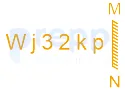
- A
Option A (shown in image)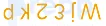
- B
Option B (shown in image)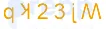
- C
Option C (shown in image)
- D
Option D (shown in image)
Show answer
Question 25archived
Which two signs should be interchanged to make the given equation correct?
3 × 12 - 6 ÷ 2 + 12 = 16
- A
÷ and +
- B
× and ÷
- C
- and ÷
- D
- and +
Show answer
C. - and ÷Understanding the Mathematical Problem
The question asks us to find which pair of mathematical signs, when interchanged in the given equation, will make the equation correct. The initial equation is: $3 \times 12 - 6 \div 2 + 12 = 16$. Our goal is to perform sign interchanges as suggested by the options and evaluate the resulting equation to see if it equals 16.
Evaluating the Original Equation
Let's first evaluate the given equation as it is, following the order of operations (BODMAS/PEMDAS).
The order of operations is:
Brackets (Parentheses)
Orders (Exponents, Roots)
Division and Multiplication (from left to right)
Addition and Subtraction (from left to right)
Original expression: $3 \times 12 - 6 \div 2 + 12$
Perform multiplication and division from left to right:
$3 \times 12 = 36$
$6 \div 2 = 3$
The expression becomes: $36 - 3 + 12$
Perform addition and subtraction from left to right:
$36 - 3 = 33$
$33 + 12 = 45$
So, $3 \times 12 - 6 \div 2 + 12 = 45$. Since $45 \neq 16$, the original equation is incorrect.
Testing Options for Sign Interchange
Now, let's test each given option by interchanging the specified signs and evaluating the new expression.
Testing Option 1: Interchange $\div$ and $+$
If we interchange $\div$ and $+$ signs, the equation becomes:
$3 \times 12 - 6 + 2 \div 12 = 16$
Let's evaluate the left side using BODMAS:
$3 \times 12 - 6 + 2 \div 12$
Perform multiplication and division:
$3 \times 12 = 36$
$2 \div 12 = \frac{2}{12} = \frac{1}{6}$
The expression becomes: $36 - 6 + \frac{1}{6}$
Perform subtraction and addition:
$36 - 6 = 30$
$30 + \frac{1}{6} = 30\frac{1}{6}$
So, $3 \times 12 - 6 + 2 \div 12 = 30\frac{1}{6}$. Since $30\frac{1}{6} \neq 16$, this option is incorrect.
Testing Option 2: Interchange $\times$ and $\div$
If we interchange $\times$ and $\div$ signs, the equation becomes:
$3 \div 12 - 6 \times 2 + 12 = 16$
Let's evaluate the left side using BODMAS:
$3 \div 12 - 6 \times 2 + 12$
Perform multiplication and division:
$3 \div 12 = \frac{3}{12} = \frac{1}{4}$
$6 \times 2 = 12$
The expression becomes: $\frac{1}{4} - 12 + 12$
Perform subtraction and addition:
$\frac{1}{4} - 12 = -11\frac{3}{4}$
$-11\frac{3}{4} + 12 = \frac{1}{4}$
So, $3 \div 12 - 6 \times 2 + 12 = \frac{1}{4}$. Since $\frac{1}{4} \neq 16$, this option is incorrect.
Testing Option 3: Interchange $-$ and $\div$
If we interchange $-$ and $\div$ signs, the equation becomes:
$3 \times 12 \div 6 - 2 + 12 = 16$
Let's evaluate the left side using BODMAS:
$3 \times 12 \div 6 - 2 + 12$
Perform multiplication and division from left to right:
$3 \times 12 = 36$
$36 \div 6 = 6$
The expression becomes: $6 - 2 + 12$
Perform subtraction and addition from left to right:
$6 - 2 = 4$
$4 + 12 = 16$
So, $3 \times 12 \div 6 - 2 + 12 = 16$. This matches the value on the right side of the original equation. Thus, interchanging the $-$ and $\div$ signs makes the equation correct.
Testing Option 4: Interchange $-$ and $+$
If we interchange $-$ and $+$ signs, the equation becomes:
$3 \times 12 + 6 \div 2 - 12 = 16$
Let's evaluate the left side using BODMAS:
$3 \times 12 + 6 \div 2 - 12$
Perform multiplication and division:
$3 \times 12 = 36$
$6 \div 2 = 3$
The expression becomes: $36 + 3 - 12$
Perform addition and subtraction from left to right:
$36 + 3 = 39$
$39 - 12 = 27$
So, $3 \times 12 + 6 \div 2 - 12 = 27$. Since $27 \neq 16$, this option is incorrect.
Conclusion on Sign Interchange
After testing all options, we found that interchanging the $-$ and $\div$ signs makes the equation $3 \times 12 - 6 \div 2 + 12 = 16$ correct.
Revision Table: Testing Sign Swaps
Option
Signs Interchanged
New Equation Left Side
Evaluation Steps
Result
Correct?
Original
N/A
$3 \times 12 - 6 \div 2 + 12$
$36 - 3 + 12 = 33 + 12 = 45$
$45$
No ($45 \neq 16$)
Option 1
$\div$ and $+$
$3 \times 12 - 6 + 2 \div 12$
$36 - 6 + \frac{1}{6} = 30 + \frac{1}{6} = 30\frac{1}{6}$
$30\frac{1}{6}$
No ($30\frac{1}{6} \neq 16$)
Option 2
$\times$ and $\div$
$3 \div 12 - 6 \times 2 + 12$
$\frac{1}{4} - 12 + 12 = \frac{1}{4}$
$\frac{1}{4}$
No ($\frac{1}{4} \neq 16$)
Option 3
$-$ and $\div$
$3 \times 12 \div 6 - 2 + 12$
$36 \div 6 - 2 + 12 = 6 - 2 + 12 = 4 + 12 = 16$
$16$
Yes ($16 = 16$)
Option 4
$-$ and $+$
$3 \times 12 + 6 \div 2 - 12$
$36 + 3 - 12 = 39 - 12 = 27$
$27$
No ($27 \neq 16$)
Additional Information: Order of Operations (BODMAS/PEMDAS)
The order of operations is a rule used to clarify which operations should be performed first in a mathematical expression. This ensures that everyone gets the same answer when evaluating an expression.
BODMAS stands for:
Brackets
Orders (powers, square roots, etc.)
Division and Multiplication (from left to right)
Addition and Subtraction (from left to right)
PEMDAS is another common acronym and stands for:
Parentheses
Exponents
Multiplication and Division (from left to right)
Addition and Subtraction (from left to right)
Both acronyms represent the same order of operations. The key is to remember that division/multiplication are at the same level and should be done from left to right as they appear, and similarly, addition/subtraction are at the same level and done from left to right.
Understanding and correctly applying the order of operations is crucial for solving mathematical problems involving multiple operations, like the sign interchange problem we just solved.
Paper & answer key PDF ↗ Question 26archived
As per the Census data, What was the density of population in India in 2011?
- A
822 persons/sq km
- B
382 persons/sq km
- C
328 persons/sq km
- D
282 persons/sq km
Show answer
B. 382 persons/sq kmUnderstanding India's Population Density in 2011
The question asks about the density of population in India as recorded by the Census data in the year 2011. Population density is a key demographic indicator that tells us how many people live within a specific area, usually measured in persons per square kilometer or square mile.
The Census of India is a crucial source of information about the country's population, conducted every ten years. The data collected includes various aspects of the population, such as total number, distribution, literacy, sex ratio, and importantly, density.
India Population Density 2011 Census Data
According to the official data released from the Census of India 2011, the population density of India was significantly higher compared to previous decades. This figure reflects the increasing pressure on land resources due to population growth.
The formula for calculating population density is straightforward:
$$ \text{Population Density} = \frac{\text{Total Population}}{\text{Total Land Area}} $$
Using the data from the 2011 Census, this calculation resulted in a specific figure for India.
Key Findings from Census 2011 on Density
The Census 2011 data revealed that the average density of population across India was 382 persons per square kilometer. This figure represents the average distribution across the entire country, although density varies significantly between states and union territories, with some areas being much more densely populated than others (like Delhi or Bihar) and others being sparsely populated (like Arunachal Pradesh).
Census Year
Population Density (persons/sq km)
2001
325
2011
382
This increase from 325 persons/sq km in 2001 to 382 persons/sq km in 2011 shows a considerable rise in population density over the decade.
Revision Table: India Census Data
Census Year
Total Population (Approx.)
Population Density (persons/sq km)
2001
1.02 Billion
325
2011
1.21 Billion
382
Additional Information on Population Density and Census
Population density is a key indicator for planners and policymakers. It helps understand the distribution of people and the potential strain on resources like land, water, housing, and infrastructure in different regions.
States and Union Territories in India have vastly different population densities.
Bihar was the most densely populated state in 2011, while Arunachal Pradesh was the least densely populated.
Population density changes over time primarily due to population growth and migration.
The Census provides detailed data down to the village and town level, allowing for granular analysis of population distribution.
Understanding population density is important for subjects like Geography, Demography, and Economics, especially when studying resource management and urban planning.
Paper & answer key PDF ↗ Question 27archived
Who among the following was the Maharana of Mewar and composed a book on music called 'Sangeet Raj'?
- A
Maharana Sanga
- B
Maharana Pratap
- C
Maharana Kumbha
- D
Maharana Udai Singh
Show answer
C. Maharana KumbhaCorrect answer: Maharana Kumbha
'Sangeet Raj' by Maharana Kumbha is an encyclopedic work divided into five chapters (Ullasa):
This structure shows the comprehensive nature of the book, covering theory and practice across different performing arts related to music. Maharana Kumbha's era is often considered a golden age for Mewar due to advancements in various fields under his patronage and personal contributions. His legacy extends beyond military achievements to significant cultural and intellectual contributions.
Paper & answer key PDF ↗ Question 28archived
How many silver medals was won by India in Tokyo Paralympic 2020?
- A
7
- B
6
- C
8
- D
5
Show answer
C. 8India's Silver Medals at Tokyo Paralympic 2020 Explained
Let's analyze the question about the number of silver medals won by India at the Tokyo Paralympic 2020. The Tokyo Paralympic Games were a significant event for India, where the country achieved its best-ever performance.
India participated in various sports and disciplines at the Tokyo Paralympic 2020, with a large contingent of athletes. The performance led to a record medal haul for the nation.
To determine the number of silver medals, we need to look at India's overall medal tally at the event. The total number of medals won by India was 19.
These 19 medals were distributed across different categories:
Gold Medals: 5
Silver Medals: 8
Bronze Medals: 6
Adding these up confirms the total: 5 (Gold) + 8 (Silver) + 6 (Bronze) = 19 medals.
Based on this distribution, the number of silver medals won by India in the Tokyo Paralympic 2020 was 8.
This record performance in the Tokyo Paralympic 2020 highlighted the growing talent and potential of Indian para-athletes on the global stage.
Revision Table: India's Medal Tally Tokyo Paralympic 2020
Medal Type
Number Won
Gold
5
Silver
8
Bronze
6
Total
19
Additional Information on Tokyo Paralympic 2020 for India
The Tokyo Paralympic 2020 (held in 2021 due to the pandemic) saw India send its largest-ever contingent of 54 para-athletes competing in 9 sports. This was a significant increase from previous editions and contributed to the improved medal performance.
Key points about India's participation:
India finished 24th in the overall medal tally among participating nations.
Badminton and Shooting were particularly successful sports for India, contributing multiple medals.
Many athletes achieved personal bests and set new records.
The success at the Tokyo Paralympic 2020 has brought increased attention and support for para-sports in India.
Paper & answer key PDF ↗ Question 29archived
Match the columns.
Column-A (Common name)
Column-B (Group number in the Modern Periodic Table)
i.
Alkali metals
a.
18
ii.
Alkaline earth metals
b.
17
iii.
Halogens
c.
2
iv.
Noble gases
d.
1
- A
i - a, ii - b, iii - c, iv - d
- B
i - a, ii - c, iii - b, iv - d
- C
i - b, ii - a, iii - c, iv - d
- D
i - d, ii - c, iii - b, iv - a
Show answer
D. i - d, ii - c, iii - b, iv - aUnderstanding Periodic Table Groups: Matching Common Names to Group Numbers
The modern periodic table arranges elements based on their atomic number and recurring properties. Elements in the same vertical column are called groups and often share similar chemical properties. Many of these groups have specific common names.
This question asks us to match the common names of certain groups in Column A with their corresponding group numbers in the Modern Periodic Table listed in Column B.
Matching Periodic Table Groups
Let's analyze each common name and identify its group number:
i. Alkali metals: These are highly reactive metals found in Group 1 of the periodic table (excluding Hydrogen). Examples include Lithium (Li), Sodium (Na), and Potassium (K).
ii. Alkaline earth metals: These are reactive metals, though less so than alkali metals, found in Group 2 of the periodic table. Examples include Beryllium (Be), Magnesium (Mg), and Calcium (Ca).
iii. Halogens: These are highly reactive non-metals typically found as diatomic molecules in Group 17 of the periodic table. Examples include Fluorine (F), Chlorine (Cl), and Bromine (Br).
iv. Noble gases: These are very unreactive (inert) gases found in Group 18 of the periodic table. They have a stable electron configuration. Examples include Helium (He), Neon (Ne), and Argon (Ar).
Establishing the Correct Matches
Based on the above information, we can make the following matches:
Alkali metals (i) correspond to Group number 1 (d). So, i – d.
Alkaline earth metals (ii) correspond to Group number 2 (c). So, ii – c.
Halogens (iii) correspond to Group number 17 (b). So, iii – b.
Noble gases (iv) correspond to Group number 18 (a). So, iv – a.
Combining these matches, we get the sequence: i - d, ii - c, iii - b, iv - a.
Summary Table of Periodic Table Group Matches
Column-A (Common name)
Column-B (Group number)
Match
i. Alkali metals
d. $\text{1}$
i - d
ii. Alkaline earth metals
c. $\text{2}$
ii - c
iii. Halogens
b. $\text{17}$
iii - b
iv. Noble gases
a. $\text{18}$
iv - a
This sequence (i - d, ii - c, iii - b, iv - a) represents the correct mapping between the common names and their respective group numbers in the modern periodic table.
Revision Table: Key Periodic Table Groups
Common Name
Group Number
Key Characteristics
Alkali Metals
$\text{1}$
Highly reactive metals, usually form +1 ions
Alkaline Earth Metals
$\text{2}$
Reactive metals, less reactive than alkali metals, usually form +2 ions
Halogens
$\text{17}$
Highly reactive non-metals, usually form -1 ions, exist as diatomic molecules ($\text{F}_2$, $\text{Cl}_2$, etc.)
Noble Gases
$\text{18}$
Very low reactivity (inert), stable electron configuration (full valence shell)
Additional Information on Periodic Table Organization
The modern periodic table is organized into periods (rows) and groups (columns). The group number gives information about the number of valence electrons for the main group elements (Groups 1, 2, and 13-18). For example:
Elements in Group $\text{1}$ have $\text{1}$ valence electron.
Elements in Group $\text{2}$ have $\text{2}$ valence electrons.
Elements in Group $\text{17}$ (Halogens) have $\text{7}$ valence electrons.
Elements in Group $\text{18}$ (Noble Gases) typically have $\text{8}$ valence electrons (except Helium which has $\text{2}$).
Understanding these group names and numbers is fundamental to predicting the chemical behavior and properties of elements.
Paper & answer key PDF ↗ Question 30archived
Pectin, which is responsible for the firmness and softness of fruits, is mainly composed of which acid unit?
- A
Aspartic acid
- B
Galacturonic acid
- C
Lactic acid
- D
Glutamic acid
Show answer
B. Galacturonic acidPectin is a complex polysaccharide that plays a crucial role in the plant cell wall, particularly in fruits. It acts as a cementing agent, contributing to the structure, firmness, and texture of fruits and vegetables. As fruits ripen, changes occur in the pectin structure, which leads to softening.
Understanding Pectin Composition
Pectin is not a single molecule but rather a group of complex polysaccharides. The main backbone of pectin is a linear chain of alpha-(1→4)-linked D-galacturonic acid units. This means that the primary building block, or acid unit, that makes up the bulk of the pectin molecule is galacturonic acid.
Some of the carboxyl groups of the galacturonic acid units in the pectin chain are typically esterified with methanol. The degree of esterification affects the properties of pectin, such as its solubility and gelling ability, which are important factors in food processing.
Key Acid Unit in Pectin Structure
Let's look at the options provided and identify the main acid unit responsible for pectin's structure:
Aspartic acid: This is an amino acid, which are the building blocks of proteins. Pectin is a polysaccharide, not a protein. Therefore, aspartic acid is not the main component of pectin.
Galacturonic acid: This is a sugar acid derived from galactose. It is the primary constituent of the backbone chain in pectin. Its polymeric form, polygalacturonic acid, is central to pectin's structure.
Lactic acid: This is a simple organic acid produced during fermentation, for example. It is not a sugar acid and is not a structural component of pectin.
Glutamic acid: Similar to aspartic acid, glutamic acid is an amino acid and a building block of proteins. It is not involved in the polysaccharide structure of pectin.
Based on the composition of pectin, galacturonic acid is the fundamental acid unit that forms its main chain. The arrangement and modification of these galacturonic acid units, along with other sugars in side chains, determine the specific type and properties of pectin.
Acid Unit
Role in Pectin
Type of Molecule
Aspartic acid
Not a component
Amino acid
Galacturonic acid
Main structural unit
Sugar acid
Lactic acid
Not a component
Organic acid
Glutamic acid
Not a component
Amino acid
The Role of Galacturonic Acid in Fruit Firmness
The long chains of galacturonic acid residues, linked together, provide the structural integrity to the cell walls and middle lamella in plant tissues. This network contributes to the firmness of the fruit. As the fruit ripens, enzymes called pectinases break down these galacturonic acid chains, reducing the fruit's firmness and causing it to soften. This enzymatic breakdown directly relates the composition of pectin (specifically the galacturonic acid backbone) to the texture changes observed during fruit ripening.
Revision Table: Pectin Composition Summary
Component
Description
Pectin
Complex polysaccharide in plant cell walls, affects fruit firmness.
Main Acid Unit
Galacturonic acid (specifically D-galacturonic acid).
Linkage
Primarily α-(1→4) glycosidic bonds between galacturonic acid units.
Ripening Effect
Pectin breakdown (hydrolysis of galacturonic acid chains) leads to fruit softening.
Additional Information on Pectin and Galacturonic Acid
Pectin is widely used in the food industry as a gelling agent, thickener, and stabilizer, particularly in jams, jellies, and desserts. The ability to form gels is directly related to the structure of the polygalacturonic acid chain and its interactions, influenced by factors like pH, sugar concentration, and the degree of methyl esterification.
Galacturonic acid is derived from the oxidation of the primary alcohol group at the C-6 position of D-galactose. Its presence in pectin is fundamental to understanding the physical properties and biological functions of this important dietary fiber component.
Different forms of pectic substances exist based on the degree of polymerization and esterification, including protopectin (insoluble form in unripe fruit), pectin (soluble, gel-forming), pectic acid, and pectic salts.
Understanding the composition, particularly the galacturonic acid units, helps explain why pectin behaves the way it does in fruits and in food applications.
Paper & answer key PDF ↗ Question 31archived
Sporophyte stage is dominant in which plant group?
- A
Bryophytes
- B
Vascular plants
- C
Algae
- D
Pteridophytes
Show answer
B. Vascular plantsUnderstanding Plant Life Cycles: Sporophyte and Gametophyte Stages
Plants exhibit alternation of generations, a life cycle involving two distinct multicellular stages: the sporophyte and the gametophyte. The sporophyte is typically diploid (containing two sets of chromosomes), and it produces spores through meiosis. These spores are usually haploid (containing one set of chromosomes). The gametophyte is typically haploid, developing from a spore, and it produces gametes (sperm and egg) through mitosis. Fertilization of gametes forms a diploid zygote, which develops into the sporophyte.
In different plant groups, one of these stages is more prominent or dominant, meaning it is larger, longer-lived, and often carries out most of the photosynthesis.
Analyzing Dominance in Different Plant Groups
Bryophytes (Mosses, Liverworts, Hornworts)
In bryophytes, the gametophyte stage is dominant. It is the familiar green, leafy part of the moss or liverwort plant. The sporophyte is smaller, short-lived, and is dependent on the gametophyte for nutrition. It typically consists of a foot, seta, and capsule, where spores are produced.
Dominant Stage: Gametophyte (haploid)
Sporophyte: Dependent on the gametophyte, usually short-lived.
Algae
Algae exhibit a wide variety of life cycles. Some have dominant gametophytes, some have dominant sporophytes, and others have isomorphic (equal) generations. However, when comparing to the major land plant groups, algae life cycles are generally not characterized by a dominant sporophyte in the same evolutionary context as seen in vascular plants.
Dominant Stage: Varies widely depending on the species (can be gametophyte, sporophyte, or isomorphic).
Pteridophytes (Ferns, Horsetails)
Pteridophytes are vascular plants. In pteridophytes, the sporophyte is the dominant stage; it is the large, leafy fern plant you typically see. The gametophyte (prothallus) is small, independent, and relatively short-lived, usually living on or below the soil surface.
Dominant Stage: Sporophyte (diploid)
Gametophyte: Small, independent, short-lived.
Vascular Plants (Tracheophytes)
Vascular plants include Pteridophytes, Gymnosperms, and Angiosperms. A key evolutionary trend in land plants is the increasing dominance of the sporophyte generation and the reduction of the gametophyte generation. In all vascular plant groups:
The sporophyte is the larger, more complex, and longer-lived stage.
The gametophyte is reduced in size. In gymnosperms and angiosperms, the gametophyte is microscopic and dependent on the sporophyte for nutrition and protection.
Therefore, the sporophyte stage is dominant in all vascular plants.
Summary Comparison of Dominant Stages
Plant Group
Dominant Stage
Ploidy Level of Dominant Stage
Bryophytes
Gametophyte
Haploid (n)
Algae
Varies
Varies
Pteridophytes (Vascular Plants)
Sporophyte
Diploid (2n)
Gymnosperms (Vascular Plants)
Sporophyte
Diploid (2n)
Angiosperms (Vascular Plants)
Sporophyte
Diploid (2n)
Based on the analysis of different plant groups and their life cycles, the sporophyte stage is the dominant phase in vascular plants, which include pteridophytes, gymnosperms, and angiosperms.
Revision Table: Plant Life Cycle Stages
Term
Description
Ploidy
Sporophyte
Diploid stage that produces spores by meiosis.
2n
Gametophyte
Haploid stage that produces gametes by mitosis.
n
Spore
Haploid reproductive cell produced by sporophyte; develops into gametophyte.
n
Gamete
Haploid reproductive cell (sperm or egg) produced by gametophyte; fuse during fertilization.
n
Zygote
Diploid cell formed by fertilization of gametes; develops into sporophyte.
2n
Alternation of Generations
Life cycle pattern alternating between haploid gametophyte and diploid sporophyte stages.
n and 2n
Additional Information: Evolution of Sporophyte Dominance in Land Plants
The evolution of a dominant sporophyte is considered a significant adaptation for plants transitioning from water to land. A diploid sporophyte has two sets of chromosomes, which provides redundancy and allows for better masking of deleterious mutations compared to a haploid gametophyte. A larger, more complex sporophyte plant can also develop more specialized tissues for water transport (vascular tissue), structural support, and spore dispersal, enabling plants to grow taller and colonize drier environments more effectively. The reduction of the gametophyte, especially in seed plants, further minimizes its dependence on external water for fertilization and provides better protection within the sporophyte's tissues.
Paper & answer key PDF ↗ Question 32archived
The country can improve its balance of payments by devaluation when the sum of elasticity of demand for exports and imports is ______.
- A
less than unity
- B
equal to unity
- C
greater than unity
- D
zero
Show answer
C. greater than unityUnderstanding Devaluation and Balance of Payments
This question explores how a country's balance of payments can be improved by devaluing its currency. Devaluation refers to a deliberate reduction in the value of a country's currency relative to other currencies under a fixed exchange rate system. A related term for flexible exchange rates is depreciation.
The balance of payments (BOP) is a record of all economic transactions between residents of one country and residents of the rest of the world during a specific period. It includes trade in goods and services (current account), financial flows (capital and financial accounts), and transfer payments. Improving the balance of payments often focuses on improving the trade balance, which is the difference between the value of exports and imports.
Devaluation's Impact on Exports and Imports
When a country devalues its currency, its exports become cheaper for foreign buyers, and imports become more expensive for domestic buyers.
Exports: A lower price in foreign currency should lead to an increase in the quantity of exports demanded by foreign countries, assuming the demand is elastic enough. The total value of exports (in domestic currency) increases if the increase in quantity outweighs the decrease in the foreign currency price per unit.
Imports: A higher price in domestic currency should lead to a decrease in the quantity of imports demanded by domestic consumers and businesses, assuming the demand is elastic enough. The total value of imports (in domestic currency) decreases if the decrease in quantity outweighs the increase in the domestic currency price per unit.
The Marshall-Lerner Condition
For devaluation to improve the trade balance (and thus the overall balance of payments, assuming the trade balance is the main issue), the positive effect on exports and the negative effect on imports must together outweigh any negative price effects. This relationship is captured by the Marshall-Lerner condition.
The Marshall-Lerner condition states that a devaluation will improve the trade balance if the sum of the price elasticities of demand for exports and imports (in absolute terms) is greater than unity. That is:
\(\left| \epsilon_x \right| + \left| \epsilon_m \right| > 1\)
Where:
\(\epsilon_x\) is the price elasticity of demand for exports.
\(\epsilon_m\) is the price elasticity of demand for imports.
The absolute values are used because elasticities of demand are typically negative (quantity demanded falls as price rises), but we are interested in the magnitude of the responsiveness.
Analyzing the Conditions
If \(\left| \epsilon_x \right| + \left| \epsilon_m \right| > 1\), devaluation makes exports cheaper and imports more expensive. If demand for both is sufficiently elastic, the increase in export quantity and decrease in import quantity will significantly improve the trade balance.
If \(\left| \epsilon_x \right| + \left| \epsilon_m \right| = 1\), the effects on the value of exports and imports cancel out, and the trade balance remains unchanged.
If \(\left| \epsilon_x \right| + \left| \epsilon_m \right| < 1\) (less than unity), demand for exports and imports is relatively inelastic. The price changes due to devaluation lead to only small changes in quantities. The value of exports (in foreign currency) might fall significantly (as price falls but quantity doesn't rise much), and the value of imports (in domestic currency) might not fall enough, potentially worsening the trade balance in the short run (J-curve effect).
Conclusion on Devaluation and Elasticity
Therefore, for a country to improve its balance of payments through devaluation, the responsiveness of international buyers to cheaper exports and domestic buyers to more expensive imports must be high enough. This requires the sum of the price elasticities of demand for exports and imports to be greater than unity, satisfying the Marshall-Lerner condition.
Revision Table: Key Concepts
Term
Definition
Relevance to Devaluation
Devaluation
Reduction in a currency's value under fixed exchange rates.
Makes exports cheaper, imports expensive.
Balance of Payments (BOP)
Record of international transactions.
Target for improvement via devaluation.
Trade Balance
Value of exports minus imports.
Primary component of BOP affected by devaluation.
Price Elasticity of Demand
Responsiveness of quantity demanded to price change.
Crucial for predicting devaluation's impact on export/import values.
Marshall-Lerner Condition
States when devaluation improves trade balance.
Requires sum of export/import elasticities > 1.
Additional Information: Factors Affecting Devaluation's Success
While the Marshall-Lerner condition is key, other factors influence whether devaluation successfully improves the balance of payments:
J-curve Effect: Initially, devaluation might worsen the trade balance because quantities of exports and imports adjust slowly. It takes time for consumers and firms to switch suppliers. The trade balance may follow a "J" shape over time – worsening before improving.
Supply Capacity: Can domestic industries increase production to meet higher export demand and substitute for imports?
Inflation: Devaluation can lead to imported inflation (as imports are more expensive) and potentially wage-push or demand-pull inflation, eroding the competitiveness gained.
Retaliation: Other countries might devalue their own currencies or impose trade barriers.
Composition of Trade: If exports are primary commodities with inelastic demand or imports are essential goods with inelastic demand, devaluation may be less effective.
Understanding the elasticity of demand for exports and imports is fundamental to assessing the likely impact of a currency devaluation on a country's balance of payments.
Paper & answer key PDF ↗ Question 33archived
______ became India's first sports unicorn with its market cap having touched a high of Rs. 7,600 crores as of 30 January 2022.
- A
Delhi Capitals
- B
Kolkata Knight Riders
- C
Mumbai Indians
- D
Chennai Super Kings
Show answer
D. Chennai Super KingsIndia's First Sports Unicorn Explained
The question asks which Indian sports entity achieved 'unicorn' status first, specifically mentioning a market capitalization of Rs. 7,600 crores as of January 30, 2022. In the business world, a 'unicorn' is a privately held startup company with a valuation exceeding $1 billion USD.
Analyzing the options, all are popular Indian Premier League (IPL) teams. IPL teams are business entities that generate revenue from various sources like broadcasting rights, sponsorships, merchandise, and matchday income. Their valuation depends on these factors, brand value, and future growth prospects.
Based on reports and financial data available around the specified date, the Indian sports team that became the country's first sports unicorn was Chennai Super Kings.
Chennai Super Kings Cricket Limited (CSKCL), the entity that owns the team Chennai Super Kings, saw its market capitalization cross the Rs. 7,600 crore mark (approximately $1 billion USD at the time) around January 2022. This valuation was a significant milestone, making it the first sports enterprise in India to reach this prestigious status.
Let's look at why Chennai Super Kings achieved this milestone:
Strong brand value built over years of consistent performance and fan following.
Success on the field, including multiple IPL title wins.
Effective management and business strategies.
Increasing valuation of IPL as a league, which positively impacts team valuations.
Other IPL teams like Mumbai Indians, Kolkata Knight Riders, and Delhi Capitals are also valuable franchises, but Chennai Super Kings was the first among Indian sports entities to publicly achieve the unicorn valuation threshold around the specified date.
Chennai Super Kings Valuation Factors
The market capitalization of a sports team like Chennai Super Kings is influenced by several factors:
Broadcasting Rights Revenue: A significant portion comes from the central pool of media rights shared among teams.
Sponsorships: Deals with various brands for jersey sponsorship, kit sponsorship, and other partnerships.
Merchandise Sales: Revenue from selling team jerseys and other merchandise.
Matchday Revenue: Ticket sales and hospitality revenue (though less significant for IPL compared to global football clubs).
Brand Equity: The overall strength and recognition of the team's brand.
Performance: On-field success often translates to higher brand value and fan engagement.
The valuation hitting Rs. 7,600 crores confirmed Chennai Super Kings as a major player not just in the sports world but also in the Indian business landscape, being the first sports unicorn.
Revision Table: India's First Sports Unicorn
Concept
Details
Unicorn Status
Privately held company valuation > $1 billion USD
First Indian Sports Unicorn
Chennai Super Kings
Valuation Achieved
Rs. 7,600 crores (approx. $1 billion)
Date Mentioned
As of 30 January 2022
Owner Entity
Chennai Super Kings Cricket Limited (CSKCL)
Additional Information: IPL Team Valuations and Sports Business
The Indian Premier League (IPL) is one of the most valuable sports leagues globally. The success of the league has significantly boosted the valuations of its constituent teams.
IPL teams are structured as separate corporate entities.
Valuations can fluctuate based on league-wide media rights deals, team performance, and overall market conditions.
The sports business in India is growing rapidly, encompassing not just cricket but also other sports leagues and related industries.
Reaching unicorn status highlights the immense commercial potential within the Indian sports ecosystem.
Chennai Super Kings setting this benchmark was a key moment for the professional sports business in India, demonstrating the significant value that successful franchises can build.
Paper & answer key PDF ↗ Question 34archived
Which of the following committees was constituted to study the issues and concerns in the Micro Finance Institution in 2010?
- A
Ghosh Committee
- B
Sivaraman Committee
- C
Malegam Committee
- D
Khan Committee
Show answer
C. Malegam CommitteeUnderstanding Micro Finance Institution Committees in India
The question asks about the specific committee formed in 2010 to address issues and concerns within the Micro Finance Institution (MFI) sector in India. This period was significant for MFIs, particularly due to a crisis that unfolded in Andhra Pradesh.
Context: Issues in the MFI Sector in 2010
Around 2010, the Micro Finance Institution sector faced several challenges. Reports of coercive recovery practices, high interest rates charged by some MFIs, and borrower over-indebtedness became prominent, leading to regulatory concerns and a crisis in Andhra Pradesh.
To examine these issues and suggest regulatory measures, the Reserve Bank of India (RBI) felt the need to constitute an expert committee.
Analyzing the Options for the MFI Committee
Let's look at the committees mentioned in the options:
Ghosh Committee: This committee, formed by the RBI much earlier, dealt with issues related to non-banking financial companies (NBFCs), but not specifically focused on the MFI sector's crisis in 2010.
Sivaraman Committee: This committee is famous for recommending the establishment of the National Bank for Agriculture and Rural Development (NABARD) in 1979. It predates the significant growth and regulation challenges of modern MFIs.
Malegam Committee: The RBI constituted a Sub-Committee of the Central Board to study issues and concerns in the Micro Finance Institution (MFI) sector. This committee was indeed formed in 2010 and was headed by Mr. Y.H. Malegam. Its mandate was specifically to look into the definition of MFIs, interest rates, and other regulatory aspects following the Andhra Pradesh crisis.
Khan Committee: There have been various committees headed by individuals named Khan concerning different aspects of the financial sector at different times, but none are specifically known for studying MFI issues in 2010 in response to the crisis in the same way the Malegam Committee was.
The Role of the Malegam Committee
The Malegam Committee was a crucial response by the RBI to the challenges faced by the Micro Finance Institution sector in 2010. Its key objectives included:
Examining the definition of MFIs.
Studying the practices related to interest rates and other charges levied by MFIs.
Recommending appropriate regulatory and supervisory framework for MFIs registered as NBFCs.
The recommendations of the Malegam Committee significantly influenced the regulatory guidelines issued by the RBI for NBFC-MFIs.
Conclusion
Based on the historical context and the specific mandate of the committees listed, the committee constituted in 2010 to study the issues and concerns in the Micro Finance Institution sector was the Malegam Committee.
Revision Table: Key Indian Financial Committees
Committee
Year Formed
Primary Focus
Ghosh Committee
Earlier than 2010 (e.g., 1982)
Regulation of NBFCs (broader)
Sivaraman Committee
1979
Recommendation for NABARD establishment
Malegam Committee
2010
Issues and regulation of NBFC-MFIs
Khan Committee
Various (e.g., 1997)
Review of the working of NBFCs (broadly, depending on the specific Khan committee)
Additional Information: Regulation of Micro Finance Institutions (MFIs)
Following the recommendations of the Malegam Committee and subsequent developments, the regulatory landscape for Micro Finance Institutions in India has evolved. MFIs registered as Non-Banking Financial Companies (NBFCs) are primarily regulated by the Reserve Bank of India (RBI). The regulations cover aspects like interest rate caps (though later deregulated with fair practices code), capital adequacy, and lending practices to protect borrowers and ensure the health of the Micro Finance Institution sector. The goal is to promote financial inclusion responsibly.
Paper & answer key PDF ↗ Question 35archived
India borrowed the DPSP from the ______ Constitution.
- A
Australian
- B
Irish
- C
German
- D
Austrian
Show answer
B. IrishUnderstanding the Directive Principles of State Policy (DPSP)
The Constitution of India is a comprehensive document that draws inspiration from various sources around the world. One of its significant parts is Part IV, which contains the Directive Principles of State Policy (DPSP). These principles are guidelines or directions to the state to be kept in mind while framing laws and policies. They are non-justiciable, meaning they cannot be enforced in a court of law, but they are considered fundamental in the governance of the country.
Origin of Directive Principles of State Policy in India
The concept of Directive Principles of State Policy was borrowed by the framers of the Indian Constitution from the Constitution of another country. This borrowing was a conscious effort to include socio-economic goals that the state should strive to achieve for the welfare of its citizens.
The specific source for the DPSP in the Indian Constitution is the Irish Constitution.
The Irish Constitution, adopted in 1937, includes similar principles known as 'Directive Principles of Social Policy'. The Indian Constitution's Part IV is heavily influenced by Part IV of the Irish Constitution.
Why India Borrowed DPSP from Ireland?
The framers of the Indian Constitution were looking for a model that could guide the newly independent nation towards building a welfare state. The Irish Directive Principles provided such a framework, outlining ideals like social justice, economic welfare, and the right to work, which resonated with the aspirations of the Indian people.
Analysis of Options
Australian Constitution: India borrowed concepts like concurrent list, freedom of trade, commerce, and intercourse, and the joint sitting of the two Houses of Parliament from Australia. It is not the source for DPSP.
Irish Constitution: As discussed, the Directive Principles of State Policy were borrowed from the Irish Constitution.
German Constitution (Weimar): India borrowed the provisions concerning the suspension of Fundamental Rights during an Emergency from the Weimar Constitution of Germany. It is not the source for DPSP.
Austrian Constitution: The Austrian Constitution is not typically cited as a major source of inspiration for the Indian Constitution, particularly not for the DPSP.
Therefore, the correct source for the Directive Principles of State Policy is the Irish Constitution.
Importance of DPSP
Although non-justiciable, the DPSP serves as a moral compass for the government. They embody the ideals of a welfare state and guide the legislature and the executive in enacting laws and implementing policies. They also provide a standard for evaluating the performance of the government.
Revision Table: Sources of the Indian Constitution
Feature Borrowed
Source Country/Act
Directive Principles of State Policy (DPSP)
Irish Constitution
Parliamentary Government
British Constitution
Fundamental Rights
US Constitution
Judicial Review
US Constitution
Federal Scheme, Judiciary, Governors, Public Service Commissions, Emergency provisions, Administrative details
Government of India Act, 1935
Concurrent List, Freedom of Trade, Commerce, & Intercourse, Joint Sitting
Australian Constitution
Suspension of Fundamental Rights during Emergency
Weimar Constitution (Germany)
Additional Information on Directive Principles
The Directive Principles of State Policy are classified by some scholars based on their content and direction, although the constitution does not officially classify them. Common classifications include:
Socialist Principles: Aim at providing social and economic justice, promoting welfare state (e.g., Article 38, 39, 41, 42, 43, 43A, 47).
Gandhian Principles: Based on the ideals of Mahatma Gandhi (e.g., Article 40, 43, 43B, 46, 47, 48).
Liberal-Intellectual Principles: Reflect a liberal ideology (e.g., Article 44, 45, 48, 48A, 49, 50, 51).
These principles cover a wide range of areas including social security, economic planning, rural development, justice and legal aid, environmental protection, and promotion of international peace.
Paper & answer key PDF ↗ Question 36archived
Tamladu is a festival celebrated by the Buddhist community of which Indian state?
- A
Karnataka
- B
Arunachal Pradesh
- C
Madhya Pradesh
- D
Himachal Pradesh
Show answer
B. Arunachal PradeshUnderstanding the Tamladu Festival and its Location
The question asks about the Indian state where the Tamladu festival is celebrated by the Buddhist community. Festivals are an integral part of India's diverse cultural landscape, reflecting the traditions, beliefs, and history of different communities across various states.
The Tamladu festival is indeed a significant cultural event, primarily celebrated by the Mishmi community. While the Mishmi people have diverse religious practices, including indigenous beliefs, the festival is observed with participation from various segments of the community, including those who follow Buddhist traditions in the region. Identifying the specific state where this vibrant festival takes place is key to answering this question.
Let's examine the options provided:
Karnataka
Arunachal Pradesh
Madhya Pradesh
Himachal Pradesh
Upon investigating the origins and celebration of the Tamladu festival, it is well-established that this festival is celebrated annually in the state of Arunachal Pradesh.
Tamladu is celebrated on the 15th of the first month of the indigenous calendar, usually corresponding to February 15th in the Gregorian calendar. It is a time for offering prayers for peace, prosperity, and the well-being of the community. Rituals involve sacrifices and community gatherings.
Considering the options and the known facts about the Tamladu festival, Arunachal Pradesh is the correct state where this festival is celebrated, including by the Buddhist community residing there and the Mishmi people.
Let's briefly look at why the other options are not correct regarding the Tamladu festival:
Karnataka: Karnataka is known for festivals like Mysore Dasara, Hampi Utsav, and Ugadi. Tamladu is not celebrated here.
Madhya Pradesh: Madhya Pradesh hosts festivals like Khajuraho Dance Festival, Lokrang, and Shivratri Mela. Tamladu is not associated with this state.
Himachal Pradesh: Himachal Pradesh celebrates festivals like Kullu Dussehra, Shivratri, and Holi. Tamladu is not a festival of Himachal Pradesh.
Therefore, the Tamladu festival celebrated by the Buddhist community is specific to Arunachal Pradesh.
Festival
State
Community (Primary/Associated)
Tamladu
Arunachal Pradesh
Mishmi (includes Buddhist community)
Mysore Dasara
Karnataka
Various, prominent in Mysore region
Khajuraho Dance Festival
Madhya Pradesh
Artists and tourists
Kullu Dussehra
Himachal Pradesh
Local communities in Kullu Valley
Revision Table: Tamladu Festival Facts
Aspect
Detail
Festival Name
Tamladu
Associated State
Arunachal Pradesh
Celebrated by
Mishmi community (including Buddhist community)
Time of Celebration
15th of the first month (approx. February 15th)
Significance
Prayers for peace, prosperity, community well-being
Additional Information: Festivals of Arunachal Pradesh
Arunachal Pradesh, known as the 'Land of the Rising Sun', is home to numerous indigenous tribes, each with their unique culture and festivals. Apart from Tamladu, some other notable festivals celebrated in Arunachal Pradesh include:
Solung: Celebrated by the Adi tribe, dedicated to thanking the god of wealth and praying for a good harvest.
Dree: An agricultural festival of the Apatani tribe, observed to appease gods and goddesses for a bountiful harvest.
Nyokum Yullo: Celebrated by the Nyishi community, dedicated to the spirit of unity and brotherhood.
Ziro Festival of Music: A contemporary music festival gaining international recognition.
Losar: Celebrated by the Monpa, Sherdukpen, and Khamba tribes (Buddhist communities) to mark the Tibetan New Year.
These festivals showcase the rich cultural tapestry of Arunachal Pradesh, highlighting the traditions, agricultural cycles, and spiritual beliefs of its people.
Paper & answer key PDF ↗ Question 37archived
Iron mines in Jharkhand attributed to the rise of which of the following kingdoms in ancient India?
- A
Kuru
- B
Magadha
- C
Kashi
- D
Kushan
Show answer
B. MagadhaUnderstanding the Rise of Ancient Indian Kingdoms and Resource Control
The question asks which ancient Indian kingdom's rise was significantly helped by access to iron mines in what is now the state of Jharkhand.
During the Iron Age in ancient India (roughly starting around 1000 BCE), iron became increasingly important. Access to iron ore and the technology to smelt it provided immense advantages:
Military Power: Iron allowed for the production of stronger, more durable weapons like swords, axes, spears, and arrows compared to bronze or copper. This gave kingdoms with access to iron a military edge in conflicts.
Agricultural Advancements: Iron tools, such as ploughshares, made it possible to cultivate land more efficiently, including dense forests. This led to increased agricultural productivity, supporting larger populations and generating surplus wealth.
Economic Growth: Iron tools were also used for crafts, mining, and construction, boosting economic activities.
Magadha's Strategic Advantage
The kingdom of Magadha was located in the eastern part of ancient India, in what is now southern Bihar. This region is geographically close to the resource-rich areas, including the iron ore deposits found in present-day Jharkhand.
Magadha's proximity and control over these iron sources provided it with a crucial strategic advantage. This access meant:
Magadha could equip its army with superior iron weapons, contributing significantly to its military campaigns and expansion.
Magadhan farmers could use better iron tools, leading to more extensive and productive agriculture, which supported a growing population and provided the economic base for military expenditure and administration.
Historians widely acknowledge that Magadha's control over key resources like iron (and also copper) and its strategic location were major factors in its rise to become the most powerful Mahajanapada (major kingdom) in ancient India, eventually leading to the formation of the Mauryan Empire.
Analyzing Other Options
Let's consider why the other options are less likely connected to the iron mines of Jharkhand for their initial rise:
Kuru: The Kuru kingdom was located in the Kuru-Panchala region, around modern Haryana and Uttar Pradesh. While they were prominent in earlier Vedic periods, their core area was geographically further from the major iron deposits of Jharkhand compared to Magadha.
Kashi: Kashi was centered around modern Varanasi in Uttar Pradesh. It was an important economic and cultural center, but its rise was not as directly attributed to the control of the specific rich iron mines found in the Jharkhand region as Magadha's was.
Kushan: The Kushan Empire emerged much later than the rise of Magadha (beginning around the 1st century CE). Their empire was centered in Gandhara (modern Pakistan and Afghanistan) and extended into parts of northern India. Their rise was linked to control over trade routes (like the Silk Road) and different resource areas, not the iron mines of Jharkhand which were crucial for the earlier rise of Magadha.
Therefore, the kingdom whose rise is most directly and significantly attributed to the access and control of iron mines in the region corresponding to modern Jharkhand is Magadha.
Revision Table: Ancient Kingdoms and Resources
Kingdom
Approximate Location
Relevant Resource Connection (for rise)
Magadha
Southern Bihar (close to Jharkhand)
Control over rich iron and copper mines; fertile land for agriculture.
Kuru
Haryana/Uttar Pradesh
Early agricultural and political centre; not primarily linked to Jharkhand iron.
Kashi
Varanasi (Uttar Pradesh)
Trade and cultural centre; not primarily linked to Jharkhand iron for initial rise.
Kushan
NW India/Central Asia (later period)
Control over trade routes; different resource base than early Magadha.
Additional Information: Resource Control and State Formation
The control of valuable resources has historically been a major factor in the rise and expansion of states and empires. In ancient India, during the period of the Mahajanapadas (around 6th century BCE), access to iron was a game-changer.
States that could acquire iron resources, smelt it efficiently, and produce tools and weapons gained significant advantages over their neighbors.
This control often involved conquering territories where resources were located or establishing trade networks to acquire them.
Magadha was particularly successful in leveraging its geographical position near resource-rich areas, coupled with strong leadership and strategic planning, to expand its influence and eventually dominate the Gangetic plains.
The wealth generated from improved agriculture and control over resources also allowed Magadha to maintain a large standing army and build impressive infrastructure, further solidifying its power.
Paper & answer key PDF ↗ Question 38archived
Which of the following statements is INCORRECT about granite?
- A
Granite is the most abundant rock in the continental crust.
- B
It is the most common sedimentary rock.
- C
These are igneous rocks that form when hot, molten rock crystallises and solidifies.
- D
Granite is composed mainly of quartz and feldspar with minor amounts of mica.
Show answer
B. It is the most common sedimentary rock.Understanding Granite Properties and Rock Types
This question asks us to identify the incorrect statement about granite. To answer this, we need to understand what granite is and its key characteristics, particularly its rock type and composition.
What is Granite?
Granite is a common type of felsic intrusive igneous rock. This means it formed from the slow crystallization of magma below the Earth's surface. Its composition primarily consists of quartz and feldspar, with minor amounts of mica and other minerals. The slow cooling process underground allows large crystals to form, which is why granite has a coarse-grained texture.
Analyzing Each Statement about Granite
Let's examine each statement provided in the options:
Statement 1: Granite is the most abundant rock in the continental crust.
Analysis: This statement is generally considered true. Granite and related rocks (like granodiorite) make up a significant portion of the Earth's continental crust.
Statement 2: It is the most common sedimentary rock.
Analysis: This statement is incorrect. Granite is an igneous rock, not a sedimentary rock. Sedimentary rocks are formed from the accumulation and cementation of mineral or organic particles (sediments), or from the precipitation of dissolved minerals. Examples of sedimentary rocks include sandstone, shale, and limestone. Granite does not form through these processes.
Statement 3: These are igneous rocks that form when hot, molten rock crystallises and solidifies.
Analysis: This statement is correct. As discussed earlier, granite forms from the cooling and solidification of magma (molten rock) beneath the Earth's surface. This process defines it as an igneous rock.
Statement 4: Granite is composed mainly of quartz and feldspar with minor amounts of mica.
Analysis: This statement is correct. The primary minerals found in granite are quartz and feldspar (typically orthoclase and plagioclase), along with smaller amounts of minerals like mica (biotite or muscovite) and amphibole.
Identifying the Incorrect Statement
Based on our analysis, Statement 2 incorrectly identifies granite as a sedimentary rock. Granite is fundamentally an igneous rock, formed from the cooling of magma.
Summary of Granite Statements
Statement
Description
Correctness
1
Abundant in continental crust
Correct
2
Most common sedimentary rock
Incorrect (It is Igneous)
3
Igneous rock formed from molten rock
Correct
4
Composed of quartz, feldspar, mica
Correct
Revision Table: Rock Types
Understanding the main categories of rocks is crucial. Here's a quick overview:
Primary Rock Types
Rock Type
Formation Process
Examples
Igneous Rocks
Formed from the cooling and solidification of molten rock (magma or lava).
Granite, Basalt, Obsidian
Sedimentary Rocks
Formed from the accumulation and cementation of sediments, or precipitation of minerals.
Sandstone, Limestone, Shale
Metamorphic Rocks
Formed when existing rocks (igneous, sedimentary, or other metamorphic rocks) are changed by heat and pressure.
Marble (from Limestone), Slate (from Shale), Gneiss (from Granite)
Additional Information about Granite and Rock Cycle
Granite is a key component of the Earth's rock cycle. As an intrusive igneous rock, it forms deep underground. Over geological time, uplift and erosion can expose granite at the surface, forming mountains and vast rock formations. Surface processes like weathering and erosion break down granite into sediments, which can then be transported and deposited to form sedimentary rocks. If granite is subjected to intense heat and pressure, it can be transformed into a metamorphic rock like gneiss.
The chemical composition of granite is predominantly silica and alumina, classifying it as a felsic rock. This high silica content contributes to its relatively low density compared to mafic rocks like basalt, which are more common in oceanic crust.
Paper & answer key PDF ↗ Question 39archived
'Luddi' is a folk dance of which of the following states of India?
- A
Manipur
- B
Punjab
- C
Madhya Pradesh
- D
Kerala
Show answer
B. PunjabUnderstanding Indian Folk Dances and 'Luddi'
India is known for its diverse cultural heritage, and a significant part of this heritage is its vibrant tradition of folk dances. These dances are performed by ordinary people during festivals, social gatherings, and religious occasions. Each state and region in India has its unique set of folk dances that reflect local customs, history, and way of life.
Identifying the 'Luddi' Folk Dance
The question asks about 'Luddi', a specific folk dance, and its state of origin in India. To answer this, we need to know which state is traditionally associated with the 'Luddi' dance.
'Luddi' is a lively folk dance that is primarily performed by men. It is often associated with celebrations and victories, particularly relating to sports like wrestling. The dancers usually form a circle and move with rhythmic steps and gestures, often accompanied by instruments like the Dhol (drum).
Based on cultural studies and research into Indian folk dances, the 'Luddi' dance is strongly linked to the state of Punjab.
Analysing the Options
Let's look at the given options:
Manipur: Manipur is known for its classical dance form, Manipuri, as well as various folk dances like Thang Ta (a martial dance), Lai Haraoba, and Pung Cholom. 'Luddi' is not a folk dance of Manipur.
Punjab: Punjab is famous for its energetic folk dances, the most well-known being Bhangra (performed by men) and Giddha (performed by women). Other folk dances from Punjab include Jhumar, Sammi, Jaago, Kikli, and Luddi. 'Luddi' is indeed a folk dance of Punjab.
Madhya Pradesh: Madhya Pradesh has a rich tradition of folk dances like Gaur Maria, Karma, Bagoria, Pali, and Grida. 'Luddi' is not associated with Madhya Pradesh.
Kerala: Kerala is famous for its classical dance form Kathakali and also other arts like Mohiniyattam, Theyyam, and Thiruvathira Kali. 'Luddi' is not a folk dance of Kerala.
Comparing the 'Luddi' dance with the traditional folk dances of each state listed in the options, it is clear that 'Luddi' belongs to Punjab.
Conclusion on 'Luddi' and its State
The folk dance 'Luddi' is a significant cultural expression of Punjab. It shares the energetic spirit characteristic of many Punjabi folk forms.
Therefore, the state with which the folk dance 'Luddi' is associated is Punjab.
Folk Dances and Their Associated States
Folk Dance
Associated State(s)
Luddi
Punjab
Bhangra
Punjab
Giddha
Punjab
Manipuri
Manipur
Lai Haraoba
Manipur
Gaur Maria
Madhya Pradesh
Karma
Madhya Pradesh, Chhattisgarh, Jharkhand, Odisha, West Bengal
Kathakali
Kerala
Mohiniyattam
Kerala
Revision Table: Key Folk Dances
Quick Review of Major Folk Dances in India
Dance Name
State
Brief Description/Context
Luddi
Punjab
Energetic male dance, often celebratory, related to victories.
Bhangra
Punjab
High-energy male dance, harvest festival related.
Giddha
Punjab
Energetic female dance, similar to Bhangra but often more graceful.
Garba
Gujarat
Circle dance performed during Navratri.
Dandiya Raas
Gujarat
Stick dance performed during Navratri.
Ghoomar
Rajasthan
Traditional Bhil tribe dance, later adopted by Rajput women.
Kalbelia
Rajasthan
Dance by the snake charmer community, vibrant and fluid.
Bihu
Assam
Harvest festival dance.
Lavani
Maharashtra
Traditional folk dance, often sensuous and dramatic.
Rouf
Jammu & Kashmir
Dance performed by women during festive occasions.
Additional Information: More About Indian Folk Dances
Folk dances are not just entertainment; they are a repository of a region's history, beliefs, and social structure. They are often performed in groups, fostering community bonding. Costumes, music, and themes vary greatly from one dance form to another, reflecting the diverse geographical and cultural landscape of India.
Significance: Folk dances celebrate seasons, harvests, weddings, festivals, and historical events.
Instruments: Traditional instruments like Dhol, Nagada, Flute, Harmonium, and various percussion and string instruments are used.
Variations: Many folk dances have regional variations within the same state.
Transmission: These dances are typically passed down through generations informally, within families and communities.
Studying folk dances like 'Luddi' gives us insights into the cultural identity and traditions of different Indian states.
Paper & answer key PDF ↗ Question 40archived
Commonwealth Games 2022 was held in ______.
- A
Birmingham
- B
Beijing
- C
Tokyo
- D
New Delhi
Show answer
A. BirminghamCommonwealth Games 2022 Host City: Birmingham Explained
The Commonwealth Games is a multi-sport event involving athletes from the Commonwealth of Nations. The games are held every four years and are one of the largest international sporting events, bringing together thousands of athletes from numerous countries.
The question asks about the host city for the Commonwealth Games held in 2022.
Let's look at the options provided:
Birmingham
Beijing
Tokyo
New Delhi
Based on the official records and historical facts, the 2022 Commonwealth Games were indeed held in the city of Birmingham.
Birmingham is a major city in England and was chosen as the host after Durban, South Africa, was unable to fulfill its commitment.
Here are some key details about the Commonwealth Games 2022 in Birmingham:
Detail
Information
Event
XXII Commonwealth Games
Year Held
2022
Host City
Birmingham
Country
England, United Kingdom
Duration
28 July – 8 August 2022
Comparing this information with the given options, the city that hosted the Commonwealth Games 2022 is Birmingham.
Revision Table: Commonwealth Games Locations
Year
Host City
Host Country
2010
New Delhi
India
2014
Glasgow
Scotland
2018
Gold Coast
Australia
2022
Birmingham
England
2026
(Original host withdrawn, location under review)
(Original host: Victoria, Australia)
Additional Information: About Commonwealth Games 2022 Birmingham
The Birmingham 2022 Commonwealth Games featured 19 different sports and 8 para-sports. More than 5,000 athletes from 72 nations and territories participated in the event. The main venue for athletics and the opening/closing ceremonies was Alexander Stadium.
The event is a significant occasion for promoting sportsmanship, cultural exchange, and the values of the Commonwealth. Birmingham successfully delivered the games, showcasing its capabilities as a major international city.
Paper & answer key PDF ↗ Question 41archived
'Back to Vedas' was the slogan of which Reform Movement?
- A
Dev Samaj
- B
Brahmo Samaj
- C
Prarthana Samaj
- D
Arya Samaj
Show answer
D. Arya SamajThe correct answer is Arya Samaj.
He believed that the problems faced by Indian society were due to the departure from these fundamental Vedic truths and the introduction of Puranic beliefs and practices. The Arya Samaj focused on activities like the Shuddhi movement (reconverting people to Hinduism), promoting education for girls, and campaigning against child marriage and the caste system. The call 'Back to Vedas' was therefore a call for reform and revival based on what was considered the purest form of ancient Indian wisdom.
Paper & answer key PDF ↗ Question 42archived
Which among the following statements about judicial review in India are correct?
A. Judicial review means that the courts of law have the power of testing the validity of legislative as well as other governmental action with reference to the provisions of the Constitution.
B. Under Article 23 of the Indian Constitution, the compulsion of judicial review was described in the Fundamental Rights in Part III.
C. The power of judicial review is significantly vested upon the High Courts and the Supreme Court of India.
- A
A and B only
- B
B and C only
- C
A and C only
- D
A, B and C
Show answer
C. A and C onlyThe correct answer is A and C only.
It protects the Fundamental Rights of citizens. It upholds the supremacy of the Constitution. It clarifies the meaning and application of constitutional provisions. While powerful, the judiciary exercises this power with self-imposed restraints, often guided by principles like the presumption of constitutionality of laws and not venturing into policy matters unless they violate the Constitution.
Paper & answer key PDF ↗ Question 43archived
The Ministry of Education (MoE) in February 2022 approved a new scheme ______ for the next five years to cover all the aspects of adult education to align with new the National Education Policy (NEP).
- A
Open Education Programme
- B
ASHA
- C
New India Education Plan
- D
New India Literacy Programme
Show answer
D. New India Literacy ProgrammeUnderstanding the Ministry of Education's New Scheme for Adult Education
The question asks about a significant initiative launched by the Ministry of Education (MoE) in February 2022. This scheme is designed to tackle adult education comprehensively over a five-year period, ensuring its alignment with the principles and goals set forth in the National Education Policy (NEP).
Let's analyze the key aspects mentioned in the question:
Approving Authority: Ministry of Education (MoE)
Approval Date: February 2022
Duration: Next five years
Focus Area: Adult education
Scope: To cover all aspects of adult education
Alignment: With the National Education Policy (NEP)
Identifying the correct scheme involves knowing the specific program name launched by the MoE meeting these criteria.
Identifying the New India Literacy Programme
In February 2022, the Union Government of India, through the Ministry of Education, approved a new centrally sponsored scheme named the New India Literacy Programme (also known as Nav Bharat Saksharata Karyakram). This scheme was specifically formulated to cover all facets of adult education across the country for the five financial years from 2022-23 to 2026-27. Its primary aim is to align adult education and literacy efforts with the recommendations and vision of the National Education Policy 2020.
The scheme focuses on providing foundational literacy and numeracy, critical life skills, basic education, and vocational skills development to non-literate adults aged 15 years and above.
Scheme Details and Components
The New India Literacy Programme has several key components aimed at holistic adult education:
Foundational Literacy and Numeracy
Critical Life Skills (e.g., financial literacy, digital literacy, health care, child care, education, family welfare)
Basic Education (equivalent to Class 3-5)
Vocational Skills Development (with potential for local employment)
The scheme utilizes technology extensively for planning, implementation, and monitoring, leveraging online modules and accessible learning materials.
Aspect
Details of New India Literacy Programme
Approved By
Ministry of Education (MoE)
Approval Year
2022
Duration
5 Years (FY 2022-23 to 2026-27)
Target Age Group
15 years and above
Coverage
All States and Union Territories
Key Focus Areas
Literacy, Numeracy, Critical Life Skills, Basic Education, Vocational Skills
Alignment
National Education Policy (NEP) 2020
Analysis of Other Options
Open Education Programme: While related to flexible learning, this is not the specific scheme launched by the MoE in 2022 for comprehensive adult education aligned with NEP.
ASHA: ASHA (Accredited Social Health Activist) is a community health worker program under the National Health Mission, not an adult education scheme by the MoE.
New India Education Plan: This is a generic term and not the official name of the specific scheme for adult education launched in 2022. The official plan covering education reforms is the National Education Policy itself, and the specific scheme under discussion is focused on literacy and adult education.
Based on the details and the official name of the scheme approved by the Ministry of Education in February 2022 for adult education covering all aspects and aligning with NEP, the correct answer is the New India Literacy Programme.
Revision Table: Key Adult Education Schemes
Scheme Name
Focus
Launch/Approval Period
Ministry
Saakshar Bharat
Adult literacy and numeracy
2009-2018 (Approx.)
Ministry of Education (formerly MHRD)
National Literacy Mission (NLM)
Eradication of illiteracy
1988
Ministry of Education (formerly MHRD)
New India Literacy Programme
Adult literacy, numeracy, critical life skills, basic education, vocational skills
Approved 2022 (2022-23 to 2026-27)
Ministry of Education
Additional Information on National Education Policy (NEP) 2020 and Adult Education
The National Education Policy 2020 places significant emphasis on adult education and lifelong learning. Chapter 21 of the NEP specifically addresses adult education, advocating for a comprehensive approach beyond just foundational literacy and numeracy. It recommends incorporating critical life skills, vocational training, basic education, and continuing education.
The NEP envisions a public library system, community learning centres, and effective use of technology and online resources to promote adult learning. The New India Literacy Programme is a direct outcome of the NEP's recommendations for rejuvenating and expanding adult education efforts in India.
The policy stresses the importance of community involvement, volunteerism, and effective use of trained educators to achieve the goals of adult literacy and education across the nation.
Paper & answer key PDF ↗ Question 44archived
According to India State of Forest Report 2019, what is the total forest cover in India?
- A
20.87%
- B
21.67%
- C
24.67%
- D
23.67%
Show answer
B. 21.67%Understanding India's Forest Cover in 2019
The India State of Forest Report (ISFR) is a biennial publication by the Forest Survey of India (FSI), which assesses the forest and tree resources of the country. The ISFR 2019 report provided detailed information on forest cover, tree cover, mangrove cover, growing stock, and carbon stock, among other parameters, based on the interpretation of satellite data and extensive ground truthing.
Analyzing the Total Forest Cover as per ISFR 2019
One of the key findings of the India State of Forest Report 2019 was the assessment of the total forest cover in the country. Forest cover is defined as all land more than one hectare in area, with tree canopy density of 10 percent or more, irrespective of ownership and legal status. It also includes orchards, bamboo and palm, etc., provided they fulfill the canopy density conditions.
According to the ISFR 2019, the total forest cover of India was recorded as 712,249 square kilometres. To understand this in percentage terms relative to the total geographical area of the country (which is 3,287,469 sq km), we can calculate the percentage:
Percentage of Total Forest Cover = (Total Forest Cover / Total Geographical Area) $\times$ 100
Percentage of Total Forest Cover = (712,249 sq km / 3,287,469 sq km) $\times$ 100
Percentage of Total Forest Cover $\approx$ 21.67%
The ISFR 2019 reported that the total forest cover of the country was 21.67% of the total geographical area.
Comparing ISFR 2019 Finding with Given Options
Let's compare this figure with the options provided:
Option 1: 20.87%
Option 2: 21.67%
Option 3: 24.67%
Option 4: 23.67%
Based on the findings of the India State of Forest Report 2019, the total forest cover was 21.67%.
Therefore, Option 2 accurately represents the total forest cover in India as per the India State of Forest Report 2019.
Key Figures from ISFR 2019
Category
Area (sq km)
Percentage of Geographical Area
Total Forest Cover
712,249
21.67%
Total Tree Cover
95,027
2.89%
Total Forest and Tree Cover
807,276
24.56%
It's important to note the distinction between 'forest cover' and 'total forest and tree cover'. The question specifically asks for 'total forest cover'. The total forest and tree cover, which includes both forest cover and tree cover outside forests, was 24.56% in ISFR 2019.
Revision Table: India State of Forest Report Key Terms
ISFR Terminology
Term
Definition (Simplified)
Forest Cover
Area with trees forming canopy of 10% or more, on land area > 1 hectare, regardless of use or ownership.
Tree Cover
Tree patches outside recorded forest area, exclusive of forest cover, and less than 1 hectare in size, and scattered trees.
Recorded Forest Area (RFA)
Areas recorded as forest in government records. Includes Reserved Forests, Protected Forests, and Unclassed Forests.
Growing Stock
Volume of wood from all living trees above a certain diameter limit.
Carbon Stock
Amount of carbon stored in forest biomass, deadwood, litter, and soil.
Additional Information on India's Forest Reports
The Forest Survey of India (FSI) is responsible for assessing the country's forest resources. The India State of Forest Report (ISFR) is published every two years. The ISFR 2019 was the 16th such report in the series, which began in 1987.
Key aspects covered in the ISFR reports:
Forest Cover Assessment (using satellite data)
Tree Cover Assessment
Mangrove Cover Assessment
Growing Stock Estimation
Carbon Stock Estimation
Forest Fire Monitoring
Forest Types and Biodiversity
Mapping of Water Bodies within Forests
Special theme (e.g., forest cover in tribal districts, hill districts, NE region, etc.)
These reports are crucial for monitoring the state of forests and informing policy decisions related to forestry and environmental conservation in India.
Paper & answer key PDF ↗ Question 45archived
'Ras-Lila' recognised as one of the classical dance forms of India belongs to which of the following states?
- A
Assam
- B
Meghalaya
- C
Tripura
- D
Manipur
Show answer
D. ManipurThe question asks to identify the state to which 'Ras-Lila', recognised as one of the classical dance forms of India, belongs.
Understanding Ras-Lila Classical Dance
'Ras-Lila', also known as 'Ras', is a traditional folk theatre form that originated in the Braj region of Uttar Pradesh. However, a highly refined and distinct style of Ras-Lila evolved in Manipur, which is recognised as one of the principal classical dance forms of India, known as Manipuri dance. This form depicts the life and legends of Lord Krishna and Radha, particularly their playful and devotional interactions.
The performance involves graceful, flowing movements, soft hand gestures, and subtle facial expressions. The music is devotional, often incorporating hymns from Vaishnavite texts. The costumes are elaborate, especially the 'Kumil', a stiff, barrel-shaped skirt worn by the female dancers representing Gopis and Radha.
Ras-Lila and its State Origin
While the theme of Ras-Lila is popular across India, the classical dance form referred to here, characterised by its unique technique, costumes, and music, is specifically associated with the state of Manipur in Northeast India. It is one of the eight major classical dance forms recognised by the Sangeet Natak Akademi, India's national academy for music, dance, and drama.
The development of Manipuri dance is deeply rooted in the religious and cultural history of the state, particularly its strong Vaishnavite traditions.
Exploring Other Options
Let's briefly consider the other options:
Assam: Assam has its own rich traditions of music and dance, including Bihu dance and Sattriya dance. Sattriya is also recognised as a classical dance form of India, but it is distinct from Ras-Lila or Manipuri.
Meghalaya: Meghalaya has several vibrant folk dances specific to its tribes (like Khasi, Garo, Jaintia), such as Nongkrem dance and Shad Suk Mynsiem. It does not have a classical dance form known as Ras-Lila.
Tripura: Tripura has diverse dance forms, including Hojagiri dance (Reang tribe), Garia dance, and Lebang Boomani. It is not associated with the classical dance form of Ras-Lila originating from Manipur.
Based on the recognition of Manipuri dance, which incorporates the Ras-Lila theme and is considered a classical form, the correct state is Manipur.
The major classical dance forms of India and their states are typically listed as:
Classical Dance Form
Origin State
Bharatanatyam
Tamil Nadu
Kathak
Uttar Pradesh
Kathakali
Kerala
Kuchipudi
Andhra Pradesh
Odissi
Odisha
Sattriya
Assam
Mohiniyattam
Kerala
Manipuri
Manipur
From the table, it is clear that Manipuri dance, which encompasses the Ras-Lila performance, is from Manipur.
Conclusion
The classical dance form 'Ras-Lila' is intrinsically linked with the Manipuri style of classical dance. Therefore, it belongs to the state of Manipur.
Revision Table: Ras-Lila Classical Dance
Aspect
Details
Dance Form Name
Ras-Lila (part of Manipuri classical dance)
Classification
One of the 8 major Classical Dance Forms of India
Origin State
Manipur
Theme
Stories of Radha and Krishna, devotional
Key Characteristics
Graceful, fluid movements, subtle expressions, elaborate costumes (Kumil)
Recognition By
Sangeet Natak Akademi
Additional Information on Manipuri Dance
Manipuri dance is distinct from other classical forms in several ways:
Movements: It emphasises soft, undulating movements, particularly of the hands and upper body, rather than sharp lines or strong footwork (tatkar) seen in forms like Kathak or Bharatanatyam.
Footwork: The dancers' feet are often kept close to the ground and the footwork is less percussive than in other forms. Ghungroos (ankle bells) are usually not worn by the female dancers, contributing to the gentle aesthetic.
Music: The music uses Pung (a type of drum), cymbals (Kartal or Mandira), harmonium, and string instruments like the Pena. The chanting of devotional songs is also a key component.
Types: Besides Ras-Lila, Manipuri dance includes other forms like Lai Haraoba, Jagoi, and Cholom (drum dances), but Ras-Lila is the most widely recognised classical aspect.
Paper & answer key PDF ↗ Question 46archived
The Viceroy who took keen interest in the restoration and protection of historical monuments was ______.
- A
Lord Ellenborough
- B
Lord Auckland
- C
Lord Lytton
- D
Lord Curzon
Show answer
D. Lord CurzonUnderstanding Viceroys and Historical Preservation in India
The question asks to identify the Viceroy of British India who showed a significant interest in the restoration and protection of historical monuments. During the British Raj, Viceroys held immense power and influenced various aspects of Indian administration, including cultural heritage.
Lord Curzon and His Passion for Ancient Monuments
Among the options provided, Lord Curzon (Viceroy from 1899 to 1905) is famously known for his deep interest in preserving India's rich historical and architectural heritage. He believed that the historical monuments of India were a national treasure and required systematic preservation.
Lord Curzon personally visited many historical sites across India.
He strongly criticized the neglect and decay of ancient buildings under previous administrations.
He initiated significant reforms to the Archaeological Survey of India (ASI), strengthening its structure and providing it with more resources and a clearer mandate for preservation work.
His efforts culminated in the passing of the Ancient Monuments Preservation Act of 1904.
This Act provided a legal framework for the protection of historical monuments, including provisions for declaring sites as protected monuments, preventing damage or encroachment, and regulating excavations.
Comparing with Other Viceroys
While other Viceroys were involved in various administrative, political, or social reforms, none are as prominently associated with the dedicated effort towards monument restoration and protection as Lord Curzon.
Lord Ellenborough (1842-1844) was primarily concerned with military campaigns and administrative matters following the First Anglo-Afghan War.
Lord Auckland (1836-1842) is largely remembered for his role leading up to the First Anglo-Afghan War and educational initiatives.
Lord Lytton (1876-1880) is known for the Vernacular Press Act, the Arms Act, and the Second Anglo-Afghan War, facing significant criticism during his tenure.
Lord Curzon's tenure stands out specifically for the focused attention and legislative action taken to preserve historical sites across India.
Conclusion on Historical Monuments Preservation
Based on historical records and the significant legislative measure (Ancient Monuments Preservation Act, 1904) enacted during his time, Lord Curzon was the Viceroy who took keen interest in the restoration and protection of historical monuments.
Viceroy
Tenure
Key Focus/Events (Relevant to Heritage)
Lord Ellenborough
1842-1844
Military affairs, annexation of Sindh. Not primarily focused on heritage preservation.
Lord Auckland
1836-1842
First Anglo-Afghan War, education. Less focus on historical monuments.
Lord Lytton
1876-1880
Vernacular Press Act, Arms Act, Famine Commission. Not known for heritage restoration.
Lord Curzon
1899-1905
Ancient Monuments Preservation Act 1904, reforms to ASI, extensive restoration work. Strong interest in heritage.
Revision Table: Viceroys and Heritage Protection
Aspect
Lord Curzon's Contribution to Heritage Preservation
Key Legislation
Ancient Monuments Preservation Act, 1904
Administrative Reforms
Strengthened and reorganized the Archaeological Survey of India (ASI).
Personal Interest
Deep personal commitment, visited numerous sites.
Objective
Systematic restoration, conservation, and protection of historical sites.
Additional Information: Ancient Monuments Preservation Act 1904 and ASI
The Ancient Monuments Preservation Act of 1904 was a landmark legislation during the British Raj concerning heritage. It provided the necessary legal backing for the government to intervene and protect historical sites from neglect, damage, or unauthorized construction. Key features included:
Defining 'ancient monument' and empowering the government to declare sites as 'protected'.
Making provisions for the maintenance and repair of protected monuments.
Controlling excavation activities near protected sites.
Regulating traffic and entry to monuments.
Lord Curzon also revitalized the Archaeological Survey of India (ASI), which was founded earlier in 1861 but had faced periods of inconsistent support. He appointed John Marshall as the Director-General and provided the department with enhanced funding and a clear mandate for scientific excavation, exploration, and preservation.
Paper & answer key PDF ↗ Question 47archived
The Amara-Nayakas were ______ in Vijayanagara Empire.
- A
forced labourers
- B
finance officers
- C
ordinary peasants
- D
military commanders
Show answer
D. military commandersThe correct answer is military commanders.
Key Points
The Amara-Nayakas were military commanders in the Vijayanagara Empire.
They were appointed to govern and protect various regions of the empire.
The term "Amara-Nayaka" literally means "commander of an army".
They were responsible for maintaining law and order in their respective regions and also for collecting taxes.
Additional Information
Forced labourers were usually prisoners of war or people who were forced to work on public projects.
Finance officers were responsible for managing the finances of the empire.
Ordinary peasants were farmers who worked on the land and paid taxes to the Amara-Nayakas.
 Paper & answer key PDF ↗
 Question 48archived
What is the colour of the flame when unsaturated hydrocarbons burn?
- A
Blue
- B
Red
- C
Green
- D
Yellow
Show answer
D. YellowUnderstanding Unsaturated Hydrocarbon Flame Color
The question asks about the color of the flame produced when unsaturated hydrocarbons burn. Understanding the combustion of hydrocarbons is key here.
What are Unsaturated Hydrocarbons?
Unsaturated hydrocarbons are organic compounds that contain carbon-carbon double bonds (like alkenes) or triple bonds (like alkynes). Examples include ethene (\(\text{C}_2\text{H}_4\)) and ethyne (acetylene, \(\text{C}_2\text{H}_2\)). They have fewer hydrogen atoms per carbon atom compared to saturated hydrocarbons (alkanes), which only have single bonds.
Combustion of Hydrocarbons
Combustion is a rapid reaction between a substance and an oxidant, usually oxygen, to produce heat and light. When hydrocarbons burn in sufficient oxygen (complete combustion), they produce carbon dioxide and water:
\(\text{C}_x\text{H}_y + (x + \frac{y}{4})\text{O}_2 \rightarrow x\text{CO}_2 + \frac{y}{2}\text{H}_2\text{O}\)
However, when there is insufficient oxygen (incomplete combustion), carbon monoxide or even elemental carbon (soot) can be produced:
\(\text{C}_x\text{H}_y + (\text{less than } x + \frac{y}{4})\text{O}_2 \rightarrow \text{CO} + \text{H}_2\text{O} + \text{C} + \text{other products}\)
Flame Color and Soot Production
The color and luminosity (brightness) of a flame depend on what is burning and the amount of oxygen available. Soot particles, which are tiny solid particles of unburnt carbon, are formed during incomplete combustion. When these soot particles are heated to high temperatures in the flame, they glow, emitting light. This glowing is responsible for the bright, luminous yellow or orange color of the flame.
Unsaturated hydrocarbons, especially alkynes like ethyne, have a higher percentage of carbon by mass compared to alkanes. For example, ethyne (\(\text{C}_2\text{H}_2\)) has a carbon content of about 92.3%, while ethane (\(\text{C}_2\text{H}_6\)), a saturated hydrocarbon with the same number of carbon atoms, has about 80% carbon. This higher carbon content in unsaturated hydrocarbons means they require more oxygen for complete combustion. In typical burning conditions with limited oxygen supply from the air, unsaturated hydrocarbons are more likely to undergo incomplete combustion, producing significant amounts of soot.
Why Unsaturated Hydrocarbons Burn with a Yellow Flame
Due to their tendency to undergo incomplete combustion and produce soot when burning in air, unsaturated hydrocarbons typically burn with a luminous, yellow flame. This is in contrast to saturated hydrocarbons (like methane or ethane) which, when burned with sufficient oxygen (like in a Bunsen burner with the air hole open), undergo complete combustion and produce a non-luminous, blue flame because less soot is produced.
Therefore, the colour of the flame when unsaturated hydrocarbons burn, especially in air, is typically yellow.
Revision Table: Hydrocarbon Combustion and Flame
Hydrocarbon Type
Structure
Carbon Content (Relative)
Combustion in Air (Typical)
Soot Production
Flame Color (Typical)
Saturated (e.g., alkanes)
Single C-C bonds
Lower
More complete
Less
Blue (non-luminous)
Unsaturated (e.g., alkenes, alkynes)
Double or Triple C-C bonds
Higher
More incomplete
More
Yellow (luminous)
Additional Information on Flame Characteristics
Complete Combustion: Occurs when there is ample oxygen. Products are typically \(\text{CO}_2\) and \(\text{H}_2\text{O}\). Flame is often blue and less luminous (hotter).
Incomplete Combustion: Occurs when oxygen is limited. Products can include \(\text{CO}\), \(\text{H}_2\text{O}\), and \(\text{C}\) (soot). Flame is often yellow and luminous (cooler than the hottest part of a blue flame).
Carbon-Hydrogen Ratio: A higher carbon-to-hydrogen ratio in a fuel generally leads to more incomplete combustion and thus more soot formation and a more luminous, yellow flame. Unsaturated hydrocarbons have a higher C:H ratio than saturated ones with the same number of carbon atoms.
Bunsen Burner: A Bunsen burner allows control over the oxygen supply. With the air hole open, saturated hydrocarbons burn completely with a blue flame. With the air hole closed, incomplete combustion occurs, producing a yellow, sooty flame, even with saturated hydrocarbons.
Paper & answer key PDF ↗ Question 49archived
The 'Jal Kranti Abhiyan' was launched by which government during the financial year 2015-2016?
- A
Government of Punjab
- B
Government of Haryana
- C
Government of India
- D
Government of Uttar Pradesh
Show answer
C. Government of IndiaUnderstanding the Jal Kranti Abhiyan and its Launch
The question asks about the government responsible for launching the 'Jal Kranti Abhiyan' and the financial year of its launch. Understanding national water initiatives is important for comprehending India's approach to water management and conservation.
'Jal Kranti Abhiyan' is a significant initiative aimed at water conservation and water security in the country. It was conceptualized to ensure integrated development and management of water resources at the village level.
This nationwide campaign focused on several key areas:
Creating awareness about water conservation.
Promoting water security through various interventions.
Encouraging the adoption of better water management practices.
Involving local communities and stakeholders in water-related activities.
The launch of such a large-scale program requires the backing and resources of the central government.
The 'Jal Kranti Abhiyan' was indeed launched during the financial year 2015-2016. This timing aligns with the Government of India's focus on enhancing natural resource management and sustainable development across the nation.
Considering the scope and nature of the 'Jal Kranti Abhiyan' as a national initiative, it was launched by the Government of India.
Let's summarize the key points:
Initiative
Launched By
Financial Year
Jal Kranti Abhiyan
Government of India
2015-2016
Therefore, the 'Jal Kranti Abhiyan' was launched by the Government of India during the financial year 2015-2016.
Revision Table: Jal Kranti Abhiyan Details
Question Aspect
Information
Initiative Name
Jal Kranti Abhiyan
Launching Government
Government of India
Financial Year of Launch
2015-2016
Additional Information: Water Conservation Initiatives in India
The Government of India has undertaken several initiatives over the years to address water scarcity, promote efficient water use, and enhance water security. These programs often involve collaboration between central and state governments, local bodies, and communities.
National Water Mission: One of the eight National Action Plan on Climate Change (NAPCC) missions, aiming for integrated water resource management, efficiency, and equitable distribution.
Pradhan Mantri Krishi Sinchai Yojana (PMKSY): Focuses on providing assured irrigation to every field ('Har Khet Ko Pani') and improving water use efficiency ('More Crop Per Drop').
Jal Shakti Abhiyan: A campaign for water conservation and water security, often implemented in a mission mode to accelerate efforts in critical areas.
Initiatives like the 'Jal Kranti Abhiyan' complement these broader efforts by focusing on specific aspects like community participation and raising awareness at the grassroots level.
Paper & answer key PDF ↗ Question 50archived
Who among the following Supreme Court judges was in news in 2022 for recusing himself from hearing a plea against the ED chief's tenure extension?
- A
Justice KM Joseph
- B
Justice Ajay Rastogi
- C
Justice SK Kaul
- D
Justice Mukesh Shah
Show answer
C. Justice SK KaulThis question asks about a specific event in 2022 involving a Supreme Court judge recusing himself from a case related to the tenure extension of the chief of the Enforcement Directorate (ED).
Understanding Judicial Recusal in India
Judicial recusal is when a judge removes themselves from a case because of a conflict of interest or other factors that might affect their impartiality. This is an important principle to ensure fairness and maintain public trust in the judiciary. Judges may recuse themselves voluntarily, or parties in a case may request recusal.
Supreme Court Judge and ED Chief Tenure Case 2022
In 2022, the tenure extension of the Enforcement Directorate chief was a matter of public and legal discussion. A plea challenging this extension reached the Supreme Court. One of the judges scheduled to hear this case recused himself.
The specific judge who recused himself from hearing the plea against the ED chief's tenure extension in 2022 was Justice SK Kaul. Recusal in such high-profile cases is often reported in the news due to its significance for judicial transparency and impartiality.
Analyzing the Options
Let's look at the provided options:
Justice KM Joseph: While a respected judge, news reports from 2022 regarding the ED chief's tenure extension case specifically mention Justice SK Kaul's recusal.
Justice Ajay Rastogi: Similarly, news coverage of this particular recusal incident identifies Justice SK Kaul.
Justice SK Kaul: Reports confirm that Justice SK Kaul recused himself from the bench hearing the plea challenging the ED chief's tenure extension in 2022. The reason for recusal is often personal or related to a potential conflict.
Justice Mukesh Shah: Justice Mukesh Shah was also a Supreme Court judge, but the judge involved in this specific recusal event was Justice SK Kaul.
Based on news reports and legal events of 2022 concerning the plea against the ED chief's tenure extension, Justice SK Kaul was the judge who recused himself.
Judicial Recusal Incident 2022
Event
Key Figure
Year
Recusal from hearing plea against ED chief's tenure extension
Justice SK Kaul
2022
Revision Table: Key Terms
Term
Explanation
Recusal
When a judge withdraws from a case due to potential bias or conflict of interest.
Supreme Court
The highest judicial court in India.
Enforcement Directorate (ED)
A law enforcement agency in India that investigates economic crimes.
Tenure Extension
Prolonging the term of service for an officeholder.
Additional Information on Judicial Impartiality
Judicial impartiality is a cornerstone of the justice system. Recusal is one mechanism to uphold this principle. A judge might recuse themselves if:
They have a personal relationship with one of the parties involved.
They have a financial interest in the outcome of the case.
They were previously involved in the case in another capacity (e.g., as a lawyer).
There is any other reason that could lead a reasonable person to doubt their ability to be fair and impartial.
The decision to recuse is often left to the discretion of the judge, although specific rules and past precedents guide this process. Public confidence in the judiciary relies heavily on judges' commitment to impartiality, demonstrated through practices like recusal when necessary.
Paper & answer key PDF ↗ Question 51archived
The simple interest on a certain sum at the rate of 12.5% per annum for 6 years is Rs. 13,500 less than the principal. Find the simple interest.
- A
Rs. 13,500
- B
Rs. 54,000
- C
Rs. 40,000
- D
Rs. 40,500
Show answer
D. Rs. 40,500Calculating Simple Interest on a Sum
The problem asks us to find the simple interest earned on a certain sum of money. We are given the annual interest rate and the time period, and a relationship between the simple interest and the principal amount.
Let's define the terms:
Principal (P): The initial sum of money.
Rate of Interest (R): The annual percentage rate, given as 12.5%.
Time (T): The duration for which the interest is calculated, given as 6 years.
Simple Interest (SI): The interest earned over the period.
The standard formula for calculating Simple Interest is:
\( \text{SI} = \frac{P \times R \times T}{100} \)
We are given that the simple interest (SI) is Rs. 13,500 less than the principal (P). We can write this relationship as an equation:
\( \text{SI} = P - 13500 \)
Now, let's substitute the given values of R and T into the simple interest formula:
\( \text{SI} = \frac{P \times 12.5 \times 6}{100} \)
Simplify the expression:
\( \text{SI} = \frac{P \times 75}{100} \)
\( \text{SI} = 0.75P \)
So, we have two equations for SI:
\( \text{SI} = 0.75P \)
\( \text{SI} = P - 13500 \)
We can equate these two expressions for SI to solve for the principal (P):
\( 0.75P = P - 13500 \)
To find P, let's rearrange the equation. Subtract \(0.75P\) from both sides:
\( 0 = P - 0.75P - 13500 \)
\( 0 = 0.25P - 13500 \)
Now, add 13500 to both sides:
\( 13500 = 0.25P \)
To find P, divide 13500 by 0.25:
\( P = \frac{13500}{0.25} \)
Since \(0.25 = \frac{1}{4}\), dividing by 0.25 is the same as multiplying by 4:
\( P = 13500 \times 4 \)
\( P = 54000 \)
The principal amount is Rs. 54,000.
Now that we have the principal (P), we can find the simple interest (SI) using the relationship \( \text{SI} = P - 13500 \):
\( \text{SI} = 54000 - 13500 \)
\( \text{SI} = 40500 \)
Alternatively, we can use the formula \( \text{SI} = 0.75P \):
\( \text{SI} = 0.75 \times 54000 \)
\( \text{SI} = \frac{3}{4} \times 54000 \)
\( \text{SI} = 3 \times \frac{54000}{4} \)
\( \text{SI} = 3 \times 13500 \)
\( \text{SI} = 40500 \)
Both methods give the same simple interest, which is Rs. 40,500.
Therefore, the simple interest is Rs. 40,500.
Revision Table: Key Details
Parameter
Value
Notes
Rate (R)
12.5% p.a.
Annual rate
Time (T)
6 years
Duration
Relationship
SI = P - 13500
Given condition
Formula
\( \text{SI} = \frac{P \times R \times T}{100} \)
Standard Simple Interest formula
Calculated Principal (P)
Rs. 54,000
Derived from equations
Calculated Simple Interest (SI)
Rs. 40,500
Derived from equations
Additional Information: Simple vs Compound Interest
It's important to understand the difference between simple interest and compound interest when dealing with financial calculations.
Simple Interest: This is calculated only on the initial principal amount. The interest earned in previous periods is not added to the principal for calculating interest in the next period. The simple interest for a period remains constant if the principal and rate are constant.
Compound Interest: This is calculated on the initial principal and also on the accumulated interest of previous periods. Interest earns interest. This leads to faster growth of the investment compared to simple interest. The formula for compound interest (when compounded annually) is \( \text{A} = P(1 + \frac{R}{100})^T \), where A is the amount (Principal + Interest). Compound Interest (CI) is \( A - P \).
This problem specifically deals with simple interest, where the calculation is straightforward based on the initial principal.
Paper & answer key PDF ↗ Question 52archived
Using cosec \(\rm (\alpha + \beta) = \frac{sec\alpha \times sec\beta \times cosec\alpha \times cosec\beta}{sec\alpha \times cosec\beta + cosec\alpha \times sec\beta}\), find the value of cosec75°.
- A
\(\frac{\sqrt{6} + \sqrt{2}}{4}\)
- B
\(\frac{\sqrt{6} - \sqrt{2}}{4}\)
- C
\(\sqrt{6} - \sqrt{2}~\)
- D
\(\sqrt{6} + \sqrt{2}\)
Show answer
C. \(\sqrt{6} - \sqrt{2}~\)Finding the Value of cosec 75° Using the Given Formula
The problem asks us to find the value of $\text{cosec} 75^\circ$ using a specific formula for the cosecant of a sum of two angles. The given formula is:
$$ \text{cosec} (\alpha + \beta) = \frac{\text{sec}\alpha \times \text{sec}\beta \times \text{cosec}\alpha \times \text{cosec}\beta}{\text{sec}\alpha \times \text{cosec}\beta + \text{cosec}\alpha \times \text{sec}\beta} $$
To find $\text{cosec} 75^\circ$, we need to choose values for $\alpha$ and $\beta$ such that $\alpha + \beta = 75^\circ$. A common strategy is to use standard angles whose trigonometric values are known. Let's choose $\alpha = 45^\circ$ and $\beta = 30^\circ$, since $45^\circ + 30^\circ = 75^\circ$.
Required Trigonometric Values for $\alpha = 45^\circ$ and $\beta = 30^\circ$
We need the values of $\text{sec} \alpha$, $\text{sec} \beta$, $\text{cosec} \alpha$, and $\text{cosec} \beta$ for $\alpha = 45^\circ$ and $\beta = 30^\circ$. Let's list these values:
Trigonometric Function
Value for $45^\circ$
Value for $30^\circ$
$\text{sin}$
$\frac{1}{\sqrt{2}}$
$\frac{1}{2}$
$\text{cos}$
$\frac{1}{\sqrt{2}}$
$\frac{\sqrt{3}}{2}$
$\text{sec} = 1/\text{cos}$
$\frac{1}{1/\sqrt{2}} = \sqrt{2}$
$\frac{1}{\sqrt{3}/2} = \frac{2}{\sqrt{3}}$
$\text{cosec} = 1/\text{sin}$
$\frac{1}{1/\sqrt{2}} = \sqrt{2}$
$\frac{1}{1/2} = 2$
Substituting Values into the cosec Formula
Now, we substitute these values into the given formula for $\text{cosec} (45^\circ + 30^\circ)$:
$$ \text{cosec} 75^\circ = \frac{(\text{sec} 45^\circ)(\text{sec} 30^\circ)(\text{cosec} 45^\circ)(\text{cosec} 30^\circ)}{(\text{sec} 45^\circ)(\text{cosec} 30^\circ) + (\text{cosec} 45^\circ)(\text{sec} 30^\circ)} $$
Substitute the values:
$$ \text{cosec} 75^\circ = \frac{(\sqrt{2})\left(\frac{2}{\sqrt{3}}\right)(\sqrt{2})(2)}{(\sqrt{2})(2) + (\sqrt{2})\left(\frac{2}{\sqrt{3}}\right)} $$
Simplifying the Expression for cosec 75°
Let's simplify the numerator and the denominator separately.
Numerator:
$$ (\sqrt{2})\left(\frac{2}{\sqrt{3}}\right)(\sqrt{2})(2) = (\sqrt{2} \times \sqrt{2}) \times \left(\frac{2}{\sqrt{3}}\right) \times 2 $$
$$ = 2 \times \frac{2}{\sqrt{3}} \times 2 = \frac{8}{\sqrt{3}} $$
Denominator:
$$ (\sqrt{2})(2) + (\sqrt{2})\left(\frac{2}{\sqrt{3}}\right) = 2\sqrt{2} + \frac{2\sqrt{2}}{\sqrt{3}} $$
To combine these terms, find a common denominator, which is $\sqrt{3}$:
$$ = \frac{2\sqrt{2}\sqrt{3}}{\sqrt{3}} + \frac{2\sqrt{2}}{\sqrt{3}} = \frac{2\sqrt{6} + 2\sqrt{2}}{\sqrt{3}} $$
Alternatively, factor out $2\sqrt{2}$ from the denominator:
$$ 2\sqrt{2} + \frac{2\sqrt{2}}{\sqrt{3}} = 2\sqrt{2} \left(1 + \frac{1}{\sqrt{3}}\right) = 2\sqrt{2} \left(\frac{\sqrt{3} + 1}{\sqrt{3}}\right) = \frac{2\sqrt{2}(\sqrt{3} + 1)}{\sqrt{3}} $$
Now, divide the numerator by the denominator:
$$ \text{cosec} 75^\circ = \frac{\frac{8}{\sqrt{3}}}{\frac{2\sqrt{2}(\sqrt{3} + 1)}{\sqrt{3}}} $$
Multiply the numerator by the reciprocal of the denominator:
$$ \text{cosec} 75^\circ = \frac{8}{\sqrt{3}} \times \frac{\sqrt{3}}{2\sqrt{2}(\sqrt{3} + 1)} $$
Cancel out $\sqrt{3}$ from the numerator and denominator:
$$ \text{cosec} 75^\circ = \frac{8}{2\sqrt{2}(\sqrt{3} + 1)} $$
Simplify the numbers:
$$ \text{cosec} 75^\circ = \frac{4}{\sqrt{2}(\sqrt{3} + 1)} $$
Rationalizing the Denominator
To get the final simplified form, we need to rationalize the denominator. First, multiply the numerator and denominator by $\sqrt{2}$:
$$ \text{cosec} 75^\circ = \frac{4 \times \sqrt{2}}{\sqrt{2}(\sqrt{3} + 1) \times \sqrt{2}} = \frac{4\sqrt{2}}{(\sqrt{2} \times \sqrt{2})(\sqrt{3} + 1)} = \frac{4\sqrt{2}}{2(\sqrt{3} + 1)} $$
Simplify by dividing the numerator and denominator by 2:
$$ \text{cosec} 75^\circ = \frac{2\sqrt{2}}{\sqrt{3} + 1} $$
Now, multiply the numerator and denominator by the conjugate of the denominator, which is $\sqrt{3} - 1$:
$$ \text{cosec} 75^\circ = \frac{2\sqrt{2}(\sqrt{3} - 1)}{(\sqrt{3} + 1)(\sqrt{3} - 1)} $$
Recall the difference of squares formula, $(a+b)(a-b) = a^2 - b^2$. Here $a = \sqrt{3}$ and $b = 1$.
$$ \text{cosec} 75^\circ = \frac{2\sqrt{2}\sqrt{3} - 2\sqrt{2}(1)}{(\sqrt{3})^2 - (1)^2} = \frac{2\sqrt{6} - 2\sqrt{2}}{3 - 1} = \frac{2\sqrt{6} - 2\sqrt{2}}{2} $$
Factor out 2 from the numerator and cancel with the denominator:
$$ \text{cosec} 75^\circ = \frac{2(\sqrt{6} - \sqrt{2})}{2} = \sqrt{6} - \sqrt{2} $$
Final Value of cosec 75°
Using the given formula and substituting $\alpha = 45^\circ$ and $\beta = 30^\circ$, we found the value of $\text{cosec} 75^\circ$ to be $\sqrt{6} - \sqrt{2}$.
Revision Table: Trigonometric Values for Standard Angles
Angle
$\text{sin}$
$\text{cos}$
$\text{tan}$
$\text{cosec}$
$\text{sec}$
$\text{cot}$
$0^\circ$
$0$
$1$
$0$
Undefined
$1$
Undefined
$30^\circ$
$\frac{1}{2}$
$\frac{\sqrt{3}}{2}$
$\frac{1}{\sqrt{3}}$
$2$
$\frac{2}{\sqrt{3}}$
$\sqrt{3}$
$45^\circ$
$\frac{1}{\sqrt{2}}$
$\frac{1}{\sqrt{2}}$
$1$
$\sqrt{2}$
$\sqrt{2}$
$1$
$60^\circ$
$\frac{\sqrt{3}}{2}$
$\frac{1}{2}$
$\sqrt{3}$
$\frac{2}{\sqrt{3}}$
$2$
$\frac{1}{\sqrt{3}}$
$90^\circ$
$1$
$0$
Undefined
$1$
Undefined
$0$
Additional Information on Trigonometric Identities
The problem used a specific form of the cosec sum formula. It's useful to know the standard sum formulas, from which others can be derived:
$\text{sin}(\alpha + \beta) = \text{sin}\alpha \text{cos}\beta + \text{cos}\alpha \text{sin}\beta$
$\text{cos}(\alpha + \beta) = \text{cos}\alpha \text{cos}\beta - \text{sin}\alpha \text{sin}\beta$
$\text{tan}(\alpha + \beta) = \frac{\text{tan}\alpha + \text{tan}\beta}{1 - \text{tan}\alpha \text{tan}\beta}$
The given formula for $\text{cosec}(\alpha + \beta)$ can be derived from the $\text{sin}(\alpha + \beta)$ formula, since $\text{cosec} x = 1/\text{sin} x$. Let's verify this.
$\text{cosec}(\alpha + \beta) = \frac{1}{\text{sin}(\alpha + \beta)} = \frac{1}{\text{sin}\alpha \text{cos}\beta + \text{cos}\alpha \text{sin}\beta}$
To get the given form, we can divide the numerator and denominator by $(\text{sin}\alpha \text{sin}\beta \text{cos}\alpha \text{cos}\beta)$. However, the given formula is more directly related to dividing by $(\text{sin}\alpha \text{cos}\beta \text{cos}\alpha \text{sin}\beta)$. Let's divide numerator and denominator by $(\text{sin}\alpha \text{sin}\beta)$:
$$ \text{cosec}(\alpha + \beta) = \frac{1/(\text{sin}\alpha \text{sin}\beta)}{(\text{sin}\alpha \text{cos}\beta + \text{cos}\alpha \text{sin}\beta)/(\text{sin}\alpha \text{sin}\beta)} $$
$$ = \frac{\text{cosec}\alpha \text{cosec}\beta}{\frac{\text{sin}\alpha \text{cos}\beta}{\text{sin}\alpha \text{sin}\beta} + \frac{\text{cos}\alpha \text{sin}\beta}{\text{sin}\alpha \text{sin}\beta}} $$
$$ = \frac{\text{cosec}\alpha \text{cosec}\beta}{\frac{\text{cos}\beta}{\text{sin}\beta} + \frac{\text{cos}\alpha}{\text{sin}\alpha}} = \frac{\text{cosec}\alpha \text{cosec}\beta}{\text{cot}\beta + \text{cot}\alpha} $$
This is a common form of the cosec sum identity, using cotangent. The form provided in the question uses secant and cosecant. Let's work from $\frac{1}{\text{sin}\alpha \text{cos}\beta + \text{cos}\alpha \text{sin}\beta}$ and divide numerator and denominator by $(\text{cos}\alpha \text{cos}\beta \text{sin}\alpha \text{sin}\beta)$:
$$ \text{cosec}(\alpha + \beta) = \frac{1/(\text{cos}\alpha \text{cos}\beta \text{sin}\alpha \text{sin}\beta)}{(\text{sin}\alpha \text{cos}\beta + \text{cos}\alpha \text{sin}\beta)/(\text{cos}\alpha \text{cos}\beta \text{sin}\alpha \text{sin}\beta)} $$
$$ = \frac{\text{sec}\alpha \text{sec}\beta \text{cosec}\alpha \text{cosec}\beta}{\frac{\text{sin}\alpha \text{cos}\beta}{\text{cos}\alpha \text{cos}\beta \text{sin}\alpha \text{sin}\beta} + \frac{\text{cos}\alpha \text{sin}\beta}{\text{cos}\alpha \text{cos}\beta \text{sin}\alpha \text{sin}\beta}} $$
$$ = \frac{\text{sec}\alpha \text{sec}\beta \text{cosec}\alpha \text{cosec}\beta}{\frac{1}{\text{cos}\alpha \text{sin}\beta} + \frac{1}{\text{sin}\alpha \text{cos}\beta}} $$
$$ = \frac{\text{sec}\alpha \text{sec}\beta \text{cosec}\alpha \text{cosec}\beta}{\text{sec}\alpha \text{cosec}\beta + \text{cosec}\alpha \text{sec}\beta} $$
This matches the given formula, confirming its validity and usefulness for calculating $\text{cosec}$ of sum angles using secant and cosecant values directly.
Paper & answer key PDF ↗ Question 53archived
Ram has an average score of 65 runs in 19 innings in cricket matches. Find out how many runs are to be scored by him in the 20th innings to raise the average score to 67.
- A
135
- B
105
- C
115
- D
195
Show answer
B. 105Solving Cricket Average Runs Problem
This problem asks us to find the number of runs Ram needs to score in his 20th innings to increase his average score. We are given his average score over a certain number of innings and the target average score after one more innings.
Let's break down the steps to solve this cricket average runs problem:
Understanding Average Score in Cricket
The average score of a batsman is calculated by dividing the total number of runs scored by the total number of innings played. The formula is:
\(\text{Average Score} = \frac{\text{Total Runs}}{\text{Number of Innings}}\)
Calculating Total Runs after 19 Innings
Ram has an average score of 65 runs in 19 innings. Using the average formula, we can find the total runs scored in these 19 innings:
\(\text{Total Runs (19 innings)} = \text{Average Score} \times \text{Number of Innings}\)
\(\text{Total Runs (19 innings)} = 65 \times 19\)
Let's calculate this value:
\(65 \times 19 = 65 \times (20 - 1) = 65 \times 20 - 65 \times 1 = 1300 - 65 = 1235\)
So, Ram scored a total of 1235 runs in the first 19 innings.
Calculating Target Total Runs after 20 Innings
Ram wants to raise his average score to 67 runs after the 20th innings. This means the total number of innings will be 20, and the target average will be 67. We can find the total runs required after 20 innings to achieve this average:
\(\text{Target Total Runs (20 innings)} = \text{Target Average Score} \times \text{Total Number of Innings}\)
\(\text{Target Total Runs (20 innings)} = 67 \times 20\)
Let's calculate this value:
\(67 \times 20 = 1340\)
Ram needs a total of 1340 runs after 20 innings to have an average of 67.
Finding Runs Needed in the 20th Innings
The runs scored in the 20th innings will be the difference between the target total runs after 20 innings and the total runs scored in the first 19 innings.
\(\text{Runs in 20th Innings} = \text{Target Total Runs (20 innings)} - \text{Total Runs (19 innings)}\)
\(\text{Runs in 20th Innings} = 1340 - 1235\)
Let's calculate this difference:
\(1340 - 1235 = 105\)
Therefore, Ram needs to score 105 runs in his 20th innings to raise his average score to 67.
Summary of Calculation
Description
Calculation
Result
Total runs in 19 innings
\(65 \times 19\)
1235 runs
Target total runs in 20 innings
\(67 \times 20\)
1340 runs
Runs needed in 20th innings
\(1340 - 1235\)
105 runs
The number of runs to be scored by Ram in the 20th innings is 105.
Revision Table: Cricket Average Score Concepts
Concept
Formula
Explanation
Average Score
\(\frac{\text{Total Runs}}{\text{Number of Innings}}\)
Total runs divided by the number of innings played.
Total Runs
\(\text{Average Score} \times \text{Number of Innings}\)
Can be derived from the average formula to find the total runs scored.
Runs in nth Innings
Total Runs (n innings) - Total Runs ((n-1) innings)
The score in a specific innings is the difference in total runs before and after that innings.
Additional Information: Average Calculation
Average is a fundamental concept used in many areas, including statistics, finance, and sports. In cricket, the batsman's average score is a key performance indicator. Understanding how adding or removing a score affects the overall average is important for solving these types of problems.
When a new score is added, the total runs and the number of innings both increase.
If the new score is higher than the current average, the average will increase.
If the new score is lower than the current average, the average will decrease.
If the new score is equal to the current average, the average remains unchanged.
In this problem, since the target average (67) is higher than the initial average (65), Ram needs to score more than his initial average in the 20th innings. We calculated that he needs 105 runs, which is indeed higher than 65.
Paper & answer key PDF ↗ Question 54archived
A metallic cube has each of its side of length 12 cm. It is melted and recast into three small cubes. Out of these cubes, two have their sides as 6 cm and 8 cm, respectively. The length of each side of the third cube is:
- A
7 cm
- B
9 cm
- C
10 cm
- D
5 cm
Show answer
C. 10 cmSolving the Metallic Cube Recasting Problem
This problem involves the concept of conservation of volume. When a metallic object is melted and recast into new shapes, its total volume remains constant, assuming no material is lost in the process. In this case, a large cube is melted and reformed into three smaller cubes. Therefore, the volume of the large cube is equal to the sum of the volumes of the three small cubes.
Understanding Volume Conservation
The principle of conservation of volume is fundamental in many physical processes, especially those involving changes in state like melting and solidification. It states that the total volume of the substance remains constant if the mass and density are conserved. In this problem, the metal is simply changing form from one large cube to three smaller cubes.
Calculating Cube Volumes
The volume of a cube is given by the formula: \(\text{Volume} = \text{side length}^3\). We can use this formula to find the volume of the large cube and the two known small cubes.
Let the side length of the large cube be \(S = 12\) cm.
Let the side lengths of the first two small cubes be \(s_1 = 6\) cm and \(s_2 = 8\) cm, respectively.
Let the side length of the third small cube be \(s_3\). We need to find the value of \(s_3\).
Now, let's calculate the volumes:
Volume of the large cube, \(V = S^3 = 12^3\)
Volume of the first small cube, \(V_1 = s_1^3 = 6^3\)
Volume of the second small cube, \(V_2 = s_2^3 = 8^3\)
Volume of the third small cube, \(V_3 = s_3^3\)
Applying the Conservation of Volume Principle
According to the principle, the volume of the large cube equals the sum of the volumes of the three small cubes:
\(V = V_1 + V_2 + V_3\)
\(12^3 = 6^3 + 8^3 + s_3^3\)
Step-by-Step Calculation
Let's calculate the numerical values of the volumes:
\(12^3 = 12 \times 12 \times 12 = 144 \times 12 = 1728\) cubic cm.
\(6^3 = 6 \times 6 \times 6 = 36 \times 6 = 216\) cubic cm.
\(8^3 = 8 \times 8 \times 8 = 64 \times 8 = 512\) cubic cm.
Substitute these values into the equation:
\(1728 = 216 + 512 + s_3^3\)
Add the volumes of the two known small cubes:
\(216 + 512 = 728\)
So the equation becomes:
\(1728 = 728 + s_3^3\)
Now, isolate \(s_3^3\) by subtracting 728 from 1728:
\(s_3^3 = 1728 - 728\)
\(s_3^3 = 1000\)
Finding the Side Length of the Third Cube
To find the side length \(s_3\), we need to take the cube root of 1000:
\(s_3 = \sqrt[3]{1000}\)
We need to find a number that, when multiplied by itself three times, gives 1000. We know that \(10 \times 10 \times 10 = 1000\).
Therefore,
\(s_3 = 10\)
The length of each side of the third cube is 10 cm.
Conclusion
By applying the principle of conservation of volume and using the formula for the volume of a cube, we found that the side length of the third small cube is 10 cm.
Revision Table: Key Concepts for Cube Problems
Concept
Description
Formula (Side 's')
Volume of a Cube
The amount of space a cube occupies.
\(V = s^3\)
Surface Area of a Cube
The total area of all six faces of the cube.
\(A = 6s^2\)
Conservation of Volume
Total volume remains constant during phase change (like melting/recasting) or shape change if no material is added or removed.
\(V_{\text{total (before)}} = V_{\text{total (after)}}\)
Additional Information on Melting and Recasting
When a solid metal is heated to its melting point, it changes from a solid state to a liquid state. This liquid metal can then be poured into moulds or shaped in other ways (recasting). Once it cools below its solidification point, it turns back into a solid, taking on the new shape. While the shape and size change, the total amount of metal, and thus its mass and volume (at the same temperature and pressure, assuming constant density), remain the same during this transformation process.
Factors like temperature changes (leading to thermal expansion or contraction) or material loss during the process (e.g., evaporation or spillage) can slightly affect the volume in real-world scenarios, but for typical problems like this one, we assume ideal conditions where volume is perfectly conserved.
Paper & answer key PDF ↗ Question 55archived
A policeman starts chasing a thief when he was already 600 m ahead. If the policeman is running at a speed of 9 km/h and the thief at 8 km/h, then the thief would be caught at a distance of:
- A
6.5 km
- B
6 km
- C
5 km
- D
5.4 km
Show answer
D. 5.4 kmUnderstanding the Policeman-Thief Chase Problem
This problem involves a classic scenario where one entity (the policeman) chases another (the thief) who has a head start. To solve this, we need to understand how the distance between them changes over time. This change in distance is determined by the difference in their speeds, known as the relative speed.
Key Information from the Problem
Let's list down the important details given in the problem:
Initial distance between the thief and the policeman = 600 m
Policeman's speed = 9 km/h
Thief's speed = 8 km/h
We need to find the distance from the policeman's starting point where the thief is caught.
Applying Relative Speed Concept
The policeman is faster than the thief. This means the distance between them reduces over time. The rate at which this distance reduces is the relative speed of the policeman with respect to the thief.
Relative speed = Speed of the faster object - Speed of the slower object
In this case:
Relative speed = Policeman's speed - Thief's speed
Relative speed = \(9 \text{ km/h} - 8 \text{ km/h} = 1 \text{ km/h}\)
This means the policeman closes the gap between himself and the thief by 1 kilometer every hour.
Calculating the Time to Catch Up
The policeman needs to cover the initial distance of 600 m to catch the thief. He closes this distance at the relative speed.
First, let's convert the initial distance to kilometers so units are consistent with the speeds:
600 m = \(600 / 1000 \text{ km} = 0.6 \text{ km}\)
The time taken to cover this distance at the relative speed is given by the formula:
Time = Distance / Speed
Time to catch up = Initial distance / Relative speed
Time to catch up = \(0.6 \text{ km} / 1 \text{ km/h} = 0.6 \text{ hours}\)
So, it takes 0.6 hours for the policeman to catch the thief.
Determining the Distance Where the Thief is Caught
The question asks for the distance from the policeman's starting point where the thief is caught. This distance is simply the total distance covered by the policeman in the time it took him to catch the thief (which is 0.6 hours).
Distance covered by policeman = Policeman's speed × Time taken
Distance covered by policeman = \(9 \text{ km/h} \times 0.6 \text{ hours}\)
Distance covered by policeman = \(5.4 \text{ km}\)
Thus, the thief is caught at a distance of 5.4 km from the policeman's starting point.
Revision Table: Key Concepts Reviewed
Concept
Formula/Explanation
Relative Speed (Chasing)
Speed of faster object - Speed of slower object (when moving in same direction)
Distance Conversion
1 km = 1000 m
Time, Distance, Speed Relation
Time = Distance / Speed
Distance = Speed × Time
Additional Information: Speed, Time, and Distance Basics
Speed, time, and distance problems are common in quantitative aptitude. Understanding the relationship between these three quantities is crucial. If an object travels at a constant speed, the distance covered is directly proportional to the time taken. When dealing with two objects, we often use the concept of relative speed:
When objects move in the same direction, their relative speed is the difference between their speeds. This is useful for calculating the time it takes for one object to catch up to another.
When objects move in opposite directions, their relative speed is the sum of their speeds. This is useful for calculating the time it takes for them to meet.
Always ensure that the units of speed, time, and distance are consistent before performing calculations. For example, if speed is in km/h, time should be in hours and distance in km.
Paper & answer key PDF ↗ Question 56archived
A shopkeeper bought certain number of apples for Rs. 3,600. He sold one-fifth of them at a loss of 10%, one-fourth of the remaining apples at a loss of 5%, and two-third of the rest at a profit of 15%. At what price (in Rs.) should he sell the remaining apples to earn a profit of 27% overall?
- A
1,548
- B
1,584
- C
1,845
- D
1,864
Show answer
B. 1,584Understanding the Shopkeeper's Apple Problem
This problem involves a shopkeeper who buys apples and sells them in parts at different profit or loss percentages. The goal is to determine the selling price for the final portion of apples needed to achieve a specific overall profit percentage on the total cost.
The key is to calculate the cost price and selling price for each portion of the apples and then figure out the selling price for the remaining portion to reach the target overall profit.
Calculating the Overall Target Selling Price
The shopkeeper bought the apples for a total cost price (CP) of Rs. 3,600. He wants to earn an overall profit of 27%.
The overall profit amount is calculated as:
\[ \text{Overall Profit} = 27\% \text{ of Rs. } 3,600 \]
\[ \text{Overall Profit} = \frac{27}{100} \times 3,600 \]
\[ \text{Overall Profit} = 27 \times 36 \]
\[ \text{Overall Profit} = 972 \]
The target overall selling price (SP) is the total cost price plus the overall profit:
\[ \text{Overall SP} = \text{Total CP} + \text{Overall Profit} \]
\[ \text{Overall SP} = 3,600 + 972 \]
\[ \text{Overall SP} = 4,572 \]
So, the shopkeeper needs to sell all the apples for a total of Rs. 4,572 to achieve a 27% overall profit.
Breaking Down the Apples and Their Costs
The apples are sold in four parts. Let's determine the cost price allocated to each part based on the fractions mentioned. We assume the cost is distributed uniformly among the apples.
Part 1: One-fifth of the apples.
Cost of Part 1 = \( \frac{1}{5} \times \text{Total CP} = \frac{1}{5} \times 3,600 = 720 \)
Remaining Cost = \( 3,600 - 720 = 2,880 \)
Part 2: One-fourth of the remaining apples.
Cost of Part 2 = \( \frac{1}{4} \times \text{Remaining Cost (after Part 1)} = \frac{1}{4} \times 2,880 = 720 \)
Remaining Cost = \( 2,880 - 720 = 2,160 \)
Part 3: Two-third of the rest of the apples (which is the remaining after Part 2).
Cost of Part 3 = \( \frac{2}{3} \times \text{Remaining Cost (after Part 2)} = \frac{2}{3} \times 2,160 = 2 \times 720 = 1,440 \)
Remaining Cost = \( 2,160 - 1,440 = 720 \)
Part 4: The remaining apples.
Cost of Part 4 = Remaining Cost (after Part 3) = \( 720 \)
Let's summarize the cost price for each part:
Part
Fraction Description
Fraction of Total
Cost Price (Rs.)
Part 1
One-fifth of total
\( \frac{1}{5} \)
720
Part 2
One-fourth of remaining (\( 1 - \frac{1}{5} = \frac{4}{5} \)), so \( \frac{1}{4} \times \frac{4}{5} = \frac{1}{5} \) of total
\( \frac{1}{5} \)
720
Part 3
Two-third of rest (\( 1 - \frac{1}{5} - \frac{1}{5} = \frac{3}{5} \)), so \( \frac{2}{3} \times \frac{3}{5} = \frac{2}{5} \) of total
\( \frac{2}{5} \)
1440
Part 4
Remaining (\( 1 - \frac{1}{5} - \frac{1}{5} - \frac{2}{5} = \frac{1}{5} \) of total)
\( \frac{1}{5} \)
720
Calculating the Selling Price for the First Three Parts
Now, let's calculate the selling price for the parts that have already been sold at specified profit or loss percentages.
Part 1: Sold at a loss of 10% on a cost of Rs. 720.
SP of Part 1 = Cost Price \( \times (1 - \text{Loss Percentage}) \)
SP of Part 1 = \( 720 \times (1 - 0.10) = 720 \times 0.90 = 648 \)
Part 2: Sold at a loss of 5% on a cost of Rs. 720.
SP of Part 2 = Cost Price \( \times (1 - \text{Loss Percentage}) \)
SP of Part 2 = \( 720 \times (1 - 0.05) = 720 \times 0.95 = 684 \)
Part 3: Sold at a profit of 15% on a cost of Rs. 1440.
SP of Part 3 = Cost Price \( \times (1 + \text{Profit Percentage}) \)
SP of Part 3 = \( 1440 \times (1 + 0.15) = 1440 \times 1.15 = 1656 \)
The total selling price received from the first three parts is:
\[ \text{Total SP (Parts 1, 2, 3)} = \text{SP of Part 1} + \text{SP of Part 2} + \text{SP of Part 3} \]
\[ \text{Total SP (Parts 1, 2, 3)} = 648 + 684 + 1656 \]
\[ \text{Total SP (Parts 1, 2, 3)} = 2988 \]
Calculating the Required Selling Price for the Remaining Apples (Part 4)
We know the target overall selling price (Overall SP) and the total selling price received so far from the first three parts. The selling price for the remaining apples (Part 4) must make up the difference.
\[ \text{Overall SP} = \text{Total SP (Parts 1, 2, 3)} + \text{SP of Part 4} \]
\[ \text{SP of Part 4} = \text{Overall SP} - \text{Total SP (Parts 1, 2, 3)} \]
\[ \text{SP of Part 4} = 4572 - 2988 \]
\[ \text{SP of Part 4} = 1584 \]
So, the shopkeeper should sell the remaining apples for Rs. 1,584 to earn a profit of 27% overall.
Revision Table: Shopkeeper's Apple Sales Summary
Item
Value (Rs.)
Notes
Total Cost Price (CP)
3,600
Initial investment
Overall Profit Target (27% of CP)
972
Required profit amount
Target Overall Selling Price (SP)
4,572
CP + Profit
Cost Price of Part 1 (1/5)
720
Sold at 10% loss
Selling Price of Part 1
648
\( 720 \times 0.90 \)
Cost Price of Part 2 (1/4 of remaining)
720
Sold at 5% loss
Selling Price of Part 2
684
\( 720 \times 0.95 \)
Cost Price of Part 3 (2/3 of rest)
1440
Sold at 15% profit
Selling Price of Part 3
1656
\( 1440 \times 1.15 \)
Cost Price of Part 4 (Remaining)
720
Selling price needs to be found
Total SP of Parts 1, 2, 3
2988
\( 648 + 684 + 1656 \)
Required SP of Part 4
1584
Overall SP - Total SP (Parts 1, 2, 3) = \( 4572 - 2988 \)
Additional Information on Profit and Loss Concepts
Understanding profit and loss percentages is crucial in many quantitative problems like this shopkeeper scenario. Here are some basic concepts:
Cost Price (CP): The price at which an article is bought.
Selling Price (SP): The price at which an article is sold.
Profit: Occurs when SP > CP. Profit = SP - CP.
Loss: Occurs when CP > SP. Loss = CP - SP.
Profit Percentage: \( \left( \frac{\text{Profit}}{\text{CP}} \right) \times 100\% \). Calculated on CP.
Loss Percentage: \( \left( \frac{\text{Loss}}{\text{CP}} \right) \times 100\% \). Calculated on CP.
If an article is sold at a profit of P%, SP = CP \( \times \left(1 + \frac{P}{100}\right) \).
If an article is sold at a loss of L%, SP = CP \( \times \left(1 - \frac{L}{100}\right) \).
Overall profit or loss is calculated on the total cost price of all items.
In this problem, we calculated the selling price for each part based on its allocated cost price and the given profit/loss percentage, and then used the target overall selling price to find the required selling price for the final part.
Paper & answer key PDF ↗ Question 57archived
4 men and 6 women can complete a work in 8 days, while 3 men and 7 women can complete it in 10 days. In how many days will 25 women complete it?
- A
20
- B
16
- C
25
- D
18
Show answer
B. 16Understanding the Work and Time Problem
This question is a classic example of a work and time problem, often found in quantitative aptitude sections of exams. It involves calculating the efficiency of individuals (men and women in this case) and then using that to find the time taken by a different group to complete the same work.
Setting Up Equations for Work Rate
Let's define the work rate of one man and one woman per day:
Let \(m\) be the amount of work done by one man in one day.
Let \(w\) be the amount of work done by one woman in one day.
The total work done is the product of the number of workers, their individual work rate, and the number of days they work.
According to the problem, we have two scenarios:
Scenario 1:
4 men and 6 women can complete the work in 8 days.
Work done by 4 men in one day = \(4m\)
Work done by 6 women in one day = \(6w\)
Total work done by the group in one day = \(4m + 6w\)
Total work done in 8 days = \(8 \times (4m + 6w)\)
Total work = \(32m + 48w\) (Equation 1)
Scenario 2:
3 men and 7 women can complete the work in 10 days.
Work done by 3 men in one day = \(3m\)
Work done by 7 women in one day = \(7w\)
Total work done by the group in one day = \(3m + 7w\)
Total work done in 10 days = \(10 \times (3m + 7w)\)
Total work = \(30m + 70w\) (Equation 2)
Finding the Relationship Between Man's and Woman's Work Rate
Since the total work completed is the same in both scenarios, we can equate Equation 1 and Equation 2:
\(32m + 48w = 30m + 70w\)
Now, we solve for the relationship between \(m\) and \(w\). Let's bring all terms with \(m\) to one side and all terms with \(w\) to the other side:
\(32m - 30m = 70w - 48w\)
\(2m = 22w\)
Dividing both sides by 2:
\(m = 11w\)
This result tells us that the amount of work done by one man in a day is equal to the amount of work done by 11 women in a day. In other words, one man is as efficient as 11 women.
Calculating the Total Work in Terms of Woman's Work
Now that we know the relationship between \(m\) and \(w\), we can express the total work in terms of \(w\) using either Equation 1 or Equation 2. Let's use Equation 1:
Total work = \(32m + 48w\)
Substitute \(m = 11w\) into this equation:
Total work = \(32(11w) + 48w\)
Total work = \(352w + 48w\)
Total work = \(400w\)
This means the total work required is equivalent to the work done by 400 women working for one day (or 400 woman-days of work).
Calculating Time for 25 Women
We need to find out how many days it will take for 25 women to complete this total work (\(400w\)).
Work done by 25 women in one day = \(25w\)
Let \(D\) be the number of days required for 25 women to complete the work.
Total work = (Work done by 25 women in one day) \(\times\) (Number of days)
\(400w = 25w \times D\)
To find \(D\), divide the total work by the work done by 25 women in one day:
\(D = \frac{400w}{25w}\)
The \(w\) terms cancel out:
\(D = \frac{400}{25}\)
Now, perform the division:
\(D = 16\)
So, 25 women will complete the work in 16 days.
Summary of Steps
Assigned variables for individual work rates.
Formulated equations based on the given scenarios.
Solved the equations to find the relationship between the work rates of men and women (\(m = 11w\)).
Calculated the total work in terms of woman's work (\(400w\)).
Determined the time taken by 25 women to complete this total work.
Group
Days
Total Work Expression
4 Men + 6 Women
8
\(8(4m + 6w) = 32m + 48w\)
3 Men + 7 Women
10
\(10(3m + 7w) = 30m + 70w\)
Equating Work:
\(32m + 48w = 30m + 70w\)
Result:
\(m = 11w\)
Total Work (in terms of w):
\(32(11w) + 48w = 400w\)
Time for 25 Women:
?
\(\frac{400w}{25w} = 16\) days
Final Answer
25 women will complete the work in 16 days.
Revision Table: Work and Time Concepts
Concept
Explanation
Work Rate
The amount of work done by a person or group per unit of time (e.g., per day).
Total Work
The total amount of task to be completed. It is often represented as a single unit or measured in terms of person-days (or woman-days, man-days).
Relationship Formula
Total Work = Work Rate \(\times\) Time. This fundamental formula is used to solve most work and time problems.
Efficiency
Often relates to the work rate. A more efficient worker has a higher work rate. If \(m = 11w\), a man is 11 times more efficient than a woman.
Additional Information: Solving Combined Work Problems
Problems involving different groups of people working together can be solved by first finding the individual work rates. Here are some tips:
Always express work rates in terms of 'work done per day' or 'work done per hour'.
If different groups complete the same total work, equate their 'Total Work' expressions.
Solve the resulting equations simultaneously to find the relationship between the individual work rates of different types of workers (like men and women).
Once individual efficiencies are known, calculate the total work in terms of the efficiency of one type of worker.
Finally, use the total work and the work rate of the new group to find the time taken.
Remember that work is directly proportional to the number of workers and the time taken, assuming constant efficiency.
Paper & answer key PDF ↗ Question 58archived
The following bar graph shows the sales of books (in thousands) from six branches of a publishing company during two consecutive years 2018 and 2019.
Total sales of 6th branch for both the years is what percentage of the total sales of 3rd branch for both the years? (rounded off to two decimal places)
- A
73.17%
- B
65.29%
- C
68.25%
- D
62.23%
Show answer
A. 73.17%Calculation:
Total sales of 6th branch for both year = 70 + 80 = 150
Total sales of 3rd branch for both year = 95 + 110 = 205
Required percentage = (150 × 100)/205 = (30 × 100)/41 = 73.17%
∴ The correct answer is 73.17%.
Paper & answer key PDF ↗ Question 59archived
Find the remainder when 88 + 6 is divided by 7.
- A
0
- B
2
- C
3
- D
1
Show answer
A. 0Finding the Remainder of 88 + 6 Divided by 7
Let's find the remainder when the sum of 88 and 6 is divided by 7. The remainder is the amount left over after performing division as completely as possible without using decimals or fractions.
First, we need to find the sum of the two numbers:
$\text{Sum} = 88 + 6 = 94$
Now, we need to divide this sum, 94, by 7 and find the remainder.
When a number is divided by 7 and the remainder is 0, it means the number is a multiple of 7. In other words, the number can be divided by 7 with no amount left over. For example, 14 divided by 7 has a remainder of 0 because $14 = 7 \times 2 + 0$. Similarly, 21, 28, 35, and so on are all multiples of 7 and have a remainder of 0 when divided by 7.
Multiples of 7 include:
$7 \times 12 = 84$ (Remainder 0 when divided by 7)
$7 \times 13 = 91$ (Remainder 0 when divided by 7)
$7 \times 14 = 98$ (Remainder 0 when divided by 7)
The provided answer is 0. A remainder of 0 occurs when the number being divided is a multiple of 7. This indicates that in this problem context, the sum $88+6$, which equals 94, is considered to result in a remainder of 0 when divided by 7, corresponding to the property of a number being perfectly divisible by 7.
Revision Table: Key Concepts for Finding Remainder
Concept
Explanation
Example
Division
Breaking a number into equal parts.
$10 \div 2 = 5$
Remainder
The amount left over after division.
$10 \div 3 = 3$ with a remainder of 1.
Multiple
A number that can be divided by another number with a remainder of 0.
14 is a multiple of 7 because $14 \div 7$ has a remainder of 0.
Divisibility
The ability of one number to be divided by another number with no remainder.
91 is divisible by 7.
Additional Information: Modular Arithmetic and Remainders
Finding the remainder is a fundamental concept in modular arithmetic. The expression "a modulo n" (written as $a \pmod n$) gives the remainder when integer $a$ is divided by integer $n$. In this problem, we are essentially looking for $(88+6) \pmod 7$.
Modular arithmetic has many applications in various fields, including:
Computer science (e.g., cryptography, hashing)
Clock arithmetic (e.g., finding the time after a certain number of hours)
Calendar calculations (e.g., finding the day of the week)
Number theory
Properties of modular arithmetic can sometimes simplify calculations involving remainders. For example, to find $(a+b) \pmod n$, you can find $(a \pmod n + b \pmod n) \pmod n$.
Applying this property to the numbers 88 and 6 when dividing by 7:
$88 \div 7$: $88 = 7 \times 12 + 4$, so $88 \pmod 7 = 4$.
$6 \div 7$: $6 = 7 \times 0 + 6$, so $6 \pmod 7 = 6$.
Then, $(88+6) \pmod 7 = (88 \pmod 7 + 6 \pmod 7) \pmod 7 = (4 + 6) \pmod 7 = 10 \pmod 7$.
Finally, to find $10 \pmod 7$, we divide 10 by 7:
$10 \div 7 = 1$ with a remainder of 3.
So, $10 \pmod 7 = 3$. This means the remainder of $(88+6)$ divided by 7 is 3.
As discussed above, a remainder of 0 signifies that the number is a multiple of the divisor.
Paper & answer key PDF ↗ Question 60archived
What value of 'y' will satisfy the following equation?
\(\frac{3y}{1 + \frac{1}{1 + \frac{y}{1-y}}} = 2\)
- A
\(\frac{2}{3}\)
- B
\(\frac{5}{4}\)
- C
\(\frac{4}{5}\)
- D
\(\frac{3}{2}\)
Show answer
C. \(\frac{4}{5}\)Given:
\(\frac{3y}{1 + \frac{1}{1 + \frac{y}{1-y}}} = 2\)
Calculation:
⇒ \(\frac{3y}{1 + \frac{1}{1 + \frac{y}{1-y}}} = 2\)
⇒ \(\frac{3y}{1 + \frac{1}{\frac{1 - y + y}{1-y}}} = 2\)
⇒ \(\frac{3y}{1 + 1 - y} = 2\)
⇒ 3y/(2 - y) = 2
⇒ 3y = 4 - 2y
⇒ 5y = 4
⇒ y = 4/5
∴ The correct answer is 4/5.
Paper & answer key PDF ↗ Question 61archived
In a division sum, the divisor is 13 times the quotient and 6 times the remainder. If the remainder is 39, then the dividend is:
- A
4240
- B
4576
- C
4251
- D
4800
Show answer
C. 4251Solving a Division Problem: Finding the Dividend
In this problem, we are given information about the relationships between the divisor, quotient, and remainder in a division sum. We need to find the value of the dividend.
We are provided with the following details:
The divisor is 13 times the quotient.
The divisor is 6 times the remainder.
The remainder is 39.
The standard formula for a division sum is:
Dividend = Divisor $\times$ Quotient + Remainder
Step-by-Step Calculation to Find the Dividend
Let's use the given information and the division formula to find the dividend.
Step 1: Find the Divisor
We know that the divisor is 6 times the remainder and the remainder is 39.
Divisor = 6 $\times$ Remainder
Divisor = 6 $\times$ 39
Let's calculate 6 $\times$ 39:
\(6 \times 39 = 6 \times (40 - 1) = 6 \times 40 - 6 \times 1 = 240 - 6 = 234\)
So, the divisor is 234.
Step 2: Find the Quotient
We know that the divisor is 13 times the quotient. We have just found the divisor is 234.
Divisor = 13 $\times$ Quotient
234 = 13 $\times$ Quotient
To find the quotient, we divide the divisor by 13:
Quotient = $\frac{234}{13}$
Let's perform the division:
\(234 \div 13\)
13 goes into 23 once with a remainder of 10. Bring down the 4 to make 104.
13 goes into 104 eight times (\(13 \times 8 = 104\)).
So, $\frac{234}{13} = 18$.
Thus, the quotient is 18.
Step 3: Find the Dividend
Now we have the values for the divisor, quotient, and remainder:
Divisor = 234
Quotient = 18
Remainder = 39
Using the division formula: Dividend = Divisor $\times$ Quotient + Remainder
Dividend = 234 $\times$ 18 + 39
First, calculate 234 $\times$ 18:
\(234 \times 18 = 234 \times (20 - 2) = 234 \times 20 - 234 \times 2\)
\(234 \times 20 = 4680\)
\(234 \times 2 = 468\)
\(4680 - 468 = 4212\)
So, 234 $\times$ 18 = 4212.
Now, add the remainder:
Dividend = 4212 + 39
\(4212 + 39 = 4251\)
Therefore, the dividend is 4251.
Summary of the Division Calculation
Term
Value
Remainder
39
Divisor
234
Quotient
18
Dividend
4251
Let's verify: \(4251 \div 234\). \(234 \times 18 = 4212\). \(4251 - 4212 = 39\). The remainder is 39, which matches the given information.
The calculated divisor (234) is 6 times the remainder (39), \(234 = 6 \times 39\). This is correct.
The calculated divisor (234) is 13 times the quotient (18), \(234 = 13 \times 18\). This is also correct.
The dividend is 4251.
Revision Table: Key Concepts in Division
Term
Definition
Role in \( \text{Dividend} = \text{Divisor} \times \text{Quotient} + \text{Remainder} \)
Dividend
The number being divided.
The total amount or number being split.
Divisor
The number by which the dividend is divided.
Determines the size of the groups or how many times a number fits into the dividend.
Quotient
The result of the division (the whole number part).
Indicates how many times the divisor fits into the dividend.
Remainder
The amount left over after dividing.
The part of the dividend that cannot be evenly divided by the divisor. Remainder must be less than the divisor.
Additional Information: Understanding Division Relationships
Division is one of the four basic arithmetic operations, along with addition, subtraction, and multiplication. It is essentially the process of splitting a number into equal parts or groups.
The relationship Dividend = Divisor $\times$ Quotient + Remainder is fundamental to understanding division. This formula allows us to check the result of a division or to find one of the components if the others are known, as we did in this problem.
For example, if you divide 10 by 3:
Dividend = 10
Divisor = 3
Quotient = 3 (since \(3 \times 3 = 9\))
Remainder = 1 (since \(10 - 9 = 1\))
Using the formula: \(10 = 3 \times 3 + 1\), which is \(10 = 9 + 1\), a true statement.
Problems like the one discussed help reinforce the understanding of these relationships and how to use them to solve for unknown values in a division context.
Paper & answer key PDF ↗ Question 62archived
If tan α = 6, then sec α equals to:
- A
\(\sqrt{7}\)
- B
\(\sqrt{5}\)
- C
\(\sqrt{37}\)
- D
\(\sqrt{35}\)
Show answer
C. \(\sqrt{37}\)Understanding the Problem: Finding sec α from tan α
The question asks us to find the value of sec α given that tan α is equal to 6. This is a standard trigonometry problem that requires using a fundamental trigonometric identity relating tan α and sec α.
Key Trigonometric Identity
The relationship between tan α and sec α is given by the Pythagorean identity:
\(1 + \tan^2 \alpha = \sec^2 \alpha\)
This identity is crucial for solving problems where you are given the value of tan or sec and need to find the other.
Step-by-Step Calculation to Find sec α
We are given that tan α = 6. We can substitute this value into the identity \(1 + \tan^2 \alpha = \sec^2 \alpha\).
Start with the identity:
\(1 + \tan^2 \alpha = \sec^2 \alpha\)
Substitute the given value of tan α:
Since tan α = 6, we have tan2 α = 62.
\(1 + (6)^2 = \sec^2 \alpha\)
Calculate the square of tan α:
\(6^2 = 36\)
So, the equation becomes:
\(1 + 36 = \sec^2 \alpha\)
Add the terms on the left side:
\(37 = \sec^2 \alpha\)
Solve for sec α:
To find sec α, we take the square root of both sides of the equation.
\(\sec \alpha = \sqrt{37}\)
Therefore, if tan α = 6, then sec α is equal to \(\sqrt{37}\).
Comparing with the Options
Let's compare our calculated value with the given options:
Option 1: \(\sqrt{7}\)
Option 2: \(\sqrt{5}\)
Option 3: \(\sqrt{37}\)
Option 4: \(\sqrt{35}\)
Our result, \(\sqrt{37}\), matches Option 3.
Summary of the Solution
Given
Identity Used
Calculation
Result (sec α)
tan α = 6
\(1 + \tan^2 \alpha = \sec^2 \alpha\)
\(1 + 6^2 = 1 + 36 = 37\)
\(\sec^2 \alpha = 37\)
\(\sqrt{37}\)
Revision Table: Key Trigonometric Identities
Identity Type
Identity
Reciprocal Identities
\(\sin \theta = \frac{1}{\csc \theta}\), \(\cos \theta = \frac{1}{\sec \theta}\), \(\tan \theta = \frac{1}{\cot \theta}\)
Quotient Identities
\(\tan \theta = \frac{\sin \theta}{\cos \theta}\), \(\cot \theta = \frac{\cos \theta}{\sin \theta}\)
Pythagorean Identities
\(\sin^2 \theta + \cos^2 \theta = 1\)
\(1 + \tan^2 \theta = \sec^2 \theta\)
\(1 + \cot^2 \theta = \csc^2 \theta\)
Additional Information: Understanding sec α and tan α
sec α (secant α)
sec α is the reciprocal of cos α. Mathematically, \(\sec \alpha = \frac{1}{\cos \alpha}\).
In a right-angled triangle, if α is one of the acute angles, sec α is defined as the ratio of the hypotenuse to the adjacent side.
tan α (tangent α)
tan α is the ratio of sin α to cos α. Mathematically, \(\tan \alpha = \frac{\sin \alpha}{\cos \alpha}\).
In a right-angled triangle, tan α is defined as the ratio of the opposite side to the adjacent side.
Understanding these definitions and the fundamental identities allows you to navigate various trigonometric problems effectively.
Paper & answer key PDF ↗ Question 63archived
Study the given graph carefully and answer the question that follows.
The imports in 1977 were approximately how many times that of the year 1976?
- A
1.11
- B
1.22
- C
1.33
- D
1.44
Show answer
C. 1.33Calculation:
Import in the year 1977 = 3600 thousand tonnes
Import in the year 1976 = 2700 thousand tonnes
According to the question:
Import in the year 1976 × X = Import in the year 1977
⇒ 2700 × X = 3600
⇒ X = 3600/2700 = 1.33
∴ The correct answer is 1.33.
Paper & answer key PDF ↗ Question 64archived
In the following figure, there are two circles that touch each other externally. The radius of the first circle with centre P is 25 cm. The radius of the second circle with centre Q is 4 cm. Find the length of their direct common tangent AB.
Figure is not to scale and is only for representational purpose
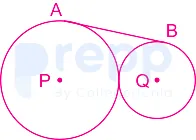
- A
21 cm
- B
18 cm
- C
20 cm
- D
22 cm
Show answer
C. 20 cmGiven:
Radius of large circle = 25 cm
Radius of small circle = 4 cm
Formula used:
Direct common tangent = 2 × √(R × r)
Calculation:
Direct common tangent (AB) = 2 × √(R × r)
⇒ 2 × √(25 × 4)
⇒ 2 × 10 = 20 cm
∴ The correct answer is 20 cm.
Paper & answer key PDF ↗ Question 65archived
If \((y - \frac{1}{y}) = 4\), find the value of \((y^6 + \frac{1}{y^6})\).
- A
5774
- B
4096
- C
5776
- D
5778
Show answer
D. 5778Finding the Value of \(y^6 + \frac{1}{y^6}\) from \(y - \frac{1}{y} = 4\)
This problem requires us to use algebraic identities to find the value of a higher power expression given a simpler one. We are given the equation \(y - \frac{1}{y} = 4\) and asked to find the value of \(y^6 + \frac{1}{y^6}\).
Step-by-Step Solution for \(y^6 + \frac{1}{y^6}\)
We can solve this problem by first finding the value of \(y^2 + \frac{1}{y^2}\), and then using that result to find \(y^6 + \frac{1}{y^6}\).
Step 1: Find the value of \(y^2 + \frac{1}{y^2}\)
We start with the given equation:
\(y - \frac{1}{y} = 4\)
Square both sides of the equation:
\(\left(y - \frac{1}{y}\right)^2 = 4^2\)
Using the algebraic identity \((a-b)^2 = a^2 - 2ab + b^2\), where \(a=y\) and \(b=\frac{1}{y}\):
\(y^2 - 2\left(y\right)\left(\frac{1}{y}\right) + \left(\frac{1}{y}\right)^2 = 16\)
\(y^2 - 2 + \frac{1}{y^2} = 16\)
Add 2 to both sides of the equation:
\(y^2 + \frac{1}{y^2} = 16 + 2\)
\(y^2 + \frac{1}{y^2} = 18\)
So, we have found that \(y^2 + \frac{1}{y^2} = 18\).
Step 2: Find the value of \(y^6 + \frac{1}{y^6}\)
We need to find \(y^6 + \frac{1}{y^6}\). Notice that \(y^6 = (y^2)^3\) and \(\frac{1}{y^6} = \left(\frac{1}{y^2}\right)^3\). This means we need to find the value of \(a^3 + \frac{1}{a^3}\) where \(a = y^2\).
We know \(a + \frac{1}{a} = y^2 + \frac{1}{y^2} = 18\).
We use the algebraic identity \(a^3 + b^3 = (a+b)(a^2 - ab + b^2)\). Or, a more direct identity for terms like this is \(a^3 + \frac{1}{a^3} = \left(a + \frac{1}{a}\right)^3 - 3\left(a + \frac{1}{a}\right)\).
Let \(a = y^2\). Substituting \(a + \frac{1}{a} = 18\) into the identity:
\(y^6 + \frac{1}{y^6} = \left(y^2 + \frac{1}{y^2}\right)^3 - 3\left(y^2 + \frac{1}{y^2}\right)\)
\(y^6 + \frac{1}{y^6} = (18)^3 - 3(18)\)
Calculate the values:
\(18^3 = 18 \times 18 \times 18 = 324 \times 18\)
\(324 \times 18 = 5832\)
\(3 \times 18 = 54\)
Substitute these values back into the equation:
\(y^6 + \frac{1}{y^6} = 5832 - 54\)
\(y^6 + \frac{1}{y^6} = 5778\)
Therefore, the value of \(y^6 + \frac{1}{y^6}\) is 5778.
Revision Table: Key Algebraic Identities
Identity
Formula
Square of a difference
\((a-b)^2 = a^2 - 2ab + b^2\)
Cube of a sum (derived)
\(a^3 + b^3 = (a+b)^3 - 3ab(a+b)\)
Special case for \(b = \frac{1}{a}\)
\(a^3 + \frac{1}{a^3} = \left(a + \frac{1}{a}\right)^3 - 3\left(a + \frac{1}{a}\right)\)
Additional Information on Powers and Identities
Problems involving powers like \(x^n \pm \frac{1}{x^n}\) frequently appear in algebra. Understanding the fundamental algebraic identities is crucial for solving these efficiently. Notice the pattern: if you know \(x \pm \frac{1}{x}\), you can find \(x^2 + \frac{1}{x^2}\). If you know \(x + \frac{1}{x}\), you can find \(x^3 + \frac{1}{x^3}\). To get to \(x^6 + \frac{1}{x^6}\), we can either cube the expression for \(x^2 + \frac{1}{x^2}\) or square the expression for \(x^3 + \frac{1}{x^3}\). Cubing \(y^2 + \frac{1}{y^2}\) is the direct approach using the \(a^3 + \frac{1}{a^3}\) identity as shown above.
Alternatively, from \(y^2 + \frac{1}{y^2} = 18\), we could potentially find \(y^3 \pm \frac{1}{y^3}\) first, but finding \(y^6 + \frac{1}{y^6}\) by cubing \(y^2 + \frac{1}{y^2}\) is more straightforward in this case as we have \(y^2 + \frac{1}{y^2}\) directly available from the initial squaring step.
For example, to find \(y^3 - \frac{1}{y^3}\) from \(y - \frac{1}{y} = 4\), we'd use \((a-b)^3 = a^3 - 3a^2b + 3ab^2 - b^3 = a^3 - b^3 - 3ab(a-b)\), leading to \(a^3 - b^3 = (a-b)^3 + 3ab(a-b)\). So, \(y^3 - \frac{1}{y^3} = \left(y - \frac{1}{y}\right)^3 + 3\left(y - \frac{1}{y}\right) = 4^3 + 3(4) = 64 + 12 = 76\). However, this doesn't directly give us \(y^6 + \frac{1}{y^6}\).
Thus, the method of finding \(y^2 + \frac{1}{y^2}\) first and then cubing it to get \(y^6 + \frac{1}{y^6}\) is the most efficient path here.
Paper & answer key PDF ↗ Question 66archived
The following formula is used to calculate which of the following?
\(\rm \frac{Angle\, of\, arc\, at\, centre}{360^{\circ}} \times \pi \times diameter\)
- A
Length of a sector
- B
Area of an arc
- C
Radius of a circle
- D
Length of an arc
Show answer
D. Length of an arcUnderstanding the Arc Length Formula
The question asks us to identify the quantity calculated by the formula: \(\rm \frac{Angle\, of\, arc\, at\, centre}{360^{\circ}} \times \pi \times diameter\).
Let's break down this formula step by step to understand what it represents.
The formula involves the following components:
Angle of arc at centre: This is the angle subtended by the arc at the very center of the circle. It's usually measured in degrees in this context.
\(360^{\circ}\): This represents the total angle in a full circle.
\(\pi\) (Pi): A mathematical constant approximately equal to 3.14159, representing the ratio of a circle's circumference to its diameter.
Diameter: The distance across the circle passing through its center. The diameter is twice the radius (\(\rm diameter = 2 \times radius\)).
Analyzing the Formula Components
Consider the first part of the formula: \(\rm \frac{Angle\, of\, arc\, at\, centre}{360^{\circ}}\).
This ratio tells us what fraction or proportion of the entire circle's angle is covered by the specific arc in question. For example, if the angle of the arc at the centre is \(90^{\circ}\), the ratio is \(\frac{90^{\circ}}{360^{\circ}} = \frac{1}{4}\), meaning the arc covers one-fourth of the circle.
Now, consider the second part of the formula: \(\rm \pi \times diameter\).
This is the standard formula for the circumference of a circle. The circumference is the total distance around the edge of the circle.
Putting it together, the formula \(\rm \frac{Angle\, of\, arc\, at\, centre}{360^{\circ}} \times \pi \times diameter\) calculates a fraction of the total circumference of the circle. This fraction corresponds exactly to the part of the circumference defined by the arc. Therefore, the formula calculates the length of the arc.
Evaluating the Given Options
Let's look at the options provided:
Length of a sector: A sector is a region of the circle bounded by two radii and the arc between them. Its "length" isn't a standard term; perhaps it refers to the perimeter, which would be the arc length plus two radii, or perhaps the area. The given formula calculates a length (part of the circumference), not an area, and not a perimeter including radii. So, this is incorrect.
Area of an arc: An arc is a curved line segment. A line segment does not have an area. This option is nonsensical.
Radius of a circle: The radius is a line segment from the center to the circumference. The formula involves the diameter (twice the radius) and an angle, and it calculates a length on the circumference, not the radius itself.
Length of an arc: This refers to the distance along the curved line that is the arc. As analyzed above, the formula calculates a fraction of the total circumference, which is precisely the definition of the arc length.
Based on the analysis of the formula and the options, the formula calculates the length of an arc.
Term
Definition
Relationship to Formula
Arc Length
The distance along the curved line of the arc.
Formula calculates a fraction of the circumference, which is the arc length.
Sector
Region bounded by two radii and an arc.
Formula does not calculate the area or perimeter of a sector.
Circumference
Total distance around the circle (\(\rm \pi \times diameter\)).
Formula calculates a portion of the circumference.
Radius
Distance from the center to the circumference.
Related to diameter, but not what the formula directly calculates.
Conclusion
The formula \(\rm \frac{Angle\, of\, arc\, at\, centre}{360^{\circ}} \times \pi \times diameter\) is used to find the length of a portion of the circle's circumference, which is known as the length of an arc.
Revision Table - Key Circle Formulas
Concept
Formula (using radius r, diameter d, angle \(\theta\) in degrees)
Circumference
\(\rm C = \pi d\) or \(\rm C = 2 \pi r\)
Area of Circle
\(\rm A = \pi r^2\) or \(\rm A = \pi (d/2)^2\)
Arc Length
\(\rm L = \frac{\theta}{360^{\circ}} \times 2 \pi r\) or \(\rm L = \frac{\theta}{360^{\circ}} \times \pi d\)
Area of Sector
\(\rm A_{sector} = \frac{\theta}{360^{\circ}} \times \pi r^2\)
Additional Information - Circle Geometry Concepts
Understanding different parts of a circle is crucial for geometry problems. Here are some related concepts:
Circle: A set of all points in a plane that are at a fixed distance (radius) from a fixed point (center).
Radius: A line segment connecting the center of the circle to any point on the circumference.
Diameter: A line segment passing through the center of the circle with endpoints on the circumference. It is the longest chord in a circle.
Chord: A line segment connecting any two points on the circumference.
Secant: A line that intersects a circle at two points.
Tangent: A line that intersects a circle at exactly one point.
Arc: A continuous portion of the circumference of a circle.
Sector: The region of a circle bounded by two radii and the intercepted arc. It looks like a slice of pie.
Segment: The region of a circle bounded by a chord and the arc subtended by the chord.
The formula \(\rm \frac{Angle\, of\, arc\, at\, centre}{360^{\circ}}\) acts as a scaling factor, determining what proportion of the whole circle's measure (like circumference or area) corresponds to the specific arc or sector defined by that angle.
Paper & answer key PDF ↗ Question 67archived
A thief seeing a policeman from a distance of 400 m started running at a speed of 16 km/h. The policeman chased him immediately with a speed of 18 km/h and the thief was caught. What is the distance run by the thief before he was caught by the policeman?
- A
3200 m
- B
3230 m
- C
3240 m
- D
3220 m
Show answer
A. 3200 mGiven:
Distance between policeman and thief = 400 m
Speed of policeman = 18 km/h
Speed of thief = 16 km/h
Formula used:
Distance = relative speed × time
Calculation:
Distance = relative speed × time
⇒ 400 = (18 - 16) × (5/18) × time
⇒ Time = (400 × 18)/(2 × 5)
⇒ Time = 720 sec
Distance covered by thief before being caught = 16 × (5/18) × 720
⇒ 16 × 200 = 3200 m
∴ The correct answer is 3200 m.
Paper & answer key PDF ↗ Question 68archived
A group of men decided to do a job in 13 days but 9 men left the work after each day. The work, as a result, got completed in 16 days. How many men were initially in the group?
- A
378
- B
360
- C
330
- D
380
Show answer
B. 360Understanding the Work and Time Problem
This problem involves calculating the initial number of men required for a job when the workforce changes over time. We are given a planned duration and an actual duration with a decreasing number of workers each day. The total amount of work remains the same in both scenarios.
Setting up the Problem Variables
Let's define the variables:
Let the initial number of men in the group be \(N\).
The planned time to complete the job was 13 days.
The work was actually completed in 16 days.
After each day, 9 men left the work.
Calculating Total Work in the Planned Scenario
If \(N\) men worked for the planned 13 days, the total work done can be calculated as the product of the number of men and the number of days. We can measure work in 'man-days'.
Total Work (Planned) = Number of men \(\times\) Planned days
Total Work (Planned) = \(N \times 13\) man-days
Total Work (Planned) = \(13N\) man-days
Calculating Total Work in the Actual Scenario
In the actual scenario, the number of men working decreased each day for 16 days. Let's list the number of men working on each day:
Day 1: \(N\) men
Day 2: \(N - 9\) men
Day 3: \(N - 2 \times 9\) men
Day 4: \(N - 3 \times 9\) men
...
Day 16: \(N - 15 \times 9\) men
The total work done in the actual scenario is the sum of the man-days worked over these 16 days.
Total Work (Actual) = Sum of (Number of men on day \(k\)) for \(k\) from 1 to 16.
Total Work (Actual) = \(\sum_{k=1}^{16} (N - 9(k-1))\)
This sum can be expanded as:
Total Work (Actual) = \((N - 9 \times 0) + (N - 9 \times 1) + (N - 9 \times 2) + ... + (N - 9 \times 15)\)
This is the sum of an arithmetic series. We can rewrite the sum as:
Total Work (Actual) = \(\sum_{k=1}^{16} N - \sum_{k=1}^{16} 9(k-1)\)
Total Work (Actual) = \(16N - 9 \sum_{k=1}^{16} (k-1)\)
The summation \(\sum_{k=1}^{16} (k-1)\) is the sum of the first 15 non-negative integers (0, 1, 2, ..., 15). The sum of the first \(m\) integers (starting from 1) is \(\frac{m(m+1)}{2}\). Here, we sum from 0 to 15, which is the same as summing from 1 to 15, adding 0. So, the sum is \(\frac{15(15+1)}{2} = \frac{15 \times 16}{2} = 15 \times 8 = 120\).
So, Total Work (Actual) = \(16N - 9 \times 120\)
Total Work (Actual) = \(16N - 1080\) man-days
Equating Total Work and Solving for the Initial Number of Men
Since the same job was completed in both scenarios, the total work done must be equal.
Total Work (Planned) = Total Work (Actual)
\(13N = 16N - 1080\)
Now, we need to solve this equation for \(N\).
Subtract \(13N\) from both sides:
\(0 = 16N - 13N - 1080\)
\(0 = 3N - 1080\)
Add 1080 to both sides:
\(1080 = 3N\)
Divide by 3:
\(N = \frac{1080}{3}\)
\(N = 360\)
Conclusion
The initial number of men in the group was 360.
Let's quickly check:
Planned work: 360 men \(\times\) 13 days = 4680 man-days.
Actual work: Sum of men for 16 days. Men on day 1 = 360, Day 2 = 351, ..., Day 16 = \(360 - 15 \times 9 = 225\). This is an arithmetic series with first term 360, last term 225, and 16 terms. Sum = \(\frac{16}{2}(360 + 225) = 8 \times 585 = 4680\) man-days.
The total work matches, confirming the initial number of men is correct.
Scenario
Number of Men
Number of Days
Total Work (man-days)
Planned
\(N\)
13
\(13N\)
Actual
Decreasing by 9 each day (Arithmetic Series)
16
\(16N - 1080\)
Revision Table: Key Concepts in Work and Time Problems
Concept
Explanation
Formula/Idea
Total Work
Often measured in man-days (or units of workers \(\times\) time). Represents the total effort needed to complete the job.
Work = Number of Workers \(\times\) Time
Constant Work
When the same job is done under different conditions (varying workers/time), the total work remains the same.
Work\(_{Scenario 1}\) = Work\(_{Scenario 2}\)
Varying Workforce
If the number of workers changes over time, the total work is the sum of work done each day (or time unit) with the respective number of workers.
Total Work = \(\sum\) (Workers on day \(i\) \(\times\) 1 day)
Arithmetic Progression (AP)
A sequence where the difference between consecutive terms is constant. Useful for sum of workers when the number changes uniformly.
Sum of AP = \(\frac{n}{2} (a + l)\) or \(\frac{n}{2} (2a + (n-1)d)\), where \(n\) is number of terms, \(a\) is first term, \(l\) is last term, \(d\) is common difference.
Additional Information: Solving Work Problems with Arithmetic Progression
When the number of workers increases or decreases by a fixed amount each day, the total work calculation over several days involves the sum of an arithmetic progression. In this specific problem, the number of men on consecutive days formed an arithmetic progression with the first term \(N\) and a common difference of \(-9\). The terms were \(N, N-9, N-18, ..., N-9(16-1)\). To find the total work, we summed these terms over 16 days.
The sum of an arithmetic progression is given by the formula \(S_n = \frac{n}{2}(2a + (n-1)d)\), where \(S_n\) is the sum of the first \(n\) terms, \(a\) is the first term, and \(d\) is the common difference.
In our case:
\(n = 16\) (number of days)
\(a = N\) (initial number of men)
\(d = -9\) (decrease in men each day)
So, the total work (actual) is \(S_{16} = \frac{16}{2}(2N + (16-1)(-9)) = 8(2N + 15(-9)) = 8(2N - 135) = 16N - 1080\). This matches the sum calculated earlier by summing 0 to 15 and multiplying by 9, then subtracting from 16N.
This method provides a structured way to calculate the total work done by a workforce that changes consistently over time.
Paper & answer key PDF ↗ Question 69archived
Applied to a bill for Rs. 50,000, the difference between a discount of 40% and two successive discounts of 36% and 4%, is:
- A
Rs. 875
- B
Rs. 1,440
- C
Rs. 1,250
- D
Rs. 720
Show answer
D. Rs. 720Calculating the Difference Between Single and Successive Discounts
The problem asks us to find the difference between applying a single discount of 40% on a bill of Rs. 50,000 and applying two successive discounts of 36% and 4% on the same bill amount.
Scenario 1: Single Discount of 40%
First, let's calculate the amount of discount when a single discount of 40% is applied to the bill of Rs. 50,000.
Discount Amount = \( 40\% \text{ of Rs. } 50,000 \)
Discount Amount = \( \left( \frac{40}{100} \right) \times 50,000 \)
Discount Amount = \( 0.40 \times 50,000 \)
Discount Amount = \( \text{Rs. } 20,000 \)
The final amount after this discount would be \( 50,000 - 20,000 = \text{Rs. } 30,000 \).
Scenario 2: Two Successive Discounts of 36% and 4%
Now, let's calculate the final amount after applying two successive discounts of 36% and 4%.
We can calculate the effect of successive discounts step-by-step:
First Discount (36%): This is applied to the original amount of Rs. 50,000.
First Discount Amount = \( 36\% \text{ of Rs. } 50,000 \)
First Discount Amount = \( \left( \frac{36}{100} \right) \times 50,000 \)
First Discount Amount = \( 0.36 \times 50,000 \)
First Discount Amount = \( \text{Rs. } 18,000 \)
Amount remaining after the first discount = \( 50,000 - 18,000 = \text{Rs. } 32,000 \).
Second Discount (4%): This is applied to the amount remaining after the first discount, which is Rs. 32,000.
Second Discount Amount = \( 4\% \text{ of Rs. } 32,000 \)
Second Discount Amount = \( \left( \frac{4}{100} \right) \times 32,000 \)
Second Discount Amount = \( 0.04 \times 32,000 \)
Second Discount Amount = \( \text{Rs. } 1,280 \)
Amount remaining after the second discount = \( 32,000 - 1,280 = \text{Rs. } 30,720 \).
The total discount in this scenario is the sum of the two discount amounts: \( 18,000 + 1,280 = \text{Rs. } 19,280 \).
Alternatively, we can calculate the single equivalent discount percentage for two successive discounts of d1% and d2% using the formula:
Single Equivalent Discount \( = \left( d_1 + d_2 - \frac{d_1 \times d_2}{100} \right)\% \)
Here, \( d_1 = 36\% \) and \( d_2 = 4\% \).
Single Equivalent Discount \( = \left( 36 + 4 - \frac{36 \times 4}{100} \right)\% \)
Single Equivalent Discount \( = \left( 40 - \frac{144}{100} \right)\% \)
Single Equivalent Discount \( = (40 - 1.44)\% \)
Single Equivalent Discount \( = 38.56\% \)
Total successive discount amount = \( 38.56\% \text{ of Rs. } 50,000 \)
Total successive discount amount = \( \left( \frac{38.56}{100} \right) \times 50,000 \)
Total successive discount amount = \( 0.3856 \times 50,000 \)
Total successive discount amount = \( \text{Rs. } 19,280 \)
Both methods give the same total discount amount for the successive discounts.
Finding the Difference Between the Discounts
We need to find the difference between the total discount in Scenario 1 and the total discount in Scenario 2.
Total discount (single 40%) = Rs. 20,000
Total discount (36% and 4% successive) = Rs. 19,280
Difference in discounts = Total discount (single) - Total discount (successive)
Difference in discounts = \( \text{Rs. } 20,000 - \text{Rs. } 19,280 \)
Difference in discounts = \( \text{Rs. } 720 \)
The difference between a single discount of 40% and two successive discounts of 36% and 4% on a bill for Rs. 50,000 is Rs. 720.
Revision Table: Discount Calculations
Scenario
Discount Calculation
Total Discount Amount
Final Amount
Single 40% Discount
\( 40\% \text{ of } 50,000 = 20,000 \)
Rs. 20,000
Rs. 30,000
Successive 36% and 4% Discounts
1st: \( 36\% \text{ of } 50,000 = 18,000 \)
2nd: \( 4\% \text{ of } (50,000-18,000) = 4\% \text{ of } 32,000 = 1,280 \)
Total: \( 18,000 + 1,280 = 19,280 \)
Rs. 19,280
Rs. 30,720
Difference
Rs. 20,000 - Rs. 19,280
Rs. 720
Additional Information on Successive Discounts
Successive discounts are applied one after another on the remaining amount after the previous discount has been applied. A single discount percentage equivalent to two successive discounts \( d_1\% \) and \( d_2\% \) is always less than the sum of the individual discounts \( (d_1 + d_2)\% \). This is because the second discount is applied to a smaller base amount (the price after the first discount) rather than the original price.
In this problem, the sum of individual successive discounts is \( 36\% + 4\% = 40\% \), which is equal to the single discount. However, the actual combined effect of the successive discounts is a single equivalent discount of only 38.56%, which is less than 40%. This difference (40% - 38.56% = 1.44%) applied to the original amount (1.44% of 50,000 = Rs. 720) accounts for the difference in the total discount received in the two scenarios.
Paper & answer key PDF ↗ Question 70archived
Raju and Rajat working together take 5 days to complete a piece of work. If Raju alone can do this work in 7 days, how long would Rajat take to complete the same work?
- A
18 days
- B
16.5 days
- C
17 days
- D
17.5 days
Show answer
D. 17.5 daysCalculating Work and Time: Raju and Rajat's Task
This problem involves calculating individual work rates and combined work rates to find the time taken by one person when the combined time and another person's individual time are known. It's a classic work and time problem frequently seen in aptitude tests.
Understanding the Concept of Work Rate
The work rate of a person is the amount of work they can complete in one unit of time (usually one day). If a person completes a whole work in 'n' days, their work rate per day is \( \frac{1}{n} \).
Analyzing the Given Information
Raju and Rajat together complete the work in 5 days.
Raju alone completes the work in 7 days.
We need to find the time Rajat alone takes to complete the same work.
Calculating Individual and Combined Work Rates
The combined work rate of Raju and Rajat is \( \frac{1}{5} \) of the work per day.
Raju's individual work rate is \( \frac{1}{7} \) of the work per day.
Let Rajat take 'x' days to complete the work alone. Rajat's individual work rate is \( \frac{1}{x} \) of the work per day.
Setting up the Equation for Combined Work Rate
The combined work rate is the sum of the individual work rates. So, we can write the equation:
\( \text{Combined Work Rate} = \text{Raju's Work Rate} + \text{Rajat's Work Rate} \)
\( \frac{1}{5} = \frac{1}{7} + \frac{1}{x} \)
Solving for Rajat's Time
To find the time Rajat takes, we need to solve this equation for \( \frac{1}{x} \), which is Rajat's work rate.
Subtract Raju's work rate from the combined work rate:
\( \frac{1}{x} = \frac{1}{5} - \frac{1}{7} \)
Find a common denominator for the fractions on the right side. The least common multiple of 5 and 7 is 35.
\( \frac{1}{x} = \frac{1 \times 7}{5 \times 7} - \frac{1 \times 5}{7 \times 5} \)
\( \frac{1}{x} = \frac{7}{35} - \frac{5}{35} \)
Subtract the fractions:
\( \frac{1}{x} = \frac{7 - 5}{35} \)
\( \frac{1}{x} = \frac{2}{35} \)
Since \( \frac{1}{x} \) is Rajat's work rate per day, 'x' is the number of days Rajat takes to complete the work. To find 'x', we take the reciprocal of \( \frac{2}{35} \).
\( x = \frac{35}{2} \)
Convert the fraction to a decimal:
\( x = 17.5 \)
Conclusion
Rajat would take 17.5 days to complete the same work alone.
Revision Table: Work and Time Calculation
Individual/Combined
Time Taken (Days)
Work Rate (Work/Day)
Raju and Rajat (Together)
5
\( \frac{1}{5} \)
Raju (Alone)
7
\( \frac{1}{7} \)
Rajat (Alone)
\( x \)
\( \frac{1}{x} \)
Relationship
-
\( \frac{1}{5} = \frac{1}{7} + \frac{1}{x} \)
Additional Information: Work and Time Concepts
Work and Time problems are common in competitive exams. Key concepts include:
Total Work: Often assumed to be 1 unit or a common multiple of the individual times to simplify calculations.
Efficiency: Work rate is directly proportional to efficiency. A more efficient person has a higher work rate and takes less time.
Relationship between Work, Rate, and Time: Work = Rate × Time. If work is constant, Rate is inversely proportional to Time.
Multiple Workers: When multiple people work together, their individual work rates are added to find the combined work rate.
Understanding these concepts helps in solving variations of work and time problems involving different scenarios like alternating days, different efficiencies, or partial work completion.
Paper & answer key PDF ↗ Question 71archived
Out of the total toffees, \(\frac{1}{10}\) are wasted. 35% of the rest are given to S and \(\frac{1}{8}\) of the total are given to N. If the toffees with N are 10 more than the wasted toffees, then how many toffees were given to S?
- A
126
- B
150
- C
110
- D
135
Show answer
A. 126Solving the Toffee Distribution Problem
This problem involves fractions and percentages to determine the number of toffees distributed in different ways. We are given information about wasted toffees, toffees given to S, toffees given to N, and a relationship between the toffees given to N and the wasted toffees. Our goal is to find the number of toffees given to S.
Understanding the Given Information
Let the total number of toffees be \(T\).
Wasted toffees: \(\frac{1}{10}\) of the total toffees. So, wasted toffees \( = \frac{1}{10} T\).
Rest of the toffees: Total toffees minus wasted toffees. Rest \( = T - \frac{1}{10} T = \frac{9}{10} T\).
Toffees given to S: 35% of the rest of the toffees. So, S's toffees \( = 35\% \text{ of } (\frac{9}{10} T) = 0.35 \times \frac{9}{10} T\).
Toffees given to N: \(\frac{1}{8}\) of the total toffees. So, N's toffees \( = \frac{1}{8} T\).
Relationship between N and wasted toffees: Toffees with N are 10 more than the wasted toffees. This gives us an equation: N's toffees \( = \) Wasted toffees \( + 10\).
Setting up and Solving the Equation for Total Toffees
Using the relationship between N's toffees and wasted toffees, we can write the equation:
\(\frac{1}{8} T = \frac{1}{10} T + 10\)
To solve for \(T\), we need to get all terms with \(T\) on one side:
\(\frac{1}{8} T - \frac{1}{10} T = 10\)
Find a common denominator for \(\frac{1}{8}\) and \(\frac{1}{10}\). The least common multiple of 8 and 10 is 40.
\(\frac{5}{40} T - \frac{4}{40} T = 10\)
\(\frac{5 - 4}{40} T = 10\)
\(\frac{1}{40} T = 10\)
Multiply both sides by 40 to isolate \(T\):
\(T = 10 \times 40\)
\(T = 400\)
So, the total number of toffees is 400.
Calculating Wasted Toffees and N's Toffees
Wasted toffees \( = \frac{1}{10} T = \frac{1}{10} \times 400 = 40\).
N's toffees \( = \frac{1}{8} T = \frac{1}{8} \times 400 = 50\).
Let's check the relationship: N's toffees (50) should be 10 more than wasted toffees (40). \(50 = 40 + 10\). The relationship holds true, confirming our total toffees calculation.
Calculating the Rest of the Toffees
The rest of the toffees are the total toffees minus the wasted ones.
Rest of the toffees \( = T - \) Wasted toffees \( = 400 - 40 = 360\).
Calculating S's Toffees
S was given 35% of the rest of the toffees.
S's toffees \( = 35\% \text{ of } 360\)
To convert 35% to a decimal or fraction: \(35\% = \frac{35}{100} = 0.35\).
S's toffees \( = 0.35 \times 360\)
We can calculate this as follows:
\(0.35 \times 360 = \frac{35}{100} \times 360 = \frac{7}{20} \times 360\)
\( = 7 \times \frac{360}{20} = 7 \times 18\)
\(7 \times 18 = 126\)
So, 126 toffees were given to S.
Summary of Toffee Distribution
Category
Calculation
Number of Toffees
Total Toffees
\(T\)
400
Wasted Toffees
\(\frac{1}{10} \times 400\)
40
N's Toffees
\(\frac{1}{8} \times 400\)
50
Rest of Toffees
\(400 - 40\)
360
S's Toffees
35% of 360
126
The number of toffees given to S is 126.
Revision Table: Key Concepts
Concept
Explanation
Formula/Example
Fractions
Represent a part of a whole. E.g., \(\frac{1}{10}\) of \(T\).
\(\frac{\text{Numerator}}{\text{Denominator}}\)
Percentages
Represent a part of 100. Can be written as a decimal or fraction. E.g., 35%.
\(35\% = \frac{35}{100} = 0.35\)
Algebraic Equation
A statement that two expressions are equal. Used here to find the total (\(T\)).
\(\frac{1}{8} T = \frac{1}{10} T + 10\)
Solving Linear Equations
Using inverse operations to isolate the variable (like \(T\)).
\(ax + b = cx + d \implies (a-c)x = d-b\)
Additional Information: Working with Fractions and Percentages
When solving problems involving both fractions and percentages, it's often helpful to convert them to the same format, either all fractions or all decimals. In this problem, 35% was converted to the decimal 0.35 or the fraction \(\frac{35}{100}\) (or simplified \(\frac{7}{20}\)) to perform calculations with the other fractions (\(\frac{1}{10}\) and \(\frac{1}{8}\)).
Remember the relationship:
Decimal = Percentage / 100
Fraction = Decimal (usually in simplest form)
Percentage = Decimal * 100
For example:
\(\frac{1}{10} = 0.1 = 10\%\)
\(\frac{1}{8} = 0.125 = 12.5\%\)
\(0.35 = \frac{35}{100} = \frac{7}{20} = 35\%\)
Choosing the format depends on the calculation. For solving the equation \(\frac{1}{8} T - \frac{1}{10} T = 10\), keeping them as fractions was efficient using a common denominator. For calculating 35% of the rest, converting to a decimal (0.35) or a simplified fraction (\(\frac{7}{20}\)) made the final multiplication easier.
Paper & answer key PDF ↗ Question 72archived
A field is 150 m long and 80 wide. How many times (rounded off to 1 decimal place) is its perimeter to the length of its diagonal?
- A
2.3
- B
2.5
- C
2.7
- D
3.1
Show answer
C. 2.7Calculating Perimeter to Diagonal Ratio of a Rectangle
Let's break down how to find the ratio of the perimeter to the diagonal of a rectangular field.
We are given the dimensions of the rectangular field:
Length ($L$) = 150 m
Width ($W$) = 80 m
Step 1: Calculate the Perimeter of the Rectangle
The formula for the perimeter ($P$) of a rectangle is:
$$P = 2 \times (L + W)$$
Substituting the given values:
$$P = 2 \times (150 \text{ m} + 80 \text{ m})$$
$$P = 2 \times (230 \text{ m})$$
$$P = 460 \text{ m}$$
The perimeter of the field is 460 m.
Step 2: Calculate the Length of the Diagonal
The diagonal of a rectangle forms a right-angled triangle with the length and width. We can use the Pythagorean theorem to find the length of the diagonal ($D$). The Pythagorean theorem states:
$$a^2 + b^2 = c^2$$
Where $a$ and $b$ are the lengths of the two shorter sides (length and width in this case), and $c$ is the length of the hypotenuse (the diagonal).
So, the formula for the diagonal is:
$$D = \sqrt{L^2 + W^2}$$
Substituting the given values:
$$D = \sqrt{(150 \text{ m})^2 + (80 \text{ m})^2}$$
$$D = \sqrt{22500 \text{ m}^2 + 6400 \text{ m}^2}$$
$$D = \sqrt{28900 \text{ m}^2}$$
$$D = 170 \text{ m}$$
The length of the diagonal is 170 m.
Step 3: Calculate the Ratio of Perimeter to Diagonal
We need to find out how many times the perimeter is to the length of the diagonal. This is calculated by dividing the perimeter by the diagonal length:
$$\text{Ratio} = \frac{\text{Perimeter}}{\text{Diagonal}}$$
$$\text{Ratio} = \frac{460 \text{ m}}{170 \text{ m}}$$
$$\text{Ratio} = \frac{46}{17}$$
Now, perform the division:
$$\frac{46}{17} \approx 2.70588...$$
Step 4: Round the Ratio to One Decimal Place
The question asks for the ratio rounded off to 1 decimal place.
The calculated ratio is approximately 2.70588... The digit in the second decimal place is 0, which is less than 5. Therefore, we round down.
Rounded ratio $\approx 2.7$
So, the perimeter is approximately 2.7 times the length of its diagonal.
Calculation Item
Formula
Value
Length ($L$)
Given
150 m
Width ($W$)
Given
80 m
Perimeter ($P$)
$2 \times (L + W)$
460 m
Diagonal ($D$)
$\sqrt{L^2 + W^2}$
170 m
Ratio ($P/D$)
$P/D$
460 m / 170 m $\approx$ 2.70588...
Rounded Ratio (1 d.p.)
Rounded $P/D$
2.7
Revision Table: Key Geometric Concepts
Concept
Definition
Formula (for a rectangle)
Perimeter
The total distance around the boundary of a 2D shape.
$P = 2 \times (\text{length} + \text{width})$
Diagonal
A line segment connecting two non-adjacent vertices of a polygon.
$D = \sqrt{\text{length}^2 + \text{width}^2}$ (using Pythagorean theorem)
Pythagorean Theorem
In a right-angled triangle, the square of the hypotenuse is equal to the sum of the squares of the other two sides ($a^2 + b^2 = c^2$).
Applicable to find the diagonal using length and width as sides.
Additional Information on Rectangles and Diagonals
Rectangles are quadrilaterals with four right angles. Key properties include:
Opposite sides are equal in length and parallel.
All interior angles are 90 degrees.
The two diagonals are equal in length.
The diagonals bisect each other.
The diagonal divides the rectangle into two congruent right-angled triangles. This is why the Pythagorean theorem is crucial for calculating the diagonal length when you know the length and width.
The ratio of the perimeter to the diagonal depends on the proportions (aspect ratio) of the rectangle. For a square (where length = width), the ratio is $4L / \sqrt{L^2 + L^2} = 4L / \sqrt{2L^2} = 4L / (L\sqrt{2}) = 4/\sqrt{2} = 2\sqrt{2} \approx 2.828$. For a very long, thin rectangle, the ratio becomes much larger.
Paper & answer key PDF ↗ Question 73archived
When two circles of radii r1 and r2 have their centres at a distance d apart, then length of the common transverse tangent is:
- A
\(\sqrt{d^2 - (r_1 - r_2)^2}\)
- B
\(\sqrt{d^2 + (r_1 - r_2)^2}\)
- C
\(\sqrt{d - (r_1 - r_2)^2}\)
- D
\(\sqrt{d^2 - (r_1 + r_2)^2}\)
Show answer
D. \(\sqrt{d^2 - (r_1 + r_2)^2}\)Understanding Common Transverse Tangents
This question asks for the formula to calculate the length of a common transverse tangent connecting two circles. Let's first understand what common tangents are and specifically, what a common transverse tangent is.
A common tangent is a line that is tangent to two circles.
There are two types: common direct tangents and common transverse tangents.
A common direct tangent keeps both circles on the same side of the tangent line.
A common transverse tangent (also called a common internal tangent) crosses the line segment joining the centers of the two circles. The circles are on opposite sides of the tangent line.
Deriving the Formula for Common Transverse Tangent Length
Let's consider two circles with centers \(C_1\) and \(C_2\) and radii \(r_1\) and \(r_2\), respectively. The distance between their centers is given as \(d\).
We want to find the length of the common transverse tangent, let's call it \(L\). Imagine a common transverse tangent line touching the first circle at point \(A\) and the second circle at point \(B\). The line segment \(AB\) is the common transverse tangent.
The radius at the point of tangency is perpendicular to the tangent line. So, \(C_1A \perp AB\) and \(C_2B \perp AB\). The lengths of these radii are \(C_1A = r_1\) and \(C_2B = r_2\).
To find the length \(AB\), we can construct a right-angled triangle using the distance between the centers and the radii. Consider drawing a line through \(C_2\) parallel to the tangent \(AB\). This line will intersect the radius \(C_1A\) extended at a point, let's call it \(P\).
Now, consider the quadrilateral \(ABC_2Q\), where \(Q\) is the foot of the perpendicular from \(C_1\) to the line through \(C_2\) parallel to \(AB\). Due to the parallel line construction, \(ABC_2P\) (if we drop a perpendicular from \(C_1\) to \(PC_2\)) forms a rectangle in a related construction, or here, the segment \(C_2P\) is parallel to \(AB\) and equal in length to \(AB\). The line \(C_1P\) is perpendicular to \(C_2P\).
In the right triangle \(C_1PC_2\), the angle at \(P\) is \(90^\circ\). The length of the hypotenuse is the distance between centers, \(C_1C_2 = d\).
The side \(PC_2\) is parallel and equal in length to the tangent \(AB\). So, \(PC_2 = AB = L\).
The side \(C_1P\) is the sum of the radius \(C_1A\) and the segment \(AP\). Because \(APC_2B\) forms a rectangle (by dropping a perpendicular from \(A\) to \(C_2P\)), \(AP = C_2B = r_2\). Therefore, \(C_1P = C_1A + AP = r_1 + r_2\).
Applying the Pythagorean theorem to the right triangle \(C_1PC_2\):
\(C_1C_2^2 = C_1P^2 + PC_2^2\)
\(d^2 = (r_1 + r_2)^2 + L^2\)
Now, we solve for the length \(L\):
\(L^2 = d^2 - (r_1 + r_2)^2\)
\(L = \sqrt{d^2 - (r_1 + r_2)^2}\)
This formula gives the length of the common transverse tangent between the two circles.
Comparing with Given Options
Let's compare our derived formula with the provided options:
Option 1: \(\sqrt{d^2 - (r_1 - r_2)^2}\) - This is the formula for the common direct tangent length.
Option 2: \(\sqrt{d^2 + (r_1 - r_2)^2}\) - This does not match our derivation.
Option 3: \(\sqrt{d - (r_1 - r_2)^2}\) - This does not match our derivation. The term \(d\) is not squared under the square root.
Option 4: \(\sqrt{d^2 - (r_1 + r_2)^2}\) - This matches our derived formula.
Thus, the length of the common transverse tangent is \(\sqrt{d^2 - (r_1 + r_2)^2}\).
Revision Table: Common Tangent Lengths
Type of Common Tangent
Formula for Length (L)
Conditions for Existence
Common Direct Tangent
\(L = \sqrt{d^2 - (r_1 - r_2)^2}\)
\(d > |r_1 - r_2|\) (Usually assumes non-intersecting or externally tangent circles, \(d \ge r_1 + r_2\))
Common Transverse Tangent
\(L = \sqrt{d^2 - (r_1 + r_2)^2}\)
\(d > r_1 + r_2\) (Circles are external to each other)
Additional Information: Conditions for Common Tangents
The number of common tangents that can be drawn between two circles depends on the distance between their centers (\(d\)) and their radii (\(r_1\), \(r_2\)). Assume \(r_1 \ge r_2\) without loss of generality.
If \(d > r_1 + r_2\): The circles are external to each other and do not intersect. There are four common tangents (2 direct, 2 transverse). The formulas derived apply in this case.
If \(d = r_1 + r_2\): The circles touch externally at one point. There are three common tangents (2 direct, 1 transverse passing through the point of contact, its length is 0 based on the formula).
If \(|r_1 - r_2| < d < r_1 + r_2\): The circles intersect at two points. There are two common direct tangents. Common transverse tangents do not exist.
If \(d = |r_1 - r_2|\): The circles touch internally at one point. There is one common direct tangent. Common transverse tangents do not exist.
If \(d < |r_1 - r_2|\): One circle is completely inside the other without touching. There are no common tangents.
If \(d = 0\): The circles are concentric. No common tangents exist unless the radii are equal, in which case they are the same circle, having infinite tangents.
The formula for the transverse tangent length \(\sqrt{d^2 - (r_1 + r_2)^2}\) is only valid when the circles are external to each other and \(d > r_1 + r_2\), which ensures that the term under the square root is positive.
Paper & answer key PDF ↗ Question 74archived
If cot A = 1, sin B = \(\frac{1}{\sqrt{2}}\), then find the value of sin(A + B) - cot(A + B).
- A
\(1 - \sqrt{2}\)
- B
\(\frac{1}{2}\)
- C
0
- D
1
Show answer
D. 1Solving Trigonometric Expressions: Finding sin(A+B) - cot(A+B)
We are given two pieces of information about angles A and B: \(\cot A = 1\) and \(\sin B = \frac{1}{\sqrt{2}}\). Our goal is to find the value of the expression \(\sin(A + B) - \cot(A + B)\).
To solve this, we first need to determine the values of angles A and B based on the given trigonometric ratios. We will assume that A and B are acute angles (between \(0^\circ\) and \(90^\circ\)) as this is a common context for such problems and leads to a defined solution among the options.
Step-by-Step Calculation
Finding Angle A
We are given \(\cot A = 1\).
Recall that the cotangent function is the reciprocal of the tangent function, i.e., \(\cot A = \frac{1}{\tan A}\). So, \(\tan A = \frac{1}{\cot A} = \frac{1}{1} = 1\).
We know that \(\tan 45^\circ = 1\). Therefore, assuming A is an acute angle:
\[A = 45^\circ\]
Finding Angle B
We are given \(\sin B = \frac{1}{\sqrt{2}}\).
We know that \(\sin 45^\circ = \frac{1}{\sqrt{2}}\). Therefore, assuming B is an acute angle:
\[B = 45^\circ\]
Calculating A + B
Now that we have the values for A and B, we can find their sum:
\[A + B = 45^\circ + 45^\circ = 90^\circ\]
Calculating sin(A + B)
Next, we find the sine of the sum of the angles:
\[\sin(A + B) = \sin(90^\circ)\]
The sine of \(90^\circ\) is 1.
\[\sin(A + B) = 1\]
Calculating cot(A + B)
Now, we find the cotangent of the sum of the angles:
\[\cot(A + B) = \cot(90^\circ)\]
The cotangent of \(90^\circ\) is the ratio of \(\cos 90^\circ\) to \(\sin 90^\circ\).
\(\cos 90^\circ = 0\)
\(\sin 90^\circ = 1\)
\[\cot(90^\circ) = \frac{\cos 90^\circ}{\sin 90^\circ} = \frac{0}{1} = 0\]
Finding the Value of the Expression
Finally, we substitute the values of \(\sin(A + B)\) and \(\cot(A + B)\) into the given expression:
\[\sin(A + B) - \cot(A + B) = 1 - 0\]
\[\sin(A + B) - \cot(A + B) = 1\]
The value of the expression \(\sin(A + B) - \cot(A + B)\) is 1.
Summary of Results
Given \(\cot A = 1\), assuming A is acute, \(A = 45^\circ\).
Given \(\sin B = \frac{1}{\sqrt{2}}\), assuming B is acute, \(B = 45^\circ\).
\(A + B = 45^\circ + 45^\circ = 90^\circ\).
\(\sin(A + B) = \sin(90^\circ) = 1\).
\(\cot(A + B) = \cot(90^\circ) = 0\).
\(\sin(A + B) - \cot(A + B) = 1 - 0 = 1\).
This result matches one of the provided options.
Revision Table: Common Trigonometric Values
Angle (\(\theta\))
\(\sin(\theta)\)
\(\cos(\theta)\)
\(\tan(\theta)\)
\(\cot(\theta)\)
\(0^\circ\)
0
1
0
Undefined
\(30^\circ\)
\(\frac{1}{2}\)
\(\frac{\sqrt{3}}{2}\)
\(\frac{1}{\sqrt{3}}\)
\(\sqrt{3}\)
\(45^\circ\)
\(\frac{1}{\sqrt{2}}\)
\(\frac{1}{\sqrt{2}}\)
1
1
\(60^\circ\)
\(\frac{\sqrt{3}}{2}\)
\(\frac{1}{2}\)
\(\sqrt{3}\)
\(\frac{1}{\sqrt{3}}\)
\(90^\circ\)
1
0
Undefined
0
Additional Information: Trigonometric Identities and Angles
This problem relied on knowing the basic trigonometric values for standard angles. It's important to remember the definitions of the trigonometric functions and their values for angles like \(0^\circ, 30^\circ, 45^\circ, 60^\circ, \) and \(90^\circ\). The cotangent function is defined as \(\cot \theta = \frac{\cos \theta}{\sin \theta}\). This definition is crucial for understanding why \(\cot 90^\circ\) is 0 (\(\cos 90^\circ = 0, \sin 90^\circ = 1\)) and why \(\cot 0^\circ\) is undefined (\(\cos 0^\circ = 1, \sin 0^\circ = 0\), division by zero).
While we assumed acute angles here, trigonometric functions have values for all angles. For example, \(\sin B = \frac{1}{\sqrt{2}}\) also holds for \(B = 135^\circ\). If we had used \(A = 45^\circ\) and \(B = 135^\circ\), then \(A+B = 180^\circ\). In that case, \(\sin(A+B) = \sin(180^\circ) = 0\), but \(\cot(A+B) = \cot(180^\circ)\) is undefined, which would not lead to one of the numerical options. This reinforces that assuming acute angles was necessary to arrive at a valid option from the choices given.
Paper & answer key PDF ↗ Question 75archived
If x2 - 15x + 1 = 0, what is the value of x4 - 223x2 + 6?
- A
9
- B
5
- C
6
- D
0
Show answer
B. 5Understanding the Algebra Problem
We are given a quadratic equation relating to the variable \(\small x\): \(\small x^2 - 15x + 1 = 0\). Our goal is to find the value of a specific polynomial expression involving powers of \(\small x\): \(\small x^4 - 223x^2 + 6\). To solve this, we need to use the information from the given equation to simplify and evaluate the target expression.
Step-by-Step Solution
The most straightforward way to solve this type of problem is often to use substitution. We can rearrange the given equation to express \(\small x^2\) in terms of \(\small x\) and a constant, and then substitute this into the expression we need to evaluate.
Step 1: Expressing \(\small x^2\) from the Given Equation
From the given equation:
\(\small x^2 - 15x + 1 = 0\)
We can isolate the \(\small x^2\) term:
\(\small x^2 = 15x - 1\)
This gives us a simple expression for \(\small x^2\) that we can use in the target polynomial.
Step 2: Substituting \(\small x^2\) into the Target Expression
The expression we need to evaluate is \(\small x^4 - 223x^2 + 6\). We know that \(\small x^4 = (x^2)^2\). So, we can substitute the expression for \(\small x^2\) from Step 1 into the target expression.
Substitute \(\small x^2 = 15x - 1\) into the expression \(\small x^4 - 223x^2 + 6\):
\(\small (15x - 1)^2 - 223(15x - 1) + 6\)
Step 3: Expanding and Simplifying the Expression
Now, we need to expand and simplify the substituted expression. We'll start by expanding \(\small (15x - 1)^2\) and distributing the \(\small -223\) term.
Expand \(\small (15x - 1)^2\) using the formula \(\small (a-b)^2 = a^2 - 2ab + b^2\):
\(\small (15x)^2 - 2(15x)(1) + 1^2 = 225x^2 - 30x + 1\)
Now substitute this back and distribute \(\small -223\):
\(\small (225x^2 - 30x + 1) - (223 \times 15x) - (223 \times -1) + 6\)
\(\small 225x^2 - 30x + 1 - 3345x + 223 + 6\)
Combine the like terms (\(\small x^2\) terms, \(\small x\) terms, and constant terms):
\(\small (225x^2) + (-30x - 3345x) + (1 + 223 + 6)\)
\(\small 225x^2 - 3375x + 230\)
Step 4: Further Substitution and Final Calculation
The simplified expression is \(\small 225x^2 - 3375x + 230\). We still have an \(\small x^2\) term. We can use the original equation again, \(\small x^2 = 15x - 1\), to substitute into this new expression.
Substitute \(\small x^2 = 15x - 1\) into \(\small 225x^2 - 3375x + 230\):
\(\small 225(15x - 1) - 3375x + 230\)
Distribute the \(\small 225\):
\(\small (225 \times 15x) - (225 \times 1) - 3375x + 230\)
\(\small 3375x - 225 - 3375x + 230\)
Combine the like terms:
\(\small (3375x - 3375x) + (-225 + 230)\)
\(\small 0 + 5 = 5\)
The value of the expression \(\small x^4 - 223x^2 + 6\) is 5.
Final Answer Determination
Based on the step-by-step algebraic manipulation and substitution, the value of the expression \(\small x^4 - 223x^2 + 6\) when \(\small x^2 - 15x + 1 = 0\) is 5.
Revision Table: Key Concepts in Algebraic Problems
Concept
Description
Application in this Problem
Algebraic Substitution
Replacing a variable or expression with another equivalent expression.
Used to substitute \(\small x^2\) with \(\small 15x - 1\) multiple times.
Expanding Expressions
Multiplying out terms in parentheses, e.g., using \(\small (a-b)^2\) formula.
Used to expand \(\small (15x - 1)^2\).
Combining Like Terms
Adding or subtracting terms that have the same variable raised to the same power.
Used multiple times to simplify polynomial expressions.
Equation Manipulation
Rearranging an equation to isolate a variable or expression.
Used to get \(\small x^2 = 15x - 1\) from the original equation.
Additional Information: Alternative Algebraic Manipulation Techniques
While the substitution method worked well here, sometimes problems like this can be solved using other techniques. For example, if we divide the original equation \(\small x^2 - 15x + 1 = 0\) by \(\small x\) (assuming \(\small x \neq 0\), which is true since \(\small x=0\) doesn't satisfy the equation), we get \(\small x - 15 + \frac{1}{x} = 0\), which means \(\small x + \frac{1}{x} = 15\). Squaring both sides gives \(\small (x + \frac{1}{x})^2 = 15^2\), leading to \(\small x^2 + 2 + \frac{1}{x^2} = 225\), or \(\small x^2 + \frac{1}{x^2} = 223\). This relationship \(\small x^2 + \frac{1}{x^2} = 223\) can also be useful in solving related expressions, although the direct substitution method was perhaps simpler for the specific expression \(\small x^4 - 223x^2 + 6\) in this problem.
Paper & answer key PDF ↗ Question 76archived
Select the option that can be used as a one-word substitute for the given group of words.
A speech by an actor at the end of a play
- A
Prologue
- B
Monologue
- C
Epilogue
- D
Duologue
Show answer
C. EpilogueUnderstanding Speeches in Plays
The question asks for a single word to describe a speech delivered by an actor at the very end of a play. Let's examine the given options to find the most suitable term.
Analyzing the Options for Play Speeches
Prologue: This term refers to an introductory speech, often delivered at the beginning of a play, opera, or literary work. Its purpose is typically to set the scene, introduce characters, or provide context. Since the question specifies a speech at the *end* of a play, 'Prologue' is incorrect.
Monologue: A monologue is a long speech given by one character in a play or film. The character speaks to themselves, to the audience, or to other characters, but they are the only one speaking. While an epilogue can be a monologue, the term 'monologue' itself just means a speech by one person, not specifically one at the end of a play. Therefore, it's not the most precise one-word substitute.
Epilogue: This term specifically means a section or speech at the end of a book or play that serves as a comment on or a conclusion to what has happened. In a play, it is a speech delivered by an actor after the main action has finished, often directed at the audience, summarizing the theme or providing a final perspective. This perfectly matches the description in the question.
Duologue: A duologue is a conversation or scene between two people. It involves two actors speaking to each other, not a single speech by one actor at the end of the play. Thus, 'Duologue' is incorrect.
Conclusion: Identifying the End-of-Play Speech
Based on the definitions, the word that specifically describes a speech by an actor at the end of a play is Epilogue.
Revision Table: Play Terminology
Here is a quick summary of the terms related to speeches in plays:
Prologue: Speech at the beginning.
Monologue: Long speech by one person.
Epilogue: Speech at the end.
Duologue: Conversation between two people.
Additional Information: More Theatre Terms
Understanding these terms is crucial for theatre studies and literature analysis. Besides these, there are other types of speeches and performances in theatre:
Soliloquy: A type of monologue where a character speaks their thoughts aloud, often when alone on stage, revealing their inner feelings or intentions to the audience. Unlike a monologue which can be directed at others, a soliloquy is usually addressed to oneself.
Aside: A remark or passage by a character in a play that is intended to be heard by the audience but unheard by the other characters in the play.
These different forms of speech serve various dramatic purposes, from introducing the story to providing a final reflection or revealing character motivations.
Paper & answer key PDF ↗ Question 77archived
Select the option that is OPPOSITE in meaning to the given word.
Incompetent
- A
Forlorn
- B
Desperate
- C
Hopeless
- D
Dexterous
Show answer
D. DexterousUnderstanding the Word Incompetent
The word "Incompetent" describes someone who lacks the necessary skill, ability, or knowledge to do something successfully. When someone is incompetent, they are not capable or qualified for a particular task or role. Think of it as being ineffective or unskilled.
Analyzing the Options for the Opposite Meaning of Incompetent
We are looking for a word that means the opposite of lacking skill or ability. Let's examine each option:
Option 1: Forlorn
"Forlorn" means feeling or appearing pitifully sad and abandoned or lonely. It describes an emotional state, not a level of skill or ability. Therefore, it is not the opposite of incompetent.
Option 2: Desperate
"Desperate" means feeling or showing a hopeless sense that a situation is so bad as to be impossible to deal with. Like "forlorn," this word describes an emotional or mental state, not competence or skill level. It is not the opposite of incompetent.
Option 3: Hopeless
"Hopeless" means feeling or inspiring no hope. This term relates to a lack of hope or a situation where there is no possibility of success. It is not the direct opposite of being incompetent in terms of skill or ability, although someone incompetent might feel hopeless or cause a situation to seem hopeless.
Option 4: Dexterous
"Dexterous" means demonstrating neat skill, especially with the hands. It describes someone who is skillful, clever, and able to perform tasks effectively. This is the direct opposite of being unskilled or incapable ("Incompetent"). Someone dexterous possesses the very quality (skill) that an incompetent person lacks.
Identifying the Opposite of Incompetent
Based on the analysis of the options, the word that is OPPOSITE in meaning to "Incompetent" is "Dexterous". While incompetent means lacking skill, dexterous means possessing skill.
Word
Meaning
Opposite of Incompetent?
Incompetent
Lacking skill or ability; incapable.
-
Forlorn
Pitifully sad and abandoned or lonely.
No
Desperate
Feeling or showing a hopeless sense that a situation is impossible to deal with.
No
Hopeless
Feeling or inspiring no hope.
No
Dexterous
Demonstrating neat skill, especially with the hands; skillful.
Yes
Revision Table: Antonyms and Vocabulary
Here is a quick summary of the words we discussed:
Incompetent: Lacking skill or ability.
Dexterous: Skillful, especially with hands. (Opposite of Incompetent)
Forlorn: Sad and lonely.
Desperate: Feeling hopeless in a bad situation.
Hopeless: Without hope.
Additional Information: Exploring Antonyms
Antonyms are words that have opposite meanings. Understanding antonyms is a great way to build your vocabulary. There are different types of antonyms:
Gradable Antonyms: Words that represent opposite ends of a spectrum (e.g., hot/cold, big/small). Things can be more hot or less hot.
Complementary Antonyms: Words that represent pairs where the presence of one implies the absence of the other (e.g., alive/dead, on/off). Something is either alive or dead.
Relational Antonyms: Words that describe opposite relationships between two objects or people (e.g., teacher/student, buy/sell).
Incompetent and Dexterous can be considered gradable antonyms, as competence exists on a scale.
Paper & answer key PDF ↗ Question 78archived
Select the option that can be used as a one-word substitute for the given group of words.
Someone who lives in solitude
- A
Metropolitan
- B
Cosmopolitan
- C
Recluse
- D
Refugee
Show answer
C. RecluseFinding the One-Word Substitute for Living in Solitude
The question asks for a single word that describes someone who chooses or happens to live alone, away from others. This state of living alone or being isolated is known as solitude.
Let's look at the given options and understand their meanings to find the best fit:
Metropolitan: This term relates to a large, busy city or region. Someone metropolitan lives in an urban area, typically surrounded by many people, which is the opposite of living in solitude.
Cosmopolitan: This describes someone who is familiar with and comfortable in many different countries and cultures. A cosmopolitan person usually interacts widely with people from various backgrounds, not someone living in solitude.
Recluse: A recluse is a person who lives a solitary life and tends to avoid other people. This definition directly matches the description of someone who lives in solitude.
Refugee: A refugee is a person who has been forced to leave their country in order to escape war, persecution, or natural disaster. While a refugee might experience loneliness or isolation, the term primarily describes their status based on displacement, not their chosen lifestyle of living in solitude.
Comparing the meanings, the word that specifically describes someone who lives in solitude, often by choice, is 'Recluse'.
Here is a summary of the terms:
Word
Meaning
Metropolitan
Relating to a large city.
Cosmopolitan
Familiar with many countries and cultures.
Recluse
A person who lives a solitary life and avoids others.
Refugee
A person forced to leave their country.
Therefore, 'Recluse' is the most appropriate one-word substitute for 'Someone who lives in solitude'.
Revision Table: Understanding Solitude and Recluses
Concept
Key Characteristic
Related Term from Options
Living in solitude
Living alone, away from others
Recluse
Large city dwelling
Living in a busy urban area
Metropolitan
Worldly, cultured
Familiar with many cultures
Cosmopolitan
Forcibly displaced person
Someone who fled their country
Refugee
Additional Information on Living in Solitude
Living in solitude can sometimes be a personal choice for reflection, peace, or dedication to a task, or it can be due to circumstances like isolation or avoidance of social interaction. A person who lives in solitude is often referred to as a recluse. Synonyms for recluse can include hermit, anchorite (especially for religious reasons), or solitaire.
It's important to distinguish 'solitude' from 'loneliness'. Solitude is often a chosen state of being alone, which can be positive. Loneliness is an unwelcome feeling of isolation, often associated with sadness or distress due to lack of connection.
Paper & answer key PDF ↗ Question 79archived
Sentences of a paragraph are given below in jumbled order. Arrange the sentences in the correct order to form a meaningful and coherent paragraph.
A. Lord Ganesha, the Destroyer of Obstacles, is worshipped for his wisdom and brilliance.
B. People adore the goddess Lakshmi and Lord Ganesha on Diwali.
C. This 'New Year' i.e., Diwali is marked by merchants establishing new account books.
D. Goddess Lakshmi is also worshipped on Diwali for wealth and success.
- A
DABC
- B
BADC
- C
ADBC
- D
CDBA
Show answer
B. BADCThe question asks us to arrange the given jumbled sentences into a meaningful and coherent paragraph. The sentences describe aspects related to Diwali worship.
Here are the sentences provided:
A. Lord Ganesha, the Destroyer of Obstacles, is worshipped for his wisdom and brilliance.
B. People adore the goddess Lakshmi and Lord Ganesha on Diwali.
C. This 'New Year' i.e., Diwali is marked by merchants establishing new account books.
D. Goddess Lakshmi is also worshipped on Diwali for wealth and success.
Step-by-Step Analysis for Sentence Arrangement
To form a coherent paragraph, we need to identify the sentence that introduces the main topic and then arrange the subsequent sentences logically.
Sentence B introduces the main subject: the worship of Goddess Lakshmi and Lord Ganesha on Diwali. This is a broad statement that sets the context for the paragraph. It is a strong candidate for the opening sentence.
Sentence A provides details about Lord Ganesha, one of the deities mentioned in sentence B, specifically stating why he is worshipped. This sentence logically follows the introduction of Ganesha.
Sentence D provides details about Goddess Lakshmi, the other deity mentioned in sentence B, explaining why she is worshipped. The word "also" indicates that this sentence builds upon a previous mention of worship, connecting it to the reasons for worshipping Ganesha (Sentence A) or the initial mention in Sentence B.
Sentence C introduces a different, but related, aspect of Diwali – its significance as a 'New Year' for merchants and a specific custom associated with it. This detail is less directly related to the worship of the deities and seems like information that would follow the description of the worship itself.
Determining the Logical Flow
A logical flow would be to first state who is worshipped on Diwali (B), then explain why each deity is worshipped (A and D), and finally add a related custom of the festival (C).
Starting with B sets the scene.
Following B with A elaborates on Ganesha, one deity mentioned in B.
Following A with D elaborates on Lakshmi, the other deity mentioned in B, using "also" to connect back to the worship theme.
Ending with C introduces an additional cultural detail about Diwali.
This sequence forms the order BADC.
The Coherent Paragraph
Arranging the sentences in the order BADC results in the following paragraph:
People adore the goddess Lakshmi and Lord Ganesha on Diwali. Lord Ganesha, the Destroyer of Obstacles, is worshipped for his wisdom and brilliance. Goddess Lakshmi is also worshipped on Diwali for wealth and success. This 'New Year' i.e., Diwali is marked by merchants establishing new account books.
This arrangement creates a smooth and logical flow of ideas, making it a coherent paragraph.
Revision Table: Mastering Sentence Arrangement
Tip
Description
Identify the Topic Sentence
Find the sentence that introduces the main subject or idea. It's often a general statement.
Look for Transition Words
Words like 'also', 'therefore', 'however', 'in addition', 'this', 'these' help connect ideas between sentences.
Follow Pronoun References
Pronouns (he, she, it, they) and demonstratives (this, these) refer to nouns mentioned earlier. Identify what they refer to.
Recognize Logical Order
Arrange sentences based on time (chronological), cause and effect, general to specific, or other logical relationships.
Read Aloud
Reading the rearranged sentences aloud can help you hear awkward transitions or illogical flow.
Additional Information: Coherence in Paragraphs
Coherence is a crucial aspect of good writing. A coherent paragraph is easy to understand because the sentences are logically connected and flow smoothly. Each sentence relates to the main idea, and transitions help the reader move from one point to the next without confusion.
Techniques to improve coherence include:
Using Transition Words and Phrases: As mentioned above, these words signal relationships between ideas (e.g., addition, contrast, cause/effect).
Repeating Key Terms: Repeating important words or phrases helps reinforce the main idea and connect sentences.
Using Synonyms and Pronouns: Varying word choice with synonyms or using pronouns refers back to previously mentioned nouns, avoiding repetition while maintaining flow.
Maintaining Logical Order: Arranging sentences in a clear, discernible order (chronological, spatial, order of importance, general to specific, etc.).
Practicing sentence arrangement exercises like this helps develop your ability to identify and create coherent paragraph structures, which is vital for effective communication.
Paper & answer key PDF ↗ Question 80archived
Identify the option that can be substituted as the correct idiom for the underlined part of the given sentence.
As soon as the principal came to know about the inspection in the school, he put everything in perfect order.
- A
Apple pie order
- B
Apple of discord
- C
Alley apple
- D
Apple of one's eye
Show answer
A. Apple pie orderIdentify the Correct Idiom for 'Put Everything in Perfect Order'
The question asks us to replace the underlined phrase "put everything in perfect order" with an appropriate idiom from the given options. We need to understand the meaning of the phrase and then find an idiom that conveys the same sense of neatness, organization, and readiness.
Understanding 'Put Everything in Perfect Order'
The phrase "put everything in perfect order" means to arrange everything neatly, systematically, and correctly. In the context of the sentence about a school inspection, it implies preparing the school facilities, documents, and possibly even students' appearance, to be completely ready and presentable for scrutiny.
Analyzing the Idiom Options
Let's examine each provided idiom option to determine which one matches the meaning of "put everything in perfect order".
Apple pie order: This is a common English idiom. It means that something is arranged perfectly, neatly, and in its proper place. When things are in apple pie order, they are meticulously organized and tidy.
Apple of discord: This idiom refers to a cause or subject of dispute, conflict, or envy. It originates from Greek mythology.
Alley apple: This term is not a standard, widely recognized English idiom. It might refer to something else in a specific regional or informal context, but it does not mean "in perfect order".
Apple of one's eye: This idiom refers to a person or thing that is greatly cherished and loved above all others.
Evaluating Idiom Suitability
Comparing the meanings:
"Put everything in perfect order" signifies arranging things neatly and correctly for an inspection.
"Apple pie order" means being in perfect arrangement or condition.
"Apple of discord" means a source of conflict.
"Alley apple" is not a standard idiom.
"Apple of one's eye" means someone or something dearly loved.
Clearly, the idiom that most closely matches the meaning of "put everything in perfect order" is "apple pie order". The principal wanted the school to be perfectly organized and tidy for the inspection, which is exactly what putting things in "apple pie order" means.
Conclusion on the Correct Idiom
Based on the analysis of the idioms, "apple pie order" is the only idiom among the options that correctly substitutes the phrase "put everything in perfect order" in the given sentence. The principal ensured everything was neat, tidy, and correctly arranged for the inspection.
Idioms and Meanings
Idiom Option
Meaning
Fits "Perfect Order"?
Apple pie order
In perfect arrangement or condition; extremely neat.
Yes
Apple of discord
Subject of dispute.
No
Alley apple
Not a standard idiom for neatness.
No
Apple of one's eye
Someone/something cherished.
No
Revision Table: Common Idioms Explained
Quick Review of Idioms
Idiom
Simple Meaning
Example Usage
Apple pie order
Neatly arranged, perfectly tidy.
"The room was left in apple pie order before the guests arrived."
Apple of discord
Cause of argument or disagreement.
"Inheritance often becomes an apple of discord among siblings."
Apple of one's eye
Someone dearly loved or treasured.
"His youngest daughter is the apple of his eye."
Additional Information on Idioms
Idioms are phrases or expressions whose meaning cannot be deduced simply from the literal meaning of its words. They are a significant part of language, adding color and nuance to communication. Learning idioms helps in understanding native speakers and improving fluency.
The idiom "apple pie order" is believed to have originated from various possibilities, including the idea of a perfectly made apple pie with its slices neatly arranged, or possibly a corruption of a French phrase like "cape-pie", meaning "tip-top order". Regardless of its origin, its meaning is consistently associated with perfect neatness and organization.
Paper & answer key PDF ↗ Question 81archived
Select the correct idiom that can substitute the italicised group of words in the given sentence.
Shelley has been contemplating for a few days but still has not decided to quit the job.
- A
biting the dust
- B
chewing the cud
- C
cooling one's heels
- D
getting into hot waters
Show answer
B. chewing the cudIdentifying the Correct Idiom
The question asks us to replace the italicised phrase "contemplating for a few days but still has not decided" with an appropriate idiom from the given options. Let's break down the meaning of the phrase in the sentence: Shelley has been thinking deeply about quitting the job for several days but has not yet come to a final decision.
Analyzing the Options
We need to find an idiom that means thinking deeply or pondering something without a quick decision. Let's look at the meanings of the given idioms:
biting the dust: This idiom means to fail, be defeated, or die. It does not relate to thinking or deciding.
chewing the cud: This idiom means to think deeply or ponder over something. The literal meaning refers to animals like cows bringing food back into their mouths to chew again, symbolizing a process of slow, deliberate processing. Figuratively, it means reflecting carefully.
cooling one's heels: This idiom means to wait for a period of time, especially when one is kept waiting. It is about waiting, not contemplating a decision.
getting into hot waters: This idiom means getting into trouble or a difficult situation. It has nothing to do with the act of contemplation or deciding.
Matching the Idiom to the Meaning
The phrase "contemplating for a few days but still has not decided" clearly describes someone who is thinking deeply and reflecting before making a decision. Comparing this meaning with the idioms:
"biting the dust" (failing) does not match.
"chewing the cud" (thinking deeply, pondering) matches perfectly the idea of contemplating something for a few days.
"cooling one's heels" (waiting) does not match.
"getting into hot waters" (getting into trouble) does not match.
Conclusion
The idiom that best substitutes the italicised phrase "contemplating for a few days but still has not decided" is "chewing the cud", as it accurately reflects the action of thinking deeply and reflecting before making a decision.
Idioms and Their Meanings
Idiom
Meaning
Fit with "Contemplating..."?
biting the dust
To fail or be defeated.
No
chewing the cud
To think deeply or ponder over something.
Yes
cooling one's heels
To wait for a period of time.
No
getting into hot waters
To get into trouble.
No
Revision Table: Common English Idioms for Thought and Decision
Quick Reference for Idiom Meanings
Idiom
Meaning
Example Sentence
Chew the cud
Ponder or reflect deeply.
Before making a big investment, it's wise to chew the cud.
Sleep on it
Delay making a decision until the next day.
I can't decide now, I'll sleep on it and tell you tomorrow.
Weigh up the pros and cons
Consider the advantages and disadvantages.
She spent hours weighing up the pros and cons of moving abroad.
Food for thought
Something to think seriously about.
His suggestion gave me food for thought.
Additional Information: The Origin of "Chewing the Cud"
The idiom "chewing the cud" comes from the behavior of ruminant animals like cows. These animals swallow their food and later bring it back up to chew it again. This process allows them to extract more nutrients from their food through repeated, deliberate processing.
Figuratively, this slow, deliberate, and repeated process of chewing and re-chewing is compared to the human act of pondering or reflecting deeply on a topic. When you "chew the cud" about an idea or a problem, you are turning it over in your mind, examining it from different angles, and thinking about it carefully over a period of time, just like a cow processes its food.
This idiom is often used when someone is considering a difficult decision or a complex issue that requires careful thought and reflection.
Paper & answer key PDF ↗ Question 82archived
Select the most appropriate option to fill in the blank.
Raghav had a good ______ for stage plays.
- A
trip
- B
trope
- C
troop
- D
troupe
Show answer
D. troupeUnderstanding Vocabulary for Stage Plays
The question asks us to select the most appropriate word to fill in the blank in the sentence: "Raghav had a good ______ for stage plays." We are given four options: trip, trope, troop, and troupe.
Let's examine the meaning of each word to determine which one best fits the context of "stage plays".
Trip: A trip is a journey or excursion, usually for pleasure, education, or business. It does not relate to a group of performers.
Trope: A trope is a figurative or metaphorical use of a word or expression, or a common or overused theme or device in literature, film, or music. It refers to a concept or literary device, not a group of people.
Troop: A troop refers to soldiers or armed forces, or broadly, a group of people or animals regarded as a unit. While it means a group, it is not typically used for performers like actors in stage plays.
Troupe: A troupe is specifically defined as a group of dancers, actors, or other entertainers who tour to perform shows. This definition directly relates to the context of "stage plays".
Given the meanings, the word that refers to a group associated with stage plays is 'troupe'. Therefore, "Raghav had a good troupe for stage plays" means Raghav had a good group of actors or performers for his stage plays.
Analysis of the Options
Let's see why the other options are not suitable:
"Raghav had a good trip for stage plays." - This doesn't make sense. A trip is a journey, not something you "have for" stage plays in this context.
"Raghav had a good trope for stage plays." - A trope is a literary device. You wouldn't say someone "had a good trope for stage plays" to refer to a group of actors.
"Raghav had a good troop for stage plays." - While "troop" can mean a group, its primary association is with military forces or scouting groups. It is not the standard term for a group of actors.
"Raghav had a good troupe for stage plays." - This correctly uses "troupe" to refer to a group of actors or performers involved in stage plays. This is the most appropriate word.
Word
Meaning
Relevance to "Stage Plays"
Trip
A journey
None in this context
Trope
Literary device/theme
None in this context
Troop
Group (esp. soldiers/scouts)
Incorrect term for actors
Troupe
Group of performers (actors, dancers)
Correct term for actors in stage plays
Based on the analysis, the word 'troupe' is the only option that correctly and appropriately fills the blank in the given sentence.
Revision Table: Key Vocabulary
Word
Meaning
Example Sentence
Trip
A journey or excursion
We took a trip to the mountains.
Trope
A common theme or literary device
The 'hero's journey' is a classic trope in storytelling.
Troop
A group of soldiers or people
The troop marched towards the city.
Troupe
A group of performers
The traveling troupe performed Shakespeare.
Additional Information: Related Concepts
Understanding the subtle differences between similar-sounding words, like 'troop' and 'troupe', is crucial for accurate communication and writing. This type of question tests your vocabulary and ability to choose the word with the precise meaning required by the context.
Context is Key: Always consider the surrounding words in a sentence to understand the intended meaning and choose the best fit.
Etymology: Sometimes knowing the origin (etymology) of words can help distinguish their meanings. Both 'troop' and 'troupe' come from Old French words related to 'group' or 'company', but their meanings diverged over time to apply to different types of groups.
Common Collocations: Certain words are often used together. For example, you might hear "a troop of scouts" or "a troupe of actors." Learning these collocations helps with correct word usage.
Paper & answer key PDF ↗ Question 83archived
The following sentence has been divided into parts. One of them may contain an error. Select the part that contains the error from the given options. If you don't find any error, mark 'No error' as your answer.
We hardly knew nothing / about the manager / who had recently joined.
- A
We hardly knew nothing
- B
No error
- C
about the manager
- D
who had recently joined
Show answer
A. We hardly knew nothingIdentifying Grammatical Errors in Sentences
The question asks us to find the part of the given sentence that contains an error. The sentence is divided into three parts:
Part 1: We hardly knew nothing
Part 2: about the manager
Part 3: who had recently joined.
We need to examine each part for any grammatical mistakes, punctuation errors, or incorrect word usage.
Analyzing "We hardly knew nothing"
Let's look closely at the first part: "We hardly knew nothing".
This phrase uses two negative words: "hardly" and "nothing".
Hardly is an adverb meaning 'almost not' or 'scarcely'. It already carries a negative meaning.
Nothing is a pronoun meaning 'not anything'. It is also negative.
Using two negative words together in this way creates a double negative. In standard English, a double negative typically cancels each other out, changing the intended meaning or making the sentence grammatically incorrect.
For example, "I don't know nothing" technically means "I know something". In this sentence, "We hardly knew nothing" could technically mean "We knew something" (the opposite of what is likely intended).
The correct way to express the idea that they knew very little or didn't know anything would be to use only one negative:
Using "hardly": "We hardly knew anything..."
Using "nothing": "We knew nothing..."
Therefore, the combination of "hardly knew nothing" is a grammatical error due to the double negative.
Analyzing "about the manager"
This part acts as a prepositional phrase modifying what was known or not known. The structure "about the manager" is grammatically correct in this context.
Analyzing "who had recently joined"
This part is a relative clause modifying "the manager". It uses the relative pronoun "who" correctly to refer to a person, and the past perfect tense "had recently joined" is appropriate for an action completed before the time of knowing (or not knowing) about them. This part is grammatically correct.
Conclusion on the Error
Based on the analysis, the error is located in the first part of the sentence, "We hardly knew nothing", due to the presence of a double negative.
The part containing the error is: We hardly knew nothing.
Sentence Part
Analysis
Contains Error?
We hardly knew nothing
Contains a double negative ("hardly" and "nothing").
Yes
about the manager
Correct prepositional phrase.
No
who had recently joined.
Correct relative clause and tense.
No
Revision Table: Common Grammatical Errors
Error Type
Explanation
Example Incorrect
Example Correct
Double Negatives
Using two negative words together, often reversing or confusing meaning.
I don't know nothing.
I don't know anything. OR I know nothing.
Subject-Verb Agreement
The verb must agree in number (singular/plural) with its subject.
The dogs barks loudly.
The dogs bark loudly.
Incorrect Pronoun Usage
Using the wrong type of pronoun (e.g., he vs. him, who vs. whom) or unclear reference.
Him and me went to the store.
He and I went to the store.
Tense Inconsistency
Switching tenses within a sentence or paragraph without reason.
She walked to the park, and then she sees a bird.
She walked to the park, and then she saw a bird.
Additional Information: Understanding Double Negatives
Double negatives can be confusing because they are used differently in standard English compared to some non-standard dialects. In standard formal and informal English, the rule is generally to avoid them as they are considered incorrect or unclear.
Words that are inherently negative or function as negatives include: no, not, never, nothing, nobody, nowhere, scarcely, hardly, barely, seldom.
Using any two of these (or similar words) in a way that they modify the same element typically creates a double negative.
The primary issue is that they often create an affirmative meaning (a positive statement) when a negative meaning is intended.
For clear communication in standard English, use only one negative element to express a negative idea.
Paper & answer key PDF ↗ Question 84archived
The following sentence has been split into four segments. Identify the segment that contains a grammatical error.
Here / come / the bus / for Lucknow.
- A
for Lucknow
- B
the bus
- C
come
- D
Here
Show answer
C. comeIdentify Grammatical Errors in Sentences
To find the grammatical error in a sentence, we need to examine each part carefully and check for common issues like subject-verb agreement, tense consistency, pronoun usage, punctuation, and word choice.
The given sentence is split into four segments:
Here
come
the bus
for Lucknow
Analyzing Each Sentence Segment for Grammar
Let's look at each segment in the context of the whole sentence: "Here come the bus for Lucknow."
Here: This word is often used to introduce a sentence, especially in inverted structures (where the verb comes before the subject). This segment itself is grammatically acceptable in this position.
come: This is a verb. We need to check if it agrees with the subject of the sentence.
the bus: This is the subject of the sentence. "The bus" is a singular noun.
for Lucknow: This is a prepositional phrase indicating the destination. This segment is grammatically correct on its own and fits the context.
Identifying the Grammar Error: Subject-Verb Agreement
The main issue lies in the segment "come". The subject of the sentence is "the bus", which is singular. In the simple present tense, a singular subject (like "the bus") requires the third person singular form of the verb, which usually ends in "-s" or "-es".
The verb "come" should agree with the singular subject "the bus". The correct third-person singular present tense form of "come" is "comes".
So, the sentence should correctly read "Here comes the bus for Lucknow."
Therefore, the segment containing the grammatical error is "come".
Conclusion on the Grammatical Error Segment
Based on the analysis, the verb 'come' does not agree with the singular subject 'the bus' in the simple present tense. The correct verb form should be 'comes'. Thus, the segment with the grammatical error is 'come'.
Segment
Analysis
Grammar Status
Here
Introductory word
Correct
come
Verb
Incorrect (doesn't agree with singular subject)
the bus
Singular Subject
Correct
for Lucknow
Prepositional phrase
Correct
Revision Table: Correcting Grammar Errors
Incorrect Segment
Type of Error
Correct Form
Reason
come
Subject-Verb Agreement
comes
Singular subject "the bus" requires singular verb form "comes" in the present tense.
Additional Information on Subject-Verb Agreement and Inversion
Subject-Verb Agreement: This is a fundamental grammar rule. The verb in a sentence must agree in number (singular or plural) with its subject.
Singular subject → Singular verb (usually ends in -s in present tense, e.g., He runs, She eats, The dog barks)
Plural subject → Plural verb (usually base form in present tense, e.g., They run, We eat, The dogs bark)
Inverted Sentences: Sometimes, the usual subject-verb order is reversed, especially with introductory words like "Here" or "There". Even in inverted sentences, the verb must still agree with the subject, which follows the verb.
Example: There is a cat. ("is" agrees with singular "cat")
Example: There are two cats. ("are" agrees with plural "two cats")
Example: Here comes the train. ("comes" agrees with singular "the train")
Example: Here come the trains. ("come" agrees with plural "the trains")
In the sentence "Here come the bus for Lucknow," the subject is "the bus" (singular). Therefore, the verb should be "comes" to agree with the singular subject in this inverted structure.
Paper & answer key PDF ↗ Question 85archived
Select the INCORRECTLY spelt word.
- A
Tour
- B
Triumph
- C
Sandwitch
- D
Process
Show answer
C. SandwitchIdentifying the Incorrectly Spelt Word
The question asks us to find the word that is spelt incorrectly among the given options. Let's look at each option carefully to check its spelling.
Tour: This word is spelt correctly. It means a journey for pleasure in which various places are visited, or a short trip to a place of interest.
Triumph: This word is spelt correctly. It means a great victory or achievement.
Sandwitch: This word is spelt incorrectly. The correct spelling is 'Sandwich'. A sandwich is an item of food consisting of two pieces of bread with a filling between them, eaten as a light meal.
Process: This word is spelt correctly. It means a series of actions or steps taken in order to achieve a particular end.
Comparing the spellings, we can see that 'Sandwitch' is the word with the incorrect spelling. The letter 'w' and 'i' are in the wrong order; it should be 'wi' not 'itw'. The correct spelling for this food item is 'Sandwich'.
Therefore, the word incorrectly spelt is Sandwitch.
Revision Table: Correcting Spelling Errors
Here's a quick table summarizing the words and their correct spellings:
Given Spelling
Correct Spelling
Status
Tour
Tour
Correctly Spelt
Triumph
Triumph
Correctly Spelt
Sandwitch
Sandwich
Incorrectly Spelt
Process
Process
Correctly Spelt
Additional Information: Mastering English Spelling
Checking for incorrectly spelt words is a common exercise to improve vocabulary and grammar. Many English words have tricky spellings, and it's helpful to learn common patterns and exceptions.
Regular practice: Reading and writing regularly helps reinforce correct spellings.
Using a dictionary: When in doubt, always check the spelling of a word in a reliable dictionary.
Identifying common errors: Pay attention to words you or others often misspell (like 'recieve' instead of 'receive', or 'seperate' instead of 'separate').
Word origins: Sometimes knowing where a word comes from can help with spelling (e.g., 'sandwich' is named after the Earl of Sandwich).
Being able to identify and correct spelling errors is an important skill for clear communication in English.
Paper & answer key PDF ↗ Question 86archived
Select the option that expresses the given sentence in active voice.
The growing population of India will have been controlled by the Indian government by 2040.
- A
By 2040, the Indian population will have continued to grow uncontrollably
- B
By 2040, the Indian government will have controlled the growing population of India.
- C
By 2040, the Indian government is successfully controlling the growing population of India.
- D
The Indian population will have stabilised by 2022.
Show answer
B. By 2040, the Indian government will have controlled the growing population of India.Understanding Voice in English Grammar
In English grammar, voice indicates whether the subject of a sentence performs the action (active voice) or is acted upon (passive voice). Converting sentences between active and passive voice is a common exercise to demonstrate understanding of sentence structure and verb forms.
Analyzing the Passive Voice Sentence
The given sentence is: "The growing population of India will have been controlled by the Indian government by 2040."
Let's break down the components of this passive voice sentence:
Subject: "The growing population of India" (This is the entity being acted upon).
Passive Verb Phrase: "will have been controlled" (This is in the future perfect passive tense).
Agent: "the Indian government" (This is the entity performing the action, introduced by "by").
Time Phrase: "by 2040"
In a passive sentence, the original subject receives the action, and the original doer (agent) is often introduced by the preposition "by".
Converting to Active Voice: The Process
To convert a passive voice sentence to active voice, we follow these steps:
Identify the agent (the doer of the action) in the passive sentence. This will become the subject of the active sentence.
Identify the main verb in the passive sentence and determine its tense. Convert the passive verb phrase into the corresponding active verb form, keeping the same tense.
Identify the subject of the passive sentence. This will become the object of the active sentence.
Keep any other parts of the sentence, like time phrases or adverbs, in their appropriate positions.
Applying the Conversion to the Sentence
Using the steps above, let's convert the sentence:
Agent (becomes new subject): "the Indian government"
Passive Verb ("will have been controlled", future perfect passive) becomes Active Verb (future perfect active): "will have controlled"
Original Subject (becomes new object): "the growing population of India"
Time Phrase: "by 2040"
Putting these together, the active voice sentence is: "The Indian government will have controlled the growing population of India by 2040."
The time phrase "by 2040" can also be placed at the beginning of the sentence for emphasis: "By 2040, the Indian government will have controlled the growing population of India."
Evaluating the Options for Active Voice
Now, let's examine the given options to find the one that matches our converted active voice sentence.
Option 1: "By 2040, the Indian population will have continued to grow uncontrollably"
This sentence has "the Indian population" as the subject, and the verb "will have continued to grow" indicates a different action and meaning than the original sentence. It is not the active form of the given passive sentence.
Option 2: "By 2040, the Indian government will have controlled the growing population of India."
This sentence has "the Indian government" as the subject, and the verb "will have controlled" is in the future perfect active tense, matching the tense and action of the original sentence. "The growing population of India" is the object receiving the action. This sentence correctly expresses the original meaning in the active voice.
Option 3: "By 2040, the Indian government is successfully controlling the growing population of India."
This sentence has "the Indian government" as the subject, but the verb "is successfully controlling" is in the present continuous tense, not the future perfect tense ("will have controlled") required to match the original sentence's timeline and completion aspect.
Option 4: "The Indian population will have stabilised by 2022."
This sentence changes the subject ("The Indian population"), the verb ("will have stabilised"), and the time frame ("by 2022"). It does not represent the active voice conversion of the original sentence.
Based on the analysis, Option 2 is the correct active voice transformation of the given passive sentence.
Revision Table: Active vs. Passive Voice
Feature
Active Voice
Passive Voice
Subject
Performs the action (the doer)
Receives the action (the recipient)
Verb Structure
Main verb shows action performed by subject
Form of 'be' + past participle + (optional 'by' + agent)
Emphasis
On the doer of the action
On the action itself or the recipient of the action
Sentence Flow
Generally more direct and concise
Can be more formal or indirect
Additional Information on Verb Tenses and Voice
The tense of the verb must be maintained when converting between active and passive voice. The original sentence uses the future perfect tense, which describes an action that will be completed before a specific point in the future. In the passive voice, this is formed with "will have been" followed by the past participle ("controlled"). In the active voice, it is formed with "will have" followed by the past participle ("controlled"). Understanding the correct tense formation for both voices is crucial for accurate conversion.
Paper & answer key PDF ↗ Question 87archived
Select the option that can be used as a one-word substitute for the given group of words.
One who loves mankind
- A
Atheist
- B
Pessimist
- C
Optimist
- D
Philanthropist
Show answer
D. PhilanthropistUnderstanding one-word substitutes is an important part of expanding your English vocabulary. These questions test your ability to find a single word that accurately represents the meaning of a given phrase or group of words.
Identifying the One Who Loves Mankind
The phrase we need to substitute is "One who loves mankind". This describes a person who has a deep affection for other people and often shows this through actions that benefit society.
Let's examine the given options to find the best fit:
Atheist: An atheist is a person who does not believe in the existence of God or gods. This definition is not related to loving mankind.
Pessimist: A pessimist is a person who tends to see the worst aspect of things or believe that the worst will happen. This describes a negative outlook, not love for humanity.
Optimist: An optimist is a person who tends to be hopeful and confident about the future and expects the best outcome. This describes a positive outlook, not necessarily active love for mankind, although optimistic people might be more likely to help others.
Philanthropist: A philanthropist is a person who seeks to promote the welfare of others, especially by generous donation of money to good causes. The word "philanthropist" comes from the Greek words 'philos' (loving) and 'anthropos' (mankind). Thus, a philanthropist is literally someone who loves mankind and acts upon this love by helping others.
Comparing the meanings, "Philanthropist" is the word that most accurately and directly means "One who loves mankind".
Conclusion: The Correct One-Word Substitute
Based on the definitions, the word that serves as a one-word substitute for "One who loves mankind" is Philanthropist.
Phrase/Description
One-Word Substitute
One who loves mankind
Philanthropist
One who does not believe in God
Atheist
One who sees the worst in things
Pessimist
One who sees the best in things
Optimist
Revision Table: Key Terms in One-Word Substitution
Word
Meaning
Atheist
A person who disbelieves or lacks belief in the existence of God or gods.
Pessimist
A person who expects the worst possible outcome.
Optimist
A person who expects the best possible outcome and is hopeful for the future.
Philanthropist
A person who seeks to promote the welfare of others, especially by generous donation of money to good causes.
Additional Information: Expanding Vocabulary
Learning one-word substitutes helps improve your vocabulary and comprehension. Here are a couple of related terms that are also useful:
Misanthropist: The opposite of a philanthropist. A person who dislikes humankind and avoids human society.
Altruist: A person who practices altruism, which is the principle and moral practice of concern for happiness of other human beings or animals, resulting in a quality of life both material and spiritual. While related to loving mankind, 'philanthropist' specifically emphasizes large-scale action and often donation, whereas 'altruist' is broader and focuses on selfless concern for others' well-being.
Understanding the nuances between similar words is key to mastering one-word substitutions for competitive exams and general English proficiency.
Paper & answer key PDF ↗ Question 88archived
Select the INCORRECTLY spelt word.
- A
Allimony
- B
Structural
- C
Hallucinate
- D
Halloween
Show answer
A. AllimonyIdentifying the INCORRECTLY Spelt Word
The question asks us to identify the word that is spelt incorrectly among the given options. Let's examine each option:
Allimony
Structural
Hallucinate
Halloween
Analyzing Each Option's Spelling
We need to check the standard spelling of each word:
Allimony: This spelling appears incorrect. The correct spelling of the word meaning financial support paid to a spouse after separation or divorce is 'Alimony'.
Structural: This word is spelt correctly. It relates to the structure of something.
Hallucinate: This word is spelt correctly. It means to experience something (sight, sound, etc.) that is not actually present.
Halloween: This word is spelt correctly. It is the evening of 31 October, celebrated with costumes and trick-or-treating.
Identifying the Incorrectly Spelt Word
Comparing the given spellings with the correct ones, we find that the word 'Allimony' is spelt incorrectly. The correct spelling is 'Alimony'. The other words, 'Structural', 'Hallucinate', and 'Halloween', are spelt correctly.
Therefore, the INCORRECTLY spelt word is 'Allimony'.
Correct Spellings Table
Given Word
Correct Spelling
Status
Allimony
Alimony
Incorrectly Spelt
Structural
Structural
Correctly Spelt
Hallucinate
Hallucinate
Correctly Spelt
Halloween
Halloween
Correctly Spelt
Revision Table: Common Spelling Errors
Mastering spelling requires careful attention to common patterns and exceptions. Reviewing correctly spelt words helps reinforce learning.
Commonly Confused Words
Correct Spelling
Meaning/Usage
Affect vs Effect
Affect (verb), Effect (noun)
Affect means to influence; Effect is the result.
Their vs There vs They're
Their, There, They're
Possessive; Place; Contraction of 'they are'.
To vs Too vs Two
To, Too, Two
Preposition/infinitive marker; Also/excessively; The number 2.
Additional Information on Spelling
Good spelling is crucial for clear communication in writing. Many words have common spelling mistakes. Practicing regularly, using dictionaries, and learning common roots and suffixes can help improve spelling skills.
Proofreading: Always proofread your writing carefully to catch spelling errors.
Using a Dictionary: When in doubt, consult a dictionary or spell checker.
Learning Word Origins: Understanding how words are formed can sometimes help with spelling.
Practice: Regularly writing and checking spelling helps improve accuracy.
Paper & answer key PDF ↗ Question 89archived
Select the most appropriate synonym of the given word.
Judicious
- A
Sensible
- B
Imprudent
- C
Careless
- D
Short-sighted
Show answer
A. SensibleFinding the Right Synonym for Judicious
The question asks us to select the most appropriate synonym for the word 'Judicious'. A synonym is a word that has a similar meaning to another word.
Let's first understand the meaning of the word 'Judicious'.
Judicious: Having, showing, or done with good judgment or sense. It implies careful and sensible decision-making, often with regard to practical matters.
Now let's examine the given options:
Sensible: Having or showing sense; able to make good judgments. This word suggests practicality and good judgment.
Imprudent: Not showing care for the consequences of an action; rash. This word indicates a lack of good judgment.
Careless: Not giving sufficient attention to avoiding harm or error; negligent. This word implies a lack of care or attention, which is often the opposite of being judicious.
Short-sighted: Lacking imagination or foresight; failing to consider the long-term consequences of something. This implies poor judgment regarding the future.
Comparing the meanings, 'Judicious' describes someone who makes good judgments and acts with sense. 'Sensible' also describes someone who shows good sense and judgment. Therefore, 'Sensible' is a very close synonym for 'Judicious'.
'Imprudent', 'Careless', and 'Short-sighted' all describe qualities that are the opposite of being judicious. They represent a lack of good judgment, care, or foresight.
Here's a summary of the terms:
Word
Meaning
Relationship to Judicious
Judicious
Showing good judgment; sensible.
Base word
Sensible
Showing good judgment; practical.
Synonym
Imprudent
Not showing care for consequences; rash.
Antonym
Careless
Not giving sufficient attention; negligent.
Antonym
Short-sighted
Lacking foresight; not considering long-term results.
Antonym
Based on the meanings, 'Sensible' is the most appropriate synonym for 'Judicious'.
Revision Table: Understanding Judicious and Synonyms
Term
Key Concept
Example Context
Judicious
Good judgment, sensible decision-making.
A judicious investment strategy.
Synonym
Word with similar meaning.
'Happy' is a synonym for 'joyful'.
Antonym
Word with opposite meaning.
'Hot' is an antonym for 'cold'.
Sensible
Practical, having good sense.
Making a sensible choice about saving money.
Imprudent
Rash, lacking caution.
An imprudent decision to quit without a plan.
Additional Information: Expanding Vocabulary Skills
Understanding synonyms and antonyms is crucial for building a strong vocabulary. When you learn a new word like 'Judicious', it's helpful to not only learn its definition but also identify words that mean the same (synonyms) and words that mean the opposite (antonyms). This helps you use the word correctly in different contexts and understand nuances in meaning between similar words.
For instance, while 'sensible' is a synonym for 'judicious', 'judicious' often implies a higher degree of wisdom or careful consideration, especially in important matters like finance or law. 'Sensible' can be used for more everyday, practical choices.
Practicing with multiple-choice questions like this helps reinforce your understanding of word meanings and how they relate to other words.
Paper & answer key PDF ↗ Question 90archived
Select the most appropriate option to fill in the blank.
Which ______ do you usually take to reach your office?
- A
route
- B
root
- C
rout
- D
rude
Show answer
A. routeUnderstanding the Correct Word for Your Daily Travel Route
The question asks for the most appropriate word to complete the sentence, "Which ______ do you usually take to reach your office?" This sentence is inquiring about the specific way or path one follows to get from one place (likely home) to another (the office).
Let's examine the options provided and their meanings:
Route: A way or course taken in getting from a starting point to a destination.
Root: The part of a plant which attaches it to the ground, or the basic cause or origin of something.
Rout: A disorderly retreat of defeated troops, or a complete defeat.
Rude: Offensively impolite or bad-mannered.
Analysing the Options
We need a word that describes the path or course taken to travel from one place to another. Let's see which option fits this meaning:
Option 1: 'route' - This word directly means the path or way taken for travel. This perfectly matches the context of the sentence, which asks about the way to reach the office.
Option 2: 'root' - This word refers to plant parts or origins, which is unrelated to travel paths.
Option 3: 'rout' - This word refers to a defeat or disorderly retreat, which is unrelated to travel paths.
Option 4: 'rude' - This word describes behaviour (impolite), which is unrelated to travel paths.
Identifying the Appropriate Word for Office Travel
Based on the meanings, the word that fits the blank in the sentence "Which ______ do you usually take to reach your office?" is 'route', because it specifically refers to the path or course followed for travel.
For example, you might take a specific road route, a train route, or a walking route to get to your destination.
Conclusion on Choosing the Right Route
Therefore, the most appropriate word to fill the blank and complete the sentence logically and grammatically is 'route'.
Word
Meaning
Fits the blank?
route
A way or course taken for travel
Yes
root
Plant part; origin
No
rout
Defeat; retreat
No
rude
Impolite
No
Revision Table: Understanding Word Meanings
Word
Simple Definition
Example Use
Route
The path you take to travel somewhere.
What is the shortest route to the park?
Root
Underground part of a plant; source of something.
The tree's roots are deep. The root cause of the problem.
Rout
A complete defeat.
The team suffered a crushing rout.
Rude
Not polite; offensive.
It's rude to interrupt.
Additional Information: Confusing English Words
English has many words that sound similar but have completely different meanings, like 'route', 'root', 'rout', and 'rude'. These are sometimes confused, although in this case, their spellings are also distinct, making them easier to differentiate than true homophones (words that sound exactly alike). Understanding the precise meaning of each word is crucial for using them correctly in sentences.
Paying attention to context is key. The sentence was about travelling to an office, immediately suggesting a word related to paths or travel. This helps eliminate words like 'root', 'rout', and 'rude', which have meanings unrelated to geographical movement.
Practicing with sentences and looking up definitions when unsure are great ways to improve vocabulary and avoid confusion.
Paper & answer key PDF ↗ Question 91archived
Select the most appropriate synonym of the given word.
Extol
- A
Reward
- B
Punish
- C
Dismay
- D
Praise
Show answer
D. PraiseFinding the Synonym for Extol
The question asks us to find the most appropriate synonym for the word "Extol". A synonym is a word or phrase that means exactly or nearly the same as another word or phrase in the same language.
Understanding the Meaning of Extol
The word "Extol" is a verb. It means to praise enthusiastically.
Let's look at the given options and their meanings:
Reward: To give something to someone in recognition of their service, effort, or achievement.
Punish: To inflict a penalty or sanction on someone as retribution for an offense.
Dismay: Cause someone to feel consternation and distress.
Praise: Express warm approval or admiration of.
Analyzing the Options for Extol Synonym
We are looking for a word that means nearly the same as "Extol", which means to praise enthusiastically. Let's compare the options:
"Reward" is about giving something, not necessarily expressing approval.
"Punish" is the opposite of praising; it means penalizing.
"Dismay" means causing distress or shock, which is unrelated to praising.
"Praise" means expressing approval or admiration, which is very close to "Extol". "Extol" implies a higher degree of praise, often enthusiastically. Among the given options, "Praise" is the closest in meaning and the most appropriate synonym.
Therefore, "Praise" is the most fitting synonym for "Extol".
Word
Meaning
Relation to Extol
Extol
Praise enthusiastically
Target word
Reward
Give recognition
Not a synonym
Punish
Inflict penalty
Antonym
Dismay
Cause distress
Unrelated
Praise
Express approval/admiration
Synonym
Revision Table: Word Meanings
Word
Part of Speech
Definition
Extol
Verb
To praise highly or enthusiastically.
Praise
Verb/Noun
To express approval of or admiration for someone or something.
Reward
Verb/Noun
To give a recompense for a service or achievement.
Punish
Verb
To subject someone to a penalty as retribution for an offense.
Dismay
Verb/Noun
To cause someone to feel consternation and distress.
Additional Information: Synonyms and Antonyms
Understanding synonyms and antonyms is crucial for vocabulary building and language comprehension.
Synonyms: Words that have the same or nearly the same meaning. Example: Happy and Joyful are synonyms. Extol and Praise are synonyms.
Antonyms: Words that have opposite meanings. Example: Happy and Sad are antonyms. Extol (praise) and Criticize/Condemn (opposite of praise) are antonyms. Punish can be considered an antonym of reward or perhaps even praise in a broader sense of positive affirmation.
Identifying the correct synonym involves understanding the precise meaning and nuance of the target word and comparing it to the meanings of the options provided. In this case, "Praise" is the closest match for "Extol".
Paper & answer key PDF ↗ Question 92archived
Select the option that can be used as a one-word substitute for the given group of words.
Author's explanatory remarks at the beginning of a book
- A
Preface
- B
Foreward
- C
Bibliography
- D
Biography
Show answer
A. PrefaceUnderstanding Author's Explanatory Remarks in Books
The question asks for a single word that serves as a substitute for the phrase "Author's explanatory remarks at the beginning of a book". We need to examine the given options to find the one that best fits this description.
Analyzing the Options for Book Prefaces
Preface: A preface is a section at the beginning of a book, usually written by the author. Its purpose is often to explain the book's subject, scope, or purpose, or to acknowledge help received during its creation. This fits the description of "Author's explanatory remarks at the beginning of a book" very well.
Foreword: A foreword is also an introductory section that appears at the beginning of a book. However, a key difference is that a foreword is typically written by someone other than the author, often an expert in the field or a notable figure who can endorse the book.
Bibliography: A bibliography is a list of source materials (such as books, articles, or websites) that were consulted or cited in the creation of the book. Bibliographies are usually located at the end of the book, not the beginning.
Biography: A biography is an account of someone's life written by someone else. It is a type of literary work, not a part within a book that explains the book itself.
Comparing Book Introductory Sections
TermWritten ByLocationCommon Purpose
PrefaceAuthorBeginningExplains book's aim, scope, etc.
ForewordSomeone other than authorBeginningIntroduces the book or author
BibliographyAuthor (compiles)EndLists sources used
BiographySomeone other than the subjectNot typically a standard book partTells a life story
Conclusion: Identifying the Correct Term
Based on the definitions and comparison, the term that precisely matches the description of the author's explanatory remarks found at the start of a book is Preface.
Revision Table: Book Parts Terminology
TermDescriptionLocation
PrefaceAuthor's introduction explaining the bookBeginning
ForewordIntroduction often by someone other than the authorBeginning
BibliographyList of sources consultedEnd
BiographyAccount of a person's lifeN/A (typically a genre)
Additional Information: Exploring Book Structure Elements
Understanding various elements within a book manuscript is helpful for readers and writers alike. While the preface and foreword provide initial context, other sections like the introduction (which is part of the main text), index, glossary, and appendices all contribute to the book's overall structure and utility. The preface specifically gives the author a voice before the main content begins.
Paper & answer key PDF ↗ Question 93archived
Identify how will you say that "The doctor treated the victims of the violence very carefully", in the passive voice.
- A
The doctor was very careful while providing treatment to the victims
- B
The doctor's care was shown to the victims of the violence
- C
The victims of the violence were treated very carefully by the doctor
- D
The victims were treated attentively by the doctor
Show answer
C. The victims of the violence were treated very carefully by the doctorUnderstanding Active and Passive Voice Transformation
Sentence voice in English grammar refers to whether the subject of the sentence performs the action (active voice) or receives the action (passive voice).
Analyzing the Active Sentence
The given sentence is: "The doctor treated the victims of the violence very carefully."
Let's break down this sentence:
Subject: "The doctor" (performs the action)
Verb: "treated" (the action being performed, in the past simple tense)
Object: "the victims of the violence" (receives the action)
Adverbial Phrase: "very carefully" (describes how the action was performed)
Since the subject "The doctor" is performing the action "treated", the sentence is in the active voice.
Converting to Passive Voice
To change a sentence from active to passive voice, we follow these steps:
Make the object of the active sentence the subject of the passive sentence.
Use the verb 'to be' in the same tense as the main verb in the active sentence, followed by the past participle of the main verb.
Include the original subject (the doer of the action) in a 'by' phrase (optional but often included when the doer is important).
Other parts of the sentence, like adverbs or adverbial phrases, are usually kept.
Applying the Steps:
Active Object becomes Passive Subject: "the victims of the violence" becomes the new subject.
Form the Passive Verb: The active verb is "treated" (past simple). The passive form for past simple is 'was/were + past participle'. Since the new subject "victims" is plural, we use "were". The past participle of "treated" is "treated". So, the passive verb phrase is "were treated".
Include the Original Subject as Agent: "The doctor" becomes "by the doctor".
Include the Adverbial Phrase: "very carefully" can be placed after the verb or before the 'by' phrase.
Putting it all together, the passive voice sentence is: "The victims of the violence were treated very carefully by the doctor."
Comparing with Options
Let's look at the options provided and see which one matches our derived passive sentence:
Option
Sentence
Analysis
1
The doctor was very careful while providing treatment to the victims
This is a rephrased sentence, but it does not use the passive voice structure with the original object as the subject.
2
The doctor's care was shown to the victims of the violence
This sentence is passive ("was shown"), but it has significantly altered the meaning and structure of the original sentence. It's not a direct transformation.
3
The victims of the violence were treated very carefully by the doctor
This sentence has "the victims of the violence" as the subject, uses "were treated" (be + past participle in past simple), and includes the agent "by the doctor" along with the adverbial phrase "very carefully". This matches our transformation.
4
The victims were treated attentively by the doctor
This sentence uses the passive structure ("were treated by the doctor"), but replaces "very carefully" with "attentively", slightly changing the adverbial meaning. While close, it's not an exact transformation of the original phrasing.
Based on the analysis, Option 3 correctly transforms the given active sentence into the passive voice while preserving the original meaning and details.
Revision Table: Key Voice Transformation Concepts
Aspect
Active Voice
Passive Voice
Focus
Subject performing the action
Action being performed or the receiver of the action
Structure (General)
Subject + Verb + Object
Object + be (conjugated) + Past Participle + by + Subject (optional)
Structure (Past Simple)
Subject + Verb(-ed) + Object
Object + was/were + Past Participle + by + Subject (optional)
Example (Our Sentence)
The doctor treated the victims.
The victims were treated by the doctor.
Additional Information on Voice Change
Why do we use the passive voice? It's often used when:
The doer of the action (the agent) is unknown or unimportant.
The action itself is more important than the doer.
You want to be more objective or formal.
In our example, keeping the agent "by the doctor" is important because the doer is specified in the original sentence and adds necessary information.
The tense of the 'to be' verb in the passive voice always matches the tense of the main verb in the active voice. Here, the active verb "treated" is past simple, so we use "were" (past simple of 'to be' for a plural subject) in the passive construction.
Converting sentences between active and passive voice is a common exercise in English grammar and helps in understanding different ways to structure sentences based on what you want to emphasize.
Paper & answer key PDF ↗ Question 94archived
Sentences of a paragraph are given below. While the first and the last sentences (S1 and S6) are in the correct order, the sentences in between are jumbled up. Arrange the sentences in the correct order to form a meaningful and coherent paragraph.
S1. He sat in his seat
A. hardly showing any signs of hearing
B. beside the bed,
C. gazing sternly
D. at the patient's face
S6. what they were saying to him.
- A
DABC
- B
BCDA
- C
DCAB
- D
DBAC
Show answer
B. BCDAUnderstanding Jumbled Sentences for Paragraph Arrangement
This question asks us to arrange four jumbled sentences (A, B, C, and D) into a logical sequence that fits between the given first (S1) and last (S6) sentences to form a coherent paragraph. The key is to find the correct flow of ideas and grammatical connections between the sentences.
Analyzing the Given Sentences
Let's look at each part:
S1: He sat in his seat
A: hardly showing any signs of hearing
B: beside the bed,
C: gazing sternly
D: at the patient's face
S6: what they were saying to him.
S1 tells us someone is sitting. We need to know where he is sitting and what he is doing or observing.
S6 completes the idea that he is not reacting to what others are saying to him, suggesting he is preoccupied or unable to hear.
Finding the Logical Connections
We need to connect S1 to one of the jumbled sentences. S1 ends with "He sat in his seat".
Sentence B, "beside the bed,", logically follows S1 to specify where he sat: "He sat in his seat beside the bed,".
After establishing where he sat, we need to describe his action or focus. Sentence C, "gazing sternly", describes an action he might be doing while sitting.
Sentence D, "at the patient's face", logically follows sentence C, specifying what he was gazing at: "gazing sternly at the patient's face".
Finally, sentence A, "hardly showing any signs of hearing", describes his apparent state or reaction, which connects well to the concluding sentence S6, "what they were saying to him." The phrase "hardly showing any signs of hearing" directly relates to the idea in S6 that he isn't hearing what is being said.
Forming the Coherent Paragraph
Based on the logical flow, the sequence appears to be S1 → B → C → D → A → S6.
Let's combine them:
S1: He sat in his seat
B: beside the bed,
C: gazing sternly
D: at the patient's face
A: hardly showing any signs of hearing
S6: what they were saying to him.
Putting it all together gives us:
He sat in his seat beside the bed, gazing sternly at the patient's face hardly showing any signs of hearing what they were saying to him.
This forms a grammatically correct and meaningful paragraph describing a person sitting by a bed, focused on the patient, and seemingly unresponsive to external conversations.
Verifying the Order BCDA
Let's check if the BCDA order works between S1 and S6:
S1: He sat in his seat
B: beside the bed,
C: gazing sternly
D: at the patient's face
A: hardly showing any signs of hearing
S6: what they were saying to him.
This arrangement, BCDA, creates the coherent paragraph we constructed. Therefore, the correct order of the jumbled sentences is BCDA.
Sentence
Connects From
Connects To
Reasoning
S1
Start
B
Introduces subject and location. B specifies location relative to "seat".
B
S1
C
Specifies location. C describes action after sitting.
C
B
D
Describes action (gazing). D specifies target of gaze.
D
C
A
Specifies target. A describes physical state related to external stimuli, linking to hearing.
A
D
S6
Describes state of hearing/responsiveness. S6 completes the idea about not hearing.
S6
A
End
Concludes the description of his state.
Revision Table: Jumbled Sentence Arrangement
Sentence Part
Original Label
Sequence Position
He sat in his seat
S1
1
beside the bed,
B
2
gazing sternly
C
3
at the patient's face
D
4
hardly showing any signs of hearing
A
5
what they were saying to him.
S6
6
Additional Information on Paragraph Coherence
Paragraph coherence is achieved when sentences are logically connected and flow smoothly from one to the next. This makes the paragraph easy to understand. Here are some ways sentences achieve coherence:
Using Transition Words/Phrases: Words like 'therefore', 'however', 'in addition', 'for example' connect ideas. (Not heavily used in this specific short example, but crucial for longer paragraphs).
Repeating Key Words or Phrases: Helps maintain focus on the topic.
Using Pronouns: Using pronouns like 'he', 'she', 'it', 'they' to refer back to previously mentioned nouns avoids repetition and links sentences. In our example, "He" in S1 is the subject throughout.
Maintaining Logical Order: Ideas can be arranged chronologically, spatially, by order of importance, or cause and effect. In our example, the order is spatial (where he sat - beside the bed), then action (gazing), then focus of action (at the patient's face), then state/result (hardly hearing).
Consistency in Tense and Point of View: Ensures a smooth flow. The sentences use past tense and a third-person point of view.
Practicing jumbled sentence questions helps improve your understanding of these principles and your ability to identify the most logical sequence for clear and effective communication.
Paper & answer key PDF ↗ Question 95archived
Select the most appropriate option to fill in the blank.
Hundreds of firms went bankrupt during the ______.
- A
recission
- B
revision
- C
remission
- D
recession
Show answer
D. recessionThe correct answer is: Recession.
Key Points
Recession refers to a period of economic decline, where there is a decrease in economic activity and businesses may struggle financially. (व्यापारिक मंदी)
Example: Many businesses struggled to survive during the economic recession.
The sentence suggests that during this period, many firms went bankrupt.
Therefore, the correct answer is option 4.
Complete sentence: Hundreds of firms went bankrupt during the recession.
Additional Information
Recission is not a word in English.
Revision means to make changes or corrections. (दुबारा संशोधन)
Remission refers to a lessening or disappearance of symptoms or disease. (क्षमा)
Paper & answer key PDF ↗ Question 96archived
Select the most appropriate option to fill in blank number 1.
- A
emission
- B
feeding
- C
creation
- D
fertilisation
Show answer
A. emissionUnderstanding the Passage on Climate Change
The passage discusses the changes happening to the Earth's climate. It highlights the primary driver of these changes and describes some of the resulting environmental and societal impacts, such as shrinking glaciers, shifts in plant cycles, sea-level rise, saltwater intrusion, and droughts. The passage emphasizes that these effects are observable today and will worsen if the cause persists.
Analyzing Blank 1: Source of Greenhouse Gases
Blank number 1 is in the first sentence: "Changes to the earth's climate, driven by increased (1) ______ of heat-trapping greenhouse gases, are already having widespread effects on the environment."
This sentence explains the cause of climate change. It states that increased amounts of heat-trapping greenhouse gases are driving these changes. We need a word that describes the release or introduction of these gases into the atmosphere.
Evaluating the Options for Blank 1
Let's look at the provided options:
emission
feeding
creation
fertilisation
Consider each option in the context of releasing greenhouse gases:
Emission: This word means the production and discharge, especially of gas or radiation. It is commonly used to describe the release of greenhouse gases like carbon dioxide into the atmosphere from sources like burning fossil fuels.
Feeding: This word typically refers to giving food to someone or something. It doesn't fit the context of gases being released into the atmosphere.
Creation: This word means the act of creating something, bringing something into existence. While greenhouse gases are created, the sentence focuses on them being introduced into the atmosphere in increased amounts, which is better described by their release or 'emission'.
Fertilisation: This word relates to making soil or land more productive or to the process of combining male and female gametes. It is completely unrelated to the release of gases into the atmosphere.
Determining the Most Appropriate Word
Based on the meanings of the words and the context of the passage which discusses greenhouse gases being released into the atmosphere due to human activities, the term "emission" is the most accurate and commonly used word. Increased emission of greenhouse gases from sources like industry, transport, and agriculture is the well-known driver of human-caused climate change.
Step-by-Step Derivation
Read the sentence containing blank (1) carefully.
Identify the context: The sentence discusses what drives changes to the Earth's climate.
Note that the driver is "increased ______ of heat-trapping greenhouse gases".
Think about how greenhouse gases get into the atmosphere. They are released from various sources.
Consider the options provided.
Evaluate which option best describes the release or discharge of gases.
The term "emission" precisely means the discharge of gas or radiation.
Therefore, "emission" is the most appropriate word to fill blank (1).
Filling blank (1) with "emission" makes the sentence read: "Changes to the earth's climate, driven by increased emission of heat-trapping greenhouse gases, are already having widespread effects on the environment." This sentence is grammatically correct and factually accurate in the context of climate change.
Blank Number
Context
Most Appropriate Word
Reasoning
1
Increased ______ of heat-trapping greenhouse gases driving climate change.
emission
Refers to the release or discharge of gases into the atmosphere, which is the cause of increased greenhouse gas concentration.
Revision Table: Key Concepts
Term
Definition/Relevance
Greenhouse Gases
Gases in Earth's atmosphere that trap heat (e.g., carbon dioxide, methane). Increased concentration leads to global warming and climate change.
Emission
The production and discharge of something, especially gas or radiation, into the environment.
Climate Change
A long-term shift in global or regional climate patterns, often attributed to increased levels of atmospheric greenhouse gases produced by the use of fossil fuels.
Additional Information: Greenhouse Gas Emissions and Climate Change
Human activities significantly contribute to the increase in greenhouse gas emissions. The burning of fossil fuels (coal, oil, natural gas) for energy, transportation, and industry is the largest source of human-caused emissions. Deforestation, industrial processes, and agriculture also contribute significantly.
These increased emissions trap more heat in the atmosphere, leading to a rise in global average temperatures, a phenomenon known as global warming. Global warming, in turn, drives broader changes in weather patterns, sea levels, and ecosystems, which are collectively referred to as climate change.
Reducing greenhouse gas emissions is crucial to mitigate the impacts of climate change. This involves transitioning to renewable energy sources, improving energy efficiency, sustainable land use, and technological advancements in capturing and storing carbon.
Paper & answer key PDF ↗ Question 97archived
Select the most appropriate option to fill in blank number 2.
- A
despondence
- B
imbalance
- C
hunger
- D
creativity
Show answer
B. imbalanceAnalyzing the Passage on Climate Change Effects
The passage discusses the significant changes happening to the Earth's climate due to increased levels of heat-trapping greenhouse gases. It highlights several consequences already visible in the environment. We need to carefully read the passage and choose the most appropriate word to fill in blank number 2, which describes the overall impact of these changes on the natural ecosystem.
Let's look at the relevant part of the passage:
Changes to the earth's climate, driven by increased (1) ______ of heat-trapping greenhouse gases, are already having widespread effects on the environment. Shrinking of glaciers and ice sheets, occurrence of shifts in flower/plant blooming times, etc., are creating an overall (2) ______ in the natural ecosystem.
Understanding the Context for Blank 2
Blank number 2 is used to describe the overall outcome of the environmental changes mentioned just before it: "Shrinking of glaciers and ice sheets, occurrence of shifts in flower/plant blooming times, etc." These are examples of how natural processes and components of the ecosystem are being altered from their normal state. The word needed for blank 2 should capture the collective effect of these disruptions on the natural ecosystem.
Evaluating Options for the Ecosystem Impact
Let's consider the given options for blank number 2:
despondence: This word means a state of low spirits or discouragement. While climate change can lead to despondence in humans, it is not a term used to describe a state or condition of the natural ecosystem itself. Therefore, this option is not appropriate for describing the effect on the ecosystem.
imbalance: This word refers to a lack of proportion or equilibrium; a state where different elements are not in the correct or desired relation to each other. The examples provided, such as glaciers shrinking or plant blooming times shifting, directly represent disruptions to the natural equilibrium and cycles within the ecosystem. These changes create a lack of balance in the typical functioning of the natural world. This option fits the context well.
hunger: This refers to the feeling caused by the need for food. While climate change can indirectly lead to food scarcity and hunger, the blank is describing an overall state within the natural ecosystem, not the physical sensation of hunger, which is primarily experienced by living organisms. This option is not suitable for describing the general impact on the ecosystem's structure and processes.
creativity: This refers to the ability to create or invent something. This concept is completely unrelated to the negative environmental effects described in the passage. Therefore, this option is incorrect.
Concluding the Most Appropriate Word for Blank 2
Based on the analysis of the context and the options, the word that best describes the overall effect of changes like shrinking glaciers and shifting blooming times on the natural ecosystem is "imbalance." These disruptions represent a departure from the natural state of equilibrium, creating an overall lack of balance within the ecosystem.
Revision Table: Key Terms Related to Climate Change
Understanding key terms helps in analyzing passages about climate change and its effects on the natural ecosystem.
Term
Definition
Relevance to Passage
Greenhouse Gases
Gases in the atmosphere that absorb and emit radiant energy within the thermal infrared range, causing the greenhouse effect. Examples: $\text{CO}_2$, methane.
Mentioned as the driver of climate change in the passage.
Ecosystem
A community of living organisms interacting with their physical environment.
The subject of the overall impact described in blank 2.
Glacier Shrinking
The reduction in the size of glaciers due to melting, often linked to rising global temperatures.
Given as an example of an environmental effect creating imbalance.
Blooming Times Shifts
Changes in the timing of when plants flower, often influenced by temperature changes.
Given as an example of an environmental effect creating imbalance.
Saltwater Intrusion
The movement of saline water into freshwater sources, often driven by sea-level rise or excessive groundwater pumping.
Mentioned as a consequence affecting communities.
Additional Information on Ecosystem Imbalance
Ecosystems are complex systems where different components (living organisms, physical environment) interact in intricate ways, maintaining a natural balance or equilibrium. Climate change introduces significant stresses that disrupt this balance.
Examples of how climate change causes ecosystem imbalance include:
Habitat Disruption: As temperatures and weather patterns change, habitats can become unsuitable for species, forcing migration or leading to population decline.
Species Distribution Changes: Animals and plants may shift their geographic ranges towards poles or higher altitudes, changing community compositions.
Altered Timing of Biological Events: Phenomena like migration, hibernation, breeding, and blooming are often triggered by environmental cues (temperature, light). Changes in these cues due to climate change can lead to mismatches (e.g., insects hatching before the plants they feed on bloom).
Changes in Water Availability: Altered precipitation patterns and melting glaciers affect water sources, impacting ecosystems that depend on them.
Increased Frequency/Intensity of Extreme Events: Heatwaves, droughts, floods, and storms can severely damage ecosystems and disrupt their stability.
These changes don't happen in isolation; they interact, creating cascading effects throughout the ecosystem, leading to an overall state of imbalance that can threaten biodiversity and ecosystem services.
Paper & answer key PDF ↗ Question 98archived
Select the most appropriate option to fill in blank number 3.
- A
mobs
- B
people
- C
communities
- D
conditions
Show answer
C. communitiesUnderstanding the Passage and Filling Blanks
The passage discusses the significant impacts of climate change on the environment and human populations. It highlights various effects such as the shrinking of glaciers, shifts in plant life, sea-level rise, and droughts. The task is to select the most appropriate word to fill in blank number 3, based on the context of the surrounding sentences.
Analyzing Blank 3 in the Passage
The sentence containing blank number 3 reads: "Conditions like the rise in sea-levels and saltwater intrusion have advanced to the point where whole (3) ______ have had to relocate..."
This sentence describes a situation where the effects of climate change (sea-level rise, saltwater intrusion) are forcing groups of people to move from their homes or usual locations. We need a word that represents a group of people who live together in a particular area and are being displaced.
Evaluating the Options for Blank 3
Let's consider each provided option:
mobs: A mob is typically described as a large, disorderly crowd of people, often intending to cause trouble. This term does not fit the context of a settled group of people being forced to relocate due to environmental changes.
people: While technically true that people relocate, the word 'people' is very general. The sentence implies a collective group living in an affected area.
communities: A community refers to a group of people living in the same place or having a particular characteristic in common. In the context of environmental displacement, 'communities' is highly appropriate as it refers to the established groups of people living in areas affected by sea-level rise or saltwater intrusion who are forced to move together or as a group.
conditions: Conditions refer to the circumstances or factors affecting something. This word does not represent a group of people and therefore makes no sense in the sentence structure where the blank is followed by "have had to relocate".
Selecting the Most Appropriate Word
Based on the analysis, 'communities' is the word that best fits the context of the sentence. It accurately describes the groups of people living in coastal or affected areas who are being displaced due to climate change impacts like sea-level rise and saltwater intrusion.
Option
Meaning
Fit in Sentence Context
mobs
Disorderly crowds
Poor fit; doesn't describe settled groups
people
Human beings
Too general; doesn't capture the idea of a settled group
communities
Groups living in the same place
Excellent fit; describes settled groups forced to relocate
conditions
Circumstances
Incorrect; not a group of people
Therefore, the most appropriate word to fill blank number 3 is 'communities'. The completed sentence would be: "Conditions like the rise in sea-levels and saltwater intrusion have advanced to the point where whole communities have had to relocate..."
Revision Table: Understanding Climate Change Impacts
Key Term
Relevance to Passage
Impact Example
Greenhouse Gases
Driver of climate change
Trap heat, warm atmosphere
Climate Change
Subject of the passage
Widespread effects on environment & people
Sea-level Rise
Specific impact mentioned
Forces relocation of coastal communities
Saltwater Intrusion
Specific impact mentioned
Contaminates fresh water, affects land use
Relocation
Result of climate impacts
Communities forced to move from affected areas
Additional Information: Climate Change and Human Displacement
Climate change is a major factor contributing to human migration and displacement globally. Extreme weather events, rising sea levels, desertification, and water scarcity can make areas uninhabitable, forcing people to move. These displaced groups are often referred to as climate refugees or climate migrants, although these terms are not formally defined in international law. Addressing climate change is crucial not only for environmental reasons but also for preventing further humanitarian crises related to displacement.
Climate impacts disproportionately affect vulnerable populations.
Displacement can lead to loss of livelihood, culture, and social networks.
International cooperation is needed to support climate-displaced communities.
Paper & answer key PDF ↗ Question 99archived
Select the most appropriate option to fill in blank number 4.
- A
pregnancy
- B
famine
- C
overpopulation
- D
surgery
Show answer
B. famineUnderstanding Climate Change Risks: Filling the Blank
The passage discusses the significant and increasing impacts of climate change on the environment and human life. It highlights several consequences, such as shrinking ice, changes in plant cycles, rising sea levels, saltwater intrusion, and protracted droughts. We need to select the most appropriate word to fill in blank number 4, which describes a risk associated with protracted droughts.
Analyzing Blank 4: Risk of Protracted Droughts
The sentence for blank 4 reads: "Conditions like the rise in sea-levels and saltwater intrusion have advanced to the point where whole (3) ______ have had to relocate, while protracted droughts are putting people at risk of (4) ______."
Protracted droughts refer to long periods of unusually low rainfall. This lack of water has severe consequences, especially for agriculture and food production. When crops fail due to insufficient water over an extended period, it can lead to widespread food shortages.
Evaluating Options for Blank 4
Let's consider the provided options for blank number 4:
pregnancy
famine
overpopulation
surgery
Pregnancy: This relates to human reproduction and is not a direct risk caused by a drought.
Famine: This is defined as an extreme scarcity of food, often leading to starvation. Severe, protracted droughts are a major cause of crop failure and livestock death, directly leading to famine conditions in affected areas.
Overpopulation: While drought can strain resources and exacerbate issues in densely populated areas, overpopulation itself is not a direct *risk caused by* drought in the same way that lack of food is.
Surgery: This is a medical procedure and has no direct relationship with drought.
Based on the direct consequences of protracted droughts on food availability, the most appropriate and fitting word for blank number 4 is "famine".
Conclusion for Blank 4
Protracted droughts severely limit water availability, which is essential for growing food. When droughts are prolonged, agricultural output collapses, leading to food scarcity and the risk of famine. Therefore, "famine" accurately describes a major risk associated with protracted droughts mentioned in the context of climate change impacts.
Statement Analysis for Blank 4
The passage links "protracted droughts" directly to a significant risk for people.
Protracted droughts mean a long period without enough rain.
Lack of rain means crops cannot grow, and water for livestock becomes scarce.
This leads to a severe shortage of food.
An extreme scarcity of food causing widespread hunger is called famine.
The other options (pregnancy, overpopulation, surgery) are not direct risks caused by a lack of water due to drought.
Relationship between Drought and Famine
Cause
Direct Impact
Major Risk
Protracted Droughts
Water Scarcity, Crop Failure, Livestock Death
Famine
Therefore, the word that best fits blank number 4 is famine.
Revision Table: Key Climate Change Impacts
Key Climate Change Impacts Discussed
Impact
Consequence/Risk
Increased greenhouse gases
Driving climate change
Shrinking glaciers/ice sheets
Contributes to sea-level rise
Shifts in plant blooming times
Disruption in ecosystems
Rise in sea-levels & saltwater intrusion
Relocation of communities
Protracted droughts
Risk of famine
Additional Information: Impacts of Climate Change
Climate change, driven by human activities increasing greenhouse gases, is altering weather patterns globally. These changes lead to more frequent and intense extreme weather events, such as heatwaves, floods, storms, and droughts. The consequences extend beyond environmental disruption, directly threatening human security through food and water scarcity, displacement, and health risks. Addressing climate change requires reducing emissions and adapting to the impacts that are already inevitable.
Food Security: Changing temperatures and rainfall patterns affect agricultural productivity worldwide. Droughts reduce yields, while floods can destroy crops and infrastructure.
Water Availability: Changes in precipitation, glacier melt, and increased evaporation impact freshwater resources, leading to scarcity in many regions.
Human Displacement: Rising sea levels, coastal erosion, and extreme weather events can force communities to leave their homes.
Health: Climate change contributes to heat-related illnesses, spread of vector-borne diseases, and respiratory problems from poor air quality.
Paper & answer key PDF ↗ Question 100archived
Select the most appropriate option to fill in blank number 5.
- A
heart breaking
- B
contradictory
- C
irreversible
- D
conditional
Show answer
C. irreversibleThe passage discusses the significant and ongoing changes happening to Earth's climate due to increased greenhouse gases. It highlights several key effects, such as shrinking glaciers, shifts in plant cycles, rising sea levels, saltwater intrusion, droughts, and related displacement and famine risks.
Let's look at the passage with the blanks:
Changes to the earth's climate, driven by increased (1) ______ of heat-trapping greenhouse gases, are already having widespread effects on the environment. Shrinking of glaciers and ice sheets, occurrence of shifts in flower/plant blooming times, etc., are creating an overall (2) ______ in the natural ecosystem. Conditions like the rise in sea-levels and saltwater intrusion have advanced to the point where whole (3) ______ have had to relocate, while protracted droughts are putting people at risk of (4) ______. The effects of human-caused global warming are (5) ______ for people alive today and will worsen as long as humans keep feeding greenhouse gases into the atmosphere.
Analysing the Blank Number 5 in the Climate Change Passage
We need to select the most appropriate word for blank number 5, which describes the nature of the effects of human-caused global warming for people alive today. The sentence states these effects are happening now and "will worsen as long as humans keep feeding greenhouse gases into the atmosphere." This implies the effects are significant, lasting, and difficult to reverse.
Let's consider the given options:
heart breaking: This describes the emotional impact of climate change, which is true, but the passage is describing the physical reality and its consequences, not just how it makes people feel.
contradictory: This means the effects are conflicting or inconsistent. The passage describes a range of different but interconnected effects (melting ice, rising seas, droughts, ecosystem changes), none of which are presented as contradictory.
irreversible: This means incapable of being reversed or undone. Many of the effects of climate change, like sea-level rise from melting ice sheets and thermal expansion, ecosystem shifts, and loss of species, are effectively irreversible on human timescales. The fact that the effects "will worsen" also supports the idea that they are not easily undone or reversed once they begin.
conditional: This means dependent on conditions. While the *extent* of future warming is conditional on emissions, the passage states the effects "are already having widespread effects," implying they are not merely conditional possibilities but present realities.
Considering the context and the worsening nature of the effects described, "irreversible" is the most fitting word to describe the nature of the impacts of human-caused global warming for people alive today. Many changes are long-lasting and difficult or impossible to undo.
Blank Number
Context Clues
Most Appropriate Word
Reasoning
5
Effects are happening "for people alive today" and "will worsen". Describes widespread, long-lasting changes like sea-level rise, melting ice, ecosystem shifts.
irreversible
The effects are significant and many are long-term or permanent on human timescales, fitting the definition of irreversible. The worsening trend reinforces the idea that the changes are not easily reversed.
Revision Table for Climate Change Effects
Reviewing the key concepts from the passage:
Increased greenhouse gases drive climate change.
Effects are already widespread on the environment.
Examples of effects: shrinking glaciers/ice sheets, shifts in blooming times, sea-level rise, saltwater intrusion, droughts.
These effects impact ecosystems and human populations (relocation, risk of famine).
The effects are significant for people alive today and will worsen.
Additional Information on Irreversible Climate Impacts
When discussing climate change, "irreversible" often refers to changes that will persist for very long periods, even if greenhouse gas emissions were to stop entirely. Some examples include:
Sea Level Rise: Melting ice sheets (like Greenland and Antarctica) contribute significantly to sea level rise. Once these large ice masses start melting rapidly, it can take centuries or millennia for them to stop or regrow, making the resulting sea level rise practically irreversible on human timescales.
Species Extinction: Climate change is a major driver of habitat loss and ecosystem disruption, leading to species extinction. Extinction is, by definition, irreversible.
Ocean Acidification: As the ocean absorbs excess carbon dioxide from the atmosphere, its pH decreases, leading to ocean acidification. This affects marine life, particularly organisms with shells or skeletons. While some degree of recovery is possible over vast timescales if atmospheric CO2 decreases, the process is slow and the impacts on ecosystems can be lasting.
Thawing Permafrost: When permafrost (ground that has been frozen for at least two years) thaws, it can release large amounts of stored carbon (as CO2 and methane) into the atmosphere, further accelerating warming. This creates a feedback loop that is difficult to stop once initiated.
These examples illustrate why the term "irreversible" is often used in the context of climate change effects.
Paper & answer key PDF ↗ Browser storage is unavailable. You can still browse and practise; progress will last for this visit.
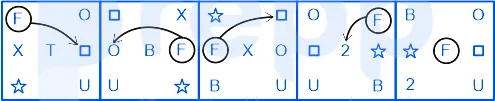
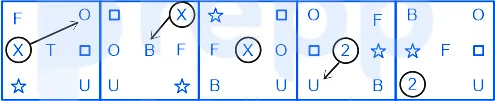

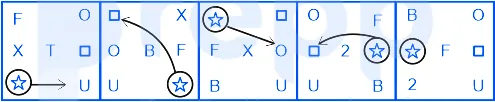

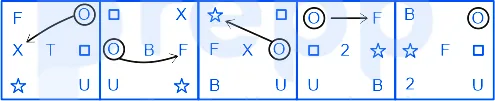

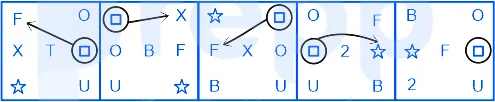

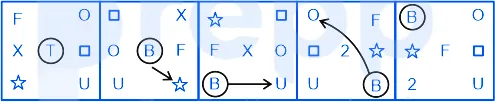
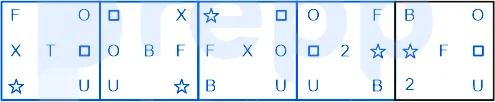 Paper & answer key PDF