Question 1archived
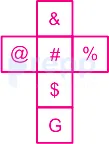
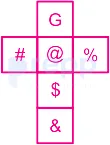
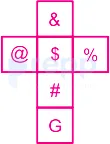
Four letter-clusters have been given, out of which three are alike in some manner and one is different. Select the letter-cluster that is different.
- A
EVAF
- B
CXBH
- C
TGLQ
- D
KPUZ
Show answer
Question 2archived
Which two signs should be interchanged to make the given equation correct?
16 − 18 × 216 ÷ 432 + 40 = 20
- A
× and ÷
- B
÷ and −
- C
× and +
- D
+ and −
Show answer
A. × and ÷Equation Solving: Interchange Mathematical Signs
The problem asks us to find which pair of mathematical signs, when swapped in the given equation, will make the equation correct. The original equation is:
\(16 - 18 \times 216 \div 432 + 40 = 20\)
We need to check each option by interchanging the specified signs and then evaluating the modified equation using the order of operations (BODMAS/PEMDAS: Brackets, Orders, Division and Multiplication (from left to right), Addition and Subtraction (from left to right)).
Let's evaluate the original equation to see if it is true:
\(16 - 18 \times 216 \div 432 + 40\)
First, perform multiplication and division from left to right:
Divide: \(216 \div 432 = 0.5\)
Multiply: \(18 \times 0.5 = 9\)
Now substitute these back into the equation:
\(16 - 9 + 40\)
Next, perform addition and subtraction from left to right:
Subtract: \(16 - 9 = 7\)
Add: \(7 + 40 = 47\)
So, the original equation is \(47 = 20\), which is incorrect.
Checking Options for Sign Interchange
We will now check each option provided by swapping the signs and re-evaluating the equation.
Option 1: Interchange × and ÷
Swap the multiplication (×) and division (÷) signs in the original equation:
\(16 - 18 \div 216 \times 432 + 40\)
Now, evaluate using the order of operations:
Division (from left): \(18 \div 216 = \frac{18}{216}\)
Simplify the fraction: \(\frac{18}{216} = \frac{1}{12}\)
Multiplication (from left): \(\frac{1}{12} \times 432\)
Calculate the multiplication: \(\frac{432}{12} = 36\)
Substitute this back into the equation:
\(16 - 36 + 40\)
Perform subtraction and addition from left to right:
Subtract: \(16 - 36 = -20\)
Add: \(-20 + 40 = 20\)
The equation becomes \(20 = 20\), which is correct.
This option successfully makes the equation correct.
Option 2: Interchange ÷ and −
Swap the division (÷) and subtraction (−) signs:
\(16 \div 18 \times 216 - 432 + 40\)
Evaluate using the order of operations:
Division (from left): \(16 \div 18 = \frac{16}{18} = \frac{8}{9}\)
Multiplication (from left): \(\frac{8}{9} \times 216\)
Calculate multiplication: \(\frac{8 \times 216}{9} = 8 \times 24 = 192\)
Substitute back:
\(192 - 432 + 40\)
Perform subtraction and addition from left to right:
Subtract: \(192 - 432 = -240\)
Add: \(-240 + 40 = -200\)
The equation becomes \(-200 = 20\), which is incorrect.
Option 3: Interchange × and +
Swap the multiplication (×) and addition (+) signs:
\(16 - 18 + 216 \div 432 \times 40\)
Evaluate using the order of operations:
Division (from left): \(216 \div 432 = 0.5\)
Multiplication (from left): \(0.5 \times 40 = 20\)
Substitute back:
\(16 - 18 + 20\)
Perform subtraction and addition from left to right:
Subtract: \(16 - 18 = -2\)
Add: \(-2 + 20 = 18\)
The equation becomes \(18 = 20\), which is incorrect.
Option 4: Interchange + and −
Swap the addition (+) and subtraction (−) signs:
\(16 + 18 \times 216 \div 432 - 40\)
Evaluate using the order of operations:
Division (from left): \(216 \div 432 = 0.5\)
Multiplication (from left): \(18 \times 0.5 = 9\)
Substitute back:
\(16 + 9 - 40\)
Perform addition and subtraction from left to right:
Add: \(16 + 9 = 25\)
Subtract: \(25 - 40 = -15\)
The equation becomes \(-15 = 20\), which is incorrect.
Conclusion on Sign Interchange
Based on our evaluation, only interchanging the multiplication (×) and division (÷) signs results in a correct equation.
\(16 - 18 \div 216 \times 432 + 40 = 20\)
Which simplifies to \(20 = 20\).
Revision Table: Checking Equation with Interchanged Signs
Option
Signs Interchanged
Modified Equation
Evaluation Steps
Result
Correct?
Original
None
\(16 - 18 \times 216 \div 432 + 40\)
\(16 - 18 \times 0.5 + 40\)
\(16 - 9 + 40\)
\(7 + 40\)
\(47\)
No (\(47 \neq 20\))
1
× and ÷
\(16 - 18 \div 216 \times 432 + 40\)
\(16 - \frac{1}{12} \times 432 + 40\)
\(16 - 36 + 40\)
\(-20 + 40\)
\(20\)
Yes (\(20 = 20\))
2
÷ and −
\(16 \div 18 \times 216 - 432 + 40\)
\(\frac{8}{9} \times 216 - 432 + 40\)
\(192 - 432 + 40\)
\(-240 + 40\)
\(-200\)
No (\(-200 \neq 20\))
3
× and +
\(16 - 18 + 216 \div 432 \times 40\)
\(16 - 18 + 0.5 \times 40\)
\(16 - 18 + 20\)
\(-2 + 20\)
\(18\)
No (\(18 \neq 20\))
4
+ and −
\(16 + 18 \times 216 \div 432 - 40\)
\(16 + 18 \times 0.5 - 40\)
\(16 + 9 - 40\)
\(25 - 40\)
\(-15\)
No (\(-15 \neq 20\))
Additional Information: Understanding Order of Operations
The order of operations is a crucial concept in solving mathematical expressions. It ensures that everyone gets the same answer when evaluating an expression. A common acronym used is BODMAS or PEMDAS.
BODMAS: Brackets, Orders (powers, roots), Division, Multiplication, Addition, Subtraction.
PEMDAS: Parentheses, Exponents, Multiplication, Division, Addition, Subtraction.
Division and Multiplication have the same priority and are performed from left to right as they appear in the expression. Similarly, Addition and Subtraction have the same priority and are performed from left to right.
In this problem, we applied this rule correctly after interchanging the signs to verify if the equation holds true.
Paper & answer key PDF ↗ Question 3archived
Eight friends, A, B, C, D, E, F, G and H, are sitting in two lines of four persons each. Both the lines are facing each other. A is facing D. E is to the immediate left of G. H is to the immediate right of B. C is facing G. F is facing H. B is to the immediate right of the person who is facing G. D is to the immediate left of F. Which four persons are sitting in the same line?
- A
A, B, C, H
- B
C, D, E, F
- C
B, C, D, H
- D
A, C, F, G
Show answer
A. A, B, C, HUnderstanding the Seating Arrangement Puzzle
This question asks us to determine which four out of eight friends (A, B, C, D, E, F, G, H) are sitting in the same line. We are given several clues about their relative positions and who is facing whom in a setup of two lines with four persons each, facing each other.
Let's denote the two lines as Line 1 and Line 2. Each line has four positions. Let's assume Line 1 is facing South and Line 2 is facing North. When we refer to "left" or "right" for a person, it is from their own perspective.
Line 1: Position 1, Position 2, Position 3, Position 4 (Facing South)
Line 2: Position 1, Position 2, Position 3, Position 4 (Facing North)
A person in Position X of Line 1 faces the person in Position X of Line 2.
Analyzing the Clues and Building the Arrangement
We will use the given clues to deduce the seating arrangement:
A is facing D.
E is to the immediate left of G.
H is to the immediate right of B.
C is facing G.
F is facing H.
B is to the immediate right of the person who is facing G.
D is to the immediate left of F.
Let's combine some clues to find sequences in the same line:
Clue 6 says B is to the immediate right of the person facing G. Clue 4 says C is facing G. Therefore, B is to the immediate right of C. This implies C and B are in the same line, with B immediately to the right of C (from C's perspective). Let's represent this as a sequence: C B.
Clue 3 says H is to the immediate right of B. This implies B and H are in the same line, with H immediately to the right of B (from B's perspective). Let's represent this as a sequence: B H.
Combining the sequences C B and B H, we get a longer sequence of three persons in the same line: C B H.
A line has four positions. If C, B, and H are in one line in that order, the fourth person must be one of the remaining friends (A, D, E, F, G). The friends are A, B, C, D, E, F, G, H. The persons not in the C B H sequence are A, D, E, F, G.
Let's consider which line contains C B H. Suppose C B H are in Line 1. The possible arrangements for C B H in a 4-person line are starting at position 1 or position 2 (from the left, diagrammatically, or from the person's left if consistent):
Option A: C at Pos1, B at Pos2, H at Pos3. This gives sequence C B H _. The remaining person in Line 1 is A. So, Line 1 could be C B H A.
Option B: C at Pos2, B at Pos3, H at Pos4. This gives sequence _ C B H. The remaining person in Line 1 is A. So, Line 1 could be A C B H.
Let's test Option B: Line 1 is A C B H. The persons in Line 2 must be the remaining friends: D, E, F, G.
Now, let's use the facing clues (1, 4, 5) to determine the arrangement in Line 2.
Clue 1: A is facing D. Since A is in Line 1, Pos1, D must be in Line 2, Pos1.
Clue 4: C is facing G. Since C is in Line 1, Pos2, G must be in Line 2, Pos2.
Clue 5: F is facing H. Since H is in Line 1, Pos4, F must be in Line 2, Pos4.
This places D at Pos1, G at Pos2, and F at Pos4 in Line 2. The remaining person for Line 2 is E, who must be at Pos3.
So, the arrangement derived is:
Line 1: A C B H (Facing South)
Line 2: D G E F (Facing North)
(Where A faces D, C faces G, B faces E, H faces F, based on position).
Verifying the Arrangement with All Clues
Let's check if this arrangement satisfies all the clues, assuming "immediate left" and "immediate right" are relative to the person's perspective:
Line 1: A C B H (Facing South). From a person's perspective in Line 1, left is towards A's side, right is towards H's side.
Line 2: D G E F (Facing North). From a person's perspective in Line 2, left is towards F's side, right is towards D's side.
Clue
Arrangement Check
Satisfied?
1. A is facing D.
A is L1-Pos1, D is L2-Pos1. They face each other.
Yes
2. E is to the immediate left of G.
In L2 (D G E F), G is L2-Pos2, E is L2-Pos3. G faces North. G's left is L2-Pos3 (E).
Yes
3. H is to the immediate right of B.
In L1 (A C B H), B is L1-Pos3, H is L1-Pos4. B faces South. B's right is L1-Pos4 (H).
Yes
4. C is facing G.
C is L1-Pos2, G is L2-Pos2. They face each other.
Yes
5. F is facing H.
F is L2-Pos4, H is L1-Pos4. They face each other.
Yes
6. B is to the immediate right of the person who is facing G (C).
C is L1-Pos2. B is L1-Pos3. B is immediate right of C in L1 (from C's perspective).
Yes
7. D is to the immediate left of F.
In L2 (D G E F), D is L2-Pos1, F is L2-Pos4. F faces North. F's immediate left is L2-Pos3 (E). D is at L2-Pos1.
No
The arrangement A C B H / D G E F satisfies all clues except Clue 7. This suggests there might be a minor inconsistency in the problem statement clues themselves or the intended interpretation of "left/right" for Clue 7 differs. However, given the options, the construction based on the sequence C B H strongly suggests that A, C, B, and H are in the same line.
Let's briefly check the other potential arrangement for Line 1: C B H A.
Line 1: C B H A (Facing South)
Line 2: G E F D (Facing North) based on facing pairs (C-G, B-E, H-F, A-D).
Let's re-check crucial left/right clues:
Clue 2: E is immediate left of G (in L2). L2=G E F D. G is L2-Pos1. G faces North. G's left is L2-Pos2 (E). Yes.
Clue 3: H is immediate right of B (in L1). L1=C B H A. B is L1-Pos2. B faces South. B's right is L1-Pos3 (H). Yes.
Clue 6: B is immediate right of C (in L1). L1=C B H A. C is L1-Pos1. C faces South. C's right is L1-Pos2 (B). Yes.
Clue 7: D is immediate left of F (in L2). L2=G E F D. F is L2-Pos3. F faces North. F's left is L2-Pos4 (D). Yes.
This second arrangement (C B H A / G E F D) satisfies Clues 2, 3, 6, and 7. Let's re-check the facing clues for this arrangement:
Clue 1: A faces D. A is L1-Pos4, D is L2-Pos4. Yes.
Clue 4: C faces G. C is L1-Pos1, G is L2-Pos1. Yes.
Clue 5: F faces H. H is L1-Pos3, F is L2-Pos3. Yes.
All clues are satisfied by the arrangement: Line 1 is C B H A and Line 2 is G E F D. In this arrangement, the four persons in Line 1 are C, B, H, and A. These are the same four persons as in the set {A, B, C, H}.
Identifying the Persons in the Same Line
Based on the arrangement C B H A / G E F D which satisfies all given clues with a standard interpretation of 'left' and 'right' relative to the person's facing direction, the four persons sitting in one line are C, B, H, and A.
Conclusion
The four persons sitting in the same line are A, B, C, and H.
The arrangement is:
Line 1 (Facing Line 2): C B H A
Line 2 (Facing Line 1): G E F D
Revision Table: Key Information
Concept
Details
Puzzle Type
Seating Arrangement (Linear)
Number of People
8 (A, B, C, D, E, F, G, H)
Setup
Two lines of four, facing each other
Key Clues Used
Relative positions (immediate left/right), Facing pairs
Derived Sequence
C B H in one line
Persons in One Line
A, B, C, H
Additional Information: Solving Seating Puzzles
Solving seating arrangement puzzles requires careful reading and step-by-step deduction. Here are some tips:
Visualize or Draw: Always draw the setup (lines, circles, squares) and positions.
Identify Direct Clues: Start with clues that give fixed positions or clear sequences (like "immediate left/right").
Combine Clues: Look for ways to link different clues. Sequences (like C B H) are powerful.
Handle "Facing": For lines facing each other, remember that corresponding positions (e.g., 1st from left) face each other.
Interpret Left/Right: Pay close attention to whether "left" and "right" are from a fixed external perspective (diagrammatic) or from the person's own perspective (relative to where they are facing). Person's perspective is common unless otherwise specified.
Eliminate Options: If it's an MCQ, use the options to test possibilities or eliminate incorrect arrangements based on contradictions with clues.
Check All Clues: Once you have a potential arrangement, verify that *every* clue is satisfied. If not, revisit your deductions or assumptions. Inconsistent clues can sometimes occur, but try to find the arrangement that fits the maximum number of conditions.
Practice with different types of seating puzzles (linear, circular, square) to improve your skills in logical deduction and spatial reasoning.
Paper & answer key PDF ↗ Question 4archived
Select the option that is related to the third number in the same way as the second number is related to the first number.
13 ∶ 1331 ∶∶ 17 ∶ ?
- A
1453
- B
3375
- C
1829
- D
2642
Show answer
B. 3375Solving the Number Analogy Question
This question asks us to find a relationship between the first pair of numbers (13 and 1331) and apply that same relationship to the third number (17) to find the fourth number. This type of problem is known as a numerical analogy or number series problem, requiring pattern recognition.
Understanding the Number Relationship
Let's examine the first pair of numbers: 13 and 1331. We need to figure out how 13 is related to 1331. Let's consider different mathematical operations:
Addition/Subtraction: $1331 - 13 = 1318$. Adding 1318 is the difference, but this usually isn't the pattern in such analogies.
Multiplication/Division: $1331 / 13 = 102.38...$. Not a simple whole number multiplication.
Powers: Let's consider powers of 13 or numbers related to 13.
$13^2 = 169$ (Too small)
$13^3 = 2197$ (Too large)
What about powers of a number slightly different from 13? Let's try subtracting a small number from 13.
Consider $(13 - 1)^3 = 12^3 = 1728$ (Close, but not 1331)
Consider $(13 - 2)^3 = 11^3$.
Let's calculate $11^3$:
$\qquad 11^2 = 11 \times 11 = 121$
$\qquad 11^3 = 121 \times 11$
We can calculate $121 \times 11$ as:
1
2
1
×
1
1
1
2
1
1
2
1
1
3
3
1
So, $11^3 = 1331$. This matches the second number in the first pair!
The relationship is: the second number is the cube of (the first number minus 2).
In mathematical terms, if the first number is $n$, the second number is $(n-2)^3$.
Applying the Relationship to the Third Number
Now we apply the same rule to the third number, which is 17. According to the pattern, the missing number should be $(17 - 2)^3$.
First, calculate $17 - 2$: $17 - 2 = 15$.
Next, calculate $15^3$.
$\qquad 15^2 = 15 \times 15 = 225$
$\qquad 15^3 = 225 \times 15$
Let's calculate $225 \times 15$:
2
2
5
×
1
5
1
1
2
5
2
2
5
3
3
7
5
So, $15^3 = 3375$.
Finding the Missing Number
Based on the established pattern from the first pair (13 and 1331), the missing number related to 17 is 3375.
Checking the Options for the Number Analogy
We found the missing number to be 3375. Let's look at the given options:
1453
3375
1829
2642
Our calculated number, 3375, matches option 2.
Therefore, the correct answer related to 17 in the same way as 13 is related to 1331 is 3375.
Revision Table: Number Analogy Pattern
This table summarizes the relationship found in the number analogy question.
First Number (n)
Calculation
Second Number ($(n-2)^3$)
13
$(13 - 2)^3 = 11^3$
1331
17
$(17 - 2)^3 = 15^3$
3375
Additional Information on Number Series and Analogies
Number series and analogy problems are common in aptitude tests. They test your ability to identify patterns in sequences of numbers. Common patterns include:
Arithmetic progressions (adding or subtracting a constant number).
Geometric progressions (multiplying or dividing by a constant number).
Square or cube series (numbers are squares or cubes of consecutive or related numbers).
Combinations of operations (e.g., multiply and then add).
Patterns based on digits of the number.
Alternating patterns (different rules apply to alternate numbers).
Difference/sum of consecutive numbers following a pattern.
To solve these problems, look for the simplest pattern first, such as constant differences or ratios, and then consider squares, cubes, or more complex combinations. Practice is key to quickly identifying different types of number patterns.
Paper & answer key PDF ↗ Question 5archived
Select the letter from among the given options that can replace the question mark (?) in the following series.
E, F, I, N, U, ?
- A
A
- B
N
- C
Z
- D
D
Show answer
D. DFinding the Pattern in Letter Series
The question asks us to identify the pattern in the given letter series and determine the next letter. The series is E, F, I, N, U, ?.
To solve letter series questions, we often look at the alphabetical positions of the letters or the difference in positions between consecutive letters. Let's list the positions of the given letters in the English alphabet:
E is the 5th letter.
F is the 6th letter.
I is the 9th letter.
N is the 14th letter.
U is the 21st letter.
Now, let's find the difference in positions between consecutive letters:
From E to F: Position of F - Position of E = \(6 - 5 = 1\). The difference is 1.
From F to I: Position of I - Position of F = \(9 - 6 = 3\). The difference is 3.
From I to N: Position of N - Position of I = \(14 - 9 = 5\). The difference is 5.
From N to U: Position of U - Position of N = \(21 - 14 = 7\). The difference is 7.
The differences in positions between consecutive letters are 1, 3, 5, 7. This sequence of differences consists of consecutive odd numbers.
Following this pattern, the next difference should be the next odd number after 7, which is 9.
To find the position of the next letter in the series, we add this next difference (9) to the position of the last letter in the series (U), which is 21.
Position of next letter = Position of U + Next difference
Position of next letter = \(21 + 9 = 30\)
Since there are only 26 letters in the English alphabet (A-Z), a position greater than 26 usually indicates a wrap-around from Z back to A. To find the letter for position 30, we can subtract 26 (the total number of letters).
Effective position = \(30 - 26 = 4\)
The letter at the 4th position in the English alphabet is D.
Therefore, the next letter in the series E, F, I, N, U, ? is D.
Let's check the given options:
Option 1: A (1st letter)
Option 2: N (14th letter)
Option 3: Z (26th letter)
Option 4: D (4th letter)
Our calculated letter D matches Option 4.
Revision Table: Alphabetical Positions
Letter
Position
Letter
Position
A
1
N
14
B
2
O
15
C
3
P
16
D
4
Q
17
E
5
R
18
F
6
S
19
G
7
T
20
H
8
U
21
I
9
V
22
J
10
W
23
K
11
X
24
L
12
Y
25
M
13
Z
26
Additional Information: Letter Series Patterns
Letter series questions in reasoning ability tests can follow various patterns. Understanding common types helps in quickly identifying the rule. Some common patterns include:
Alphabetical Position Difference: The pattern is based on the difference between the positions of consecutive letters, which can be a constant, an arithmetic progression (like 1, 3, 5, 7 in this question), a geometric progression, squares, cubes, etc.
Skip Letters: A fixed number of letters are skipped between consecutive terms.
Reversal: The series might involve writing the alphabet in reverse order or using positions from the end of the alphabet.
Combination of Patterns: Sometimes, two different series might be interleaved, or the pattern might combine position difference with another rule.
Vowel/Consonant Pattern: The series might alternate between vowels and consonants or follow a specific sequence related to them.
Specific Word/Phrase: Less common, but the letters might be the initials of words in a sequence (e.g., days of the week, months of the year).
Practicing different types of letter series helps in recognizing the underlying logic more quickly during exams.
Paper & answer key PDF ↗ Question 6archived
Read the given statements and conclusions carefully. Assuming that the information given in the statements is true even if it appears to be at variance with commonly known facts decide which of the given conclusions logically follow(s) from the statements.
Statements:
All peelers are funnels.
Some peelers are spatulas.
Conclusions:
I. Some peelers are not funnels.
II. Some spatulas are peelers.
- A
Only conclusion I follows.
- B
Both conclusions I and II follow.
- C
Only conclusion II follows.
- D
Neither conclusion I nor II follows.
Show answer
C. Only conclusion II follows.Analyzing the Statements in Logic Reasoning
Let's break down the given statements to understand the relationships between the categories: peelers, funnels, and spatulas.
Statement 1: All peelers are funnels. This is a universal affirmative statement. It establishes that the set of peelers is entirely contained within the set of funnels. If something is a peeler, it must also be a funnel.
Statement 2: Some peelers are spatulas. This is a particular affirmative statement. It indicates that there is at least one peeler that is also a spatula. It implies an overlap between the set of peelers and the set of spatulas.
Evaluating the Conclusions Based on Statements
Now, let's evaluate each conclusion to see if it logically follows from the given statements.
Conclusion I: Some peelers are not funnels.
This conclusion is a particular negative statement. Let's compare it with Statement 1: "All peelers are funnels".
Statement 1 says that every single peeler is a funnel.
Conclusion I says that at least one peeler is not a funnel.
These two statements are contradictory. If all peelers are funnels, it is impossible for some peelers to not be funnels. Therefore, Conclusion I does not logically follow from Statement 1.
Conclusion II: Some spatulas are peelers.
This conclusion is a particular affirmative statement. Let's compare it with Statement 2: "Some peelers are spatulas".
Statement 2 establishes a relationship between peelers and spatulas: there's an overlap where some peelers are also spatulas.
The relationship "Some A are B" is convertible to "Some B are A". If some members of category A are also members of category B, then it must logically follow that some members of category B are also members of category A.
Applying this principle, if "Some peelers are spatulas" (Some A are B), then "Some spatulas are peelers" (Some B are A) must logically follow.
Therefore, Conclusion II logically follows from Statement 2.
Summary of Conclusions
Based on our analysis:
Conclusion I: Some peelers are not funnels - Does NOT follow.
Conclusion II: Some spatulas are peelers - Does follow.
Thus, only Conclusion II follows from the given statements.
Statement
Type
Relationship
All peelers are funnels
Universal Affirmative (A)
Peelers $\subset$ Funnels
Some peelers are spatulas
Particular Affirmative (I)
Peelers $\cap$ Spatulas $\neq \emptyset$
Conclusion
Type
Follows?
Reasoning
Some peelers are not funnels
Particular Negative (O)
No
Contradicts "All peelers are funnels"
Some spatulas are peelers
Particular Affirmative (I)
Yes
Convertibility of "Some A are B" from "Some peelers are spatulas"
Revision Table: Logic Statements and Conclusions
Understanding the different types of statements and their implications is key to solving logic problems.
Statement Type
Form
Key Idea
Universal Affirmative (A)
All S are P
Every member of S is also a member of P.
Universal Negative (E)
No S are P
No member of S is a member of P.
Particular Affirmative (I)
Some S are P
At least one member of S is also a member of P.
Particular Negative (O)
Some S are not P
At least one member of S is not a member of P.
Additional Information: Rules of Inference in Logic
Logic problems like this often rely on basic rules of inference and statement relationships. One important concept used here is the convertibility of certain statement types:
'E' statements (No S are P) are convertible to 'E' statements (No P are S).
'I' statements (Some S are P) are convertible to 'I' statements (Some P are S).
'A' statements (All S are P) are only convertible to 'I' statements (Some P are S) under certain conditions (implication), but not to 'A' statements (All P are S) because 'All cats are animals' does not imply 'All animals are cats'.
'O' statements (Some S are not P) are generally not convertible.
In this problem, Statement 2 is an 'I' statement: "Some peelers are spatulas". According to the rules of conversion for 'I' statements, this logically implies "Some spatulas are peelers", which is Conclusion II.
Paper & answer key PDF ↗ Question 7archived
The sequence of folding a piece of paper (figure i) and the manner in which the folded paper has been cut (figure ii) is shown in the following figures. Select the option that would most closely resemble the unfolded form of figure (ii).
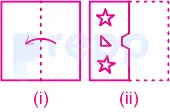
- A
Option A (shown in image)
- B
Option B (shown in image)
- C
Option C (shown in image)
- D
Option D (shown in image)
Show answer
A. Option A (shown in image)The paper will unfold in following step.
Hence, the correct answer is "Option 1".
 Paper & answer key PDF ↗
 Question 8archived
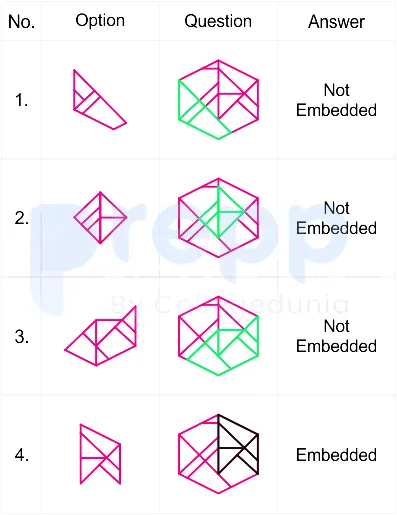
Select the option that is embedded in the given figure (X) (rotation is NOT allowed).

- A
Option A (shown in image)
- B
Option B (shown in image)
- C
Option C (shown in image)
- D
Option D (shown in image)
Show answer
D. Option D (shown in image)Given:
Hence, the correct answer is "Option 4".

 Paper & answer key PDF ↗
 Question 9archived
Select the correct option that indicates the arrangement of the given words in the order in which they appear in an English dictionary.
1. Serenity
2. Serpent
3. Serviceable
4. Sericulture
5. Serotonin
- A
1, 4, 5, 2, 3
- B
2, 4, 5, 3, 1
- C
3, 4, 5, 2, 1
- D
1, 4, 2, 5, 3
Show answer
A. 1, 4, 5, 2, 3Serotonin (Se r o ...) - comes third because 'o' follows 'i'. Serpent (Se r p ...) - comes fourth since 'p' follows 'o'. Thus, the sequence based on the original numbering is 1, 4, 5, 2, 3 .
Paper & answer key PDF ↗ Question 10archived
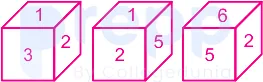
Three different positions of the same dice are shown. Study the same and identify which of the following statements is correct.
- A
5 is opposite to 2
- B
6 is opposite to 1
- C
1 is opposite to 4
- D
3 is opposite to 6
Show answer
B. 6 is opposite to 1In the first and second dice 1 and 2 are common in both dice.
So, here 3 is opposite to 5.
In the second and third dice 5 and 2 are common in both dice.
So, here 1 is opposite to 6.
Opposite face pairs are.
3 → 5
1 → 6
2 → 4
Hence, the correct answer is "6 is opposite to 1".
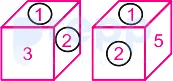
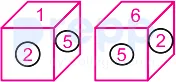 Paper & answer key PDF ↗
 Question 11archived
Select the number from among the given options that can replace the question mark (?) in the following series.
7, 16, 41, 94, 251, ?
- A
468
- B
486
- C
568
- D
586
Show answer
C. 568Solving the Number Series: Finding the Missing Number
The given number series is:
\(7, 16, 41, 94, 251, ?\)
To find the next number in this series, we need to identify the pattern or rule that governs the sequence.
Analyzing the Differences Between Terms
Let's calculate the differences between consecutive terms:
Difference between the 2nd term (16) and the 1st term (7): \(16 - 7 = 9\)
Difference between the 3rd term (41) and the 2nd term (16): \(41 - 16 = 25\)
Difference between the 4th term (94) and the 3rd term (41): \(94 - 41 = 53\)
Difference between the 5th term (251) and the 4th term (94): \(251 - 94 = 157\)
The series of differences is \(9, 25, 53, 157\). Now, let's look for a pattern within this series of differences.
Identifying the Pattern in the Differences
Let's denote the series of differences as \(D_1=9, D_2=25, D_3=53, D_4=157\). We examine the relationship between these differences:
Relationship from \(D_1\) to \(D_2\): \(9 \times 3 - 2 = 27 - 2 = 25\)
Relationship from \(D_2\) to \(D_3\): \(25 \times 2 + 3 = 50 + 3 = 53\)
Relationship from \(D_3\) to \(D_4\): \(53 \times 3 - 2 = 159 - 2 = 157\)
We can observe an alternating pattern in how each difference is derived from the previous one:
Multiply by 3 and subtract 2.
Multiply by 2 and add 3.
Multiply by 3 and subtract 2.
This pattern seems to alternate between the operations \(\times 3 - 2\) and \(\times 2 + 3\).
Calculating the Next Difference
Following this alternating pattern, the next operation to get the 5th difference (\(D_5\)) from the 4th difference (\(D_4=157\)) should be the second type of operation, which is Multiply by 2 and add 3.
So, the next difference \(D_5\) is calculated as:
\(D_5 = D_4 \times 2 + 3\)
\(D_5 = 157 \times 2 + 3\)
\(D_5 = 314 + 3\)
\(D_5 = 317\)
Finding the Missing Number
The missing number is the 6th term in the original series. It is found by adding the 5th difference (\(D_5\)) to the 5th term (\(T_5 = 251\)).
Missing Number \(T_6 = T_5 + D_5\)
\(T_6 = 251 + 317\)
\(T_6 = 568\)
Conclusion: The Missing Number is 568
Based on the identified pattern in the differences, the number that replaces the question mark is 568.
Revision Table: Summary of Number Series Pattern
Term Number
Term Value
Difference from Previous Term
Pattern Applied on Difference
1
7
-
-
2
16
\(16 - 7 = 9\) (\(D_1\))
-
3
41
\(41 - 16 = 25\) (\(D_2\))
\(D_2 = D_1 \times 3 - 2 = 9 \times 3 - 2 = 25\)
4
94
\(94 - 41 = 53\) (\(D_3\))
\(D_3 = D_2 \times 2 + 3 = 25 \times 2 + 3 = 53\)
5
251
\(251 - 94 = 157\) (\(D_4\))
\(D_4 = D_3 \times 3 - 2 = 53 \times 3 - 2 = 157\)
6
568
\(568 - 251 = 317\) (\(D_5\))
\(D_5 = D_4 \times 2 + 3 = 157 \times 2 + 3 = 317\)
Additional Information: Strategies for Solving Number Series
Solving number series problems often involves looking for patterns in various ways. Here are some common strategies:
Check for Arithmetic Progression: Is there a constant difference between terms?
Check for Geometric Progression: Is there a constant ratio between terms?
Analyze Differences: Calculate the differences between consecutive terms and look for a pattern in this new series. Sometimes, you might need to calculate differences of differences.
Look for Alternating Patterns: The pattern might involve different operations applied alternately between terms.
Consider Squares, Cubes, or other Powers: The pattern might involve adding/subtracting squares or cubes of numbers, or the terms themselves might be related to powers.
Look for Mixed Operations: The pattern might involve a combination of multiplication/division and addition/subtraction.
Consider Fibonacci-like Patterns: Terms might be related to the sum or difference of the previous two terms.
Practice with different types of series helps in quickly recognizing the underlying logic.
Paper & answer key PDF ↗ Question 12archived
Select the figure from among the given options that can replace the question mark (?) in the following series.

- A
Option A (shown in image)
- B
Option B (shown in image)
- C
Option C (shown in image)
- D
Option D (shown in image)
Show answer
D. Option D (shown in image)The pattern followed here is:
1) The given figure series is rotate 135º anticlockwise in every next figure.
2) In the second figure star shift towards the first position then in third figure triangle shift toward the first position and at last figure square shift toward the first position.
Hence, the correct answer is "Option 4".
 Paper & answer key PDF ↗
 Question 13archived
Select the number from among the given options that can replace the question mark (?) in the following series.
1, 1, 2, 2, 6, 10, 42, ?, 1806
- A
1203
- B
1302
- C
1010
- D
1389
Show answer
C. 1010Understanding the Number Series
The given number series is 1, 1, 2, 2, 6, 10, 42, ?, 1806. We need to find the number that replaces the question mark (?) by identifying the pattern in the series.
Analyzing the Number Series Pattern
Upon careful observation of the terms in the series, it appears that the series might not follow a single arithmetic or geometric progression or a simple difference pattern throughout. Let's examine the terms based on their positions (odd and even).
Pattern for Odd Positions
Let's list the terms at the odd positions:
1st term: 1
3rd term: 2
5th term: 6
7th term: 42
9th term: 1806
Let's denote the term at the n-th odd position as \(o_n\). So, \(o_1 = 1, o_2 = 2, o_3 = 6, o_4 = 42, o_5 = 1806\).
Let's look for a pattern among these terms:
\(o_2 = 2\). Can it be derived from \(o_1\)? \(o_1 \times (o_1 + 1) = 1 \times (1 + 1) = 1 \times 2 = 2\). This matches \(o_2\).
\(o_3 = 6\). Can it be derived from \(o_2\)? \(o_2 \times (o_2 + 1) = 2 \times (2 + 1) = 2 \times 3 = 6\). This matches \(o_3\).
\(o_4 = 42\). Can it be derived from \(o_3\)? \(o_3 \times (o_3 + 1) = 6 \times (6 + 1) = 6 \times 7 = 42\). This matches \(o_4\).
\(o_5 = 1806\). Can it be derived from \(o_4\)? \(o_4 \times (o_4 + 1) = 42 \times (42 + 1) = 42 \times 43 = 1806\). This matches \(o_5\).
The pattern for the terms at odd positions is \(o_{n+1} = o_n \times (o_n + 1)\) for \(n \ge 1\). This means the term at position \(2n+1\) is obtained by multiplying the term at position \(2n-1\) by (the term at position \(2n-1\) plus 1).
\(a_{2n+1} = a_{2n-1} \times (a_{2n-1} + 1)\) for \(n \ge 1\).
Pattern for Even Positions
Let's list the terms at the even positions:
2nd term: 1
4th term: 2
6th term: 10
8th term: ?
Let's denote the term at the n-th even position as \(e_n\). So, \(e_1 = 1, e_2 = 2, e_3 = 10, e_4 = ?\).
Let's look for a pattern among these terms. This pattern might involve the previous terms in the even sequence.
\(e_2 = 2\). Can it be derived from \(e_1\)? Let's try a pattern similar to the odd sequence, but perhaps with squaring. \(e_1 \times (e_1^2 + 1) = 1 \times (1^2 + 1) = 1 \times (1 + 1) = 1 \times 2 = 2\). This matches \(e_2\).
\(e_3 = 10\). Can it be derived from \(e_2\)? \(e_2 \times (e_2^2 + 1) = 2 \times (2^2 + 1) = 2 \times (4 + 1) = 2 \times 5 = 10\). This matches \(e_3\).
The pattern for the terms at even positions appears to be \(e_{n+1} = e_n \times (e_n^2 + 1)\) for \(n \ge 1\). This means the term at position \(2n+2\) is obtained by multiplying the term at position \(2n\) by (the term at position \(2n\) squared plus 1).
\(a_{2n+2} = a_{2n} \times (a_{2n}^2 + 1)\) for \(n \ge 1\).
Finding the Missing Number
The missing number is at the 8th position, which is an even position. It is the 4th term in the even sequence (\(e_4\)).
Using the pattern for even positions, \(e_4\) is derived from the previous even term \(e_3\) (which is the 6th term in the original series, \(a_6 = 10\)).
The formula is \(e_4 = e_3 \times (e_3^2 + 1)\).
Substitute the value of \(e_3\):
\(e_4 = 10 \times (10^2 + 1)\)
\(e_4 = 10 \times (100 + 1)\)
\(e_4 = 10 \times 101\)
\(e_4 = 1010\)
So, the missing number is 1010.
Conclusion
The number that replaces the question mark (?) in the series is 1010. This is confirmed by the interleaved pattern where odd-positioned terms follow \(a_{2n+1} = a_{2n-1}(a_{2n-1}+1)\) and even-positioned terms follow \(a_{2n} = a_{2n-2}(a_{2n-2}^2+1)\).
Revision Table: Number Series Pattern Analysis
Position (n)
Term (\(a_n\))
Sequence Type
Previous Terms
Calculation & Pattern
1
1
Odd (\(o_1\))
-
Starting term
2
1
Even (\(e_1\))
-
Starting term
3
2
Odd (\(o_2\))
\(o_1 = 1\)
\(o_1 \times (o_1 + 1) = 1 \times 2 = 2\)
4
2
Even (\(e_2\))
\(e_1 = 1\)
\(e_1 \times (e_1^2 + 1) = 1 \times (1^2 + 1) = 1 \times 2 = 2\)
5
6
Odd (\(o_3\))
\(o_2 = 2\)
\(o_2 \times (o_2 + 1) = 2 \times 3 = 6\)
6
10
Even (\(e_3\))
\(e_2 = 2\)
\(e_2 \times (e_2^2 + 1) = 2 \times (2^2 + 1) = 2 \times 5 = 10\)
7
42
Odd (\(o_4\))
\(o_3 = 6\)
\(o_3 \times (o_3 + 1) = 6 \times 7 = 42\)
8
?
Even (\(e_4\))
\(e_3 = 10\)
\(e_3 \times (e_3^2 + 1) = 10 \times (10^2 + 1) = 10 \times 101 = 1010\)
9
1806
Odd (\(o_5\))
\(o_4 = 42\)
\(o_4 \times (o_4 + 1) = 42 \times 43 = 1806\)
Additional Information: Solving Number Series Problems
Number series questions are common in aptitude tests and logical reasoning sections. They require you to identify the underlying pattern in a sequence of numbers. Here are some common patterns and strategies:
Arithmetic Progression: A constant difference between consecutive terms.
Geometric Progression: A constant ratio between consecutive terms.
Differences/Ratios of Differences/Ratios: Look for patterns in the differences or ratios between terms, or in the differences/ratios of those results.
Squares and Cubes: The terms might be squares or cubes of natural numbers, or related to them (e.g., \(n^2 \pm k\), \(n^3 \pm k\)).
Fibonacci Series: Each term is the sum of the two preceding terms (\(a_n = a_{n-1} + a_{n-2}\)). Variations might involve multiplication or different numbers of previous terms.
Interleaved Series: The given series might be a combination of two or more independent series alternating. This is the pattern observed in the problem solved above.
Operations on Previous Terms: The next term might be derived from operations (addition, subtraction, multiplication, division) on one or more previous terms.
Alternating Operations: The operation used to get the next term might alternate (e.g., +2, -3, +2, -3...).
Pattern in Digits: Sometimes the pattern involves the digits of the numbers themselves.
To solve number series problems effectively:
Write down the series clearly.
Calculate the differences between consecutive terms.
Calculate the ratio between consecutive terms.
Look for patterns in the differences or ratios.
If no simple pattern is found, try looking at alternate terms (interleaved series).
Consider squares, cubes, or other mathematical operations involving previous terms or the position number.
Don't be afraid to test different possibilities.
Paper & answer key PDF ↗ Question 14archived
Select the option that is related to the third letter-cluster in the same way as the second letter-cluster is related to the first letter-cluster.
JST : HPX :: PWJ : ?
- A
MSR
- B
NTN
- C
MTN
- D
NSP
Show answer
B. NTNThis question is a letter cluster analogy problem. We need to find the relationship between the first pair of letter clusters, JST and HPX, and then apply the same relationship to the third letter cluster, PWJ, to find the missing fourth letter cluster.
Let's analyze the relationship between JST and HPX by looking at the alphabetical position of each letter:
Letter Cluster 1
Letter Cluster 2
Position Difference
J (10)
H (8)
$8 - 10 = -2$
S (19)
P (16)
$16 - 19 = -3$
T (20)
X (24)
$24 - 20 = +4$
The pattern observed is a change of -2 for the first letter, -3 for the second letter, and +4 for the third letter when moving from the first cluster to the second cluster.
Now, let's apply this pattern to the third letter cluster, PWJ:
First letter: P. Its position is 16. Applying the -2 pattern: $16 - 2 = 14$. The 14th letter is N.
Second letter: W. Its position is 23. Applying the -3 pattern: $23 - 3 = 20$. The 20th letter is T.
Third letter: J. Its position is 10. Applying the +4 pattern: $10 + 4 = 14$. The 14th letter is N.
Combining the resulting letters, we get the letter cluster NTN.
Now let's check the given options to find NTN.
The options are:
MSR
NTN
MTN
NSP
The calculated letter cluster NTN matches option 2.
Therefore, PWJ is related to NTN in the same way as JST is related to HPX.
Revision Table: Letter Cluster Pattern Analysis
Letter
JST > HPX
Pattern
PWJ > ?
Resulting Letter
1st
J (10) > H (8)
-2
P (16) - 2
N (14)
2nd
S (19) > P (16)
-3
W (23) - 3
T (20)
3rd
T (20) > X (24)
+4
J (10) + 4
N (14)
The pattern applied to PWJ leads to NTN.
Additional Information: Solving Letter Analogy Questions
Letter analogy questions are common in reasoning tests. They require you to identify a specific rule or pattern that transforms the first element into the second element and then apply that same rule to the third element to find the fourth.
Common patterns in letter analogies include:
Adding or subtracting a fixed number from the alphabetical position of each letter.
Skipping a fixed number of letters.
Reversing the order of letters.
Applying a different arithmetic operation or step for each letter position.
Combining letter positions with numerical logic.
To solve these questions, it's helpful to know the alphabetical position of each letter (A=1, B=2, ..., Z=26) and systematically compare the letters in the given pair to find the pattern.
Paper & answer key PDF ↗ Question 15archived
‘A # B’ means ‘A is the sister of B’;
‘A $ B’ means ‘A is the father of B’.
‘A @ B’ means ‘A is the wife of B’.
‘A % B’ means ‘A is the brother of B’.
Which of the following options means ‘J is the father of R’?
- A
C @ J % K $ M # R
- B
C @ J $ K % M # R
- C
J @ C $ K % M # R
- D
C @ R $ K % M # J
Show answer
B. C @ J $ K % M # RSolving Blood Relation Code Problems
This question asks us to decode relationships given by symbols and find which expression means 'J is the father of R'. We are given the following code meanings:
‘A # B’ means ‘A is the sister of B’
‘A $ B’ means ‘A is the father of B’
‘A @ B’ means ‘A is the wife of B’
‘A % B’ means ‘A is the brother of B’
We need to analyze each option to determine the relationship between J and R. Let's examine the structure of the relationships in each option.
Analyzing the Options for J and R Relationship
Let's break down the relationship in each expression:
Option 1: C @ J % K $ M # R
C @ J: C is the wife of J. (J is the husband of C)
J % K: J is the brother of K.
K $ M: K is the father of M.
M # R: M is the sister of R.
In this option, J is the brother of K, and K is the father of M and R (since M and R are siblings). So, J is the uncle of R. This does not match the requirement that J is the father of R.
Option 2: C @ J $ K % M # R
C @ J: C is the wife of J. (J is the husband of C)
J $ K: J is the father of K.
K % M: K is the brother of M.
M # R: M is the sister of R.
Let's trace the relationship between J and R:
J is the father of K.
K is the brother of M. This means K and M are children of J (and C, J's wife).
M is the sister of R. This means M and R are siblings. Since M is a child of J, R must also be a child of J.
Therefore, J is the father of R in this option. This matches the requirement.
Option 3: J @ C $ K % M # R
J @ C: J is the wife of C. (C is the husband of J)
C $ K: C is the father of K.
K % M: K is the brother of M.
M # R: M is the sister of R.
In this option, J is the wife of C, and C is the father of K, M, and R. J is the mother of R. This does not match the requirement that J is the father of R.
Option 4: C @ R $ K % M # J
C @ R: C is the wife of R. (R is the husband of C)
R $ K: R is the father of K.
K % M: K is the brother of M.
M # J: M is the sister of J.
In this option, R is the father of K and M. M is the sister of J, which means J is also a child of R (or R's spouse). So R is the father of J. This means J is the child of R, not the other way around. This does not match the requirement that J is the father of R.
Based on the analysis, only Option 2 results in J being the father of R.
Step-by-Step Derivation for Option 2
Let's meticulously follow the relations in 'C @ J $ K % M # R':
C @ J: C is the wife of J. This establishes J as the husband and C as the wife.
J $ K: J is the father of K. K is the child of J.
K % M: K is the brother of M. This establishes K and M as siblings. Since J is the father of K, J is also the father of M.
M # R: M is the sister of R. This establishes M and R as siblings. Since J is the father of M, J is also the father of R.
Therefore, the expression 'C @ J $ K % M # R' clearly indicates that J is the father of R.
Relationship Summary per Option (J to R)
Option
Expression
Relationship of J to R
Matches 'J is father of R'?
1
C @ J % K $ M # R
Uncle
No
2
C @ J $ K % M # R
Father
Yes
3
J @ C $ K % M # R
Mother
No
4
C @ R $ K % M # J
Child (R is father of J)
No
The analysis confirms that Option 2 correctly represents the relationship 'J is the father of R'.
Revision Table: Key Concepts
Concept
Description
Application in Problem
Coded Relations
Representing family relationships using symbols or codes.
Used to translate expressions like 'A $ B' into relationships like 'A is the father of B'.
Tracing Relationships
Following the chain of relationships from one person to another in an expression.
Crucial for determining the final relationship between J and R by evaluating the links between them in the expression.
Siblings
Persons sharing one or both parents (Brother, Sister).
Understanding sibling relationships (like K % M and M # R) helps deduce common parentage.
Additional Information: Blood Relation Logic
Blood relation questions test your ability to understand and interpret family relationships based on given information. When dealing with coded relations:
Process the expression from left to right, identifying the relationship between adjacent pairs of letters using the given codes.
Build a mental or written family tree or diagram as you decode the relationships. This helps visualize the connections.
Pay close attention to the gender indicated by the relationship (e.g., father is male, sister is female).
The gender of a person might be specified by their role (father, wife, brother) or sometimes needs to be inferred from multiple relationships.
Work backwards if necessary, or trace forward, depending on how the question is phrased. In this case, tracing forward from J towards R was effective.
Practice is key to quickly decoding complex expressions and identifying the desired relationship.
Paper & answer key PDF ↗ Question 16archived
If A denotes ‘addition’, B denotes ‘multiplication’, C denotes ‘subtraction’, and D denotes ‘division’, then what will be the value of the following expression?
(45 D 9) B 5 A 8 B (7 A 3 C 6) C (28 D (4 D 4))
- A
29
- B
38
- C
82
- D
32
Show answer
A. 29Understanding Operator Substitution
The problem asks us to evaluate a mathematical expression where standard arithmetic operators (+, -, ×, ÷) are represented by letters (A, B, C, D). We are given the following substitutions:
A denotes ‘addition’ (+)
B denotes ‘multiplication’ (×)
C denotes ‘subtraction’ (-)
D denotes ‘division’ (÷)
We need to take the given expression, replace the letters with their corresponding operators, and then calculate the value of the expression following the standard order of operations (BODMAS/PEMDAS).
Converting the Expression with Operators
The given expression is: (45 D 9) B 5 A 8 B (7 A 3 C 6) C (28 D (4 D 4))
Replacing the letters with the operators:
D becomes ÷
B becomes ×
A becomes +
C becomes -
So, the expression becomes:
(45 ÷ 9) × 5 + 8 × (7 + 3 - 6) - (28 ÷ (4 ÷ 4))
Evaluating the Mathematical Expression Step-by-Step
Now, we evaluate the expression using the BODMAS/PEMDAS rule, which dictates the order:
Brackets (or Parentheses) first
Orders (or Exponents) - none in this expression
Division and Multiplication (from left to right)
Addition and Subtraction (from left to right)
Let's break down the calculation:
Solve the innermost brackets first:
Inside the second set of main brackets, we have (4 ÷ 4).
$$4 \div 4 = 1$$
The expression is now: $$(45 \div 9) \times 5 + 8 \times (7 + 3 - 6) - (28 \div 1)$$
Solve the remaining brackets:
First set of main brackets: (45 ÷ 9).
$$45 \div 9 = 5$$
Second set of main brackets: (7 + 3 - 6). Perform addition and subtraction from left to right.
$$7 + 3 = 10$$
$$10 - 6 = 4$$
Third set of main brackets: (28 ÷ 1).
$$28 \div 1 = 28$$
The expression is now: $$5 \times 5 + 8 \times 4 - 28$$
Perform Multiplication (from left to right):
First multiplication: $5 \times 5$.
$$5 \times 5 = 25$$
Second multiplication: $8 \times 4$.
$$8 \times 4 = 32$$
The expression is now: $$25 + 32 - 28$$
Perform Addition and Subtraction (from left to right):
First, addition: $25 + 32$.
$$25 + 32 = 57$$
The expression is now: $$57 - 28$$
Finally, subtraction: $57 - 28$.
$$57 - 28 = 29$$
The final value of the expression is 29.
Revision Table: Operator Meanings
Letter
Operator
Mathematical Symbol
A
Addition
+
B
Multiplication
×
C
Subtraction
-
D
Division
÷
Additional Information: Order of Operations
The order of operations is a crucial concept in mathematics to ensure that expressions are evaluated consistently. The commonly used mnemonics are BODMAS and PEMDAS.
BODMAS: Brackets, Orders (powers/roots), Division and Multiplication, Addition and Subtraction.
PEMDAS: Parentheses, Exponents, Multiplication and Division, Addition and Subtraction.
Division and Multiplication have the same priority and should be performed from left to right as they appear in the expression. Similarly, Addition and Subtraction have the same priority and should be performed from left to right.
Paper & answer key PDF ↗ Question 17archived
In a certain code language, 'TULIPS' is written as ‘GFORKH’. How will 'GARDEN' be written in that language?
- A
TZIWVM
- B
SZIXVM
- C
TBIWVK
- D
TZIWUM
Show answer
A. TZIWVMApply the Pattern: Use the verified pattern to code the new word (GARDEN). Check Options: Compare your coded word with the given options. Practicing different types of coding-decoding problems will help you quickly identify the underlying rule. Hence, the correct answer is TZIWVM.
Paper & answer key PDF ↗ Question 18archived
The ratio of the sum of and the difference between two numbers is 6 ∶ 5. Find the ratio of these two numbers.
- A
11 ∶ 1
- B
3 ∶ 2
- C
2 ∶ 3
- D
7 ∶ 5
Show answer
A. 11 ∶ 1Finding the Ratio of Two Numbers from Their Sum and Difference Ratio
This problem asks us to find the ratio of two numbers given the ratio of their sum and their difference. Let's break it down step by step.
Let the two unknown numbers be $x$ and $y$. We are given the ratio of their sum and difference. Assume, without loss of generality, that $x \ge y$ so that the difference $x-y$ is non-negative. The sum of the numbers is $(x+y)$ and the difference between the numbers is $(x-y)$.
According to the question, the ratio of the sum and the difference is 6 ∶ 5. We can write this ratio as a fraction:
\( \frac{\text{Sum of numbers}}{\text{Difference of numbers}} = \frac{x+y}{x-y} \)
We are given that this ratio is 6 ∶ 5, which means:
\( \frac{x+y}{x-y} = \frac{6}{5} \)
Now, we need to solve this equation to find the ratio $x : y$. We can do this by cross-multiplication.
Solving the Equation for the Ratio of Numbers
Cross-multiplying the equation \( \frac{x+y}{x-y} = \frac{6}{5} \), we get:
\( 5 \times (x+y) = 6 \times (x-y) \)
Now, distribute the numbers on both sides of the equation:
\( 5x + 5y = 6x - 6y \)
Our goal is to find the ratio $x : y$, which is equivalent to finding the value of \( \frac{x}{y} \). To do this, let's rearrange the equation to gather terms involving $x$ on one side and terms involving $y$ on the other side.
Move the $5x$ term from the left side to the right side by subtracting $5x$ from both sides:
\( 5y = 6x - 6y - 5x \)
\( 5y = (6x - 5x) - 6y \)
\( 5y = x - 6y \)
Now, move the $-6y$ term from the right side to the left side by adding $6y$ to both sides:
\( 5y + 6y = x \)
\( 11y = x \)
We have found a relationship between $x$ and $y$. To find the ratio $x : y$, we can divide both sides by $y$ (assuming $y \neq 0$, which must be true if the difference is non-zero as implied by the ratio 6:5) and rearrange:
\( \frac{x}{y} = \frac{11}{1} \)
This means the ratio $x : y$ is 11 : 1.
Therefore, the ratio of the two numbers is 11 ∶ 1.
Verification
Let the numbers be $11k$ and $1k$ (where $k$ is a constant).
Sum = \( 11k + 1k = 12k \)
Difference = \( 11k - 1k = 10k \)
Ratio of sum to difference = \( \frac{12k}{10k} = \frac{12}{10} = \frac{6}{5} \).
This matches the given ratio 6 ∶ 5, so our finding that the ratio of the numbers is 11 ∶ 1 is correct.
Step
Description
Equation
1
Define numbers and set up the ratio of sum to difference
\( \frac{x+y}{x-y} = \frac{6}{5} \)
2
Cross-multiply
\( 5(x+y) = 6(x-y) \)
3
Distribute
\( 5x + 5y = 6x - 6y \)
4
Collect $x$ terms on one side, $y$ terms on the other
\( 5y + 6y = 6x - 5x \)
5
Simplify
\( 11y = x \)
6
Express as a ratio
\( \frac{x}{y} = \frac{11}{1} \)
Revision Table: Ratio of Numbers Problem
Concept
Key Idea
Application in this Problem
Ratio
A comparison of two quantities by division. $a:b = a/b$.
Used to express the relationship between sum and difference, and between the two numbers.
Algebraic Equations
Statements of equality involving variables.
Used to set up and solve the relationship between $x, y$, and the given ratio.
Cross-multiplication
Method to solve equations involving fractions: If \( \frac{a}{b} = \frac{c}{d} \), then \( ad = bc \).
Applied to solve \( \frac{x+y}{x-y} = \frac{6}{5} \).
Additional Information: Componendo and Dividendo
This type of problem can also be solved quickly using a property called Componendo and Dividendo. If \( \frac{a}{b} = \frac{c}{d} \), then \( \frac{a+b}{a-b} = \frac{c+d}{c-d} \).
In our problem, we have \( \frac{x+y}{x-y} = \frac{6}{5} \).
Let $a = x+y$ and $b = x-y$.
Applying Componendo and Dividendo to \( \frac{a}{b} = \frac{6}{5} \), we get:
\( \frac{a+b}{a-b} = \frac{6+5}{6-5} \)
Substitute back $a = x+y$ and $b = x-y$:
\( \frac{(x+y) + (x-y)}{(x+y) - (x-y)} = \frac{11}{1} \)
\( \frac{x+y+x-y}{x+y-x+y} = \frac{11}{1} \)
\( \frac{2x}{2y} = \frac{11}{1} \)
\( \frac{x}{y} = \frac{11}{1} \)
Thus, the ratio $x : y$ is 11 : 1. This method provides a more direct way to arrive at the ratio of the numbers when the ratio of their sum and difference is given.
Understanding ratios and how to manipulate algebraic equations is fundamental to solving problems involving numbers and their relationships. This problem demonstrates a classic application of these concepts.
Paper & answer key PDF ↗ Question 19archived
Two orientations of a dice are shown. This dice can be obtained by folding which of the option figures along the lines?

- A
Option A (shown in image)
- B
Option B (shown in image)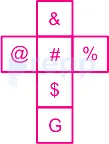
- C
Option C (shown in image)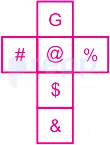
- D
Option D (shown in image)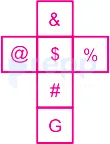
Show answer
Question 20archived
Select the letter-cluster from among the given options that can replace the question mark (?) in the following series.
CALI, ZEGO, WIBU, TMWA, ?
- A
QSPF
- B
QPSF
- C
QRQE
- D
QQRE
Show answer
D. QQREAnalyzing the Letter-Cluster Series Pattern
The question asks us to find the next letter-cluster in the series: CALI, ZEGO, WIBU, TMWA, ?. To solve this, we need to analyze the pattern of change for each letter position across the series.
Let's look at each letter position individually:
First Letter Analysis
The first letters in the series are C, Z, W, T. Let's find the difference in their positions in the English alphabet (A=1, B=2, ... Z=26).
C (3) to Z (26): Moving backward. $3 - 26 = -23$. In cyclic order, this is $3 - 3 = 0$, which corresponds to Z (position 26). So, a change of -3.
Z (26) to W (23): $26 - 23 = 3$. Moving backward by 3. Change of -3.
W (23) to T (20): $23 - 20 = 3$. Moving backward by 3. Change of -3.
The pattern for the first letter is consistently moving backward by 3 positions. Applying this pattern to the last letter T (20):
T (20) - 3 = 17. The 17th letter is Q.
So, the first letter of the next cluster is Q.
Second Letter Analysis
The second letters are A, E, I, M. Let's look at their positions:
A (1) to E (5): $5 - 1 = 4$. Moving forward by 4. Change of +4.
E (5) to I (9): $9 - 5 = 4$. Moving forward by 4. Change of +4.
I (9) to M (13): $13 - 9 = 4$. Moving forward by 4. Change of +4.
The pattern for the second letter is consistently moving forward by 4 positions. Applying this pattern to the last letter M (13):
M (13) + 4 = 17. The 17th letter is Q.
So, the second letter of the next cluster is Q.
Third Letter Analysis
The third letters are L, G, B, W. Let's look at their positions:
L (12) to G (7): $12 - 7 = 5$. Moving backward by 5. Change of -5.
G (7) to B (2): $7 - 2 = 5$. Moving backward by 5. Change of -5.
B (2) to W (23): Moving backward. $2 - 5 = -3$. In cyclic order, this is $26 + 2 - 5 = 23$. Change of -5.
The pattern for the third letter is consistently moving backward by 5 positions. Applying this pattern to the last letter W (23):
W (23) - 5 = 18. The 18th letter is R.
So, the third letter of the next cluster is R.
Fourth Letter Analysis
The fourth letters are I, O, U, A. Let's look at their positions:
I (9) to O (15): $15 - 9 = 6$. Moving forward by 6. Change of +6.
O (15) to U (21): $21 - 15 = 6$. Moving forward by 6. Change of +6.
U (21) to A (1): Moving forward with wrap-around. $21 + 6 = 27$. $27 - 26 = 1$. Change of +6.
If the pattern were consistently +6, the next letter after A (1) would be $1 + 6 = 7$, which is G. However, looking at the provided options, the fourth letter must be E (5). This implies the pattern for the fourth letter changes for the last step.
Let's analyze the change from A (1) to E (5):
A (1) to E (5): $5 - 1 = 4$. Moving forward by 4. Change of +4.
Thus, the pattern for the fourth letter appears to be +6 for the first three steps, and then +4 for the last step.
Combining the Patterns
Based on our analysis:
First letter: T (-3) → Q
Second letter: M (+4) → Q
Third letter: W (-5) → R
Fourth letter: A (+4) → E
Combining these letters, the next cluster in the series is QQRE.
Let's summarize the pattern for each position:
Position
Pattern
Example Step
Next Letter
1st
-3
T (20) - 3 = Q (17)
Q
2nd
+4
M (13) + 4 = Q (17)
Q
3rd
-5
W (23) - 5 = R (18)
R
4th
+6 (first 3 steps), then +4 (last step)
A (1) + 4 = E (5)
E
The next letter-cluster is QQRE.
Revision Table: Series Pattern Analysis
Step
CALI
ZEGO
WIBU
TMWA
?
1st Letter
C (3)
Z (26)
(-3)
W (23)
(-3)
T (20)
(-3)
Q (17)
(-3)
2nd Letter
A (1)
E (5)
(+4)
I (9)
(+4)
M (13)
(+4)
Q (17)
(+4)
3rd Letter
L (12)
G (7)
(-5)
B (2)
(-5)
W (23)
(-5)
R (18)
(-5)
4th Letter
I (9)
O (15)
(+6)
U (21)
(+6)
A (1)
(+6)
E (5)
(+4)
Additional Information on Letter Series Puzzles
Letter series puzzles, like the one above, are common in reasoning tests. They require identifying a hidden pattern that dictates the sequence of letters or letter clusters. The patterns can involve:
Arithmetic progression of letter positions (e.g., +2, -3, +4).
Constant difference in letter positions.
Alternating patterns or patterns that change over the series.
Patterns based on vowel/consonant sequences.
Patterns related to reversed alphabet positions.
Multiple independent patterns, one for each letter position.
Solving these puzzles involves careful observation, breaking down the problem (like analyzing each letter position separately), and testing potential rules. Sometimes, the pattern might be less obvious, as seen in the fourth letter of this specific series, requiring close examination of the given terms and potentially the provided options.
Paper & answer key PDF ↗ Question 21archived
Select the correct water image of the given combination.
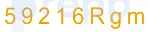
- A
Option A (shown in image)
- B
Option B (shown in image)
- C
Option C (shown in image)
- D
Option D (shown in image)
Show answer
Question 22archived
In a certain code language, 'GANGA' is coded as 21-3-42-21-3 and 'KOSHI' is coded as 33-45-57-24-27. How will 'GOMTI' be coded in that language?
- A
21-45-39-60-27
- B
21-30-39-40-18
- C
14-30-39-40-18
- D
14-45-26-60-27
Show answer
A. 21-45-39-60-27Decoding Letter Patterns: GANGA, KOSHI, and GOMTI
This problem involves understanding a specific code language where words are represented by sequences of numbers. We are given two examples to figure out the rule and then apply it to a new word, 'GOMTI'.
Analyzing the Given Codes
Let's look at the first example:
The word is 'GANGA'.
The code is 21-3-42-21-3.
And the second example:
The word is 'KOSHI'.
The code is 33-45-57-24-27.
We need to find the relationship between the letters of the words and the numbers in their codes.
Finding the Coding Rule
A common approach in such coding problems is to consider the alphabetical position of each letter. Let's list the standard alphabetical positions for the letters in 'GANGA' and 'KOSHI':
Letter
Standard Alphabetical Position
G
7
A
1
N
14
G
7
A
1
Comparing the standard positions of 'GANGA' (7, 1, 14, 7, 1) with its code (21, 3, 42, 21, 3), we can see a pattern:
For G (position 7), the code is 21. ($7 \times 3 = 21$)
For A (position 1), the code is 3. ($1 \times 3 = 3$)
For N (position 14), the code is 42. ($14 \times 3 = 42$)
For G (position 7), the code is 21. ($7 \times 3 = 21$)
For A (position 1), the code is 3. ($1 \times 3 = 3$)
It appears the rule is to multiply the standard alphabetical position of each letter by 3.
Let's verify this rule with the second word, 'KOSHI'. Its standard alphabetical positions are K=11, O=15, S=19, H=8, I=9.
Letter
Standard Position
Calculated Code (Position $\times$ 3)
Given Code
K
11
$11 \times 3 = 33$
33
O
15
$15 \times 3 = 45$
45
S
19
$19 \times 3 = 57$
57
H
8
$8 \times 3 = 24$
24
I
9
$9 \times 3 = 27$
27
The calculated codes for 'KOSHI' (33, 45, 57, 24, 27) perfectly match the given code. So, the rule is confirmed: each letter is coded by multiplying its standard alphabetical position by 3.
Coding the Word 'GOMTI'
Now we apply the same rule to the word 'GOMTI'. First, find the standard alphabetical position for each letter:
G: 7
O: 15
M: 13
T: 20
I: 9
Next, multiply each position by 3 to get the code:
G: $7 \times 3 = 21$
O: $15 \times 3 = 45$
M: $13 \times 3 = 39$
T: $20 \times 3 = 60$
I: $9 \times 3 = 27$
Putting the codes together, 'GOMTI' is coded as 21-45-39-60-27.
Final Answer Derivation
Based on our analysis and application of the coding rule, the code for 'GOMTI' is 21-45-39-60-27. We check the given options to find the matching code.
Revision Table: Coding Rule Summary
Concept
Description
Application in Problem
Standard Alphabetical Position
A=1, B=2, ..., Z=26
Used as the base number for coding each letter.
Coding Rule
Coded Value = Standard Position $\times$ 3
Derived from analyzing the given examples (GANGA, KOSHI).
Decoding / Encoding
Applying the rule to find the code for a new word (GOMTI).
Calculated code for GOMTI using the identified rule.
Additional Information: Letter Coding Techniques
Coding and decoding problems often involve relationships between letters and numbers. Some common techniques include:
Alphabetical Position: Using the standard position (A=1, B=2, etc.) or reverse position (A=26, B=25, etc.).
Operations on Positions: Adding, subtracting, multiplying, or dividing the positions by a constant number.
Sum of Positions: Coding a word by summing the positions of its letters.
Pattern-Based Replacement: Replacing letters with other letters based on a shift (like Caesar cipher) or a more complex pattern.
Consonant/Vowel Rules: Different rules for consonants and vowels.
Solving these problems requires careful observation of the examples to identify the specific rule or pattern being used.
Paper & answer key PDF ↗ Question 23archived
Select the Venn diagram that best represents the relationship between the following.
India, Delhi, Assam, Guwahati
- A
Option A (shown in image)
- B
Option B (shown in image)
- C
Option C (shown in image)
- D
Option D (shown in image)
Show answer
C. Option C (shown in image)Given: India, Delhi, Assam, Guwahati
India is the country.
Delhi and Assam in the two state of India.
Guwahati is the city of Assam.
According to the given information least possible Venn diagram is given below:
Hence, the correct answer is "Option 3".
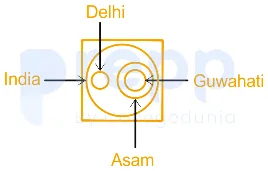 Paper & answer key PDF ↗
 Question 24archived
Study the given pattern carefully and select the number from among the given options that can replace the question mark (?) in it.
131652
152490
2336?
- A
108
- B
207
- C
117
- D
81
Show answer
B. 207Understanding the Pattern Recognition Question
This question asks us to carefully study a given pattern of numbers and determine the number that should replace the question mark (?). The pattern is presented in a way that suggests a relationship exists between the numbers.
The numbers are given as: 13 16 52 15 24 90 23 36 ?
Let's arrange these numbers into what seems like a logical structure, possibly rows or groups, based on the flow provided in the question.
Analyzing the Numerical Pattern
The numbers appear to be presented in groups of three. Let's represent them as three rows:
First Number
Second Number
Third Number
13
16
52
15
24
90
23
36
?
Now, let's try to find a relationship between the numbers in each row that results in the third number. We can explore common mathematical operations like addition, subtraction, multiplication, division, or combinations thereof.
Consider the first row: 13, 16, 52.
Sum: $13 + 16 = 29$. $29$ is not $52$.
Difference: $|16 - 13| = 3$. $3$ is not $52$.
Product: $13 \times 16 = 208$. Can we get $52$ from $208$? $208 / 4 = 52$. This looks promising.
Let's test this relationship with the second row: 15, 24, 90.
Product of the first two numbers: $15 \times 24$.
Calculation: $15 \times 24 = 360$.
Now, divide the product by 4, as observed in the first row: $360 / 4 = 90$.
The relationship holds true for the second row as well. The pattern seems to be: (First Number $\times$ Second Number) / 4 = Third Number.
Applying the Pattern to Find the Missing Number
We will now apply the identified pattern to the third row: 23, 36, ?
Using the pattern: (First Number $\times$ Second Number) / 4 = ?
Substitute the numbers from the third row:
First Number = 23
Second Number = 36
Calculation:
$(23 \times 36) / 4 = ?$
First, calculate the product of 23 and 36:
$23 \times 36$
$23 \times 30 = 690$
$23 \times 6 = 138$
$690 + 138 = 828$
So, $23 \times 36 = 828$.
Now, divide the product by 4:
$828 / 4 = ?$
Calculation:
$800 / 4 = 200$
$28 / 4 = 7$
$200 + 7 = 207$
The missing number is 207.
Comparing with Options
Let's check the given options:
Option 1: 108
Option 2: 207
Option 3: 117
Option 4: 81
Our calculated missing number, 207, matches Option 2.
Conclusion
The pattern in the given sequence is that the third number in each row is the product of the first two numbers divided by 4. Applying this rule to the third row (23, 36, ?) gives us (23 $\times$ 36) / 4 = 828 / 4 = 207. Therefore, the missing number is 207.
Revision Table: Pattern Analysis Summary
Row
First Number
Second Number
Pattern Check
Third Number
1
13
16
$(13 \times 16) / 4 = 208 / 4 = 52$
52
2
15
24
$(15 \times 24) / 4 = 360 / 4 = 90$
90
3
23
36
$(23 \times 36) / 4 = 828 / 4 = 207$
? (207)
Additional Information on Pattern Recognition in Reasoning
Pattern recognition questions are common in reasoning and aptitude tests. They require you to identify the underlying rule or relationship in a series of numbers, letters, or figures.
Key strategies for solving numerical pattern questions:
Look for simple arithmetic progressions (addition, subtraction).
Look for geometric progressions (multiplication, division).
Consider differences between consecutive terms. Sometimes the differences themselves form a pattern.
Consider ratios between consecutive terms.
Look for patterns involving alternating operations.
Consider relationships between numbers in different positions (e.g., first and third, second and fourth).
In grid or row/column patterns, look for relationships within rows, within columns, or diagonally.
Try squaring or cubing numbers, or taking square roots or cube roots.
Consider digit sums or other properties of the numbers.
Practice is key to improving your ability to quickly identify patterns.
Paper & answer key PDF ↗ Question 25archived
In a certain code language, ‘are you ready’ is written as ‘541’, ‘we are going’ is written as ‘261’, and ‘she is ready’ is written as ‘498’. How will ‘you’ be written in that language?
- A
5
- B
1
- C
4
- D
6
Show answer
A. 5Solving Code Language Puzzles: Decoding 'you'
This problem involves decoding a simple code language where words are represented by numbers. We are given three phrases and their corresponding codes. To find the code for a specific word like 'you', we need to identify common words and their associated numbers across the different phrases.
Analysing the Given Code Phrases
Let's list the given phrases and their codes:
'are you ready' is coded as '541'
'we are going' is coded as '261'
'she is ready' is coded as '498'
Step-by-Step Decoding Process
We can find the code for individual words by comparing the phrases:
Step 1: Find the code for 'are'
Compare the first two phrases:
Phrase 1: 'are you ready' → '541'
Phrase 2: 'we are going' → '261'
The common word in both phrases is 'are'. The common digit in their codes is '1'. Therefore, the code for 'are' is '1'.
Step 2: Find the code for 'ready'
Now compare the first and third phrases:
Phrase 1: 'are you ready' → '541'
Phrase 3: 'she is ready' → '498'
The common word in both phrases is 'ready'. We already know 'are' is '1'. In phrase 1 code '541', after removing the code for 'are' ('1'), we are left with '5' and '4' for 'you' and 'ready'. In phrase 3 code '498', the common digit with the remaining '5' and '4' from phrase 1 is '4'. Therefore, the code for 'ready' is '4'.
Step 3: Find the code for 'you'
Consider the first phrase again:
Phrase 1: 'are you ready' → '541'
We have found that the code for 'are' is '1' and the code for 'ready' is '4'. In the code '541', the digit '1' corresponds to 'are' and '4' corresponds to 'ready'. The only remaining word is 'you' and the only remaining digit is '5'. Thus, the code for 'you' must be '5'.
Summary of Decoded Words
Based on our analysis, we have the following codes:
Word
Code
are
1
ready
4
you
5
The question asks for the code for 'you'. As determined, the code for 'you' is '5'.
Revision Table: Key Decodings
Phrase
Code
Decoded Words & Codes
are you ready
541
are = 1, ready = 4, you = 5
we are going
261
are = 1, (we/going = 2/6 or 6/2)
she is ready
498
ready = 4, (she/is = 9/8 or 8/9)
Additional Information on Coding-Decoding
Coding-decoding questions are common in competitive exams and test your logical reasoning abilities. These problems typically involve understanding a pattern or rule by which words, numbers, or letters are coded. The key is to carefully observe the given examples, identify common elements, and deduce the underlying code.
Different types of coding-decoding include:
Letter Coding: Letters are replaced by other letters based on a pattern (e.g., shifting positions in the alphabet).
Number Coding: Words are coded into numbers based on letter positions, sum of letter values, or other rules.
Symbol Coding: Words or letters are coded using symbols.
Mixed Coding (like this problem): Words from multiple phrases are coded into numbers or symbols, and you need to find the code for a specific word by comparison.
Practicing different types of problems helps in quickly identifying the coding pattern.
Paper & answer key PDF ↗ Question 26archived
Ashokan Minor Rock Edicts are found in different parts of India. Which of the following is NOT a find spot of Ashokan Minor Rock Edicts in Karnataka?
- A
Maski
- B
Gavimath
- C
Rupnath
- D
Brahmagiri
Show answer
C. RupnathUnderstanding Ashokan Edicts and Their Locations
The Ashokan Edicts are inscriptions made by Emperor Ashoka during his reign in the 3rd century BCE. These edicts are crucial historical sources providing insights into Ashoka's policies, his commitment to Dhamma, and the spread of his empire. They are found inscribed on pillars, rocks, and cave walls across the Indian subcontinent.
The edicts are broadly categorized into Major Rock Edicts, Minor Rock Edicts, Major Pillar Edicts, and Minor Pillar Edicts. The question focuses on the Ashokan Minor Rock Edicts, which are generally shorter and found in various locations, often near important settlements or routes.
Ashokan Minor Rock Edicts Find Spots
These minor rock edicts are scattered across different regions of India. Identifying their locations helps us understand the geographical reach of Ashoka's influence and the areas where his messages were disseminated. Karnataka, in particular, is home to several significant sites where these edicts have been discovered.
Ashokan Minor Rock Edicts in Karnataka
Karnataka has several important archaeological sites yielding Ashokan Minor Rock Edicts. Some well-known locations include:
Maski: Famous because the Maski edict was the first one found that mentioned Ashoka by his personal name, rather than just titles like 'Devanampriya Piyadasi'.
Gavimath: Another site located in Karnataka with Ashokan inscriptions.
Brahmagiri: An important site in Karnataka where Ashokan edicts, including Minor Rock Edicts, have been found. Related sites like Siddapura and Jatinga-Rameshvara nearby also contain these edicts.
Nittur and Udegolam: Other sites in Karnataka with Minor Rock Edicts.
Analyzing the Given Options
Let's examine each option provided in the question to determine which one is NOT a find spot of Ashokan Minor Rock Edicts in Karnataka.
Maski: As mentioned above, Maski is a significant site in Karnataka where a Minor Rock Edict was found. So, this option is a find spot in Karnataka.
Gavimath: Gavimath is also a known site in Karnataka containing Ashokan inscriptions, including Minor Rock Edicts. So, this option is a find spot in Karnataka.
Rupnath: Rupnath is indeed a find spot of an Ashokan Minor Rock Edict, but its location is in the Katni district of Madhya Pradesh, not Karnataka.
Brahmagiri: Brahmagiri is a well-established archaeological site in Karnataka where Ashokan edicts were discovered. So, this option is a find spot in Karnataka.
Based on the locations of these sites, Maski, Gavimath, and Brahmagiri are all located within Karnataka. Rupnath, however, is located in Madhya Pradesh.
Conclusion
The question asks for the location that is NOT a find spot of Ashokan Minor Rock Edicts in Karnataka. Among the given options, Rupnath is the site that is located outside Karnataka (in Madhya Pradesh).
Locations of Ashokan Minor Rock Edict Sites
Site
State
Find Spot in Karnataka?
Maski
Karnataka
Yes
Gavimath
Karnataka
Yes
Rupnath
Madhya Pradesh
No
Brahmagiri
Karnataka
Yes
Revision Table: Ashokan Edicts and Locations
Here is a quick table summarizing key information about Ashokan Edicts:
Type of Edict
Medium
Examples (Selected)
Major Rock Edicts
Large Rocks
Kalsi, Girnar, Sopara, Dhauli, Jaugada, Maski (includes Minor), Brahmagiri (includes Minor)
Minor Rock Edicts
Smaller Rocks/Hills
Maski, Gavimath, Brahmagiri, Rupnath, Bairat, Sahasram, etc.
Major Pillar Edicts
Polished Stone Pillars
Delhi-Topra, Delhi-Meerut, Allahabad, Lauriya-Araraj, Lauriya-Nandangarh, Rampurva
Minor Pillar Edicts
Smaller Pillars/Fragments
Sanchi, Sarnath, Rummindei, Nigali Sagar
Additional Information: Significance of Ashokan Sites
The discovery of Ashokan Edicts across a vast territory underscores the extent of the Mauryan Empire under Ashoka. These inscriptions serve multiple purposes:
Proclamation of Dhamma: They explain Ashoka's policy of Dhamma, which emphasized ethical conduct, social welfare, and religious tolerance.
Administrative Instructions: Some edicts contain instructions for officials regarding justice and administration.
Historical Records: They provide valuable chronological and geographical information about Ashoka's reign and the political landscape of ancient India.
Linguistic Evidence: The language used in the edicts (Prakrit, often in Brahmi script, but also Kharosthi in the northwest, and Greek/Aramaic in Afghanistan) is crucial for studying the linguistic history of India.
Spread of Buddhism: While not purely Buddhist texts, the edicts show Ashoka's patronage of Buddhism and his efforts to spread its message.
Studying the locations like Maski, Gavimath, Brahmagiri, and Rupnath helps piece together the historical map of Ashoka's empire and the routes along which communication and ideas traveled.
Paper & answer key PDF ↗ Question 27archived
The Vernacular Press Act of 1878 was repealed during the tenure of Viceroy _________.
- A
Lord Dufferin
- B
Lord Ripon
- C
Lord Lansdowne
- D
Lord Northbrook
Show answer
B. Lord RiponUnderstanding the Vernacular Press Act of 1878
The Vernacular Press Act of 1878 was a significant piece of legislation introduced by the British government in India during the tenure of Viceroy Lord Lytton. This act was primarily aimed at censoring the local language newspapers (vernacular press) which were becoming increasingly critical of the British policies.
Purpose and Impact of the Vernacular Press Act 1878
The Act allowed the government to confiscate the printing press, paper, and other materials of any vernacular newspaper that published content considered 'seditious' or against the government.
It discriminated against vernacular newspapers, as English newspapers were not subject to similar restrictions.
The Act was widely criticized for curtailing the freedom of the press and was seen as a repressive measure.
Repeal of the Vernacular Press Act
The Vernacular Press Act 1878 faced strong opposition from Indian nationalists and liberal sections of British society. When Lord Lytton was succeeded by Lord Ripon as the Viceroy of India, there was a shift in policy. Lord Ripon was known for his relatively liberal views and his initiatives towards introducing some reforms.
One of the notable actions taken by Lord Ripon during his tenure was the repeal of the controversial Vernacular Press Act of 1878. He repealed the Act in 1882, four years after it was enacted. This decision was widely welcomed and seen as a step towards granting more freedom to the press in India.
Analyzing the Options
Lord Dufferin: Succeeded Lord Ripon. His tenure (1884-1888) saw the formation of the Indian National Congress. He was not involved in the repeal of the Vernacular Press Act.
Lord Ripon: His tenure was from 1880 to 1884. He is credited with repealing the Vernacular Press Act in 1882, introducing the Local Self-Government resolution, and repealing the Arms Act.
Lord Lansdowne: Succeeded Lord Dufferin. His tenure (1888-1894) saw the passing of the Indian Councils Act of 1892. He was not associated with the Vernacular Press Act repeal.
Lord Northbrook: Was Viceroy before Lord Lytton, from 1872 to 1876. He was not involved in the enactment or repeal of the Act of 1878.
Based on historical records, the Vernacular Press Act of 1878 was repealed during the tenure of Lord Ripon.
Revision Table: Vernacular Press Act Key Details
Aspect
Detail
Act Name
Vernacular Press Act
Year Enacted
1878
Viceroy Enacting
Lord Lytton
Purpose
Censor vernacular press critical of British rule
Year Repealed
1882
Viceroy Repealing
Lord Ripon
Additional Information on Press Freedom in British India
The period before and after the Vernacular Press Act saw continuous struggles for press freedom in British India. The Act of 1878 was a major setback, but its repeal by Lord Ripon was a positive development. However, restrictions on the press continued in various forms throughout the British rule, demonstrating the importance of a free press in the nationalist movement and the government's efforts to control dissent.
Paper & answer key PDF ↗ Question 28archived
Sri Akal Takht Sahib is located within the _________ complex.
- A
Patna Sahib
- B
Golden Temple
- C
Gurudwara Bangla Sahib
- D
Paonta Sahib
Show answer
B. Golden TempleUnderstanding the Location of Sri Akal Takht Sahib
The question asks about the location of Sri Akal Takht Sahib. This is a very important historical and religious structure in Sikhism. It is considered one of the five Takhts (seats of power) and is the primary centre of religious authority for Sikhs.
Where is Sri Akal Takht Sahib Located?
Sri Akal Takht Sahib is located within a larger, well-known complex. Let's look at the options provided:
Patna Sahib: This refers to Takht Sri Patna Sahib, one of the five Takhts, located in Patna, Bihar. It is the birthplace of Guru Gobind Singh Ji.
Golden Temple: This refers to the Sri Harmandir Sahib complex, also known as the Golden Temple, located in Amritsar, Punjab. This complex houses the holiest shrine of Sikhism, the Harmandir Sahib (Golden Temple itself), and other significant structures.
Gurudwara Bangla Sahib: This is a prominent Gurudwara in Delhi, commemorating the visit of the eighth Sikh Guru, Guru Har Krishan Ji.
Paonta Sahib: This refers to Gurudwara Paonta Sahib, another significant Gurudwara located in Himachal Pradesh, on the banks of the Yamuna River. It is associated with Guru Gobind Singh Ji.
Sri Akal Takht Sahib is physically located directly opposite the Sri Harmandir Sahib (Golden Temple) within the same complex in Amritsar.
Detailed Analysis of the Location
The structure of Sri Akal Takht Sahib was originally built by Guru Hargobind Sahib Ji, the sixth Sikh Guru, in 1606. Its location within the Golden Temple complex signifies its integral connection to the spiritual heart of Sikhism, the Harmandir Sahib, while representing temporal authority and justice.
Therefore, based on its historical establishment and current location, Sri Akal Takht Sahib is situated within the complex that houses the Golden Temple.
Comparing the Options
Here is a quick comparison of the locations mentioned in the options:
Location Name
Significance / Associated Structure
City/State
Patna Sahib
Takht Sri Patna Sahib (Birthplace of Guru Gobind Singh Ji)
Patna, Bihar
Golden Temple Complex
Sri Harmandir Sahib (Golden Temple), Sri Akal Takht Sahib
Amritsar, Punjab
Gurudwara Bangla Sahib
Associated with Guru Har Krishan Ji
Delhi
Paonta Sahib
Associated with Guru Gobind Singh Ji
Paonta Sahib, Himachal Pradesh
From the table, it is clear that Sri Akal Takht Sahib is located within the Golden Temple complex in Amritsar.
The other options, Patna Sahib, Gurudwara Bangla Sahib, and Paonta Sahib, are significant Sikh religious sites but are located in different cities and states and do not house Sri Akal Takht Sahib.
Thus, the correct complex where Sri Akal Takht Sahib is located is the Golden Temple complex.
Revision Table: Sri Akal Takht Sahib and Golden Temple
Feature
Sri Akal Takht Sahib
Golden Temple (Sri Harmandir Sahib)
Meaning
Throne of the Timeless One
Abode of God
Established by
Guru Hargobind Sahib Ji
Guru Arjan Sahib Ji
Purpose
Seat of temporal authority, justice
Spiritual centre, devotion
Location
Within the Golden Temple Complex
Within the Golden Temple Complex
Significance
One of the five Takhts
Holest shrine of Sikhism
Additional Information: Sikh Holy Sites and Takhts
Sikhism has many significant holy sites, but five are recognized as Takhts, representing seats of religious and political authority. These are:
Akal Takht Sahib, Amritsar
Takht Sri Keshgarh Sahib, Anandpur Sahib
Takht Sri Damdama Sahib, Talwandi Sabo
Takht Sri Patna Sahib, Patna
Takht Sri Hazur Sahib, Nanded
The question specifically asks about Sri Akal Takht Sahib, which is the foremost among these Takhts and is centrally located within the Golden Temple complex in Amritsar.
Paper & answer key PDF ↗ Question 29archived
Solids like fats, grease and oil that float on top of liquid wastewater is called _________.
- A
compost
- B
peat
- C
sludge
- D
urea
Show answer
C. sludgeThe correct answer is sludge.
However, scum is typically skimmed off and combined with other settled solids during treatment, collectively forming the sludge . Given the provided options, sludge serves as the encompassing term for the accumulated solids removed from wastewater, including the floating layer. Therefore, based on the common practices and terminology in wastewater management, the term that best fits the description of solids like fats, grease, and oil floating on wastewater, among the choices given, is sludge .
Paper & answer key PDF ↗ Question 30archived
Which of the following states has the lowest female sex ratio according to the 2011 Census?
- A
Uttar Pradesh
- B
Punjab
- C
Haryana
- D
Sikkim
Show answer
C. HaryanaThe correct answer is Haryana.
While the overall sex ratio in India has shown some improvement in subsequent years compared to previous decades, regional disparities, like the low ratio in Haryana, remain a focus area for policy intervention. The child sex ratio (for the age group 0-6 years) is often a more sensitive indicator of sex selection practices. The child sex ratio in India was even lower at 919 in 2011.
Paper & answer key PDF ↗ Question 31archived
A ‘gnomon’ is a part of a ________.
- A
telescope
- B
transformer
- C
bolometer
- D
sundial
Show answer
D. sundialUnderstanding the Gnomon and Sundials
The question asks to identify what a ‘gnomon’ is a part of. To answer this correctly, we need to understand the components of the options provided and the function of a gnomon.
What is a Gnomon?
A gnomon is a fundamental part of a traditional sundial. It is typically a rod, plate, or other object that is fixed in position and casts a shadow.
The word 'gnomon' comes from the Greek word meaning 'indicator' or 'one who knows'.
In a sundial, the gnomon's shadow moves across a marked surface (often called the dial plate) as the sun moves across the sky.
The position of the shadow on the dial plate indicates the time of day.
For accurate timekeeping, the gnomon is usually aligned with the Earth's axis of rotation, meaning it points towards the celestial pole (north in the Northern Hemisphere, south in the Southern Hemisphere).
Analyzing the Options
Let's look at the options provided:
Telescope: A telescope is an optical instrument used to observe distant objects, typically celestial bodies. Its main parts include lenses or mirrors, a tube, and an eyepiece. A gnomon is not a standard part of a telescope.
Transformer: A transformer is an electrical device that transfers electrical energy from one circuit to another through electromagnetic induction. Its main parts are windings and a core. A gnomon is not part of a transformer.
Bolometer: A bolometer is a device used for measuring the power of incident electromagnetic radiation, especially infrared radiation. It typically consists of an absorptive element, such as a thin metal layer, connected to a thermal reservoir by a thermal link. A gnomon is not part of a bolometer.
Sundial: A sundial is a device that measures time by the position of the sun. The most common type measures time by the position of the shadow cast by a gnomon onto a surface marked with lines indicating the hours of the day. The gnomon is the essential shadow-casting component of a sundial.
Conclusion
Based on the analysis, the gnomon is the key component of a sundial that casts the shadow used to tell time. Therefore, a gnomon is a part of a sundial.
Summary of Gnomon's Role
Component
Description
Relation to Gnomon
Gnomon
The shadow-casting part of a sundial.
Is the central element for time indication on a sundial.
Sundial
A device using the sun's position to tell time.
Includes a gnomon as its primary functional part.
Revision Table: Gnomon and Sundial Facts
Term
Definition/Function
Association
Gnomon
Object that casts a shadow to indicate time.
Sundial
Sundial
Instrument for telling time using sunlight.
Requires a gnomon to function.
Shadow
Cast by the gnomon, moves with the sun.
Used on the dial plate of a sundial to read time.
Additional Information: Types of Sundials and Gnomons
Sundials come in many forms, and the gnomon's shape and placement can vary. Here are a few examples:
Horizontal Sundial: The dial plate is horizontal, and the gnomon is typically a triangular plate whose upper edge (the style) is inclined at an angle equal to the local latitude, pointing towards the celestial pole.
Vertical Sundial: The dial plate is vertical, mounted on a wall. The gnomon's style is still aligned with the Earth's axis, but its angle relative to the dial plate differs from a horizontal sundial.
Equatorial Sundial: The dial plate is parallel to the Earth's equatorial plane, tilted at an angle equal to the co-latitude ($$90^\circ$$ - latitude). The gnomon is usually a simple rod perpendicular to the dial plate, pointing through its center. This type often has hour marks on both sides of the plate to account for different seasons.
Analemmatic Sundial: An elliptical sundial where the gnomon is often a person standing at a specific point that varies with the date, casting a shadow onto hour points on the ellipse. In this case, the "gnomon" is temporary and movable.
Regardless of the type, the fundamental principle involves a gnomon casting a shadow to indicate time based on the sun's apparent movement.
Paper & answer key PDF ↗ Question 32archived
Who among the following was the first Indian Governor of Reserve Bank of India?
- A
CD Deshmukh
- B
HVR Lengar
- C
PC Bhattacharya
- D
LK Jha
Show answer
A. CD DeshmukhThe correct answer is CD Deshmukh.
The Governor plays a key role in setting interest rates, managing foreign exchange, and regulating the banking sector. CD Deshmukh's tenure was significant as it covered the period just before and after India's independence. He later went on to become the Union Finance Minister. Understanding the history of the RBI and its Governors is important for anyone studying Indian economy and history.
Paper & answer key PDF ↗ Question 33archived
In order to get clean drinking water disinfectant is used after filtration. Disinfectant, however, is NOT used for removing:
- A
bacteria
- B
viruses
- C
minerals
- D
parasites
Show answer
C. mineralsUnderstanding Water Disinfection and Purification
Water treatment involves several steps to make water safe and clean for drinking. Filtration is often used first to remove larger particles and suspended solids. After filtration, disinfection is a crucial step in ensuring clean drinking water.
Purpose of Disinfection in Water Treatment
The primary goal of disinfection is to kill or inactivate harmful microorganisms present in the water. These microorganisms include:
Bacteria
Viruses
Parasites (like protozoa and helminths)
Common disinfectants used in water treatment include chlorine, chloramines, ozone, and ultraviolet (UV) light. These methods work by damaging the structure of the microorganisms or interfering with their metabolic processes, preventing them from reproducing and causing disease.
What Disinfection Does NOT Remove
While disinfection is highly effective against microbial contaminants, it is NOT designed to remove all substances from water. Specifically, disinfectants are generally ineffective at removing dissolved inorganic substances like minerals. Minerals, such as calcium, magnesium, sodium, iron, etc., are dissolved in water and contribute to its hardness or other characteristics. Removing these minerals requires different treatment processes.
Methods for Removing Minerals from Water
Removing minerals from water typically involves processes like:
Ion exchange
Reverse osmosis
Distillation
Sedimentation (for some mineral compounds that precipitate)
Specific filtration methods or chemical treatments
These processes target the physical or chemical properties of the dissolved minerals, separating them from the water. Disinfection, on the other hand, focuses on biological contaminants.
Analyzing the Options
Let's look at the given options:
bacteria: Disinfectants are specifically used to kill or inactivate bacteria. So, disinfectants are used for removing (or rather, inactivating) bacteria.
viruses: Disinfectants are also effective against many viruses, rendering them harmless. So, disinfectants are used for removing (or inactivating) viruses.
minerals: Minerals are dissolved inorganic substances. Disinfection processes do not remove dissolved minerals from water.
parasites: Disinfectants like chlorine can be effective against some parasites, though others (like Cryptosporidium or Giardia) may require higher doses, longer contact times, or alternative disinfection methods like UV or ozonation. However, disinfection is intended to deal with parasitic contamination. So, disinfectants are used for removing (or inactivating) parasites.
Based on this analysis, disinfectants are NOT used for removing minerals.
Effectiveness of Disinfection on Water Contaminants
Contaminant Type
Removed/Inactivated by Disinfection?
Typical Removal Method if Not Disinfection
Bacteria
Yes (Inactivated/Killed)
N/A (Disinfection is the primary method)
Viruses
Yes (Inactivated)
N/A (Disinfection is a primary method)
Minerals (Dissolved)
No
Ion Exchange, Reverse Osmosis, Distillation
Parasites (e.g., Protozoa)
Yes (Inactivated/Killed, may require specific methods/doses)
Filtration (for cysts), Specific Disinfection Methods
Sediment/Particles
No
Filtration, Sedimentation
Conclusion
Disinfection is a critical step in water purification focused on eliminating biological threats like bacteria, viruses, and parasites. It does not target or remove dissolved inorganic substances such as minerals.
Revision Table: Water Treatment Processes
Key Water Treatment Processes
Process
Primary Purpose
Examples of Contaminants Removed
Sedimentation/Clarification
Remove large suspended particles
Sand, silt, large debris
Filtration
Remove suspended solids, some microorganisms
Smaller particles, some bacteria, cysts
Disinfection
Inactivate/Kill microorganisms
Bacteria, viruses, parasites
Ion Exchange
Remove dissolved ions
Hardness minerals ($\text{Ca}^{2+}, \text{Mg}^{2+}$), nitrates, sulfates
Reverse Osmosis
Remove dissolved solids, microorganisms, particles
Minerals, salts, bacteria, viruses
Additional Information: Water Quality Parameters
Water quality is assessed based on various parameters, not just the absence of microbes. These include:
Microbiological Parameters: Presence of bacteria, viruses, protozoa. Addressed by disinfection and filtration.
Physical Parameters: Turbidity, color, odor, temperature. Addressed by sedimentation, filtration, aeration, activated carbon.
Chemical Parameters (Inorganic): Dissolved minerals (hardness), heavy metals (lead, mercury), nitrates, fluoride. Addressed by ion exchange, reverse osmosis, precipitation, adsorption.
Chemical Parameters (Organic): Pesticides, industrial chemicals, disinfection byproducts. Addressed by activated carbon adsorption, oxidation, reverse osmosis.
Disinfection is one essential step but is part of a larger system of water treatment processes designed to meet specific water quality standards.
Paper & answer key PDF ↗ Question 34archived
The _________ considers a marriage as complete and binding at the completion of the Saptapadi ritual.
- A
Indian Christian Marriage Act, 1862
- B
Hindu Marriage Act, 1955
- C
Parsi Marriage and Divorce Act, 1936
- D
Muslim Personal Law (Shariat) Application Act, 1937
Show answer
B. Hindu Marriage Act, 1955Understanding the legal requirements for a marriage to be considered complete and binding is crucial. Different personal laws in India govern marriages based on religion. The question specifically asks which act considers the completion of the Saptapadi ritual as the point where a marriage becomes complete and binding.
Analyzing Marriage Rituals and Indian Law
Marriage rituals vary significantly across different religious and cultural practices in India. Many personal laws have specific provisions detailing the ceremonies required for a valid marriage. Let's look at the acts mentioned in the options and their relevance to the Saptapadi ritual.
Indian Christian Marriage Act, 1862: This act governs the marriage of persons professing the Christian religion in India. Marriages under this act are solemnized according to specific rites and ceremonies recognized by the Christian faith. The Saptapadi ritual, which involves taking seven steps around a sacred fire, is not a part of Christian marriage ceremonies. Therefore, this act does not consider Saptapadi as the defining moment for a marriage's completion.
Hindu Marriage Act, 1955: This act codifies the law relating to marriage among Hindus and others who are not Muslims, Christians, Parsis, or Jews by religion. Section 7 of the Hindu Marriage Act, 1955, specifically deals with ceremonies for a Hindu marriage. It states that a Hindu marriage may be solemnized in accordance with the customary rites and ceremonies of either party. One such widely recognized ceremony is the Saptapadi. Section 7(2) of the act explicitly mentions that where the Saptapadi is performed, the marriage becomes complete and binding when the seventh step is taken.
Parsi Marriage and Divorce Act, 1936: This act governs the marriage and divorce of Parsis in India. The customary marriage ceremony among Parsis is known as 'Ashirvad' (blessing), which is performed by a priest. The Saptapadi ritual is not part of Parsi marriage ceremonies.
Muslim Personal Law (Shariat) Application Act, 1937: This act applies the Muslim Personal Law (Shariat) to Muslims in India regarding certain matters, including marriage. A Muslim marriage (Nikah) is a contract that requires proposal (Ijab) and acceptance (Qabul) in the presence of witnesses, and usually involves the payment of Mahr (dower). The Saptapadi ritual is not performed in a Muslim marriage.
Saptapadi and the Hindu Marriage Act, 1955
The Saptapadi is a significant ritual in traditional Hindu marriages. It involves the bride and groom taking seven steps together around a sacred fire (Agni), with each step representing a vow. The Hindu Marriage Act, 1955, gives legal recognition to this custom. According to Section 7 of the Act, if the Saptapadi ritual is part of the customary rites chosen by the parties, the marriage is legally recognized as complete and binding upon the successful completion of the seventh step. This makes the completion of Saptapadi a crucial legal requirement for the validity and completeness of a Hindu marriage solemnized with this custom.
Act
Religion Covered
Primary Marriage Ceremony/Requirement
Role of Saptapadi
Indian Christian Marriage Act, 1862
Christian
Solemnization by Minister/Marriage Registrar
Not applicable
Hindu Marriage Act, 1955
Hindu, Buddhist, Sikh, Jain
Customary rites & ceremonies (e.g., Saptapadi, Homa)
Considered complete and binding after the seventh step of Saptapadi (if applicable)
Parsi Marriage and Divorce Act, 1936
Parsi
Ashirvad ceremony
Not applicable
Muslim Personal Law (Shariat) Application Act, 1937
Muslim
Nikah (contract with Ijab, Qabul, Mahr)
Not applicable
Based on the analysis of the different acts, it is clear that only the Hindu Marriage Act, 1955, specifically recognizes the Saptapadi ritual and considers its completion as the point where a marriage becomes complete and binding, provided Saptapadi is one of the customary ceremonies chosen by the parties.
Revision Table: Key Indian Marriage Laws
Act Name
Year
Applicable To
Key Provision on Marriage Solemnization
Indian Christian Marriage Act
1862
Christians
Rules for solemnization by licensed persons or Marriage Registrars.
Hindu Marriage Act
1955
Hindus, Buddhists, Sikhs, Jains
Marriage may be solemnized according to customary rites, including Saptapadi (Section 7).
Parsi Marriage and Divorce Act
1936
Parsis
Marriage solemnized by a priest in the presence of witnesses (Ashirvad).
Muslim Personal Law (Shariat) Application Act
1937
Muslims
Applies Shariat law for marriage, which is a contract (Nikah).
Additional Information on Saptapadi and Hindu Marriage Act
The Hindu Marriage Act, 1955, aimed to codify and standardize aspects of Hindu personal law. While it recognizes traditional customs, it also introduces certain uniform requirements and conditions for a valid marriage, such as conditions regarding age, capacity to marry, and prohibited degrees of relationship. Section 7, dealing with ceremonies, highlights the importance of customary rituals like Homa (offerings into the sacred fire) and Saptapadi. The specific mention of Saptapadi and its legal effect upon completion in Section 7(2) underscores its significance under the Act. It is important to note that while Saptapadi is a common custom, the Act allows for other customary rites to be sufficient for solemnization, as long as they are recognized by the community or tradition of either party.
Paper & answer key PDF ↗ Question 35archived
As of April 2021, _________ held the record for the highest individual Women’s ODI cricket score by an Indian player. She was also the only Indian spinner to take six women’s ODI wickets.
- A
Radha Yadav
- B
Punam Raut
- C
Taniya Bhatia
- D
Deepti Sharma
Show answer
D. Deepti SharmaIdentifying the Indian Woman Cricketer with Key ODI Records
The question asks us to identify an Indian woman cricketer who, as of April 2021, held two significant records in One Day Internationals (ODIs):
The highest individual ODI score by an Indian player.
The only Indian spinner to take six wickets in a Women's ODI innings.
Let's consider the achievements of prominent Indian women cricketers.
Analysis of Player Achievements
We need to find the player whose career records match both criteria. Let's look at the typical roles of the players mentioned in the options:
Radha Yadav: Primarily a slow left-arm orthodox bowler. Known for T20 performance.
Punam Raut: A top-order batter. Known for her batting records, but not particularly for bowling milestones or the highest individual score.
Taniya Bhatia: A wicket-keeper batter. Not known for significant bowling records or high individual scores in ODIs.
Deepti Sharma: A left-arm spinner and a left-handed batter. She is known for her all-round abilities.
Deepti Sharma's Records in Women's ODIs
Upon reviewing the records, Deepti Sharma has achieved both milestones mentioned in the question:
Highest ODI Score by an Indian Woman: As of April 2021, Deepti Sharma held the record for the highest individual score by an Indian woman in ODIs. She scored 188 runs against Ireland in a match played in May 2017. This innings surpassed the previous record.
Only Indian Spinner with Six Wickets in ODIs: Deepti Sharma is indeed the only Indian spinner to have taken six wickets in a Women's ODI innings. She achieved figures of 6 wickets for 20 runs against Sri Lanka in February 2017.
These two records held by Deepti Sharma align perfectly with the description provided in the question.
Comparison with Other Options
While the other players listed are also important members of the Indian women's cricket team, their records do not match both specific criteria mentioned in the question as of April 2021. For example, Radha Yadav is a spinner but does not hold the batting record. Punam Raut is a batter but does not hold the bowling record of 6 wickets for a spinner.
Conclusion
Based on the analysis of the records, Deepti Sharma is the Indian player who, as of April 2021, held the record for the highest individual Women's ODI score by an Indian and was the only Indian spinner with six Women's ODI wickets.
Revision Table: Key Indian Women's ODI Records (as of April 2021)
Record
Player
Details
Highest Individual Score (India)
Deepti Sharma
188 vs Ireland (2017)
Only Indian Spinner with 6 Wickets in an innings
Deepti Sharma
6/20 vs Sri Lanka (2017)
Additional Information on Indian Women's Cricket Records
Indian women's cricket has a rich history with several players holding significant records. While Deepti Sharma holds these specific records mentioned, other players like Mithali Raj (most runs in ODIs), Jhulan Goswami (most wickets in ODIs), and Harmanpreet Kaur have also set numerous benchmarks in different formats and categories of the game. Keeping track of these records is important for understanding the evolution of Indian women's cricket.
Paper & answer key PDF ↗ Question 36archived
The Government of India imposed an Agriculture and Infrastructure Development Cess of __________ per litre on petrol through Union Budget 2021-22.
- A
Rs. 2.5
- B
Rs. 3
- C
Rs. 3.5
- D
Rs. 4
Show answer
A. Rs. 2.5Agriculture and Infrastructure Development Cess (AIDC) Explained
The Union Budget 2021-22 introduced the Agriculture and Infrastructure Development Cess (AIDC) on certain items, including petrol and diesel, to fund agriculture infrastructure and other development activities. This cess is levied in addition to the basic excise duty.
For petrol, the Government of India imposed an Agriculture and Infrastructure Development Cess of a specific amount per litre through the Union Budget 2021-22. Understanding the details of this cess is important for students studying economics and current affairs.
Amount of Agriculture and Infrastructure Development Cess on Petrol
In the Union Budget 2021-22, the Agriculture and Infrastructure Development Cess (AIDC) imposed on petrol was stated as Rs. 2.5 per litre.
This was accompanied by a corresponding cess on diesel as well. It's worth noting how the total tax structure on fuel changes with the introduction of such cesses and changes in basic excise duties.
Comparing AIDC on Petrol and Diesel (Union Budget 2021-22)
Fuel Type
Agriculture and Infrastructure Development Cess (AIDC)
Petrol
Rs. 2.5 per litre
Diesel
Rs. 4 per litre
The introduction of the AIDC necessitated adjustments in other duties, specifically a reduction in Basic Excise Duty (BED) and Special Additional Excise Duty (SAED), to avoid a sharp increase in the final price for consumers immediately after the budget announcement. However, the overall intent was to create a dedicated revenue stream for agricultural infrastructure development.
Purpose of Agriculture and Infrastructure Development Cess
The primary objective behind levying the Agriculture and Infrastructure Development Cess is to mobilise resources for funding critical investments in agricultural infrastructure. This includes:
Developing market infrastructure
Improving storage facilities
Investing in cold chains
Funding other initiatives aimed at boosting the agriculture sector's productivity and efficiency.
Such investments are expected to benefit farmers and contribute to the overall growth of the Indian economy.
Revision Table: Key Budget 2021-22 Measures
Measure
Details
Significance
Agriculture & Infrastructure Development Cess (AIDC) on Petrol
Rs. 2.5 per litre introduced
Fund agri infrastructure, adjust BED/SAED
Agriculture & Infrastructure Development Cess (AIDC) on Diesel
Rs. 4 per litre introduced
Fund agri infrastructure, adjust BED/SAED
Healthcare Spending
Increased outlay under Pradhan Mantri Aatmanirbhar Swasth Bharat Yojana
Boost health infrastructure
Disinvestment Target
Aggressive target set
Resource mobilisation, improve efficiency of PSUs
Additional Information on Taxation and Cesses in India
In India, taxes are levied by the central, state, and local governments. There are various types of taxes, including direct taxes (like income tax) and indirect taxes (like Goods and Services Tax or GST).
A 'cess' is a tax on tax, levied for a specific purpose. It is usually discontinued after the objective is met. Unlike other taxes, the revenue collected from a cess is typically earmarked for the purpose for which it was levied and does not go into the Consolidated Fund of India to be shared with states. However, the AIDC revenue does go to the Consolidated Fund of India, but the purpose is specified.
Examples of other cesses include the Swachh Bharat Cess, Krishi Kalyan Cess (now subsumed under GST), and various education cesses imposed previously. The AIDC is a recent example highlighting the government's focus on specific sector development.
Paper & answer key PDF ↗ Question 37archived
Which of the following Amendments of the Constitution of India was enacted in 1993 to constitutionally recognise municipal governments?
- A
71st Constitutional Amendment Act (CAA), 1988
- B
72nd Constitutional Amendment Act (CAA), 1989
- C
74th Constitutional Amendment Act (CAA), 1992
- D
73rd Constitutional Amendment Act (CAA), 1990
Show answer
C. 74th Constitutional Amendment Act (CAA), 1992Understanding the Constitutional Recognition of Municipal Governments in India
The question asks which Constitutional Amendment Act enacted around 1993 provided constitutional recognition to municipal governments in India. This is a crucial aspect of decentralized governance in the country.
India has a three-tier system of government: the Union government, the State governments, and the local self-governments. The local self-governments are further divided into Panchayati Raj Institutions (PRIs) for rural areas and Municipalities for urban areas. Before certain amendments, these local bodies did not have a constitutional status, meaning their existence and powers were largely dependent on state laws, which could be changed or ignored.
Analyzing the Options
Let's look at the provided options and what they pertain to:
71st Constitutional Amendment Act (CAA), 1992: This amendment included Konkani, Manipuri, and Nepali languages in the Eighth Schedule of the Constitution. It is not related to local self-government. (Note: The option incorrectly states 1988, the correct year is 1992).
72nd Constitutional Amendment Act (CAA), 1992: This amendment made temporary provisions for the election of Meghalaya Legislative Assembly members belonging to the Scheduled Tribes. It is not related to local self-government. (Note: The option incorrectly states 1989, the correct year is 1992).
74th Constitutional Amendment Act (CAA), 1992: This amendment granted constitutional status to urban local bodies (municipalities). It added Part IXA and the Twelfth Schedule to the Constitution, providing a framework for the composition, powers, and functions of municipalities. While passed in 1992, it came into effect on June 1, 1993. This act is directly related to constitutionally recognising municipal governments.
73rd Constitutional Amendment Act (CAA), 1992: This amendment granted constitutional status to rural local bodies (Panchayati Raj Institutions). It added Part IX and the Eleventh Schedule to the Constitution. While also passed in 1992 and effective from 1993 (April 24, 1993), it pertains to Panchayats, not Municipalities. (Note: The option incorrectly states 1990, the correct year is 1992).
Identifying the Correct Amendment for Municipal Governments
Based on the analysis, the 74th Constitutional Amendment Act, 1992, is the one specifically enacted to constitutionally recognise municipal governments (urban local bodies). Although the question mentions 1993, this refers to the year the Act became effective. The Act itself was passed in 1992.
How the 74th Amendment Strengthened Municipalities
The 74th Amendment provided a constitutional basis for the functioning of municipalities. Key provisions include:
Mandatory establishment of municipalities in urban areas.
Constitution of Wards Committees.
Reservation of seats for Scheduled Castes, Scheduled Tribes, and women.
Fixed tenure of five years for municipalities.
Establishment of a State Election Commission for conducting municipal elections.
Establishment of a State Finance Commission to review the financial position of municipalities.
Provisions for District Planning Committees and Metropolitan Planning Committees.
These provisions significantly enhanced the autonomy and effectiveness of municipal governments, making them a vital part of India's democratic structure.
Key Constitutional Amendments for Local Self-Government
Amendment Act
Year Enacted
Effective Date
Focus
73rd CAA
1992
April 24, 1993
Panchayati Raj Institutions (Rural)
74th CAA
1992
June 1, 1993
Municipalities (Urban)
Conclusion
The amendment that constitutionally recognised municipal governments and was enacted in 1992 (effective 1993) is the 74th Constitutional Amendment Act.
Revision Table: Indian Constitution Amendments
Summary of Relevant Constitutional Amendments
Amendment Act
Primary Subject
71st CAA
Languages in 8th Schedule
72nd CAA
Legislative Assembly composition (Meghalaya)
73rd CAA
Constitutional status for Panchayati Raj (Rural Local Bodies)
74th CAA
Constitutional status for Municipalities (Urban Local Bodies)
Additional Information on 74th Constitutional Amendment Act
The 74th Constitutional Amendment Act, 1992, is a landmark legislation that brought urban local self-governance under the purview of the Constitution. It aimed to strengthen democracy at the grassroots level in urban areas.
Key additions made by this amendment:
Part IXA: Titled "The Municipalities," containing Articles 243P to 243ZG.
Twelfth Schedule: Lists 18 functional items placed within the purview of municipalities, such as urban planning, regulation of land use, roads and bridges, water supply, public health, sanitation, fire services, urban forestry, protection of the environment, safeguarding interests of weaker sections, slum improvement, poverty alleviation, provision of urban amenities, promotion of cultural and aesthetic aspects, burials and burial grounds, cremations and cremation grounds, cattle ponds, vital statistics, and regulation of slaughter houses and tanneries.
This amendment provided a uniform framework across states for the structure and functioning of urban local bodies, ensuring their regular elections, defined powers, and stable funding mechanisms.
Paper & answer key PDF ↗ Question 38archived
The picture that won the World Press Photo of the Year 2021 contest is titled ‘_________’.
- A
The First Embrace
- B
Emancipation Memorial Debate
- C
Straight Voice
- D
Crying Girl on the Border
Show answer
A. The First EmbraceUnderstanding the World Press Photo of the Year 2021
The question asks for the title of the photograph that won the prestigious World Press Photo of the Year contest in 2021. This award recognizes the best single exposure photograph contributing significantly to visual journalism during the previous year.
To answer this question, we need to recall or find information about the 2021 World Press Photo Contest winners.
Identifying the Winning Photograph Title
The winning photograph for the World Press Photo of the Year 2021 award was taken by Mads Nissen. The photograph captures a poignant moment of comfort during the COVID-19 pandemic.
Based on the records of the World Press Photo Contest, the winning photograph was titled ‘The First Embrace’.
Analyzing the Options
Let’s look at the provided options and see how they relate to the World Press Photo of the Year 2021:
The First Embrace: This is the correct title of the photograph by Mads Nissen that won the World Press Photo of the Year in 2021. The photo depicts an 85-year-old woman in Brazil receiving her first hug in five months from a nurse, facilitated by a plastic ‘hug curtain’ during the pandemic.
Emancipation Memorial Debate: This title does not correspond to the winning photo of the World Press Photo of the Year 2021. While debates and events surrounding historical monuments were significant topics, this specific title isn't associated with the top 2021 photo prize.
Straight Voice: This is another title that does not match the winning photograph for the World Press Photo of the Year 2021. The winning photo focused on the impact of the pandemic.
Crying Girl on the Border: This title is associated with a highly impactful photograph from 2018, taken by John Moore, depicting a Honduran child crying while her mother is searched by a US border patrol agent. It was a finalist, but not the World Press Photo of the Year 2021 winner.
Conclusion
Comparing the options with the known winner of the World Press Photo of the Year 2021, it is clear that the title ‘The First Embrace’ is the correct one.
Summary of World Press Photo of the Year 2021
Award
Year
Winning Photo Title
Photographer
Subject
World Press Photo of the Year
2021
The First Embrace
Mads Nissen
COVID-19 pandemic impact (first hug)
Revision Table: World Press Photo 2021
Key Detail
Information
Award Won
World Press Photo of the Year
Year Awarded
2021
Winning Title
The First Embrace
Photographer
Mads Nissen
Country of Subject
Brazil
Context
COVID-19 pandemic
Additional Information: World Press Photo Contest
The World Press Photo Contest is an annual competition for photojournalism and documentary photography. It is organized by the World Press Photo Foundation, an independent non-profit organization based in Amsterdam.
The contest celebrates the best visual journalism produced over the past year.
It recognizes photographs and stories across various categories, including contemporary issues, environment, general news, long-term projects, nature, portraits, sports, and spot news.
The main awards are the World Press Photo of the Year and the World Press Photo Story of the Year.
Winning the World Press Photo of the Year is considered one of the most prestigious accolades in photojournalism, often highlighting major global events or significant human stories.
The contest aims to connect the world to the stories that matter.
Paper & answer key PDF ↗ Question 39archived
Who was the Australian Open Women’s Singles champion in 2021?
- A
Venus Williams
- B
Serena Williams
- C
Naomi Osaka
- D
Jennifer Brady
Show answer
C. Naomi Osaka2021 Australian Open Women's Singles Champion
The question asks to identify the winner of the Women's Singles title at the Australian Open in 2021. This is a specific sports event outcome that requires recall of the tournament results.
Analyzing the 2021 Australian Open Women's Singles Result
The Australian Open is one of the four Grand Slam tennis tournaments held annually. The 2021 edition took place in Melbourne.
The Women's Singles final of the 2021 Australian Open was contested between Naomi Osaka and Jennifer Brady.
Naomi Osaka won the final match in straight sets.
Evaluating the Options
Let's look at the provided options:
Venus Williams: While a legendary player, Venus Williams did not win the 2021 Australian Open Women's Singles title.
Serena Williams: Serena Williams is another tennis icon, but she was not the champion of the 2021 Australian Open Women's Singles event.
Naomi Osaka: Naomi Osaka reached the final and won the 2021 Australian Open Women's Singles title. This matches our knowledge of the event's outcome.
Jennifer Brady: Jennifer Brady was the runner-up in the 2021 Australian Open Women's Singles final, losing to Naomi Osaka. She did not win the tournament.
Conclusion on the 2021 Australian Open Winner
Based on the results of the tournament, Naomi Osaka was the champion of the 2021 Australian Open Women's Singles.
2021 Australian Open Women's Singles Final
Player
Outcome
Naomi Osaka
Winner
Jennifer Brady
Runner-up
Therefore, Naomi Osaka is the correct answer to who was the 2021 Australian Open Women’s Singles champion.
Revision Table: Australian Open Champions
Recent Australian Open Women's Singles Winners
Year
Champion
2024
Aryna Sabalenka
2023
Aryna Sabalenka
2022
Ashleigh Barty
2021
Naomi Osaka
2020
Sofia Kenin
2019
Naomi Osaka
Additional Information: Naomi Osaka's Grand Slam Titles
Naomi Osaka is a successful professional tennis player who has won multiple Grand Slam singles titles. Her victory at the 2021 Australian Open marked her fourth career Grand Slam title and her second Australian Open title. She has also won the US Open twice.
US Open 2018
Australian Open 2019
US Open 2020
Australian Open 2021
Her performance in 2021 solidified her position as one of the top players in women's tennis.
Paper & answer key PDF ↗ Question 40archived
Who among the following Indian artists won the ‘Joan Miro Prize’ for the year 2019?
- A
Nalini Malani
- B
Jogen Chowdhury
- C
Anjolie Ela Menon
- D
Jiten Thukral
Show answer
A. Nalini MalaniUnderstanding the Joan Miro Prize and Indian Art Recognition
The question asks to identify the Indian artist who was awarded the prestigious ‘Joan Miro Prize’ in the year 2019. This prize is a significant international recognition in the field of contemporary art, awarded by the Fundació Joan Miró in Barcelona, Spain.
Let's examine the options provided:
Nalini Malani
Jogen Chowdhury
Anjolie Ela Menon
Jiten Thukral
Research into the recipients of the Joan Miro Prize confirms that the award for the year 2019 was bestowed upon a highly respected Indian artist.
The Winner of the 2019 Joan Miro Prize
The Joan Miro Prize 2019 was awarded to the acclaimed Indian artist Nalini Malani. She was recognized for her innovative and politically charged work, particularly her use of diverse media including video, film, performance, and painting.
Key points about Nalini Malani and the award:
Nalini Malani is a pioneering figure in contemporary Indian art.
Her work often addresses themes of violence, war, feminism, and transnational politics, drawing from mythology and literature.
The Joan Miro Prize, established in 2007, honours artists who demonstrate the spirit of Joan Miró's work through their creative innovation and exploration.
Malani was the first Indian artist to receive this distinguished international prize.
Therefore, based on the official records and announcements regarding the Joan Miro Prize for 2019, the correct artist is Nalini Malani.
Revision Table: Joan Miro Prize 2019
Award
Joan Miro Prize
Year Awarded
2019
Recipient
Nalini Malani
Nationality
Indian
Awarded by
Fundació Joan Miró, Barcelona
Significance
International recognition for contemporary art
Additional Information on Indian Contemporary Art and Awards
While Nalini Malani received the Joan Miro Prize in 2019, the other artists listed are also prominent figures in the Indian art scene:
Jogen Chowdhury: Known for his unique cross-hatching style and works often depicting human figures with strong emotional depth.
Anjolie Ela Menon: A renowned muralist and painter, recognized for her distinct style featuring elongated figures and vibrant colours, often inspired by religious themes.
Jiten Thukral (part of the artist duo Thukral & Tagra): Known for collaborative works across various media, often addressing themes related to migration, consumerism, and popular culture in India.
Understanding key awards like the Joan Miro Prize helps in appreciating the global recognition received by Indian artists and their contribution to the world of contemporary art.
Paper & answer key PDF ↗ Question 41archived
Which of the following is more suitable than the others for the growth of cashew nut?
- A
Black cotton soil
- B
Alluvial soil
- C
Red laterite soil
- D
Arid soil
Show answer
C. Red laterite soilOptimizing Cashew Nut Growth: Soil Suitability Analysis
Understanding the ideal soil conditions is crucial for successful cashew nut cultivation. Cashew plants have specific requirements regarding soil texture, drainage, and pH to ensure healthy growth and optimal yield. Let's analyze the suitability of the different soil types provided in the options for growing cashew nuts.
Evaluating Soil Conditions for Cashew Nut Cultivation
The question asks to identify the soil type most favorable for the growth of cashew nut. We will examine each option based on the known preferences of cashew plants.
Characteristics of Different Soil Types for Cashew
Black Cotton Soil: This type of soil is characterized by its high clay content, which leads to excellent water retention. However, it often suffers from poor drainage. Heavy soils like black cotton soil can become waterlogged, creating anaerobic conditions that are detrimental to the sensitive root system of cashew trees, potentially leading to root rot.
Alluvial Soil: Alluvial soils are generally fertile and rich in nutrients, derived from river deposits. While beneficial for many crops, they can sometimes be heavy and retain too much moisture, especially if drainage is inadequate. Cashew plants prefer soils that offer good aeration and do not hold excessive water around the roots.
Red Laterite Soil: This soil type is commonly found in tropical and subtropical regions and is known for its good drainage properties. Red laterite soil is often slightly acidic, with a pH typically ranging from 5.0 to 6.5, which is well-suited for cashew cultivation. Although it might be low in certain nutrients, its well-drained nature prevents the waterlogging issues that cashew roots are sensitive to. Cashew trees adapt well to these conditions and often thrive in areas with lateritic soils.
Arid Soil: Arid soils are typically found in dry regions and are characterized by low moisture content, low organic matter, and often salinity. These conditions are generally unsuitable for most agricultural crops, including cashew nuts, which require a certain level of consistent moisture and available nutrients for proper development.
Why Red Laterite Soil is More Suitable
Comparing the characteristics, red laterite soil emerges as the most suitable option for the growth of cashew nut due to the following key reasons:
Excellent Drainage: The porous nature of laterite soil prevents water accumulation around the cashew roots, minimizing the risk of root diseases and ensuring adequate aeration.
Slight Acidity: Cashew plants generally prefer slightly acidic soil conditions (pH 5.0-6.5), which are often met by red laterite soils.
Adaptability: Cashew plants are known to be hardy and can tolerate soils with moderate fertility levels, provided drainage is adequate. Red laterite soils fit this profile well.
While other soil types might support some level of growth under specific management practices, red laterite soil provides the most favorable combination of drainage and pH balance, making it the preferred choice for optimal cashew nut production compared to black cotton soil, alluvial soil, or arid soil.
Paper & answer key PDF ↗ Question 42archived
Which of the following statements was quoted by Subhash Chandra Bose?
- A
Live as if you were to die tomorrow. Learn as if you were to live forever.
- B
The best way to find yourself is to lose yourself in the service of others.
- C
Give me blood and I will give you freedom.
- D
First, they ignore you, then they laugh at you, then they fight you, then you win.
Show answer
C. Give me blood and I will give you freedom.Identifying the Famous Quote by Subhash Chandra Bose
The question asks us to identify which of the provided statements is a famous quote by the prominent Indian freedom fighter, Subhash Chandra Bose. Let's examine each option.
We are given four different quotes, and we need to determine which one is attributed to Subhash Chandra Bose.
"Live as if you were to die tomorrow. Learn as if you were to live forever." - This well-known quote is widely attributed to Mahatma Gandhi, another key figure in India's independence movement.
"The best way to find yourself is to lose yourself in the service of others." - This inspirational quote is also commonly attributed to Mahatma Gandhi, reflecting his philosophy of selfless service.
"Give me blood and I will give you freedom." - This powerful and iconic slogan was indeed given by Netaji Subhash Chandra Bose. He used this slogan to inspire Indians, particularly the youth, to join the fight for independence and sacrifice for the nation's freedom.
"First, they ignore you, then they laugh at you, then they fight you, then you win." - This quote is also often associated with Mahatma Gandhi, reflecting the stages of opposition faced by new movements or ideas.
Based on historical records and common knowledge about the Indian independence movement, the statement "Give me blood and I will give you freedom" is the famous quote associated with Subhash Chandra Bose.
This slogan was a call to action, urging people to make ultimate sacrifices for the cause of freedom. It was a central theme in his speeches and efforts to mobilize support for the Indian National Army (INA).
Here is a summary of the quotes and their speakers:
Quote
Attributed Speaker
Live as if you were to die tomorrow. Learn as if you were to live forever.
Mahatma Gandhi
The best way to find yourself is to lose yourself in the service of others.
Mahatma Gandhi
Give me blood and I will give you freedom.
Subhash Chandra Bose
First, they ignore you, then they laugh at you, then they fight you, then you win.
Mahatma Gandhi
Therefore, the quote by Subhash Chandra Bose among the given options is "Give me blood and I will give you freedom."
Revision Table: Famous Slogans of Indian Independence
Leader
Famous Slogan/Quote
Significance
Mahatma Gandhi
Do or Die (Karo ya Maro)
Given during the Quit India Movement (1942), urging Indians to make every effort for independence.
Jawaharlal Nehru
Tryst with Destiny
Delivered during his speech on the eve of India's Independence (1947), marking the birth of a free India.
Bhagat Singh
Inquilab Zindabad! (Long Live the Revolution!)
A revolutionary slogan popularised by Bhagat Singh and his comrades, advocating for radical change.
Subhash Chandra Bose
Give me blood and I will give you freedom.
A motivational call for sacrifice to achieve freedom, used to rally support for the INA.
Lal Bahadur Shastri
Jai Jawan Jai Kisan (Hail the Soldier, Hail the Farmer)
Given during the Indo-Pak War of 1965, highlighting the importance of soldiers and farmers for national strength.
Additional Information on Subhash Chandra Bose
Subhash Chandra Bose was a dynamic leader who played a significant role in India's freedom struggle. He was known for his nationalist views and his approach to achieving independence.
He was elected President of the Indian National Congress twice (1938 and 1939).
Due to ideological differences with Mahatma Gandhi and others, he resigned from the Congress presidency in 1939 and formed the Forward Bloc.
During World War II, he sought support from Axis powers (Germany and later Japan) to fight against the British.
He led the Indian National Army (INA), also known as Azad Hind Fauj, which was formed with Indian prisoners of war.
His slogan "Give me blood and I will give you freedom" became the rallying cry for the INA and inspired many Indians.
He established the provisional government of Free India (Azad Hind) in 1943 in Singapore.
His patriotism and efforts to achieve independence, though controversial in method to some, are widely recognised and respected.
Paper & answer key PDF ↗ Question 43archived
In which of the following dances do dancers balance pots containing lit lamps on their heads?
- A
Dhangari Gaja dance
- B
Koli dance
- C
Tamasha dance
- D
Chari dance
Show answer
D. Chari danceUnderstanding Indian Folk Dances and Balancing Acts
Many folk dances across India are known for unique elements and challenging performances. One such element is balancing objects on the head while dancing. The question asks about a specific dance where dancers balance pots containing lit lamps on their heads. Let's look at the given options to identify this dance form.
Analysing the Dance Options
Dhangari Gaja dance: This is a folk dance from Maharashtra, performed by the Dhangar (shepherd) community. It is mainly performed to please their deity and involves energetic movements, often using sticks or whips. Balancing pots with lamps is not a characteristic of this dance.
Koli dance: This dance originates from Maharashtra and is performed by the Koli (fishermen) community. It reflects the life and occupations of the fishermen, often imitating rowing a boat. While it involves lively movements, balancing pots with lit lamps is not a typical feature of Koli dance.
Tamasha dance: Tamasha is a traditional folk theatre form of Maharashtra. It is a blend of song and dance, incorporating themes from mythology and social issues. It is a performance art rather than a specific dance focused on balancing objects.
Chari dance: This is a folk dance from the Kishangarh region of Rajasthan. In Chari dance, women dancers balance multiple brass or earthenware pots (called 'chari') on their heads. These pots often contain lit oil lamps. The dancers perform intricate footwork and movements while maintaining the balance of the flaming pots, making it a visually striking and challenging performance.
Identifying the Correct Dance
Based on the characteristics of each dance form described above, the dance that involves dancers balancing pots containing lit lamps on their heads is the Chari dance from Rajasthan.
Conclusion on Balancing Pots with Lit Lamps
The Chari dance is distinct due to its challenging act of balancing multiple pots, frequently containing lit lamps, on the head while executing graceful and complex dance steps. This makes it the correct answer among the given options.
Dance Form
Region
Key Characteristic
Balances Pots with Lit Lamps?
Dhangari Gaja dance
Maharashtra
Shepherd community dance, energetic, uses sticks
No
Koli dance
Maharashtra
Fishermen community dance, imitates rowing
No
Tamasha dance
Maharashtra
Folk theatre, blend of song and dance
No
Chari dance
Rajasthan
Women balance pots (chari), often with lit lamps
Yes
Revision Table: Key Indian Dances
Dance
State
Main Feature
Chari
Rajasthan
Balancing pots with lit lamps on head
Dhangari Gaja
Maharashtra
Shepherd's dance, energetic moves, sticks
Koli
Maharashtra
Fishermen's dance, rowing actions
Tamasha
Maharashtra
Folk theatre, song & dance blend
Additional Information: Chari Dance Details
The Chari dance is an important cultural tradition in Rajasthan, particularly popular during festive occasions and weddings. It is predominantly performed by women of the Gujjar community. The pots used are typically made of brass or clay. The lit lamps inside the pots add a spectacular visual element, especially when performed in the evening. Dancers need immense skill and balance to perform complex movements like spinning and bending while keeping the pots steady on their heads. The dance is often accompanied by traditional Rajasthani folk music instruments like Dhol, Bankiya, and Thali.
Paper & answer key PDF ↗ Question 44archived
As per WHO (World Health Organization), which of the following is NOT an example of disinfection by-products formed at traditional drinking water treatment plants?
- A
Titania
- B
Bromate
- C
Chlorite
- D
Chlorate
Show answer
A. TitaniaUnderstanding Disinfection By-products (DBPs) in Drinking Water Treatment
Disinfection is a crucial step in drinking water treatment to kill harmful microorganisms and prevent waterborne diseases. Common disinfection methods include using chlorine, chloramines, ozone, or chlorine dioxide. However, these disinfectants can react with natural organic matter, bromide, or other inorganic substances present in the raw water, forming unwanted chemical compounds known as disinfection by-products (DBPs).
Regulatory bodies like the World Health Organization (WHO) set guidelines and limits for various DBPs in drinking water due to their potential health effects. The question asks which of the given substances is NOT typically formed as a DBP during traditional drinking water treatment processes, as per WHO understanding.
Analyzing the Options for Disinfection By-products
Let's examine each substance provided in the options:
Bromate: This is a known disinfection by-product, primarily formed when ozone is used as a disinfectant, especially in water containing bromide ions. WHO provides guidelines for bromate in drinking water. Therefore, bromate is a DBP.
Chlorite: This is a disinfection by-product formed from the use of chlorine dioxide for disinfection. Chlorine dioxide breaks down to form chlorite and chlorate. WHO also provides guidelines for chlorite. Therefore, chlorite is a DBP.
Chlorate: As mentioned above, chlorate is also a disinfection by-product formed from the use of chlorine dioxide. It can also be present as an impurity in hypochlorite solutions used for chlorination or formed from the breakdown of hypochlorite. WHO provides guidelines for chlorate. Therefore, chlorate is a DBP.
Titania: Titania is the common name for Titanium dioxide (\(\text{TiO}_2\)). Titanium dioxide is a metal oxide used in various applications, including pigments, sunscreens, and increasingly in advanced water treatment processes like photocatalysis. However, it is NOT a typical disinfection by-product formed during traditional disinfection methods such as chlorination, chloramination, ozonation, or using chlorine dioxide. Its presence in treated water would typically be due to its use as a treatment material itself, not as a reaction product of disinfection chemicals with water impurities.
Conclusion on Disinfection By-products
Based on the analysis, Bromate, Chlorite, and Chlorate are well-established disinfection by-products regulated by organizations like WHO, formed during the application of common disinfectants (ozone, chlorine dioxide, chlorine). Titania (\(\text{TiO}_2\)) is a material used in some water treatment contexts (like advanced oxidation processes) but is not a product of the chemical reactions involved in traditional disinfection processes with water constituents.
Therefore, Titania is NOT an example of disinfection by-products formed at traditional drinking water treatment plants, as per WHO understanding.
Substance
Typical Formation Method (Traditional Disinfection)
Is it a DBP? (WHO context)
Bromate
Ozonation of water containing bromide
Yes
Chlorite
Breakdown product of Chlorine Dioxide
Yes
Chlorate
Breakdown product of Chlorine Dioxide / Hypochlorite impurity/breakdown
Yes
Titania (\(\text{TiO}_2\))
Not formed by traditional disinfection reactions
No
Revision Table: Drinking Water Disinfection
Understanding disinfection is key to understanding DBPs. Here's a quick overview:
Purpose: Inactivate pathogens (bacteria, viruses, protozoa) in water.
Common Disinfectants:
Chlorine (\(\text{Cl}_2\), \(\text{NaOCl}\), \(\text{Ca(OCl)}_2\))
Chloramines (formed by reacting chlorine with ammonia)
Ozone (\(\text{O}_3\))
Chlorine Dioxide (\(\text{ClO}_2\))
DBP Formation: Disinfectants react with natural organic matter (NOM) or inorganic ions (like bromide) in the raw water.
Examples of DBPs: Trihalomethanes (THMs), Haloacetic Acids (HAAs), Chlorite, Chlorate, Bromate, N-Nitrosodimethylamine (NDMA), etc.
Additional Information: WHO Guidelines on DBPs
The World Health Organization (WHO) publishes guidelines for drinking-water quality that include recommended limits (guideline values) for various chemical contaminants, including disinfection by-products. These guidelines are based on health risk assessments and are used by countries worldwide to set their national drinking water standards. The WHO guidelines cover the formation, health effects, and monitoring of DBPs like trihalomethanes, haloacetic acids, chlorite, chlorate, and bromate, helping to ensure water safety while minimizing risks associated with disinfection.
Paper & answer key PDF ↗ Question 45archived
Under the National Urban Sanitation Policy, a city that scores points between 34 and 66 and needs considerable improvement is colour-coded ________.
- A
blue
- B
black
- C
green
- D
red
Show answer
B. blackUnderstanding the National Urban Sanitation Policy Colour Codes
The National Urban Sanitation Policy in India aims to improve sanitation conditions in cities across the country. As part of this policy, cities are assessed and given a rating based on various parameters related to sanitation infrastructure, services, and outcomes. To make these ratings easy to understand and communicate, a colour-coding system is used.
This colour-coding system helps categorize cities based on their performance level, indicating how well they are managing urban sanitation and where improvements are needed. Each colour represents a different level of sanitation status, ranging from critically deficient to excellent.
National Urban Sanitation Policy Rating Categories
The policy categorizes cities into different colour codes, each corresponding to a specific score range and indicating the level of sanitation status:
Red: This colour code is typically assigned to cities that are performing poorly and are considered 'Critically Deficient' in urban sanitation. This corresponds to the lowest score range.
Black: Cities coloured black are those that 'Need Considerable Improvement'. Their sanitation performance is better than red cities but still requires significant effort and investment to reach a satisfactory level. This corresponds to a low to moderate score range.
Blue: Cities rated blue are considered to have a 'Good' sanitation status. They are performing reasonably well but still have areas where improvements can be made. This corresponds to a moderate to high score range.
Green: This is the highest rating, indicating an 'Excellent' sanitation status. Green cities have robust infrastructure and effective management systems for urban sanitation. This corresponds to the highest score range.
Score Range for 'Needs Considerable Improvement'
According to the National Urban Sanitation Policy's framework, a city that scores points between 34 and 66 is identified as needing considerable improvement in its sanitation status. This specific score range falls under the category that requires significant attention and action to upgrade sanitation facilities and practices.
Based on the policy's colour-coding scheme, the colour assigned to cities scoring within the 34 to 66 range, indicating they 'need considerable improvement', is black.
Therefore, a city scoring between 34 and 66 under the National Urban Sanitation Policy is colour-coded black.
Summary Table: Sanitation Colour Codes and Scores
Colour Code
Sanitation Status
Score Range (Points)
Red
Critically Deficient
Typically below 33
Black
Needs Considerable Improvement
34 to 66
Blue
Good
Typically 67 to 83
Green
Excellent
Typically above 83
Revision Table: Key Points on National Urban Sanitation Policy
Aspect
Detail
Policy Name
National Urban Sanitation Policy
Purpose
Improve urban sanitation across India
Assessment Method
Cities are scored based on various sanitation parameters
Colour Coding
Used to represent sanitation status based on scores
Black Colour
Indicates 'Needs Considerable Improvement' status
Score for Black
34 to 66 points
Additional Information: National Urban Sanitation Policy Details
The National Urban Sanitation Policy (NUSP) was launched in 2008 by the Ministry of Urban Development, Government of India. Its main goal is to create sanitized cities across India with a focus on improving the health and environmental outcomes for all citizens, especially the urban poor.
The policy framework includes strategies for universal access to toilets, proper collection, conveyance, treatment, and disposal of wastewater and solid waste. It emphasizes a shift from a conventional 'scheme' approach to a 'policy' driven approach for sustainable sanitation.
The assessment leading to the colour codes considers various factors, including:
Access to toilets and sanitation facilities
Effectiveness of sewage collection and treatment
Management of solid waste
Provision for septage management
Public awareness and behavioural change initiatives
Institutional and financial sustainability
The colour coding helps cities identify their current status, benchmark against others, and plan targeted interventions to improve sanitation performance and move towards better colour categories.
Paper & answer key PDF ↗ Question 46archived
Who among the following became a part of the Constituent Assembly from Madras Constituency in 1946?
- A
Ammu Swaminathan
- B
Kamla Chaudhry
- C
Hansa Jivraj Mehta
- D
Begum Aizaz Rasul
Show answer
A. Ammu SwaminathanUnderstanding the Constituent Assembly of India
The Constituent Assembly of India was formed in 1946 to draft the Constitution of India. Members were indirectly elected by the provincial assemblies. This body played a crucial role in the formation of independent India's governance framework.
The question asks about a specific member who represented the Madras Constituency in this 1946 Constituent Assembly. It's important to know the prominent personalities who were part of this historic assembly.
Members from Madras Constituency in 1946
The Madras Presidency (Constituency) sent several representatives to the Constituent Assembly. Among them were notable figures who contributed significantly to the discussions and drafting process.
Let's look at the options provided and determine who was part of the Constituent Assembly from Madras in 1946:
Ammu Swaminathan: She was a prominent social worker and women's rights activist from Madras. She was indeed elected to the Constituent Assembly from the Madras Constituency.
Kamla Chaudhry: Kamla Chaudhry was a writer and politician. She was a member of the Constituent Assembly, but she represented the United Provinces.
Hansa Jivraj Mehta: Hansa Mehta was an Indian independence activist, writer, and social reformer. She was also a member of the Constituent Assembly, representing Bombay Presidency.
Begum Aizaz Rasul: Begum Aizaz Rasul was the only Muslim woman member of the Constituent Assembly. She represented the United Provinces.
Based on the historical records of the Constituent Assembly members and their respective constituencies, Ammu Swaminathan represented the Madras Constituency in 1946.
Ammu Swaminathan's Role in the Constituent Assembly
Ammu Swaminathan was one of the few women members in the Constituent Assembly. She participated in debates, advocating for various social issues and women's rights. Her presence and contributions were significant in shaping the secular and democratic foundations of the Indian Constitution.
Summary of Key Members and Constituencies (Illustrative)
Member Name
Constituency (1946)
Role
Ammu Swaminathan
Madras
Constituent Assembly Member, Social Worker
Kamla Chaudhry
United Provinces
Constituent Assembly Member, Writer
Hansa Jivraj Mehta
Bombay
Constituent Assembly Member, Social Reformer
Begum Aizaz Rasul
United Provinces
Constituent Assembly Member, Politician
Therefore, among the given options, Ammu Swaminathan was a part of the Constituent Assembly from the Madras Constituency in 1946.
Revision Table: Constituent Assembly Facts
Aspect
Details
Formation Year
1946
Purpose
To draft the Constitution of India
Election Method
Indirectly elected by Provincial Assemblies
Total Members
Initially 389 (reduced after Partition)
Key Representatives
Dr. B.R. Ambedkar (Chairman, Drafting Committee), Jawaharlal Nehru, Sardar Patel, Rajendra Prasad, etc.
Women Members
15
Additional Information: Women in the Constituent Assembly
The Constituent Assembly included 15 women members who contributed actively to the constitution-making process. Their participation ensured that the rights and perspectives of women were considered in the fundamental law of the land. Some other notable women members included:
Sarojini Naidu
Durgabai Deshmukh
Rajkumari Amrit Kaur
Sucheta Kriplani
Vijayalakshmi Pandit
These women came from various backgrounds and constituencies across India, playing vital roles in different committees and debates of the Assembly. Ammu Swaminathan was one of these pioneering women representing the Madras region.
Paper & answer key PDF ↗ Question 47archived
The Annapurna peak belongs to which region of the Himalayas?
- A
Kumaon
- B
Garhwal
- C
Bhutan
- D
Nepal
Show answer
D. NepalUnderstanding the Annapurna Peak Location in the Himalayas
The question asks about the location of the Annapurna peak within the regions of the Himalayas. The Annapurna Massif is a collection of peaks in the Himalayas, with Annapurna I being the highest point.
Identifying the Region of Annapurna
The Annapurna Massif is a famous mountain range that attracts climbers and trekkers from around the world. Its geographical location is specific to a particular country within the vast Himalayan range.
Let's look at the options provided and their relation to the Annapurna peak:
Region/Country
Location within Himalayas
Annapurna Peak Location
Kumaon
Part of the Western Himalayas in India (Uttarakhand)
Annapurna is not in the Kumaon region.
Garhwal
Part of the Western Himalayas in India (Uttarakhand), adjacent to Kumaon
Annapurna is not in the Garhwal region.
Bhutan
Country in the Eastern Himalayas
Annapurna is not in Bhutan.
Nepal
Country in the central Himalayas
Annapurna Massif is located here.
The Annapurna Massif, including Annapurna I, the tenth-highest mountain in the world, is entirely located in Nepal.
Therefore, the Annapurna peak belongs to the region of Nepal within the Himalayas.
Analysing the Options
Kumaon: This region is in India and does not contain Annapurna.
Garhwal: This region is also in India and does not contain Annapurna.
Bhutan: This country is east of Nepal and does not contain Annapurna.
Nepal: This country contains the Annapurna Massif and its prominent peaks.
Based on the geographical location of the Annapurna Massif, the correct region is Nepal.
Revision Table: Key Himalayan Peak Locations
Peak/Massif
Primary Location
Himalayan Section
Mount Everest
Nepal / China (Tibet) border
Mahalangur Himal (Central Himalayas)
K2
Pakistan / China border
Karakoram Range (distinct from Himalayas, but often grouped)
Kangchenjunga
Nepal / India border
Kangchenjunga Himal (Eastern Himalayas)
Lhotse
Nepal / China (Tibet) border
Mahalangur Himal (Central Himalayas)
Makalu
Nepal / China (Tibet) border
Mahalangur Himal (Central Himalayas)
Cho Oyu
Nepal / China (Tibet) border
Mahalangur Himal (Central Himalayas)
Dhaulagiri
Nepal
Dhaulagiri Massif (Central Himalayas)
Manaslu
Nepal
Mansiri Himal (Central Himalayas)
Nanga Parbat
Pakistan
Nanga Parbat Massif (Western Himalayas)
Annapurna I
Nepal
Annapurna Massif (Central Himalayas)
Additional Information on Annapurna and Nepal Himalayas
The Annapurna Massif is part of the central section of the Himalayas in Nepal. It includes peaks like Annapurna I, Annapurna South, Gangapurna, and Annapurna III. The region is protected as the Annapurna Conservation Area Project (ACAP), which is the largest protected area in Nepal.
Nepal is home to eight of the world's fourteen highest peaks (above 8000 meters), making it a major hub for mountaineering and trekking in the Himalayas. The geography of Nepal is dominated by mountainous terrain, with the southern lowlands (Terai) giving way to hills and then the high Himalayas in the north.
The other options, Kumaon and Garhwal, are important Himalayan regions in India, known for peaks like Nanda Devi and Trisul. Bhutan is a country located further east in the Himalayas, with its own distinct peaks.
Paper & answer key PDF ↗ Question 48archived
Which of the following persons was named as Dean of Harvard Business School in October 2020?
- A
Sanjit Roy
- B
Nitin Nohria
- C
Srikant Datar
- D
Achyuta Samanta
Show answer
C. Srikant DatarUnderstanding the Harvard Business School Dean Appointment
The question asks to identify the individual who was appointed as the Dean of Harvard Business School (HBS) specifically in October 2020. This requires recalling a particular administrative change within a prominent educational institution.
Analyzing the Options for HBS Dean in October 2020
Let's look at the provided options:
Sanjit Roy
Nitin Nohria
Srikant Datar
Achyuta Samanta
Each option represents a notable individual, but only one was appointed to the position of Dean of Harvard Business School during the specified timeframe of October 2020.
Identifying the Correct Appointee
Research into the leadership changes at Harvard Business School confirms that a significant appointment was made in October 2020.
The person appointed as the Dean of Harvard Business School, effective January 1, 2021, but announced in October 2020, was Srikant Datar. He succeeded Nitin Nohria in this role. Srikant Datar is a distinguished faculty member at HBS with a long history at the institution.
Explanation of the Correct Answer
Srikant Datar was indeed named as the Dean of Harvard Business School in October 2020. His appointment was a significant event for the school, marking a transition in its leadership. Prior to becoming Dean, Srikant Datar held various important positions within HBS and is known for his expertise in areas like management control, design thinking, and innovation.
Examining Other Options
Nitin Nohria: He was the preceding Dean of Harvard Business School, serving from 2010 to 2020. While related to the transition, he was the outgoing Dean, not the one appointed in October 2020.
Sanjit Roy: Sanjit Roy is known for his work with The Barefoot College in India, focusing on sustainable development and empowering rural communities. His work is in a different field and institution.
Achyuta Samanta: Achyuta Samanta is an Indian educationist and social activist, founder of KIIT and KISS in Odisha, India. His work is primarily focused on providing education to indigenous children.
Based on the records of Harvard Business School leadership appointments, Srikant Datar is the correct individual who was named Dean in October 2020.
Revision Table: Key HBS Dean Appointments
Dean
Term Started
Announcement/Appointment Period
Nitin Nohria
July 1, 2010
Announced in 2010
Srikant Datar
January 1, 2021
Named in October 2020
Additional Information on Harvard Business School Leadership
The Dean of Harvard Business School plays a crucial role in setting the strategic direction, managing operations, and representing the school globally. The selection process for such a prestigious position involves careful consideration of a candidate's academic contributions, leadership experience, and vision for the future of business education.
Srikant Datar's appointment was significant not only due to his internal promotion from within HBS but also his background and vision for adapting business education to the evolving global landscape and technological advancements.
Paper & answer key PDF ↗ Question 49archived
Adar Poonawalla launched the Clean City initiative in Pune in the year _________.
- A
2010
- B
2012
- C
2018
- D
2015
Show answer
D. 2015Understanding the Clean City Initiative by Adar Poonawalla
The question asks for the specific year when Adar Poonawalla initiated the Clean City project in Pune.
Adar Poonawalla, known for his work with the Serum Institute of India, has also been involved in philanthropic activities, including efforts aimed at urban sanitation and waste management. The Clean City initiative is one such effort focused on improving cleanliness in the city of Pune.
Adar Poonawalla's Clean City Initiative in Pune
The Clean City initiative, spearheaded by Adar Poonawalla, aims to tackle the challenges of waste management, street sweeping, and overall cleanliness in Pune. The initiative involves deploying resources like specialized vehicles and staff to manage waste more effectively and keep public spaces clean.
This project is a significant private contribution towards public health and environmental improvement in an urban setting.
Determining the Launch Year
Historical information and reports confirm that Adar Poonawalla launched the Clean City initiative in Pune in a particular year to address the growing needs for better waste disposal and street cleaning.
Let's look at the options provided:
2010
2012
2018
2015
Research indicates that the Adar Poonawalla Clean City Initiative (APCCI) was formally launched in the year 2015.
Conclusion on the Launch Year
Based on verified information regarding the Adar Poonawalla Clean City Initiative, the launch year in Pune was 2015. The initiative started its operations with specific goals related to enhancing the city's cleanliness standards.
Summary of Key Information
Here is a quick summary regarding the Adar Poonawalla Clean City initiative:
Initiative Name: Adar Poonawalla Clean City Initiative (APCCI)
Founder: Adar Poonawalla
Focus Area: Waste management, street cleaning, urban sanitation
City of Operation: Pune
Launch Year: 2015
Revision Table: Adar Poonawalla Clean City Initiative
Aspect
Detail
Founder
Adar Poonawalla
City
Pune
Launch Year
2015
Primary Goal
Urban sanitation & waste management
Additional Information on Urban Cleanliness Initiatives
Urban cleanliness and waste management are critical aspects of public health and environmental sustainability in cities like Pune. Initiatives like the one started by Adar Poonawalla supplement the efforts of municipal corporations.
These initiatives often involve:
Deployment of modern cleaning equipment.
Systematic collection and segregation of waste.
Awareness campaigns for citizens about cleanliness and waste disposal.
Partnerships between private entities and local government bodies.
The success of such initiatives relies on consistent funding, effective management, and public cooperation. The Adar Poonawalla Clean City Initiative in Pune is an example of private sector involvement in addressing public infrastructure challenges.
Paper & answer key PDF ↗ Question 50archived
The Fiscal Responsibility and Budget Management Act 2003 set a target to limit India’s fiscal deficit up to ________ of the GDP by 2021.
- A
5%
- B
3%
- C
2%
- D
6%
Show answer
B. 3%Understanding the Fiscal Responsibility and Budget Management (FRBM) Act 2003 and its Fiscal Deficit Target
The Fiscal Responsibility and Budget Management (FRBM) Act was enacted in India in 2003. The primary objective of this Act was to ensure fiscal discipline, reduce the fiscal deficit, and improve macroeconomic management. It aimed to bring transparency in fiscal operations of the government.
One of the key targets set by the FRBM Act was to reduce the fiscal deficit of the Central Government to a specified percentage of the Gross Domestic Product (GDP) over a period. While the specific timelines and intermediate targets might have been revised over the years, the Act aimed for a long-term goal of reducing the fiscal deficit to a sustainable level.
The question asks about the target set to limit India's fiscal deficit up to 3\% of the GDP by 2021, according to the FRBM Act 2003. This 3\% target for fiscal deficit has been a consistent goal within the framework of the FRBM Act, although the path and timeline to achieve it have seen adjustments based on economic conditions.
What is Fiscal Deficit?
Fiscal deficit is the difference between the total expenditure of the government and its total receipts (excluding borrowings). It indicates the total borrowing requirements of the government. A high fiscal deficit can lead to increased government debt, inflation, and potentially higher interest rates.
Key Provisions and Targets of FRBM Act 2003 (Initial/Amended Goals often include):
Eliminate revenue deficit (initially by 2007-08, later amended).
Reduce fiscal deficit to 3\% of GDP (initially by 2007-08, timeline extended/amended).
Prevent the Reserve Bank of India (RBI) from subscribing to the primary issues of Central Government securities (effective from 2006).
Ensure greater transparency in fiscal operations.
Analysis of the Target Year and Percentage
The question specifically mentions the target set by the FRBM Act 2003 for the fiscal deficit up to 2021. The commonly stated medium-term target for fiscal deficit under the FRBM framework is 3\% of GDP. While the original Act had different initial deadlines, subsequent reviews and amendments to the fiscal consolidation path have often reiterated the 3\% target as a desirable goal to be achieved by certain years, depending on economic circumstances. The target mentioned for 2021 aligns with this standard 3\% goal often associated with the FRBM framework's objectives.
FRBM Act Key Fiscal Targets (Commonly Cited)
Target Area
Goal
Initial Target Year (Original Act)
Revised/Later Target (Example)
Revenue Deficit
Elimination
2007-08
Variable/Extended
Fiscal Deficit
Limit to 3\% of GDP
2007-08
Often targeted by subsequent years like 2018-19, 2020-21, etc.
Based on the objectives and targets commonly associated with the FRBM Act 2003 and the timeline provided in the question (up to 2021), the target limit for India's fiscal deficit as a percentage of GDP was set at 3\%.
Revision Table: Key Concepts
Term
Explanation
FRBM Act 2003
Law in India for fiscal discipline, reducing deficits, and improving public finance management.
Fiscal Deficit
Difference between government expenditure and non-borrowing receipts. Requires government borrowing.
GDP
Gross Domestic Product - total value of goods and services produced in a country in a specific time period. Used as a base to express fiscal figures as a percentage.
Additional Information on Fiscal Rules and FRBM
Fiscal rules, like the FRBM Act in India, are mechanisms designed to promote sound fiscal management. They set limits or targets for fiscal indicators such as budget deficit, debt levels, and expenditure growth. The FRBM Act has undergone reviews and amendments, including recommendations from committees like the N.K. Singh Committee, to make the fiscal framework more flexible and effective while maintaining long-term sustainability.
Achieving the fiscal deficit target helps control government borrowing, which can help manage inflation, keep interest rates stable, and ensure that government debt does not become unsustainable, which is crucial for the overall health of the economy.
Paper & answer key PDF ↗ Question 51archived
The following histogram shows the marks scored by 40 students in a test of 30 marks. A student has to score a minimum of 10 marks to pass the test.
What is the percentage of students who passed the test?
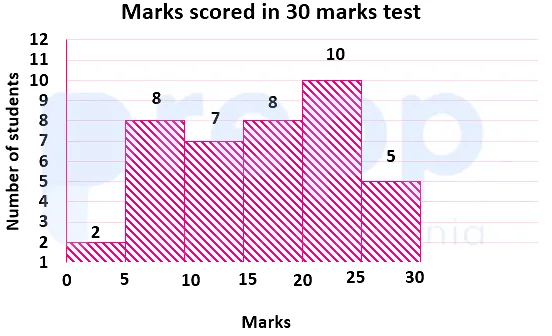
- A
66.66%
- B
72%
- C
75%
- D
30%
Show answer
C. 75%Given:
Marks Number of student
0 - 52
5 - 108
10 - 157
15 - 208
20 - 2510
25 - 305
Formula used:
Percentage = (Given value/Total value)× 100
Calculation:
According to the question,
A student has to score a minimum of 10 marks to pass the test.
Number of student scored minimum 10 marks to pass the test 7, 8. 10 and 5
⇒ 7 + 8 + 10 + 5 = 30
Percentage = (Number of student scored 10 marks minimum/Total number of student)× 100
⇒ Percentage = (30/40)× 100
⇒ 75%
∴ T he percentage of students who passed the test is 75%.
Paper & answer key PDF ↗ Question 52archived
Find the value of the following expression:
\(\frac{(7.03)^{3}-0.027}{(7.03)^{2}+2.109+(0.3)^{2}}\)
- A
7.06
- B
6.73
- C
7
- D
7.33
Show answer
B. 6.73Value Expression Calculation
The question requires calculating the value of the following mathematical expression:
$$ \frac{(7.03)^{3}-0.027}{(7.03)^{2}+2.109+(0.3)^{2}} $$
We can solve this problem by recognizing a common algebraic identity.
Recognizing Algebraic Identity
Let's examine the structure of the expression. We can identify parts that relate to the difference of cubes formula, which is $a^3 - b^3 = (a - b)(a^2 + ab + b^2)$.
Let $a = 7.03$.
Now, consider the term $0.027$ in the numerator. We need to find a value $b$ such that $b^3 = 0.027$.
We can test $b = 0.3$:
$$ (0.3)^3 = 0.3 \times 0.3 \times 0.3 = 0.09 \times 0.3 = 0.027 $$
So, we can set $b = 0.3$.
With $a = 7.03$ and $b = 0.3$, the numerator $(7.03)^{3}-0.027$ can be written as $a^3 - b^3$.
Analyzing the Denominator
Now let's look at the denominator: $(7.03)^{2}+2.109+(0.3)^{2}$.
Using our identified values $a = 7.03$ and $b = 0.3$, we can check if the denominator matches the form $a^2 + ab + b^2$.
The first term is $(7.03)^2$, which is $a^2$.
The third term is $(0.3)^2$, which is $b^2$.
The middle term is $2.109$. Let's calculate $a \times b$:
$$ a \times b = 7.03 \times 0.3 = 2.109 $$
This matches the middle term in the denominator.
Therefore, the denominator is exactly $a^2 + ab + b^2$.
Simplifying the Expression
The original expression can be rewritten using $a$ and $b$ as:
$$ \frac{a^3 - b^3}{a^2 + ab + b^2} $$
Now, we substitute the factored form of the numerator, $a^3 - b^3 = (a - b)(a^2 + ab + b^2)$:
$$ \frac{(a - b)(a^2 + ab + b^2)}{a^2 + ab + b^2} $$
Since $a = 7.03$ and $b = 0.3$ are positive numbers, the term $a^2 + ab + b^2$ will not be zero. Thus, we can cancel the term $(a^2 + ab + b^2)$ from both the numerator and the denominator.
The expression simplifies to:
$$ a - b $$
Final Calculation
Substitute the values of $a$ and $b$ back into the simplified expression $a - b$:
$$ 7.03 - 0.3 $$
Performing the subtraction:
$$ 7.03 - 0.30 = 6.73 $$
The value of the given expression is $6.73$.
Paper & answer key PDF ↗ Question 53archived
A person's salary was decreased by 50% and subsequently increased by 50%. By what much percent does his salary increase or decrease?
- A
Increase 20%
- B
Decrease 18%
- C
Decrease 25%
- D
Increase 15%
Show answer
C. Decrease 25%Percentage Change Calculation: Salary Decrease and Increase
This problem asks us to determine the overall percentage change in a person's salary after it undergoes two successive percentage changes: a decrease followed by an increase.
When a quantity is first decreased by a certain percentage and then increased by the same percentage (or different percentages), the final value is typically not the same as the original value. To find the net change, we can assume an initial value or use algebraic methods.
Step-by-Step Calculation of Salary Change
Let's assume the initial salary is $\(S\)$.
Step 1: Calculate the salary after a 50% decrease.
A 50% decrease means the salary becomes \(100\% - 50\% = 50\%\) of the original salary.
Salary after decrease \( = S \times \frac{50}{100} = 0.50S \)
Let the new salary be \(S'\). So, \(S' = 0.50S\).
Step 2: Calculate the salary after a 50% increase on the new salary.
A 50% increase on the new salary \(S'\) means the salary increases by 50% of \(S'\). The final salary will be \(100\% + 50\% = 150\%\) of the new salary \(S'\).
Final Salary \( = S' \times \frac{150}{100} = 1.50S' \)
Now, substitute \(S' = 0.50S\) into this equation:
Final Salary \( = 1.50 \times (0.50S) = (1.50 \times 0.50)S = 0.75S \)
Step 3: Determine the net change and calculate the percentage change.
The initial salary was \(S\), and the final salary is \(0.75S\). The change in salary is:
Change \( = \text{Final Salary} - \text{Initial Salary} = 0.75S - S = -0.25S \)
Since the change is negative (\(-0.25S\)), the salary has decreased.
To find the percentage change, we use the formula:
Percentage Change \( = \frac{\text{Change}}{\text{Initial Salary}} \times 100\% \)
Percentage Change \( = \frac{-0.25S}{S} \times 100\% \)
Percentage Change \( = -0.25 \times 100\% = -25\% \)
A negative percentage change indicates a decrease.
Alternatively, using an initial salary of 100:
Initial Salary = 100
After 50% decrease: \(100 - 50\% \text{ of } 100 = 100 - 50 = 50\)
After 50% increase on the new salary (50): \(50 + 50\% \text{ of } 50 = 50 + (0.50 \times 50) = 50 + 25 = 75\)
Final Salary = 75
Net change = Final Salary - Initial Salary = \(75 - 100 = -25\)
Percentage Change = \(\frac{-25}{100} \times 100\% = -25\%\)
This also shows a 25% decrease.
Summary of Salary Change
After a 50% decrease and a subsequent 50% increase, the person's salary is 75% of the original salary, resulting in a 25% overall decrease.
Initial Salary
Change 1 (50% Decrease)
Salary After Decrease
Change 2 (50% Increase on New Salary)
Final Salary
Overall Change
Percentage Change
\(S\)
\( -0.50S \)
\( 0.50S \)
\( +0.50 \times (0.50S) = +0.25S \)
\( 0.50S + 0.25S = 0.75S \)
\( 0.75S - S = -0.25S \)
\( \frac{-0.25S}{S} \times 100\% = -25\% \)
100
\( -50 \)
50
\( +0.50 \times 50 = +25 \)
\( 50 + 25 = 75 \)
\( 75 - 100 = -25 \)
\( \frac{-25}{100} \times 100\% = -25\% \)
The calculations confirm that the salary decreases by 25%.
Revision Table: Percentage Change Concepts
Concept
Explanation
Formula
Percentage Increase
Increase amount as a percentage of the original value.
\(\frac{\text{Increase}}{\text{Original Value}} \times 100\%\)
Percentage Decrease
Decrease amount as a percentage of the original value.
\(\frac{\text{Decrease}}{\text{Original Value}} \times 100\%\)
Value After P% Increase
Original Value \(\times (1 + \frac{P}{100})\)
\(V_{final} = V_{original} \times (1 + \frac{P}{100})\)
Value After P% Decrease
Original Value \(\times (1 - \frac{P}{100})\)
\(V_{final} = V_{original} \times (1 - \frac{P}{100})\)
Additional Information: Successive Percentage Changes
For successive percentage changes, say an initial change of A% and a subsequent change of B%, the net percentage change can be calculated using the formula:
Net Change \( = A + B + \frac{AB}{100} \)
In this problem, the first change is a 50% decrease, so \(A = -50\). The second change is a 50% increase, so \(B = +50\).
Using the formula:
Net Change \( = (-50) + (+50) + \frac{(-50) \times (+50)}{100} \)
Net Change \( = 0 + \frac{-2500}{100} \)
Net Change \( = 0 - 25 \)
Net Change \( = -25 \)
This means the net percentage change is -25%, which is a 25% decrease. This formula is a quick way to verify the result for successive percentage changes.
Remember that when using this formula, increase percentages are positive, and decrease percentages are negative.
Paper & answer key PDF ↗ Question 54archived
In a ΔABC, D, E and F are the mid-points of side BC, CA and AB respectively. If BC = 25.6 cm, CA = 18.8 cm and AB = 20.4 cm, what is the perimeter (in cm) of the Δ DEF?
- A
30.6
- B
36.8
- C
32.4
- D
34.4
Show answer
C. 32.4Understanding the Problem: Calculating Triangle Perimeter
The question asks us to find the perimeter of a triangle formed by connecting the mid-points of the sides of a larger triangle. We are given the lengths of the sides of the original triangle ΔABC, and D, E, and F are stated as the mid-points of BC, CA, and AB respectively, forming the smaller triangle ΔDEF.
To solve this problem, we need to understand the relationship between the sides of the original triangle and the sides of the triangle formed by its mid-points. This relationship is described by a fundamental theorem in geometry called the Midpoint Theorem.
Applying the Midpoint Theorem
The Midpoint Theorem states that the line segment connecting the midpoints of two sides of a triangle is parallel to the third side and is half the length of the third side.
Let's apply this theorem to the given ΔABC and its mid-points D, E, and F:
D is the midpoint of BC, E is the midpoint of CA, and F is the midpoint of AB.
The side DE connects the midpoints D (of BC) and E (of CA). According to the Midpoint Theorem, DE is parallel to AB and its length is half the length of AB.
The side EF connects the midpoints E (of CA) and F (of AB). According to the Midpoint Theorem, EF is parallel to BC and its length is half the length of BC.
The side FD connects the midpoints F (of AB) and D (of BC). According to the Midpoint Theorem, FD is parallel to CA and its length is half the length of CA.
Calculating the Side Lengths of ΔDEF
We are given the lengths of the sides of ΔABC:
BC = 25.6 cm
CA = 18.8 cm
AB = 20.4 cm
Using the Midpoint Theorem, we can calculate the lengths of the sides of ΔDEF:
Length of side DE = $\frac{1}{2} \times$ Length of side AB
Length of side DE = $\frac{1}{2} \times 20.4$ cm = 10.2 cm
Length of side EF = $\frac{1}{2} \times$ Length of side BC
Length of side EF = $\frac{1}{2} \times 25.6$ cm = 12.8 cm
Length of side FD = $\frac{1}{2} \times$ Length of side CA
Length of side FD = $\frac{1}{2} \times 18.8$ cm = 9.4 cm
Calculating the Perimeter of ΔDEF
The perimeter of a triangle is the sum of the lengths of its three sides. For ΔDEF, the perimeter is the sum of the lengths of sides DE, EF, and FD.
Perimeter of ΔDEF = Length of DE + Length of EF + Length of FD
Perimeter of ΔDEF = 10.2 cm + 12.8 cm + 9.4 cm
Step-by-Step Calculation:
Let's add the lengths:
10.2
12.8
+ 9.4
-----
32.4
So, the perimeter of ΔDEF is 32.4 cm.
Summary of Side Lengths and Perimeter
Side of ΔABC
Length (cm)
Corresponding Side of ΔDEF
Length (cm) ($\frac{1}{2}$ of ΔABC side)
AB
20.4
DE
10.2
BC
25.6
EF
12.8
CA
18.8
FD
9.4
Perimeter of ΔDEF = DE + EF + FD = 10.2 + 12.8 + 9.4 = 32.4 cm.
Revision Table: Key Concepts
Concept
Description
Midpoint
A point that divides a line segment into two equal parts.
Midpoint Theorem
The segment connecting midpoints of two sides of a triangle is half the length of the third side and parallel to it.
Perimeter of a Triangle
The total length of the boundary of the triangle; sum of its three sides.
Additional Information: Properties of Midpoint Triangle
The triangle formed by joining the midpoints of the sides of a triangle (like ΔDEF in this case) has several interesting properties related to the original triangle (ΔABC):
Each side of the midpoint triangle is half the length of the corresponding parallel side of the original triangle.
The perimeter of the midpoint triangle is half the perimeter of the original triangle. (Perimeter of ΔABC = 20.4 + 25.6 + 18.8 = 64.8 cm. Perimeter of ΔDEF = 32.4 cm, which is indeed 64.8 / 2).
The area of the midpoint triangle is one-fourth the area of the original triangle.
The midpoint triangle divides the original triangle into four congruent triangles (three smaller triangles around the edges and the central midpoint triangle).
Understanding the Midpoint Theorem is crucial for solving problems involving midpoints and parallel lines in triangles.
Paper & answer key PDF ↗ Question 55archived
From a ship's masthead 180 m high, the angle of depression of a boat is observed to be 60°. Find the distance (in m) of the boat from the ship.
- A
180\(\sqrt{3}\)
- B
60\(\sqrt{3}\)
- C
360
- D
180
Show answer
B. 60\(\sqrt{3}\)Finding the Distance of the Boat Using Trigonometry
The problem asks us to find the distance of a boat from a ship, given the height of the ship's masthead and the angle of depression from the masthead to the boat. This scenario can be modeled using a right-angled triangle, where trigonometric ratios can be applied to solve for the unknown distance.
Understanding the Geometry and Angle of Depression
Imagine a right-angled triangle formed by:
The vertical line representing the height of the ship's masthead above the sea level.
The horizontal line representing the sea level distance from the ship directly below the masthead to the boat.
The line of sight from the masthead down to the boat.
The angle of depression is the angle between the horizontal line of sight (parallel to the sea level) from the observer (at the masthead) and the line of sight downwards to the object (the boat). In our triangle, this angle of depression from the masthead is 60°. The angle of elevation from the boat to the masthead is equal to the angle of depression due to alternate interior angles being equal when two parallel lines (the horizontal line of sight and the sea level) are intersected by a transversal line (the line of sight to the boat).
So, the angle inside the right-angled triangle, at the boat's position, is 60°.
Element
Value/Description
Height of Masthead (Opposite side)
180 m
Angle of Depression (from masthead)
60°
Angle of Elevation (at boat)
60° (alternate interior angle)
Distance of Boat from Ship (Adjacent side)
Unknown (let's call it \(d\))
Applying Trigonometric Ratios
In the right-angled triangle, we have the following:
The side opposite to the 60° angle is the height of the masthead (180 m).
The side adjacent to the 60° angle is the distance of the boat from the ship (\(d\)).
The trigonometric ratio that relates the opposite side and the adjacent side is the tangent function (tan).
\( \tan(\text{angle}) = \frac{\text{Opposite}}{\text{Adjacent}} \)
Substituting the values from our problem:
\( \tan(60^\circ) = \frac{180 \text{ m}}{d} \)
Solving for the Distance
We know that the value of \( \tan(60^\circ) \) is \( \sqrt{3} \). So, we can write the equation as:
\( \sqrt{3} = \frac{180}{d} \)
To find the distance \(d\), we rearrange the equation:
\( d = \frac{180}{\sqrt{3}} \)
It's good practice to rationalize the denominator (remove the square root from the bottom). We do this by multiplying both the numerator and the denominator by \( \sqrt{3} \):
\( d = \frac{180}{\sqrt{3}} \times \frac{\sqrt{3}}{\sqrt{3}} \)
\( d = \frac{180\sqrt{3}}{3} \)
Now, simplify the expression by dividing 180 by 3:
\( d = 60\sqrt{3} \)
The distance of the boat from the ship is \( 60\sqrt{3} \) meters.
Verification with Options
Let's check the given options to see which one matches our calculated distance:
Option 1: \(180\sqrt{3}\)
Option 2: \(60\sqrt{3}\)
Option 3: \(360\)
Option 4: \(180\)
Our calculated distance \(60\sqrt{3}\) matches Option 2.
Revision Table: Key Trigonometry Concepts
Term
Definition
Relevance to Problem
Angle of Depression
Angle between horizontal line of sight and line of sight downwards to an object.
Given as 60°, used to find internal angle of triangle.
Angle of Elevation
Angle between horizontal line of sight and line of sight upwards to an object.
Equal to angle of depression (alternate interior angles). Used as the angle in the triangle.
Tangent (tan)
Ratio of the length of the opposite side to the length of the adjacent side in a right-angled triangle.
Used to relate the known height (opposite) and unknown distance (adjacent).
Rationalizing the Denominator
Process of eliminating a radical (like \( \sqrt{3} \)) from the denominator of a fraction.
Applied to simplify the result \( \frac{180}{\sqrt{3}} \).
Additional Information on Angles and Distances
Problems involving angles of elevation or depression are common applications of trigonometry in real-world scenarios, such as navigation, surveying, and aviation. These problems typically involve a vertical distance, a horizontal distance, and the line of sight connecting them, forming a right-angled triangle.
Key points to remember:
The angle of depression from point A to point B is always equal to the angle of elevation from point B to point A, assuming A is higher than B.
Drawing a clear diagram is crucial for correctly identifying the angle and the sides (opposite, adjacent, hypotenuse) relative to that angle.
Make sure you use the correct trigonometric ratio (sine, cosine, or tangent) based on which sides are known or need to be found relative to the given angle.
Remember common trigonometric values for angles like 0°, 30°, 45°, 60°, and 90°. For example, \( \tan(60^\circ) = \sqrt{3} \), \( \tan(30^\circ) = \frac{1}{\sqrt{3}} \), \( \tan(45^\circ) = 1 \).
This problem specifically used the tangent function because we were dealing with the opposite side (height of masthead) and the adjacent side (distance of boat) relative to the angle of elevation at the boat.
Paper & answer key PDF ↗ Question 56archived
In triangle ABC, the bisector of angle BAC meets BC at point D in such a way that AB = 10 cm, AC = 15 cm and BD = 6 cm. Find the length of BC (in cm).
- A
15
- B
11
- C
17
- D
9
Show answer
A. 15Understanding the Triangle and Angle Bisector
The problem describes a triangle ABC where a line segment AD bisects the angle at vertex A (angle BAC). This bisector AD meets the opposite side BC at point D. We are given the lengths of two sides of the triangle (AB and AC) and the length of one segment of the side BC (BD). Our goal is to find the total length of the side BC.
Here are the given values:
Length of side AB = 10 cm
Length of side AC = 15 cm
Length of segment BD = 6 cm
We need to find the length of BC. Since BC is divided into two segments BD and DC by the point D, we can write BC = BD + DC. We already know BD, so we need to find the length of the segment DC.
Applying the Angle Bisector Theorem
This problem can be solved using a fundamental theorem in geometry known as the Angle Bisector Theorem. The Angle Bisector Theorem relates the lengths of the sides of a triangle to the lengths of the segments created by an angle bisector intersecting the opposite side.
The theorem states that if a line segment bisects an angle of a triangle and intersects the opposite side, then the ratio of the lengths of the other two sides of the triangle is equal to the ratio of the lengths of the two segments into which the angle bisector divides the opposite side.
In triangle ABC, AD is the angle bisector of $\angle$BAC. According to the Angle Bisector Theorem, we have:
$\frac{\text{AB}}{\text{AC}} = \frac{\text{BD}}{\text{DC}}$
Step-by-Step Calculation of BC Length
Now, we will substitute the given values into the Angle Bisector Theorem formula and solve for the unknown length DC.
We have:
AB = 10 cm
AC = 15 cm
BD = 6 cm
DC = ? cm
Substitute these values into the ratio:
$\frac{10}{15} = \frac{6}{\text{DC}}$
First, simplify the fraction on the left side:
$\frac{10}{15} = \frac{2 \times 5}{3 \times 5} = \frac{2}{3}$
So the equation becomes:
$\frac{2}{3} = \frac{6}{\text{DC}}$
To find DC, we can cross-multiply:
$2 \times \text{DC} = 3 \times 6$
$2 \times \text{DC} = 18$
Now, divide both sides by 2 to isolate DC:
$\text{DC} = \frac{18}{2}$
$\text{DC} = 9$ cm
We have found the length of the segment DC is 9 cm.
Finally, we can find the length of BC by adding the lengths of BD and DC:
BC = BD + DC
BC = 6 cm + 9 cm
BC = 15 cm
Final Answer Determination
Based on our calculation using the Angle Bisector Theorem, the length of the side BC is 15 cm.
Revision Table: Key Triangle Theorems
Theorem
Description
Formula (for $\triangle$ABC, AD bisects $\angle$A)
Angle Bisector Theorem
Relates side lengths to segments created by angle bisector.
$\frac{\text{AB}}{\text{AC}} = \frac{\text{BD}}{\text{DC}}$
Pythagorean Theorem
In a right triangle, the square of the hypotenuse is the sum of the squares of the other two sides.
$a^2 + b^2 = c^2$ (for sides a, b and hypotenuse c)
Sine Rule
Relates the ratio of the length of a side to the sine of the opposite angle in any triangle.
$\frac{a}{\sin A} = \frac{b}{\sin B} = \frac{c}{\sin C}$
Cosine Rule
Relates the length of a side to the lengths of the other two sides and the cosine of the angle between them.
$c^2 = a^2 + b^2 - 2ab \cos C$
Additional Information: Properties of Angle Bisectors
An angle bisector in a triangle has several interesting properties:
Any point on the angle bisector is equidistant from the two sides forming the angle.
The three angle bisectors of a triangle intersect at a single point called the incenter.
The incenter is the center of the triangle's inscribed circle (incircle), which is tangent to all three sides of the triangle.
The Angle Bisector Theorem is a powerful tool for solving problems involving side lengths when an angle bisector is present.
Paper & answer key PDF ↗ Question 57archived
If 5x - \(\frac{1}{4x}\) = 6, x > 0, then find the value of 25x 2\(-\frac{1}{16x^{2}}\) .
- A
\(\sqrt{246} \)
- B
36
- C
6\(\sqrt{31} \)
- D
6\(\sqrt{41} \)
Show answer
D. 6\(\sqrt{41} \)Solving the Algebraic Expression
The problem asks us to find the value of \(25x^2 - \frac{1}{16x^2}\) given that \(5x - \frac{1}{4x} = 6\) and \(x > 0\).
First, let's examine the expression we need to find: \(25x^2 - \frac{1}{16x^2}\). We can notice that this expression is in the form of a difference of squares. Specifically, \(25x^2 = (5x)^2\) and \(\frac{1}{16x^2} = \left(\frac{1}{4x}\right)^2\).
So, the expression is \((5x)^2 - \left(\frac{1}{4x}\right)^2\). Using the difference of squares identity, \(a^2 - b^2 = (a+b)(a-b)\), we can write:
\[ 25x^2 - \frac{1}{16x^2} = \left(5x + \frac{1}{4x}\right) \left(5x - \frac{1}{4x}\right) \]
We are given the value of the second factor: \(5x - \frac{1}{4x} = 6\).
To find the value of \(25x^2 - \frac{1}{16x^2}\), we need to find the value of the first factor, \(5x + \frac{1}{4x}\).
We can find \(5x + \frac{1}{4x}\) using the given equation \(5x - \frac{1}{4x} = 6\) and an algebraic identity that relates the square of the sum and the square of the difference of two terms. The identity is \((a+b)^2 = (a-b)^2 + 4ab\).
Let \(a = 5x\) and \(b = \frac{1}{4x}\). Then \(a-b = 5x - \frac{1}{4x}\) and \(a+b = 5x + \frac{1}{4x}\).
Let's calculate \(ab\):
\[ ab = (5x) \times \left(\frac{1}{4x}\right) = \frac{5x}{4x} = \frac{5}{4} \]
Now, substitute the values into the identity \((a+b)^2 = (a-b)^2 + 4ab\):
\[ \left(5x + \frac{1}{4x}\right)^2 = \left(5x - \frac{1}{4x}\right)^2 + 4 \left(5x\right) \left(\frac{1}{4x}\right) \]
\[ \left(5x + \frac{1}{4x}\right)^2 = (6)^2 + 4 \left(\frac{5}{4}\right) \]
\[ \left(5x + \frac{1}{4x}\right)^2 = 36 + 5 \]
\[ \left(5x + \frac{1}{4x}\right)^2 = 41 \]
Taking the square root of both sides, we get:
\[ 5x + \frac{1}{4x} = \pm \sqrt{41} \]
Since the problem states that \(x > 0\), both \(5x\) and \(\frac{1}{4x}\) are positive terms. The sum of two positive terms must be positive. Therefore, we take the positive square root:
\[ 5x + \frac{1}{4x} = \sqrt{41} \]
Now we have the values for both factors: \(5x + \frac{1}{4x} = \sqrt{41}\) and \(5x - \frac{1}{4x} = 6\).
Substitute these values back into the difference of squares factorization:
\[ 25x^2 - \frac{1}{16x^2} = \left(5x + \frac{1}{4x}\right) \left(5x - \frac{1}{4x}\right) = (\sqrt{41}) \times (6) \]
\[ 25x^2 - \frac{1}{16x^2} = 6\sqrt{41} \]
Thus, the value of \(25x^2 - \frac{1}{16x^2}\) is \(6\sqrt{41}\).
Detailed Steps to Solve for \(25x^2 - \frac{1}{16x^2}\)
Identify the given equation: \(5x - \frac{1}{4x} = 6\).
Identify the expression to find: \(25x^2 - \frac{1}{16x^2}\).
Recognize the expression as a difference of squares: \((5x)^2 - \left(\frac{1}{4x}\right)^2\).
Factor the expression using the identity \(a^2 - b^2 = (a+b)(a-b)\), where \(a=5x\) and \(b=\frac{1}{4x}\). This gives \(\left(5x + \frac{1}{4x}\right) \left(5x - \frac{1}{4x}\right)\).
Note that we are given the value of \(5x - \frac{1}{4x} = 6\).
Use the identity \((a+b)^2 = (a-b)^2 + 4ab\) to find the value of \(5x + \frac{1}{4x}\).
Substitute \(a=5x\) and \(b=\frac{1}{4x}\) into the identity: \(\left(5x + \frac{1}{4x}\right)^2 = \left(5x - \frac{1}{4x}\right)^2 + 4 \left(5x\right) \left(\frac{1}{4x}\right)\).
Calculate \(4ab = 4 \times 5x \times \frac{1}{4x} = 4 \times \frac{5}{4} = 5\).
Substitute the known values: \(\left(5x + \frac{1}{4x}\right)^2 = (6)^2 + 5 = 36 + 5 = 41\).
Take the square root: \(5x + \frac{1}{4x} = \pm \sqrt{41}\).
Since \(x > 0\), \(5x + \frac{1}{4x}\) is positive, so \(5x + \frac{1}{4x} = \sqrt{41}\).
Substitute the values of \(5x + \frac{1}{4x}\) and \(5x - \frac{1}{4x}\) into the factored expression: \(\left(5x + \frac{1}{4x}\right) \left(5x - \frac{1}{4x}\right) = (\sqrt{41})(6) = 6\sqrt{41}\).
The value of \(25x^2 - \frac{1}{16x^2}\) is \(6\sqrt{41}\).
Comparing with Options
Let's compare our calculated value with the given options:
Option
Value
Match?
1
\(\sqrt{246}\)
No
2
36
No
3
\(6\sqrt{31}\)
No
4
\(6\sqrt{41}\)
Yes
Our calculated value \(6\sqrt{41}\) matches Option 4.
Revision Table: Key Concepts
Concept
Description
Application in this Problem
Difference of Squares
The identity \(a^2 - b^2 = (a+b)(a-b)\).
Used to factor \(25x^2 - \frac{1}{16x^2}\) into \(\left(5x + \frac{1}{4x}\right) \left(5x - \frac{1}{4x}\right)\).
Algebraic Identity
Relationship between squares of sum and difference: \((a+b)^2 = (a-b)^2 + 4ab\).
Used to find the value of \(5x + \frac{1}{4x}\) from \(5x - \frac{1}{4x}\).
Solving Equations
Manipulating algebraic expressions to find unknown values.
Finding the value of \(5x + \frac{1}{4x}\) and then substituting it to find the final answer.
Condition \(x > 0\)
Ensures that terms involving \(x\) are positive, affecting the sign of square roots.
Used to determine that \(5x + \frac{1}{4x}\) must be the positive square root of 41.
Additional Information: Algebraic Identities
Algebraic identities are equalities that hold true for any values of the variables. They are very useful in simplifying expressions and solving equations.
Some common algebraic identities include:
\((a+b)^2 = a^2 + 2ab + b^2\)
\((a-b)^2 = a^2 - 2ab + b^2\)
\(a^2 - b^2 = (a+b)(a-b)\)
\((a+b)^3 = a^3 + 3a^2b + 3ab^2 + b^3\)
\((a-b)^3 = a^3 - 3a^2b + 3ab^2 - b^3\)
\(a^3 + b^3 = (a+b)(a^2 - ab + b^2)\)
\(a^3 - b^3 = (a-b)(a^2 + ab + b^2)\)
In this problem, we specifically used the identity \((a+b)^2 = (a-b)^2 + 4ab\), which can be derived from the first two identities:
We know \((a+b)^2 = a^2 + 2ab + b^2\).
We know \((a-b)^2 = a^2 - 2ab + b^2\).
If we add \(4ab\) to \((a-b)^2\), we get \(a^2 - 2ab + b^2 + 4ab = a^2 + 2ab + b^2\), which is equal to \((a+b)^2\).
Therefore, \((a+b)^2 = (a-b)^2 + 4ab\).
This identity is particularly useful when the sum and difference of two terms are related, as seen in this problem involving \(5x\) and \(\frac{1}{4x}\).
Paper & answer key PDF ↗ Question 58archived
A household appliances company offers two successive discounts of 20% and 35% on the sale of a food processor. What is the final sale price (in Rs, to the nearest rupee) of a food processor costing Rs. 4580?
- A
3664
- B
2519
- C
2382
- D
2977
Show answer
C. 2382The correct answer is 2382.
2379.60) is slightly different from Rs. This small difference is due to rounding differences that might occur in intermediate steps if percentages are rounded. However, the formula for the equivalent single discount is theoretically correct for finding the overall percentage reduction. The calculation method of applying discounts sequentially is generally preferred for accuracy when dealing with specific prices.
Paper & answer key PDF ↗ Question 59archived
Find the sum of the greatest and the smallest number which may replace k in the number 3281k6 to make the number divisible by 6.
- A
9
- B
5
- C
4
- D
8
Show answer
D. 8Understanding Divisibility by 6
A number is divisible by 6 if and only if it is divisible by both 2 and 3. This is because 6 is the product of prime numbers 2 and 3.
Divisibility by 2: A number is divisible by 2 if its last digit is an even number (0, 2, 4, 6, or 8).
Divisibility by 3: A number is divisible by 3 if the sum of its digits is divisible by 3.
Analyzing the Given Number 3281k6
The given number is 3281k6, where 'k' represents a single digit from 0 to 9.
Checking Divisibility by 2
The last digit of the number 3281k6 is 6. Since 6 is an even number, the number 3281k6 is always divisible by 2, regardless of the value of k.
Checking Divisibility by 3
For the number 3281k6 to be divisible by 3, the sum of its digits must be divisible by 3.
Sum of the digits $= 3 + 2 + 8 + 1 + k + 6$
Sum of the digits $= 20 + k$
We need to find the digit values for k (from 0 to 9) such that $20 + k$ is divisible by 3.
Let's test the possible values for k:
Value of k
Sum of Digits ($20 + k$)
Divisible by 3?
Possible k?
0
$20 + 0 = 20$
No
No
1
$20 + 1 = 21$
Yes ($21 \div 3 = 7$)
Yes
2
$20 + 2 = 22$
No
No
3
$20 + 3 = 23$
No
No
4
$20 + 4 = 24$
Yes ($24 \div 3 = 8$)
Yes
5
$20 + 5 = 25$
No
No
6
$20 + 6 = 26$
No
No
7
$20 + 7 = 27$
Yes ($27 \div 3 = 9$)
Yes
8
$20 + 8 = 28$
No
No
9
$20 + 9 = 29$
No
No
The possible digit values for k that make $20 + k$ divisible by 3 are 1, 4, and 7.
Identifying the Smallest and Greatest Values of k
From the possible values {1, 4, 7}:
The smallest value for k is 1.
The greatest value for k is 7.
Calculating the Sum of the Greatest and Smallest k
The question asks for the sum of the greatest and the smallest number which may replace k.
Sum = Smallest k + Greatest k
Sum $= 1 + 7 = 8$
Therefore, the sum of the greatest and the smallest number which may replace k in the number 3281k6 to make the number divisible by 6 is 8.
Revision Table: Key Concepts Recap
Concept
Rule
Application to 3281k6
Divisibility by 6
Must be divisible by both 2 and 3
Check divisibility by 2 and 3 separately
Divisibility by 2
Last digit is even
Last digit is 6 (even), so always divisible by 2
Divisibility by 3
Sum of digits is divisible by 3
Sum of digits is $20+k$. Need $20+k$ to be divisible by 3.
Possible k values
Digits 0-9 where $20+k$ is divisible by 3
k can be 1, 4, or 7
Smallest k
The smallest value from possible k's
1
Greatest k
The largest value from possible k's
7
Sum of greatest and smallest k
Smallest k + Greatest k
$1 + 7 = 8$
Additional Information: More Divisibility Rules
Understanding divisibility rules helps quickly determine if a number is divisible by another number without performing long division. Here are a few more common rules:
Divisibility by 4: A number is divisible by 4 if the number formed by its last two digits is divisible by 4.
Divisibility by 5: A number is divisible by 5 if its last digit is 0 or 5.
Divisibility by 9: A number is divisible by 9 if the sum of its digits is divisible by 9. This rule is similar to the rule for 3.
Divisibility by 10: A number is divisible by 10 if its last digit is 0.
Divisibility by 11: A number is divisible by 11 if the alternating sum of its digits (starting from the rightmost digit, subtracting the next, adding the next, and so on) is divisible by 11 (including 0).
Paper & answer key PDF ↗ Question 60archived
The sides of a triangular field are 360 m, 480 m and 600 m. Its area is equal to the area of a square field. What is the side (in m) of the square field?
- A
120\(\sqrt{6}\)
- B
160\(\sqrt{3}\)
- C
120\(\sqrt{3}\)
- D
160\(\sqrt{6}\)
Show answer
A. 120\(\sqrt{6}\)Calculating Field Area and Side Lengths
This problem asks us to find the side length of a square field that has the same area as a given triangular field. We are provided with the side lengths of the triangular field: 360 m, 480 m, and 600 m.
Step 1: Calculate the Area of the Triangular Field
We can first check if the given triangle is a right-angled triangle. We can do this by checking if the square of the longest side is equal to the sum of the squares of the other two sides (Pythagorean theorem).
Let the sides be \(a = 360\) m, \(b = 480\) m, and \(c = 600\) m. The longest side is \(c = 600\) m.
Let's calculate \(a^2 + b^2\):
\(a^2 + b^2 = (360)^2 + (480)^2\)
\(a^2 + b^2 = 129600 + 230400\)
\(a^2 + b^2 = 360000\)
Now let's calculate \(c^2\):
\(c^2 = (600)^2\)
\(c^2 = 360000\)
Since \(a^2 + b^2 = c^2\), the triangle is a right-angled triangle with the hypotenuse being the side of length 600 m. The other two sides, 360 m and 480 m, are the base and height.
The area of a right-angled triangle is given by the formula:
\(\text{Area} = \frac{1}{2} \times \text{base} \times \text{height}\)
Using the two shorter sides as base and height:
\(\text{Area of triangle} = \frac{1}{2} \times 360 \times 480\)
\(\text{Area of triangle} = 180 \times 480\)
\(\text{Area of triangle} = 86400 \text{ square meters}\)
Alternatively, we could use Heron's formula to find the area of the triangular field. First, calculate the semi-perimeter \(s\):
\(s = \frac{a+b+c}{2} = \frac{360+480+600}{2} = \frac{1440}{2} = 720\) m
Heron's formula for the area is:
\(\text{Area} = \sqrt{s(s-a)(s-b)(s-c)}\)
\(\text{Area} = \sqrt{720(720-360)(720-480)(720-600)}\)
\(\text{Area} = \sqrt{720(360)(240)(120)}\)
\(\text{Area} = \sqrt{(6 \times 120)(3 \times 120)(2 \times 120)(1 \times 120)}\)
\(\text{Area} = \sqrt{(6 \times 3 \times 2 \times 1) \times (120)^4}\)
\(\text{Area} = \sqrt{36 \times (120)^4}\)
\(\text{Area} = \sqrt{36} \times \sqrt{(120)^4}\)
\(\text{Area} = 6 \times (120)^2\)
\(\text{Area} = 6 \times 14400\)
\(\text{Area} = 86400 \text{ square meters}\)
Both methods give the same area for the triangular field: 86400 m\(^2\).
Step 2: Find the Side of the Square Field
The problem states that the area of the square field is equal to the area of the triangular field.
\(\text{Area of square field} = \text{Area of triangular field}\)
\(\text{Area of square field} = 86400 \text{ m}^2\)
Let \(s\) be the side length of the square field. The area of a square is given by \(s^2\).
\(s^2 = 86400\)
To find the side \(s\), we take the square root of the area:
\(s = \sqrt{86400}\)
Now, we need to simplify the square root:
\(s = \sqrt{864 \times 100}\)
\(s = \sqrt{864} \times \sqrt{100}\)
\(s = \sqrt{864} \times 10\)
Let's simplify \(\sqrt{864}\). We can find the prime factorization of 864 or look for perfect square factors:
\(864 = 2 \times 432 = 2 \times 2 \times 216 = 4 \times 216\)
\(864 = 8 \times 108 = 8 \times 4 \times 27 = 32 \times 27\)
\(864 = 16 \times 54 = 16 \times 9 \times 6 = 144 \times 6\)
The largest perfect square factor of 864 is 144.
\(\sqrt{864} = \sqrt{144 \times 6}\)
\(\sqrt{864} = \sqrt{144} \times \sqrt{6}\)
\(\sqrt{864} = 12 \sqrt{6}\)
Now substitute this back into the expression for \(s\):
\(s = 12 \sqrt{6} \times 10\)
\(s = 120 \sqrt{6}\)
The side of the square field is \(120\sqrt{6}\) meters.
Summary of Calculations
Measurement
Value
Triangular Field Sides
360 m, 480 m, 600 m
Recognized as Right Triangle
Yes (\(360^2 + 480^2 = 600^2\))
Area of Triangular Field
\(86400 \text{ m}^2\)
Area of Square Field
\(86400 \text{ m}^2\)
Side \(s\) of Square Field (\(s = \sqrt{\text{Area}}\))
\(\sqrt{86400}\) m
Simplified Side \(s\)
\(120\sqrt{6}\) m
Revision Table: Geometric Area Calculations
Shape
Area Formula
Notes
Triangle
\(\frac{1}{2} \times \text{base} \times \text{height}\)
Useful for right triangles or when height is known.
Triangle
\(\sqrt{s(s-a)(s-b)(s-c)}\)
Heron's formula; useful when only side lengths are known. \(s\) is semi-perimeter.
Square
\(\text{side}^2\)
Simple formula based on side length.
Additional Information: Pythagorean Triples and Area
The side lengths 360, 480, and 600 form a Pythagorean triple. A Pythagorean triple is a set of three positive integers \(a\), \(b\), and \(c\), such that \(a^2 + b^2 = c^2\). These numbers represent the sides of a right-angled triangle. Common basic Pythagorean triples include (3, 4, 5), (5, 12, 13), (8, 15, 17), etc.
In our case, the sides are 360, 480, and 600. We can see that these are multiples of the basic (3, 4, 5) triple:
\(360 = 120 \times 3\)
\(480 = 120 \times 4\)
\(600 = 120 \times 5\)
Since they are \(120 \times (3, 4, 5)\), they form a scaled version of a right triangle, which is also a right triangle. Recognizing this can quickly tell you that it's a right triangle and the area can be calculated using the base and height (the two shorter sides), saving time compared to using Heron's formula.
The area calculation \(\frac{1}{2} \times 360 \times 480 = 86400\) is straightforward once the right triangle is identified. Finding the side of the square then involves taking the square root of this area and simplifying it, which requires factoring the number under the radical.
Paper & answer key PDF ↗ Question 61archived
The following bar graph shows receipts and expenditure by a business firm over 5 years. Gain = Receipts - Expenditure.
In which year did the company gain the minimum amount?
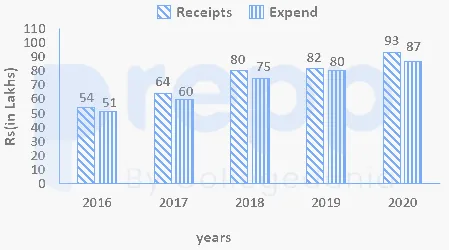
- A
2018
- B
2019
- C
2017
- D
2016
Show answer
B. 2019Calculation:
YearsReceiptsExpenditureGain = Receipts - Expenditure
2016545154 - 51 = 3
2017646064 - 60 = 4
2018807580 - 75 = 5
201982 8082 - 80 = 2
2020938793 - 87 = 6
According to the question,
The company gain the minimum amount = 82 - 80 = 2
2019 year the company gain the minimum amount.
Paper & answer key PDF ↗ Question 62archived
Performance of 1800 students in grades has been shown in the following pie chart.
The number of students getting grade B is what percentage of the number of students getting grade A?
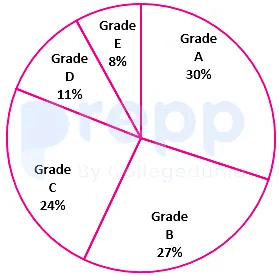
- A
90%
- B
85%
- C
95%
- D
97%
Show answer
A. 90%Given:
The number of students getting grade B is 27%
The number of students getting grade A is 30%
Formula used:
Percentage = (given value/comparession value)× 100
Calculation:
According to the question,
Percentage = (given value/comparession value)× 100
⇒ Percentage = (grade B is 27%/grade A is 30%)× 100
⇒ Percentage = (27/30)× 100
⇒ Percentage = 90%
∴ The required answer is 90%.
Paper & answer key PDF ↗ Question 63archived
Anil lent a sum of Rs. 5,000 on simple interest for 10 years in such a way that the rate of interest is 6% per annum for the first 2 years, 8% per anmum for the next 2 years and 10% per annum beyond 4 years. How much interest (in Rs.) will he earn at the end of 10 years?
- A
3,500
- B
4,400
- C
4,200
- D
5,000
Show answer
B. 4,400Calculating Simple Interest Over Different Periods
This problem involves calculating the total simple interest earned on a principal amount when the interest rate changes over the investment period. We need to break down the total time into segments based on the different interest rates and calculate the simple interest for each segment. The total interest will be the sum of the simple interests from all segments.
The principal amount is Rs. 5,000, and the total duration is 10 years.
The interest rates are applied as follows:
For the first 2 years: Rate = 6% per annum
For the next 2 years (Year 3 and Year 4): Rate = 8% per annum
Beyond 4 years (Year 5 to Year 10): Rate = 10% per annum
Let's determine the duration for each rate period:
Period 1: First 2 years. Duration = 2 years.
Period 2: Next 2 years. Duration = 2 years.
Period 3: Beyond 4 years up to 10 years. Duration = Total years - (Duration of Period 1 + Duration of Period 2) = 10 - (2 + 2) = 10 - 4 = 6 years.
The formula for simple interest (SI) is:
\( \text{SI} = \frac{\text{Principal} \times \text{Rate} \times \text{Time}}{100} \)
Let's calculate the simple interest for each period using the principal amount of Rs. 5,000.
Simple Interest for Period 1 (First 2 Years)
Principal (P) = Rs. 5,000
Rate (R1) = 6% per annum
Time (T1) = 2 years
Simple Interest 1 (SI1) = \( \frac{5000 \times 6 \times 2}{100} \)
SI1 = \( \frac{60000}{100} \)
SI1 = Rs. 600
Simple Interest for Period 2 (Next 2 Years)
Principal (P) = Rs. 5,000
Rate (R2) = 8% per annum
Time (T2) = 2 years
Simple Interest 2 (SI2) = \( \frac{5000 \times 8 \times 2}{100} \)
SI2 = \( \frac{80000}{100} \)
SI2 = Rs. 800
Simple Interest for Period 3 (Remaining 6 Years)
Principal (P) = Rs. 5,000
Rate (R3) = 10% per annum
Time (T3) = 6 years
Simple Interest 3 (SI3) = \( \frac{5000 \times 10 \times 6}{100} \)
SI3 = \( \frac{300000}{100} \)
SI3 = Rs. 3,000
Total Simple Interest Earned
The total simple interest earned over 10 years is the sum of the interests from all three periods:
Total SI = SI1 + SI2 + SI3
Total SI = 600 + 800 + 3000
Total SI = Rs. 4,400
Thus, Anil will earn a total simple interest of Rs. 4,400 at the end of 10 years.
Period
Years
Rate (%)
Principal (Rs.)
Simple Interest Calculation
Simple Interest (Rs.)
1
2
6
5000
\( \frac{5000 \times 6 \times 2}{100} \)
600
2
2
8
5000
\( \frac{5000 \times 8 \times 2}{100} \)
800
3
6
10
5000
\( \frac{5000 \times 10 \times 6}{100} \)
3000
Total Simple Interest
4400
Revision Table: Simple Interest Concepts
Concept
Description
Formula
Principal
The initial amount of money invested or borrowed.
P
Simple Interest (SI)
Interest calculated only on the principal amount.
\( \text{SI} = \frac{P \times R \times T}{100} \)
Rate of Interest
The percentage at which interest is calculated per unit of time (usually per year).
R
Time
The duration for which the money is invested or borrowed.
T (in years, if rate is per annum)
Amount
The total sum after adding interest to the principal.
Amount = P + SI
Additional Information: Simple vs. Compound Interest
It's important to understand the difference between simple interest and compound interest, although this problem specifically uses simple interest.
Simple Interest: As seen in this problem, simple interest is calculated only on the initial principal amount. The interest earned does not get added back to the principal for future interest calculations. This means the principal remains constant throughout the investment period when calculating simple interest.
Compound Interest: In compound interest, the interest earned in each period is added to the principal for the next period's calculation. This means the principal grows over time, and interest is earned on both the original principal and the accumulated interest. This typically results in much higher earnings over longer periods compared to simple interest.
In this problem, because it specifies "simple interest", we calculate the interest for each period independently based on the initial principal of Rs. 5,000, even though the rate changes.
Paper & answer key PDF ↗ Question 64archived
The distance between two stations A and B is 200 km. A train runs from A to B at a speed of 75 km/h, while another train runs from B to A at a speed of 85 km/h. What will be the distance between the two trains (in km) 3 minutes before they meet?
- A
8
- B
5
- C
10
- D
6
Show answer
A. 8Understanding the Train Distance Problem
This question asks us to find the distance between two trains a specific time before they meet. We are given the total distance between two stations, A and B, and the speeds of two trains starting from A and B respectively, moving towards each other.
Here's the information provided:
Distance between A and B = 200 km
Speed of train from A to B = 75 km/h
Speed of train from B to A = 85 km/h
Time before they meet = 3 minutes
We need to find the distance between the trains 3 minutes before their meeting time.
Calculating Relative Speed
When two objects move towards each other, their speeds add up to give their relative speed. This relative speed is the rate at which the distance between them decreases. In this case, the two trains are moving towards each other from opposite directions.
Relative Speed = Speed of Train A + Speed of Train B
Let \(S_A\) be the speed of the train from A to B and \(S_B\) be the speed of the train from B to A.
Relative Speed \(S_{relative} = S_A + S_B\)
\(S_{relative} = 75 \, \text{km/h} + 85 \, \text{km/h}\)
\(S_{relative} = 160 \, \text{km/h}\)
The trains are approaching each other at a combined speed of 160 km/h.
Determining Distance Before Meeting
The question asks for the distance between the trains 3 minutes before they meet. Think about it this way: the distance that is between them 3 minutes before they meet is exactly the distance they would cover together in those final 3 minutes at their relative speed.
First, we need to convert the time from minutes to hours because the speed is given in km/h.
Time before meeting = 3 minutes
To convert minutes to hours, we divide by 60 (since 1 hour = 60 minutes).
Time in hours \(t = \frac{3}{60} \, \text{hours}\)
\(t = \frac{1}{20} \, \text{hours}\)
Now, we can calculate the distance covered by the trains together in this time using the formula: Distance = Speed × Time.
The speed we use is their relative speed, as this is the speed at which the distance between them closes.
Distance covered in 3 minutes \(D_{3min} = S_{relative} \times t\)
\(D_{3min} = 160 \, \text{km/h} \times \frac{1}{20} \, \text{hours}\)
\(D_{3min} = \frac{160}{20} \, \text{km}\)
\(D_{3min} = 8 \, \text{km}\)
The distance covered by the two trains together in the 3 minutes just before they meet is 8 km. This means that 3 minutes before they meet, the distance separating them was 8 km.
Parameter
Value
Distance between A and B
200 km
Speed of Train A
75 km/h
Speed of Train B
85 km/h
Time before meeting
3 minutes \( = \frac{1}{20}\) hours
Relative Speed
160 km/h
Distance 3 min before meeting
8 km
Revision Table: Key Concepts
Concept
Explanation
Relative Speed (approaching)
When two objects move towards each other, their speeds add up. \(S_{relative} = S_1 + S_2\).
Distance Calculation
Distance = Speed \(\times\) Time.
Unit Conversion
Ensure all units are consistent (e.g., km and hours, or meters and seconds). Convert minutes to hours by dividing by 60.
Additional Information: Relative Motion
Relative motion is a fundamental concept in kinematics. It helps us understand how the motion of an object appears from the perspective of another moving object. When objects are moving along the same straight line:
If they move in opposite directions (towards or away from each other), their relative speed is the sum of their individual speeds. The distance between them changes at this combined rate.
If they move in the same direction, their relative speed is the difference between their individual speeds (the speed of the faster object minus the speed of the slower object). The distance between them changes at this difference rate.
In this problem, the trains are moving towards each other, so we use the sum of their speeds to find the rate at which the distance between them decreases.
Paper & answer key PDF ↗ Question 65archived
Find the value of the following expression:
\(\frac{4 \frac{1}{3}+3 \frac{1}{3} \times 1 \frac{4}{5} \div 3 \frac{3}{4} \times\left(6 \frac{1}{4} \text { of } 1 \frac{1}{15}\right)}{\frac{2}{3} \div \frac{5}{6} \times \frac{2}{3}}\)
- A
\(\frac{1}{8}\)
- B
28\(\frac{1}{8}\)
- C
12\(\frac{1}{2}\)
- D
289\(\frac{3}{8}\)
Show answer
B. 28\(\frac{1}{8}\)The correct answer is 28 \frac{1}{8}.
O (Orders) / E (Exponents): Powers or roots are calculated next. D (Division) and M (Multiplication): These are performed from left to right as they appear in the expression. A (Addition) and S (Subtraction): These are performed from left to right as they appear in the expression. When dealing with fractions and mixed numbers within an expression, it is generally best practice to convert mixed numbers to improper fractions before applying the order of operations.
Paper & answer key PDF ↗ Question 66archived
If A = 30°, what is the value of: \(\frac{\left[8 \sin \mathrm{A}+11 \operatorname{cosec} \mathrm{A}-\cot ^{2} \mathrm{A}\right]}{10 \cos 2 \mathrm{A}}\) ?
- A
3\(\frac{4}{5}\)
- B
4\(\frac{2}{5}\)
- C
5\(\frac{1}{5}\)
- D
4\(\frac{3}{5}\)
Show answer
D. 4\(\frac{3}{5}\)Evaluating Trigonometric Expressions at Specific Angles
This problem requires us to evaluate a given trigonometric expression by substituting the specified angle \(A = 30^\circ\) and using the known values of trigonometric functions for this angle.
Step-by-Step Evaluation
First, let's identify the trigonometric values needed for \(A = 30^\circ\):
\(\sin 30^\circ\)
\(\operatorname{cosec} 30^\circ\)
\(\cot 30^\circ\)
\(\cos(2 \times 30^\circ) = \cos 60^\circ\)
Here are the standard trigonometric values for \(30^\circ\) and \(60^\circ\):
Trigonometric Function
Value at 30°
Value at 60°
\(\sin \theta\)
\(\frac{1}{2}\)
\(\frac{\sqrt{3}}{2}\)
\(\cos \theta\)
\(\frac{\sqrt{3}}{2}\)
\(\frac{1}{2}\)
\(\tan \theta\)
\(\frac{1}{\sqrt{3}}\)
\(\sqrt{3}\)
\(\operatorname{cosec} \theta\)
\(2\)
\(\frac{2}{\sqrt{3}}\)
\(\sec \theta\)
\(\frac{2}{\sqrt{3}}\)
\(2\)
\(\cot \theta\)
\(\sqrt{3}\)
\(\frac{1}{\sqrt{3}}\)
Using these values, we can substitute them into the given expression:
Expression: \(\frac{\left[8 \sin \mathrm{A}+11 \operatorname{cosec} \mathrm{A}-\cot ^{2} \mathrm{A}\right]}{10 \cos 2 \mathrm{A}}\)
Substitute \(A = 30^\circ\):
\(\frac{\left[8 \sin 30^\circ + 11 \operatorname{cosec} 30^\circ - \cot^2 30^\circ\right]}{10 \cos (2 \times 30^\circ)}\)
\(\frac{\left[8 \times \frac{1}{2} + 11 \times 2 - (\sqrt{3})^2\right]}{10 \cos 60^\circ}\)
Evaluate the Numerator
Numerator = \(8 \times \frac{1}{2} + 11 \times 2 - (\sqrt{3})^2\)
Numerator = \(4 + 22 - 3\)
Numerator = \(26 - 3\)
Numerator = \(23\)
Evaluate the Denominator
Denominator = \(10 \cos 60^\circ\)
Denominator = \(10 \times \frac{1}{2}\)
Denominator = \(5\)
Calculate the Final Value
Now, divide the numerator by the denominator:
Value = \(\frac{\text{Numerator}}{\text{Denominator}} = \frac{23}{5}\)
To match the options, we convert the improper fraction to a mixed number:
\(\frac{23}{5} = 4\) with a remainder of \(3\). So, \(\frac{23}{5} = 4 \frac{3}{5}\).
Thus, the value of the expression is \(4 \frac{3}{5}\).
Revision Table: Trigonometric Values at 30° and 60°
Angle
\(\sin\)
\(\cos\)
\(\tan\)
\(\operatorname{cosec}\)
\(\sec\)
\(\cot\)
30°
\(\frac{1}{2}\)
\(\frac{\sqrt{3}}{2}\)
\(\frac{1}{\sqrt{3}}\)
\(2\)
\(\frac{2}{\sqrt{3}}\)
\(\sqrt{3}\)
60°
\(\frac{\sqrt{3}}{2}\)
\(\frac{1}{2}\)
\(\sqrt{3}\)
\(\frac{2}{\sqrt{3}}\)
\(2\)
\(\frac{1}{\sqrt{3}}\)
Additional Information: Reciprocal Identities and Double Angle
Understanding trigonometric identities is key to solving such problems. We used the reciprocal identity for cosec:
\(\operatorname{cosec} A = \frac{1}{\sin A}\)
We also evaluated \(\cot^2 A\), which involves the square of the cotangent function:
\(\cot A = \frac{\cos A}{\sin A}\)
The expression also involved \(\cos 2A\), which is a double angle formula. While we directly used the value of \(\cos 60^\circ\), there are formulas for \(\cos 2A\):
\(\cos 2A = \cos^2 A - \sin^2 A\)
\(\cos 2A = 2\cos^2 A - 1\)
\(\cos 2A = 1 - 2\sin^2 A\)
\(\cos 2A = \frac{1 - \tan^2 A}{1 + \tan^2 A}\)
Using any of these identities with \(A=30^\circ\) would also give \(\cos 60^\circ = \frac{1}{2}\).
Paper & answer key PDF ↗ Question 67archived
A shopkeeper bought toffees at a rate of 10 for Rs. 15 and sold them at a rate of 16 for Rs. 40. Find his profit percentage. (correct to two decimal places)
- A
65.05%
- B
50.55%
- C
33.33%
- D
66.67%
Show answer
D. 66.67%Understanding the Profit Percentage Problem
This problem asks us to calculate the profit percentage earned by a shopkeeper who buys toffees at one rate and sells them at a different rate. To find the profit percentage, we first need to determine the cost price (CP) and selling price (SP) per item.
Step-by-Step Calculation of Profit Percentage
Here's how we can solve this problem step-by-step:
Step 1: Find the Cost Price (CP) per Toffee
The shopkeeper bought toffees at a rate of 10 for Rs. 15.
Cost of 10 toffees = Rs. 15
Cost of 1 toffee \( = \frac{\text{Total Cost}}{\text{Number of Toffees}} \)
CP of 1 toffee \( = \frac{15}{10} \) Rs.
CP of 1 toffee \( = 1.50 \) Rs.
Step 2: Find the Selling Price (SP) per Toffee
The shopkeeper sold the toffees at a rate of 16 for Rs. 40.
Selling Price of 16 toffees = Rs. 40
Selling Price of 1 toffee \( = \frac{\text{Total Selling Price}}{\text{Number of Toffees}} \)
SP of 1 toffee \( = \frac{40}{16} \) Rs.
SP of 1 toffee \( = 2.50 \) Rs.
Step 3: Calculate the Profit per Toffee
Profit is calculated as Selling Price minus Cost Price.
Profit per toffee \( = \text{SP per toffee} - \text{CP per toffee} \)
Profit per toffee \( = 2.50 - 1.50 \) Rs.
Profit per toffee \( = 1.00 \) Rs.
Since the Selling Price is greater than the Cost Price, there is a profit.
Step 4: Calculate the Profit Percentage
The profit percentage is calculated using the formula:
\( \text{Profit Percentage} = \left( \frac{\text{Profit}}{\text{CP}} \right) \times 100 \)
Using the values we calculated:
\( \text{Profit Percentage} = \left( \frac{1.00}{1.50} \right) \times 100 \)
\( \text{Profit Percentage} = \left( \frac{1}{1.5} \right) \times 100 \)
To simplify \( \frac{1}{1.5} \), we can write \( 1.5 \) as \( \frac{3}{2} \):
\( \frac{1}{1.5} = \frac{1}{\frac{3}{2}} = 1 \times \frac{2}{3} = \frac{2}{3} \)
So, the profit percentage is:
\( \text{Profit Percentage} = \frac{2}{3} \times 100 \)
\( \text{Profit Percentage} = \frac{200}{3} \)
Dividing 200 by 3:
\( \frac{200}{3} \approx 66.666... \)
Step 5: Round to Two Decimal Places
The question asks for the profit percentage correct to two decimal places. Rounding 66.666...% to two decimal places gives 66.67%.
Summary of Calculations
Item
Rate Given
Price per Toffee
Buying
10 for Rs. 15
Rs. \( \frac{15}{10} = 1.50 \)
Selling
16 for Rs. 40
Rs. \( \frac{40}{16} = 2.50 \)
Profit per toffee \( = \text{SP} - \text{CP} = 2.50 - 1.50 = 1.00 \) Rs.
Profit Percentage \( = \left( \frac{\text{Profit}}{\text{CP}} \right) \times 100 = \left( \frac{1.00}{1.50} \right) \times 100 = \frac{2}{3} \times 100 = 66.67\% \) (rounded to two decimal places).
Final Answer
The profit percentage is 66.67%.
Revision Table: Key Concepts
Concept
Definition/Formula
Cost Price (CP)
The price at which an item is bought.
Selling Price (SP)
The price at which an item is sold.
Profit
When SP > CP, Profit = SP - CP.
Profit Percentage
\( \left( \frac{\text{Profit}}{\text{CP}} \right) \times 100 \)
Additional Information: Rate Problems in Profit & Loss
When dealing with profit and loss problems involving rates (buying multiple items for a price and selling multiple items for another price), it's often easiest to find the CP and SP of a single item. Alternatively, one could find the cost price and selling price for the same number of items. For example, find the LCM of 10 and 16 (which is 80). Calculate the cost of 80 toffees and the selling price of 80 toffees, then calculate the profit percentage.
LCM of 10 and 16 is 80.
Cost of 10 toffees = Rs. 15. Cost of 80 toffees = \( 15 \times \frac{80}{10} = 15 \times 8 = 120 \) Rs.
Selling Price of 16 toffees = Rs. 40. Selling Price of 80 toffees = \( 40 \times \frac{80}{16} = 40 \times 5 = 200 \) Rs.
Profit on 80 toffees = \( 200 - 120 = 80 \) Rs.
Profit Percentage \( = \left( \frac{\text{Profit}}{\text{CP}} \right) \times 100 = \left( \frac{80}{120} \right) \times 100 = \frac{2}{3} \times 100 = 66.67\% \).
Both methods yield the same result. Choosing one method depends on personal preference and the numbers involved.
Paper & answer key PDF ↗ Question 68archived
Three positive numbers are in the ratio 2 ∶ 3 ∶ 4. The sum of their squares is 2349. The average of the first two numbers is:
- A
27.5
- B
22.5
- C
36
- D
81
Show answer
B. 22.5Understanding the Problem: Positive Numbers in Ratio and Sum of Squares
The question asks us to find the average of the first two numbers from a set of three positive numbers. These numbers are in a specific ratio, and we are given the sum of their squares.
Let the three positive numbers be represented by $2x$, $3x$, and $4x$, where $x$ is a positive constant. This representation maintains the given ratio of 2 ∶ 3 ∶ 4.
Setting up the Equation with Sum of Squares
We are given that the sum of the squares of these three numbers is 2349. We can write this as an algebraic equation:
The square of the first number is $(2x)^2 = 4x^2$.
The square of the second number is $(3x)^2 = 9x^2$.
The square of the third number is $(4x)^2 = 16x^2$.
The sum of these squares is:
$(2x)^2 + (3x)^2 + (4x)^2 = 2349$
$4x^2 + 9x^2 + 16x^2 = 2349$
Solving for the Common Factor ($x$)
Now, we need to solve this equation for $x$. Combine the terms on the left side:
$(4 + 9 + 16)x^2 = 2349$
$29x^2 = 2349$
Divide both sides by 29 to isolate $x^2$:
$x^2 = \frac{2349}{29}$
Performing the division:
$x^2 = 81$
Since the numbers are positive, $x$ must be a positive value. Take the positive square root of 81:
$x = \sqrt{81}$
$x = 9$
Finding the Positive Numbers
Now that we have the value of $x$, we can find the three positive numbers:
First number = $2x = 2 \times 9 = 18$
Second number = $3x = 3 \times 9 = 27$
Third number = $4x = 4 \times 9 = 36$
We can quickly check if the sum of their squares is 2349:
$18^2 + 27^2 + 36^2 = 324 + 729 + 1296$
$324 + 729 + 1296 = 1053 + 1296 = 2349$
The numbers are correct.
Calculating the Average of the First Two Numbers
The question asks for the average of the first two numbers, which are 18 and 27.
The average of two numbers is the sum of the numbers divided by 2.
Average = $\frac{\text{First number} + \text{Second number}}{2}$
Average = $\frac{18 + 27}{2}$
Average = $\frac{45}{2}$
Average = $22.5$
So, the average of the first two numbers is 22.5.
Step
Description
Calculation
1
Represent numbers
$2x, 3x, 4x$
2
Sum of squares equation
$(2x)^2 + (3x)^2 + (4x)^2 = 2349$
3
Simplify equation
$4x^2 + 9x^2 + 16x^2 = 2349$ <br> $29x^2 = 2349$
4
Solve for $x$
$x^2 = 81$ <br> $x = 9$ (positive root)
5
Find the numbers
$18, 27, 36$
6
Average of first two
$\frac{18 + 27}{2} = \frac{45}{2} = 22.5$
Revision Table: Key Concepts
Concept
Explanation
Ratio
A comparison of two or more quantities. If numbers are in ratio $a : b : c$, they can be written as $ax, bx, cx$ for some constant $x$.
Sum of Squares
Adding the results of squaring each number. For numbers $n_1, n_2, n_3$, the sum of squares is $n_1^2 + n_2^2 + n_3^2$.
Average (Mean)
The sum of a set of numbers divided by the count of the numbers. For two numbers $a$ and $b$, the average is $\frac{a+b}{2}$.
Additional Information: Ratios and Proportions
Understanding ratios is fundamental in many mathematical problems. A ratio like 2 ∶ 3 ∶ 4 means that for every 2 units of the first number, there are 3 units of the second, and 4 units of the third. Using a common multiplier ($x$) helps translate the ratio into actual number values ($2x, 3x, 4x$) that can be used in equations.
When dealing with squares or cubes of numbers in a ratio, remember to apply the power to both the ratio part and the multiplier:
Square of $2x$ is $(2x)^2 = 2^2 \times x^2 = 4x^2$.
Cube of $2x$ is $(2x)^3 = 2^3 \times x^3 = 8x^3$.
This problem combined concepts of ratio, algebra (solving equations), and averages, which is common in quantitative aptitude tests.
Paper & answer key PDF ↗ Question 69archived
If (2 cos A + 1) (2 cos A - 1) = 0, 0° < A ≤ 90°, then find the value of A.
- A
60°
- B
45°
- C
90°
- D
30°
Show answer
A. 60°Solving the Trigonometric Equation (2 cos A + 1)(2 cos A - 1) = 0
The problem asks us to find the value of angle A given the equation (2 cos A + 1)(2 cos A - 1) = 0, with the constraint that 0° < A ≤ 90°.
We are given the equation:
$$(2 \cos A + 1) (2 \cos A - 1) = 0$$
This equation is in the form of a product of two factors equaling zero. This means at least one of the factors must be zero.
So, we have two possibilities:
$2 \cos A + 1 = 0$
$2 \cos A - 1 = 0$
Solving for cos A
Let's solve each equation for cos A:
From the first equation:
$2 \cos A + 1 = 0$
$2 \cos A = -1$
$\cos A = -\frac{1}{2}$
From the second equation:
$2 \cos A - 1 = 0$
$2 \cos A = 1$
$\cos A = \frac{1}{2}$
Considering the Constraint on Angle A
The problem states that the angle A is in the range 0° < A ≤ 90°. This range corresponds to the first quadrant of the unit circle, including 90°.
In the first quadrant (0° < A < 90°), the cosine of an angle is always positive. At A = 90°, cos 90° = 0.
Let's look at our possible values for cos A:
$\cos A = -\frac{1}{2}$: This value is negative. Cosine is negative in the second and third quadrants. Since our constraint is 0° < A ≤ 90° (first quadrant), this solution for cos A is not valid within the given range for A.
$\cos A = \frac{1}{2}$: This value is positive. Cosine is positive in the first and fourth quadrants. Since our constraint is 0° < A ≤ 90°, this solution is valid within the given range.
Therefore, we must have $\cos A = \frac{1}{2}$.
Finding the Value of A
We need to find the angle A in the range 0° < A ≤ 90° such that $\cos A = \frac{1}{2}$.
We know the standard trigonometric values for common angles:
Angle ($\theta$)
$\cos(\theta)$
0°
1
30°
$\frac{\sqrt{3}}{2}$
45°
$\frac{1}{\sqrt{2}}$ or $\frac{\sqrt{2}}{2}$
60°
$\frac{1}{2}$
90°
0
From the table, we see that $\cos 60^\circ = \frac{1}{2}$.
The angle A = 60° falls within the specified range 0° < 60° ≤ 90°.
Thus, the value of A is 60°.
Revision Table: Standard Trigonometric Values
It's useful to remember the cosine values for common angles in the first quadrant:
Angle (A)
cos(A)
30° ($\pi/6$)
$\frac{\sqrt{3}}{2}$
45° ($\pi/4$)
$\frac{\sqrt{2}}{2}$
60° ($\pi/3$)
$\frac{1}{2}$
Additional Information: Difference of Squares
The given equation $(2 \cos A + 1) (2 \cos A - 1) = 0$ can also be solved using the difference of squares formula, which states that $(a+b)(a-b) = a^2 - b^2$.
Here, let $a = 2 \cos A$ and $b = 1$. Applying the formula:
$$(2 \cos A)^2 - 1^2 = 0$$
$$4 \cos^2 A - 1 = 0$$
Now, solve for $\cos^2 A$:
$$4 \cos^2 A = 1$$
$$\cos^2 A = \frac{1}{4}$$
Taking the square root of both sides:
$$\cos A = \pm \sqrt{\frac{1}{4}}$$
$$\cos A = \pm \frac{1}{2}$$
This gives us the same two possibilities for cos A: $\cos A = \frac{1}{2}$ or $\cos A = -\frac{1}{2}$.
We then proceed as before, using the constraint 0° < A ≤ 90° to determine the valid solution for cos A and find the corresponding angle A.
Paper & answer key PDF ↗ Question 70archived
The radii of two concentric circles with centre O are 26 cm and 16 cm. Chord AB of the larger circle is tangent to the smaller circle at C and AD is a diameter. What is the length of CD?
- A
38 cm
- B
42 cm
- C
35 cm
- D
36 cm
Show answer
A. 38 cmUnderstanding the Concentric Circles Geometry Problem
The problem involves two concentric circles, meaning they share the same center point, labeled as O. We are given the radii of these circles: the larger circle has a radius of 26 cm, and the smaller circle has a radius of 16 cm.
A chord AB of the larger circle touches (is tangent to) the smaller circle at a point C. AD is a diameter of the larger circle. We need to find the length of the line segment CD.
Key Geometric Properties
When a radius is drawn to the point of tangency on a circle, it is perpendicular to the tangent line at that point. In this case, OC is a radius of the smaller circle drawn to the point of tangency C on the chord AB. Therefore, OC is perpendicular to the chord AB (OC $\perp$ AB).
A perpendicular from the center of a circle to a chord bisects the chord. Since OC $\perp$ AB, C is the midpoint of the chord AB. This means AC = CB.
An angle inscribed in a semicircle is a right angle. Since AD is a diameter of the larger circle, any point on the circumference connected to A and D forms a right angle. For example, $\angle ABD = 90^\circ$.
Step 1: Finding the Length of AC
Consider the triangle OAC. OA is the radius of the larger circle, so OA = 26 cm. OC is the radius of the smaller circle, so OC = 16 cm. Since OC $\perp$ AB, the angle $\angle OCA$ is 90 degrees. Triangle OAC is a right-angled triangle.
Using the Pythagorean theorem in $\triangle OAC$:
$\qquad OA^2 = OC^2 + AC^2$
$\qquad 26^2 = 16^2 + AC^2$
$\qquad 676 = 256 + AC^2$
$\qquad AC^2 = 676 - 256$
$\qquad AC^2 = 420$
$\qquad AC = \sqrt{420} = \sqrt{4 \times 105} = 2\sqrt{105}$ cm.
Since C is the midpoint of AB, the length of the chord AB is $2 \times AC = 2 \times 2\sqrt{105} = 4\sqrt{105}$ cm.
Step 2: Setting up a Coordinate System
To find the length of CD, we can use coordinate geometry. Let the center of the circles, O, be the origin (0,0). Since AD is a diameter, let's place it along the x-axis. So, A = (-26, 0) and D = (26, 0).
Step 3: Finding the Coordinates of Point C
Point C lies on the smaller circle, so its coordinates $(x_C, y_C)$ satisfy the equation $x_C^2 + y_C^2 = 16^2 = 256$.
Point C is also on the line segment AB. We know that OC is perpendicular to AB. The line AB passes through A(-26, 0).
The slope of OC is $\frac{y_C - 0}{x_C - 0} = \frac{y_C}{x_C}$.
The slope of the line AB (or AC) is $\frac{y_C - 0}{x_C - (-26)} = \frac{y_C}{x_C + 26}$.
Since OC is perpendicular to AB, the product of their slopes is -1 (assuming $x_C \neq 0$ and $y_C \neq 0$):
$\qquad \left(\frac{y_C}{x_C}\right) \times \left(\frac{y_C}{x_C + 26}\right) = -1$
$\qquad \frac{y_C^2}{x_C(x_C + 26)} = -1$
$\qquad y_C^2 = -x_C(x_C + 26)$
$\qquad y_C^2 = -x_C^2 - 26x_C$
We know $x_C^2 + y_C^2 = 256$. Substitute $y_C^2$ from the equation above:
$\qquad x_C^2 + (-x_C^2 - 26x_C) = 256$
$\qquad -26x_C = 256$
$\qquad x_C = -\frac{256}{26} = -\frac{128}{13}$
Now find $y_C^2$ using $x_C^2 + y_C^2 = 256$:
$\qquad y_C^2 = 256 - x_C^2 = 256 - \left(-\frac{128}{13}\right)^2$
$\qquad y_C^2 = 256 - \frac{16384}{169} = \frac{256 \times 169 - 16384}{169}$
$\qquad y_C^2 = \frac{43264 - 16384}{169} = \frac{26880}{169}$
$\qquad y_C = \pm \sqrt{\frac{26880}{169}} = \pm \frac{\sqrt{16 \times 1680}}{\sqrt{169}} = \pm \frac{4\sqrt{16 \times 105}}{13} = \pm \frac{4 \times 4\sqrt{105}}{13} = \pm \frac{16\sqrt{105}}{13}$.
Let's choose the positive y-coordinate for C. So, the coordinates of C are $\left(-\frac{128}{13}, \frac{16\sqrt{105}}{13}\right)$.
Step 4: Calculating the Length of CD
We need to find the distance between point C $\left(-\frac{128}{13}, \frac{16\sqrt{105}}{13}\right)$ and point D $(26, 0)$. Using the distance formula:
$\qquad CD = \sqrt{(x_D - x_C)^2 + (y_D - y_C)^2}$
$\qquad CD = \sqrt{\left(26 - \left(-\frac{128}{13}\right)\right)^2 + \left(0 - \frac{16\sqrt{105}}{13}\right)^2}$
$\qquad CD = \sqrt{\left(26 + \frac{128}{13}\right)^2 + \left(-\frac{16\sqrt{105}}{13}\right)^2}$
First, calculate $26 + \frac{128}{13} = \frac{26 \times 13 + 128}{13} = \frac{338 + 128}{13} = \frac{466}{13}$.
$\qquad CD = \sqrt{\left(\frac{466}{13}\right)^2 + \left(-\frac{16\sqrt{105}}{13}\right)^2}$
$\qquad CD = \sqrt{\frac{466^2}{13^2} + \frac{(16\sqrt{105})^2}{13^2}}$
$\qquad CD = \sqrt{\frac{217156}{169} + \frac{256 \times 105}{169}}$
$\qquad CD = \sqrt{\frac{217156 + 26880}{169}}$
$\qquad CD = \sqrt{\frac{244036}{169}}$
Now, calculate the square root:
$\qquad \sqrt{244036} = \sqrt{1444 \times 169} = \sqrt{1444} \times \sqrt{169} = 38 \times 13 = 494$. (Calculation error during thought process, $\sqrt{244036/169}$ is the key).
Let's divide 244036 by 169:
$\qquad 244036 \div 169 = 1444$
So,
$\qquad CD = \sqrt{1444} = 38$.
The length of CD is 38 cm.
Revision Table: Concentric Circle Problem
Concept
Description
Application in Problem
Concentric Circles
Circles sharing the same center.
Two circles centered at O with given radii.
Chord of a Circle
A line segment connecting two points on the circle.
AB is a chord of the larger circle.
Tangent to a Circle
A line that touches the circle at exactly one point.
Chord AB is tangent to the smaller circle at C.
Radius to Tangent Property
Radius to the point of tangency is perpendicular to the tangent.
OC $\perp$ AB. $\angle OCA = 90^\circ$.
Perpendicular from Center to Chord
Bisects the chord.
C is the midpoint of AB, so AC = CB.
Diameter of a Circle
A chord passing through the center. Longest chord. Twice the radius.
AD is a diameter of the larger circle. AD = 2 $\times$ OA = 52 cm.
Pythagorean Theorem
In a right triangle, $a^2 + b^2 = c^2$.
Used in $\triangle OAC$ to find AC.
Distance Formula
$\sqrt{(x_2-x_1)^2 + (y_2-y_1)^2}$ between $(x_1, y_1)$ and $(x_2, y_2)$.
Used to find the length of CD.
Additional Information: Solving Geometry Problems
Geometry problems involving circles, chords, tangents, and diameters often rely on a few fundamental theorems and properties. Drawing a clear diagram is always the first step to visualize the given information and the relationships between different parts of the figure.
Always identify radii, diameters, and chords. Remember that all radii of the same circle are equal.
Look for right angles. These frequently arise from tangents meeting radii or diameters subtending angles on the circumference. Right angles allow the use of the Pythagorean theorem.
Recognize symmetry. Perpendiculars from the center to a chord create symmetry and bisect the chord.
Consider using coordinate geometry if direct geometric theorems seem complicated. Placing the center at the origin simplifies equations of circles and lines.
Law of Cosines or Law of Sines can be useful when dealing with non-right triangles where side lengths and angles are involved. In this problem, the Law of Cosines on $\triangle OCD$ was an alternative way to find CD after finding $\cos(\angle COD)$.
Practicing different types of problems helps build intuition for which theorems and techniques are most applicable.
Paper & answer key PDF ↗ Question 71archived
A and B working alone can complete a work in 8 days and 12 days, respectively. They started working together, but A left 2 days before completion of the work. In how many days was the work completed?
- A
6
- B
5
- C
8
- D
10
Show answer
A. 6Understanding the Time and Work Problem
This problem involves two individuals, A and B, working on a task. We are given the time each person takes to complete the work alone and information about when one person leaves before the work is finished. We need to find the total time taken to complete the entire work.
To solve such problems, we typically use the concept of 'efficiency' or 'work done per day'. The total work is often assumed to be a value that is easily divisible by the individual times taken, like the Least Common Multiple (LCM).
Calculating Efficiency of A and B
Let's assume the total work is the LCM of the days A and B take individually. A takes 8 days and B takes 12 days.
LCM of 8 and 12 is 24.
Let the total work be 24 units.
Now, we can calculate the work done by A and B per day (their efficiency):
A's efficiency = Total work / Time taken by A
A's efficiency = $\frac{24 \text{ units}}{8 \text{ days}} = 3 \text{ units/day}$
B's efficiency = Total work / Time taken by B
B's efficiency = $\frac{24 \text{ units}}{12 \text{ days}} = 2 \text{ units/day}$
When A and B work together, their combined efficiency is the sum of their individual efficiencies:
Combined efficiency of A and B = A's efficiency + B's efficiency
Combined efficiency of A and B = $3 \text{ units/day} + 2 \text{ units/day} = 5 \text{ units/day}$
Analyzing the Work Completion Timeline
The problem states that A and B started working together, but A left 2 days before the completion of the work. This means that in the last 2 days, only B was working.
Work Done by B in the Last 2 Days
In the final 2 days, only B was working. We know B's efficiency is 2 units/day.
Work done by B in the last 2 days = B's efficiency $\times$ Number of days
Work done by B in the last 2 days = $2 \text{ units/day} \times 2 \text{ days} = 4 \text{ units}$
Work Done by A and B Working Together
The total work is 24 units. We know that 4 units of work were done by B alone in the last 2 days. The remaining work must have been done by A and B working together before A left.
Work done by A and B together = Total work - Work done by B alone
Work done by A and B together = $24 \text{ units} - 4 \text{ units} = 20 \text{ units}$
Time Taken by A and B Together
A and B worked together to complete 20 units of work. Their combined efficiency is 5 units/day.
Time taken by A and B together = Work done together / Combined efficiency
Time taken by A and B together = $\frac{20 \text{ units}}{5 \text{ units/day}} = 4 \text{ days}$
So, A and B worked together for 4 days.
Calculating Total Time for Work Completion
The total time taken to complete the work is the sum of the time A and B worked together and the time B worked alone at the end.
Total time = Time A and B worked together + Time B worked alone
Total time = $4 \text{ days} + 2 \text{ days} = 6 \text{ days}$
Thus, the work was completed in 6 days.
Let's summarize the timeline:
First 4 days: A and B work together.
Last 2 days: Only B works.
Total days = 4 + 2 = 6 days.
Activity
Duration (Days)
Workers
Work Done (Units)
Working Together
4
A & B
$4 \times 5 = 20$
Working Alone (B)
2
B
$2 \times 2 = 4$
Total
6
$20 + 4 = 24$
Revision Table: Key Concepts in Time and Work
Concept
Explanation
Formula/Idea
Efficiency
Amount of work done by a person/team in one unit of time (e.g., one day).
Efficiency = Total Work / Time Taken
Total Work (LCM Method)
Assume total work as the LCM of the time taken by individuals to simplify calculations.
Total Work = LCM(Time1, Time2, ...)
Combined Efficiency
The sum of individual efficiencies when multiple people work together.
Combined Efficiency = Efficiency1 + Efficiency2 + ...
Work Done
Efficiency $\times$ Time Taken.
Work Done = Efficiency $\times$ Time
Additional Information: Different Scenarios
Time and work problems can have variations. Here are a few:
Both work together till completion: Calculate combined efficiency and divide total work by combined efficiency to find total time.
One leaves after working for some days: Calculate work done by those working together, subtract it from total work to find remaining work, and calculate the time taken by the remaining person/team to complete the rest.
One joins after some days: Calculate work done by the first person/team, subtract it from total work, then calculate combined efficiency of the new team and find time for remaining work. Total time is initial time plus time for remaining work.
Alternating days: Calculate work done in a cycle (e.g., 2 days if two people work on alternate days). Find how many cycles are needed for work close to the total, then calculate the remaining work and the time taken by the person scheduled to work next.
Paper & answer key PDF ↗ Question 72archived
Find the smallest number which should be added to the smallest number divisible by 6, 9 and 15 to make it a perfect square.
- A
21
- B
9
- C
19
- D
10
Show answer
D. 10Finding the Smallest Number to Make LCM a Perfect Square
The problem asks us to find the smallest number that must be added to the smallest number divisible by 6, 9, and 15 to make it a perfect square. Let's break this down into steps.
Step 1: Find the Smallest Number Divisible by 6, 9, and 15
The smallest number divisible by 6, 9, and 15 is their Least Common Multiple (LCM). To find the LCM, we can use prime factorization.
Prime factorization of 6: \(6 = 2 \times 3\)
Prime factorization of 9: \(9 = 3 \times 3 = 3^2\)
Prime factorization of 15: \(15 = 3 \times 5\)
To find the LCM, we take the highest power of each prime factor that appears in any of the numbers:
\(LCM(6, 9, 15) = 2^1 \times 3^2 \times 5^1 = 2 \times 9 \times 5 = 90\)
So, the smallest number divisible by 6, 9, and 15 is 90.
Step 2: Find the Smallest Perfect Square Greater Than or Equal to 90
A perfect square is a number that can be obtained by squaring an integer (e.g., 1, 4, 9, 16, 25, ...). We need to find the smallest perfect square that is 90 or larger.
Let's look at the squares of integers:
\(8^2 = 64\) (Less than 90)
\(9^2 = 81\) (Less than 90)
\(10^2 = 100\) (Greater than or equal to 90)
\(11^2 = 121\) (Greater than 90, but 100 is smaller)
The smallest perfect square that is greater than or equal to 90 is 100.
Step 3: Find the Number to be Added to 90 to Make it 100
We have the number 90, and we want to reach the smallest perfect square which is 100. The number that needs to be added is the difference between the perfect square and 90.
Number to be added = Smallest perfect square \(\ge 90\) - 90
Number to be added = \(100 - 90 = 10\)
Therefore, the smallest number that should be added to 90 to make it a perfect square (100) is 10.
Revision Table: Key Concepts
Concept
Description
Example
Least Common Multiple (LCM)
The smallest positive integer that is a multiple of two or more numbers.
LCM(4, 6) = 12
Prime Factorization
Expressing a number as a product of its prime factors.
12 = \(2^2 \times 3\)
Perfect Square
An integer that is the square of an integer.
25 (since \(5^2 = 25\))
Additional Information: Understanding Perfect Squares and LCM
Understanding LCM and perfect squares is crucial for solving problems like this. The LCM represents a common point or cycle for multiple numbers, while perfect squares are numbers with specific properties related to area (as a square with integer sides) or factorization (all prime factors have even exponents).
When you need to find the smallest number to add to a given number 'N' to make it a perfect square, you first find the smallest perfect square 'S' that is greater than or equal to 'N'. Then, the number to add is 'S - N'.
In our problem, the given number 'N' was the LCM of 6, 9, and 15, which is 90. The smallest perfect square 'S' greater than or equal to 90 is 100. So, we add \(100 - 90 = 10\).
Paper & answer key PDF ↗ Question 73archived
O is the centre of a circle of radius 10 cm. P is a point outside the circle and PQ is a tangent to the circle. What is the length (in cm) of PQ if the length OP is 26 cm?
- A
24
- B
25
- C
2\(\sqrt{194}\)
- D
20
Show answer
A. 24Calculating Tangent Length to a Circle using Pythagorean Theorem
The problem asks us to find the length of a tangent drawn from an external point to a circle. We are given the radius of the circle and the distance of the external point from the center.
Understanding the Geometry
Let's visualize the situation:
O is the center of the circle.
The radius of the circle is given as 10 cm. Let R be the radius, so R = 10 cm.
P is a point outside the circle.
PQ is a tangent to the circle at point Q.
The distance OP, from the center O to the external point P, is given as 26 cm.
Q is a point on the circle where the tangent touches it. OQ is the radius at the point of tangency Q. Therefore, OQ = R = 10 cm.
Key Property of a Tangent
A fundamental property in geometry states that a tangent to a circle is always perpendicular to the radius at the point of tangency. In our case, the tangent PQ is perpendicular to the radius OQ at point Q.
This means that the angle ∠OQP is a right angle (90°).
Applying the Pythagorean Theorem
Since ∠OQP is a right angle, the triangle OQP is a right-angled triangle with the right angle at Q. In a right-angled triangle, the square of the hypotenuse is equal to the sum of the squares of the other two sides.
In triangle OQP:
OP is the hypotenuse (the side opposite the right angle).
OQ is one leg (radius).
PQ is the other leg (the tangent length we need to find).
According to the Pythagorean theorem:
\(OP^2 = OQ^2 + PQ^2\)
Solving for the Tangent Length PQ
We know the values of OP and OQ. Let's substitute them into the equation:
\(26^2 = 10^2 + PQ^2\)
Calculate the squares:
\(26^2 = 26 \times 26 = 676\)
\(10^2 = 10 \times 10 = 100\)
So the equation becomes:
\(676 = 100 + PQ^2\)
Now, we need to isolate \(PQ^2\). Subtract 100 from both sides of the equation:
\(PQ^2 = 676 - 100\)
\(PQ^2 = 576\)
To find PQ, we take the square root of 576:
\(PQ = \sqrt{576}\)
We know that \(24 \times 24 = 576\). Therefore:
\(PQ = 24\)
The length of the tangent PQ is 24 cm.
Summary of Steps
Step
Description
Value/Formula
1
Identify given values
Radius (OQ) = 10 cm, Distance from center to P (OP) = 26 cm
2
Recognize the right triangle
▵OQP is right-angled at Q because OQ ⊥ PQ
3
Apply Pythagorean Theorem
\(OP^2 = OQ^2 + PQ^2\)
4
Substitute values
\(26^2 = 10^2 + PQ^2\)
5
Calculate squares
\(676 = 100 + PQ^2\)
6
Solve for \(PQ^2\)
\(PQ^2 = 676 - 100 = 576\)
7
Find PQ
\(PQ = \sqrt{576} = 24\) cm
Final Answer
The length of the tangent PQ is 24 cm.
Revision Table: Circle Tangents and Pythagorean Theorem
Concept
Description
Tangent to a Circle
A line segment that touches the circle at exactly one point.
Point of Tangency
The single point where the tangent line touches the circle.
Radius at Point of Tangency
The radius drawn from the center to the point of tangency.
Tangent-Radius Property
The tangent is always perpendicular to the radius at the point of tangency. Forms a 90° angle.
Pythagorean Theorem
In a right-angled triangle with sides a, b and hypotenuse c, \(a^2 + b^2 = c^2\).
Additional Information: Geometry Concepts
Understanding concepts related to circles and triangles is key to solving such geometry problems.
Circle: A set of points in a plane that are all at a fixed distance (the radius) from a fixed point (the center).
Radius: A line segment from the center of a circle to any point on the circle.
Chord: A line segment connecting two points on the circle.
Secant: A line that intersects a circle at two distinct points. A tangent is a special case that intersects at only one point.
Right Triangle: A triangle with one angle measuring 90 degrees.
Hypotenuse: The longest side of a right triangle, opposite the right angle.
Pythagorean Triple: A set of three positive integers a, b, and c, such that \(a^2 + b^2 = c^2\). Common triples include (3, 4, 5), (5, 12, 13), (8, 15, 17), (7, 24, 25). In our problem, the side lengths are 10, 24, and 26. Dividing by 2 gives (5, 12, 13), which is a standard Pythagorean triple, confirming our calculations.
Problems involving tangents, radii, and distances from the center often form right triangles, making the Pythagorean theorem a very useful tool.
Paper & answer key PDF ↗ Question 74archived
The breakup of the total number of employees of a company working in different offices (A to E), in degrees, is given in the pie chart.
The total number of employees = 2400.
If 40% of the number of employees in office A are shifted equally to offices B and E, then what will be the sum of the number of employees in B and C?
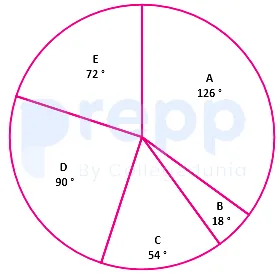
- A
648
- B
735
- C
545
- D
72
Show answer
A. 648Given:
The total number of employees = 2400.
If 40% of the number of employees in office A are shifted equally to offices B and E
Calculation:
40% of the number of employees in office A
⇒ (126/360)(40/100)× 2400
⇒ 336
A = 336/2 = 168 are shifted equally to offices B and E
Value of B = 2400 × (18/360)
⇒ 120
⇒ 120 + 168 = 288
Value of C = 2400 × (54/360)
⇒ 360
Sum of the number of employees in B and C
⇒ 288 + 360
⇒ 648
∴ T he sum of the number of employees in B and C will be 648.
Paper & answer key PDF ↗ Question 75archived
Person A started a business by investing Rs. 65,000. After a few months, B joined him by investing Rs. 50,000. Three months after the joining of B, C joined the two with an investment of Rs. 55,000. At the end of the year, A got 50% of profit as his share. For how many months did A alone finance the business?
- A
4
- B
2
- C
5
- D
3
Show answer
D. 3The correct answer is 3.
Calculation Period: Profit is usually calculated over a specific period, most commonly a year (12 months). All time durations for partners must be calculated relative to this total period. This method ensures that partners who invest more or keep their investment in the business for longer periods receive a proportionally larger share of the profits, reflecting their greater contribution to the business's capital structure over time.
Paper & answer key PDF ↗ Question 76archived
The following sentence has been split into four segments. Identify the segment that contains a grammatical error.
Paul was / bited by a dog / when he / was a child.
- A
bited by a dog
- B
was a child
- C
when he
- D
Paul was
Show answer
A. bited by a dogIdentifying Grammar Errors in Sentences
The question asks us to find the part of the sentence that has a grammatical error. The sentence is "Paul was bited by a dog when he was a child," split into four segments.
Let's look at each segment carefully:
Segment 1: Paul was
Segment 2: bited by a dog
Segment 3: when he
Segment 4: was a child
Analyzing Each Sentence Segment for Errors
We need to examine each segment to see if it follows the rules of English grammar.
Segment 1: Paul was
This segment starts the sentence and uses the past tense of the verb 'to be' ('was') for a singular subject ('Paul'). This part is grammatically correct and sets up a passive voice construction.
Segment 2: bited by a dog
This segment describes the action performed on Paul. It uses the word 'bited'. The verb 'bite' is an irregular verb. The past tense is 'bit', and the past participle is 'bitten'. For a passive voice construction using 'was', we need the past participle form of the main verb. Therefore, 'bited' is incorrect; it should be 'bitten'. This segment contains the grammatical error.
Segment 3: when he
This segment introduces a subordinate clause indicating a time frame. 'When' is a correct conjunction here, and 'he' is the correct pronoun referring to 'Paul'. This segment is grammatically correct.
Segment 4: was a child
This segment completes the subordinate clause, describing Paul's state at the time of the event. It uses the past tense of 'to be' correctly. This segment is grammatically correct.
Based on the analysis, the error is in the use of the verb form 'bited'. The correct passive voice construction would be "Paul was bitten by a dog".
Identifying the Incorrect Segment
The segment containing the grammatical error is "bited by a dog". This corresponds to Option 1.
Understanding Passive Voice and Verb Forms
The sentence "Paul was bited by a dog" is intended to be in the passive voice. The passive voice is formed using a form of the verb 'to be' (like 'is', 'am', 'are', 'was', 'were') followed by the past participle of the main verb.
The main verb here is 'bite'. Its forms are:
Base form: bite
Past tense: bit
Past participle: bitten
Since the sentence is in the past passive voice ("Paul was..."), the correct form needed is the past participle, which is 'bitten'. Therefore, 'bited' is incorrect.
The correct sentence should be: "Paul was bitten by a dog when he was a child."
Revision Table: Verb Forms
Verb
Base Form
Past Tense
Past Participle
to bite
bite
bit
bitten
to eat
eat
ate
eaten
to see
see
saw
seen
to speak
speak
spoke
spoken
Additional Information: Passive Voice Structure
The passive voice is often used when the action is more important than the person or thing doing the action, or when the doer of the action is unknown or obvious. The basic structure in the past simple tense is:
\(\text{Subject} + \text{was/were} + \text{Past Participle} (+ \text{by} + \text{Agent})\)
In our sentence:
Subject: Paul
was/were: was (because Paul is singular)
Past Participle: bitten (correct form of 'bite')
by + Agent: by a dog
So, the correct passive construction is "Paul was bitten by a dog". The original sentence used "bited", which is not the correct past participle form required for the passive voice.
Paper & answer key PDF ↗ Question 77archived
Select the most appropriate synonym of the given word.
Honest
- A
Secretive
- B
Sincere
- C
Strange
- D
Daring
Show answer
B. SincereThe correct answer is Sincere.
Additional Information: Importance of Precise Word Choice Choosing the right word, especially a precise synonym, is crucial for clear and effective communication. While several words might be close in meaning, understanding their subtle differences allows for more accurate expression. For example, while 'Sincere' is a good synonym for 'Honest', 'Honest' often implies adherence to facts and truthfulness, while 'Sincere' can emphasize genuineness of feelings or intentions. In this context, 'Sincere' fits well as a synonym for 'Honest' when referring to someone's character or communication style.
Paper & answer key PDF ↗ Question 78archived
Select the most appropriate meaning of the given idiom.
To sit on the fence
- A
Take a high seat
- B
Avoid taking sides
- C
Place something on a barrier
- D
Occupy a bench next to a boundary
Show answer
B. Avoid taking sidesUnderstanding the Idiom: To Sit on the Fence
The question asks for the most appropriate meaning of the idiom "To sit on the fence". Idioms are phrases whose meaning cannot be deduced from the literal meaning of the individual words. They have a figurative meaning that is understood within a particular culture or language.
Meaning of "To Sit on the Fence"
The idiom "To sit on the fence" is commonly used to describe a situation where someone refuses to take a definite side in a dispute or argument. They remain neutral or undecided, not wanting to commit to one opinion or the other.
Analyzing the Options
Let's look at the given options and see which one matches the figurative meaning of the idiom:
Option
Literal or Figurative?
Analysis
1. Take a high seat
Literal
This describes a physical action of sitting somewhere elevated. It does not relate to the figurative meaning of the idiom.
2. Avoid taking sides
Figurative
This means not supporting either party in a disagreement or conflict, which perfectly matches the common understanding of "to sit on the fence".
3. Place something on a barrier
Literal
This describes physically putting an object on a fence or wall. It is a literal interpretation and incorrect for the idiom.
4. Occupy a bench next to a boundary
Literal
This describes a physical location near a fence or border. It is a literal interpretation and does not convey the idiom's meaning.
Based on the analysis, only option 2, "Avoid taking sides," captures the figurative meaning of the idiom "To sit on the fence". The other options interpret the phrase literally, which is incorrect for idioms.
Conclusion
The most appropriate meaning of the idiom "To sit on the fence" is to avoid taking a position or side in a disagreement or controversy. This means remaining neutral or undecided.
Revision Table: Idiom Meaning
Idiom
Meaning
Example Usage
To sit on the fence
To avoid taking sides in a dispute; to remain neutral or undecided.
During the argument between his two friends, he decided to sit on the fence and not express his opinion.
Additional Information: Understanding Idioms
Idioms are an important part of language. They add colour and richness but can be confusing if interpreted literally. Learning common idioms and their meanings is crucial for understanding native speakers and improving language fluency.
Idioms often have cultural origins.
Their meaning is non-literal.
Understanding the context helps in interpreting idioms.
Practice is key to mastering idioms.
Paper & answer key PDF ↗ Question 79archived
Select the option that can be used as a one-word substitute for the given group of words.
A person above a hundred years in age
- A
Centenarian
- B
Venerable
- C
Geriatric
- D
Aged
Show answer
A. CentenarianUnderstanding One-Word Substitutes for Age
The question asks for a single word that can replace the phrase "A person above a hundred years in age". This type of question tests vocabulary, specifically the ability to identify precise terms for descriptions.
Let's examine the given options to find the most accurate one-word substitute.
Option
Meaning
Centenarian
A person who is one hundred or more years old.
Venerable
Accorded a great deal of respect, especially because of age, wisdom, or character.
Geriatric
Relating to old people, especially with regard to their health care. (Often used as an adjective, but 'a geriatric' can mean an old person).
Aged
Old.
Analysing the Options
Centenarian: This term is specifically defined as someone who is 100 years old or older. This perfectly matches the description "A person above a hundred years in age".
Venerable: While often applied to older people due to their experience or wisdom, this word describes a quality (worthy of respect) rather than a specific age group. Someone could be venerable without being a hundred, and not everyone over a hundred is necessarily described as venerable.
Geriatric: This term relates to old age and often specifically to the medical care of older people. While a centenarian is certainly old and might require geriatric care, the word 'geriatric' itself doesn't strictly mean someone is over 100 years old; it refers more broadly to the state of being old and the associated medical field.
Aged: This is a general term for being old. It applies to anyone past middle age, not specifically someone over 100.
Based on the precise definition, the word that means "A person above a hundred years in age" is Centenarian.
Conclusion on One-Word Substitute
Comparing the options with the given phrase, 'Centenarian' is the only word that specifically denotes a person who has reached the age of 100 or more years. The other terms are related to age but do not specify being over a hundred years old.
Revision Table: Age-Related Terms
Term
Meaning
Centenarian
100 years old or older
Nonagenarian
90 to 99 years old
Octogenarian
80 to 89 years old
Septuagenarian
70 to 79 years old
Sexagenarian
60 to 69 years old
Supercentenarian
110 years old or older
Aged
Old (general term)
Geriatric
Relating to old age/health care of old people
Venerable
Deserving respect, often due to age/wisdom
Additional Information: Specific Age Categories
Beyond just 'aged', English has specific terms for people in certain age decades, particularly in later life. Knowing these terms can be helpful for vocabulary building and understanding precise descriptions:
A person in their 60s: Sexagenarian
A person in their 70s: Septuagenarian
A person in their 80s: Octogenarian
A person in their 90s: Nonagenarian
A person 100 or older: Centenarian
A person 110 or older: Supercentenarian
These terms provide more specific information about a person's age compared to general terms like 'aged' or 'elderly'. Understanding these nuances is key for precise communication and vocabulary questions.
Paper & answer key PDF ↗ Question 80archived
Select the most appropriate meaning of the given idiom.
Hit a brick wall
- A
Fight a powerful foe
- B
Demolish a brick wall
- C
Not able to make any progress
- D
Use physical force
Show answer
C. Not able to make any progressUnderstanding the Idiom: Hit a Brick Wall
The question asks for the most appropriate meaning of the idiom "Hit a brick wall". Idioms are phrases where the meaning is not obvious from the individual words. They have a figurative meaning.
Let's think about what happens when you literally hit a brick wall. You stop abruptly. You cannot go through it. Applying this idea figuratively, the idiom suggests a situation where you are trying to achieve something, but you encounter an obstacle that prevents you from moving forward.
Analyzing the Options for "Hit a Brick Wall"
We need to examine each given option to find the one that best captures the figurative meaning of encountering an impassable obstacle or stopping progress.
Option 1: Fight a powerful foe
While encountering a powerful foe might stop your progress, the idiom "hit a brick wall" doesn't specifically imply a fight or an adversary. It simply means facing an insurmountable obstacle, which could be a problem, a lack of resources, or a difficult situation, not necessarily another person or entity to fight.
Option 2: Demolish a brick wall
This is the literal action related to a physical brick wall. Idioms use words figuratively, so this literal interpretation is incorrect.
Option 3: Not able to make any progress
If you hit a physical brick wall, you cannot move past it; your progress is stopped. Figuratively, hitting a brick wall means you encounter a problem or situation that completely stops you from moving forward towards your goal. You cannot make any further progress. This aligns perfectly with the figurative meaning of the idiom.
Option 4: Use physical force
Hitting a brick wall involves force, but the idiom is figurative. It doesn't mean you need to apply physical strength to overcome an obstacle. It describes the state of being stopped, not the action of using force.
Conclusion on the Meaning of "Hit a Brick Wall"
Based on the analysis of the idiom's figurative meaning and the options provided, the most appropriate meaning for "Hit a brick wall" is being unable to continue or move forward in a task or situation.
Therefore, the option that correctly represents "Not able to make any progress" is the best fit for the idiom "Hit a brick wall".
Meaning of "Hit a Brick Wall"
Idiom
Figurative Meaning
Best Option Match
Hit a brick wall
Encountering an obstacle that completely stops progress.
Not able to make any progress.
Revision Table: Key Idioms
Common English Idioms and Meanings
Idiom
Meaning
Example Usage
Break a leg
Good luck!
"You have a performance tonight? Break a leg!"
Piece of cake
Something very easy.
"The test was a piece of cake."
Let the cat out of the bag
Reveal a secret.
"He accidentally let the cat out of the bag about the surprise party."
Bite the bullet
To face a difficult situation with courage.
"You just have to bite the bullet and finish the project."
Additional Information: Idioms in English Language
Idioms are a crucial part of mastering any language, including English. They make language more colorful and expressive. Understanding idioms helps in comprehending native speakers and in scoring well in language proficiency exams.
Idioms are fixed phrases; changing words usually changes or destroys the meaning.
Their meaning is often not literal, requiring cultural or contextual understanding.
Learning idioms takes practice and exposure through reading and listening.
The idiom "Hit a brick wall" is commonly used in various contexts, such as:
When trying to solve a problem and getting stuck.
When making plans and encountering an unexpected difficulty.
When doing research and not being able to find more information.
In all these cases, progress stops, just like hitting a physical brick wall stops movement.
Paper & answer key PDF ↗ Question 81archived
The following sentence has been divided into parts. One of them may contain a grammatical error. Select the part that contains the error from the given options. If you don’t find any error, mark ‘No error’ as your answer.
They ordered, "the whole area / to be disinfected / on the earliest".
- A
No error
- B
to be disinfected
- C
They ordered the whole area
- D
on the earliest
Show answer
D. on the earliestIdentifying the Grammatical Error in the Sentence
The question asks us to identify the part of the sentence that contains a grammatical error. The sentence is broken down into three parts:
"They ordered, "the whole area / to be disinfected / on the earliest"."
These parts correspond to the options provided (excluding the "No error" option).
Let's examine each part:
Part 1 (implied by Option 3): They ordered the whole area
Part 2 (Option 2): to be disinfected
Part 3 (Option 4): on the earliest
We need to check each of these parts for any grammatical inconsistencies or errors.
Analyzing "They ordered the whole area"
The structure "They ordered..." is grammatically sound. The phrase "the whole area" acts as the object of the command. While the construction with the infinitive phrase "to be disinfected" following it is a specific type of reported command structure, this initial part itself is correct.
Analyzing "to be disinfected"
This is a passive infinitive phrase. It is commonly used after verbs like 'order', 'ask', 'tell', etc., followed by an object, to indicate an action that should be performed on the object. For instance, "They ordered the room to be cleaned." The phrase "to be disinfected" is grammatically correct in this context, meaning the action of disinfection is to be applied to the area.
Analyzing "on the earliest"
This part of the sentence contains a grammatical error. The phrase "on the earliest" is not a standard or correct English idiom or construction used to express urgency or the earliest possible time. The correct idiomatic phrase is "at the earliest".
The phrase "at the earliest" means "as soon as possible" or "no sooner than a specified time".
For example: "Please submit your application at the earliest opportunity." or "The results will be available at the earliest tomorrow afternoon."
The preposition "on" is typically used with specific days or dates (e.g., on Monday, on July 1st), not with the superlative adjective "earliest" in this idiomatic sense.
Therefore, the part "on the earliest" is grammatically incorrect.
Identifying the Correct Option
Based on our analysis, the grammatical error is found in the phrase "on the earliest", which corresponds to Option 4.
The corrected sentence would be: "They ordered, 'the whole area to be disinfected at the earliest'."
Revision Table: Correct Prepositions for Time and Urgency
Prepositions with Time Expressions and Idioms
Preposition/Phrase
Usage Context
Example
at
Specific time, holiday periods, idiomatic expressions like "at the earliest", "at the latest".
Finish it at the earliest.
on
Specific days or dates.
The meeting is on Tuesday.
in
Months, seasons, years, centuries, periods of the day (morning, afternoon, evening, but not night).
We travel in July.
by
Indicating a deadline.
Submit the report by Friday.
as soon as possible
To indicate maximum urgency.
Send the details as soon as possible.
Additional Information: Understanding Idiomatic Phrases
Idiomatic phrases are expressions where the meaning is not obvious from the individual words. "At the earliest" is one such idiom related to time and urgency.
Using the wrong preposition in an idiom can make the sentence sound incorrect or even change its meaning. Mastering common idioms and the correct prepositions associated with time expressions is crucial for accurate English grammar.
In this case, the error is a misuse of the preposition "on" where the standard idiom requires "at". Recognizing and correcting such errors helps improve fluency and accuracy in English.
Paper & answer key PDF ↗ Question 82archived
Select the most appropriate ANTONYM of the given word.
Frenzy
- A
Rage
- B
Craze
- C
Fury
- D
Calm
Show answer
D. CalmFinding the Antonym of Frenzy: Understanding Word Meanings
The question asks for the most appropriate antonym of the word Frenzy. An antonym is a word that means the opposite of another word. To find the antonym, we first need to understand the meaning of Frenzy.
Frenzy means a state or period of uncontrolled excitement or wild behavior. Think of it as a state of extreme agitation or chaos.
Now let's look at the given options:
Rage: This means intense anger or violent uncontrolled anger. This is similar to the intense emotion aspect of frenzy, not the opposite.
Craze: This refers to an enthusiasm or obsession, often short-lived. While it involves excitement, it's more about an intense interest rather than uncontrolled wild behavior. It's related to excitement, which is part of frenzy, so it's not an antonym.
Fury: This means wild or violent anger, or extreme intensity of action or emotion. Like rage, it is very close in meaning to the intense, uncontrolled aspect of frenzy, not its opposite.
Calm: This means not excited, agitated, or feeling nervous. It describes a state of peace and absence of agitation or excitement. This is the direct opposite of uncontrolled excitement and wild behavior.
Comparing the options, Calm is the word that represents a state of being opposite to the uncontrolled excitement and agitation characteristic of Frenzy.
Therefore, the most appropriate antonym of Frenzy is Calm.
Revision Table: Antonym of Frenzy
Word
Meaning
Relationship to Frenzy
Frenzy
State of uncontrolled excitement or wild behavior
The main word
Rage
Intense anger
Similar intensity, not opposite
Craze
Enthusiasm, obsession
Related to excitement, not opposite
Fury
Violent anger, extreme intensity
Similar intensity, not opposite
Calm
Not excited, agitated, or nervous; peaceful
Opposite state
Additional Information: Understanding Antonyms and Synonyms
Antonyms and synonyms are important concepts in vocabulary. Understanding them helps improve comprehension and language skills.
Antonym: A word opposite in meaning to another word. Examples: hot/cold, up/down, big/small, happy/sad, frenzy/calm.
Synonym: A word that means exactly or nearly the same as another word. Examples: happy/joyful, big/large, quick/fast, frenzy/rage, frenzy/fury.
Knowing common antonyms and synonyms for frequently used words like Frenzy is helpful for exams and everyday communication.
Paper & answer key PDF ↗ Question 83archived
Select the option that expresses the given sentence in active voice.
Rishabh was declared fit to play the next match.
- A
Rishabh declared them fit to play the next match.
- B
They had declared Rishabh fit to play the next match.
- C
They will declare Rishabh fit to play the next match.
- D
They declared Rishabh fit to play the next match.
Show answer
D. They declared Rishabh fit to play the next match.Understanding Voice Change: Active vs. Passive
Voice in grammar refers to the form of a verb that indicates whether the subject of the verb is performing the action (active voice) or receiving the action (passive voice).
Active Voice: The subject performs the action. Example: "They declared Rishabh fit." (Subject 'They' performs the action 'declared').
Passive Voice: The subject receives the action. Example: "Rishabh was declared fit." (Subject 'Rishabh' receives the action 'was declared'). The doer of the action is often omitted or placed in a "by" phrase.
Analyzing the Given Passive Sentence
The given sentence is: "Rishabh was declared fit to play the next match."
Let's break down its components:
Subject: Rishabh
Verb: was declared (passive form of 'declare' in simple past tense)
Action: declaring
Receiver of Action: Rishabh
Doer of Action (Agent): Unspecified, but implied.
This sentence is in the passive voice because the subject, Rishabh, is receiving the action ('was declared') rather than performing it.
Converting Passive to Active Voice
To convert a passive sentence to active voice, we need to:
Identify the doer of the action (the agent). If not explicitly stated, we might need to assume a general agent like 'they', 'someone', 'people', etc.
Make the doer of the action the new subject of the sentence.
Identify the verb and its tense in the passive sentence.
Change the verb to the corresponding active form, ensuring the tense remains the same. The object of the active sentence will be the subject of the original passive sentence.
In our sentence "Rishabh was declared fit...", the passive verb is "was declared". 'Was' indicates simple past tense. The agent is not explicitly stated, so we look at the options to find a plausible agent, which appears to be 'They'. The object in the active voice will be 'Rishabh' (the original passive subject).
So, the active voice structure should be: Subject (They) + Simple Past Active Verb + Object (Rishabh) + Rest of the sentence.
The simple past active form of 'declare' is 'declared'.
Evaluating the Options for Active Voice
Let's examine each option:
Option 1: "Rishabh declared them fit to play the next match."
Analysis: Here, Rishabh is the subject performing the action 'declared'. This changes the meaning completely; Rishabh is declaring someone else fit, not being declared fit himself. Incorrect.
Option 2: "They had declared Rishabh fit to play the next match."
Analysis: Here, the subject is 'They', which is a plausible agent. However, the verb is "had declared" (past perfect tense). The original passive sentence used "was declared" (simple past tense). The tense does not match. Incorrect.
Option 3: "They will declare Rishabh fit to play the next match."
Analysis: Here, the subject is 'They'. The verb is "will declare" (future tense). The original passive sentence used "was declared" (simple past tense). The tense does not match. Incorrect.
Option 4: "They declared Rishabh fit to play the next match."
Analysis: Here, the subject is 'They'. The verb is "declared", which is the simple past active form. The object is 'Rishabh'. This sentence correctly makes 'They' the doer of the action and 'Rishabh' the receiver, while maintaining the simple past tense. This is the correct active voice transformation.
Conclusion: Selecting the Correct Active Voice Sentence
Based on the analysis of tense and the subject-verb relationship required for active voice conversion of the given simple past passive sentence, Option 4 is the correct choice.
Voice Change Summary
Voice
Sentence Structure Example
Example Sentence
Passive
Subject (Receiver) + be verb + Past Participle (+ by Agent)
Rishabh was declared fit...
Active
Subject (Agent) + Verb + Object (Receiver)
They declared Rishabh fit...
Revision Table: Active and Passive Voice
Key Differences: Active vs. Passive Voice
Feature
Active Voice
Passive Voice
Focus
On the performer of the action (Subject)
On the receiver of the action (Subject)
Verb Form
Standard verb forms (e.g., declares, declared, will declare)
Form of 'be' + Past Participle (e.g., is declared, was declared, will be declared)
Sentence Structure
Subject + Verb + Object
Subject + be verb + Past Participle (+ by Agent)
Usage
Often clearer, more direct, and concise
Used when the doer is unknown/unimportant, or to emphasize the action/receiver
Additional Information: Voice Change Rules
Here are some general rules to remember when changing voice:
Only transitive verbs (verbs that take an object) can be changed from active to passive voice.
The object of the active sentence becomes the subject of the passive sentence.
The subject of the active sentence becomes the object of the passive sentence (often introduced by 'by').
The tense of the verb remains the same during the conversion, but the verb form changes.
The helping verb 'be' is crucial in forming the passive voice and must agree with the new subject in number and tense.
The main verb in the passive voice is always in the past participle form.
Example tenses conversions:
Simple Present: Active (declares) → Passive (is declared / are declared)
Simple Past: Active (declared) → Passive (was declared / were declared)
Simple Future: Active (will declare) → Passive (will be declared)
Present Continuous: Active (is declaring) → Passive (is being declared)
Past Continuous: Active (was declaring) → Passive (was being declared)
Present Perfect: Active (has declared) → Passive (has been declared / have been declared)
Past Perfect: Active (had declared) → Passive (had been declared)
Paper & answer key PDF ↗ Question 84archived
The following sentence has been divided into parts. One of them contains an error. Select the part that contains the error from the given options.
You and I / have submitted / your work / on time.
- A
on time
- B
You and I
- C
your work
- D
have submitted
Show answer
C. your workIdentifying the Grammatical Error in a Sentence
Let's carefully examine the given sentence to find the part that contains a grammatical error. The sentence is:
"You and I / have submitted / your work / on time."
The sentence is divided into four parts:
You and I
have submitted
your work
on time
We need to analyze each part in the context of the whole sentence to check for any inconsistencies or errors in grammar, especially concerning subject-verb agreement and pronoun usage.
Analyzing the Sentence Parts for Errors
Part 1: You and I
This is the subject of the sentence. It is a compound subject consisting of the second person pronoun "You" and the first person pronoun "I". When joined by "and", compound subjects are generally plural.
Part 2: have submitted
This is the verb phrase. The auxiliary verb "have" is used with the past participle "submitted". "Have" is the correct form of the verb to agree with a plural subject (You and I). This part seems correct.
Part 3: your work
This part contains a possessive pronoun "your" followed by the noun "work". This possessive pronoun refers back to the subject. However, the subject is "You and I". When the subject is "You and I", meaning the speaker and another person(s), the appropriate possessive pronoun to refer to the possessions or actions of this combined group is "our", not "your". "Your" refers to the possession of "you" (one or more people, but not including "I").
Part 4: on time
This is an adverbial phrase indicating when the action was performed. It modifies the verb "have submitted" and is grammatically correct in this context.
Pinpointing the Sentence Error
Based on our analysis, the error lies in the possessive pronoun in the third part, "your work". The subject "You and I" requires the possessive pronoun "our" to indicate shared possession or shared action (submitting 'our' work).
The correct sentence should be: "You and I have submitted our work on time."
Pronoun Agreement with Compound Subjects
Here's a quick reference for possessive pronoun agreement with common compound subjects involving "I":
Subject
Correct Possessive Pronoun
You and I
our
He and I
our
She and I
our
They and I
our
[Name] and I
our
You and he
your
You and she
your
You and they
your
This table clearly shows that for the subject "You and I", the correct possessive pronoun is "our". Therefore, "your work" is the incorrect part.
Revision Table: Reviewing Grammar Concepts
This question highlights the importance of correct pronoun usage, specifically possessive pronoun agreement with compound subjects.
Compound Subject: Two or more subjects joined by a conjunction (like 'and', 'or').
Pronoun Agreement: Pronouns must agree in number, gender, and person with the noun or pronoun they refer to (the antecedent).
Possessive Pronouns: Pronouns like my, your, his, her, its, our, their, used to show ownership or possession.
When a compound subject includes "I" and another person/group joined by "and", the resulting pronoun reference is first-person plural ("we", "our").
Additional Information on Possessive Pronoun Usage
Understanding how to use possessive pronouns correctly is crucial for clear communication. The choice of possessive pronoun depends entirely on who the pronoun is referring back to (the antecedent). For instance:
If the subject is "I", the possessive is "my". (e.g., I submitted my work.)
If the subject is "You", the possessive is "your". (e.g., You submitted your work.)
If the subject is "He", the possessive is "his". (e.g., He submitted his work.)
If the subject is "She", the possessive is "her". (e.g., She submitted her work.)
If the subject is "We", the possessive is "our". (e.g., We submitted our work.)
If the subject is "They", the possessive is "their". (e.g., They submitted their work.)
When dealing with compound subjects, identify the collective "person" of the subject (first person, second person, third person) to determine the correct pronoun. "You and I" is a first-person plural subject (equivalent to "We"), hence requiring a first-person plural possessive ("our").
Paper & answer key PDF ↗ Question 85archived
Select the most appropriate synonym of the given word.
Imbue
- A
Remove
- B
Deprive
- C
Clear
- D
Instill
Show answer
D. InstillFinding the Most Appropriate Synonym for Imbue
The question asks us to find the most appropriate synonym for the word 'Imbue'. A synonym is a word that has the same or nearly the same meaning as another word.
Let's first understand the meaning of the word 'Imbue'.
Imbue: To inspire or permeate with a feeling or quality; to saturate or stain (something, especially a fabric or container) with a substance. In the context of qualities or feelings, it means to fill or inspire someone or something with them.
Now let's look at the given options and their meanings:
Remove: To take away or get rid of something from a place or position. This is the opposite of filling or inspiring.
Deprive: To prevent a person or place from having or using something. This also means taking something away or withholding it.
Clear: To remove something unwanted or unpleasant; to make or become clear or transparent. This relates to removing rather than adding or filling.
Instill: To gradually but firmly establish (an idea, feeling, or attitude) in a person's mind. This means to put a quality, idea, or feeling into someone.
Comparing the meaning of 'Imbue' with the meanings of the options, we can see which word is the closest in meaning.
Imbue means to fill or inspire with a quality or feeling.
Instill means to establish a feeling or attitude in someone's mind.
Both words involve putting or establishing something (like a quality, feeling, or idea) into someone or something. 'Instill' particularly fits the sense of imbuing someone with abstract qualities or feelings, which is a common use of 'Imbue'.
Therefore, 'Instill' is the most appropriate synonym for 'Imbue'.
Analyzing the Options
Let's analyze why the other options are not appropriate synonyms for 'Imbue'.
Remove: This word suggests taking something away. Imbue is about adding or filling, not taking away. They are antonyms, not synonyms.
Deprive: This word also means taking something away or preventing access to it. It is the opposite of imbuing.
Clear: This word means to empty or remove something unwanted. Like 'Remove' and 'Deprive', it signifies removal, which is contrary to the meaning of imbue.
Instill: This word means to put an idea, feeling, or attitude into someone gradually. This aligns closely with the meaning of imbue when used for qualities or feelings.
Conclusion
Based on the analysis of the word 'Imbue' and the given options, 'Instill' is the word that is closest in meaning. It accurately reflects the idea of putting a quality, feeling, or idea into someone.
Word
Meaning
Relationship to Imbue
Imbue
To fill or inspire with a quality or feeling; to saturate.
Base word
Remove
To take away.
Antonym
Deprive
To withhold or take away.
Antonym
Clear
To empty or remove.
Antonym
Instill
To establish a quality or feeling gradually.
Synonym
Thus, the most appropriate synonym for 'Imbue' is 'Instill'.
Revision Table: Key Vocabulary
Word
Definition
Example Sentence
Imbue
To inspire or fill with a feeling or quality.
The coach tried to imbue his team with confidence.
Instill
To gradually but firmly establish (an idea or feeling) in someone's mind.
Parents try to instill good values in their children.
Synonym
A word having the same or nearly the same meaning as another word.
'Happy' is a synonym for 'joyful'.
Antonym
A word opposite in meaning to another word.
'Hot' is an antonym for 'cold'.
Additional Information: Understanding Synonyms
Synonyms are important for expanding vocabulary and expressing ideas more precisely or with variety. While synonyms share similar meanings, they often have subtle differences in connotation, usage, or intensity. For example, 'big', 'large', and 'enormous' are all synonyms, but they convey different degrees of size.
When choosing the best synonym in a specific context, consider the following:
Exact meaning: Does the synonym precisely match the intended meaning of the original word in its context?
Connotation: Does the synonym carry positive, negative, or neutral associations?
Register: Is the synonym appropriate for the formal or informal style of writing or speaking?
Usage: Is the synonym commonly used in this way? Are there any specific grammatical patterns associated with it?
In this case, 'Instill' is a strong synonym for 'Imbue' particularly when referring to abstract qualities or feelings, as it captures the idea of transferring or establishing such elements into someone.
Paper & answer key PDF ↗ Question 86archived
Select the most appropriate option to fill in the blank.
The new Vande Bharat trains will have some additional ________ such as emergency windows for evacuation, disaster lights etc.
- A
qualities
- B
features
- C
pieces
- D
types
Show answer
B. featuresVande Bharat Trains Enhancements Explained
This question focuses on identifying the most suitable word to describe additional elements being incorporated into the new Vande Bharat trains. The context mentions specific additions like 'emergency windows for evacuation' and 'disaster lights', which are functional additions that enhance the train's safety and utility.
Understanding the Context: New Train Additions
The Vande Bharat trains, India's semi-high-speed trains, are continuously being upgraded. The sentence highlights that these new trains include specific improvements or new components. We need a word that accurately represents these additions.
Analyzing the Options for Vande Bharat Trains
Let's examine each option in the context of the Vande Bharat trains:
Option 1: qualities
'Qualities' usually refer to inherent characteristics or standards of excellence, like comfort, speed, or reliability. While safety improvements contribute to the overall quality, the specific items mentioned (windows, lights) are better described as distinct additions rather than general qualities.
Option 2: features
'Features' are specific attributes, functions, or characteristics of a product or service. Items like 'emergency windows for evacuation' and 'disaster lights' are perfect examples of new features being added to improve functionality and safety. This word fits the context perfectly.
Option 3: pieces
'Pieces' refers to parts or components. While emergency windows and disaster lights are indeed physical pieces, using the word 'pieces' in the blank would sound generic and wouldn't fully capture the significance of these additions as functional improvements. The sentence implies more than just adding random parts; it suggests adding specific functional elements.
Option 4: types
'Types' refers to categories or kinds. This word doesn't make sense in the context of adding specific components like windows or lights. You don't add 'types' of windows in this manner; you add specific windows or features.
Conclusion: Selecting the Best Fit
Considering the specific examples provided – 'emergency windows for evacuation' and 'disaster lights' – the term that best describes these additions to the Vande Bharat trains is features. These are specific functionalities and components added to enhance the train's design and passenger safety.
Therefore, the most appropriate option to fill in the blank is 'features'.
Paper & answer key PDF ↗ Question 87archived
Select the most appropriate option that can substitute the underlined segment in the given sentence. If there is no need to substitute it, select ‘No substitution required’.
Whom was the person that you wanted me to contact there?
- A
No substitution required
- B
Whom is the person
- C
Whom were the persons
- D
Who is the person
Show answer
D. Who is the personUnderstanding Who vs Whom: Correcting Sentence Structure
Let's analyze the given sentence: "Whom was the person that you wanted me to contact there?". We need to examine the underlined segment "Whom was the person" and determine if it requires substitution and, if so, with which option.
Analyzing the Underlined Segment and Options
The sentence asks for the identity of a person. The core part of the question is "Whom was the person?". This structure involves an interrogative pronoun ("Whom") and a linking verb ("was") followed by a subject complement ("the person").
We need to consider two main grammatical points here:
The correct interrogative pronoun: Should it be "Who" or "Whom"?
The correct form of the verb "to be": Should it be "was" or "is"?
Rule for Who vs Whom
A simple way to decide between "Who" and "Whom" is to think about whether the pronoun is functioning as a subject or an object.
Use Who when the pronoun is the subject of a verb. Think of it as replacing "he," "she," "it," or "they."
Use Whom when the pronoun is the object of a verb or a preposition. Think of it as replacing "him," "her," "it," or "them."
In the segment "Whom was the person?", the pronoun is linked to "the person" by the verb "was". "The person" is essentially the subject complement describing the subject implied by the question word. If we were to answer the question "Who was the person?", we might say "The person was he" or "The person was she". Since "he" and "she" are subject pronouns, the correct interrogative pronoun should be the subject form, which is Who. Therefore, "Whom" is incorrectly used in the original sentence.
Rule for "was" vs "is" in this Context
The original sentence uses the past tense verb "was". However, when asking for the identity of a person, especially in the present context, the present tense verb "is" is typically used. For example, "Who is your friend?" or "Who is the leader?". While the reason the person is relevant ("that you wanted me to contact there") happened in the past, the question is asking about their identity now. Using "is" is the standard and more appropriate tense for asking "Who is this person?".
Evaluating the Options
Let's look at how each option addresses these points:
Option 1: No substitution required
This would mean "Whom was the person" is correct. Based on our analysis that "Whom" is incorrect and "was" is less appropriate than "is", this option is incorrect.
Option 2: Whom is the person
This option keeps "Whom" (which is incorrect) but changes "was" to "is" (which is more appropriate). Since "Whom" is still incorrect, this option is wrong.
Option 3: Whom were the persons
This option changes the singular "person" and "was" to plural "persons" and "were". The original sentence is clearly about a single person. Also, it keeps "Whom", which is incorrect. This option changes the meaning and uses incorrect grammar.
Option 4: Who is the person
This option correctly changes "Whom" to "Who" (using the subject form) and changes "was" to "is" (using the appropriate present tense for asking identity). This option corrects both grammatical issues in the original underlined segment while keeping the singular form consistent with "the person".
Conclusion
Based on the analysis of the rules for "Who" vs "Whom" and the appropriate verb tense for asking identity, the segment "Whom was the person" needs to be substituted with "Who is the person".
Original Segment
Analysis
Correct Form
Whom
Used incorrectly as a subject/subject complement.
Who
was
Less appropriate tense for asking identity than "is".
is
the person
Singular noun, correctly used.
the person
Therefore, the most appropriate substitution is "Who is the person".
Revision Table: Key Grammar Points
Grammar Point
Rule/Explanation
Example
Who vs Whom
Use Who for subjects. Use Whom for objects of verbs or prepositions.
Who is coming? (He is coming.)
To whom did you speak? (I spoke to him.)
Verb Tense for Identity
Use the present tense verb "is" (or "are" for plural) when asking for someone's identity in the present.
Who is that person?
Who are they?
Additional Information on Pronoun Usage and Clauses
The original sentence contains a relative clause: "that you wanted me to contact there". This clause modifies "the person".
In the original sentence: "Whom was the person [that you wanted me to contact there]?"
In the corrected sentence: "Who is the person [that you wanted me to contact there]?"
The choice between "Who" and "Whom" in the main clause depends on its function in that clause, not the relative clause. As established, "Who" functions correctly as the interrogative pronoun linked to the subject complement "the person" via the linking verb "is".
Relative pronouns like "that", "who", or "whom" are used to introduce relative clauses. In the clause "that you wanted me to contact there", "that" acts as the object of the verb "wanted to contact". (You wanted to contact that person). If we used "who" or "whom" here, it would be "whom" (You wanted to contact him/her), so the clause could also be "whom you wanted me to contact there". However, the question is about the main clause structure.
Focusing back on the main question phrase, understanding whether "Who" or "Whom" is needed is crucial for correct sentence construction in English grammar.
Paper & answer key PDF ↗ Question 88archived
The following sentence has been split into four segments. Identify the segment that contains a grammatical error.
I did not / buy neither / of the / two dresses.
- A
I did not
- B
two dresses
- C
of the
- D
buy neither
Show answer
D. buy neitherIdentifying Grammatical Errors in Sentences
The question asks us to find the segment of the given sentence that contains a grammatical error. The sentence is split into four parts: "I did not", "buy neither", "of the", and "two dresses". We need to examine each part in the context of the full sentence to determine where the error lies.
Let's look at the sentence structure and meaning. The sentence is "I did not buy neither of the two dresses."
Analyzing the Sentence Segments
We will examine each segment provided in the options:
Segment 1: I did not - This part introduces the subject ("I") and the helping verb ("did") with a negation ("not"). This structure is grammatically correct for forming the negative simple past tense.
Segment 2: buy neither - This part contains the main verb ("buy") and the word "neither". The use of "neither" here is immediately suspicious because the sentence already contains the negation "not".
Segment 3: of the - This is a prepositional phrase fragment that connects the verb phrase to the object of the verb phrase. It's a standard grammatical structure.
Segment 4: two dresses - This is the object of the preposition "of". It specifies what the "neither" refers to. This part is grammatically correct.
Understanding the Grammatical Error: Double Negatives
The error occurs when two negative words are used in the same clause where only one is needed to express a single negation. This is known as a double negative. In standard English, double negatives are generally considered grammatically incorrect and should be avoided.
In the given sentence, "I did not buy neither...", the negative meaning is expressed twice:
"did not" provides a negation.
"neither" also provides a negation, meaning "not either".
Using "did not" and "neither" together results in a double negative, making the sentence grammatically incorrect. The combination cancels out the negation, implying the opposite of the intended meaning (which would be "I bought one or both of the dresses").
Identifying the Segment with the Error
The error originates from the presence of both "not" (in "did not") and "neither". The segment that explicitly contains one of these negative elements in conjunction with the verb that causes the double negation is "buy neither". Although "did not" is also negative, the *combination* forming the error happens across "did not buy neither". However, the options isolate "buy neither" as a single segment. This segment contains the word "neither", which is problematic when used after "did not buy".
A correct way to phrase the sentence would be:
"I did not buy either of the two dresses." (Using "not" and "either")
"I bought neither of the two dresses." (Using "neither" alone)
Comparing these correct versions to the original sentence, it's clear that the presence of "neither" in the segment "buy neither" is what creates the double negative with "did not". Therefore, the segment "buy neither" contains the grammatical error.
Segment
Text
Contains Error?
Explanation
1
I did not
No (alone)
Correct part of negative structure.
2
buy neither
Yes
"Neither" creates a double negative with "did not".
3
of the
No
Correct prepositional phrase start.
4
two dresses
No
Correct object.
Conclusion
The segment "buy neither" contains the grammatical error because it forms a double negative when combined with the preceding "did not".
Revision Table: Understanding Negation and Double Negatives
Concept
Explanation
Examples
Single Negation
Using one negative word or structure to convey negation.
I did not go.
She has no money.
They saw nobody.
Double Negative
Using two negative words in the same clause, often canceling out the intended negative meaning. Generally considered incorrect in standard English.
I did not see nobody. (Incorrect - means "I saw somebody")
She can't find nowhere to sit. (Incorrect - means "She can find somewhere to sit")
I did not buy neither of them. (Incorrect - means "I bought one or both of them")
Correct Alternatives
Using a single negative word or structure, or combining a negative with a non-negative word (like "either", "anywhere", "anyone").
I did not see anybody.
She can't find anywhere to sit.
I did not buy either of them.
I bought neither of them.
Additional Information: Avoiding Double Negatives in Grammar
Double negatives can be confusing and are a common grammatical error. While they exist in some non-standard dialects of English, they are incorrect in formal and standard informal English. Understanding how to use negative words correctly is crucial for clear communication.
Words like "not", "never", "no", "none", "nobody", "nothing", "nowhere", "neither", "nor", "hardly", "scarcely", and "barely" all carry negative meanings.
When you use a negative verb (like "did not", "cannot", "is not"), you should typically follow it with a non-negative word like "any", "anyone", "anything", "anywhere", or "either".
Alternatively, you can use a negative word like "neither", "none", "nobody", "nothing", or "nowhere" without a negative verb to convey the same meaning.
For example, instead of "He doesn't know nothing", the correct forms are "He doesn't know anything" or "He knows nothing".
In the case of the question sentence, "I did not buy neither of the two dresses", the error is the combination of "did not buy" (negative verb phrase) and "neither" (negative determiner/pronoun). The correct structures avoid this double negation.
Paper & answer key PDF ↗ Question 89archived
Select the most appropriate option to substitute the underlined segment in the given sentence. If there is no need to substitute it, select ‘No substitution required’.
If Vinay has the book why he is not giving you ?
- A
No substitution required
- B
is he not giving it to you
- C
he is not gave to you
- D
he not giving it to you
Show answer
B. is he not giving it to youUnderstanding Sentence Structure in English Grammar
The original sentence provided is, "If Vinay has the book why he is not giving you ?". We need to examine the underlined segment "why he is not giving you" to determine if it requires substitution for correct English grammar.
The sentence structure here is a conditional clause ("If Vinay has the book") followed by a question clause ("why he is not giving you ?"). In English, when forming a question using a question word like 'why', 'what', 'where', etc., the typical structure involves placing the auxiliary verb before the subject. For example:
Statement: He is happy.
Question: Is he happy?
Statement: They are coming.
Question: Are they coming?
Statement: He is giving you the book.
Question (using 'why'): Why is he giving you the book?
In the underlined segment "why he is not giving you", the subject "he" comes before the auxiliary verb "is". This is the word order typically found in a statement, not a question or a clause functioning as a question within the sentence.
Analysing the Substitution Options
Let's look at the given options for substituting "why he is not giving you":
Option
Analysis
Correctness
1. No substitution required
The original segment "why he is not giving you" has the subject ("he") before the auxiliary verb ("is"). This is incorrect word order for a question clause introduced by 'why'.
Incorrect
2. is he not giving it to you
This option proposes changing "why he is not giving you" to "why is he not giving it to you". It correctly places the auxiliary verb ("is") before the subject ("he"). It also replaces "giving you" with "giving it to you", which clarifies that 'it' (referring to the book) is being given to 'you'. This structure follows the standard question word order.
Correct
3. he is not gave to you
This option uses the incorrect word order ("he is") and the wrong verb form ("gave"). The present continuous tense is "is giving", not "is gave". "Gave" is the simple past tense.
Incorrect
4. he not giving it to you
This option uses the incorrect word order ("he") and is missing the auxiliary verb ("is"). The correct structure for present continuous is Subject + is/am/are + verb-ing.
Incorrect
Identifying the Correct Substitution
Based on the analysis, the segment requires substitution to correct the sentence structure for the question clause. Option 2, "is he not giving it to you", is the only option that corrects the word order to the standard auxiliary verb + subject form required in a question clause and also provides a grammatically complete phrase "giving it to you". Therefore, the sentence becomes "If Vinay has the book why is he not giving it to you ?".
Revision Table: Changes Made
Original Segment
Corrected Segment
Reason for Change
he is not giving you
is he not giving it to you
Incorrect word order (Subject + Auxiliary) changed to correct question word order (Auxiliary + Subject). Also, clarified object and indirect object with "it to you".
Additional Information: Question Formation
Forming questions correctly is a key part of English grammar. Here are some basic rules for question formation:
Yes/No Questions: Start with an auxiliary verb (be, do, have, modals like can, will, should) followed by the subject and then the main verb. Example: Are you happy? Can she swim?
Wh- Questions: Start with a question word (who, what, where, when, why, how) followed by the auxiliary verb, then the subject, and the main verb. Example: Where do you live? What is he doing? Why are they late?
Questions with 'Be': If 'be' is the main verb, it still follows the auxiliary + subject structure in wh- questions. Example: Why is he sad? Where were you?
Subject Questions: When the question word is the subject of the verb, the word order is usually Question Word + Verb. Example: Who called you? What happened?
Understanding the correct word order for different types of questions helps in constructing grammatically correct sentences.
Paper & answer key PDF ↗ Question 90archived
Sentences of a paragraph are given below in jumbled order. Arrange the sentences in the correct order to form a meaningful and coherent paragraph.
A. The British were exploiting the indigo farmers in the area.
B. He lived in the district until the exploitation of the farmers was successfully stopped.
C. Gandhiji’s Satyagraha for India’s Independence began with the famous ‘Champaran movement’ in Bihar.
D. So, Gandhiji visited Motihari, the district headquarters of Champaran, in 1917 to protest against the British.
- A
CABD
- B
ACBD
- C
ADBC
- D
CADB
Show answer
D. CADBArranging Jumbled Sentences: The Champaran Movement
Arranging jumbled sentences to form a coherent paragraph requires identifying the central theme and the logical flow of events or ideas. We need to look for introductory sentences, supporting details, causes and effects, and concluding remarks.
Analyzing the Sentences
Let's look at each sentence:
A. The British were exploiting the indigo farmers in the area. (Provides a reason or context for something.)
B. He lived in the district until the exploitation of the farmers was successfully stopped. (Refers to a person ("He") and describes the duration and outcome of their stay.)
C. Gandhiji’s Satyagraha for India’s Independence began with the famous ‘Champaran movement’ in Bihar. (Introduces the main topic - the Champaran movement - and its significance.)
D. So, Gandhiji visited Motihari, the district headquarters of Champaran, in 1917 to protest against the British. (Describes an action taken by Gandhiji, linked to a previous reason ("So").)
Step-by-Step Arrangement
Let's determine the best order:
Sentence C is the most likely starting sentence because it introduces the main subject: the Champaran movement and its importance in Gandhiji's Satyagraha.
Sentence A explains the reason or background for the Champaran movement mentioned in C. It tells us why the movement was necessary: the British were exploiting the indigo farmers. So, A logically follows C.
Sentence D describes the action Gandhiji took in response to the situation described in A ("So," implies a consequence). He visited Champaran to protest. So, D follows A.
Sentence B concludes the paragraph by stating how long Gandhiji stayed in the area, linking his stay to the successful stopping of the exploitation mentioned earlier. "He" in this sentence refers to Gandhiji. So, B follows D.
Thus, the logical sequence is C → A → D → B.
Forming the Coherent Paragraph
Putting the sentences in the order CADB gives the following paragraph:
Gandhiji’s Satyagraha for India’s Independence began with the famous ‘Champaran movement’ in Bihar. The British were exploiting the indigo farmers in the area. So, Gandhiji visited Motihari, the district headquarters of Champaran, in 1917 to protest against the British. He lived in the district until the exploitation of the farmers was successfully stopped.
This arrangement creates a meaningful and coherent paragraph, starting with the introduction of the event, followed by the reason, the action taken, and the outcome.
Summary of Sentence Order
Sentence
Content
Logical Place
C
Introduces Champaran movement
Beginning
A
Reason for movement (Exploitation)
Follows Introduction (C)
D
Action taken (Gandhiji visits to protest)
Follows Reason (A)
B
Outcome & Duration (Stay until exploitation stopped)
Follows Action (D), Concludes
The correct order is CADB.
Revision Table: Paragraph Arrangement Skills
Skill
Description
Application in this question
Identifying Introduction
Finding the sentence that sets the scene or main topic.
Sentence C introduces the 'Champaran movement'.
Recognizing Cause and Effect
Linking sentences where one is the reason for the other.
Exploitation (A) is the cause, Gandhiji's visit (D) is the effect/action.
Pronoun Reference
Identifying what pronouns like "He", "She", "It", "They" refer to.
"He" in sentence B refers back to Gandhiji mentioned in C and D.
Transition Words
Using words like "So", "Therefore", "However" to show relationships.
"So" in sentence D indicates it follows logically from the previous statement (A).
Additional Information: Coherence and Cohesion in Paragraphs
A good paragraph is not just a collection of sentences; the sentences must flow together logically and smoothly. This flow is achieved through coherence and cohesion.
Coherence: Refers to the logical connection of ideas in a paragraph. The sentences make sense together and follow a clear thought process. In the Champaran example, the sequence from introducing the event, explaining the cause, detailing the action, and describing the outcome is a coherent structure.
Cohesion: Refers to the linguistic links that connect sentences. This can be through the use of transition words (like "So", "therefore"), pronoun references (like "He" referring to Gandhiji), repetition of key terms (Champaran movement, farmers), or synonyms. These links help the reader move smoothly from one sentence to the next.
Mastering sentence arrangement helps improve both the coherence and cohesion of your writing, making your paragraphs clear and easy to understand.
Paper & answer key PDF ↗ Question 91archived
Select the INCORRECTLY spelt word.
- A
Voluntary
- B
Disparity
- C
Convincing
- D
Continuanse
Show answer
D. ContinuanseIdentifying the Incorrectly Spelt Word
The question asks us to identify the word that is spelt incorrectly among the given options. To do this, we need to examine the spelling of each word provided.
Let's look at each option:
Voluntary: This word is spelt correctly. It means done, given, or acting of one's own free will.
Disparity: This word is spelt correctly. It means a great difference.
Convincing: This word is spelt correctly. It means capable of causing someone to believe that something is true or real.
Continuanse: This word is spelt incorrectly. The correct spelling is Continuance. It means the state of remaining in existence or operation.
Comparing the provided spellings with the correct spellings, we find that 'Continuanse' is the only word that is spelt incorrectly.
Therefore, the word that is INCORRECTLY spelt is 'Continuanse'.
Correct Spelling Analysis
Let's clearly state the correct and incorrect spellings for comparison:
Provided Spelling
Correct Spelling
Status
Voluntary
Voluntary
Correct
Disparity
Disparity
Correct
Convincing
Convincing
Correct
Continuanse
Continuance
Incorrect
Based on this analysis, the fourth option contains the incorrectly spelt word.
Revision Table: Common Spelling Errors
Commonly Misspelt Word
Incorrect Spelling Example
Correct Spelling
Appearance
Appearence
Appearance
Occasion
Occassion
Occasion
Receive
Recieve
Receive
Neighbour
Neighbor (in British English)
Neighbour (British), Neighbor (American)
Separate
Seperate
Separate
Additional Information: Improving Spelling Skills
Developing strong spelling skills is crucial for clear communication. Here are some tips to improve:
Read Widely: Reading exposes you to correctly spelt words in context.
Use a Dictionary: When in doubt, always check the spelling of a word.
Learn Common Patterns: Pay attention to common letter combinations and rules (e.g., 'i before e except after c').
Practice Regularly: Writing frequently helps reinforce correct spellings.
Identify Your Mistakes: Keep a list of words you commonly misspell and practice them specifically.
Break Down Words: For longer words, try breaking them into syllables or smaller parts.
Paying close attention to detail when reading and writing is key to mastering spelling.
Paper & answer key PDF ↗ Question 92archived
Select the option that expresses the given sentence in passive voice.
She baked a large blueberry cake.
- A
A large blueberry cake was being baked by her.
- B
A large blueberry cake was baked by her.
- C
A large blueberry cake has been baked by her.
- D
A large blueberry cake is baked by her.
Show answer
B. A large blueberry cake was baked by her.Understanding Active and Passive Voice
Voice in grammar refers to the form of a verb that indicates whether the subject performs the action (active voice) or is acted upon (passive voice). Converting a sentence from active voice to passive voice involves rearranging the sentence and changing the verb form.
The original sentence given is:
She baked a large blueberry cake.
This sentence is in the active voice because the subject, 'She', performs the action of 'baking'.
Transforming Simple Past Active to Passive Voice
To convert a sentence from active voice to passive voice, we follow a general pattern. When the active sentence is in the Simple Past tense, the transformation follows specific rules:
Identify the Subject, Verb, and Object in the active sentence.
Make the Object of the active sentence the new Subject of the passive sentence.
Use the correct form of the helping verb 'to be' in the same tense as the active verb (Simple Past), which is 'was' or 'were'.
Use the Past Participle form of the main verb.
(Optional) Add 'by' followed by the original subject (now in the object form) if it is necessary to mention who performed the action.
Step-by-Step Conversion: She baked a large blueberry cake
Let's apply the steps to the given sentence:
Active Sentence: She baked a large blueberry cake.
Subject: She
Verb: baked (Simple Past)
Object: a large blueberry cake
Now, converting to passive voice:
New Subject (original object): A large blueberry cake
Helping verb 'to be' in Simple Past, agreeing with the new subject ('A large blueberry cake' is singular, so use 'was'): was
Past Participle of 'baked': baked
Original subject ('She') becomes object form after 'by': by her
Combining these parts, the passive voice sentence is: A large blueberry cake was baked by her.
Comparing Active and Passive Voice Structures (Simple Past)
The general structures for Simple Past active and passive voice are:
Voice
Structure
Active
Subject + Verb (Past Tense) + Object
Passive
Object + was/were + Verb (Past Participle) + by + Subject (Object form)
Analysis of Options for Passive Voice Conversion
Let's examine the provided options based on the rules of passive voice conversion for Simple Past tense:
Option 1: A large blueberry cake was being baked by her.
This structure (was/were + being + Past Participle) is used for the Past Continuous passive voice. The original sentence is in Simple Past, not Past Continuous. So, this option is incorrect.
Option 2: A large blueberry cake was baked by her.
This structure (was/were + Past Participle + by + Subject) correctly follows the rule for Simple Past passive voice. The new subject 'A large blueberry cake' is singular, so 'was' is used, and 'baked' is the past participle. This matches our derived passive sentence.
Option 3: A large blueberry cake has been baked by her.
This structure (has/have + been + Past Participle) is used for the Present Perfect passive voice. The original sentence is in Simple Past, not Present Perfect. So, this option is incorrect.
Option 4: A large blueberry cake is baked by her.
This structure (is/am/are + Past Participle) is used for the Simple Present passive voice. The original sentence is in Simple Past, not Simple Present. So, this option is incorrect.
Based on the analysis, Option 2 correctly expresses the given active sentence in the passive voice.
Revision Table: Voice Change
Tense
Active Voice Structure
Passive Voice Structure
Example (Active > Passive)
Simple Present
Subject + Verb(s/es) + Object
Object + is/am/are + Past Participle (+ by Subject)
She bakes a cake > A cake is baked by her.
Simple Past
Subject + Verb(ed/Past form) + Object
Object + was/were + Past Participle (+ by Subject)
She baked a cake > A cake was baked by her.
Simple Future
Subject + will + Verb + Object
Object + will be + Past Participle (+ by Subject)
She will bake a cake > A cake will be baked by her.
Present Continuous
Subject + is/am/are + Verb(ing) + Object
Object + is/am/are + being + Past Participle (+ by Subject)
She is baking a cake > A cake is being baked by her.
Past Continuous
Subject + was/were + Verb(ing) + Object
Object + was/were + being + Past Participle (+ by Subject)
She was baking a cake > A cake was being baked by her.
Present Perfect
Subject + has/have + Past Participle + Object
Object + has/have + been + Past Participle (+ by Subject)
She has baked a cake > A cake has been baked by her.
Past Perfect
Subject + had + Past Participle + Object
Object + had + been + Past Participle (+ by Subject)
She had baked a cake > A cake had been baked by her.
Additional Information about Voice in Grammar
Understanding active and passive voice is crucial for sentence construction and effective communication. While active voice is generally preferred for its directness and clarity, passive voice is useful in specific situations:
When the doer of the action is unknown or unimportant (e.g., The window was broken).
When you want to emphasize the action or the object rather than the subject (e.g., The decision was made after much deliberation).
In scientific or technical writing where the process or result is more important than the person performing it (e.g., The sample was heated to 100°C).
To avoid mentioning the doer of the action (e.g., Mistakes were made).
Practice converting sentences between active and passive voice across different tenses to strengthen your understanding of sentence transformation and verb forms.
Paper & answer key PDF ↗ Question 93archived
Select the option that can be used as a one-word substitute for the given group of words.
A person who collects or studies stamps
- A
Collector
- B
Philatelist
- C
Hoarder
- D
Numismatist
Show answer
B. PhilatelistUnderstanding One-Word Substitutes for Stamp Collectors
One-word substitutes are words that replace a group of words or a phrase, making sentences more concise and specific. In this question, we need to find a single word that describes "A person who collects or studies stamps". Let's look at the options provided.
Analyzing the Options
We are given four options:
Collector
Philatelist
Hoarder
Numismatist
Let's examine what each term means:
Collector: This is a very general term for anyone who gathers things, whether it's stamps, coins, art, or something else entirely. While a person who collects stamps is indeed a collector, this word is not specific enough to replace the given phrase precisely.
Philatelist: This term specifically refers to a person who collects or studies stamps, postage history, and related items. It is the precise and specialized term for someone with this hobby or interest.
Hoarder: A hoarder is someone who accumulates a large amount of items, often keeping them in a disorganized manner and having difficulty discarding things. This term usually has a negative connotation and does not specifically relate to stamps or the study of them.
Numismatist: This is the term for a person who collects or studies coins, paper currency, and medals. While similar to stamp collecting in being a type of collection, it deals with money-related items, not stamps.
Identifying the Correct One-Word Substitute
Based on the definitions, the word that specifically describes a person who collects or studies stamps is 'Philatelist'. This term is widely recognized and used in the context of stamp collecting.
Here is a comparison of the terms:
Term
Meaning
Collector
A person who collects things (general)
Philatelist
A person who collects or studies stamps
Hoarder
A person who accumulates large quantities, often excessively and disorderly
Numismatist
A person who collects or studies coins and currency
Therefore, 'Philatelist' is the most accurate one-word substitute for "A person who collects or studies stamps".
Revision Table: One-Word Substitutes for Collectors
Phrase
One-Word Substitute
Area of Collection/Study
A person who collects or studies stamps
Philatelist
Stamps
A person who collects or studies coins and currency
Numismatist
Coins, Currency
A person who collects butterflies and moths
Lepidopterist
Butterflies, Moths
A person who collects books
Bibliophile
Books
Additional Information on Collecting Terms
The world of collecting has many specific terms for people who focus on different types of items. These specialized terms help to clearly identify the area of interest. Understanding these one-word substitutes is useful for vocabulary building and general knowledge.
Philately: This is the actual study or collection of stamps. A philatelist engages in philately.
Numismatics: This is the study or collection of coins and currency. A numismatist practices numismatics.
Deltiologist: A person who collects postcards.
Cartophilist: A person who collects cigarette cards or trade cards.
Learning these specific terms enriches your understanding of hobbies and studies.
Paper & answer key PDF ↗ Question 94archived
Select the option that expresses the given sentence in reported speech.
Mother said to her, “I expected a better result from you.”
- A
Mother told her that she was expecting a better result from you.
- B
Mother told her that she expected a better result from you.
- C
Mother told her that she expected a better result from her.
- D
Mother told her that she had expected a better result from her.
Show answer
D. Mother told her that she had expected a better result from her.Example: He said, "She is late." > He said that she was late. (She remains she) In the given sentence, "I expected a better result from you," 'I' refers to 'Mother' (the speaker), so it becomes 'she'. 'you' refers to 'her' (the listener), so it becomes 'her'.
Paper & answer key PDF ↗ Question 95archived
Select the most appropriate ANTONYM of the given word.
GRACEFUL
- A
Awkward
- B
Polite
- C
Refined
- D
Dignified
Show answer
A. AwkwardThe correct answer is Awkward.
They help us describe things with greater precision by providing contrasting terms. Sometimes, a word might have more than one antonym depending on the specific context in which it is used. For 'graceful', while 'awkward' is a primary antonym, other words like 'clumsy', 'ungainly', or 'stiff' could also be considered opposites in certain situations. Understanding synonyms and antonyms helps in improving reading comprehension and writing skills.
Paper & answer key PDF ↗ Question 96archived
Select the most appropriate option for blank 1.
- A
No
- B
Ultimate
- C
Slow
- D
Rapid
Show answer
D. RapidSolving Fill in the Blank Questions
This question requires us to select the most appropriate word to fill in the blanks in a given passage. We will analyze each blank and the provided options to determine the best fit based on the context and meaning of the sentences.
The passage discusses how changes in science and technology impact modernization, the need for employee adaptation, training, and effective communication within management.
Analyzing Blank 1 in the Passage
The first sentence is: "(1) ______ changes in science and technology lead to modernisation of technology as well as upgradation of knowledge."
Let's look at the options for Blank 1:
No
Ultimate
Slow
Rapid
We need a word that describes the nature of changes in science and technology that cause modernization and knowledge upgradation. Consider each option:
No: If there are "No" changes, there would be no drive for modernization or knowledge upgradation. This option doesn't fit the context where modernization is happening.
Ultimate: "Ultimate" means final or maximum. While changes can be significant, describing them as "Ultimate changes" doesn't fit the flow of the sentence talking about how changes *lead to* modernization.
Slow: "Slow" changes can lead to modernization over a long period, but the passage seems to imply a need for businesses to proactively adapt, which suggests a quicker pace of change requires action.
Rapid: "Rapid" means happening quickly. Rapid changes in science and technology are a primary driver for the need to modernize technology and constantly upgrade knowledge to keep up. This aligns perfectly with the theme of the passage, which continues to discuss adapting to new technology and training employees.
Therefore, the word "Rapid" is the most appropriate choice for Blank 1, as rapid advancements in science and technology directly necessitate modernization and continuous learning.
Substituting "Rapid" into the first sentence gives:
"Rapid changes in science and technology lead to modernisation of technology as well as upgradation of knowledge."
This sentence flows logically and sets the stage for the rest of the passage, which discusses how to manage these changes (getting employees to accept new technology, providing training, and using communication).
Revision Table: Analyzing Blank 1 Options
Option
Meaning
Fits Context?
Reason
No
Absence of change
No
No changes would not lead to modernization.
Ultimate
Final, maximum
No
Doesn't describe the process driving modernization.
Slow
Happening gradually
Less likely
While possible, "rapid" better reflects the need for proactive adaptation implied later.
Rapid
Happening quickly
Yes
Quick changes strongly drive the need for modernization and knowledge upgrades.
Final Answer for Blank 1
Based on the analysis, the most appropriate word to fill in Blank 1 is "Rapid".
Revision Table: Blank 1 Choice
Blank Number
Most Appropriate Word
1
Rapid
Additional Information: Understanding Passage Completion
Passage completion questions test your vocabulary and your ability to understand the context, tone, and flow of a written piece. To answer effectively, you should:
Read the entire passage once to get the overall meaning.
Read the sentence with the blank carefully.
Consider the words immediately before and after the blank.
Look at the options provided.
Try inserting each option into the blank and see if the sentence makes sense and fits with the rest of the passage.
Eliminate options that clearly don't fit the meaning or grammar.
Choose the word that is the most appropriate in terms of both meaning and context.
In this specific passage, understanding the cause-and-effect relationship between changes (Blank 1) and modernization/upgradation is key to selecting the correct word.
Paper & answer key PDF ↗ Question 97archived
Select the most appropriate option for blank 2.
- A
deactivate
- B
dissuade
- C
discourage
- D
persuade
Show answer
D. persuadeSelecting the Correct Verb for Employee Acceptance of Technology
The provided passage discusses how advancements in science and technology contribute to the modernization of existing technologies and the enhancement of knowledge. A key aspect mentioned is the role of management in this process.
The question requires us to fill in the second blank in the passage. The sentence reads: "In order to upgrade or modernise technology, management must (2) ______ employees to accept new technology." We need to select the word that best describes how management should interact with employees to foster acceptance of new technology.
Analysis of Options for Blank (2)
Let's examine each option to see how well it fits the context of encouraging employees to adopt new technology:
deactivate: This term means to make something inactive or non-functional. In the context of employees and technology, this word doesn't make sense. Management's goal is to have employees actively using new technology, not to deactivate them.
dissuade: This word means to persuade someone *against* doing something. This is contrary to the goal stated in the passage, which is for employees to *accept* new technology. Dissuading them would hinder modernization.
discourage: This means to cause someone to lose confidence or enthusiasm for something. Similar to 'dissuade', this word suggests a negative action that would prevent employees from accepting new technology, which is the opposite of what management intends.
persuade: This verb means to convince someone to do or believe something, often by giving reasons or arguments. This aligns perfectly with the situation described. Management needs to convince or encourage employees to embrace the new technology for the process of modernization to succeed.
Considering the goal of upgrading technology, management must positively influence employees to welcome and use the new systems. 'Persuade' is the only option that accurately reflects this need for positive encouragement and convincing.
Paper & answer key PDF ↗ Question 98archived
Select the most appropriate option for blank 3.
- A
Irregular
- B
Intermittent
- C
Regular
- D
Improper
Show answer
C. RegularUnderstanding the Passage and Blank 3
The passage discusses the impact of changes in science and technology, specifically focusing on the modernisation of technology and the need to upgrade knowledge. It highlights the role of management in encouraging employees to adopt new technology and the importance of training staff to keep their knowledge and skills current. Blank (3) asks for the most appropriate word to describe the type of training needed.
Analysing Options for Training (Blank 3)
Let's look at the options provided for blank (3):
Irregular: This suggests training happens without a set pattern or schedule. If training is irregular, it might not be sufficient or timely to keep up with continuous advancements in technology and knowledge.
Intermittent: Similar to irregular, intermittent training happens off and on, with gaps in between. This might also not provide the consistent updates needed in a rapidly changing environment.
Regular: This implies training that occurs at fixed intervals or follows a consistent schedule. Regular training ensures that staff continuously update their knowledge and skills, which is crucial for adapting to ongoing technological changes and maintaining modernisation.
Improper: This refers to the quality or method of training, suggesting it is not done correctly. While improper training is certainly ineffective, the blank is asking about the frequency or consistency of the training rather than its quality. The context of updating knowledge suggests a need for consistent effort.
Determining the Best Fit for Blank 3
The passage states that training is necessary "to update their knowledge and to (4) ______ their skills." In the context of ongoing "changes in science and technology," knowledge and skills need to be updated continuously or at least frequently to remain relevant and effective. Among the given options, "Regular" training best supports the idea of continuous or systematic updating of knowledge and skills in response to ongoing technological modernisation.
Therefore, Regular is the most appropriate word for blank (3).
Revision Table: Passage Completion Concepts
Concept
Importance in Passage
Related Blank(s)
Technological Changes
Driver for modernisation and knowledge upgradation.
(1)
Management Role
Encouraging adoption of new technology.
(2)
Staff Training
Essential for updating knowledge and skills due to changes.
(3), (4)
Communication
Enabler for successful technology adoption and training.
(5)
Additional Information: The Role of Regular Training
Regular training is a cornerstone of professional development in any field experiencing rapid changes, particularly in technology. It ensures that employees:
Stay updated with the latest tools, techniques, and information.
Maintain and improve their skills, making them more efficient and productive.
Adapt to new systems and processes smoothly.
Feel valued and invested in by the organisation.
Contribute effectively to the organisation's goals and modernisation efforts.
In contrast, irregular or intermittent training can lead to knowledge gaps, skill decay, and resistance to change, hindering the process of modernisation.
Paper & answer key PDF ↗ Question 99archived
Select the most appropriate option for blank 4.
- A
imitate
- B
enhance
- C
hamper
- D
decrease
Show answer
B. enhanceAnalyzing the Passage for Blank 4: Enhancing Skills
The passage discusses how changes in science and technology lead to modernization and require employees to adapt. Training becomes crucial to update knowledge and improve skills. We need to find the most appropriate word for blank (4) in the sentence: "______ training of staff becomes necessary to update their knowledge and to (4) ______ their skills."
Understanding the Context of Training and Skills
The sentence highlights the purpose of training. Training is typically conducted to make employees better at their jobs, especially when new technologies are introduced. This means training should have a positive impact on their knowledge and skills.
Evaluating Options for Blank 4
Let's look at the given options and see which one fits the context of training and skill development:
Option
Word
Meaning
Fit in Context
1
imitate
To copy or mimic
Training helps copy skills? Not the primary goal; implies lack of original ability.
2
enhance
To improve, increase, or make better
Training helps improve skills? Yes, this is a key purpose of training.
3
hamper
To hinder or obstruct
Training hinders skills? This contradicts the purpose of training.
4
decrease
To reduce or lessen
Training decreases skills? This is the opposite of what training aims to do.
Selecting the Best Word
Based on the analysis, the word "enhance" is the most logical choice. Training is designed to take existing skills and make them better, or to add new skills. Updating knowledge and enhancing skills go hand-in-hand in the context of adapting to new technology and modernization.
Therefore, training is necessary to update knowledge and to enhance skills.
Final Check of the Sentence
Reading the sentence with "enhance": "...training of staff becomes necessary to update their knowledge and to enhance their skills." This sentence makes perfect sense in the context of the overall passage about technology, modernization, and the need for employee adaptation through training.
Revision Table: Key Concepts
Concept
Explanation
Relation to Passage
Modernization
The process of adapting something to modern needs or habits.
Driven by changes in science and technology in the passage.
Training
The action of teaching a person a particular skill or type of behaviour.
Necessary for employees to adapt to new technology and update knowledge/skills.
Enhance
To improve or increase something.
The positive outcome expected from training regarding skills.
Communication
The imparting or exchanging of information.
Mentioned as necessary for successful training and adaptation.
Additional Information: The Importance of Skill Enhancement
In today's rapidly changing world, especially with advancements in technology, continuous skill enhancement is vital for both individuals and organizations. Training programs play a critical role in this process. They are designed not just to impart new information (update knowledge) but also to build upon existing capabilities and add new ones (enhance skills).
Skill enhancement through training can involve various methods, such as workshops, online courses, on-the-job training, and mentoring. The goal is always to make the workforce more competent, efficient, and capable of handling new challenges presented by modernization and technological changes. Businesses that invest in enhancing employee skills are often more adaptable and competitive.
Paper & answer key PDF ↗ Question 100archived
Select the most appropriate option for blank 5.
- A
through
- B
by
- C
throughout
- D
with
Show answer
A. throughUnderstanding the Passage and the Question
The passage discusses the impact of advancements in science and technology on modernization and the importance of training and communication in this process. The question asks us to fill in the fifth blank with the most appropriate word from the given options.
Let's look at the sentence containing the fifth blank:
"This is possible only (5) ______ effective communication between the management and the employees."
This sentence talks about the condition under which the training and skill upgradation mentioned earlier in the passage are possible. It states that it is possible "only ______ effective communication". We need a word that shows how this possibility is achieved, or by what means.
Analyzing the Options for Blank 5
Let's examine each option:
through: This word is often used to indicate the means by which something is achieved or the way by which something happens. For example, "He succeeded through hard work." In the context of the sentence, "through effective communication" suggests that effective communication is the means by which the training and skill upgradation are made possible.
by: This word can also indicate means or agency, similar to 'through'. However, in this specific phrasing "possible only by effective communication", 'through' often sounds more natural and idiomatic, especially when referring to abstract means like communication. 'By' might be more common with actions or agents, like "done by him" or "sent by post".
throughout: This word means 'during the whole period' or 'in every part of'. For example, "The temperature remained constant throughout the experiment." This meaning does not fit the context of indicating the means or condition for something to be possible.
with: This word can indicate accompaniment, possession, or using something. For example, "He painted with a brush" or "She came with her friends." While communication involves interacting 'with' others, using 'with' here ("possible only with effective communication") doesn't capture the sense that communication is the enabling factor or the channel through which the possibility is realized as effectively as 'through'.
Selecting the Most Appropriate Word
The sentence requires a word that indicates that effective communication is the necessary condition or the means by which the possibility is achieved. The word "through" perfectly conveys this idea. Training and skill upgradation become possible through effective communication.
Filling the Blank and Final Passage
Based on the analysis, the most appropriate word for blank 5 is "through".
Let's read the passage with the chosen word for blank 5:
(1) ______ changes in science and technology lead to modernisation of technology as well as upgradation of knowledge. In order to upgrade or modernise technology, management must (2) ______ employees to accept new technology. (3) ______ training of staff becomes necessary to update their knowledge and to (4) ______ their skills. This is possible only through effective communication between the management and the employees.
The word 'through' logically completes the sentence, indicating that effective communication is the conduit or means by which the training and skill enhancement become viable.
Blank Number
Context
Options
Most Appropriate Word
Reasoning
5
This is possible only ______ effective communication...
through, by, throughout, with
through
'Through' indicates the means or method by which something is possible, fitting the role of effective communication as the enabling factor.
Revision Table: Key Concepts
Concept
Explanation
Relevance to Passage
Cloze Test
An exercise where words are removed from text and the participant must restore them, testing reading comprehension and vocabulary in context.
The question is a type of cloze test, requiring understanding of the passage context.
Prepositions
Words (like through, by, with) that show the relationship between a noun or pronoun and other words in a sentence (e.g., position, direction, time, means).
The options for the blank are prepositions, requiring knowledge of their different uses and contexts.
Effective Communication
Clear, concise, and timely exchange of information, ideas, and feelings between parties.
Highlighted in the passage as crucial for modernization, training, and skill upgradation.
Modernization
The process of adapting something to modern needs or habits, often involving technology and knowledge updates.
The central theme of the passage, driven by science and technology changes.
Additional Information: Preposition Usage
Understanding the subtle differences between prepositions like 'through' and 'by' is crucial for cloze tests and general English proficiency. While both can sometimes indicate means, their usage often depends on the specific context and idiomacy.
Through: Often suggests movement (literal or figurative) or a process via which something is achieved. "Success came through perseverance." "He learned through experience." It implies a channel or a medium.
By: Often indicates the agent performing an action ("The book was written by him"), the method of travel ("travel by train"), or a specific action used as a means ("He earns money by writing").
With: Can indicate accompaniment ("walk with me"), using a tool ("cut with a knife"), or possessing a quality ("a person with courage").
Throughout: Exclusively refers to extent in time or space.
In the context of abstract concepts like communication enabling something, 'through' is frequently preferred to signify the means or process.
Paper & answer key PDF ↗ Browser storage is unavailable. You can still browse and practise; progress will last for this visit.
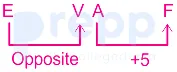
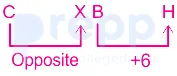
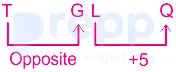
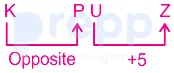 Paper & answer key PDF