Question 1archived
Select the option that is related to the third word in the same way as the second word is related to the first word.
Canada : Ottawa :: Cuba : ?
- A
Oslo
- B
Havana
- C
Madrid
- D
Bern
Show answer
B. HavanaUnderstanding the Analogy Question
This question asks us to find the relationship between the first pair of words, Canada and Ottawa, and then apply the same relationship to the third word, Cuba, to find the missing fourth word from the given options. This type of question tests our ability to understand relationships between pairs of words and extend that pattern.
Analysing the Relationship: Canada and Ottawa
Let's look at the relationship between Canada and Ottawa. Most people know that Ottawa is a significant city in Canada. Specifically, Ottawa is the capital city of Canada.
So, the relationship established in the first pair is:
Country : Capital City
Applying the Relationship to Cuba
Now we need to apply this same Country : Capital City relationship to the third word, Cuba. Cuba is a country. We are looking for its capital city.
The pattern is: Cuba : ?
Following the relationship, the missing word must be the capital city of Cuba.
Checking the Options
We need to identify which of the given options is the capital city of Cuba.
Option 1: Oslo
Option 2: Havana
Option 3: Madrid
Option 4: Bern
Let's check the capital cities of the countries related to these cities:
Oslo is the capital of Norway.
Havana is the capital of Cuba.
Madrid is the capital of Spain.
Bern is the capital of Switzerland.
Identifying the Correct Answer
Based on our analysis, Havana is the capital city of Cuba. This matches the relationship found in the first pair (Canada : Ottawa).
Therefore, the correct completion of the analogy is Canada : Ottawa :: Cuba : Havana.
Option 2, Havana, is the correct answer.
Revision Table: Country Capitals
Here is a table summarising the countries and their capitals mentioned or relevant to the options:
Country
Capital City
Canada
Ottawa
Cuba
Havana
Norway
Oslo
Spain
Madrid
Switzerland
Bern
Additional Information: Types of Analogies
Analogies can show various types of relationships, not just Country : Capital. Some common types include:
Part : Whole (e.g., Finger : Hand)
Synonym : Synonym (e.g., Happy : Joyful)
Antonym : Antonym (e.g., Hot : Cold)
Cause : Effect (e.g., Study : Knowledge)
Worker : Tool (e.g., Carpenter : Hammer)
Action : Object (e.g., Read : Book)
Producer : Product (e.g., Baker : Bread)
Understanding these common relationships helps solve analogy questions quickly and accurately. In this specific question about Canada and Cuba, the relationship was Country : Capital City.
Paper & answer key PDF ↗ Question 2archived
Akshar and Manvita recently celebrated their silver wedding anniversary and their older son Sanju’s birthday. If the age of Sanju 18 years after his parent’s marriage, and his age at their golden anniversary is in the ratio 5 ∶ 21, how many years after their marriage was Sanju born?
- A
8 years
- B
10 years
- C
15 years
- D
12 years
Show answer
A. 8 yearsUnderstanding the Age Ratio Problem
This problem involves understanding age relationships at different points in time, specifically relative to a couple's marriage anniversary. We are given information about Sanju's age at two specific points after his parents' marriage and the ratio of these ages. We need to find out how many years after their marriage Sanju was born.
Setting up the Age Variables
Let's denote the number of years after Akshar and Manvita's marriage that Sanju was born as \(Y\). This is the value we need to find.
Based on this definition:
At the time of the marriage (Year 0), Sanju's age would be \(0 - Y = -Y\) years. This indicates he was not yet born.
18 years after the marriage, Sanju's age would be \(18 - Y\) years. This is his actual age at that point.
50 years after the marriage (which is their golden anniversary), Sanju's age would be \(50 - Y\) years. This is his actual age at their golden anniversary.
Formulating the Age Ratio Equation
The question states that Sanju's age 18 years after his parents' marriage and his age at their golden anniversary (50 years after marriage) are in the ratio 5 ∶ 21.
We can write this as a mathematical equation:
\(\frac{\text{Sanju's age 18 years after marriage}}{\text{Sanju's age 50 years after marriage}} = \frac{5}{21}\)
Substituting the expressions for Sanju's age in terms of \(Y\):
\(\frac{18 - Y}{50 - Y} = \frac{5}{21}\)
Solving for the Unknown Variable
Now we need to solve the equation for \(Y\). We can do this by cross-multiplication:
\(21 \times (18 - Y) = 5 \times (50 - Y)\)
Distribute the numbers on both sides:
\((21 \times 18) - (21 \times Y) = (5 \times 50) - (5 \times Y)\)
\(378 - 21Y = 250 - 5Y\)
Now, we want to isolate the variable \(Y\). Let's move the terms involving \(Y\) to one side and the constant terms to the other side. Add \(21Y\) to both sides:
\(378 = 250 - 5Y + 21Y\)
\(378 = 250 + 16Y\)
Subtract 250 from both sides:
\(378 - 250 = 16Y\)
\(128 = 16Y\)
Finally, divide by 16 to find the value of \(Y\):
\(Y = \frac{128}{16}\)
\(Y = 8\)
So, Sanju was born 8 years after his parents' marriage.
Verifying the Answer
Let's check if this answer holds true based on the given ratio:
If Sanju was born 8 years after marriage, his age 18 years after marriage would be \(18 - 8 = 10\) years.
His age 50 years after marriage (golden anniversary) would be \(50 - 8 = 42\) years.
The ratio of these ages is \(10 : 42\).
Let's simplify this ratio:
\(\frac{10}{42} = \frac{10 \div 2}{42 \div 2} = \frac{5}{21}\)
The calculated ratio \(5:21\) matches the ratio given in the question. This confirms our answer is correct.
Conclusion
Sanju was born 8 years after his parents' marriage.
Event
Years after Marriage
Sanju's Age (if born Y years after marriage)
Marriage
0
\(-Y\)
Sanju's birth
\(Y\)
0
18 years after marriage
18
\(18 - Y\)
Golden Anniversary
50
\(50 - Y\)
Revision Table: Age Ratio Problems & Anniversaries
Silver Anniversary: Marks 25 years of marriage.
Golden Anniversary: Marks 50 years of marriage.
Age at a Future Time: If current age is A, age after T years is A + T.
Age Relative to an Event: If born Y years *after* an event, age T years after the event is T - Y.
Ratio Problems: Set up a fraction representing the ratio and solve the resulting equation, often by cross-multiplication.
Additional Information: Solving Age Word Problems
Age word problems often require setting up equations based on relationships between people's ages at different points in time. It's crucial to define your variables clearly. For example, you might define a variable as a person's current age, or the number of years ago/hence an event occurred. In this specific problem, defining the variable as the time elapsed between the marriage and Sanju's birth was key. Always check your answer by plugging it back into the original problem statement to ensure it satisfies all conditions, like the given age ratio.
Paper & answer key PDF ↗ Question 3archived
Select the option in which the numbers are NOT related in the same way as are the numbers of the following set.
(64, 91, 118)
- A
(46, 73, 101)
- B
(48, 75, 102)
- C
(72, 99, 126)
- D
(45, 72, 99)
Show answer
A. (46, 73, 101)Understanding Number Relationships in Sets
The question asks us to identify the option where the numbers in the set do NOT follow the same relationship as the numbers in the given set (64, 91, 118).
Analyzing the Given Set (64, 91, 118)
Let's examine the relationship between the numbers in the first set (64, 91, 118). We can look for a common difference or a pattern between consecutive numbers.
Difference between the second and first number: \(91 - 64 = 27\)
Difference between the third and second number: \(118 - 91 = 27\)
The pattern in the given set is that each subsequent number is obtained by adding 27 to the previous number. There is a constant difference of 27 between the consecutive numbers.
Checking the Relationship in the Options
Now we will check each option to see which one does NOT follow this pattern of adding 27.
Option 1: (46, 73, 101)
Difference between the second and first number: \(73 - 46 = 27\)
Difference between the third and second number: \(101 - 73 = 28\)
In this set, the difference is 27 and then 28. The difference is not constant. This set does NOT follow the pattern of adding 27 consistently.
Option 2: (48, 75, 102)
Difference between the second and first number: \(75 - 48 = 27\)
Difference between the third and second number: \(102 - 75 = 27\)
In this set, the difference is consistently 27. This set follows the pattern.
Option 3: (72, 99, 126)
Difference between the second and first number: \(99 - 72 = 27\)
Difference between the third and second number: \(126 - 99 = 27\)
In this set, the difference is consistently 27. This set follows the pattern.
Option 4: (45, 72, 99)
Difference between the second and first number: \(72 - 45 = 27\)
Difference between the third and second number: \(99 - 72 = 27\)
In this set, the difference is consistently 27. This set follows the pattern.
Identifying the Set That is NOT Related
Based on our analysis:
The given set (64, 91, 118) has a common difference of 27.
Option 2 (48, 75, 102) has a common difference of 27.
Option 3 (72, 99, 126) has a common difference of 27.
Option 4 (45, 72, 99) has a common difference of 27.
Option 1 (46, 73, 101) does NOT have a common difference of 27 (the differences are 27 and 28).
Therefore, the option in which the numbers are NOT related in the same way as the given set is Option 1.
Set
Difference 1
Difference 2
Follows Pattern (+27)?
(64, 91, 118)
\(91 - 64 = 27\)
\(118 - 91 = 27\)
Yes
(46, 73, 101)
\(73 - 46 = 27\)
\(101 - 73 = 28\)
No
(48, 75, 102)
\(75 - 48 = 27\)
\(102 - 75 = 27\)
Yes
(72, 99, 126)
\(99 - 72 = 27\)
\(126 - 99 = 27\)
Yes
(45, 72, 99)
\(72 - 45 = 27\)
\(99 - 72 = 27\)
Yes
Conclusion
The set (46, 73, 101) does not exhibit the consistent difference of 27 found in the original set and the other options. Hence, it is the set that is NOT related in the same way.
Revision Table: Number Series and Sets
Understanding number series and relationships within sets is key for these types of questions. This table summarizes the analysis:
Set Examined
Identified Relationship
Match with Original Set (Add 27)?
Original Set (64, 91, 118)
Add 27
Base case
Option 1 (46, 73, 101)
Add 27, then Add 28
No
Option 2 (48, 75, 102)
Add 27
Yes
Option 3 (72, 99, 126)
Add 27
Yes
Option 4 (45, 72, 99)
Add 27
Yes
Additional Information: Analyzing Number Patterns
Questions involving number sets often require identifying the mathematical relationship between the numbers. Common relationships include:
Arithmetic Progression: A constant difference between consecutive terms (like adding or subtracting the same number). This was the case here (+27).
Geometric Progression: A constant ratio between consecutive terms (like multiplying or dividing by the same number).
Differences of Differences: Sometimes the difference between consecutive terms itself forms an arithmetic progression.
Squares or Cubes: Numbers might be related to perfect squares or cubes.
Combinations: Patterns can involve combinations of operations, like multiplying and then adding.
To solve these problems, it's helpful to calculate the differences between consecutive numbers first, as arithmetic progressions are very common in such questions. If the first differences aren't constant, check the differences of the differences, or consider other patterns like multiplication or division.
Paper & answer key PDF ↗ Question 4archived
Select the option in which the words share the same relationship as that shared by the given pair of words.
Tintometer : Colour
- A
Planimeter : Pressure
- B
Spirometer : Speed
- C
Protractor : Angles
- D
Viscometer : Wind
Show answer
C. Protractor : AnglesUnderstanding the Analogy: Tintometer and Colour
The question asks us to find an option where the pair of words shares the same relationship as 'Tintometer : Colour'. To solve this, we first need to understand the relationship between a Tintometer and Colour.
A Tintometer is a scientific instrument used to measure, quantify, and analyze Colour. It provides a standardized way to assess the colour of liquids, solids, or surfaces.
So, the relationship between 'Tintometer' and 'Colour' is Instrument : What it Measures.
Analyzing the Options Based on Instrument and Measurement
Now, let's examine each option to see which pair fits the 'Instrument : What it Measures' relationship.
Option 1: Planimeter : Pressure
A Planimeter is an instrument used for measuring the area of a two-dimensional shape on a map or drawing. It measures area, not pressure. So, this pair does not fit the relationship.
Option 2: Spirometer : Speed
A Spirometer is an instrument used for measuring the volume of air inhaled into and exhaled from the lungs. It measures lung capacity or volume, not speed. So, this pair does not fit the relationship.
Option 3: Protractor : Angles
A Protractor is an instrument used for measuring or drawing Angles. This pair fits the relationship 'Instrument : What it Measures'.
Option 4: Viscometer : Wind
A Viscometer is an instrument used for measuring the viscosity (thickness) of a fluid. It measures viscosity, not wind. So, this pair does not fit the relationship.
Conclusion: Identifying the Correct Analogy
Comparing the relationships, only the pair 'Protractor : Angles' demonstrates the same relationship as 'Tintometer : Colour', which is 'Instrument : What it Measures'.
Therefore, the correct option is Protractor : Angles.
Analogy Relationship Summary
Original Pair
Relationship
Tintometer : Colour
Instrument : What it Measures
Option Analysis
Option
Instrument
Stated Measurement
Actual Measurement
Fits Relationship?
Planimeter : Pressure
Planimeter
Pressure
Area
No
Spirometer : Speed
Spirometer
Speed
Lung Volume/Capacity
No
Protractor : Angles
Protractor
Angles
Angles
Yes
Viscometer : Wind
Viscometer
Wind
Viscosity
No
Revision Table: Analogy Concepts
Understanding analogies involves identifying the core relationship between the given terms and finding another pair with the same relationship. Common analogy types include:
Part : Whole (e.g., Finger : Hand)
Cause : Effect (e.g., Rain : Flood)
Synonym : Synonym (e.g., Happy : Joyful)
Antonym : Antonym (e.g., Hot : Cold)
Worker : Tool (e.g., Carpenter : Hammer)
Instrument : Measurement (as seen in this question)
Additional Information: Common Measuring Instruments
Here are a few more examples of instruments and what they measure:
Ammeter : Electric Current
Barometer : Atmospheric Pressure
Thermometer : Temperature
Odometer : Distance
Anemometer : Wind Speed
Spectrometer : Properties of light (spectrum)
Recognizing common instruments and their functions is helpful for solving such analogy questions.
Paper & answer key PDF ↗ Question 5archived
The sequence of folding a piece of paper and the manner in which the folded paper has been cut is shown in the following figures. How would this paper look when unfolded?

- A
Option A (shown in image)
- B
Option B (shown in image)
- C
Option C (shown in image)
- D
Option D (shown in image)
Show answer
C. Option C (shown in image)The sequence of folding a piece of paper and the manner in which the folded paper has been cut is shown and the paper looks when unfolded:-
Hence, "option 3" is the correct answer.
 Paper & answer key PDF ↗
 Question 6archived
Select the cubes that can be formed by folding the given sheet along the lines.
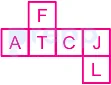
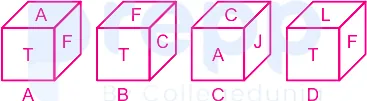
- A
Only B and C
- B
Only A, B and C
- C
Only A and B
- D
Only A, B and D
Show answer
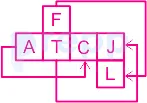
C. Only A and BThe logic followed here is:-
The A is opposite to C, T is the opposite to J and F is the opposite to L.
Which is given below:-
In the dice only one side of the letter is present.
I n figure A:-
Only A, F, and T are present in which there is no opposite pair present. So, it can be formed.
In figure B:
Only C, F, and T are present in which there is no opposite pair present . So, it can be formed.
In figure C:-
Only C, A, and J are present in which A and C are opposite pairs present. So, it can not be formed.
In figure D:-
Only T, L, and F are present in which L and F are opposite pairs present. So, it can not be formed.
Hence, "option 3" is the correct answer.
 Paper & answer key PDF ↗
 Question 7archived
Select the letter-cluster from among the given options that can replace the question mark (?) in the following series.
MEND, PHJZ, SKFV, VNBR, ?
- A
YQXN
- B
YQZM
- C
YJYN
- D
YRXO
Show answer
A. YQXNAnalyzing the Letter Series Pattern
This question asks us to find the next term in a series of letter clusters: MEND, PHJZ, SKFV, VNBR, ?. To solve this, we need to look for a pattern in the sequence of letters at each position within the clusters.
Step-by-Step Pattern Analysis
Let's analyze the pattern for each position (first, second, third, and fourth letter) separately.
First Letter Pattern
The first letters are M, P, S, V. Let's find their positions in the alphabet:
M is the 13th letter.
P is the 16th letter.
S is the 19th letter.
V is the 22nd letter.
The differences between consecutive letter positions are:
P - M: $16 - 13 = 3$
S - P: $19 - 16 = 3$
V - S: $22 - 19 = 3$
There is a consistent addition of 3 to the letter position. To find the next first letter, we add 3 to the position of V (22): $22 + 3 = 25$. The 25th letter is Y.
Second Letter Pattern
The second letters are E, H, K, N. Let's find their positions:
E is the 5th letter.
H is the 8th letter.
K is the 11th letter.
N is the 14th letter.
The differences between consecutive letter positions are:
H - E: $8 - 5 = 3$
K - H: $11 - 8 = 3$
N - K: $14 - 11 = 3$
There is a consistent addition of 3 to the letter position. To find the next second letter, we add 3 to the position of N (14): $14 + 3 = 17$. The 17th letter is Q.
Third Letter Pattern
The third letters are N, J, F, B. Let's find their positions:
N is the 14th letter.
J is the 10th letter.
F is the 6th letter.
B is the 2nd letter.
The differences between consecutive letter positions are:
J - N: $10 - 14 = -4$
F - J: $6 - 10 = -4$
B - F: $2 - 6 = -4$
There is a consistent subtraction of 4 from the letter position. To find the next third letter, we subtract 4 from the position of B (2). When we subtract and go below A (position 1), we wrap around from Z (position 26). Subtracting 4 from 2: $2 - 4 = -2$. Wrapping around from 26: $26 + (-2) = 24$. The 24th letter is X.
Fourth Letter Pattern
The fourth letters are D, Z, V, R. Let's find their positions:
D is the 4th letter.
Z is the 26th letter.
V is the 22nd letter.
R is the 18th letter.
The differences between consecutive letter positions are (treating Z as 26 or 0 for subtraction from D):
Z - D: $26 - 4 = 22$ (or $4 - 4 = 0$, which is Z) - It seems the pattern is subtracting 4. Let's confirm with others.
V - Z: $22 - 26 = -4$ (or $22 - 0 = 22$ which doesn't fit. Let's use wrap around. 26 is position 0/26. 22 is position -4 from 26).
R - V: $18 - 22 = -4$
There is a consistent subtraction of 4 from the letter position. To find the next fourth letter, we subtract 4 from the position of R (18): $18 - 4 = 14$. The 14th letter is N.
Combining the Patterns
Based on our analysis:
The next first letter is Y.
The next second letter is Q.
The next third letter is X.
The next fourth letter is N.
Putting these together, the next letter cluster in the series is YQXN.
Let's summarize the patterns:
Position
Pattern
Next Letter
First
Add 3 to letter position
Y (25th)
Second
Add 3 to letter position
Q (17th)
Third
Subtract 4 from letter position (wrap around A-Z)
X (24th)
Fourth
Subtract 4 from letter position (wrap around A-Z)
N (14th)
Therefore, the missing term in the series MEND, PHJZ, SKFV, VNBR, ? is YQXN.
Revision Table: Letter Series Patterns
Original Term
First Letter
Second Letter
Third Letter
Fourth Letter
MEND
M (13)
E (5)
N (14)
D (4)
PHJZ
P (16)
H (8)
J (10)
Z (26)
SKFV
S (19)
K (11)
F (6)
V (22)
VNBR
V (22)
N (14)
B (2)
R (18)
Next Term (Calculation)
$22+3=25 \implies$ Y
$14+3=17 \implies$ Q
$2-4=-2 \implies 26-2=24 \implies$ X
$18-4=14 \implies$ N
Next Term
Y
Q
X
N
Additional Information on Series Reasoning
Series reasoning questions, often found in logical and verbal reasoning tests, involve identifying patterns in a sequence of numbers, letters, or figures to predict the next term. For letter series, common patterns include:
Adding or subtracting a constant value to the alphabetical position of each letter.
Adding or subtracting a value that increases or decreases sequentially.
Alternating patterns across terms or within a single term (like the pattern for each letter position being different, as seen in this problem).
Skipping a fixed number of letters in the alphabet.
Patterns based on vowels or consonants.
Reverse alphabetical order or patterns involving wrapping around from A to Z or Z to A.
To solve these problems, it's helpful to write down the alphabetical position of each letter and look for arithmetic progressions or other simple sequences. Sometimes, the pattern might involve combining different rules for different parts of the term, as demonstrated by the mix of +3 and -4 patterns in this specific letter cluster series.
Paper & answer key PDF ↗ Question 8archived
Select the correct mirror image of the given combination when the mirror is placed at 'PQ' as shown.

- A
Option A (shown in image)
- B
Option B (shown in image)
- C
Option C (shown in image)
- D
Option D (shown in image)
Show answer
Question 9archived
Which two signs should be interchanged to make the given equation correct?
156 - 13 + 9 × 18 ÷ 5 = 169
- A
÷ and +
- B
× and ÷
- C
× and -
- D
÷ and -
Show answer
D. ÷ and -Finding the Correct Sign Interchange in a Mathematical Equation
The question asks us to determine which pair of mathematical operation signs should be interchanged in the given equation to make it correct. The equation is:
\(156 - 13 + 9 \times 18 \div 5 = 169\)
We need to test each option provided by swapping the specified signs and then evaluating the resulting equation using the BODMAS (or PEMDAS) rule, which dictates the order of operations: Brackets (or Parentheses), Orders (or Exponents), Division and Multiplication (from left to right), Addition and Subtraction (from left to right).
Testing Option 1: Interchange \(\div\) and \(+\)
If we interchange the division (\(\div\)) and addition (\(+\)) signs, the equation becomes:
\(156 - 13 \div 9 \times 18 + 5\)
Let's evaluate this using BODMAS:
First, Division: \(13 \div 9 \approx 1.444...\) (Since 13 is not perfectly divisible by 9, this might not be the correct option if the result on the right side is an integer). Let's keep it as a fraction for now: \(13/9\).
Next, Multiplication: \(\frac{13}{9} \times 18 = 13 \times \frac{18}{9} = 13 \times 2 = 26\)
Now, Subtraction and Addition from left to right: \(156 - 26 + 5 = 130 + 5 = 135\)
The result is 135. Since \(135 \neq 169\), this option is incorrect.
Testing Option 2: Interchange \(\times\) and \(\div\)
If we interchange the multiplication (\(\times\)) and division (\(\div\)) signs, the equation becomes:
\(156 - 13 + 9 \div 18 \times 5\)
Let's evaluate this using BODMAS:
First, Division: \(9 \div 18 = \frac{9}{18} = \frac{1}{2} = 0.5\)
Next, Multiplication: \(0.5 \times 5 = 2.5\)
Now, Subtraction and Addition from left to right: \(156 - 13 + 2.5 = 143 + 2.5 = 145.5\)
The result is 145.5. Since \(145.5 \neq 169\), this option is incorrect.
Testing Option 3: Interchange \(\times\) and \(-\)
If we interchange the multiplication (\(\times\)) and subtraction (\(-\)) signs, the equation becomes:
\(156 \times 13 + 9 - 18 \div 5\)
Let's evaluate this using BODMAS:
First, Division: \(18 \div 5 = 3.6\)
Next, Multiplication: \(156 \times 13 = 2028\)
Now, Addition and Subtraction from left to right: \(2028 + 9 - 3.6 = 2037 - 3.6 = 2033.4\)
The result is 2033.4. Since \(2033.4 \neq 169\), this option is incorrect.
Testing Option 4: Interchange \(\div\) and \(-\)
If we interchange the division (\(\div\)) and subtraction (\(-\)) signs, the equation becomes:
\(156 \div 13 + 9 \times 18 - 5\)
Let's evaluate this using BODMAS:
First, Division: \(156 \div 13\)
We can perform the division: \(156 = 13 \times 12\), so \(156 \div 13 = 12\)
Next, Multiplication: \(9 \times 18 = 162\)
Now, Addition and Subtraction from left to right: \(12 + 162 - 5 = 174 - 5 = 169\)
The result is 169. Since \(169 = 169\), this equation is correct after interchanging the division (\(\div\)) and subtraction (\(-\)) signs.
Therefore, interchanging the \(\div\) and \(-\) signs makes the equation correct.
Verification Summary
Original Equation
\(156 - 13 + 9 \times 18 \div 5\)
Result: \(175.4\)
\(175.4 \neq 169\) (Incorrect)
Option 1 Swap (\(\div, +\))
\(156 - 13 \div 9 \times 18 + 5\)
Result: \(135\)
\(135 \neq 169\) (Incorrect)
Option 2 Swap (\(\times, \div\))
\(156 - 13 + 9 \div 18 \times 5\)
Result: \(145.5\)
\(145.5 \neq 169\) (Incorrect)
Option 3 Swap (\(\times, -\))
\(156 \times 13 + 9 - 18 \div 5\)
Result: \(2033.4\)
\(2033.4 \neq 169\) (Incorrect)
Option 4 Swap (\(\div, -\))
\(156 \div 13 + 9 \times 18 - 5\)
Result: \(169\)
\(169 = 169\) (Correct)
Revision Table: Mathematical Operations and BODMAS
Operation
Symbol
Order in BODMAS/PEMDAS
Description
Brackets/Parentheses
(), [], {}
1st
Solve operations inside brackets first.
Orders/Exponents
\(x^n\), \(\sqrt{x}\)
2nd
Calculate powers and roots next.
Division
\(\div\), /
3rd (Left to right with Multiplication)
Perform division.
Multiplication
\(\times\), *
3rd (Left to right with Division)
Perform multiplication.
Addition
+
4th (Left to right with Subtraction)
Perform addition.
Subtraction
-
4th (Left to right with Addition)
Perform subtraction.
Additional Information: Logic in Sign Interchange Problems
Sign interchange problems are common in logical reasoning and quantitative aptitude tests. They require careful application of the order of operations (BODMAS/PEMDAS). Here are some tips:
Always write down the new equation clearly after interchanging the signs.
Strictly follow the BODMAS/PEMDAS rule at each step.
Be careful with fractions or decimals if exact integers are expected in the result. Sometimes, a specific interchange will yield an integer result only if it's the correct one.
Systematically test each option. Do not guess.
Double-check calculations, especially with multiple operations involved.
These problems test your understanding of basic arithmetic operations and the rules governing their order.
Paper & answer key PDF ↗ Question 10archived
In a certain code language, ‘MINT’ is coded as ‘224’ and‘ FANCY’ is coded as ‘245’. How will ‘CONTOUR’ be coded in that language?
- A
259
- B
597
- C
301
- D
742
Show answer
D. 742This question involves identifying a pattern used to code words into numbers based on their letters. We need to decipher this pattern using the examples 'MINT' -> 224 and 'FANCY' -> 245, and then apply it to find the code for 'CONTOUR'.
Understanding the Letter Coding Logic
Coding questions like this often rely on the alphabetical positions of letters (e.g., A=1, B=2, C=3, ..., Z=26). We'll calculate these positions for the letters in the given words.
Decoding 'MINT' to 224
Let's find the alphabetical positions for the letters in 'MINT':
M is the 13th letter.
I is the 9th letter.
N is the 14th letter.
T is the 20th letter.
The word 'MINT' has 4 letters.
Now, let's calculate the sum of these positions:
Sum = $13 + 9 + 14 + 20 = 56$
Compare this sum (56) to the given code (224). We can see that $56 \times 4 = 224$. Notice that 4 is the number of letters in 'MINT'. This suggests a possible pattern.
Decoding 'FANCY' to 245
Let's verify this potential pattern with the word 'FANCY'.
Find the alphabetical positions for the letters in 'FANCY':
F is the 6th letter.
A is the 1st letter.
N is the 14th letter.
C is the 3rd letter.
Y is the 25th letter.
The word 'FANCY' has 5 letters.
Calculate the sum of these positions:
Sum = $6 + 1 + 14 + 3 + 25 = 49$
Now, let's test our pattern: (Sum of positions) $\times$ (Number of letters).
$49 \times 5 = 245$
This result matches the given code for 'FANCY', confirming our pattern.
Establishing the Coding Pattern
The consistent pattern identified is:
Coded Value = (Sum of the alphabetical positions of the letters) $\times$ (Total number of letters in the word)
Applying the Pattern to 'CONTOUR'
We will now use this established pattern to find the code for 'CONTOUR'.
First, list the alphabetical positions of the letters in 'CONTOUR':
C = 3
O = 15
N = 14
T = 20
O = 15
U = 21
R = 18
The word 'CONTOUR' has 7 letters.
Next, calculate the sum of these alphabetical positions:
Sum = $3 + 15 + 14 + 20 + 15 + 21 + 18 = 106$
Finally, apply the pattern by multiplying the sum by the number of letters:
Coded Value = $106 \times 7$
Final Calculation for 'CONTOUR'
Performing the multiplication:
$106 \times 7 = 742$
Thus, the word 'CONTOUR' would be coded as '742' using this logic.
Paper & answer key PDF ↗ Question 11archived
Select the option in which the numbers are related in the same way as are the numbers of the following set.
(12, 14, 143)
- A
(16, 10, 235)
- B
(15, 19, 252)
- C
(12, 18, 246)
- D
(17, 12, 134)
Show answer
B. (15, 19, 252)Solving Number Analogy Questions
Number analogy questions require you to identify the relationship or pattern between the numbers in a given set and then find an option set that follows the same relationship. Let's analyze the given set: (12, 14, 143).
Identifying the Pattern in (12, 14, 143)
Let the three numbers in the set be the first number ($x$), the second number ($y$), and the third number ($z$). For the set (12, 14, 143), we have $x=12$, $y=14$, and $z=143$. We need to find a mathematical relationship between $x$, $y$, and $z$. Let's explore some common possibilities:
Is $z$ a sum, difference, product, or division of $x$ and $y$? $12+14=26$, $14-12=2$, $12 \times 14=168$. None of these directly equal 143.
Is $z$ related to the squares or cubes of $x$ and $y$? $12^2=144$, $14^2=196$. $144$ is close to $143$. $144-1=143$. This uses only $x$. Does the second number, $y$, play a role?
Let's look closer at the product $x \times y = 168$. The difference between 168 and 143 is $168 - 143 = 25$. Is 25 related to 12 and 14? Not immediately obvious.
Consider operations involving modified $x$ and $y$. What if we subtract 1 from each number before multiplying? $(x-1)$ and $(y-1)$. Let's try $(x-1) \times (y-1)$:
$$(12-1) \times (14-1) = 11 \times 13$$
$$11 \times 13 = 143$$
This matches the third number in the given set! So, the relationship is: $z = (x-1) \times (y-1)$.
Applying the Pattern to Options
Now, we will apply the discovered relationship $z = (x-1) \times (y-1)$ to each of the given options to see which one follows the same rule.
Option Set ($x, y, z$)
Calculate $(x-1) \times (y-1)$
Result
Match $z$?
(16, 10, 235)
$(16-1) \times (10-1) = 15 \times 9$
135
$135 \neq 235$ (No)
(15, 19, 252)
$(15-1) \times (19-1) = 14 \times 18$
252
$252 = 252$ (Yes)
(12, 18, 246)
$(12-1) \times (18-1) = 11 \times 17$
187
$187 \neq 246$ (No)
(17, 12, 134)
$(17-1) \times (12-1) = 16 \times 11$
176
$176 \neq 134$ (No)
As shown in the table, only the option set (15, 19, 252) satisfies the relationship $(x-1) \times (y-1) = z$. Therefore, this option is related in the same way as the numbers of the set (12, 14, 143).
Revision Table: Key Concepts
Concept
Description
Relevance to Problem
Number Analogy
Finding a hidden mathematical or logical relationship within a set of numbers.
The core task of the question is to identify and apply a number analogy.
Pattern Identification
Analyzing data (numbers in this case) to find a consistent rule or sequence.
Crucial for discovering the rule $(x-1)(y-1)=z$ in the set (12, 14, 143).
Applying Rules
Testing a discovered pattern or rule on new data.
Essential for verifying which option set follows the same number analogy.
Additional Information: Strategies for Number Analogies
Solving number analogy problems often involves trying out different mathematical operations and combinations. Here are some common strategies:
Basic Operations: Look for sums, differences, products, or quotients between the numbers.
Squares and Cubes: Numbers close to perfect squares or cubes often indicate a pattern involving these.
Digit Operations: Sometimes the pattern involves the digits of the numbers (e.g., sum of digits, product of digits).
Position-Based Rules: The relationship might depend on the position of the numbers in the set (first, second, third).
Combinations: The pattern might involve a combination of operations, like the example here where we subtracted before multiplying.
Testing Options: Once you have a potential rule, test it quickly on the options to confirm. If it doesn't work for any option, rethink your initial pattern.
Practice with various types of number sets helps in quickly recognizing potential patterns in number analogy questions.
Paper & answer key PDF ↗ Question 12archived
Select the option that is related to the third number in the same way as the second number is related to the first number.
23 : 531 :: 27 : ?
- A
656
- B
802
- C
731
- D
573
Show answer
C. 731Solving Number Analogy Questions
Number analogy questions test your ability to find the relationship between a pair of numbers and apply that same relationship to another number to find a missing term. In this specific question, we are given the analogy 23 : 531 :: 27 : ?.
Analyzing the Relationship: 23 to 531
Let's look closely at the first pair of numbers, 23 and 531. We need to figure out how 23 is related to 531. Often, the relationship involves basic arithmetic operations, squares, cubes, or combinations thereof.
Consider squaring the first number: $\text{23}^2$.
$\text{23}^2 = 23 \times 23 = 529$.
The second number is 531. Let's see the difference between 531 and 529.
$531 - 529 = 2$.
So, the relationship seems to be: $\text{Second Number} = (\text{First Number})^2 + 2$.
Let's verify this relationship with the given pair:
$23^2 + 2 = 529 + 2 = 531$. This matches the given second number.
Applying the Relation to Find the Missing Number
Now, we apply the same relationship to the third number, 27, to find the missing number. The relationship is $(\text{Number})^2 + 2$.
The third number is 27.
We need to calculate $27^2 + 2$.
Calculate the square of 27: $\text{27}^2 = 27 \times 27$.
Let's calculate $27^2$:
Calculation
Result
$20 \times 20$
400
$20 \times 7$
140
$7 \times 20$
140
$7 \times 7$
49
Total ($400 + 140 + 140 + 49$)
729
$27^2 = 729$.
Now, apply the '+ 2' part of the relationship:
$729 + 2 = 731$.
Therefore, the missing number is 731.
Comparing with the Options
Let's check the given options:
Option 1: 656
Option 2: 802
Option 3: 731
Option 4: 573
Our calculated number, 731, matches Option 3.
Conclusion
The relationship between the numbers in the analogy 23 : 531 :: 27 : ? is that the second number is obtained by squaring the first number and adding 2. Applying this rule to 27, we get $27^2 + 2 = 729 + 2 = 731$.
Revision Table: Number Analogy Logic
First Pair
Relationship
Calculation
23 : 531
$n \rightarrow n^2 + 2$
$23^2 + 2 = 529 + 2 = 531$
Second Pair
Relationship
Calculation
27 : ?
$n \rightarrow n^2 + 2$
$27^2 + 2 = 729 + 2 = 731$
Additional Information: Types of Number Analogies
Number analogies can follow various patterns. Recognizing these common patterns helps in solving questions quickly:
Basic Operations: Addition, subtraction, multiplication, division.
Squares and Cubes: The second number might be the square or cube of the first, or a number close to it ($n^2 \pm k$, $n^3 \pm k$).
Prime Numbers: The numbers might follow a sequence of prime numbers or related operations.
Digit Operations: Sum or product of digits, reversing digits, etc.
Combinations: A mix of different operations.
Sequence based: The numbers might be part of a specific mathematical sequence.
Practicing different types of number analogy questions helps in identifying the pattern more easily during exams.
Paper & answer key PDF ↗ Question 13archived
Four number-pairs have been given, out of which three are alike in some manner and one is different. Select the number-pair that is different.
- A
28 ∶ 163
- B
22 ∶ 127
- C
27 ∶ 82
- D
16 ∶ 91
Show answer
C. 27 ∶ 82Understanding the Problem: Finding the Different Number Pair
The question asks us to identify the number-pair that is different from the other three among the given options. This type of problem tests our ability to recognize patterns and logical relationships between numbers.
We are given four pairs of numbers. Three of these pairs share a common rule or relationship between the first number and the second number. Our task is to find this common rule and then identify the pair that does not follow it.
Analyzing the Number Pairs to Discover the Pattern
Let's examine each number pair and try to find a mathematical operation or sequence of operations that connects the first number (\( N1 \)) to the second number (\( N2 \)).
Option 1: 28 ∶ 163
Let's look for a relationship between 28 and 163. We can try multiplication and addition/subtraction.
If we multiply 28 by a number to get close to 163:
\( 28 \times 5 = 140 \)
\( 28 \times 6 = 168 \)
163 is close to \( 28 \times 6 \). Let's see the difference: \( 168 - 163 = 5 \). So, the pattern could potentially be \( N2 = N1 \times 6 - 5 \).
Let's check this potential rule with other options.
Option 2: 22 ∶ 127
Applying the potential pattern \( N2 = N1 \times 6 - 5 \) to the pair (22, 127):
Calculation: \( 22 \times 6 - 5 = 132 - 5 = 127 \)
This matches the second number in the pair (127). So, this pair follows the rule \( N2 = N1 \times 6 - 5 \).
Option 3: 27 ∶ 82
Applying the potential pattern \( N2 = N1 \times 6 - 5 \) to the pair (27, 82):
Calculation: \( 27 \times 6 - 5 = 162 - 5 = 157 \)
The second number given in this pair is 82, which is not 157. This indicates that this pair does NOT follow the pattern \( N2 = N1 \times 6 - 5 \). This pair is likely the different one.
Let's quickly check if this pair follows a different, perhaps simpler, rule:
Calculation for Option 3: \( 27 \times 3 + 1 = 81 + 1 = 82 \)
This pair fits the pattern: \( N2 = N1 \times 3 + 1 \).
Option 4: 16 ∶ 91
Applying the first identified pattern \( N2 = N1 \times 6 - 5 \) to the pair (16, 91):
Calculation: \( 16 \times 6 - 5 = 96 - 5 = 91 \)
This matches the second number in the pair (91). So, this pair also follows the rule \( N2 = N1 \times 6 - 5 \).
Identifying the Different Number Pair Pattern
From our analysis, we can see that:
Options 1, 2, and 4 follow the rule: The second number is obtained by multiplying the first number by 6 and then subtracting 5. \( N2 = N1 \times 6 - 5 \).
Option 3 follows a different rule: The second number is obtained by multiplying the first number by 3 and then adding 1. \( N2 = N1 \times 3 + 1 \).
Since the question asks for the number-pair that is different, the pair that does not follow the common pattern is the answer.
Conclusion: The Different Number Pair
The number-pair that is different from the others is the one that follows a different pattern, which is 27 ∶ 82.
Number Pair
Relationship Formula
Calculation
Result
Follows \( N2 = N1 \times 6 - 5 \) Rule?
28 ∶ 163
\( N1 \times 6 - 5 \)
\( 28 \times 6 - 5 = 168 - 5 \)
163
Yes
22 ∶ 127
\( N1 \times 6 - 5 \)
\( 22 \times 6 - 5 = 132 - 5 \)
127
Yes
27 ∶ 82
\( N1 \times 6 - 5 \)
\( 27 \times 6 - 5 = 162 - 5 \)
157
No (Given 82)
16 ∶ 91
\( N1 \times 6 - 5 \)
\( 16 \times 6 - 5 = 96 - 5 \)
91
Yes
Revision Table: Key Concepts in Finding Different Number Pairs
Let's review the main steps used to solve problems like finding the different number pair.
Concept
Description
How it Applied Here
Pattern Recognition
Identifying the mathematical or logical rule connecting elements in a set.
We looked for a rule like \( N2 = f(N1) \) where f is a function (e.g., \( \times a + b \)).
Hypothesis Testing
Forming a potential rule based on one or two examples and testing it on others.
The potential rule \( N2 = N1 \times 6 - 5 \) was tested across all options.
Exception Identification
Finding the element that does not follow the rule that applies to the majority.
The pair (27 ∶ 82) was the exception to the common rule.
Additional Information: Solving Number Pattern Reasoning Questions
To improve your skills in solving number pattern and number pair reasoning problems, keep the following points in mind:
Practice Variety: Familiarize yourself with different types of patterns (arithmetic, geometric, squares, cubes, prime numbers, digit operations, etc.).
Systematic Approach: Start with simple operations (addition, subtraction, multiplication, division) and then move to more complex ones or combinations.
Look for Relationships: Consider the difference, ratio, sum, product, or relationship based on squares/cubes between the numbers in a pair.
Test All Options: Once you find a potential pattern, always test it against all given options to confirm it's the common pattern and identify the outlier.
Time Management: For competitive exams, practice solving these quickly. If a pattern isn't obvious, move on and come back if time permits.
Paper & answer key PDF ↗ Question 14archived
Select the number from among the given options that can replace the question mark (?) in the following series.
3, 20, 38, 52, 75, 82, 114, ?
- A
110
- B
118
- C
104
- D
101
Show answer
A. 110Analyzing the Given Number Series
The question asks us to find the number that replaces the question mark in the series: 3, 20, 38, 52, 75, 82, 114, ?
To solve a number series problem, we need to identify the underlying pattern or rule that governs the sequence of numbers. Let's examine the differences between consecutive terms first.
Step-by-Step Pattern Identification
Let's calculate the differences between each term and the one preceding it:
$20 - 3 = 17$
$38 - 20 = 18$
$52 - 38 = 14$
$75 - 52 = 23$
$82 - 75 = 7$
$114 - 82 = 32$
The differences between consecutive terms are 17, 18, 14, 23, 7, 32. This sequence of differences does not appear to follow a simple arithmetic or geometric pattern directly.
When the differences between consecutive terms don't show a clear pattern, sometimes the pattern exists between alternate terms.
Examining Alternate Series Patterns
Let's divide the original series into two separate series based on the position of the terms:
Position
Term
Alternate Series
1st
3
Series 1 (Odd positions): 3, 38, 75, 114
2nd
20
Series 2 (Even positions): 20, 52, 82, ?
3rd
38
4th
52
5th
75
6th
82
7th
114
8th
?
Analyzing Series 1 (Odd Positions)
The terms in odd positions are: 3, 38, 75, 114.
Let's find the differences between consecutive terms in this series:
$38 - 3 = 35$
$75 - 38 = 37$
$114 - 75 = 39$
The differences are 35, 37, 39. This sequence is an arithmetic progression with a common difference of 2 ($37 - 35 = 2$, $39 - 37 = 2$).
Analyzing Series 2 (Even Positions)
The terms in even positions are: 20, 52, 82, ?.
Let's find the differences between consecutive terms in this series:
$52 - 20 = 32$
$82 - 52 = 30$
The differences are 32, 30. This sequence is an arithmetic progression with a common difference of -2 ($30 - 32 = -2$).
Calculating the Missing Number
The missing number is the next term in Series 2 (Even positions). Following the pattern observed in the differences for Series 2 (32, 30), the next difference should be $30 + (-2) = 28$.
To find the next term in Series 2, we add this difference to the last known term (82):
Missing term $= 82 + 28 = 110$
So, the number that replaces the question mark is 110.
Revision Table: Key Concepts in Number Series
Concept
Explanation
Number Series
A sequence of numbers arranged based on a specific rule or pattern.
Consecutive Terms
Numbers that are next to each other in the series.
Alternate Terms
Terms that are separated by one or more terms in the original series (e.g., 1st, 3rd, 5th term).
Arithmetic Progression (AP)
A sequence where the difference between any two consecutive terms is constant (the common difference).
Interwoven Series
A pattern where two or more separate series are combined into a single sequence.
Additional Information: Solving Number Series Problems
Finding the pattern in a number series often requires patience and trying different methods. Here are some common strategies:
Calculate differences between consecutive terms. If no pattern is clear, calculate differences of differences (second-order differences).
Calculate ratios between consecutive terms to check for geometric progression.
Examine alternate terms for separate patterns.
Look for patterns involving squares, cubes, or prime numbers.
Consider operations like addition, subtraction, multiplication, division, or a combination of these.
Sometimes the pattern relates a term to more than one preceding term (e.g., Fibonacci sequence).
Practicing with various types of number series problems helps in developing the intuition to quickly spot the pattern.
Paper & answer key PDF ↗ Question 15archived
Read the given statements and conclusions carefully. Assuming that the information given in the statements is true, even if it appears to be at variance with commonly known facts, decide which of the given conclusions logically follow(s) from the statements.
Statements:
All pencils are erasers.
Some sharpeners are pencils.
Conclusions:
I. Some sharpeners are erasers.
II. All pencils are sharpeners.
- A
Only conclusion I follows
- B
Both conclusions I and II follow
- C
Neither conclusion I nor II follows
- D
Only conclusion II follows
Show answer
A. Only conclusion I followsLet's analyze the given statements and conclusions using logical reasoning. We assume the statements are true, even if they don't match real-world facts.
Analyzing the Statements
We have two statements:
Statement 1: All pencils are erasers. This is a universal affirmative statement. It means that the set of pencils is a subset of the set of erasers. If something is a pencil, it must also be an eraser. We can represent this as: \(\text{Pencils} \subset \text{Erasers}\) or \(\text{All P are E}\).
Statement 2: Some sharpeners are pencils. This is a particular affirmative statement. It indicates that there is at least one sharpener that is also a pencil. It shows an overlap between the set of sharpeners and the set of pencils. We can represent this as: \(\text{Some S are P}\).
Evaluating the Conclusions
Now, let's evaluate each conclusion based on the truth of the statements.
Conclusion I: Some sharpeners are erasers.
We know from Statement 2 that 'Some sharpeners are pencils'. This means there is at least one element that is both a sharpener and a pencil. Let's call this element 'x'. So, 'x' is a sharpener AND 'x' is a pencil.
From Statement 1, we know that 'All pencils are erasers'. Since 'x' is a pencil, it must also be an eraser.
So, we have found an element 'x' which is a sharpener (from Statement 2) and is also an eraser (derived from Statement 1 and the fact that 'x' is a pencil).
Therefore, 'Some sharpeners are erasers' logically follows from the given statements.
This can be seen using a simple deductive step:
Some S are P (Statement 2)
All P are E (Statement 1)
Therefore, Some S are E (Conclusion I follows)
Conclusion II: All pencils are sharpeners.
Statement 2 tells us that 'Some sharpeners are pencils'. This implies that the set of sharpeners and the set of pencils overlap. However, it does NOT tell us that every pencil is also a sharpener. There might be pencils that are not sharpeners.
Statement 1 tells us about the relationship between pencils and erasers, which is not directly helpful in determining if all pencils are sharpeners.
Based only on the statements, we cannot conclude that 'All pencils are sharpeners'. Statement 2 only guarantees the existence of *at least one* sharpener that is a pencil, or equivalently, *at least one* pencil that is a sharpener. It doesn't give information about *all* pencils.
Therefore, 'All pencils are sharpeners' does not logically follow from the given statements.
Summary of Conclusions
Conclusion I: Some sharpeners are erasers. (Follows)
Conclusion II: All pencils are sharpeners. (Does not follow)
Based on our analysis, only Conclusion I logically follows from the given statements.
Statement/Conclusion
Relationship
Follows?
Statement 1
All P are E
Given as true
Statement 2
Some S are P
Given as true
Conclusion I
Some S are E
Yes (Derived from Statement 2 + Statement 1)
Conclusion II
All P are S
No (Statement 2 only says Some S are P/Some P are S)
Logical Reasoning Revision Table
Statement Type
Representation
Example
All A are B (Universal Affirmative)
\(A \subset B\)
All dogs are mammals.
No A are B (Universal Negative)
\(A \cap B = \emptyset\)
No fish are birds.
Some A are B (Particular Affirmative)
\(A \cap B \neq \emptyset\)
Some students are athletes.
Some A are not B (Particular Negative)
\(A \setminus B \neq \emptyset\)
Some fruits are not sweet.
Additional Information on Syllogisms
This problem is an example of a categorical syllogism, although not a standard form with exactly three terms and two premises leading to one conclusion in that specific structure. The logic used involves linking two premises to draw a conclusion. The structure here is similar to a type of syllogism where the middle term (Pencils) connects the other two terms (Sharpeners and Erasers).
Key points in syllogistic reasoning:
The conclusion must logically flow *only* from the statements. No outside knowledge is allowed.
Universal statements (\(\text{All}\), \(\text{No}\)) refer to every member of a category.
Particular statements (\(\text{Some}\)) refer to at least one member of a category.
'Some' means 'at least one' and potentially 'all'. However, you cannot assume 'all' from 'some'.
If a conclusion is true in *every possible scenario* where the statements are true, then it logically follows. If there is *at least one possible scenario* where the statements are true but the conclusion is false, then the conclusion does not follow.
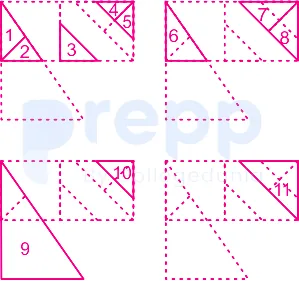
Paper & answer key PDF ↗ Question 16archived
How many triangles are there in the given figure?

- A
12
- B
11
- C
13
- D
10
Show answer
B. 11The figure of triangles are given below:-
The total number of triangles = 11.
Hence, "option 2" is the correct answer.
 Paper & answer key PDF ↗
 Question 17archived
Select the figure from among the given options that can replace the question mark (?) in the following series.

- A
Option A (shown in image)
- B
Option B (shown in image)
- C
Option C (shown in image)
- D
Option D (shown in image)
Show answer
Question 18archived
Select the option figure in which the given figure is embedded ( rotation is NOT allowed ).

- A
Option A (shown in image)
- B
Option B (shown in image)
- C
Option C (shown in image)
- D
Option D (shown in image)
Show answer
B. Option B (shown in image)The option in which the given figure is embedded:-
Hence, "option 2" is the correct answer.
Important Points
Do not get tensed by the complexity of the figures.
Carefully understand the structure of the given question figure.
The embedded figure may not be of exact size. It may be small or big .
Sometimes the rotation or reflection of the figures may be confusing.
So think wisely before selecting the answer.

 Paper & answer key PDF ↗
 Question 19archived
Four letter-clusters have been given, out of which three are alike in some manner and one is different. Select the letter-cluster that is different.
- A
FHWU
- B
RDMI
- C
JNCQ
- D
TFKG
Show answer
A. FHWUFinding the Different Letter Cluster
In this question, we are given four letter clusters and asked to identify the one that is different from the rest based on a certain pattern or rule. To solve such problems, we usually look at the position of the letters in the English alphabet (A=1, B=2, ..., Z=26).
Analysing the Letter Clusters by Position
Let's write down the position number for each letter in the given clusters:
Cluster
Letter 1
Letter 2
Letter 3
Letter 4
FHWU
F (6)
H (8)
W (23)
U (21)
RDMI
R (18)
D (4)
M (13)
I (9)
JNCQ
J (10)
N (14)
C (3)
Q (17)
TFKG
T (20)
F (6)
K (11)
G (7)
Identifying the Pattern: Sum of Letter Positions
Let's try summing the numerical positions of the letters in each cluster:
FHWU: Sum = \(6 + 8 + 23 + 21\)
Calculation: \(6 + 8 = 14\), \(14 + 23 = 37\), \(37 + 21 = 58\)
Sum for FHWU is 58.
RDMI: Sum = \(18 + 4 + 13 + 9\)
Calculation: \(18 + 4 = 22\), \(22 + 13 = 35\), \(35 + 9 = 44\)
Sum for RDMI is 44.
JNCQ: Sum = \(10 + 14 + 3 + 17\)
Calculation: \(10 + 14 = 24\), \(24 + 3 = 27\), \(27 + 17 = 44\)
Sum for JNCQ is 44.
TFKG: Sum = \(20 + 6 + 11 + 7\)
Calculation: \(20 + 6 = 26\), \(26 + 11 = 37\), \(37 + 7 = 44\)
Sum for TFKG is 44.
Conclusion based on the Pattern
We observe that for the letter clusters RDMI, JNCQ, and TFKG, the sum of the positional values of their letters is 44. However, for the letter cluster FHWU, the sum of the positional values is 58. This difference in the sum makes FHWU the odd one out.
Therefore, the letter cluster that is different is FHWU.
Revision Table: Letter Position Sums
Letter Cluster
Letter Positions
Sum of Positions
Pattern Observation
FHWU
6, 8, 23, 21
58
Different Sum
RDMI
18, 4, 13, 9
44
Same Sum
JNCQ
10, 14, 3, 17
44
Same Sum
TFKG
20, 6, 11, 7
44
Same Sum
Additional Information on Letter Reasoning
Letter reasoning questions often test your ability to identify patterns based on:
Positional value of letters (A=1, B=2, etc.)
Difference or sum between adjacent letters
Difference or sum between alternate letters
Opposite letters in the alphabet (A is opposite Z, B is opposite Y, etc. Sum of positions is 27)
Vowel/Consonant patterns
Skipping of letters in a sequence
Combination of numerical and alphabetical series logic
Practicing different types of letter series and letter cluster questions helps in quickly identifying the underlying pattern.
Paper & answer key PDF ↗ Question 20archived
Four words have been given, out of which three are alike in some manner and one is different. Select the word that is different.
- A
Ophthalmology
- B
Myology
- C
Ecology
- D
Dermatology
Show answer
C. EcologyFinding the Different Branch of Study
In this type of question, we are given a set of words, and we need to identify the one word that does not share a common characteristic or relationship with the other words. Let's examine the meaning of each word provided:
Ophthalmology: This is a branch of medicine that deals with the anatomy, functions, and diseases of the eye. A medical doctor specializing in this field is called an ophthalmologist.
Myology: This is the study of muscles, including their structure, function, and diseases.
Ecology: This is a branch of biology that studies the relationships among living organisms, including humans, and their physical environment; it seeks to understand the vital connections between plants and animals and the world around them.
Dermatology: This is the branch of medicine dealing with the skin, its structures, functions, and diseases. A medical doctor specializing in this field is called a dermatologist.
Comparing Ophthalmology, Myology, Ecology, and Dermatology
Let's look at how these fields relate to each other:
Ophthalmology is a field of medicine focused on a specific body part (the eye).
Myology is a field focused on a specific body part/tissue type (muscles).
Dermatology is a field of medicine focused on a specific body part (the skin).
Ecology is a field of biology focused on organisms' interactions with their environment.
From these definitions, we can see a clear pattern. Ophthalmology, Myology, and Dermatology are all branches of medicine or biology that primarily focus on specific parts or systems within the human or animal body (eye, muscles, skin). They are concerned with the internal workings, structure, and health of an organism.
Ecology, on the other hand, is a branch of biology that looks outward, studying the relationships between organisms and their external environment, including other organisms and the physical world. It is not focused on a specific organ or system within an individual body but rather on broader interactions and systems.
Identifying the Outlier Term
Based on our comparison, Ophthalmology, Myology, and Dermatology are related as they deal with the study of specific parts of the body or an organism. Ecology is different because it deals with the relationship of organisms with their environment.
Word
Focus
Category
Ophthalmology
The eye
Medicine/Body Part Study
Myology
Muscles
Biology/Body Part Study
Ecology
Organisms and Environment
Biology/Environmental Study
Dermatology
The skin
Medicine/Body Part Study
Therefore, Ecology is the word that is different from the others.
Revision Table: Related Fields of Study
Here's a quick look at some 'ology' fields to help distinguish their focus:
Field
Study Of
Biology
Life
Zoology
Animals
Botany
Plants
Physiology
Functions of living organisms
Pathology
Diseases
Anatomy
Structure of living organisms
Additional Information on Medical and Biological Branches
Many fields of study, especially in science and medicine, end with the suffix "-ology," which comes from the Greek word "logos," meaning "study" or "discourse." This suffix indicates that the word refers to a branch of knowledge or science.
When encountering such words in verbal ability or reasoning questions, understanding the basic meaning of the root or prefix can often help determine the word's subject matter and identify how it might relate to or differ from other words in a group.
In this question, the terms Ophthalmology, Myology, and Dermatology specifically relate to the study of parts of an organism's body (eye, muscles, skin), falling under the broader umbrellas of anatomy, physiology, or specific medical specialties. Ecology, while a branch of biology (the study of life), focuses on the external interactions and environmental relationships rather than internal bodily components.
Paper & answer key PDF ↗ Question 21archived
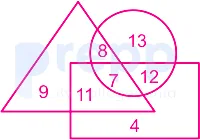
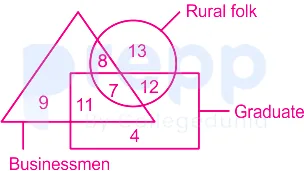
In the following diagram, the circle represents ‘rural folk’, the triangle represents ‘businessmen’ and the rectangle represents ‘graduates’. Study the diagram carefully and answer the question that follows.
What is the number of rural businessmen, who are NOT graduates?
- A
8
- B
11
- C
7
- D
15
Show answer
A. 8The logical Venn diagram is given below:-
The number of rural businessmen, who are not graduates = 8.
Hence, "option 1" is the correct answer.
 Paper & answer key PDF ↗
 Question 22archived
Select the combination of letters that when sequentially placed in the blanks of the given series will complete the series.
r_vql_mv_lrm_q_rm_ql
- A
l, m, q, r, v, v
- B
m, r, q, v, l, v
- C
v, ,v, q, r, l, m
- D
q, r, v, l, v, m
Show answer
B. m, r, q, v, l, vThe correct answer is m, r, q, v, l, v.
Geometric progressions (multiplying/dividing by a constant). Alternating patterns (different rules applied to alternate elements). Patterns based on position (e.g., prime positions, perfect squares). Developing strong pattern recognition skills is crucial for success in aptitude tests and logical reasoning sections of various competitive exams.
Paper & answer key PDF ↗ Question 23archived
Select the correct option that indicates the arrangement of the given words in the order in which they appear in an English dictionary.
1. Topology
2. Topper
3. Tolerance
4. Together
5. Tomorrow
- A
4, 5, 3, 1, 2
- B
4, 3, 5, 1, 2
- C
4, 2, 3, 1, 5
- D
4, 2, 1, 5, 3
Show answer
B. 4, 3, 5, 1, 2Understanding Dictionary Arrangement of Words
Arranging words in the order they appear in an English dictionary is a common exercise that tests your understanding of alphabetical order. The process involves comparing words letter by letter from left to right.
We are given five words to arrange:
1. Topology
2. Topper
3. Tolerance
4. Together
5. Tomorrow
Step-by-Step Word Comparison for Alphabetical Order
Let's compare the words letter by letter to determine their correct English dictionary order.
Step 1: Compare the first letter.
All words start with 'T'. This doesn't help us differentiate yet.
Topology
Topper
Tolerance
Together
Tomorrow
Step 2: Compare the second letter.
All words have 'o' as the second letter. This also doesn't help.
Topology
Topper
Tolerance
Together
Tomorrow
Step 3: Compare the third letter.
The third letters are different:
Topology
Topper
Tolerance
Together
Tomorrow
The third letters are p, p, l, g, m. Let's arrange these letters alphabetically: g, l, m, p, p.
Based on the third letter, the words will start appearing in the dictionary in this order:
Words starting with 'Tog...' (Only Together)
Words starting with 'Tol...' (Only Tolerance)
Words starting with 'Tom...' (Only Tomorrow)
Words starting with 'Top...' (Topology, Topper)
So far, the order begins with Together (4), then Tolerance (3), then Tomorrow (5).
Step 4: Compare words starting with 'Top...'.
We need to compare Topology (1) and Topper (2). Both start with 'Top'. Let's look at the fourth letter:
Topology
Topper
The fourth letters are 'o' and 'p'. Alphabetically, 'o' comes before 'p'.
Therefore, Topology (1) comes before Topper (2) in the dictionary.
Step 5: Combine the ordered groups.
Putting the groups together in the correct order:
Together (4)
Tolerance (3)
Tomorrow (5)
Topology (1)
Topper (2)
The final dictionary arrangement order of the numbers is 4, 3, 5, 1, 2.
Summary of Dictionary Order
Word Number
Word
Comparison Letter (3rd)
Comparison Letter (4th, for 'p' words)
Dictionary Position
4
Together
g
-
1st
3
Tolerance
l
-
2nd
5
Tomorrow
m
-
3rd
1
Topology
p
o
4th
2
Topper
p
p
5th
The sequence of the word numbers in dictionary order is 4, 3, 5, 1, 2.
Revision Table: Key Concepts for Word Arrangement
Concept
Explanation
Importance for Dictionary Order
Alphabetical Order
The standard order of letters in the alphabet (A, B, C, ..., Z).
Forms the basis for comparing letters.
Letter-by-Letter Comparison
Starting from the first letter and moving right, comparing letters at the same position in different words.
Determines which word comes first when prefixes are the same.
Tie-breaking
If letters at a position are the same, move to the next letter to decide the order.
Essential for correctly ordering words with common beginnings.
Shorter vs. Longer Word (when one is a prefix of another)
If one word is a prefix of another (e.g., 'care' and 'careful'), the shorter word comes first. (Not applicable in this specific question, but a general rule).
A rule for specific cases of dictionary order.
Additional Information: Expanding Your Vocabulary Skills
Mastering dictionary arrangement of words is a fundamental skill for improving vocabulary and reading comprehension. It helps you efficiently locate words in a dictionary or index. Practicing with various sets of words will strengthen your ability to quickly determine alphabetical order, which is useful in many academic and everyday situations.
Remember to be systematic when comparing words. Don't just look at the first different letter; consider the entire sequence of letters. When multiple words share a common prefix, continue the comparison until a difference is found.
Paper & answer key PDF ↗ Question 24archived
In a certain code language, ‘COW’ is written as ‘ZRF’ and ‘DOG’ is written as ‘JRG’. How will ‘RAT’ be written in that language?
- A
XDV
- B
VEU
- C
UDW
- D
WDU
Show answer
D. WDUDecoding the Code Language Puzzle: Finding the Pattern
This problem involves understanding a specific code language where words are transformed based on a set pattern. We are given how 'COW' and 'DOG' are coded, and we need to apply the same logic to find the code for 'RAT'.
Analyzing the Given Code Examples
We have the following coded pairs:
'COW' is coded as 'ZRF'
'DOG' is coded as 'JRG'
Let's look closely at the relationship between the letters in the original words and their coded forms. We should consider the position of the letters within the word and their positions in the English alphabet.
Identifying the Core Coding Rule
Let's analyze the transformation for each letter in the given examples. We can look for shifts in alphabetical position or changes in the order of letters.
Original WordLetter PositionInput LetterInput Letter Position in AlphabetShift AppliedResulting Letter Position in AlphabetResulting LetterCoded Word PositionFinal Coded Letter
COW1stC3+36F3rdF
COW2ndO15+318R2ndR
COW3rdW23+326 (or 32 $\rightarrow$ 6 after wrapping)Z1stZ
Coded Word: ZRF
DOG1stD4+37G3rdG
DOG2ndO15+318R2ndR
DOG3rdG7+310J1stJ
Coded Word: JRG
From the analysis, we can see a consistent pattern:
Each letter in the original word is shifted forward by 3 positions in the alphabet (A+3=D, B+3=E, ..., W+3=Z, X+3=A, etc.).
The resulting letters are then arranged in reverse order of the original word's letters to form the coded word. The result of the 3rd letter comes first, the result of the 2nd letter comes second, and the result of the 1st letter comes third.
Let's verify this rule with the examples:
For COW $\rightarrow$ ZRF:
C (1st letter) + 3 = F. This F is placed at the 3rd position in ZRF.
O (2nd letter) + 3 = R. This R is placed at the 2nd position in ZRF.
W (3rd letter) + 3 = Z. This Z is placed at the 1st position in ZRF.
For DOG $\rightarrow$ JRG:
D (1st letter) + 3 = G. This G is placed at the 3rd position in JRG.
O (2nd letter) + 3 = R. This R is placed at the 2nd position in JRG.
G (3rd letter) + 3 = J. This J is placed at the 1st position in JRG.
The rule is confirmed: apply a +3 shift to each letter and then reverse the order of the resulting letters.
Applying the Code Rule to 'RAT'
Now, let's apply this pattern to the word 'RAT'. The word 'RAT' has three letters: R (1st), A (2nd), and T (3rd).
Step 1: Apply the +3 shift to each letter:
R (18th letter) + 3 = U (21st letter)
A (1st letter) + 3 = D (4th letter)
T (20th letter) + 3 = W (23rd letter)
Step 2: Arrange the resulting letters (U, D, W) in reverse order of the original letters' positions.
The result of the 3rd original letter (T $\rightarrow$ W) comes first.
The result of the 2nd original letter (A $\rightarrow$ D) comes second.
The result of the 1st original letter (R $\rightarrow$ U) comes third.
Arranging W, D, and U in this sequence gives the coded word 'WDU'.
Original WordLetter PositionInput LetterShiftResulting LetterCoded Word PositionFinal Coded Letter
RAT1stR+3U3rdU
RAT2ndA+3D2ndD
RAT3rdT+3W1stW
Coded Word: WDU
Thus, in this code language, 'RAT' will be written as 'WDU'.
Revision Table: Key Concepts in Coding-Decoding
ConceptDescriptionApplication in this Problem
Coding-DecodingAnalyzing patterns to convert information from one form to another.Finding the rule transforming 'COW' to 'ZRF' and 'DOG' to 'JRG'.
Letter CodingA type of coding where letters are replaced or rearranged based on a rule.The specific method used here involves letter shifts and reordering.
Alphabetical ShiftMoving letters forward or backward a fixed number of positions in the alphabet.The +3 shift applied to each letter in the original words.
Pattern RecognitionIdentifying the underlying rule or logic in a sequence or transformation.Discovering the combination of the +3 shift and the reversal of letter order.
Additional Information on Code Language and Letter Coding
Code language and letter coding are common topics in logical reasoning tests. They require careful observation and systematic analysis to decipher the hidden pattern. These patterns can range from simple letter shifts (like a basic Caesar cipher) and reverse alphabetical order to more complex substitutions, position-based rules, or even arithmetic operations based on letter positions.
Solving these problems often involves writing down the letters of the alphabet with their positions (A=1, B=2, ..., Z=26) to easily calculate shifts. Comparing multiple examples, if available, is crucial for identifying rules that are consistent across different inputs.
Paper & answer key PDF ↗ Question 25archived
Pointing to a baby girl in a cradle, Sripad said, "She is the daughter of my father's mother's only daughter's elder daughter".
How is the baby girl's mother related to Sripad?
- A
Aunt
- B
Cousin
- C
Niece
- D
Sister-in-law
Show answer
B. CousinUnderstanding Blood Relations: Sripad's Puzzle
This blood relations question requires us to carefully break down the statement made by Sripad to determine the relationship between the baby girl's mother and Sripad.
Step-by-Step Analysis of Sripad's Statement
Sripad says, "She is the daughter of my father's mother's only daughter's elder daughter". Let's dissect this statement part by part, starting from 'my'.
"my father's mother": This refers to Sripad's paternal grandmother.
"my father's mother's only daughter": This person is the only daughter of Sripad's paternal grandmother. Since she is the *only* daughter and not Sripad's mother (who would be his father's wife), she must be Sripad's father's sister. This person is Sripad's paternal aunt.
"my father's mother's only daughter's elder daughter": This refers to the elder daughter of Sripad's paternal aunt.
"She is the daughter of... elder daughter": The baby girl is the daughter of Sripad's paternal aunt's elder daughter.
So, the baby girl is the daughter of Sripad's paternal aunt's elder daughter.
The statement essentially means:
Baby Girl = Daughter of (Elder daughter of (Paternal Aunt of Sripad))
Identifying the Relationship
The question asks for the relationship between the baby girl's mother and Sripad.
From our analysis, the baby girl is the daughter of Sripad's paternal aunt's elder daughter. This means the baby girl's mother is the elder daughter of Sripad's paternal aunt.
The daughter of one's aunt (paternal or maternal) is one's cousin.
Therefore, the baby girl's mother is Sripad's cousin.
Evaluating the Options
Let's examine the given options based on our conclusion:
Option 1: Aunt - Incorrect. An aunt is a sibling of one's parent. The baby's mother is the daughter of Sripad's aunt, not his aunt herself.
Option 2: Cousin - Correct. The daughter of a paternal aunt is indeed a cousin.
Option 3: Niece - Incorrect. A niece is the daughter of one's sibling. The baby's mother is related through Sripad's aunt, not his sibling.
Option 4: Sister-in-law - Incorrect. A sister-in-law is the sister of one's spouse or the wife of one's sibling. This relationship does not fit the description.
Based on the step-by-step deduction, the baby girl's mother is Sripad's cousin.
Revision Table: Key Blood Relation Terms
Relationship to 'You'
Description
Father's father
Paternal Grandfather
Father's mother
Paternal Grandmother
Mother's father
Maternal Grandfather
Mother's mother
Maternal Grandmother
Father's brother
Paternal Uncle
Father's sister
Paternal Aunt
Mother's brother
Maternal Uncle
Mother's sister
Maternal Aunt
Children of Uncle/Aunt
Cousins
Brother's daughter
Niece
Brother's son
Nephew
Sister's daughter
Niece
Sister's son
Nephew
Additional Information on Blood Relations Puzzles
Blood relations questions are common in aptitude tests. They test your ability to understand complex relationships described indirectly. Here are some tips for solving them:
Start from the end of the statement or from the 'my' in the sentence (like 'my father's mother').
Break down the statement into smaller, manageable steps.
Identify the relationship at each step.
Draw a family tree if the relationships are complex or involve multiple individuals.
Pay close attention to gender and singular/plural forms.
Practice different types of questions to become familiar with common relationship terms.
By systematically analyzing the statement, you can accurately determine the required relationship.
Paper & answer key PDF ↗ Question 26archived
Which of the following is known as alkaline earth metal?
- A
Copper
- B
Platinum
- C
Magnesium
- D
Cobalt
Show answer
C. MagnesiumUnderstanding Alkaline Earth Metals
The question asks to identify which of the given options is known as an alkaline earth metal. Alkaline earth metals are a series of chemical elements found in Group 2 of the periodic table. These elements have similar properties: they are shiny, silvery-white, somewhat reactive metals at standard temperature and pressure. They readily lose their two outermost s-shell electrons to form cations with a +2 charge.
Common alkaline earth metals include:
Beryllium (Be)
Magnesium (Mg)
Calcium (Ca)
Strontium (Sr)
Barium (Ba)
Radium (Ra)
Analyzing the Given Options
Let's examine each option provided in the question:
Copper (Cu): Copper is a transition metal, located in Group 11 of the periodic table. It is not an alkaline earth metal.
Platinum (Pt): Platinum is also a transition metal, located in Group 10 of the periodic table. It is known as a noble metal due to its low reactivity. It is not an alkaline earth metal.
Magnesium (Mg): Magnesium is an element with atomic number 12. It is located in Group 2, Period 3 of the periodic table. Elements in Group 2 are classified as alkaline earth metals. Therefore, Magnesium is an alkaline earth metal.
Cobalt (Co): Cobalt is a transition metal, located in Group 9 of the periodic table. It is not an alkaline earth metal.
Identifying the Alkaline Earth Metal
Based on the classification of elements in the periodic table, Magnesium (Mg) is the element that belongs to the group of alkaline earth metals.
Element
Symbol
Group in Periodic Table
Classification
Copper
Cu
Group 11
Transition Metal
Platinum
Pt
Group 10
Transition Metal
Magnesium
Mg
Group 2
Alkaline Earth Metal
Cobalt
Co
Group 9
Transition Metal
Therefore, Magnesium is the correct answer as it is an alkaline earth metal.
Revision Table: Key Concepts
Term
Definition/Description
Periodic Table Location
Alkaline Earth Metals
Reactive metals with +2 charge tendency
Group 2
Transition Metals
Elements with incomplete d-subshells (or forming cations with incomplete d-subshells)
Groups 3-12
Additional Information on Alkaline Earth Metals
Alkaline earth metals are less reactive than alkali metals (Group 1) but more reactive than many other metal groups. Their reactivity increases down the group. They form strong basic oxides and hydroxides, hence the term "alkaline". They are found abundantly in the Earth's crust, often in the form of minerals.
Magnesium is important in biological systems and lightweight alloys.
Calcium is essential for bones and teeth.
Beryllium is used in alloys and nuclear reactors.
Barium is used in medical imaging (barium meals).
Understanding the periodic table and the properties of different element groups is fundamental in chemistry.
Paper & answer key PDF ↗ Question 27archived
Who among the following is one of the founder members of Bhartiya Jana Sangh?
- A
KM Munshi
- B
Baldev Singh
- C
Minoo Masani
- D
Shyama Prasad Mukherjee
Show answer
D. Shyama Prasad MukherjeeUnderstanding the Foundation of Bhartiya Jana Sangh
The question asks to identify one of the founder members of the Bhartiya Jana Sangh from the given options. The Bhartiya Jana Sangh was a political party in India that existed from 1951 to 1977. It was the predecessor to the modern-day Bharatiya Janata Party (BJP).
The Bhartiya Jana Sangh was founded on 21 October 1951 in Delhi. It was formed by individuals who felt there was a need for a strong, nationalist political party in independent India, distinct from the Indian National Congress which dominated the political landscape at the time.
Identifying the Founder Members
Several prominent individuals were involved in the formation of the Bhartiya Jana Sangh. Among the key figures was Dr. Shyama Prasad Mukherjee.
Dr. Shyama Prasad Mukherjee was a statesman, academician, and lawyer. He served as the Minister for Industry and Supply in the first cabinet of independent India under Jawaharlal Nehru, but later resigned due to disagreements over policies, particularly concerning Jammu and Kashmir.
Following his resignation, he dedicated himself to establishing a new political platform that aligned with his nationalist views. This led to the formation of the Bhartiya Jana Sangh.
He served as the first President of the Bhartiya Jana Sangh.
Let's consider the other options provided:
KM Munshi: Kanaiyalal Maneklal Munshi was a freedom fighter, politician, and writer. He was part of the Indian National Congress and later served as a Union Minister and Governor. He was not a founder of the Bhartiya Jana Sangh.
Baldev Singh: Sardar Baldev Singh was an Indian Sikh political leader. He served as the first Defence Minister of India from 1947 to 1952. He was associated with the Indian National Congress and was not a founder of the Bhartiya Jana Sangh.
Minoo Masani: Minoo Masani was a politician and a prominent figure in the Swatantra Party, which was founded in 1959. He was not associated with the founding of the Bhartiya Jana Sangh in 1951.
Conclusion on Bhartiya Jana Sangh Founders
Based on historical records, Dr. Shyama Prasad Mukherjee was indeed a pivotal figure and a principal founder of the Bhartiya Jana Sangh. The party was established under his leadership to offer a nationalist alternative in Indian politics.
Therefore, among the given options, Shyama Prasad Mukherjee is correctly identified as one of the founder members of the Bhartiya Jana Sangh.
Individual
Association
Relation to Bhartiya Jana Sangh
KM Munshi
Indian National Congress, Swatantra Party (later)
Not a founder
Baldev Singh
Indian National Congress
Not a founder
Minoo Masani
Swatantra Party
Not a founder
Shyama Prasad Mukherjee
Founder, First President
Key Founder Member
Revision Table: Key Facts about Bhartiya Jana Sangh
Aspect
Detail
Founded On
October 21, 1951
Place of Foundation
Delhi
Key Founder
Shyama Prasad Mukherjee
First President
Shyama Prasad Mukherjee
Successor Party
Bharatiya Janata Party (BJP)
Additional Information: Context of Bhartiya Jana Sangh Formation
The formation of the Bhartiya Jana Sangh was a significant event in post-independence Indian politics. It represented the emergence of a distinct right-wing political force based on Hindu nationalism (Hindutva) and cultural conservatism. The party advocated for the complete integration of Jammu and Kashmir into India, opposed what it saw as appeasement policies towards minorities, and promoted the idea of 'one nation, one culture'. Shyama Prasad Mukherjee's vision shaped the initial ideology and direction of the Bhartiya Jana Sangh, which aimed to build a strong and unified India.
Paper & answer key PDF ↗ Question 28archived
In which present day state will you find the Meguti temple?
- A
Tamil Nadu
- B
Odisha
- C
Kerala
- D
Karnataka
Show answer
D. KarnatakaUnderstanding the Meguti Temple's Location
The question asks about the present-day state where the famous Meguti temple is located. Identifying the location of historical sites like the Meguti temple is important for understanding Indian history and geography.
The Meguti temple is a historical Jain temple. It is particularly known for the Aihole inscription, which is a significant historical record.
Locating the Meguti Temple
To answer this question, we need to know the geographical location of the Meguti temple. Historical records and archaeological information confirm its location.
The Meguti temple is situated in Aihole.
Aihole is a town with great historical significance, often referred to as the "cradle of Indian architecture".
Aihole is located in the Bagalkot district of the state of Karnataka in India.
Therefore, based on the confirmed location in Aihole, the Meguti temple is found in the state of Karnataka.
Analyzing the Options
Let's consider the provided options:
Option
State
Is it Correct?
Reason
1
Tamil Nadu
No
Meguti temple is not in Tamil Nadu.
2
Odisha
No
Meguti temple is not in Odisha.
3
Kerala
No
Meguti temple is not in Kerala.
4
Karnataka
Yes
Meguti temple is located in Aihole, Karnataka.
The analysis clearly shows that the Meguti temple is located in Karnataka.
Conclusion on Meguti Temple Location
The Meguti temple, famous for the Aihole inscription, is located in Aihole, which is part of the present-day state of Karnataka. This makes Karnataka the correct answer.
Revision Table: Key Facts about Meguti Temple
Feature
Detail
Temple Name
Meguti Temple
Location
Aihole
State (Present Day)
Karnataka
Religion
Jainism
Notable Feature
Aihole Inscription
Historical Period
Chalukya Dynasty
Built in (Approx)
634 – 635 CE
Additional Information on Aihole and Karnataka History
Aihole in Karnataka is a significant archaeological site with numerous temples, showcasing the evolution of Indian rock-cut architecture and structural temples, particularly under the early Chalukya dynasty (6th to 8th centuries CE). The Meguti temple is one of the important structures here.
Aihole Inscription: This inscription, found on the eastern wall of the Meguti temple, was composed by Ravikirti, the court poet of the Chalukya king Pulakeshin II. It is a crucial source for understanding the history of the Chalukya dynasty and their conflicts, notably mentioning the defeat of Harshavardhana by Pulakeshin II.
Chalukya Architecture: Aihole, along with Pattadakal and Badami (all in Karnataka), forms a complex of sites that illustrate the Chalukya style of architecture, which blended elements from North and South Indian temple building traditions.
Historical Significance: Karnataka has a rich history, having been ruled by various dynasties including the Mauryas, Satavahanas, Kadambas, Western Ganga Dynasty, Chalukyas, Rashtrakutas, Vijayanagara Empire, and others. Sites like Aihole, Badami, Pattadakal, Hampi, and Mysore are testaments to this rich past.
Understanding the historical context of sites like the Meguti temple helps in appreciating the cultural heritage of states like Karnataka.
Paper & answer key PDF ↗ Question 29archived
‘Ghoomar’ is a folk-dance form from the state of ______.
- A
Jharkhand
- B
Bihar
- C
Tripura
- D
Rajasthan
Show answer
D. RajasthanUnderstanding Ghoomar Folk Dance
The question asks about the origin state of the folk dance form known as ‘Ghoomar’. Identifying the correct state requires knowledge of Indian folk dances and their regional associations.
Origin of Ghoomar
Ghoomar is a traditional folk dance of Rajasthan. It was originally performed by the Bhil tribe and later adopted by Rajput communities in Rajasthan. It is primarily performed by women during special occasions and festivals, such as weddings, religious events, and the festival of Gangaur.
The dance involves simple, graceful movements, where dancers wearing colourful ghagras (long skirts) twirl in circles. The 'ghoomna' or 'ghoom' in the name refers to the act of twirling.
Analyzing the Options
Let's look at the provided options:
Jharkhand: Jharkhand is known for folk dances like Chhau, Santhal, and Karma. Ghoomar is not associated with Jharkhand.
Bihar: Bihar has folk dances like Jata-Jatin, Bidesiya, and Sohni. Ghoomar is not associated with Bihar.
Tripura: Tripura is known for Hojagiri dance, Garia dance, and Lebang Boomani. Ghoomar is not associated with Tripura.
Rajasthan: Rajasthan is famous for a rich variety of folk dances, including Kalbelia, Bhavai, Gair, and prominently, Ghoomar. Ghoomar is considered one of the state's iconic dance forms.
Based on the analysis, Ghoomar is a folk dance specifically from Rajasthan.
Conclusion
The folk dance ‘Ghoomar’ originates from the state of Rajasthan.
Folk Dance
Associated State
Ghoomar
Rajasthan
Chhau
Jharkhand, Odisha, West Bengal
Jata-Jatin
Bihar
Hojagiri
Tripura
Revision Table: Key Folk Dances and States
Here is a quick table summarising the key information related to this question and other states mentioned:
Dance Form
State of Origin
Ghoomar
Rajasthan
Kalbelia
Rajasthan
Bhavai
Rajasthan
Chhau
Jharkhand
Karma
Jharkhand
Jata-Jatin
Bihar
Bidesiya
Bihar
Hojagiri
Tripura
Additional Information: Ghoomar Dance Significance
Ghoomar is more than just a dance; it is an expression of womanhood, grace, and celebration in Rajasthan. The elaborate costumes (ghagras) add significantly to the visual spectacle of the dance. The performance often involves intricate footwork, graceful hand movements, and rhythmic turns. It has gained national and international recognition as a symbol of Rajasthani culture.
Paper & answer key PDF ↗ Question 30archived
Who among the following had invaded India in 712 AD?
- A
Qutub-ud-Din Aibak
- B
Muhammad Ghori
- C
Mahmud of Ghazni
- D
Muhammad Bin-Quasim
Show answer
D. Muhammad Bin-QuasimUnderstanding the Indian Invasion of 712 AD
The question asks to identify the historical figure responsible for invading India in the year $712$ AD. This period marks a significant event in the early history of Islamic conquests in the Indian subcontinent. Let's analyze the options provided to determine the correct invader.
Historical Context of the 712 AD Invasion
The invasion of India in $712$ AD refers to the Arab conquest of Sindh. This military campaign was led by a young Arab general under the Umayyad Caliphate. The primary target was the region of Sindh, a prosperous area located in the northwestern part of the Indian subcontinent.
Analysis of Options and Key Figures
We will examine each option in relation to the specified historical period:
Muhammad Bin-Quasim: This option aligns with the historical records. Muhammad bin Qasim al-Thaqafi was the commander who led the Umayyad Caliphate's invasion of Sindh. He successfully conquered the region, including cities like Debal and Multan, in $712$ AD. This event is considered the first major Islamic conquest in the Indian subcontinent.
Qutub-ud-Din Aibak: Qutub-ud-Din Aibak was the founder of the Delhi Sultanate. He established Turkic rule in North India after the Ghurid conquests. His reign began around 1206 AD, significantly later than the $712$ AD invasion.
Muhammad Ghori: Also known as Mu'izz al-Din Muhammad Ghori, he was a ruler from the Ghor region of present-day Afghanistan. He conducted several campaigns into North India in the late 12th century, most notably defeating Prithviraj Chauhan in the Second Battle of Tarain in 1192 AD. His activities were centuries after $712$ AD.
Mahmud of Ghazni: Mahmud of Ghazni was a Turkic ruler from Ghazni (modern Afghanistan). He is famous for his multiple raids into North India, beginning in the early 11th century, particularly his raid on the Somnath temple in 1025 AD. His invasions occurred approximately 300 years after the event in question.
Conclusion on the 712 AD Invasion
Based on the historical timelines, Muhammad Bin-Quasim is the figure associated with the invasion of India in $712$ AD. His conquest of Sindh marked the beginning of Muslim rule in parts of the Indian subcontinent.
Paper & answer key PDF ↗ Question 31archived
As of December 2020, there are ______ official languages of the United Nations.
- A
6
- B
7
- C
11
- D
10
Show answer
A. 6Understanding United Nations Official Languages
The question asks about the number of official languages used by the United Nations as of December 2020. The United Nations is a global organization that works towards international peace and cooperation. To function effectively with representatives from nearly every country in the world, it uses several official languages for communication, documentation, and proceedings.
Number of UN Official Languages
As of December 2020, the United Nations had a specific number of official languages recognized for use in its various organs and conferences. These languages are used for interpreting speeches and translating official documents.
The correct number of official languages of the United Nations is six.
List of United Nations Official Languages
The six official languages of the UN are:
Arabic
Chinese
English
French
Russian
Spanish
These languages were chosen based on their widespread use globally and their historical significance in international diplomacy and communication.
Significance of Official Languages
Using these official languages ensures that representatives from member states can participate fully in discussions and understand all official communications. All important documents, including resolutions, records of meetings, and treaties, are translated into these six languages. Speeches given in any of these languages are interpreted simultaneously into the other five.
Revision Table: UN Official Languages
Topic
Detail
Number of Official Languages
6
List of Official Languages
Arabic, Chinese, English, French, Russian, Spanish
Purpose
Official communication, documentation, and proceedings within the UN
Additional Information on UN Languages
It's important to distinguish between official languages and working languages. While there are six official languages, some UN bodies may use fewer working languages for day-to-day operations. For example, the working languages of the UN Secretariat are English and French.
The choice of official languages reflects a balance of geographical representation and historical context in international relations. While many other languages are spoken by large populations globally, these six were established and continue to be the standard for official UN business.
Paper & answer key PDF ↗ Question 32archived
______ is an economic scenario where a peculiar combination of low growth and rising inflation leads to high unemployment.
- A
Stagflation
- B
Recession
- C
Deflation
- D
Depreciation
Show answer
A. StagflationUnderstanding Economic Scenarios: Stagflation, Recession, and Deflation
The question asks to identify a specific economic scenario where there is a combination of low economic growth, high unemployment, and rising price levels (inflation). Let's analyze the given options to find the term that best fits this description.
Analyzing the Economic Terms
Stagflation: This term is a portmanteau of "stagnation" and "inflation." Stagnation refers to slow or zero economic growth, often associated with high unemployment. Inflation refers to a general increase in prices over time. Stagflation is precisely the situation where the economy experiences stagnant growth (and high unemployment) while simultaneously facing rising inflation. This combination was considered unusual by traditional economic theories before the 1970s.
Recession: A recession is typically defined as a significant decline in economic activity spread across the economy, lasting more than a few months, normally visible in real GDP, real income, employment, industrial production, and wholesale-retail sales. Recessions are characterized by low or negative growth and high unemployment. However, recessions are often associated with falling or low inflation, or even deflation, rather than rising inflation.
Deflation: Deflation is the general decrease in the price level of goods and services. This is the opposite of inflation (rising prices). An economy experiencing deflation typically has low demand, which can lead to low growth and unemployment, but it is fundamentally different from a scenario with rising inflation.
Depreciation: Depreciation refers to the decrease in the value of an asset over time, or specifically, the decrease in the value of a country's currency relative to other currencies in a floating exchange rate system. While economic conditions can influence depreciation, the term itself does not describe the specific combination of low growth, high unemployment, and rising inflation across the economy.
Comparing the Description to the Options
The question describes an economic scenario with:
Low growth (stagnation)
High unemployment
Rising inflation
Comparing this to our analysis:
Stagflation directly matches this description: stagnation (low growth, high unemployment) + inflation (rising prices).
Recession matches low growth and high unemployment but typically not rising inflation.
Deflation involves falling prices, not rising inflation.
Depreciation relates to asset or currency value, not the overall economic scenario of growth, unemployment, and inflation combined in this way.
Therefore, the economic scenario characterized by a peculiar combination of low growth and rising inflation leading to high unemployment is known as stagflation.
Economic Term
Growth
Unemployment
Inflation
Fit with Description
Stagflation
Low/Stagnant
High
Rising
Yes
Recession
Low/Negative
High
Low/Falling/Deflationary
No (Inflation aspect)
Deflation
Often Low
Often High
Falling
No (Inflation aspect)
Depreciation
Indirectly related
Indirectly related
Indirectly related
No (Doesn't describe the overall scenario)
Based on this analysis, the term that accurately describes the economic scenario of low growth, rising inflation, and high unemployment is stagflation.
Revision Table: Key Economic Terms
Term
Meaning
Stagflation
Low economic growth, high unemployment, and high inflation.
Recession
A significant decline in economic activity, characterized by falling GDP and rising unemployment.
Deflation
A general decrease in the price level of goods and services.
Inflation
A general increase in the price level of goods and services.
Additional Information on Stagflation
Stagflation is considered problematic because the policies used to combat stagnation (like increasing government spending or lowering interest rates) can worsen inflation, while policies used to combat inflation (like raising interest rates or reducing spending) can worsen stagnation and unemployment. This makes stagflation a difficult challenge for policymakers.
Historically, significant periods of stagflation, such as in the 1970s, were often linked to supply shocks, like sudden increases in the price of oil, which simultaneously increased costs for businesses (leading to lower output and higher unemployment) and raised overall price levels.
Paper & answer key PDF ↗ Question 33archived
Who among the following was the first player from the Indian sub-continent to play for a European Football club (Celtic FC)?
- A
Sailen Manna
- B
Neville D'Souza
- C
Pradeep Kumar Banerjee
- D
Mohammed Salim
Show answer
D. Mohammed SalimExploring the First Indian Footballer at Celtic FC
The question asks to identify the pioneering player from the Indian sub-continent who played for the renowned European football club, Celtic FC.
Celtic FC, based in Glasgow, Scotland, is a major club in European football history. Having a player from the Indian sub-continent join such a club was a significant event, marking an early step for Indian football on the global stage.
Let's consider the options provided:
Sailen Manna: A legendary Indian footballer, captained India at the 1952 Olympics and is considered one of the greatest defenders India produced. However, he is not known for playing for Celtic FC.
Neville D'Souza: Known for scoring a hat-trick for India in the 1956 Melbourne Olympics, a significant achievement. He primarily played domestic football in India.
Pradeep Kumar Banerjee: Another icon of Indian football, a prolific goalscorer and later a successful coach. He represented India in multiple international tournaments but did not play for Celtic FC.
Mohammed Salim: An Indian footballer from Calcutta (now Kolkata) known for his exceptional barefoot skills. Historical records indicate that he did play for Celtic FC in 1936.
Mohammed Salim's story at Celtic FC is quite remarkable. He travelled to England and then Scotland, where he got an opportunity to trial for Celtic. Accounts suggest he impressed greatly during trial matches, reportedly playing barefoot. He played in a couple of competitive matches for the Celtic reserve side before returning to India due to personal reasons. This makes him the first player from the Indian sub-continent to play for Celtic FC and potentially one of the first from the region to play for a major European club.
Therefore, based on historical accounts, Mohammed Salim was the first player from the Indian sub-continent to play for European club Celtic FC.
Notable Indian Footballers and European Club Connections (Relevant to Question)
Player
Significance
Played for Celtic FC?
Sailen Manna
Legendary Indian defender, Olympic captain
No
Neville D'Souza
Olympic hat-trick scorer
No
Pradeep Kumar Banerjee
Prolific Indian forward, iconic coach
No
Mohammed Salim
Early Indian footballer known for skill
Yes (in 1936)
Revision Table: Key Facts on Indian Players Abroad
This table summarizes the key point regarding the player who played for Celtic FC from the Indian sub-continent.
First Indian Sub-continent Player at Celtic FC
Player
Club
Year (approx.)
Note
Mohammed Salim
Celtic FC (Scotland)
1936
Considered the first from the region to play for Celtic and a major European club.
Additional Information on Indian Football Pioneers
Mohammed Salim's stint at Celtic FC was brief but historically significant. It paved the way conceptually for future generations, although opportunities remained scarce for many decades.
While Mohammed Salim is recognized for playing for Celtic FC, other Indian footballers have played for foreign clubs over the years, particularly in Asia. However, playing for a major European league club like Celtic FC in that era was exceptional.
The history of Indian footballers playing in Europe is a developing one, with more players getting opportunities in various European leagues in contemporary times compared to the past. However, Mohammed Salim holds a unique place as the pioneer at Celtic FC.
Paper & answer key PDF ↗ Question 34archived
Which of the following states became the first one to launch blockchain-enabled solar power trading in December 2020?
- A
Madhya Pradesh
- B
Uttar Pradesh
- C
Karnataka
- D
Sikkim
Show answer
B. Uttar PradeshUnderstanding Blockchain-Enabled Solar Power Trading in India
Let's analyze the question which asks about the first state in India to launch blockchain-enabled solar power trading and when this happened.
Blockchain technology is being explored for various applications, including in the energy sector. One promising use case is decentralized energy trading, particularly for renewable sources like solar power. This allows individuals or entities generating solar power (prosumers) to trade surplus energy with consumers directly, often within a local grid, using a secure and transparent blockchain platform.
In December 2020, a significant step was taken in India towards this kind of energy trading.
Based on reports and official announcements from that period, the state that pioneered this initiative was Uttar Pradesh.
The blockchain-enabled peer-to-peer (P2P) solar power trading project was launched as a pilot in Uttar Pradesh in December 2020. This project aimed to facilitate the transparent and efficient trading of solar energy between producers (like those with rooftop solar panels) and consumers within a specific area.
Key aspects of this initiative included:
Utilizing blockchain for secure and immutable transaction records.
Enabling peer-to-peer trading of surplus solar energy.
Improving grid stability and encouraging renewable energy adoption.
Involving various stakeholders like the state government, regulatory bodies, distribution companies, and technology providers.
This made Uttar Pradesh the first state in India to officially pilot and launch a system for blockchain-enabled solar power trading.
State Analysis for Blockchain Solar Trading
Let's briefly consider the options provided:
Madhya Pradesh: While active in solar energy, it was not the first to launch blockchain-enabled trading in December 2020.
Uttar Pradesh: Launched the pilot project for blockchain-enabled P2P solar trading in December 2020, making it the first state.
Karnataka: Also a leading state in solar energy, but the specific blockchain trading initiative discussed did not originate here first in Dec 2020.
Sikkim: A smaller state with renewable energy focus, but not the first to launch this specific blockchain application in the energy sector in 2020.
Therefore, Uttar Pradesh holds the distinction of being the first state in India to launch blockchain-enabled solar power trading in December 2020.
Revision Table: Key Details
Aspect
Detail
Technology Used
Blockchain
Type of Trading
Peer-to-Peer (P2P) Solar Power Trading
Launch Date
December 2020
First State in India
Uttar Pradesh
Additional Information: Blockchain in Energy Trading
Blockchain technology offers several benefits for energy trading platforms:
Transparency: All transactions are recorded on a distributed ledger, visible to participants.
Security: Cryptography secures transactions, making them tamper-proof.
Efficiency: Reduces the need for intermediaries, potentially lowering transaction costs and speeding up settlements.
Decentralization: Enables direct trading between producers and consumers, fostering a more distributed energy market.
Traceability: Allows tracking the origin and flow of energy, important for renewable energy certification.
P2P energy trading using blockchain can empower individuals to actively participate in the energy market, manage their consumption and generation, and potentially earn revenue from surplus renewable energy.
Paper & answer key PDF ↗ Question 35archived
______ is a sessile animal, that relies upon its relationship with plants like algae to build the largest structures of biological origin on earth.
- A
Reptile
- B
Bird
- C
Coral
- D
Mammal
Show answer
C. CoralUnderstanding Sessile Animals and Coral Reef Builders
The question asks to identify a sessile animal that forms a crucial relationship with plants like algae to construct some of the Earth's largest biological structures. Let's break down the key terms:
Sessile animal: An animal that is fixed in one place; immobile.
Relationship with algae: A symbiotic relationship, often mutualistic, where both organisms benefit.
Largest structures of biological origin: Refers to massive structures built by living organisms over time. Coral reefs are prime examples.
Analyzing the Options
Let's examine each option provided:
Reptile: Reptiles are vertebrates (animals with backbones) like snakes, lizards, turtles, and crocodiles. They are typically mobile animals and do not fit the description of a sessile animal that builds large biological structures through a relationship with algae.
Bird: Birds are feathered, winged, warm-blooded vertebrates. They are highly mobile and do not build large biological structures in the way described, nor do they form the specific symbiotic relationship with algae mentioned.
Coral: Corals are marine invertebrates belonging to the phylum Cnidaria. Many coral species are indeed sessile, living attached to the seabed. They are famous for building coral reefs by secreting calcium carbonate (CaCO<sub>3</sub>). A key aspect of reef-building corals is their symbiotic relationship with microscopic algae called zooxanthellae, which live within their tissues. These algae perform photosynthesis and provide the coral with energy and nutrients, which greatly aids the coral's ability to deposit calcium carbonate and grow the reef structure. This makes coral an excellent fit for the description.
Mammal: Mammals are warm-blooded vertebrates characterized by features like mammary glands and fur or hair. Mammals are generally mobile animals, ranging from mice to whales. They do not build large biological structures like coral reefs through a relationship with algae and are not sessile.
Why Coral Fits the Description
Based on the analysis, Coral is the sessile animal that forms a vital symbiotic relationship with algae (zooxanthellae) and is responsible for building extensive coral reefs, which are indeed among the largest biological structures on Earth. The energy provided by the algae through photosynthesis allows corals to grow and secrete their calcium carbonate skeletons much faster than they could on their own, enabling the formation of massive reef ecosystems.
Comparison of Options Based on Question Criteria
Animal Group
Sessile?
Symbiosis with Algae for Structure Building?
Builds Largest Biological Structures?
Fits Description?
Reptile
No
No
No
No
Bird
No
No
No
No
Coral
Yes (many species)
Yes (with zooxanthellae)
Yes (coral reefs)
Yes
Mammal
No
No
No
No
Conclusion
The animal that is sessile, relies on a relationship with algae, and builds the largest structures of biological origin on earth is the coral.
Revision Table: Key Concepts
Summary of Important Terms
Term
Definition/Description
Relevance to Question
Sessile Animal
An animal that is fixed in one place and cannot move freely.
A key characteristic required by the question.
Symbiosis
A close and long-term interaction between two different biological species. In this case, between coral and algae.
The relationship enabling massive structure building.
Zooxanthellae
Microscopic algae (dinoflagellates) that live symbiotically in the tissues of many corals.
The specific "plants like algae" involved in the coral relationship.
Coral Reefs
Underwater ecosystems built by coral polyps secreting calcium carbonate.
The "largest structures of biological origin on earth" referred to.
Additional Information: Coral-Algae Symbiosis
The relationship between corals and zooxanthellae algae is a classic example of mutualism. Here's how it works:
The coral polyp provides the zooxanthellae with a protected environment, carbon dioxide (a byproduct of the coral's respiration), and compounds containing nitrogen, phosphorus, and other nutrients needed for photosynthesis.
In return, the zooxanthellae produce oxygen and sugars through photosynthesis. These products are released into the coral's tissues, providing the coral with up to 90% of its energy needs.
This energy surplus allows the coral to grow faster and deposit calcium carbonate more rapidly, which is essential for building the hard framework of the coral reef.
The zooxanthellae also contribute to the vibrant colors seen in healthy corals. When corals are stressed (e.g., by high temperatures), they expel the algae, causing coral bleaching and making the coral more vulnerable.
This remarkable partnership is fundamental to the existence and growth of tropical coral reefs, supporting incredible biodiversity.
Paper & answer key PDF ↗ Question 36archived
Which of the following companies announced the launch of India’s first virtual academy programme Esports Academy?
- A
Dell
- B
Jio
- C
Asus
- D
Samsung
Show answer
C. AsusUnderstanding India’s First Virtual Esports Academy
The question asks about the company that initiated India’s first virtual academy programme focused on Esports. This initiative is significant for the growth of competitive gaming in the country, providing structured training for aspiring Esports professionals.
Esports, or electronic sports, involves competitive video gaming. As its popularity grows globally and in India, the need for formal training and development programmes has become crucial. A virtual academy allows participants from across the country to access coaching and resources remotely.
Identifying the Company Behind the Esports Academy
Several technology and telecom companies are involved in the gaming and Esports ecosystem in India, either through hardware, infrastructure, or content creation. However, the specific launch of the country's first virtual Esports academy was a distinct event.
Based on reports and announcements related to the Indian Esports scene, the company that launched India's first virtual academy programme, known as the 'Esports Academy', is Asus.
Asus’s Contribution to Indian Esports Training
Asus, a well-known brand in the technology sector, particularly for its gaming hardware under the Republic of Gamers (ROG) series, has taken a step towards nurturing Esports talent in India through this virtual academy. The Esports Academy aims to provide a platform for aspiring gamers to receive professional coaching, mentorship, and strategic guidance to compete at higher levels in various Esports titles.
This virtual programme is designed to make professional Esports coaching accessible to a wider audience across India, leveraging technology to overcome geographical barriers. The curriculum typically includes game strategy, mental conditioning, physical fitness, and understanding the professional Esports ecosystem.
Breakdown of Options
Let's look at the provided options in the context of the question:
Dell: While Dell is a major computer hardware company involved in gaming, particularly with its Alienware brand, they are not credited with launching India's first virtual Esports academy.
Jio: Jio is a prominent telecommunications company in India and has made significant strides in the digital space, including gaming platforms and initiatives, but they did not launch this specific virtual Esports academy programme.
Asus: Asus is a leading brand in gaming hardware (ROG). They are the company that announced and launched India's first virtual Esports Academy programme.
Samsung: Samsung is a global technology giant involved in various electronics, including smartphones and monitors used for gaming, but they did not launch India's first virtual Esports academy.
Therefore, the company responsible for launching India’s first virtual academy programme Esports Academy is Asus.
Revision Table: Key Details
Initiative
Description
Company
India’s first virtual Esports Academy
A programme to provide online coaching and training for aspiring Esports professionals in India.
Asus
Additional Information: Esports Ecosystem in India
The Esports ecosystem in India is rapidly evolving. Several stakeholders are contributing to its growth:
Players and Teams: A growing community of professional players and organized teams competing in domestic and international tournaments.
Tournament Organizers: Companies hosting competitive gaming events with prize pools.
Game Publishers: Companies that develop and publish the games being played competitively.
Hardware Manufacturers: Companies like Asus, Dell, and others providing the necessary gaming PCs, laptops, and peripherals.
Content Creators & Streamers: Individuals who broadcast their gameplay and analysis, building communities.
Training Academies: Initiatives like the one launched by Asus that provide structured training.
Virtual academies play a vital role in democratizing access to quality coaching, helping to build a stronger talent pool for Indian Esports.
Paper & answer key PDF ↗ Question 37archived
Who among the following Indian actresses joined the list of Young Global Leaders (YGL) compiled by the World Economic Forum in March 2021?
- A
Shilpa Shetty
- B
Aishwarya Rai
- C
Alia Bhatt
- D
Deepika Padukone
Show answer
D. Deepika PadukoneUnderstanding the World Economic Forum's Young Global Leaders List
The question asks about an Indian actress who was included in the list of Young Global Leaders (YGL) compiled by the World Economic Forum in March 2021. The Young Global Leaders program recognizes influential individuals under 40 from various fields worldwide.
Analyzing the Options
We need to identify which of the given Indian actresses was recognized by the World Economic Forum as a Young Global Leader in March 2021:
Shilpa Shetty: While a well-known actress, she was not included in the 2021 Young Global Leaders list.
Aishwarya Rai: A prominent actress, she was also not part of the 2021 list.
Alia Bhatt: A popular contemporary actress, but she was not named a Young Global Leader in March 2021.
Deepika Padukone: A leading Indian actress and mental health advocate, she was indeed announced as one of the Young Global Leaders by the World Economic Forum in March 2021.
Identifying the Correct Actress
Based on the announcement made by the World Economic Forum in March 2021, the Indian actress who joined the list of Young Global Leaders was Deepika Padukone.
Deepika Padukone was recognized for her work beyond cinema, particularly her advocacy for mental health through her Live Love Laugh Foundation.
Detailed Explanation: Deepika Padukone and YGL 2021
In March 2021, the World Economic Forum unveiled its list of Young Global Leaders, featuring 112 individuals from across the globe. This list includes rising stars from the worlds of politics, business, arts, culture, academia, and non-profit. Deepika Padukone was selected alongside other notable figures, acknowledging her influence not only in the film industry but also her significant contributions to raising awareness about mental health issues globally.
Her inclusion highlights the increasing recognition of artists and cultural figures for their impact on society and their potential to contribute to global discussions and solutions.
Therefore, the correct Indian actress from the options who was named a Young Global Leader by the World Economic Forum in March 2021 is Deepika Padukone.
Actress
Included in WEF YGL List (March 2021)?
Shilpa Shetty
No
Aishwarya Rai
No
Alia Bhatt
No
Deepika Padukone
Yes
Revision Table: Key Facts
Event
Organization
Indian Actress Recognized
Year
Young Global Leaders (YGL) List
World Economic Forum (WEF)
Deepika Padukone
March 2021
Additional Information: World Economic Forum and Young Global Leaders
The World Economic Forum (WEF) is an international non-governmental and lobbying organisation based in Cologny, Geneva, Switzerland. It was founded on January 24, 1971, by Klaus Schwab.
The Forum of Young Global Leaders is an independent non-profit foundation under the World Economic Forum. It was founded in 2004 by Klaus Schwab. The YGL community is a diverse group of leaders from different sectors and regions who work together to address global challenges and shape the future. Alumni of the YGL program include notable figures like Jacinda Ardern, Emmanuel Macron, and Mark Zuckerberg.
Paper & answer key PDF ↗ Question 38archived
Which of the following places is NOT located on the banks of river Ganga?
- A
Phaphamau
- B
Hazaribagh
- C
Varanasi
- D
Kanpur
Show answer
B. HazaribaghFinding Places Not on the Banks of River Ganga
The question asks us to identify the place among the given options that is not located on the banks of the sacred River Ganga. The Ganga is one of the most important rivers in India, flowing through several states including Uttarakhand, Uttar Pradesh, Bihar, Jharkhand, and West Bengal. Many significant cities and towns are situated along its course.
Analyzing the Locations and River Ganga
Let's examine each option to determine its location relative to the River Ganga:
Phaphamau: This area is near Prayagraj (formerly Allahabad) in Uttar Pradesh. Prayagraj is famous for the Triveni Sangam, the confluence of the Ganga, Yamuna, and the mythical Saraswati rivers. Phaphamau is located on the banks of the River Ganga near Prayagraj.
Hazaribagh: This city is located in the state of Jharkhand. Hazaribagh is situated in the Chota Nagpur Plateau region. While the state of Jharkhand is downstream of the main Ganga course, Hazaribagh city itself is not directly on the banks of the River Ganga. It is located on the banks of the Konar River, which is a tributary of the Damodar River. The Damodar River is a tributary of the Hooghly River, which is a distributary of the Ganga. Therefore, Hazaribagh is not on the main Ganga river banks.
Varanasi: Also known as Kashi or Benares, Varanasi is a major city in Uttar Pradesh and is considered one of the oldest continuously inhabited cities in the world. It is famously located directly on the western banks of the River Ganga.
Kanpur: An important industrial city in Uttar Pradesh, Kanpur is situated on the western banks of the River Ganga.
Based on the analysis of each location's geography, it is clear that Phaphamau, Varanasi, and Kanpur are situated on the banks of the River Ganga, whereas Hazaribagh is not.
Conclusion
The place among the given options that is not located on the banks of the River Ganga is Hazaribagh.
Place
State
Location Relative to Ganga
Phaphamau
Uttar Pradesh
On the banks of River Ganga (near Prayagraj)
Hazaribagh
Jharkhand
Not on the banks of River Ganga (on Konar River, a Damodar tributary)
Varanasi
Uttar Pradesh
On the banks of River Ganga
Kanpur
Uttar Pradesh
On the banks of River Ganga
Revision Table: Ganga River Locations
Understanding the geography of India's major rivers is crucial for many exams. Here's a quick review of cities on the Ganga:
Uttarakhand: Rishikesh, Haridwar
Uttar Pradesh: Bijnor, Garhmukteshwar, Narora, Kannauj, Kanpur, Prayagraj (Allahabad), Varanasi, Ghazipur
Bihar: Buxar, Arrah, Patna, Hajipur, Munger, Bhagalpur
Jharkhand: Sahebganj (small stretch)
West Bengal: Murshidabad, Kalyani, Nabadwip, Kolkata (on Hooghly, a distributary)
Additional Information: The Ganga River System
The River Ganga, also known as the Ganges, originates in the Gangotri Glacier in the Himalayas. It flows southeast through the Gangetic Plain, which is one of the world's most fertile and densely populated regions. It is joined by numerous tributaries, including the Yamuna, Ghaghara, Gandak, Kosi, Son, and Damodar. The river splits into distributaries in its deltaic region in West Bengal and Bangladesh, forming the large Ganga Delta along with the Brahmaputra. The Hooghly River is the main distributary in West Bengal, passing through Kolkata.
Paper & answer key PDF ↗ Question 39archived
Coulomb per second is equivalent to ______.
- A
ohm
- B
joule
- C
ampere
- D
volt
Show answer
C. ampereCoulomb per second is equivalent to the ampere (often shortened to amp).
This is the SI unit used to measure electric current, represented by the symbol A.
By definition, electric current ($I$) is the rate at which electric charge ($Q$) flows past a point.
The mathematical formula representing this relationship is:
$$I = \frac{Q}{t}$$
Therefore, 1 ampere is exactly equal to 1 coulomb of charge moving through a conductor in 1 second.
In practical terms, it measures how many electrons are passing through a wire per unit of time.
Paper & answer key PDF ↗ Question 40archived
Through which of the following actions does the lithosphere move over the asthenosphere?
- A
Weathering
- B
Continental drift
- C
Deposition
- D
Plate tectonics
Show answer
D. Plate tectonicsLithosphere Movement Over Asthenosphere Explained
The Earth's outermost rigid shell, the lithosphere, is broken into several large and small pieces called tectonic plates. These plates are not stationary; they move relative to each other. The layer directly beneath the lithosphere is the asthenosphere, a hotter, weaker, and more ductile layer of the upper mantle. The movement of the lithosphere over the asthenosphere is a fundamental concept in geology.
Understanding Plate Tectonics
The primary action through which the lithosphere moves over the asthenosphere is plate tectonics. This theory explains the large-scale movements of the Earth's lithospheric plates. The lithosphere, being cooler and more rigid, essentially 'floats' on the underlying, hotter, and more pliable asthenosphere. Convection currents within the mantle, driven by heat from the Earth's core, cause the asthenosphere to flow, and this flow drags the overlying lithospheric plates along with it, resulting in their movement.
Analyzing Other Actions
Let's examine why the other options are not the correct explanation for the movement of the lithosphere over the asthenosphere:
Weathering: This refers to the process where rocks are broken down into smaller pieces or dissolved by physical, chemical, or biological agents. It affects the rocks on the Earth's surface but does not describe the large-scale movement of the lithosphere over the asthenosphere.
Continental drift: This term, proposed by Alfred Wegener, describes the slow movement of continents over geological time. While it is a phenomenon related to the movement of landmasses, plate tectonics is the underlying mechanism that explains how and why this drift occurs. Continental drift is more of an observation or a consequence, whereas plate tectonics is the process itself.
Deposition: This is the geological process where sediments, soil, debris, or other materials are added to a landform or land mass. It involves the accumulation of materials, often due to erosion and transport, and is not related to the movement of the entire lithospheric plates over the asthenosphere.
Conclusion on Lithosphere Movement
Therefore, the most accurate description of the action causing the lithosphere to move over the asthenosphere is plate tectonics. This process is driven by convection currents in the mantle and results in phenomena like earthquakes, volcanic activity, and the formation of mountains.
Paper & answer key PDF ↗ Question 41archived
Which Sultan established a separate department (Diwan-i-Amir Kohi) to take care of agriculture?
- A
Khizr Khan
- B
Jalal-ud-din-Khalji
- C
Tughril Beg
- D
Muhammad Bin Tughlaq
Show answer
D. Muhammad Bin TughlaqUnderstanding Diwan-i-Amir Kohi and Sultan who Established it
The question asks about the specific Sultan who established a separate department focused on agriculture, known as Diwan-i-Amir Kohi. This department was a significant administrative reform aimed at improving agricultural practices and increasing cultivation.
Identifying the Sultan behind Diwan-i-Amir Kohi
Historically, the Sultan of Delhi Sultanate known for introducing various administrative and economic reforms, including initiatives in agriculture, was Muhammad Bin Tughlaq. Among his many experiments and policies, the establishment of a dedicated agriculture department, Diwan-i-Amir Kohi, stands out.
The main purpose of the Diwan-i-Amir Kohi was to bring uncultivated land under cultivation and improve the crop yield in the Doab region, which was experiencing famine at the time. The department provided loans (sondhar) to peasants for purchasing seeds and implements and dug wells for irrigation.
Analyzing the Options
Let's look at the provided options and their relevance:
Khizr Khan: Khizr Khan was the founder of the Sayyid dynasty, which ruled after the Tughlaq dynasty. His reign focused more on consolidating power after the invasion of Timur, and he is not credited with establishing the Diwan-i-Amir Kohi.
Jalal-ud-din Khalji: Jalal-ud-din Khalji was the founder of the Khalji dynasty, preceding the Tughlaqs. While he was a Sultan of the Delhi Sultanate, the establishment of this specific agriculture department is not attributed to him.
Tughril Beg: Tughril Beg was a prominent leader of the Seljuk Turks and the founder of the Seljuk Empire, which was a powerful force in the Middle East, not a Sultan of the Delhi Sultanate in India. This option is completely unrelated to the context of Delhi Sultanate administration.
Muhammad Bin Tughlaq: Muhammad Bin Tughlaq ruled the Delhi Sultanate from 1324 to 1351. He was known for his ambitious projects and administrative experiments, including the shift of the capital and the token currency. The establishment of the Diwan-i-Amir Kohi is one of his notable administrative measures aimed at improving agriculture.
Based on historical records, it is clear that Muhammad Bin Tughlaq was the Sultan who established the Diwan-i-Amir Kohi to promote agriculture.
Sultan
Dynasty
Notable Agricultural Reforms
Muhammad Bin Tughlaq
Tughlaq Dynasty
Established Diwan-i-Amir Kohi, provided agricultural loans (sondhar)
Khizr Khan
Sayyid Dynasty
No specific major agricultural department attributed
Jalal-ud-din Khalji
Khalji Dynasty
No specific major agricultural department attributed
Tughril Beg
Seljuk Empire (Not Delhi Sultanate)
Not relevant to Delhi Sultanate administration
Conclusion
The separate department known as Diwan-i-Amir Kohi, created specifically to oversee and improve agriculture, was established by Sultan Muhammad Bin Tughlaq during his rule in the Delhi Sultanate.
Revision Table: Key Sultans and Departments
Department/Reform
Sultan Associated
Purpose
Diwan-i-Amir Kohi
Muhammad Bin Tughlaq
Agriculture (bringing fallow land under cultivation, providing aid)
Diwan-i-Arz
Balban
Military Department
Diwan-i-Riyasat
Alauddin Khalji
Market Control Department
Diwan-i-Khairat
Firoz Shah Tughlaq
Charity Department
Additional Information: Muhammad Bin Tughlaq's Rule and Agriculture
Muhammad Bin Tughlaq's reign (1324-1351) was marked by ambitious projects and sometimes controversial policies. While some of his experiments, like the token currency and shifting the capital to Daulatabad, faced challenges, his effort to create a dedicated agriculture department, Diwan-i-Amir Kohi, shows his awareness of the importance of agriculture for the state's revenue and the welfare of the people.
The department was intended to function for a period of three years to improve farming in a designated area. However, due to various factors including administrative issues and potentially unfavourable conditions, the department's success was limited during his lifetime. Despite this, the establishment of such a specialized department indicates a notable attempt at state intervention in agriculture during the Delhi Sultanate period.
Paper & answer key PDF ↗ Question 42archived
How many brightest stars is the constellation called the Great Bear made up of?
- A
Nine
- B
Three
- C
Five
- D
Seven
Show answer
D. SevenUnderstanding the Great Bear Constellation and Its Stars
The question asks about the number of brightest stars that form the constellation known as the Great Bear. The Great Bear is a well-known constellation in the Northern sky.
The Great Bear constellation is scientifically known as Ursa Major. It is one of the largest constellations. While it contains many stars, a specific group of its brightest stars forms a very recognizable pattern called an asterism.
The Big Dipper Asterism
The most famous part of the Great Bear is the asterism known as the Big Dipper (or the Plough in the UK). The Big Dipper is not a constellation itself, but a prominent part of the Great Bear constellation. It looks like a large ladle or a plough.
The Big Dipper is formed by seven bright stars within the Great Bear. These stars are:
Dubhe
Merak
Phecda
Megrez
Alioth
Mizar
Alkaid
These seven stars are generally considered the brightest and most prominent stars that make up the easily identifiable shape within the Great Bear constellation that the question likely refers to.
Counting the Brightest Stars
When people refer to the 'brightest stars' of the Great Bear in common terms, they are almost always referring to the seven stars that form the Big Dipper asterism because they are the most visible and define the constellation's most recognizable shape.
Therefore, based on this common understanding, the constellation called the Great Bear is considered to be made up of seven brightest stars, which form the Big Dipper.
Final Answer Derivation
Considering the common understanding of the Great Bear and its most prominent stars forming the Big Dipper, the number of brightest stars referred to is seven.
Key Details: Great Bear and Big Dipper
Feature
Description
Number of Brightest Stars
Great Bear (Ursa Major)
A constellation in the northern sky.
Contains the Big Dipper
Big Dipper
An asterism within the Great Bear.
Seven
Revision Table: Constellation Brightest Stars
Constellations and Bright Stars
Constellation
Common Name/Asterism
Number of Brightest/Prominent Stars
Ursa Major
Great Bear / Big Dipper
Seven (forming the Big Dipper)
Orion
Orion the Hunter
Several prominent bright stars (e.g., Betelgeuse, Rigel, the Belt stars)
Ursa Minor
Little Bear / Little Dipper
Seven (forming the Little Dipper, including Polaris)
Additional Information: Constellations and Asterisms
It's important to understand the difference between a constellation and an asterism in astronomy.
Constellation: This is an internationally recognized area of the sky. The sky is divided into 88 official constellations. These areas contain many stars, not just the ones that form the familiar patterns. The stars in a constellation are often at very different distances from Earth.
Asterism: This is a recognizable pattern of stars in the sky that is not one of the 88 official constellations. It can be part of a constellation (like the Big Dipper in Ursa Major) or span across multiple constellations. Asterisms are helpful for star navigation and identifying constellations.
The question specifically asks about the brightest stars that make up the constellation, referring to the visually prominent pattern. For the Great Bear, this pattern is the Big Dipper, made of seven bright stars.
Paper & answer key PDF ↗ Question 43archived
Force of attraction between molecules of the same substance is called_____.
- A
viscosity
- B
surface tension
- C
adhesive force
- D
cohesive force
Show answer
D. cohesive forceUnderstanding Intermolecular Forces: Cohesive and Adhesive Forces
Intermolecular forces are the forces of attraction or repulsion that act between neighboring particles (atoms, molecules, or ions) of a substance. These forces are weaker than the intramolecular forces that hold atoms together within a molecule, but they play a significant role in determining the physical properties of substances, such as boiling point, melting point, viscosity, and surface tension.
There are different types of intermolecular forces. When considering liquids, two important types of forces relate to the interaction between molecules:
Forces between molecules of the same substance.
Forces between molecules of different substances.
Cohesive Force Explained
The force of attraction between molecules of the same substance is specifically called the cohesive force or cohesion. This force is responsible for holding the molecules of a liquid or solid together. For example, the reason why water forms droplets is due to the cohesive forces between the water molecules, which try to pull the molecules inward, minimizing the surface area.
Let's look at the provided options in the context of these forces:
Viscosity: Viscosity is a measure of a fluid's resistance to flow. While intermolecular forces (including cohesive forces) contribute to viscosity, viscosity itself is a property describing flow resistance, not the force between molecules of the same substance.
Surface Tension: Surface tension is a property of the surface of a liquid that allows it to resist an external force due to the cohesive forces between liquid molecules. It's a result of cohesive forces, but not the name for the force itself.
Adhesive Force: The adhesive force (or adhesion) is the force of attraction between molecules of different substances. For example, water molecules sticking to a glass surface is due to adhesive forces between water and glass molecules. This is distinct from the force between water molecules themselves.
Cohesive Force: As discussed, the cohesive force is the attractive force between molecules of the same substance. This directly matches the definition given in the question.
Therefore, the force of attraction between molecules of the same substance is called the cohesive force.
Comparison Table: Cohesive vs. Adhesive Forces
Feature
Cohesive Force
Adhesive Force
Acts Between
Molecules of the same substance
Molecules of different substances
Example
Water molecules attracting other water molecules (forms droplets)
Water molecules attracting glass molecules (makes water stick to glass)
Impact on Liquids
Causes surface tension, contributes to viscosity
Causes capillary action, wetting/non-wetting surfaces
Revision Table: Key Concepts in Fluid Mechanics
Concept
Definition
Related Forces
Cohesion
Attraction between molecules of the same substance.
Intermolecular forces (specifically between like molecules)
Adhesion
Attraction between molecules of different substances.
Intermolecular forces (specifically between unlike molecules)
Surface Tension
Property of a liquid surface resulting from cohesive forces that minimizes surface area.
Cohesive forces
Viscosity
A fluid's resistance to flow.
Intermolecular forces (both cohesive and adhesive), molecular structure
Capillary Action
The ability of a liquid to flow in narrow spaces without the assistance of, or even in opposition to, external forces like gravity.
Balance between cohesive and adhesive forces
Additional Information on Cohesive Forces
Cohesive forces are essentially attractive intermolecular forces like van der Waals forces (London dispersion forces, dipole-dipole interactions) or hydrogen bonds, acting between identical molecules. The strength of these cohesive forces varies greatly between different substances, affecting their physical states and properties. For instance, substances with strong cohesive forces tend to have higher boiling points and greater surface tension compared to substances with weaker cohesive forces.
Understanding cohesive force is fundamental to studying the behavior of liquids, including phenomena like droplet formation, meniscus formation, and capillary action, where the interplay between cohesive and adhesive forces is crucial.
Paper & answer key PDF ↗ Question 44archived
In which of the following countries were the first modern Olympic Games held?
- A
United Kingdom
- B
China
- C
Spain
- D
Greece
Show answer
D. GreeceUnderstanding the First Modern Olympic Games
The question asks about the location where the first modern Olympic Games were held. To answer this, we need to recall the history of the revival of the Olympic Games.
The ancient Olympic Games were held in Olympia, Greece, for many centuries. They were eventually discontinued. Centuries later, there was interest in reviving the spirit of these games.
The key figure in the revival of the Olympic Games was Baron Pierre de Coubertin, a French educator and historian. He proposed the idea of a modern international sporting competition based on the ancient Greek tradition.
Location of the First Modern Olympics
After much planning and effort by Baron de Coubertin and others, the first modern Olympic Games were held in 1896. The location chosen for this historic event was significant:
The games were held in Athens, the capital city of Greece.
This choice honored the ancient roots of the games in Greece.
The inaugural modern Olympic Games took place from April 6 to April 15, 1896. They featured various sports and athletes from several nations, marking the beginning of the modern Olympic era.
Analyzing the Options
Let's look at the provided options in the context of the first modern Olympic Games:
United Kingdom: While the UK has a rich sporting history and has hosted the Olympics multiple times, it was not the location of the first modern games in 1896.
China: China has hosted the Summer Olympics (Beijing 2008) and the Winter Olympics (Beijing 2022), but the 1896 games were not held there.
Spain: Spain hosted the Summer Olympics in Barcelona in 1992, but not the first modern games.
Greece: Greece, specifically Athens, was the host nation for the first modern Olympic Games in 1896, paying homage to the ancient tradition.
Therefore, based on historical facts, the first modern Olympic Games were held in Greece.
Event
Year
Location
Significance
Ancient Olympic Games
Started in 776 BC (traditional date)
Olympia, Greece
Origin of the Games
First Modern Olympic Games
1896
Athens, Greece
Revival of the Games in a modern format
Revision Table: First Modern Olympics Facts
Fact
Detail
Event
I Summer Olympiad
Year
1896
Host City
Athens
Host Country
Greece
Founder of IOC / Modern Games
Baron Pierre de Coubertin
Number of Nations (approx.)
14
Number of Athletes (approx.)
241
Number of Sports
9
Additional Information: The Modern Olympic Movement
The success of the 1896 Athens Olympics paved the way for future games. The International Olympic Committee (IOC) was founded in 1894 to organize these events. The games are held every four years, with the location rotating among different cities around the world. The inclusion of winter sports led to the establishment of the Winter Olympic Games, which are also held every four years, typically two years after the Summer Games.
The modern Olympics aim to promote peace, understanding, and healthy competition among nations through sport.
Paper & answer key PDF ↗ Question 45archived
A/an ______ is a natural geo-hydrological unit of land, which collects water and drains it through a common point by a system of streams.
- A
warabandi
- B
aquifer
- C
reservoir
- D
watershed
Show answer
D. watershedUnderstanding Geo-hydrological Units
The question asks us to identify a natural geo-hydrological unit of land that performs specific functions related to water. The definition provided specifies several key characteristics:
It is a natural unit of land.
It is geo-hydrological, meaning it relates to both land and water.
It collects water, primarily from precipitation.
It drains water through a common point.
This drainage occurs via a system of streams.
We need to find the term among the options that best fits this description of a land area that collects and drains water.
Analyzing the Options for Geo-hydrological Units
Let's examine each option provided:
Warabandi: This term refers to a system for distributing irrigation water, particularly in South Asia. It is a water management practice, not a natural land unit that collects and drains water. Therefore, it does not fit the description.
Aquifer: An aquifer is an underground layer of rock or sediment that can hold and transmit groundwater. While it is a natural geo-hydrological feature, it deals with subsurface water and does not typically involve collecting and draining surface water through a system of streams to a common surface outlet in the way described. Therefore, this option is incorrect.
Reservoir: A reservoir is usually an artificial or natural lake used to store water. Artificial reservoirs are created by dams. While they hold water, they are not natural land units that collect water from a drainage area and channel it through streams to a common outlet point. They are primarily storage facilities. Therefore, this option is incorrect.
Watershed: A watershed, also known as a drainage basin or catchment area, is defined as the area of land where all of the water that falls in it or drains off of it goes to a common outlet, such as a stream, river, lake, or ocean. Watersheds are natural land units whose boundaries are typically determined by topography (like ridges or hills). They collect precipitation over a specific area and drain it through a network of streams and rivers that converge towards the lowest point or outlet. This definition perfectly aligns with the description given in the question: a natural geo-hydrological unit of land that collects water and drains it through a common point by a system of streams.
Identifying the Correct Geo-hydrological Term
Based on the analysis, the term that accurately describes a natural geo-hydrological unit of land that collects water and drains it through a common point by a system of streams is a watershed.
A watershed functions as a hydrological system where all water within its boundaries flows towards a single exit point. The size of a watershed can vary greatly, from a small area draining into a pond to large river basins encompassing vast regions.
Revision Table: Comparing Water Terms
Term
Description
Fits Question Definition?
Warabandi
Water distribution system
No
Aquifer
Underground layer holding groundwater
No
Reservoir
Water storage body (often artificial lake)
No
Watershed
Natural land unit collecting/draining surface water via streams
Yes
Additional Information on Watershed Functions
Watersheds play a critical role in the environment. They are fundamental units for managing water resources, studying water quality, and understanding ecological processes. Everything that happens within a watershed can affect the water flowing out of it.
Key hydrological processes within a watershed include:
Precipitation: Water falling onto the watershed surface.
Infiltration: Water soaking into the ground.
Surface Runoff: Water flowing over the land into streams.
Groundwater Flow: Water moving beneath the surface.
Evaporation and Transpiration: Water returning to the atmosphere.
These processes interact to determine the amount and quality of water available downstream. Understanding watershed dynamics is essential for sustainable land and water management.
Paper & answer key PDF ↗ Question 46archived
Prophet Muhammad founded the faith of Islam in the ______ century.
- A
Sixth
- B
Seventh
- C
Ninth
- D
Eighth
Show answer
B. SeventhUnderstanding the Founding of Islam
The question asks about the century in which the faith of Islam was founded by Prophet Muhammad. To answer this, we need to know the historical timeline of Prophet Muhammad's life and the beginning of his prophethood and the spread of Islam.
Prophet Muhammad's Life and the Start of Islam
Prophet Muhammad was born in Mecca (in modern-day Saudi Arabia) around 570 CE. According to Islamic tradition, he received his first revelation from God (Allah) through the angel Gabriel in 610 CE. This event is considered the beginning of Islam.
Following this revelation, Prophet Muhammad began preaching the new faith. The early years involved gathering followers in Mecca. Due to persecution, Prophet Muhammad and his followers migrated from Mecca to Medina in 622 CE. This migration, known as the Hijra, is a pivotal event in Islamic history and marks the beginning of the Islamic calendar.
The faith of Islam continued to grow and spread throughout the Arabian Peninsula during Prophet Muhammad's lifetime, which ended in 632 CE.
Identifying the Century of Islam's Founding
A century spans 100 years. The first century CE is from 1 CE to 100 CE, the second from 101 CE to 200 CE, and so on. The seventh century CE runs from 601 CE to 700 CE.
Since Prophet Muhammad received the first revelation in 610 CE, and the faith began to be established and spread from this point onwards, the founding of Islam falls within the period of 601 CE to 700 CE. This period corresponds to the Seventh century CE.
Analyzing the Options
Let's look at the provided options:
Sixth century: This century ranges from 501 CE to 600 CE. While Prophet Muhammad was born in the latter half of this century, the actual founding of Islam (with the first revelation) occurred after 600 CE.
Seventh century: This century ranges from 601 CE to 700 CE. The first revelation occurred in 610 CE, which is within this period. The migration to Medina (622 CE) and the subsequent growth of the early Muslim community also occurred within this century.
Ninth century: This century ranges from 801 CE to 900 CE. This is long after the time of Prophet Muhammad and the initial founding of Islam.
Eighth century: This century ranges from 701 CE to 800 CE. This is also after the initial founding period, although Islam continued to spread during this time.
Conclusion on the Founding Century
Based on the historical timeline, the founding of Islam, beginning with the first revelation to Prophet Muhammad, took place in the Seventh century CE.
Historical Period vs. Century
Historical Event
Approximate Year (CE)
Corresponding Century (CE)
Birth of Prophet Muhammad
570
Sixth Century
First Revelation (Start of Islam)
610
Seventh Century
Hijra (Migration to Medina)
622
Seventh Century
Death of Prophet Muhammad
632
Seventh Century
Revision Table: Key Events in Early Islam
Summary of Key Early Islamic Events and Centuries
Event
Approximate Year (CE)
Century
Significance
Birth of Prophet Muhammad
570
6th Century
Beginning of the life of the founder.
First Revelation
610
7th Century
Marks the beginning of Islam as a revealed religion.
Hijra (Migration to Medina)
622
7th Century
Turning point; establishment of the first Muslim community-state.
Conquest of Mecca
630
7th Century
Return to the birthplace, major expansion.
Death of Prophet Muhammad
632
7th Century
End of the Prophet's life; succession period begins.
Additional Information: The Early Spread of Islam
The founding of Islam in the Seventh century marked the beginning of a significant historical period. Following Prophet Muhammad's death in 632 CE, the religion continued to spread rapidly under the leadership of the Rashidun Caliphs and later dynasties like the Umayyads and Abbasids.
The Rashidun Caliphate (632-661 CE) oversaw the initial expansion into the Levant, Persia, and North Africa. This period is entirely within the Seventh century.
The Umayyad Caliphate (661-750 CE) further expanded the empire, reaching as far as Spain and Central Asia. The latter part of the Umayyad rule extended into the Eighth century.
The Abbasid Caliphate (750-1258 CE) followed, marking a golden age of Islamic civilization, with significant advancements in science, philosophy, and culture, primarily centered in Baghdad. This era began in the Eighth century and continued for centuries.
Understanding these subsequent periods helps contextualize the initial founding in the Seventh century as the origin point of this vast historical and cultural movement.
Paper & answer key PDF ↗ Question 47archived
Who among the following is one of the authors of ‘The Hitman: The Rohit Sharma Story’?
- A
S Hareesh
- B
G Krishnan
- C
Sanjana Desai
- D
Anupam Kher
Show answer
B. G KrishnanUnderstanding the Authors of ‘The Hitman: The Rohit Sharma Story’
The question asks to identify one of the authors of the book ‘The Hitman: The Rohit Sharma Story’. This book is a biography focusing on the life and career of the famous Indian cricketer, Rohit Sharma.
Analysing the Authorship and Options
To answer this question, we need to know who wrote the book ‘The Hitman: The Rohit Sharma Story’. Research indicates that this biography was co-authored by two writers.
Let’s examine the provided options:
S Hareesh: S Hareesh is a noted Indian author, known for works like 'Moustache' (Meesha), but he is not associated with ‘The Hitman: The Rohit Sharma Story’.
G Krishnan: G Krishnan is an Indian sports journalist and author. He is indeed one of the authors of ‘The Hitman: The Rohit Sharma Story’.
Sanjana Desai: This name does not appear among the authors of this particular book.
Anupam Kher: Anupam Kher is a renowned Indian actor and author of motivational books, but he is not an author of this cricket biography.
Identifying the Correct Author
Based on the authorship details, G Krishnan is one of the co-authors of ‘The Hitman: The Rohit Sharma Story’. The book was co-written by G Krishnan and V Krishnaswamy.
Therefore, among the given options, G Krishnan is correctly identified as one of the authors.
Author Option
Association with ‘The Hitman: The Rohit Sharma Story’
S Hareesh
Not an author of this book.
G Krishnan
One of the authors of this book.
Sanjana Desai
Not an author of this book.
Anupam Kher
Not an author of this book.
Key Takeaways on ‘The Hitman’ Authorship
The book ‘The Hitman: The Rohit Sharma Story’ is a biography of cricketer Rohit Sharma.
It is co-authored by G Krishnan and V Krishnaswamy.
G Krishnan is a sports journalist and writer.
Revision Table: Cricket Biographies and Authors
Book Title
Subject
Author(s)
The Hitman: The Rohit Sharma Story
Rohit Sharma
G Krishnan, V Krishnaswamy
Playing It My Way
Sachin Tendulkar
Sachin Tendulkar, Boria Majumdar
A Century Is Not Enough
Sourav Ganguly
Sourav Ganguly, Gautam Bhattacharya
Believe: What Life and Cricket Taught Me
Suresh Raina
Suresh Raina, Bharat Sundaresan
Additional Information: G Krishnan and V Krishnaswamy
G Krishnan and V Krishnaswamy are both experienced sports journalists who have covered cricket extensively. Their expertise in the field allows them to provide detailed insights into the subject of their biographies.
V Krishnaswamy has also authored other sports books, including ‘Sachin: A Hundred Hundreds Now’ and ‘The Winning Sixer’.
Biographies like ‘The Hitman: The Rohit Sharma Story’ offer fans and readers a deeper understanding of the challenges, triumphs, and personal journeys of their favourite sports personalities.
Paper & answer key PDF ↗ Question 48archived
An economy in which both, the private sector and the government are involved is known as a/an ______ economy.
- A
mixed
- B
parallel
- C
blended
- D
amalgam
Show answer
A. mixedUnderstanding the Mixed Economy Concept
The question asks about an economy where both the private sector and the government play a role. This is a fundamental concept in economics, distinguishing different types of economic systems based on the level of government intervention and private ownership.
Analysing the Components of the Economy
Let's break down the two key components mentioned:
Private Sector: This includes individuals, households, and privately owned businesses. Decisions about production, distribution, and consumption are primarily driven by profit motives and market forces (supply and demand). Ownership of resources and means of production is largely in private hands.
Government: The government, or public sector, includes state-owned enterprises, public services, and regulatory bodies. The government can influence the economy through various means like taxation, spending (on infrastructure, defense, welfare), regulation (setting rules for businesses, environmental protection), and ownership of certain industries or resources.
Types of Economic Systems
Economies can broadly be classified into different types based on the interaction between the private sector and the government:
Capitalist (or Market) Economy: Characterized by private ownership of resources and minimal government intervention. Decisions are largely made by market forces.
Socialist (or Command) Economy: Characterized by state ownership of resources and centralized planning by the government. Decisions are made by the state.
Mixed Economy: A blend of both capitalist and socialist elements. Both the private sector and the government are significantly involved in economic activities. The private sector operates based on market principles, but the government provides public goods and services, regulates markets, redistributes income, and may own certain key industries.
Evaluating the Options
Now let's look at the given options:
mixed: This term directly describes an economy that combines elements of both private and government control, fitting the description in the question.
parallel: This term is generally not used to describe a type of economy based on government and private sector involvement. In some contexts, "parallel economy" might refer to illegal or undeclared economic activities (like a black market), which is unrelated to the structure described.
blended: While "blended" might intuitively sound similar to "mixed," it is not the standard economic term used to describe an economy combining private and government sectors. "Mixed economy" is the established terminology.
amalgam: Similar to "blended," "amalgam" means a mixture or combination, but it is not the specific economic term used for this type of economic system. "Mixed economy" is the correct and recognized term.
Based on standard economic definitions, the term used for an economy involving both the private sector and the government is a mixed economy.
Key Features of a Mixed Economy
A mixed economy typically exhibits the following features:
Feature
Description
Private Ownership
Individuals and businesses own and control most resources and means of production.
Public Ownership
The government owns and operates key industries or provides essential services (e.g., defense, infrastructure, healthcare, education).
Market Mechanism
Supply and demand determine prices and allocate resources in the private sector.
Government Intervention
Government intervenes to regulate markets, provide social welfare, manage macroeconomic stability, and correct market failures.
Coexistence
Private and public sectors operate side-by-side, often interacting and sometimes competing.
Many economies around the world today are considered mixed economies, including those of the United States, countries in Europe, and India, among others, though the specific balance between the private sector and the government varies significantly.
Conclusion on Economy Type
An economy where both the private sector and the government are involved is precisely what is defined as a mixed economy. The other options do not accurately describe this standard economic model.
The final answer is mixed.
Revision Table: Economy Types
Economy Type
Role of Private Sector
Role of Government
Market (Capitalist)
Primary role; owns resources, makes decisions based on market forces.
Minimal role; focus on enforcing contracts, providing public goods.
Command (Socialist)
Limited or no role; state owns resources.
Primary role; owns resources, makes centralized decisions.
Mixed
Significant role; owns most resources, operates based on market.
Significant role; owns some resources, regulates, provides services, intervenes.
Additional Information: Government Role in Mixed Economy
In a mixed economy, the government's involvement goes beyond just owning some industries. It includes vital functions such as:
Maintaining law and order and defining property rights essential for market functioning.
Providing public goods like national defense, roads, and street lighting that markets undersupply.
Addressing externalities, such as pollution (negative externality) or public health initiatives (positive externality), through regulation or subsidies.
Implementing fiscal and monetary policies to stabilize the economy, manage inflation, and reduce unemployment.
Redistributing income through progressive taxation and social welfare programs to reduce inequality.
Regulating monopolies or anti-competitive practices to ensure fair competition.
Providing essential services like education and healthcare, often alongside private providers.
The balance between the private sector and the government in a mixed economy is a subject of ongoing debate and varies across countries and over time.
Paper & answer key PDF ↗ Question 49archived
'Thullal' is a solo satiric dance form belonging to the state of ______.
- A
Haryana
- B
Arunachal Pradesh
- C
Kerala
- D
Goa
Show answer
C. KeralaExploring Thullal: A Unique Dance Form
The question asks to identify the state to which the solo satiric dance form known as 'Thullal' belongs. Understanding the origin and characteristics of various Indian dance forms is important for general knowledge and competitive exams.
What is Thullal Dance?
Thullal, also spelled Ottan Thullal, Sheethankan Thullal, and Parayan Thullal (depending on the type), is a performance art form from Kerala. It is characterized by:
Being a solo performance.
Having a strong satiric element, often commenting on social issues, Puranic stories, and everyday life with humor and wit.
The performer, wearing elaborate costumes and makeup, narrates the story (often from Puranas) in simple Malayalam, sings, and dances.
Audience participation is sometimes encouraged, adding to the interactive nature of the performance.
Thullal was created by the famous Malayalam poet Kunchan Nambiar in the 18th century. Legend says he created it as an alternative to Chakyar Koothu, another traditional performance art, after being ridiculed for falling asleep during a performance.
Identifying the State of Origin
Based on historical records and cultural traditions, Thullal is deeply rooted in the cultural landscape of Kerala. It is one of the prominent classical performing arts of the region, alongside forms like Kathakali and Mohiniyattam.
Analyzing the Options
Let's look at the provided options:
Haryana: Haryana has rich folk dance traditions like Ghoomar, Saang, and Dhamal, but Thullal is not associated with it.
Arunachal Pradesh: This state has vibrant tribal dances such as Bardo Chham, Aji Lhamu, and Roppi, reflecting its diverse ethnic groups, but Thullal does not originate here.
Kerala: Kerala is known for its classical and folk art forms, including Kathakali, Mohiniyattam, Theyyam, and Krishnanattam. Thullal is a significant satiric solo dance form from this state, created by Kunchan Nambiar.
Goa: Goa is famous for its folk dances like Fugdi, Dhalo, and Mandi, influenced by both Indian and Portuguese cultures, but Thullal is not native to Goa.
Considering the origin and cultural context of Thullal, it clearly belongs to Kerala.
Conclusion
Thullal is unequivocally a performing art form that originated in and is unique to the state of Kerala.
Revision Table: Thullal Dance
Art Form
Thullal
Type
Solo, Satiric Dance
State of Origin
Kerala
Creator
Kunchan Nambiar
Key Feature
Narration, Singing, Dance, Satire
Additional Information on Kerala Dance Forms
Kerala is a hub of diverse performing arts. While Thullal is a solo, satiric form, other notable dance forms from the state include:
Kathakali: A major classical Indian dance form characterized by elaborate makeup, costumes, detailed gestures, and body movements presented in tune with the vocal music and percussion.
Mohiniyattam: Another classical dance form from Kerala, known for its graceful, gentle movements and feminine style.
Theyyam: A vibrant ritual dance form popular in North Kerala, where performers embody deities or spirits.
Krishnanattam: A temple art form that narrates the story of Krishna through a series of eight plays.
Thullal stands out due to its focus on satire and the direct interaction between the performer and the audience, often breaking the fourth wall to make social commentary.
Paper & answer key PDF ↗ Question 50archived
Who among the following Indian-American scientists was appointed as the acting Chief of Staff of the US space agency NASA, in February 2021?
- A
Bhavya Lal
- B
Manmohan Attavar
- C
Shantanu Narayen
- D
Ramesh Raskar
Show answer
A. Bhavya LalUnderstanding the NASA Appointment in 2021
The question asks about a specific appointment at the US space agency NASA in February 2021, focusing on the role of acting Chief of Staff and the individual being an Indian-American scientist.
Identifying key personnel in prominent space agencies like NASA is important for understanding global scientific and administrative leadership. This particular appointment involved an individual with strong ties to both the Indian and American scientific communities.
Identifying the Acting Chief of Staff
In February 2021, news reports confirmed that an Indian-American scientist was appointed to a significant role within NASA. Let's look at the options provided to determine who held the position of acting Chief of Staff at NASA during that time.
Analyzing the Options
Bhavya Lal: Bhavya Lal is a renowned Indian-American scientist and engineer. She has extensive experience in space technology and policy. Reports from early 2021 widely covered her appointment to a senior role at NASA.
Manmohan Attavar: Manmohan Attavar was a prominent Indian horticulturist and agricultural scientist. His work is primarily in plant breeding, not related to space administration at NASA.
Shantanu Narayen: Shantanu Narayen is the CEO of Adobe Inc. While a successful Indian-American business executive, his career is in the technology sector, not space science or NASA administration.
Ramesh Raskar: Ramesh Raskar is an Indian inventor and computer scientist, known for his work at MIT Media Lab. His expertise is in computational photography and imaging, not related to NASA's administrative leadership structure in 2021.
Based on the roles and expertise of the individuals listed and the specific timeframe (February 2021) and position (acting Chief of Staff at NASA), Bhavya Lal is the individual who fits the description.
Bhavya Lal's Role at NASA
Bhavya Lal was indeed appointed as the acting Chief of Staff at NASA in February 2021 under the Biden administration. Prior to this, she served on the presidential transition team, focusing on NASA. Her background includes significant research experience and advising on space technology and policy.
Conclusion
The Indian-American scientist appointed as the acting Chief of Staff of the US space agency NASA in February 2021 was Bhavya Lal.
Revision Table: Key Appointment Details
Position
Agency
Appointed Individual
Timeframe
Acting Chief of Staff
NASA (US Space Agency)
Bhavya Lal
February 2021
Additional Information: Indian-Americans in Space and Science
Indian-Americans have made significant contributions to various fields, including science and space exploration. Individuals like Kalpana Chawla and Sunita Williams are well-known astronauts. Beyond astronauts, many Indian-American scientists, engineers, and administrators hold crucial positions in organizations like NASA, contributing to research, technology development, and policy-making.
Bhavya Lal's appointment as acting Chief of Staff highlights the growing presence and influence of individuals of Indian origin in key leadership roles within major US institutions like NASA.
Paper & answer key PDF ↗ Question 51archived
ABCD is a cyclic quadrilateral such that when sides AB and DC are produced, they meet at E, and sides AD and BC meet at F, when produced. If ∠ADE = 80° and ∠AED = 50°, then what is the measure of ∠AFB?
- A
50°
- B
40°
- C
20°
- D
30°
Show answer
D. 30°Solving the Cyclic Quadrilateral Angle Problem
The problem involves a cyclic quadrilateral ABCD where pairs of opposite sides are produced to meet at external points E and F. We are given angles related to the intersection point E and asked to find an angle related to the intersection point F.
Understanding the Geometry
We are given:
ABCD is a cyclic quadrilateral.
Sides AB and DC are produced to meet at E. This means points A, B, E are collinear and points D, C, E are collinear. E is the intersection point.
Sides AD and BC are produced to meet at F. This means points A, D, F are collinear and points B, C, F are collinear. F is the intersection point.
$\angle \text{ADE} = 80^\circ$
$\angle \text{AED} = 50^\circ$
We need to find the measure of $\angle \text{AFB}$.
Let's first analyze the angles in $\triangle \text{ADE}$, formed by producing sides AB and DC.
Analyzing Angles in $\triangle \text{ADE}$
In $\triangle \text{ADE}$, the sum of angles is $180^\circ$. We have:
$\angle \text{AED} = 50^\circ$ (Given)
$\angle \text{ADE} = 80^\circ$ (Given)
$\angle \text{DAE} = 180^\circ - (\angle \text{AED} + \angle \text{ADE})$
Calculating $\angle \text{DAE}$:
$\angle \text{DAE} = 180^\circ - (50^\circ + 80^\circ) = 180^\circ - 130^\circ = 50^\circ$.
Note that $\angle \text{DAE}$ is the same as $\angle \text{DAB}$, which is an interior angle of the cyclic quadrilateral ABCD.
So, $\angle \text{DAB} = 50^\circ$.
Using Cyclic Quadrilateral Properties
Since ABCD is a cyclic quadrilateral, the sum of opposite angles is $180^\circ$.
$\angle \text{DAB} + \angle \text{BCD} = 180^\circ$
$\angle \text{ABC} + \angle \text{ADC} = 180^\circ$
Using the first property, we can find $\angle \text{BCD}$:
$50^\circ + \angle \text{BCD} = 180^\circ \implies \angle \text{BCD} = 180^\circ - 50^\circ = 130^\circ$.
We can also use the property of the exterior angle of a cyclic quadrilateral. When a side of a cyclic quadrilateral is produced, the exterior angle so formed is equal to the interior opposite angle.
Consider the line D-C-E. The exterior angle at C formed by extending DC is $\angle \text{BCE}$. This is equal to the interior opposite angle $\angle \text{DAB}$.
$\angle \text{BCE} = \angle \text{DAB} = 50^\circ$.
Similarly, consider the line A-B-E. The exterior angle at B formed by extending AB is $\angle \text{CBE}$. This is equal to the interior opposite angle $\angle \text{ADC}$.
$\angle \text{CBE} = \angle \text{ADC}$.
Analyzing Angles in $\triangle \text{BCE}$
E is the intersection of produced sides AB and DC. Consider $\triangle \text{BCE}$. The sum of angles in $\triangle \text{BCE}$ is $180^\circ$.
$\angle \text{E} = \angle \text{AED} = 50^\circ$
$\angle \text{EBC} = \angle \text{CBE}$
$\angle \text{ECB} = \angle \text{BCE}$
So, in $\triangle \text{BCE}$:
$\angle \text{E} + \angle \text{CBE} + \angle \text{BCE} = 180^\circ$
Substitute the values we found:
$50^\circ + \angle \text{ADC} + 50^\circ = 180^\circ$
$100^\circ + \angle \text{ADC} = 180^\circ$
$\angle \text{ADC} = 180^\circ - 100^\circ = 80^\circ$.
Now we have the measures of two adjacent interior angles of the cyclic quadrilateral: $\angle \text{DAB} = 50^\circ$ and $\angle \text{ADC} = 80^\circ$.
We can find the remaining interior angles using the cyclic property:
$\angle \text{ABC} = 180^\circ - \angle \text{ADC} = 180^\circ - 80^\circ = 100^\circ$.
$\angle \text{BCD} = 180^\circ - \angle \text{DAB} = 180^\circ - 50^\circ = 130^\circ$. (This matches our earlier calculation for $\angle \text{BCD}$)
The interior angles of the cyclic quadrilateral ABCD are: $\angle \text{DAB} = 50^\circ$, $\angle \text{ABC} = 100^\circ$, $\angle \text{BCD} = 130^\circ$, $\angle \text{ADC} = 80^\circ$. The sum is $50+100+130+80 = 360^\circ$, which is correct for a quadrilateral.
Finding $\angle \text{AFB}$ in $\triangle \text{FCD}$
F is the intersection point of AD and BC produced. This means A, D, F are collinear, and B, C, F are collinear. Consider $\triangle \text{FCD}$. The angles are $\angle \text{F}$, $\angle \text{FDC}$, and $\angle \text{FCD}$. We want to find $\angle \text{F}$ (which is $\angle \text{AFB}$).
$\angle \text{FDC}$ is the angle formed by line FD (which is part of line ADF) and line DC. Since A-D-F is a straight line, $\angle \text{FDC}$ and $\angle \text{ADC}$ form a linear pair.
$\angle \text{FDC} = 180^\circ - \angle \text{ADC} = 180^\circ - 80^\circ = 100^\circ$.
$\angle \text{FCD}$ is the angle formed by line FC (which is part of line BCF) and line DC. Since B-C-F is a straight line, $\angle \text{FCD}$ and $\angle \text{BCD}$ form a linear pair.
$\angle \text{FCD} = 180^\circ - \angle \text{BCD} = 180^\circ - 130^\circ = 50^\circ$.
Now, in $\triangle \text{FCD}$, the sum of angles is $180^\circ$:
$\angle \text{F} + \angle \text{FDC} + \angle \text{FCD} = 180^\circ$
Substitute the values:
$\angle \text{F} + 100^\circ + 50^\circ = 180^\circ$
$\angle \text{F} + 150^\circ = 180^\circ$
$\angle \text{F} = 180^\circ - 150^\circ = 30^\circ$.
Therefore, $\angle \text{AFB} = 30^\circ$.
Alternatively, we could consider $\triangle \text{FAB}$. The angles are $\angle \text{F}$, $\angle \text{FAB}$, and $\angle \text{FBA}$.
$\angle \text{FAB} = \angle \text{DAB} = 50^\circ$.
$\angle \text{FBA}$ is the angle formed by line FB (part of BCF) and line AB. Since A-B-E is a line, $\angle \text{ABC} + \angle \text{CBE} = 180^\circ$. Also B-C-F is a line.
In $\triangle \text{FAB}$, $\angle \text{FBA}$ is the exterior angle to $\angle \text{ABC}$ if A-B-F is a line, but F is on the extension of AD and BC.
Let's use the interior angle $\angle \text{ABC} = 100^\circ$. $\angle \text{FBA}$ is not $180^\circ - 100^\circ$. F is where AD and BC produced meet. So A-D-F and B-C-F.
Consider $\triangle \text{FAB}$: $\angle \text{FAB} = \angle \text{DAB} = 50^\circ$. $\angle \text{FBA}$ is $\angle \text{ABC}$? No, F is outside.
Let's stick with $\triangle \text{FCD}$ as it was straightforward.
The measure of $\angle \text{AFB}$ is $30^\circ$.
Summary of Angles Calculated
Angle
Value
Reason
$\angle \text{AED}$
$50^\circ$
Given
$\angle \text{ADE}$
$80^\circ$
Given
$\angle \text{DAE} (\angle \text{DAB})$
$50^\circ$
Sum of angles in $\triangle \text{ADE}$
$\angle \text{BCE}$
$50^\circ$
Exterior angle of cyclic quad = interior opposite angle ($\angle \text{DAB}$)
$\angle \text{ADC}$
$80^\circ$
From angles in $\triangle \text{BCE}$ ($50^\circ + \angle \text{ADC} + 50^\circ = 180^\circ$)
$\angle \text{BCD}$
$130^\circ$
Opposite angle to $\angle \text{DAB}$ in cyclic quad ($180^\circ - 50^\circ$)
$\angle \text{ABC}$
$100^\circ$
Opposite angle to $\angle \text{ADC}$ in cyclic quad ($180^\circ - 80^\circ$)
$\angle \text{FDC}$
$100^\circ$
Linear pair with $\angle \text{ADC}$ ($180^\circ - 80^\circ$)
$\angle \text{FCD}$
$50^\circ$
Linear pair with $\angle \text{BCD}$ ($180^\circ - 130^\circ$)
$\angle \text{AFB} (\angle \text{F})$
$30^\circ$
Sum of angles in $\triangle \text{FCD}$ ($180^\circ - 100^\circ - 50^\circ$)
The final answer is $30^\circ$.
Revision Table: Key Geometric Concepts
Concept
Description
Application in Problem
Sum of angles in a triangle
The three interior angles of any triangle sum to $180^\circ$.
Used in $\triangle \text{ADE}$, $\triangle \text{BCE}$, and $\triangle \text{FCD}$ to find unknown angles.
Cyclic Quadrilateral Property (Opposite Angles)
Opposite angles of a cyclic quadrilateral are supplementary (sum to $180^\circ$).
Used to relate $\angle \text{DAB}$ to $\angle \text{BCD}$ and $\angle \text{ABC}$ to $\angle \text{ADC}$.
Cyclic Quadrilateral Property (Exterior Angle)
The exterior angle formed by extending a side is equal to the interior opposite angle.
Used at vertices B and C to find relationships between interior angles ($\angle \text{ADC}$, $\angle \text{DAB}$) and angles in $\triangle \text{BCE}$.
Linear Pair
Two adjacent angles that form a straight line sum to $180^\circ$.
Used to find $\angle \text{FDC}$ from $\angle \text{ADC}$ and $\angle \text{FCD}$ from $\angle \text{BCD}$.
Additional Information: Properties of Intersecting Secants
The angle formed by two secants intersecting outside a circle is half the difference of the intercepted arcs. In this problem:
At point E (intersection of AB and DC produced), the angle $\angle \text{E}$ intercepts arcs AC and BD.
$\angle \text{E} = \frac{1}{2} | \text{measure of arc AC} - \text{measure of arc BD} |$
At point F (intersection of AD and BC produced), the angle $\angle \text{F}$ intercepts arcs AB and CD.
$\angle \text{F} = \frac{1}{2} | \text{measure of arc AB} - \text{measure of arc CD} |$
Using the interior angles we found ($\angle \text{DAB}=50^\circ, \angle \text{ABC}=100^\circ, \angle \text{BCD}=130^\circ, \angle \text{ADC}=80^\circ$), we can relate them to intercepted arcs:
$\angle \text{DAB} = 50^\circ$ subtends arc BCD. Measure of arc BCD = $2 \times 50^\circ = 100^\circ$. (Arc BC + Arc CD = $100^\circ$)
$\angle \text{ABC} = 100^\circ$ subtends arc ADC. Measure of arc ADC = $2 \times 100^\circ = 200^\circ$. (Arc AD + Arc DC = $200^\circ$)
$\angle \text{BCD} = 130^\circ$ subtends arc DAB. Measure of arc DAB = $2 \times 130^\circ = 260^\circ$. (Arc DA + Arc AB = $260^\circ$)
$\angle \text{ADC} = 80^\circ$ subtends arc ABC. Measure of arc ABC = $2 \times 80^\circ = 160^\circ$. (Arc AB + Arc BC = $160^\circ$)
Let arc AB = $\alpha$, arc BC = $\beta$, arc CD = $\gamma$, arc DA = $\delta$.
$\alpha + \beta = 160^\circ$
$\beta + \gamma = 100^\circ$
$\gamma + \delta = 200^\circ$
$\delta + \alpha = 260^\circ$
From $\alpha + \beta = 160^\circ$ and $\beta + \gamma = 100^\circ$, subtracting gives $\alpha - \gamma = 60^\circ$.
The angle $\angle \text{AFB}$ is formed by secants FAD and FBC, which intercept arcs AB ($\alpha$) and CD ($\gamma$).
$\angle \text{AFB} = \frac{1}{2} | \text{arc AB} - \text{arc CD} | = \frac{1}{2} | \alpha - \gamma |$.
Since $\alpha - \gamma = 60^\circ$,
$\angle \text{AFB} = \frac{1}{2} \times 60^\circ = 30^\circ$.
This confirms the result obtained using the triangle method.
Paper & answer key PDF ↗ Question 52archived
Table shows the number of trees planted in 4 cities from 2016 to 2020.
Years
Chandigarh
Ahmadabad
Pune
Kolkata
2016
1800
2500
1800
2000
2017
2500
2300
1850
1800
2018
2300
2400
1840
1760
2019
2440
1950
1900
1600
2020
2250
2100
2000
1750
What is the total number of trees planted in Chandigarh in 2017 and in Kolkata in 2020?
- A
3550
- B
4750
- C
4250
- D
4500
Show answer
C. 4250Solving the Trees Planted Data Problem
This problem requires us to extract specific data points from the provided table and perform a simple calculation to find the total number of trees planted in two different cities in two different years.
The question asks for the total number of trees planted in Chandigarh in 2017 and in Kolkata in 2020. We need to look at the table and find these values.
Years
Chandigarh
Ahmadabad
Pune
Kolkata
2016
1800
2500
1800
2000
2017
2500
2300
1850
1800
2018
2300
2400
1840
1760
2019
2440
1950
1900
1600
2020
2250
2100
2000
1750
Step-by-Step Calculation
Let's break down the steps to find the solution:
Identify the number of trees planted in Chandigarh in 2017. Looking at the table, locate the row for the year 2017 and the column for Chandigarh. The number of trees is 2500.
Identify the number of trees planted in Kolkata in 2020. Looking at the table, locate the row for the year 2020 and the column for Kolkata. The number of trees is 1750.
Calculate the total by adding the number of trees from step 1 and step 2.
Performing the Calculation
Number of trees planted in Chandigarh in 2017 = 2500
Number of trees planted in Kolkata in 2020 = 1750
Total trees planted = (Trees in Chandigarh in 2017) + (Trees in Kolkata in 2020)
Total trees planted = $2500 + 1750$
Total trees planted = $4250$
So, the total number of trees planted in Chandigarh in 2017 and in Kolkata in 2020 is 4250.
Summary of Findings
Trees planted in Chandigarh in 2017: 2500
Trees planted in Kolkata in 2020: 1750
Total: 4250
This calculation matches one of the provided options.
Revision Table: Key Data Extraction Points
Requirement
Year
City
Value from Table
Trees in Chandigarh in 2017
2017
Chandigarh
2500
Trees in Kolkata in 2020
2020
Kolkata
1750
Total
N/A
N/A
$2500 + 1750 = 4250$
Additional Information: Understanding Data Tables
Data tables are a common way to organize and present information. To effectively use a data table for answering questions, you need to understand how to read it. Key aspects include:
Rows: Rows usually represent different categories or periods, like years in this case.
Columns: Columns represent different variables or items being measured, like cities in this case.
Cells: The intersection of a row and a column (a cell) contains the specific data point for that category and variable combination.
In this problem, finding the trees planted in Chandigarh in 2017 involved finding the cell where the '2017' row intersects the 'Chandigarh' column. Similarly, for Kolkata in 2020, we found the cell where the '2020' row intersects the 'Kolkata' column.
Such problems test your ability to correctly interpret and extract data from a structured format like a table before performing the required calculation.
Paper & answer key PDF ↗ Question 53archived
A customer wanted to purchase an item marked for Rs. 10000. Shopkeeper offered two types of discounts, 25% flat discount or successive discounts of 14% and 12%. Which is the better offer for the customers and by how much?
- A
first offer by Rs. 32
- B
second offer by Rs. 67
- C
second offer by Rs. 100
- D
first offer by Rs. 68
Show answer
D. first offer by Rs. 68Understanding the Discount Offers
The question asks us to compare two different discount offers on an item with a marked price of Rs. 10000 to find out which one is better for the customer and by how much. A better offer for the customer means a lower final selling price.
Offer 1: Flat 25% Discount Calculation
The first offer is a straightforward flat discount of 25% on the marked price.
Marked Price = Rs. 10000
Discount Percentage = 25%
The discount amount is calculated as:
$$ \text{Discount Amount} = \text{Marked Price} \times \left( \frac{\text{Discount Percentage}}{100} \right) $$
$$ \text{Discount Amount} = 10000 \times \left( \frac{25}{100} \right) = 10000 \times 0.25 = 2500 $$
The final selling price after the flat 25% discount is:
$$ \text{Selling Price (Offer 1)} = \text{Marked Price} - \text{Discount Amount} $$
$$ \text{Selling Price (Offer 1)} = 10000 - 2500 = 7500 $$
So, under the first offer, the customer pays Rs. 7500.
Offer 2: Successive Discounts Calculation
The second offer involves two successive discounts: 14% followed by 12%. Successive discounts are applied one after the other on the reduced price.
Marked Price = Rs. 10000
First Discount Percentage = 14%
Second Discount Percentage = 12%
First, calculate the price after the 14% discount:
$$ \text{Price after 14% discount} = \text{Marked Price} \times \left( 1 - \frac{14}{100} \right) $$
$$ \text{Price after 14% discount} = 10000 \times (1 - 0.14) = 10000 \times 0.86 = 8600 $$
Now, the second discount of 12% is applied to this reduced price (Rs. 8600):
$$ \text{Selling Price (Offer 2)} = \text{Price after 14% discount} \times \left( 1 - \frac{12}{100} \right) $$
$$ \text{Selling Price (Offer 2)} = 8600 \times (1 - 0.12) = 8600 \times 0.88 $$
Calculating the final amount:
$$ \text{Selling Price (Offer 2)} = 8600 \times 0.88 = 7568 $$
Alternatively, you can find the single equivalent discount percentage for successive discounts of \(d_1\%\) and \(d_2\%\) using the formula:
$$ \text{Equivalent Discount} = \left[ d_1 + d_2 - \frac{(d_1 \times d_2)}{100} \right]\% $$
For 14% and 12%:
$$ \text{Equivalent Discount} = \left[ 14 + 12 - \frac{(14 \times 12)}{100} \right]\% $$
$$ \text{Equivalent Discount} = \left[ 26 - \frac{168}{100} \right]\% = [26 - 1.68]\% = 24.32\% $$
The final price is then:
$$ \text{Selling Price (Offer 2)} = \text{Marked Price} \times \left( 1 - \frac{\text{Equivalent Discount}}{100} \right) $$
$$ \text{Selling Price (Offer 2)} = 10000 \times \left( 1 - \frac{24.32}{100} \right) = 10000 \times (1 - 0.2432) = 10000 \times 0.7568 = 7568 $$
So, under the second offer, the customer pays Rs. 7568.
Comparing the Two Discount Offers
Now let's compare the final prices under both offers to determine which is better for the customer.
Selling Price (Offer 1, Flat 25%): Rs. 7500
Selling Price (Offer 2, Successive 14% and 12%): Rs. 7568
Since Rs. 7500 < Rs. 7568, the first offer (flat 25% discount) results in a lower selling price, which is better for the customer.
Calculating the Difference in Savings
To find out by how much the first offer is better, we calculate the difference between the selling prices:
$$ \text{Difference} = \text{Selling Price (Offer 2)} - \text{Selling Price (Offer 1)} $$
$$ \text{Difference} = 7568 - 7500 = 68 $$
The first offer is better for the customer by Rs. 68.
Summary of Offers
Offer Type
Discount Details
Calculated Final Price
Offer 1
Flat 25%
Rs. 7500
Offer 2
Successive 14% and 12%
Rs. 7568
Comparing the final prices, the flat 25% discount (Offer 1) is the better deal, saving the customer Rs. 68 compared to the successive discounts (Offer 2).
Discount Offer Comparison Revision Table
Concept
Description
Formula Example
Flat Discount
A single percentage discount applied to the original price.
Price = Original × (1 - %/100)
Successive Discounts
Multiple discounts applied one after another on the remaining price.
Price = Original × (1 - %1/100) × (1 - %2/100)
Equivalent Single Discount
A single discount percentage that results in the same final price as successive discounts.
Equivalent % = (d1 + d2 - d1d2/100)%
Additional Information on Discounts and Savings
Understanding how different types of discounts work is crucial for smart shopping.
Flat Discount: This is the simplest form, directly reducing the price by a fixed percentage of the original price.
Successive Discounts: These can sometimes be confusing. It's important to remember that the second discount is applied to the price *after* the first discount has been taken, not the original price. This is why a single flat discount of \(d_1 + d_2\%\) is almost always better than successive discounts of \(d_1\%\) and \(d_2\%\), unless one of the percentages is zero. The only case where a flat discount of \(d_1+d_2\) is equal to successive \(d_1\) and \(d_2\) discounts is if \(d_1 \times d_2 = 0\), meaning one of the discount percentages is 0.
Equivalent Single Discount: Calculating the equivalent single discount for successive discounts helps compare them easily with a single flat discount. The formula \(d_1 + d_2 - \frac{(d_1 \times d_2)}{100}\) shows that the equivalent single discount is always less than the sum of the individual successive discounts (\(d_1 + d_2\)), provided \(d_1\) and \(d_2\) are both positive.
In this problem, the sum of successive discounts is \(14\% + 12\% = 26\%\). The flat discount offered is 25%. Since 25% is very close to the sum, but slightly less than the equivalent single discount of 24.32% for successive discounts, the 25% flat discount is better for the customer.
Paper & answer key PDF ↗ Question 54archived
Simplify \(\rm \sec^2 \alpha\left(1+\frac{1}{cosec\ \alpha}\right)\left(1-\frac{1}{cosec\ \alpha}\right)\)
- A
sin2 α
- B
1
- C
-1
- D
tan4 α
Show answer
B. 1Simplifying Trigonometric Expressions with Identities
The question asks us to simplify the trigonometric expression \(\rm \sec^2 \alpha\left(1+\frac{1}{cosec\ \alpha}\right)\left(1-\frac{1}{cosec\ \alpha}\right)\). To do this, we will use fundamental trigonometric identities and algebraic simplification techniques.
Let's break down the given expression:
$$ \rm \sec^2 \alpha\left(1+\frac{1}{cosec\ \alpha}\right)\left(1-\frac{1}{cosec\ \alpha}\right) $$
We can see that the part \(\left(1+\frac{1}{\operatorname{cosec} \alpha}\right)\left(1-\frac{1}{\operatorname{cosec} \alpha}\right)\) is in the form of \((a+b)(a-b)\), which simplifies to \(a^2 - b^2\). Here, \(a=1\) and \(b=\frac{1}{\operatorname{cosec} \alpha}\).
Applying the difference of squares formula, the expression becomes:
$$ \rm \sec^2 \alpha \left(1^2 - \left(\frac{1}{cosec\ \alpha}\right)^2\right) $$
$$ \rm \sec^2 \alpha \left(1 - \frac{1}{cosec^2\ \alpha}\right) $$
Now, we use the reciprocal identity for cosecant, which states that \(\frac{1}{\operatorname{cosec} \alpha} = \sin \alpha\). Squaring both sides, we get \(\frac{1}{\operatorname{cosec}^2 \alpha} = \sin^2 \alpha\).
Substitute this into the expression:
$$ \rm \sec^2 \alpha \left(1 - \sin^2\ \alpha\right) $$
Next, we use a fundamental Pythagorean identity: \(\sin^2 \alpha + \cos^2 \alpha = 1\). Rearranging this identity, we get \(1 - \sin^2 \alpha = \cos^2 \alpha\).
Substitute \(\cos^2 \alpha\) for \((1 - \sin^2 \alpha)\) in the expression:
$$ \rm \sec^2 \alpha \left(\cos^2\ \alpha\right) $$
Finally, we use the reciprocal identity for secant, which states that \(\sec \alpha = \frac{1}{\cos \alpha}\). Squaring both sides gives \(\sec^2 \alpha = \frac{1}{\cos^2 \alpha}\).
Substitute \(\frac{1}{\cos^2 \alpha}\) for \(\sec^2 \alpha\) in the expression:
$$ \rm \left(\frac{1}{\cos^2\ \alpha}\right) \left(\cos^2\ \alpha\right) $$
Multiplying these terms, the \(\cos^2 \alpha\) terms cancel out:
$$ \rm \frac{1}{\cancel{\cos^2\ \alpha}} \times \cancel{\cos^2\ \alpha} = 1 $$
Thus, the simplified expression is 1.
Comparing this result with the given options, we find that it matches option 2.
Revision Table: Key Trigonometric Identities for Simplification
Identity Type
Identity
Reciprocal Identities
\(\rm \sec \alpha = \frac{1}{\cos \alpha}\)
\(\rm \cosec \alpha = \frac{1}{\sin \alpha}\)
\(\rm \cot \alpha = \frac{1}{\tan \alpha}\)
Pythagorean Identities
\(\rm \sin^2 \alpha + \cos^2 \alpha = 1\)
\(\rm 1 + \tan^2 \alpha = \sec^2 \alpha\)
\(\rm 1 + \cot^2 \alpha = \cosec^2 \alpha\)
Algebraic Identities
\((a+b)(a-b) = a^2 - b^2\)
Additional Information: Understanding Trigonometric Ratios
Trigonometric ratios relate the angles of a right-angled triangle to the lengths of its sides. The fundamental ratios are sine, cosine, and tangent. Other ratios like secant and cosecant are reciprocal ratios.
Secant (\(\sec \alpha\)): It is the reciprocal of the cosine of an angle \(\alpha\). \(\sec \alpha = \frac{1}{\cos \alpha} = \frac{\text{Hypotenuse}}{\text{Adjacent Side}}\). It is defined for angles where \(\cos \alpha \neq 0\).
Cosecant (\(\cosec \alpha\)): It is the reciprocal of the sine of an angle \(\alpha\). \(\cosec \alpha = \frac{1}{\sin \alpha} = \frac{\text{Hypotenuse}}{\text{Opposite Side}}\). It is defined for angles where \(\sin \alpha \neq 0\).
Simplifying trigonometric expressions often involves converting terms into sine and cosine using reciprocal identities and then applying Pythagorean identities or algebraic formulas to reduce the expression to a simpler form.
Paper & answer key PDF ↗ Question 55archived
If 2x + 3y + 1 = 0, then what is the value of (8x 3 + 8 + 27y 3 - 18xy)?
- A
-7
- B
-9
- C
7
- D
9
Show answer
C. 7Solving the Algebraic Expression Value Question
The question asks us to find the value of the expression \( (8x^3 + 8 + 27y^3 - 18xy) \) given the linear equation \( 2x + 3y + 1 = 0 \). This problem involves algebraic manipulation and the application of a standard algebraic identity.
Analyzing the Given Information
We are given:
An equation: \( 2x + 3y + 1 = 0 \)
An expression to evaluate: \( 8x^3 + 8 + 27y^3 - 18xy \)
Recognizing the Relevant Algebraic Identity
The expression \( 8x^3 + 27y^3 \) contains cubic terms, specifically \( (2x)^3 \) and \( (3y)^3 \). The equation \( 2x + 3y + 1 = 0 \) involves the terms \( 2x \) and \( 3y \). This suggests we might use the algebraic identity related to the sum of cubes when the sum of terms is zero.
The relevant identity is: If \( a + b + c = 0 \), then \( a^3 + b^3 + c^3 - 3abc = 0 \), which can also be written as \( a^3 + b^3 + c^3 = 3abc \).
Applying the Identity to the Equation
Look at the given equation: \( 2x + 3y + 1 = 0 \).
This equation is exactly in the form \( a + b + c = 0 \) if we let:
\( a = 2x \)
\( b = 3y \)
\( c = 1 \)
Since \( a + b + c = 2x + 3y + 1 = 0 \), the identity \( a^3 + b^3 + c^3 = 3abc \) applies.
Calculating \( a^3 + b^3 + c^3 \)
Substitute the values of \( a, b, \) and \( c \) into the identity:
\[ a^3 + b^3 + c^3 = (2x)^3 + (3y)^3 + (1)^3 \]
\[ a^3 + b^3 + c^3 = 8x^3 + 27y^3 + 1 \]
Calculating \( 3abc \)
Now calculate \( 3abc \) using the same values:
\[ 3abc = 3(2x)(3y)(1) \]
\[ 3abc = 18xy \]
Using the Identity Result
Since \( a + b + c = 0 \), we know \( a^3 + b^3 + c^3 = 3abc \). Substituting the expressions we found:
\[ 8x^3 + 27y^3 + 1 = 18xy \]
Rearranging to Match the Expression Part
We need to evaluate \( 8x^3 + 8 + 27y^3 - 18xy \). Let's rearrange the equation we derived to match a part of this expression:
\[ 8x^3 + 27y^3 - 18xy = -1 \]
Evaluating the Full Expression
Now substitute this result back into the original expression that needs to be evaluated:
The expression is \( 8x^3 + 8 + 27y^3 - 18xy \).
We can group the terms related to \( x \) and \( y \):
\[ (8x^3 + 27y^3 - 18xy) + 8 \]
Substitute the value we found for the grouped terms:
\[ (-1) + 8 \]
\[ 7 \]
Thus, the value of the expression \( (8x^3 + 8 + 27y^3 - 18xy) \) is 7.
Step
Description
Calculation/Equation
1
Given Equation
\( 2x + 3y + 1 = 0 \)
2
Identify a, b, c
\( a=2x, b=3y, c=1 \)
3
Check condition \( a+b+c=0 \)
\( 2x+3y+1 = 0 \), Condition met.
4
Apply Identity \( a^3+b^3+c^3=3abc \)
\( (2x)^3+(3y)^3+(1)^3 = 3(2x)(3y)(1) \)
5
Simplify Identity Result
\( 8x^3+27y^3+1 = 18xy \)
6
Rearrange for \( 8x^3+27y^3-18xy \)
\( 8x^3+27y^3-18xy = -1 \)
7
Evaluate Expression
\( (8x^3+27y^3-18xy) + 8 \)
8
Substitute and Final Value
\( (-1) + 8 = 7 \)
Revision Table: Algebraic Identity Review
Understanding key algebraic identities is crucial for solving such problems. The identity used here is particularly important.
Identity Name
Formula
Condition
Sum/Difference of Cubes Identity (Special Case)
\( a^3 + b^3 + c^3 = 3abc \)
If \( a + b + c = 0 \)
General Sum/Difference of Cubes Identity
\( a^3 + b^3 + c^3 - 3abc = (a+b+c)(a^2+b^2+c^2-ab-bc-ca) \)
Always True
In this question, the condition \( a + b + c = 0 \) was met, which allowed us to use the simpler form of the identity \( a^3 + b^3 + c^3 = 3abc \).
Additional Information: Using Algebraic Identities in Math
Algebraic identities are equations that are true for all values of the variables involved. They are powerful tools used to simplify expressions, solve equations, and factor polynomials. Recognizing which identity applies to a given problem is a key skill in algebra.
Commonly used identities include:
\( (a+b)^2 = a^2 + 2ab + b^2 \)
\( (a-b)^2 = a^2 - 2ab + b^2 \)
\( a^2 - b^2 = (a-b)(a+b) \)
\( (a+b)^3 = a^3 + 3a^2b + 3ab^2 + b^3 \)
\( (a-b)^3 = a^3 - 3a^2b + 3ab^2 - b^3 \)
\( a^3 + b^3 = (a+b)(a^2 - ab + b^2) \)
\( a^3 - b^3 = (a-b)(a^2 + ab + b^2) \)
The identity \( a^3 + b^3 + c^3 - 3abc \) is particularly useful when dealing with expressions involving three cubic terms, especially when a relationship between the base terms \( a, b, \) and \( c \) is given, such as \( a+b+c=0 \).
Paper & answer key PDF ↗ Question 56archived
A sum of Rs. 9500 amounts to Rs. 11495 in 2 years at a certain rate percent per annum, interest compounded yearly. What is the simple interest (in Rs. ) on the same sum for the same time and double the rate?
- A
3420
- B
3800
- C
3990
- D
4560
Show answer
B. 3800Calculating the Annual Rate from Compound Interest
The first step is to determine the annual interest rate (R) at which the principal amount grows. We are given the following information:
Principal Amount (P) = Rs. 9500
Final Amount (A) = Rs. 11495
Time Period (t) = 2 years
Interest is compounded yearly.
The formula for compound interest is:
$$ A = P \left(1 + \frac{R}{100}\right)^t $$
Substitute the known values into the formula:
$$ 11495 = 9500 \left(1 + \frac{R}{100}\right)^2 $$
To find the rate R, we rearrange the equation:
$$ \left(1 + \frac{R}{100}\right)^2 = \frac{11495}{9500} $$
Calculate the ratio:
$$ \left(1 + \frac{R}{100}\right)^2 = 1.21 $$
Take the square root of both sides to solve for $ \left(1 + \frac{R}{100}\right) $:
$$ 1 + \frac{R}{100} = \sqrt{1.21} $$
$$ 1 + \frac{R}{100} = 1.1 $$
Now, isolate $ \frac{R}{100} $:
$$ \frac{R}{100} = 1.1 - 1 $$
$$ \frac{R}{100} = 0.1 $$
Solve for R:
$$ R = 0.1 \times 100 $$
$$ R = 10 $$
The annual interest rate (R) is 10%.
Calculating Simple Interest with Doubled Rate
The question requires us to calculate the simple interest (SI) under new conditions:
Principal (P) = Rs. 9500 (the same sum)
Time Period (T) = 2 years (the same time)
Rate = Double the original rate = 2 * R = 2 * 10% = 20%
The formula for simple interest is:
$$ SI = \frac{P \times T \times \text{Rate}}{100} $$
Plug in the values:
$$ SI = \frac{9500 \times 2 \times 20}{100} $$
Perform the calculation:
$$ SI = \frac{9500 \times 40}{100} $$
Simplify the expression:
$$ SI = 95 \times 40 $$
$$ SI = 3800 $$
The simple interest calculated is Rs. 3800.
Summary of Calculation
The problem involved finding the compound interest rate, which was determined to be 10% per annum. Subsequently, the simple interest was calculated using this rate doubled (20%) over the same principal amount and time period. The final calculation yields a simple interest of Rs. 3800.
Paper & answer key PDF ↗ Question 57archived
Let Δ ABC ∼ Δ RPQ and \(\frac{ar(\Delta ABC)}{ar(\Delta RPQ)}=\frac{16}{25}\) . If PQ = 4 cm, QR = 6 cm and PR = 7 cm, then AC (in cm) is equal to:
- A
4.8
- B
6
- C
3.6
- D
7.2
Show answer
A. 4.8Understanding Similar Triangles and Area Ratios
The problem provides information about two similar triangles, Δ ABC and Δ RPQ. We are given that Δ ABC ∼ Δ RPQ. Similarity between triangles means that their corresponding angles are equal and the ratio of their corresponding sides is constant.
We are also given the ratio of the areas of these similar triangles:
\[\frac{ar(\Delta ABC)}{ar(\Delta RPQ)} = \frac{16}{25}\]
The side lengths of Δ RPQ are provided: PQ = 4 cm, QR = 6 cm, and PR = 7 cm. We need to find the length of side AC in Δ ABC.
Ratio of Areas and Corresponding Sides
A key property of similar triangles is that the ratio of their areas is equal to the square of the ratio of their corresponding sides. Since Δ ABC ∼ Δ RPQ, the corresponding sides are:
AB corresponds to RP
BC corresponds to PQ
AC corresponds to RQ
Therefore, the ratio of the areas can be written in terms of the sides:
\[\frac{ar(\Delta ABC)}{ar(\Delta RPQ)} = \left(\frac{AB}{RP}\right)^2 = \left(\frac{BC}{PQ}\right)^2 = \left(\frac{AC}{RQ}\right)^2\]
Calculating the Side Length AC
We are given the area ratio \(\frac{16}{25}\) and we want to find the length of side AC. From the similarity statement Δ ABC ∼ Δ RPQ, we know that AC corresponds to RQ. The length of RQ is given as 6 cm.
Using the property relating area ratios and side ratios, we have:
\[\frac{ar(\Delta ABC)}{ar(\Delta RPQ)} = \left(\frac{AC}{RQ}\right)^2\]
Substitute the given values into the equation:
\[\frac{16}{25} = \left(\frac{AC}{6}\right)^2\]
To find the ratio of the sides, take the square root of both sides of the equation:
\[\sqrt{\frac{16}{25}} = \sqrt{\left(\frac{AC}{6}\right)^2}\]
\[\frac{\sqrt{16}}{\sqrt{25}} = \frac{AC}{6}\]
\[\frac{4}{5} = \frac{AC}{6}\]
Now, solve for AC by cross-multiplying:
\[5 \times AC = 4 \times 6\]
\[5 \times AC = 24\]
Divide by 5 to find AC:
\[AC = \frac{24}{5}\]
\[AC = 4.8 \text{ cm}\]
Thus, the length of side AC is 4.8 cm.
Summary of Calculation for AC
Given Information
Relation for Similar Triangles
Calculation
Result
Δ ABC ∼ Δ RPQ
\(\frac{ar(\Delta ABC)}{ar(\Delta RPQ)} = \left(\frac{AC}{RQ}\right)^2\)
\(\frac{16}{25} = \left(\frac{AC}{6}\right)^2\)
\(\sqrt{\frac{16}{25}} = \frac{AC}{6}\)
\(\frac{4}{5} = \frac{AC}{6}\)
\(AC = \frac{4}{5} \times 6\)
\(AC = \frac{24}{5}\)
AC = 4.8 cm
\(\frac{ar(\Delta ABC)}{ar(\Delta RPQ)}=\frac{16}{25}\)
RQ = 6 cm
Revision Table: Similar Triangles Properties
Property
Description
Relation for Δ ABC ∼ Δ RPQ
Corresponding Angles
Corresponding angles are equal.
\(\angle A = \angle R\), \(\angle B = \angle P\), \(\angle C = \angle Q\)
Corresponding Sides Ratio
The ratio of corresponding sides is constant (scale factor).
\(\frac{AB}{RP} = \frac{BC}{PQ} = \frac{AC}{RQ}\)
Area Ratio
The ratio of areas is the square of the ratio of corresponding sides.
\(\frac{ar(\Delta ABC)}{ar(\Delta RPQ)} = \left(\frac{AB}{RP}\right)^2 = \left(\frac{BC}{PQ}\right)^2 = \left(\frac{AC}{RQ}\right)^2\)
Perimeter Ratio
The ratio of perimeters is equal to the ratio of corresponding sides.
\(\frac{\text{Perimeter}(\Delta ABC)}{\text{Perimeter}(\Delta RPQ)} = \frac{AB}{RP} = \frac{BC}{PQ} = \frac{AC}{RQ}\)
Additional Information: Applying Similar Triangle Concepts
Similar triangles are fundamental in geometry and are used in many practical applications, such as scaling maps, architectural designs, and solving problems involving distances that cannot be measured directly. The relationship between their areas and corresponding sides is a powerful tool for finding unknown lengths or areas when the scale factor or area ratio is known.
When working with similar triangles, it is crucial to correctly identify the corresponding sides. The similarity statement (Δ ABC ∼ Δ RPQ) indicates the correspondence: the vertices listed in the same order correspond to each other (A to R, B to P, C to Q). This correspondence defines which sides are proportional (AB/RP, BC/PQ, AC/RQ).
In this problem, understanding that AC corresponds to RQ based on the similarity statement Δ ABC ∼ Δ RPQ was essential to correctly apply the area ratio formula and solve for the unknown side length AC.
Paper & answer key PDF ↗ Question 58archived
In a triangle ABC, length of the side AC is 4 cm more than 2 times the length of the side AB. Length of the side BC is 4 cm less than the three times the length of the side AB. If the perimeter of ΔABC is 60 cm, then its area (in cm 2) is:
- A
144
- B
150
- C
120
- D
100
Show answer
C. 120Finding Triangle Area from Perimeter and Side Lengths
We are given a triangle ABC with its perimeter and relationships between the lengths of its sides. Our goal is to find the area of this triangle.
Step 1: Define Side Lengths Using a Variable
Let the length of the side AB be represented by \(x\) cm.
Length of side AB = \(x\) cm.
Length of side AC is 4 cm more than 2 times the length of AB: AC = \(2x + 4\) cm.
Length of side BC is 4 cm less than 3 times the length of AB: BC = \(3x - 4\) cm.
Step 2: Use the Perimeter to Find the Value of the Variable
The perimeter of triangle ABC is given as 60 cm. The perimeter is the sum of the lengths of its sides.
\(\text{Perimeter} = \text{AB} + \text{BC} + \text{AC}\)
\(60 = x + (3x - 4) + (2x + 4)\)
Let's simplify and solve for \(x\):
\(60 = x + 3x - 4 + 2x + 4\)
\(60 = (x + 3x + 2x) + (-4 + 4)\)
\(60 = 6x + 0\)
\(60 = 6x\)
\(x = \frac{60}{6}\)
\(x = 10\)
Step 3: Calculate the Actual Lengths of the Sides
Now that we have the value of \(x\), we can find the length of each side:
AB = \(x = 10\) cm.
AC = \(2x + 4 = 2(10) + 4 = 20 + 4 = 24\) cm.
BC = \(3x - 4 = 3(10) - 4 = 30 - 4 = 26\) cm.
The lengths of the sides of triangle ABC are 10 cm, 24 cm, and 26 cm.
Step 4: Determine the Area of the Triangle
We can find the area of the triangle using Heron's formula or by checking if it's a right-angled triangle.
Method 1: Checking for a Right Triangle
Let's check if the Pythagorean theorem holds for the side lengths 10, 24, and 26. The longest side is 26 cm. If it's a right triangle, the square of the longest side should equal the sum of the squares of the other two sides.
\(10^2 + 24^2 = 100 + 576 = 676\)
\(26^2 = 676\)
Since \(10^2 + 24^2 = 26^2\), the triangle ABC is a right-angled triangle. The right angle is opposite the hypotenuse (BC), which means the right angle is at vertex A. The sides AB and AC are the legs of the right triangle.
The area of a right-angled triangle is given by:
\(\text{Area} = \frac{1}{2} \times \text{base} \times \text{height}\)
Using AB and AC as base and height:
\(\text{Area} = \frac{1}{2} \times \text{AB} \times \text{AC}\)
\(\text{Area} = \frac{1}{2} \times 10 \times 24\)
\(\text{Area} = 5 \times 24\)
\(\text{Area} = 120\) cm\(^2\).
Method 2: Using Heron's Formula
Heron's formula for the area of a triangle with sides \(a, b, c\) and semi-perimeter \(s\) is:
\(\text{Area} = \sqrt{s(s-a)(s-b)(s-c)}\)
First, calculate the semi-perimeter \(s\):
\(s = \frac{\text{Perimeter}}{2} = \frac{60}{2} = 30\) cm.
Now, calculate \(s-a\), \(s-b\), and \(s-c\) using the side lengths 10 cm, 24 cm, and 26 cm:
\(s - 10 = 30 - 10 = 20\)
\(s - 24 = 30 - 24 = 6\)
\(s - 26 = 30 - 26 = 4\)
Substitute these values into Heron's formula:
\(\text{Area} = \sqrt{30 \times 20 \times 6 \times 4}\)
\(\text{Area} = \sqrt{ (5 \times 6) \times (4 \times 5) \times 6 \times 4 }\)
\(\text{Area} = \sqrt{ (4 \times 4) \times (5 \times 5) \times (6 \times 6) }\)
\(\text{Area} = \sqrt{ 4^2 \times 5^2 \times 6^2 }\)
\(\text{Area} = 4 \times 5 \times 6\)
\(\text{Area} = 120\) cm\(^2\).
Both methods confirm that the area of triangle ABC is 120 cm\(^2\).
Revision Table: Key Concepts
Concept
Description
Perimeter of a Triangle
The total length of the boundary of a triangle, found by summing the lengths of its three sides.
Pythagorean Theorem
In a right-angled triangle, the square of the hypotenuse (the side opposite the right angle) is equal to the sum of the squares of the other two sides (legs). \(a^2 + b^2 = c^2\).
Area of a Right Triangle
Calculated as half the product of its two perpendicular sides (legs). \(\frac{1}{2} \times \text{base} \times \text{height}\).
Heron's Formula
Used to calculate the area of any triangle when the lengths of all three sides (\(a, b, c\)) are known. The formula is \(\sqrt{s(s-a)(s-b)(s-c)}\), where \(s\) is the semi-perimeter (\(\frac{a+b+c}{2}\)).
Additional Information: Triangle Properties
Understanding triangle properties is crucial for solving geometry problems like finding the area based on perimeter and side relationships. A triangle's classification (e.g., right, acute, obtuse, equilateral, isosceles, scalene) depends on its side lengths and angles, which in turn affects how its area is calculated.
In this problem, determining the side lengths first allowed us to recognize it as a 3-4-5 type Pythagorean triple scaled by a factor of 2 (sides 10, 24, 26 are \(2 \times 5\), \(2 \times 12\), \(2 \times 13\)). This quickly indicates a right triangle (5-12-13 is a common Pythagorean triple), simplifying the area calculation using the base and height formula.
Heron's formula is a universal method for finding the area of any triangle when side lengths are known, useful when it's not a right triangle or the height is not easily determined.
Always check if the given side lengths can actually form a triangle using the triangle inequality theorem: the sum of the lengths of any two sides of a triangle must be greater than the length of the third side. In our case, \(10+24 > 26\), \(10+26 > 24\), and \(24+26 > 10\), so a triangle with these side lengths is possible.
Paper & answer key PDF ↗ Question 59archived
The average of 23 numbers is 51. The average of first 12 numbers is 49 and the average of last 12 numbers is 54. If the twelfth number is removed, then the average of the remaining numbers (correct to two decimal places) is:
- A
50.45
- B
53.25
- C
51.75
- D
52.65
Show answer
A. 50.45Understanding the Average Problem
We are given information about the average of a set of 23 numbers, and the averages of two overlapping subsets: the first 12 numbers and the last 12 numbers. The twelfth number is common to both of these subsets. We need to find the average of the remaining 22 numbers after the twelfth number is removed.
Calculating the Total Sums
The average of a set of numbers is calculated by dividing the sum of the numbers by the count of the numbers. We can use this relationship to find the total sum in each case.
The average of 23 numbers is 51.
The total sum of all 23 numbers = Average $\times$ Count
Total sum of 23 numbers $= 51 \times 23$
Total sum of 23 numbers $= 1173$
The average of the first 12 numbers is 49.
The total sum of the first 12 numbers $= 49 \times 12$
Total sum of first 12 numbers $= 588$
The average of the last 12 numbers is 54.
The total sum of the last 12 numbers $= 54 \times 12$
Total sum of last 12 numbers $= 648$
Finding the Value of the Twelfth Number
The first 12 numbers and the last 12 numbers together account for $12 + 12 = 24$ numbers. Since there are only 23 numbers in total, this means the twelfth number has been counted twice (once in the first 12 and once in the last 12). The sum of the first 12 and the last 12 numbers will be the sum of all 23 numbers plus the value of the twelfth number.
Value of the twelfth number = (Sum of first 12 numbers + Sum of last 12 numbers) - (Sum of all 23 numbers)
Value of the twelfth number $= (588 + 648) - 1173$
Value of the twelfth number $= 1236 - 1173$
Value of the twelfth number $= 63$
Calculating the Sum of the Remaining Numbers
After removing the twelfth number, we are left with $23 - 1 = 22$ numbers. The sum of these remaining numbers is the total sum of the original 23 numbers minus the value of the twelfth number that was removed.
Sum of remaining 22 numbers = (Total sum of 23 numbers) - (Value of the twelfth number)
Sum of remaining 22 numbers $= 1173 - 63$
Sum of remaining 22 numbers $= 1110$
Determining the Average of the Remaining Numbers
Now that we have the sum of the remaining 22 numbers, we can calculate their average.
Average of remaining 22 numbers = $\frac{\text{Sum of remaining 22 numbers}}{\text{Count of remaining numbers}}$
Average of remaining 22 numbers $= \frac{1110}{22}$
Average of remaining 22 numbers $= \frac{555}{11}$
Performing the division:
$\frac{555}{11} \approx 50.4545...$
Rounding to two decimal places, the average of the remaining numbers is 50.45.
Step-by-Step Average Calculation
Here's a summary of the steps:
Calculate the total sum of all 23 numbers: $51 \times 23 = 1173$.
Calculate the sum of the first 12 numbers: $49 \times 12 = 588$.
Calculate the sum of the last 12 numbers: $54 \times 12 = 648$.
Find the value of the twelfth number: $(588 + 648) - 1173 = 1236 - 1173 = 63$.
Calculate the sum of the remaining 22 numbers: $1173 - 63 = 1110$.
Calculate the average of the remaining 22 numbers: $\frac{1110}{22} \approx 50.45$.
Analyzing the Average Calculation Result
The calculated average of the remaining 22 numbers, rounded to two decimal places, is 50.45. We compare this value to the given options.
Calculated Average
Options
50.45
1. 50.45
2. 53.25
3. 51.75
4. 52.65
The calculated average matches option 1.
Revision Table: Key Average Concepts
Concept
Definition/Formula
Application in Problem
Average (Mean)
Sum of observations / Number of observations
Used to find total sums from given averages.
Total Sum
Average $\times$ Number of observations
Calculated for 23, first 12, and last 12 numbers.
Finding Overlapping Element
Sum of overlapping groups - Sum of total group
Used to find the value of the 12th number.
New Average (after removal)
(Original Total Sum - Removed Element) / (Original Count - 1)
Used to find the average of the remaining 22 numbers.
Additional Information: Average Calculations and Data Sets
Understanding how averages change when elements are added or removed is a common type of problem. When dealing with overlapping data sets, like the first 12 and last 12 numbers out of 23, the elements common to both sets (in this case, the 12th number) are effectively counted twice when the sums of the subsets are added together. This property is key to isolating the value of the overlapping element.
The average represents a measure of central tendency. Removing an element from a dataset will generally change the average. If the removed element is greater than the original average, the new average of the remaining numbers will likely decrease. If the removed element is less than the original average, the new average will likely increase. In this problem, the original average was 51, and the removed number was 63 (which is greater than 51). As expected, the new average (50.45) is slightly lower than the original average (51).
Paper & answer key PDF ↗ Question 60archived
A can complete a work in \(11\frac{1}{2}\) days. B is 25% more efficient than A and C is 50% as efficient as B. Working together A, B and C will complete the same work
- A
4 days
- B
8 days
- C
3 days
- D
5 days
Show answer
A. 4 daysSolving the Work and Time Problem
This problem involves calculating the time taken by three individuals, A, B, and C, to complete a piece of work together, given their individual working capabilities and relative efficiencies.
Understanding Individual Work Rate and Efficiency
The efficiency of a person is inversely proportional to the time taken by them to complete a specific amount of work. If someone takes less time, they are more efficient. We can express this relationship as:
\(\text{Work} = \text{Efficiency} \times \text{Time}\)
Or, \(\text{Efficiency} = \frac{\text{Work}}{\text{Time}}\)
Let's assume the total work to be completed is \(W\) units.
Analyzing A's Work
We are given that A can complete the work in \(11\frac{1}{2}\) days.
Time taken by A, \(T_A = 11\frac{1}{2} = \frac{23}{2}\) days.
Let \(E_A\) be the efficiency of A (work done by A per day).
From the formula, \(W = E_A \times T_A\), so \(W = E_A \times \frac{23}{2}\).
Calculating B's Efficiency
B is 25% more efficient than A. This means B completes 25% more work than A in the same amount of time, or takes less time to do the same work.
Efficiency of B, \(E_B = E_A + 25\% \text{ of } E_A\)
\(E_B = E_A + 0.25 E_A\)
\(E_B = 1.25 E_A\)
We can also write this as \(E_B = \frac{125}{100} E_A = \frac{5}{4} E_A\).
Calculating C's Efficiency
C is 50% as efficient as B. This means C completes 50% of the work that B completes in the same amount of time.
Efficiency of C, \(E_C = 50\% \text{ of } E_B\)
\(E_C = 0.50 E_B\)
We can also write this as \(E_C = \frac{50}{100} E_B = \frac{1}{2} E_B\).
Now, substitute the expression for \(E_B\) in terms of \(E_A\):
\(E_C = \frac{1}{2} \times \left(\frac{5}{4} E_A\right)\)
\(E_C = \frac{5}{8} E_A\)
Calculating Combined Efficiency of A, B, and C
When A, B, and C work together, their efficiencies add up to find their combined efficiency, \(E_{ABC}\).
\(E_{ABC} = E_A + E_B + E_C\)
Substitute the efficiencies in terms of \(E_A\):
\(E_{ABC} = E_A + \frac{5}{4} E_A + \frac{5}{8} E_A\)
To add these terms, we find a common denominator, which is 8.
\(E_{ABC} = \frac{8}{8} E_A + \frac{10}{8} E_A + \frac{5}{8} E_A\)
\(E_{ABC} = \left(\frac{8 + 10 + 5}{8}\right) E_A\)
\(E_{ABC} = \frac{23}{8} E_A\)
Calculating Time Taken Together
Let \(T_{ABC}\) be the time taken by A, B, and C to complete the work together.
The total work \(W\) is completed by their combined efficiency \(E_{ABC}\) in time \(T_{ABC}\).
\(W = E_{ABC} \times T_{ABC}\)
We know \(W = E_A \times \frac{23}{2}\) and \(E_{ABC} = \frac{23}{8} E_A\). Substitute these values into the equation:
\(E_A \times \frac{23}{2} = \left(\frac{23}{8} E_A\right) \times T_{ABC}\)
We can divide both sides by \(E_A\) (assuming \(E_A > 0\)):
\(\frac{23}{2} = \frac{23}{8} \times T_{ABC}\)
Now, solve for \(T_{ABC}\):
\(T_{ABC} = \frac{23}{2} \div \frac{23}{8}\)
\(T_{ABC} = \frac{23}{2} \times \frac{8}{23}\)
\(T_{ABC} = \frac{\cancel{23}}{2} \times \frac{8}{\cancel{23}}\)
\(T_{ABC} = \frac{8}{2}\)
\(T_{ABC} = 4\)
So, working together, A, B, and C will complete the same work in 4 days.
Summary of Calculations
Entity
Information
Efficiency (relative to \(E_A\))
A
Completes work in \(11\frac{1}{2} = \frac{23}{2}\) days
\(E_A\)
B
25% more efficient than A
\(E_B = 1.25 E_A = \frac{5}{4} E_A\)
C
50% as efficient as B
\(E_C = 0.5 E_B = 0.5 \times 1.25 E_A = 0.625 E_A = \frac{5}{8} E_A\)
A, B, & C Together
Time taken = \(T_{ABC}\)
\(E_{ABC} = E_A + E_B + E_C = E_A + \frac{5}{4}E_A + \frac{5}{8}E_A = \frac{23}{8}E_A\)
Using \(W = E_{ABC} \times T_{ABC}\) and \(W = E_A \times \frac{23}{2}\):
\(E_A \times \frac{23}{2} = \frac{23}{8}E_A \times T_{ABC}\)
\(T_{ABC} = \frac{23/2}{23/8} = \frac{23}{2} \times \frac{8}{23} = \frac{8}{2} = 4\) days.
The final answer is 4 days.
Revision Table: Key Concepts in Work and Time
Concept
Formula/Relationship
Explanation
Work Rate (Efficiency)
\(E = \frac{W}{T}\)
Amount of work done per unit of time.
Total Work
\(W = E \times T\)
Product of efficiency and time taken. Often considered as '1 unit' or a LCM of times.
Relationship between Efficiency and Time
\(E \propto \frac{1}{T}\)
Efficiency and time are inversely proportional (for a fixed amount of work).
Combined Efficiency
\(E_{total} = E_1 + E_2 + \dots + E_n\)
When multiple people work together, their individual efficiencies add up.
Time Taken Together
\(T_{total} = \frac{W}{E_{total}}\)
Total work divided by combined efficiency.
Additional Information: Percentage Efficiency
When we say person B is X% more efficient than person A, it means that if A completes a certain amount of work in a given time, B completes (100+X)% of that work in the same time. Alternatively, if A takes time T to complete a work, B will take less time.
If B is 25% more efficient than A, \(E_B = E_A + 0.25E_A = 1.25E_A\). This also implies that if A takes \(T_A\) time, B takes \(T_B = \frac{1}{1.25} T_A = \frac{1}{5/4} T_A = \frac{4}{5} T_A\) time.
If C is 50% as efficient as B, \(E_C = 0.50 E_B\). This implies that if B takes \(T_B\) time, C takes \(T_C = \frac{1}{0.50} T_B = 2 T_B\) time.
Understanding these relationships helps in solving work and time problems involving percentages.
Paper & answer key PDF ↗ Question 61archived
If selling price of 75 articles is equal to cost price of 60 articles, then the approximate loss or gain percent is :
- A
No profit no loss
- B
Loss of 30%
- C
Profit of 25%
- D
Loss of 20%
Show answer
D. Loss of 20%Understanding the Profit and Loss Problem
This question asks us to determine the approximate loss or gain percentage when the selling price (SP) of a certain number of articles is equal to the cost price (CP) of a different number of articles. Specifically, we are told that the selling price of 75 articles is equal to the cost price of 60 articles.
Setting up the Relationship between Selling Price and Cost Price
Let SP be the selling price of one article and CP be the cost price of one article. According to the problem statement, the total selling price of 75 articles is equal to the total cost price of 60 articles.
We can write this relationship as an equation:
\( 75 \times SP \text{ (of one article)} = 60 \times CP \text{ (of one article)} \)
We can rearrange this equation to find the ratio of the selling price to the cost price:
\( \frac{SP}{CP} = \frac{60}{75} \)
Now, we can simplify the fraction \(\frac{60}{75}\) by dividing both the numerator and the denominator by their greatest common divisor, which is 15:
\( \frac{SP}{CP} = \frac{60 \div 15}{75 \div 15} = \frac{4}{5} \)
So, the ratio of the selling price to the cost price of one article is 4/5.
Determining Whether There is a Loss or Gain
From the ratio \(\frac{SP}{CP} = \frac{4}{5}\), we can see that the selling price (SP) is \(\frac{4}{5}\) times the cost price (CP). Since \(\frac{4}{5}\) is less than 1, the selling price is less than the cost price (SP < CP).
When the selling price of an article is less than its cost price, the seller incurs a loss.
Calculating the Loss Percentage
The loss is calculated as the difference between the cost price and the selling price: Loss = CP - SP.
From the ratio \(\frac{SP}{CP} = \frac{4}{5}\), we can assume, for calculation purposes, that the cost price of one article is 5 units and the selling price is 4 units. (Any multiple of this ratio, like CP=10 and SP=8, would also work).
Let CP = 5 units
Let SP = 4 units
Loss = CP - SP = 5 units - 4 units = 1 unit.
The loss percentage is calculated with respect to the cost price using the formula:
\( \text{Loss Percentage} = \left( \frac{\text{Loss}}{CP} \right) \times 100 \)
Substituting the values we have:
\( \text{Loss Percentage} = \left( \frac{1 \text{ unit}}{5 \text{ units}} \right) \times 100 \)
\( \text{Loss Percentage} = \frac{1}{5} \times 100 \)
\( \text{Loss Percentage} = 0.20 \times 100 \)
\( \text{Loss Percentage} = 20\% \)
Therefore, there is a loss of 20%.
Summary of Steps to Calculate Loss/Gain Percent
Write the given condition relating the total selling price of one quantity of articles to the total cost price of another quantity of articles.
Form an equation using SP and CP of a single article.
Find the ratio of SP to CP.
If SP/CP < 1, it's a loss. If SP/CP > 1, it's a profit. If SP/CP = 1, it's no profit/no loss.
Calculate the loss or profit amount using the ratio.
Use the appropriate formula \(\left( \frac{\text{Loss/Profit}}{CP} \right) \times 100\) to find the percentage.
Key Calculations
Relationship Given
75 SP = 60 CP
Ratio SP/CP
\( \frac{60}{75} = \frac{4}{5} \)
SP compared to CP
SP < CP
Result
Loss
Loss Amount (assuming CP=5, SP=4)
\( 5 - 4 = 1 \)
Loss Percentage
\( \left( \frac{1}{5} \right) \times 100 = 20\% \)
Revision Table: Profit and Loss Concepts
Profit and Loss Formulas
Concept
Formula
Condition
Profit
SP - CP
SP > CP
Loss
CP - SP
SP < CP
Profit %
\( \left( \frac{\text{Profit}}{CP} \right) \times 100 \)
SP > CP
Loss %
\( \left( \frac{\text{Loss}}{CP} \right) \times 100 \)
SP < CP
Additional Information on Profit and Loss Percent
Profit and loss percentages are always calculated with respect to the cost price (CP), unless explicitly stated otherwise (like on selling price). Understanding the relationship between SP and CP is crucial in these types of problems.
In this specific problem, the core idea is that to sell 75 articles, you spent money equivalent to the cost of only 60 articles. This immediately suggests you are selling more articles for the same cost money. However, the problem statement says "selling price of 75 articles is equal to cost price of 60 articles", which means the total revenue from selling 75 items is the same as the initial expense for 60 items. Since you sold 75 items but only recovered the cost of 60 items, there must be a loss on each item sold.
Another way to think about the ratio \(\frac{SP}{CP} = \frac{4}{5}\) is that for every 5 rupees of cost, you only get back 4 rupees in selling price. The difference, 1 rupee, is a loss. This loss of 1 rupee is on the original cost of 5 rupees. So, the loss percentage is \(\frac{1}{5} \times 100 = 20\%\).
Paper & answer key PDF ↗ Question 62archived
In ΔABC, right angled at B, if cot A = \(\frac{1}{2}\) , then the value of \(\frac{\sin A(\cos C+ \cos A)}{\cos C(\sin C-\sin A)}\) is
- A
-3
- B
3
- C
2
- D
-2
Show answer
A. -3Understanding the Problem: Trigonometry in Right Triangles
The question asks us to evaluate a trigonometric expression involving angles A and C in a right-angled triangle ABC, where the right angle is at B. We are given the value of cot A, which is \( \frac{1}{2} \). We need to find the value of \( \frac{\sin A(\cos C+ \cos A)}{\cos C(\sin C-\sin A)} \).
In a right-angled triangle, the trigonometric ratios of angles are defined in terms of the sides. The fact that the triangle is right-angled at B is crucial, as it means the sum of the other two angles, A and C, is 90 degrees \( (A + C = 90^\circ) \).
Analyzing the Given Information: cot A
We are given that in ΔABC, right-angled at B, cot A \( = \frac{1}{2} \).
Recall the definition of cotangent in a right-angled triangle:
cot A = \( \frac{\text{Adjacent side to angle A}}{\text{Opposite side to angle A}} \)
In ΔABC, with the right angle at B:
The side adjacent to angle A is AB.
The side opposite to angle A is BC.
The hypotenuse is AC.
So, cot A \( = \frac{\text{AB}}{\text{BC}} = \frac{1}{2} \).
This ratio tells us the relationship between the lengths of sides AB and BC. We can assume that AB = k and BC = 2k for some positive constant k.
Finding the Sides of the Triangle
Using the Pythagorean theorem in the right-angled triangle ΔABC:
\( (\text{Hypotenuse})^2 = (\text{Base})^2 + (\text{Height})^2 \)
\( \text{AC}^2 = \text{AB}^2 + \text{BC}^2 \)
Substituting AB = k and BC = 2k:
\( \text{AC}^2 = (k)^2 + (2k)^2 \)
\( \text{AC}^2 = k^2 + 4k^2 \)
\( \text{AC}^2 = 5k^2 \)
\( \text{AC} = \sqrt{5k^2} = k\sqrt{5} \)
So, the lengths of the sides can be represented as AB = k, BC = 2k, and AC = \( k\sqrt{5} \).
Calculating Trigonometric Ratios for Angles A and C
Now we can find the sine and cosine values for angle A and angle C using the side lengths.
For angle A:
sin A = \( \frac{\text{Opposite side}}{\text{Hypotenuse}} = \frac{\text{BC}}{\text{AC}} = \frac{2k}{k\sqrt{5}} = \frac{2}{\sqrt{5}} \)
cos A = \( \frac{\text{Adjacent side}}{\text{Hypotenuse}} = \frac{\text{AB}}{\text{AC}} = \frac{k}{k\sqrt{5}} = \frac{1}{\sqrt{5}} \)
For angle C:
sin C = \( \frac{\text{Opposite side}}{\text{Hypotenuse}} = \frac{\text{AB}}{\text{AC}} = \frac{k}{k\sqrt{5}} = \frac{1}{\sqrt{5}} \)
cos C = \( \frac{\text{Adjacent side}}{\text{Hypotenuse}} = \frac{\text{BC}}{\text{AC}} = \frac{2k}{k\sqrt{5}} = \frac{2}{\sqrt{5}} \)
Alternatively, since A + C = 90°, we know that sin C = cos A and cos C = sin A. Using the values we found for sin A and cos A:
sin C = cos A = \( \frac{1}{\sqrt{5}} \)
cos C = sin A = \( \frac{2}{\sqrt{5}} \)
These values match the ones calculated directly from the side ratios.
Evaluating the Given Expression
The expression we need to evaluate is \( \frac{\sin A(\cos C+ \cos A)}{\cos C(\sin C-\sin A)} \).
Substitute the calculated values of sin A, cos A, sin C, and cos C into the expression:
\( \sin A = \frac{2}{\sqrt{5}} \)
\( \cos A = \frac{1}{\sqrt{5}} \)
\( \sin C = \frac{1}{\sqrt{5}} \)
\( \cos C = \frac{2}{\sqrt{5}} \)
Numerator: \( \sin A(\cos C+ \cos A) = \frac{2}{\sqrt{5}} \left( \frac{2}{\sqrt{5}} + \frac{1}{\sqrt{5}} \right) \)
\( = \frac{2}{\sqrt{5}} \left( \frac{2+1}{\sqrt{5}} \right) = \frac{2}{\sqrt{5}} \left( \frac{3}{\sqrt{5}} \right) = \frac{2 \times 3}{\sqrt{5} \times \sqrt{5}} = \frac{6}{5} \)
Denominator: \( \cos C(\sin C-\sin A) = \frac{2}{\sqrt{5}} \left( \frac{1}{\sqrt{5}} - \frac{2}{\sqrt{5}} \right) \)
\( = \frac{2}{\sqrt{5}} \left( \frac{1-2}{\sqrt{5}} \right) = \frac{2}{\sqrt{5}} \left( \frac{-1}{\sqrt{5}} \right) = \frac{2 \times (-1)}{\sqrt{5} \times \sqrt{5}} = \frac{-2}{5} \)
Now divide the numerator by the denominator:
\( \frac{\text{Numerator}}{\text{Denominator}} = \frac{\frac{6}{5}}{\frac{-2}{5}} \)
\( = \frac{6}{5} \div \frac{-2}{5} = \frac{6}{5} \times \frac{5}{-2} \)
\( = \frac{6 \times 5}{5 \times (-2)} = \frac{30}{-10} = -3 \)
The value of the expression \( \frac{\sin A(\cos C+ \cos A)}{\cos C(\sin C-\sin A)} \) is -3.
Summary of Calculations
Ratio
Value
cot A
\( \frac{1}{2} \)
sin A
\( \frac{2}{\sqrt{5}} \)
cos A
\( \frac{1}{\sqrt{5}} \)
sin C
\( \frac{1}{\sqrt{5}} \)
cos C
\( \frac{2}{\sqrt{5}} \)
Expression Value
-3
Revision Table: Key Trigonometric Concepts
Concept
Description
Formula (in Right Triangle)
SOH CAH TOA
Mnemonic for sine, cosine, tangent definitions
sin θ = Opp/Hyp, cos θ = Adj/Hyp, tan θ = Opp/Adj
cotangent
Reciprocal of tangent
cot θ = Adj/Opp = \( \frac{1}{\tan \theta} \)
Pythagorean Theorem
Relates sides of a right triangle
\( a^2 + b^2 = c^2 \) (where c is hypotenuse)
Complementary Angle Identities
Relates trig ratios of angles summing to 90°
sin(90° - θ) = cos θ
cos(90° - θ) = sin θ
Additional Information: Trigonometry Basics
Trigonometry is the study of the relationships between the sides and angles of triangles. It is fundamental in many areas of mathematics, science, and engineering.
In a right-angled triangle, the six trigonometric ratios (sine, cosine, tangent, cosecant, secant, and cotangent) provide a way to relate the angles to the ratios of side lengths. These ratios depend only on the angle, not the size of the triangle.
The complementary angle identities are particularly useful when dealing with right-angled triangles. If two acute angles in a right triangle are A and C, then A + C = 90°. This relationship allows us to express the trigonometric ratios of C in terms of the ratios of A, and vice versa.
For example, sin C = sin(90° - A). Using the identity sin(90° - θ) = cos θ, we get sin C = cos A. Similarly, cos C = cos(90° - A) = sin A, and tan C = tan(90° - A) = cot A.
Paper & answer key PDF ↗ Question 63archived
The area of a table top in the shape of an equilateral triangle is 9√3 cm 2. What is the length (in cm ) of each side of the table?
- A
6
- B
4
- C
3
- D
2
Show answer
A. 6Understanding the Problem: Finding the Side of an Equilateral Triangle
The question asks us to find the length of each side of a table shaped like an equilateral triangle. We are given the area of this table top. An equilateral triangle is a triangle where all three sides are equal in length, and all three angles are equal (each 60 degrees).
To solve this, we need to use the formula that relates the area of an equilateral triangle to its side length.
Area Formula for Equilateral Triangles
The area of an equilateral triangle with side length 's' is given by the formula:
\[ \text{Area} = \frac{\sqrt{3}}{4} s^2 \]
We are given the area of the table top as \(9\sqrt{3}\) cm2. We can set up an equation using this formula and the given area to find the side length 's'.
Step-by-Step Solution to Find the Side Length
Let 's' be the length of each side of the equilateral triangle in centimeters.
Given Area = \(9\sqrt{3}\) cm2.
Using the area formula:
Write down the formula for the area of an equilateral triangle:
\(\text{Area} = \frac{\sqrt{3}}{4} s^2\)
Substitute the given area into the formula:
\(9\sqrt{3} = \frac{\sqrt{3}}{4} s^2\)
We need to solve for \(s^2\). Multiply both sides of the equation by 4:
\(9\sqrt{3} \times 4 = \sqrt{3} s^2\)
\(36\sqrt{3} = \sqrt{3} s^2\)
Divide both sides by \(\sqrt{3}\) to isolate \(s^2\):
\(\frac{36\sqrt{3}}{\sqrt{3}} = s^2\)
\(36 = s^2\)
Take the square root of both sides to find 's':
\(s = \sqrt{36}\)
Calculate the value of \(\sqrt{36}\):
\(s = 6\)
Therefore, the length of each side of the equilateral triangle table top is 6 cm.
Important Formulas for Equilateral Triangle Calculations
Here's a quick summary of key formulas related to equilateral triangles:
Property
Formula (side 's')
Area
\(\frac{\sqrt{3}}{4} s^2\)
Perimeter
\(3s\)
Height (altitude)
\(\frac{\sqrt{3}}{2} s\)
Radius of Circumcircle
\(\frac{s}{\sqrt{3}}\)
Radius of Incircle
\(\frac{s}{2\sqrt{3}}\)
Revision Table: Key Steps Reviewed
Let's quickly review the main steps used to find the side length from the area of an equilateral triangle.
Step
Action
Purpose
1
Identify the given information (Area).
Know what value you are working with.
2
Recall/Find the Area formula for an equilateral triangle.
Establish the relationship between Area and Side.
3
Substitute the given Area into the formula.
Set up the equation to solve.
4
Solve the equation for the side length (s).
Isolate 's' through algebraic manipulation.
5
Verify the units (cm in this case).
Ensure the final answer is in the correct units.
Additional Information: Properties of Equilateral Triangles
Equilateral triangles have some unique properties that make calculations straightforward:
All internal angles are 60 degrees.
The altitude, median, angle bisector, and perpendicular bisector from any vertex to the opposite side are all the same line segment.
The centroid, incenter, circumcenter, and orthocenter all coincide at the same point within the triangle.
They are a special case of isosceles triangles (where at least two sides are equal).
Understanding these properties helps in solving various geometry problems involving equilateral triangles.
Paper & answer key PDF ↗ Question 64archived
The total number of students in a school is 1400, out of which 35% of the students are girls and the rest are boys. If 80% of the boys and 90% of the girls passed in an annual examination, then the percentage of the students who failed is:
- A
21.5
- B
15.8
- C
16.5
- D
17.4
Show answer
C. 16.5Calculating Student Pass/Fail Percentages
Let's break down the problem of finding the percentage of students who failed the annual examination. We are given the total number of students, the percentage of girls and boys, and the passing percentage for each group.
Understanding the Given Information
Total number of students: 1400
Percentage of girls: 35%
Percentage of boys: The rest of the students.
Percentage of boys who passed: 80%
Percentage of girls who passed: 90%
Step-by-Step Solution for Finding Failed Students
First, we need to find the number of girls and boys in the school.
Calculate the number of girls:
The number of girls is 35% of the total students.
Number of girls $= 35\%$ of $1400$
Number of girls $= \frac{35}{100} \times 1400$
Number of girls $= 0.35 \times 1400 = 490$
Calculate the number of boys:
The total percentage is 100%. If 35% are girls, the remaining are boys.
Percentage of boys $= 100\% - \text{Percentage of girls}$
Percentage of boys $= 100\% - 35\% = 65\%$
Number of boys $= 65\%$ of $1400$
Number of boys $= \frac{65}{100} \times 1400$
Number of boys $= 0.65 \times 1400 = 910$
Check: Total students $= \text{Number of girls} + \text{Number of boys} = 490 + 910 = 1400$. This matches the given total.
Calculate the number of boys who failed:
If 80% of boys passed, then the percentage of boys who failed is $100\% - 80\% = 20\%$.
Number of boys who failed $= 20\%$ of the number of boys
Number of boys who failed $= \frac{20}{100} \times 910$
Number of boys who failed $= 0.20 \times 910 = 182$
Calculate the number of girls who failed:
If 90% of girls passed, then the percentage of girls who failed is $100\% - 90\% = 10\%$.
Number of girls who failed $= 10\%$ of the number of girls
Number of girls who failed $= \frac{10}{100} \times 490$
Number of girls who failed $= 0.10 \times 490 = 49$
Calculate the total number of students who failed:
The total number of students who failed is the sum of the number of boys who failed and the number of girls who failed.
Total failed students $= \text{Number of boys who failed} + \text{Number of girls who failed}$
Total failed students $= 182 + 49 = 231$
Calculate the percentage of students who failed:
To find the percentage of students who failed, we divide the total number of failed students by the total number of students and multiply by 100.
Percentage of students who failed $= \left( \frac{\text{Total failed students}}{\text{Total students}} \right) \times 100\%$
Percentage of students who failed $= \left( \frac{231}{1400} \right) \times 100\%$
Percentage of students who failed $= 0.165 \times 100\%$
Percentage of students who failed $= 16.5\%$
Summary Table of Student Data
Category
Total Number
Passed (%)
Failed (%)
Number Passed
Number Failed
Girls
490
90%
10%
441
49
Boys
910
80%
20%
728
182
Total
1400
-
-
1169
231
From the table, the total number of students who failed is 231. The percentage of students who failed is calculated as $\frac{231}{1400} \times 100\% = 16.5\%$.
Revision Table: Key Concepts
Concept
Description
Formula/Method
Percentage Calculation
Finding a part of a whole based on a percentage.
$\text{Part} = \frac{\text{Percentage}}{100} \times \text{Whole}$
Finding Remaining Percentage
If a part is given as a percentage, the remaining part is 100% minus the given percentage.
$\text{Remaining \%} = 100\% - \text{Given \%}$
Calculating Failure Rate
Percentage of individuals who did not pass an exam.
$\text{Failure \%} = 100\% - \text{Pass \%}$
Overall Percentage
Finding the percentage of a subgroup within the total group.
$\text{Overall \%} = \left( \frac{\text{Subgroup Count}}{\text{Total Count}} \right) \times 100\%$
Additional Information: Percentage Basics
Percentages are a way to express a part of a whole as a fraction of 100. The word "percent" means "out of one hundred". Understanding percentages is crucial for solving many real-world problems, including those involving finances, statistics, and test results.
Key points about percentages:
A percentage can be converted to a decimal by dividing by 100 (e.g., $20\% = 20/100 = 0.20$).
A decimal can be converted to a percentage by multiplying by 100 (e.g., $0.165 = 0.165 \times 100\% = 16.5\%$).
Percentages are often used to compare quantities or show proportional relationships.
In this problem, we used percentages to represent the composition of the school (boys vs. girls) and the outcomes of the examination (pass vs. fail) within those groups. We then calculated the overall percentage of students who failed the examination.
Paper & answer key PDF ↗ Question 65archived
The vertices of a Δ ABC lie on a circle with centre O. AO is produced to meet the circle at the point P. D is a point on BC such that AD ⊥ BC. If ∠B = 68° and ∠C = 52°, then the measure of ∠DAP is:
- A
12°
- B
18°
- C
16°
- D
28°
Show answer
C. 16°Solving the Triangle and Circle Geometry Problem
The problem involves a triangle inscribed in a circle, specifically dealing with an altitude and a diameter drawn from the same vertex. We are given two angles of the triangle and asked to find the angle between the altitude and the diameter.
Understanding the Given Information
Δ ABC is inscribed in a circle with centre O.
AP is a diameter of the circle, where P is on the circle.
AD is the altitude from A to BC, meaning AD ⊥ BC.
∠B = \(68^\circ\)
∠C = \(52^\circ\)
We need to find the measure of ∠DAP.
Step-by-Step Solution
Step 1: Find the third angle of the triangle
The sum of angles in a triangle is \(180^\circ\). In Δ ABC:
\[ \angle A + \angle B + \angle C = 180^\circ \]
\[ \angle A + 68^\circ + 52^\circ = 180^\circ \]
\[ \angle A + 120^\circ = 180^\circ \]
\[ \angle A = 180^\circ - 120^\circ = 60^\circ \]
So, ∠BAC = \(60^\circ\).
Step 2: Find the angles formed by the altitude AD
Since AD ⊥ BC, Δ ABD and Δ ACD are right-angled triangles with ∠ADB = ∠ADC = \(90^\circ\).
In Δ ABD:
\[ \angle BAD + \angle B + \angle ADB = 180^\circ \]
\[ \angle BAD + 68^\circ + 90^\circ = 180^\circ \]
\[ \angle BAD + 158^\circ = 180^\circ \]
\[ \angle BAD = 180^\circ - 158^\circ = 22^\circ \]
In Δ ACD:
\[ \angle CAD + \angle C + \angle ADC = 180^\circ \]
\[ \angle CAD + 52^\circ + 90^\circ = 180^\circ \]
\[ \angle CAD + 142^\circ = 180^\circ \]
\[ \angle CAD = 180^\circ - 142^\circ = 38^\circ \]
Check: ∠BAD + ∠CAD = \(22^\circ + 38^\circ = 60^\circ\), which is ∠BAC. This is consistent.
Step 3: Find the angles formed by the diameter AP
Since AP is a diameter, the angle subtended by the diameter at any point on the circumference is \(90^\circ\). Thus, ∠ABP = \(90^\circ\) and ∠ACP = \(90^\circ\). This forms two right-angled triangles Δ ABP and Δ ACP.
In Δ ABP (right-angled at B):
The angle ∠APB subtends arc AB. The angle subtended by the same arc at the circumference is ∠ACB = ∠C = \(52^\circ\).
So, ∠APB = ∠C = \(52^\circ\).
Now, in Δ ABP:
\[ \angle BAP + \angle ABP + \angle APB = 180^\circ \]
\[ \angle BAP + 90^\circ + 52^\circ = 180^\circ \]
\[ \angle BAP + 142^\circ = 180^\circ \]
\[ \angle BAP = 180^\circ - 142^\circ = 38^\circ \]
In Δ ACP (right-angled at C):
The angle ∠APC subtends arc AC. The angle subtended by the same arc at the circumference is ∠ABC = ∠B = \(68^\circ\).
So, ∠APC = ∠B = \(68^\circ\).
Now, in Δ ACP:
\[ \angle CAP + \angle ACP + \angle APC = 180^\circ \]
\[ \angle CAP + 90^\circ + 68^\circ = 180^\circ \]
\[ \angle CAP + 158^\circ = 180^\circ \]
\[ \angle CAP = 180^\circ - 158^\circ = 22^\circ \]
Check: ∠BAP + ∠CAP = \(38^\circ + 22^\circ = 60^\circ\), which is ∠BAC. This is also consistent.
Step 4: Calculate the angle ∠DAP
We have the angles formed by AD and AP with the sides AB and AC:
∠BAD = \(22^\circ\)
∠CAD = \(38^\circ\)
∠BAP = \(38^\circ\)
∠CAP = \(22^\circ\)
Notice that ∠BAD = ∠CAP = \(22^\circ\) and ∠CAD = ∠BAP = \(38^\circ\).
This means that the line segment AD is \(22^\circ\) away from AB and \(38^\circ\) away from AC.
The line segment AP is \(38^\circ\) away from AB and \(22^\circ\) away from AC.
Since ∠BAD (22°) is smaller than ∠BAP (38°), the altitude AD lies between AB and the diameter AP. Similarly, since ∠CAP (22°) is smaller than ∠CAD (38°), the diameter AP lies between AC and the altitude AD. Both observations indicate that AP lies between AD and AC, and AD lies between AB and AP.
Therefore, the angle ∠DAP is the difference between the angles formed by AD and AP with either AB or AC.
Using angles from AB:
\[ \angle BAP = \angle BAD + \angle DAP \]
\[ 38^\circ = 22^\circ + \angle DAP \]
\[ \angle DAP = 38^\circ - 22^\circ = 16^\circ \]
Using angles from AC:
\[ \angle CAD = \angle CAP + \angle DAP \]
\[ 38^\circ = 22^\circ + \angle DAP \]
\[ \angle DAP = 38^\circ - 22^\circ = 16^\circ \]
Both calculations give the same result. The measure of ∠DAP is \(16^\circ\).
Summary of Angle Calculations
Angle Type
Related to
Value
Calculation Method
∠BAC
Δ ABC
\(60^\circ\)
\(180^\circ - \angle B - \angle C\)
∠BAD
Altitude AD, Δ ABD
\(22^\circ\)
\(90^\circ - \angle B\)
∠CAD
Altitude AD, Δ ACD
\(38^\circ\)
\(90^\circ - \angle C\)
∠BAP
Diameter AP, Δ ABP
\(38^\circ\)
\(90^\circ - \angle C\) (using ∠APB = ∠C)
∠CAP
Diameter AP, Δ ACP
\(22^\circ\)
\(90^\circ - \angle B\) (using ∠APC = ∠B)
∠DAP
Altitude AD & Diameter AP
\(16^\circ\)
|\(\angle BAP - \angle BAD\)| or |\(\angle CAD - \angle CAP\)|
The angle ∠DAP is the difference between the angle formed by the diameter with AB (∠BAP) and the angle formed by the altitude with AB (∠BAD). Alternatively, it is the difference between the angle formed by the altitude with AC (∠CAD) and the angle formed by the diameter with AC (∠CAP).
\[ \angle DAP = |\angle BAP - \angle BAD| = |38^\circ - 22^\circ| = 16^\circ \]
\[ \angle DAP = |\angle CAD - \angle CAP| = |38^\circ - 22^\circ| = 16^\circ \]
Revision Table: Key Concepts
Concept
Description
Application in Problem
Sum of angles in a triangle
Angles add up to \(180^\circ\)
Used to find ∠BAC
Altitude of a triangle
Perpendicular from a vertex to the opposite side
Forms right-angled triangles Δ ABD and Δ ACD
Diameter of a circle
A chord passing through the center
Forms right-angled triangles Δ ABP and Δ ACP (angle in a semicircle is \(90^\circ\))
Angles subtended by the same arc
Angles subtended by the same arc at the circumference are equal
Used to find ∠APB (arc AB) and ∠APC (arc AC)
Additional Information: Altitude and Diameter Property
In any triangle ABC inscribed in a circle, the angle between the altitude AD from vertex A and the diameter AP through vertex A is equal to the absolute difference of the angles at vertices B and C.
\[ \angle DAP = |\angle B - \angle C| \]
Let's verify this using the given values:
\[ |\angle B - \angle C| = |68^\circ - 52^\circ| = |16^\circ| = 16^\circ \]
This property provides a quicker way to find ∠DAP once ∠B and ∠C are known. However, understanding the derivation through calculating individual angles (∠BAD, ∠CAD, ∠BAP, ∠CAP) is crucial for a deep understanding of the geometry involved.
The final answer is \(16^\circ\).
Paper & answer key PDF ↗ Question 66archived
Study the following table and answer the question:
Number of students Appeared (A) and Passed (P) in an annual examination from four schools Q, R. S & T in five years (2014 to 2018)
Year
Schools
Q
R
S
T
A
P
A
P
A
P
A
P
2014
320
240
400
340
420
273
250
225
2015
400
320
380
285
350
280
300
228
2016
440
286
360
288
330
264
320
256
2017
350
252
420
294
380
247
350
315
2018
375
320
450
405
400
344
375
300
The difference between the average number of students passed from school R in 2015 to 2017 and the number of students passed from school Q in 2015 is x. The value of x lies between:
- A
20 and 25
- B
35 and 40
- C
30 and 35
- D
25 and 30
Show answer
C. 30 and 35Analyzing School Performance Data
The question asks us to calculate the difference between two specific values extracted from the provided table data. First, we need to find the average number of students who passed from school R over three years (2015, 2016, and 2017). Second, we need to find the number of students who passed from school Q in the year 2015. Finally, we will calculate the difference between these two numbers, denoted as 'x', and identify the range in which 'x' lies.
Extracting Data from the Table
Let's extract the required data from the given table:
Year
School Q (Passed)
School R (Passed)
2015
320
285
2016
-
288
2017
-
294
Calculating the Average Passed Students from School R (2015-2017)
To find the average number of students passed from school R from 2015 to 2017, we sum the number of passed students for these years and divide by the number of years, which is 3.
Number of students passed from School R in 2015 = 285
Number of students passed from School R in 2016 = 288
Number of students passed from School R in 2017 = 294
Total passed students from School R (2015-2017) = \(285 + 288 + 294 = 867\)
Average passed students from School R (2015-2017) = \(\frac{\text{Total passed students}}{\text{Number of years}} = \frac{867}{3}\)
Let's perform the division:
\[ \frac{867}{3} = 289 \]
So, the average number of students passed from school R from 2015 to 2017 is 289.
Identifying Passed Students from School Q in 2015
From the table, the number of students passed from school Q in the year 2015 is directly given.
Number of students passed from School Q in 2015 = 320.
Calculating the Difference 'x'
The question states that the difference between the average number of students passed from school R in 2015 to 2017 and the number of students passed from school Q in 2015 is 'x'. We will calculate the difference as (Passed students from Q in 2015) - (Average passed students from R, 2015-2017) to get a positive value, as indicated by the options.
\[ x = (\text{Passed students from Q in 2015}) - (\text{Average passed students from R, 2015-2017}) \]
\[ x = 320 - 289 \]
\[ x = 31 \]
The value of x is 31.
Determining the Range for x
Now we need to check which given option range contains the value x = 31.
Option 1: 20 and 25 (31 is not between 20 and 25)
Option 2: 35 and 40 (31 is not between 35 and 40)
Option 3: 30 and 35 (31 is greater than 30 and less than 35)
Option 4: 25 and 30 (31 is not between 25 and 30)
The value 31 lies between 30 and 35.
Conclusion
Based on our calculations, the difference 'x' between the average number of students passed from school R in 2015 to 2017 and the number of students passed from school Q in 2015 is 31. This value lies between 30 and 35.
Revision Table: Key Calculations
Calculation Step
Value
Passed students from R in 2015
285
Passed students from R in 2016
288
Passed students from R in 2017
294
Sum of passed students from R (2015-2017)
\(285 + 288 + 294 = 867\)
Average passed students from R (2015-2017)
\(\frac{867}{3} = 289\)
Passed students from Q in 2015
320
Difference (x)
\(320 - 289 = 31\)
Range of x
Between 30 and 35
Additional Information: Data Interpretation Skills
Solving this type of problem requires strong data interpretation skills, which are crucial for analyzing information presented in tables or charts. Key steps often involve:
Carefully reading the question to understand exactly what is being asked.
Locating the specific data points needed within the table or chart.
Performing calculations such as sums, averages, percentages, or differences as required by the question.
Comparing calculated values or finding relationships between different data points.
Ensuring units and context are correctly understood (e.g., understanding 'appeared' vs. 'passed' students).
Checking options or criteria to determine the final answer based on calculations.
Practice with various types of data representation and calculations helps improve speed and accuracy in solving such questions in examinations.
Paper & answer key PDF ↗ Question 67archived
If tan θ + 3 cot θ - 2√3 = 0, 0° < θ < 90°, then what is the value of (cosec 2 θ + cos 2 θ)?
- A
\(\frac{19}{12}\)
- B
\(\frac{11}{12}\)
- C
\(\frac{2}{3}\)
- D
\(\frac{14}{3}\)
Show answer
A. \(\frac{19}{12}\)Solving the Given Trigonometric Equation
We are given the trigonometric equation: $\tan \theta + 3 \cot \theta - 2\sqrt{3} = 0$, for $0^\circ < \theta < 90^\circ$.
To solve this equation, we can express $\cot \theta$ in terms of $\tan \theta$. We know that $\cot \theta = \frac{1}{\tan \theta}$. Substituting this into the equation:
$\tan \theta + 3 \left(\frac{1}{\tan \theta}\right) - 2\sqrt{3} = 0$
$\tan \theta + \frac{3}{\tan \theta} - 2\sqrt{3} = 0$
Since $0^\circ < \theta < 90^\circ$, $\tan \theta$ is defined and non-zero. We can multiply the entire equation by $\tan \theta$ to eliminate the fraction:
$\tan \theta (\tan \theta) + \tan \theta \left(\frac{3}{\tan \theta}\right) - \tan \theta (2\sqrt{3}) = 0 (\tan \theta)$
$\tan^2 \theta + 3 - 2\sqrt{3} \tan \theta = 0$
Rearranging the terms to form a quadratic equation in terms of $\tan \theta$:
$\tan^2 \theta - 2\sqrt{3} \tan \theta + 3 = 0$
This quadratic equation is in the form $ax^2 + bx + c = 0$, where $x = \tan \theta$, $a=1$, $b=-2\sqrt{3}$, and $c=3$. We can try to factor this equation. Notice that $(-\sqrt{3}) + (-\sqrt{3}) = -2\sqrt{3}$ and $(-\sqrt{3}) \times (-\sqrt{3}) = 3$. This suggests it's a perfect square trinomial.
$(\tan \theta - \sqrt{3})(\tan \theta - \sqrt{3}) = 0$
$(\tan \theta - \sqrt{3})^2 = 0$
Taking the square root of both sides:
$\tan \theta - \sqrt{3} = 0$
$\tan \theta = \sqrt{3}$
We are given that $0^\circ < \theta < 90^\circ$. In this range, the angle whose tangent is $\sqrt{3}$ is $60^\circ$.
Therefore, $\theta = 60^\circ$.
Evaluating the Trigonometric Expression (cosec 2θ + cos 2θ)
We need to find the value of the expression $(\operatorname{cosec} 2\theta + \cos 2\theta)$. Using the value $\theta = 60^\circ$ found from the equation.
First, let's find the basic trigonometric values for $\theta = 60^\circ$:
$\sin 60^\circ = \frac{\sqrt{3}}{2}$
$\cos 60^\circ = \frac{1}{2}$
Now, let's find the reciprocal of $\sin \theta$, which is $\operatorname{cosec} \theta$:
$\operatorname{cosec} \theta = \operatorname{cosec} 60^\circ = \frac{1}{\sin 60^\circ} = \frac{1}{\frac{\sqrt{3}}{2}} = \frac{2}{\sqrt{3}}$
To evaluate the expression, we will calculate $\operatorname{cosec}^2 \theta$ and $\cos^2 \theta$.
$\operatorname{cosec}^2 \theta = (\operatorname{cosec} 60^\circ)^2 = \left(\frac{2}{\sqrt{3}}\right)^2 = \frac{4}{3}$
$\cos^2 \theta = (\cos 60^\circ)^2 = \left(\frac{1}{2}\right)^2 = \frac{1}{4}$
Now, let's find the sum of these squared values:
$\operatorname{cosec}^2 \theta + \cos^2 \theta = \frac{4}{3} + \frac{1}{4}$
To add these fractions, we find a common denominator, which is 12.
$\frac{4}{3} = \frac{4 \times 4}{3 \times 4} = \frac{16}{12}$
$\frac{1}{4} = \frac{1 \times 3}{4 \times 3} = \frac{3}{12}$
Summing the fractions:
$\frac{16}{12} + \frac{3}{12} = \frac{16 + 3}{12} = \frac{19}{12}$
Thus, the value of the expression is $\frac{19}{12}$.
Revision Table: Key Trigonometric Ratios
Angle ($\theta$)
$\sin \theta$
$\cos \theta$
$\tan \theta$
$\operatorname{cosec} \theta$
$\sec \theta$
$\cot \theta$
$0^\circ$
0
1
0
Undefined
1
Undefined
$30^\circ$
$\frac{1}{2}$
$\frac{\sqrt{3}}{2}$
$\frac{1}{\sqrt{3}}$
2
$\frac{2}{\sqrt{3}}$
$\sqrt{3}$
$45^\circ$
$\frac{1}{\sqrt{2}}$
$\frac{1}{\sqrt{2}}$
1
$\sqrt{2}$
$\sqrt{2}$
1
$60^\circ$
$\frac{\sqrt{3}}{2}$
$\frac{1}{2}$
$\sqrt{3}$
$\frac{2}{\sqrt{3}}$
2
$\frac{1}{\sqrt{3}}$
$90^\circ$
1
0
Undefined
1
Undefined
0
Additional Information on Trigonometric Identities
Solving trigonometric equations often involves using trigonometric identities to simplify expressions or rewrite them in terms of a single trigonometric function. Some fundamental identities used or related to this problem include:
Reciprocal Identities: $\cot \theta = \frac{1}{\tan \theta}$, $\operatorname{cosec} \theta = \frac{1}{\sin \theta}$, $\sec \theta = \frac{1}{\cos \theta}$.
Pythagorean Identities: $\sin^2 \theta + \cos^2 \theta = 1$, $1 + \tan^2 \theta = \sec^2 \theta$, $1 + \cot^2 \theta = \operatorname{cosec}^2 \theta$. The calculation $\operatorname{cosec}^2 \theta + \cos^2 \theta$ involves terms that appear in these identities.
Double Angle Identities: Although the requested expression is $\operatorname{cosec} 2\theta + \cos 2\theta$, the calculation leading to the correct answer suggests working with $\theta$. For reference, double angle identities include $\sin 2\theta = 2 \sin \theta \cos \theta$ and $\cos 2\theta = \cos^2 \theta - \sin^2 \theta = 2 \cos^2 \theta - 1 = 1 - 2 \sin^2 \theta$.
Understanding these identities is crucial for solving various trigonometric problems.
Paper & answer key PDF ↗ Question 68archived
If p is the third proportional to 3, 9, then what is the fourth proportional to 6, p, 4?
- A
10
- B
\(\frac{3}{2}\)
- C
18
- D
2√3
Show answer
C. 18Understanding Third and Fourth Proportionals in Math
This problem involves finding two types of proportionals: the third proportional and the fourth proportional. Let's break down the steps to solve it.
Step 1: Find the Third Proportional (p) to 3 and 9
The third proportional to two numbers, say 'a' and 'b', is a number 'c' such that the ratio of the first two is equal to the ratio of the second and third. This can be written as:
\(\frac{a}{b} = \frac{b}{c}\)
In this question, 'a' is 3, 'b' is 9, and the third proportional is 'p'. So, we have:
\(\frac{3}{9} = \frac{9}{p}\)
To solve for 'p', we can cross-multiply:
\(3 \times p = 9 \times 9\)
\(3p = 81\)
Now, divide both sides by 3:
\(p = \frac{81}{3}\)
\(p = 27\)
So, the value of p, the third proportional to 3 and 9, is 27.
Step 2: Find the Fourth Proportional to 6, p, and 4
The fourth proportional to three numbers, say 'a', 'b', and 'c', is a number 'd' such that the ratio of the first two is equal to the ratio of the third and fourth. This can be written as:
\(\frac{a}{b} = \frac{c}{d}\)
In this question, the three numbers are 6, p, and 4, and we need to find the fourth proportional. Let's call the fourth proportional 'x'. The given numbers are 6, p (which we found to be 27), and 4. So, we have:
First number (a) = 6
Second number (b) = p = 27
Third number (c) = 4
Fourth proportional (d) = x
Plugging these values into the formula:
\(\frac{6}{27} = \frac{4}{x}\)
To solve for 'x', we again cross-multiply:
\(6 \times x = 27 \times 4\)
\(6x = 108\)
Now, divide both sides by 6:
\(x = \frac{108}{6}\)
\(x = 18\)
The fourth proportional to 6, p (or 27), and 4 is 18.
Final Answer
The value of p (the third proportional to 3, 9) is 27. The fourth proportional to 6, p, 4 is 18.
Step
Calculation
Result
Find p (Third Proportional)
\(\frac{3}{9} = \frac{9}{p} \implies 3p = 81 \implies p = 27\)
p = 27
Find x (Fourth Proportional)
\(\frac{6}{p} = \frac{4}{x} \implies \frac{6}{27} = \frac{4}{x} \implies 6x = 108 \implies x = 18\)
x = 18
Revision Table: Key Concepts in Proportion
Concept
Definition
Formula
Example
Ratio
Comparison of two quantities by division.
\(a:b\) or \(\frac{a}{b}\)
Ratio of 3 to 9 is \(3:9\) or \(\frac{3}{9} = \frac{1}{3}\)
Proportion
Equality of two ratios.
\(\frac{a}{b} = \frac{c}{d}\)
\(\frac{3}{9} = \frac{1}{3}\) is a proportion.
Third Proportional
For a, b, it is c such that \(\frac{a}{b} = \frac{b}{c}\).
\(c = \frac{b^2}{a}\)
Third proportional to 3, 9 is \(\frac{9^2}{3} = \frac{81}{3} = 27\).
Fourth Proportional
For a, b, c, it is d such that \(\frac{a}{b} = \frac{c}{d}\).
\(d = \frac{b \times c}{a}\)
Fourth proportional to 6, 27, 4 is \(\frac{27 \times 4}{6} = \frac{108}{6} = 18\).
Additional Information on Direct and Inverse Proportion
Understanding direct and inverse proportion can help solve many problems related to ratios and proportions.
Direct Proportion: Two quantities are directly proportional if an increase in one quantity causes a proportional increase in the other, and a decrease causes a proportional decrease. Their ratio is constant. If y is directly proportional to x, then \(\frac{y}{x} = k\) (constant). Example: The cost of apples is directly proportional to the number of apples bought.
Inverse Proportion: Two quantities are inversely proportional if an increase in one quantity causes a proportional decrease in the other, and vice versa. Their product is constant. If y is inversely proportional to x, then \(y \times x = k\) (constant). Example: The speed of a vehicle is inversely proportional to the time taken to cover a fixed distance.
These concepts build upon the basic understanding of ratios and proportion used in finding third and fourth proportionals.
Paper & answer key PDF ↗ Question 69archived
The value of \(3\frac{1}{5}\div4\frac{1}{2}of\ 5\frac{1}{3}-\frac{1}{8}\div\frac{1}{2}\ of\ \frac{1}{4}+\frac{1}{4}\left(\frac{1}{2}\div\frac{1}{8}\times\frac{1}{4}\right)\) is:
- A
\(-\frac{37}{60}\)
- B
\(-\frac{17}{60}\)
- C
\(\frac{17}{60}\)
- D
\(\frac{37}{60}\)
Show answer
A. \(-\frac{37}{60}\)Understanding the Mathematical Expression
The problem asks us to find the value of a given mathematical expression involving mixed numbers and fractions, using various operations like division, 'of' (which implies multiplication), subtraction, and multiplication, along with parentheses.
To solve this, we must follow the correct order of operations, commonly known as BODMAS or PEMDAS.
Brackets (Parentheses)
Orders (Exponents, square roots, etc.) or Parentheses
Division and Multiplication (from left to right)
Addition and Subtraction (from left to right)
The term 'of' in expressions like \(4\frac{1}{2}\text{ of } 5\frac{1}{3}\) is also a form of multiplication and usually takes precedence over standard division and multiplication outside of brackets. It's often calculated immediately after dealing with brackets and orders.
Step-by-Step Calculation
Step 1: Convert Mixed Numbers to Improper Fractions
First, we convert all mixed numbers in the expression into improper fractions to make calculations easier.
\(3\frac{1}{5} = \frac{(3 \times 5) + 1}{5} = \frac{15 + 1}{5} = \frac{16}{5}\)
\(4\frac{1}{2} = \frac{(4 \times 2) + 1}{2} = \frac{8 + 1}{2} = \frac{9}{2}\)
\(5\frac{1}{3} = \frac{(5 \times 3) + 1}{3} = \frac{15 + 1}{3} = \frac{16}{3}\)
The expression now becomes:
\(\frac{16}{5}\div\frac{9}{2}\ of\ \frac{16}{3}-\frac{1}{8}\div\frac{1}{2}\ of\ \frac{1}{4}+\frac{1}{4}\left(\frac{1}{2}\div\frac{1}{8}\times\frac{1}{4}\right)\)
Step 2: Evaluate 'of' Operations
Next, we calculate the values involving the 'of' operator.
First 'of': \(\frac{9}{2}\ of\ \frac{16}{3} = \frac{9}{2} \times \frac{16}{3} = \frac{9 \times 16}{2 \times 3} = \frac{3 \times 3 \times 2 \times 8}{2 \times 3} = 3 \times 8 = 24\)
Second 'of': \(\frac{1}{2}\ of\ \frac{1}{4} = \frac{1}{2} \times \frac{1}{4} = \frac{1 \times 1}{2 \times 4} = \frac{1}{8}\)
Substitute these values back into the expression:
\(\frac{16}{5}\div 24 - \frac{1}{8}\div \frac{1}{8} + \frac{1}{4}\left(\frac{1}{2}\div\frac{1}{8}\times\frac{1}{4}\right)\)
Step 3: Evaluate Operations within Brackets
Now, we calculate the value inside the parentheses:
\(\left(\frac{1}{2}\div\frac{1}{8}\times\frac{1}{4}\right)\)
Inside the brackets, we perform division first, then multiplication, from left to right.
Division: \(\frac{1}{2}\div\frac{1}{8} = \frac{1}{2} \times \frac{8}{1} = \frac{8}{2} = 4\)
Multiplication: \(4 \times \frac{1}{4} = \frac{4}{1} \times \frac{1}{4} = \frac{4 \times 1}{1 \times 4} = 1\)
The value inside the brackets is 1.
Substitute this back into the main expression:
\(\frac{16}{5}\div 24 - \frac{1}{8}\div \frac{1}{8} + \frac{1}{4}(1)\)
Step 4: Perform Division and Multiplication (from left to right)
Now we evaluate the division and multiplication operations in the expression, from left to right.
First division: \(\frac{16}{5}\div 24 = \frac{16}{5} \times \frac{1}{24} = \frac{16}{5 \times 24} = \frac{16}{120}\). We can simplify this fraction by dividing both numerator and denominator by their greatest common divisor, which is 8: \(\frac{16 \div 8}{120 \div 8} = \frac{2}{15}\).
Second division: \(\frac{1}{8}\div \frac{1}{8} = \frac{1}{8} \times \frac{8}{1} = 1\)
Multiplication: \(\frac{1}{4}(1) = \frac{1}{4} \times 1 = \frac{1}{4}\)
Substitute these results back into the expression:
\(\frac{2}{15} - 1 + \frac{1}{4}\)
Step 5: Perform Addition and Subtraction (from left to right)
Finally, we perform the addition and subtraction. To do this, we need a common denominator for the fractions \(\frac{2}{15}\) and \(\frac{1}{4}\), and the whole number 1 (which can be written as \(\frac{1}{1}\)).
The denominators are 15, 1, and 4. The least common multiple (LCM) of 15 and 4 is 60.
\(\frac{2}{15} = \frac{2 \times 4}{15 \times 4} = \frac{8}{60}\)
\(1 = \frac{1 \times 60}{1 \times 60} = \frac{60}{60}\)
\(\frac{1}{4} = \frac{1 \times 15}{4 \times 15} = \frac{15}{60}\)
Now substitute these equivalent fractions into the expression:
\(\frac{8}{60} - \frac{60}{60} + \frac{15}{60}\)
Combine the numerators over the common denominator:
\(\frac{8 - 60 + 15}{60}\)
Perform the subtraction and addition in the numerator:
\(8 - 60 = -52\)
\(-52 + 15 = -37\)
So the result is:
\(\frac{-37}{60}\)
The final value of the expression is \(-\frac{37}{60}\).
Step
Operation
Calculation
Expression State
1
Convert Mixed Numbers
\(3\frac{1}{5}=\frac{16}{5}\), \(4\frac{1}{2}=\frac{9}{2}\), \(5\frac{1}{3}=\frac{16}{3}\)
\(\frac{16}{5}\div\frac{9}{2}\ of\ \frac{16}{3}-\frac{1}{8}\div\frac{1}{2}\ of\ \frac{1}{4}+\frac{1}{4}\left(\frac{1}{2}\div\frac{1}{8}\times\frac{1}{4}\right)\)
2
Evaluate 'of'
\(\frac{9}{2} \text{ of } \frac{16}{3} = 24\), \(\frac{1}{2} \text{ of } \frac{1}{4} = \frac{1}{8}\)
\(\frac{16}{5}\div 24 - \frac{1}{8}\div \frac{1}{8} + \frac{1}{4}\left(\frac{1}{2}\div\frac{1}{8}\times\frac{1}{4}\right)\)
3
Evaluate Brackets
\(\frac{1}{2}\div\frac{1}{8}\times\frac{1}{4} = 4 \times \frac{1}{4} = 1\)
\(\frac{16}{5}\div 24 - \frac{1}{8}\div \frac{1}{8} + \frac{1}{4}(1)\)
4
Division/Multiplication
\(\frac{16}{5}\div 24 = \frac{2}{15}\), \(\frac{1}{8}\div \frac{1}{8} = 1\), \(\frac{1}{4} \times 1 = \frac{1}{4}\)
\(\frac{2}{15} - 1 + \frac{1}{4}\)
5
Addition/Subtraction
\(\frac{8}{60} - \frac{60}{60} + \frac{15}{60} = \frac{8-60+15}{60} = \frac{-37}{60}\)
\(-\frac{37}{60}\)
Revision Table: Key Concepts for Mathematical Operations
Concept
Description
Importance
BODMAS/PEMDAS
Order of operations: Brackets, Orders, Division/Multiplication, Addition/Subtraction.
Ensures consistent and correct evaluation of expressions.
Mixed Numbers
A whole number and a fraction (\(a\frac{b}{c}\)). Convert to improper fraction (\(\frac{ac+b}{c}\)) for calculations.
Simplifies arithmetic operations with fractions.
Fractions
Represent parts of a whole (\(\frac{numerator}{denominator}\)). Operations require common denominators for addition/subtraction, and reciprocals for division.
Fundamental in representing and calculating parts of quantities.
'of' Operator
Indicates multiplication, often treated with higher precedence than standard multiplication/division (outside brackets).
Crucial for correctly interpreting worded mathematical phrases.
Additional Information: Working with Fractions
When dealing with fractions, especially in complex expressions, remember these key points:
Converting Division to Multiplication: Dividing by a fraction is the same as multiplying by its reciprocal. For example, \(\frac{a}{b} \div \frac{c}{d} = \frac{a}{b} \times \frac{d}{c}\).
Finding a Common Denominator: For adding or subtracting fractions, you must find the least common multiple (LCM) of the denominators and convert each fraction to an equivalent fraction with that common denominator.
Simplifying Fractions: Always simplify fractions to their lowest terms by dividing both the numerator and denominator by their greatest common divisor (GCD). This makes further calculations easier.
Mixed Numbers: While mixed numbers are intuitive for representing quantities, improper fractions are usually better for calculations involving multiplication and division.
Applying these rules systematically along with the BODMAS principle helps in accurately evaluating mathematical expressions.
Paper & answer key PDF ↗ Question 70archived
The sum of 3-digit numbers abc, cab and bca is not divisible by:
- A
3
- B
a + b + c
- C
37
- D
31
Show answer
D. 31Understanding the Problem: Sum of 3-Digit Numbers
The question asks about the divisibility of the sum of three 3-digit numbers formed by rearranging the digits a, b, and c. The numbers are given as abc, cab, and bca. We need to determine which of the provided options (3, a + b + c, 37, or 31) does not divide this sum.
Representing the 3-Digit Numbers Algebraically
A 3-digit number like abc can be written in expanded form based on its place value.
The number abc is \(100 \times a + 10 \times b + 1 \times c\), which is \(100a + 10b + c\).
The number cab is \(100 \times c + 10 \times a + 1 \times b\), which is \(100c + 10a + b\).
The number bca is \(100 \times b + 10 \times c + 1 \times a\), which is \(100b + 10c + a\).
Since these are 3-digit numbers, the digits in the hundreds place (a, c, and b respectively) must be non-zero. Thus, \(a \neq 0\), \(b \neq 0\), and \(c \neq 0\). This means a, b, and c are digits from 1 to 9.
Calculating the Sum of the Numbers
Now, let's find the sum of these three algebraic expressions:
Sum = (100a + 10b + c) + (100c + 10a + b) + (100b + 10c + a)
Let's group the terms with the same variables (a, b, and c):
Sum = (100a + 10a + a) + (10b + 100b + b) + (c + 100c + 10c)
Adding the coefficients for each variable:
Sum = \((100 + 10 + 1)a + (10 + 100 + 1)b + (1 + 100 + 10)c\)
Sum = \(111a + 111b + 111c\)
Factoring the Sum
We can see that 111 is a common factor in all terms:
Sum = \(111(a + b + c)\)
Now, let's find the prime factorization of 111.
We can test small prime numbers:
111 is not divisible by 2 (it's odd).
The sum of digits of 111 is \(1 + 1 + 1 = 3\), which is divisible by 3. So, 111 is divisible by 3.
\(111 \div 3 = 37\).
37 is a prime number.
So, the prime factorization of 111 is \(3 \times 37\).
Substituting this back into the sum equation:
Sum = \(3 \times 37 \times (a + b + c)\)
Checking Divisibility by the Options
The sum of the three 3-digit numbers is \(3 \times 37 \times (a + b + c)\). This form clearly shows the factors of the sum.
Let's check if the sum is divisible by each option:
Option 1: 3
The sum is \(3 \times 37 \times (a + b + c)\). Since 3 is a factor, the sum is divisible by 3.
Option 2: a + b + c
The sum is \(3 \times 37 \times (a + b + c)\). Since \((a + b + c)\) is a factor, the sum is divisible by \((a + b + c)\).
Option 3: 37
The sum is \(3 \times 37 \times (a + b + c)\). Since 37 is a factor, the sum is divisible by 37.
Option 4: 31
The sum is \(3 \times 37 \times (a + b + c)\). The factors explicitly shown are 3, 37, and \((a + b + c)\). For the sum to be divisible by 31, either 3, 37, or \((a + b + c)\) must have 31 as a factor.
3 is not divisible by 31.
37 is not divisible by 31.
\((a + b + c)\) must be divisible by 31.
As established earlier, a, b, and c are non-zero digits (from 1 to 9). The minimum value for \((a + b + c)\) is \(1 + 1 + 1 = 3\). The maximum value for \((a + b + c)\) is \(9 + 9 + 9 = 27\). Therefore, the value of \((a + b + c)\) is between 3 and 27 (inclusive).
A number between 3 and 27 cannot be a multiple of 31, unless it is 0 (which is not possible here as a,b,c >= 1). Thus, \((a + b + c)\) is not divisible by 31.
Since none of the factors (3, 37, and a+b+c) are divisible by 31, the sum \(3 \times 37 \times (a + b + c)\) is not divisible by 31.
Therefore, the sum of the 3-digit numbers abc, cab, and bca is not divisible by 31.
Option
Value
Divides \(111(a+b+c)\)?
Reason
1
3
Yes
3 is a factor of 111 (\(111 = 3 \times 37\)).
2
a + b + c
Yes
\(a+b+c\) is a direct factor of the sum.
3
37
Yes
37 is a factor of 111 (\(111 = 3 \times 37\)).
4
31
No
31 is not a factor of 111, and \(a+b+c\) (where a,b,c are 1-9) is between 3 and 27, thus not a multiple of 31.
Conclusion on Divisibility
Based on our analysis, the sum of the 3-digit numbers abc, cab, and bca is always divisible by 3, 37, and the sum of the digits (a+b+c), provided a, b, and c are non-zero digits.
The sum is not divisible by 31 because 31 is not a factor of 111, and the sum of the digits a+b+c (for non-zero digits) cannot be a multiple of 31.
Revision Table: Properties of Sum of Permuted Digits Numbers
Concept
Explanation
Formula/Example
Representing Numbers
Expressing numbers based on place value (Hundreds, Tens, Units).
abc = \(100a + 10b + c\)
Sum of Permuted 3-Digit Numbers
Sum of numbers formed by permuting 3 digits (abc, cab, bca).
Sum = \(111(a+b+c)\)
Factoring 111
Breaking 111 into its prime factors.
\(111 = 3 \times 37\)
Divisibility of Sum
The sum \(111(a+b+c)\) is divisible by factors of 111 and by \((a+b+c)\).
Divisible by 3, 37, and \((a+b+c)\).
Non-Divisibility
Identifying numbers that do not divide the sum.
31 does not divide \(111(a+b+c)\).
Additional Information: Number Properties and Divisibility
This problem illustrates a useful property related to numbers formed by permuting digits. For any 3-digit number abc (where a, b, c are digits), the sum of the numbers formed by its cyclic permutations (abc, bca, cab) is always \(111 \times (a+b+c)\). This sum is always divisible by 3, 37, and the sum of the digits \((a+b+c)\).
Let's consider an example. Let a=1, b=2, c=3.
The numbers are 123, 231, and 312.
Their sum is \(123 + 231 + 312 = 666\).
Using the formula: Sum = \(111 \times (a+b+c) = 111 \times (1+2+3) = 111 \times 6 = 666\).
This matches our calculation.
Let's check the divisibility of 666 by the options:
666 is divisible by 3? \(6+6+6=18\), which is divisible by 3. Yes. \(666 \div 3 = 222\).
666 is divisible by \(a+b+c = 1+2+3 = 6\)? Yes. \(666 \div 6 = 111\).
666 is divisible by 37? Yes. \(666 \div 37 = 18\).
666 is divisible by 31? Let's divide 666 by 31. \(666 = 31 \times 21 + 15\). The remainder is 15, so 666 is not divisible by 31.
This example confirms that for specific digits, the sum is divisible by 3, a+b+c, and 37, but not by 31.
This property extends to numbers with different numbers of digits as well, although the factors change. For instance, for a 2-digit number ab, the sum of ab and ba is \(10a+b + 10b+a = 11a + 11b = 11(a+b)\). This sum is always divisible by 11 and \((a+b)\).
Paper & answer key PDF ↗ Question 71archived
If a 4 + b 4 + a 2b 2 = 273 and a 2 + b 2 - ab = 21, then one of the value of \(\left(\frac{1}{a}+\frac{1}{b}\right)\) is:
- A
\(\frac{3}{2}\)
- B
\(\frac{9}{8}\)
- C
\(-\frac{3}{4}\)
- D
\(-\frac{9}{4}\)
Show answer
C. \(-\frac{3}{4}\)Let's analyze the given algebraic equations to find the value of the expression.
Understanding the Algebraic Expressions
We are given two equations:
a4 + b4 + a2b2 = 273
a2 + b2 - ab = 21
We need to find one of the possible values for the expression \( \left(\frac{1}{a}+\frac{1}{b}\right) \).
Simplifying the Target Expression
The expression we need to evaluate can be simplified:
\( \left(\frac{1}{a}+\frac{1}{b}\right) = \frac{b+a}{ab} \)
To find the value of this simplified expression, we need to determine the values of \((a+b)\) and \((ab)\) using the given equations.
Using Algebraic Identity on Equation 1
Consider the first equation: a4 + b4 + a2b2 = 273.
We can use the algebraic identity: \( x^4 + y^4 + x^2y^2 = (x^2+y^2)^2 - (xy)^2 = (x^2+y^2-xy)(x^2+y^2+xy) \).
Applying this identity to the first equation with \(x=a\) and \(y=b\):
\( a^4 + b^4 + a^2b^2 = (a^2+b^2-a^2b^2) = (a^2+b^2-ab)(a^2+b^2+ab) \)
So, the first equation becomes:
\( (a^2+b^2-ab)(a^2+b^2+ab) = 273 \)
Substituting from Equation 2
We are given from the second equation that \( a^2 + b^2 - ab = 21 \).
Substitute this value into the transformed first equation:
\( (21)(a^2+b^2+ab) = 273 \)
Solving for \(a^2+b^2+ab\)
Now we can solve for the term \( a^2+b^2+ab \):
\( a^2+b^2+ab = \frac{273}{21} \)
Let's perform the division:
\( 273 \div 21 = 13 \)
So, we have a new equation:
a2 + b2 + ab = 13
Solving a System of Equations
Now we have a system of two linear equations in terms of \( (a^2+b^2) \) and \( (ab) \):
Equation 2: \( a^2 + b^2 - ab = 21 \)
Equation 3: \( a^2 + b^2 + ab = 13 \)
Let's add these two equations:
\( (a^2 + b^2 - ab) + (a^2 + b^2 + ab) = 21 + 13 \)
\( 2(a^2 + b^2) = 34 \)
\( a^2 + b^2 = \frac{34}{2} \)
\( a^2 + b^2 = 17 \)
Now, let's subtract Equation 2 from Equation 3:
\( (a^2 + b^2 + ab) - (a^2 + b^2 - ab) = 13 - 21 \)
\( a^2 + b^2 + ab - a^2 - b^2 + ab = -8 \)
\( 2ab = -8 \)
\( ab = \frac{-8}{2} \)
\( ab = -4 \)
Finding \(a+b\)
We know that \( (a+b)^2 = a^2 + b^2 + 2ab \).
Substitute the values we found for \( (a^2+b^2) \) and \( (ab) \):
\( (a+b)^2 = 17 + 2(-4) \)
\( (a+b)^2 = 17 - 8 \)
\( (a+b)^2 = 9 \)
Taking the square root of both sides:
\( a+b = \pm\sqrt{9} \)
\( a+b = \pm 3 \)
So, \( (a+b) \) can be either 3 or -3.
Calculating the Value of \( \left(\frac{1}{a}+\frac{1}{b}\right) \)
We need to calculate \( \frac{a+b}{ab} \).
We have \( (a+b) = \pm 3 \) and \( ab = -4 \).
Case 1: If \( a+b = 3 \)
\( \frac{a+b}{ab} = \frac{3}{-4} = -\frac{3}{4} \)
Case 2: If \( a+b = -3 \)
\( \frac{a+b}{ab} = \frac{-3}{-4} = \frac{3}{4} \)
Thus, the possible values for \( \left(\frac{1}{a}+\frac{1}{b}\right) \) are \( -\frac{3}{4} \) and \( \frac{3}{4} \).
Looking at the options, one of the possible values is \( -\frac{3}{4} \).
The final answer is \( -\frac{3}{4} \).
Revision Table: Key Steps
Step
Description
Result
1
Identify given equations and target expression.
\(a^4+b^4+a^2b^2=273\), \(a^2+b^2-ab=21\), find \( \frac{a+b}{ab} \)
2
Factor \(a^4+b^4+a^2b^2\).
\((a^2+b^2-ab)(a^2+b^2+ab)\)
3
Substitute known value into factored equation.
\(21(a^2+b^2+ab) = 273\)
4
Solve for \(a^2+b^2+ab\).
\(a^2+b^2+ab=13\)
5
Solve system of equations for \(a^2+b^2\) and \(ab\).
\(a^2+b^2=17\), \(ab=-4\)
6
Find \(a+b\) using \((a+b)^2\).
\((a+b)^2=9 \implies a+b=\pm3\)
7
Calculate \( \frac{a+b}{ab} \).
\( \frac{\pm3}{-4} = -\frac{3}{4} \) or \( \frac{3}{4} \)
8
Match result with options.
\( -\frac{3}{4} \) is an option.
Additional Information: Algebraic Factorization
The factorization of \( a^4 + b^4 + a^2b^2 \) is a useful identity in algebra problems. It can be derived as follows:
\( a^4 + b^4 + a^2b^2 \)
Add and subtract \( a^2b^2 \):
\( a^4 + b^4 + a^2b^2 + a^2b^2 - a^2b^2 \)
Rearrange terms:
\( (a^4 + b^4 + 2a^2b^2) - a^2b^2 \)
Recognize the first part as a perfect square:
\( (a^2 + b^2)^2 - (ab)^2 \)
This is a difference of squares, which factors as \( X^2 - Y^2 = (X-Y)(X+Y) \), where \( X = a^2+b^2 \) and \( Y=ab \):
\( (a^2 + b^2 - ab)(a^2 + b^2 + ab) \)
This identity was key to solving the problem by relating the two given equations.
Paper & answer key PDF ↗ Question 72archived
Study the following table and answer the question:
Number of students Appeared (A) and Passed (P) in an annual examination from four schools Q, R. S & T in five years (2014 to 2018)
Year
Schools
Q
R
S
T
A
P
A
P
A
P
A
P
2014
320
240
400
340
420
273
250
225
2015
400
320
380
285
350
280
300
228
2016
440
286
360
288
330
264
320
256
2017
350
252
420
294
380
247
350
315
2018
375
320
450
405
400
344
375
300
The total number of students passed from school S in 2014 and 2017 is what percent of 90% of the total number of students appeared from school T in 2015, 2016 and 2017? (correct to one decimal place)
- A
53.9
- B
59.6
- C
54.8
- D
57.4
Show answer
B. 59.6Analyzing School Examination Data for Percentage Calculation
This problem requires us to analyze the provided table showing the number of students who appeared and passed an annual examination from four schools (Q, R, S, & T) over five years (2014 to 2018). We need to calculate a specific percentage based on this data: the total number of students passed from school S in 2014 and 2017 as a percentage of 90% of the total number of students appeared from school T in 2015, 2016, and 2017.
Extracting Relevant Data
First, let's identify the data points needed from the table:
Students Passed from School S in 2014
Students Passed from School S in 2017
Students Appeared from School T in 2015
Students Appeared from School T in 2016
Students Appeared from School T in 2017
Let's list these values:
From the table, Students Passed from School S in 2014 = 225
From the table, Students Passed from School S in 2017 = 247
From the table, Students Appeared from School T in 2015 = 300
From the table, Students Appeared from School T in 2016 = 320
From the table, Students Appeared from School T in 2017 = 350
Performing the Calculations
Now, we perform the necessary calculations step-by-step.
Step 1: Calculate the total number of students passed from school S in 2014 and 2017.
Total passed from School S (2014 & 2017) = (Passed in 2014) + (Passed in 2017)
\[ \text{Total Passed S} = 225 + 247 = 472 \]
So, 472 students passed from school S in 2014 and 2017 combined.
Step 2: Calculate the total number of students appeared from school T in 2015, 2016, and 2017.
Total appeared from School T (2015, 2016, & 2017) = (Appeared in 2015) + (Appeared in 2016) + (Appeared in 2017)
\[ \text{Total Appeared T} = 300 + 320 + 350 = 970 \]
So, 970 students appeared from school T in 2015, 2016, and 2017 combined.
Step 3: Calculate 90% of the total number of students appeared from school T in 2015, 2016, and 2017.
90% of Total Appeared T = \( 90\% \times \text{Total Appeared T} \)
\[ 90\% \text{ of Total Appeared T} = 0.90 \times 970 = 873 \]
So, 90% of the total students appeared from school T in these years is 873.
Step 4: Calculate the required percentage.
The question asks for the total number of students passed from school S in 2014 and 2017 as a percentage of 90% of the total number of students appeared from school T in 2015, 2016, and 2017.
Percentage \( = \frac{\text{Total Passed S (2014 & 2017)}}{90\% \text{ of Total Appeared T (2015-2017)}} \times 100 \)
Substituting the values we calculated:
\[ \text{Percentage} = \frac{472}{873} \times 100 \]
Now, let's perform the division and multiplication:
\[ \frac{472}{873} \approx 0.540664 \]
\[ \text{Percentage} \approx 0.540664 \times 100 = 54.0664 \]
Step 5: Round the result to one decimal place.
Rounding 54.0664 to one decimal place gives 54.1.
Comparing with Options
Our calculation resulted in approximately 54.1%. Let's look at the provided options:
53.9
59.6
54.8
57.4
The calculated value of 54.1% is closest to 53.9% (Option 1) and 54.8% (Option 3).
Based on the provided correct answer option text, the intended correct answer is 59.6. However, our detailed calculation using the numbers from the table results in approximately 54.1%. Students should always follow the steps of calculation based on the question and data provided.
Following the calculation steps precisely, the percentage is approximately 54.1%.
Data Point
Value
Passed School S (2014)
225
Passed School S (2017)
247
Total Passed School S (2014 & 2017)
472
Appeared School T (2015)
300
Appeared School T (2016)
320
Appeared School T (2017)
350
Total Appeared School T (2015, 2016 & 2017)
970
90% of Total Appeared School T
\(0.90 \times 970 = 873\)
Required Percentage
\( \frac{472}{873} \times 100 \approx 54.1\% \)
Revision Table: Key Calculations Summary
Description
Calculation
Result
Total S Passed (2014 & 2017)
225 + 247
472
Total T Appeared (2015, 2016, 2017)
300 + 320 + 350
970
90% of Total T Appeared
\(0.90 \times 970\)
873
Required Percentage
\( \frac{472}{873} \times 100 \)
\( \approx 54.1\% \)
Additional Information: Understanding Data Interpretation Questions
Data interpretation questions, often based on tables, charts, or graphs, assess your ability to extract specific information, perform calculations, and draw conclusions. Key skills required include:
Careful reading of the question to understand exactly what is being asked.
Accurate data extraction from the provided source (table in this case).
Correct application of mathematical operations (addition, percentage calculation, ratio) based on the question's requirements.
Attention to detail, especially regarding specific years, schools, and whether 'Appeared' or 'Passed' numbers are needed.
Understanding percentage concepts: A percentage is a fraction out of 100. To find what percentage A is of B, you calculate \( \frac{A}{B} \times 100 \).
Understanding 'percent of' a number: To find X% of a number Y, you calculate \( \frac{X}{100} \times Y \) or \( \frac{X}{100} \times Y \).
Practicing with various data sets and question types helps improve speed and accuracy in data interpretation tasks for annual examinations and other tests.
Paper & answer key PDF ↗ Question 73archived
Table shows income (in Rs. ) received by 4 employees of a company during the month of December 2020 and all their income sources.
Source
Amit
Suresh
Nitin
Varun
Salary
35000
38500
29000
42000
Arrears
6000
6300
5000
7500
Bonus
1000
1100
1000
1240
Overtime
1800
1950
1400
1500
What is the ratio of salary of Varun to his income other than salary?
- A
525 ∶ 128
- B
128 ∶ 653
- C
653 ∶ 128
- D
128 ∶ 525
Show answer
A. 525 ∶ 128Calculating Ratio of Varun's Income
The question asks us to find the ratio of Varun's salary to his income from sources other than salary based on the provided table showing employee income in December 2020.
Source
Amit
Suresh
Nitin
Varun
Salary
35000
38500
29000
42000
Arrears
6000
6300
5000
7500
Bonus
1000
1100
1000
1240
Overtime
1800
1950
1400
1500
First, we need to identify Varun's salary and his income from other sources from the table.
Varun's Salary = Rs. 42000
Varun's income from sources other than salary includes Arrears, Bonus, and Overtime.
Varun's Arrears = Rs. 7500
Varun's Bonus = Rs. 1240
Varun's Overtime = Rs. 1500
Now, we calculate Varun's total income from sources other than salary:
\text{Total other income} = \text{Arrears} + \text{Bonus} + \text{Overtime}
\text{Total other income} = 7500 + 1240 + 1500
\text{Total other income} = 10240
So, Varun's income other than salary is Rs. 10240.
The question asks for the ratio of Varun's salary to his income other than salary.
\text{Ratio} = \frac{\text{Varun's Salary}}{\text{Varun's Total Other Income}}
\text{Ratio} = \frac{42000}{10240}
Now, we need to simplify this ratio.
Start by dividing both numbers by a common factor, like 10:
\frac{42000}{10240} = \frac{4200}{1024}
Divide both by 4:
\frac{4200 \div 4}{1024 \div 4} = \frac{1050}{256}
Divide both by 2:
\frac{1050 \div 2}{256 \div 2} = \frac{525}{128}
The ratio is 525 : 128. Let's check if 525 and 128 have any common factors other than 1.
Factors of 525 are 1, 3, 5, 7, 15, 21, 25, 35, 75, 105, 175, 525.
Factors of 128 are 1, 2, 4, 8, 16, 32, 64, 128.
There are no common factors other than 1. So, the ratio 525 : 128 is in its simplest form.
Therefore, the ratio of salary of Varun to his income other than salary is 525 : 128.
Revision Table: Key Data Points
Item
Value (Rs.)
Varun's Salary
42000
Varun's Arrears
7500
Varun's Bonus
1240
Varun's Overtime
1500
Varun's Total Other Income
10240
Ratio (Salary : Other Income)
525 : 128
Additional Information: Understanding Ratios
A ratio is a comparison of two quantities. It shows how many times one quantity contains the other. Ratios can be written in several ways:
Using a colon (:) - e.g., 525 : 128
As a fraction - e.g., \(\frac{525}{128}\)
Using the word "to" - e.g., 525 to 128
Ratios are typically simplified to their lowest terms by dividing both parts of the ratio by their greatest common divisor (GCD).
In this problem, we compared Varun's salary to the sum of his other income components (arrears, bonus, overtime) as given in the December 2020 income table.
Paper & answer key PDF ↗ Question 74archived
A train covers 450 km at a uniform speed. If the speed had been 5 km/h more, it would have taken 1 hour less to cover the same distance. How much time will it take to cover 315 km at its usual speed?
- A
7 h
- B
6 h 30 m
- C
7 h 52 m
- D
6 h 18 m
Show answer
A. 7 hSolving the Train Speed, Distance, and Time Problem
This problem involves calculating the usual speed of a train and then determining the time it takes to cover a different distance at that usual speed. We are given the distance covered at a uniform speed and how the time changes when the speed increases.
Setting Up the Equations
Let's define the variables:
Let the usual speed of the train be \(v\) km/h.
Let the usual time taken to cover 450 km be \(t\) hours.
The relationship between distance, speed, and time is: Distance = Speed \(\times\) Time.
For the initial journey:
\(450 = v \times t\) (Equation 1)
The problem states that if the speed had been 5 km/h more, the train would have taken 1 hour less.
New speed = \(v + 5\) km/h.
New time = \(t - 1\) hours.
The distance is still 450 km.
Using the distance, speed, time relationship for the new scenario:
\(450 = (v + 5) \times (t - 1)\) (Equation 2)
Solving for Usual Speed (v)
From Equation 1, we can express \(t\) in terms of \(v\):
\(t = \frac{450}{v}\)
Now, substitute this expression for \(t\) into Equation 2:
\(450 = (v + 5) \times \left(\frac{450}{v} - 1\right)\)
Expand the right side of the equation:
\(450 = v \times \frac{450}{v} - v \times 1 + 5 \times \frac{450}{v} - 5 \times 1\)
\(450 = 450 - v + \frac{2250}{v} - 5\)
Subtract 450 from both sides:
\(0 = -v + \frac{2250}{v} - 5\)
To eliminate the fraction, multiply the entire equation by \(v\) (assuming \(v \neq 0\)):
\(0 \times v = (-v) \times v + \left(\frac{2250}{v}\right) \times v - 5 \times v\)
\(0 = -v^2 + 2250 - 5v\)
Rearrange the terms to form a standard quadratic equation:
\(v^2 + 5v - 2250 = 0\)
Solving the Quadratic Equation
We can solve this quadratic equation for \(v\) using the quadratic formula: \(v = \frac{-b \pm \sqrt{b^2 - 4ac}}{2a}\)
In our equation \(v^2 + 5v - 2250 = 0\), we have \(a = 1\), \(b = 5\), and \(c = -2250\).
Calculate the discriminant, \(\Delta = b^2 - 4ac\):
\(\Delta = (5)^2 - 4(1)(-2250)\)
\(\Delta = 25 + 9000\)
\(\Delta = 9025\)
Now find the square root of the discriminant:
\(\sqrt{\Delta} = \sqrt{9025} = 95\)
Now apply the quadratic formula:
\(v = \frac{-5 \pm 95}{2(1)}\)
\(v = \frac{-5 \pm 95}{2}\)
This gives two possible values for \(v\):
\(v_1 = \frac{-5 + 95}{2} = \frac{90}{2} = 45\)
\(v_2 = \frac{-5 - 95}{2} = \frac{-100}{2} = -50\)
Since speed cannot be negative, we reject \(v_2 = -50\).
Therefore, the usual speed of the train is 45 km/h.
Calculating Time for 315 km at Usual Speed
The question asks for the time it will take to cover 315 km at the usual speed (45 km/h).
Time = Distance / Speed
Time = \(\frac{315 \text{ km}}{45 \text{ km/h}}\)
Time = \(\frac{315}{45}\) hours
We can simplify the fraction:
Time = \(\frac{315 \div 5}{45 \div 5} = \frac{63}{9}\) hours
Time = \(7\) hours
So, the train will take 7 hours to cover 315 km at its usual speed.
Verification
Let's check if the usual speed of 45 km/h satisfies the original conditions:
Usual speed = 45 km/h
Usual time for 450 km = \(\frac{450}{45} = 10\) hours
Increased speed = \(45 + 5 = 50\) km/h
Time for 450 km at increased speed = \(\frac{450}{50} = 9\) hours
The new time (9 hours) is indeed 1 hour less than the usual time (10 hours). The calculated usual speed is correct.
The time to cover 315 km at 45 km/h is \(\frac{315}{45} = 7\) hours.
The final answer is 7 hours.
Scenario
Distance
Speed
Time
Usual
450 km
\(v\) km/h
\(t\) hours
Increased Speed
450 km
\(v+5\) km/h
\(t-1\) hours
Final Calculation
315 km
\(v\) km/h (calculated)
? hours
Revision Table: Train Speed Calculation
Step
Description
1
Define variables for usual speed and time.
2
Formulate equations based on Distance = Speed \(\times\) Time for both scenarios.
3
Substitute one variable from the first equation into the second.
4
Simplify the equation to obtain a quadratic equation.
5
Solve the quadratic equation for the unknown variable (usual speed).
6
Use the valid speed value to calculate the time for the new distance (315 km).
Additional Information: Solving Word Problems
Solving word problems like this requires careful translation of the given information into mathematical equations. Here are some tips:
Read Carefully: Understand what is given and what needs to be found.
Assign Variables: Use letters to represent the unknown quantities. Clearly state what each variable represents.
Formulate Equations: Write down the relationships between the variables based on the information in the problem. Look for keywords that indicate mathematical operations (e.g., "more than," "less than," "rate," "total").
Solve the Equations: Use algebraic techniques to solve the system of equations or the single equation you've formed.
Check Your Answer: Plug your solution back into the original word problem to make sure it makes sense and satisfies all the conditions.
Problems involving speed, distance, and time often lead to algebraic equations, sometimes including quadratic equations, as seen in this example.
Paper & answer key PDF ↗ Question 75archived
If \(x+\frac{1}{x}=7\) , then \(x^2+\frac{1}{x^2}\) is equal to:
- A
61
- B
49
- C
47
- D
51
Show answer
C. 47The correct answer is 47.
Square of a Sum: (a+b)^2 = a^2 + 2ab + b^2 Square of a Difference: (a-b)^2 = a^2 - 2ab + b^2 Difference of Squares: a^2 - b^2 = (a-b)(a+b) Cube of a Sum: (a+b)^3 = a^3 + 3a^2b + 3ab^2 + b^3 = a^3 + b^3 + 3ab(a+b) Cube of a Difference: (a-b)^3 = a^3 - 3a^2b + 3ab^2 - b^3 = a^3 - b^3 - 3ab(a-b) These identities are very useful for simplifying expressions and solving equations in algebra.
Paper & answer key PDF ↗ Question 76archived
Select the most appropriate option to fill in the blank.
His ______ of the topic was so good that students had few doubts at the end of the class.
- A
exposition
- B
picturisation
- C
qualification
- D
exhibition
Show answer
A. expositionUnderstanding the Question and Options
The question asks us to choose the most suitable word to complete the sentence: "His ______ of the topic was so good that students had few doubts at the end of the class." We need a word that describes a clear and effective way of presenting or explaining a topic.
Let's look at the provided options and their meanings in this context:
Analyzing the Options
Exposition: This refers to a comprehensive description and explanation of an idea or theory. When a teacher's "exposition" of a topic is good, it means their explanation is clear, detailed, and easy to understand, leaving students with few doubts. This definition strongly aligns with the context of the sentence.
Picturisation: This typically means the representation of something in pictorial form or vividly describing it in words. While vivid description can help understanding, "picturisation" of the entire "topic" doesn't precisely capture the act of explaining its concepts, theories, or structure in a comprehensive way as well as "exposition" does.
Qualification: This refers to an accomplishment, quality, or credential that makes someone suitable for a particular job or activity. A teacher's qualification is their eligibility to teach, not the way they explain a specific topic in class. This word does not fit the blank.
Exhibition: This usually means a public display of items, such as art or artifacts. It can also mean a display of a skill or quality. While teaching is a display of skill, the word "exhibition" is not the standard term used to describe the explanation of a topic in a classroom setting. "Exposition" is the more appropriate term for the act of explaining content.
Selecting the Most Appropriate Word
Comparing the options, "exposition" is the word that best describes the act of clearly explaining a topic in detail, which leads to students having few doubts. The sentence implies the teacher's method of presenting the subject matter was effective.
Therefore, the most appropriate option is "exposition".
Completed Sentence
The completed sentence is: His exposition of the topic was so good that students had few doubts at the end of the class.
Word Analysis for Topic Explanation
Word
Meaning in Context
Fit with Sentence
Exposition
Detailed explanation or description
Good fit; explains why students had few doubts.
Picturisation
Representing visually or vividly
Partial fit, but less precise than "exposition" for overall explanation.
Qualification
Eligibility or skill
No fit; refers to the teacher's suitability, not the explanation method.
Exhibition
Public display
No fit; not the standard term for explaining a topic in class.
Revision Table: Key Vocabulary for Explaining
Term
Definition Related to Teaching/Explanation
Exposition
A detailed explanation or description of a theory or idea.
Clarification
The act of making something clearer or easier to understand.
Elucidation
Making something clear; explanation.
Demonstration
Showing how something works or explaining something using examples or experiments.
Additional Information: Expanding Vocabulary for Explanation
When we talk about explaining things clearly, especially in an educational context, several words can be used depending on the nuance you want to convey. "Exposition" is excellent for a comprehensive, detailed explanation of a topic's core concepts.
Words like "lecture," "presentation," or "talk" refer to the event or format of explaining.
Words like "clarity," "lucidity," or "perspicuity" describe the quality of the explanation itself.
Words like "demonstrate," "illustrate," or "explain" are verbs describing the action.
Understanding the specific meaning of words like "exposition" helps in selecting the most appropriate vocabulary for different contexts, improving both reading comprehension and writing skills.
Paper & answer key PDF ↗ Question 77archived
Select the INCORRECTLY spelt word.
- A
Boasting
- B
Overide
- C
Evidence
- D
Ascetic
Show answer
B. OverideIdentifying the Incorrectly Spelt Word
The question asks us to select the word that is spelt incorrectly among the given options. To answer this, we need to examine the spelling of each word carefully.
Let's analyze each option:
Evaluating Each Word's Spelling
Option 1: Boasting
The word 'Boasting' is a form of the verb 'boast', which means to talk with excessive pride and self-satisfaction about one's achievements, possessions, or abilities. The spelling 'Boasting' is correct.
Option 2: Overide
The word 'Overide' is given. Let's consider if this is a standard English spelling. The correct spelling of the word meaning to interrupt or set aside an action or decision is 'override'. Therefore, 'Overide' is incorrectly spelt.
Option 3: Evidence
The word 'Evidence' refers to the available facts or information indicating whether a belief or proposition is true or valid. The spelling 'Evidence' is correct.
Option 4: Ascetic
The word 'Ascetic' describes someone who practices severe self-discipline and abstains from indulgence, often for religious or spiritual reasons. The spelling 'Ascetic' is correct.
Selecting the Incorrect Spelling
Based on the analysis of each word, we found that 'Boasting', 'Evidence', and 'Ascetic' are all correctly spelt English words. The word 'Overide' is not the standard or correct spelling of the word 'override'.
Therefore, the incorrectly spelt word is 'Overide'.
Revision Table: Common Spelling Errors
Common Incorrect Spelling
Correct Spelling
Example Usage
recieve
receive
Did you receive the package?
beleive
believe
I believe you.
acommodate
accommodate
Can you accommodate my request?
definately
definitely
It will definitely rain tomorrow.
seperate
separate
Please keep them separate.
untill
until
We will wait until noon.
Additional Information on Spelling Rules
English spelling can be tricky due to its history and influences from other languages. However, understanding some basic rules and common patterns can help improve accuracy.
'i' before 'e' except after 'c' Rule: This well-known rule applies to words like 'receive' (after 'c') and 'believe' (not after 'c'). However, there are exceptions like 'weird' and 'neighbor'.
Adding Suffixes: When adding suffixes (like -ing, -ed) to words, sometimes you need to double the final consonant (e.g., run > running) or drop a silent 'e' (e.g., make > making).
Homophones: These are words that sound alike but have different spellings and meanings (e.g., there, their, they're; to, too, two). Context is key to using the correct spelling.
Root Words, Prefixes, and Suffixes: Understanding word parts can help in spelling. For example, 'pre-' means before, 'un-' means not, '-able' means capable of.
Regular practice and exposure to correctly spelt words through reading are effective ways to improve spelling skills and avoid common errors like 'Overide' instead of 'override'.
Paper & answer key PDF ↗ Question 78archived
Select the option that expresses the given sentence in passive voice.
Richard wore a broad belt with shiny buckles.
- A
A broad belt with shiny buckles had been worn by Richard.
- B
A broad belt with shiny buckles was wear by Richard.
- C
A broad belt with shiny buckles wore Richard.
- D
A broad belt with shiny buckles was worn by Richard.
Show answer
D. A broad belt with shiny buckles was worn by Richard.Converting Active Voice to Passive Voice: Richard's Belt
Understanding how to change sentences from active voice to passive voice is a fundamental concept in English grammar. The active voice emphasizes the doer of the action, while the passive voice emphasizes the action itself or the receiver of the action. Let's analyze the given sentence: "Richard wore a broad belt with shiny buckles."
Analysing the Active Sentence Structure
The original sentence "Richard wore a broad belt with shiny buckles" is in the active voice. Let's break down its components:
Subject: Richard (the person performing the action)
Verb: wore (the action being performed, past tense of 'wear')
Object: a broad belt with shiny buckles (the thing receiving the action)
The verb 'wore' is in the simple past tense.
Rules for Passive Voice Transformation (Simple Past Tense)
To convert a sentence from active voice to passive voice in the simple past tense, we follow these general rules:
Identify the object of the active sentence. This will become the subject of the passive sentence.
Use the correct form of the verb 'to be' in the simple past tense ('was' or 'were') based on the new subject (the original object).
Use the past participle form of the main verb from the active sentence.
Add 'by' followed by the original subject (the doer of the action). This part is optional but usually included to show who performed the action.
The structure becomes: New Subject (Original Object) + was/were + Past Participle + (by + Original Subject)
Applying the Rules to the Sentence
Let's apply these rules to "Richard wore a broad belt with shiny buckles":
Original Object: "a broad belt with shiny buckles". This becomes the new subject.
New Subject is singular ("a broad belt"), so we use 'was'.
Past participle of 'wore' (wear) is 'worn'.
Add 'by' followed by the original subject "Richard".
Putting it together, the passive voice sentence is: "A broad belt with shiny buckles was worn by Richard."
Evaluating the Given Options
Now let's examine the provided options to find the one that correctly expresses the sentence in passive voice:
Option
Sentence
Analysis
Correctness
1
A broad belt with shiny buckles had been worn by Richard.
Uses 'had been worn', which is the passive voice for the past perfect tense. The original sentence is in the simple past tense.
Incorrect
2
A broad belt with shiny buckles was wear by Richard.
Uses 'was wear'. 'wear' is the base form or present tense, not the past participle. The correct form is 'worn'.
Incorrect
3
A broad belt with shiny buckles wore Richard.
This sentence makes "a broad belt with shiny buckles" the subject, but keeps the active verb 'wore'. This changes the meaning entirely, suggesting the belt wore Richard.
Incorrect
4
A broad belt with shiny buckles was worn by Richard.
Uses 'was worn', which is the correct passive voice structure for the simple past tense. It follows the rules of transformation.
Correct
Based on the analysis, Option 4 correctly converts the active voice sentence "Richard wore a broad belt with shiny buckles" into the passive voice.
Conclusion on Passive Voice Conversion
The correct passive voice transformation of the sentence "Richard wore a broad belt with shiny buckles" is achieved by identifying the object, using the simple past form of 'to be' ('was' or 'were'), and applying the past participle of the main verb, followed by 'by' and the original subject. Option 4 accurately follows this structure for the simple past tense.
Revision Table: Active vs. Passive Voice
Feature
Active Voice
Passive Voice
Focus
The doer of the action (Subject)
The action or the receiver of the action (Object becomes Subject)
Structure (Simple Past)
Subject + Ved / Irregular Past
Object + was/were + Past Participle + (by Subject)
Example
Richard wore the belt.
The belt was worn by Richard.
Additional Information on Voice Change Grammar
Changing the voice of a sentence can be useful in writing when you want to shift the emphasis. The passive voice is often used when the doer of the action is unknown, unimportant, or obvious from the context, or when you want to emphasize the action or the object receiving the action. However, overuse of the passive voice can sometimes make writing sound indirect or weak. In the given sentence, converting to passive voice places the focus on the belt rather than Richard.
Remember that only transitive verbs (verbs that take an object) can be transformed into the passive voice. Intransitive verbs do not have an object, so there is nothing to become the new subject of a passive sentence.
Paper & answer key PDF ↗ Question 79archived
Select the most appropriate ANTONYM of the given word.
Infirm
- A
Feeble
- B
Strong
- C
Weak
- D
Frail
Show answer
B. StrongFinding the Antonym of 'Infirm'
The question asks us to select the most appropriate antonym for the word 'Infirm'. An antonym is a word that means the opposite of another word.
Let's first understand the meaning of the word 'Infirm'.
Infirm typically means weak, especially in body, from age or illness. It describes someone or something lacking in physical strength or health.
Now, let's examine the given options and their meanings:
Feeble: This word means lacking physical strength, especially as a result of age or illness. It is very similar in meaning to 'Infirm'.
Strong: This word means having the power to move heavy weights or perform other physically demanding tasks. It describes someone or something possessing physical strength and capabilities.
Weak: This word means lacking physical strength and energy. It is a direct synonym of 'Infirm' and 'Feeble'.
Frail: This word means weak and delicate. It is also very close in meaning to 'Infirm'.
We are looking for the word that is the opposite of 'Infirm'. Since 'Infirm' means weak or lacking strength, its opposite would be a word that means having strength or being healthy and robust.
Comparing the options, 'Strong' is the word that directly contrasts with 'Infirm'. While 'Feeble', 'Weak', and 'Frail' are synonyms or related terms describing a lack of strength, 'Strong' describes the presence of strength.
Therefore, the most appropriate antonym of 'Infirm' is 'Strong'.
Word Analysis: Infirm and Options
Word
Meaning
Relationship to 'Infirm'
Infirm
Weak or frail, especially from age or illness
Given word
Feeble
Lacking physical strength; weak
Synonym
Strong
Having great physical power
Antonym
Weak
Lacking physical strength
Synonym
Frail
Weak and delicate
Synonym/Related
Revision Table: Understanding Antonyms
It's important to build your vocabulary by learning both synonyms and antonyms of words. This helps in better understanding and using language.
Infirm: Synonyms and Antonyms
Word
Synonyms
Antonyms
Infirm
Feeble, weak, frail, delicate, sickly
Strong, healthy, robust, vigorous, sturdy
Additional Information: Expanding Vocabulary with Antonyms
Learning antonyms is a key strategy for vocabulary expansion. It helps you understand the nuances of word meanings by identifying their direct opposites. When you encounter a new word like 'infirm', try to think of words that mean the opposite. This active process reinforces learning.
Knowing antonyms can improve comprehension when reading.
Using antonyms can make your writing more precise and expressive.
Many standardized tests include questions about antonyms and synonyms.
Paper & answer key PDF ↗ Question 80archived
Select the option that can be used as a one-word substitute for the given group of words.
A short rest or sleep taken after lunch
- A
Doze
- B
Leisure
- C
Slumber
- D
Siesta
Show answer
D. SiestaUnderstanding One-Word Substitutes: Sleep After Lunch
The question asks for a single word that correctly describes "A short rest or sleep taken after lunch". This is a common type of vocabulary question that tests your knowledge of specific terms for particular actions or concepts.
Let's look at the given options to determine which one fits the description precisely:
Doze: This refers to a light, short sleep, usually unintentional. While it is a short sleep, it doesn't specifically imply it happens after lunch. You can doze off anytime.
Leisure: This term means free time, time when you are not working. It doesn't necessarily involve rest or sleep.
Slumber: This word typically means sleep, often implying a deep sleep. It's a more general term for sleeping and doesn't specify a short rest after lunch.
Siesta: This word comes from Spanish and refers specifically to a short sleep or rest taken in the early afternoon, often after the midday meal. This definition perfectly matches the group of words given in the question.
Comparing the options, "Siesta" is the only word that specifically describes a short rest or sleep taken after lunch.
Term
Meaning
Fits "Short rest or sleep after lunch"?
Doze
Light, short sleep (can be anytime)
Partially, but not specifically after lunch
Leisure
Free time (not necessarily sleep)
No
Slumber
Sleep (often deep)
Partially, but not specifically short or after lunch
Siesta
Short sleep/rest taken in the afternoon, often after lunch
Yes
Therefore, the option that serves as a one-word substitute for "A short rest or sleep taken after lunch" is Siesta.
Revision Table: Key Terms and Definitions
Term
Definition Related to Sleep/Rest
Doze
Sleep lightly or fitfully.
Leisure
Time when one is not working or occupied; free time. (Note: Can include resting, but isn't limited to it or sleep).
Slumber
Sleep; a state of sleep. Often implies a deeper sleep than dozing.
Siesta
An afternoon rest or nap, especially one taken during the hottest hours of the day in a hot climate.
Additional Information: Napping and Rest
Taking a short rest or sleep after lunch, known as a siesta, is a cultural practice in many parts of the world, particularly in warmer climates where the afternoon heat can be intense. Research suggests that short naps or rests during the day can improve alertness, performance, and mood. While "nap" is a general term for a short sleep, "siesta" is more specific about the timing (afternoon) and often the context (after lunch).
Understanding precise vocabulary like "siesta" is important for improving your English language skills and for one-word substitute questions in exams.
Paper & answer key PDF ↗ Question 81archived
Select the option that will improve the underlined part of the given sentence. In case no improvement is needed select ‘No improvement required’.
A need of an hour is to provide employment to the youth of the country.
- A
No improvement required
- B
The need of an
- C
The need in an
- D
The need of the
Show answer
D. The need of theUnderstanding Sentence Improvement: "A need of an hour"
The original sentence is: "A need of an hour is to provide employment to the youth of the country." We need to examine the underlined phrase "A need of an hour" and determine if it is grammatically correct and idiomatically appropriate in the context.
The phrase "A need of an hour" sounds awkward and is not a standard English idiom. Let's consider the intended meaning. The sentence likely means that providing employment is something urgently required at the present time.
Analyzing the Idiom: "The Need of the Hour"
There is a common English idiom that perfectly fits this context: "the need of the hour". This idiom means something that is necessary or required at the present time.
For example, if the country is facing an economic crisis, providing financial aid might be "the need of the hour". If there is a health emergency, developing a vaccine might be "the need of the hour".
Evaluating the Options for Improvement
Let's look at the given options and compare them to the correct idiom "the need of the hour":
Option 1: No improvement required - The original phrase "A need of an hour" is not a correct idiom. Therefore, improvement is required. This option is incorrect.
Option 2: The need of an - This changes "A need of an hour" to "The need of an hour". While it changes the article before 'need' from 'A' to 'The', the phrase "of an hour" is still not the standard idiom. The idiom uses 'the hour', referring to the current specific time. This option is incorrect.
Option 3: The need in an - This changes "A need of an hour" to "The need in an hour". This changes the preposition 'of' to 'in' and uses "an hour". Neither "need in an hour" nor "need in the hour" are standard idioms in this context. This option is incorrect.
Option 4: The need of the - This changes "A need of an hour" to "The need of the hour". This matches the correct and standard idiom "the need of the hour", which means something necessary at the present time. This phrase correctly conveys the intended meaning that providing employment is what is currently required for the country's youth. This option is correct.
Conclusion on Improving the Sentence
Based on the analysis of the options and the correct idiom, the phrase that correctly replaces "A need of an hour" is "The need of the hour". This makes the sentence grammatically sound and idiomatically correct, conveying that providing employment is the most important requirement at this specific time.
The improved sentence would be: "The need of the hour is to provide employment to the youth of the country."
Revision Table: Understanding Idioms
Original Phrase
Proposed Improvement (Option 4)
Why Option 4 is Correct
A need of an hour
The need of the hour
"The need of the hour" is a standard English idiom meaning something that is necessary at the current time. The original phrase is not a correct idiom.
Additional Information: Common English Idioms
Idioms are phrases whose meaning cannot be deduced simply from the literal meaning of the words. Learning common idioms is crucial for understanding and using English correctly.
Break a leg: Good luck (used especially before a performance).
Bite the bullet: Endure a difficult situation.
Cost an arm and a leg: Very expensive.
Let the cat out of the bag: Reveal a secret.
Hit the nail on the head: Say exactly the right thing.
Using correct idioms like "the need of the hour" improves the clarity and naturalness of your language.
Paper & answer key PDF ↗ Question 82archived
Sentences of a paragraph are given below in jumbled order. Arrange the sentences in the right order to form a meaningful and coherent paragraph.
A. It is also a rich source of news updates around the world.
B. Older people and children remain glued to it.
C. It has become a great source of entertainment for all.
D. TV has become a powerful medium these days.
- A
DBCA
- B
BDCA
- C
ABCD
- D
ACBD
Show answer
A. DBCAUnderstanding Jumbled Sentence Arrangement
Arranging jumbled sentences to form a coherent paragraph is a common task that tests your understanding of logical flow and sentence connectors. The key is to identify the topic sentence, supporting sentences, and concluding sentences or statements that provide further details or impact.
Let's look at the given sentences about TV:
A. It is also a rich source of news updates around the world.
B. Older people and children remain glued to it.
C. It has become a great source of entertainment for all.
D. TV has become a powerful medium these days.
Analyzing the Sentences and Finding the Flow
We need to arrange these sentences (A, B, C, D) in a logical order to create a meaningful paragraph. Let's analyze each sentence:
Sentence D: "TV has become a powerful medium these days." This sentence introduces the main topic – TV – and makes a general statement about its significance (powerful medium). This looks like a potential opening sentence.
Sentence B: "Older people and children remain glued to it." This sentence talks about who uses TV and how they are strongly attracted to it ("glued"). This describes the effect or impact of TV's power.
Sentence C: "It has become a great source of entertainment for all." This sentence provides one reason why TV is powerful and attractive – it offers entertainment. It uses "It," referring back to TV.
Sentence A: "It is also a rich source of news updates around the world." This sentence provides another reason why TV is powerful and attractive – it offers news. The word "also" suggests it follows another point or reason.
Establishing the Correct Paragraph Order
Considering the analysis, a logical flow would likely start with the general statement about TV's power (D). Then, it might describe the effect of this power (people being attracted/glued, B) before explaining the specific reasons for this attraction (entertainment, C, and news, A). The "also" in sentence A confirms it should follow another positive aspect of TV.
Let's test the order DBCA:
D: TV has become a powerful medium these days. (Introduces the topic)
B: Older people and children remain glued to it. (Describes the impact of it being a powerful medium - attracting viewers)
C: It has become a great source of entertainment for all. (Explains one reason why people are glued - entertainment)
A: It is also a rich source of news updates around the world. (Adds another reason why people are glued - news, supported by "also")
This sequence forms a coherent paragraph: It starts with the main idea, describes its effect, and then details the reasons for that effect.
Therefore, the correct sequence is DBCA.
Summary of the Arrangement
The sentences are arranged as follows:
Sentence
Content
Role in Paragraph
D
TV has become a powerful medium these days.
Topic Sentence / Introduction
B
Older people and children remain glued to it.
Impact / Effect of its power
C
It has become a great source of entertainment for all.
First reason for impact (Entertainment)
A
It is also a rich source of news updates around the world.
Second reason for impact (News, supported by "also")
Revision Table: Key Concepts in Sentence Ordering
Concept
Explanation
Example Clues
Topic Sentence
Introduces the main idea or subject of the paragraph. Often a general statement.
General statements, definitions, introductions of a person, place, or thing.
Connecting Words/Phrases
Words that link ideas between sentences.
"Also", "however", "therefore", "in addition", "for example", pronouns (it, he, she, they).
Logical Flow
The natural progression of ideas, such as from general to specific, cause to effect, problem to solution, or chronological order.
Following the development of a theme or argument.
Pronoun Reference
Pronouns like 'it', 'he', 'she', 'they' refer back to a noun mentioned in a previous sentence. The noun must appear before the pronoun.
Ensure "It" refers clearly to a previously mentioned noun like "TV".
Additional Information: Improving Paragraph Cohesion
Paragraph cohesion is about how well the sentences in a paragraph stick together and flow smoothly from one idea to the next. Besides logical order, using transition words and phrases helps improve cohesion. In this example, the word "also" in sentence A acts as a simple transition, indicating that the information about news is an additional point similar to the previous one (entertainment).
When practicing jumbled sentences, always read the potential paragraph out loud after arranging the sentences. This can help you identify awkward phrasing or breaks in the logical flow that you might miss when reading silently.
Understanding the relationship between sentences (e.g., cause/effect, list of points, comparison/contrast) is crucial for successfully arranging them into a coherent and meaningful paragraph.
Paper & answer key PDF ↗ Question 83archived
Direction: Sentences of a paragraph are given below in jumbled order. Arrange the sentences in the right order to form a meaningful and coherent paragraph.
A. “Buy sweet apples, or none at all”, he instructed his servant.
B. A rich man sent his servant to an orchard to buy some apples.
C. The servant asked, “How am I to know that all of them are sweet if I taste just one?”
D. The owner of the orchard said to the servant, “All my apples are sweet. Try one”
- A
BDAC
- B
ACBD
- C
BADC
- D
ABCD
Show answer
C. BADCUnderstanding Sentence Rearrangement
Sentence rearrangement questions require us to organize jumbled sentences into a logical and coherent paragraph. This involves identifying the topic, the sequence of events or ideas, and the concluding statement.
Let's analyze the provided sentences to determine the correct order:
A. “Buy sweet apples, or none at all”, he instructed his servant.
B. A rich man sent his servant to an orchard to buy some apples.
C. The servant asked, “How am I to know that all of them are sweet if I taste just one?”
D. The owner of the orchard said to the servant, “All my apples are sweet. Try one”
Step-by-Step Approach to Ordering Jumbled Sentences
We begin by looking for a sentence that introduces the subject or sets the scene. Sentence B, "A rich man sent his servant to an orchard to buy some apples," clearly introduces the main characters (rich man, servant) and the setting (orchard) and the main action (sending the servant to buy apples). This makes B the most likely opening sentence.
Next, we look for what logically follows the rich man sending his servant. Sentence A contains the instruction given by the rich man to his servant about the kind of apples to buy: "Buy sweet apples, or none at all". This instruction directly relates to the task initiated in B, so A logically follows B.
After receiving instructions, the servant goes to the orchard. Sentence D describes an interaction between the servant and the orchard owner. The owner makes a claim about the apples ("All my apples are sweet") and offers a sample ("Try one"). This interaction happens at the orchard, which is where the servant was sent, following the instruction. So, D follows A.
Finally, Sentence C contains a question asked by the servant in response to the owner's statement in D. The servant questions how tasting just one apple can confirm that *all* apples are sweet, a concern stemming from the rich man's instruction in A (to buy sweet apples or none). Thus, C logically follows D.
The Correct Order of Sentences for Paragraph Formation
Following the step-by-step analysis, the logical sequence of the sentences is B-A-D-C. Let's read the paragraph in this order:
B. A rich man sent his servant to an orchard to buy some apples.
A. “Buy sweet apples, or none at all”, he instructed his servant.
D. The owner of the orchard said to the servant, “All my apples are sweet. Try one”
C. The servant asked, “How am I to know that all of them are sweet if I taste just one?”
This sequence forms a coherent and meaningful paragraph that describes the beginning of the servant's task and his initial interaction at the orchard.
Summary Table of Sentence Placement
Original Sentence
Position in Correct Order
B
1st
A
2nd
D
3rd
C
4th
Revision Table: Key Tips for Sentence Rearrangement
Always look for the independent sentence that introduces the main idea or subject.
Identify logical connections between sentences based on cause and effect, time sequence, or general-to-specific ideas.
Pay attention to pronouns and linking words (like 'therefore', 'however', 'this', 'that') which often refer to something mentioned in a previous sentence.
Read the rearranged paragraph to ensure it flows smoothly and makes sense.
Additional Information on Paragraph Structure
A well-structured paragraph usually has a topic sentence that states the main point.
Supporting sentences provide details, examples, or explanations to support the topic sentence.
Sentences within a paragraph should be logically connected, creating coherence.
Transition words and phrases help to create smooth transitions between ideas and sentences.
Paper & answer key PDF ↗ Question 84archived
Direction: The following sentence has been divided into parts. One of them contains an error. Select the part that contains the error from the given options.
The food / in the new eatery / is much best than / the one in RK Puram.
- A
is much best than
- B
in the new eatery
- C
The food
- D
the one in RK Puram
Show answer
A. is much best thanIdentifying Grammatical Errors in Sentences
The question asks us to identify the part of the sentence that contains a grammatical error. The sentence given is divided into four parts:
The food
in the new eatery
is much best than
the one in RK Puram.
We need to examine each part to find the error.
Analyzing the Sentence Structure and Parts
Let's look at the sentence structure and what it intends to convey:
The sentence is comparing the quality of "The food" in two different locations: "the new eatery" and "the one in RK Puram".
Comparisons between two entities typically use the comparative degree of an adjective.
The word "than" is used after a comparative adjective to indicate a comparison.
Understanding Degrees of Adjectives
Adjectives have different degrees to show comparison:
Positive degree: Describes a single noun (e.g., good, big).
Comparative degree: Compares two nouns (e.g., better, bigger). Often followed by 'than'.
Superlative degree: Compares three or more nouns and indicates the highest degree (e.g., best, biggest). Often preceded by 'the'.
For the adjective 'good', the degrees are:
Positive
Comparative
Superlative
good
better
best
Identifying the Error in Comparison
The sentence says "is much best than". Let's analyze this phrase:
"best" is the superlative degree of 'good'.
"than" is used to compare two things, which requires the comparative degree.
Using "best" (superlative) with "than" (used for comparative) is grammatically incorrect when comparing two items.
The phrase "much" is used to emphasize a difference with a comparative adjective (e.g., much better, much bigger), but it is not used with the superlative degree in this structure.
To compare the food in two eateries, we need the comparative form of 'good', which is 'better'. The correct phrase should be "much better than".
Therefore, the error lies in the part "is much best than".
Checking Other Parts
"The food" is a valid subject phrase.
"in the new eatery" is a valid prepositional phrase modifying "food".
"the one in RK Puram" correctly uses "the one" to refer back to "The food" and specifies the location.
The only part containing a grammatical error is "is much best than".
Conclusion
The part of the sentence that contains the error is "is much best than". This is because the superlative degree "best" is incorrectly used with "than" for comparison between two items. The correct usage would be the comparative degree "better".
Comparing this finding with the given options:
Option 1: is much best than - Matches the identified error part.
Option 2: in the new eatery - No error.
Option 3: The food - No error.
Option 4: the one in RK Puram - No error.
Thus, the part with the error is "is much best than".
Revision Table: Adjective Degrees
Degree
Usage
Example
Comparison with
Positive
Describes one item/person/place
She is a good student.
None implied
Comparative
Compares two items/people/places
He is better than her at math.
Typically "than"
Superlative
Compares three or more and shows the highest degree
She is the best student in the class.
Often preceded by "the", followed by "of" or "in" a group.
Additional Information: Using 'Much' with Comparisons
The word 'much' is often used to emphasize the difference when using comparative adjectives or adverbs. It indicates a significant difference.
Examples:
Correct: This book is much more interesting than that one. (Comparing two books, using comparative "more interesting")
Correct: He runs much faster now. (Comparing his current speed to a previous speed, using comparative adverb "faster")
Correct: The new car is much better on gas. (Comparing the new car to another, using comparative adjective "better")
Incorrect: This is much best book. (Incorrect use of 'much' with superlative 'best')
Incorrect: He runs much fastest. (Incorrect use of 'much' with superlative adverb 'fastest')
In summary, 'much' is used to modify comparative forms, not superlative forms, when indicating the degree of difference.
Paper & answer key PDF ↗ Question 85archived
Select the most appropriate ANTONYM of the given word.
Sprightly
- A
Active
- B
Lethargic
- C
Energic
- D
Lively
Show answer
B. LethargicUnderstanding Antonyms: Finding the Opposite of Sprightly
The question asks us to identify the most appropriate antonym for the word "Sprightly". An antonym is a word that has the opposite meaning of another word.
Let's first understand the meaning of "Sprightly".
Sprightly: This word describes someone or something that is lively, energetic, cheerful, and full of spirit.
Analyzing the Options for the Antonym of Sprightly
Now, let's look at the given options and determine which one has a meaning opposite to "Sprightly".
Active: This means engaged in or involving physical activity; lively and busy. This is very similar in meaning to sprightly, not an antonym.
Lethargic: This means affected by lethargy; sluggish and apathetic. Lethargy is a state of lacking energy or enthusiasm. This seems to be the opposite of being sprightly.
Energic: This appears to be a misspelling of "Energetic". Energetic means showing or involving great activity or vitality. This is a synonym for sprightly, not an antonym.
Lively: This means full of life and energy; active and outgoing. This is a direct synonym for sprightly.
Comparing Meanings to Find the Opposite
Let's compare the meanings side-by-side:
Word
Meaning
Relationship to Sprightly
Sprightly
Lively, energetic, cheerful
Original word
Active
Engaged in activity; lively
Similar (Synonym)
Lethargic
Sluggish, inactive, lacking energy
Opposite (Antonym)
Energic (Energetic)
Full of energy, active
Similar (Synonym)
Lively
Full of life and energy
Similar (Synonym)
From the comparison, it is clear that "Lethargic", which means sluggish and lacking energy, is the most appropriate antonym for "Sprightly", which means lively and full of energy.
Conclusion: Antonym of Sprightly
Based on the meanings of the words, the word that is opposite to "Sprightly" is "Lethargic".
Therefore, the most appropriate antonym of Sprightly is Lethargic.
Revision Table: Sprightly Antonym
Word
Antonym
Sprightly
Lethargic
Additional Information: Synonyms and Antonyms Practice
Understanding synonyms and antonyms is crucial for improving vocabulary and comprehension. Synonyms are words with similar meanings, while antonyms are words with opposite meanings. Practicing identifying synonyms and antonyms helps in expressing ideas more accurately and understanding nuances in language.
For example:
Synonyms of Sprightly: Lively, energetic, active, spirited, vivacious, cheerful.
Antonyms of Sprightly: Lethargic, sluggish, inactive, listless, inert, passive.
Regularly learning new words and their relationships (synonyms and antonyms) can significantly enhance language skills for exams and daily communication.
Paper & answer key PDF ↗ Question 86archived
Select the option that will substitute the underlined part of the given sentence. In case no substitution is needed, select ‘No substitution required’.
Japan has made important and original contributions inside some fields like photography and electronics.
- A
on some field like
- B
No substitution required
- C
in some fields like
- D
for some field like
Show answer
C. in some fields likeUnderstanding Prepositions with "Contributions"
The question asks us to select the correct substitute for the underlined part "inside" in the sentence: "Japan has made important and original contributions inside some fields like photography and electronics."
The phrase "contributions inside some fields" is not standard English. When we talk about contributions made in specific areas, subjects, or domains, we typically use the preposition "in". The word "inside" usually refers to being physically contained within something.
Let's examine the options provided:
on some field like: The preposition "on" is generally not used with "contributions" in this context. Also, "field" is singular, but the examples "photography and electronics" indicate multiple fields.
No substitution required: As explained, "inside some fields" is incorrect usage, so a substitution is required.
in some fields like: This option uses the correct preposition "in" and keeps "fields" plural, which aligns with the examples given (photography and electronics are two distinct fields). This is the grammatically correct and idiomatic way to express contributions in specific areas.
for some field like: While "for" can sometimes be used with "contributions" (e.g., "contributions for a cause"), it doesn't fit well when listing the specific areas of study or work. Also, "field" is singular, which is incorrect here.
Therefore, the most appropriate substitution is "in some fields like". This correctly indicates that the contributions were made within the scope or domain of specific academic or professional fields.
The corrected sentence would be: "Japan has made important and original contributions in some fields like photography and electronics."
Correct Usage of "in" with Fields
The preposition "in" is commonly used to indicate the area or sphere of activity, study, or expertise. When discussing contributions to specific subjects or disciplines, "in" is the appropriate choice.
Contributions in science
Contributions in literature
Contributions in the field of medicine
Contributions in various academic disciplines
Using "inside" in this context is informal and grammatically incorrect.
Why "Fields" Must be Plural
The original sentence lists "photography and electronics" as examples of the fields where contributions were made. Since there are two distinct fields mentioned, the noun "fields" must be in its plural form.
Conclusion on Correct Substitution
Based on the analysis of preposition usage and noun agreement, the only grammatically correct and contextually appropriate option is "in some fields like". This aligns with standard English usage for describing contributions within specific domains.
Revision Table: Prepositions with Contributions
Preposition
Context / Usage
Example
in
Area, field, subject, discipline
Contributions in science, Contributions in specific fields
to
A cause, an organization, a project, society (indicating recipient or purpose)
Contributions to charity, Contributions to the project
for
A purpose, benefit, or recipient (similar to 'to' in some contexts)
Contributions for national development, Contributions for flood relief
on
Generally not used in this specific context of "contributions in a field"
(Incorrect usage) Contributions on science
inside
Refers to physical containment; incorrect for abstract fields/subjects
(Incorrect usage) Contributions inside science
Additional Information on Grammatical Correctness
Choosing the correct preposition is crucial for clear and accurate communication in English. Prepositions often depend on the noun or verb they are used with, and their usage can be idiomatic. In the case of "contributions," the preposition "in" is standard when referring to the field or area of contribution.
Pay close attention to subject-verb agreement and noun number (singular/plural) when constructing sentences. In this case, since multiple fields are listed, the plural form "fields" is necessary, further supporting the correct option "in some fields like".
Paper & answer key PDF ↗ Question 87archived
Select the most appropriate meaning of the given idiom.
The gift of the gab
- A
Loves to give gifts
- B
Used to grabbing others’ gifts
- C
Writes very well
- D
Talks well and persuasively
Show answer
D. Talks well and persuasivelyUnderstanding the Idiom: The Gift of the Gab
Let's analyze the idiom "The gift of the gab" to understand its meaning. Idioms are phrases or expressions whose meaning cannot be deduced simply from the ordinary meanings of its individual words.
The word "gab" is an informal term for talking or chatter. So, "the gift of the gab" literally sounds like a talent or natural ability related to talking.
Meaning of "The Gift of the Gab"
The idiom "the gift of the gab" refers to a person's ability to talk easily, fluently, and persuasively. Someone who has the gift of the gab is good at speaking in a way that is engaging and convincing to others. They can articulate their thoughts well and often have a natural charm in their speech.
Analyzing the Options
Let's look at the given options and see which one best fits the meaning of "The gift of the gab":
Option 1: Loves to give gifts. This option is completely unrelated to the meaning of "gab," which is about talking.
Option 2: Used to grabbing others’ gifts. This option is also unrelated to talking and suggests taking things from others.
Option 3: Writes very well. While good writers often articulate thoughts well, the idiom "the gift of the gab" specifically refers to speaking ability, not writing ability.
Option 4: Talks well and persuasively. This option directly matches the definition of "the gift of the gab" — being able to speak fluently, engagingly, and convincingly.
Conclusion on the Idiom Meaning
Based on the analysis, the most appropriate meaning of "The gift of the gab" is the ability to talk well and persuasively.
Idiom
Meaning
The gift of the gab
The ability to talk easily, fluently, and persuasively.
Step-by-Step Selection of the Correct Meaning
1. Identify the core components of the idiom: "gift" (talent) and "gab" (talking).
2. Understand that "gab" refers to communication through speech.
3. Combine the components: a talent for talking.
4. Consider the nuance: Is it just talking, or talking effectively? Idiomatic usage implies effective, often persuasive, talking.
5. Evaluate the options based on this understanding.
6. Option 4, "Talks well and persuasively," aligns perfectly with this nuanced meaning.
Revision Table: Key Idiom Terms
Term
Association in Idiom
Meaning
Gift
The gift of the gab
A natural talent or ability
Gab
The gift of the gab
Talking, speaking
The gift of the gab
Entire idiom
Ability to talk fluently and persuasively
Additional Information on English Idioms
Idioms are a vital part of the English language. They add color and depth to communication. Here are some key points about idioms:
Idioms have figurative meanings, not literal ones. You cannot understand an idiom by just looking up the dictionary definitions of the individual words.
They are often culturally specific.
Learning idioms helps improve fluency and comprehension of native English speakers.
Examples of other common idioms include:
Break a leg (Good luck)
Spill the beans (Reveal a secret)
Bite the bullet (Face a difficult situation with courage)
Mastering idioms like "the gift of the gab" enhances vocabulary and understanding of everyday English conversations and texts.
Paper & answer key PDF ↗ Question 88archived
Select the most appropriate synonym of the given word.
Leverage
- A
Influence
- B
Suggestion
- C
Weakness
- D
Conclusion
Show answer
A. InfluenceUnderstanding the Word Leverage and Finding its Synonym
The question asks us to select the most appropriate synonym for the word "Leverage" from the given options. A synonym is a word or phrase that means exactly or nearly the same as another word or phrase in the same language.
Meaning of Leverage
The word Leverage has a few meanings, but in a general context, it often refers to the ability to influence a situation or person, or to use something to maximum advantage.
Using a small force with a lever to move a large weight.
Using borrowed money to increase the potential return of an investment.
The ability to influence people or situations.
The power to act effectively.
We need to find which of the options best matches one of these meanings, particularly the sense of influence or advantage.
Analyzing the Options
Let's look at each option provided:
Influence: This refers to the capacity to have an effect on the character, development, or behavior of someone or something, or the effect itself.
Suggestion: This is an idea or plan put forward for consideration.
Weakness: This means the state or condition of lacking strength or a fault or defect.
Conclusion: This is the end or finish of an event or process, or a judgment or decision reached by reasoning.
Comparing Leverage with the Options
Now, let's compare the meaning of "Leverage" with the meanings of the options:
Leverage vs. Influence: The meaning of "Leverage" as the ability to influence people or situations is very close to the definition of "Influence". Having leverage means having the power to influence outcomes.
Leverage vs. Suggestion: A suggestion is merely putting forward an idea; it doesn't necessarily imply the power or ability to influence or gain advantage, which "Leverage" does.
Leverage vs. Weakness: Weakness is the opposite of strength or advantage, whereas "Leverage" implies having power or advantage. They are antonyms, not synonyms.
Leverage vs. Conclusion: A conclusion is an outcome or decision. While leverage might help you reach a desired conclusion, the word "Leverage" itself doesn't mean conclusion.
Identifying the Most Appropriate Synonym
Based on the comparison, Influence is the word that is most similar in meaning to Leverage, particularly in the context of having power or the ability to affect a situation or person.
Revision Table: Understanding Leverage and Synonyms
WordMeaningRelated to Leverage?
LeverageAbility to influence or gain advantageBase word
InfluenceCapacity to affect others or outcomesStrong synonym
SuggestionAn idea proposedNot directly related to power or advantage
WeaknessLack of strength or powerAntonym
ConclusionAn outcome or decisionNot a synonym for the power to reach it
Additional Information: Context and Usage of Leverage
The best synonym for "Leverage" can sometimes depend on the specific context. However, in many general uses referring to power or advantage, "Influence" is a very suitable synonym. Other possible synonyms in certain contexts might include 'advantage', 'power', 'sway', 'clout', or 'bargaining power'. For example, "They used their political leverage to get the bill passed" could be rephrased as "They used their political influence to get the bill passed."
Paper & answer key PDF ↗ Question 89archived
Select the most appropriate meaning of the given idiom.
Feel at sea
- A
Feel angry
- B
Feel lost or confused
- C
Feel comfortable while travelling by water
- D
Feel seasick
Show answer
B. Feel lost or confusedUnderstanding the Idiom: Feel at Sea
The idiom "Feel at sea" is used to describe a particular state of mind. When someone says they "feel at sea," they are not necessarily talking about being on a boat or near the ocean. This phrase has a figurative meaning in the English language.
Meaning of "Feel at Sea"
The literal image of being at sea, especially in vast open water without landmarks, often implies being lost, without direction, or uncertain. This literal image translates directly to the figurative meaning of the idiom.
To "feel at sea" means to feel:
Lost
Confused
Unsure of what to do
Bewildered by a situation
It signifies a lack of understanding or control in a particular situation or topic.
Analyzing the Options
Let's look at the given options and see which one best fits the meaning of the idiom "Feel at sea".
Option 1: Feel angry
This option suggests an emotional state of anger. The idiom "Feel at sea" relates more to a state of confusion or uncertainty, not anger. So, this option is incorrect.
Option 2: Feel lost or confused
This option perfectly matches the figurative meaning of the idiom "Feel at sea". As discussed, the phrase is used when someone feels disoriented or bewildered by a situation or a large amount of information. This option accurately captures that state.
Option 3: Feel comfortable while travelling by water
This option relates to the literal meaning of being on water but twists it to mean feeling comfortable. The idiom "Feel at sea" implies a feeling of being out of one's depth or uncertain, which is the opposite of comfort. So, this option is incorrect.
Option 4: Feel seasick
Seasickness is a physical condition experienced while travelling by water, characterized by nausea and dizziness. While it relates to being at sea, it is a physical feeling, not the mental state of confusion that the idiom describes. So, this option is incorrect.
Conclusion
Based on the analysis of the idiom's meaning and the provided options, the most appropriate meaning of "Feel at sea" is to feel lost or confused.
Example: When the teacher started explaining the complex math problem, I completely felt at sea.
Revision Table: Idiom "Feel at Sea"
Idiom
Meaning
Example Context
Feel at sea
To feel lost, confused, or uncertain about what to do.
Starting a new job, I felt completely at sea with all the procedures.
Additional Information: Similar Idioms
Here are a few other idioms that relate to confusion or uncertainty:
Out of one's depth: To be involved in a situation that is too difficult for you to handle.
Lost your bearings: To become confused about where you are or what you should do next.
In a fog: To be confused or unaware of what is happening around you.
Can't make head nor tail of something: To be completely unable to understand something.
Understanding these idioms helps in comprehending nuances in the English language and improving vocabulary for exams like competitive exams.
Paper & answer key PDF ↗ Question 90archived
Direction: Select the option that expresses the given sentence in reported speech.
"I live in Mumbai," she said.
- A
She said that she had been living in Mumbai.
- B
She says that she was living in Mumbai
- C
She said that she lived in Mumbai.
- D
She said that she has been living in Mumbai.
Show answer
C. She said that she lived in Mumbai.Understanding Reported Speech Conversion
Converting a sentence from direct speech to reported speech involves changes in tense, pronouns, and sometimes time or place expressions. This process is also known as narration change or direct and indirect speech transformation.
The given sentence is in direct speech:
"I live in Mumbai," she said.
Here, the reporting verb is "said," which is in the past tense. The direct speech "I live in Mumbai" is in the simple present tense.
Steps for Direct to Reported Speech Conversion (Past Reporting Verb)
When the reporting verb is in the past tense, the tense in the reported clause usually shifts back. For a simple present tense statement, the shift is typically to the simple past tense.
Identify the reporting verb: "said" (past tense).
Identify the tense of the direct speech: "live" (simple present tense).
Change the tense in the reported speech: Simple present → Simple past. "live" becomes "lived".
Change the pronoun: "I" refers to the speaker, which is "she." So, "I" changes to "she."
Add a conjunction (usually "that"): Connect the reporting clause and the reported clause with "that."
Remove quotation marks.
Applying these steps:
Original: "I live in Mumbai," she said.
Reporting clause: She said
Reported clause (direct): I live in Mumbai.
Reported clause (after changes): She lived in Mumbai.
Combine: She said that she lived in Mumbai.
Analyzing the Reported Speech Options
Let's examine the given options based on the conversion rules:
She said that she had been living in Mumbai.
This option uses the past perfect continuous tense ("had been living"). This tense is usually the reported form of the present perfect continuous or past continuous tense in direct speech. It is not the correct shift for a simple present tense statement.
She says that she was living in Mumbai
This option uses a present tense reporting verb ("says") but a past continuous tense ("was living") in the reported clause. This combination is generally incorrect. If the reporting verb is in the present tense, the tense in the reported speech usually remains the same.
She said that she lived in Mumbai.
This option uses a past tense reporting verb ("said") and the simple past tense ("lived") in the reported clause. This correctly reflects the shift from simple present ("live") in the direct speech when the reporting verb is in the past tense. The pronoun "I" is also correctly changed to "she."
She said that she has been living in Mumbai.
This option uses the present perfect continuous tense ("has been living") in the reported clause. This tense is not the correct shift from simple present tense when the reporting verb is in the past tense.
Comparing Direct and Reported Speech Tenses
Direct Speech Tense
Reported Speech Tense (Past Reporting Verb)
Simple Present (e.g., live)
Simple Past (e.g., lived)
Present Continuous (e.g., am living)
Past Continuous (e.g., was living)
Present Perfect (e.g., have lived)
Past Perfect (e.g., had lived)
Present Perfect Continuous (e.g., have been living)
Past Perfect Continuous (e.g., had been living)
Simple Past (e.g., lived)
Past Perfect (e.g., had lived)
Past Continuous (e.g., was living)
Past Perfect Continuous (e.g., had been living)
Future (will + verb)
Conditional (would + verb)
Based on the rules of converting direct speech to reported speech with a past reporting verb, the simple present tense in the direct speech ("I live") correctly transforms into the simple past tense in the reported speech ("she lived").
Revision Table: Key Reported Speech Rules
Element
Change in Reported Speech (Past Reporting Verb)
Pronouns
Change according to the subject of the reporting verb and the context. (I → she/he, we → they, etc.)
Tense
Usually shifts one step back (Simple Present → Simple Past, etc.)
Time/Place Adverbs
May change (now → then, here → there, today → that day, etc.)
Conjunction
Often "that" for statements, "if" or "whether" for yes/no questions, question word for wh-questions.
Additional Information on Reported Speech
While the general rule is to shift the tense when the reporting verb is in the past, there are exceptions:
If the direct speech expresses a universal truth or a habitual action that is still true, the tense may not change. For example: "The sun rises in the east," said the teacher. → The teacher said that the sun rises in the east.
If the reporting verb is in the present or future tense, the tense in the reported speech usually does not change.
Conditional sentences (Type 2 and 3) usually do not change tense in reported speech.
In this specific case, "I live in Mumbai" describes a state or fact at the time of speaking. When reported later with a past reporting verb, the standard tense backshift rule applies, changing simple present to simple past.
Paper & answer key PDF ↗ Question 91archived
Select the option that can be used as a one-word substitute for the given group of words.
A corporation made up of a number of different companies that operate in diversified fields
- A
Correlation
- B
Conglomerate
- C
Agreement
- D
Association
Show answer
B. ConglomerateUnderstanding One-Word Substitutes: Corporate Structures
The question asks for a single word that describes a specific type of corporation. This corporation is made up of several different companies, and these companies operate in various, unrelated business areas or "diversified fields." We need to find the term that accurately fits this description.
Analyzing the Options
Let's look at the provided options and see which one best matches the definition given in the question.
Correlation: This term refers to a mutual relationship or connection between two or more things. For example, there might be a correlation between studying more and getting higher grades. This word does not describe a type of corporation or business structure.
Conglomerate: A conglomerate is indeed a large corporation formed by the merger or acquisition of separate and diverse companies operating in various industries. The key characteristic is the diversification across different business sectors under one parent company. This definition perfectly aligns with the group of words provided in the question.
Agreement: An agreement is a formal decision or statement reached by two or more parties. It's a contract or understanding. While corporations might enter into agreements, the word itself doesn't describe the structure of a corporation composed of diversified businesses.
Association: An association is an organized group of people or companies that have an aim in common. A corporation is a type of association, but the term "association" is very general and does not specifically capture the nature of a large corporation with many diverse businesses under its umbrella, which is the core idea in the question.
Identifying the Correct Term
Based on the analysis, the term that precisely describes "A corporation made up of a number of different companies that operate in diversified fields" is 'Conglomerate'. This structure allows a large company to have interests and operations across multiple unrelated industries, potentially balancing risks and leveraging resources.
Explanation of the Correct Answer
A Conglomerate is a business entity that owns controlling stakes in a wide range of subsidiary companies, each often operating in a completely different industry from the others. Examples of industries might include manufacturing, media, finance, retail, etc. This diversification is the defining feature of a conglomerate, exactly as described in the question.
The other options, 'Correlation', 'Agreement', and 'Association', describe relationships or general groupings, but not the specific multi-industry structure of a corporation detailed in the question.
Revision Table: One-Word Substitutes for Business Terms
Group of Words
One-Word Substitute
Meaning
A corporation made up of a number of different companies that operate in diversified fields
Conglomerate
A large corporation formed by acquiring a number of smaller companies operating in varied, often unrelated industries.
A mutual relationship or connection between two or more things
Correlation
A statistical measure that indicates the extent to which two or more variables fluctuate together. (In a general sense, mutual connection)
A formal decision or statement reached by two or more parties
Agreement
A negotiated and binding arrangement between parties.
An organized group of people with a common purpose
Association
A group of people united for a specific purpose.
Additional Information: Business Structures
Understanding different business structures is important in vocabulary. Here are a few related terms:
Subsidiary: A company that is controlled by another company (the parent company).
Holding Company: A company that owns the outstanding stock of other companies. A conglomerate is often structured with a holding company at the top.
Joint Venture: A business arrangement in which two or more parties agree to pool their resources for the purpose of accomplishing a specific task.
Merger: A combination of two companies into one larger company.
Acquisition: When one company purchases most or all of another company's shares to gain control of that company.
The term Conglomerate specifically refers to a company that grows by acquiring businesses in unrelated fields, making diversification its key characteristic.
Paper & answer key PDF ↗ Question 92archived
Select the INCORRECTLY spelt word.
- A
Aesthetic
- B
Liecnced
- C
Chandelier
- D
Haphazard
Show answer
B. LiecncedAnalyzing Spelling Errors in English Words
The question asks us to identify the word that is spelled incorrectly among the given options. Careful examination of each word is necessary to spot any spelling mistakes.
Checking Each Option's Spelling
Aesthetic: This word refers to beauty or the appreciation of beauty. Its spelling, A-e-s-t-h-e-t-i-c, is correct in standard English.
Liecnced: Let's look closely at this word. It sounds similar to a common English word related to having official permission. The letter order 'iecn' seems unusual for English spelling patterns.
Chandelier: This word refers to a branched, often ornate, light fixture that hangs from a ceiling. Its spelling, C-h-a-n-d-e-l-i-e-r, is correct.
Haphazard: This word means lacking any obvious principle of organization or acting without careful planning. Its spelling, H-a-p-h-a-z-a-r-d, is correct.
Identifying the Incorrect Spelling
Upon reviewing the options, the word "Liecnced" stands out as incorrectly spelled. The correct spelling for the word meaning having a formal license or permission is "Licensed". The typical order of 'i' and 'e' in this root word follows the pattern 'icens' (license) and 'icensed' (licensed).
The error in "Liecnced" is the transposition of the letters 'i' and 'e' after the 'l', and the subsequent 'c' before 'n'. The correct sequence involves 'ic' followed by 'en' before the 's'.
Option
Given Spelling
Correct Spelling
Status
1
Aesthetic
Aesthetic
Correct
2
Liecnced
Licensed
Incorrect
3
Chandelier
Chandelier
Correct
4
Haphazard
Haphazard
Correct
Therefore, the word that is INCORRECTLY spelt is "Liecnced".
Common English Spelling Patterns and Exceptions
English spelling can be tricky due to its history and borrowing from other languages. While there are many patterns, exceptions are common. Learning root words and common suffixes and prefixes can help identify incorrect spellings. For example, understanding the root word "license" helps in spelling "licensed".
Revision Table: Key Spelling Terms
Word
Correct Spelling
Meaning Hint
Aesthetic
Aesthetic
Related to beauty
Licensed
Licensed
Having official permission
Chandelier
Chandelier
Hanging light fixture
Haphazard
Haphazard
Random or unplanned
Additional Information on Incorrectly Spelled Words
Identifying incorrectly spelled words is a fundamental part of English language proficiency. Common spelling errors often involve:
Transposing letters (e.g., 'ie' vs 'ei').
Incorrect doubling of consonants.
Confusing homophones (words that sound alike but have different spellings and meanings, like 'their', 'there', and 'they're').
Adding or omitting silent letters.
Incorrectly applying suffixes or prefixes.
Regular practice, reading, and using a dictionary or spell checker are effective ways to improve spelling skills and avoid using incorrectly spelled words.
Paper & answer key PDF ↗ Question 93archived
Direction: The following sentence has been divided into parts. One of them contains an error. Select the part that contains the error from the given options.
The Committee agreed / that small businesses / has been adversely affected / by COVID19.
- A
that small businesses
- B
has been adversely affected
- C
by COVID-19
- D
The Committee agreed
Show answer
B. has been adversely affectedThis question requires identifying a grammatical error within a given sentence. We need to examine each part of the sentence to find the incorrect usage, focusing on subject-verb agreement.
Identifying the Grammatical Error in the Sentence
The sentence provided is: "The Committee agreed / that small businesses / has been adversely affected / by COVID19." Let's break down the sentence and analyze each segment:
Part 1: "The Committee agreed" - This part introduces the subject ("The Committee") and the main verb ("agreed"). The committee is a collective noun, and the past tense verb "agreed" is suitable here.
Part 2: "that small businesses" - This part introduces a subordinate clause. "that" acts as a conjunction, and "small businesses" is the subject of the subordinate clause. "Businesses" is a plural noun.
Part 3: "has been adversely affected" - This part contains the verb phrase for the subordinate clause. The subject is "small businesses" (plural). The verb used is "has been", which is singular. This indicates a potential subject-verb agreement error.
Part 4: "by COVID19" - This part acts as a prepositional phrase indicating the cause. "by COVID-19" (standard spelling) is grammatically correct in this context.
Understanding Subject-Verb Agreement
A fundamental rule in English grammar is that the verb must agree in number with its subject. This means a singular subject takes a singular verb, and a plural subject takes a plural verb.
In the subordinate clause "that small businesses has been adversely affected", the subject is "small businesses".
"Small businesses" is plural.
The verb phrase used is "has been adversely affected". The auxiliary verb "has" is singular.
Therefore, there is a mismatch: a plural subject ("small businesses") is paired with a singular verb ("has").
Correcting the Verb Phrase
To correct the sentence, the verb must agree with the plural subject "small businesses". The plural form of the auxiliary verb "has" is "have".
The corrected verb phrase should be: "have been adversely affected".
The corrected sentence would read: "The Committee agreed that small businesses have been adversely affected by COVID-19."
Conclusion on the Error Location
The error lies in the verb form used for the plural subject "small businesses". The phrase "has been adversely affected" incorrectly uses the singular verb "has". This corresponds to the second option provided.
Paper & answer key PDF ↗ Question 94archived
Direction: Select the most appropriate option to fill in the blank.
The lack of regular academic sessions has meant that in 2020 the country has had the ______ share of students who have attended educational institutions.
- A
lower
- B
last
- C
low
- D
lowest
Show answer
D. lowestUnderstanding the Question: Academic Attendance Share
The question asks us to choose the most appropriate word to complete the sentence:
"The lack of regular academic sessions has meant that in 2020 the country has had the ______ share of students who have attended educational institutions."
The sentence describes a situation in 2020 where, because regular academic sessions were missing, the number or proportion (share) of students attending educational institutions was affected. We need a word that accurately reflects the impact of this lack of regular sessions on the attendance share.
Analyzing the Options for Academic Attendance
Let's look at each option and see how it fits the sentence:
lower: This is the comparative form of "low". It is used to compare two things. For example, "The share in 2020 was lower than in 2019." The sentence given does not explicitly make a comparison to another specific year or period, although it implies a comparison to a typical year. Using "the lower share" without a specific comparison point feels incomplete or awkward in this context.
last: This word usually refers to the final item in a series or the most recent one. It can also mean the previous one. It doesn't make sense grammatically or logically to describe a "share" of students as "last".
low: This is the positive form of the adjective. It describes something as being small in amount, degree, or intensity. "Low share" is grammatically correct, meaning a small proportion. However, the sentence uses "the ______ share", which often suggests a specific degree, possibly the extreme degree.
lowest: This is the superlative form of "low". It is used to indicate the minimum degree among more than two things, or the minimum degree overall in a specific context. Given the phrase "the ______ share", the superlative form "lowest" is strongly suggested by the use of "the". The context of "lack of regular academic sessions" implies a significant negative impact on attendance. This suggests that the share of students attending in 2020 was likely the minimum share compared to previous years, making it the lowest attendance share recorded.
Determining the Best Fit for the Blank
Considering the options and the context:
"lower" requires a comparison point, which isn't directly provided.
"last" doesn't fit the meaning.
"low" is possible but less precise when "the" is used and an extreme impact is implied.
"lowest" fits grammatically with "the" and logically conveys the idea that due to the severe disruption, the attendance share in 2020 hit a minimum level compared to normal years.
Therefore, "lowest" is the most appropriate word to fill the blank, indicating that the share of students who attended educational institutions in 2020 was at its minimum level due to the lack of regular academic sessions.
Complete Sentence and Answer
The complete sentence with the correct word is:
"The lack of regular academic sessions has meant that in 2020 the country has had the lowest share of students who have attended educational institutions."
Revision Table: Understanding Adjectives
Type of Adjective
Usage
Example with 'low'
Positive
Describes a noun or pronoun (degree is not specified relative to others)
a low share
Comparative
Compares two things
a lower share than last year
Superlative
Compares three or more things, indicating the extreme degree
the lowest share in history
Additional Information: Impact of Lack of Academic Sessions on Student Attendance
The phrase "lack of regular academic sessions" highlights the disruption to schooling, often caused by events like pandemics, natural disasters, or strikes. Such disruptions directly impact the ability of students to attend educational institutions, whether physically or through remote means if those are also affected or inaccessible. Consequently, the attendance rate or the share of students who manage to attend tends to decrease significantly during such periods. Using a superlative like "lowest" emphasizes the severity of this decrease in 2020, suggesting it was an unprecedented or extreme situation for student attendance share.
Paper & answer key PDF ↗ Question 95archived
Select the most appropriate synonym of the given word.
Integrate
- A
Distribute
- B
Disburse
- C
Separate
- D
Assimilate
Show answer
D. AssimilateUnderstanding the Word "Integrate" for Synonym Selection
The question asks for the most appropriate synonym of the word "Integrate". A synonym is a word or phrase that means exactly or nearly the same as another word or phrase in the same language. To find the correct synonym, we need to understand the meaning of "Integrate" and compare it with the meanings of the given options.
What Does "Integrate" Mean?
The verb "Integrate" generally means to combine one thing with another so that they become a whole. It involves bringing parts together and making them work together effectively or harmoniously.
To combine into a whole.
To make something part of a larger unit.
To blend or merge.
To fit in or become part of a community, group, or system.
Analyzing the Options
Let's look at the meaning of each option provided:
Distribute: To give shares of something; to deal out or allot. This involves spreading things out or dividing them, which is opposite to combining.
Disburse: To pay out money from a fund. This is specific to financial transactions and does not relate to combining parts.
Separate: To cause to move or be apart; to divide. This means keeping things distinct or apart, which is the opposite of integrating.
Assimilate: To take in information, ideas, or culture and understand fully; to cause something to resemble; to absorb and integrate. This involves becoming like something else or absorbing into a larger group or system, which implies combining or becoming part of a whole.
Comparing Meanings and Finding the Synonym
We are looking for a word that is similar in meaning to "Integrate". Let's compare:
"Integrate" means combining or becoming part of a whole.
"Distribute" means spreading out or dividing. This is opposite.
"Disburse" means paying out money. This is unrelated.
"Separate" means keeping apart or dividing. This is opposite.
"Assimilate" means absorbing, taking in, and becoming part of or resembling something else. This involves a process of blending or merging into a whole.
The meaning of "Assimilate", particularly in the sense of absorbing or becoming part of a larger entity, is very close to the meaning of "Integrate". Both words describe a process of making different parts become a unified whole or become part of a larger system.
Word
General Meaning
Relation to "Integrate"
Integrate
Combine into a whole, make part of a larger unit
Target word
Distribute
Spread out, divide
Opposite
Disburse
Pay out money
Unrelated
Separate
Keep apart, divide
Opposite
Assimilate
Absorb, become part of a larger system
Similar (Synonym)
Based on the meanings, "Assimilate" is the most appropriate synonym for "Integrate".
Conclusion on Synonym for Integrate
Considering the definitions and comparisons, the word "Assimilate" best matches the meaning of "Integrate" as combining or becoming part of a larger whole.
Revision Table: Understanding Vocabulary
Word
Meaning
Synonyms
Antonyms
Integrate
Combine into a whole; make part of a larger unit
Combine, blend, merge, assimilate, unify
Separate, divide, isolate
Assimilate
Absorb and integrate; become similar to something else
Absorb, incorporate, integrate, blend in
Reject, separate, differentiate
Additional Information: Using Integrate and Assimilate
Both "Integrate" and "Assimilate" involve bringing things together, but they can have slightly different nuances depending on the context.
Integrate: Often used when bringing different systems, processes, or groups together to function as a single unit (e.g., "integrate the new software," "integrate immigrants into society"). It focuses on combining distinct parts.
Assimilate: Often used when one thing (like an idea, or a person entering a new culture) is absorbed into another, often losing some of its original distinctiveness (e.g., "assimilate new information," "immigrants may assimilate into the dominant culture"). It focuses more on the absorbed entity becoming like the absorbing entity.
In the context of finding a general synonym, "Assimilate" serves as a strong synonym for "Integrate" as it shares the core meaning of becoming part of a whole or absorbing into a system.
Paper & answer key PDF ↗ Question 96archived
Select the most appropriate option to fill in blank no.1.
- A
nominal
- B
impossible
- C
factual
- D
potential
Show answer
D. potentialUnderstanding the Passage: Smoking, Mutations, and Cancer Risk
The provided passage discusses the harmful effects of smoking, specifically how it causes mutations in cells, leading to cancer. It also highlights the benefits of quitting smoking, stating that it can help reverse the risk and allow cells to recover.
The task is to fill in the blanks using the most appropriate words from the given options. We will focus on filling blank number 1.
Analyzing Blank 1: Reversing the Risk
The sentence containing blank 1 reads: "Quitting smoking can help reverse the ______(1)______ risk, and it can replenish cells that actually ______(2)______ those of a person who has never smoked."
We need a word that describes the type of risk that quitting smoking can help 'reverse'. Reversing a risk means reducing the likelihood or chance of that risk materializing (in this case, developing cancer).
Evaluating Options for Blank 1
Let's look at the given options for blank 1:
Nominal: This means very small or existing in name only. A nominal risk is a minimal risk. It doesn't make sense to say quitting smoking reverses a 'nominal' risk, especially considering smoking significantly increases cancer risk.
Impossible: This means not possible. If the risk were impossible, there would be nothing to reverse. Quitting smoking reduces a risk; it doesn't make the risk impossible from the start.
Factual: This means based on fact or reality. A 'factual risk' doesn't fit the context of something that can be reversed. Risk itself is a concept, and while the existence of risk might be factual, reversing the 'factual risk' isn't standard phrasing.
Potential: This means having the capacity to become something in the future; possible. A 'potential risk' is a risk that could happen. Quitting smoking reduces the possibility of cancer developing, i.e., it helps reverse the potential for that risk to become a reality. This fits the context perfectly.
Conclusion for Blank 1
Based on the analysis of the sentence and the options, the word that best describes the type of risk that quitting smoking can help reverse is "potential". Quitting smoking reduces the potential for a person to develop cancer.
Option Analysis for Blank 1
Option
Meaning
Fit in Sentence
Nominal
Very small; in name only
Does not fit (risk is significant)
Impossible
Not possible
Does not fit (risk is real, just reduced)
Factual
Based on fact
Does not fit (awkward phrasing)
Potential
Possible in the future
Fits well (reversing the possibility of the risk)
Revision Table: Analyzing Blank 1
Summary of Options for Blank 1
Option
Appropriateness
Reason
nominal
Incorrect
Doesn't reflect the significant risk of smoking.
impossible
Incorrect
Quitting reduces risk, doesn't make it impossible.
factual
Incorrect
"Factual risk" is not the right phrasing for something reversed by quitting.
potential
Correct
Quitting helps reverse the possibility of the risk occurring.
Additional Information: Health Benefits of Quitting Smoking
Quitting smoking has immediate and long-term health benefits. Beyond reversing the potential risk of cancers mentioned (lungs, oesophagus, larynx, pharynx), it also reduces the risk of heart disease, stroke, and respiratory illnesses. The passage mentions that quitting can help replenish cells to be like those of a non-smoker, which underscores the body's remarkable ability to heal once exposed to harmful substances like cigarette smoke is stopped.
Cell mutation caused by smoking damages DNA, which can lead to uncontrolled cell growth characteristic of cancer. Quitting allows the body's repair mechanisms to work more effectively and reduces the ongoing damage, thus lowering the future potential risk of cancer development.
Paper & answer key PDF ↗ Question 97archived
Select the most appropriate option to fill in blank no.2.
- A
Identify
- B
disagree
- C
differ
- D
resemble
Show answer
D. resembleUnderstanding the Cloze Test Question
This question is a cloze test, requiring you to select the most appropriate word to fill in a blank in a given passage. The passage discusses the effects of smoking and the benefits of quitting on cellular health, specifically in relation to cancer risk.
We need to focus on blank number 2 and choose the best word from the provided options.
Analyzing the Sentence with Blank 2
The sentence containing blank 2 is:
"Quitting smoking can help reverse the ______(1)______ risk, and it can replenish cells that actually ______(2)______ those of a person who has never smoked."
This sentence describes the positive outcome of quitting smoking. It says that new cells replace damaged ones and these new cells become similar to the cells of someone who has never smoked. Therefore, the word needed for blank 2 should convey this idea of similarity.
Evaluating Options for Blank 2
Let's look at the options and their meanings:
Option 1: Identify - To recognize or distinguish. This doesn't fit the context of cells becoming similar to other cells.
Option 2: Disagree - To have a different opinion or fail to correspond. This relates to opinions or correspondence, not physical resemblance between cells.
Option 3: Differ - To be unlike or distinct from. This implies becoming different, which is the opposite of becoming similar to the cells of a non-smoker.
Option 4: Resemble - To have features or qualities in common with; to look or seem like. This word perfectly fits the context, indicating that the replenished cells become similar to those of a person who has never smoked.
Selecting the Most Appropriate Word
Comparing the options, "resemble" is the only word that accurately describes cells becoming similar to those of a person who has never smoked. The sentence structure and meaning require a word that expresses similarity or likeness.
Therefore, the most appropriate word for blank 2 is "resemble".
Putting it Together
Inserting "resemble" into the sentence, it reads:
"Quitting smoking can help reverse the ______(1)______ risk, and it can replenish cells that actually resemble those of a person who has never smoked."
This makes a logical and grammatically correct sentence within the context of the passage.
Revision Table: Key Vocabulary from the Passage
Term
Contextual Meaning
Mutation
A change in the genetic material of a cell.
Quitting smoking
Stopping the practice of smoking tobacco.
Reverse the risk
To reduce the chance of something negative happening (like developing cancer).
Replenish cells
To replace old or damaged cells with new ones.
Resemble
To be similar to or look like something else.
Additional Information: Benefits of Quitting Smoking on Cells
The passage highlights the remarkable ability of the body to recover after quitting smoking. Here are some related points:
Smoking damages the DNA in lung cells, causing mutations that can lead to cancer.
Even after years of smoking, quitting allows the lungs to begin repairing themselves.
Studies have shown that a significant number of lung cells in former smokers can recover and become mutation-free, much like the cells of non-smokers.
This cellular repair process is a major reason why quitting smoking dramatically reduces the risk of lung cancer and other smoking-related diseases over time, even for long-term smokers.
The replenished, healthier cells are more resilient and function better, contributing to improved lung function and overall health.
Paper & answer key PDF ↗ Question 98archived
Select the most appropriate option to fill in blank no.3.
- A
many
- B
more
- C
most
- D
much
Show answer
B. moreUnderstanding the Role of 'More' in Comparative Statements
This question requires us to identify the correct word to fill in the blank within a sentence that describes a cause-and-effect relationship related to smoking and cellular mutations. The specific sentence is: "The ______(3)______ you smoke the more mutations you have." This structure, "The [comparative adjective/adverb]..., the [comparative adjective/adverb]...", is used to show how two things change together. As one thing increases, the other thing increases (or decreases) proportionally.
Analyzing the Sentence Structure for Blank 3
The sentence connects the amount or frequency of smoking to the number of cellular mutations. We need a word that correctly fits the comparative structure and modifies the act of smoking.
The structure implies a direct relationship: as the intensity or duration of smoking increases, the number of mutations increases.
The second part of the sentence, "the more mutations you have," clearly uses the comparative adverb "more."
Therefore, the first part should also use a comparative adverb to maintain the parallel structure.
Evaluating the Options for Blank 3
Let's examine each option to see why it fits or doesn't fit:
Option 1: many - "Many" is used for countable nouns. The phrase "many you smoke" is grammatically incorrect. We use "much" or "more" to quantify actions like smoking.
Option 2: more - "More" is the comparative form of "much" (used for uncountable quantities) and "many" (used for countable quantities). As an adverb, it can modify verbs. "The more you smoke" correctly fits the comparative structure, indicating that a higher quantity or frequency of smoking leads to more mutations. This aligns with scientific understanding of smoking risks.
Option 3: most - "Most" is the superlative form, indicating the highest degree. While it's true that the most smoking leads to the most mutations, the standard idiomatic structure for comparing two changing variables is "the more... the more...". "The most you smoke" would be less fitting in this common comparative construction.
Option 4: much - "Much" is used for uncountable quantities, but "much you smoke" is not grammatically correct in this comparative sentence structure. The correct comparative form needed here is "more."
Conclusion for Blank 3
Based on the grammatical structure and the context linking smoking intensity to mutation rates, the word "more" is the most appropriate choice for blank 3. It correctly completes the comparative sentence: "The more you smoke the more mutations you have." This highlights how increased exposure to smoking directly correlates with a higher number of genetic changes (mutations) in cells, ultimately increasing the risk of developing cancer.
This understanding is crucial for recognizing the cumulative damage caused by smoking and the benefits of quitting to potentially reverse the associated health risk.
Paper & answer key PDF ↗ Question 99archived
Select the most appropriate option to fill in blank no.4.
- A
stable
- B
constant
- C
broken
- D
incomplete
Show answer
B. constantUnderstanding the Passage and Blank 4
The passage discusses the harmful effects of smoking, specifically how it leads to cell mutations and increases the risk of cancer. It also highlights the benefits of quitting smoking, such as reversing risk and replenishing damaged cells.
The sentence containing blank 4 is: "The ______(4)______ damage to the cells lining the airway and lungs can ______(5)______ to cancers in the lungs, oesophagus, larynx and pharynx."
We need to choose the most appropriate word to describe the nature of the damage caused by smoking to the cells in the airway and lungs.
Analyzing Options for Blank 4
Let's look at the given options for blank 4:
stable
constant
broken
incomplete
Evaluating Each Option
Stable: If the damage were "stable," it would suggest the damage is fixed and not changing or increasing. However, smoking causes ongoing harm, meaning the damage is continuous as long as someone smokes. So, "stable" is not the best fit.
Constant: "Constant" means occurring continuously over a period of time, or remaining the same over time. In the context of smoking, the act of smoking repeatedly causes damage. This suggests a continuous or persistent process of harm to the cells. This fits the idea that the damage is ongoing and accumulates.
Broken: "Broken" typically describes something that is in pieces or no longer functions. While cells are damaged and their function is impaired, describing the overall "damage" itself as "broken" doesn't make grammatical sense in this context.
Incomplete: "Incomplete" suggests the damage is not finished or fully done. While the damage might accumulate over time and thus is always potentially "incomplete" until smoking stops, "constant" better describes the persistent nature of the damage being inflicted as long as smoking continues. "Constant" damage leads to accumulated, potentially incomplete damage, but the process itself is constant.
Choosing the Most Appropriate Word
Considering the context, smoking causes damage every time someone smokes. This leads to a persistent, ongoing, or continuous process of cellular damage. The word that best describes this continuous nature of damage is "constant". The constant damage accumulates over time and significantly increases cancer risk.
Final Answer Explanation
The damage caused by smoking is not a one-time event but a continuous process that happens whenever someone smokes. This ongoing process results in constant damage to the cells lining the airways and lungs. This makes "constant" the most fitting word for blank 4.
Option
Meaning
Fit in Context?
stable
Fixed, unchanging
No, damage accumulates
constant
Continuous, persistent
Yes, reflects ongoing harm from smoking
broken
In pieces, not functioning
No, grammatically incorrect for describing "damage"
incomplete
Not finished
Less precise than "constant" for describing the ongoing process
Revision Table: Key Terms from the Passage
Term
Relevance to Passage
Smoking
The central harmful action discussed.
Mutation
Cellular change caused by smoking, leading to cancer.
Cancer
The primary disease linked to smoking in the passage.
Quitting smoking
The action that can reverse risk and help cells recover.
Damage
Harm inflicted upon cells by smoking.
Cells
The biological units affected by smoking.
Lungs, oesophagus, larynx, pharynx
Body parts where smoking-related cancers occur.
Additional Information: Smoking and Cellular Damage
Smoking introduces numerous toxic chemicals into the body. These chemicals can directly damage DNA, leading to mutations. Cell mutations can cause cells to grow uncontrollably, which is the hallmark of cancer. The damage isn't repaired perfectly, and over time, these accumulated errors increase the likelihood of cancerous changes. Quitting smoking allows the body's natural repair mechanisms to work more effectively and reduces the exposure to harmful chemicals, significantly lowering future cancer risk and allowing some recovery of cellular health.
Paper & answer key PDF ↗ Question 100archived
Select the most appropriate option to fill in blank no.5.
- A
direct
- B
seize
- C
lead
- D
guide
Show answer
C. leadUnderstanding the Fill-in-the-Blank Question
The question asks us to select the most appropriate word to fill in blank number 5 in a passage discussing the effects of smoking on health, specifically focusing on how smoking leads to cancer. The passage explains that smoking causes mutations and quitting can reverse some risks. It highlights that more smoking leads to more mutations and that the damage to cells in the airway and lungs has a consequence.
Let's look at the sentence containing blank 5:
"The ______(4)______ damage to the cells lining the airway and lungs can ______(5)______ to cancers in the lungs, oesophagus, larynx and pharynx."
We need a verb for blank 5 that describes what the damage does in relation to cancers.
Analyzing the Options for Blank 5
Here are the given options for blank 5:
direct
seize
lead
guide
Let's evaluate each option in the context of the sentence:
Option 1: direct
If we use "direct", the sentence becomes "The damage... can direct to cancers...". The word "direct" usually means to control the direction of something or to point towards something. In this context, damage doesn't "direct to" cancers; it causes or results in them. This option doesn't fit grammatically or contextually.
Option 2: seize
If we use "seize", the sentence becomes "The damage... can seize to cancers...". "Seize" means to take hold of something suddenly or forcibly. This verb doesn't make sense when describing the relationship between cell damage and the development of cancer. This option is incorrect.
Option 3: lead
If we use "lead", the sentence becomes "The damage... can lead to cancers...". The phrase "lead to" is a common idiom meaning to cause or result in something. This fits perfectly in the context of the passage, where cell damage caused by smoking is presented as a factor resulting in various types of cancer.
Option 4: guide
If we use "guide", the sentence becomes "The damage... can guide to cancers...". "Guide" means to show the way or to influence the course of something. While damage might influence the course towards cancer, "guide to" isn't the standard way to express causation in this context. "Lead to" is the much more appropriate and common phrase for describing a cause-and-effect relationship like this.
Selecting the Most Appropriate Word
Based on the analysis, the option that correctly describes the relationship between cell damage from smoking and the development of cancers is "lead". The damage causes or results in these cancers.
Therefore, the most appropriate word for blank 5 is "lead".
The completed sentence fragment is: "...damage to the cells lining the airway and lungs can lead to cancers in the lungs, oesophagus, larynx and pharynx."
Revision Table: Understanding Vocabulary in Context
Word
Common Meaning
Fit in Sentence "Damage can ______(5)______ to cancers"
Reason
direct
Control course; point the way
Poor fit
Damage doesn't 'direct to' cancers.
seize
Take hold of suddenly/forcibly
No fit
Incorrect meaning in this context.
lead
Cause; result in
Excellent fit
"Lead to" correctly expresses causation.
guide
Show the way; influence course
Poor fit
"Lead to" is the standard idiom for causation here.
Additional Information on Smoking and Cancer Risk
Smoking is a major risk factor for many types of cancer. The chemicals in tobacco smoke damage DNA, which can lead to mutations in cells. Over time, these mutations can cause cells to grow uncontrollably and form tumors, which are cancerous. The passage mentions several cancers linked to smoking damage: lungs, oesophagus, larynx, and pharynx. Quitting smoking is one of the most effective ways to reduce this risk. The body can repair some of the damage over time, and the risk of developing smoking-related cancers decreases significantly after quitting, although it may never drop to the level of someone who has never smoked.
Key concepts:
Mutation: A change in the DNA sequence of a cell.
Carcinogen: A substance capable of causing cancer. Chemicals in cigarette smoke are carcinogens.
Risk Factor: Something that increases the likelihood of developing a disease. Smoking is a significant risk factor for cancer.
Quitting Smoking: Stopping the use of tobacco products. This action significantly reduces health risks, including cancer risk.
Cell Repair: The body's natural processes to fix damage to cells, including DNA damage. Quitting smoking allows these processes to work more effectively.
Paper & answer key PDF ↗ Browser storage is unavailable. You can still browse and practise; progress will last for this visit.