Question 1archived
Read the given statements and conclusions carefully. Assuming that the information given in the statements is true, even if it appears to be at variance with commonly known facts, decide which of the given conclusions logically follow(s) from the statements.
Statements:
1. All rugs are blankets.
2. All blankets are pillows.
3. Some blankets are frames.
Conclusions:
I. All pillows are rugs.
II. Some pillows are rugs.
III. All rugs are frames
- A
Neither conclusion II nor III follows
- B
Either conclusion I or III follows
- C
Only conclusion II follows
- D
Both conclusions I and III follow
Show answer
C. Only conclusion II followsLet's analyze the given statements and conclusions based on the principles of logical deduction. This type of problem, involving categorical statements like "All A are B" and "Some A are B," falls under the category of syllogism or deductive reasoning.
Analyzing the Given Statements on Rugs, Blankets, and Pillows
We are given the following statements:
All rugs are blankets.
All blankets are pillows.
Some blankets are frames.
We need to assume these statements are true, even if they contradict common knowledge. Our goal is to determine which of the given conclusions logically follow from these statements.
Combining Statements for Logical Inference
Let's combine the first two statements:
Statement 1: All rugs are blankets. (If something is a rug, it must be a blanket.)
Statement 2: All blankets are pillows. (If something is a blanket, it must be a pillow.)
From these two statements, we can logically deduce a relationship between rugs and pillows. If all rugs are blankets, and all those blankets are also pillows, then it must be true that all rugs are pillows. This is a transitive property in logic.
So, a key deduction is: All rugs are pillows.
Statement 3 tells us that some blankets are frames. This establishes a relationship between blankets and frames, but it doesn't directly link rugs or pillows to frames based on "all" or "none" type relationships, only "some".
Evaluating Each Conclusion Based on the Statements
Now, let's examine each conclusion:
Conclusion I: All pillows are rugs.
We deduced that "All rugs are pillows". Conclusion I states the reverse: "All pillows are rugs". Let's consider if this must be true based on the statements.
Statements 1 and 2 tell us that the set of rugs is entirely contained within the set of blankets, and the set of blankets is entirely contained within the set of pillows. This means the set of rugs is a subset of the set of pillows.
Consider an example: If all apples are fruits, it doesn't mean all fruits are apples (a banana is a fruit but not an apple). Similarly, if all rugs are pillows, it doesn't necessarily mean all pillows are rugs. There could be pillows that are blankets but not rugs, or even pillows that are not blankets at all (although statement 2 says all blankets are pillows, it doesn't restrict pillows from existing outside of blankets).
Therefore, the statement "All pillows are rugs" does not logically follow from the given information.
Conclusion II: Some pillows are rugs.
We deduced that "All rugs are pillows". If it is true that all members of set A are also members of set B, then it must also be true that some members of set B are members of set A (assuming set A is not empty, which is typically the assumption in these problems unless stated otherwise). If there is at least one rug, and every rug is also a pillow, then there must be at least one pillow that is a rug. So, some pillows are indeed rugs.
Therefore, the statement "Some pillows are rugs" logically follows from the deduction that all rugs are pillows.
Conclusion III: All rugs are frames.
We know "All rugs are blankets" and "Some blankets are frames". This means the set of rugs is inside the set of blankets, and there is an overlap between the set of blankets and the set of frames.
Consider this scenario: Suppose blankets A, B, C, D exist. Rugs are A and B. Blankets C and D are frames. Blankets A and B are not frames. This scenario is consistent with "All rugs (A, B) are blankets (A, B, C, D)" and "Some blankets (C, D) are frames". In this scenario, rugs (A, B) are not frames. Thus, "All rugs are frames" is not necessarily true.
It is possible that the "some blankets" that are frames happen to include all the rugs, but it is not guaranteed by the statements.
Therefore, the statement "All rugs are frames" does not logically follow from the given information.
Summary of Conclusions
Conclusion I (All pillows are rugs): Does not follow.
Conclusion II (Some pillows are rugs): Follows.
Conclusion III (All rugs are frames): Does not follow.
Based on this analysis, only conclusion II logically follows from the given statements.
Final Answer
Based on the detailed analysis of each conclusion, only Conclusion II is logically derived from the provided statements.
Conclusion
Analysis
Logically Follows?
I. All pillows are rugs.
Converse of "All rugs are pillows". Not necessarily true.
No
II. Some pillows are rugs.
Directly follows from "All rugs are pillows".
Yes
III. All rugs are frames.
Relationship between rugs and frames is not guaranteed by the statements.
No
Revision Table: Statements and Conclusions Logic
Understanding the relationship between different categories is key in these logic problems. Here’s a quick recap of the deductions made:
Statement 1: All Rugs $\subseteq$ Blankets
Statement 2: All Blankets $\subseteq$ Pillows
Deduction: All Rugs $\subseteq$ Pillows
Statement 3: Some Blankets $\cap$ Frames $\neq \emptyset$
Using these relationships, we checked if the conclusions are necessarily true.
Additional Information: Types of Logical Statements
Statements used in syllogisms typically fall into one of four types:
Universal Affirmative (A): All S are P (e.g., All rugs are blankets).
Universal Negative (E): No S are P (e.g., No rugs are frames).
Particular Affirmative (I): Some S are P (e.g., Some blankets are frames).
Particular Negative (O): Some S are not P (e.g., Some blankets are not rugs).
Understanding these types helps in drawing diagrams or using rules to check the validity of conclusions.
Paper & answer key PDF ↗ Question 2archived
How many triangles are there in the given figure?
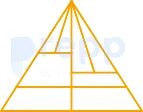
- A
15
- B
8
- C
11
- D
12
Show answer
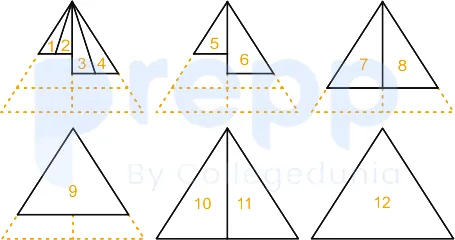
D. 12The number of triangles in the given figure is shown below:
Hence, ‘ 12 ’ is the correct answer.
 Paper & answer key PDF ↗
 Question 3archived
The sequence of folding a piece of paper and the manner in which the folded paper has been cut is shown in the following figures. How would this paper look when unfolded?

- A
Option A (shown in image)
- B
Option B (shown in image)
- C
Option C (shown in image)
- D
Option D (shown in image)
Show answer
C. Option C (shown in image)The paper when unfolded will appear as shown below:
Hence, ‘ option 3 ’ is the correct answer.
 Paper & answer key PDF ↗
 Question 4archived
Select the letter-cluster from among the given options that can replace the question mark (?) in the following series.
UTMD, QXIH, MBEL, IFAP, ?
- A
EKXT
- B
EKWU
- C
DJVT
- D
EJWT
Show answer
D. EJWTThe correct answer is EJWT.
The patterns can be based on: Positional value of letters (A=1, B=2, etc.) Skipping a fixed number of letters Consecutive letters or alternate letters Vowel and consonant patterns Reverse alphabetical order Combinations of these patterns, sometimes involving wrap around from Z to A or A to Z. Solving these problems often involves writing down the numerical values of the letters and looking for arithmetic progressions, or observing the step difference between consecutive terms in the series.
Paper & answer key PDF ↗ Question 5archived
Four words have been given, out of which three are alike in some manner and one is different. Select the word that is different.
- A
Mumbai
- B
Ahmedabad
- C
Ranchi
- D
Raipur
Show answer
B. AhmedabadFinding the Different City Among Indian Capitals
In this question, we are given four words representing cities and asked to identify the one that is different from the others based on some common characteristic shared by three of them.
Let's look at the given words:
Mumbai
Ahmedabad
Ranchi
Raipur
Analysing the Characteristics of Each City
We need to find a property that applies to three of these cities but not to the fourth. A common way to group Indian cities in such puzzles is by checking if they are state capitals.
Let's check the status of each city:
Mumbai: Mumbai is the capital city of the state of Maharashtra.
Ahmedabad: Ahmedabad is a major city in the state of Gujarat. However, the capital of Gujarat is Gandhinagar.
Ranchi: Ranchi is the capital city of the state of Jharkhand.
Raipur: Raipur is the capital city of the state of Chhattisgarh.
Based on this analysis, we can see a clear pattern:
City
Is it a State Capital?
State (for capital)
Mumbai
Yes
Maharashtra
Ahmedabad
No
Gujarat (Capital is Gandhinagar)
Ranchi
Yes
Jharkhand
Raipur
Yes
Chhattisgarh
Identifying the Odd One Out City
The analysis shows that Mumbai, Ranchi, and Raipur are all capital cities of Indian states. Ahmedabad, on the other hand, is not a state capital; it is a large city in Gujarat, whose capital is Gandhinagar.
Therefore, Ahmedabad is different from the other three cities based on the characteristic of being a state capital.
The word that is different is Ahmedabad.
Revision Table: Important Indian Capitals
State
Capital City
Maharashtra
Mumbai
Gujarat
Gandhinagar
Jharkhand
Ranchi
Chhattisgarh
Raipur
Karnataka
Bengaluru
Tamil Nadu
Chennai
West Bengal
Kolkata
Additional Information on City Classification
Cities can be classified in many ways, not just as capitals. Some other classifications include:
Metropolitan Cities: Very large and densely populated urban areas (e.g., Mumbai, Delhi, Kolkata, Chennai, Bengaluru, Hyderabad, Ahmedabad).
Smart Cities: Cities selected under the Indian government's Smart Cities Mission for urban development and infrastructure upgrades.
Port Cities: Cities located on a coast with significant ports (e.g., Mumbai, Chennai, Kolkata).
Industrial Cities: Cities known for significant industrial activity (e.g., Ahmedabad, Jamshedpur).
Understanding these classifications can help in solving various types of reasoning questions involving cities.
Paper & answer key PDF ↗ Question 6archived
In a certain code language, 'COUNTRY' is written as 'BOWKXLF'. How will 'DESPAIR' be written in that language?
- A
ULDSVHG
- B
GBVMDFU
- C
GBPSXIO
- D
UFDMVBG
Show answer
D. UFDMVBGDecoding the Pattern: COUNTRY to BOWKXLF
This question involves a coding/decoding pattern where a specific word ('COUNTRY') is transformed into a coded word ('BOWKXLF'). We need to decipher this pattern and apply it to another word ('DESPAIR') to find its corresponding code.
Identifying the COUNTRY Coding Pattern
Let's analyze the relationship between the letters of 'COUNTRY' and 'BOWKXLF'. A common technique is to check letter positions and potential shifts.
Original Word: C O U N T R Y
Coded Word: B O W K X L F
Upon closer inspection, the pattern isn't a direct letter-to-letter shift. Let's test the hypothesis of reversing the original word first.
Step 1: Reverse the word 'COUNTRY'.
Reversing 'COUNTRY' gives 'YRTNUOC'.
Step 2: Analyze shifts on the reversed word 'YRTNUOC'.
Now, let's compare 'YRTNUOC' with the code 'BOWKXLF' and check the shifts based on alphabetical positions (A=1, B=2, ..., Z=26).
Y (position $25$) to B (position $2$): The shift is calculated as $2 - 25 = -23$. Wrapping around the alphabet ($26$ letters), $-23$ is equivalent to $+3$ ($25 + 3 = 28$, and $28 \pmod{26} = 2$).
R (position $18$) to O (position $15$): The shift is $15 - 18 = -3$.
T (position $20$) to W (position $23$): The shift is $23 - 20 = +3$.
N (position $14$) to K (position $11$): The shift is $11 - 14 = -3$.
U (position $21$) to X (position $24$): The shift is $24 - 21 = +3$.
O (position $15$) to L (position $12$): The shift is $12 - 15 = -3$.
C (position $3$) to F (position $6$): The shift is $6 - 3 = +3$.
The pattern of shifts applied to the reversed word is consistently alternating between $+3$ and $-3$: $+3, -3, +3, -3, +3, -3, +3$.
Table: Analysis of COUNTRY Pattern
Reversed Letter
Position
Shift Pattern
Calculation
Coded Letter Position
Coded Letter
Y
$25$
+3
$25 + 3 = 28 \equiv 2 \pmod{26}$
$2$
B
R
$18$
-3
$18 - 3 = 15$
$15$
O
T
$20$
+3
$20 + 3 = 23$
$23$
W
N
$14$
-3
$14 - 3 = 11$
$11$
K
U
$21$
+3
$21 + 3 = 24$
$24$
X
O
$15$
-3
$15 - 3 = 12$
$12$
L
C
$3$
+3
$3 + 3 = 6$
$6$
F
This confirms the coding rule: reverse the word and apply alternating shifts of +3 and -3.
Applying the Coding Pattern to DESPAIR
We will now use the identified pattern (reverse the word, then apply +3/-3 shifts alternately) to encode the word 'DESPAIR'.
Step 1: Reverse the word 'DESPAIR'.
Reversing 'DESPAIR' yields 'RIAPSED'.
Step 2: Apply the alternating shift pattern (+3, -3, +3, ...) to 'RIAPSED'.
R (position $18$) with +3 shift: $18 + 3 = 21$. The 21st letter is U.
I (position $9$) with -3 shift: $9 - 3 = 6$. The 6th letter is F.
A (position $1$) with +3 shift: $1 + 3 = 4$. The 4th letter is D.
P (position $16$) with -3 shift: $16 - 3 = 13$. The 13th letter is M.
S (position $19$) with +3 shift: $19 + 3 = 22$. The 22nd letter is V.
E (position $5$) with -3 shift: $5 - 3 = 2$. The 2nd letter is B.
D (position $4$) with +3 shift: $4 + 3 = 7$. The 7th letter is G.
Table: Applying the Pattern to DESPAIR
Reversed Letter
Position
Shift Pattern
Calculation
Coded Letter Position
Coded Letter
R
$18$
+3
$18 + 3 = 21$
$21$
U
I
$9$
-3
$9 - 3 = 6$
$6$
F
A
$1$
+3
$1 + 3 = 4$
$4$
D
P
$16$
-3
$16 - 3 = 13$
$13$
M
S
$19$
+3
$19 + 3 = 22$
$22$
V
E
$5$
-3
$5 - 3 = 2$
$2$
B
D
$4$
+3
$4 + 3 = 7$
$7$
G
Conclusion: Finding the Code for DESPAIR
Following the reverse-and-shift pattern, the word 'DESPAIR' is coded as 'UFDMVBG'. This result matches one of the provided options.
Paper & answer key PDF ↗ Question 7archived
Select the option that is related to the third number in the same way as the second number is related to the first number and the sixth number is related to the fifth number.
13 ∶ 4 ∶∶ 19 ∶ ? ∶∶ 16 ∶ 5
- A
6
- B
2
- C
5
- D
3
Show answer
A. 6This is a number analogy question where we need to find the missing number based on the relationship between the given pairs of numbers. The problem provides three pairs, but one number is unknown. The pairs are presented as 13 related to 4, 19 related to ?, and 16 related to 5.
Let's analyze the relationship in the two complete pairs:
Analysing the Given Number Pairs
The given pairs are:
13 ∶ 4
16 ∶ 5
19 ∶ ?
We need to find the pattern connecting the first number to the second number in each pair.
Pattern Discovery for 13 ∶ 4
Let's look at the digits of the first number, 13. The digits are 1 and 3. How can we get 4 from 1 and 3?
Sum of digits: \(1 + 3 = 4\). This matches the second number.
Difference of digits: \(|3 - 1| = 2\). This does not match 4.
Product of digits: \(1 \times 3 = 3\). This does not match 4.
The most direct relationship for the pair 13 ∶ 4 seems to be the sum of its digits.
Pattern Discovery for 16 ∶ 5
Now let's look at the digits of the first number, 16. The digits are 1 and 6. How can we get 5 from 1 and 6?
Sum of digits: \(1 + 6 = 7\). This does not match 5.
Difference of digits: \(|6 - 1| = 5\). This matches the second number.
Product of digits: \(1 \times 6 = 6\). This does not match 5.
For the pair 16 ∶ 5, the difference between its digits seems to be the relationship.
Developing a Consistent Logic
We have found two different rules: sum of digits for 13 ∶ 4, and difference of digits for 16 ∶ 5. This suggests a more complex rule or a rule that changes based on some property.
Let's consider if the rule involves the sum of digits but with an adjustment. Let S be the sum of digits of the first number.
For 13 ∶ 4: Sum of digits \(S = 1 + 3 = 4\). The result is 4. The difference is \(4 - 4 = 0\).
For 16 ∶ 5: Sum of digits \(S = 1 + 6 = 7\). The result is 5. The difference is \(7 - 5 = 2\).
So, the second number seems to be the sum of digits minus a certain value. This value is 0 for the first pair and 2 for the third pair as listed in the question.
Let's consider the sequence of the first numbers from the pairs: 13, 19, 16. The subtractions found are 0 (for 13) and 2 (for 16). We need to find the subtraction value for 19.
Let's list the first numbers in ascending order and the corresponding subtractions we've found:
First Number
Sum of Digits (S)
Second Number
Subtraction (\(S - \text{Second Number}\))
13
\(1+3 = 4\)
4
\(4 - 4 = 0\)
16
\(1+6 = 7\)
5
\(7 - 5 = 2\)
19
\(1+9 = 10\)
?
?
Look at the subtraction values for the known pairs (0 and 2) corresponding to the first numbers 13 and 16. If we consider the first numbers in increasing order (13, 16, 19), the sequence of subtraction values is 0, 2, ?. This sequence appears to be an arithmetic progression with a common difference of 2 (0, 2, 4, ...).
Based on this pattern, the subtraction value for the number 19 (which is the next number in the implicit sequence based on magnitude, after 13 and 16) should be 4.
Calculating the Missing Number
Now we can apply this logic to the pair 19 ∶ ?.
Calculate the sum of digits for 19: \(1 + 9 = 10\). This is S.
Determine the subtraction value for 19 based on the sequence 0, 2, 4. The value is 4.
Subtract this value from the sum of digits: \(10 - 4 = 6\).
So, the missing number is 6.
Verification with Options
The calculated missing number is 6, which is present in the given options.
The logic is: The second number is obtained by subtracting a value from the sum of the digits of the first number. This subtracted value is 0 for 13, 2 for 16, and 4 for 19, following a pattern of increasing by 2 based on the magnitude of the first number.
13 ∶ 4: Sum of digits = 4. \(4 - 0 = 4\).
16 ∶ 5: Sum of digits = 7. \(7 - 2 = 5\).
19 ∶ ?: Sum of digits = 10. \(10 - 4 = 6\).
Conclusion on Number Analogy
Following the identified pattern involving the sum of digits and an increasing subtraction factor, the missing number in the analogy 19 ∶ ? is 6.
The final answer is 6.
Revision Table: Number Analogy Logic
First Number
Sum of Digits (S)
Subtraction Factor
Result (\(S - \text{Subtraction Factor}\))
Second Number
Match?
13
\(1+3=4\)
0
\(4-0=4\)
4
Yes
16
\(1+6=7\)
2
\(7-2=5\)
5
Yes
19
\(1+9=10\)
4
\(10-4=6\)
6
Calculated
Additional Information: Solving Number Analogy Problems
Number analogy questions test your logical reasoning and pattern recognition skills. These problems often involve simple arithmetic operations, digit manipulation, or sequences.
Common patterns include:
Basic operations (addition, subtraction, multiplication, division).
Operations on digits (sum, difference, product, squaring digits).
Number properties (prime numbers, squares, cubes).
Sequences or series applied to the numbers or the results of operations.
Relationships between numbers based on their position or order in the problem.
To solve number analogy problems effectively, it is useful to:
Examine the relationship in the given pairs carefully.
Test simple operations first.
Consider operations involving the digits of the numbers.
Look for sequences or patterns in the differences, sums, or results.
Don't assume the rule is simple; sometimes it combines multiple steps or depends on the numbers themselves.
Practice with various types of analogy problems helps improve pattern recognition speed and accuracy.
Paper & answer key PDF ↗ Question 8archived
Two different positions of the same dice are shown, the faces of which are marked with the letters E, F, G, H, I and J. Select the letter that will be on the face opposite to the face having the letter 'J'.

- A
F
- B
I
- C
E
- D
G
Show answer
B. IAs E is the common face on both the dice, keeping it constant and then rotating in clockwise direction, we get the faces opposite to each other:
E
I
H
E
J
G
'I' is the letter that will be on the face opposite to the face having the letter 'J'.
Hence, ‘ I’ is the correct answer.
Paper & answer key PDF ↗ Question 9archived
Study the given pattern carefully and select the number that can replace the question mark (?) in it.
256481
234138
1833?
- A
29
- B
19
- C
27
- D
17
Show answer
A. 29Analyzing the Number Pattern
The question presents a pattern of digits arranged as a single string: 2564812341381833?. Our goal is to identify the number that logically completes this sequence.
Let's examine the digits by grouping them into pairs, as the given options are two-digit numbers:
25
64
81
23
41
38
18
33
?? (This represents the two digits of the missing number)
This arrangement gives us the sequence of numbers: 25, 64, 81, 23, 41, 38, 18, 33, ?.
Finding the Pattern by Sum of Digits
Let's try calculating the sum of the digits for each number in this sequence. This is a common technique for identifying patterns in such problems.
For the number 25, the sum of digits is $2 + 5 = 7$.
For the number 64, the sum of digits is $6 + 4 = 10$.
For the number 81, the sum of digits is $8 + 1 = 9$.
For the number 23, the sum of digits is $2 + 3 = 5$.
For the number 41, the sum of digits is $4 + 1 = 5$.
For the number 38, the sum of digits is $3 + 8 = 11$.
For the number 18, the sum of digits is $1 + 8 = 9$.
For the number 33, the sum of digits is $3 + 3 = 6$.
By calculating the sum of digits for each number, we get a new sequence: 7, 10, 9, 5, 5, 11, 9, 6, ?. The question mark here represents the sum of digits of the missing number.
Analyzing the Sum of Digits Sequence Pattern
Now, let's look for a pattern within this sequence of sums: 7, 10, 9, 5, 5, 11, 9, 6.
Observing the sequence, it appears there might be two interleaved patterns – one for the sums at odd positions and another for the sums at even positions.
Sums at Odd Positions (1st, 3rd, 5th, 7th terms in the sum sequence):
1st term: 7
3rd term: 9
5th term: 5
7th term: 9
Let's find the differences between consecutive terms in this odd-positioned sequence:
From 7 to 9: $9 - 7 = +2$
From 9 to 5: $5 - 9 = -4$
From 5 to 9: $9 - 5 = +4$
The pattern of differences for the odd-positioned sums is +2, -4, +4.
Sums at Even Positions (2nd, 4th, 6th, 8th terms in the sum sequence):
2nd term: 10
4th term: 5
6th term: 11
8th term: 6
Let's find the differences between consecutive terms in this even-positioned sequence:
From 10 to 5: $5 - 10 = -5$
From 5 to 11: $11 - 5 = +6$
From 11 to 6: $6 - 11 = -5$
The pattern of differences for the even-positioned sums is -5, +6, -5.
Predicting the Sum of the Missing Number's Digits
The missing number is the 9th term in the original sequence, which means its sum of digits is the 9th term in the sum sequence (7, 10, 9, 5, 5, 11, 9, 6, ?). The 9th term is at an odd position.
The odd-positioned sum sequence is 7, 9, 5, 9. The observed pattern of differences is +2, -4, +4.
Assuming this pattern of differences (+2, -4, +4) repeats, the next difference to be applied after +4 would be +2.
So, the 9th sum (which is the 5th term in the odd-positioned sum sequence) is calculated by adding the next difference (+2) to the 7th sum:
$9\text{th sum} = \text{7th sum} + (+2)$
$9\text{th sum} = 9 + 2 = 11$
Therefore, the sum of the digits of the number replacing the question mark must be 11.
Checking the Options for Sum of Digits
Now, let's look at the given options and calculate the sum of their digits to see which one matches the predicted sum of 11.
Option
Number
Calculation of Sum of Digits
Sum of Digits
1
29
$2 + 9$
11
2
19
$1 + 9$
10
3
27
$2 + 7$
9
4
17
$1 + 7$
8
Comparing the sums of digits from the options with our predicted sum of 11, we find that only the number 29 has a sum of digits equal to 11.
Conclusion
By breaking the pattern into two-digit numbers, calculating the sum of digits for each, and identifying separate difference patterns for the sums at odd and even positions, we determined that the sum of the digits for the missing number must be 11. Among the given options, only 29 has a sum of digits of 11. Thus, 29 is the number that replaces the question mark in the pattern.
Revision Table - Common Number Pattern Types
Pattern Category
How it Works
Example (simple)
Arithmetic Progression
Constant difference between consecutive terms.
Sequence: 5, 10, 15, 20... (Difference: +5)
Geometric Progression
Constant ratio between consecutive terms.
Sequence: 2, 6, 18, 54... (Ratio: $\times$3)
Difference Series
The differences between terms form a recognizable pattern.
Sequence: 1, 2, 4, 7, 11... (Differences: +1, +2, +3, +4...)
Sum/Product of Digits
A pattern is found in the sum or product of the digits of each number.
Sequence: 13, 22, 31, 40... (Sum of digits: 4, 4, 4, 4...)
Alternating Patterns
Different rules apply to alternate terms or sets of terms.
Sequence: 1, 10, 3, 12, 5, 14... (Odd terms: +2; Even terms: +2)
Additional Information - Strategies for Solving Number Patterns
Solving number pattern problems often requires careful observation and testing different possibilities. Here are a few general strategies that can be helpful:
Always start by looking for simple arithmetic or geometric progressions.
If the simple patterns don't fit, calculate the differences between consecutive terms. If these differences form a pattern, you have a difference series.
Consider the possibility of more complex difference series (e.g., the differences of the differences form a pattern).
Look at alternate terms in the sequence. There might be two or more independent patterns running in parallel.
Examine properties of the numbers themselves, such as the sum of their digits, the product of their digits, or if they are squares, cubes, prime numbers, etc.
Sometimes the pattern relates the term's value to its position in the sequence.
If the numbers seem unrelated at first glance, try combining or splitting digits or pairs of digits.
Systematically test potential rules based on the initial terms of the pattern.
Persistence and trying various approaches are key to cracking complex number patterns.
Paper & answer key PDF ↗ Question 10archived
Select the number-pair in which the two numbers share a different relationship from that shared by the two numbers in the rest of the number-pairs.
- A
(215, 338)
- B
(178, 308)
- C
(169, 292)
- D
(11, 134)
Show answer
B. (178, 308)Finding the Different Number-Pair Relationship
This question asks us to identify the specific number-pair among the given options that does not follow the same relationship as the others. We need to carefully examine the connection between the two numbers in each pair.
Analyzing the Relationship: Calculating Differences
A common way to find relationships between numbers in a pair is to calculate the difference between the second number and the first number. Let's apply this method to each pair:
Pair 1: (215, 338)
Calculation: The difference is $338 - 215 = 123$.
Pair 2: (178, 308)
Calculation: The difference is $308 - 178 = 130$.
Pair 3: (169, 292)
Calculation: The difference is $292 - 169 = 123$.
Pair 4: (11, 134)
Calculation: The difference is $134 - 11 = 123$.
Identifying the Unique Number-Pair
After calculating the differences for all the number-pairs, we can observe a pattern:
The pairs (215, 338), (169, 292), and (11, 134) all show a difference of 123. This indicates a consistent relationship where the second number is 123 greater than the first.
The pair (178, 308) has a difference of 130.
Since the difference of 130 is unique and different from the common difference of 123 found in the other three pairs, the number-pair (178, 308) shares a different relationship.
Paper & answer key PDF ↗ Question 11archived
Select the number from among the given options that can replace the question mark (?) in the following series.
27, 30, 37, 50, ?, 98
- A
82
- B
69
- C
62
- D
78
Show answer
B. 69Finding the Missing Number in the Series 27, 30, 37, 50, ?, 98
Let's analyze the given number series to find the pattern and determine the missing number. The series is:
27, 30, 37, 50, ?, 98
To find the pattern in a number series, we often look at the differences between consecutive terms.
Let's calculate the differences:
Difference between the 2nd and 1st term: $30 - 27 = 3$
Difference between the 3rd and 2nd term: $37 - 30 = 7$
Difference between the 4th and 3rd term: $50 - 37 = 13$
The differences we have found so far are 3, 7, and 13.
Let's look closely at these differences: 3, 7, 13. We need to find a pattern in this sequence of differences.
Sometimes, the pattern involves prime numbers, squares, cubes, or other known sequences.
Let's list the first few prime numbers:
2, 3, 5, 7, 11, 13, 17, 19, 23, 29, ...
Comparing our differences (3, 7, 13) with the list of prime numbers, we can see that:
3 is the 2nd prime number ($P_2$).
7 is the 4th prime number ($P_4$).
13 is the 6th prime number ($P_6$).
It appears that the differences between consecutive terms in the series are the even-indexed prime numbers ($P_{2n}$).
Let's test this pattern for the rest of the series:
Term 1: 27
Term 2: $27 + P_2 = 27 + 3 = 30$ (Correct)
Term 3: $30 + P_4 = 30 + 7 = 37$ (Correct)
Term 4: $37 + P_6 = 37 + 13 = 50$ (Correct)
Following this pattern, the difference between the 5th term (the missing number) and the 4th term (50) should be the 8th prime number ($P_8$).
Looking at our list of prime numbers: 2, 3, 5, 7, 11, 13, 17, 19, 23, 29, ...
The 8th prime number is 19.
So, the missing term should be $50 + P_8 = 50 + 19 = 69$.
Let's verify this by checking the next term in the series (98).
The difference between the 6th term (98) and the 5th term (which we found to be 69) should be the 10th prime number ($P_{10}$).
The 10th prime number is 29.
Let's check if $69 + P_{10} = 98$.
$69 + 29 = 98$ (Correct)
The pattern holds true. The differences added to each term are the 2nd, 4th, 6th, 8th, and 10th prime numbers.
The missing number is 69.
Step
Term
Difference Added
Prime Index ($2n$)
Prime Value ($P_{2n}$)
1
27
-
-
-
2
30
$30 - 27 = 3$
2nd
3
3
37
$37 - 30 = 7$
4th
7
4
50
$50 - 37 = 13$
6th
13
5
? (69)
$69 - 50 = 19$
8th
19
6
98
$98 - 69 = 29$
10th
29
The number that replaces the question mark is 69.
Revision Table: Understanding Number Series Patterns
Pattern Type
Description
Example
Arithmetic Series
Constant difference between terms.
2, 5, 8, 11, ... (Difference is 3)
Geometric Series
Constant ratio between terms.
3, 6, 12, 24, ... (Ratio is 2)
Difference Series
Pattern found in the differences between terms (can be arithmetic, geometric, prime numbers, etc.).
2, 3, 5, 8, 12, ... (Differences: 1, 2, 3, 4)
Double Difference Series
Pattern found in the differences of the differences.
1, 3, 7, 13, 21, ... (Differences: 2, 4, 6, 8; Second differences: 2, 2, 2)
Prime Number Based
The terms or the differences are related to prime numbers (e.g., consecutive primes, alternate primes, etc.).
2, 3, 5, 7, 11, ... (Consecutive primes) or 2, 5, 11, 17, ... (Alternate primes starting from 2)
Fibonacci Series
Each term is the sum of the two preceding ones.
0, 1, 1, 2, 3, 5, 8, ...
Additional Information on Prime Numbers and Series
A prime number is a natural number greater than 1 that has no positive divisors other than 1 and itself. The sequence of prime numbers starts with 2, 3, 5, 7, 11, 13, 17, 19, 23, 29, and so on.
Number series questions in logical reasoning or quantitative aptitude often test your ability to identify patterns. These patterns can be based on simple arithmetic operations, geometric progressions, squares, cubes, or sequences like prime numbers, Fibonacci numbers, etc. Sometimes, the pattern is not directly on the terms themselves but on the differences between consecutive terms (as seen in this problem).
When solving number series problems:
First, check for simple arithmetic or geometric progressions.
If not obvious, calculate the differences between consecutive terms. Look for a pattern in these differences.
If the first differences don't show a simple pattern, calculate the differences of the differences (second differences).
Consider patterns involving squares, cubes, prime numbers, or Fibonacci numbers.
Sometimes, the pattern might involve alternating operations or multiple interwoven series.
Practice with various types of series helps in quickly recognizing common patterns.
Paper & answer key PDF ↗ Question 12archived
Select the option that is related to the third word in the same way as the second word is related to the first word.
Nascent ∶ Young ∶∶ Adjunct ∶ ?
- A
Against
- B
Functional
- C
Rigid
- D
Supportive
Show answer
D. SupportiveSolving the Word Analogy: Nascent, Young, Adjunct
This question asks us to find a word that shares the same relationship with 'Adjunct' as 'Young' shares with 'Nascent'. This type of question is called a word analogy, and it tests your vocabulary and reasoning skills by asking you to identify the relationship between a pair of words and apply that same relationship to another word.
Understanding the First Pair: Nascent and Young
Let's first look at the relationship between the words 'Nascent' and 'Young'.
Nascent: This word means just coming into existence and beginning to display signs of future potential. It refers to something that is in its early stages of development.
Young: This word typically refers to someone or something that is in the early stage of life or growth.
Comparing the meanings, we can see that 'Nascent' is very close in meaning to 'Young'. They are essentially synonyms, or words with very similar meanings, describing something that is new, developing, or in an early stage.
Understanding the Second Pair: Adjunct and the Missing Word
Now we need to find a word that relates to 'Adjunct' in the same way that 'Young' relates to 'Nascent'. Since the relationship in the first pair is one of synonymy or close meaning, we are looking for a word that is a synonym or has a very close meaning to 'Adjunct'.
Let's define 'Adjunct':
Adjunct: This word refers to a thing added to something else as a supplementary rather than an essential part. It can also describe a person who is a temporary or auxiliary member of a faculty or staff. The core idea is something that is added to help, support, or supplement something else.
Now let's examine the given options and see which one best fits this description or is a close synonym for 'Adjunct'.
Evaluating the Options
Option 1: Against - 'Against' means in opposition to or contrary to. This is the opposite of adding to or supporting something. So, this option is not related to 'Adjunct' as a synonym.
Option 2: Functional - 'Functional' means working or operating. While an adjunct might be functional, the word itself doesn't capture the core meaning of being an addition or support.
Option 3: Rigid - 'Rigid' means unable to bend or be forced out of shape; not flexible. This meaning is completely unrelated to 'Adjunct'.
Option 4: Supportive - 'Supportive' means providing support or encouragement. An adjunct is something or someone that is added to provide support or supplement something else. This meaning is very close to the concept of being 'Supportive' or providing support.
Comparing the meanings, 'Supportive' is the word that is most closely related in meaning to 'Adjunct', representing the function or purpose of something added as an adjunct.
Conclusion
The relationship between 'Nascent' and 'Young' is one of synonymy or close meaning. Applying the same relationship to 'Adjunct', we look for a synonym or closely related word among the options. The word 'Supportive' best fits this relationship, as an adjunct is typically added to be supportive or supplementary.
Revision Table: Understanding Key Terms
Word
Meaning
Relationship in Analogy
Nascent
Just beginning to exist or develop
Synonyms / Closely related
Young
In the early stage of life or growth
Adjunct
A thing added to something else as supplementary or auxiliary
Synonyms / Closely related (based on function/purpose)
Supportive
Providing support or encouragement
Additional Information: Types of Word Analogies
Word analogies can show various types of relationships between pairs of words. Understanding these relationships helps solve analogy questions. Some common types include:
Synonyms: Words with similar meanings (e.g., Happy : Joyful).
Antonyms: Words with opposite meanings (e.g., Hot : Cold).
Part to Whole: One word is a part of the other (e.g., Finger : Hand).
Cause and Effect: One word describes a cause, the other its effect (e.g., Rain : Flood).
Worker and Tool: A person and the tool they use (e.g., Carpenter : Hammer).
Action and Object: A verb and the noun it acts upon (e.g., Read : Book).
Degree of Intensity: Words show different levels of intensity (e.g., Warm : Hot).
Category and Example: One word is a category, the other is an example (e.g., Fruit : Apple).
In this specific question, the relationship is primarily that of synonyms or closely related meanings.
Paper & answer key PDF ↗ Question 13archived
Select the correct option that indicates the arrangement of the given words in the order in which they appear in an English dictionary.
1. Terminal
2. Terminology
3. Temperature
4. Tamarind
5. Tame
6. Tertiary
- A
4, 5, 3, 1, 6, 2
- B
4, 5, 1, 3, 2, 6
- C
4, 5, 3, 2, 1, 6
- D
4, 5, 3, 1, 2, 6
Show answer
D. 4, 5, 3, 1, 2, 6Ordering Words Alphabetically: An English Dictionary Guide
This guide explains how to arrange a list of words in the correct alphabetical order, simulating how they would appear in an English dictionary. We will carefully compare the words based on the standard letter sequence.
Understanding Dictionary Word Arrangement
Arranging words alphabetically means ordering them from A to Z. When words share common letters at the beginning, we compare subsequent letters until we find a difference. The word with the letter that comes earlier in the alphabet is placed first.
Analyzing the Given Word List
Here are the words we need to arrange:
Number
Word
1
Terminal
2
Terminology
3
Temperature
4
Tamarind
5
Tame
6
Tertiary
Step-by-Step Dictionary Ordering Process
Initial Letter Comparison: All the given words start with the letter 'T'. This means we need to look at the following letters to determine the order.
Comparing the Second Letter:
Words 4 (Tamarind) and 5 (Tame) have 'a' as the second letter.
Words 1 (Terminal), 2 (Terminology), 3 (Temperature), and 6 (Tertiary) have 'e' as the second letter.
In the alphabet, 'a' comes before 'e'. Therefore, words 4 and 5 must come before words 1, 2, 3, and 6.
Ordering 'Tamarind' (4) and 'Tame' (5):
Both words start with 'Tam'. We compare the fourth letter:
4. Tamarind
5. Tame
Since 'a' comes before 'e', 'Tamarind' (4) is placed before 'Tame' (5).
Current Order Segment: 4, 5
Ordering the 'Te' Words (1, 2, 3, 6):
Now we compare the remaining words: 1. Terminal, 2. Terminology, 3. Temperature, and 6. Tertiary.
Let's look at the third letter:
3. Temperature
1. Terminal
2. Terminology
6. Tertiary
The letter 'm' in 'Temperature' comes before 'r' in the other three words. So, 'Temperature' (3) comes next in the overall sequence.
Current Order Segment: 4, 5, 3
Ordering the 'Ter' Words (1, 2, 6):
We now need to order 1. Terminal, 2. Terminology, and 6. Tertiary.
Compare the fourth letter:
1. Terminal
2. Terminology
6. Tertiary
The letter 'm' comes before 't'. Thus, words 1 and 2 will come before word 6.
Ordering 'Terminal' (1) and 'Terminology' (2):
Both words start with 'Termin'. We compare the sixth letter:
1. Terminal
2. Terminology
Since 'a' comes before 'o', 'Terminal' (1) is placed before 'Terminology' (2).
Order within 'Ter' group: 1, 2, 6
Final Arrangement:
Combining the ordered segments gives us the final sequence:
From 'Ta' group: 4, 5
Next is 'Te' group starting with 'm': 3
Followed by 'Ter' group ordered as: 1, 2, 6
The complete alphabetical order is: 4, 5, 3, 1, 2, 6.
Identifying the Correct Option
The sequence derived from our step-by-step comparison is 4, 5, 3, 1, 2, 6. We now match this sequence to the given options.
The option listing the words in the correct dictionary order (Tamarind, Tame, Temperature, Terminal, Terminology, Tertiary) is 4, 5, 3, 1, 2, 6.
Paper & answer key PDF ↗ Question 14archived
‘A + B’ means ‘A is the husband of B’.
‘A % B’ means ‘A is the father of B’.
‘A $ B’ means ‘A is the mother of B’.
If ‘Y + Z $ H % C $ D + S’, then which of the following statements is INCORRECT?
- A
C is the mother-in-law of S.
- B
Z is the maternal grandmother of C.
- C
H is the son of Y.
- D
H is the maternal grandfather of D.
Show answer
B. Z is the maternal grandmother of C.Solving Blood Relation Puzzles
This question asks us to analyze a blood relation expression given specific codes and determine which of the provided statements is incorrect based on the derived relationships.
Let's first understand the codes provided:
‘A + B’ means ‘A is the husband of B’.
‘A % B’ means ‘A is the father of B’.
‘A $ B’ means ‘A is the mother of B’.
We are given the expression: ‘Y + Z $ H % C $ D + S’.
Let's break down this expression segment by segment to determine the relationships and the gender of each person where possible.
Y + Z: Y is the husband of Z. This means Z is the wife of Y. Gender: Y is male (\(Y^{+}\)), Z is female (\(Z^{-}\)). They are a couple.
Z $ H: Z is the mother of H. Since Z is female, this is consistent. H is the child of Z and Y. Gender of H is currently unknown.
H % C: H is the father of C. This tells us that H is male (\(H^{+}\)). C is the child of H.
C $ D: C is the mother of D. This tells us that C is female (\(C^{-}\)). D is the child of C.
D + S: D is the husband of S. This tells us that D is male (\(D^{+}\)). S is the wife of D. Gender: S is female (\(S^{-}\)). They are a couple.
Now let's summarize the relationships and genders we have deduced:
Relation
Persons
Gender
Couple
Y and Z
Y (\(^{+}\)), Z (\(^{-}\))
Parent-Child
Z is parent of H
Z (\(^{-}\)), H (\(^{+}\))
Parent-Child
Y is parent of H
Y (\(^{+}\)), H (\(^{+}\))
Parent-Child
H is parent of C
H (\(^{+}\)), C (\(^{-}\))
Parent-Child
C is parent of D
C (\(^{-}\)), D (\(^{+}\))
Couple
D and S
D (\(^{+}\)), S (\(^{-}\))
From these relationships, we can visualize the family structure:
Y (\(^{+}\)) — Z (\(^{-}\))
| |
H (\(^{+}\))
|
C (\(^{-}\))
|
D (\(^{+}\)) — S (\(^{-}\))
Now, let's evaluate each statement given in the options based on this family structure to identify the incorrect statement.
Analyzing Each Statement
Let's check each option carefully:
C is the mother-in-law of S.
We know D is the husband of S, and C is the mother of D. The mother of one's spouse is their mother-in-law. Since C is the mother of D (S's husband), C is the mother-in-law of S. This statement is correct.
Z is the maternal grandmother of C.
C's father is H (H % C). H's mother is Z (Z $ H). Z is the mother of H, who is C's father. The mother of the father is the paternal grandmother. Therefore, Z is the paternal grandmother of C, not the maternal grandmother. This statement is incorrect.
H is the son of Y.
Z is the mother of H (Z $ H), and Y is the husband of Z (Y + Z). This means H is the child of both Y and Z. We also know H is male (H % C means H is father of C). Therefore, H is the son of Y. This statement is correct.
H is the maternal grandfather of D.
D's mother is C (C $ D). C's father is H (H % C). H is the father of C, who is D's mother. The father of one's mother is their maternal grandfather. Therefore, H is the maternal grandfather of D. This statement is correct.
Based on our analysis, the statement that is INCORRECT is "Z is the maternal grandmother of C." Z is actually the paternal grandmother of C.
Conclusion on Incorrect Statement
After carefully analyzing all the relationships derived from the given expression and comparing them with the statements in the options, we find that the statement 'Z is the maternal grandmother of C' is incorrect.
Revision Table: Blood Relations
Term
Relationship
Husband
Male partner in marriage
Wife
Female partner in marriage
Father
Male parent
Mother
Female parent
Son
Male child
Daughter
Female child
Grandfather
Father of one's father or mother
Grandmother
Mother of one's father or mother
Paternal Grandfather
Father's father
Paternal Grandmother
Father's mother
Maternal Grandfather
Mother's father
Maternal Grandmother
Mother's mother
Mother-in-law
Mother of one's spouse
Additional Information on Blood Relation Questions
Blood relation questions test your ability to understand and decipher relationships between individuals based on given information or coded expressions. These types of problems are common in various competitive exams.
Key strategies for solving blood relation problems include:
Read the given codes or statements carefully to understand what each symbol or phrase represents in terms of relationships (e.g., parent, child, sibling, spouse).
Break down complex expressions into smaller, manageable segments.
Assign genders where possible based on the relationship definitions (e.g., 'husband' implies male, 'mother' implies female). Use symbols like \(^{+}\) for male and \(^{-}\) for female.
Draw a family tree or diagram to visually represent the relationships. This can make it much easier to trace connections between individuals.
Work step-by-step, building the family structure from the initial relationships given in the expression.
Once the family structure is clear, analyze each option provided in the question against your diagram or derived relationships to check its validity.
Be careful with terms like 'maternal' (mother's side) and 'paternal' (father's side).
Practicing different types of blood relation problems will help you become proficient in quickly and accurately decoding relationships and identifying the correct or incorrect statements.
Paper & answer key PDF ↗ Question 15archived
Select the option in which the words share the same relationship as that shared by the given pair of words.
Handwriting ∶ Graphology
- A
Earthquakes ∶ Pomology
- B
Soil ∶ Ornithology
- C
Matter ∶ Chemistry
- D
Fossils ∶ Pedology
Show answer
C. Matter ∶ ChemistryUnderstanding Analogies: Handwriting and Graphology
The question asks us to find a pair of words that shares the same relationship as the given pair: Handwriting ∶ Graphology.
First, let's understand the relationship between Handwriting and Graphology. Graphology is the study and analysis of handwriting, especially in relation to human psychology and personality. So, the relationship is: [Subject] ∶ [Study of that Subject].
Now, let's examine the given options to see which pair follows this same relationship.
Analyzing the Options
Option 1: Earthquakes ∶ Pomology
Earthquakes are sudden violent shakings of the ground.
Pomology is the branch of botany that studies fruits.
The study of earthquakes is called Seismology. Pomology is not the study of earthquakes.
Therefore, this pair does not share the same relationship.
Option 2: Soil ∶ Ornithology
Soil is the upper layer of earth in which plants grow.
Ornithology is the branch of zoology devoted to the study of birds.
The study of soil is called Pedology or Edaphology. Ornithology is not the study of soil.
Therefore, this pair does not share the same relationship.
Option 3: Matter ∶ Chemistry
Matter is anything that has mass and takes up space.
Chemistry is the branch of science that deals with the identification of the substances of which matter is composed, the investigation of their properties and the ways in which they interact, combine, and change. Essentially, Chemistry is the study of Matter and its properties.
This pair shares the same relationship: Matter is the subject being studied by Chemistry.
Therefore, this pair does share the same relationship as Handwriting ∶ Graphology.
Option 4: Fossils ∶ Pedology
Fossils are the remains or impression of a prehistoric organism preserved in petrified form or as a mold or cast in rock.
Pedology is the branch of science concerned with the formation, nature, ecology, and classification of soils. As mentioned in Option 2, Pedology is the study of soil.
The study of fossils is called Paleontology. Pedology is not the study of fossils.
Therefore, this pair does not share the same relationship.
Conclusion
Comparing the relationships, we find that only Option 3, Matter ∶ Chemistry, mirrors the relationship between Handwriting ∶ Graphology, where the second word is the study of the first word.
Pair
Relationship
Handwriting ∶ Graphology
Graphology is the study of Handwriting
Earthquakes ∶ Pomology
Pomology is the study of Fruits (Incorrect)
Soil ∶ Ornithology
Ornithology is the study of Birds (Incorrect)
Matter ∶ Chemistry
Chemistry is the study of Matter (Correct)
Fossils ∶ Pedology
Pedology is the study of Soil (Incorrect)
Revision Table: Understanding Branches of Study (Ologies)
Subject
Study (Ology/Science)
Handwriting
Graphology
Earthquakes
Seismology
Fruits
Pomology
Soil
Pedology / Edaphology
Birds
Ornithology
Matter
Chemistry
Fossils
Paleontology
Additional Information on Scientific Studies
Many fields of study end with the suffix '-logy', which comes from the Greek word 'logos' meaning 'study' or 'word'. Understanding these suffixes and their corresponding subjects is key to solving analogy questions related to scientific fields.
For example:
Biology: study of life
Geology: study of the Earth
Psychology: study of the mind
Sociology: study of society
Analogies test your ability to identify the underlying relationship between two items and apply that same relationship to different pairs. In this case, the relationship was identifying the specific scientific study associated with a subject.
Paper & answer key PDF ↗ Question 16archived
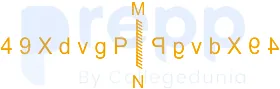
Select the correct mirror image of the given combination when the mirror is placed at MN as shown.
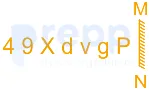
- A
Option A (shown in image)
- B
Option B (shown in image)
- C
Option C (shown in image)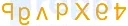
- D
Option D (shown in image)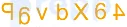
Show answer
A. Option A (shown in image)The correct mirror image of the given combination when the mirror is placed at MN is shown below:
Hence, ‘ option 1 ’ is the correct answer.
 Paper & answer key PDF ↗
 Question 17archived
Four letter-clusters have been given, out of which three are alike in some manner and one is different. Select the letter-cluster that is different.
- A
TYDI
- B
ZEJP
- C
HMRW
- D
NSXC
Show answer
B. ZEJPFinding the Different Letter Cluster
This question asks us to identify the letter cluster that is different from the other three. To do this, we need to look for a pattern or rule that applies to most of the clusters and find the one that doesn't follow that rule.
Analyzing Letter Patterns in Clusters
Let's examine the relationship between the letters in each given cluster. A common way to find patterns in letter series is to look at the alphabetical position of each letter (A=1, B=2, ..., Z=26).
Let's write down the alphabetical positions for each letter in the clusters:
TYDI: T is the 20th letter, Y is the 25th, D is the 4th, I is the 9th.
ZEJP: Z is the 26th letter, E is the 5th, J is the 10th, P is the 16th.
HMRW: H is the 8th letter, M is the 13th, R is the 18th, W is the 23rd.
NSXC: N is the 14th letter, S is the 19th, X is the 24th, C is the 3rd.
Calculating Differences Between Consecutive Letters
Now, let's calculate the difference in alphabetical position between consecutive letters in each cluster. Remember that the alphabet wraps around, so moving from Z to A is a difference of +1, Z to B is +2, and so on.
Cluster 1: TYDI
From T(20) to Y(25): $25 - 20 = +5$
From Y(25) to D(4): Y(25) $\xrightarrow{+1}$ Z(26) $\xrightarrow{+4}$ D(4). Total difference is $1+4= +5$. (Or $26 - 25 + 4 = 5$)
From D(4) to I(9): $9 - 4 = +5$
The pattern for TYDI is +5, +5, +5.
Cluster 2: ZEJP
From Z(26) to E(5): Z(26) $\xrightarrow{+1}$ A(1) $\xrightarrow{+4}$ E(5). Total difference is $1+4 = +5$. (Or $26 - 26 + 5 = 5$)
From E(5) to J(10): $10 - 5 = +5$
From J(10) to P(16): $16 - 10 = +6$
The pattern for ZEJP is +5, +5, +6.
Cluster 3: HMRW
From H(8) to M(13): $13 - 8 = +5$
From M(13) to R(18): $18 - 13 = +5$
From R(18) to W(23): $23 - 18 = +5$
The pattern for HMRW is +5, +5, +5.
Cluster 4: NSXC
From N(14) to S(19): $19 - 14 = +5$
From S(19) to X(24): $24 - 19 = +5$
From X(24) to C(3): X(24) $\xrightarrow{+1}$ Y(25) $\xrightarrow{+1}$ Z(26) $\xrightarrow{+3}$ C(3). Total difference is $1+1+3 = +5$. (Or $26 - 24 + 3 = 5$)
The pattern for NSXC is +5, +5, +5.
Identifying the Different Letter Cluster
Comparing the patterns for all four clusters:
Cluster
Pattern (Differences)
TYDI
+5, +5, +5
ZEJP
+5, +5, +6
HMRW
+5, +5, +5
NSXC
+5, +5, +5
Three of the letter clusters (TYDI, HMRW, and NSXC) follow the same pattern where the difference in alphabetical position between consecutive letters is always +5 (with wrap-around). The letter cluster ZEJP, however, has differences of +5, +5, and +6.
Therefore, the letter cluster that is different is ZEJP.
Revision Table: Letter Cluster Analysis
Cluster
Letters with Position
Differences (Pattern)
Fits +5 Pattern?
TYDI
T(20), Y(25), D(4), I(9)
+5, +5, +5
Yes
ZEJP
Z(26), E(5), J(10), P(16)
+5, +5, +6
No
HMRW
H(8), M(13), R(18), W(23)
+5, +5, +5
Yes
NSXC
N(14), S(19), X(24), C(3)
+5, +5, +5
Yes
Additional Information: Letter Series Patterns
Letter series questions often involve identifying a pattern based on the alphabetical positions of letters. Common patterns include:
Adding or subtracting a constant value between consecutive letters.
Adding or subtracting a value that increases or decreases sequentially (e.g., +1, +2, +3...).
Alternating patterns (e.g., +2, -1, +2, -1...).
Patterns involving vowels or consonants.
Patterns based on reversing the alphabet (Z=1, Y=2...).
Skipping a fixed number of letters.
To solve these types of questions, it's helpful to write down the alphabetical position of each letter and then calculate the differences between consecutive letters. Checking for patterns in these differences is key. Remember to consider wrap-around from Z to A when calculating differences.
Paper & answer key PDF ↗ Question 18archived
In a certain code language, ‘CROW’ is coded as ‘64’ and ‘EAGLE’ is coded as ‘125’. How will ‘PARROT’ be coded in that language?
- A
216
- B
249
- C
88
- D
232
Show answer
A. 216Decoding the Pattern in CROW and EAGLE
This problem involves decoding a simple pattern based on the given examples: 'CROW' coded as '64' and 'EAGLE' coded as '125'. Our goal is to find the coding for 'PARROT' using the same rule.
Let's examine the relationship between the words and their coded numbers.
Analyzing the Code for CROW
The word is CROW.
Let's count the number of letters in CROW. There are 4 letters (C, R, O, W).
The code given for CROW is 64.
Let's see if there is a mathematical relationship between the number of letters (4) and the code (64). We can try simple operations like squaring, cubing, multiplying, etc.
If we cube the number of letters: $4^3 = 4 \times 4 \times 4 = 16 \times 4 = 64$.
This matches the given code 64.
Analyzing the Code for EAGLE
Now let's check if the same pattern holds for the second example:
The word is EAGLE.
Let's count the number of letters in EAGLE. There are 5 letters (E, A, G, L, E).
The code given for EAGLE is 125.
Applying the potential pattern (cubing the number of letters): $5^3 = 5 \times 5 \times 5 = 25 \times 5 = 125$.
This also matches the given code 125.
Identifying the Coding Rule
Based on the analysis of both examples, the pattern is clear:
The code for a word is obtained by cubing the total number of letters in that word.
Coding Rule: Code = (Number of letters)$^3$
Applying the Rule to PARROT
Now we need to apply this coding rule to the word 'PARROT'.
The word is PARROT.
Let's count the number of letters in PARROT. There are 6 letters (P, A, R, R, O, T).
Using the identified rule, the code for PARROT should be the number of letters cubed.
Code for PARROT = (Number of letters in PARROT)$^3 = 6^3$.
Calculation: $6^3 = 6 \times 6 \times 6 = 36 \times 6 = 216$.
Therefore, 'PARROT' will be coded as '216' in that language.
Word
Number of Letters
Coding Rule (Letters<sup>3</sup>)
Coded Value
CROW
4
$4^3$
64
EAGLE
5
$5^3$
125
PARROT
6
$6^3$
216
Revision Table: Coding Language Pattern
Concept
Explanation
Example
Pattern Recognition
Finding the underlying rule that converts input to output.
CROW (4 letters) $\rightarrow$ 64 ($4^3$).
Rule Validation
Checking if the identified pattern works for other given examples.
EAGLE (5 letters) $\rightarrow$ 125 ($5^3$). The rule is consistent.
Rule Application
Using the established pattern to find the code for a new input.
PARROT (6 letters) $\rightarrow$ $6^3 = 216$.
Cubing Numbers
Multiplying a number by itself three times ($n^3 = n \times n \times n$).
$6^3 = 6 \times 6 \times 6 = 216$.
Additional Information on Coding Logic
Coding problems often involve various types of patterns. While this problem used the number of letters, other common patterns in similar coding languages include:
Alphabetical Position: Assigning numbers based on the letter's position in the alphabet (A=1, B=2, ...). Codes might be sums, products, or other manipulations of these positions.
Reverse Alphabetical Position: Assigning numbers from Z backwards (Z=1, Y=2, ...).
Vowel/Consonant Count: The code might be based on the number of vowels or consonants.
Skipping Letters: A letter might represent a letter some positions away in the alphabet (e.g., A $\rightarrow$ C, B $\rightarrow$ D, which is skipping one letter).
Combining Rules: Sometimes, a code might combine multiple rules, such as using alphabetical positions and then performing a mathematical operation based on the number of letters.
Always start by looking for simple patterns related to letter count, letter positions, or simple mathematical operations on these values.
Paper & answer key PDF ↗ Question 19archived
Select the option in which the given figure is embedded (rotation is NOT allowed).

- A
Option A (shown in image)
- B
Option B (shown in image)
- C
Option C (shown in image)
- D
Option D (shown in image)
Show answer
D. Option D (shown in image)The option in which the given figure is embedded when rotation is NOT allowed is shown below:
Hence, ‘ option 4 ’ is the correct answer.
 Paper & answer key PDF ↗
 Question 20archived
Select the correct combination of mathematical signs that can sequentially replace the * signs and make the equation correct.
68 * 138* 23 * 54 * 20
- A
+, ÷, −, =
- B
×, +, −, =
- C
=, ×, +, ÷
- D
×, +, =, ÷
Show answer
A. +, ÷, −, =Solving Mathematical Sign Puzzle
The problem asks us to find the correct combination of mathematical signs that, when placed sequentially in the equation 68 * 138 * 23 * 54 * 20, will make the equation true. We are given four options, each providing a sequence of four signs.
We need to test each option by replacing the asterisks (*) from left to right with the signs provided in the option and then evaluating the resulting expression. Remember the order of operations (BODMAS/PEMDAS): Brackets, Orders (powers/roots), Division, Multiplication, Addition, Subtraction.
Evaluating Option 1: +, ÷, −, =
Let's replace the asterisks with the signs from Option 1: +, ÷, −, and =.
The equation becomes: 68 + 138 ÷ 23 − 54 = 20
Now, we evaluate the left side of the equation following the order of operations:
Division: Calculate 138 ÷ 23.
\( 138 \div 23 = 6 \)
The equation is now: 68 + 6 − 54 = 20
Addition/Subtraction (from left to right):
Calculate 68 + 6.
\( 68 + 6 = 74 \)
The equation is now: 74 − 54 = 20
Calculate 74 − 54.
\( 74 − 54 = 20 \)
So, the left side evaluates to 20.
The equation is 20 = 20, which is true.
This means Option 1 is the correct combination of signs.
Evaluating Other Options (for completeness)
Let's briefly check the other options to confirm.
Evaluating Option 2: ×, +, −, =
Equation: 68 × 138 + 23 − 54 = 20
Evaluate the left side:
Multiplication: \( 68 \times 138 \). This will result in a large number (\( 68 \times 138 = 9384 \)).
Addition/Subtraction: \( 9384 + 23 - 54 \). This will be approximately 9300.
The equation becomes \( 9353 = 20 \), which is false.
Evaluating Option 3: =, ×, +, ÷
Equation: 68 = 138 × 23 + 54 ÷ 20
Evaluate the right side:
Multiplication: \( 138 \times 23 \). This is a large number (\( 138 \times 23 = 3174 \)).
Division: \( 54 \div 20 \). \( 54 \div 20 = 2.7 \)
Addition: \( 3174 + 2.7 = 3176.7 \)
The equation becomes \( 68 = 3176.7 \), which is false.
Evaluating Option 4: ×, +, =, ÷
Equation: 68 × 138 + 23 = 54 ÷ 20
Evaluate the left side:
Multiplication: \( 68 \times 138 = 9384 \)
Addition: \( 9384 + 23 = 9407 \)
Evaluate the right side:
Division: \( 54 \div 20 = 2.7 \)
The equation becomes \( 9407 = 2.7 \), which is false.
Based on our evaluation, only Option 1 results in a true mathematical statement.
Final Answer Derivation
By systematically testing each option and applying the correct order of operations, we found that replacing the asterisks with +, ÷, −, and = in that sequence satisfies the equation:
\( 68 + 138 \div 23 - 54 = 20 \)
\( 68 + 6 - 54 = 20 \)
\( 74 - 54 = 20 \)
\( 20 = 20 \)
Therefore, the correct combination of mathematical signs is +, ÷, −, and =.
Revision Table
Option
Signs
Equation
Calculation
Result
1
+, ÷, −, =
\( 68 + 138 \div 23 - 54 = 20 \)
\( 68 + 6 - 54 = 74 - 54 = 20 \)
\( 20 = 20 \) (True)
2
×, +, −, =
\( 68 \times 138 + 23 - 54 = 20 \)
\( 9384 + 23 - 54 = 9407 - 54 = 9353 \)
\( 9353 = 20 \) (False)
3
=, ×, +, ÷
\( 68 = 138 \times 23 + 54 \div 20 \)
\( 138 \times 23 + 54 \div 20 = 3174 + 2.7 = 3176.7 \)
\( 68 = 3176.7 \) (False)
4
×, +, =, ÷
\( 68 \times 138 + 23 = 54 \div 20 \)
LHS: \( 68 \times 138 + 23 = 9384 + 23 = 9407 \)
RHS: \( 54 \div 20 = 2.7 \)
\( 9407 = 2.7 \) (False)
Additional Information on Order of Operations
The order of operations is crucial when solving mathematical expressions involving multiple operations. A commonly used mnemonic is BODMAS or PEMDAS.
BODMAS:
Brackets (Parentheses)
Orders (Exponents, square roots, etc.)
Division and Multiplication (from left to right)
Addition and Subtraction (from left to right)
PEMDAS:
Parentheses
Exponents
Multiplication and Division (from left to right)
Addition and Subtraction (from left to right)
Both mnemonics represent the same hierarchy. Division and Multiplication have equal priority, and are performed from left to right as they appear. Similarly, Addition and Subtraction have equal priority and are performed from left to right.
In the problem we solved, we first performed the division (138 ÷ 23) because division has higher priority than addition and subtraction. Then, we performed the addition and subtraction from left to right.
Paper & answer key PDF ↗ Question 21archived
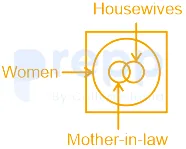
Select the Venn diagram that best illustrates the relationship between the following classes.
Women, Mothers-in-law, Housewives
- A
Option A (shown in image)
- B
Option B (shown in image)
- C
Option C (shown in image)
- D
Option D (shown in image)
Show answer
A. Option A (shown in image)The Venn diagram that best illustrates the relationship between Women, Mothers-in-law, and Housewives is shown below:
Some Housewives are Mothers-in-law and vice-versa.
Housewives and Mothers-in-law both are women.
Hence, ‘ option 1 ’ is the correct answer.
 Paper & answer key PDF ↗
 Question 22archived
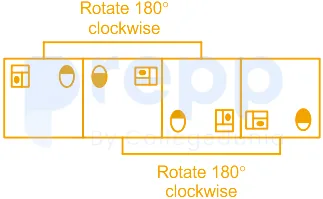
Select the figure from among the given options that can replace the question mark (?) in the following series.

- A
Option A (shown in image)
- B
Option B (shown in image)
- C
Option C (shown in image)
- D
Option D (shown in image)
Show answer
A. Option A (shown in image)The figure from among the given options that can replace the question mark (?) in the following series is shown below:
Note: The oval shaped image in the figures though change their position by rotating 180° in clockwise direction, but the image itself does not rotates, while the square shaped image changes its position as well rotates in 180° in clockwise direction.
Hence, ‘ option 1 ’ is the correct answer.
 Paper & answer key PDF ↗
 Question 23archived
Select the combination of letters that when sequentially placed in the blanks of the given series will complete the series.
Q _ A D _ R _ K A D P _ Q K A _ P R Q K _ D _ R
- A
K, P, Q, R, D, A, P
- B
K, P, R, Q, D, A, P
- C
K, P, Q, R, D, A, Q
- D
K, P, Q, R, A, D, P
Show answer
A. K, P, Q, R, D, A, PThe correct answer is K, P, Q, R, D, A, P.
Look for repeating segments if the series is long. Check for patterns based on the position of elements. Test options systematically if provided. Practicing different types of series will help you become more adept at recognizing various patterns quickly.
Paper & answer key PDF ↗ Question 24archived
Select the option in which the numbers are related in the same way as are the numbers of the following set.
(7, 52, 346)
- A
(8, 67, 515)
- B
(5, 25, 128)
- C
(4, 19, 70)
- D
(6, 39, 217)
Show answer
A. (8, 67, 515)Understanding Number Analogy Reasoning
This question asks us to find a set of numbers among the options that shares the same mathematical relationship as the given set (7, 52, 346). To solve this, we first need to carefully examine the given set and identify the pattern or rule that connects the three numbers.
Identifying the Pattern in the Given Set (7, 52, 346)
Let the three numbers in the set be represented by \(a\), \(b\), and \(c\). For the given set, we have \(a = 7\), \(b = 52\), and \(c = 346\).
We look for a relationship between these numbers. Let's try common operations like squaring, cubing, multiplication, addition, or subtraction.
Consider the relationship between the first number (\(a=7\)) and the second number (\(b=52\)).
\(7 \times 7 = 49\). \(52\) is close to \(49\). We can see \(52 = 49 + 3\), which is \(7^2 + 3\). So, a possible relationship is \(b = a^2 + 3\).
Consider the relationship between the first number (\(a=7\)) and the third number (\(c=346\)).
\(7 \times 7 \times 7 = 7^3 = 343\). \(346\) is close to \(343\). We can see \(346 = 343 + 3\), which is \(7^3 + 3\). So, a possible relationship is \(c = a^3 + 3\).
Based on this analysis, the likely relationship between the numbers \((a, b, c)\) in the set is:
\(b = a^2 + 3\)
\(c = a^3 + 3\)
Let's verify this rule with the given set (7, 52, 346):
For \(a = 7\), \(a^2 + 3 = 7^2 + 3 = 49 + 3 = 52\). This matches the given \(b\).
For \(a = 7\), \(a^3 + 3 = 7^3 + 3 = 343 + 3 = 346\). This matches the given \(c\).
The pattern holds true for the original set.
Checking the Relationship with the Options
Now, we apply this identified relationship (\(b = a^2 + 3\) and \(c = a^3 + 3\)) to each of the given options to see which set follows the same rule.
Option 1: (8, 67, 515)
Here, \(a = 8\). Let's check if \(b=67\) and \(c=515\) satisfy the rule.
Check for \(b\): \(a^2 + 3 = 8^2 + 3 = 64 + 3 = 67\). This matches the given second number (67).
Check for \(c\): \(a^3 + 3 = 8^3 + 3 = 512 + 3 = 515\). This matches the given third number (515).
Since both conditions are met, the set (8, 67, 515) follows the same relationship as (7, 52, 346).
Option 2: (5, 25, 128)
Here, \(a = 5\). Let's check if \(b=25\) and \(c=128\) satisfy the rule.
Check for \(b\): \(a^2 + 3 = 5^2 + 3 = 25 + 3 = 28\). The given second number is 25, which does not match 28.
Since the first condition is not met, this option does not follow the same relationship.
Option 3: (4, 19, 70)
Here, \(a = 4\). Let's check if \(b=19\) and \(c=70\) satisfy the rule.
Check for \(b\): \(a^2 + 3 = 4^2 + 3 = 16 + 3 = 19\). This matches the given second number (19).
Check for \(c\): \(a^3 + 3 = 4^3 + 3 = 64 + 3 = 67\). The given third number is 70, which does not match 67.
Since the second condition is not met, this option does not follow the same relationship.
Option 4: (6, 39, 217)
Here, \(a = 6\). Let's check if \(b=39\) and \(c=217\) satisfy the rule.
Check for \(b\): \(a^2 + 3 = 6^2 + 3 = 36 + 3 = 39\). This matches the given second number (39).
Check for \(c\): \(a^3 + 3 = 6^3 + 3 = 216 + 3 = 219\). The given third number is 217, which does not match 219.
Since the second condition is not met, this option does not follow the same relationship.
Conclusion
Based on the analysis of each option, only the set (8, 67, 515) follows the same relationship (\(b = a^2 + 3\) and \(c = a^3 + 3\)) as the given set (7, 52, 346).
Set
\(a\)
\(b\)
\(c\)
Rule: \(b = a^2 + 3\)
Rule: \(c = a^3 + 3\)
Follows Rule?
(7, 52, 346)
7
52
346
\(7^2 + 3 = 49 + 3 = 52\) (Matches)
\(7^3 + 3 = 343 + 3 = 346\) (Matches)
Yes (Original Set)
(8, 67, 515)
8
67
515
\(8^2 + 3 = 64 + 3 = 67\) (Matches)
\(8^3 + 3 = 512 + 3 = 515\) (Matches)
Yes
(5, 25, 128)
5
25
128
\(5^2 + 3 = 25 + 3 = 28\) (Does not match 25)
-
No
(4, 19, 70)
4
19
70
\(4^2 + 3 = 16 + 3 = 19\) (Matches)
\(4^3 + 3 = 64 + 3 = 67\) (Does not match 70)
No
(6, 39, 217)
6
39
217
\(6^2 + 3 = 36 + 3 = 39\) (Matches)
\(6^3 + 3 = 216 + 3 = 219\) (Does not match 217)
No
Revision Table: Number Analogy Pattern
Concept
Description
Application in this Problem
Number Analogy
Finding sets of numbers with the same relationship.
Used to compare options against the relationship in (7, 52, 346).
Pattern Identification
Discovering the rule connecting numbers in a set.
Identified the rule \(b = a^2 + 3\) and \(c = a^3 + 3\) for the set (7, 52, 346).
Applying the Rule
Testing if other sets follow the same pattern.
Checked options (8, 67, 515), (5, 25, 128), (4, 19, 70), (6, 39, 217).
Additional Information on Number Relation Problems
Number relation or number analogy problems are common in reasoning tests. They require you to observe the given set of numbers and deduce the mathematical operation(s) or pattern that links them. Common patterns include:
Arithmetic progressions (addition/subtraction)
Geometric progressions (multiplication/division)
Squares, cubes, and their proximity to the numbers
Combinations of operations (like in this problem: squaring/cubing and adding a constant)
Prime numbers, composite numbers, or other number properties
Digit-based operations
To improve your ability to solve these problems:
Practice recognizing squares and cubes of common numbers.
Test simple relationships first (addition, subtraction, multiplication, division).
Then look for powers and combinations of operations.
Systematically check each option once you find a potential rule.
Paper & answer key PDF ↗ Question 25archived
In a training camp, three types of games hockey, cricket and badminton were taught. 14% of the total students received cricket training. 22% of the remaining students received training for hockey. Half of the remaining students received training for badminton. What percentage of students did NOT receive training in any of the three games?
- A
33.54%
- B
32.56%
- C
24.52%
- D
67.52%
Show answer
A. 33.54%Analyzing Training Percentages for Hockey, Cricket, and Badminton
This problem involves calculating the percentage of students who did not receive training in any of the three specified games: hockey, cricket, and badminton, based on the training percentages given for sequential groups of students.
Step 1: Calculate Students Trained in Cricket
We are given that 14% of the total students received cricket training.
Percentage trained in Cricket = 14%
Step 2: Calculate Remaining Students After Cricket Training
To find the number of students remaining, we subtract the cricket trainees from the total.
Remaining Students = 100% - Percentage trained in Cricket
Remaining Students = 100% - 14% = 86%
So, 86% of the total students remained after the cricket training group was accounted for.
Step 3: Calculate Students Trained in Hockey
Next, 22% of the remaining students received training for hockey.
Percentage trained in Hockey = 22% of Remaining Students
Percentage trained in Hockey = $0.22 \times 86\%$
Percentage trained in Hockey = $18.92\%$ (of the total students)
This means 18.92% of the total students were trained in hockey.
Step 4: Calculate Remaining Students After Hockey Training
We now find the percentage of students left after both cricket and hockey training.
Remaining Students after Hockey = Remaining Students after Cricket - Percentage trained in Hockey
Remaining Students after Hockey = 86% - 18.92%
Remaining Students after Hockey = 67.08% (of the total students)
Step 5: Calculate Students Trained in Badminton
We are told that half of the remaining students (after hockey training) received training for badminton.
Percentage trained in Badminton = $\frac{1}{2} \times$ Remaining Students after Hockey
Percentage trained in Badminton = $\frac{1}{2} \times 67.08\%$
Percentage trained in Badminton = $33.54\%$ (of the total students)
Step 6: Calculate Total Percentage of Students Trained
Now, we sum the percentages of students trained in each game.
Total Trained Percentage = Cricket % + Hockey % + Badminton %
Total Trained Percentage = 14% + 18.92% + 33.54%
Total Trained Percentage = 66.46%
Step 7: Calculate Percentage of Students NOT Trained
Finally, to find the percentage of students who did not receive training in any of the three games, we subtract the total trained percentage from 100%.
Percentage NOT Trained = 100% - Total Trained Percentage
Percentage NOT Trained = 100% - 66.46%
Percentage NOT Trained = 33.54%
Conclusion
The percentage of students who did not receive training in any of the three games (hockey, cricket, badminton) is 33.54%.
Comparing with Options
The calculated percentage matches option 1.
Option Number
Percentage
1
33.54%
2
32.56%
3
24.52%
4
67.52%
Paper & answer key PDF ↗ Question 26archived
In which of the following places is a steel plant under SAIL located?
- A
Raigarh
- B
Korba
- C
Bilaspur
- D
Bhilai
Show answer
D. BhilaiUnderstanding SAIL Steel Plants Locations
This question asks about the location of a steel plant that operates under the Steel Authority of India Limited (SAIL). SAIL is a major public sector undertaking in India, involved in steel making. It has several integrated steel plants and various units spread across the country. Identifying the correct location among the given options requires knowledge of where SAIL has its operational units.
Analyzing the Options
Let's look at the provided locations and determine if a SAIL steel plant is situated there:
Raigarh: Raigarh is a city in Chhattisgarh. While it is an industrial area, the prominent steel plant located here is Jindal Steel and Power Limited (JSPL), not a SAIL plant.
Korba: Korba is known primarily for power generation and coal mining in Chhattisgarh. There is no major integrated steel plant operated by SAIL in Korba.
Bilaspur: Bilaspur is another important city in Chhattisgarh. It is a railway zone and has some industries, but it is not the location of a major SAIL steel plant.
Bhilai: Bhilai is a well-known industrial city in Chhattisgarh and is home to a very large and significant steel plant. This plant is indeed the Bhilai Steel Plant (BSP), which is one of the major flagship units of the Steel Authority of India Limited (SAIL).
The Correct Location: Bhilai Steel Plant
Based on the analysis, Bhilai is the location among the options where a steel plant under SAIL is situated. The Bhilai Steel Plant is a key facility for SAIL, producing rails, plates, and structural steel. Its establishment and operation are integral to India's steel production capacity under the public sector.
Summary of Locations and SAIL Presence
Here is a quick summary regarding the presence of a SAIL steel plant at the given locations:
Location
Presence of SAIL Steel Plant
Notes
Raigarh
No
Known for JSPL plant
Korba
No
Known for power & coal
Bilaspur
No
Important city, but not a SAIL plant location
Bhilai
Yes
Home to the major Bhilai Steel Plant (BSP)
Therefore, the only location among the given options where a steel plant under SAIL is located is Bhilai.
Revision Table: Key SAIL Plants in India
Plant Name
Location (State)
Bhilai Steel Plant (BSP)
Chhattisgarh
Durgapur Steel Plant (DSP)
West Bengal
Rourkela Steel Plant (RSP)
Odisha
Bokaro Steel Plant (BSL)
Jharkhand
IISCO Steel Plant (ISP)
West Bengal
Additional Information on SAIL and Steel Plants
SAIL is one of the largest steel-making companies in India and one of the Maharatnas of India's Public Sector Undertakings. It was established in 1973. Its plants are strategically located near sources of raw materials like iron ore, coal, and limestone. The steel produced by SAIL is crucial for various sectors, including infrastructure, manufacturing, and defence. The presence of a major steel plant like Bhilai contributes significantly to the regional economy and employment.
Paper & answer key PDF ↗ Question 27archived
_______ National Park is in Ladakh.
- A
Namdapha
- B
Hemis
- C
Gir
- D
Manas
Show answer
B. HemisUnderstanding National Parks in Ladakh
The question asks us to identify the national park located in the region of Ladakh. Knowing the locations of prominent national parks in India is important for general knowledge and environmental studies.
Analyzing the Options
Let's look at the locations of the national parks provided in the options:
Namdapha National Park: This national park is located in the state of Arunachal Pradesh in Northeast India. Therefore, it is not in Ladakh.
Hemis National Park: This national park is situated in Ladakh. It is famous for being the highest national park in India and is a key habitat for the snow leopard. This option fits the criteria.
Gir National Park: This national park is located in the state of Gujarat, in Western India. It is famous as the sole home of the Asiatic lion. Therefore, it is not in Ladakh.
Manas National Park: This national park is located in the state of Assam in Northeast India. It is a UNESCO World Heritage Site and a Project Tiger Reserve. Therefore, it is not in Ladakh.
Identifying the National Park in Ladakh
Based on the analysis, Hemis National Park is the only national park among the given options that is located in Ladakh.
National Park
Location (State/Region)
Namdapha
Arunachal Pradesh
Hemis
Ladakh
Gir
Gujarat
Manas
Assam
Thus, the national park located in Ladakh is Hemis.
Revision Table: National Parks and Locations
National Park
Location
Hemis
Ladakh
Additional Information about Hemis National Park
Hemis National Park is a significant protected area in Ladakh for several reasons:
It was established in 1981.
It is the largest national park in India by area.
It is recognized as the highest altitude national park in India.
The park is globally renowned for its population of the elusive Snow Leopard.
It also provides habitat for other animal species like the Tibetan argali, blue sheep (bharal), Shapu (Ladakhi Urial), and various bird species.
Understanding the geographical locations of national parks helps in appreciating the diverse ecosystems and wildlife found across India.
Paper & answer key PDF ↗ Question 28archived
In which of the following years was the All-India Harijan Sevak Sangh founded?
- A
1928
- B
1932
- C
1942
- D
1919
Show answer
B. 1932The question asks about the founding year of the All-India Harijan Sevak Sangh. This organization played a significant role in the movement for the welfare of the untouchables in India.
Understanding the All-India Harijan Sevak Sangh
The All-India Harijan Sevak Sangh, also known as the Depressed Classes League, was founded by Mahatma Gandhi.
It was established with the primary objective of working for the upliftment of the Harijans, the term Gandhi used for Dalits (previously known as untouchables).
The organization aimed to eradicate untouchability and promote social equality.
It focused on various welfare activities like providing access to education, wells, and temples, and raising awareness against social discrimination.
Circumstances of Foundation
The establishment of the All-India Harijan Sevak Sangh was closely linked to the events surrounding the Second Round Table Conference and the Communal Award of 1932.
The Communal Award proposed separate electorates for the depressed classes, which Gandhi opposed as he believed it would permanently segregate them from the rest of the Hindu community.
Gandhi undertook a fast unto death in protest against the separate electorates for Harijans.
This led to the Poona Pact in September 1932 between Gandhi and B.R. Ambedkar. The pact abolished separate electorates but increased the number of reserved seats for depressed classes in the legislature.
Following the Poona Pact, Gandhi intensified his campaign against untouchability and founded the All-India Harijan Sevak Sangh to carry forward this work.
Determining the Founding Year
Based on the historical context and the events following the Poona Pact, the All-India Harijan Sevak Sangh was founded in 1932.
Key Event
Year
Significance
Communal Award
1932
Proposed separate electorates for depressed classes.
Gandhi's Fast
1932
Protest against separate electorates.
Poona Pact
1932
Agreement on reserved seats for depressed classes, replacing separate electorates.
Foundation of All-India Harijan Sevak Sangh
1932
Formed to work for the upliftment of Harijans and eradicate untouchability.
Therefore, the correct year for the foundation of the All-India Harijan Sevak Sangh is 1932.
Revision Table: All-India Harijan Sevak Sangh
Aspect
Details
Organization Name
All-India Harijan Sevak Sangh
Founder
Mahatma Gandhi
Year of Foundation
1932
Main Objective
Eradication of untouchability and upliftment of Harijans (Dalits).
Context
Post-Poona Pact, part of anti-untouchability movement.
Additional Information: Anti-Untouchability Movement
The movement against untouchability was a crucial part of India's social reform efforts and the freedom struggle. Key points include:
Many reformers, besides Gandhi, like B.R. Ambedkar, actively worked for the rights and dignity of the depressed classes.
Ambedkar advocated for political rights and representation, initially supporting separate electorates to ensure their voice was heard.
Gandhi's approach focused on changing the hearts and minds of upper-caste Hindus and integrating Harijans into mainstream society through social reform and welfare activities.
The term 'Harijan' (meaning 'Children of God') was popularised by Gandhi, though later criticized by some as paternalistic. The term 'Dalit' is preferred by many today.
The Indian Constitution later included provisions to abolish untouchability and protect the rights of Scheduled Castes (formerly depressed classes).
Paper & answer key PDF ↗ Question 29archived
The concept of ‘Reservation of seats for Scheduled Castes and Scheduled Tribes in the House of the People’ is highlighted in Article _______ of the Constitution of India.
- A
345
- B
326
- C
330
- D
361
Show answer
C. 330Understanding Reservation for Scheduled Castes and Scheduled Tribes in Parliament
The Constitution of India includes important provisions for the representation of Scheduled Castes (SCs) and Scheduled Tribes (STs) in the legislative bodies to ensure their participation in the political process. One such key provision relates to the reservation of seats in the House of the People (Lok Sabha).
Identifying the Relevant Article for Reservation in Lok Sabha
The question asks about the specific Article of the Constitution that highlights the concept of ‘Reservation of seats for Scheduled Castes and Scheduled Tribes in the House of the People’. Let's examine the relevant parts of the Constitution:
Part XVI of the Constitution of India deals with Special Provisions relating to Certain Classes.
Within this part, several Articles address the representation and rights of Scheduled Castes and Scheduled Tribes.
The Article specifically dedicated to the reservation of seats for SCs and STs in the Lok Sabha is Article 330.
Let's look at the options provided:
Option 1: Article ${345}$ - This Article pertains to the Official language or languages of a State. It is not related to the reservation of seats for SC/ST in the Lok Sabha.
Option 2: Article ${326}$ - This Article deals with elections to the House of the People and to the Legislative Assemblies of States to be on the basis of adult suffrage. It is not about the reservation of seats for specific communities.
Option 3: Article ${330}$ - This Article explicitly provides for the reservation of seats for Scheduled Castes and Scheduled Tribes in the House of the People. The number of seats reserved is based on the proportion of the SC/ST population in the concerned State or Union Territory.
Option 4: Article ${361}$ - This Article provides protection to the President and Governors from legal proceedings. It is related to the executive head and has no connection to the reservation of seats for SC/ST in the Lok Sabha.
Based on the constitutional provisions, Article ${330}$ is the correct Article concerning the reservation of seats for Scheduled Castes and Scheduled Tribes in the House of the People.
Detailed Explanation of Article 330
Article ${330}$ of the Constitution mandates the reservation of seats for SCs and STs in the Lok Sabha. The key aspects of this Article include:
Reservation applies to the House of the People.
Seats are reserved for Scheduled Castes and Scheduled Tribes.
The number of seats reserved for SCs and STs in any State or Union Territory is proportionate to their population in that State or Union Territory relative to the total population of that State or Union Territory.
This reservation ensures that these communities have adequate representation in the national legislature.
Key Articles and Their Subjects
Article Number
Subject Matter
Relevance to Question
${330}$
Reservation of seats for Scheduled Castes and Scheduled Tribes in the House of the People.
Directly answers the question.
${326}$
Elections to the House of the People and to the Legislative Assemblies of States to be on the basis of adult suffrage.
Related to elections, but not seat reservation for specific groups.
${345}$
Official language or languages of a State.
Unrelated to seat reservation in Parliament.
${361}$
Protection of President and Governors from legal proceedings.
Unrelated to seat reservation in Parliament.
Therefore, the concept of ‘Reservation of seats for Scheduled Castes and Scheduled Tribes in the House of the People’ is specifically addressed by Article ${330}$ of the Constitution of India.
Revision Table - Indian Constitution Articles
Important Articles for Political Representation
Article
Provision
${326}$
Adult suffrage for elections to Lok Sabha and State Assemblies.
${330}$
Reservation of seats for SCs and STs in the House of the People (Lok Sabha).
${332}$
Reservation of seats for SCs and STs in the Legislative Assemblies of States.
${334}$
Duration of reservation of seats and special representation.
Additional Information - Constitutional Provisions for SC/ST
The Constitution of India includes several measures to promote the welfare and representation of Scheduled Castes and Scheduled Tribes. Besides reservation in legislative bodies, other provisions include:
Reservation in Government Services: Articles ${16(4)}$, ${335}$ deal with reservations in appointments and posts.
Educational Safeguards: Article ${15(4)}$, ${15(5)}$ allow for special provisions for the advancement of socially and educationally backward classes, including SCs and STs.
Specific Institutions: The Constitution provides for the National Commission for Scheduled Castes (Article ${338}$) and the National Commission for Scheduled Tribes (Article ${338A}$) to oversee the implementation of safeguards and investigate matters relating to them.
Reservation in Local Bodies: Part IX (Panchayats) and Part IXA (Municipalities) include provisions for the reservation of seats for SCs and STs in local self-government bodies.
These provisions collectively aim to ensure that Scheduled Castes and Scheduled Tribes are adequately represented and protected in various spheres of public life.
Paper & answer key PDF ↗ Question 30archived
According to National Education Policy 2020, vocational education will start from _______ with internships.
- A
Class VIII
- B
Class V
- C
Class VII
- D
Class VI
Show answer
D. Class VIUnderstanding National Education Policy 2020 and Vocational Education
The National Education Policy (NEP) 2020 is a comprehensive framework introduced by the Government of India to guide the development of education in the country. It aims to transform India's education system to meet the needs of the 21st century.
One of the significant focuses of the NEP 2020 is the integration of vocational education into mainstream schooling. The policy highlights the importance of providing students with practical skills and exposure to various vocations from an early stage.
According to the National Education Policy 2020, vocational education is planned to be introduced starting from a specific class level. This early introduction is intended to help students explore different career options and develop useful skills, moving away from the traditional rigid separation between academic and vocational streams.
The policy explicitly states that vocational education will begin from Class VI onwards. A key feature of this introduction is the inclusion of internships. Students will have the opportunity to participate in internships, which could involve gaining hands-on experience with local vocational experts such as carpenters, gardeners, potters, artists, etc. This practical exposure is designed to make learning more engaging and relevant to the real world.
Key aspects of vocational education under NEP 2020 include:
Integration with mainstream education from Class VI.
Exposure to various vocational crafts and skills.
Mandatory internships for practical experience.
Aim to reduce the societal stigma associated with vocational streams.
Development of practical skills alongside academic learning.
Therefore, as per the National Education Policy 2020, the initiative to start vocational education with internships begins from Class VI.
Aspect
NEP 2020 Provision
Starting Class for Vocational Education
Class VI
Key Feature Included
Internships
Goal
Integrate vocational and academic streams, provide practical skills
Revision Table: NEP 2020 Vocational Training Key Points
Let's quickly review the main takeaway regarding vocational education under NEP 2020.
Topic
Detail
Policy Document
National Education Policy 2020
Subject Focus
Vocational Education
Implementation Start
From Class VI
Practical Component
Internships included
Additional Information on NEP 2020 and Skill Development
The emphasis on vocational education from Class VI is part of a larger vision in the National Education Policy 2020 for holistic and multidisciplinary education. The policy aims to break down the barriers between different subjects and learning areas.
Some related points from NEP 2020 include:
Flexibility in subject choices, allowing students to combine subjects from different streams.
Focus on developing 21st-century skills such as critical thinking, creativity, collaboration, and communication.
Integration of technology in education.
Emphasis on experiential learning and understanding concepts through doing.
Goal to ensure that every student graduates with at least one vocational skill.
This approach starting vocational education early is designed to make learning more engaging, reduce dropout rates, and prepare students for both higher education and the world of work.
Paper & answer key PDF ↗ Question 31archived
Which of the following Buddhist sites is located in Uttar Pradesh?
- A
Sarnath
- B
Sanchi
- C
Amaravati
- D
Karle
Show answer
A. SarnathFinding Buddhist Sites in Uttar Pradesh
The question asks us to identify which of the given Buddhist sites is located within the state of Uttar Pradesh in India. To answer this, we need to know the location of each site mentioned in the options.
Analyzing the Options for Buddhist Sites
Sarnath: Sarnath is a very significant Buddhist site. It is located near Varanasi in the state of Uttar Pradesh. This is where Gautama Buddha first gave his sermon after attaining enlightenment.
Sanchi: Sanchi is famous for its Great Stupa, which is a UNESCO World Heritage site. However, Sanchi is located in the state of Madhya Pradesh, not Uttar Pradesh.
Amaravati: Amaravati is known for its ancient Buddhist stupa and art. It is located in the state of Andhra Pradesh.
Karle: Karle is famous for its ancient rock-cut Buddhist caves, particularly the Karla Caves. These caves are located near Lonavala in the state of Maharashtra.
Based on the locations of these sites, Sarnath is the only one situated in Uttar Pradesh.
Buddhist Sites and Their Locations
Buddhist Site
State
Sarnath
Uttar Pradesh
Sanchi
Madhya Pradesh
Amaravati
Andhra Pradesh
Karle
Maharashtra
Therefore, the Buddhist site located in Uttar Pradesh among the given options is Sarnath.
Revision Table: Key Buddhist Locations
Let's review the states where these important Buddhist sites are located:
Sarnath: Uttar Pradesh
Sanchi: Madhya Pradesh
Amaravati: Andhra Pradesh
Karle (Karla Caves): Maharashtra
Remembering the state for each key site is important for geography and history questions.
Additional Information on Buddhist Sites
India is home to many important Buddhist sites, often linked to the life and teachings of Gautama Buddha.
Sarnath: Besides being the site of the first sermon (Dharma Chakra Pravartana), Sarnath also has significant archaeological remains, including the Dhamek Stupa and the Ashoka Pillar remanants.
Sanchi: The Sanchi complex is primarily known for the Great Stupa commissioned by Emperor Ashoka. It is an important center for understanding early Buddhist art and architecture.
Amaravati: The Amaravati Stupa was one of the largest in ancient India, known for its intricate carvings depicting the life of Buddha and Jataka tales. The Amaravati school of art had a significant influence.
Karle: The Karla Caves are among the oldest rock-cut Buddhist shrines in India. The main chaitya (prayer hall) is exceptionally large and well-preserved, featuring sculptures and pillars.
Understanding the significance of each site adds depth to knowing their locations.
Paper & answer key PDF ↗ Question 32archived
Who among the following won the 10th National Ice Hockey Championship trophy in Gulmarg in January 2021?
- A
Central Industrial Security Force (CISF)
- B
Central Reserve Police Force (CRPF)
- C
National Highway Authority of India (NHAI)
- D
Indo Tibetan Border Police (ITBP)
Show answer
D. Indo Tibetan Border Police (ITBP)Understanding the 10th National Ice Hockey Championship 2021
The question asks about the winner of a specific sports event: the 10th National Ice Hockey Championship held in January 2021. This championship took place in Gulmarg, a popular location for winter sports in India.
National championships are significant events in promoting a sport within a country and identifying top teams. The 10th edition indicates a well-established competition.
Identifying the Winner of the Championship
The options provided are various Indian forces or organizations known for their participation in national events or infrastructure development.
Central Industrial Security Force (CISF)
Central Reserve Police Force (CRPF)
National Highway Authority of India (NHAI)
Indo Tibetan Border Police (ITBP)
Ice hockey requires specific conditions and training, often available to armed or paramilitary forces who have teams participating in national sports events.
The Indo Tibetan Border Police (ITBP) has a strong presence in high-altitude regions and is known for its involvement in winter sports like ice hockey and skiing. They frequently participate and perform well in national winter games.
Historical records confirm that the Indo Tibetan Border Police (ITBP) team won the 10th National Ice Hockey Championship trophy in Gulmarg in January 2021.
Therefore, the correct answer is the Indo Tibetan Border Police (ITBP).
Revision Table: 10th National Ice Hockey Championship 2021
Event
Year
Location
Winner
National Ice Hockey Championship (10th Edition)
2021
Gulmarg
Indo Tibetan Border Police (ITBP)
Additional Information on Ice Hockey in India
Ice hockey is gaining popularity in India, especially in the Himalayan regions where natural ice rinks are available during winter. The Ice Hockey Association of India (IHAI) is the governing body for the sport.
Indian teams participate in international ice hockey events, though the sport is still developing compared to global standards.
Gulmarg and Ladakh are key centers for ice hockey in India.
Various paramilitary forces and sports clubs field teams in national championships.
Winning the National Ice Hockey Championship is a significant achievement for any team in India, highlighting their skill and dedication to the sport.
The ITBP's victory in the 10th National Ice Hockey Championship underscores their proficiency in winter sports.
Paper & answer key PDF ↗ Question 33archived
Viscose fibre is obtained from _______.
- A
petrochemicals
- B
cellulose
- C
oil
- D
coal
Show answer
B. celluloseUnderstanding Viscose Fibre Sources
Viscose fibre is a type of regenerated cellulose fibre. This means it is made from a natural polymer, cellulose, which is chemically processed to create a usable fibre.
What is Viscose Fibre?
Viscose is often referred to as rayon, although viscose is a specific method of making rayon. It is a versatile fabric used in clothing, home furnishings, and industrial applications. It is valued for its soft feel, drape, and absorbency, similar to cotton or silk, but it is not a natural fibre directly extracted from plants like cotton or silk. Instead, it is manufactured from a natural source material.
Analysing the Source of Viscose Fibre
Let's look at the options provided:
Petrochemicals: Petrochemicals are derived from petroleum or natural gas. These are the primary source for many synthetic fibres like nylon, polyester, and acrylic. Viscose is not made from petrochemicals.
Cellulose: Cellulose is a complex organic compound found in the cell walls of plants. It is the most abundant organic polymer on Earth. Wood pulp, typically from trees like pine, spruce, or beech, is a common source of the cellulose used to make viscose fibre. Cotton linters (short fibres attached to cottonseeds) can also be used. The cellulose is dissolved and then regenerated into fibres.
Oil: Oil (petroleum) is a fossil fuel. While it is the source for petrochemicals used in synthetic fibres, it is not the direct source material for viscose fibre.
Coal: Coal is another fossil fuel. It was historically used as a source for some chemicals, but it is not the source material for viscose fibre.
Based on the nature of viscose fibre as a regenerated cellulose fibre, its primary source material is cellulose.
The Correct Source Material: Cellulose
The process of making viscose involves treating cellulose (usually from wood pulp) with chemicals like sodium hydroxide and carbon disulfide to produce a soluble derivative, which is then extruded through a spinneret into an acidic bath, regenerating the cellulose into solid fibres. This confirms that cellulose is the fundamental raw material.
Fibre Type
Source Material
Category
Cotton
Cotton plant (natural cellulose)
Natural Fibre
Silk
Silkworm cocoons (protein)
Natural Fibre
Wool
Sheep or other animals (protein)
Natural Fibre
Viscose (Rayon)
Wood pulp/Cellulose
Regenerated Cellulose Fibre (Man-made from natural polymer)
Polyester
Petrochemicals
Synthetic Fibre
Nylon
Petrochemicals
Synthetic Fibre
Therefore, the source of viscose fibre is cellulose.
Revision Table: Key Fibre Types and Sources
Fibre
Source
Viscose Fibre
Cellulose (Wood pulp, cotton linters)
Cotton
Cotton Plant
Polyester
Petrochemicals
Nylon
Petrochemicals
Additional Information on Viscose Fibre Production
Viscose production is one of the oldest methods for producing man-made fibres. While it uses a natural renewable resource (cellulose), the traditional chemical process involves the use of carbon disulfide, which can pose environmental and health concerns. More sustainable methods like the Lyocell process have been developed to address some of these issues, but viscose production is still widely used.
Understanding the source material like cellulose is crucial for classifying fibres correctly as natural, regenerated, or synthetic.
Paper & answer key PDF ↗ Question 34archived
Which State Assembly passed the resolution on Sarna Code in November 2020?
- A
Madhya Pradesh
- B
Bihar
- C
Chhattisgarh
- D
Jharkhand
Show answer
D. JharkhandUnderstanding the Sarna Code Resolution of November 2020
The question asks which State Assembly passed a resolution regarding the Sarna Code in November 2020. This resolution was a significant development related to the religious identity of tribal communities in India, particularly those who follow the Sarna faith.
The Sarna religion is an indigenous faith primarily followed by various tribal groups in states like Jharkhand, Odisha, Bihar, Chhattisgarh, and West Bengal. Adherents worship nature, including sacred groves (Sarna), hills, and rivers. There has been a long-standing demand from these communities to be recognized as a distinct religious group in the Census.
Analyzing the Resolution for Sarna Code
In November 2020, a specific State Assembly took a crucial step by passing a resolution demanding that the Central Government include 'Sarna' as a separate religion code in the upcoming Census. This move aimed to provide a distinct identity for Sarna followers, separate from categories like Hindu, Muslim, Christian, etc.
Let's examine the options in the context of this event:
Madhya Pradesh: While Madhya Pradesh has a significant tribal population, the widely reported resolution specifically demanding a Sarna Code in November 2020 was not passed by its State Assembly.
Bihar: Bihar also has tribal populations, but the resolution concerning the Sarna Code in November 2020 originated from a different state assembly deeply connected with this specific movement.
Chhattisgarh: Chhattisgarh has a large indigenous population and recognizes various tribal cultures. However, the particular resolution being referred to in November 2020 did not come from the Chhattisgarh Assembly.
Jharkhand: Jharkhand is known for its substantial tribal population, with the Sarna faith being prominent among many communities there. The demand for the Sarna Code has been particularly strong in Jharkhand. In November 2020, the Jharkhand State Assembly unanimously passed a resolution to recognize Sarna as a separate religious code for the Census.
Therefore, the State Assembly that passed the resolution on the Sarna Code in November 2020 was the Jharkhand State Assembly.
Significance of the Jharkhand Assembly Resolution
The resolution passed by the Jharkhand Assembly was a formal expression of the state government's and legislature's support for the demand for a separate Sarna religious code. It reflected the aspirations of millions of tribal people who identify with the Sarna faith and seek official recognition of their distinct religious practices and beliefs.
Key Details of Sarna Code Resolution (Nov 2020)
Aspect
Detail
Resolution Passed By
Jharkhand State Assembly
Month and Year
November 2020
Subject
Demand for Sarna as a separate religious code in Census
Purpose
Recognition of Sarna tribal religion
Revision Table: Sarna Code and Jharkhand Assembly
Quick Facts on Sarna Code Resolution
Topic
Key Information
Sarna Religion
Indigenous tribal faith, nature worship
Sarna Code Demand
Inclusion as a separate religious category in Indian Census
Resolution in Nov 2020
Passed by Jharkhand State Assembly
Resolution's Goal
Granting distinct religious identity to Sarna followers
Additional Information on Sarna Code and Tribal Identity
The demand for a separate Sarna Code is part of a larger movement among indigenous communities seeking recognition and preservation of their unique cultural and religious identities.
Census Categories: The Indian Census currently includes codes for major religions like Hindu, Muslim, Christian, Sikh, Buddhist, and Jain, along with an 'Others' category. Tribal groups identifying as Sarna often have to select 'Other' or sometimes get counted under Hinduism.
Why a Separate Code? Proponents argue that Sarna is a distinct religion with its own practices, beliefs, and places of worship (like Sarna Sthal or Jaher Than), which are different from Hinduism or other major religions. A separate code would allow for accurate enumeration of Sarna followers and help in acknowledging their unique cultural heritage.
Impact: Official recognition could potentially lead to greater protection of Sarna religious sites and practices, and better understanding of tribal demographics and identities.
The Jharkhand Assembly's resolution in November 2020 was a significant political step highlighting this important issue at the state level.
Paper & answer key PDF ↗ Question 35archived
The Ramon Magsaysay Award was established in the year _______.
- A
1965
- B
1962
- C
1957
- D
1982
Show answer
C. 1957Understanding the Ramon Magsaysay Award's Establishment
The question asks about the year the Ramon Magsaysay Award was established. This is a well-known international award given to individuals and organizations in Asia.
Let's look at the options provided:
1965
1962
1957
1982
To determine the correct answer, we need to recall or find information about the founding year of the Ramon Magsaysay Award.
History and Establishment Year
The Ramon Magsaysay Award was created in April 1957 by the trustees of the Rockefeller Brothers Fund based in New York City. The award was established to commemorate Ramon Magsaysay, the third President of the Philippines, who died in a plane crash in March 1957. The award aims to perpetuate his example of integrity in government, courageous service to the people, and pragmatic idealism within a democratic society.
Therefore, the year the award was established is 1957.
Analyzing the Options
1965: This year is later than the actual establishment date of the award.
1962: This year is also later than the actual establishment date.
1957: This year aligns with the historical facts about the award's founding shortly after the death of President Ramon Magsaysay.
1982: This year is significantly later than the establishment of the award.
Based on historical information, the Ramon Magsaysay Award was indeed established in 1957.
Key Facts about the Ramon Magsaysay Award
Established in 1957.
Named after the late Philippine President Ramon Magsaysay.
Funded by the Rockefeller Brothers Fund.
Often referred to as Asia's Nobel Prize.
Awarded annually to individuals and organizations for achievements in various fields across Asia.
The correct year for the establishment of the Ramon Magsaysay Award is 1957.
Ramon Magsaysay Award Establishment Details
Detail
Information
Year Established
1957
Established By
Rockefeller Brothers Fund
Named After
President Ramon Magsaysay (Philippines)
First Awards Given
1958
Revision Table: Ramon Magsaysay Award Facts
Concept
Key Point
Establishment Year
1957
Purpose
To honour Asian individuals/organizations; perpetuate Ramon Magsaysay's example.
Origin
Rockefeller Brothers Fund (New York).
Geographical Focus
Asia.
Additional Information: Ramon Magsaysay Award Significance
The Ramon Magsaysay Award is highly respected in Asia and internationally. It recognizes exemplary leadership and service across several categories, which have evolved over the years. While established in 1957, the first awards were actually presented in 1958. The award is not given by a government but by the Ramon Magsaysay Award Foundation, which was set up in Manila, Philippines, in May 1957. It serves as a lasting memorial to President Magsaysay's dedication to the people.
Paper & answer key PDF ↗ Question 36archived
Which of the following is NOT an outcome of endogenic forces?
- A
Landslides
- B
Volcanic eruptions
- C
Sea waves
- D
Earthquakes
Show answer
C. Sea wavesUnderstanding Endogenic and Exogenic Forces
The Earth's surface is constantly changing due to various forces. These forces are broadly classified into two main categories:
Endogenic Forces: These are internal forces that originate from within the Earth. They are responsible for creating landforms and causing significant changes in the Earth's crust. Examples include plate movements, volcanic activity, and earthquakes.
Exogenic Forces: These are external forces that operate on the Earth's surface. They are responsible for wearing down and reshaping landforms through processes like weathering, erosion, and deposition. Examples include the action of rivers, wind, glaciers, and sea waves.
Analyzing Outcomes of Earth's Forces
Let's examine each option provided in the question to determine which is NOT primarily an outcome of endogenic forces.
Landslides: Landslides involve the rapid movement of rock, earth, or debris down a slope. While gravity is the primary force driving a landslide (gravity is generally considered an exogenic force acting on the surface), they can be triggered by endogenic events like earthquakes or volcanic eruptions, or by exogenic events like heavy rainfall or erosion. So, they can be influenced by both, but the immediate cause of mass movement relates more to surface conditions and gravity.
Volcanic eruptions: These occur when molten rock (magma), ash, and gases erupt from within the Earth onto the surface. This process is directly driven by intense heat and pressure originating from the Earth's interior. Thus, volcanic eruptions are a clear outcome of endogenic forces.
Sea waves: Regular sea waves are primarily generated by wind blowing over the surface of the ocean. Wind is an atmospheric phenomenon and acts on the Earth's surface. While tsunamis, a specific type of large sea wave, can be triggered by underwater earthquakes (an endogenic event), typical wind-driven sea waves are caused by forces external to the Earth's interior. Therefore, sea waves are predominantly an outcome of exogenic forces.
Earthquakes: Earthquakes are sudden shakings of the ground caused by the movement of tectonic plates or volcanic activity deep within the Earth's crust. This movement and the resulting energy release are directly caused by forces originating from inside the Earth. Thus, earthquakes are a direct outcome of endogenic forces.
Identifying the Phenomenon NOT Caused by Endogenic Forces
Based on the analysis:
Volcanic eruptions are caused by endogenic forces.
Earthquakes are caused by endogenic forces.
Landslides can be triggered by endogenic events but are primarily driven by gravity acting on surface materials (exogenic).
Sea waves (specifically typical wind-driven waves) are caused by wind acting on the water surface, an exogenic process. Tsunamis are linked to endogenic triggers but are surface phenomena.
Comparing the options, sea waves are the phenomenon least directly and primarily caused by endogenic forces. Regular sea waves are a clear example of an outcome of exogenic forces (wind). Although landslides can be triggered by endogenic events, the fundamental process of mass movement down a slope is driven by gravity on the surface.
Therefore, sea waves are NOT an outcome primarily of endogenic forces.
Revision Table: Endogenic vs. Exogenic Outcomes
Phenomenon
Primary Force Type
Explanation
Volcanic eruptions
Endogenic
Driven by heat and pressure from Earth's interior.
Earthquakes
Endogenic
Caused by movements within the Earth's crust (plate tectonics).
Sea waves
Exogenic
Mainly caused by wind acting on the water surface.
Landslides
Both (Gravity is Exogenic, Triggers can be Endogenic/Exogenic)
Mass movement driven by gravity on the surface, potentially triggered by earthquakes (endogenic) or rain/erosion (exogenic).
Additional Information on Earth's Dynamic Forces
Understanding the difference between endogenic and exogenic forces helps us comprehend how the Earth's landscape is continuously shaped. Endogenic forces build up relief, creating mountains, plateaus, and valleys through processes like folding, faulting, and volcanism. Exogenic forces, on the other hand, act as denudational forces, breaking down rocks (weathering) and transporting the weathered material (erosion), ultimately smoothing out the surface relief created by endogenic forces. The interplay between these two sets of forces results in the diverse topography we observe on Earth.
Examples of Exogenic Forces and their actions:
Running Water (Rivers): Erosion, transportation, and deposition of sediments.
Wind: Erosion (abrasion, deflation) and deposition (sand dunes).
Glaciers: Erosion (plucking, abrasion) and deposition (moraines).
Sea Waves: Coastal erosion and deposition.
Groundwater: Formation of caves and sinkholes in soluble rock.
Understanding these forces is fundamental in the study of Physical Geography and Geology.
Paper & answer key PDF ↗ Question 37archived
'Aaluyattu' is a folk-dance form from the state of _______.
- A
Nagaland
- B
Kerala
- C
Haryana
- D
Goa
Show answer
A. NagalandThe correct answer is Nagaland.
'Aluyattu' is a folk dance of Nagaland state.
Key Points
Aluyattu is a folk dance of Nagaland state.
The dance is performed by the Konyak tribe.
Other folk dances of Nagaland include Modeshe, Agurshikukula, Sadal Kekai, Changai dance, Kuki dance, Leshalptu, Khamba Lim, Mayur dance, Rengma, Monoasho, Seicha, and Kukui Kuchu.
Additional Information
Folk dances of Kerala include Kaikottikali, Mudiyettu, Sangh Kali, Brahmanipattu, Dappu Kali, Kolkali, and Vattakkali.
Folk dances of Haryana include Ras Leela, Phag dance, Loor, Daff dance.
Folk dances of Goa include Dekhni, Fugdi, Dashavatara, Dhalo, Goff, and Kunbi.
 Paper & answer key PDF ↗
 Question 38archived
How many arteries are there in an umbilical cord?
- A
Three
- B
One
- C
Two
- D
Four
Show answer
C. TwoThe correct answer is two.
There are two arteries in the umbilical cord.
Key Points
Umbilical Cord:
During pregnancy, it is a flexible, tube-like structure that connects the fetus to the mother.
The umbilical cord supplies nutrients to the baby and also carries the baby's waste products.
The umbilical cord is made up of two arteries and one vein.
Arteries carry oxygenated blood from the heart to other parts of the body.
Veins carry deoxygenated blood back to the heart.
Additional Information
Blood:
The volume of blood in the human body is 7% of total body weight.
Blood is a connective tissue and is made up of blood cells, plasma, and platelets.
It is slightly alkaline in nature.
Its pH is 7.4.
An adult human has a volume of 5.8 liters.
Plasma:
It is the liquid part of blood.
60% of blood is plasma.
Plasma is composed of 90% water, 7% proteins, 0.9% salts, and 0.1% glucose.
Blood Cells:
The remaining 40% of blood is made up of cells.
Paper & answer key PDF ↗ Question 39archived
For a wave, wavelength divided by the time period is equal to:
- A
phase difference
- B
amplitude
- C
wave velocity
- D
frequency
Show answer
C. wave velocityUnderstanding Wave Properties: Wavelength, Time Period, and Velocity
Waves are fascinating phenomena that transfer energy through a medium or space. They are characterized by several key properties, including wavelength, time period, frequency, amplitude, and velocity. The question asks about the relationship between wavelength and time period.
Defining Key Wave Parameters
Wavelength (\(\lambda\)): This is the spatial period of a wave, meaning the distance over which the wave's shape repeats. It is typically measured from crest to crest or trough to trough for a transverse wave, or from compression to compression for a longitudinal wave.
Time Period (T): This is the time it takes for one complete cycle or oscillation of a wave to pass a given point. It is the time taken for a single wavelength to pass by.
Frequency (f): This is the number of complete cycles or oscillations that occur in one second. Frequency is the reciprocal of the time period: \(f = \frac{1}{T}\).
Wave Velocity (v): This is the speed at which the wave propagates or travels through the medium. It represents how fast the disturbance moves.
Relating Wavelength, Time Period, and Wave Velocity
The relationship between wave velocity, frequency, and wavelength is fundamental in wave physics and is given by the equation:
\[ v = f\lambda \]
This equation tells us that the wave velocity is the product of its frequency and wavelength.
We also know that frequency (\(f\)) is the reciprocal of the time period (\(T\)):
\[ f = \frac{1}{T} \]
Now, let's substitute this expression for frequency into the wave velocity equation:
\[ v = \left(\frac{1}{T}\right)\lambda \]
\[ v = \frac{\lambda}{T} \]
This derivation clearly shows that the wave velocity (\(v\)) is equal to the wavelength (\(\lambda\)) divided by the time period (\(T\)).
Analyzing the Options
Let's examine why the other options are incorrect:
Phase difference: Phase difference describes how far into a cycle one point or wave is compared to another. It is measured in angles (radians or degrees) or as a fraction of a wavelength or time period, not as wavelength divided by time period.
Amplitude: Amplitude is the maximum displacement or distance moved by a point on a vibrating body or wave measured from its equilibrium position. It is a measure of the wave's intensity or strength, not related to the ratio of wavelength and time period.
Wave velocity: As derived above, wave velocity is indeed equal to wavelength divided by the time period. This aligns with our understanding of wave propagation.
Frequency: Frequency is the number of cycles per unit time, \(f = \frac{1}{T}\). The given ratio is \(\frac{\lambda}{T}\), which is \( \lambda \times f \), not just \(f\).
Therefore, the wavelength divided by the time period is equal to the wave velocity.
Conclusion
The fundamental relationship connecting wavelength (\(\lambda\)), time period (\(T\)), and wave velocity (\(v\)) is \(v = \frac{\lambda}{T}\). This means dividing the wavelength by the time period gives the speed at which the wave travels.
Wave Property
Symbol
Definition
Relation to Wavelength/Time Period
Wavelength
\(\lambda\)
Distance of one complete wave cycle
Numerator in \(\frac{\lambda}{T}\) for velocity
Time Period
\(T\)
Time for one complete wave cycle
Denominator in \(\frac{\lambda}{T}\) for velocity
Wave Velocity
\(v\)
Speed of wave propagation
Equal to \(\frac{\lambda}{T}\)
Frequency
\(f\)
Number of cycles per second
\(\frac{1}{T}\); \(v = f\lambda\)
Revision Table: Wave Formulas
Formula
Description
\(v = f\lambda\)
Wave velocity equals frequency times wavelength.
\(f = \frac{1}{T}\)
Frequency is the reciprocal of the time period.
\(v = \frac{\lambda}{T}\)
Wave velocity equals wavelength divided by time period.
Additional Information: Types of Waves
Waves can be broadly classified based on how they propagate and the nature of the medium's vibration:
Mechanical Waves: These require a medium to travel through. Examples include sound waves and water waves. They transfer energy through the vibration of particles in the medium.
Electromagnetic Waves: These do not require a medium and can travel through a vacuum. Examples include light waves, radio waves, and X-rays. They consist of oscillating electric and magnetic fields.
Waves can also be classified by the direction of vibration relative to the direction of wave propagation:
Transverse Waves: The particles of the medium vibrate perpendicularly to the direction of wave propagation (e.g., waves on a string, light waves).
Longitudinal Waves: The particles of the medium vibrate parallel to the direction of wave propagation (e.g., sound waves in air, waves in a spring).
Understanding these classifications helps in studying different types of waves and their unique properties.
Paper & answer key PDF ↗ Question 40archived
Which of the following Articles of the Constitution of India provides power to the President for promulgating ordinances?
- A
Article 123
- B
Article 143
- C
Article 77
- D
Article 111
Show answer
A. Article 123Understanding the powers vested in the President of India under the Constitution is crucial for studying the Indian polity. One significant power is the ability to promulgate ordinances when Parliament is not in session. This question asks us to identify the specific Article of the Constitution that grants this power to the President.
Understanding the President's Ordinance Power
An ordinance is essentially a law passed by the President of India on the recommendation of the Union Cabinet when Parliament is not in session. It has the same force and effect as an Act of Parliament. This power is extraordinary and is meant to be used to deal with situations that require immediate action while Parliament is in recess (either one or both Houses).
Key points about the President's ordinance-making power:
It is a legislative power.
It can only be exercised when both Houses of Parliament are not in session, or when only one House is in session.
An ordinance must be laid before both Houses of Parliament when they reassemble.
It ceases to operate within six weeks from the reassembly of Parliament, or if resolutions disapproving it are passed by both Houses.
The maximum life of an ordinance is six months and six weeks (six months being the maximum gap between two Parliament sessions, plus six weeks).
Analyzing the Given Articles of the Indian Constitution
Let's examine the Articles provided in the options:
Article 123
Article 143
Article 77
Article 111
We need to determine which of these Articles specifically deals with the President's power to promulgate ordinances.
The Correct Article: Article 123
Article 123 of the Constitution of India explicitly deals with the power of the President to promulgate ordinances during the recess of Parliament. It lays down the conditions under which this power can be exercised and the effect and duration of such ordinances. Therefore, Article 123 is the correct answer.
Article 123(1) states:
"If at any time, except when both Houses of Parliament are in session, the President is satisfied that circumstances exist which render it necessary for him to take immediate action, he may promulgate such Ordinances as the circumstances appear to him to require."
Incorrect Options Explained
Let's look at why the other Articles are incorrect:
Article 143: This Article grants the President the power to consult the Supreme Court on questions of law or fact that are of public importance. It deals with the advisory jurisdiction of the Supreme Court, not the President's ordinance-making power.
Article 77: This Article deals with the conduct of business of the Government of India. It mentions that all executive action of the Government of India shall be expressed to be taken in the name of the President and lays down rules for the President to make rules for the more convenient transaction of the business of the Government. It does not relate to ordinances.
Article 111: This Article deals with the power of the President to give assent to Bills passed by the Houses of Parliament. After a Bill is passed by both Houses, it is presented to the President for assent to become an Act. This Article outlines the President's options regarding giving assent (give assent, withhold assent, or return for reconsideration). It is about making laws through the parliamentary process, not ordinances.
Based on the analysis, Article 123 is the specific provision that grants the President the power to promulgate ordinances.
Revision Table: Key Articles Discussed
Article Number
Subject Matter
Relevance to Question
Article 123
Power of President to promulgate Ordinances during recess of Parliament
Directly answers the question
Article 143
Power of President to consult Supreme Court
Not related to ordinances
Article 77
Conduct of business of Government of India
Not related to ordinances
Article 111
Assent to Bills by the President
Related to making laws via Parliament, not ordinances
Additional Information on President's Ordinance Power
The power to issue ordinances is a significant executive power with legislative implications. It is designed to enable the executive to deal with unforeseen or urgent situations. However, this power is not unlimited. It is subject to several constraints:
The President can only promulgate an ordinance when Parliament (both Houses, or one House) is not in session.
The President must be satisfied that circumstances exist that make immediate action necessary. This satisfaction of the President is subject to judicial review on the ground of mala fide (bad faith).
Every ordinance must be laid before Parliament when it reassembles.
An ordinance will lapse if Parliament takes no action within six weeks of reassembly, or if Parliament passes resolutions disapproving it.
An ordinance cannot be issued to amend the Constitution.
The scope of the ordinance-making power is co-extensive with the legislative power of Parliament, meaning the President can only issue an ordinance on subjects on which Parliament can make laws.
This power highlights the delicate balance between the executive and legislative branches in the Indian parliamentary system.
Paper & answer key PDF ↗ Question 41archived
Carbon and energy requirements of an autotrophic organism are fulfilled by _______.
- A
respiration
- B
locomotion
- C
glycogenation
- D
photosynthesis
Show answer
D. photosynthesisUnderstanding Autotrophic Organisms and Their Energy Needs
The question asks how autotrophic organisms obtain the necessary carbon and energy to sustain themselves. Let's explore what an autotrophic organism is and the processes involved in fulfilling these requirements.
What Defines an Autotrophic Organism?
An autotroph, literally meaning "self-feeding," is an organism capable of producing its own organic compounds (food) from simple inorganic sources. These organisms are fundamental to most ecosystems as they convert energy from light or chemicals into a usable form that other organisms can consume. Plants, algae, and certain types of bacteria are common examples of autotrophs.
Carbon and Energy Requirements for Autotrophs
All living organisms require carbon to build their cellular structures and organic molecules, and energy to power metabolic processes. Autotrophs are unique because they acquire these fundamental necessities from non-living components of their environment.
Carbon Source: They typically obtain carbon from inorganic molecules like carbon dioxide (\(\text{CO}_2\)) in the atmosphere or dissolved in water.
Energy Source: They obtain energy from external sources such as sunlight (photoautotrophs) or inorganic chemical reactions (chemoautotrophs).
Analyzing the Provided Options
Let's examine each option to determine which process directly addresses how autotrophic organisms fulfill their carbon and energy requirements:
Respiration: Respiration is a metabolic process where organisms break down organic molecules (like glucose) to release stored energy in the form of ATP. While autotrophs perform respiration to power their cellular activities, this process consumes organic food, it does not produce it or provide the initial carbon and energy from the environment.
Locomotion: Locomotion refers to movement. This is an activity that requires energy expenditure, but it is not a process by which organisms obtain carbon or energy from their environment. Most primary autotrophs like plants are sessile (non-moving).
Glycogenation: Glycogenation is the synthesis of glycogen, a form of glucose storage, primarily found in animals and some microorganisms. Plants store carbohydrates mainly as starch or sucrose. Regardless of the storage molecule, storage happens *after* the food has been synthesized; it's not the process of obtaining the initial carbon and energy sources.
Photosynthesis: Photosynthesis is the process used by photoautotrophs (like plants, algae, and cyanobacteria) to convert light energy into chemical energy in the form of organic compounds (sugars). This process uses carbon dioxide (\(\text{CO}_2\)) as the carbon source and water (\(\text{H}_2\text{O}\)). The general equation is often written as:
\(\text{6CO}_2 + \text{6H}_2\text{O} + \text{Light Energy} \rightarrow \text{C}_6\text{H}_{12}\text{O}_6 + \text{6O}_2\)
Here, carbon from \(\text{CO}_2\) is incorporated into glucose (\(\text{C}_6\text{H}_{12}\text{O}_6\)), fulfilling the carbon requirement, and light energy is captured and stored as chemical energy in the bonds of glucose, fulfilling the energy requirement. Photosynthesis is the primary way photoautotrophs produce their own food.
Conclusion: Photosynthesis as the Source
Based on the analysis, photosynthesis is the process through which photoautotrophic organisms acquire both the carbon necessary for building organic molecules and the energy needed for this synthesis by utilizing external inorganic sources (carbon dioxide and light energy). This directly fulfills their fundamental carbon and energy requirements.
Revision Table: Autotroph Nutrition
TermDescriptionRelevance to Autotroph Carbon/Energy
AutotrophOrganism that produces its own food.Defines the organism type.
PhotosynthesisUses light and CO₂ to make organic food.Primary process for obtaining carbon and energy for photoautotrophs.
RespirationBreaks down organic food for energy.Uses energy stored in food; does not obtain initial carbon/energy.
Carbon SourceSource of carbon atoms for building molecules (e.g., CO₂).Requirement fulfilled by photosynthesis.
Energy SourceSource of energy for synthesis (e.g., light, chemicals).Requirement fulfilled by photosynthesis (light energy).
Additional Information: Chemoautotrophy
While photosynthesis is common, it's worth noting that chemoautotrophs fulfill their energy requirement differently. They obtain energy by oxidizing inorganic chemical compounds like sulfides or methane, rather than using light. However, they still typically obtain their carbon from \(\text{CO}_2\) or similar simple carbon compounds. The options provided focus on processes common to photoautotrophs, and photosynthesis is the only one that directly explains how initial carbon and energy are captured from the environment to produce food.
Paper & answer key PDF ↗ Question 42archived
Chandernagore (Chandannagar) was a _______ colony captured by the British Navy on 23 March 1757.
- A
French
- B
Danish
- C
Portuguese
- D
Dutch
Show answer
A. FrenchUnderstanding Chandernagore's Colonial Identity
The question asks about the colonial status of Chandernagore (also known as Chandannagar) and its capture by the British Navy on 23 March 1757. Identifying which European power established Chandernagore as a colony is key to answering this question.
Chandernagore: A Key Trading Post
Chandernagore, located on the Hooghly River in West Bengal, was a significant trading port in India during the 17th and 18th centuries. Various European powers established trading posts and colonies along the Indian coast and rivers to facilitate trade, primarily in textiles, spices, and other valuable goods.
The European Presence in India
Several European countries had a presence in India:
The Portuguese were among the earliest, establishing bases like Goa.
The Dutch East India Company (VOC) had settlements in various places like Pulicat and Chinsura.
The English East India Company (EIC) established major centres like Surat, Madras, Bombay, and Calcutta.
The French East India Company (Compagnie des Indes Orientales) set up colonies like Pondicherry, Karaikal, Mahe, Yanam, and Chandernagore.
The Danish also had minor settlements, such as Tranquebar and Serampore.
Identifying the Colonial Power of Chandernagore
Historical records clearly indicate that Chandernagore was founded by the French East India Company in 1673. It grew into a thriving French settlement and became a major centre for French trade in Bengal.
The Capture of Chandernagore in 1757
The year 1757 was pivotal in Indian history, marking the beginning of significant British expansion. The British, particularly the English East India Company led by figures like Robert Clive and Admiral Charles Watson, were in conflict with the French for dominance in India. As part of this conflict and the wider Seven Years' War in Europe, the British targeted French settlements in India.
On 23 March 1757, the British Navy, under the command of Admiral Watson, attacked Chandernagore. The French forces defending the colony were unable to withstand the British naval and land assault, and Chandernagore was captured by the British.
Therefore, Chandernagore was a French colony captured by the British in March 1757.
Analysing the Options
Let's look at the provided options in the context of Chandernagore's history:
French: Chandernagore was indeed established and controlled by the French East India Company.
Danish: While the Danes had settlements in Bengal (like Serampore, known as Frederiknagore), Chandernagore was not a Danish colony.
Portuguese: The Portuguese had an early presence in Bengal (like Hooghly), but Chandernagore was not a Portuguese colony.
Dutch: The Dutch had a significant settlement nearby at Chinsura (Chinsurah or Hooghly-Chinsurah), but Chandernagore was not a Dutch colony.
Based on historical facts, Chandernagore was a French colony.
European Power
Major Settlements in India (Examples)
Was Chandernagore their colony?
French
Pondicherry, Chandernagore, Karaikal, Mahe, Yanam
Yes
British
Calcutta, Madras, Bombay, Surat
No (It was a target/rival settlement)
Dutch
Chinsura, Pulicat, Nagapattinam
No
Portuguese
Goa, Daman, Diu, Hooghly (early)
No
Danish
Tranquebar, Serampore
No
Conclusion on Chandernagore's Status in 1757
Chandernagore was founded by the French and remained under French control until its capture by the British Navy on 23 March 1757. Therefore, it was a French colony at the time of its capture.
Revision Table: Key Events in 1757
Date
Event
Significance
23 March 1757
British capture of Chandernagore
Removal of a major French stronghold in Bengal, weakening French power in the region.
23 June 1757
Battle of Plassey
Major victory for the British East India Company over the Nawab of Bengal and his French allies, paving the way for British dominance in Bengal.
Additional Information: European Colonies in India
The presence of multiple European powers in India led to significant rivalries, which often mirrored conflicts in Europe (like the Carnatic Wars and the Seven Years' War). These conflicts profoundly impacted the political landscape of India and eventually led to the rise of British supremacy. Chandernagore's capture was one such event in the larger struggle for control over Indian trade and territory.
French Presence: The French focused heavily on the Coromandel Coast (with Pondicherry as their capital) and Bengal (with Chandernagore).
British Presence: The British East India Company gradually consolidated its power, particularly in Bengal, Bombay, and Madras.
Decline of Other Powers: The Dutch and Portuguese saw their influence wane over time compared to the British and French. The Danes maintained only minor outposts.
Paper & answer key PDF ↗ Question 43archived
Who among the following economist coined the terminology 'Hindu Rate of Growth'?
- A
Vijay Kelkar
- B
Bimal Jalan
- C
Raj Krishna
- D
Amiya Kumar Bagchi
Show answer
C. Raj KrishnaUnderstanding the 'Hindu Rate of Growth' Term
The question asks to identify the economist credited with coining the phrase 'Hindu Rate of Growth'. This term is notable in discussions about India's economic history, particularly the period following independence.
What is the 'Hindu Rate of Growth'?
The term 'Hindu Rate of Growth' was used to describe the relatively low annual growth rate of the Indian economy from the 1950s to the 1980s. During this period, the average GDP growth rate hovered around 3.5%, while the per capita income growth was even lower, around 1.3%. This slow pace of growth was often contrasted with the higher growth rates achieved by other developing nations during the same time.
It's important to understand that the term itself was coined to highlight economic stagnation and did not have any religious connotation regarding the Hindu faith. Instead, it was intended as a sociological observation about what was perceived as a fatalistic attitude towards economic progress, though the name itself has been subject to debate and criticism over time.
The Economist Behind the Term
The economist widely credited with coining the phrase 'Hindu Rate of Growth' is Raj Krishna. He was a prominent Indian economist who served in various capacities, including as a member of the Planning Commission.
Raj Krishna used this phrase to point out the persistently slow economic growth rate in India over several decades, suggesting that certain social and institutional factors might be contributing to this phenomenon.
Economist
Contribution / Term
Raj Krishna
Coined the term 'Hindu Rate of Growth'
Vijay Kelkar
Known for fiscal policy and reforms
Bimal Jalan
Former RBI Governor, known for economic policy
Amiya Kumar Bagchi
Economic historian, known for work on de-industrialization
Significance in Indian Economic History
The period characterized by the 'Hindu Rate of Growth' saw India pursuing a mixed economy model with significant state intervention, central planning, and protectionist trade policies. While these policies aimed at self-reliance and equitable distribution, critics argued they also stifled competition, innovation, and efficiency, leading to the slow growth rate.
Economists debated the reasons for this slow growth, attributing it to various factors including:
High population growth offsetting GDP growth.
Inefficient public sector enterprises.
Regulatory hurdles and bureaucracy (often termed the 'License Raj').
Lack of foreign investment.
Inadequate infrastructure.
The economic reforms initiated in the early 1990s are often seen as a turning point, leading to a higher trajectory of economic growth, moving away from the era described by the 'Hindu Rate of Growth'.
Conclusion on the Coiner
Based on historical economic literature and consensus, Raj Krishna is the economist who coined the terminology 'Hindu Rate of Growth' to describe India's economic performance during a specific historical period.
Revision Table: Key Concepts
Term
Meaning
Associated Economist
Hindu Rate of Growth
Describes the low annual economic growth rate (around 3.5%) in India from the 1950s to the 1980s.
Raj Krishna
Additional Information: India's Economic Growth Context
The 'Hindu Rate of Growth' period was characterized by India's commitment to socialist-inspired planning. The First Five-Year Plan was launched in 1951, focusing on agriculture and infrastructure. Subsequent plans aimed at heavy industrialization and achieving self-sufficiency. While these efforts built a diversified industrial base, they were often criticized for being inefficient and not generating sufficient employment or reducing poverty significantly relative to the potential.
The slow growth meant that despite increasing industrial output, India lagged behind many East Asian economies that were experiencing rapid growth during the same decades. The term 'Hindu Rate of Growth' became a common, albeit controversial, way to refer to this economic reality before the liberalisation era changed the economic landscape of the country.
Paper & answer key PDF ↗ Question 44archived
In cricket which of the following fielding positions is behind the batsman?
- A
Mid-wicket
- B
First slip
- C
Mid off
- D
Cover
Show answer
B. First slipCricket Fielding Positions Explained
In the game of cricket, the placement of fielders is crucial for supporting the bowler and preventing the batting side from scoring runs easily. Fielders can be positioned in various areas around the pitch, and their location is described using specific terms. Understanding these positions, especially relative to the batsman, is key.
Identifying Fielding Positions Behind the Batsman
The question asks which of the listed fielding positions is located behind the batsman. Let's examine each option:
Mid-wicket: This position is typically on the leg side of the pitch, roughly halfway between the bowler's wicket and the boundary, square or slightly forward of the batting crease. It is not behind the batsman.
First slip: Slip fielders are positioned on the off side, behind the wicket-keeper and the batsman. They are placed to catch edges from the bat. This position is clearly located behind the batsman.
Mid off: This position is on the off side, straight down the ground, in front of the batsman and bowler, roughly halfway to the boundary. It is not behind the batsman.
Cover: This position is on the off side, squarer than mid-off and further from the pitch, generally in front of the batsman. It is not behind the batsman.
Based on the standard layout of cricket fielding positions, the 'slip' cordon, which includes first slip, second slip, third slip, etc., is situated behind the batsman on the off side to catch faint edges or deflections.
Detailed Analysis of Fielding Positions
Here is a summary of the general locations of the mentioned fielding positions relative to the batsman:
Fielding Position
General Location Relative to Batsman
Mid-wicket
On the leg side, square or slightly forward
First slip
On the off side, behind the wicket-keeper and batsman
Mid off
On the off side, straight in front
Cover
On the off side, square and in front
Therefore, the only option that places a fielder behind the batsman is First Slip.
Conclusion on Cricket Fielding Positions
Understanding where fielders stand is fundamental to following cricket. Positions like slips are strategically placed to capitalize on specific types of shots or errors from the batsman. First slip is a key position for catching balls that go behind the batsman on the off side.
Revision Table: Cricket Positions
Position
Side
Relative Depth
Behind Batsman?
Mid-wicket
Leg
Mid-depth / slightly forward
No
First slip
Off
Very close behind keeper
Yes
Mid off
Off
Mid-depth / straight
No
Cover
Off
Mid-depth / square
No
Additional Information on Cricket Fielding
Cricket fielding positions can be very fluid and change depending on the bowler, the batsman, the match situation, and the captain's strategy. However, the basic names and areas they cover remain consistent. Positions are broadly categorized as:
Close Catching Positions: Such as slips, leg slip, short leg, silly point, silly mid-off, silly mid-on. These are very close to the batsman, often wearing helmets.
Infield Positions: Such as cover, mid-off, mid-on, mid-wicket, square leg, fine leg, third man (when brought up). These are generally within the 30-yard circle in limited-overs cricket.
Outfield Positions: Such as long off, long on, deep cover, deep square leg, deep mid-wicket, fine leg, third man, deep backward square. These are further from the pitch, closer to the boundary.
The question specifically asked about positions behind the batsman, and 'slip' positions are the most prominent ones situated there for catching edges.
Paper & answer key PDF ↗ Question 45archived
The Sun Temple of Odisha was built in the 13th Century AD by which of the following emperors?
- A
Narasimha Deva I
- B
Vijaya Sena
- C
Kharavela
- D
Dharmapala
Show answer
A. Narasimha Deva IUnderstanding the Builder of the Konark Sun Temple
The question asks about the emperor responsible for building the famous Sun Temple located in Odisha during the 13th Century AD. Let's look at the options provided and identify the correct historical figure.
Identifying the Konark Sun Temple's Creator
The Sun Temple at Konark in Odisha is a renowned UNESCO World Heritage Site. Historical records indicate that the construction of this magnificent temple was initiated in the 13th century. Specifically, it is widely attributed to a prominent ruler of the Eastern Ganga dynasty.
Let's examine the given options:
Narasimha Deva I: He was a powerful ruler of the Eastern Ganga dynasty who reigned in the 13th century (specifically from 1238 to 1264 AD). Historical evidence strongly links him to the construction of the Konark Sun Temple.
Vijaya Sena: He was a ruler of the Sena dynasty in Bengal, which is a different region and dynasty than the one associated with the Konark temple. His reign predates the 13th century.
Kharavela: King Kharavela was a ruler of the Mahameghavahana dynasty of Kalinga (ancient Odisha). He reigned around the 1st or 2nd century BC, significantly earlier than the 13th century construction of the Sun Temple.
Dharmapala: He was a powerful ruler of the Pala dynasty in Bengal and Bihar. His reign was in the 8th-9th century AD, much earlier than the 13th century.
Based on historical facts and the time period mentioned (13th Century AD), Narasimha Deva I is the emperor credited with building the Sun Temple of Konark, Odisha.
Key Facts about the Konark Sun Temple and its Builder
Here are some important points regarding the Sun Temple and Narasimha Deva I:
Temple: Konark Sun Temple (also known as Black Pagoda).
Location: Konark, Odisha, India.
Century of Construction: 13th Century AD.
Dynasty of Builder: Eastern Ganga dynasty.
Builder: King Narasimha Deva I.
Considering the historical context and the specific century provided in the question, Narasimha Deva I is the correct answer as he initiated the construction of this significant architectural marvel.
Analysis of Options for Sun Temple Builder
Emperor
Associated Dynasty/Region
Approximate Reign Period
Relevance to 13th Century Odisha Sun Temple
Narasimha Deva I
Eastern Ganga (Odisha)
13th Century AD
Strongly linked to building the Konark Sun Temple.
Vijaya Sena
Sena (Bengal)
11th-12th Century AD
Different region and earlier period.
Kharavela
Mahameghavahana (Kalinga/Odisha)
1st/2nd Century BC
Much earlier historical period.
Dharmapala
Pala (Bengal/Bihar)
8th-9th Century AD
Different dynasty and earlier period.
Revision Table: Konark Sun Temple Facts
Quick Facts: Konark Sun Temple
Feature
Detail
Temple Name
Sun Temple, Konark
Location
Odisha, India
Construction Century
13th Century AD
Builder
Narasimha Deva I
Dynasty
Eastern Ganga dynasty
Significance
UNESCO World Heritage Site, famous for its architecture representing the Sun god's chariot.
Additional Information on Eastern Ganga Dynasty and Konark Temple
The Eastern Ganga dynasty ruled over the region of Kalinga (modern-day Odisha and parts of Andhra Pradesh) from the 11th to the 15th centuries. They were known for their patronage of art and architecture, constructing many significant temples. King Narasimha Deva I was one of the most prominent rulers of this dynasty. The Konark Sun Temple, built during his reign, is considered a pinnacle of Odishan architecture, famed for its intricate stone carvings and its unique design as a colossal chariot with twelve pairs of wheels, pulled by seven horses.
Understanding the historical context of dynasties ruling in different parts of India and their timelines is crucial for answering questions about historical monuments like the Konark Sun Temple in Odisha.
Paper & answer key PDF ↗ Question 46archived
The ICTP Ramanujan Prize is awarded annually for excellence in _______.
- A
Physics
- B
Chemistry
- C
Mathematics
- D
Biology
Show answer
C. MathematicsUnderstanding the ICTP Ramanujan Prize
Let's break down the question about the ICTP Ramanujan Prize. The question asks which field the prize is awarded for annually. Prizes are often given to recognize outstanding contributions in specific areas of study or work.
What is the ICTP Ramanujan Prize?
The ICTP Ramanujan Prize is a prestigious international award. It is given each year to a researcher under the age of 45 who has conducted outstanding research in a specific scientific field while working in a developing country.
Who Awards the Prize?
The prize is jointly awarded by:
The Abdus Salam International Centre for Theoretical Physics (ICTP)
The Department of Science and Technology (DST) of the Government of India
The International Mathematical Union (IMU)
The fact that the International Mathematical Union is one of the awarding bodies gives a strong hint about the field.
The Field of Excellence
The prize is named after the brilliant Indian mathematician, Srinivasa Ramanujan. This also strongly suggests the field. The prize specifically recognizes excellence in:
Outstanding research
Conducted in a developing country
By a young researcher (under 45)
The specific field for which this excellence is recognized is Mathematics.
Analyzing the Options
Let's look at the given options:
Physics
Chemistry
Mathematics
Biology
Based on the information about the prize, its name (Ramanujan), and the awarding bodies (including the International Mathematical Union), the prize is awarded for achievements in Mathematics.
Therefore, the correct field is Mathematics.
Significance of the ICTP Ramanujan Prize
The prize helps to recognize and encourage talented young mathematicians who are working in challenging environments in developing countries. It highlights the importance of supporting scientific research globally.
Revision Table: Key Facts about ICTP Ramanujan Prize
Aspect
Detail
Prize Name
ICTP Ramanujan Prize
Awarded For
Excellence in Research
Specific Field
Mathematics
Recipient Profile
Young researcher (< 45) from a developing country
Award Frequency
Annually
Awarded By
ICTP, DST (India), IMU
Additional Information: Related Concepts
Here is some additional information related to the ICTP Ramanujan Prize and similar topics:
Abdus Salam International Centre for Theoretical Physics (ICTP): An international research and training centre in Trieste, Italy, that operates under a tripartite agreement between the Italian Government, UNESCO, and IAEA. It promotes advanced studies in physical and mathematical sciences, especially in developing countries.
Srinivasa Ramanujan: A legendary Indian mathematician who made significant contributions to number theory, infinite series, continued fractions, and other areas. His work has had a profound impact on mathematics.
International Mathematical Union (IMU): An international non-governmental and non-profit scientific organization, whose purpose is to promote international cooperation in mathematics.
Other Science Prizes: Many prizes exist to recognize achievements in various scientific fields, such as the Nobel Prizes (Physics, Chemistry, Medicine), Fields Medal (Mathematics, awarded every four years), Abel Prize (Mathematics), Breakthrough Prizes, etc. Each prize has its specific criteria and focus.
Understanding the organizations involved and the person the prize is named after can often help identify the field of the award.
Paper & answer key PDF ↗ Question 47archived
Where is the famous pilgrim spot of Sikhs, Sri Harmandir Sahib located?
- A
Manali
- B
Patna
- C
Amritsar
- D
Jalandhar
Show answer
C. AmritsarLocating the Famous Sikh Pilgrim Spot: Sri Harmandir Sahib
This explanation helps identify the correct geographical location of Sri Harmandir Sahib, a significant religious site for Sikhs.
Understanding the Importance of Sri Harmandir Sahib
Sri Harmandir Sahib, often referred to as the Golden Temple, is the holiest shrine in Sikhism. It is a central place of worship and a major pilgrimage destination attracting devotees from all over the world. Its spiritual and cultural significance makes knowing its location essential.
Examining the Options for Sri Harmandir Sahib's Location
The question asks to pinpoint the city where this renowned pilgrim spot is situated. Let's consider the provided choices:
Manali: Located in Himachal Pradesh, known for its scenic beauty and adventure tourism.
Patna: The capital of Bihar, significant as the birthplace of Guru Gobind Singh Ji.
Amritsar: A major city in the Indian state of Punjab, known for its deep connection to Sikh history and culture.
Jalandhar: Another city in Punjab, but not the primary location associated with Sri Harmandir Sahib.
Identifying the Correct Location: Amritsar
The correct location for the famous Sikh pilgrimage site, Sri Harmandir Sahib, is the city of Amritsar in Punjab, India. The city was founded by Guru Ram Das Ji, the fourth Sikh Guru, and is named after the sacred pond, Amrit Sarovar, on the banks of which the Gurdwara Harmandir Sahib was built.
Key facts reinforcing this:
Amritsar serves as the spiritual and cultural heart of Sikhism.
The construction of the Gurdwara complex began in the late 16th century.
Millions of pilgrims visit Amritsar annually to pay homage at Sri Harmandir Sahib.
Conclusion on Sri Harmandir Sahib's Location
Therefore, the universally recognized city that hosts the revered pilgrim spot of Sikhs, Sri Harmandir Sahib, is Amritsar.
Paper & answer key PDF ↗ Question 48archived
In 2020, the United Nations passed a resolution to remove cannabis and cannabis resin from the category of 'most dangerous substances'. Which of the following countries was absent from the voting?
- A
The US
- B
Russia
- C
Ukraine
- D
India
Show answer
C. UkraineUnderstanding the 2020 UN Vote on Cannabis
In December 2020, the United Nations Commission on Narcotic Drugs (CND) held a significant vote regarding the classification of cannabis and cannabis resin under international drug control treaties. Specifically, the vote was on a recommendation from the World Health Organization (WHO) to remove cannabis and cannabis resin from Schedule IV of the 1961 Single Convention on Narcotic Drugs.
Schedule IV lists substances considered to be the most dangerous and having very limited or no therapeutic value. Substances in Schedule I are also controlled but are considered less dangerous than those in Schedule IV.
Details of the UN Cannabis Reclassification Vote
The vote on removing cannabis from Schedule IV was closely contested among the 53 member states of the CND. The result was:
27 votes in favour
25 votes against
1 abstention
One country was notably absent from this crucial voting session.
Identifying the Absent Country in the 2020 CND Vote
During the specific vote to remove cannabis and cannabis resin from Schedule IV, the following countries cast their votes (Yes/No/Abstain) or were absent:
Category
Number of Votes
Outcome
In Favour (Yes)
27
Removal from Schedule IV
Against (No)
25
Maintain in Schedule IV
Abstain
1
Did not vote Yes or No
Absent
1
Not present for the vote
The country that was absent from this specific vote was Ukraine.
Therefore, among the options provided (The US, Russia, Ukraine, India), Ukraine was the country absent from the voting on removing cannabis and cannabis resin from the category of 'most dangerous substances' (Schedule IV) by the United Nations in 2020.
Analysis of Voting Options
The US: The United States voted in favour of removing cannabis from Schedule IV.
Russia: Russia voted against removing cannabis from Schedule IV.
Ukraine: Ukraine was absent from the voting session for this specific resolution.
India: India voted in favour of removing cannabis from Schedule IV.
Revision Table: Key Facts about the 2020 UN Cannabis Vote
Event
Details
Date of Vote
December 2, 2020
Body Responsible
UN Commission on Narcotic Drugs (CND)
Subject of Vote
Recommendation to remove cannabis and cannabis resin from Schedule IV of the 1961 Single Convention
Result
Approved (27 Yes, 25 No, 1 Abstain, 1 Absent)
Outcome
Cannabis and cannabis resin removed from Schedule IV
Additional Information: International Drug Control Treaties and Cannabis
The international framework for controlling narcotic drugs is based on three main UN treaties:
The 1961 Single Convention on Narcotic Drugs (as amended by the 1972 Protocol)
The 1971 Convention on Psychotropic Substances
The 1988 United Nations Convention against Illicit Traffic in Narcotic Drugs and Psychotropic Substances
Cannabis and cannabis resin were listed in both Schedule I and Schedule IV of the 1961 Convention. Schedule I includes substances with potential for abuse and limited medical use, requiring strict control. Schedule IV lists substances considered particularly liable to abuse and to produce ill effects, with minimal medical benefit, mandating even stricter controls, often leading to prohibition for medical use.
The WHO review recommended removing cannabis from Schedule IV due to its proven medical utility, while keeping it in Schedule I. This reclassification acknowledges the potential medical benefits of cannabis while maintaining controls to prevent abuse.
Paper & answer key PDF ↗ Question 49archived
Which of the following is a tributary of the river Brahmaputra that flows through Bhutan?
- A
Ayeyarwady River
- B
Sittaung River
- C
Chindwin River
- D
Wang Chhu River
Show answer
D. Wang Chhu RiverUnderstanding Brahmaputra River Tributaries in Bhutan
The question asks to identify a river among the given options that is a tributary of the river Brahmaputra and flows through Bhutan. To answer this, we need to know about the major rivers that are tributaries of the Brahmaputra and where they flow.
What is a Tributary?
A tributary is a freshwater stream or river that feeds into a larger stream or river or a lake. When a smaller river joins a larger river, it is called a tributary of the larger river.
The Brahmaputra River System
The Brahmaputra is one of the major rivers of Asia. It originates in Tibet (China) and flows through India and Bangladesh before emptying into the Bay of Bengal. It has numerous tributaries that join it from various regions, including the Himalayas and the hills of Northeast India and Bhutan.
Rivers in Bhutan and their Connection to Brahmaputra
Bhutan is a country in the Himalayas. Many rivers flow through Bhutan, originating from the mountains and flowing southwards, eventually joining the Brahmaputra River system in India. Key river systems in Bhutan include the Amo Chhu (Torsa), Wang Chhu (Raidak), Punatsangchhu (Sankosh), and Manas Chhu.
Analyzing the Options
Let's look at each option provided:
Ayeyarwady River: This is a major river in Myanmar (Burma). It is not a tributary of the Brahmaputra River and does not flow through Bhutan.
Sittaung River: This is another river located in Myanmar. It is not connected to the Brahmaputra River system and does not flow through Bhutan.
Chindwin River: This is a major tributary of the Ayeyarwady River, located in Myanmar. It is not a tributary of the Brahmaputra River and does not flow through Bhutan.
Wang Chhu River: This is one of the main rivers of Bhutan. It flows from the Himalayas through western Bhutan and enters India (West Bengal) where it is known as the Raidak River. The Raidak River eventually joins the Brahmaputra River. Therefore, the Wang Chhu is a tributary of the Brahmaputra (via the Raidak) and flows through Bhutan.
Identifying the Correct Brahmaputra Tributary in Bhutan
Based on the analysis of the options, the Wang Chhu River is the only river among the choices that is a tributary of the Brahmaputra River and flows through Bhutan.
River
Location
Tributary of Brahmaputra?
Flows through Bhutan?
Ayeyarwady River
Myanmar
No
No
Sittaung River
Myanmar
No
No
Chindwin River
Myanmar (Tributary of Ayeyarwady)
No
No
Wang Chhu River
Bhutan (Flows into Raidak, which joins Brahmaputra)
Yes (Indirectly via Raidak)
Yes
The Wang Chhu River is a significant river in Bhutan and a part of the larger Brahmaputra river basin system.
Revision Table: Brahmaputra Tributaries
Concept
Key Information
Tributary
Smaller river joining a larger river.
Brahmaputra River
Major Asian river flowing through Tibet, India, Bangladesh.
Bhutan Rivers & Brahmaputra
Rivers flowing south from Bhutan Himalayas are often tributaries of the Brahmaputra.
Wang Chhu River
Major river in Western Bhutan, flows into Raidak River in India, which joins the Brahmaputra.
Ayeyarwady, Sittaung, Chindwin
Rivers primarily located in Myanmar, not connected to the Brahmaputra basin.
Additional Information on Brahmaputra Basin Rivers
The Brahmaputra basin is vast and includes parts of China, India, Bhutan, and Bangladesh. Many rivers contribute to its flow. Some important tributaries joining the Brahmaputra in India include the Lohit, Dibang, Subansiri, Manas, Teesta, and Sankosh.
Rivers originating in Bhutan, such as the Amo Chhu, Wang Chhu, Punatsangchhu, and Manas Chhu, are significant tributaries of the Brahmaputra system, contributing substantial water volume as they drain the eastern Himalayas. Understanding these rivers helps in comprehending the hydrology of the region.
Paper & answer key PDF ↗ Question 50archived
Lymph is a light clear fluid made up of white blood cells that attack harmful _______ in the blood.
- A
bacteria
- B
fungi
- C
protozoa
- D
viruses
Show answer
A. bacteriaUnderstanding Lymph and Its Role in Fighting Harmful Invaders
The question asks about the composition and function of lymph, specifically focusing on what type of harmful entity the white blood cells within it attack.
Lymph is a fluid that circulates throughout the lymphatic system. It is a vital part of the immune system, helping the body fight off infections and diseases. Unlike blood, which is pumped by the heart, lymph moves through its vessels due to body movement and muscular contractions.
The composition of lymph is similar to blood plasma but contains fewer proteins. A key component of lymph is white blood cells, particularly a type called lymphocytes. These cells are critical for the body's immune response.
The white blood cells found in lymph, such as lymphocytes, are specialized to identify and neutralize foreign invaders and abnormal cells. As lymph flows through the lymphatic vessels and lymph nodes, it collects waste products, dead cells, and potentially harmful pathogens that have entered the body tissues.
In the lymph nodes, these harmful substances and pathogens are filtered out. The white blood cells, particularly lymphocytes and macrophages (another type of immune cell often present in lymph nodes), are stationed in the lymph nodes to detect and destroy these invaders.
Harmful invaders that the immune system, including the white blood cells in lymph, are designed to combat include various microorganisms. Let's consider the options provided:
Bacteria: These are single-celled microorganisms that can cause infections. The body's immune system has various mechanisms, including white blood cells like phagocytes and lymphocytes, to detect and destroy bacteria.
Fungi: These are eukaryotic organisms that can cause infections, ranging from mild skin conditions to serious systemic diseases. The immune system also targets fungal invaders.
Protozoa: These are single-celled eukaryotic parasites that can cause diseases like malaria or amoebiasis. The immune system works to eliminate protozoan infections.
Viruses: These are tiny infectious agents that replicate inside the living cells of other organisms. The immune system, especially lymphocytes (like T cells and B cells), plays a crucial role in controlling viral infections.
While white blood cells in lymph contribute to fighting against fungi, protozoa, and viruses, bacteria are a very common category of harmful pathogens that the lymphatic system actively filters and where white blood cells mounted an immune response. Lymph nodes swell during bacterial infections precisely because white blood cells are multiplying and fighting the bacteria trapped there.
Therefore, lymph is a light clear fluid made up of white blood cells that attack harmful bacteria in the blood and tissues which enter the lymphatic system.
Revision Table: Key Components of Lymph
Component
Description
Primary Function Related to Immunity
Fluid (Lymph itself)
Similar to blood plasma, but with fewer proteins
Transports white blood cells and collects waste/pathogens
White Blood Cells
Mainly Lymphocytes (B cells, T cells) and sometimes Macrophages
Identify, attack, and destroy harmful invaders (like bacteria) and abnormal cells
Additional Information on Lymphatic System and Immunity
The lymphatic system is much more than just lymph fluid. It includes lymphatic vessels, lymph nodes, and organs like the spleen, thymus, and tonsils. This system works closely with the circulatory system and the immune system.
Lymphatic Vessels: These vessels collect lymph from the tissues and return it to the bloodstream. They have valves to prevent backflow.
Lymph Nodes: Small, bean-shaped organs located along the lymphatic vessels. They are packed with white blood cells and act as filters, trapping pathogens and abnormal cells carried by the lymph.
Lymphocytes (B cells and T cells): These are the primary functional cells of the immune system found in lymph and lymphatic organs. B cells produce antibodies, while T cells directly attack infected cells or regulate the immune response.
Macrophages: These are large phagocytic cells that engulf and digest cellular debris, foreign substances, microbes, and cancer cells. They are often found in lymph nodes.
The lymphatic system plays a critical role in maintaining fluid balance in the body, absorbing fats from the digestive tract, and most importantly, defending the body against infection and disease by housing and transporting immune cells and filtering lymph.
Paper & answer key PDF ↗ Question 51archived
A train is to cover 370 km at a uniform speed. After running 100 km, the train could run at a speed 5 km/h less than its normal speed due to some technical fault. The train got delayed by 36 minutes. What is the normal speed of the train, in km/h?
- A
40
- B
45
- C
50
- D
48
Show answer
C. 50Solving the Train Speed Problem with a Delay
This problem involves a train covering a certain distance, experiencing a technical fault that reduces its speed for a portion of the journey, and consequently getting delayed. We need to find the train's original or normal speed.
Understanding the Train Speed Scenario
Here's a breakdown of the information given:
Total distance to cover: 370 km
Initial part of the journey: 100 km covered at the normal speed.
Remaining part of the journey: 370 km - 100 km = 270 km.
Speed during the remaining part: Normal speed minus 5 km/h.
Total delay in reaching the destination: 36 minutes.
The key to solving this problem is to relate the times taken under the normal conditions and the fault conditions to the given delay.
Setting up the Equations for Time and Speed
Let the normal speed of the train be \( v \) km/h.
The standard formula relating distance, speed, and time is: \( \text{Time} = \frac{\text{Distance}}{\text{Speed}} \).
Case 1: Normal Conditions (No Fault)
If the train had run at its normal speed \( v \) for the entire 370 km, the normal time taken (\( T_{normal} \)) would be:
\( T_{normal} = \frac{370}{v} \) hours.
Case 2: With Technical Fault
The journey is split into two parts:
First 100 km: Speed = \( v \) km/h. Time taken (\( t_1 \)) = \( \frac{100}{v} \) hours.
Remaining 270 km: Speed = \( v - 5 \) km/h. Time taken (\( t_2 \)) = \( \frac{270}{v-5} \) hours.
The actual total time taken (\( T_{actual} \)) is the sum of the times for these two parts:
\( T_{actual} = t_1 + t_2 = \frac{100}{v} + \frac{270}{v-5} \) hours.
Using the Delay Information
The train was delayed by 36 minutes. A delay means the actual time taken was more than the normal time. So, the difference between the actual time and the normal time is the delay.
\( T_{actual} - T_{normal} = \text{Delay} \)
First, convert the delay from minutes to hours:
\( \text{Delay} = 36 \text{ minutes} = \frac{36}{60} \text{ hours} = \frac{3}{5} \text{ hours} \).
Now, substitute the expressions for \( T_{actual} \) and \( T_{normal} \) into the delay equation:
\( \left( \frac{100}{v} + \frac{270}{v-5} \right) - \frac{370}{v} = \frac{3}{5} \)
Solving for the Normal Speed \( v \)
Simplify the equation:
\( \frac{100}{v} - \frac{370}{v} + \frac{270}{v-5} = \frac{3}{5} \)
\( \frac{100 - 370}{v} + \frac{270}{v-5} = \frac{3}{5} \)
\( \frac{-270}{v} + \frac{270}{v-5} = \frac{3}{5} \)
Rearrange the terms:
\( \frac{270}{v-5} - \frac{270}{v} = \frac{3}{5} \)
Find a common denominator on the left side, which is \( v(v-5) \):
\( \frac{270v - 270(v-5)}{v(v-5)} = \frac{3}{5} \)
\( \frac{270v - 270v + 1350}{v(v-5)} = \frac{3}{5} \)
\( \frac{1350}{v(v-5)} = \frac{3}{5} \)
Cross-multiply:
\( 5 \times 1350 = 3 \times v(v-5) \)
\( 6750 = 3v(v-5) \)
\( 6750 = 3v^2 - 15v \)
Divide the entire equation by 3:
\( \frac{6750}{3} = \frac{3v^2}{3} - \frac{15v}{3} \)
\( 2250 = v^2 - 5v \)
Rearrange into a standard quadratic equation form \( av^2 + bv + c = 0 \):
\( v^2 - 5v - 2250 = 0 \)
Solving the Quadratic Equation
We need to find the values of \( v \) that satisfy this equation. We can factor the quadratic equation. We look for two numbers that multiply to -2250 and add up to -5. These numbers are 45 and -50.
So, the equation can be factored as:
\( (v + 45)(v - 50) = 0 \)
This gives two possible solutions for \( v \):
\( v + 45 = 0 \implies v = -45 \)
\( v - 50 = 0 \implies v = 50 \)
Since speed cannot be negative, the normal speed of the train must be \( v = 50 \) km/h.
Verification of the Normal Speed
Let's check if a normal speed of 50 km/h results in a 36-minute delay.
Normal speed: 50 km/h
Speed after fault: \( 50 - 5 = 45 \) km/h
Normal time for 370 km at 50 km/h: \( \frac{370}{50} = 7.4 \) hours.
Time taken for the first 100 km at 50 km/h: \( \frac{100}{50} = 2 \) hours.
Time taken for the remaining 270 km at 45 km/h: \( \frac{270}{45} = 6 \) hours.
Actual total time: \( 2 \text{ hours} + 6 \text{ hours} = 8 \) hours.
Delay = Actual time - Normal time = 8 hours - 7.4 hours = 0.6 hours.
Converting the delay back to minutes: \( 0.6 \times 60 = 36 \) minutes.
This matches the delay given in the problem statement. Therefore, the normal speed of the train is 50 km/h.
Parameter
Normal Scenario
Fault Scenario
Total Distance
370 km
370 km
Speed (first 100 km)
\( v \) km/h
\( v \) km/h
Speed (remaining 270 km)
\( v \) km/h
\( v - 5 \) km/h
Time (first 100 km)
\( \frac{100}{v} \) hrs
\( \frac{100}{v} \) hrs
Time (remaining 270 km)
\( \frac{270}{v} \) hrs
\( \frac{270}{v-5} \) hrs
Total Time
\( \frac{370}{v} \) hrs
\( \frac{100}{v} + \frac{270}{v-5} \) hrs
Delay
-
36 mins (\( \frac{3}{5} \) hrs)
The relationship \( \left( \frac{100}{v} + \frac{270}{v-5} \right) - \frac{370}{v} = \frac{3}{5} \) is the core equation derived from the delay.
Revision Table: Key Concepts
Concept
Description
Formula
Speed
Rate of covering distance
\( \text{Speed} = \frac{\text{Distance}}{\text{Time}} \)
Time
Duration taken for journey
\( \text{Time} = \frac{\text{Distance}}{\text{Speed}} \)
Distance
Length of the path covered
\( \text{Distance} = \text{Speed} \times \text{Time} \)
Delay
Difference between actual time and expected time
\( \text{Delay} = T_{actual} - T_{normal} \)
Unit Conversion
Converting minutes to hours
Divide minutes by 60
Additional Information: Solving Speed, Distance, and Time Problems
Speed, distance, and time problems often involve setting up equations based on the relationships between these quantities. When conditions change (like a change in speed or route), it affects the time taken. Delays or early arrivals indicate a difference between the actual time and the planned time.
Steps typically involve:
Identifying the known and unknown variables (usually speed, distance, or time).
Setting up equations based on the information given for different parts of the journey or different scenarios (e.g., normal vs. changed speed).
Using any given relationship between times (like delay or difference) to form a final equation.
Solving the equation(s) to find the unknown variable.
These problems can sometimes lead to linear or quadratic equations, as seen in this train speed example.
Paper & answer key PDF ↗ Question 52archived
If 3 tan θ = 2√3 sin θ, 0° < θ < 90°, then find the value of 2 sin 22θ - 3 cos 2 3θ.
- A
\(\rm \frac{3}{2}\)
- B
\(\rm \frac{1}{2}\)
- C
\(\rm -\frac{3}{2}\)
- D
1
Show answer
A. \(\rm \frac{3}{2}\)Solving the Trigonometric Equation and Evaluating the Expression
We are given a trigonometric equation and asked to evaluate a trigonometric expression based on the angle derived from the equation within a specific range. The given equation is \(3 \tan \theta = 2\sqrt{3} \sin \theta\), and the range for \(\theta\) is \(0^\circ < \theta < 90^\circ\). We need to find the value of \(2 \sin 2\theta - 3 \cos 2 3\theta\).
Step 1: Solve the Trigonometric Equation for \(\theta\)
The given equation is:
\[3 \tan \theta = 2\sqrt{3} \sin \theta\]
We know that \(\tan \theta = \frac{\sin \theta}{\cos \theta}\). Substitute this into the equation:
\[3 \frac{\sin \theta}{\cos \theta} = 2\sqrt{3} \sin \theta\]
Rearrange the equation to bring all terms to one side:
\[3 \frac{\sin \theta}{\cos \theta} - 2\sqrt{3} \sin \theta = 0\]
Factor out \(\sin \theta\):
\[\sin \theta \left( \frac{3}{\cos \theta} - 2\sqrt{3} \right) = 0\]
This gives two possibilities:
\(\sin \theta = 0\)
\(\frac{3}{\cos \theta} - 2\sqrt{3} = 0\)
For the given range \(0^\circ < \theta < 90^\circ\), \(\sin \theta\) cannot be \(0\). Therefore, we consider the second possibility:
\[\frac{3}{\cos \theta} - 2\sqrt{3} = 0\]
\[\frac{3}{\cos \theta} = 2\sqrt{3}\]
Solve for \(\cos \theta\):
\[\cos \theta = \frac{3}{2\sqrt{3}}\]
To simplify, rationalize the denominator:
\[\cos \theta = \frac{3}{2\sqrt{3}} \times \frac{\sqrt{3}}{\sqrt{3}} = \frac{3\sqrt{3}}{2 \times 3} = \frac{\sqrt{3}}{2}\]
For \(0^\circ < \theta < 90^\circ\), the angle \(\theta\) whose cosine is \(\frac{\sqrt{3}}{2}\) is \(30^\circ\).
\[\theta = 30^\circ\]
Step 2: Interpret the Expression and Calculate Related Angles
The expression to evaluate is \(2 \sin 2\theta - 3 \cos 2 3\theta\). Based on the format and typical trigonometric expressions, 'sin 2 \(\theta\)' and 'cos 2 \(3\theta\)' likely represent \(\sin^2(2\theta)\) and \(\cos^2(3\theta)\) respectively, despite the unusual notation. Assuming this interpretation, the expression is:
\[2 \sin^2 (2\theta) - 3 \cos^2 (3\theta)\]
Now, calculate \(2\theta\) and \(3\theta\) using \(\theta = 30^\circ\):
\(2\theta = 2 \times 30^\circ = 60^\circ\)
\(3\theta = 3 \times 30^\circ = 90^\circ\)
Step 3: Calculate the Values of Sine and Cosine
Find the values of \(\sin(2\theta)\) and \(\cos(3\theta)\):
\(\sin(2\theta) = \sin(60^\circ) = \frac{\sqrt{3}}{2}\)
\(\cos(3\theta) = \cos(90^\circ) = 0\)
Step 4: Evaluate the Expression
Substitute the calculated values into the interpreted expression \(2 \sin^2 (2\theta) - 3 \cos^2 (3\theta)\):
\[2 \left( \sin(60^\circ) \right)^2 - 3 \left( \cos(90^\circ) \right)^2\]
\[2 \left( \frac{\sqrt{3}}{2} \right)^2 - 3 \left( 0 \right)^2\]
\[2 \left( \frac{3}{4} \right) - 3 (0)\]
\[\frac{6}{4} - 0\]
\[\frac{3}{2}\]
The value of the expression \(2 \sin 2\theta - 3 \cos 2 3\theta\) (interpreted as \(2 \sin^2 2\theta - 3 \cos^2 3\theta\)) is \(\frac{3}{2}\).
Revision Table: Key Concepts
Concept
Description
Trigonometric Ratios
Relationships between the angles and sides of a right triangle (sin, cos, tan).
Solving Trigonometric Equations
Finding the values of the angle(s) that satisfy a given equation involving trigonometric functions.
Identities Used
\(\tan \theta = \frac{\sin \theta}{\cos \theta}\). Knowledge of standard angle values (\(30^\circ, 60^\circ, 90^\circ\)).
Range of Angle
The restriction \(0^\circ < \theta < 90^\circ\) helps in selecting the correct principal value of \(\theta\).
Additional Information: Common Trigonometric Values
Knowing the trigonometric values for standard angles like \(0^\circ, 30^\circ, 45^\circ, 60^\circ\), and \(90^\circ\) is crucial for solving many trigonometry problems. Here's a quick reference table for these values:
\(\theta\)
\(\sin \theta\)
\(\cos \theta\)
\(\tan \theta\)
\(0^\circ\)
\(0\)
\(1\)
\(0\)
\(30^\circ\) (\(\frac{\pi}{6}\))
\(\frac{1}{2}\)
\(\frac{\sqrt{3}}{2}\)
\(\frac{1}{\sqrt{3}}\)
\(45^\circ\) (\(\frac{\pi}{4}\))
\(\frac{1}{\sqrt{3}}\)
\(\frac{1}{\sqrt{3}}\)
\(1\)
\(60^\circ\) (\(\frac{\pi}{3}\))
\(\frac{\sqrt{3}}{2}\)
\(\frac{1}{2}\)
\(\sqrt{3}\)
\(90^\circ\) (\(\frac{\pi}{2}\))
\(1\)
\(0\)
Undefined
These values are derived from special right triangles (30-60-90 and 45-45-90 triangles) and the unit circle definition of trigonometric functions.
Paper & answer key PDF ↗ Question 53archived
A shopkeeper marks his goods 30% higher than the cost price and allows a discount of 10% on the marked price. In order to earn 6.5% more profit, what discount percent should he allow on the marked price?
- A
5
- B
4
- C
6
- D
5.5
Show answer
A. 55
Understanding Profit, Markup, and Discount This problem involves understanding how a shopkeeper sets prices by first marking up the cost price to get a marked price, and then offering a discount on the marked price to arrive at the selling price.
Paper & answer key PDF ↗ Question 54archived
A circle touches all the four sides of a quadrilateral ABCD whose sides are AB = 8.4 cm, BC = 9.8 cm and CD = 5.6 cm. The length of side AD, in cm, is:
- A
4.9
- B
3.8
- C
4.2
- D
2.8
Show answer
C. 4.2Solving for the Side Length of a Tangential Quadrilateral
The question describes a quadrilateral ABCD where a circle touches all four of its sides. This specific type of quadrilateral is known as a tangential quadrilateral or a circumscribed quadrilateral.
A key property of a tangential quadrilateral is that the sums of its opposite sides are equal. For quadrilateral ABCD, where a circle touches all sides, this property can be stated as:
\( AB + CD = BC + AD \)
We are given the lengths of three sides:
AB = 8.4 cm
BC = 9.8 cm
CD = 5.6 cm
We need to find the length of the side AD.
Using the property of tangential quadrilaterals, we substitute the given values into the equation:
\( 8.4 \, \text{cm} + 5.6 \, \text{cm} = 9.8 \, \text{cm} + AD \)
First, calculate the sum of the known opposite sides (AB and CD):
\( 8.4 + 5.6 = 14.0 \, \text{cm} \)
Now the equation becomes:
\( 14.0 \, \text{cm} = 9.8 \, \text{cm} + AD \)
To find the length of AD, we need to isolate it. We can do this by subtracting 9.8 cm from both sides of the equation:
\( AD = 14.0 \, \text{cm} - 9.8 \, \text{cm} \)
Performing the subtraction:
\( AD = 4.2 \, \text{cm} \)
Therefore, the length of side AD is 4.2 cm.
Let's summarize the steps:
Identify the type of quadrilateral based on the description (tangential quadrilateral).
Recall the property: Sums of opposite sides are equal (\( AB + CD = BC + AD \)).
Substitute the given side lengths into the equation.
Solve the equation for the unknown side (AD).
The calculated length of AD is 4.2 cm.
Side
Length (cm)
AB
8.4
BC
9.8
CD
5.6
AD
?
Checking the property: \( AB + CD = 8.4 + 5.6 = 14.0 \) cm and \( BC + AD = 9.8 + 4.2 = 14.0 \) cm. The sums are equal, confirming our result for AD is correct.
Revision Table: Tangential Quadrilateral Properties
Property
Description
Tangent Segments from a Point
Tangents drawn from an external point to a circle are equal in length.
Opposite Sides Sum
In a tangential quadrilateral, the sum of the lengths of opposite sides are equal (\( AB + CD = BC + AD \)).
Angle Bisectors
The angle bisectors of all four interior angles meet at the center of the inscribed circle.
Additional Information: Understanding Tangential Quadrilaterals
A tangential quadrilateral is a four-sided polygon that has an inscribed circle (also called an incircle). This incircle is tangent to all four sides of the quadrilateral.
The property \( AB + CD = BC + AD \) is a necessary and sufficient condition for a quadrilateral to be tangential. This means if a quadrilateral has an inscribed circle, the sum of opposite sides must be equal. Conversely, if the sum of opposite sides of a quadrilateral is equal, then an inscribed circle exists, and it is a tangential quadrilateral.
This property is very useful for solving problems involving side lengths of tangential quadrilaterals, as demonstrated in this solution. It directly relates the lengths of the sides to each other without needing to involve angles or the radius of the inscribed circle, unless those are required for other parts of the problem.
Paper & answer key PDF ↗ Question 55archived
ΔABC ∼ ΔDEF and the area of ΔABC is 13.5 cm 2and the area of ΔDEF is 24 cm 2. If BC = 3.15 cm, then the length (in cm) of EF is:
- A
4.2
- B
3.9
- C
4.8
- D
5.1
Show answer
A. 4.2Understanding Similar Triangles and Area Ratio
The question provides information about two similar triangles, ΔABC and ΔDEF. We are given their areas and the length of one side in the first triangle. We need to find the length of the corresponding side in the second triangle.
Key Property of Similar Triangles Area
A fundamental property of similar triangles is that the ratio of their areas is equal to the square of the ratio of their corresponding sides. If ΔABC is similar to ΔDEF (ΔABC ∼ ΔDEF), then the following relationship holds:
$$ \frac{\text{Area}(\Delta\text{ABC})}{\text{Area}(\Delta\text{DEF})} = \left(\frac{\text{AB}}{\text{DE}}\right)^2 = \left(\frac{\text{BC}}{\text{EF}}\right)^2 = \left(\frac{\text{AC}}{\text{DF}}\right)^2 $$
In this specific problem, we are given the areas and the length of side BC, and we need to find the length of the corresponding side EF. So we will use the part of the property relating areas and the sides BC and EF:
$$ \frac{\text{Area}(\Delta\text{ABC})}{\text{Area}(\Delta\text{DEF})} = \left(\frac{\text{BC}}{\text{EF}}\right)^2 $$
Applying the Given Values
We are given:
Area(ΔABC) = 13.5 cm2
Area(ΔDEF) = 24 cm2
BC = 3.15 cm
We need to find EF.
Substitute these values into the formula:
$$ \frac{13.5}{24} = \left(\frac{3.15}{\text{EF}}\right)^2 $$
Solving for the Length of EF
First, let's simplify the ratio of the areas:
$$ \frac{13.5}{24} = \frac{135}{240} $$
We can simplify this fraction by dividing the numerator and denominator by their greatest common divisor. Dividing by 5:
$$ \frac{135 \div 5}{240 \div 5} = \frac{27}{48} $$
Now, dividing by 3:
$$ \frac{27 \div 3}{48 \div 3} = \frac{9}{16} $$
So the equation becomes:
$$ \frac{9}{16} = \left(\frac{3.15}{\text{EF}}\right)^2 $$
To find the ratio of the sides, we take the square root of both sides of the equation:
$$ \sqrt{\frac{9}{16}} = \sqrt{\left(\frac{3.15}{\text{EF}}\right)^2} $$
$$ \frac{3}{4} = \frac{3.15}{\text{EF}} $$
Now, we can solve for EF by cross-multiplying:
$$ 3 \times \text{EF} = 4 \times 3.15 $$
$$ 3 \times \text{EF} = 12.6 $$
Divide by 3 to find EF:
$$ \text{EF} = \frac{12.6}{3} $$
$$ \text{EF} = 4.2 $$
The length of EF is 4.2 cm.
Final Answer Derivation
By applying the property that the ratio of areas of similar triangles is the square of the ratio of corresponding sides, and using the given values, we calculated the length of EF.
The steps were:
Set up the ratio of areas equal to the square of the ratio of corresponding sides BC and EF.
Substitute the given areas and the length of BC.
Simplify the ratio of the areas.
Take the square root of both sides to find the ratio of the sides.
Solve the resulting equation for EF.
The calculated value for EF is 4.2 cm.
Revision Table: Similar Triangles Area Calculation
Concept
Formula/Property
Application in Problem
Similar Triangles (∼)
Corresponding angles are equal; corresponding sides are proportional.
ΔABC ∼ ΔDEF is given.
Area Ratio Property
$\frac{\text{Area}_1}{\text{Area}_2} = \left(\frac{\text{Side}_1}{\text{Side}_2}\right)^2$ (for corresponding sides)
$\frac{\text{Area}(\Delta\text{ABC})}{\text{Area}(\Delta\text{DEF})} = \left(\frac{\text{BC}}{\text{EF}}\right)^2$
Solving for unknown side
Algebraic manipulation (square root, multiplication, division)
Solving $\frac{9}{16} = \left(\frac{3.15}{\text{EF}}\right)^2$ for EF.
Additional Information on Similar Triangles
Similar triangles are triangles that have the same shape but may be different in size. This 'same shape' characteristic means:
All corresponding angles are equal. For ΔABC ∼ ΔDEF, this means $\angle\text{A} = \angle\text{D}$, $\angle\text{B} = \angle\text{E}$, and $\angle\text{C} = \angle\text{F}$.
The ratio of the lengths of corresponding sides is constant. This constant ratio is called the scale factor. If the scale factor from ΔABC to ΔDEF is $k$, then $\frac{\text{DE}}{\text{AB}} = \frac{\text{EF}}{\text{BC}} = \frac{\text{DF}}{\text{AC}} = k$.
The property used in this problem, relating areas and the square of the side ratio, is a direct consequence of the side proportionality. If sides are scaled by a factor $k$, the area is scaled by a factor $k^2$. This applies not just to sides but also to other corresponding linear measurements like altitudes, medians, and perimeters. The ratio of perimeters of similar triangles is equal to the ratio of their corresponding sides (the scale factor).
Paper & answer key PDF ↗ Question 56archived
A trader bought 640 kg of rice. He sold a part of rice at 20% profit and the rest at 5% loss. He earned a profit of 15% in the entire transaction. What is the quantity (in kg) of rice that he sold at 5% loss?
- A
154
- B
132
- C
256
- D
128
Show answer
D. 128Solving the Rice Trader Profit and Loss Problem
This problem involves a trader selling a total quantity of rice in two parts, one at a profit and the other at a loss, resulting in an overall profit percentage. We need to determine the specific quantity sold at a loss.
Here's the information given:
Total quantity of rice bought = 640 kg
First part sold at 20% profit
Second part sold at 5% loss
Overall profit on the entire transaction = 15%
We want to find the quantity of rice sold at a 5% loss.
Using the Alligation Method
The Alligation rule is a useful technique for solving problems involving the mixing of two ingredients or entities with different characteristics (like profit/loss percentages) to produce a mixture with an average characteristic.
In this case, we are mixing two quantities of rice sold at different profit/loss percentages to get an average profit percentage. The rule states that the ratio of the quantities mixed is inversely proportional to the difference between their individual percentages and the average percentage.
Let \(P_1\) be the profit percentage on the first part (20%).
Let \(L_2\) be the loss percentage on the second part (5%). Note that loss is treated as negative profit, so \(L_2 = -5\%\).
Let \(P_{avg}\) be the average profit percentage on the entire transaction (15%).
According to the Alligation rule, the ratio of the quantity sold at profit \(Q_p\) to the quantity sold at loss \(Q_l\) is given by the ratio of the differences:
Profit/Loss Percentage
Difference from Average
Part 1 (20% Profit)
\( |P_{avg} - L_2| = |15 - (-5)| = |15 + 5| = 20 \)
Part 2 (5% Loss)
\( |P_1 - P_{avg}| = |20 - 15| = 5 \)
The ratio of the quantity sold at profit (\(Q_p\)) to the quantity sold at loss (\(Q_l\)) is:
Ratio \(Q_p : Q_l\) = (Difference corresponding to Loss) : (Difference corresponding to Profit)
Ratio \(Q_p : Q_l\) = \( |P_1 - P_{avg}| : |P_{avg} - L_2| \) - This is the inverse relationship for quantities.
Ratio \(Q_p : Q_l\) = \( |20 - 15| : |15 - (-5)| \)
Ratio \(Q_p : Q_l\) = \( |5| : |20| \)
Ratio \(Q_p : Q_l\) = \( 5 : 20 \)
Simplifying the ratio, we get \( 1 : 4 \). However, the alligation diagram is usually set up as:
Part 1 (Profit)
Part 2 (Loss)
20%
-5%
Average 15%
Difference 2: \( |15 - (-5)| = 20 \)
Difference 1: \( |20 - 15| = 5 \)
The ratio of Quantity 1 (sold at 20% profit, \(Q_p\)) to Quantity 2 (sold at 5% loss, \(Q_l\)) is the *inverse* ratio of the differences shown above the quantities.
So, the ratio of quantities is \(Q_p : Q_l\) = (Difference opposite 20%) : (Difference opposite -5%)
Ratio \(Q_p : Q_l\) = \(|15 - (-5)| : |20 - 15|\)
Ratio \(Q_p : Q_l\) = \(|20| : |5|\)
Ratio \(Q_p : Q_l\) = \(20 : 5\)
Simplifying the ratio, \(Q_p : Q_l = 4 : 1\).
The total ratio parts are \(4 + 1 = 5\).
The total quantity of rice is 640 kg.
The quantity sold at 5% loss (\(Q_l\)) corresponds to 1 part out of the total 5 parts.
Therefore, the quantity sold at 5% loss is:
\( Q_l = \frac{\text{Ratio part for loss}}{\text{Total ratio parts}} \times \text{Total Quantity} \)
\( Q_l = \frac{1}{5} \times 640 \text{ kg} \)
\( Q_l = 128 \text{ kg} \)
Verification
Quantity sold at 5% loss = 128 kg
Quantity sold at 20% profit = Total quantity - Quantity at loss = 640 kg - 128 kg = 512 kg
Let the cost price per kg be $1.00 for easy calculation.
Cost of 512 kg = $512
Selling price of 512 kg at 20% profit = $512 \times (1 + 0.20) = $512 \times 1.20 = $614.40
Cost of 128 kg = $128
Selling price of 128 kg at 5% loss = $128 \times (1 - 0.05) = $128 \times 0.95 = $121.60
Total cost price = $512 + $128 = $640
Total selling price = $614.40 + $121.60 = $736.00
Overall profit = Total selling price - Total cost price = $736.00 - $640.00 = $96.00
Overall profit percentage = \( \frac{\text{Overall Profit}}{\text{Total Cost Price}} \times 100\% = \frac{96}{640} \times 100\% \)
Overall profit percentage = \( \frac{960}{64} \% = 15\% \)
The calculated overall profit percentage matches the given information, confirming our result.
Revision Table: Rice Trader Profit Loss Analysis
Aspect
Details
Total Rice Quantity
640 kg
Part 1 Sale
20% Profit
Part 2 Sale
5% Loss
Overall Transaction Result
15% Profit
Method Used
Alligation Rule for mixing percentages
Quantity Ratio (Profit : Loss)
4 : 1
Quantity Sold at 5% Loss
128 kg
Quantity Sold at 20% Profit
512 kg
Additional Information: Profit and Loss Concepts
Understanding basic profit and loss concepts is crucial for solving such problems.
Cost Price (CP): The price at which an article is bought.
Selling Price (SP): The price at which an article is sold.
Profit: When SP > CP. Profit = SP - CP.
Loss: When SP < CP. Loss = CP - SP.
Profit Percentage: \( \frac{\text{Profit}}{\text{CP}} \times 100\% \)
Loss Percentage: \( \frac{\text{Loss}}{\text{CP}} \times 100\% \)
Relationship between SP and CP:
If there is a profit of P%, SP = \( CP \times (1 + \frac{P}{100}) \)
If there is a loss of L%, SP = \( CP \times (1 - \frac{L}{100}) \)
Alligation Rule: Applicable when two varieties of items with certain characteristics are mixed to produce a mixture with a mean characteristic. The ratio of the quantities of the two varieties is inversely proportional to the differences between their individual characteristic values and the mean characteristic value.
This problem demonstrates how different profit/loss margins on parts of a transaction contribute to the overall profit or loss. The Alligation method provides an efficient way to determine the proportions of these parts.
Paper & answer key PDF ↗ Question 57archived
Bar graph shows the number of students enrolled for a vocational course in institutes A and B during 5 years from 2014 to 2018.
In which year the number of students enrolled in institute A is x% less, where 25 < x < 30, than the number of students enrolled in institute B in the same year?
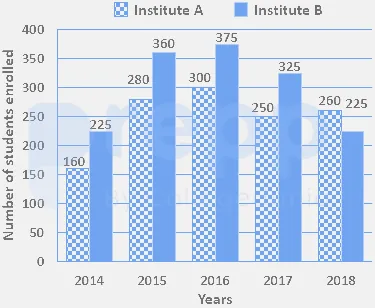
- A
2014
- B
2017
- C
2015
- D
2016
Show answer
A. 2014Given:
25 < x < 30
Calculation:
Year 2014:
Percentage difference of the no of students in institute A than that of institute B = (225 - 160)/225 × 100
⇒ 65/225 × 100 = 28.88% Less
Year 2015:
Percentage difference of the no of students in institute A than that of institute B = (360 - 280)/360 × 100
⇒ 80/360 × 100 = 22.22% Less
Year 2016:
Percentage difference of the no of students in institute A than that of institute B = (375 - 300)/300 × 100
⇒ 75/375 × 100 = 20% Less
Year 2017:
Percentage difference of the no of students in institute A than that of institute B = (325 - 250)/325 × 100
⇒ 75/325 × 100 = 23% Less
∴ For 25 < x < 30, in the year 2014 the number of students enrolled in institute A is 28.88% less, than the number of students enrolled in institute B
Paper & answer key PDF ↗ Question 58archived
The area of a circular park is 12474 m 2. There is 3.5 m wide path around the park. What is the area (in m 2) of the path? (Take π = \(\rm \frac{22}{7}\) )
- A
1435.5
- B
1440.5
- C
1424.5
- D
1380.5
Show answer
C. 1424.5Understanding the Circular Park Area Problem
The question asks us to find the area of a path that surrounds a circular park. We are given the area of the circular park and the width of the path. To solve this, we need to first find the radius of the park using its area. Then, we can find the radius of the larger circle formed by the park plus the path. Finally, the area of the path will be the difference between the area of the larger circle and the area of the smaller circle (the park).
We are given:
Area of the circular park = \(12474 \text{ m}^2\)
Width of the path = \(3.5 \text{ m}\)
Value of \(\pi\) to use = \(\frac{22}{7}\)
Calculating the Radius of the Circular Park
The area of a circle is given by the formula \(\text{Area} = \pi r^2\), where \(r\) is the radius of the circle.
We know the area of the park is \(12474 \text{ m}^2\). Let \(r_p\) be the radius of the park.
So, \(12474 = \pi r_p^2\)
Substitute the value of \(\pi = \frac{22}{7}\):
\(12474 = \frac{22}{7} \times r_p^2\)
Now, we solve for \(r_p^2\):
\(r_p^2 = \frac{12474 \times 7}{22}\)
\(r_p^2 = \frac{87318}{22}\)
Let's perform the division:
\(r_p^2 = 3969\)
To find the radius \(r_p\), we take the square root of 3969:
\(r_p = \sqrt{3969}\)
\(r_p = 63 \text{ m}\)
So, the radius of the circular park is \(63 \text{ m}\).
Calculating the Radius of the Park and Path Together
The path has a width of \(3.5 \text{ m}\) and is around the park. This means the outer radius (radius of the park plus the path) is the radius of the park plus the width of the path.
Let \(R\) be the radius of the larger circle (park + path).
\(R = \text{Radius of park} + \text{Width of path}\)
\(R = r_p + 3.5\)
\(R = 63 + 3.5\)
\(R = 66.5 \text{ m}\)
The radius of the larger circle is \(66.5 \text{ m}\).
Calculating the Area of the Path Around the Circular Park
The area of the path is the area of the larger circle (park + path) minus the area of the smaller circle (park).
\(\text{Area of path} = \text{Area of larger circle} - \text{Area of park}\)
Area of larger circle = \(\pi R^2\)
\(\text{Area of path} = \pi R^2 - \pi r_p^2\)
\(\text{Area of path} = \pi (R^2 - r_p^2)\)
Substitute the values \(R = 66.5\), \(r_p = 63\), and \(\pi = \frac{22}{7}\):
\(\text{Area of path} = \frac{22}{7} ((66.5)^2 - (63)^2)\)
First, calculate the squares:
\((66.5)^2 = 66.5 \times 66.5 = 4422.25\)
\((63)^2 = 63 \times 63 = 3969\)
Now, calculate the difference:
\((66.5)^2 - (63)^2 = 4422.25 - 3969\)
\(4422.25 - 3969 = 453.25\)
Now, substitute this back into the area of path formula:
\(\text{Area of path} = \frac{22}{7} \times 453.25\)
Multiply 22 by 453.25:
\(22 \times 453.25 = 9971.5\)
Now, divide by 7:
\(\text{Area of path} = \frac{9971.5}{7}\)
\(\frac{9971.5}{7} = 1424.5\)
So, the area of the path is \(1424.5 \text{ m}^2\).
Summary of Circular Area Calculations
Here is a summary of the key values calculated:
Description
Value
Area of Park
\(12474 \text{ m}^2\)
Radius of Park (\(r_p\))
\(63 \text{ m}\)
Width of Path
\(3.5 \text{ m}\)
Radius of Park + Path (\(R\))
\(66.5 \text{ m}\)
Area of Park + Path (\(\pi R^2\))
\(\frac{22}{7} \times (66.5)^2 = \frac{22}{7} \times 4422.25 = 13887.5 \text{ m}^2\)
Area of Path (\(\pi (R^2 - r_p^2)\))
\(13887.5 - 12474 = 1424.5 \text{ m}^2\)
The final answer for the area of the path around the circular park is \(1424.5 \text{ m}^2\).
Revision Table: Circular Area Calculations
Formula/Concept
Application in this problem
Area of a circle = \(\pi r^2\)
Used to find the radius of the park and the area of the larger circle.
Radius from Area
\(r = \sqrt{\frac{\text{Area}}{\pi}}\)
Area of a ring (path)
\(\pi R^2 - \pi r^2 = \pi (R^2 - r^2)\)
Adding width to radius
\(R = r + \text{width}\)
Additional Information: Areas of Rings
The area of a path around a circular park is an example of finding the area of an annulus or a circular ring. An annulus is the region between two concentric circles. If the radius of the outer circle is \(R\) and the radius of the inner circle is \(r\), the area of the annulus is given by the formula:
\(\text{Area of Annulus} = \pi R^2 - \pi r^2\)
This can also be factored as:
\(\text{Area of Annulus} = \pi (R^2 - r^2)\)
Using the difference of squares formula (\(a^2 - b^2 = (a-b)(a+b)\)), we can also write it as:
\(\text{Area of Annulus} = \pi (R - r)(R + r)\)
In our problem, \(R - r\) is the width of the path, which is \(3.5 \text{ m}\). \(R+r\) is the sum of the radii. So, the area of the path can also be calculated as \(\pi \times 3.5 \times (66.5 + 63) = \frac{22}{7} \times 3.5 \times 129.5\).
\(\frac{22}{7} \times 3.5 = 22 \times 0.5 = 11\)
Area of path = \(11 \times 129.5\)
\(11 \times 129.5 = 1424.5\)
This confirms our previous calculation and shows an alternative way to calculate the area of the circular path using the radii and the path width.
Paper & answer key PDF ↗ Question 59archived
If \(\rm x^4+\frac{1}{x^4} = 727,x>1\) , then what is the value of \(\rm \left(x-\frac{1}{x}\right)\) ?
- A
-6
- B
5
- C
-5
- D
6
Show answer
B. 5Solving Algebraic Equations: Finding \(x - \frac{1}{x}\)
This problem requires us to find the value of \(x - \frac{1}{x}\) given the equation \(x^4 + \frac{1}{x^4} = 727\) and the condition \(x > 1\). We can solve this by using algebraic identities to work our way down from \(x^4 + \frac{1}{x^4}\) to \(x - \frac{1}{x}\).
Key Algebraic Identities
We will use the following algebraic identities:
\((a+b)^2 = a^2 + 2ab + b^2\)
\((a-b)^2 = a^2 - 2ab + b^2\)
Applying these to terms like \(x\) and \(\frac{1}{x}\):
\(\left(x + \frac{1}{x}\right)^2 = x^2 + 2\left(x\right)\left(\frac{1}{x}\right) + \left(\frac{1}{x}\right)^2 = x^2 + 2 + \frac{1}{x^2}\)
\(\left(x - \frac{1}{x}\right)^2 = x^2 - 2\left(x\right)\left(\frac{1}{x}\right) + \left(\frac{1}{x}\right)^2 = x^2 - 2 + \frac{1}{x^2}\)
We can also apply this to \(x^2\) and \(\frac{1}{x^2}\):
\(\left(x^2 + \frac{1}{x^2}\right)^2 = \left(x^2\right)^2 + 2\left(x^2\right)\left(\frac{1}{x^2}\right) + \left(\frac{1}{x^2}\right)^2 = x^4 + 2 + \frac{1}{x^4}\)
Step-by-Step Solution for \(x - \frac{1}{x}\)
Given the equation \(x^4 + \frac{1}{x^4} = 727\). We want to find \(x - \frac{1}{x}\).
Step 1: Find \(x^2 + \frac{1}{x^2}\) from \(x^4 + \frac{1}{x^4}\)
We know that \(\left(x^2 + \frac{1}{x^2}\right)^2 = x^4 + \frac{1}{x^4} + 2\).
Substitute the given value:
\(\left(x^2 + \frac{1}{x^2}\right)^2 = 727 + 2\)
\(\left(x^2 + \frac{1}{x^2}\right)^2 = 729\)
Taking the square root of both sides:
\(x^2 + \frac{1}{x^2} = \pm\sqrt{729}\)
\(x^2 + \frac{1}{x^2} = \pm 27\)
Since \(x > 1\), \(x^2\) is positive and \(\frac{1}{x^2}\) is positive. The sum of two positive numbers must be positive. Therefore, we take the positive value:
\(x^2 + \frac{1}{x^2} = 27\)
Step 2: Find \(x - \frac{1}{x}\) from \(x^2 + \frac{1}{x^2}\)
We know that \(\left(x - \frac{1}{x}\right)^2 = x^2 + \frac{1}{x^2} - 2\).
Substitute the value of \(x^2 + \frac{1}{x^2}\) we just found:
\(\left(x - \frac{1}{x}\right)^2 = 27 - 2\)
\(\left(x - \frac{1}{x}\right)^2 = 25\)
Taking the square root of both sides:
\(x - \frac{1}{x} = \pm\sqrt{25}\)
\(x - \frac{1}{x} = \pm 5\)
We are given that \(x > 1\). If \(x > 1\), then \(x\) is a number greater than 1, and \(\frac{1}{x}\) is a number between 0 and 1 (e.g., if \(x=2\), \(\frac{1}{x}=0.5\); if \(x=10\), \(\frac{1}{x}=0.1\)). In this case, \(x\) will always be greater than \(\frac{1}{x}\) when \(x > 1\). Therefore, the difference \(x - \frac{1}{x}\) must be positive.
So, we take the positive value:
\(x - \frac{1}{x} = 5\)
Conclusion
Given \(x^4 + \frac{1}{x^4} = 727\) and \(x > 1\), the value of \(x - \frac{1}{x}\) is 5.
Revision Table: Algebraic Identities
Understanding these basic identities is crucial for solving such problems.
Identity
Formula
Square of sum
\((a+b)^2 = a^2 + 2ab + b^2\)
Square of difference
\((a-b)^2 = a^2 - 2ab + b^2\)
Difference of Squares
\(a^2 - b^2 = (a-b)(a+b)\)
Additional Information: Why \(x - \frac{1}{x}\) is positive for \(x > 1\)
Consider the function \(f(x) = x - \frac{1}{x}\). We want to understand its sign for \(x > 1\).
If \(x = 1\), \(f(1) = 1 - \frac{1}{1} = 1 - 1 = 0\).
If \(x > 1\), let's compare \(x\) and \(\frac{1}{x}\).
Since \(x > 1\), multiplying both sides by the positive number \(x\) gives \(x \cdot x > 1 \cdot x\), so \(x^2 > x\).
Multiplying both sides of \(x > 1\) by the positive number \(\frac{1}{x}\) gives \(x \cdot \frac{1}{x} > 1 \cdot \frac{1}{x}\), so \(1 > \frac{1}{x}\).
Since \(x > 1\) and \(1 > \frac{1}{x}\), it follows that \(x > \frac{1}{x}\).
Because \(x > \frac{1}{x}\) for \(x > 1\), the difference \(x - \frac{1}{x}\) must be positive.
For example, if \(x=2\), \(x-\frac{1}{x} = 2 - \frac{1}{2} = 2 - 0.5 = 1.5 > 0\).
If \(x=3\), \(x-\frac{1}{x} = 3 - \frac{1}{3} = 3 - 0.33... = 2.66... > 0\).
This confirms that when \(x > 1\), the value of \(x - \frac{1}{x}\) is positive, which helped us choose the correct sign for the square root.
Paper & answer key PDF ↗ Question 60archived
In ΔABC, ∠C = 90° and Q is the midpoint of BC. If AB = 10 cm and AC = 2√10 cm, then the length of AQ is:
- A
5√2 cm
- B
√55 cm
- C
3√5 cm
- D
5√3 cm
Show answer
B. √55 cmCalculating the Length of AQ in a Right Triangle
The problem asks us to find the length of the line segment AQ in a right-angled triangle ABC, where ∠C = 90°. We are given the lengths of the hypotenuse AB and one leg AC, and we know that Q is the midpoint of the leg BC.
Understanding the Geometry
We have a right triangle ABC with the right angle at C. Q is on BC such that BQ = QC. We can use the Pythagorean theorem in triangle ABC to find the length of BC, and then use the Pythagorean theorem in triangle ACQ to find the length of AQ.
Step-by-Step Solution to Find AQ
Step 1: Find the length of BC
In right-angled ΔABC, according to the Pythagorean theorem:
\(AB^2 = AC^2 + BC^2\)
We are given AB = 10 cm and AC = \(2\sqrt{10}\) cm. Substitute these values into the equation:
\((10)^2 = (2\sqrt{10})^2 + BC^2\)
\(100 = (4 \times 10) + BC^2\)
\(100 = 40 + BC^2\)
Now, solve for \(BC^2\):
\(BC^2 = 100 - 40\)
\(BC^2 = 60\)
Take the square root of both sides to find BC:
\(BC = \sqrt{60}\)
Simplify the square root:
\(BC = \sqrt{4 \times 15}\)
\(BC = 2\sqrt{15}\) cm
Step 2: Find the length of QC
We are told that Q is the midpoint of BC. Therefore, the length of QC is half the length of BC.
\(QC = \frac{BC}{2}\)
\(QC = \frac{2\sqrt{15}}{2}\)
\(QC = \sqrt{15}\) cm
Step 3: Find the length of AQ
Consider the triangle ACQ. This is a right-angled triangle at C, because ∠C of ΔABC is 90° and Q lies on BC. We can use the Pythagorean theorem in ΔACQ:
\(AQ^2 = AC^2 + QC^2\)
We know AC = \(2\sqrt{10}\) cm and QC = \(\sqrt{15}\) cm. Substitute these values:
\(AQ^2 = (2\sqrt{10})^2 + (\sqrt{15})^2\)
\(AQ^2 = (4 \times 10) + 15\)
\(AQ^2 = 40 + 15\)
\(AQ^2 = 55\)
Take the square root of both sides to find AQ:
\(AQ = \sqrt{55}\) cm
Thus, the length of AQ is \(\sqrt{55}\) cm.
Summary of Calculations
Value Calculated
Method Used
Result
BC
Pythagorean theorem in ΔABC
\(2\sqrt{15}\) cm
QC
Q is midpoint of BC
\(\sqrt{15}\) cm
AQ
Pythagorean theorem in ΔACQ
\(\sqrt{55}\) cm
Final Answer Determination
Based on our calculations, the length of AQ is \(\sqrt{55}\) cm, which matches one of the provided options.
Revision Table: Key Concepts in Right Triangles
Concept
Description
Formula (for right triangle with legs a, b and hypotenuse c)
Pythagorean Theorem
Relates the lengths of the legs and the hypotenuse of a right triangle.
\(a^2 + b^2 = c^2\)
Midpoint
A point that divides a line segment into two equal parts.
If Q is the midpoint of BC, then BQ = QC = BC/2.
Right Triangle
A triangle in which one angle is exactly 90 degrees.
The side opposite the 90-degree angle is called the hypotenuse.
Additional Information: Solving Geometry Problems
When tackling geometry problems involving triangles, especially right triangles, remember to:
Draw a diagram based on the description. This helps visualize the problem.
Identify the given information and what needs to be found.
Look for right angles, which are clues to use the Pythagorean theorem.
Understand definitions like 'midpoint' and how they affect side lengths.
Break down the problem into smaller steps. Often, you need to find intermediate values (like BC and QC in this case) before finding the final answer (AQ).
Double-check calculations, especially with square roots and exponents.
The Pythagorean theorem is a fundamental tool in solving problems involving right triangles, whether it's finding a missing side or, as in this case, finding a segment within or connected to the triangle.
Paper & answer key PDF ↗ Question 61archived
If \(\rm x-\frac{1}{x}=1\) , then what is the value of \(\rm x^8+\frac{1}{x^8}\) ?
- A
3
- B
47
- C
119
- D
-1
Show answer
B. 47Solving the Algebraic Expression Problem
The problem asks us to find the value of \(\rm x^8+\frac{1}{x^8}\) given that \(\rm x-\frac{1}{x}=1\). We can solve this by repeatedly squaring the given equation and using algebraic identities.
Step-by-Step Solution for \(\rm x^8+\frac{1}{x^8}\)
Step 1: Find the value of \(\rm x^2+\frac{1}{x^2}\)
We are given the equation:
\(\rm x-\frac{1}{x}=1\)
To find an expression involving squares, we can square both sides of the equation. We use the identity \((a-b)^2 = a^2 - 2ab + b^2\).
\(\left(x - \frac{1}{x}\right)^2 = 1^2\)
\(\rm x^2 - 2 \cdot x \cdot \frac{1}{x} + \left(\frac{1}{x}\right)^2 = 1\)
The term \(\rm 2 \cdot x \cdot \frac{1}{x}\) simplifies to 2 because \(\rm x \cdot \frac{1}{x} = 1\).
\(\rm x^2 - 2 + \frac{1}{x^2} = 1\)
Now, add 2 to both sides to isolate \(\rm x^2 + \frac{1}{x^2}\):
\(\rm x^2 + \frac{1}{x^2} = 1 + 2\)
\(\rm x^2 + \frac{1}{x^2} = 3\)
So, the value of \(\rm x^2+\frac{1}{x^2}\) is 3.
Step 2: Find the value of \(\rm x^4+\frac{1}{x^4}\)
We now have the equation:
\(\rm x^2 + \frac{1}{x^2} = 3\)
To find an expression involving fourth powers, we square both sides of this new equation. We use the identity \((a+b)^2 = a^2 + 2ab + b^2\).
\(\left(x^2 + \frac{1}{x^2}\right)^2 = 3^2\)
\(\left(x^2\right)^2 + 2 \cdot x^2 \cdot \frac{1}{x^2} + \left(\frac{1}{x^2}\right)^2 = 9\)
The term \(\rm 2 \cdot x^2 \cdot \frac{1}{x^2}\) simplifies to 2 because \(\rm x^2 \cdot \frac{1}{x^2} = 1\).
\(\rm x^4 + 2 + \frac{1}{x^4} = 9\)
Now, subtract 2 from both sides to isolate \(\rm x^4 + \frac{1}{x^4}\):
\(\rm x^4 + \frac{1}{x^4} = 9 - 2\)
\(\rm x^4 + \frac{1}{x^4} = 7\)
So, the value of \(\rm x^4+\frac{1}{x^4}\) is 7.
Step 3: Find the value of \(\rm x^8+\frac{1}{x^8}\)
We now have the equation:
\(\rm x^4 + \frac{1}{x^4} = 7\)
To find the expression involving eighth powers, we square both sides of this equation again. We use the identity \((a+b)^2 = a^2 + 2ab + b^2\).
\(\left(x^4 + \frac{1}{x^4}\right)^2 = 7^2\)
\(\left(x^4\right)^2 + 2 \cdot x^4 \cdot \frac{1}{x^4} + \left(\frac{1}{x^4}\right)^2 = 49\)
The term \(\rm 2 \cdot x^4 \cdot \frac{1}{x^4}\) simplifies to 2 because \(\rm x^4 \cdot \frac{1}{x^4} = 1\).
\(\rm x^8 + 2 + \frac{1}{x^8} = 49\)
Finally, subtract 2 from both sides to isolate \(\rm x^8 + \frac{1}{x^8}\):
\(\rm x^8 + \frac{1}{x^8} = 49 - 2\)
\(\rm x^8 + \frac{1}{x^8} = 47\)
Thus, the value of \(\rm x^8+\frac{1}{x^8}\) is 47.
Expression
Value
\(\rm x-\frac{1}{x}\)
1
\(\rm x^2+\frac{1}{x^2}\)
3
\(\rm x^4+\frac{1}{x^4}\)
7
\(\rm x^8+\frac{1}{x^8}\)
47
Revision Table: Key Algebraic Identities
Here are the standard algebraic identities used in solving such problems:
\((a+b)^2 = a^2 + 2ab + b^2\)
\((a-b)^2 = a^2 - 2ab + b^2\)
\((a+b)(a-b) = a^2 - b^2\)
Additional Information on Related Algebraic Problems
Problems involving \(\rm x^n \pm \frac{1}{x^n}\) based on an initial relation like \(\rm x \pm \frac{1}{x} = k\) are common in algebra. The technique of squaring (or sometimes cubing) is frequently used to find expressions with higher powers.
For example, if you were given \(\rm x + \frac{1}{x} = k\), you could find \(\rm x^2 + \frac{1}{x^2}\) by squaring: \(\left(x + \frac{1}{x}\right)^2 = k^2 \Rightarrow x^2 + 2 + \frac{1}{x^2} = k^2 \Rightarrow x^2 + \frac{1}{x^2} = k^2 - 2\). This is a slightly different result compared to starting with \(\rm x - \frac{1}{x} = k\).
Understanding these patterns and the application of algebraic identities is crucial for solving such quantitative aptitude questions efficiently.
Paper & answer key PDF ↗ Question 62archived
The following table shows day-wise number of seats occupied of different classes in a train. Numbers in bracket represent the total seats available in a particular class.
Day2nd Class
Non-AC (900)1st Class
Non-AC (500)AC III
Tier (500)AC II
Tier (250)AC 1st
Class (150)
Monday850460480240145
Tuesday840400450230120
Wednesday830390480220130
Thursday790480490250125
Friday840470500210130
How many seats remained vacant taking all the days together in non-AC classes?
- A
715
- B
650
- C
600
- D
585
Show answer
B. 650Calculating Vacant Train Seats in Non-AC Classes
The question asks us to find the total number of vacant seats across all days for the non-AC classes in the train, based on the provided table showing daily seat occupancy.
Understanding the Data
The table gives us the number of seats occupied each day for different classes. It also provides the total number of seats available in each class, indicated in brackets next to the class name.
We are specifically interested in the non-AC classes. From the table header, we can identify the non-AC classes:
2nd Class Non-AC (Total Seats: 900)
1st Class Non-AC (Total Seats: 500)
The other classes listed (AC III Tier, AC II Tier, AC 1st Class) are AC classes and are not relevant to this specific question.
Calculating Total Occupied Seats in Non-AC Classes
First, let's sum the number of seats occupied each day for both non-AC classes over the five days (Monday to Friday).
2nd Class Non-AC Occupied Seats:
Sum of occupied seats for 2nd Class Non-AC over 5 days:
\(
850 + 840 + 830 + 790 + 840
\)
Let's calculate the total:
Mon: 850
Tue: 840
Wed: 830
Thu: 790
Fri: 840
Total occupied seats in 2nd Class Non-AC = \( 850 + 840 + 830 + 790 + 840 = 4150 \) seats.
1st Class Non-AC Occupied Seats:
Sum of occupied seats for 1st Class Non-AC over 5 days:
\(
460 + 400 + 390 + 480 + 470
\)
Let's calculate the total:
Mon: 460
Tue: 400
Wed: 390
Thu: 480
Fri: 470
Total occupied seats in 1st Class Non-AC = \( 460 + 400 + 390 + 480 + 470 = 2200 \) seats.
Total Occupied Seats in ALL Non-AC Classes:
Total occupied seats in non-AC classes across all 5 days = Total occupied 2nd Class Non-AC + Total occupied 1st Class Non-AC
\(
4150 + 2200 = 6350
\)
So, a total of 6350 non-AC seats were occupied over the five days.
Calculating Total Available Capacity in Non-AC Classes
Next, we need to find the total number of available seats in the non-AC classes over the same five days.
Total seats in 2nd Class Non-AC per day: 900
Total seats in 1st Class Non-AC per day: 500
Total non-AC capacity per day = \( 900 + 500 = 1400 \) seats.
Since we are considering 5 days, the total available capacity over 5 days is:
\(
1400 \text{ seats/day} \times 5 \text{ days} = 7000 \text{ seats}
\)
So, the total capacity for non-AC classes over the five days is 7000 seats.
Calculating Total Vacant Seats
The number of vacant seats is the difference between the total capacity and the total occupied seats.
Total Vacant Non-AC Seats = Total Non-AC Capacity (5 days) - Total Non-AC Occupied Seats (5 days)
\(
7000 - 6350 = 650
\)
Therefore, 650 seats remained vacant taking all the days together in non-AC classes.
Summary Table
Class
Total Seats per Day
Total Seats (5 Days)
Total Occupied (5 Days)
Total Vacant (5 Days)
2nd Class Non-AC
900
\(900 \times 5 = 4500\)
4150
\(4500 - 4150 = 350\)
1st Class Non-AC
500
\(500 \times 5 = 2500\)
2200
\(2500 - 2200 = 300\)
Total Non-AC
1400
7000
6350
\(350 + 300 = 650\)
The total number of vacant seats in non-AC classes over the five days is 650.
Revision Table: Key Concepts Reviewed
Concept
Description
Application Here
Data Interpretation
Understanding information presented in tables or charts.
Extracting daily occupancy and total capacity for specific classes.
Summation
Adding a series of numbers.
Calculating total occupied seats over multiple days for each class.
Total Capacity
The maximum number of items that can be held.
Total available seats in a class over a given period.
Vacant Seats
Total Capacity minus Total Occupied Seats.
Finding the number of unused seats.
Additional Information: Analyzing Train Data
Analyzing train data like seat occupancy is crucial for railway management. It helps in several areas:
Demand Analysis: Understanding which classes and routes are popular helps in allocating resources effectively. High occupancy indicates high demand.
Pricing Strategies: Dynamic pricing can be used based on occupancy rates. Higher demand might lead to higher fares.
Capacity Planning: Data helps decide whether to add more coaches, increase frequency, or introduce new trains on busy routes or times.
Revenue Management: Maximizing revenue by minimizing vacant seats through promotions or optimizing ticket sales.
Service Improvement: Identifying patterns like consistently low occupancy might indicate a need to improve services or rethink the schedule for those classes or routes.
In this problem, we focused only on non-AC classes and vacant seats. A complete analysis would look at all classes, revenue generated, operational costs, etc.
Paper & answer key PDF ↗ Question 63archived
The value of 90 ÷ 20 of 6 × [11 ÷ 4 of {3 × 2 - (3 - 8)}] ÷ (9 ÷ 3 × 2) is:
- A
\(\rm \frac{9}{8}\)
- B
\(\rm \frac{1}{36}\)
- C
\(\rm \frac{1}{32}\)
- D
\(\rm \frac{3}{8}\)
Show answer
C. \(\rm \frac{1}{32}\)Understanding the Mathematical Expression
The problem asks us to find the value of a given mathematical expression involving several operations like division, multiplication, 'of', and different types of brackets (parentheses, curly braces, and square brackets). To solve this correctly, we must follow the order of operations, often remembered using acronyms like BODMAS or PEMDAS.
Applying the Order of Operations (BODMAS/PEMDAS)
The BODMAS rule dictates the sequence in which operations should be performed:
Brackets (Parentheses, Curly braces, Square brackets) - Solve expressions inside brackets first, from innermost to outermost.
Orders (Powers, Square roots, etc.) or Of (means multiplication, done before standard multiplication/division)
Division and Multiplication (from left to right)
Addition and Subtraction (from left to right)
Let's break down the given expression: \(90 \div 20 \text{ of } 6 \times [11 \div 4 \text{ of } \{3 \times 2 - (3 - 8)\}] \div (9 \div 3 \times 2)\).
Step-by-Step Calculation of the Expression
Step 1: Solve the innermost bracket (Parentheses)
First, calculate the expression inside the parentheses: \( (3 - 8) \).
\( (3 - 8) = -5 \)
The expression inside the curly braces becomes \( \{3 \times 2 - (-5)\} \).
Step 2: Solve the expression inside Curly Braces
Next, solve the expression inside the curly braces: \( \{3 \times 2 - (-5)\} \).
Perform multiplication first: \( 3 \times 2 = 6 \)
The expression becomes \( \{6 - (-5)\} \)
Subtraction with a negative number means addition: \( 6 - (-5) = 6 + 5 = 11 \)
The expression inside the square brackets becomes \( [11 \div 4 \text{ of } \{11\}] \), which simplifies to \( [11 \div 4 \text{ of } 11] \).
Step 3: Solve the 'of' operation inside Square Brackets
Next, calculate '4 of 11' inside the square brackets. 'Of' means multiplication and is done before division/multiplication outside brackets.
\( 4 \text{ of } 11 = 4 \times 11 = 44 \)
The expression inside the square brackets becomes \( [11 \div 44] \).
Step 4: Solve the expression inside Square Brackets
Now, perform the division inside the square brackets:
\( [11 \div 44] = [\frac{11}{44}] = [\frac{1}{4}] \)
Step 5: Solve the expression in the Denominator Part
Look at the last part of the main expression: \( (9 \div 3 \times 2) \). This is treated as a single unit divided by the rest of the expression.
Perform division and multiplication from left to right.
\( 9 \div 3 = 3 \)
Then, \( 3 \times 2 = 6 \)
So, \( (9 \div 3 \times 2) = 6 \).
Step 6: Solve the 'of' operation in the main expression
Now, look at the first part of the main expression: \( 90 \div 20 \text{ of } 6 \). Calculate '20 of 6'.
\( 20 \text{ of } 6 = 20 \times 6 = 120 \)
The main expression is now simplified to: \( 90 \div 120 \times [\frac{1}{4}] \div 6 \).
Step 7: Perform Division and Multiplication from Left to Right
Finally, solve the remaining divisions and multiplications from left to right.
First, \( 90 \div 120 \): \( \frac{90}{120} = \frac{9}{12} = \frac{3}{4} \)
The expression is now \( \frac{3}{4} \times \frac{1}{4} \div 6 \)
Next, \( \frac{3}{4} \times \frac{1}{4} \): \( \frac{3 \times 1}{4 \times 4} = \frac{3}{16} \)
The expression is now \( \frac{3}{16} \div 6 \)
Dividing by 6 is the same as multiplying by \( \frac{1}{6} \): \( \frac{3}{16} \div 6 = \frac{3}{16} \times \frac{1}{6} \)
\( \frac{3}{16} \times \frac{1}{6} = \frac{3 \times 1}{16 \times 6} = \frac{3}{96} \)
Step 8: Simplify the final fraction
Simplify the fraction \( \frac{3}{96} \) by dividing the numerator and the denominator by their greatest common divisor, which is 3.
\( \frac{3 \div 3}{96 \div 3} = \frac{1}{32} \)
Final Answer
The value of the expression is \( \frac{1}{32} \).
Revision Table: Key Steps in BODMAS Calculation
Step
Part of Expression Solved
Calculation
Result
1
\( (3 - 8) \)
\( 3 - 8 \)
\( -5 \)
2
\( \{3 \times 2 - (-5)\} \)
\( 6 - (-5) \)
\( 11 \)
3
\( 4 \text{ of } 11 \)
\( 4 \times 11 \)
\( 44 \)
4
\( [11 \div 44] \)
\( \frac{11}{44} \)
\( \frac{1}{4} \)
5
\( (9 \div 3 \times 2) \)
\( (3 \times 2) \)
\( 6 \)
6
\( 20 \text{ of } 6 \)
\( 20 \times 6 \)
\( 120 \)
7
\( 90 \div 120 \times \frac{1}{4} \div 6 \)
\( \frac{90}{120} \times \frac{1}{4} \times \frac{1}{6} \)
\( \frac{3}{4} \times \frac{1}{4} \times \frac{1}{6} = \frac{3}{96} \)
8
Simplify \( \frac{3}{96} \)
\( \frac{3 \div 3}{96 \div 3} \)
\( \frac{1}{32} \)
Additional Information on Order of Operations
Understanding the order of operations is crucial for correctly evaluating mathematical expressions. Without a standard order, the same expression could yield different results. BODMAS (or PEMDAS) provides this standard. Remember that division and multiplication have the same priority and should be performed from left to right as they appear in the expression. Similarly, addition and subtraction have the same priority and are performed from left to right.
The term 'of' is often used in problems involving fractions or percentages (e.g., 'half of 10', '20% of 50'). In the context of BODMAS, 'of' signifies multiplication but is typically evaluated before any other multiplication or division operations present in the same level of the expression (after brackets and orders/exponents).
Paper & answer key PDF ↗ Question 64archived
The radii of two concentric circles are 12 cm and 13 cm. AB is a diameter of the bigger circle. BE is a tangent to a smaller circle touching it at D. Find the length (in cm) of AD? (correct to one decimal place)
- A
24.5
- B
17.6
- C
23.5
- D
25.5
Show answer
A. 24.5Understanding the Geometry Problem
This problem involves two circles that share the same center (concentric circles). We are given the radii of both circles. A diameter of the larger circle is involved, and a line segment tangent to the smaller circle originates from a point on the larger circle (specifically, an endpoint of the diameter) and touches the smaller circle at a point D. We need to find the length of a specific segment, AD, connecting one endpoint of the larger circle's diameter to the point of tangency on the smaller circle.
Let the center of the concentric circles be O.
Radius of the smaller circle, \(r = 12\) cm.
Radius of the bigger circle, \(R = 13\) cm.
AB is a diameter of the bigger circle. Thus, O is the midpoint of AB, and \(OA = OB = R = 13\) cm. The length of the diameter \(AB = 2R = 2 \times 13 = 26\) cm.
BE is a tangent to the smaller circle at point D. A fundamental property of tangents is that the radius drawn to the point of tangency is perpendicular to the tangent line. Therefore, the radius OD of the smaller circle is perpendicular to BE at D. This means \(\angle ODB = 90^\circ\). The length of OD is the radius of the smaller circle, so \(OD = r = 12\) cm.
Step-by-Step Solution to Find AD
Finding the length of BD
Consider the triangle ODB. We know OD = 12 cm (radius of smaller circle) and OB = 13 cm (radius of bigger circle). Since BE is tangent to the smaller circle at D, \(\triangle ODB\) is a right-angled triangle with the right angle at D (\(\angle ODB = 90^\circ\)). OB is the hypotenuse.
We can use the Pythagorean theorem to find the length of BD:
\[OB^2 = OD^2 + BD^2\]
Substitute the known values:
\[13^2 = 12^2 + BD^2\]
\[169 = 144 + BD^2\]
\[BD^2 = 169 - 144\]
\[BD^2 = 25\]
\[BD = \sqrt{25} = 5 \text{ cm}\]
So, the length of BD is 5 cm.
Finding the length of AD using the Law of Cosines
Now consider the triangle ADB. We know the lengths of two sides: AB = 26 cm (diameter of the bigger circle) and BD = 5 cm (calculated above). To find the length of the third side AD, we can use the Law of Cosines if we know one of the angles. The angle \(\angle ABD\) (which is the same as \(\angle OBD\)) can be determined from the right-angled triangle ODB.
In \(\triangle ODB\), we can find the cosine of \(\angle OBD\):
\[\cos(\angle OBD) = \frac{\text{Adjacent}}{\text{Hypotenuse}} = \frac{BD}{OB}\]
Substitute the values BD = 5 cm and OB = 13 cm:
\[\cos(\angle ABD) = \cos(\angle OBD) = \frac{5}{13}\]
Now apply the Law of Cosines to \(\triangle ADB\) to find AD:
\[AD^2 = AB^2 + BD^2 - 2 \cdot AB \cdot BD \cdot \cos(\angle ABD)\]
Substitute the values AB = 26 cm, BD = 5 cm, and \(\cos(\angle ABD) = \frac{5}{13}\):
\[AD^2 = 26^2 + 5^2 - 2 \cdot 26 \cdot 5 \cdot \left(\frac{5}{13}\right)\]
\[AD^2 = 676 + 25 - 2 \cdot \left(\frac{26}{13}\right) \cdot 5 \cdot 5\]
\[AD^2 = 676 + 25 - 2 \cdot 2 \cdot 25\]
\[AD^2 = 676 + 25 - 100\]
\[AD^2 = 701 - 100\]
\[AD^2 = 601\]
Now, find the square root of 601 to get the length of AD:
\[AD = \sqrt{601}\]
Calculating the Final Answer (to one decimal place)
We need to calculate the value of \(\sqrt{601}\) and round it to one decimal place.
We know that \(24^2 = 576\) and \(25^2 = 625\), so \(\sqrt{601}\) is between 24 and 25.
Let's check values close to the middle:
\[24.5^2 = (24 + 0.5)^2 = 24^2 + 2 \cdot 24 \cdot 0.5 + 0.5^2\]
\[24.5^2 = 576 + 24 + 0.25\]
\[24.5^2 = 600.25\]
Since \(24.5^2 = 600.25\) is very close to 601, \(\sqrt{601}\) is approximately 24.5.
Let's check 24.6 to be sure:
\[24.6^2 = (24.5 + 0.1)^2 = 24.5^2 + 2 \cdot 24.5 \cdot 0.1 + 0.1^2\]
\[24.6^2 = 600.25 + 4.9 + 0.01\]
\[24.6^2 = 605.16\]
Since 601 is closer to 600.25 than to 605.16, \(\sqrt{601}\) is closer to 24.5 than to 24.6.
Therefore, rounding \(\sqrt{601}\) to one decimal place gives 24.5.
The length of AD is approximately 24.5 cm.
Revision Table: Key Geometric Concepts
Concept
Description
Application in Problem
Concentric Circles
Circles sharing the same center.
The problem is set in this context with a common center O.
Diameter
A line segment passing through the center of a circle with endpoints on the circle. Length is \(2 \times\) radius.
AB is the diameter of the bigger circle, length 26 cm.
Tangent to a Circle
A line that touches the circle at exactly one point.
BE is tangent to the smaller circle at D.
Radius Perpendicular to Tangent
The radius drawn to the point of tangency is perpendicular to the tangent line.
OD is perpendicular to BE at D, forming a 90° angle (\(\angle ODB\)).
Pythagorean Theorem
In a right-angled triangle, the square of the hypotenuse is equal to the sum of the squares of the other two sides (\(a^2 + b^2 = c^2\)).
Used in \(\triangle ODB\) to find BD.
Law of Cosines
Relates the lengths of the sides of a triangle to the cosine of one of its angles (\(c^2 = a^2 + b^2 - 2ab \cos C\)).
Used in \(\triangle ADB\) to find AD.
Additional Information: Alternative Approaches
While the Law of Cosines is a direct approach using calculated lengths and angles, another method could involve using coordinate geometry. By setting the center O at the origin (0,0), A and B can be placed at (-13,0) and (13,0). The point D lies on the smaller circle \(x^2 + y^2 = 12^2\). Since OD is perpendicular to the tangent line passing through D and B(13,0), the slope of OD (\(y_D/x_D\)) and the slope of BD (\(y_D/(x_D-13)\)) are negative reciprocals. Also, D is the foot of the perpendicular from O to the line BE. The line BE passes through B(13,0) and D. The perpendicular from O(0,0) to BE is OD. The coordinates of D can be found by using the property that the foot of the perpendicular from O(0,0) to a line \(ax+by+c=0\) is given by a formula, or by finding the intersection of the circle and the line perpendicular to OD passing through B. This approach is more algebraic but yields the same result for the coordinates of D, and consequently, the length of AD using the distance formula. Both methods rely on the core geometric properties of tangents and circles.
Paper & answer key PDF ↗ Question 65archived
The data given in the table shows the number of boys and girls enrolled in three different streams in a school over 5 years.
Years
Arts
Science
Commerce
Boys
Girls
Boys
Girls
Boys
Girls
2012
48
36
40
35
35
45
2014
42
43
42
32
32
42
2016
45
42
38
30
36
38
2018
39
46
41
23
28
34
2020
36
43
39
30
39
41
The number of boys in Science stream in the years 2012 and 2016 taken together is what percent of the number of girls for all the years in the Commerce stream?
- A
45.5
- B
39
- C
35
- D
32.5
Show answer
B. 39Calculation:
Number of boys in the science stream in the years 2012 and 2016 = 40 + 38 = 78
Number of girls in the commerce stream in all years = 45 + 42 + 38 + 34 + 41 = 200
∴ Desired percentage = 78/200 × 100 = 39%
Paper & answer key PDF ↗ Question 66archived
The average of eleven numbers is 56. The average of first three numbers is 52 and that of next five numbers is 60. The 9th and 10th number are 3 and 1 more than the 11th number respectively. What is the average of 9th and 11th numbers?
- A
54
- B
52.5
- C
52
- D
53.5
Show answer
D. 53.5Calculate Average of Numbers Problem
This problem involves finding the average of two specific numbers given the average of several groups of numbers and the relationships between the last few numbers. We will use the concept of average and sum to solve this.
The average of a set of numbers is calculated as:
$$\text{Average} = \frac{\text{Sum of numbers}}{\text{Total count of numbers}}$$
From this, we can find the sum of numbers if we know the average and the count:
$$\text{Sum of numbers} = \text{Average} \times \text{Total count of numbers}$$
Step-by-Step Solution to find the Average
Calculate the total sum of the eleven numbers:
The average of eleven numbers is 56. So, the total sum of these eleven numbers is:
$$\text{Total Sum} = 11 \times 56 = 616$$
Calculate the sum of the first three numbers:
The average of the first three numbers is 52. Their sum is:
$$\text{Sum of first 3} = 3 \times 52 = 156$$
Calculate the sum of the next five numbers:
The average of the next five numbers (from 4th to 8th) is 60. Their sum is:
$$\text{Sum of next 5} = 5 \times 60 = 300$$
Calculate the sum of the first eight numbers:
The sum of the first eight numbers is the sum of the first three and the sum of the next five.
$$\text{Sum of first 8} = \text{Sum of first 3} + \text{Sum of next 5} = 156 + 300 = 456$$
Calculate the sum of the remaining three numbers (9th, 10th, and 11th):
The sum of the last three numbers is the total sum minus the sum of the first eight numbers.
$$\text{Sum of 9th, 10th, 11th} = \text{Total Sum} - \text{Sum of first 8} = 616 - 456 = 160$$
Set up equations based on the relationship between the last three numbers:
Let the 11th number be \(x\). According to the problem:
The 9th number is 3 more than the 11th number: $$\text{9th number} = x + 3$$
The 10th number is 1 more than the 11th number: $$\text{10th number} = x + 1$$
Solve for the value of the 11th number (\(x\)):
The sum of the 9th, 10th, and 11th numbers is 160. We can write an equation:
$$\text{9th number} + \text{10th number} + \text{11th number} = 160$$
$$(x + 3) + (x + 1) + x = 160$$
Combine like terms:
$$3x + 4 = 160$$
Subtract 4 from both sides:
$$3x = 160 - 4$$
$$3x = 156$$
Divide by 3:
$$x = \frac{156}{3}$$
$$x = 52$$
So, the 11th number is 52.
Find the value of the 9th number:
The 9th number is \(x + 3\).
$$\text{9th number} = 52 + 3 = 55$$
Calculate the average of the 9th and 11th numbers:
We need to find the average of 55 (9th number) and 52 (11th number).
$$\text{Average of 9th and 11th} = \frac{\text{9th number} + \text{11th number}}{2}$$
$$\text{Average of 9th and 11th} = \frac{55 + 52}{2}$$
$$\text{Average of 9th and 11th} = \frac{107}{2}$$
$$\text{Average of 9th and 11th} = 53.5$$
The average of the 9th and 11th numbers is 53.5.
Summary of Calculated Values
Item
Value
Calculation
Total Sum of 11 numbers
616
\(11 \times 56\)
Sum of first 3 numbers
156
\(3 \times 52\)
Sum of next 5 numbers
300
\(5 \times 60\)
Sum of first 8 numbers
456
\(156 + 300\)
Sum of 9th, 10th, 11th numbers
160
\(616 - 456\)
11th number
52
From equation \(3x+4=160\)
9th number
55
\(52 + 3\)
Average of 9th and 11th numbers
53.5
\((55+52)/2\)
Revision Table: Average and Sum Concepts
Concept
Definition/Formula
Use in Problem
Average
Sum / Count
Given for groups of numbers
Sum
Average × Count
Used to find total sum and sums of subgroups
Algebraic Equations
Represent relationships between unknowns
Used to find the values of the last three numbers
Additional Information: Understanding Averages
An average, also known as the arithmetic mean, gives us a central value for a set of numbers. It is calculated by adding up all the numbers in the set and then dividing by the total count of numbers in the set.
Understanding how to work with averages and sums is crucial for solving many quantitative problems. When you are given the average of a group, you can always find the total sum of that group by multiplying the average by the number of items in the group. Conversely, if you know the sum and the count, you can find the average.
In this problem, we strategically used the average formula to find sums of different parts of the list of eleven numbers. By finding the sum of the first eight numbers, we could isolate the sum of the last three. The given relationships between the last three numbers allowed us to set up a simple linear equation to find their individual values. Once the values of the 9th and 11th numbers were known, calculating their average was straightforward.
Always break down problems involving averages into smaller, manageable steps:
Identify the total number of items.
Identify the given averages and counts for different groups.
Calculate sums for known groups.
Use sums to find information about unknown groups.
Set up equations if relationships between unknown values are given.
Solve the equations to find the unknown values.
Finally, perform the calculation requested in the question (e.g., find the average of specific numbers).
Paper & answer key PDF ↗ Question 67archived
If 2x 2- 8x - 1 = 0, then what is the value of \(\rm 8x^3 - \frac{1}{x^3}\) ?
- A
540
- B
560
- C
524
- D
464
Show answer
B. 560Solving the Equation and Finding the Expression Value
We are given the equation \(2x^2 - 8x - 1 = 0\) and asked to find the value of the expression \(8x^3 - \frac{1}{x^3}\).
Step 1: Manipulate the Given Equation
Let's start by rearranging the given equation to find a relationship involving \(x\) and \(\frac{1}{x}\). The equation is:
\[2x^2 - 8x - 1 = 0\]
Assuming \(x \neq 0\) (if \(x=0\), the original equation becomes \(2(0)^2 - 8(0) - 1 = -1 \neq 0\), so \(x\) cannot be zero), we can divide the entire equation by \(x\):
\[\frac{2x^2}{x} - \frac{8x}{x} - \frac{1}{x} = \frac{0}{x}\]
\[2x - 8 - \frac{1}{x} = 0\]
Now, isolate the terms with \(x\) and \(\frac{1}{x}\):
\[2x - \frac{1}{x} = 8\]
This gives us a useful relationship: the value of \(2x - \frac{1}{x}\) is 8.
Step 2: Identify the Target Expression and Relevant Identity
The expression we need to evaluate is \(8x^3 - \frac{1}{x^3}\). We can rewrite this as:
\[8x^3 - \frac{1}{x^3} = (2x)^3 - \left(\frac{1}{x}\right)^3\]
This expression is in the form of \(a^3 - b^3\), which is the difference of cubes. The algebraic identity for the difference of cubes is:
\[a^3 - b^3 = (a - b)(a^2 + ab + b^2)\]
In our case, \(a = 2x\) and \(b = \frac{1}{x}\). Substituting these into the identity:
\[(2x)^3 - \left(\frac{1}{x}\right)^3 = \left(2x - \frac{1}{x}\right)\left((2x)^2 + (2x)\left(\frac{1}{x}\right) + \left(\frac{1}{x}\right)^2\right)\]
\[8x^3 - \frac{1}{x^3} = \left(2x - \frac{1}{x}\right)\left(4x^2 + 2 + \frac{1}{x^2}\right)\]
So, to find the value of \(8x^3 - \frac{1}{x^3}\), we need the values of \(2x - \frac{1}{x}\) and \(4x^2 + \frac{1}{x^2}\).
Step 3: Calculate the Required Terms
From Step 1, we already found that \(2x - \frac{1}{x} = 8\).
Now let's find the value of \(4x^2 + \frac{1}{x^2}\). We can get this by squaring the expression \(2x - \frac{1}{x}\):
\[\left(2x - \frac{1}{x}\right)^2 = (2x)^2 - 2(2x)\left(\frac{1}{x}\right) + \left(\frac{1}{x}\right)^2\]
\[\left(2x - \frac{1}{x}\right)^2 = 4x^2 - 4 + \frac{1}{x^2}\]
We know \(2x - \frac{1}{x} = 8\), so substitute this value:
\[(8)^2 = 4x^2 - 4 + \frac{1}{x^2}\]
\[64 = 4x^2 - 4 + \frac{1}{x^2}\]
Add 4 to both sides to find the value of \(4x^2 + \frac{1}{x^2}\):
\[64 + 4 = 4x^2 + \frac{1}{x^2}\]
\[68 = 4x^2 + \frac{1}{x^2}\]
So, the value of \(4x^2 + \frac{1}{x^2}\) is 68.
Step 4: Substitute and Calculate the Final Value
Now we have the values for the terms needed in the identity:
\(2x - \frac{1}{x} = 8\)
\(4x^2 + \frac{1}{x^2} = 68\)
Recall the identity expression:
\[8x^3 - \frac{1}{x^3} = \left(2x - \frac{1}{x}\right)\left(4x^2 + 2 + \frac{1}{x^2}\right)\]
Substitute the values we found:
\[8x^3 - \frac{1}{x^3} = (8)(68 + 2)\]
\[8x^3 - \frac{1}{x^3} = (8)(70)\]
\[8x^3 - \frac{1}{x^3} = 560\]
The value of \(8x^3 - \frac{1}{x^3}\) is 560.
Summary of Calculation
Step
Calculation/Relation
Result
Start Equation
\(2x^2 - 8x - 1 = 0\)
Divide by x
\(2x - 8 - \frac{1}{x} = 0\)
Rearrange
\(2x - \frac{1}{x} = 8\)
\(2x - \frac{1}{x} = 8\)
Square \(2x - \frac{1}{x}\)
\((2x - \frac{1}{x})^2 = 8^2\)
\(4x^2 - 4 + \frac{1}{x^2} = 64\)
Find \(4x^2 + \frac{1}{x^2}\)
\(4x^2 + \frac{1}{x^2} = 64 + 4\)
\(4x^2 + \frac{1}{x^2} = 68\)
Apply Identity
\(8x^3 - \frac{1}{x^3} = (2x - \frac{1}{x})(4x^2 + \frac{1}{x^2} + 2)\)
Substitute Values
\((8)(68 + 2)\)
\((8)(70)\)
Final Value
\(8 \times 70\)
560
The calculated value 560 matches option 2.
Revision Table: Key Algebraic Identities
Identity
Formula
Square of a difference
\((a-b)^2 = a^2 - 2ab + b^2\)
Difference of cubes
\(a^3 - b^3 = (a-b)(a^2 + ab + b^2)\)
Sum of cubes
\(a^3 + b^3 = (a+b)(a^2 - ab + b^2)\)
Additional Information: Solving Polynomial Expressions
Solving problems like finding the value of \(8x^3 - \frac{1}{x^3}\) from a quadratic equation \(2x^2 - 8x - 1 = 0\) often involves:
Manipulating the given equation to find relationships between \(x\) and inverse terms (\(\frac{1}{x}\)).
Recognizing the target expression as a standard algebraic form, like a difference or sum of cubes, or a squared term.
Applying appropriate algebraic identities to simplify the expression.
Calculating intermediate values based on the manipulated equation.
Substituting these values back into the expanded form of the target expression.
For quadratic equations like \(ax^2 + bx + c = 0\), if \(x \neq 0\), dividing by \(x\) gives \(ax + b + \frac{c}{x} = 0\), which can lead to terms like \(x + \frac{c}{ax}\) or \(x - \frac{|c|}{|a|x}\) depending on signs. These forms are useful when the target expression involves cubes or squares of \(x\) and \(\frac{1}{x}\).
Paper & answer key PDF ↗ Question 68archived
Atul purchased Bread costing Rs.20 and gave a 100 rupee note to the shopkeeper. The shopkeeper gave the balance money in coins of denomination Rs.2, Rs.5 and Rs.10. If these coins are in the ratio 5 ∶ 4 ∶ 1, then how many Rs.5 coins did the shopkeeper give?
- A
5
- B
6
- C
8
- D
4
Show answer
C. 8Understanding the Money Problem
This question asks us to determine the number of Rs. 5 coins a shopkeeper gave back as change. We are given the cost of an item, the amount paid, and the ratio of different coin denominations used for the change.
Calculating the Total Change Amount
First, let's find out the total amount of change Atul received from the shopkeeper. The change is the difference between the money paid and the cost of the bread.
Money paid = Rs. 100
Cost of Bread = Rs. 20
Total Change = Money paid - Cost of Bread
Total Change = \$100 - \$20 = \$80$
So, the shopkeeper gave back Rs. 80 in coins.
Setting Up the Coin Ratio and Value
The shopkeeper gave the change in coins of denominations Rs. 2, Rs. 5, and Rs. 10. The ratio of these coins is given as 5 : 4 : 1.
Let's represent the number of coins using a variable \(x\):
Number of Rs. 2 coins = \$5x$
Number of Rs. 5 coins = \$4x$
Number of Rs. 10 coins = \$1x$ (or just \$x$)
Now, let's calculate the total value contributed by each type of coin based on this ratio:
Value from Rs. 2 coins = (Number of Rs. 2 coins) \(\times\) (Denomination) = \$5x \times 2 = 10x$ rupees
Value from Rs. 5 coins = (Number of Rs. 5 coins) \(\times\) (Denomination) = \$4x \times 5 = 20x$ rupees
Value from Rs. 10 coins = (Number of Rs. 10 coins) \(\times\) (Denomination) = \$1x \times 10 = 10x$ rupees
Forming an Equation and Solving for x
The sum of the values from all coin denominations must equal the total change received, which is Rs. 80.
Total Value of Change = Value from Rs. 2 coins + Value from Rs. 5 coins + Value from Rs. 10 coins
\$80 = 10x + 20x + 10x$
Combine the terms on the right side:
\$80 = (10 + 20 + 10)x$
\$80 = 40x$
Now, solve for \(x\) by dividing both sides by 40:
\$x = \frac{80}{40}$
\$x = 2$
Finding the Number of Rs. 5 Coins
The question asks for the number of Rs. 5 coins. Based on our ratio setup, the number of Rs. 5 coins is \(4x\).
Number of Rs. 5 coins = \$4x$
Substitute the value of \(x\) we found:
Number of Rs. 5 coins = \$4 \times 2$
Number of Rs. 5 coins = \$8$
Therefore, the shopkeeper gave 8 coins of Rs. 5 denomination.
Summary of Coin Calculation
Let's quickly verify the total change value with \(x=2\):
Number of Rs. 2 coins = \$5x = 5 \times 2 = 10$. Value = \$10 \times 2 = 20$
Number of Rs. 5 coins = \$4x = 4 \times 2 = 8$. Value = \$8 \times 5 = 40$
Number of Rs. 10 coins = \$1x = 1 \times 2 = 2$. Value = \$2 \times 10 = 20$
Total value = \$20 + 40 + 20 = 80$ rupees, which matches the required change amount.
The number of Rs. 5 coins is indeed 8.
Revision Table: Coin Denomination Ratio Problem
Item
Value
Cost of Bread
Rs. 20
Money Paid
Rs. 100
Total Change
Rs. 80
Ratio Rs. 2 : Rs. 5 : Rs. 10
5 : 4 : 1
Let the multiplier be \(x\)
Number of Rs. 2 coins
\$5x$
Number of Rs. 5 coins
\$4x$
Number of Rs. 10 coins
\$x$
Equation for Total Value
\$2(5x) + 5(4x) + 10(x) = 80$
Simplified Equation
\$10x + 20x + 10x = 80$
\$40x = 80$
Value of \(x\)
\$x = 2$
Number of Rs. 5 coins
\$4x = 4 \times 2 = 8$
Additional Information: Ratio and Proportion in Money Problems
Ratio and proportion are common concepts in quantitative aptitude problems, especially those involving division of amounts or objects based on a given ratio, like this coin denomination problem. A ratio represents a relative relationship between quantities. For example, a ratio of 5:4:1 means that for every 5 coins of the first type, there are 4 of the second, and 1 of the third.
When solving ratio problems, it's often helpful to introduce a variable, like \(x\), to represent the common multiplier for the ratio components. This allows you to convert the relative proportions into actual quantities (in terms of \(x\)) and then set up equations based on the total amount or value provided in the problem. Once \(x\) is found, you can calculate the specific quantity for any part of the ratio.
Paper & answer key PDF ↗ Question 69archived
The value of \(\rm \frac{tan(45°-\alpha)}{cot(45°+\alpha)}-\frac{(cos19°+sin71°)(sec19°+cosec71°)}{tan 12° tan 24° tan 66° tan 78°}\) is:
- A
-3
- B
2
- C
0
- D
-2
Show answer
A. -3Evaluating a Complex Trigonometric Expression Value
We need to find the value of the given trigonometric expression:
\(\rm \frac{tan(45°-\alpha)}{cot(45°+\alpha)}-\frac{(cos19°+sin71°)(sec19°+cosec71°)}{tan 12° tan 24° tan 66° tan 78°}\)
Let's break this expression into two parts and evaluate each part separately.
Part 1: Evaluating \(\rm \frac{tan(45°-\alpha)}{cot(45°+\alpha)}\)
We use the trigonometric identity \(\cot \theta = \tan (90^\circ - \theta)\). Applying this to the denominator:
\(\cot(45^\circ + \alpha) = \tan(90^\circ - (45^\circ + \alpha))\)
\(\cot(45^\circ + \alpha) = \tan(90^\circ - 45^\circ - \alpha)\)
\(\cot(45^\circ + \alpha) = \tan(45^\circ - \alpha)\)
Now substitute this back into the first part of the expression:
\(\frac{\tan(45^\circ - \alpha)}{\cot(45^\circ + \alpha)} = \frac{\tan(45^\circ - \alpha)}{\tan(45^\circ - \alpha)}\)
Assuming \(45^\circ - \alpha \neq n \cdot 180^\circ + 90^\circ\) (where \(\tan\) is defined), the expression simplifies to:
\(\frac{\tan(45^\circ - \alpha)}{\tan(45^\circ - \alpha)} = 1\)
So, the value of the first part is 1.
Part 2: Evaluating \(\rm \frac{(cos19°+sin71°)(sec19°+cosec71°)}{tan 12° tan 24° tan 66° tan 78°}\)
Let's evaluate the numerator and the denominator separately.
Numerator Evaluation: \((cos19°+sin71°)(sec19°+cosec71°)\)
We use complementary angle identities: \(\sin (90^\circ - \theta) = \cos \theta\) and \(\cos (90^\circ - \theta) = \sin \theta\). Also, reciprocal identities: \(\sec \theta = \frac{1}{\cos \theta}\) and \(\cosec \theta = \frac{1}{\sin \theta}\).
Notice that \(19^\circ + 71^\circ = 90^\circ\). So, we can write:
\(\sin 71^\circ = \sin (90^\circ - 19^\circ) = \cos 19^\circ\)
\(\cosec 71^\circ = \frac{1}{\sin 71^\circ} = \frac{1}{\cos 19^\circ}\)
\(\sec 19^\circ = \frac{1}{\cos 19^\circ}\)
Substitute these into the numerator:
\(( \cos 19^\circ + \cos 19^\circ ) ( \frac{1}{\cos 19^\circ} + \frac{1}{\cos 19^\circ} )\)
\(( 2 \cos 19^\circ ) ( \frac{2}{\cos 19^\circ} )\)
Assuming \(\cos 19^\circ \neq 0\), this simplifies to:
\(2 \times 2 = 4\)
The value of the numerator is 4.
Denominator Evaluation: \(tan 12° tan 24° tan 66° tan 78°\)
We use complementary angle identities: \(\tan (90^\circ - \theta) = \cot \theta\) and \(\cot \theta = \frac{1}{\tan \theta}\).
Notice the pairs of angles that add up to \(90^\circ\): \(12^\circ + 78^\circ = 90^\circ\) and \(24^\circ + 66^\circ = 90^\circ\). We can write:
\(\tan 66^\circ = \tan (90^\circ - 24^\circ) = \cot 24^\circ = \frac{1}{\tan 24^\circ}\)
\(\tan 78^\circ = \tan (90^\circ - 12^\circ) = \cot 12^\circ = \frac{1}{\tan 12^\circ}\)
Substitute these into the denominator expression:
\(\tan 12^\circ \tan 24^\circ ( \frac{1}{\tan 24^\circ} ) ( \frac{1}{\tan 12^\circ} )\)
Rearrange the terms:
\(( \tan 12^\circ \cdot \frac{1}{\tan 12^\circ} ) \cdot ( \tan 24^\circ \cdot \frac{1}{\tan 24^\circ} )\)
\(1 \cdot 1 = 1\)
The value of the denominator is 1.
Value of Part 2
Now, combine the numerator and denominator for Part 2:
\(\frac{(cos19°+sin71°)(sec19°+cosec71°)}{tan 12° tan 24° tan 66° tan 78°} = \frac{4}{1} = 4\)
So, the value of the second part is 4.
Final Calculation
The original expression is Part 1 minus Part 2.
Value = (Value of Part 1) - (Value of Part 2)
Value = \(1 - 4 = -3\)
The value of the given trigonometric expression is -3.
Revision Table: Key Trigonometry Identities Used
Identity
Description
Usage in Problem
\(\cot \theta = \tan (90^\circ - \theta)\)
Cotangent is the tangent of the complementary angle.
Simplified \(\cot(45^\circ + \alpha)\).
\(\sin (90^\circ - \theta) = \cos \theta\)
Sine is the cosine of the complementary angle.
Simplified \(\sin 71^\circ\) to \(\cos 19^\circ\).
\(\tan (90^\circ - \theta) = \cot \theta\)
Tangent is the cotangent of the complementary angle.
Simplified \(\tan 66^\circ\) and \(\tan 78^\circ\).
\(\sec \theta = \frac{1}{\cos \theta}\)
Secant is the reciprocal of cosine.
Used to rewrite \(\sec 19^\circ\).
\(\cosec \theta = \frac{1}{\sin \theta}\)
Cosecant is the reciprocal of sine.
Used to rewrite \(\cosec 71^\circ\).
\(\tan \theta \cdot \cot \theta = 1\)
Product of tangent and cotangent of the same angle is 1.
Simplified the denominator of Part 2.
Additional Information: Complementary Angles in Trigonometry
Complementary angles are two angles that add up to \(90^\circ\). In trigonometry, there are specific relationships between the trigonometric ratios of complementary angles. These relationships are often referred to as co-function identities.
Key co-function identities:
\(\sin \theta = \cos (90^\circ - \theta)\)
\(\cos \theta = \sin (90^\circ - \theta)\)
\(\tan \theta = \cot (90^\circ - \theta)\)
\(\cot \theta = \tan (90^\circ - \theta)\)
\(\sec \theta = \cosec (90^\circ - \theta)\)
\(\cosec \theta = \sec (90^\circ - \theta)\)
These identities are extremely useful for simplifying expressions involving angles that sum up to \(90^\circ\), as seen in this problem with angles like \(19^\circ\) and \(71^\circ\), or \(12^\circ\) and \(78^\circ\), or \(24^\circ\) and \(66^\circ\).
Understanding reciprocal identities is also crucial:
\(\sin \theta = \frac{1}{\cosec \theta}\)
\(\cos \theta = \frac{1}{\sec \theta}\)
\(\tan \theta = \frac{1}{\cot \theta}\)
By combining these identities, complex expressions can often be significantly simplified.
Paper & answer key PDF ↗ Question 70archived
A, B and C divide a certain sum of money among themselves. The average of the amount with them is Rs.4520. Share of A is \(10\frac{2}{3}%\) % more than share of B and \(33\frac{1}{3}%\) % less than share of C. What is the share of B (in Rs.)?
- A
5976
- B
3500
- C
3984
- D
3600
Show answer
D. 3600Understanding the Money Division Problem
This question involves dividing a sum of money among three individuals, A, B, and C, based on their average share and specific percentage relationships between their shares. We are given the average amount they have and how A's share relates to B's and C's shares. Our goal is to find the exact share of B.
Calculating the Total Sum
We are given that the average amount of money with A, B, and C is Rs. 4520. Since there are three people, the total sum of money is the average amount multiplied by the number of people.
Total Sum = Average Amount \(\times\) Number of People
Total Sum = \(4520 \times 3\)
Total Sum = \(13560\) Rs.
So, the sum of the shares of A, B, and C is Rs. 13560.
\(A + B + C = 13560\)
Analyzing Percentage Relationships
We are given two percentage relationships:
Share of A is \(10\frac{2}{3}\)% more than share of B.
Share of A is \(33\frac{1}{3}\)% less than share of C.
Let's convert these percentages into fractions:
\(10\frac{2}{3}\)% = \(\frac{10 \times 3 + 2}{3}\)% = \(\frac{32}{3}\)% = \(\frac{32}{300}\) = \(\frac{8}{75}\)
\(33\frac{1}{3}\)% = \(\frac{33 \times 3 + 1}{3}\)% = \(\frac{100}{3}\)% = \(\frac{100}{300}\) = \(\frac{1}{3}\)
Now, we can write the relationships algebraically:
A is \(\frac{8}{75}\) more than B: \(A = B + \frac{8}{75}B = \left(1 + \frac{8}{75}\right)B = \frac{75+8}{75}B = \frac{83}{75}B\)
A is \(\frac{1}{3}\) less than C: \(A = C - \frac{1}{3}C = \left(1 - \frac{1}{3}\right)C = \frac{3-1}{3}C = \frac{2}{3}C\)
Expressing B and C in terms of A
From the relationships above, we can express B and C in terms of A:
From \(A = \frac{83}{75}B\), we get \(B = A \times \frac{75}{83} = \frac{75}{83}A\)
From \(A = \frac{2}{3}C\), we get \(C = A \times \frac{3}{2} = \frac{3}{2}A\)
Setting up the Equation and Solving for A
We know that \(A + B + C = 13560\). Substitute the expressions for B and C in terms of A into this equation:
\(A + \frac{75}{83}A + \frac{3}{2}A = 13560\)
To solve for A, find a common denominator for the fractions. The denominators are 1, 83, and 2. The least common multiple of 83 and 2 is \(83 \times 2 = 166\).
\(\frac{166}{166}A + \frac{75 \times 2}{83 \times 2}A + \frac{3 \times 83}{2 \times 83}A = 13560\)
\(\frac{166}{166}A + \frac{150}{166}A + \frac{249}{166}A = 13560\)
Combine the fractions on the left side:
\(\frac{166 + 150 + 249}{166}A = 13560\)
\(\frac{565}{166}A = 13560\)
Now, solve for A:
\(A = 13560 \times \frac{166}{565}\)
Let's simplify the fraction. Both 13560 and 565 are divisible by 5.
\(13560 \div 5 = 2712\)
\(565 \div 5 = 113\)
So, \(A = 2712 \times \frac{166}{113}\)
Now, check if 2712 is divisible by 113. \(2712 \div 113 = 24\).
So, \(A = 24 \times 166\)
\(A = 3984\)
A's share is Rs. 3984.
Calculating the Share of B
We have the relationship \(B = \frac{75}{83}A\). Substitute the value of A we just found:
\(B = \frac{75}{83} \times 3984\)
Check if 3984 is divisible by 83. \(3984 \div 83 = 48\).
So, \(B = 75 \times 48\)
\(B = 3600\)
B's share is Rs. 3600.
Verifying the Solution (Optional but Recommended)
Let's find C's share: \(C = \frac{3}{2}A = \frac{3}{2} \times 3984 = 3 \times 1992 = 5976\).
Total sum: \(A + B + C = 3984 + 3600 + 5976 = 13560\). This matches the total sum calculated from the average.
Percentage checks:
A vs B: A is \(3984 - 3600 = 384\) more than B. Percentage more = \( \frac{384}{3600} \times 100 = \frac{384}{36} = \frac{32}{3} = 10\frac{2}{3}\)%. Correct.
A vs C: A is \(5976 - 3984 = 1992\) less than C. Percentage less = \( \frac{1992}{5976} \times 100 = \frac{1}{3} \times 100 = 33\frac{1}{3}\)%. Correct.
All conditions are satisfied, confirming that B's share is Rs. 3600.
Individual
Share (Rs.)
A
3984
B
3600
C
5976
Total
13560
Share Calculation Conclusion
The share of B is Rs. 3600.
Revision Table: Key Concepts
Concept
Description
Formula Used
Average
Sum divided by the number of items.
Average = Total Sum / Number of Items
Total Sum from Average
The sum of amounts when the average is known.
Total Sum = Average \(\times\) Number of Items
Percentage Increase
A quantity is (percentage)% more than another.
New Value = Original Value \(\times\) \((1 + \text{percentage}/100)\)
Percentage Decrease
A quantity is (percentage)% less than another.
New Value = Original Value \(\times\) \((1 - \text{percentage}/100)\)
Solving Linear Equations
Finding the value of an unknown variable in an equation.
Requires algebraic manipulation.
Additional Information: Handling Percentages in Equations
When dealing with percentage increases or decreases in algebraic equations, it's often helpful to represent the percentages as decimals or fractions. For example:
If value A is 20% more than value B, this means A = B + 20% of B = \(B + 0.20B = 1.20B\). Or as fractions: \(A = B + \frac{20}{100}B = B + \frac{1}{5}B = \frac{6}{5}B\).
If value A is 25% less than value C, this means A = C - 25% of C = \(C - 0.25C = 0.75C\). Or as fractions: \(A = C - \frac{25}{100}C = C - \frac{1}{4}C = \frac{3}{4}C\).
Using fractions can sometimes make calculations easier, especially when dealing with repeating decimals or fractions like \(10\frac{2}{3}\)% or \(33\frac{1}{3}\)%, as seen in this problem.
In this solution, we used the fractional approach: \(10\frac{2}{3}\)% more means multiplying by \(1 + \frac{8}{75} = \frac{83}{75}\), and \(33\frac{1}{3}\)% less means multiplying by \(1 - \frac{1}{3} = \frac{2}{3}\).
Setting up the initial equation relating A, B, and C using one variable (in this case, A) was crucial for solving the problem effectively.
Paper & answer key PDF ↗ Question 71archived
Study the given bar graph and answer the question.
The bar graph given below represents the data of the Production of Paper (in ten lakh tonnes) by three different companies X, Y and Z during the years 2008 to 2012. The x-axis shows the Years and the y-axis represents the Production of Paper (in ten lakh tonnes).
(Note: The data shown below is only for mathematical exercise. They do not represent the actual figures.)
Which company/companies had the maximum average production for the given five years period?
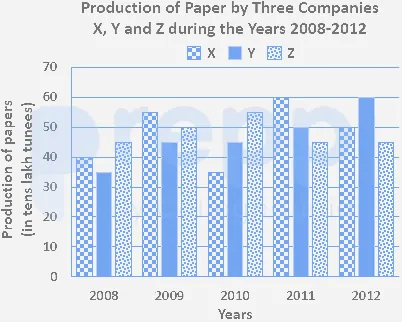
- A
X and Z both
- B
Y
- C
X
- D
Y and Z both
Show answer
A. X and Z bothFormula used:
Average production = Total production/No of years
Calculation:
Average production of company X = (40 + 55 + 35 + 60 + 50)/5 = 48 (ten lakh tonnes)
Average production of company Y = (35 + 45 + 45 + 50 + 60)/5 = 47 (ten lakh tonnes)
Average production of company Z = (45 + 50 + 55 + 45 + 45)/5 = 48 (ten lakh tonnes)
∴ X and Z both have the maximum average production for the 5 years.
Paper & answer key PDF ↗ Question 72archived
A man and a woman, working together can do a work in 66 days. The ratio of their working efficiencies is 3 ∶ 2. In how many days 6 men and 2 women together can do the same work?
- A
15
- B
14
- C
12
- D
18
Show answer
A. 15Understanding the Work and Efficiency Problem
This problem involves the concept of work, efficiency, and time. We are given the combined time taken by a man and a woman to complete a certain task, along with the ratio of their individual working efficiencies. We need to find out how many days it will take for a different group, consisting of 6 men and 2 women, to complete the same task.
Defining Efficiency Based on the Ratio
The ratio of the working efficiencies of a man and a woman is given as 3 ∶ 2. This means that if a man does 3 units of work in a day, a woman does 2 units of work in a day. We can represent their efficiencies using a common variable:
Let the efficiency of a man be \(3x\) units of work per day.
Let the efficiency of a woman be \(2x\) units of work per day.
Calculating Total Work Done
When a man and a woman work together, their combined efficiency is the sum of their individual efficiencies.
Combined efficiency of 1 man and 1 woman = Efficiency of man + Efficiency of woman = \(3x + 2x = 5x\) units of work per day.
They complete the work in 66 days. The total work done is calculated by multiplying the combined efficiency by the time taken.
Total Work = Combined Efficiency \(\times\) Time Taken
Total Work = \((5x \text{ units/day}) \times (66 \text{ days})\)
Total Work = \(330x\) units.
This \(330x\) units represents the total amount of work that needs to be done.
Calculating the Combined Efficiency of 6 Men and 2 Women
Now, we need to find the efficiency of the new group consisting of 6 men and 2 women.
Efficiency of 6 men = \(6 \times (\text{Efficiency of 1 man}) = 6 \times (3x) = 18x\) units of work per day.
Efficiency of 2 women = \(2 \times (\text{Efficiency of 1 woman}) = 2 \times (2x) = 4x\) units of work per day.
The combined efficiency of 6 men and 2 women working together is the sum of their individual efficiencies:
Combined efficiency of 6 men and 2 women = Efficiency of 6 men + Efficiency of 2 women = \(18x + 4x = 22x\) units of work per day.
Determining Time Taken by 6 Men and 2 Women
The time taken by the new group (6 men and 2 women) to complete the same total work (\(330x\) units) is found by dividing the total work by their combined efficiency.
Time Taken = \(\frac{\text{Total Work}}{\text{Combined Efficiency of 6 men and 2 women}}\)
Time Taken = \(\frac{330x \text{ units}}{22x \text{ units/day}}\)
Time Taken = \(\frac{330}{22}\) days.
Let's perform the division:
\(\frac{330}{22} = \frac{165}{11}\)
Dividing 165 by 11:
\(165 \div 11 = 15\)
So, the time taken by 6 men and 2 women to do the same work is 15 days.
Therefore, 6 men and 2 women together can do the same work in 15 days.
Revision Table: Work and Time Concepts
Concept
Formula
Explanation
Efficiency
Work / Time
Rate at which work is done per unit of time.
Total Work
Efficiency × Time
The total amount of task completed.
Time Taken
Total Work / Efficiency
Duration required to complete the work.
Combined Efficiency
Sum of individual efficiencies
Total rate of work when multiple individuals work together.
Additional Information: Work and Time Problems
Work and time problems often involve understanding the relationship between the amount of work, the number of workers (or their efficiency), and the time taken. Key concepts include:
Inverse Proportionality: Time taken is inversely proportional to efficiency and the number of workers (assuming they have the same efficiency). More workers or higher efficiency means less time to complete the same work.
Efficiency Ratios: Ratios help in defining the relative work rates of different individuals or groups, allowing us to calculate combined efficiencies easily.
Total Work as a Constant: In many problems, the "work" is a specific task that remains constant, allowing us to equate Work = Efficiency × Time for different scenarios.
Solving these problems typically involves:
Defining individual or group efficiencies, often using ratios or variables.
Calculating the total work based on a given scenario (efficiency and time).
Calculating the combined efficiency for the new scenario.
Using the total work and the new combined efficiency to find the required time.
Paper & answer key PDF ↗ Question 73archived
If 3 sec θ + 4 cos θ - 4√3 = 0 where θ is an acute angle then the value of θ is:
- A
30°
- B
20°
- C
60°
- D
45°
Show answer
A. 30°Solving Trigonometric Equations: Finding the Value of θ
The problem asks us to find the value of the acute angle θ that satisfies the given trigonometric equation: 3 sec θ + 4 cos θ - 4√3 = 0.
Understanding the Equation and Strategy
The equation involves both sec θ and cos θ. We know that sec θ is the reciprocal of cos θ (i.e., sec θ = 1 / cos θ). We can rewrite the equation entirely in terms of cos θ to make it easier to solve. Since θ is an acute angle (between 0° and 90°), cos θ will be positive and non-zero, so we don't need to worry about division by zero.
Let's substitute sec θ = 1 / cos θ into the equation:
$$3 \left(\frac{1}{\cos \theta}\right) + 4 \cos \theta - 4\sqrt{3} = 0$$
$$ \frac{3}{\cos \theta} + 4 \cos \theta - 4\sqrt{3} = 0 $$
Transforming into a Quadratic Equation
To eliminate the fraction, we can multiply the entire equation by cos θ (since cos θ ≠ 0 for an acute angle):
$$ \cos \theta \left( \frac{3}{\cos \theta} + 4 \cos \theta - 4\sqrt{3} \right) = 0 \cdot \cos \theta $$
$$ 3 + 4 \cos^2 \theta - 4\sqrt{3} \cos \theta = 0 $$
Rearranging the terms to form a standard quadratic equation in terms of cos θ:
$$ 4 \cos^2 \theta - 4\sqrt{3} \cos \theta + 3 = 0 $$
Solving the Quadratic Equation for cos θ
Let x = cos θ. The equation becomes a quadratic equation in x:
$$ 4x^2 - 4\sqrt{3}x + 3 = 0 $$
We can solve this quadratic equation using the quadratic formula: $$ x = \frac{-b \pm \sqrt{b^2 - 4ac}}{2a} $$, where a=4, b=$$-4\sqrt{3}$$ and c=3.
First, calculate the discriminant, $$ D = b^2 - 4ac $$:
$$ D = (-4\sqrt{3})^2 - 4(4)(3) $$
$$ D = (16 \times 3) - 48 $$
$$ D = 48 - 48 $$
$$ D = 0 $$
Since the discriminant is 0, there is exactly one real solution for x:
$$ x = \frac{-b}{2a} $$
$$ x = \frac{-(-4\sqrt{3})}{2(4)} $$
$$ x = \frac{4\sqrt{3}}{8} $$
$$ x = \frac{\sqrt{3}}{2} $$
So, we have cos θ = $$ \frac{\sqrt{3}}{2} $$.
Finding the Acute Angle θ
We need to find the acute angle θ whose cosine is $$ \frac{\sqrt{3}}{2} $$. We recall standard trigonometric values for common angles:
Angle (θ)
cos(θ)
0°
1
30°
$$\frac{\sqrt{3}}{2}$$
45°
$$\frac{1}{\sqrt{2}}$$ or $$\frac{\sqrt{2}}{2}$$
60°
$$\frac{1}{2}$$
90°
0
From the table, we see that cos 30° = $$ \frac{\sqrt{3}}{2} $$. Since θ is specified as an acute angle, the unique solution is θ = 30°.
Verification
Let's check if θ = 30° satisfies the original equation:
3 sec 30° + 4 cos 30° - 4√3
We know cos 30° = $$ \frac{\sqrt{3}}{2} $$ and sec 30° = $$ \frac{1}{\cos 30^\circ} = \frac{1}{\frac{\sqrt{3}}{2}} = \frac{2}{\sqrt{3}} $$.
Substitute these values:
$$ 3 \left(\frac{2}{\sqrt{3}}\right) + 4 \left(\frac{\sqrt{3}}{2}\right) - 4\sqrt{3} $$
$$ = \frac{6}{\sqrt{3}} + 2\sqrt{3} - 4\sqrt{3} $$
Rationalize the first term:
$$ = \frac{6\sqrt{3}}{3} + 2\sqrt{3} - 4\sqrt{3} $$
$$ = 2\sqrt{3} + 2\sqrt{3} - 4\sqrt{3} $$
$$ = 4\sqrt{3} - 4\sqrt{3} = 0 $$
The equation is satisfied. Thus, the value θ = 30° is correct.
Revision Table: Key Concepts in Solving Trigonometric Equations
Concept
Description
Reciprocal Identities
Using identities like sec θ = 1/cos θ, csc θ = 1/sin θ, cot θ = 1/tan θ to express equations in terms of fewer trigonometric functions.
Quadratic Form
Recognizing equations that can be rearranged into a quadratic form like $$a f(\theta)^2 + b f(\theta) + c = 0$$, where $$f(\theta)$$ is a trigonometric function.
Solving Quadratic Equations
Applying methods like factoring, completing the square, or the quadratic formula to solve for the trigonometric function.
Finding Angles
Using inverse trigonometric functions or knowledge of standard angles to find the value(s) of θ from the trigonometric function value. Paying attention to the specified domain for θ (e.g., acute angle, range 0 to 360°).
Additional Information: Acute Angle Trigonometry
An acute angle is an angle θ such that $$ 0^\circ < \theta < 90^\circ $$. In this range, all basic trigonometric functions (sin θ, cos θ, tan θ, csc θ, sec θ, cot θ) are positive.
The equation $$ 4 \cos^2 \theta - 4\sqrt{3} \cos \theta + 3 = 0 $$ is a type of trigonometric equation that can be solved by treating it as a quadratic equation in cos θ. This is a common technique when an equation contains a trigonometric function and its square (or reciprocal and its square).
The fact that the discriminant was zero (D=0) indicates that the quadratic equation had exactly one solution for cos θ. If the discriminant had been positive, there would be two solutions for cos θ, and we would need to find the corresponding angles for each solution within the specified domain (acute angles in this case).
Paper & answer key PDF ↗ Question 74archived
Two equal sums were lent on simple interest at 6% and 10% per annum respectively. The first sum was recovered two years later than the second sum and the amount in each case was Rs.1105. What was the sum (in Rs.) lent in each scheme?
- A
891
- B
850
- C
936
- D
900
Show answer
B. 850Understanding the Simple Interest Problem
This problem involves calculating the original sum (Principal) lent under two different simple interest schemes. We are given the interest rates, a relationship between the time periods the sums were lent for, and the final amount received in both cases.
Key Concepts: Simple Interest Formulas
The formulas for Simple Interest (SI) and Amount (A) are crucial for solving this problem:
Simple Interest (SI) = $\frac{P \times R \times T}{100}$, where P is Principal, R is Rate of Interest per annum, and T is Time in years.
Amount (A) = Principal (P) + Simple Interest (SI).
Combining these, we get A = $P + \frac{P \times R \times T}{100} = P \left(1 + \frac{R \times T}{100}\right)$.
Setting Up the Equations
Let P be the equal sum lent in each scheme. Let T1 be the time in years for the first scheme (6% rate) and T2 be the time in years for the second scheme (10% rate).
We are given:
Rate for Scheme 1, R1 = 6% per annum.
Rate for Scheme 2, R2 = 10% per annum.
The first sum was recovered two years later than the second sum, which means T1 = T2 + 2.
The amount in each case was Rs. 1105. So, A1 = A2 = 1105.
Using the Amount formula, we can write equations for both schemes:
For Scheme 1: $A_1 = P \left(1 + \frac{R_1 \times T_1}{100}\right) \implies 1105 = P \left(1 + \frac{6 \times T_1}{100}\right)$ (Equation 1)
For Scheme 2: $A_2 = P \left(1 + \frac{R_2 \times T_2}{100}\right) \implies 1105 = P \left(1 + \frac{10 \times T_2}{100}\right)$ (Equation 2)
Solving for Time and Principal
Since the Amount (1105) and Principal (P) are the same in both equations, we can equate the terms inside the parentheses multiplied by P:
From Equation 1: $\frac{1105}{P} = 1 + \frac{6T_1}{100}$
From Equation 2: $\frac{1105}{P} = 1 + \frac{10T_2}{100}$
Equating the right sides:
$1 + \frac{6T_1}{100} = 1 + \frac{10T_2}{100}$
Subtracting 1 from both sides:
$\frac{6T_1}{100} = \frac{10T_2}{100}$
Multiplying by 100:
$6T_1 = 10T_2$
Dividing by 2:
$3T_1 = 5T_2$ (Equation 3)
We also know that $T_1 = T_2 + 2$. Substitute this into Equation 3:
$3(T_2 + 2) = 5T_2$
$3T_2 + 6 = 5T_2$
Subtract $3T_2$ from both sides:
$6 = 5T_2 - 3T_2$
$6 = 2T_2$
Divide by 2:
$T_2 = 3$ years.
Now find T1 using $T_1 = T_2 + 2$:
$T_1 = 3 + 2 = 5$ years.
So, the first sum was lent for 5 years and the second sum for 3 years.
Now, substitute the value of T2 (or T1) into either Equation 1 or Equation 2 to find the Principal (P). Let's use Equation 2:
$1105 = P \left(1 + \frac{10 \times T_2}{100}\right)$
$1105 = P \left(1 + \frac{10 \times 3}{100}\right)$
$1105 = P \left(1 + \frac{30}{100}\right)$
$1105 = P (1 + 0.3)$
$1105 = P (1.3)$
$P = \frac{1105}{1.3} = \frac{11050}{13}$
To calculate $\frac{11050}{13}$:
$\frac{11050}{13} = 850$
So, the principal sum lent in each scheme was Rs. 850.
Verification
Let's verify the amount with P = 850, T1 = 5, T2 = 3, R1 = 6, R2 = 10:
Scheme 1 SI = $\frac{850 \times 6 \times 5}{100} = \frac{850 \times 30}{100} = 85 \times 3 = 255$. Amount = $850 + 255 = 1105$.
Scheme 2 SI = $\frac{850 \times 10 \times 3}{100} = \frac{850 \times 30}{100} = 85 \times 3 = 255$. Amount = $850 + 255 = 1105$.
The amounts match the given information (Rs. 1105), so our calculated principal of Rs. 850 is correct.
Final Answer
The sum lent in each scheme was Rs. 850.
Simple Interest Calculation Summary
Scheme
Principal (P)
Rate (R)
Time (T)
Simple Interest (SI)
Amount (A)
1
Rs. 850
6%
5 years
$\frac{850 \times 6 \times 5}{100} = 255$
$850 + 255 = 1105$
2
Rs. 850
10%
3 years
$\frac{850 \times 10 \times 3}{100} = 255$
$850 + 255 = 1105$
Revision Table: Simple Interest Formulas
Formula
Description
$SI = \frac{P \times R \times T}{100}$
Simple Interest Calculation
$A = P + SI$
Amount Calculation
$A = P \left(1 + \frac{R \times T}{100}\right)$
Direct Amount Calculation from Principal, Rate, and Time
$P = \frac{SI \times 100}{R \times T}$
Finding Principal from Simple Interest
$P = \frac{A \times 100}{100 + R \times T}$
Finding Principal from Amount
Additional Information: Simple vs Compound Interest
Simple interest is calculated only on the initial principal amount. The interest earned is not added back to the principal for future calculations. In contrast, Compound Interest is calculated on the initial principal and also on the accumulated interest of previous periods. This means compound interest grows faster than simple interest over time, assuming the same rate and principal.
This problem specifically uses the principles of simple interest, where the interest earned each year is constant if the principal remains unchanged.
Paper & answer key PDF ↗ Question 75archived
Find the greatest value of b so that 30a68b (a > b) is divisible by 11.
- A
4
- B
3
- C
6
- D
9
Show answer
B. 3Understanding Divisibility by 11
The question asks for the greatest possible value of the digit 'b' such that the six-digit number 30a68b is perfectly divisible by 11. We are also given the condition that the digit 'a' must be greater than the digit 'b' (a > b).
To solve this, we need to apply the divisibility rule for 11. This rule states that a number is divisible by 11 if the alternating sum of its digits, starting from the rightmost digit (the units place) and moving leftwards, is divisible by 11 (i.e., the sum is 0, 11, -11, 22, -22, etc.).
Applying the Divisibility Rule to 30a68b
Let's write down the number 30a68b. The digits are:
Units digit: b
Tens digit: 8
Hundreds digit: 6
Thousands digit: a
Ten thousands digit: 0
Lakhs digit: 3
Now, we calculate the alternating sum of the digits, starting from the rightmost digit with a positive sign:
\(\text{Sum} = +b - 8 + 6 - a + 0 - 3\)
Let's simplify this expression:
\(\text{Sum} = b - a - 5\)
For the number 30a68b to be divisible by 11, this sum \(b - a - 5\) must be a multiple of 11. This means:
\(b - a - 5 = 11k\)
where \(k\) is an integer (..., -2, -1, 0, 1, 2, ...).
Rearranging the equation to find the relationship between 'a' and 'b':
\(b - a = 11k + 5\)
Considering the Constraints on 'a' and 'b'
We know that 'a' and 'b' are digits, meaning they can be any integer from 0 to 9.
\(0 \le a \le 9\)
\(0 \le b \le 9\)
We are also given the condition \(a > b\). This means that \(b - a\) must be a negative value.
Let's find the possible range for the value of \(b - a\):
The smallest possible value for \(b - a\) occurs when b is smallest (0) and a is largest (9): \(0 - 9 = -9\).
The largest possible value for \(b - a\) occurs when b is largest (9) and a is smallest (0): \(9 - 0 = 9\).
So, the range for \(b - a\) is \(-9 \le b - a \le 9\). However, since \(a > b\), \(b - a\) must be strictly negative, i.e., \(-9 \le b - a \le -1\).
Finding Possible Values for b - a
We have the equation \(b - a = 11k + 5\). We need to find integer values of \(k\) such that \(11k + 5\) falls within the range \([-9, -1]\).
If \(k = 0\), \(11(0) + 5 = 5\). This is not in the range \([-9, -1]\).
If \(k = -1\), \(11(-1) + 5 = -11 + 5 = -6\). This value \(-6\) is in the range \([-9, -1]\). So, \(b - a = -6\), which means \(a - b = 6\).
If \(k = -2\), \(11(-2) + 5 = -22 + 5 = -17\). This is not in the range \([-9, -1]\).
For any \(k < -1\), \(11k + 5\) will be less than -17 and thus outside the range.
Thus, the only possible relationship between 'a' and 'b' that satisfies the divisibility rule for 11 and the digit constraints is \(a - b = 6\).
Finding Pairs (a, b) and the Greatest Value of b
We need to find pairs of digits (a, b) such that \(a - b = 6\) and \(a > b\). The condition \(a - b = 6\) already implies \(a > b\), so we just need to find pairs of digits satisfying \(a - b = 6\).
Let's list the possibilities by starting with possible values for 'b' (from 0 to 9) and calculating 'a' (a = b + 6):
If \(b = 0\), then \(a = 0 + 6 = 6\). Pair is (6, 0). Both are digits, and \(a > b\) (6 > 0). This is a valid possibility. The number would be 306680.
If \(b = 1\), then \(a = 1 + 6 = 7\). Pair is (7, 1). Both are digits, and \(a > b\) (7 > 1). This is a valid possibility. The number would be 307681.
If \(b = 2\), then \(a = 2 + 6 = 8\). Pair is (8, 2). Both are digits, and \(a > b\) (8 > 2). This is a valid possibility. The number would be 308682.
If \(b = 3\), then \(a = 3 + 6 = 9\). Pair is (9, 3). Both are digits, and \(a > b\) (9 > 3). This is a valid possibility. The number would be 309683.
If \(b = 4\), then \(a = 4 + 6 = 10\). 10 is not a single digit. So, this and any larger values of 'b' are not possible.
The possible values for 'b' are 0, 1, 2, and 3.
The question asks for the greatest value of b among these possibilities. The greatest value is 3.
Conclusion
The greatest value of b such that 30a68b is divisible by 11, with the condition a > b, is 3. When b=3, a must be 9, satisfying a > b (9 > 3). The number is 309683.
Let's check the divisibility by 11 for 309683:
\(3 - 0 + 9 - 6 + 8 - 3\)
\(= (3+9+8) - (0+6+3)\)
\(= 20 - 9\)
\(= 11\)
Since 11 is divisible by 11, the number 309683 is indeed divisible by 11. The conditions a > b (9 > 3) are met, and b=3 is the greatest value found.
Revision Table: Divisibility Concepts
Divisibility Rule
Description
Example
By 2
The last digit is even (0, 2, 4, 6, 8).
124 (ends in 4)
By 3
The sum of the digits is divisible by 3.
351 (\(3+5+1 = 9\), divisible by 3)
By 4
The last two digits form a number divisible by 4.
1716 (16 is divisible by 4)
By 5
The last digit is 0 or 5.
250 (ends in 0)
By 6
The number is divisible by both 2 and 3.
48 (divisible by 2 and \(4+8=12\) divisible by 3)
By 11
The alternating sum of digits is divisible by 11.
121 (\(1-2+1 = 0\), divisible by 11)
Additional Information: Digit Place Values
In any number, each digit has a place value based on its position. For the number 30a68b:
'b' is in the Units place (value \(b \times 1\)).
'8' is in the Tens place (value \(8 \times 10\)).
'6' is in the Hundreds place (value \(6 \times 100\)).
'a' is in the Thousands place (value \(a \times 1000\)).
'0' is in the Ten Thousands place (value \(0 \times 10000\)).
'3' is in the Lakhs place (value \(3 \times 100000\)).
The number can be written as \(3 \times 100000 + 0 \times 10000 + a \times 1000 + 6 \times 100 + 8 \times 10 + b \times 1\). While this form represents the value, the divisibility rule for 11 uses the digits directly in an alternating sum, which relates to the property that powers of 10 alternate between having a remainder of 1 and -1 when divided by 11 (10 ≡ -1 mod 11, 100 ≡ 1 mod 11, 1000 ≡ -1 mod 11, etc.).
Paper & answer key PDF ↗ Question 76archived
Directions: Select the most appropriate synonym of the given word.
IOTA
- A
Bag
- B
Lot
- C
Box
- D
Bit
Show answer
D. BitFinding the Synonym of IOTA
The question asks us to identify the most appropriate synonym for the word IOTA from the given options.
Let's first understand the meaning of the word IOTA.
IOTA means a very small amount or quantity.
Now, let's examine each option to see which one means a very small amount:
Bag: A bag is a container used for carrying things. It doesn't typically refer to a small amount.
Lot: The word "lot" can refer to a large amount or quantity of something, or a piece of land. Neither meaning is a synonym for a very small amount.
Box: A box is also a container, usually with stiff sides. It is not a synonym for a small quantity.
Bit: The word "bit" means a small piece, quantity, or amount of something. This meaning aligns closely with the meaning of IOTA.
Comparing the meanings, "Bit" is the most fitting synonym for IOTA, as both words refer to a very small quantity.
Comparing IOTA and Bit
Both words convey the idea of something insignificant in size or amount. For example:
"He didn't show an iota of regret." (He didn't show any amount of regret, not even a tiny bit).
"Can I have a little bit of cake?" (A small amount of cake).
In both contexts, "iota" and "bit" refer to a very small quantity, highlighting their relationship as synonyms.
Conclusion on the Synonym for IOTA
Based on the definitions and usage, the word that is the most appropriate synonym for IOTA among the given options is Bit.
Revision Table: Understanding Synonyms
Word
Meaning
Example Usage
Synonym (from options)
IOTA
A very small amount
There wasn't an iota of truth in the story.
Bit
Bag
A container
She carried a shopping bag.
-
Lot
A large amount or plot of land
They bought a lot of supplies.
-
Box
A container with stiff sides
He packed the book in a box.
-
Bit
A small piece or amount
Just give me a little bit.
IOTA
Additional Information: Expanding Vocabulary
Understanding synonyms like IOTA and Bit is crucial for improving vocabulary and comprehension in English. Synonyms are words that have similar meanings. Learning synonyms helps in expressing oneself more accurately and avoids repetition.
Other words that can sometimes be used to express a very small amount, depending on the context, include speck, trace, shred, or particle. However, among the options provided, "Bit" is the closest and most common synonym for IOTA.
Conversely, antonyms for IOTA would be words indicating a large amount, such as lot, abundance, plenty, or mass.
Paper & answer key PDF ↗ Question 77archived
Directions: Select the most appropriate option to substitute the underlined segment in the given sentence. If no substitution is required, select ‘No substitution’.
Many of the apples was rotten .
- A
were rotten
- B
No substitution
- C
was being rotten
- D
is rotten
Show answer
A. were rottenUnderstanding Subject-Verb Agreement
The question asks us to identify the most appropriate substitution for the underlined segment "was rotten" in the sentence: "Many of the apples was rotten."
This sentence involves subject-verb agreement. Subject-verb agreement means that the verb in a sentence must agree in number (singular or plural) with its subject.
Let's identify the subject of the sentence. The subject is "Many of the apples". The core subject here is indicated by "Many", which refers to a plural quantity. When "many of" is used with a plural noun (like "apples"), the subject is considered plural.
Therefore, the verb used with a plural subject must also be plural. The verb in the original sentence is "was rotten". The verb "was" is a singular past tense form of "to be". Since the subject "Many of the apples" is plural, the singular verb "was" is incorrect. We need a plural past tense form of "to be", which is "were".
Analyzing the Options for Substitution
Let's look at the given options:
were rotten: This option uses the plural verb "were". As we determined, the subject "Many of the apples" is plural, requiring a plural verb. This option correctly uses the plural past tense form.
No substitution: The original sentence uses the singular verb "was" with a plural subject, which is incorrect. Therefore, a substitution is required.
was being rotten: This uses the singular verb "was" and is in the past continuous tense ("was being" + past participle). While "being rotten" suggests a state or process, the main issue is the singular verb "was". The subject requires a plural verb.
is rotten: This uses the singular present tense verb "is". The subject "Many of the apples" is plural, and requires a plural verb. The plural present tense would be "are rotten", but the original sentence used a past tense context ("was rotten"), suggesting past tense is likely intended. Even if present tense were intended, "is" is singular and incorrect for a plural subject.
Determining the Correct Substitution
Based on the principle of subject-verb agreement, the plural subject "Many of the apples" requires the plural past tense verb "were". The option "were rotten" correctly provides this plural form.
Conclusion on Subject-Verb Agreement
The original sentence "Many of the apples was rotten" violates subject-verb agreement because the plural subject "Many of the apples" is paired with the singular verb "was". The correct form requires a plural verb, "were". Therefore, the segment should be substituted with "were rotten".
Subject-Verb Agreement Summary
Subject Type
Verb Form
Example
Singular Subject
Singular Verb
The apple is rotten.
Plural Subject
Plural Verb
The apples are rotten.
"Many of" + Plural Noun
Plural Verb
Many of the apples were rotten.
Revision Table: Key Grammar Concepts
Revision: Subject-Verb Agreement Rules
Concept
Explanation
Application in Question
Subject-Verb Agreement
Verb must match the number of the subject.
Subject "Many of the apples" is plural, needs plural verb.
Indefinite Pronoun "Many"
Often treated as plural.
Used with plural noun "apples", confirms plural subject.
Verb "to be" forms
Singular past: was; Plural past: were.
Need plural past "were" to agree with the subject.
Additional Information on Indefinite Pronouns and Agreement
Indefinite pronouns can sometimes be tricky regarding subject-verb agreement. Some indefinite pronouns are always singular (e.g., everybody, nobody, anyone), some are always plural (e.g., many, few, several), and some can be singular or plural depending on the noun or pronoun they refer to (e.g., some, all, none, most).
When "many of" is followed by a plural countable noun (like apples), the subject is considered plural, and the verb must be plural.
For example:
Many students are studying.
Many of the books were old.
Few people know the answer.
Several cars are parked here.
Understanding whether the subject is singular or plural is crucial for correct subject-verb agreement in sentences.
Paper & answer key PDF ↗ Question 78archived
Directions: Sentences of a paragraph are given below in jumbled order. Arrange the sentences in the right order to form a meaningful and coherent paragraph.
A. When he reached his town, he went to his house and knocked at the door.
B. A man went away from his home.
C. Disappointed, he decided to take it himself.
D. One day he wrote a letter to his family, but could not find anyone to take the letter to his town.
- A
ABCD
- B
DACB
- C
CBAD
- D
BDCA
Show answer
D. BDCAUnderstanding the Task: Arranging Jumbled Sentences
The task requires us to rearrange the given jumbled sentences (A, B, C, and D) into a meaningful and coherent paragraph. To do this effectively, we need to identify the topic sentence, recognize cause-and-effect relationships, look for chronological order, and find connecting ideas between sentences.
Step-by-Step Analysis of Sentence Arrangement
Let's examine each sentence to determine its role in the paragraph:
Sentence A: "When he reached his town, he went to his house and knocked at the door." This sentence describes an action taken upon arrival at a specific location ("his town"). It suggests that travel occurred before this point.
Sentence B: "A man went away from his home." This sentence introduces the main subject ("A man") and establishes the initial situation – being away from home. This seems like a good opening sentence.
Sentence C: "Disappointed, he decided to take it himself." The word "Disappointed" indicates a reaction to a previous event. The phrase "take it himself" refers to something being taken or delivered.
Sentence D: "One day he wrote a letter to his family, but could not find anyone to take the letter to his town." This sentence introduces an event ("wrote a letter") and a problem ("could not find anyone to take the letter"). This event likely follows the man being away from home.
Determining the Logical Order
Based on the analysis, let's build the paragraph step by step:
The paragraph should start by introducing the man and his situation. Sentence B does this: "A man went away from his home." This sets the scene.
Next, we need an event that happens while he is away. Sentence D describes writing a letter and facing a problem with delivery: "One day he wrote a letter to his family, but could not find anyone to take the letter to his town." This logically follows sentence B.
Sentence C describes a reaction to not finding someone to deliver the letter mentioned in sentence D: "Disappointed, he decided to take it himself." This decision is a direct consequence of the problem in sentence D.
Finally, sentence A describes the result of deciding to take the letter himself – travelling and arriving at the destination (his town): "When he reached his town, he went to his house and knocked at the door." This completes the sequence of events initiated in sentence C.
Thus, the logical and coherent order is BDCA.
Verifying the Correct Sequence
Let's read the sentences in the BDCA order:
B. A man went away from his home.
D. One day he wrote a letter to his family, but could not find anyone to take the letter to his town.
C. Disappointed, he decided to take it himself.
A. When he reached his town, he went to his house and knocked at the door.
This sequence tells a clear story: A man leaves home, writes a letter he can't send, decides to deliver it himself out of disappointment, and finally reaches his town and knocks on his door. The narrative flows smoothly and makes sense.
Conclusion
By carefully analyzing the context and connections between the sentences, we determined the correct order that forms a coherent paragraph. The sequence BDCA correctly follows the progression of events.
Arranging Jumbled Sentences
Sentence
Role in Paragraph
B
Introduction (Man goes away from home)
D
Event while away (Writes letter, cannot send)
C
Decision based on event (Decides to take it himself)
A
Action following decision (Reaches town, knocks)
Revision Table: Practicing Sentence Rearrangement
Reviewing how to arrange jumbled sentences is a key skill for improving reading comprehension and writing coherence. Here's a quick table to reinforce the steps:
Steps for Arranging Sentences
Step
Action
1
Read all sentences carefully to understand the general topic.
2
Identify the likely opening sentence (often introduces a person, place, or general idea).
3
Look for connecting words (like pronouns, conjunctions, transition words) and ideas.
4
Establish the chronological order of events, if applicable.
5
Determine cause-and-effect relationships.
6
Arrange the sentences and read the paragraph aloud to check for flow and meaning.
Additional Information: Coherence and Cohesion
Arranging jumbled sentences correctly relies on understanding coherence and cohesion in writing.
Coherence: This refers to the logical connection of ideas in a piece of writing. A coherent paragraph is easy to understand because the ideas are organized in a sensible way, often moving from general to specific, cause to effect, or chronologically.
Cohesion: This refers to the grammatical and lexical links that connect different parts of a text. Cohesive devices include pronouns (like "he" referring back to "A man"), transition words (like "When"), repetition of keywords, and logical sequencing. In our example, "he" in sentences A and C refers to the man introduced in B, and the decision in C follows the problem in D, which in turn leads to the action in A.
Mastering these concepts helps in both arranging jumbled sentences and writing well-structured paragraphs.
Paper & answer key PDF ↗ Question 79archived
Directions: Select the most appropriate ANTONYM of the given word.
Pompous
- A
Showy
- B
Boastful
- C
Flaunting
- D
Humble
Show answer
D. HumbleFinding the Antonym of Pompous
The question asks for the antonym of the word "Pompous". An antonym is a word that means the opposite of another word. To find the correct antonym, we need to understand the meaning of "Pompous" and the meaning of each of the given options.
Let's break down the meaning of the word "Pompous".
Understanding the Word Pompous
The word Pompous describes someone who is irritatingly grand, solemn, or self-important. A pompous person often acts and speaks in a way that shows they think they are more important or intelligent than others. They might use overly formal language or behave in an overly serious manner to impress people or show their supposed superiority.
Analysing the Options
Now, let's look at the meanings of the options provided:
Showy: Tending to attract attention by being ostentatious or flamboyant. While a pompous person might be showy, "showy" doesn't capture the core sense of self-importance or arrogance associated with "pompous". It's more about outward appearance than inner attitude.
Boastful: Characterized by or tending to boast excessively; full of or expressing boastfulness. Boasting involves talking with excessive pride, which is related to self-importance, but "pompous" also includes an air of grandeur and stiffness, not just talking about oneself. It's a close synonym but not necessarily the opposite.
Flaunting: Displaying something ostentatiously, especially in order to provoke envy or admiration. This is very similar to "showy" and "boastful", focusing on the act of displaying something (like wealth, knowledge, etc.) in a proud way. It doesn't represent the opposite of "pompous".
Humble: Having or showing a modest or low estimate of one's own importance. A humble person does not think they are better than others and does not try to draw attention to themselves or their achievements. They are modest and often unassuming.
Why Humble is the Antonym
Comparing the meaning of Pompous (self-important, grand, arrogant) with the meanings of the options, Humble stands out as the direct opposite. A humble person lacks the self-importance and arrogance that define a pompous person. While the other options (Showy, Boastful, Flaunting) describe behaviors or traits that might be associated with a pompous person, they are closer to synonyms or related concepts rather than antonyms.
Therefore, the most appropriate antonym for Pompous is Humble.
Revision Table: Key Vocabulary
Word
Meaning
Relation to Pompous
Pompous
Irritatingly grand, solemn, or self-important; arrogant.
The word in question.
Showy
Tending to attract attention; ostentatious.
Related, but focuses on display, not necessarily attitude of superiority.
Boastful
Talking with excessive pride about oneself.
Closely related, a behavior of a pompous person.
Flaunting
Displaying ostentatiously.
Related, similar to showy.
Humble
Having a modest estimate of one's own importance; not arrogant.
Opposite of Pompous.
Additional Information: Antonyms and Vocabulary Building
Understanding antonyms is a key part of building a strong vocabulary. Antonyms help us grasp the full spectrum of meaning for a word. When you learn a new word like "pompous", actively looking for its antonym ("humble") and synonyms (like "pretentious", "grandiose", "overbearing") helps solidify its meaning in your mind and improves your ability to use the word correctly in different contexts.
Practicing with multiple-choice questions asking for antonyms or synonyms is an excellent way to prepare for exams and enhance your language skills. Always try to define the main word first, then evaluate each option based on its meaning.
Paper & answer key PDF ↗ Question 80archived
Directions: Select the most appropriate meaning of the given idiom.
Want to curl up and die
- A
Too tired from physical labour
- B
Want to die comfortably
- C
Feel terribly ashamed and sorry
- D
Unable to sleep well
Show answer
C. Feel terribly ashamed and sorryUnderstanding the Idiom: Want to Curl Up and Die
The idiom "want to curl up and die" is a common expression used in English. Idioms are phrases or expressions whose meaning cannot be deduced simply from the literal meaning of the words used. They have a figurative meaning that is understood through common usage.
Let's break down the phrase "want to curl up and die":
"Curl up": This suggests a desire to retreat, hide, or make oneself small, perhaps to become invisible. Think of an animal curling up for protection or comfort, or a person wanting to disappear.
"Die": This is a very strong word. In this context, it doesn't mean a literal desire for death, but rather an intense feeling of distress or wanting to end a painful situation immediately.
Putting them together, "want to curl up and die" describes a feeling where someone is experiencing such intense negative emotion, usually shame or embarrassment, that they wish they could just disappear or cease to exist in that moment. It's an expression of extreme discomfort with oneself or a situation.
Analyzing the Options for "Want to Curl Up and Die"
Now let's examine the given options to find the most appropriate meaning of the idiom "want to curl up and die".
Too tired from physical labour: This option describes physical exhaustion. The idiom "want to curl up and die" relates to an emotional state, not physical fatigue. Therefore, this option is not correct.
Want to die comfortably: This is a literal interpretation of part of the phrase, focusing on "die comfortably." Idioms have figurative meanings, and the discomfort implied by "curl up" and the overall feeling of wanting to disappear contradict the idea of comfort. This option is incorrect.
Feel terribly ashamed and sorry: This option describes a strong feeling of shame, embarrassment, or regret. When someone feels terribly ashamed or sorry about something they have done or experienced, they often wish they could hide away or disappear. This feeling aligns perfectly with the imagery of wanting to "curl up" (hide) and "die" (due to intense emotional pain or embarrassment). This option is a strong candidate for the correct meaning.
Unable to sleep well: This option relates to insomnia or poor sleep quality. While emotional distress can certainly impact sleep, the idiom "want to curl up and die" directly expresses the feeling of the distress itself (shame, regret), not the resulting inability to sleep. This option is incorrect.
Conclusion on the Meaning of the Idiom
Based on the analysis, the meaning that best fits the idiom "want to curl up and die" is feeling terribly ashamed and sorry. This captures the intense embarrassment and regret that makes a person wish they could vanish.
Idiom Meaning Analysis
Idiom
Literal Elements Suggest
Figurative Meaning
Best Option Match
Want to curl up and die
Hiding, disappearing, intense distress
Extreme shame, embarrassment, regret
Feel terribly ashamed and sorry
Examples Using the Idiom "Want to Curl Up and Die"
Here are a couple of examples showing how the idiom is used in sentences:
When I realised I had given my presentation with my fly undone, I just wanted to curl up and die. (Expressing extreme embarrassment/shame).
After making that huge mistake at work, I felt so ashamed; I honestly wanted to curl up and die. (Expressing terrible shame and regret).
Revision Table: Key Concepts
Idiom Revision
Concept
Explanation
Idiom
A phrase with a figurative meaning different from its literal words.
"Want to curl up and die"
Idiom meaning intense shame or embarrassment.
Literal vs. Figurative
Understanding that idioms have non-literal meanings.
Additional Information: More on English Idioms
Idioms are a colourful part of the English language. They add richness and can convey complex feelings or situations concisely. Learning idioms helps improve understanding and fluency in English. Some other common idioms expressing strong feelings include:
To be green with envy: To be very jealous.
To have cold feet: To feel nervous or hesitant about something, usually something important like a wedding or a performance.
To break a leg: Good luck (often said to performers).
To bite the bullet: To face a difficult or unpleasant situation with courage.
Recognizing idioms and their meanings is crucial for reading comprehension and effective communication. When you encounter an idiom like "want to curl up and die," remember that its meaning is likely not literal but related to a common human experience or emotion.
Paper & answer key PDF ↗ Question 81archived
Directions: Select the INCORRECTLY spelt word.
- A
Friend
- B
Fiery
- C
Scenic
- D
Neice
Show answer
D. NeiceIdentifying the Incorrectly Spelt Word
The question asks us to find the word that is spelt incorrectly among the given options. Let's examine each word carefully.
Friend: This word is spelt correctly. It refers to a person whom one knows and with whom one has a bond of mutual affection.
Fiery: This word is spelt correctly. It means consisting of fire, burning, or passionate and intense.
Scenic: This word is spelt correctly. It relates to natural beauty, especially of the countryside.
Neice: This word is spelt incorrectly. The correct spelling is niece. A niece is a daughter of one's brother or sister, or of one's brother-in-law or sister-in-law.
Based on the examination, the word 'Neice' is the only one that is spelt incorrectly.
Word
Spelling Status
Correct Spelling (if applicable)
Friend
Correct
-
Fiery
Correct
-
Scenic
Correct
-
Neice
Incorrect
Niece
Therefore, the incorrectly spelt word is 'Neice'.
Revision Table: Common Spelling Errors
Reviewing commonly confused or misspelled words is crucial for improving spelling skills. Here's a quick table of some common errors:
Common Misspelling
Correct Spelling
recieve
receive
believeable
believable
acheive
achieve
seize
seize
Note the 'i before e' rule, although it has many exceptions, as seen with 'seize'.
Additional Information: Spelling Rules and Tips
Improving your spelling takes practice and understanding some basic rules. Here are a few tips:
The 'i before e except after c' rule: This rule states that 'i' usually comes before 'e' when the sound is a long 'ee' (like in 'believe'). However, 'e' comes before 'i' when it follows 'c' (like in 'receive'). Remember the exceptions like 'seize', 'weird', 'their', and 'foreign'.
Learn common prefixes and suffixes: Knowing how prefixes (like 'un-', 're-') and suffixes (like '-ing', '-ly', '-ment') attach to root words can help.
Proofread carefully: Always read through your writing slowly to catch spelling errors. Reading aloud can also help.
Use a dictionary: If you are unsure about the spelling of a word, look it up in a dictionary or use an online spelling checker.
Practice: Regularly practice spelling tricky words or words you often get wrong.
Understanding these strategies can significantly improve your ability to identify and correct spelling mistakes like the one found with 'Neice' vs. 'Niece'.
Paper & answer key PDF ↗ Question 82archived
Directions: Select the most appropriate option to fill in the blank.
The advanced nations face no population problem since they were already settling down to zero growth _______ in the population.
- A
frequency
- B
rate
- C
scale
- D
degree
Show answer
B. rateUnderstanding Population Growth in Advanced Nations
The question asks us to fill in the blank in the sentence: "The advanced nations face no population problem since they were already settling down to zero growth _______ in the population." We need to choose the word that best fits the context of describing how population changes are measured, specifically reaching 'zero growth'.
Analyzing the Options
Let's look at the meanings of the provided options and how they relate to population change:
frequency: This refers to how often something happens. For example, the frequency of births or deaths. It doesn't measure the overall change in population size over time.
rate: This refers to a measure, quantity, or frequency, typically one measured against another quantity or standard. In demographics, population growth is commonly expressed as a rate, such as the annual growth rate, birth rate, or death rate. Zero population growth means the birth rate equals the death rate (considering migration as well).
scale: This refers to the size or extent of something. While population can be measured on a large scale, 'zero growth scale' is not a standard term to describe the state of population change.
degree: This refers to the amount, level, or extent to which something happens or is present. While you could say a population is growing to a certain degree, 'zero growth degree' is not the standard term used in demography.
Why 'Rate' is the Correct Choice
When discussing how quickly a population is increasing or decreasing, the standard term used is 'growth rate'. A 'zero growth rate' means the population size is stable, with births and deaths (and migration) balancing each other out. The sentence describes advanced nations reaching a state where their population is no longer growing, which is specifically referred to as achieving a zero population growth rate.
Therefore, the most appropriate word to complete the sentence is 'rate'.
Conclusion
The sentence correctly uses the term 'zero growth rate' to describe the demographic situation in advanced nations where the population is stabilizing. The other options do not fit the standard terminology used to measure population change.
Revision Table: Population Terminology
Term
Meaning in Demographics
Example Use
Population Growth Rate
The speed at which the number of individuals in a population increases or decreases over a given period. Often expressed as a percentage.
A high population growth rate can lead to resource issues.
Birth Rate
The number of live births per 1,000 people in a year.
A declining birth rate contributes to slower population growth.
Death Rate
The number of deaths per 1,000 people in a year.
Improvements in healthcare lower the death rate.
Zero Population Growth
A state where the population size remains stable over time, typically because the birth rate equals the death rate (ignoring migration for simplicity).
Advanced nations often aim for zero population growth.
Additional Information: Demographic Transition
The situation described in the sentence is often associated with the later stages of the demographic transition model. This model suggests that as countries develop economically and socially, their birth rates decline, following the decline in death rates. Advanced nations have typically gone through this process, resulting in lower fertility rates and a slower, or even zero or negative, population growth rate.
Achieving a zero growth rate means that the population is not increasing. This contrasts with many developing nations which often experience high population growth rates. The fill-in-the-blank question highlights this key demographic difference between advanced and developing economies.
Paper & answer key PDF ↗ Question 83archived
Directions: Select the most appropriate option to substitute the underlined segment in the given sentence. If no substitution is required, select ‘No substitution’.
Although the children studied hard, but they could not understand the topic without the help of the teacher.
- A
Although the children studied hard, they
- B
Although the children had study hard, but they
- C
Although the children have studied hard, but they
- D
No substitution
Show answer
A. Although the children studied hard, theyAnalyzing the Grammatical Error: Although and But
The original sentence is: "Although the children studied hard, but they could not understand the topic without the help of the teacher."
This sentence uses both "Although" at the beginning and "but" to connect the two clauses. This is a common grammatical error. In standard English, "Although" (or "Though" or "Even though") is a subordinating conjunction that introduces a concessive clause (a clause that shows contrast or concession). When a sentence starts with "Although", the contrasting main clause that follows is typically introduced by a comma, and the use of "but" is redundant and grammatically incorrect.
The correct structure when starting a sentence with "Although" is usually:
Although + clause 1 (concession), + clause 2 (contrast).
Alternatively, "yet" can sometimes be used after the comma for emphasis: Although + clause 1 (concession), yet + clause 2 (contrast).
Using "but" after a comma when the sentence begins with "Although" creates a double conjunction and is considered incorrect.
Examining the Options for Substitution
Let's look at the provided options to find the correct substitution for the underlined segment "but they could not understand".
Option
Proposed Sentence
Analysis
1. Although the children studied hard, they
Although the children studied hard, they could not understand the topic without the help of the teacher.
This option removes "but", resulting in the correct structure: "Although X, Y". This sentence is grammatically sound.
2. Although the children had study hard, but they
Although the children had study hard, but they could not understand the topic without the help of the teacher.
This option keeps "but", which is incorrect with "Although". Additionally, "had study hard" is grammatically incorrect; it should be "had studied hard" (Past Perfect tense).
3. Although the children have studied hard, but they
Although the children have studied hard, but they could not understand the topic without the help of the teacher.
This option keeps "but", which is incorrect with "Although". "have studied hard" is Present Perfect tense. While potentially correct in a different context, the primary error here is the use of "but" with "Although".
4. No substitution
Although the children studied hard, but they could not understand the topic without the help of the teacher.
The original sentence contains the grammatical error of using both "Although" and "but". Therefore, a substitution is required.
Identifying the Correct Substitution
Based on the analysis, Option 1 correctly removes the redundant "but" and maintains the appropriate structure when a sentence begins with "Although". It results in a grammatically correct sentence: "Although the children studied hard, they could not understand the topic without the help of the teacher."
Revision Table
Original Sentence Part
Substitution Option
Correctness
Reason
but they could not understand
they
Correct
Removes redundant "but" with "Although".
but they could not understand
Although the children had study hard, but they
Incorrect
Includes "but" with "Although"; also tense error ("had study").
but they could not understand
Although the children have studied hard, but they
Incorrect
Includes "but" with "Although".
but they could not understand
No substitution
Incorrect
Original sentence is grammatically flawed.
Additional Information on Concessive Conjunctions
Concessive conjunctions are used to show a contrast between two statements, where one statement makes the other seem surprising. Common concessive conjunctions include:
Although / Though / Even though: These are subordinating conjunctions. They introduce a dependent clause and are followed by a comma before the main clause. Example: Although it rained, we went for a walk.
But: This is a coordinating conjunction. It connects two independent clauses, usually expressing contrast. It is typically preceded by a comma (unless the clauses are very short). Example: It rained heavily, but we still went out.
Yet: This can function as a coordinating conjunction similar to "but", or as an adverb. As a conjunction showing contrast, it is often preceded by a comma. It can sometimes follow "Although" for emphasis. Example: He studied hard, yet he didn't pass the exam.
In spite of / Despite: These are prepositions followed by a noun, pronoun, or gerund (-ing form). Example: In spite of the rain, we went out. Despite studying hard, he didn't pass.
Understanding the correct usage of these words is crucial for building complex and grammatically correct sentences that express contrast or concession effectively.
Paper & answer key PDF ↗ Question 84archived
Directions: Select the most appropriate synonym of the given word.
Yield (n)
- A
Garden
- B
Orchard
- C
Harvest
- D
Plantation
Show answer
C. HarvestUnderstanding the Word Yield (Noun)
The question asks us to find the most appropriate synonym for the given word, Yield, used as a noun.
As a noun, Yield typically refers to the amount of something produced, especially a crop, or the profit gained from a financial investment.
In the context of crops or agriculture, the yield is the total amount produced from an area of land or a particular plant.
Analyzing the Given Options
Let's look at the meanings of the given options:
Garden: An area of land, usually near a house, used for growing flowers, fruit, or vegetables. It refers to the place, not the product.
Orchard: A piece of enclosed land planted with fruit trees. Similar to a garden, it refers to the place, not the product.
Harvest: The process or period of gathering in crops. It can also refer to the crop that is gathered in. This second meaning, the gathered crop, aligns closely with the noun meaning of yield.
Plantation: An area in which trees have been planted, typically a large area in a tropical or semitropical region where a particular crop is grown. Again, this refers to the place where planting occurs, not the product itself.
Identifying the Most Appropriate Synonym for Yield
Comparing the definitions, the word that most closely matches the noun meaning of Yield (the amount produced or gathered) is Harvest (the crop that is gathered in).
While 'Garden', 'Orchard', and 'Plantation' refer to the locations where crops are grown, 'Harvest' refers to the outcome or the result of the growing process, which is exactly what 'Yield' (as a noun in this context) represents.
Therefore, Harvest is the most appropriate synonym for Yield (n).
Revision Table: English Vocabulary
Word
Part of Speech
Meaning (as used in context)
Synonym
Yield
Noun
The amount produced or gathered (especially of crops)
Harvest
Garden
Noun
An area for growing plants
-
Orchard
Noun
Land planted with fruit trees
-
Harvest
Noun
The collected crop
Yield
Plantation
Noun
Large area for cultivating crops/trees
-
Additional Information: Synonyms and Nouns
Synonyms are words that have similar meanings. Understanding synonyms helps improve vocabulary and comprehension.
A noun is a word that represents a person, place, thing, or idea. In this question, 'Yield' is used as a noun, referring to a 'thing' (the amount produced).
It's important to consider the part of speech when looking for synonyms, as many words can have different meanings and synonyms depending on whether they are used as a noun, verb, adjective, etc. For example, 'yield' can also be a verb meaning to give way or produce.
Paper & answer key PDF ↗ Question 85archived
Directions: The following sentence has been divided into parts. One of them contains an error. Select the part that contains the error from the given options.
Lack of required / vitamins and minerals / lead against / several complications / in the human body.
- A
lead against
- B
Lack of required
- C
several complications
- D
in the human body
Show answer
A. lead againstIdentifying the English Grammar Error
The question asks us to find the part of the given sentence that contains a grammatical error. Let's break down the sentence and examine each part for correctness.
The sentence is:
Lack of required / vitamins and minerals / lead against / several complications / in the human body.
The parts are:
Lack of required
vitamins and minerals
lead against
several complications
in the human body
We need to analyze these parts to identify the error related to English grammar rules, such as subject-verb agreement or correct preposition usage.
Analyzing the Sentence Parts for Grammar Errors
Let's look at each part carefully:
Lack of required: This is the beginning of the subject phrase. The main noun here is 'Lack'. 'Lack' is a singular noun.
vitamins and minerals: This phrase describes what is lacking. It's part of the subject phrase but the grammatical subject is 'Lack'.
lead against: This is the verb phrase. The verb should agree with the subject 'Lack' (singular). A singular subject takes a singular verb (usually ending in -s in the present tense for third person). So, 'lead' should be 'leads'. Also, the preposition 'against' means opposition, which doesn't fit the meaning here. The lack of something causes or results in complications. The correct preposition would be 'to' or 'in'. So, 'lead against' is incorrect both in verb form and preposition usage. The correct phrase should be 'leads to'.
several complications: This part describes the result of the lack. It is grammatically correct in isolation.
in the human body: This phrase indicates where the complications occur. It is also grammatically correct.
Based on this analysis, the error lies in the verb phrase 'lead against'. The verb 'lead' does not agree with the singular subject 'Lack', and the preposition 'against' is used incorrectly.
The correct sentence would be: "Lack of required vitamins and minerals leads to several complications in the human body."
Conclusion on the Error Part
The part of the sentence that contains the error is "lead against". This violates subject-verb agreement and uses an incorrect preposition.
Therefore, the correct option identifying the error is the one containing "lead against".
Sentence Part
Analysis
Error?
Lack of required
Subject head is 'Lack' (singular).
No
vitamins and minerals
Part of subject phrase.
No
lead against
Verb 'lead' should be 'leads' (subject-verb agreement). Preposition 'against' should be 'to'.
Yes
several complications
Object of the action (leading to complications).
No
in the human body
Prepositional phrase indicating location.
No
Revision Table: Key Grammar Concepts
Concept
Explanation
Example
Subject-Verb Agreement
The verb in a sentence must agree in number with its subject. Singular subjects take singular verbs; plural subjects take plural verbs.
She walks (singular subject, singular verb). They walk (plural subject, plural verb). 'Lack' (singular) leads (singular verb).
Preposition Usage
Using the correct preposition (like to, in, at, for, against) is crucial for conveying the intended meaning and relationship between words.
Lack leads to complications (correct). Lack leads against complications (incorrect).
Additional Information: Common Grammar Mistakes & Sentence Correction
Understanding common English grammar errors is key to improving writing and speaking skills. Subject-verb agreement and correct preposition usage are frequent areas of error for students. Practicing sentence correction helps reinforce these rules.
Subject Identification: Sometimes the subject is not immediately obvious, especially in sentences with intervening phrases (like "of required vitamins and minerals"). Always find the main noun that the verb is describing or acting upon.
Singular vs. Plural Verbs: Remember that for most verbs in the present tense, the singular form (for third person he/she/it) ends in '-s' or '-es', while the plural form does not. (e.g., walk/walks, run/runs, lead/leads).
Context is Key for Prepositions: The choice of preposition often depends heavily on the context and the specific verb or noun being used. Learning common verb+preposition combinations (phrasal verbs) is helpful (e.g., lead to, result in, differ from, depend on).
Correcting sentences involves analyzing each part, identifying potential errors related to grammar rules, and rewriting the sentence to be grammatically sound while retaining the original meaning.
Paper & answer key PDF ↗ Question 86archived
Directions: Select the most appropriate ANTONYM of the given word.
Widespread
- A
Famous
- B
Limited
- C
General
- D
Overall
Show answer
B. LimitedFinding the Antonym of Widespread
The question asks us to find the most appropriate antonym for the word "Widespread". An antonym is a word that has the opposite meaning of another word.
Understanding 'Widespread'
The word 'Widespread' means something that is found or distributed over a large area or number of people. It suggests something that is common, extensive, or prevalent.
Example: A widespread rumour means it is known by many people in many places.
Example: Widespread use of smartphones means many people use smartphones everywhere.
Analyzing the Options
Let's look at the given options and see which one means the opposite of 'Widespread'.
Famous: This word means well-known or recognized by many people. While something famous might be widespread, the meanings are not directly opposite or even directly related in terms of distribution or extent.
Limited: This word means restricted in size, amount, or extent. It suggests something that is confined to a small area or number. This seems to be the direct opposite of 'Widespread', which suggests a large extent.
General: This word means relating to or affecting all or most people, places, or things; widespread. It can also mean not specific. In the sense of affecting 'most people', it is similar in meaning to widespread, not an antonym.
Overall: This word means including everything; comprehensive. It refers to the totality or the whole. It does not relate to the extent of distribution in an opposing way to 'Widespread'.
Why 'Limited' is the Correct Antonym
Based on the analysis, 'Widespread' indicates a large extent or broad distribution, while 'Limited' indicates a restricted extent or narrow distribution. Therefore, 'Limited' is the most appropriate antonym for 'Widespread'.
Consider the following comparison:
A widespread disease affects many people across a large region.
A limited outbreak of a disease affects only a small number of people in a small area.
This example clearly shows that 'Widespread' and 'Limited' are opposite in meaning regarding extent and distribution.
Word
Meaning
Relationship to Widespread
Widespread
Found or distributed over a large area or number of people.
Base word
Famous
Well-known.
Unrelated as an antonym
Limited
Restricted in size, amount, or extent.
Antonym
General
Affecting most people or things; widespread.
Similar meaning, not antonym
Overall
Including everything; comprehensive.
Unrelated as an antonym
Thus, 'Limited' is the correct antonym for 'Widespread'.
Revision Table: Understanding Antonyms
Concept
Explanation
Example
Antonym
A word opposite in meaning to another word.
Hot <--> Cold
Synonym
A word similar in meaning to another word.
Happy <--> Joyful
Widespread
Extended over a large area or number.
Widespread support
Limited
Restricted in extent or amount.
Limited resources
Additional Information: Expanding Vocabulary
Building your vocabulary is essential for understanding and using the English language effectively. Learning antonyms helps you to grasp the nuances of word meanings and improves your ability to express contrasting ideas.
When learning a new word, try to find both its synonyms and antonyms.
Use new words and their opposites in sentences to understand their usage in context.
Regularly review vocabulary to reinforce your learning.
Understanding words like 'Widespread' and its antonym 'Limited' helps you describe situations accurately, whether talking about the spread of information, the distribution of resources, or the extent of a problem.
Paper & answer key PDF ↗ Question 87archived
Directions: Select the most appropriate option to fill in the blank.
The door _______ in the strong wind.
- A
slapped
- B
hooted
- C
sizzled
- D
slammed
Show answer
D. slammedUnderstanding the Question: Choosing the Right Word for Door Movement
The question asks us to select the most appropriate word to describe the action of a door when subjected to a strong wind. We need to consider the typical sounds and movements associated with a door under such conditions and find the verb among the options that best fits this description.
Analyzing the Options for Describing the Door's Action
Let's look at each option and determine if it accurately describes what a door does in a strong wind:
slapped: The verb 'slapped' usually means hitting something quickly and forcefully with the hand or a flat object, often making a sharp sound. While a door might hit its frame hard, describing this action as 'slapped' isn't the most common or precise term for a door closing forcefully due to wind.
hooted: The verb 'hooted' refers to the sound made by an owl. Doors do not make hooting sounds. This word is completely unrelated to the action of a door or wind.
sizzled: The verb 'sizzled' refers to the sound of food cooking in hot oil or fat, or a similar hissing sound. Doors do not make sizzling sounds. This word is also unrelated to the action of a door or wind.
slammed: The verb 'slammed' means to shut a door, window, or lid forcefully and loudly. This is exactly what happens when a strong wind catches a door that is open or not securely closed. The wind pushes the door with force, causing it to shut suddenly and with a loud noise.
Why 'Slammed' is the Most Appropriate Word
Based on the analysis of each option, 'slammed' is the only word that accurately and commonly describes the forceful closing action of a door, especially when caused by something like a strong wind. The phrase "The door slammed in the strong wind" is a very common and natural way to describe this event.
Therefore, the most appropriate option to fill the blank is 'slammed'.
Word Suitability for Door Action in Wind
Word
Meaning Relevant to Action/Sound
Suitable for Door in Strong Wind?
slapped
Hit with flat object/hand; sharp sound
No, not the typical term for a door
hooted
Sound made by an owl
No, irrelevant
sizzled
Hissing sound of cooking/heat
No, irrelevant
slammed
Shut forcefully and loudly
Yes, perfectly describes the action
Revision Table: Vocabulary for Door Sounds and Actions
Common Verbs for Door Movements and Sounds
Verb
Description
Example Context
Slam
To close forcefully and loudly.
The wind made the gate slam shut.
Creak
To make a long, low sound when moved or when weight is put on something old or weak.
The old floorboards creaked under his feet.
Bang
To make a sudden loud noise, often by hitting something. Similar to slam, but can be less formal.
Someone was banging on the door.
Rattle
To make a series of short, loud sounds as you shake something or as it shakes.
The windows rattled in the wind.
Additional Information: Describing Effects of Strong Wind
Strong wind can have various effects on objects, especially lightweight or movable ones like doors and windows. Vocabulary related to wind often describes the sound or the force it exerts.
Sounds of Wind: howling, whistling, gusting (though gusting describes the wind itself, not the object's reaction).
Effects of Wind on Objects: shaking, rattling (for loose windows/doors), swaying (for trees/poles), blowing (objects around), slamming (doors/gates).
When choosing a verb to describe an object's reaction to wind, it's important to select one that accurately reflects the specific movement or sound caused by the wind's force. In the case of a door shutting violently due to strong wind, 'slammed' is the precise term.
Paper & answer key PDF ↗ Question 88archived
Directions: Select the INCORRECTLY spelt word.
- A
Inershia
- B
Indolence
- C
Insolence
- D
Idleness
Show answer
A. InershiaIdentifying the Incorrectly Spelt Word
The question asks us to find the word that is spelt incorrectly among the given options. To do this, we need to examine each word carefully and compare its spelling to the standard correct spelling.
Analysing Each Option
Let's look at each word provided in the options:
Inershia: Let's consider if this is a standard English word and if its spelling is correct.
Indolence: We need to check if 'Indolence' is a correctly spelt English word. 'Indolence' means avoidance of activity or exertion; laziness. This spelling is correct.
Insolence: We need to check if 'Insolence' is a correctly spelt English word. 'Insolence' means rude and disrespectful behavior. This spelling is correct.
Idleness: We need to check if 'Idleness' is a correctly spelt English word. 'Idleness' means the state of being inactive, doing nothing. This spelling is correct.
Identifying the Misspelled Word
Upon reviewing the options, we find that 'Indolence', 'Insolence', and 'Idleness' are all correctly spelt English words with established meanings.
The word 'Inershia' does not appear to be a correctly spelt English word. The intended word is likely 'Inertia', which means a tendency to do nothing or to remain unchanged, or in physics, a property of matter by which it continues in its existing state of rest or uniform motion in a straight line, unless that state is changed by an external force.
Comparing 'Inershia' and 'Inertia', we see that the letters 's' and 't' are swapped in the first word. Therefore, 'Inershia' is the incorrectly spelt word among the given options.
Conclusion
Based on the analysis of each option's spelling, the word that is spelt incorrectly is 'Inershia'. The correct spelling is 'Inertia'.
Revision Table: Common Spelling Errors
Common Misspelling
Correct Spelling
Notes
recieve
receive
'i' before 'e' except after 'c' (usually)
beleive
believe
'i' before 'e'
seperate
separate
Has an 'a' in the middle
definately
definitely
Has an 'i' in the middle
untill
until
Has only one 'l'
Additional Information: Improving Spelling Skills
Developing strong spelling skills is important for clear communication. Here are some tips to improve your spelling:
Read regularly: Exposure to correctly spelt words helps you recognize them.
Use a dictionary: Look up words you are unsure about.
Practice writing: The more you write, the more familiar you become with spellings.
Learn common rules and patterns: Understand basic spelling rules, like the 'i' before 'e' rule (with exceptions).
Proofread carefully: Always review your writing to catch errors.
Use mnemonics: Create memory aids for tricky words (e.g., 'a lot' is two words, think of 'a lot' of space between them).
Paper & answer key PDF ↗ Question 89archived
Directions: The following sentence has been divided into parts. One of them contains an error. Select the part that contains the error from the given options.
The Dussehra celebrations / in Mysore / this year / are grandest than / in any other part / of the state.
- A
any other part
- B
The Dussehra celebrations
- C
are grandest than
- D
in Mysore
Show answer
C. are grandest thanThe question asks us to identify the part of the sentence that contains a grammar error. The sentence is divided into several parts:
The Dussehra celebrations
in Mysore
this year
are grandest than
in any other part
of the state.
We need to examine each part to find the error.
Analysing the Sentence for Grammar Errors
Let's look at each part carefully:
"The Dussehra celebrations": This is the subject of the sentence. "Celebrations" is a plural noun, and "The Dussehra" specifies which celebrations. This part seems grammatically correct.
"in Mysore": This is a prepositional phrase indicating location. It is grammatically correct and fits the context.
"this year": This is a time phrase modifying when the celebrations took place or are taking place. It is grammatically correct.
"are grandest than": This part contains a comparison. The word "than" is used to compare two things. When comparing two things using adjectives, we typically use the comparative degree of the adjective. The word "grandest" is the superlative degree of the adjective "grand". The superlative degree is used when comparing three or more things and identifying the one that possesses the quality to the highest degree. Using the superlative degree "grandest" with "than" is incorrect. The correct comparative form of "grand" is "grander". Therefore, this part should be "are grander than".
"in any other part": When comparing one thing to all other individual members of a group, we use the comparative degree followed by "than any other" + singular noun. This structure is appropriate here to compare Mysore's celebrations to celebrations in each other part of the state. This part is grammatically correct in conjunction with the need for a comparative degree before "than".
"of the state": This phrase specifies the larger group within which the comparison is being made (other parts of the state). It is grammatically correct.
Based on this analysis, the error lies in the part "are grandest than" because it incorrectly uses the superlative degree "grandest" with the comparative conjunction "than". It should use the comparative degree "grander".
Understanding Adjective Degrees of Comparison
Adjectives have different forms (degrees) to show comparison:
Positive Degree: Describes a single noun (e.g., grand, big, beautiful).
Comparative Degree: Compares two nouns. Often formed by adding "-er" or using "more" (e.g., grander, bigger, more beautiful). Used with "than".
Superlative Degree: Compares three or more nouns and indicates the highest degree. Often formed by adding "-est" or using "most" (e.g., grandest, biggest, most beautiful). Used with "the" before the adjective and often followed by "of" or "in" indicating the group.
Positive
Comparative
Superlative
grand
grander
grandest
big
bigger
biggest
beautiful
more beautiful
most beautiful
happy
happier
happiest
In the given sentence, "The Dussehra celebrations in Mysore this year are __________ than in any other part of the state," we are comparing the celebrations in Mysore to the celebrations in all other individual parts of the state. This requires a comparative degree before "than". The correct word is "grander".
So, the correct sentence would be: "The Dussehra celebrations in Mysore this year are grander than in any other part of the state."
Revision Table: Key Grammar Concepts
Concept
Explanation
Example
Comparative Degree
Used to compare two items/groups. Followed by 'than'.
He is taller than his brother.
Superlative Degree
Used to compare three or more items/groups. Indicates the highest degree. Preceded by 'the', often followed by 'of' or 'in'.
He is the tallest in the class.
'Any other' with Comparative
Used to compare one item with all other individual items in a group.
This building is taller than any other building in the city.
Additional Information on Comparative Usage
When comparing one item to the rest of its group, the structure "comparative + than any other + singular noun" is standard and grammatically correct. For instance:
Mount Everest is higher than any other mountain in the Himalayas.
Gold is more expensive than any other metal.
This construction ensures that the item being compared is excluded from the group it is being compared against, preventing illogical comparisons (e.g., comparing Everest to itself). Using the superlative "highest" would require a different structure, such as "Mount Everest is the highest mountain in the Himalayas."
In the original sentence, the presence of "than in any other part" clearly signals the need for a comparative degree before "than".
Paper & answer key PDF ↗ Question 90archived
Directions: Select the option that can be used as a one-word substitute for the given group of words.
One who does not take any alcoholic drink
- A
Perfectionist
- B
Astrologer
- C
Vegetarian
- D
Teetotaller
Show answer
D. TeetotallerUnderstanding One-Word Substitutions: Identifying Abstinence from Alcoholic Drinks
One-word substitution questions test your vocabulary by asking you to replace a phrase or a clause with a single word that has the same meaning. The task here is to find the word that describes someone who abstains completely from drinking alcohol.
Analyzing the Phrase: "One who does not take any alcoholic drink"
The core idea of the phrase is about a person choosing not to consume alcoholic beverages. We need to find a single word that perfectly captures this specific type of abstinence.
Evaluating the Given Options
Let's carefully examine each option provided to determine which one correctly substitutes the phrase "One who does not take any alcoholic drink":
Perfectionist: A perfectionist is someone who strives for perfection or is unwilling to accept anything less than perfect. This term relates to standards and expectations, not necessarily to dietary or drinking habits. Therefore, 'Perfectionist' is not the correct word.
Astrologer: An astrologer is a person who uses astrology to tell people about their lives and to make predictions about future events based on the positions of celestial bodies like stars and planets. This profession has no connection to drinking habits. Therefore, 'Astrologer' is incorrect.
Vegetarian: A vegetarian is a person who does not eat meat or fish, and sometimes other animal products like eggs and dairy. This term relates specifically to food choices and abstaining from animal flesh, not alcoholic drinks. Therefore, 'Vegetarian' is incorrect.
Teetotaller: A teetotaller is a person who never drinks alcohol. The word specifically means someone who practices teetotalism, which is total abstinence from alcoholic beverages. This definition precisely matches the given phrase.
Conclusion: Identifying the Correct One-Word Substitute
Based on the analysis of each option, the word that accurately describes "One who does not take any alcoholic drink" is 'Teetotaller'.
Revision Table: Comparing Definitions
Word
Definition
Relation to "One who does not take any alcoholic drink"
Perfectionist
Someone who strives for perfection.
No direct relation.
Astrologer
Someone who practices astrology.
No direct relation.
Vegetarian
Someone who does not eat meat.
No direct relation; refers to food, not drink.
Teetotaller
Someone who never drinks alcohol.
Directly matches the phrase.
Additional Information: Expanding Your Vocabulary
Understanding related terms can help improve your vocabulary for one-word substitution questions. Here are a few related concepts:
Abstainer: A general term for someone who refrains from something, often alcohol or other drugs. 'Teetotaller' is a specific type of abstainer.
Sober: The state of not being under the influence of alcohol or drugs; not drunk. It can also refer to someone who usually does not drink alcohol.
Temperance: The practice of abstaining from alcoholic drinks. A movement promoting this practice is called a temperance movement.
Vegan: Someone who does not consume any animal products at all, including meat, fish, dairy, eggs, and honey. This is a stricter form of vegetarianism.
Knowing the precise meaning of words is crucial for correctly answering one-word substitution questions in exams.
Paper & answer key PDF ↗ Question 91archived
Directions: Select the option that expresses the given sentence in indirect speech.
“Read the instructions before you start making the dish,” Deepa's mother said to her.
- A
Deepa's mother told her to read the instructions before she started making the dish.
- B
Deepa's mother told to her to read the instructions before you start making the dish.
- C
Deepa's mother said her to read the instructions before she start making the dish.
- D
Deepa's mother told her to read the instructions before you had made the dish.
Show answer
A. Deepa's mother told her to read the instructions before she started making the dish.Understanding Indirect Speech Conversion
The question asks us to convert a sentence from direct speech to indirect speech. The given sentence is Deepa's mother telling her to read the instructions before starting to make the dish. This type of sentence, giving a command or instruction, is an imperative sentence.
Analysing the Direct Speech Sentence
The direct speech sentence is: “Read the instructions before you start making the dish,” Deepa's mother said to her.
The speaker is Deepa's mother.
The listener is Deepa (implied by "said to her").
The sentence is an imperative, giving an instruction ("Read the instructions...").
The reporting verb is "said to".
Steps for Converting Imperative Sentences to Indirect Speech
When converting imperative sentences into indirect speech, we typically follow these steps:
Change the reporting verb (like 'said to') to a verb that indicates command, request, advice, instruction, etc., such as 'told', 'asked', 'advised', 'ordered', 'requested'. In this case, 'told' or 'advised' is suitable as it's an instruction.
Remove the quotation marks.
Connect the reporting clause to the reported speech using an infinitive phrase (to + base form of the verb).
Make necessary changes to pronouns (like 'you' changing to 'she' or 'he' depending on the subject).
Change the tense of verbs and time/place expressions if required, keeping in mind that the reporting verb is usually in the past tense.
Applying the Steps to the Given Sentence
Let's apply these steps to the sentence “Read the instructions before you start making the dish,” Deepa's mother said to her.
Reporting verb "said to her" changes to "told her".
The imperative "Read" becomes "to read".
The pronoun "you" (referring to Deepa) changes to "she".
The clause "before you start making the dish" needs tense adjustment. Since the reporting verb ("told") is in the past tense, the verb in the subordinate clause ("start") also needs to shift to the past tense, becoming "started".
Combining these changes, the indirect speech becomes: Deepa's mother told her to read the instructions before she started making the dish.
Evaluating the Options
Let's examine each option based on the conversion rules:
Option 1: Deepa's mother told her to read the instructions before she started making the dish.
"told her" is correct for the reporting verb.
"to read" is correct for the imperative.
"she started making" correctly changes the pronoun and adjusts the tense.
This option follows all the rules.
Option 2: Deepa's mother told to her to read the instructions before you start making the dish.
"told to her" is grammatically incorrect. "told" does not require "to" before the object.
"you start making" retains the original pronoun and present tense, which is incorrect for indirect speech here.
Option 3: Deepa's mother said her to read the instructions before she start making the dish.
"said her" is incorrect; it should be "said to her" (in direct speech) or "told her" (in indirect speech).
"she start making" is grammatically incorrect; the verb should be "started" in the past tense after "she" in this context.
Option 4: Deepa's mother told her to read the instructions before you had made the dish.
"told her to read" is correct.
"you had made" retains the original pronoun "you" and uses an incorrect tense ("had made" - past perfect) for the context of "before starting".
Based on the analysis, Option 1 is the correct conversion to indirect speech.
Conclusion on Indirect Speech Conversion
The correct indirect speech conversion of the sentence “Read the instructions before you start making the dish,” Deepa's mother said to her, is Deepa's mother told her to read the instructions before she started making the dish. This involves changing the reporting verb, using 'to' + infinitive, adjusting pronouns, and shifting the tense in the subordinate clause.
Revision Table: Key Changes in Indirect Speech (Imperative)
Aspect
Direct Speech
Indirect Speech
Example Change
Reporting Verb (said to)
said to + object
told / asked / advised / ordered + object
said to her → told her
Command/Instruction
Base verb
to + base verb
Read → to read
Pronouns
First/Second person
Third person (usually)
you → she
Verb Tense (in subordinate clauses)
Present (often)
Past (usually, if reporting verb is past)
start making → started making
Additional Information: Types of Sentences and Reporting Verbs
The choice of reporting verb in indirect speech depends heavily on the type of sentence and the tone of the original statement.
Statements: Use verbs like 'said', 'told', 'stated', 'added', 'replied', etc. Connect with 'that' (often optional). Tenses and pronouns change.
Questions: Use verbs like 'asked', 'enquired', 'wondered', 'wanted to know'. If it's a 'yes/no' question, use 'if' or 'whether'. If it's a 'wh-' question, use the 'wh-' word. Tenses, pronouns, and word order change (no auxiliary verb before the subject).
Imperatives: Use verbs like 'told', 'asked', 'ordered', 'advised', 'requested', 'forbade'. Connect with 'to' + infinitive (for positive commands) or 'not to' + infinitive (for negative commands). Pronouns and sometimes tense in subordinate clauses change.
Exclamations: Use verbs like 'exclaimed', 'cried', 'wished'. Convert the exclamation into a statement, often using 'that'.
Understanding these sentence types helps in correctly converting direct speech to indirect speech.
Paper & answer key PDF ↗ Question 92archived
Directions: Select the option that expresses the given sentence in passive voice.
Close all the windows.
- A
All the windows be closed.
- B
Will you close all the windows?
- C
Let all the windows be closed.
- D
Can you close all the windows?
Show answer
C. Let all the windows be closed.Transforming Imperative Sentences to Passive Voice
The original sentence, "Close all the windows," is an imperative sentence. Imperative sentences give a command or instruction. Converting them into the passive voice requires a specific structure.
Understanding Passive Voice for Commands
When an imperative sentence is converted to the passive voice, it usually starts with the word "Let". The structure follows this pattern:
Let + object + be + past participle of the verb
Applying the Passive Voice Rule
Let's break down the sentence "Close all the windows":
The verb is "Close".
The object of the verb is "all the windows".
Now, we apply the passive voice structure:
Start with Let.
Add the object: all the windows.
Add be.
Add the past participle of the verb "Close", which is closed.
Putting it together, we get: Let all the windows be closed.
Analyzing the Options
Option 1: "All the windows be closed." - This structure is incomplete for a passive imperative.
Option 2: "Will you close all the windows?" - This changes the sentence type to interrogative (a question) and is not the passive voice of the original command.
Option 3: "Let all the windows be closed." - This correctly follows the passive voice structure for imperative sentences.
Option 4: "Can you close all the windows?" - Similar to option 2, this changes the sentence type to interrogative and is not the passive form.
Final Passive Voice Construction
Therefore, the correct way to express the command "Close all the windows" in the passive voice is by using the structure starting with 'Let', resulting in "Let all the windows be closed."
Paper & answer key PDF ↗ Question 93archived
Directions: Select the most appropriate meaning of the given idiom.
Be at a loss for words
- A
Not know what to say
- B
Habituated to using difficult words
- C
Lost the urge to speak
- D
Not aware of the language
Show answer
A. Not know what to sayUnderstanding the Idiom: Be at a loss for words
The question asks for the most appropriate meaning of the idiom "Be at a loss for words". Idioms are phrases where the meaning is not obvious from the individual words themselves. They have a figurative meaning that is commonly understood by native speakers.
Meaning of "Be at a loss for words"
The idiom "Be at a loss for words" is used when someone is unable to speak because they don't know what to say. This can happen in various situations, often when someone is:
Surprised or shocked
Overjoyed or overwhelmed
Embarrassed or speechless
Facing a difficult or unexpected question
It describes a state of being unable to formulate a response, not necessarily due to a physical inability to speak or a lack of language knowledge, but because of the situation or emotion.
Analyzing the Options
Let's look at the given options and see which one best fits the meaning of the idiom "Be at a loss for words":
Not know what to say
Habituated to using difficult words
Lost the urge to speak
Not aware of the language
Now, let's evaluate each option:
Option 1: Not know what to say
This option perfectly captures the essence of the idiom. When you are at a loss for words, you literally don't know how to respond or what to utter in that moment.
Option 2: Habituated to using difficult words
This option is unrelated to the idiom. "Habituated to using difficult words" describes someone who habitually uses complex vocabulary, which is the opposite of being unable to speak or find the right words.
Option 3: Lost the urge to speak
While being at a loss for words might result in not speaking, the core meaning is about the *inability to find the right words*, not a lack of desire to speak. You might have the urge to speak but simply don't know how to express yourself.
Option 4: Not aware of the language
This refers to a language barrier, meaning someone doesn't understand or speak the language being used. The idiom "Be at a loss for words" is typically used within a language the speaker knows, indicating a difficulty in formulation rather than understanding.
Based on the analysis, Option 1, "Not know what to say", is the most accurate meaning of the idiom "Be at a loss for words".
Conclusion
The idiom "Be at a loss for words" means that someone does not know what to say, often because they are surprised, shocked, or unsure how to react or respond in a particular situation.
Idiom
Meaning
Be at a loss for words
Not know what to say; unable to speak due to surprise, shock, or confusion.
Revision Table: Idioms and Meanings
Idiom
Common Meaning
Break a leg
Good luck (used often in theatre)
Bite the bullet
To face a difficult situation with courage
Get out of hand
To become uncontrollable
Speak of the devil
Said when the person you were just talking about appears
Additional Information: Learning Idioms
Learning idioms is important for understanding and using English fluently. Idioms add colour and naturalness to language. Here are some tips for learning idioms:
Notice idioms when you read or listen to English.
Try to understand the context in which an idiom is used.
Look up the meaning and origin of idioms you encounter.
Practice using idioms in your own sentences.
Group idioms by topic or keywords to help remember them.
Understanding idioms like "Be at a loss for words" enhances your comprehension and expression in English communication.
Paper & answer key PDF ↗ Question 94archived
Directions: Sentences of a paragraph are given below in jumbled order. Arrange the sentences in the right order to form a meaningful and coherent paragraph.
A. At length the olive tree's branches broke with the snow's weight, at once despoiling it of its beauty and killing the tree.
B. A shower of snow fell upon them and, finding the Olive full of foliage, it settled upon its branches.
C. Finding the fig tree without leaves, the snow fell through the branches to the ground and did not injure it at all.
D. The olive tree ridiculed the fig tree because, while she was green all year round, the fig tree changed its leaves with the seasons.
- A
ACBD
- B
DBAC
- C
ABCD
- D
DACB
Show answer
B. DBACUnderstanding Sentence Rearrangement
Sentence rearrangement questions test your ability to understand the logical flow of ideas in a paragraph. You need to identify the connections between sentences and arrange them in a coherent sequence to form a meaningful paragraph. Let's analyze the given sentences about the olive tree and the fig tree.
Analyzing the Sentences
We have four sentences:
A. At length the olive tree's branches broke with the snow's weight, at once despoiling it of its beauty and killing the tree.
B. A shower of snow fell upon them and, finding the Olive full of foliage, it settled upon its branches.
C. Finding the fig tree without leaves, the snow fell through the branches to the ground and did not injure it at all.
D. The olive tree ridiculed the fig tree because, while she was green all year round, the fig tree changed its leaves with the seasons.
We need to find the most logical order for these sentences.
Step-by-Step Arrangement
Let's consider each sentence's role:
Sentence D introduces the two characters, the olive tree and the fig tree, and establishes a point of contrast and potential conflict: the olive tree's year-round foliage versus the fig tree's seasonal leaf change. This sets the stage for an event.
Sentence B describes an event: snow falling. It specifically mentions finding the olive tree full of foliage, which ties directly back to the characteristic of the olive tree mentioned in D. The snow settling on the olive tree is the immediate consequence of the event for one character.
Sentence C continues describing the same event (snowfall) but focuses on the other character, the fig tree. It highlights the fig tree being without leaves, again referencing the characteristic mentioned in D, and describes the snow's effect on it, which is the opposite of the effect on the olive tree in B. Sentence C logically follows B as it describes the simultaneous or subsequent impact of the same snowfall on the other subject introduced.
Sentence A describes the final consequence for the olive tree: its branches breaking due to the weight of the snow. This is a direct result of the snow settling on its branches, as described in sentence B. Sentence A provides the conclusion to the event as it affects the olive tree.
Based on this analysis, the most logical flow is as follows:
D: Introduces the trees and their difference in foliage, setting the scene.
B: Introduces the event (snowfall) and its impact on the olive tree, which has foliage.
C: Continues the event (snowfall) and contrasts its impact on the fig tree, which does not have leaves.
A: Describes the final outcome for the olive tree as a result of the snow settling on its foliage.
This sequence forms the order DBAC.
Forming the Coherent Paragraph
Let's put the sentences in the DBAC order:
The olive tree ridiculed the fig tree because, while she was green all year round, the fig tree changed its leaves with the seasons. A shower of snow fell upon them and, finding the Olive full of foliage, it settled upon its branches. Finding the fig tree without leaves, the snow fell through the branches to the ground and did not injure it at all. At length the olive tree's branches broke with the snow's weight, at once despoiling it of its beauty and killing the tree.
This arrangement tells a clear story where the olive tree's perceived advantage (retaining leaves) becomes its downfall during a snowfall, while the fig tree's characteristic (losing leaves) proves beneficial.
Conclusion
The sequence DBAC creates a logical and meaningful paragraph, starting with an introduction and moving through an event and its consequences for both subjects mentioned.
Sentence
Role in the Paragraph
D
Introduction of characters and theme
B
Introduction of event (snowfall) and its effect on the olive tree
C
Effect of snowfall on the fig tree (contrast to B)
A
Final consequence for the olive tree (result of B)
Revision Table: Sentence Rearrangement Practice
Reviewing sentence rearrangement involves looking for:
Opening Sentence: Often introduces characters, setting, or a general idea. Look for sentences that don't start with pronouns or conjunctions referring to something not yet mentioned.
Connecting Ideas: Identify cause and effect, sequence of events, contrasts, or comparisons between sentences. Look for transition words or repeated nouns/ideas.
Concluding Sentence: May summarize, provide a result, or offer a final thought.
Pronoun/Noun Agreement: Ensure pronouns (he, she, it, they) refer clearly to nouns mentioned earlier.
Additional Information: Mastering Logical Flow
Improving skills in arranging jumbled sentences helps in understanding reading comprehension passages better and also in writing coherent paragraphs. Practice identifying the main subject, the action or description related to the subject, and the subsequent developments or outcomes. Thinking about what happened "first," "next," and "last" can be a helpful strategy for narrative paragraphs like this one.
Paper & answer key PDF ↗ Question 95archived
Directions: Select the option that can be used as a one-word substitute for the given group of words.
A person who is trained to travel in a spacecraft
- A
Astronaut
- B
Anchor
- C
Chauffeur
- D
Choreographer
Show answer
A. AstronautUnderstanding One-Word Substitutes: Trained Space Traveler
One-word substitution is an important part of vocabulary that tests your ability to use a single word in place of a phrase or clause without changing the meaning. This question asks for a specific term for a person trained to travel in a spacecraft.
Analyzing the Phrase: "A person who is trained to travel in a spacecraft"
The core meaning of the phrase is identifying the professional designation of someone qualified to journey into space aboard a vehicle designed for space travel. Such individuals undergo rigorous training covering physics, engineering, survival, and spacecraft operation.
Evaluating the Options for One-Word Substitution
Let's examine each provided option to determine which one accurately serves as a one-word substitute for the given phrase:
Astronaut: An astronaut is defined as a person who is trained to travel in a spacecraft. This definition perfectly matches the description given in the question. The term is derived from the Greek words 'ástron' (star) and 'nautēs' (sailor).
Anchor: An anchor is typically a person who presents news programs on television or radio, or hosts events. This role is unrelated to space travel.
Chauffeur: A chauffeur is a person employed to drive a private car or limousine for someone else. This profession is related to ground transportation, not space travel.
Choreographer: A choreographer is a person who creates and arranges dances, especially for balballet or stage shows. This occupation is related to performing arts, not space travel.
Identifying the Correct One-Word Substitute
Based on the analysis of the options and the definition of the phrase, the term that precisely means "A person who is trained to travel in a spacecraft" is 'Astronaut'.
Comparison of Options
Option
Definition
Fits the Phrase?
Astronaut
A person trained to travel in a spacecraft
Yes
Anchor
News presenter or host
No
Chauffeur
Private car driver
No
Choreographer
Dance creator
No
Therefore, 'Astronaut' is the correct one-word substitute.
Revision Table: Key Vocabulary
Important Terms and Definitions
Term
Meaning
Context
Astronaut
Person trained for space travel
Space exploration
Spacecraft
Vehicle designed for space travel
Aerospace engineering
Choreography
Art of creating dance routines
Performing arts
Additional Information: Astronauts and Space Travel
The training of an astronaut is extensive and covers many disciplines. It includes:
Learning about the spacecraft systems and operations.
Physical conditioning to withstand the forces of launch and landing, and the effects of microgravity.
Survival training for potential emergency landings.
Learning to perform tasks in space, such as spacewalks (Extravehicular Activity - EVA) and conducting scientific experiments.
Historically, different countries use different terms. For example, in Russia, a person trained for space travel is called a Cosmonaut (from Greek 'kosmos' meaning universe). In China, the term is Taikonaut (from Mandarin 'tàikōng' meaning space).
Space travel involves navigating vast distances and operating in an environment with unique challenges, such as vacuum, extreme temperatures, and radiation. Astronauts are highly skilled professionals entrusted with exploring this frontier.
Paper & answer key PDF ↗ Question 96archived
Select the most appropriate option to fill in blank 1.
- A
will be
- B
are
- C
is
- D
be
Show answer
B. areSolving Fill in the Blank Questions for Man-made Fibers Passage
The question asks us to fill in the blank labeled (1) in the provided passage about man-made fibers. We need to select the most appropriate word from the given options that fits the context and grammar of the sentence.
The sentence containing blank (1) is: "Man-made fibers ___(1)___ spun and woven into a large...".
Let's analyze the structure of this sentence and the role of blank (1).
The subject of the sentence is "Man-made fibers". This is a plural noun phrase.
The words "spun and woven" are past participles of the verbs "spin" and "weave".
The structure suggests a passive voice construction, where the subject ("Man-made fibers") is acted upon. The passive voice is typically formed using a form of the verb 'to be' followed by the past participle of the main verb.
The sentence describes a general characteristic or process involving man-made fibers – they *are* spun and woven into various products. This indicates a need for the simple present tense to describe a general truth or characteristic.
Now let's look at the options for blank (1):
will be
are
is
be
Let's evaluate each option:
Option 1: will be - This is the future tense of the verb 'to be'. Using "will be spun and woven" would imply that the fibers will be spun and woven at some point in the future, which doesn't fit the context of describing a general property or use of man-made fibers.
Option 2: are - This is the plural form of the simple present tense of the verb 'to be'. When combined with the past participles "spun and woven", it forms the simple present passive voice ("are spun and woven"). This correctly agrees with the plural subject "Man-made fibers" and accurately describes a general, ongoing process or characteristic of these fibers.
Option 3: is - This is the singular form of the simple present tense of the verb 'to be'. It would agree with a singular subject (e.g., "A man-made fiber is spun..."). However, the subject here is "Man-made fibers", which is plural. Therefore, "is" is grammatically incorrect because it doesn't agree with the plural subject.
Option 4: be - This is the base form of the verb 'to be'. It is not typically used directly after a subject in this manner to form the simple present passive voice. While it can be used in some structures (e.g., after modal verbs like "can be" or in subjunctive mood), it doesn't fit the context of describing a general fact about man-made fibers in a straightforward statement. The correct form for the simple present passive with a plural subject is "are".
Based on the analysis, the option that provides the correct verb form, agrees with the plural subject "Man-made fibers", and fits the context of describing a general characteristic in the simple present passive voice is "are".
The completed sentence fragment would be: "Man-made fibers are spun and woven into a large...".
Revision Table: Choosing the Right Word for Blank (1)
Option
Verb Form/Tense
Agreement with "Man-made fibers" (Plural)
Fits Passage Context?
Analysis
will be
Future Passive
Correct
No (describes future action)
Describes future state, not general characteristic.
are
Simple Present Passive
Correct
Yes (describes general characteristic)
Correct tense and agreement for describing a general process.
is
Simple Present Passive (Singular)
Incorrect
No (agrees with singular subject)
Does not agree with the plural subject "Man-made fibers".
be
Base Form
Incorrect usage here
No (doesn't fit simple present passive structure)
Not the correct form for simple present passive voice with a plural subject.
Additional Information on Subject-Verb Agreement and Passive Voice
Understanding subject-verb agreement and the passive voice is crucial for filling in blanks correctly in passages like this one about man-made fibers.
Subject-Verb Agreement: The verb in a sentence must agree in number with its subject. If the subject is singular, the verb is typically singular (often ending in -s in the simple present tense, except for 'I' and 'you'). If the subject is plural, the verb is typically plural. In the simple present tense, the plural form of 'to be' is 'are'.
Passive Voice: The passive voice is used when the focus is on the action and the object that receives the action, rather than the subject performing the action. It is formed using a form of the verb 'to be' followed by the past participle of the main verb. The structure is Subject + form of 'be' + Past Participle. For example, "The fabric was woven" or "The fibers are spun". In our sentence, "Man-made fibers" is the subject, and the action ("spun and woven") is performed on them. The passive voice correctly reflects this.
Since "Man-made fibers" is plural and the sentence uses the passive voice to describe a general process, the plural form of the simple present 'to be', which is "are", is the correct choice for blank (1).
Paper & answer key PDF ↗ Question 97archived
Select the most appropriate option to fill in blank 2.
- A
extent
- B
number
- C
figure
- D
total
Show answer
B. numberUnderstanding the Passage and Blank 2
The passage describes man-made fibers and their uses. It is a cloze test question where we need to fill in missing words to make the text grammatically correct and meaningful. We are asked to select the most appropriate option for blank number 2.
Analyzing the Sentence with Blank 2
The sentence containing blank 2 reads: "Man-made fibers ___(1)___ spun and woven into a large ___(2)___ of consumer and industrial products..."
The phrase "a large ____ of consumer and industrial products" requires a word that indicates a quantity or variety of these products.
Evaluating the Options for Blank 2
Let's examine each option provided for blank 2:
extent: This word refers to the area covered by something or the degree to which something is or is believed to be the case. For example, "the extent of the damage." It does not fit naturally with "a large extent of products."
number: This word is used to count discrete items or refer to a collection of things. The phrase "a large number of products" is a common and correct way to express a large quantity of products.
figure: This word can refer to a numerical value or a shape/form. For example, "a sales figure" or "geometric figures." It does not fit in the context of referring to a collection of products.
total: This word refers to the whole number or amount. While you could say "the total number of products," saying "a large total of products" is less idiomatic than "a large number of products." It implies adding things up, which isn't the primary focus here; the focus is on the sheer quantity or variety.
Selecting the Most Appropriate Option
Comparing the options, "number" is the word that most appropriately fits the context of describing a large quantity or collection of consumer and industrial products into which man-made fibers are woven.
Thus, the complete phrase should be "a large number of consumer and industrial products."
Filling in the Blanks (Contextual)
While the question only asks for blank 2, understanding the flow helps. The passage likely reads:
Man-made fiber is fiber whose chemical composition, structure, and properties are significantly modified during the manufacturing process. Man-made fibers are (1) spun and woven into a large number (2) of consumer and industrial products, including (3) garments such as shirts, scarves, and hosiery; home furnishings such (4) as upholstery, carpets, and drapes; and technical (5) parts such as tire cord, flame-proof linings, and drive belts.
Focusing on blank 2, 'number' clearly makes the most sense in this context.
Conclusion for Blank 2
The word that best completes the sentence at blank 2 is "number". This is because man-made fibers are used to create a large quantity or variety of products, and "number" correctly conveys this idea in the phrase "a large number of products."
Analysis of Options for Blank 2
Option
Word
Fit in Context ("a large ___ of products")
Reason
1
extent
Poor
Doesn't collocate with "of products" to mean quantity.
2
number
Excellent
Correctly expresses a large quantity of countable items (products).
3
figure
Poor
Refers to a numerical value or shape, not a collection of items.
4
total
Fair, but less idiomatic
Possible, but "number" is the standard term for a quantity of items.
Revision Table: Man-Made Fibers Cloze Test
Reviewing the concept of choosing appropriate words based on context in a cloze test is crucial for improving vocabulary and comprehension skills.
Read the sentence containing the blank carefully.
Look at the words immediately before and after the blank.
Consider the overall meaning of the passage.
Evaluate each option to see which one fits grammatically and semantically.
Choose the option that makes the sentence flow naturally and makes the most sense in the context.
Additional Information: Cloze Test Strategy and Man-Made Fibers
Cloze Test Strategy: Cloze tests assess your ability to understand context and vocabulary. Often, reading the entire passage first, even with blanks, helps grasp the main idea. Then, tackle each blank, considering grammatical form (noun, verb, adjective, etc.) and meaning. Try plugging in each option to see which one sounds correct and fits the overall theme.
Man-Made Fibers: These fibers are developed through chemical processes, as mentioned in the passage. They offer advantages like durability, flame resistance, and specific textures that natural fibers might not have. Examples include polyester, nylon, rayon, and acrylic. They are indeed used in a vast number of applications, from clothing to industrial materials like those listed in the passage.
Paper & answer key PDF ↗ Question 98archived
Select the most appropriate option to fill in blank 3.
- A
wrapping
- B
including
- C
showing
- D
counting
Show answer
B. includingUnderstanding the Passage and the Blank
The passage discusses man-made fibers and lists various products made from them. The sentence containing blank (3) is: "Man-made fibers are spun and woven into a large variety of consumer and industrial products, ___(3)___ garments such as shirts, scarves, and hosiery; home furnishings ___(4)___ as upholstery, carpets, and drapes; and ___(5)___ parts such as tire cord, flame-proof linings, and drive belts."
This sentence lists examples of the "consumer and industrial products" mentioned earlier. The blank (3) comes before the list of examples of garments. We need a word that appropriately introduces these examples as part of the larger category.
Analyzing the Options for Blank (3)
Let's examine each option provided for blank (3):
Option 1: wrapping - "Wrapping" means covering something. This word does not fit the context of listing examples of products. Products are not "wrapping" garments.
Option 2: including - "Including" means containing something as part of a group, list, or whole. This fits the context perfectly as the passage is listing examples of products that are "included" in the variety of consumer and industrial goods.
Option 3: showing - "Showing" means displaying or exhibiting. While the products "show" their forms, the word "showing" doesn't work grammatically or contextually to introduce a list of examples in this sentence structure.
Option 4: counting - "Counting" means the process of determining the total number of something. This is completely irrelevant to introducing a list of examples of products.
Selecting the Most Appropriate Word
Based on the analysis, the word that correctly introduces the examples of garments as items contained within the broader category of consumer and industrial products is "including". The phrase "including garments such as shirts..." means that garments are among the types of consumer and industrial products made from man-made fibers.
Let's insert "including" into the sentence:
"Man-made fibers are spun and woven into a large variety of consumer and industrial products, including garments such as shirts, scarves, and hosiery; home furnishings such as upholstery, carpets, and drapes; and industrial parts such as tire cord, flame-proof linings, and drive belts."
This sentence reads smoothly and makes logical sense, using "including" to present specific examples of the previously mentioned products.
Conclusion
The most appropriate option to fill blank (3) is "including".
Blank
Correct Word
Reasoning
(3)
including
Introduces examples that are part of a larger category.
Revision Table: Man-Made Fibers Passage
Blank Number
Question
Most Appropriate Option
3
Select the most appropriate option to fill in blank 3.
including
Additional Information: Man-Made Fibers and Usage
Man-made fibers, also known as synthetic or artificial fibers, are created through chemical processes. They offer various properties that might be desirable for specific applications, such as strength, durability, elasticity, flame resistance, or water repellency. Examples include polyester, nylon, rayon, and acrylic.
These fibers are extremely versatile, finding use in a wide array of products:
Apparel: Shirts, dresses, socks, activewear, swimwear.
Home Furnishings: Carpets, curtains, upholstery, bedding.
Industrial Applications: Ropes, filters, conveyor belts, tires, protective clothing.
The passage highlights this versatility by listing examples across consumer goods like garments and home furnishings, and industrial goods like tire cords and drive belts.
Paper & answer key PDF ↗ Question 99archived
Select the most appropriate option to fill in blank 4.
- A
much
- B
such
- C
more
- D
so
Show answer
B. suchThe question asks us to select the most appropriate word to fill in blank 4 in the given passage about man-made fibers. Let's look at the sentence containing blank 4:
"...home furnishings ___(4)___ as upholstery, carpets, and drapes; and industrial parts..."
This part of the sentence is providing examples of "home furnishings". We need a word that fits between "home furnishings" and "as" to introduce this list of examples.
Analyzing Options for Man-Made Fibers Blank 4
Let's examine each option provided for blank 4:
much: The phrase "much as" can sometimes mean "to the same degree or extent as", or introduce a comparison. It is not typically used to introduce a list of examples in the way "such as" is. For instance, you might say "He doesn't earn much as a teacher," meaning he doesn't earn a large amount. It doesn't fit the context of listing types of home furnishings.
such: The phrase "such as" is standard English usage for introducing examples of something previously mentioned. It means "for example" or "like". The list "upholstery, carpets, and drapes" are all examples of "home furnishings". This fits the context perfectly.
more: The phrase "more as" is not a standard phrase used to introduce examples. "More" is generally used for comparison or quantity. It does not fit grammatically or contextually here.
so: The phrase "so as" is usually followed by an infinitive verb to indicate purpose (e.g., "so as to avoid") or sometimes used in comparisons of degree (e.g., "not so heavy as"). It is not used to introduce a list of examples. It does not fit the context of listing types of home furnishings.
Determining the Correct Word for the Passage
Comparing the options, the phrase "such as" is the correct and standard way to introduce examples in English. The sentence lists examples of home furnishings, making "such as" the appropriate connector.
Therefore, the word that best fits blank 4 is "such". The completed phrase would be "home furnishings such as upholstery, carpets, and drapes".
Option
Word
Fit in Sentence
Reasoning
1
much
Home furnishings much as...
Incorrect. "Much as" doesn't introduce examples.
2
such
Home furnishings such as...
Correct. "Such as" introduces examples.
3
more
Home furnishings more as...
Incorrect. "More as" is not used to introduce examples.
4
so
Home furnishings so as...
Incorrect. "So as" is used for purpose or comparison, not examples.
Based on the analysis, "such" is the only word that makes the sentence grammatically correct and meaningful in the context of introducing examples of home furnishings.
Revision Table: Man-Made Fibers Passage
Blank Number
Context
Function Needed
Most Likely Word/Phrase
(1)
...fibers ___ spun and woven...
Action/state verb
are / can be / may be
(2)
...a large ___ of consumer and industrial products...
Noun indicating quantity/variety
range / variety / number
(3)
...products, ___ garments such as...
Word introducing examples/categories of products
including / like / such as
(4)
...home furnishings ___ as upholstery...
Word introducing examples of home furnishings
such
(5)
...and ___ parts such as tire cord...
Adjective describing parts
industrial / automotive / technical
Additional Information: Using "Such as" for Examples
The phrase "such as" is a very common way to introduce one or more examples that belong to the group or category just mentioned. It helps to clarify or illustrate the preceding term by providing specific instances.
It can be used to introduce a single example: "I enjoy tropical fruits, such as mango."
It can be used to introduce a list of examples: "Common pets include mammals, such as dogs, cats, and hamsters."
It is often interchangeable with "like" when introducing examples in informal contexts, though "such as" is generally preferred in formal writing.
It is different from "for example" or "e.g.", which can sometimes stand alone or introduce a list more independently. "Such as" always relates directly to the noun or phrase immediately preceding it.
Understanding phrases like "such as" is crucial for reading comprehension and writing clear, descriptive sentences in English.
Paper & answer key PDF ↗ Question 100archived
Select the most appropriate option to fill in blank 5.
- A
industrialist
- B
industrial
- C
industrialised
- D
industry
Show answer
B. industrialSolving the Man-Made Fiber Cloze Test: Filling Blank 5
The question asks us to select the most appropriate word to fill in blank 5 in the passage about man-made fibers. The relevant sentence is: "...and ___(5)___ parts such as tire cord, flame-proof linings, and drive belts."
We need a word that describes the type of "parts" listed (tire cord, flame-proof linings, drive belts). Let's look at the options provided for blank 5:
industrialist
industrial
industrialised
industry
Analyzing the Options for Blank 5
Let's examine each option:
industrialist: This is a noun referring to a person who owns or is involved in the management of an industrial enterprise. It does not grammatically fit before "parts" to describe them.
industrial: This is an adjective meaning relating to or characterized by industry. It can be used to describe items or areas connected with industry. For example, "industrial equipment" or "industrial area". This word can function as an adjective modifying "parts".
industrialised: This is typically the past participle of the verb "industrialise", meaning to develop industries in a country or region. It can also function as an adjective describing something that has been industrialised (e.g., "an industrialised nation"). It does not fit grammatically or contextually before "parts".
industry: This is a noun referring to a particular sector of the economy, or manufacturing or productive activity in general. While "parts" are used in "industry", the noun "industry" itself cannot directly modify another noun like "parts" in this context. We need an adjective form.
Determining the Correct Word
The blank requires an adjective to modify the noun "parts". The parts listed (tire cord, flame-proof linings, drive belts) are examples of components used in industrial applications or within industrial equipment. The adjective form that relates to industry is "industrial". Therefore, "industrial parts" is the correct phrase to describe these items.
Filling in the blank with "industrial" creates the phrase "industrial parts," which accurately categorises the examples provided.
The sentence becomes: "...and industrial parts such as tire cord, flame-proof linings, and drive belts."
Complete Passage with Blank 5 Filled
Man-made fiber is fiber whose chemical composition, structure, and properties are significantly modified during the manufacturing process. Man-made fibers ___(1)___ spun and woven into a large ___(2)___ of consumer and industrial products, ___(3)___ garments such as shirts, scarves, and hosiery; home furnishings ___(4)___ as upholstery, carpets, and drapes; and industrial parts such as tire cord, flame-proof linings, and drive belts.
Based on the analysis of the options and the grammatical requirement of the sentence, the most appropriate word for blank 5 is "industrial".
Revision Table: Blank 5 Options
Option
Word Type
Meaning/Usage
Fit for Blank 5?
Reason
industrialist
Noun (Person)
A person who runs an industry
No
Refers to a person, not a type of part.
industrial
Adjective
Relating to industry
Yes
Correctly modifies 'parts' to describe their context/use.
industrialised
Adjective/Participle
Having developed industries
No
Doesn't describe the type of parts.
industry
Noun (Activity/Sector)
Manufacturing activity; economic sector
No
A noun is needed to modify 'parts'.
Additional Information: Adjectives and Nouns
In English, adjectives are words that describe or modify nouns. They provide more information about the noun's qualities or characteristics. Nouns are words that represent a person, place, thing, or idea.
In the phrase "industrial parts", "industrial" is an adjective describing the noun "parts".
Adjectives usually come before the noun they modify (e.g., 'big house', 'red car', 'happy student').
Nouns cannot typically be used directly before another noun to modify it in the same way an adjective does, although sometimes a noun can function like an adjective (e.g., 'kitchen table', 'car park'). However, in standard usage describing something related to 'industry', the adjective 'industrial' is used.
Understanding the different forms of a word (like noun, adjective, verb) and their grammatical functions is crucial for filling blanks in cloze tests accurately.
Paper & answer key PDF ↗ Browser storage is unavailable. You can still browse and practise; progress will last for this visit.