Question 1archived
Three of the following four words are alike in a certain way and one is different. Pick the odd word out.
- A
Afghanistan
- B
Indonesia
- C
Ireland
- D
Nepal
Show answer
C. IrelandUnderstanding the Odd Word Out Question
The question asks us to identify the word that is different from the other three words in a given list. This type of question tests our ability to find a common characteristic or pattern among a group of items and identify the one that doesn't fit that pattern.
The words provided are:
Afghanistan
Indonesia
Ireland
Nepal
All four words are names of countries.
Analyzing the Countries: Afghanistan, Indonesia, Ireland, Nepal
Let's look for common features or differences among these countries. We can consider various aspects like their geographical location, political structure, or other properties. A common approach in such problems is to look at geographical features like continents or whether they are landlocked.
Considering Geographical Location (Continent)
Let's check the continent each country belongs to:
Afghanistan: Located in Asia.
Indonesia: Located in Southeast Asia, often considered part of Asia, or Asia/Oceania.
Ireland: Located in Europe.
Nepal: Located in Asia.
Based on the continent they are primarily associated with, we can see a pattern:
Country
Continent
Afghanistan
Asia
Indonesia
Asia (Southeast Asia)
Ireland
Europe
Nepal
Asia
From this table, it is clear that Afghanistan, Indonesia, and Nepal are located in Asia, while Ireland is located in Europe.
Considering Geographical Feature (Landlocked vs. Coastal/Island)
Let's also consider if the countries are landlocked or have coastlines:
Afghanistan: Landlocked.
Indonesia: An archipelago (island nation), has coastlines.
Ireland: An island nation (partially), has coastlines.
Nepal: Landlocked.
This gives us two landlocked countries (Afghanistan, Nepal) and two coastal/island countries (Indonesia, Ireland). This doesn't provide a group of three that are alike and one that is different.
Identifying the Odd Country Out
Comparing the patterns we found:
Continent: Three countries are in Asia (Afghanistan, Indonesia, Nepal), and one is in Europe (Ireland). This fits the 3-1 pattern needed to find the odd one out.
Landlocked vs. Coastal: Two countries are landlocked (Afghanistan, Nepal), and two are coastal/island (Indonesia, Ireland). This does not fit the 3-1 pattern.
Therefore, the most likely characteristic that makes one country different from the others is the continent it belongs to.
Ireland is the only country among the four that is located in Europe, while the other three (Afghanistan, Indonesia, Nepal) are located in Asia.
Conclusion
Based on their geographical location by continent, Ireland is the odd word out as it is the only country in the list situated in Europe, while Afghanistan, Indonesia, and Nepal are located in Asia.
Revision Table: Key Concepts
Concept
Description
Relevance to Problem
Odd Word Out
Finding the item that doesn't share a common characteristic with the others in a group.
This is the core task of the question.
Continents
Large continuous masses of land (and nearby islands). Earth has seven main continents: Africa, Antarctica, Asia, Australia, Europe, North America, South America.
The key difference identified in the countries' locations.
Landlocked Country
A country that is entirely enclosed by land, with no direct access to the sea or ocean.
A geographical feature considered but wasn't the distinguishing factor in this case.
Island Country
A country whose main territory consists of one or more islands.
A geographical feature considered but wasn't the distinguishing factor in this case.
Additional Information: Geographical Reasoning in Odd One Out Questions
Questions asking for the "odd one out" often rely on identifying patterns based on various properties. When the items are names of places like countries, states, or cities, geographical properties are very common bases for comparison. These properties can include:
Continent
Region within a continent (e.g., Southeast Asia, Western Europe)
Whether it is landlocked or coastal/island
Hemisphere (Northern, Southern, Eastern, Western)
Proximity to other items in the list
Capital city status
Major rivers, mountains, or other landforms associated with it
It's important to systematically check for different types of patterns when solving such problems, starting with the most common ones like continent or geographical type.
Paper & answer key PDF ↗ Question 2archived
Select the Venn diagram that best illustrates the relationship between the following classes.
Villagers, Poor Persons, Males
- A
Option A (shown in image)
- B
Option B (shown in image)
- C
Option C (shown in image)
- D
Option D (shown in image)
Show answer
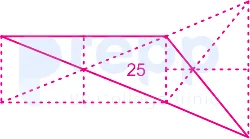
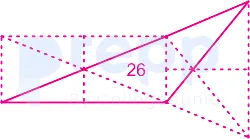
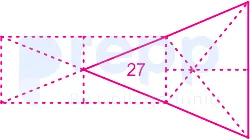
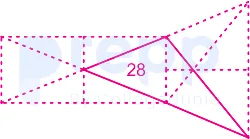
A. Option A (shown in image)The least possible Venn diagram is:
Hence, the figure in option 1 is the correct answer.
 Paper & answer key PDF ↗
 Question 3archived
Select the number pair in which the two numbers are related in the same way as are the two numbers of the following number-pair.
27 : 8
- A
12 : 3
- B
39 : 14
- C
19 : 5
- D
33 : 9
Show answer
A. 12 : 3Understanding Number Pair Relationships
In this question, we are given a pair of numbers, 27 and 8, and we need to find another pair from the given options that shares the same relationship. This type of problem tests our ability to identify patterns and logical connections between numbers.
Analyzing the Given Number Pair: 27 : 8
Let's examine the relationship between the two numbers, 27 and 8. We need to think about various mathematical operations or patterns that could connect 27 and 8. Some possibilities include:
Arithmetic operations (addition, subtraction, multiplication, division).
Relationship based on digits.
Relationship based on squares, cubes, or other powers.
A combination of operations.
Let's try to find a simple relationship. If we divide the first number, 27, by a small integer, say 3, we get 9. How can we get 8 from 9? By subtracting 1. So, let's test the relationship:
Second Number = (First Number / 3) - 1
Let's apply this to the given pair 27 : 8:
\( (27 \div 3) - 1 = 9 - 1 = 8 \)
This relationship holds true for the given number pair 27 : 8.
Applying the Relationship to the Options
Now, we will apply this identified relationship to each of the given options to see which pair satisfies the same rule: Second Number = (First Number / 3) - 1.
Option 1: 12 : 3
Let's apply the relationship to the first number, 12:
\( (12 \div 3) - 1 = 4 - 1 = 3 \)
The result is 3, which is the second number in the pair 12 : 3. This option fits the relationship.
Option 2: 39 : 14
Let's apply the relationship to the first number, 39:
\( (39 \div 3) - 1 = 13 - 1 = 12 \)
The result is 12, which is not equal to the second number in the pair (14). This option does not fit the relationship.
Option 3: 19 : 5
Let's apply the relationship to the first number, 19:
The first number, 19, is not divisible by 3. So, this option cannot fit the relationship (First Number / 3) - 1, which requires the first number to be divisible by 3.
Option 4: 33 : 9
Let's apply the relationship to the first number, 33:
\( (33 \div 3) - 1 = 11 - 1 = 10 \)
The result is 10, which is not equal to the second number in the pair (9). This option does not fit the relationship.
Identifying the Correct Pair
Based on our analysis, only Option 1 (12 : 3) follows the same relationship as the given pair 27 : 8.
The relationship is: The second number is obtained by dividing the first number by 3 and then subtracting 1.
Number Pair
Apply Relationship \( (N \div 3) - 1 \)
Result
Matches Second Number?
27 : 8
\( (27 \div 3) - 1 \)
\( 9 - 1 = 8 \)
Yes
12 : 3 (Option 1)
\( (12 \div 3) - 1 \)
\( 4 - 1 = 3 \)
Yes
39 : 14 (Option 2)
\( (39 \div 3) - 1 \)
\( 13 - 1 = 12 \)
No (Expected 14)
19 : 5 (Option 3)
19 is not divisible by 3
-
No
33 : 9 (Option 4)
\( (33 \div 3) - 1 \)
\( 11 - 1 = 10 \)
No (Expected 9)
Therefore, the number pair that is related in the same way as 27 : 8 is 12 : 3.
Revision Table: Number Analogy Concepts
Understanding number analogies involves recognizing various types of relationships. Here's a quick revision:
Relationship Type
Description
Example
Arithmetic Operations
Adding, subtracting, multiplying, or dividing the first number (or its digits) to get the second.
5 : 10 (Multiply by 2)
10 : 8 (Subtract 2)
15 : 5 (Divide by 3)
Powers/Roots
Relationship based on squares, cubes, square roots, cube roots.
4 : 16 (Square)
27 : 3 (Cube root)
8 : 64 (Cube of base minus 1, then square)
Digit Based
Operations on the digits of the first number (sum, product, difference) to get the second number.
23 : 5 (Sum of digits)
12 : 2 (Product of digits)
41 : 3 (Difference of digits)
Combinations
Applying a sequence of operations.
10 : 21 (Multiply by 2, add 1)
25 : 55 (Multiply by 2, add 5)
27 : 8 (Divide by 3, subtract 1)
Prime/Composite Numbers
Relationship based on whether numbers are prime or composite.
7 : 11 (Next prime number)
Additional Information: Problem Solving Strategy for Number Analogies
When approaching number analogy problems like 27 : 8, it's helpful to follow a systematic approach:
Look for simple arithmetic operations first (addition, subtraction, multiplication, division).
Consider relationships involving squares, cubes, or roots.
Examine the digits of the number – sometimes the relationship is based on the sum, product, or difference of digits.
Look for multi-step operations or combinations of the above.
Test your identified relationship thoroughly with the given pair before applying it to the options.
Apply the relationship to each option systematically and check if it holds true.
Be open to different types of relationships; sometimes they can be unconventional.
Practicing with various types of number analogies helps in quickly recognizing patterns during exams.
Paper & answer key PDF ↗ Question 4archived
Three of the following four numbers are alike in a certain way and one is different. Pick the number that is different from the rest.
- A
343
- B
731
- C
1331
- D
2197
Show answer
B. 731Finding the Different Number: Odd One Out Analysis
In this question, we are given four numbers: 343, 731, 1331, and 2197. We need to identify the number that is different from the rest, implying that the other three numbers share a common property.
Let's examine each number to find a possible pattern or property they might share.
Analyzing Each Number
We will check if these numbers belong to any specific category, such as perfect squares, perfect cubes, prime numbers, etc.
Number 1: 343
Let's test if 343 is a perfect cube. We know that $6^3 = 216$ and $7^3 = 7 \times 7 \times 7 = 49 \times 7 = 343$.
So, 343 is a perfect cube. Specifically, $343 = 7^3$.
Number 2: 731
Let's check if 731 is a perfect cube. We know $9^3 = 729$ and $10^3 = 1000$. 731 is between these two values, so it is not a perfect cube.
Let's see if it has other properties. Is it a prime number? We can test for divisibility by small prime numbers. It's not divisible by 2, 3, 5. Let's try 7: $731 \div 7 \approx 104.4$. Let's try 11: $731 \div 11 \approx 66.4$. Let's try 13: $731 \div 13 \approx 56.2$. Let's try 17: $731 \div 17 = 43$.
So, $731 = 17 \times 43$. It is a composite number, the product of two prime numbers.
Number 3: 1331
Let's check if 1331 is a perfect cube. We know $10^3 = 1000$. Let's try $11^3 = 11 \times 11 \times 11 = 121 \times 11 = 1331$.
So, 1331 is a perfect cube. Specifically, $1331 = 11^3$.
Number 4: 2197
Let's check if 2197 is a perfect cube. We know $12^3 = 1728$ and $13^3 = 13 \times 13 \times 13 = 169 \times 13 = 2197$.
So, 2197 is a perfect cube. Specifically, $2197 = 13^3$.
Identifying the Pattern and the Different Number
Based on our analysis:
343 is a perfect cube ($7^3$).
731 is not a perfect cube ($17 \times 43$).
1331 is a perfect cube ($11^3$).
2197 is a perfect cube ($13^3$).
Three of the numbers (343, 1331, 2197) share the property of being a perfect cube. The number 731 does not share this property; it is a composite number but not a perfect cube.
Therefore, 731 is the number that is different from the rest.
Number Analysis Summary
Number
Property
Notes
343
Perfect Cube
$7^3$
731
Not a Perfect Cube
$17 \times 43$
1331
Perfect Cube
$11^3$
2197
Perfect Cube
$13^3$
Revision Table: Key Concepts in Number Patterns
Important Number Properties
Term
Definition/Description
Example
Perfect Square
An integer that is the square of an integer.
4 ($2^2$), 9 ($3^2$), 16 ($4^2$)
Perfect Cube
An integer that is the cube of an integer.
8 ($2^3$), 27 ($3^3$), 64 ($4^3$)
Prime Number
A natural number greater than 1 that has no positive divisors other than 1 and itself.
2, 3, 5, 7, 11, 13, 17, 19, ...
Composite Number
A natural number greater than 1 that is not prime (it has positive divisors other than 1 and itself).
4, 6, 8, 9, 10, 12, 14, 15, 16, ...
Additional Information: Understanding Odd One Out Questions
Odd One Out questions are common in reasoning and aptitude tests. They require you to find an item (number, word, figure, etc.) that does not belong to a group because it lacks a characteristic or property shared by the other items in the group.
Strategies to solve these questions often involve:
Looking for common mathematical properties (like perfect squares/cubes, prime/composite, even/odd, divisibility rules).
Checking for patterns in digits (sum of digits, product of digits, sequence).
Identifying arithmetic or geometric progressions (though less common with just four numbers).
Analyzing visual features (for figure-based questions).
Practicing with different types of Odd One Out problems helps in quickly identifying potential patterns.
Paper & answer key PDF ↗ Question 5archived
‘Judgment’ is related to ‘Deliver’ in the same way as ‘Rule’ is related to ‘_________’.
- A
Follow
- B
Implement
- C
Practice
- D
Render
Show answer
B. ImplementSolving Word Analogies: Understanding Relationships
This question asks us to find the relationship between the first pair of words, 'Judgment' and 'Deliver', and then apply that same relationship to the word 'Rule' to find the missing word from the given options. This is a common type of verbal reasoning question known as a word analogy.
Understanding the Relationship: Judgment and Deliver
Let's look at the first pair: 'Judgment' and 'Deliver'. What is the connection between these two words?
A 'Judgment' is a decision or conclusion, often made in a court of law.
To 'Deliver' a judgment means to formally announce or give it.
So, the relationship here is that 'Deliver' is the action performed with or upon a 'Judgment'. Specifically, it's about making the judgment known or effective.
Applying the Relationship to Rule
Now we need to find a word from the options that has the same relationship with 'Rule'. We need to find an action that is performed with or upon a 'Rule', similar to how a judgment is delivered.
Evaluating the Options for Rule
Let's examine each option:
Follow: You 'follow' a rule, meaning you adhere to it or act in accordance with it. This is an action performed by someone regarding a rule, not an action performed on the rule itself to make it effective or in existence.
Implement: To 'implement' a rule means to put it into effect or practice. This is an action taken to make the rule active and operational. This seems like a strong candidate, as it's an action performed upon the rule to make it active.
Practice: You might 'practice' following a rule, or 'practice' applying rules. 'Practice' generally refers to doing something repeatedly to improve skill or to observe a custom. It's not the primary action of putting a rule into effect.
Render: To 'render' can mean to provide or give something, like rendering a service or rendering a judgment (similar to delivering a judgment). However, 'render' is not commonly used with 'rule'.
Conclusion: Finding the Matching Action
Comparing the actions, 'Deliver' for 'Judgment' is about formally issuing or making the judgment effective. Similarly, 'Implement' for 'Rule' is about putting the rule into effect or practice. Both actions describe the process of taking the concept (Judgment or Rule) and making it active or known in a formal way.
Therefore, the word that best fits the analogy based on the relationship between 'Judgment' and 'Deliver' is 'Implement'.
Revision Table: Key Concepts
Term
Relationship to Action
Example Analogy
Judgment
Is delivered
Judgment : Deliver
Rule
Is implemented
Rule : Implement
Additional Information: Types of Analogies
Analogies can show various types of relationships between words. Some common types include:
Part to Whole (e.g., Finger : Hand)
Cause and Effect (e.g., Heat : Expand)
Synonyms (e.g., Happy : Joyful)
Antonyms (e.g., Hot : Cold)
Worker and Tool (e.g., Carpenter : Hammer)
Action and Object (as seen in this question: Deliver : Judgment)
Purpose (e.g., Knife : Cut)
Solving analogies requires identifying the specific relationship in the first pair and applying it consistently to the second pair.
Paper & answer key PDF ↗ Question 6archived
Select the word-pair in which the two words are related in the same way as are two words in the following word pair-
Mnemonic: Memory
- A
Audition: Music
- B
Sedative: Sleep
- C
Drama: Acting
- D
Audience: Speech
Show answer
B. Sedative: SleepThis question asks us to find a word pair that shares the same relationship as the given pair: Mnemonic: Memory.
Let's first understand the relationship between "Mnemonic" and "Memory".
Understanding the Base Word Pair: Mnemonic and Memory
A mnemonic is a device, such as a pattern of letters, ideas, or associations, that assists in remembering something. It is a tool or technique used to improve or aid memory.
A mnemonic serves to help or facilitate memory.
The first word (Mnemonic) is something that enhances or assists the second word (Memory).
So, the relationship is one where the first word is a tool or method that helps, improves, or facilitates the function or outcome described by the second word.
Analyzing the Options for Word Pair Relationships
Now let's examine each option to see which pair exhibits a similar relationship.
Audition: Music
An audition is a trial performance by a singer, actor, dancer, or musician to demonstrate their suitability for a role or job.
Music is the art form or the performance itself.
An audition is a test related to music performance, but it doesn't necessarily aid or improve music itself. It's a process for evaluating musical ability. The relationship isn't one of aiding or facilitating.
Sedative: Sleep
A sedative is a drug or substance that induces sedation or tranquility.
Sleep is a naturally recurring state of mind and body.
A sedative is often used to help a person achieve sleep or to make it easier to sleep. The sedative aids or facilitates sleep. This relationship is similar to how a mnemonic aids memory.
Drama: Acting
A drama is a play for theatre, radio, or television.
Acting is the performance of a role in a play, film, or television show.
Acting is the performance within a drama. Drama is the form or context, and acting is the activity within that form. One doesn't aid the other in the same way a mnemonic aids memory.
Audience: Speech
An audience is the people who watch, read, or listen to something.
A speech is a formal address delivered to an audience.
The audience listens to the speech. The speech is directed at the audience. Neither word directly aids or facilitates the other in the sense of improving or helping its function.
Comparing Relationships and Finding the Match
Let's summarize the relationships we've found:
Word Pair
Relationship
Does it Match "Mnemonic: Memory"?
Mnemonic: Memory
First word aids/facilitates the second word (A mnemonic aids memory).
Base relationship
Audition: Music
First word is a test/evaluation related to the second word (An audition evaluates musical performance).
No
Sedative: Sleep
First word aids/facilitates the second word (A sedative aids sleep).
Yes
Drama: Acting
Second word is an activity within the context of the first word (Acting is done in a drama).
No
Audience: Speech
First word is the recipient of the second word (Audience listens to a speech).
No
Based on the analysis, the relationship between "Sedative" and "Sleep" is the most similar to the relationship between "Mnemonic" and "Memory". In both cases, the first word describes something that helps or facilitates the second word.
Revision Table: Word Pair Analogies
Concept
Description
Example
Analogy
A comparison between two things for the purpose of explanation or clarification. In word analogies, it's about finding a similar relationship.
Hot is to Cold as Up is to Down.
Relationship Types
Common relationships include part-to-whole, cause-and-effect, tool-to-use, synonyms, antonyms, degree, etc.
Hammer: Nail (tool-to-use), Fire: Heat (cause-and-effect)
Mnemonic
A system or device, like a pattern of letters, ideas, or associations, that helps one remember something.
ROYGBIV for the colors of the rainbow.
Sedative
A substance or agent that has a calming effect or that induces sleep.
Prescribed medication to help with insomnia.
Additional Information: Enhancing Memory and Promoting Sleep
Understanding how things aid processes like memory and sleep is important.
Memory Aids: Mnemonics are just one type of memory aid. Other techniques include spaced repetition, chunking information, visualizing concepts, and using flashcards. These all aim to make information more accessible and durable in your memory.
Sleep Aids: Sedatives are chemical aids for sleep, but there are also many non-chemical ways to promote sleep, often referred to as sleep hygiene. This includes maintaining a regular sleep schedule, creating a dark and quiet sleep environment, avoiding caffeine and screens before bed, and practicing relaxation techniques.
Comparing the pairs again, Mnemonic is a method or tool to aid Memory, and Sedative is a substance or tool to aid Sleep. The parallel is clear.
Paper & answer key PDF ↗ Question 7archived
Select the option that is related to the third letter-cluster in the same way as the second letter-cluster is related to the first letter-cluster.
FLQV : JISU ∷ DJNR : ?
- A
HGPQ
- B
FGQN
- C
HMPS
- D
HGLQ
Show answer
A. HGPQSolving Letter Cluster Analogy Problems
This question asks us to find the relationship between two letter clusters and apply that same relationship to a third letter cluster to find the missing one. This is a type of letter cluster analogy problem.
Analyzing the Relationship (FLQV to JISU)
Let's look at the position of each letter in the alphabet to find the pattern connecting FLQV to JISU.
First letter: F is the 6th letter, J is the 10th letter. The difference is $10 - 6 = +4$.
Second letter: L is the 12th letter, I is the 9th letter. The difference is $9 - 12 = -3$.
Third letter: Q is the 17th letter, S is the 19th letter. The difference is $19 - 17 = +2$.
Fourth letter: V is the 22nd letter, U is the 21st letter. The difference is $21 - 22 = -1$.
The pattern relating FLQV to JISU is consistently applying the sequence of changes: +4, -3, +2, -1 to the alphabetical position of each letter.
Applying the Pattern to DJNR
Now we apply the same pattern (+4, -3, +2, -1) to the letter cluster DJNR.
First letter: D is the 4th letter. Apply +4: $4 + 4 = 8$. The 8th letter is H.
Second letter: J is the 10th letter. Apply -3: $10 - 3 = 7$. The 7th letter is G.
Third letter: N is the 14th letter. Apply +2: $14 + 2 = 16$. The 16th letter is P.
Fourth letter: R is the 18th letter. Apply -1: $18 - 1 = 17$. The 17th letter is Q.
By applying the pattern (+4, -3, +2, -1) to DJNR, we get the letter cluster HGPQ.
Comparing with Options
Let's check the given options to see if HGPQ is present.
The resulting letter cluster HGPQ matches Option 1.
Cluster
Original Letter
Position
Pattern
New Position
New Letter
FLQV
F
6
+4
10
J
L
12
-3
9
I
Q
17
+2
19
S
V
22
-1
21
U
DJNR
D
4
+4
8
H
J
10
-3
7
G
N
14
+2
16
P
R
18
-1
17
Q
Conclusion
The pattern identified between FLQV and JISU is applying numerical changes (+4, -3, +2, -1) to the alphabetical positions of the letters. Applying this same pattern to DJNR gives us HGPQ.
Revision Table: Letter Analogies and Patterns
Understanding letter analogies often involves recognizing patterns based on:
Alphabetical position
Skip letter counts
Reversal of letters
Vowel/Consonant sequences
Specific mathematical operations on positions
Additional Information: Types of Reasoning Questions
Letter cluster analogy is a common type of question in verbal and logical reasoning sections of many exams. Other types of reasoning questions include:
Number Series
Coding-Decoding
Blood Relations
Direction Sense
Ranking and Order
Syllogisms
Practicing different types helps improve problem-solving skills.
Paper & answer key PDF ↗ Question 8archived
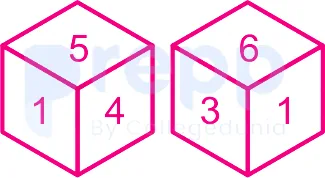
The different positions of the same dice are shown. Which number will be at the top if 3 is at the bottom?
- A
1
- B
2
- C
4
- D
5
Show answer
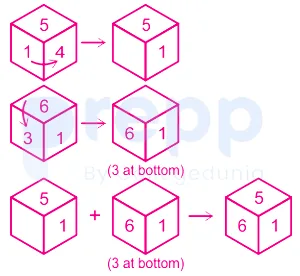
D. 53, 4, 5, and 6 are adjacent to 1. Therefore, 2 is opposite to 1.
Hence, if 3 is at the bottom of the dice, then 5 is at the top.
 Paper & answer key PDF ↗
 Question 9archived
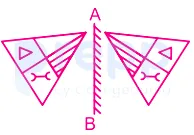
Select the mirror image of the given figure when the mirror is placed to the right of the figure.

- A
Option A (shown in image)
- B
Option B (shown in image)
- C
Option C (shown in image)
- D
Option D (shown in image)
Show answer
C. Option C (shown in image)Hence, the figure in option 3 is the correct answer.
 Paper & answer key PDF ↗
 Question 10archived
Two statements are given, followed by three conclusions numbered I, II and III. Assuming the statement to be true even if they seem to be at variance with commonly known facts, decide which of the conclusions logically follow(s) from the statements.
Statements:
Some quadrilateral are squares.
All squares are rhombuses.
Conclusions:
I. No quadrilateral is a rhombus.
II. All rhombuses are squares.
III. Some quadrilaterals are rhombuses.
- A
Only conclusion III follows
- B
Only conclusion II follows
- C
None of the conclusions follows
- D
Only conclusion I follows
Show answer
A. Only conclusion III followsUnderstanding Syllogism: Quadrilaterals, Squares, and Rhombuses
This question asks us to analyze given statements and determine which of the provided conclusions logically follow from them, assuming the statements are true.
Let's break down the statements first:
Statement 1: Some quadrilateral are squares. This tells us there's an overlap between the category of quadrilaterals and the category of squares. It implies that at least one quadrilateral is also a square.
Statement 2: All squares are rhombuses. This establishes a relationship where the entire category of squares is included within the category of rhombuses. If something is a square, it must also be a rhombus.
Now, let's evaluate each conclusion based on these statements:
Analyzing Conclusion I: No quadrilateral is a rhombus
This conclusion claims that there is absolutely no overlap between the category of quadrilaterals and the category of rhombuses.
However, look at the statements:
Statement 1 says: Some quadrilateral are squares.
Statement 2 says: All squares are rhombuses.
If some quadrilaterals are squares (from Statement 1), and every single square is a rhombus (from Statement 2), then the quadrilaterals that are also squares must logically also be rhombuses. This means there must be at least some quadrilaterals that are rhombuses.
Therefore, the conclusion "No quadrilateral is a rhombus" directly contradicts what we can deduce from the statements. Conclusion I does not follow.
Analyzing Conclusion II: All rhombuses are squares
This conclusion claims that the entire category of rhombuses is included within the category of squares.
Statement 2 says "All squares are rhombuses." This means squares are a subset of rhombuses. It does NOT imply that rhombuses are a subset of squares. Think of it like this: All cats are animals, but not all animals are cats. Similarly, while all squares are rhombuses, there can be rhombuses that are not squares (for example, a rhombus with angles of 60 and 120 degrees is a rhombus but not a square).
Thus, the statement "All rhombuses are squares" is not necessarily true based on the given statements. Conclusion II does not follow.
Analyzing Conclusion III: Some quadrilaterals are rhombuses
This conclusion claims that there is an overlap between the category of quadrilaterals and the category of rhombuses. It suggests that at least one quadrilateral is also a rhombus.
Let's combine the information from the statements:
From Statement 1: There exists a group of items that are both Quadrilateral and Square.
From Statement 2: Anything that is a Square is also a Rhombus.
So, if we take any item from the group mentioned in Statement 1 (which is a Quadrilateral and a Square), according to Statement 2, that item must also be a Rhombus. Therefore, that item is a Quadrilateral and a Rhombus.
This means there are indeed some quadrilaterals that are rhombuses. Conclusion III logically follows from the statements.
Summary of Conclusions
Conclusion I: No quadrilateral is a rhombus - Does Not Follow
Conclusion II: All rhombuses are squares - Does Not Follow
Conclusion III: Some quadrilaterals are rhombuses - Follows
Based on our analysis, only Conclusion III logically follows from the given statements.
Revision Table: Syllogism Rules and Terms
Term
Meaning in Syllogism
Example
All A are B
Every member of set A is also a member of set B (A is a subset of B).
All dogs are mammals.
No A is B
There is no overlap between set A and set B.
No cat is a dog.
Some A are B
There is at least one member common to set A and set B (overlap exists).
Some students are athletes.
Some A are not B
There is at least one member of set A that is not a member of set B.
Some birds are not sparrows.
Additional Information: Venn Diagrams in Syllogism
Although we didn't draw them here, visualizing these relationships with Venn diagrams can be very helpful in syllogism problems.
"Some quadrilateral are squares" would be represented by two overlapping circles, one for Quadrilaterals and one for Squares, with the overlapping region indicating the 'some'.
"All squares are rhombuses" would be represented by a circle for Squares drawn completely inside a larger circle for Rhombuses.
Combining these mentally, the overlap region between Quadrilaterals and Squares (from statement 1) is inside the Rhombuses circle (from statement 2). This overlap region represents items that are Quadrilateral, Square, and Rhombus. Since this region exists, it proves that "Some quadrilaterals are rhombuses" is true.
Syllogism problems test your ability to deduce conclusions purely from the given statements, without relying on outside knowledge (even if the statements seem factually incorrect in the real world, we assume them true for the logic exercise).
Paper & answer key PDF ↗ Question 11archived
If the word ANGEL is coded as BOHFM, then what will be the third alphabet in the code for the word SAVAGE?
- A
U
- B
X
- C
B
- D
W
Show answer
D. WUnderstanding the Coding Rule: ANGEL to BOHFM
This question involves a common type of logical reasoning problem called coding-decoding. We are given a word, ANGEL, and its coded form, BOHFM. Our first step is to figure out the rule or pattern used to transform ANGEL into BOHFM.
Let's compare the letters in the original word and the coded word position by position:
The first letter of ANGEL is A. The first letter of BOHFM is B. A comes right before B in the alphabet.
The second letter of ANGEL is N. The second letter of BOHFM is O. N comes right before O in the alphabet.
The third letter of ANGEL is G. The third letter of BOHFM is H. G comes right before H in the alphabet.
The fourth letter of ANGEL is E. The fourth letter of BOHFM is F. E comes right before F in the alphabet.
The fifth letter of ANGEL is L. The fifth letter of BOHFM is M. L comes right before M in the alphabet.
From this comparison, we can see a clear pattern: each letter in the original word ANGEL is shifted one position forward in the English alphabet to get the corresponding letter in the coded word BOHFM. This is a simple substitution cipher where each letter is replaced by the next letter in sequence.
Applying the Coding Rule to SAVAGE
Now that we understand the coding rule (shifting each letter one position forward), we need to apply it to the word SAVAGE to find its code.
Let's take each letter of SAVAGE and shift it one position forward in the alphabet:
S → T (S is the 19th letter, T is the 20th)
A → B (A is the 1st letter, B is the 2nd)
V → W (V is the 22nd letter, W is the 23rd)
A → B (A is the 1st letter, B is the 2nd)
G → H (G is the 7th letter, H is the 8th)
E → F (E is the 5th letter, F is the 6th)
So, the coded word for SAVAGE is TBWHBF.
Finding the Third Alphabet in the Code for SAVAGE
The question asks specifically for the third alphabet in the code for the word SAVAGE. We found that the code for SAVAGE is TBWHBF.
Let's look at the letters in TBWHBF:
1st alphabet: T
2nd alphabet: B
3rd alphabet: W
4th alphabet: H
5th alphabet: B
6th alphabet: F
The third alphabet in the coded word TBWHBF is W.
Therefore, the third alphabet in the code for the word SAVAGE is W.
Revision Table: Coding Pattern Analysis
Original Word
Coded Word
Pattern
ANGEL
BOHFM
Each letter shifted +1 position in alphabet
A (+1)
B
N (+1)
O
G (+1)
H
E (+1)
F
L (+1)
M
Original Word
Apply Pattern (+1 Shift)
Coded Word
SAVAGE
TBWHBF
S (+1)
T
A (+1)
B
V (+1)
W
A (+1)
B
G (+1)
H
E (+1)
F
The third letter of the coded word TBWHBF is W.
Additional Information: Types of Coding-Decoding
Coding-decoding questions test your ability to identify patterns and rules in how words, letters, or numbers are transformed. Besides the simple letter shift seen here, other common types include:
Letter Shifting: Each letter is shifted by a fixed number of positions (forward or backward) in the alphabet, like in the ANGEL-BOHFM example (+1 shift).
Letter Substitution: Each letter is replaced by a specific different letter, not necessarily following a simple shift (e.g., A is always replaced by Z, B by Y, etc.).
Number Coding: Words are coded into numbers based on the position of letters (A=1, B=2, etc.) or other rules.
Mixed Coding: Combinations of letters and numbers are used in the code.
Word/Phrase Coding: Entire words or phrases are coded based on specific rules.
Jumbling/Rearrangement: The letters within a word are rearranged according to a specific pattern.
To solve these problems, always look for the rule by comparing the given word and its code. Once the rule is identified, apply it consistently to the word you need to code or decode.
Paper & answer key PDF ↗ Question 12archived
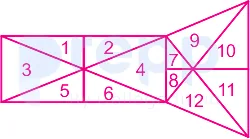
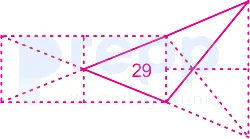
How many triangles are there in the following figure?

- A
29
- B
31
- C
27
- D
25
Show answer
Question 13archived
Arrange the following words in a logical and meaningful order.
1. Doctor
2. Recovery
3. Hospital
4. Home
5. Sickness
6. Medicine store
- A
5, 3, 1, 6, 2, 4
- B
5, 3, 6, 1, 3, 2
- C
1, 5, 3, 6, 4, 2
- D
4, 5, 6, 1, 3, 2
Show answer
A. 5, 3, 1, 6, 2, 4Understanding Logical Word Arrangement
This question asks us to arrange a set of words in a logical and meaningful sequence. The words provided are related to the process of getting sick and recovering. To solve this, we need to think about the natural order in which these events typically occur.
Analyzing the Given Words for Logical Sequence
Let's look at the words and their corresponding numbers:
1. Doctor
2. Recovery
3. Hospital
4. Home
5. Sickness
6. Medicine store
We need to determine the most likely flow of events starting from when someone experiences 'Sickness' and ending when they are back 'Home' after overcoming the sickness.
Step-by-Step Logical Ordering
Consider the typical progression:
It all starts with experiencing Sickness (5).
If the sickness is severe, one might need to go to a Hospital (3).
In the hospital, a Doctor (1) is typically consulted for diagnosis and treatment.
The doctor might prescribe medicine, which is usually purchased from a Medicine store (6).
Taking the medicine helps in the process of Recovery (2).
Once recovered, the person returns to their Home (4).
Following this natural sequence, the logical order of events is Sickness $\rightarrow$ Hospital $\rightarrow$ Doctor $\rightarrow$ Medicine store $\rightarrow$ Recovery $\rightarrow$ Home.
Mapping the Order to Numbers
Based on the logical sequence derived, we can map the words back to their numbers:
Sickness → 5
Hospital → 3
Doctor → 1
Medicine store → 6
Recovery → 2
Home → 4
Therefore, the logical and meaningful order is 5, 3, 1, 6, 2, 4.
Logical Order of Events
Step
Event/Word
Number
1
Sickness
5
2
Hospital
3
3
Doctor
1
4
Medicine store
6
5
Recovery
2
6
Home
4
Comparing this sequence (5, 3, 1, 6, 2, 4) with the given options, we find that it matches one of the options provided.
Conclusion on Logical Arrangement
The logical arrangement of the given words representing the journey from sickness to recovery and returning home is indeed Sickness, Hospital, Doctor, Medicine store, Recovery, and finally Home. This corresponds to the numerical sequence 5, 3, 1, 6, 2, 4.
Revision Table: Key Concepts
Revision Table: Logical Sequence Terms
Concept
Explanation
Relevance
Logical Order
Arranging items based on a natural or sensible sequence.
Core skill tested in this question type.
Sequence Analysis
Breaking down a process into steps to understand the flow.
Essential for solving word arrangement problems.
Cause and Effect
Understanding how one event leads to another (e.g., Sickness leads to visiting a Doctor).
Helps in determining the correct order.
Additional Information: Mastering Word Arrangement Questions
Word arrangement questions test your ability to understand the relationships between different terms and place them in a coherent order. Here are some tips for approaching such questions:
Read all the words carefully to understand their meanings and context.
Look for a clear starting point and an endpoint in the sequence.
Identify intermediate steps or events that connect the start and end.
Consider different possible sequences and evaluate which one makes the most logical sense in a real-world scenario or the given context.
Think about processes, cause-and-effect relationships, spatial arrangements, or hierarchical structures depending on the words provided.
Once you have determined a potential order, read through it to ensure it flows logically and meaningfully.
Practice with various types of word arrangement questions will help improve your logical reasoning skills.
Paper & answer key PDF ↗ Question 14archived
If
+ denotes –
denotes *
denotes /
/ denotes +
then what will be the numeric value of
60 * 10 / 40 + 6 – 5 =
- A
16
- B
3
- C
200
- D
144
Show answer
A. 16Understanding Symbol Substitution in Mathematical Expressions
This question requires us to substitute mathematical operators according to the given rules and then evaluate the resulting expression following the standard order of operations.
Symbol Substitution Rules
The rules for substituting symbols are as follows:
The symbol '+' denotes '–' (subtraction).
The symbol '–' denotes '*' (multiplication).
The symbol '*' denotes '/' (division).
The symbol '/' denotes '+' (addition).
Applying the Substitution to the Expression
The original expression is: 60 * 10 / 40 + 6 – 5
Let's substitute the symbols based on the rules:
'*' becomes '/'
'/' becomes '+'
'+' becomes '–'
'–' becomes '*'
So, the expression 60 * 10 / 40 + 6 – 5 transforms into:
60 / 10 + 40 – 6 * 5
Evaluating the Transformed Expression
Now we need to evaluate the new expression 60 / 10 + 40 – 6 * 5 using the order of operations (BODMAS/PEMDAS):
Brackets/Parentheses: None in this expression.
Orders/Exponents: None in this expression.
Division and Multiplication: Perform these from left to right.
Addition and Subtraction: Perform these from left to right.
Step 1: Perform the division.
\(60 / 10 = 6\)
The expression becomes: 6 + 40 – 6 * 5
Step 2: Perform the multiplication.
\(6 * 5 = 30\)
The expression becomes: 6 + 40 – 30
Step 3: Perform addition and subtraction from left to right. First, the addition.
\(6 + 40 = 46\)
The expression becomes: 46 – 30
Step 4: Perform the subtraction.
\(46 – 30 = 16\)
The numeric value of the expression after substitution and evaluation is 16.
Step-by-Step Calculation Summary
Original Expression
Substitution Rule
Transformed Expression
60 * 10 / 40 + 6 – 5
* → /, / → +, + → –, – → *
60 / 10 + 40 – 6 * 5
Step
Operation
Calculation
Expression Remaining
1
Division
\(60 / 10 = 6\)
\(6 + 40 – 6 * 5\)
2
Multiplication
\(6 * 5 = 30\)
\(6 + 40 – 30\)
3
Addition
\(6 + 40 = 46\)
\(46 – 30\)
4
Subtraction
\(46 – 30 = 16\)
\(16\)
Therefore, the numeric value is 16.
Revision Table: Mathematical Operations and Symbol Changes
It's crucial to correctly apply the symbol changes before performing calculations. Remember the order of operations after the transformation.
Original Symbol
New Meaning (Operation)
+
– (Subtraction)
–
* (Multiplication)
*
/ (Division)
/
+ (Addition)
Additional Information: Order of Operations (BODMAS/PEMDAS)
The order of operations is a set of rules that tells you the sequence in which to solve a mathematical expression. This ensures that everyone gets the same answer for the same expression.
B/P: Brackets or Parentheses (perform operations inside brackets first).
O/E: Orders or Exponents (calculate powers, square roots, etc.).
DM: Division and Multiplication (perform from left to right).
AS: Addition and Subtraction (perform from left to right).
In our problem, after substituting the symbols, we had 60 / 10 + 40 – 6 * 5. We performed division and multiplication before addition and subtraction, following this standard order.
Paper & answer key PDF ↗ Question 15archived
Select the figure that will come next in the following series.
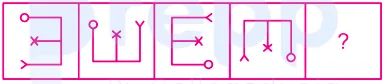
- A
Option A (shown in image)
- B
Option B (shown in image)
- C
Option C (shown in image)
- D
Option D (shown in image)
Show answer
A. Option A (shown in image)Here, the figure rotates in a clockwise direction. Also, the first and the third symbols in the ends of the figure interchange their positions each time.
Hence, the figure in option 1 is the correct answer.
 Paper & answer key PDF ↗
 Question 16archived
Select the set in which the number are related in the same way as are the number of the following set.
(11, 16, 20)
- A
(15, 20, 24)
- B
(9, 14, 19)
- C
(21, 26, 32)
- D
(17, 23, 26)
Show answer
A. (15, 20, 24)Understanding Number Relationships in Sets
This question asks us to identify a set of numbers that follows the same pattern or relationship as the given set (11, 16, 20). To solve this, we first need to figure out the relationship between the numbers in the original set.
Analyzing the Given Set (11, 16, 20)
Let's look at the differences between consecutive numbers in the set (11, 16, 20):
Difference between the second and first number: $16 - 11 = 5$
Difference between the third and second number: $20 - 16 = 4$
So, the relationship in the set (11, 16, 20) is that the second number is obtained by adding 5 to the first number, and the third number is obtained by adding 4 to the second number. The pattern is +5, +4.
Checking the Options for the Same Pattern
Now, let's examine each option provided to see which one follows the same +5, +4 pattern.
Option 1: (15, 20, 24)
Difference between 20 and 15: $20 - 15 = 5$
Difference between 24 and 20: $24 - 20 = 4$
The differences are 5 and 4. This set follows the same pattern as the original set.
Option 2: (9, 14, 19)
Difference between 14 and 9: $14 - 9 = 5$
Difference between 19 and 14: $19 - 14 = 5$
The differences are 5 and 5. This does not follow the +5, +4 pattern.
Option 3: (21, 26, 32)
Difference between 26 and 21: $26 - 21 = 5$
Difference between 32 and 26: $32 - 26 = 6$
The differences are 5 and 6. This does not follow the +5, +4 pattern.
Option 4: (17, 23, 26)
Difference between 23 and 17: $23 - 17 = 6$
Difference between 26 and 23: $26 - 23 = 3$
The differences are 6 and 3. This does not follow the +5, +4 pattern.
Conclusion
Based on the analysis, only Option 1, the set (15, 20, 24), exhibits the same relationship (+5, +4) between its numbers as the original set (11, 16, 20).
Set
1st to 2nd Number Difference
2nd to 3rd Number Difference
Follows (+5, +4) Pattern?
(11, 16, 20)
$16 - 11 = 5$
$20 - 16 = 4$
Yes (Original Pattern)
(15, 20, 24)
$20 - 15 = 5$
$24 - 20 = 4$
Yes
(9, 14, 19)
$14 - 9 = 5$
$19 - 14 = 5$
No
(21, 26, 32)
$26 - 21 = 5$
$32 - 26 = 6$
No
(17, 23, 26)
$23 - 17 = 6$
$26 - 23 = 3$
No
Revision Table: Number Pattern Analysis
Reviewing the process helps reinforce understanding of number patterns and relationships in sets. The key is to find the rule governing the numbers in the example set and apply it consistently to the options.
Additional Information: Types of Number Patterns
Number patterns can follow various rules, including:
Arithmetic Progression: A constant difference between consecutive terms (e.g., +3, +3, +3...).
Geometric Progression: A constant ratio between consecutive terms (e.g., x2, x2, x2...).
Mixed Differences: Differences between terms follow their own pattern (like in this question, +5 then +4).
Fibonacci Sequence: Each term is the sum of the two preceding ones (e.g., 1, 1, 2, 3, 5, 8...).
Square or Cube Numbers: Terms are squares ($n^2$) or cubes ($n^3$) or related to them.
Identifying the specific type of pattern is crucial for solving these types of logical reasoning questions.
Paper & answer key PDF ↗ Question 17archived
Select the combination of letters what sequentially placed in the gaps of the given letter series will complete the series.
cd_ab_cd_abb_dda_b
- A
dbcbc
- B
dbdcb
- C
bbcdb
- D
cbdab
Show answer
B. dbdcbThis question asks us to find the correct combination of letters that will complete the given letter series when placed sequentially in the gaps. We need to examine the structure of the series and the options provided to identify a logical pattern.
The given letter series is: cd_ab_cd_abb_dda_b
Step-by-Step Solution
Analyzing the Gaps
Let's count the number of letters and gaps in the series:
Existing letters: c, d, a, b, c, d, a, b, b, d, d, a, b (13 letters)
Gaps (underscores): 5 gaps
The total length of the completed series will be 13 + 5 = 18 characters. The options provided each contain 5 letters, which is the correct number to fill the gaps.
Applying the Correct Option
We are given that option 2, dbdcb, is the correct answer. Let's place these letters into the gaps sequentially from left to right:
The 1st letter (d) goes into the 1st gap (after cd).
The 2nd letter (b) goes into the 2nd gap (after ab).
The 3rd letter (d) goes into the 3rd gap (after cd).
The 4th letter (c) goes into the 4th gap (after abb).
The 5th letter (b) goes into the 5th gap (after dda).
Substituting these letters into the gaps:cddabbcddabbcddabb
The resulting complete series is: cddabbcddabbddacb
Discovering the Pattern
Now, let's look at the completed series cddabbcddabbddacb to find a pattern. Observing the sequence, we can see a block of letters repeating:
The series starts with cddabb.
The next block of letters is also cddabb.
The remaining part of the series is ddacb.
So, the series can be broken down as: (cddabb)(cddabb)(ddacb). The pattern involves the block cddabb repeating twice consecutively at the beginning of the series.
Although the series does not end with a complete repetition of the block, the clear double appearance of cddabb forms a discernible pattern, which is a common characteristic in letter series questions.
Conclusion
By placing the letters dbdcb into the gaps of the original series cd_ab_cd_abb_dda_b, we obtain the sequence cddabbcddabbddacb. This sequence demonstrates a pattern with the block cddabb repeating twice. Therefore, the combination of letters dbdcb correctly completes the series according to this pattern.
Revision Table: Common Letter Series Patterns
Pattern Type
Description
Example
Repeating Block
A fixed block of letters repeats multiple times.
ababab..., abcabc...
Increasing/Decreasing Length
Blocks of letters repeat, but their length changes systematically.
ababbabbb...
Alternating Pattern
Two or more different patterns alternate within the series.
azbycxdw...
Skipping/Positional Pattern
The pattern relates to the position of letters in the alphabet or series.
acフィルegik...
Additional Information: Tips for Solving Letter Series
Count the total number of elements (letters + gaps) to guess the length of potential repeating blocks.
Break down the series into segments based on the gaps.
Test the options by filling the gaps and writing out the complete series.
Look for repeating blocks of letters.
Check for patterns in the sequence of letters themselves (e.g., alphabetical order, skipping letters, reverse order).
Look for alternating patterns or patterns that change in length or composition.
Sometimes, the pattern might involve groups of letters that follow a specific rule.
Practice with different types of series to become familiar with common patterns.
Paper & answer key PDF ↗ Question 18archived
Select the option that is related to the fifth term in the same way as the second term is related to the first term and the fourth term is related to the third term.
6472 : 25 ∷ 7343 : 41 ∷ 6582 : ?
- A
16
- B
18
- C
13
- D
14
Show answer
A. 16Solving Number Analogy Reasoning Questions
This question is a type of number analogy problem where you need to find the relationship between the first pair of numbers and the second pair of numbers. Once the pattern is identified, apply it to the third term to find the missing fifth term.
Analyzing the First Number Analogy Pair: 6472 : 25
Let's examine the first pair of numbers: 6472 and 25. We need to find a rule or pattern that connects the four-digit number 6472 to the two-digit number 25. Let's look at the digits of 6472, which are 6, 4, 7, and 2.
Consider forming new numbers using these digits and performing operations. One possible approach is to pair the digits in a specific order. Let's try pairing the first digit (6) with the third digit (7) to form a two-digit number, and the second digit (4) with the fourth digit (2) to form another two-digit number.
Form the number using the first and third digits: $10 \times 6 + 7 = 67$.
Form the number using the second and fourth digits: $10 \times 4 + 2 = 42$.
Now, let's see if an operation on these two new numbers (67 and 42) gives us 25. The absolute difference between 67 and 42 is:
$\qquad |67 - 42| = 25$
This matches the second number in the first pair (25). This suggests a potential pattern: form two numbers using $(d_1, d_3)$ and $(d_2, d_4)$ and take their absolute difference.
Verifying the Pattern with the Second Number Analogy Pair: 7343 : 41
Let's apply the potential pattern to the second pair: 7343 and 41. The digits of 7343 are 7, 3, 4, and 3 ($d_1=7, d_2=3, d_3=4, d_4=3$).
Form the number using the first and third digits: $10 \times 7 + 4 = 70 + 4 = 74$.
Form the number using the second and fourth digits: $10 \times 3 + 3 = 30 + 3 = 33$.
Now, calculate the absolute difference between these two new numbers (74 and 33):
$\qquad |74 - 33| = 41$
This also matches the second number in the second pair (41). Since the pattern holds for both given pairs, we can be reasonably confident it is the correct one.
Applying the Pattern to Find the Missing Term: 6582 : ?
Now we apply the confirmed pattern to the third number, 6582, to find the missing term. The digits of 6582 are 6, 5, 8, and 2 ($d_1=6, d_2=5, d_3=8, d_4=2$).
Form the number using the first and third digits: $10 \times 6 + 8 = 60 + 8 = 68$.
Form the number using the second and fourth digits: $10 \times 5 + 2 = 50 + 2 = 52$.
Finally, calculate the absolute difference between these two new numbers (68 and 52):
$\qquad |68 - 52| = 16$
So, the missing term is 16.
Checking the Options
Let's compare our result with the given options:
16
18
13
14
Our calculated value, 16, matches Option 1.
Conclusion for Number Analogy Pattern
The pattern is consistent across the given pairs: for a four-digit number $d_1 d_2 d_3 d_4$, the related number is the absolute difference between the number formed by the first and third digits ($10 \times d_1 + d_3$) and the number formed by the second and fourth digits ($10 \times d_2 + d_4$). Applying this pattern to 6582 gives 16.
Input Number
Digits
Number 1 (d1, d3)
Number 2 (d2, d4)
Absolute Difference
Related Number
6472
6, 4, 7, 2
$10 \times 6 + 7 = 67$
$10 \times 4 + 2 = 42$
$|67 - 42| = 25$
25
7343
7, 3, 4, 3
$10 \times 7 + 4 = 74$
$10 \times 3 + 3 = 33$
$|74 - 33| = 41$
41
6582
6, 5, 8, 2
$10 \times 6 + 8 = 68$
$10 \times 5 + 2 = 52$
$|68 - 52| = 16$
?
Revision Table: Number Analogy Practice
Reviewing the steps and pattern used in this number analogy problem:
Identify the components of the analogy: two pairs showing a relationship, and a third term needing its related component.
Break down the numbers into their constituent digits if they are multi-digit.
Experiment with different operations or digit pairings to find a consistent pattern between the first number and the second number in the known pairs.
Test the identified pattern rigorously on all provided examples.
Apply the verified pattern to the incomplete pair to find the missing term.
Compare the calculated result with the given options.
Additional Information: Number Reasoning Concepts
Number reasoning questions test your ability to identify logical patterns in sequences or pairs of numbers. These patterns can involve various mathematical operations or specific manipulations of digits. Common types of patterns include:
Arithmetic operations (addition, subtraction, multiplication, division).
Squaring, cubing, or taking roots.
Operations on individual digits (sum of digits, product of digits, differences, reordering, pairing).
Sequential patterns (arithmetic progression, geometric progression, series based on specific rules).
Combinations of the above.
Solving these questions often requires observation, trial and error, and a systematic approach to testing different possibilities.
Paper & answer key PDF ↗ Question 19archived
A cycle was sold for Rs.4, 140 with a profit of 15%. At what price could it have been sold to earn a profit of 25%
- A
Rs. 4,500
- B
Rs. 4,200
- C
Rs. 4,350
- D
Rs. 4,850
Show answer
A. Rs. 4,500Understanding the Problem: Calculating Selling Price with Profit
The question asks us to find the selling price of a cycle needed to achieve a specific profit percentage, given its initial selling price and the profit percentage earned at that price. This involves calculating the cost price first and then using that cost price to determine the new selling price for the desired profit margin.
Step-by-Step Calculation of Cycle Selling Price
We are given the following information:
Initial Selling Price (SP1) = Rs. 4,140
Profit Percentage 1 (P1) = 15%
We need to find the new Selling Price (SP2) to earn a Profit Percentage 2 (P2) of 25%.
Step 1: Calculate the Cost Price (CP) of the Cycle
The selling price is the cost price plus the profit. The profit is a percentage of the cost price. We can write this relationship as:
\( \text{SP} = \text{CP} + \text{Profit} \)
\( \text{SP} = \text{CP} + (\text{Profit % of CP}) \)
\( \text{SP} = \text{CP} \times (1 + \frac{\text{Profit %}}{100}) \)
Using the first selling price and profit percentage:
\( 4140 = \text{CP} \times (1 + \frac{15}{100}) \)
\( 4140 = \text{CP} \times (1 + 0.15) \)
\( 4140 = \text{CP} \times 1.15 \)
Now, we can find the Cost Price (CP):
\( \text{CP} = \frac{4140}{1.15} \)
Let's perform the division:
\( \text{CP} = 3600 \)
So, the cost price of the cycle is Rs. 3,600.
Step 2: Calculate the New Selling Price (SP2) for a 25% Profit
Now that we know the cost price (CP = Rs. 3,600) and the desired profit percentage (P2 = 25%), we can calculate the new selling price (SP2) using the same formula:
\( \text{SP2} = \text{CP} \times (1 + \frac{\text{Profit % 2}}{100}) \)
Substitute the values:
\( \text{SP2} = 3600 \times (1 + \frac{25}{100}) \)
\( \text{SP2} = 3600 \times (1 + 0.25) \)
\( \text{SP2} = 3600 \times 1.25 \)
Let's perform the multiplication:
\( \text{SP2} = 4500 \)
Thus, the cycle should have been sold for Rs. 4,500 to earn a profit of 25%.
Summary of Calculations
Item
Value
Initial Selling Price (SP1)
Rs. 4,140
Initial Profit Percentage (P1)
15%
Calculated Cost Price (CP)
Rs. 3,600
Desired Profit Percentage (P2)
25%
Calculated New Selling Price (SP2)
Rs. 4,500
Based on our calculations, the cycle needed to be sold for Rs. 4,500 to achieve a 25% profit.
Revision Table: Key Concepts in Profit and Loss
Term
Definition
Formula
Cost Price (CP)
The price at which an article is purchased.
-
Selling Price (SP)
The price at which an article is sold.
-
Profit
When SP > CP.
Profit = SP - CP
Loss
When SP < CP.
Loss = CP - SP
Profit Percentage
Profit expressed as a percentage of CP.
\( \text{Profit %} = \frac{\text{Profit}}{\text{CP}} \times 100 \)
Loss Percentage
Loss expressed as a percentage of CP.
\( \text{Loss %} = \frac{\text{Loss}}{\text{CP}} \times 100 \)
Relationship (Profit)
Connecting SP, CP, and Profit %.
\( \text{SP} = \text{CP} \times (1 + \frac{\text{Profit %}}{100}) \)
Relationship (Loss)
Connecting SP, CP, and Loss %.
\( \text{SP} = \text{CP} \times (1 - \frac{\text{Loss %}}{100}) \)
Additional Information on Percentage Calculations
When dealing with percentages in profit and loss problems, it's often helpful to think in terms of multipliers:
A 15% profit means the selling price is 115% of the cost price (100% + 15%). The multiplier is \(1 + \frac{15}{100} = 1.15\).
A 25% profit means the selling price is 125% of the cost price (100% + 25%). The multiplier is \(1 + \frac{25}{100} = 1.25\).
Using multipliers can sometimes simplify calculations, especially when working backwards from the selling price to the cost price, as we did in Step 1:
\( \text{SP} = \text{CP} \times \text{Multiplier} \)
\( \text{CP} = \frac{\text{SP}}{\text{Multiplier}} \)
In Step 1, \( \text{CP} = \frac{4140}{1.15} = 3600 \).
This method is a quick way to check your understanding of percentage increases and decreases in profit and loss scenarios.
Paper & answer key PDF ↗ Question 20archived
Select the figure in which the given figure is embedded.

- A
Option A (shown in image)
- B
Option B (shown in image)
- C
Option C (shown in image)
- D
Option D (shown in image)
Show answer
A. Option A (shown in image)Hence, the figure in option 1 is the correct answer.
 Paper & answer key PDF ↗
 Question 21archived
Three of the following four-word pairs are alike in a certain way and one is different. Pick the odd word out.
- A
Tamil Nadu : South
- B
Kerala : North-West
- C
Assam : North-East
- D
Punjab : North
Show answer
B. Kerala : North-WestFinding the Odd Word Pair: States and Directions
The question asks us to identify the word pair that is different from the other three pairs. Each pair consists of an Indian state and a direction. We need to examine how the state relates to the given direction in each pair.
Analyzing Each State and Direction Pair
Let's look at each option and determine the general geographical location of the state within India:
Tamil Nadu : South
Tamil Nadu is a state located in the southernmost part of India. The direction 'South' accurately represents its general location within the country.
Kerala : North-West
Kerala is a state located in the southern part of India, specifically on the South-Western coast. The direction 'North-West' does not accurately represent its general location.
Assam : North-East
Assam is a state located in the north-eastern part of India. The direction 'North-East' accurately represents its general location within the country.
Punjab : North
Punjab is a state located in the northern part of India. The direction 'North' accurately represents its general location within the country.
Identifying the Different Pair
Based on the analysis, three of the pairs correctly associate the state with its major geographical direction in India:
Tamil Nadu is in the South.
Assam is in the North-East.
Punjab is in the North.
The pair that does not follow this pattern is Kerala : North-West, because Kerala is located in the South or South-West of India, not the North-West.
Therefore, the odd word pair out is Kerala : North-West.
Revision Table: Indian States and Directions
Here is a summary of the states mentioned and their general locations:
State
General Direction in India
Tamil Nadu
South
Kerala
South-West / South
Assam
North-East
Punjab
North
Comparing the table with the options makes it clear why 'Kerala : North-West' is the outlier.
Additional Information: Geographical Divisions of India
India is broadly divided into geographical regions often referred to by directions. These include:
North India: Includes states like Punjab, Haryana, Uttar Pradesh, Uttarakhand, Himachal Pradesh, etc.
South India: Includes states like Tamil Nadu, Kerala, Karnataka, Andhra Pradesh, Telangana.
East India: Includes states like West Bengal, Odisha, Bihar, Jharkhand.
West India: Includes states like Maharashtra, Goa, Gujarat, Rajasthan.
North-East India: Includes the "Seven Sister States" (Assam, Arunachal Pradesh, Meghalaya, Mizoram, Manipur, Nagaland, Tripura) plus Sikkim.
Central India: Primarily Madhya Pradesh and Chhattisgarh.
These divisions help in broadly categorizing the states based on their location.
Paper & answer key PDF ↗ Question 22archived
Three of the following four letter-clusters are alike in a certain way and one is different. Pick the odd one out.
- A
HLP
- B
DHL
- C
PTX
- D
LPQ
Show answer
D. LPQFinding the Odd Letter Cluster: HLP, DHL, PTX, LPQ
This question asks us to identify the letter cluster that is different from the other three. These types of questions often involve looking at the pattern or relationship between the letters in each cluster, usually based on their position in the English alphabet.
Analyzing the Letter Clusters Based on Alphabetical Position
Let's assign a numerical value to each letter based on its position in the alphabet (A=1, B=2, ..., Z=26).
Letter
Position
A
1
B
2
C
3
D
4
E
5
F
6
G
7
H
8
I
9
J
10
K
11
L
12
M
13
N
14
O
15
P
16
Q
17
R
18
S
19
T
20
U
21
V
22
W
23
X
24
Y
25
Z
26
Now, let's look at the positional values for the letters in each given cluster:
HLP: H is 8th, L is 12th, P is 16th.
DHL: D is 4th, H is 8th, L is 12th.
PTX: P is 16th, T is 20th, X is 24th.
LPQ: L is 12th, P is 16th, Q is 17th.
Identifying the Pattern in Each Cluster
Let's examine the difference between the positional values of consecutive letters in each cluster:
HLP: From H to L is \(12 - 8 = 4\). From L to P is \(16 - 12 = 4\). The pattern is +4, +4.
DHL: From D to H is \(8 - 4 = 4\). From H to L is \(12 - 8 = 4\). The pattern is +4, +4.
PTX: From P to T is \(20 - 16 = 4\). From T to X is \(24 - 20 = 4\). The pattern is +4, +4.
LPQ: From L to P is \(16 - 12 = 4\). From P to Q is \(17 - 16 = 1\). The pattern is +4, +1.
Conclusion: Finding the Odd One Out
We can see that the letter clusters HLP, DHL, and PTX all follow a consistent pattern where the positional value of each subsequent letter increases by 4. However, the letter cluster LPQ follows a different pattern; the first increment is +4, but the second increment is +1.
Therefore, LPQ is the odd one out because its internal pattern is different from the other three clusters.
Revision Table: Letter Cluster Analysis
Letter Cluster
Letter Positions
Pattern (Difference)
Observation
HLP
8, 12, 16
12-8=4, 16-12=4
+4, +4
DHL
4, 8, 12
8-4=4, 12-8=4
+4, +4
PTX
16, 20, 24
20-16=4, 24-20=4
+4, +4
LPQ
12, 16, 17
16-12=4, 17-16=1
+4, +1
Additional Information: Solving Odd One Out Reasoning Questions
Odd one out questions in reasoning tests require you to find the element (number, word, letter cluster, figure, etc.) that does not share a common property or pattern with the others. For letter-based questions like this one, common methods include:
Checking positional values of letters.
Looking for patterns in the differences between positional values.
Identifying vowels or consonants.
Checking if letters are in alphabetical order or reverse alphabetical order.
Looking for specific letters or combinations.
Examining symmetry or structure (for figures).
Practicing with different types of patterns helps improve your ability to quickly spot the rule that applies to the majority of the options and identify the one that breaks the rule.
Paper & answer key PDF ↗ Question 23archived
Which number will replace the question mark (?) in the following series:
7, 11, 18, 29, ?, 76
- A
53
- B
47
- C
44
- D
61
Show answer
B. 47Solving the Number Series: Find the Missing Number
The given number series is 7, 11, 18, 29, ?, 76. We need to identify the pattern governing the sequence and find the number that replaces the question mark.
Let's examine the relationship between consecutive terms in the series.
Identifying the Pattern in the Number Series
Let the terms of the series be denoted by $T_1, T_2, T_3, \dots$
$T_1 = 7$
$T_2 = 11$
$T_3 = 18$
$T_4 = 29$
$T_5 = ?$
$T_6 = 76$
Let's try adding consecutive terms to see if they produce the next term:
$T_1 + T_2 = 7 + 11 = 18$. This is $T_3$.
$T_2 + T_3 = 11 + 18 = 29$. This is $T_4$.
The pattern appears to be that each term, starting from the third term, is the sum of the two preceding terms. This is a type of Fibonacci-like sequence.
Calculating the Missing Number
Following the identified pattern, the missing term ($T_5$) should be the sum of the two preceding terms, $T_3$ and $T_4$.
$T_5 = T_3 + T_4$
$T_5 = 18 + 29$
$T_5 = 47$
Now let's verify if the next term ($T_6$) in the series follows this pattern using the calculated $T_5$:
$T_6 = T_4 + T_5$
$T_6 = 29 + 47$
$T_6 = 76$
This matches the last number given in the series, confirming that our identified pattern is correct and the calculated missing number is accurate.
The Completed Number Series
The series with the missing number filled in is:
7, 11, 18, 29, 47, 76
Conclusion on the Missing Number
Based on the pattern where each term is the sum of the two preceding terms, the number that replaces the question mark is 47.
Term Position
Term Value
Pattern Application
1st
7
Given
2nd
11
Given
3rd
18
$7 + 11 = 18$
4th
29
$11 + 18 = 29$
5th (?)
47
$18 + 29 = 47$
6th
76
$29 + 47 = 76$ (Verification)
Revision Table: Number Series Pattern
Series Type
Description
Example
Arithmetic Series
Constant difference between consecutive terms.
2, 5, 8, 11... (Difference is 3)
Geometric Series
Constant ratio between consecutive terms.
3, 6, 12, 24... (Ratio is 2)
Difference Series
Differences between terms follow a pattern (e.g., arithmetic or geometric).
1, 2, 4, 7, 11... (Differences: 1, 2, 3, 4...)
Fibonacci Series
Each term is the sum of the two preceding terms (starts typically 0, 1 or 1, 1).
0, 1, 1, 2, 3, 5, 8...
Mixed Series
Combination of different patterns.
Varies widely
Additional Information: Solving Number Series Questions
Solving number series questions requires careful observation and logical reasoning. Here are some common strategies:
Check Differences: Calculate the differences between consecutive terms. If the differences form a simple pattern (arithmetic, geometric, etc.), you've found the key.
Check Ratios: For geometric series, calculate the ratio between consecutive terms.
Check Double Differences: If the first differences don't show a clear pattern, find the differences between the differences (second differences).
Look for Sums/Products: See if a term is the sum or product of previous terms, as in the Fibonacci pattern seen here.
Check Alternating Patterns: Sometimes two interleaved series follow different patterns.
Look for Squares/Cubes: The terms might be related to squares, cubes, or their roots, possibly with some addition or subtraction.
Check Digit-wise Patterns: Occasionally, the pattern might involve the digits of the numbers themselves.
Practice with various types of series helps in quickly recognizing common patterns.
Paper & answer key PDF ↗ Question 24archived
A square paper is folded and cut as shown below. How will it appear when unfolded?

- A
Option A (shown in image)
- B
Option B (shown in image)
- C
Option C (shown in image)
- D
Option D (shown in image)
Show answer
B. Option B (shown in image)Hence, the figure in option 2 is the correct answer.
 Paper & answer key PDF ↗
 Question 25archived
Three of the following four letter-clusters alike in a certain way and one is different. Pick the odd one out.
- A
FNMG
- B
SKLV
- C
BKJC
- D
PXWQ
Show answer
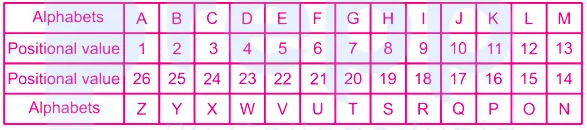
B. SKLV1) FNMG: F + 1 → G; N - 1 → M
2) SKLV: S + 3 → V; K + 1 → L
3) BKJC: B + 1 → C; K - 1 → J
4) PXWQ: P + 1 → Q; X - 1 → W
Hence, ‘SKLV’ is the correct answer.
 Paper & answer key PDF ↗
 Question 26archived
Asian Games, also known as Asiad, is a multi-sport event held every ________ years among athletes from all over Asia.
- A
three
- B
four
- C
six
- D
five
Show answer
B. fourUnderstanding the Asian Games Frequency
The Asian Games, also widely recognized as Asiad, is a major multi-sport event. It brings together athletes from across the vast continent of Asia to compete in various sports disciplines.
These prestigious games are held at a regular interval. This consistent scheduling helps in planning for athletes, coaches, and host countries.
The question asks about the frequency of the Asian Games. Let's look at the options provided:
three years
four years
six years
five years
Major international multi-sport events, like the Olympic Games and the Asian Games (Asiad), typically follow a specific cycle.
The Asian Games are organized by the Olympic Council of Asia (OCA).
The correct frequency for the Asian Games (Asiad) is every four years. This four-year cycle is common for many significant sporting events worldwide, allowing ample time for preparation, qualification events, and infrastructure development.
Therefore, the Asian Games are held every four years.
Key Facts about the Asian Games (Asiad)
Aspect
Details
Event Name
Asian Games (Asiad)
Participants
Athletes from Asian countries
Governing Body
Olympic Council of Asia (OCA)
Frequency
Every four years
Revision Table - Asian Games Frequency
Event
Frequency
Continent/Region
Asian Games (Asiad)
Every 4 years
Asia
Summer Olympics
Every 4 years
Global
Winter Olympics
Every 4 years
Global
Commonwealth Games
Every 4 years
Commonwealth Nations
Additional Information - Asian Games and Multi-Sport Events
The first Asian Games were held in New Delhi, India, in 1951.
The Asian Games are considered the second-largest multi-sport event after the Olympic Games.
The Olympic Council of Asia (OCA) was formed in 1982 and is the governing body for the Asian Games.
The four-year cycle for major sports events helps maintain a balance between the grandeur of the event and the time needed for preparation and host city selection.
Paper & answer key PDF ↗ Question 27archived
The base financial year for the calculation of the all India Index of Industrial Production (IIP) is:
- A
2004-2005
- B
2011-2012
- C
2005-2006
- D
2010-2011
Show answer
B. 2011-2012Understanding the Index of Industrial Production (IIP) Base Year
The Index of Industrial Production (IIP) is a crucial economic indicator that measures the changes in the volume of production of a country's industrial sector. It is compiled and published monthly by the National Statistical Office (NSO) of the Ministry of Statistics and Programme Implementation (MoSPI) in India. The IIP reflects the short-term changes in the volume of production in key industrial sectors.
What is a Base Year for IIP?
In statistics, especially when calculating indices like the IIP, a base year is chosen as a reference point. The production level in the base year is assigned an index value, usually 100. The production levels in subsequent years are then compared to this base year, and the index values are calculated accordingly. This allows for easy comparison of production changes over time.
Choosing an appropriate base year is important. The base year should ideally be a normal year, free from significant economic fluctuations like recessions or booms, so that it serves as a stable benchmark for comparison.
Determining the Current IIP Base Year
The base year for calculating the All India Index of Industrial Production (IIP) is revised periodically to reflect the structural changes in the economy and update the basket of items and their weights. The question asks for the current base financial year used for this calculation.
Previously, the base year for IIP was 2004-2005. However, this was revised.
The current base year for the All India Index of Industrial Production (IIP) is the financial year 2011-2012. This revision was implemented to provide a more accurate and representative picture of the industrial sector's performance based on more recent production patterns and technologies.
Significance of the 2011-2012 Base Year for IIP
Using 2011-2012 as the base year means that the industrial production levels in 2011-2012 are set to an index value of 100. The IIP values for subsequent months and years show the percentage change relative to this base level. For example, an IIP of 110 in a particular month means that industrial production is 10% higher than the average monthly production in the base year 2011-2012.
Aspect
Details for IIP
What it measures
Volume changes in industrial production
Published by
NSO (MoSPI)
Frequency
Monthly
Current Base Year
2011-2012
Previous Base Year
2004-2005
Revision Table: Key Facts on IIP Base Year
Metric
Description
Index Name
Index of Industrial Production (IIP)
Compilation Authority
National Statistical Office (NSO)
Measurement
Volume of production in industries
Current Base Year
2011-2012
Importance
Economic growth indicator
Additional Information on IIP and Base Years
The IIP covers three broad sectors:
Mining
Manufacturing
Electricity
Within manufacturing, it covers various industry groups. The selection of items and their weights in the IIP basket is crucial and is updated when the base year is revised to reflect the current structure of the industrial sector.
Revising the base year helps in:
Including new products and industries that have become significant.
Excluding old products that are no longer relevant.
Updating the weights of different items and sectors to reflect their current contribution to overall industrial production.
Providing a more accurate measure of industrial growth relative to a recent period.
The 2011-2012 base year was chosen because it was considered a relatively stable economic year following the global financial crisis and before major policy changes. This makes it a suitable benchmark for measuring subsequent industrial performance.
Paper & answer key PDF ↗ Question 28archived
The Qutub Minar was named after the Sufi saint ________.
- A
Qutub-ud-Din Aibak
- B
Alauddin Sabir Kaliyar
- C
Syed Waheed Ashraf
- D
Khwaja Qutbuddin Bakhtiyar Kaki
Show answer
D. Khwaja Qutbuddin Bakhtiyar KakiQutub Minar Naming Explained
The Qutub Minar is a famous historical monument located in Delhi, India. It is known for its impressive height and intricate carvings, representing early Indo-Islamic architecture.
Many historical monuments are named for various reasons, sometimes after the builder, sometimes after a ruler, or sometimes to honor a significant figure of the time.
Who Was the Qutub Minar Named After?
The question asks about the Sufi saint after whom the Qutub Minar was named. While one might initially think it was named after its builder, Qutub-ud-Din Aibak, historical sources confirm that the monument was actually named to honour a highly respected Sufi saint.
The Sufi saint after whom the Qutub Minar was named is Khwaja Qutbuddin Bakhtiyar Kaki.
Khwaja Qutbuddin Bakhtiyar Kaki was a revered Sufi mystic and a disciple of the famous Sufi saint Moinuddin Chishti. He was highly regarded during the time the construction of the Qutub Minar began.
Builder and Name Source Clarification
It is important to distinguish between the person who initiated the construction and the person after whom the monument was named.
Qutub-ud-Din Aibak: He was the founder of the Delhi Sultanate and the one who started the construction of the Qutub Minar around 1192.
Khwaja Qutbuddin Bakhtiyar Kaki: He was the Sufi saint whom Aibak admired greatly. The tower was named in his honour, likely as a mark of respect and devotion.
This clarifies why the Qutub Minar is not named after Qutub-ud-Din Aibak despite him starting its construction.
The other options provided, Alauddin Sabir Kaliyar and Syed Waheed Ashraf, are also historical figures or saints, but they are not associated with the naming of the Qutub Minar.
Revision Table: Qutub Minar Facts
Fact
Detail
Location
Delhi, India
Started by
Qutub-ud-Din Aibak
Named after
Khwaja Qutbuddin Bakhtiyar Kaki (Sufi Saint)
Purpose of Naming
To honour the saint
Architectural Style
Early Indo-Islamic
Additional Information: Sufi Saints and Historical Monuments
Naming monuments or structures after revered religious figures was a common practice in medieval India. This served to associate the ruler and their works with piety and seek divine blessings.
Sufi saints like Khwaja Qutbuddin Bakhtiyar Kaki had significant influence on the spiritual and social life of the people during the Delhi Sultanate period.
Their dargahs (shrines) became important centers of pilgrimage.
Honouring saints through monuments reinforced the rulers' connection with these popular spiritual figures.
Understanding the distinction between the builder and the person the monument is named after is key to correctly answering questions about historical structures like the Qutub Minar.
Paper & answer key PDF ↗ Question 29archived
________ won gold in the Men’s freestyle wrestling 65 kg category at the Dan Kolov 2019 wrestling event.
- A
Yogeshwar Dutt
- B
Sandeep Tomar
- C
Sushil Kumar
- D
Bajrang Punia
Show answer
D. Bajrang PuniaAnalyzing the Dan Kolov 2019 Wrestling Champion
The question asks about the gold medalist in the Men's freestyle wrestling 65 kg category at the Dan Kolov 2019 wrestling event.
Wrestling is a combat sport involving grappling-type techniques such as clinch fighting, throws and takedowns, joint locks, pins, and other grappling holds. Freestyle wrestling is one of the major international styles of amateur wrestling.
Dan Kolov 2019 Wrestling Event Details
The Dan Kolov – Nikola Petrov tournament is an annual international wrestling competition held in Bulgaria. The 2019 edition of this event featured numerous weight categories in both freestyle and Greco-Roman wrestling for men, and freestyle wrestling for women.
Identifying the 65 kg Freestyle Gold Medalist
To answer this question, we need to recall or find information about the results of the Dan Kolov 2019 wrestling tournament, specifically the Men's freestyle 65 kg category.
Based on event records, the gold medal in the Men's freestyle 65 kg category at the Dan Kolov 2019 wrestling event was won by Bajrang Punia.
Examining the Options
Yogeshwar Dutt: A renowned Indian freestyle wrestler, but he is primarily known for achievements in different periods and might not have competed or won in this specific category at the 2019 event.
Sandeep Tomar: Another Indian freestyle wrestler, usually competing in lighter weight categories like 57 kg.
Sushil Kumar: A highly decorated Indian freestyle wrestler, known for competing in categories like 66 kg and 74 kg in his prime.
Bajrang Punia: An prominent Indian freestyle wrestler who competes in the 65 kg category. He won the gold medal in the Men's freestyle 65 kg event at the Dan Kolov 2019 tournament.
Conclusion on Dan Kolov 2019 Winner
Therefore, the wrestler who won gold in the Men’s freestyle wrestling 65 kg category at the Dan Kolov 2019 wrestling event was Bajrang Punia.
Wrestler
Wrestling Category
Achievement at Dan Kolov 2019 (65 kg Freestyle)
Yogeshwar Dutt
Freestyle
Did not win gold in this category at this event.
Sandeep Tomar
Freestyle (usually lighter)
Did not win gold in this category at this event.
Sushil Kumar
Freestyle (usually heavier)
Did not win gold in this category at this event.
Bajrang Punia
Freestyle (65 kg)
Won Gold Medal.
Revision Table: Key Facts on Wrestling Gold Medal
Event
Category
Gold Medal Winner
Dan Kolov 2019 Wrestling Event
Men’s freestyle 65 kg
Bajrang Punia
Additional Information on Wrestling and Champions
Wrestling tournaments like Dan Kolov – Nikola Petrov are important events in the international wrestling calendar, offering ranking points and preparation opportunities for major championships like World Championships and Olympic Games. Indian wrestlers have performed well in various categories at such events.
Bajrang Punia is one of India's top freestyle wrestlers and has won multiple medals at prestigious international competitions including the World Championships and Asian Games.
The 65 kg category is a competitive weight class globally in freestyle wrestling.
Participating and winning at ranking series events like Dan Kolov helps wrestlers improve their seeding for major tournaments.
Paper & answer key PDF ↗ Question 30archived
The Almatti dam project on the Krishna river was an issue between which states?
- A
Karnataka and Goa
- B
Karnataka and Andhra Pradesh
- C
Karnataka and Tamil Nadu
- D
Andhra Pradesh and Tamil Nadu
Show answer
B. Karnataka and Andhra PradeshUnderstanding the Almatti Dam Project and Interstate Dispute
The question asks about the states involved in a dispute concerning the Almatti dam project on the Krishna river. Interstate river water disputes are common in India because rivers often flow through multiple states, and each state requires water for various purposes like irrigation, drinking, and power generation. The sharing and management of these water resources can lead to conflicts.
The Almatti Dam on the Krishna River
The Almatti Dam is a major hydroelectric and irrigation project located on the Krishna river in North Karnataka, India. It is the main reservoir of the Upper Krishna Project. The dam's construction and its planned full reservoir level have historically been a point of contention among the states that share the Krishna river basin.
Feature
Details
Dam Name
Almatti Dam
River
Krishna River
Location (State)
Karnataka
Purpose
Hydroelectric Power, Irrigation
Project
Upper Krishna Project
Interstate Dispute over Almatti Dam
The Krishna river basin is shared by several states: Maharashtra, Karnataka, Telangana, and Andhra Pradesh. Historically, Maharashtra, Karnataka, and the undivided Andhra Pradesh have had disputes over the allocation of Krishna river water and the capacity of reservoirs like Almatti Dam.
The primary dispute related to the Almatti dam project, particularly its height and water storage capacity, has been between Karnataka and Andhra Pradesh. Andhra Pradesh, being downstream, was concerned that a higher dam or increased storage at Almatti would reduce the water flow available to its region, affecting its irrigation needs and other uses. Karnataka, the upstream state where the dam is located, sought to increase the dam height to expand irrigation facilities within its territory under the Upper Krishna Project.
The dispute led to various tribunals and legal proceedings over the years to determine the fair share of Krishna water for each state and the permissible storage levels at projects like Almatti.
Analyzing the Options
Karnataka and Goa: While Goa is geographically close, the major dispute over the Krishna river and Almatti dam primarily involves the basin states, and Goa is not a significant stakeholder in this particular dispute.
Karnataka and Andhra Pradesh: As discussed, Karnataka (where the dam is located and is upstream) and Andhra Pradesh (downstream state, concerned about water flow) have been the main states involved in the dispute over the Almatti dam's capacity and the sharing of Krishna river water.
Karnataka and Tamil Nadu: Tamil Nadu is part of the Cauvery river basin, not the Krishna river basin. Disputes involving Tamil Nadu often concern the Cauvery river (e.g., with Karnataka).
Andhra Pradesh and Tamil Nadu: Andhra Pradesh is in the Krishna basin, and Tamil Nadu is in the Cauvery basin. They are not the primary parties in the Almatti dam dispute on the Krishna river.
Based on the history and geography of the Krishna river basin and the Almatti dam project, the dispute has been prominently between Karnataka and Andhra Pradesh.
Revision Table: Key Facts on Almatti Dam Dispute
Aspect
Details
Project
Almatti Dam
River
Krishna River
Main States in Dispute
Karnataka, Andhra Pradesh
Core Issue
Dam height, storage capacity, water sharing
Additional Information on Interstate Water Disputes
Interstate water disputes in India are governed by the Inter-State River Water Disputes Act, 1956. This act provides a framework for the Central Government to set up a tribunal to adjudicate disputes between states regarding the waters of an interstate river or river valley. Some other notable interstate water disputes in India include:
Cauvery Water Dispute (Karnataka, Tamil Nadu, Kerala, Puducherry)
Mahanadi Water Dispute (Odisha, Chhattisgarh)
MullaPeriyar Dam Dispute (Kerala, Tamil Nadu)
Ravi-Beas Water Dispute (Punjab, Haryana, Rajasthan)
These disputes highlight the challenges in managing shared natural resources like rivers among different administrative regions, each with its own developmental needs and priorities.
Paper & answer key PDF ↗ Question 31archived
________ built the world famous Harmandar Sahib, popularly known as the Golden Temple in Amritsar.
- A
Guru Ram Das
- B
Guru Arjan Dev
- C
Guru Angad Dev
- D
Guru Siri Har Rai
Show answer
B. Guru Arjan DevUnderstanding the Builder of Harmandar Sahib (Golden Temple)
The question asks about the individual responsible for building the world-famous Harmandar Sahib, often called the Golden Temple, located in Amritsar.
The Harmandar Sahib is a central religious place for Sikhs and holds great historical and spiritual significance.
History of Harmandar Sahib Construction
The land for the site was acquired during the time of Guru Ram Das, the fourth Sikh Guru. He also founded the city of Amritsar (originally called Ramdaspur) and started the excavation of the holy tank (Sarovar).
The actual construction of the Harmandar Sahib building within the holy tank was undertaken by the fifth Sikh Guru.
Guru Arjan Dev Ji's Role
Guru Arjan Dev was the fifth Sikh Guru. He took on the task of building the central shrine, the Harmandar Sahib. He invited Mian Mir, a Muslim Sufi saint, to lay the foundation stone in 1588. This was symbolic of the shrine's message of inclusivity and openness to all.
The construction of the Harmandar Sahib was completed in 1604. Guru Arjan Dev also compiled and installed the Adi Granth (the primary scripture of Sikhism, which later became the Guru Granth Sahib) inside the Harmandar Sahib in the same year.
Therefore, while Guru Ram Das established the city and the tank, Guru Arjan Dev was responsible for the construction of the main shrine, the Harmandar Sahib.
Comparing Options
Let's look at the roles of the Gurus mentioned in the options:
Guru Ram Das: Founded Amritsar and started the excavation of the Sarovar.
Guru Arjan Dev: Built the Harmandar Sahib structure and installed the Adi Granth.
Guru Angad Dev: The second Sikh Guru, known for developing the Gurmukhi script.
Guru Siri Har Rai: The seventh Sikh Guru, known for his compassion and maintaining a hospital.
Sikh Guru
Key Contribution to Amritsar/Harmandar Sahib
Guru Ram Das
Founded Amritsar; Started excavation of Sarovar
Guru Arjan Dev
Built the Harmandar Sahib building; Installed Adi Granth
Guru Angad Dev
Developed Gurmukhi script (not directly related to Harmandar Sahib construction)
Guru Har Rai
Seventh Guru (not directly related to original Harmandar Sahib construction)
Based on historical facts, the construction of the Harmandar Sahib building is attributed to Guru Arjan Dev.
Revision Table: Sikh Gurus and Key Actions
Sikh Guru
Period
Notable Actions
Guru Nanak Dev
1469-1539
Founder of Sikhism
Guru Angad Dev
1539-1552
Developed Gurmukhi script
Guru Amar Das
1552-1574
Organised the Manji system; Established Goindwal as Sikh centre
Guru Ram Das
1574-1581
Founded Amritsar; Started Sarovar excavation
Guru Arjan Dev
1581-1606
Built Harmandar Sahib; Compiled Adi Granth; First Sikh martyr
Guru Har Gobind
1606-1644
Introduced concept of Miri-Piri (temporal and spiritual authority)
Guru Har Rai
1644-1661
Maintained army; Ran free hospital
Guru Har Krishan
1661-1664
The 'Child Guru'
Guru Tegh Bahadur
1665-1675
Second Sikh martyr; Defended religious freedom
Guru Gobind Singh
1675-1708
Established Khalsa; Declared Guru Granth Sahib as eternal Guru
Additional Information on Harmandar Sahib
The architecture of the Harmandar Sahib is unique; it is built at a lower level than the surrounding land, symbolising humility.
It has four entrances, facing each direction (East, West, North, South), signifying that it is open to people of all faiths and walks of life.
The gold plating that gives it the name 'Golden Temple' was added much later, primarily by Maharaja Ranjit Singh in the early 19th century. The original structure built by Guru Arjan Dev was not covered in gold.
Paper & answer key PDF ↗ Question 32archived
________ is an important road link between Srinagar on one side and Kargil and Leh on the other side.
- A
Zoji La
- B
Qara Tag La
- C
Muling La
- D
Shipki La
Show answer
A. Zoji LaUnderstanding the Important Road Link to Kargil and Leh
The question asks to identify the crucial road link that connects Srinagar with Kargil and Leh. This road link is essential for connectivity and transport in the region, especially given the mountainous terrain.
Let's examine the options provided:
Zoji La: This is a high mountain pass in the Himalayas located in the Kargil district of Ladakh. It connects the Kashmir Valley to the Dras and Suru valleys and the Indus Valley. It is famously known as the gateway to Ladakh and is a vital link between Srinagar and Leh.
Qara Tag La: This pass is located in the Kunlun Mountains and is not a major road link connecting Srinagar to Kargil and Leh.
Muling La: This pass is located in the Himalayas connecting Uttarakhand in India with the Tibetan region of China. It is not related to the Srinagar-Kargil-Leh route.
Shipki La: This pass is a mountain pass and border post on the India-China border. It is located in Kinnaur district in Himachal Pradesh and is not on the route from Srinagar to Kargil and Leh.
Based on the location and significance of these passes, Zoji La is the only one that serves as the important road link between Srinagar on one side and Kargil and Leh on the other side.
This pass is part of National Highway 1 (NH 1) and is often closed during winter months due to heavy snowfall, making the road impassable. Efforts are underway to construct tunnels to provide all-weather connectivity.
Let's summarize the passes:
Pass Name
Location/Connection
Relevance to Srinagar-Kargil-Leh
Zoji La
Connects Kashmir Valley to Dras/Suru Valley/Ladakh. Part of NH 1.
Directly connects Srinagar with Kargil and Leh. Crucial link.
Qara Tag La
Kunlun Mountains
Not on the Srinagar-Kargil-Leh route.
Muling La
Uttarakhand-Tibet (China)
Not on the Srinagar-Kargil-Leh route.
Shipki La
Himachal Pradesh-Tibet (China)
Not on the Srinagar-Kargil-Leh route.
Therefore, Zoji La is the correct answer as it is the primary road link connecting Srinagar to Kargil and Leh.
Revision Table: Important Mountain Passes
Pass Name
Region/Range
Key Connectivity
Zoji La
Great Himalayas (Kargil, Ladakh)
Srinagar to Kargil/Leh
Rohtang Pass
Pir Panjal Range (Himachal Pradesh)
Manali to Lahaul and Spiti Valley
Nathu La
Eastern Himalayas (Sikkim)
Sikkim to Tibet (China)
Shipki La
Himachal Pradesh-Tibet border
India to Tibet (China)
Additional Information on Srinagar-Kargil-Leh Connectivity
The road from Srinagar to Leh via Kargil is part of the strategic National Highway 1. This route is approximately 422 kilometers long. After Srinagar in the Kashmir Valley, the road crosses the Zoji La pass to enter the Dras sector, then reaches Kargil town. From Kargil, it continues towards Leh. This road is generally open for traffic from late spring to late autumn, depending on snow conditions. The construction of the Zoji La tunnel is a significant project aimed at providing year-round connectivity across the pass, reducing travel time and improving strategic movement.
Paper & answer key PDF ↗ Question 33archived
During whose reign did the Chinese traveller Hiuen Tsang visit India?
- A
Harshavardhana
- B
Chandragupta Vikramaditya
- C
Chandragupta I
- D
Samudragupta
Show answer
A. HarshavardhanaUnderstanding the Visit of Chinese Traveller Hiuen Tsang to India
The question asks about the Indian ruler during whose reign the famous Chinese Buddhist monk and traveller, Hiuen Tsang, visited India. This is a key event in ancient Indian history, providing valuable insights into the social, political, and religious conditions of the time.
Who was Hiuen Tsang?
Hiuen Tsang (also known as Xuanzang) was a Chinese Buddhist monk and traveller who undertook a seventeen-year overland journey to India. His primary goal was to obtain authentic Buddhist scriptures and visit sacred Buddhist sites.
Hiuen Tsang's Visit and the Indian Ruler
Hiuen Tsang's extensive travels in India took place between 629 CE and 645 CE. During this period, a powerful ruler named Harshavardhana (also known as Harsha) reigned over a large part of North India. Harshavardhana ruled from 606 CE to 647 CE. Hiuen Tsang spent a considerable amount of time in Harshavardhana's empire, visiting his capital Kannauj and also the famous Nalanda University.
Hiuen Tsang's detailed account of his journey and observations in India is recorded in his work titled Si-Yu-Ki (Records of the Western Regions). This text is an invaluable source for studying the history of India during the 7th century CE, particularly the reign of Harshavardhana.
Analyzing the Options
Let's look at the other options provided:
Chandragupta Vikramaditya (Chandragupta II): He was a ruler of the Gupta Empire who reigned from approximately 380 CE to 415 CE. The famous Chinese traveller Faxian visited India during his reign, not Hiuen Tsang.
Chandragupta I: He was the founder of the Gupta Empire, reigning from around 320 CE to 335 CE. His reign was much earlier than Hiuen Tsang's visit.
Samudragupta: He was a powerful ruler of the Gupta Empire, reigning from approximately 335 CE to 380 CE. Like Chandragupta I and Chandragupta Vikramaditya, his reign was centuries before Hiuen Tsang's visit.
Based on historical records, Hiuen Tsang's visit to India specifically coincided with the reign of King Harshavardhana.
Conclusion on Hiuen Tsang's Visit
Therefore, the Chinese traveller Hiuen Tsang visited India during the reign of Harshavardhana.
Chinese Traveller
Period of Visit to India
Prominent Indian Ruler during Visit
Faxian
Late 4th - Early 5th Century CE
Chandragupta II (Vikramaditya)
Hiuen Tsang (Xuanzang)
7th Century CE (approx. 629-645 CE)
Harshavardhana
I-tsing (Yijing)
Late 7th Century CE (approx. 671-695 CE)
Various rulers (Post-Harsha period)
Revision Table: Hiuen Tsang and Harshavardhana
Aspect
Details
Traveller's Name
Hiuen Tsang (Xuanzang)
Origin
China (Tang Dynasty)
Period in India
Circa 629 - 645 CE
Indian Ruler Visited
Harshavardhana (ruled 606-647 CE)
Purpose of Visit
Seek Buddhist scriptures, visit holy sites
Famous Work
Si-Yu-Ki (Records of the Western Regions)
Additional Information about Harshavardhana and Hiuen Tsang
Harshavardhana was the ruler of the Pushyabhuti dynasty. He consolidated a large empire in North India after the decline of the Gupta Empire. His reign is known for its good governance, promotion of arts and literature, and religious tolerance, although he himself leaned towards Buddhism later in his life.
Hiuen Tsang's accounts provide a vivid picture of Harshavardhana's administration, the functioning of Nalanda University, the prevalence of different religions, and the general life of people. He notes Harshavardhana's piety and his organization of quinquennial assemblies (Maha Moksha Parishad) at Prayag (modern Allahabad) where he distributed his wealth.
Hiuen Tsang's journey was arduous and historically significant, making him one of the most famous foreign visitors to ancient India.
Paper & answer key PDF ↗ Question 34archived
Flying Officer ________ of the Indian Air Force (IAF) created history by becoming the first Indian woman to fly her first solo fighter flight in a Russian made MiG-21 fighter.
- A
Bhawana Kanth
- B
Mohana Singh
- C
Avani Chaturvedi
- D
Anjali Gupta
Show answer
C. Avani ChaturvediUnderstanding the Milestone: First Indian Woman Solo Fighter Flight
The question asks about a significant achievement in the history of the Indian Air Force (IAF) and women in aviation: the first Indian woman officer to complete a solo flight in a fighter aircraft, specifically a Russian-made MiG-21.
This event marked a crucial step forward for gender equality and capability demonstration within the IAF, paving the way for women to take on combat roles previously exclusive to men.
Analyzing the Options for First Woman Solo Fighter Pilot
Let's look at the options provided:
Bhawana Kanth
Mohana Singh
Avani Chaturvedi
Anjali Gupta
All the names listed have made contributions to the IAF, particularly regarding women in service. However, the question is very specific about the 'first solo fighter flight' in a 'MiG-21'.
Identifying the Pioneer: Avani Chaturvedi's Historic Flight
Among the pioneering women fighter pilots commissioned by the Indian Air Force, Flying Officer Avani Chaturvedi holds the distinction of being the first to fly solo in a fighter jet. She achieved this milestone on February 19, 2018, flying a Russian-made MiG-21 Bison aircraft from the Jamnagar Air Base.
Avani Chaturvedi was part of the first batch of three women fighter pilots inducted into the IAF in 2016, alongside Bhawana Kanth and Mohana Singh. While all three have gone on to achieve significant milestones and become fully operational fighter pilots, Avani Chaturvedi was the first among them to complete the solo sortie in a fighter aircraft.
Significance of the MiG-21 Solo Flight
Flying a solo sortie is a critical step in the training of a fighter pilot. It signifies that the pilot has gained sufficient confidence and skill to handle the complex aircraft alone. The MiG-21 is known for its demanding flight characteristics, making the solo flight particularly significant.
This event was widely celebrated as it broke barriers and demonstrated the capability of Indian women to excel in high-stakes combat roles within the armed forces.
Conclusion on the First Indian Woman Solo Fighter Pilot
Based on the historical records and the specific details mentioned in the question regarding the first solo fighter flight in a MiG-21, the correct individual is Flying Officer Avani Chaturvedi.
Pioneer Woman Fighter Pilot
Key Achievement
Aircraft
Date of Achievement (approx.)
Flying Officer Avani Chaturvedi
First Indian woman to fly solo fighter sortie
MiG-21 Bison
February 2018
Flying Officer Bhawana Kanth
First Indian woman to qualify for combat missions (daytime)
MiG-21 Bison (among others)
May 2019
Flying Officer Mohana Singh
First Indian woman to become fully operational on Hawk advanced jet aircraft
Hawk Mk. 132
May 2019
Revision Table: Indian Air Force Women Pilots
Pilot Name
Noteworthy Achievement (relevant to question)
Avani Chaturvedi
First Indian woman to fly solo fighter flight (MiG-21)
Bhawana Kanth
One of the first three women fighter pilots, qualified for combat missions
Mohana Singh
One of the first three women fighter pilots, operational on Hawk aircraft
Anjali Gupta
First woman officer court-martialled in the IAF (not related to fighter flying milestone)
Additional Information: Women in Indian Air Force Combat Roles
The induction of women into the fighter stream of the Indian Air Force was a landmark decision made by the Indian government. Here are some key points:
The government approved women in fighter roles on an experimental basis in 2015.
The first batch of three women fighter pilots, Avani Chaturvedi, Bhawana Kanth, and Mohana Singh, were commissioned in June 2016.
Their training involved various stages, including basic and advanced flying training, before they moved on to stage-III training on fighter aircraft like the Hawk and then front-line fighters like the MiG-21.
The successful integration and performance of these pilots have led to the permanent induction of women into the fighter stream.
This move has opened doors for women to serve in all branches and roles within the Indian Air Force, including combat flying.
Paper & answer key PDF ↗ Question 35archived
Who decides on the issue related to the disqualification of a Member of Lok Sabha under Tenth Schedule?
- A
Vice President
- B
Speaker
- C
Prime Minister
- D
President
Show answer
B. SpeakerDeciding Disqualification of Lok Sabha Members Under Tenth Schedule
The question asks who has the authority to decide on issues related to the disqualification of a Member of Lok Sabha when the issue arises under the Tenth Schedule of the Constitution of India. The Tenth Schedule deals with the Anti-Defection Law, which aims to prevent political defections by Members of Parliament and State Legislatures.
Understanding the Tenth Schedule (Anti-Defection Law)
The Tenth Schedule was added to the Constitution by the 52nd Amendment Act, 1985. It lays down the process by which legislators may be disqualified on grounds of defection. Disqualification can occur if a member voluntarily gives up the membership of their political party, or votes or abstains from voting in the House contrary to any direction issued by their political party, without obtaining prior permission.
Authority for Deciding Disqualification
For members of Parliament, the authority to decide on questions of disqualification under the Tenth Schedule is vested in the presiding officer of the respective House. Specifically:
For the Lok Sabha, the decision is made by the Speaker of the Lok Sabha.
For the Rajya Sabha, the decision is made by the Chairman of the Rajya Sabha.
This power was clarified and upheld by the Supreme Court in the landmark case of Kihoto Hollohan vs. Zachillhu and Others (1992), although the decision of the presiding officer is subject to judicial review.
Analyzing the Options
Let's examine the given options in light of the constitutional provisions regarding disqualification under the Tenth Schedule:
Vice President: The Vice President of India is the ex-officio Chairman of the Rajya Sabha. They preside over the Rajya Sabha and decide disqualification issues for Rajya Sabha members under the Tenth Schedule, but not for Lok Sabha members.
Speaker: The Speaker is the presiding officer of the Lok Sabha. As per the Tenth Schedule and subsequent legal interpretations, the Speaker is the deciding authority for disqualification issues concerning Members of the Lok Sabha under this Schedule.
Prime Minister: The Prime Minister is the head of the government, but does not have the constitutional authority to decide on the disqualification of a Member of Parliament under the Tenth Schedule.
President: The President of India is the head of state. While the President decides on disqualifications under Article 102 (which includes grounds other than defection, like holding an office of profit, being of unsound mind, etc.), this decision is made based on the advice of the Election Commission. The Tenth Schedule specifically assigns the authority for defection-related disqualifications to the presiding officers of the respective Houses.
Based on the constitutional framework and legal precedents regarding the Tenth Schedule, the Speaker of the Lok Sabha is the correct authority to decide on the disqualification of a Lok Sabha Member on grounds of defection.
Summary of Disqualification Authorities
Ground for Disqualification
Relevant Constitutional Provision
Deciding Authority
Defection (under Anti-Defection Law)
Tenth Schedule
Speaker (for Lok Sabha), Chairman (for Rajya Sabha)
Other grounds (e.g., office of profit, unsound mind)
Article 102
President (on advice of Election Commission)
Conclusion on Lok Sabha Disqualification
Therefore, the individual who decides on the issue related to the disqualification of a Member of Lok Sabha under the Tenth Schedule is the Speaker.
Revision Table: Lok Sabha Disqualification
Key Facts on Lok Sabha Member Disqualification
Subject
Details
Tenth Schedule
Also known as the Anti-Defection Law (added by 52nd Amendment, 1985).
Purpose
To combat political defections by legislators.
Grounds for Disqualification under Tenth Schedule
Voluntarily giving up party membership; voting/abstaining against party direction.
Deciding Authority (Lok Sabha)
Speaker of the Lok Sabha.
Judicial Review
The Speaker's decision is subject to judicial review by High Courts and the Supreme Court.
Additional Information on Anti-Defection Law
The Anti-Defection Law is a crucial part of India's parliamentary democracy, designed to bring stability to governments by deterring frequent floor-crossing by legislators. However, it has also faced criticism regarding its impact on the freedom of speech of legislators and the power it grants to political parties and presiding officers.
Important points about the Tenth Schedule include:
It applies to both Parliament and State Legislatures.
Exceptions exist, such as in cases of merger of parties (if two-thirds of the members of a party agree to merge with another party).
The law specifies that the proceedings under the Tenth Schedule in a House are deemed to be proceedings in Parliament/Legislature, and the validity of any proceedings cannot be called into question in any court on the ground of any irregularity of procedure. However, the Supreme Court has held that the Speaker's decision is subject to judicial review.
Understanding the role of the Speaker in deciding disqualification cases under the Tenth Schedule is vital for comprehending the functioning of the Indian parliamentary system.
Paper & answer key PDF ↗ Question 36archived
The theory that dinosaurs were driven to extinction by the aftermath of a large asteroid impact on Earth was given by ________.
- A
Wilhelm Röntgen
- B
Luis Alvarez
- C
Henry Moseley
- D
William Crookes
Show answer
B. Luis AlvarezUnderstanding the Dinosaur Extinction Theory
The question asks about the scientist who proposed the theory that dinosaurs went extinct due to the aftermath of a large asteroid impact on Earth. This is one of the most widely accepted theories for the mass extinction event that occurred at the end of the Cretaceous period.
The Asteroid Impact Theory Explained
This theory suggests that a large celestial body, like an asteroid or comet, struck the Earth. The impact would have released an enormous amount of energy, causing widespread devastation. Immediate effects would include massive shockwaves, tsunamis, and intense heat. More importantly, the impact would have ejected vast quantities of dust, debris, and aerosols into the atmosphere.
This atmospheric material would have blocked sunlight, leading to a prolonged period of darkness and cold, sometimes referred to as an "impact winter". This lack of sunlight would disrupt photosynthesis, causing the collapse of food chains, starting with plants and affecting all organisms that depended on them, including the dinosaurs.
Identifying the Proposer of the Theory
The theory linking the extinction of dinosaurs to an asteroid impact was famously proposed by physicist Luis Alvarez and his son, geologist Walter Alvarez, in 1980. Their key piece of evidence was the discovery of a thin layer of sediment found around the world that is rich in iridium. Iridium is an element that is rare in the Earth's crust but much more common in asteroids and comets.
The presence of this iridium layer at the boundary between the Cretaceous and Paleogene periods (the K-Pg boundary, formerly known as the K-T boundary), dating to approximately 66 million years ago, strongly supported the idea of an extraterrestrial impact event occurring precisely at the time of the mass extinction.
Analyzing the Options
Let's look at the other scientists listed in the options and their main contributions to understand why they are not associated with the dinosaur extinction theory:
Wilhelm Röntgen: A German physicist who discovered X-rays in 1895. His work is fundamental to medical imaging and radiography, but unrelated to geology or paleontology.
Henry Moseley: A British physicist who experimentally demonstrated that the atomic number of an element is its number of protons. His work was crucial in organizing the periodic table but is not related to dinosaur extinction.
William Crookes: A British chemist and physicist who worked on spectroscopy and invented the Crookes tube, which was important in the development of cathode ray tubes. His work is related to atomic physics and vacuum technology, not dinosaur extinction.
Based on historical scientific contributions, Luis Alvarez is the scientist credited with proposing the asteroid impact theory for dinosaur extinction.
Conclusion
The theory proposing that dinosaurs were driven to extinction by the aftermath of a large asteroid impact on Earth was given by Luis Alvarez, along with his son Walter Alvarez.
Revision Table: Key Scientists and Contributions
Scientist
Key Contribution
Luis Alvarez
Proposed the asteroid impact theory for dinosaur extinction (with Walter Alvarez). Discovered the iridium layer at the K-Pg boundary.
Walter Alvarez
Geologist who worked with his father, Luis Alvarez, on the asteroid impact theory. Discovered the iridium anomaly.
Wilhelm Röntgen
Discovery of X-rays.
Henry Moseley
Established the relationship between atomic number and the charge of the atomic nucleus.
William Crookes
Inventor of the Crookes tube; worked on cathode rays.
Additional Information on Dinosaur Extinction
The extinction event at the end of the Cretaceous period is known as the Cretaceous-Paleogene (K-Pg) extinction event. It was a mass extinction that wiped out about 75% of plant and animal species on Earth, including non-avian dinosaurs.
Further evidence supporting the Alvarez hypothesis came with the discovery of the Chicxulub crater, a large impact crater buried partly underwater off the coast of the Yucatán Peninsula in Mexico. This crater is dated to be approximately 66 million years old, matching the timing of the K-Pg extinction event and the iridium layer, providing strong evidence for the asteroid impact as the primary cause.
While the asteroid impact is considered the main driver, other factors like massive volcanic activity (Deccan Traps) may have also played a role in the environmental changes leading up to or during the extinction event.
Paper & answer key PDF ↗ Question 37archived
‘Shifting cultivation’ is also known as ________ in north-east India.
- A
Chena
- B
Jhum
- C
Ladang
- D
Logan
Show answer
B. JhumUnderstanding Shifting Cultivation
Shifting cultivation is a traditional agricultural system, often practiced in tropical regions, where farmers clear land, cultivate crops for a few years, and then abandon the area to allow it to regenerate naturally. They then move to a new plot and repeat the process. This method is also commonly known as 'slash-and-burn agriculture' because it often involves cutting down vegetation and burning the residue to clear the land and provide nutrients to the soil.
Shifting Cultivation in North-East India: The Term Jhum
In India, particularly in the hilly and tribal areas of the north-eastern states, shifting cultivation is a prevalent practice. The local term widely used for this method of agriculture in north-east India is Jhum or Jhumming.
The practice of Jhum cultivation involves:
Clearing a plot of land, typically on a hillside.
Burning the felled vegetation, which adds ash to the soil as fertilizer.
Cultivating crops, often a mix of different species, for one or two seasons.
Abandoning the plot when soil fertility declines and shifting to a new area.
Allowing the abandoned plot to recover over a period of several years (fallow period).
Other Names for Shifting Cultivation
Shifting cultivation is practiced in various parts of the world under different names. Some of these include:
Chena: Used in Sri Lanka.
Ladang: Used in Indonesia and Malaysia.
Milpa: Used in Mexico and Central America.
Ray: Used in Vietnam.
Caingin: Used in the Philippines.
Comparing the provided options with the commonly known terms:
Chena is used in Sri Lanka.
Jhum is used in north-east India.
Ladang is used in Indonesia/Malaysia.
Logan is not a widely recognized term for shifting cultivation.
Why Jhum is the Correct Answer
The question specifically asks for the term used for shifting cultivation in north-east India. Based on geographical and agricultural terminology, the method is known as Jhum in this region. The other options represent terms used in different parts of the world for similar practices.
Revision Table: Shifting Cultivation Terms
Term
Region/Country
Jhum
North-East India
Chena
Sri Lanka
Ladang
Indonesia, Malaysia
Milpa
Mexico, Central America
Additional Information on Jhum Cultivation
Jhum cultivation has been a traditional practice among indigenous communities in north-east India for centuries, deeply integrated with their culture and lifestyle. While it is a sustainable practice when adequate fallow periods are maintained and population density is low, increasing population pressure and reduced fallow periods in modern times have led to concerns about deforestation, soil erosion, and loss of biodiversity.
Governments and environmentalists are working on introducing alternative sustainable farming methods to the Jhum practicing communities, while also acknowledging the cultural significance of this practice.
Paper & answer key PDF ↗ Question 38archived
The maximum number of nominated members to Lok Sabha by the president is ________.
- A
4
- B
2
- C
0
- D
1
Show answer
C. 0Understanding Presidential Nominations to Lok Sabha
The question asks about the maximum number of members that the President of India can nominate to the Lok Sabha (House of the People).
Historical Context of Lok Sabha Nominations
Previously, the President of India had the power to nominate members from the Anglo-Indian community to the Lok Sabha. This provision was included in the Constitution to ensure representation for this community if they were not adequately represented through elections. Specifically:
Article 331 of the Constitution provided for the representation of the Anglo-Indian community in the Lok Sabha by nomination.
It stated that if the President was of the opinion that the Anglo-Indian community was not adequately represented in the Lok Sabha, the President could nominate not more than two members of that community to the Lok Sabha.
The Impact of the 104th Constitutional Amendment Act, 2019
The provision for nominating members of the Anglo-Indian community to the Lok Sabha was originally intended for a limited period. Article 334 of the Constitution outlined the period for which the reservation of seats for Scheduled Castes and Scheduled Tribes and the special representation of Anglo-Indians by nomination would cease to have effect.
The 104th Constitutional Amendment Act, 2019, extended the reservation of seats for Scheduled Castes and Scheduled Tribes in the Lok Sabha and the State Legislative Assemblies for a further period of ten years (until January 2030). However, this amendment did not extend the provision relating to the nomination of members of the Anglo-Indian community to the Lok Sabha and the State Legislative Assemblies.
Current Status of Lok Sabha Nominations by the President
As a result of the 104th Constitutional Amendment Act, 2019, the constitutional provision allowing the President to nominate members from the Anglo-Indian community to the Lok Sabha has ceased to operate. Therefore, the President can no longer nominate any members to the Lok Sabha.
Based on the current constitutional position, the maximum number of nominated members to the Lok Sabha by the President is zero.
Summary of Maximum Nominated Members to Lok Sabha
To summarize the current situation:
Before the 104th Amendment Act, 2019: Maximum 2 Anglo-Indian members could be nominated by the President.
After the 104th Amendment Act, 2019: The provision for nomination ceased.
Current maximum number of nominated members to Lok Sabha: 0.
Composition of Lok Sabha (Current)
Type of Member
Maximum Strength (as per Constitution/Delimitation Act)
Current Provision for Nomination by President
Elected Members from States
530
N/A
Elected Members from Union Territories
20
N/A
Nominated Members (Anglo-Indian Community)
Previously 2
0 (Provision ceased after 104th Amendment)
Total Maximum Strength
550 (Currently effective maximum is 543 elected seats)
Maximum nominated: 0
Revision Table: Lok Sabha Nominations
Constitutional Provision
Pre-104th Amendment
Post-104th Amendment (Current)
Nomination of Anglo-Indians to Lok Sabha
Enabled (Max 2 members by President)
Provision ceased
Maximum Nominated Members (Lok Sabha)
2
0
Article Affected (Nomination)
Article 331
Article 331 (Provision effectively inactive)
Governing Amendment
N/A (Original Constitution & prior extensions)
104th Constitutional Amendment Act, 2019
Additional Information on Parliament Composition
It is important to distinguish between the Lok Sabha and the Rajya Sabha when discussing nominated members. While the provision for nominating members to the Lok Sabha has ceased, the President still has the power to nominate members to the Rajya Sabha.
Rajya Sabha Nomination: The President nominates 12 members to the Rajya Sabha (Council of States). These members are persons having special knowledge or practical experience in respect of such matters as literature, science, art, and social service. This power is derived from Article 80 of the Constitution and has not been affected by the 104th Amendment Act, 2019.
Lok Sabha Composition: The Lok Sabha primarily consists of members directly elected by the people from territorial constituencies in the States and Union Territories. Its maximum strength is constitutionally set, and the elected members constitute the vast majority.
Therefore, the concept of presidential nomination applies differently to the two houses of Parliament. The question specifically asks about the Lok Sabha.
Paper & answer key PDF ↗ Question 39archived
The deficiency of which nutrient causes night blindness ?
- A
Vitamin C
- B
Proteins
- C
Vitamin K
- D
Vitamin A
Show answer
D. Vitamin AUnderstanding essential nutrients and their roles in maintaining good health is crucial for everyone. Deficiencies in certain vitamins and minerals can lead to specific health problems. This question focuses on identifying the nutrient whose lack causes night blindness.
Understanding Night Blindness and Nutrient Deficiency
Night blindness, also known scientifically as nyctalopia, is a condition where a person has difficulty seeing in dim light or at night. It's not actually a form of total blindness, but rather an impaired ability to adapt to low-light conditions. This condition can be caused by various factors, but a common and preventable cause is the deficiency of a particular vitamin.
The Role of Vitamins in Vision Health
Our eyes need several nutrients to function correctly. Among these, vitamins play key roles. Let's look at the options provided and their primary functions:
Vitamin C: Also known as ascorbic acid, Vitamin C is a powerful antioxidant important for immune function, skin health, and the absorption of iron. While important for overall eye tissue health, its primary deficiency symptom is scurvy, not night blindness.
Proteins: Proteins are macronutrients essential for building and repairing tissues, making enzymes and hormones, and many other bodily functions. Protein deficiency can cause various health issues, but it is not directly linked to night blindness.
Vitamin K: Vitamin K is crucial for blood clotting and bone health. Its deficiency can lead to excessive bleeding. It does not play a direct role in the visual cycle or adaptation to light conditions.
Vitamin A: Vitamin A is a fat-soluble vitamin that is absolutely vital for vision, immune function, reproduction, and cellular communication. It is particularly critical for sight, especially in low light.
How Vitamin A Prevents Night Blindness
Vitamin A is converted in the body into several active forms. One crucial form is retinal, which combines with a protein called opsin to form rhodopsin. Rhodopsin is a light-sensitive pigment found in the rod cells of the retina, which are responsible for vision in dim light. When light hits rhodopsin, it undergoes a chemical change that sends signals to the brain, allowing us to see in low light.
If there is a deficiency of Vitamin A, the body cannot produce enough rhodopsin. This impairs the function of rod cells, making it difficult to see clearly in dim light conditions. This is precisely what night blindness is.
Nutrient
Primary Functions
Deficiency Symptoms (Main)
Vitamin C
Antioxidant, collagen synthesis, immune function
Scurvy (fatigue, gum problems, poor wound healing)
Proteins
Tissue building/repair, enzymes, hormones
Growth failure, muscle wasting, edema
Vitamin K
Blood clotting, bone metabolism
Excessive bleeding, bruising
Vitamin A
Vision, immune function, cell growth
Night blindness, dry eyes, weakened immunity
Conclusion
Based on the functions of these nutrients, it is clear that Vitamin A plays a unique and essential role in the visual process, specifically in adapting to low light. Therefore, a deficiency in Vitamin A directly causes night blindness.
Revision Table: Key Nutrients and Deficiency Effects
Nutrient
Link to Vision
Deficiency Causes
Vitamin A
Essential for rhodopsin formation (low light vision)
Night blindness, xerophthalmia (dry eye conditions)
Vitamin C
Supports eye tissue health (indirect)
Scurvy (not direct cause of night blindness)
Proteins
Overall body health, including eye structure (indirect)
Generalized malnutrition, not specific night blindness
Vitamin K
Blood clotting (no direct link to vision process)
Bleeding disorders (not night blindness)
Additional Information on Vitamin A and Eye Health
Vitamin A deficiency is a leading cause of preventable childhood blindness worldwide. Beyond night blindness, severe or prolonged Vitamin A deficiency can lead to more serious eye conditions like xerophthalmia, which involves dryness and damage to the cornea and conjunctiva, potentially resulting in permanent blindness.
Good dietary sources of Vitamin A include:
Animal sources (preformed Vitamin A): Liver, fish oil, milk, cheese, eggs.
Plant sources (beta-carotene, which the body converts to Vitamin A): Carrots, sweet potatoes, spinach, kale, pumpkin, mangoes.
Ensuring adequate intake of Vitamin A through a balanced diet is essential for maintaining healthy vision, particularly the ability to see in dim light.
Paper & answer key PDF ↗ Question 40archived
________ codified the first two laws of thermodynamics and deduced that the absolute zero of temperature is −273.15°C. He was honoured for this with the naming of the Kelvin temperature scale.
- A
William Crookes
- B
Luis Alvarez
- C
William Thomson
- D
Robert Hooke
Show answer
C. William ThomsonUnderstanding the Question: Thermodynamics Pioneers
The question asks to identify the scientist who played a crucial role in codifying the fundamental laws of thermodynamics, accurately determined the value of absolute zero, and was subsequently honoured by having a temperature scale named after him. This points towards a key figure in the history of physics and thermodynamics.
Identifying the Scientist: William Thomson (Lord Kelvin)
Let's examine the options provided and determine which scientist fits the description:
William Crookes: Known for his work on cathode rays and the invention of the Crookes tube, which was significant in the development of atomic physics. His work is primarily in experimental physics and chemistry, not thermodynamics.
Luis Alvarez: A Nobel Prize-winning physicist known for work in particle physics, radar, and the development of the liquid hydrogen bubble chamber. He also proposed the impact theory for the extinction of dinosaurs. His field is not thermodynamics.
William Thomson: Later known as Lord Kelvin, he was a towering figure in 19th-century physics. He made fundamental contributions to thermodynamics, electricity, and mathematics. He formulated the first and second laws of thermodynamics in a more generalized form. He established an absolute temperature scale based on the principles of thermodynamics, independent of the properties of specific substances, and deduced that absolute zero is at $\text{-}273.15^\circ\text{C}$. The Kelvin temperature scale, the SI base unit of temperature, is named in his honour.
Robert Hooke: A contemporary of Isaac Newton, Hooke was a highly versatile scientist known for Hooke's Law of elasticity, improvements to the microscope, and observations of cells. His contributions are primarily in mechanics and biology, not thermodynamics.
Based on their contributions, William Thomson is clearly the scientist described in the question. He codified the first two laws of thermodynamics, calculated the value of absolute zero, and the Kelvin scale is named after him.
Key Contributions of William Thomson in Thermodynamics
William Thomson's work laid much of the foundation for modern thermodynamics. His key contributions include:
Codifying the First Law of Thermodynamics: This law is a statement of the conservation of energy, including heat as a form of energy.
Formulating the Second Law of Thermodynamics: Thomson, along with Rudolf Clausius, developed this law, which deals with the direction of spontaneous processes and the concept of entropy. Thomson's statement often relates to the impossibility of a perfect heat engine.
Establishing the Absolute Temperature Scale: Based on the Carnot cycle and the Second Law, Thomson proposed a temperature scale where zero is the theoretical point at which the motion of particles ceases. He calculated this absolute zero to be $\text{-}273.15^\circ\text{C}$.
Naming the Kelvin Scale: The modern SI unit of temperature, the Kelvin (K), is named after him, with its zero point defined at absolute zero.
Comparing the Options
Scientist
Primary Fields of Work
Link to Thermodynamics
William Crookes
Chemistry, Physics (Cathode Rays)
None significant related to laws/scales
Luis Alvarez
Particle Physics, Geophysics, Radar
None significant related to laws/scales
William Thomson (Lord Kelvin)
Thermodynamics, Electricity, Mathematics
Codified 1st & 2nd Laws, Deduced Absolute Zero, Kelvin Scale named after him
Robert Hooke
Physics (Mechanics, Optics), Biology
None significant related to laws/scales
This comparison clearly shows that William Thomson is the only scientist among the options whose work aligns directly with all aspects mentioned in the question.
Conclusion
William Thomson, later known as Lord Kelvin, was the scientist who codified the first two laws of thermodynamics, deduced the value of absolute zero as approximately $\text{-}273.15^\circ\text{C}$, and was honoured by the naming of the Kelvin temperature scale. His work was fundamental to the development of thermodynamics as a science.
Revision Table: Key Concepts
Concept
Description
Relevant Scientist
First Law of Thermodynamics
Energy conservation (heat is energy)
William Thomson (contributions to codification)
Second Law of Thermodynamics
Direction of processes, entropy
William Thomson (contributions to formulation)
Absolute Zero
Theoretical temperature where particle motion stops
William Thomson (deduced value)
Kelvin Scale
Absolute thermodynamic temperature scale
Named after William Thomson
Additional Information: Absolute Temperature
The Kelvin scale is called an absolute temperature scale because its zero point, 0 K ($\text{-}273.15^\circ\text{C}$), is defined based on fundamental physical principles (the point where all thermal motion ceases) rather than arbitrary points like the freezing or boiling points of water, used in Celsius or Fahrenheit scales. This makes the Kelvin scale particularly useful in scientific equations, especially in thermodynamics, where many formulas directly relate to absolute temperature.
The precise value of absolute zero was refined over time, but Thomson's work provided a strong theoretical basis for its existence and estimation based on real gases approaching ideal gas behaviour at low temperatures.
Paper & answer key PDF ↗ Question 41archived
What does the Lorenz Curve indicate?
- A
Relationship between the price of a certain commodity and its demand
- B
Income distribution
- C
Taxable income elasticity
- D
Rate of employment
Show answer
B. Income distributionUnderstanding the Lorenz Curve
The question asks what the Lorenz Curve indicates. This is a fundamental concept in economics used to represent inequality.
What is the Lorenz Curve?
The Lorenz Curve is a graphical representation of income distribution or wealth distribution. It was developed by economist Max O. Lorenz in 1905.
It plots the cumulative percentage of total income (or wealth) received against the cumulative percentage of recipients, starting from the poorest individuals or households.
How the Lorenz Curve Shows Income Distribution
Let's break down how the curve visually represents income distribution:
The graph typically has the cumulative percentage of the population (ranked by income) on the x-axis, from 0% to 100%.
The y-axis represents the cumulative percentage of total income received by that percentage of the population, also from 0% to 100%.
A perfectly equal income distribution would be represented by a straight diagonal line from the bottom-left corner (0,0) to the top-right corner (100,100). This is often called the "line of equality" or "line of perfect equality". It means that 10% of the population earns 10% of the total income, 50% earns 50%, and so on.
The actual Lorenz Curve for any real-world economy will lie below this line of perfect equality, except at the endpoints (0,0 and 100,100).
The further the Lorenz Curve is bowed away from the line of perfect equality, the greater the degree of income inequality in the distribution.
Therefore, the Lorenz Curve is a direct indicator of income distribution and the level of inequality within that distribution.
Analyzing the Options
Let's look at why the other options are not what the Lorenz Curve primarily indicates:
Relationship between the price of a certain commodity and its demand: This relationship is typically represented by a demand curve, which shows quantity demanded at different price points. This is a microeconomic concept, unlike the Lorenz Curve which is a macroeconomic tool for looking at overall distribution.
Taxable income elasticity: This refers to how taxable income changes in response to changes in tax rates. This is a tax policy and economics concept separate from the visual representation of income distribution.
Rate of employment: This refers to the percentage of the labor force that is employed. While income distribution can be affected by employment levels, the Lorenz Curve itself is not a direct indicator or graph of the employment rate.
Based on the definition and standard use in economics, the Lorenz Curve specifically indicates income distribution (or wealth distribution).
Summary of Lorenz Curve Indication
Concept
Indicated by Lorenz Curve?
Why/Why Not
Income distribution
Yes
Directly plots cumulative income % vs. cumulative population % to show inequality.
Price-Demand relationship
No
Represented by demand curves.
Taxable income elasticity
No
Measures responsiveness of income to tax rates.
Rate of employment
No
Measures the proportion of the labor force that is employed.
Conclusion on Lorenz Curve Indication
The Lorenz Curve is a fundamental tool in economics used to graphically represent the distribution of income or wealth within a population. Its shape directly illustrates the degree of inequality in that distribution.
Revision Table: Key Economics Concepts
Comparing Related Economics Graphs
Graph/Concept
What it indicates
Lorenz Curve
Income or wealth distribution and inequality
Demand Curve
Relationship between price and quantity demanded for a good
Supply Curve
Relationship between price and quantity supplied for a good
Production Possibility Frontier (PPF)
Maximum output combinations of two goods with given resources
Additional Information on Income Distribution and Inequality
The Lorenz Curve is often used in conjunction with the Gini coefficient. The Gini coefficient is a single number that quantifies the degree of inequality represented by the Lorenz Curve. It is calculated as the ratio of the area between the line of perfect equality and the observed Lorenz Curve to the area between the line of perfect equality and the x-axis. A Gini coefficient of 0 represents perfect equality, while a Gini coefficient of 1 (or 100%) represents perfect inequality (where one person has all the income). Studying income distribution is crucial for understanding economic well-being, poverty, and social equity within a country or region.
Paper & answer key PDF ↗ Question 42archived
In March 2019, the Government of ________ launched the 'Lose to Win' programme to assist overweight employees shed extra kilos and adopt a healthy lifestyle.
- A
UAE
- B
Australia
- C
US
- D
UK
Show answer
A. UAEUnderstanding the 'Lose to Win' Programme
The question asks about a specific health initiative called the 'Lose to Win' programme, launched in March 2019, targeting overweight government employees to promote weight loss and a healthier lifestyle. Identifying the country that launched this programme is key.
Details of the 'Lose to Win' Initiative
The 'Lose to Win' programme was an initiative designed to combat rising obesity rates among government staff and encourage physical well-being. It provided support and motivation for employees to shed excess weight and adopt sustainable healthy habits.
Based on reports from March 2019, this particular programme was launched by the government of the United Arab Emirates (UAE). It was part of a broader effort by the UAE government to promote health and fitness among its citizens and residents, especially focusing on government sector employees as a starting point.
The programme likely included various components such as:
Weight loss targets and goals
Nutritional guidance
Physical activity recommendations
Support groups or resources
Incentives for achieving goals
Initiatives like 'Lose to Win' are common in countries aiming to address public health challenges related to sedentary lifestyles and poor dietary habits, which can lead to conditions like obesity, diabetes, and heart disease.
Analyzing the Options
Let's look at the given options in the context of the 'Lose to Win' programme launched in March 2019:
UAE: The United Arab Emirates government did launch a significant health initiative around this time focusing on government employees and weight loss.
Australia: Australia also has public health campaigns, but the specific 'Lose to Win' programme in March 2019 targeting government employees is strongly associated with the UAE.
US: The US has various health programmes, but the 'Lose to Win' initiative described does not align with major federal programmes in March 2019.
UK: Similarly, the UK has health initiatives, but this specific programme name and target group points towards the UAE context for March 2019.
Therefore, the 'Lose to Win' programme launched in March 2019 to help overweight employees was an initiative by the government of the UAE.
Conclusion on 'Lose to Win' Programme Location
The 'Lose to Win' programme, aimed at assisting overweight government employees, was indeed launched by the government of the UAE in March 2019.
Programme Name
Launch Date
Target Group
Launching Government
Lose to Win
March 2019
Overweight government employees
UAE
Revision Table: Key Facts
Detail
Information
Programme Name
'Lose to Win'
Purpose
Assist overweight employees in weight loss and healthy lifestyle adoption
Launch Month/Year
March 2019
Target Participants
Overweight Government Employees
Launching Country
UAE
Additional Information on Health Initiatives
Governments worldwide implement various health and wellness programmes to improve public health outcomes and productivity, especially within the public sector. These initiatives often focus on preventative care, promoting physical activity, healthy eating, and managing chronic conditions. Targeting government employees can also serve as a model for the wider population.
Public health initiatives like 'Lose to Win' are crucial for addressing growing concerns about non-communicable diseases (NCDs) linked to lifestyle factors. They aim to reduce healthcare costs in the long run and improve the overall quality of life for the population.
Paper & answer key PDF ↗ Question 43archived
Brazilian physicist and astronomer ________ was awarded the 2019 Templeton Prize, worth $1.4 million, for his work blending science and spirituality.
- A
Marcelo Gleiser
- B
Edwin Hubble
- C
Nicolaus Copernicus
- D
Charles Messier
Show answer
A. Marcelo GleiserUnderstanding the 2019 Templeton Prize
The question asks to identify the Brazilian physicist and astronomer who received the prestigious Templeton Prize in 2019 for his work connecting science and spirituality. This prize is awarded annually to individuals who have made exceptional contributions to affirming life's spiritual dimension, whether through insight, discovery, or practical works.
Analyzing the Options
Let's look at the individuals provided in the options:
Marcelo Gleiser: He is a Brazilian theoretical physicist and astronomer. His work often explores the intersection of science, philosophy, and spirituality.
Edwin Hubble: An American astronomer who played a crucial role in establishing extragalactic astronomy and is known for Hubble's Law and the Hubble sequence. He died in 1953.
Nicolaus Copernicus: A Renaissance-era astronomer and mathematician who formulated a model of the universe that placed the Sun rather than Earth at the center. He died in 1543.
Charles Messier: A French astronomer who published a catalog of nebulae and star clusters, which are still known as Messier objects. He died in 1817.
Identifying the Correct Recipient
The Templeton Prize is awarded for recent contributions to the dialogue between science and religion or spirituality. Considering the timeframe (2019 prize) and the focus on blending science and spirituality, Marcelo Gleiser is the individual among the options whose work aligns with this criteria and timeline.
Marcelo Gleiser was indeed awarded the 2019 Templeton Prize. The John Templeton Foundation recognized him for his research into the origin and evolution of the universe as a planetary system, which he discusses in public as a demonstration of science's humility and wonder, engaging audiences globally on the compatibility of science and spiritual belief.
The other individuals listed, Edwin Hubble, Nicolaus Copernicus, and Charles Messier, were historically significant astronomers but are not associated with the 2019 Templeton Prize or this specific focus on science and spirituality in a contemporary context.
Conclusion on the 2019 Templeton Prize Winner
Based on the information about the 2019 Templeton Prize winner and the work cited (blending science and spirituality), Marcelo Gleiser is the correct answer.
The Brazilian physicist and astronomer awarded the 2019 Templeton Prize for his work blending science and spirituality was Marcelo Gleiser.
Revision Table: Key Figures in Astronomy and Prizes
Name
Nationality/Era
Key Contribution
Associated Award (if any listed or relevant)
Marcelo Gleiser
Brazilian (Contemporary)
Theoretical physics, astronomy, exploring science-spirituality intersection
2019 Templeton Prize
Edwin Hubble
American (20th Century)
Extragalactic astronomy, Hubble's Law
N/A (Died before Templeton Prize inception)
Nicolaus Copernicus
Polish (Renaissance)
Heliocentric model of the universe
N/A (Historical figure)
Charles Messier
French (18th Century)
Catalog of deep-sky objects
N/A (Historical figure)
Additional Information on the Templeton Prize
The Templeton Prize is an annual award established by philanthropist Sir John Templeton. It is given to individuals who have made an exceptional contribution to affirming life's spiritual dimension, whether through insight, discovery, or practical works. While initially focused on religion, its scope expanded to include science, particularly in the dialogue between science and religion or spirituality. The monetary value of the prize is adjusted annually to exceed that of the Nobel Prizes, making it one of the world's largest annual awards given to an individual.
Paper & answer key PDF ↗ Question 44archived
________ was the first person to isolate methane gas. He discovered that methane mixed with air could be exploded using an electric spark.
- A
William Thomson
- B
William Crookes
- C
Louis Pasteur
- D
Alessandro Volta
Show answer
D. Alessandro VoltaAlessandro Volta and the Discovery of Methane Gas
The question asks about the first person to isolate methane gas and observe its explosive properties. This significant scientific achievement is attributed to the renowned Italian scientist, Alessandro Volta.
Alessandro Volta is widely recognized for his pioneering work in electricity, most notably for inventing the first electric battery, known as the voltaic pile, in 1800. However, his contributions extend to the study of gases, particularly 'marsh gas', which he investigated between 1776 and 1778.
Volta collected gas from the marshes of Lake Maggiore in Italy. He devised a method to collect the gas bubbling up from the swampy ground, using a funnel and bottles. He then experimented with this collected gas. He discovered that this marsh gas was highly flammable and could be ignited by an electric spark, especially when mixed with air. This gas was later identified as methane ($\text{CH}_4$).
His experiments demonstrated that when marsh gas (methane) was mixed with a specific amount of air in a closed vessel and subjected to an electric spark, a combustion reaction occurred, often with an audible explosion. This was a crucial step in understanding the chemical properties of methane.
Let's look at why the other options are not correct in the context of isolating methane:
William Thomson (Lord Kelvin): A prominent physicist and engineer known for his work in thermodynamics (Kelvin scale) and the transatlantic telegraph. His primary focus was not the isolation of gases like methane.
William Crookes: A chemist and physicist known for his work on cathode rays and inventing the Crookes tube. While he studied gases in vacuum tubes, he is not credited with the initial isolation of methane gas from natural sources.
Louis Pasteur: A pioneering biologist, microbiologist, and chemist famous for his discoveries of the principles of vaccination, microbial fermentation, and pasteurization. His work was primarily in biology and chemistry related to living organisms and fermentation processes, not the isolation of simple hydrocarbon gases like methane from natural sources.
Therefore, based on historical scientific records, Alessandro Volta was the scientist who first successfully isolated methane gas from its natural source (marshes) and studied its flammable nature, including its explosive reaction with air when sparked.
Understanding Alessandro Volta's Methane Experiments
Volta's work on methane was a significant step in early chemistry and gas studies. His method of collecting marsh gas was ingenious for its time. His experiments highlighted:
The existence of a flammable gas naturally produced in marshes.
The specific property of this gas to react explosively with air when initiated by a spark.
Quantitative experiments involving measuring the volume of gas and air needed for the reaction.
These studies provided foundational knowledge about methane, which is now understood as a simple hydrocarbon and a major component of natural gas.
Revision Table: Key Scientists and Discoveries
Scientist
Key Contributions (Relevant to the period or question context)
Alessandro Volta
Isolation of Methane (Marsh Gas), Invention of the Voltaic Pile (Battery)
William Thomson (Lord Kelvin)
Thermodynamics, Kelvin Temperature Scale, Transatlantic Telegraph
William Crookes
Cathode Rays, Crookes Tube, Spectroscopy
Louis Pasteur
Germ Theory, Pasteurization, Vaccination Principles
Additional Information on Methane and its Discovery
Methane ($\text{CH}_4$) is the simplest hydrocarbon, consisting of one carbon atom and four hydrogen atoms. It is a potent greenhouse gas and a primary component of natural gas. Before Volta, others had observed flammable gas in marshy areas, but Volta was the first to systematically isolate and study it. He initially called it "combustible air of marshes". His demonstration of its explosive property using an electric spark was a dramatic and informative experiment at the time.
Later, in 1786, French chemist Antoine Lavoisier identified methane as a compound of carbon and hydrogen. The name "methane" was coined much later, in 1864, by German chemist August Hofmann.
Volta's work on marsh gas utilized a device he called a "pistol" or "eudiometer" (a device used to measure volume changes in gas mixtures after reactions), where the gas mixture could be ignited by an electric spark from a Leyden jar. This allowed him to perform quantitative experiments on the combustion of methane.
Paper & answer key PDF ↗ Question 45archived
________ is famous for outstanding specimen of Buddhist art and architecture, belonging to the period between the 3rd century B.C. and the 12th century A.D.
- A
Dewas
- B
Vidisha
- C
Sanchi
- D
Satna
Show answer
C. SanchiExploring Sanchi: A Hub of Ancient Buddhist Art and Architecture
The question asks to identify a place famous for its outstanding collection of Buddhist art and architecture, dating from the 3rd century B.C. to the 12th century A.D. Let's examine the options and their relevance to this description.
Analysing the Options
Here is a brief look at the places mentioned in the options:
Dewas: Dewas is a city in Madhya Pradesh known for various historical and religious sites, but it is not primarily famous for extensive ancient Buddhist art and architecture spanning the specified period.
Vidisha: Vidisha, also in Madhya Pradesh, has historical significance and is located near Sanchi. It has some historical remains, but Sanchi itself is the primary site for the scale and preservation of Buddhist structures mentioned in the question.
Sanchi: Sanchi is a world-renowned UNESCO World Heritage Site located in Madhya Pradesh, India. It is home to some of the oldest Buddhist monuments in existence, including the Great Stupa. The site's history spans from the 3rd century B.C. when Emperor Ashoka founded it, through various periods including the Shunga, Satavahana, and Gupta dynasties, up to the 12th century A.D. This period saw the construction and expansion of stupas, monasteries, temples, and pillars adorned with rich Buddhist art and architectural features.
Satna: Satna is a city in Madhya Pradesh known for the nearby Bharhut Stupa remains (which are now mostly in museums), but Sanchi is far more comprehensive and famous for its extensive collection of standing Buddhist art and architecture from the long period specified.
Why Sanchi is the Correct Fit
Sanchi perfectly matches the description provided. Its monuments represent the evolution of Buddhist architecture and sculpture over nearly 1500 years, from the time of Ashoka (3rd century B.C.) to the decline of Buddhism in the region (around 12th century A.D.). The site includes:
The Great Stupa (Stupa No. 1), originally built by Ashoka and later enlarged and decorated.
Numerous other stupas, monastic complexes (viharas), and temples.
Ashokan pillars, including one with the famous lion capital.
Intricately carved gateways (toranas) depicting Jataka tales and scenes from the life of the Buddha.
These structures and the art on them provide an unparalleled glimpse into the history and development of Buddhist thought, art, and architecture during the specified period.
Key Features of Sanchi Buddhist Monuments
The Sanchi site showcases a wide range of Buddhist structures and art forms:
Stupas: Solid domical structures containing relics of the Buddha or important monks, serving as objects of veneration.
Viharas: Monasteries where monks lived and meditated.
Temples: Structures housing images of the Buddha or Boddhisattvas (though earlier phases focused on symbolic representations).
Pillars: Often erected by Ashoka, inscribed with edicts and topped with animal capitals.
Sculptures and Reliefs: Found on stupa railings, gateways, and walls, depicting Buddhist narratives, symbols, and decorative motifs.
Feature
Description
Period Represented
Great Stupa (Stupa 1)
Originally Ashokan, later enlarged; prominent gateways
3rd Century B.C. onwards
Ashoka Pillar
Remains of pillar with edict and lion capital
3rd Century B.C.
Toranas (Gateways)
Elaborately carved stone gateways around Great Stupa
1st Century B.C. / 1st Century A.D. (Satavahana period)
Later Structures
Smaller stupas, temples (like Temple 17), monasteries
Gupta period (4th-6th Century A.D.) and later
The period mentioned (3rd century B.C. to 12th century A.D.) aligns perfectly with the historical timeline of the Sanchi monuments. Therefore, Sanchi is unequivocally the place famous for its outstanding specimen of Buddhist art and architecture from this era.
Revision Table: Understanding Key Terms
Term
Meaning/Significance
Buddhist Art
Art forms related to Buddhism, often depicting Buddha's life, Jataka tales, or symbols.
Buddhist Architecture
Building styles associated with Buddhism, such as stupas, monasteries, and temples.
Stupa
A mound-like structure containing relics, central to Buddhist worship.
Torana
An ornamental gateway, often found surrounding stupas, especially at Sanchi.
Additional Information on Sanchi and Buddhist Sites
Sanchi is not the only important Buddhist site in India, but its preservation and the range of periods represented make it particularly significant for understanding the history of Buddhist art and architecture. Other notable sites include:
Bodh Gaya: Site of Buddha's enlightenment, featuring the Mahabodhi Temple.
Sarnath: Where Buddha gave his first sermon, home to the Dhamek Stupa and Ashoka Pillar remains.
Kushinagar: Site of Buddha's Mahaparinirvana (death).
Ajanta and Ellora Caves: Cave complexes featuring elaborate Buddhist (and Hindu/Jain) rock-cut architecture and paintings.
Sanchi's importance lies in its continuous development as a Buddhist centre over a very long duration, providing a unique chronological record through its art and architecture.
Paper & answer key PDF ↗ Question 46archived
In March 2018, Indian actress ________ was named as the new ambassador of the international award-winning non-profit organisation, Educate Girls.
- A
Deepika Padukone
- B
Priyanka Chopra
- C
Katrina Kaif
- D
Aishwarya Rai
Show answer
C. Katrina KaifUnderstanding the Educate Girls Ambassador Role
The question asks about the Indian actress who became the ambassador for the international non-profit organisation, Educate Girls, in March 2018. This organisation works towards empowering girls through education, particularly in rural and disadvantaged areas.
Ambassadors play a crucial role in raising awareness and support for such causes. By associating with well-known personalities, organisations like Educate Girls can reach a wider audience and encourage more participation and donations.
Identifying the Educate Girls Ambassador
In March 2018, the organisation Educate Girls announced a prominent Indian actress as their new ambassador. This appointment aimed to amplify their message about the importance of educating girls across India.
Reviewing the options provided, we need to identify which of these actresses was associated with Educate Girls in that specific capacity and time frame:
Deepika Padukone
Priyanka Chopra
Katrina Kaif
Aishwarya Rai
Based on the information about the appointment in March 2018, the actress who took on this role was Katrina Kaif.
Educate Girls Ambassador Appointment (March 2018)
Organisation
Role
Appointed Personality
Appointment Date
Educate Girls
Ambassador
Katrina Kaif
March 2018
Katrina Kaif's association with Educate Girls helped bring significant attention to the issues the organisation addresses, such as enrolling out-of-school girls and improving learning outcomes.
Revision Table: Key Details
Term
Description
Educate Girls
A non-profit organisation working on girl education in India.
Ambassador
A public figure appointed to represent and promote an organisation or cause.
Katrina Kaif
Indian actress appointed as Educate Girls ambassador in March 2018.
Additional Information on Girl Education
Educating girls is widely recognised as one of the most effective ways to break cycles of poverty and promote development. Educated girls are more likely to marry later, have healthier children, earn higher incomes, and participate in community decision-making. Organisations like Educate Girls focus on community mobilisation, enrolling girls in school, and ensuring they receive quality education.
The role of celebrities as ambassadors for social causes is important because their influence helps to:
Increase public awareness about the issue.
Attract media attention to the organisation's work.
Encourage donations and volunteer support.
Inspire individuals to take action or support the cause.
Katrina Kaif's partnership with Educate Girls is an example of how public figures can contribute to significant social initiatives.
Paper & answer key PDF ↗ Question 47archived
The Suri king ________ defeated Humayun to regain his kingdom.
- A
Sikandar Suri
- B
Mahmood Suri
- C
Bahalol Suri
- D
Sher Shah Suri
Show answer
D. Sher Shah SuriUnderstanding the Defeat of Humayun
The question asks about the Suri king who defeated the Mughal emperor Humayun to regain his kingdom. This event is a significant part of Indian history, marking a temporary disruption in the Mughal rule.
Humayun, the son of Babur, faced significant challenges after inheriting the vast but unstable Mughal Empire. While he was engaged in various conflicts, a powerful Afghan leader, Sher Shah Suri, rose to prominence.
Sher Shah Suri's Rise to Power
Sher Shah Suri, originally named Farid Khan, was a brilliant military strategist and administrator. He gradually consolidated his power in Bihar and Bengal, challenging the authority of the Mughal emperor Humayun.
Key Battles: Humayun vs. Sher Shah Suri
The conflict between Humayun and Sher Shah Suri culminated in a series of decisive battles:
Battle of Chausa (1539): Sher Shah Suri inflicted a major defeat on Humayun near Buxar. Humayun narrowly escaped drowning in the Ganges river. This victory allowed Sher Shah to assume the title of 'Sher Shah' and claim sovereignty.
Battle of Kannauj (1540): Following the defeat at Chausa, Humayun attempted to gather his forces and confront Sher Shah again. However, in the Battle of Kannauj (also known as the Battle of Bilgram), Sher Shah Suri's forces comprehensively defeated Humayun's army.
Consequences of the Defeat
The defeat at Kannauj in 1540 was catastrophic for Humayun. He was forced to flee India, spending about 15 years in exile, primarily in Safavid Persia. Sher Shah Suri established the Sur Empire, which ruled over a large part of northern India for about 15 years (1540-1555).
Therefore, the Suri king who defeated Humayun and established his kingdom was Sher Shah Suri.
Sher Shah Suri's Administration
During his relatively short reign, Sher Shah Suri implemented many significant administrative reforms that influenced later rulers, including the Mughals. Some of his notable contributions include:
Introduction of a standardized currency (the 'rupia').
Construction of roads, including the Grand Trunk Road.
Improvements in land revenue administration.
Establishment of rest houses (sarais) for travelers.
Humayun's Return
After the death of Sher Shah Suri and the subsequent weakening of the Sur dynasty, Humayun seized the opportunity to reclaim his lost kingdom. He returned to India in 1555 and, after defeating the Sur forces, re-established the Mughal Empire.
However, the question specifically asks about the Suri king who defeated Humayun to *regain* his kingdom (from Humayun's control), which was Sher Shah Suri.
Analyzing the Options
Let's look at the given options:
Option
Analysis
Sikandar Suri
Sikandar Shah Suri was one of the later rulers of the Sur dynasty. He was defeated by Humayun in 1555, allowing Humayun to regain his kingdom. He did not defeat Humayun.
Mahmood Suri
Mahmood Suri is not a prominent ruler of the Sur dynasty known for defeating Humayun.
Bahalol Suri
There is no well-known Suri ruler named Bahalol Suri associated with the defeat of Humayun. Bahlul Khan Lodi was the founder of the Lodi dynasty, which preceded the Mughals.
Sher Shah Suri
Sher Shah Suri decisively defeated Humayun in the Battles of Chausa and Kannauj, leading to the establishment of the Sur Empire and Humayun's exile. This aligns perfectly with the historical event.
Based on historical facts, Sher Shah Suri was the Suri ruler responsible for defeating Humayun and founding the Sur dynasty, temporarily ending Mughal rule in large parts of India.
Conclusion
The Suri king who defeated Humayun to regain control of the kingdom (from the Mughals) was Sher Shah Suri. His victories at Chausa and Kannauj were pivotal moments in the history of 16th-century India.
Revision Table: Suri King vs. Humayun
Event
Year
Outcome
Battle of Chausa
1539
Sher Shah defeats Humayun
Battle of Kannauj (Bilgram)
1540
Sher Shah decisively defeats Humayun, establishes Sur Empire
Humayun's Return
1555
Humayun defeats Sur ruler (Sikandar Suri), re-establishes Mughal rule
Additional Information about Sher Shah Suri
Sher Shah Suri's reign, though short, had a lasting impact on the administrative and economic landscape of northern India. He was not just a military conqueror but also a shrewd administrator who laid the groundwork for many policies later adopted by Emperor Akbar. His focus on infrastructure, currency reform, and land administration demonstrates his vision for a well-organized state. He is often regarded as one of the most capable rulers between the Delhi Sultanate and the mature Mughal Empire.
Paper & answer key PDF ↗ Question 48archived
Who invented the atomic battery in 1913?
- A
Henry Moseley
- B
Benjamin Franklin
- C
Alessandro Volta
- D
Louis Pasteur
Show answer
A. Henry MoseleyUnderstanding the Atomic Battery Invention in 1913
The question asks about the inventor of the atomic battery in the specific year 1913. An atomic battery, also known as a radioisotope thermoelectric generator (RTG) or similar concept, is a device that uses the energy from the decay of a radioactive isotope to generate electricity.
While modern atomic batteries are complex, the initial concept and demonstration of using radioactive decay for power generation date back over a century.
Identifying the 1913 Atomic Battery Inventor
Historical records indicate that in 1913, a notable demonstration related to harnessing energy from radioactive decay was performed by a prominent physicist. This demonstration is often credited as an early form of an atomic battery concept.
Let's look at the options provided:
Henry Moseley: Henry Moseley was an English physicist. He is famously known for his work on atomic numbers based on X-ray spectra. However, in 1913, he also performed an experiment demonstrating that beta particles (electrons) emitted during radioactive decay could generate an electric current. This specific experiment, using radium, is considered by many as the first atomic battery, sometimes called a "beta cell".
Benjamin Franklin: Benjamin Franklin was an American polymath known for his experiments with electricity, inventing the lightning rod and proving lightning was electricity. His work was in the 18th century, long before 1913 and the discovery of radioactivity.
Alessandro Volta: Alessandro Volta was an Italian physicist known for inventing the voltaic pile in 1800, which was the first electrical battery. His contributions predate 1913 and are related to chemical batteries, not atomic ones.
Louis Pasteur: Louis Pasteur was a French chemist and microbiologist. He is renowned for his discoveries of the principles of vaccination, microbial fermentation, and pasteurization. His work was primarily in the 19th century and focused on biology and chemistry, not atomic energy generation.
Based on the historical context and the specific year 1913, Henry Moseley is credited with demonstrating the first device that functioned like an atomic battery, using radioactive decay to produce electricity.
Conclusion
The inventor who demonstrated the first device resembling an atomic battery in 1913 was Henry Moseley.
Revision Table: Key Inventors and Discoveries
Inventor
Key Contribution(s)
Approximate Time Period
Henry Moseley
Atomic Battery (Beta Cell demonstration), Moseley's Law (X-ray spectra & atomic number)
Early 20th Century (active around 1910s)
Benjamin Franklin
Experiments with electricity, Lightning Rod
18th Century
Alessandro Volta
Voltaic Pile (first chemical battery)
Late 18th / Early 19th Century
Louis Pasteur
Pasteurization, Germ Theory, Vaccines
19th Century
Additional Information on Atomic Batteries and Radioactivity
Atomic batteries utilize the energy released during the radioactive decay of unstable isotopes. This energy is typically in the form of alpha particles, beta particles, or gamma rays. Instead of using a nuclear chain reaction like a nuclear reactor, they harness the continuous emission of particles or radiation.
There are different types of atomic batteries based on how they convert this energy into electricity:
Thermal Conversion: Devices like RTGs convert the heat generated by radioactive decay into electricity using the Seebeck effect (thermoelectric conversion). These are often used in spacecraft and remote locations where long-lasting power is needed.
Non-Thermal Conversion: Devices like the beta cell demonstrated by Moseley use the particles themselves (like beta particles) to directly generate a voltage or current. Betavoltaics are another example, using semiconductor junctions to convert beta decay energy into electricity.
While Henry Moseley's 1913 experiment was a foundational demonstration, modern atomic battery technology has evolved significantly, finding applications in areas where reliability and longevity are critical, such as space probes, pacemakers, and remote sensors.
Paper & answer key PDF ↗ Question 49archived
Who was the Fifth Sikh Gurus?
- A
Guru Angad
- B
Guru Hargobind
- C
Guru Arjan Dev
- D
Guru Ramdas
Show answer
C. Guru Arjan DevUnderstanding the Sikh Gurus
Sikhism was founded by Guru Nanak Dev. After him, there was a succession of nine other human Gurus who led the community and shaped the Sikh faith. Each Guru added significantly to the religious, social, and political aspects of Sikhism. Knowing the order of the Sikh Gurus is important for understanding the history and development of the religion.
Identifying the Fifth Sikh Guru
The question asks specifically about the identity of the Fifth Sikh Guru. The succession of the Sikh Gurus is well-defined:
Guru Nanak Dev
Guru Angad Dev
Guru Amardas
Guru Ramdas
Guru Arjan Dev
Guru Hargobind
Guru Har Rai
Guru Harkrishan
Guru Tegh Bahadur
Guru Gobind Singh
Based on this list, the Fifth Sikh Guru is Guru Arjan Dev.
Let's briefly look at the options provided:
Guru Angad Dev: He was the second Sikh Guru.
Guru Hargobind: He was the sixth Sikh Guru.
Guru Arjan Dev: He was the fifth Sikh Guru.
Guru Ramdas: He was the fourth Sikh Guru.
Therefore, the correct option is Guru Arjan Dev, as he holds the position of the Fifth Sikh Guru.
Key Contributions of the Fifth Sikh Guru, Guru Arjan Dev
Guru Arjan Dev was a pivotal figure in Sikh history. His contributions include:
Compilation of the Adi Granth, which is the first rendition of the holy scripture of Sikhism. He collected hymns from the previous Gurus and saints from different religious traditions.
Construction of the Harmandir Sahib (Golden Temple) in Amritsar. He designed the temple to have four doors, symbolizing that people from all four directions and all walks of life are welcome.
Establishment of the town of Tarn Taran Sahib.
His martyrdom in 1606 is considered a significant event that marked a turning point towards the militarization of the Sikh community under the succeeding Guru, Guru Hargobind.
List of Sikh Gurus and Their Tenure
Order
Name
Guruship Period
1st
Guru Nanak Dev
1469 - 1539
2nd
Guru Angad Dev
1539 - 1552
3rd
Guru Amardas
1552 - 1574
4th
Guru Ramdas
1574 - 1581
5th
Guru Arjan Dev
1581 - 1606
6th
Guru Hargobind
1606 - 1644
7th
Guru Har Rai
1644 - 1661
8th
Guru Harkrishan
1661 - 1664
9th
Guru Tegh Bahadur
1665 - 1675
10th
Guru Gobind Singh
1675 - 1708
Revision Table: Key Sikh Gurus
Order
Guru
1st
Guru Nanak Dev
2nd
Guru Angad Dev
3rd
Guru Amardas
4th
Guru Ramdas
5th
Guru Arjan Dev
6th
Guru Hargobind
7th
Guru Har Rai
8th
Guru Harkrishan
9th
Guru Tegh Bahadur
10th
Guru Gobind Singh
Additional Information: Significance of Sikh Gurus
The Sikh Gurus were not just religious leaders; they were also social reformers and spiritual teachers. They guided the Sikh community, establishing its core principles, practices, and institutions. The concept of the Guru in Sikhism is central, representing the divine light and guidance passed down from one to the next.
Guru Arjan Dev's period as the Fifth Sikh Guru was marked by significant consolidation of the faith, but also faced political challenges, leading to his martyrdom, which deeply impacted the future direction of Sikhism.
Paper & answer key PDF ↗ Question 50archived
In March 2019, a science teacher from rural Kenya named ________ won the prestigious Global Teacher Prize 2019, worth $1 million, which honours the world’s best teacher.
- A
Hanan Al Hroub
- B
Peter Tabichi
- C
Nancie Atwell
- D
Andria Zafirakou
Show answer
B. Peter TabichiUnderstanding the Global Teacher Prize and the 2019 Winner
The question asks about the winner of the prestigious Global Teacher Prize in March 2019, specifically mentioning a science teacher from rural Kenya who received a $1 million award for being the world's best teacher. This prize is awarded annually by the Varkey Foundation to a teacher who has made an outstanding contribution to the profession.
Let's analyze the options provided:
Option
Name
Relevant Information
1
Hanan Al Hroub
Palestinian teacher who won the Global Teacher Prize in 2016.
2
Peter Tabichi
Kenyan science teacher who won the Global Teacher Prize in 2019.
3
Nancie Atwell
American teacher who won the inaugural Global Teacher Prize in 2015.
4
Andria Zafirakou
UK arts teacher who won the Global Teacher Prize in 2018.
Identifying the Correct Winner for 2019
Based on the details in the question and the information about past winners, we can determine the correct individual. The question specifically states the winner was a science teacher from rural Kenya and won in March 2019.
Hanan Al Hroub won in 2016, not 2019.
Nancie Atwell won in 2015, not 2019.
Andria Zafirakou won in 2018, not 2019.
Peter Tabichi, a science teacher from rural Kenya, won the prize in March 2019.
Therefore, the science teacher from rural Kenya who won the Global Teacher Prize in March 2019 is Peter Tabichi.
Significance of Peter Tabichi's Win
Peter Tabichi's victory highlighted the challenges faced by teachers in under-resourced schools and the profound impact dedicated educators can have. He taught at Keriko Mixed Day Secondary School in Pwani Village, Nakuru, Kenya, where resources were scarce and class sizes were large. He dedicated a significant portion of his income to help poorer students and promoted science education, helping students from remote areas compete and win national and international science competitions.
Revision Table: Global Teacher Prize Winners
Year
Winner
Country
2015
Nancie Atwell
USA
2016
Hanan Al Hroub
Palestine
2017
Maggie MacDonnell
Canada
2018
Andria Zafirakou
UK
2019
Peter Tabichi
Kenya
Additional Information: The Global Teacher Prize
The Global Teacher Prize is an annual award of $1 million presented by the Varkey Foundation to a teacher who has made an outstanding contribution to the profession. It seeks to recognize one exceptional teacher who has made an outstanding contribution to their profession. It serves to underline the importance of the teaching profession and to give great teachers the recognition they deserve.
The prize was established in 2014.
It is awarded during a ceremony in Dubai.
Teachers are judged on various criteria including their use of innovative and effective instructional practices, achievements in their classroom and community, contributions to public debate on teaching, and recognition by governments or public figures.
The prize aims to raise the status of the teaching profession globally.
Paper & answer key PDF ↗ Question 51archived
What is the compound interest on a sum of Rs. 8,100 for \(1\frac{1}{4}\) years at 8% per annum, if the interest is compounded 5-monthly? (Nearest to Rs.1)
- A
Rs. 873
- B
Rs. 824
- C
Rs. 842
- D
Rs. 837.3
Show answer
D. Rs. 837.3The correct answer is Rs. 837.3.
Compounding periods are 1 month. Custom Periods (like 5-monthly): Rate per period is (R/12) * number of months in period. Number of periods is (Total months / number of months in period). Always ensure the rate and the number of periods correspond to the same time interval (the compounding period).
Paper & answer key PDF ↗ Question 52archived
By how much percentage above the cost price should an article be marked up for sale so that after allowing two successive discounts of 20% and 6.25% on it, a net gain of 20% is made on the cost?
- A
\(46\frac{1}{4}{\rm{\% }}\)
- B
60%
- C
\(66\frac{2}{3}{\rm{\% }}\)
- D
50%
Show answer
B. 60%Understanding Profit, Loss, and Discounts
This problem involves concepts from profit and loss, specifically dealing with markup, discounts, and net gain on the cost price. We are given the cost price (implicitly, as a base), two successive discounts applied to the marked price, and the desired net gain percentage on the cost price. Our goal is to find the percentage by which the article was marked up above the cost price.
Defining Key Terms
Cost Price (CP): The original price at which the article was bought.
Marked Price (MP): The price at which the article is listed for sale after applying a markup on the cost price.
Selling Price (SP): The final price at which the article is sold after applying discounts on the marked price.
Markup: The increase in price from the cost price to the marked price. It is usually expressed as a percentage of the cost price.
Discount: A reduction offered on the marked price.
Net Gain: The profit made on the sale, calculated as Selling Price minus Cost Price (SP - CP). Net gain percentage is calculated on the cost price.
Calculating Selling Price Based on Net Gain
We are given that a net gain of 20% is made on the cost price (CP). This means the Selling Price (SP) is 20% more than the Cost Price (CP).
The formula for Selling Price with a gain is:
\(SP = CP + \text{Gain Percentage of CP}\)
In this case:
\(SP = CP + 20\%\) of \(CP\)
\(SP = CP + \left(\frac{20}{100}\right) \times CP\)
\(SP = CP + 0.20 \times CP\)
\(SP = (1 + 0.20) \times CP\)
\(SP = 1.20 \times CP\)
So, the Selling Price must be 1.20 times the Cost Price to achieve a 20% net gain.
Calculating Selling Price After Successive Discounts
The article is marked up to a Marked Price (MP), and then two successive discounts are applied to arrive at the Selling Price (SP). The discounts are 20% and 6.25%.
First Discount (20%)
The price after the first discount is the Marked Price minus 20% of the Marked Price.
\(\text{Price after 1st discount} = MP - 20\%\) of \(MP\)
\(\text{Price after 1st discount} = MP - \left(\frac{20}{100}\right) \times MP\)
\(\text{Price after 1st discount} = MP - 0.20 \times MP\)
\(\text{Price after 1st discount} = (1 - 0.20) \times MP\)
\(\text{Price after 1st discount} = 0.80 \times MP\)
Second Discount (6.25%)
The second discount of 6.25% is applied to the price after the first discount (0.80 \(\times\) MP). Note that 6.25% can be written as a fraction: \(6.25\% = \frac{6.25}{100} = \frac{625}{10000} = \frac{1}{16}\).
The Selling Price (SP) is the price after the first discount minus 6.25% of that price.
\(SP = (\text{Price after 1st discount}) - 6.25\%\) of \((\text{Price after 1st discount})\)
\(SP = (0.80 \times MP) - \left(\frac{6.25}{100}\right) \times (0.80 \times MP)\)
\(SP = (0.80 \times MP) \times \left(1 - \frac{6.25}{100}\right)\)
\(SP = (0.80 \times MP) \times \left(1 - 0.0625\right)\)
\(SP = (0.80 \times MP) \times (0.9375)\)
Alternatively, using fractions: \(0.80 = \frac{80}{100} = \frac{4}{5}\) and \(0.9375 = 1 - 0.0625 = 1 - \frac{1}{16} = \frac{16-1}{16} = \frac{15}{16}\).
\(SP = \left(\frac{4}{5} \times MP\right) \times \left(\frac{15}{16}\right)\)
\(SP = \left(\frac{4 \times 15}{5 \times 16}\right) \times MP\)
\(SP = \left(\frac{60}{80}\right) \times MP\)
\(SP = \left(\frac{3}{4}\right) \times MP\)
Equating Selling Prices and Finding Marked Price
We have two expressions for the Selling Price (SP):
\(SP = 1.20 \times CP\) (from net gain)
\(SP = \frac{3}{4} \times MP\) (from successive discounts)
Let's equate these two expressions:
\(1.20 \times CP = \frac{3}{4} \times MP\)
We can write \(1.20\) as a fraction: \(1.20 = \frac{120}{100} = \frac{6}{5}\).
\(\frac{6}{5} \times CP = \frac{3}{4} \times MP\)
Now, let's solve for MP in terms of CP:
\(MP = \left(\frac{6}{5} \times CP\right) \div \left(\frac{3}{4}\right)\)
\(MP = \left(\frac{6}{5} \times CP\right) \times \left(\frac{4}{3}\right)\)
\(MP = \frac{6}{5} \times \frac{4}{3} \times CP\)
\(MP = \frac{24}{15} \times CP\)
Simplify the fraction \(\frac{24}{15}\) by dividing both numerator and denominator by 3:
\(MP = \frac{8}{5} \times CP\)
As a decimal, \(\frac{8}{5} = 1.6\).
\(MP = 1.6 \times CP\)
Calculating Markup Percentage
The markup is the difference between the Marked Price and the Cost Price (MP - CP). The markup percentage is calculated on the Cost Price.
Markup Amount = \(MP - CP\)
Markup Amount = \(1.6 \times CP - CP\)
Markup Amount = \((1.6 - 1) \times CP\)
Markup Amount = \(0.6 \times CP\)
Markup Percentage = \(\left(\frac{\text{Markup Amount}}{CP}\right) \times 100\%\)
Markup Percentage = \(\left(\frac{0.6 \times CP}{CP}\right) \times 100\%\)
Markup Percentage = \(0.6 \times 100\%\)
Markup Percentage = \(60\%\)
Thus, the article should be marked up by 60% above the cost price.
Summary of Calculation Steps
Step
Description
Calculation
1
Calculate SP based on net gain (20% of CP)
\(SP = 1.20 \times CP\)
2
Calculate SP based on successive discounts (20% and 6.25% on MP)
\(SP = MP \times (1 - 0.20) \times (1 - 0.0625)\)
\(SP = MP \times 0.80 \times 0.9375\)
\(SP = MP \times \frac{4}{5} \times \frac{15}{16}\)
\(SP = MP \times \frac{3}{4}\)
3
Equate the two expressions for SP and solve for MP in terms of CP
\(1.20 \times CP = \frac{3}{4} \times MP\)
\(\frac{6}{5} \times CP = \frac{3}{4} \times MP\)
\(MP = \frac{6}{5} \times \frac{4}{3} \times CP\)
\(MP = \frac{8}{5} \times CP = 1.6 \times CP\)
4
Calculate Markup Percentage
Markup = \(MP - CP = 1.6 \times CP - CP = 0.6 \times CP\)
Markup % = \(\frac{0.6 \times CP}{CP} \times 100\% = 60\%\)
The calculated markup percentage is 60%, which matches one of the given options.
Revision Table: Profit & Discount Concepts
Term
Definition
Formula
Profit
Selling Price is more than Cost Price.
Profit = SP - CP
Profit %
Profit calculated as a percentage of CP.
Profit % = \(\left(\frac{\text{Profit}}{CP}\right) \times 100\%\)
Loss
Selling Price is less than Cost Price.
Loss = CP - SP
Loss %
Loss calculated as a percentage of CP.
Loss % = \(\left(\frac{\text{Loss}}{CP}\right) \times 100\%\)
Markup
Increase from CP to MP.
Markup = MP - CP
Markup % (on CP)
Markup calculated as a percentage of CP.
Markup % = \(\left(\frac{\text{Markup}}{CP}\right) \times 100\%\)
Discount
Reduction from MP to SP.
Discount = MP - SP
Discount % (on MP)
Discount calculated as a percentage of MP.
Discount % = \(\left(\frac{\text{Discount}}{MP}\right) \times 100\%\)
Selling Price (with Profit)
\(SP = CP \times \left(1 + \frac{\text{Profit \%}}{100}\right)\)
Selling Price (with Loss)
\(SP = CP \times \left(1 - \frac{\text{Loss \%}}{100}\right)\)
Selling Price (with Discount)
\(SP = MP \times \left(1 - \frac{\text{Discount \%}}{100}\right)\)
Selling Price (with Successive Discounts \(d_1\%\) and \(d_2\%\))
\(SP = MP \times \left(1 - \frac{d_1}{100}\right) \times \left(1 - \frac{d_2}{100}\right)\)
Additional Information: Successive Discounts
When two or more discounts are applied one after another, they are called successive discounts. The first discount is applied to the marked price, the second discount is applied to the price after the first discount, and so on. The total discount is not simply the sum of the individual discount percentages.
If two successive discounts are \(d_1\%\) and \(d_2\%\) on a Marked Price (MP), the Selling Price (SP) is calculated as:
\(SP = MP \times \left(1 - \frac{d_1}{100}\right) \times \left(1 - \frac{d_2}{100}\right)\)
This is equivalent to a single equivalent discount. The equivalent discount percentage \(D_{eq}\) is given by:
\(\left(1 - \frac{D_{eq}}{100}\right) = \left(1 - \frac{d_1}{100}\right) \times \left(1 - \frac{d_2}{100}\right)\)
So, \(D_{eq} = \left[1 - \left(1 - \frac{d_1}{100}\right) \times \left(1 - \frac{d_2}{100}\right)\right] \times 100\%\).
For example, with discounts of 20% and 6.25%:
\(D_{eq} = \left[1 - \left(1 - \frac{20}{100}\right) \times \left(1 - \frac{6.25}{100}\right)\right] \times 100\%\)
\(D_{eq} = \left[1 - (0.80) \times (0.9375)\right] \times 100\%\)
\(D_{eq} = \left[1 - (0.75)\right] \times 100\%\)
\(D_{eq} = 0.25 \times 100\%\)
\(D_{eq} = 25\%\)
This means that successive discounts of 20% and 6.25% are equivalent to a single discount of 25%. So, the Selling Price is \(MP \times (1 - 0.25) = 0.75 \times MP\). This matches our previous calculation \(SP = \frac{3}{4} \times MP = 0.75 \times MP\).
Paper & answer key PDF ↗ Question 53archived
Two chords AB and CD of lengths 5 cm and 11 cm respectively are parallel and are on the same side of the centre O of a circle. If the distance between the chords is 3 cm, then what is the diameter of the circle?
- A
√146 cm
- B
√142 cm
- C
38 cm
- D
37 cm
Show answer
A. √146 cmUnderstanding the Problem: Chords in a Circle
The question asks us to find the diameter of a circle. We are given information about two parallel chords within this circle: their lengths and the distance between them. Both chords are located on the same side of the circle's center.
Chord AB has a length of 5 cm.
Chord CD has a length of 11 cm.
The chords are parallel.
Both chords are on the same side of the circle's center O.
The distance between the chords is 3 cm.
Since the chords are parallel and on the same side of the center, the shorter chord will be farther away from the center than the longer chord. We can use geometry principles, specifically the properties of chords and the Pythagorean theorem, to solve this problem.
Geometric Setup and Key Concepts
When a perpendicular is drawn from the center of a circle to a chord, it bisects the chord. Let's draw a perpendicular from the center O to chord AB, meeting AB at point M. Similarly, draw a perpendicular from O to chord CD, meeting CD at point N.
M is the midpoint of AB, so \(AM = MB = \frac{AB}{2} = \frac{5}{2} = 2.5\) cm.
N is the midpoint of CD, so \(CN = ND = \frac{CD}{2} = \frac{11}{2} = 5.5\) cm.
Since AB is parallel to CD, and OM and ON are both perpendicular to these parallel lines, the points O, N, and M are collinear. Because the chords are on the same side of the center and CD (11 cm) is longer than AB (5 cm), CD is closer to the center O. This means ON < OM.
The distance between the chords is given as 3 cm. This distance is the length of the segment MN. Since O, N, M are collinear and N is between O and M (because ON < OM), the distance MN is the difference between OM and ON.
\(MN = OM - ON = 3\) cm.
Chord
Length
Half-Length
Distance from Center
AB
5 cm
\(AM = 2.5\) cm
OM
CD
11 cm
\(CN = 5.5\) cm
ON
Applying the Pythagorean Theorem
Consider the right-angled triangle OMA. The radius of the circle is OA. By the Pythagorean theorem:
\(OM^2 + AM^2 = OA^2\)
\(OM^2 + (2.5)^2 = r^2\) (Equation 1)
Now, consider the right-angled triangle ONC. The radius of the circle is OC. By the Pythagorean theorem:
\(ON^2 + CN^2 = OC^2\)
\(ON^2 + (5.5)^2 = r^2\) (Equation 2)
From Equations 1 and 2, since both are equal to \(r^2\):
\(OM^2 + (2.5)^2 = ON^2 + (5.5)^2\)
\(OM^2 + 6.25 = ON^2 + 30.25\)
Rearranging the terms:
\(OM^2 - ON^2 = 30.25 - 6.25\)
\(OM^2 - ON^2 = 24\) (Equation 3)
Solving for Distances from Center
We have a system of two equations involving OM and ON:
1. \(OM - ON = 3\) (From the distance between chords)
2. \(OM^2 - ON^2 = 24\) (From Pythagorean theorem)
We can factor the left side of Equation 2 using the difference of squares formula (\(a^2 - b^2 = (a-b)(a+b)\)):
\((OM - ON)(OM + ON) = 24\)
Substitute the value of \(OM - ON\) from the first equation into this factored equation:
\(3(OM + ON) = 24\)
Divide both sides by 3:
\(OM + ON = 8\) (Equation 4)
Now we have a simple system of linear equations:
\(OM - ON = 3\)
\(OM + ON = 8\)
Add the two equations:
\((OM - ON) + (OM + ON) = 3 + 8\)
\(2 \cdot OM = 11\)
\(OM = \frac{11}{2} = 5.5\) cm
Substitute the value of OM into Equation 4:
\(5.5 + ON = 8\)
\(ON = 8 - 5.5 = 2.5\) cm
This confirms that ON (2.5 cm) is indeed less than OM (5.5 cm), consistent with the longer chord (CD) being closer to the center.
Calculating the Radius and Diameter
Now we can use either Equation 1 or Equation 2 to find the radius \(r\). Let's use Equation 2 with \(ON = 2.5\) cm and \(CN = 5.5\) cm:
\(ON^2 + CN^2 = r^2\)
\((2.5)^2 + (5.5)^2 = r^2\)
\(6.25 + 30.25 = r^2\)
\(r^2 = 36.5\)
\(r = \sqrt{36.5}\) cm
The diameter of the circle is \(2r\).
Diameter \( = 2 \cdot \sqrt{36.5} = \sqrt{4 \cdot 36.5} = \sqrt{146}\) cm
The diameter of the circle is \(\sqrt{146}\) cm.
Conclusion
By using the properties of parallel chords and the Pythagorean theorem, we determined the distances of the chords from the center and subsequently calculated the radius and diameter of the circle.
Revision Table: Circle Chords and Diameter
Concept
Description
Formula/Relation
Chord Properties
Perpendicular from center bisects chord.
\(AM = MB = AB/2\)
Parallel Chords
Distance between parallel chords is the difference/sum of distances from center depending on side.
\(|OM - ON|\) or \(OM + ON\)
Pythagorean Theorem
Relates radius, half-chord length, and distance from center.
\((\text{distance from center})^2 + (\text{half-chord})^2 = (\text{radius})^2\)
Diameter
Twice the radius.
\(D = 2r\)
Additional Information: Parallel Chords in a Circle
Understanding the position of parallel chords relative to the center is crucial. There are two main cases:
Chords on the same side of the center: The distance between the chords is the difference between their distances from the center. The longer chord is always closer to the center.
Chords on opposite sides of the center: The distance between the chords is the sum of their distances from the center.
In both cases, drawing perpendiculars from the center to the chords creates right triangles, allowing the use of the Pythagorean theorem to relate the radius, half-chord length, and distance from the center. This is a common technique for solving circle geometry problems involving chords.
Paper & answer key PDF ↗ Question 54archived
The base and altitude of an isosceles triangle are 10 cm and 12 cm respectively. Then the length of each equal side is:
- A
10 cm
- B
7.5 cm
- C
8.5 cm
- D
13 cm
Show answer
D. 13 cmWe are given an isosceles triangle with a base of 10 cm and an altitude of 12 cm. An isosceles triangle is defined as a triangle that has two sides of equal length. The altitude to the base of an isosceles triangle is a perpendicular line segment from the vertex opposite the base to the base. This altitude has important properties that help us solve this problem.
Understanding the Isosceles Triangle and its Altitude
In an isosceles triangle, the altitude drawn to the base does more than just provide the height; it also bisects the base. This means it divides the base into two segments of equal length. Furthermore, this altitude splits the isosceles triangle into two congruent right-angled triangles.
Let's consider our specific triangle:
The base is 10 cm.
The altitude is 12 cm.
When the altitude is drawn to the base, it creates two right-angled triangles. Each of these right-angled triangles has:
One leg equal to half of the base of the isosceles triangle.
The other leg equal to the altitude of the isosceles triangle.
The hypotenuse equal to one of the equal sides of the isosceles triangle.
The length of half the base is $\frac{10 \text{ cm}}{2} = 5 \text{ cm}$.
So, for each right-angled triangle, we have:
Leg 1 = 5 cm (half base)
Leg 2 = 12 cm (altitude)
Hypotenuse = length of the equal side (unknown)
Applying the Pythagorean Theorem
To find the length of the hypotenuse in a right-angled triangle, we use the Pythagorean theorem. This theorem states that the square of the length of the hypotenuse ($c$) is equal to the sum of the squares of the lengths of the other two sides ($a$ and $b$). The formula is: $a^2 + b^2 = c^2$.
In our case, the legs are 5 cm and 12 cm, and the hypotenuse is the equal side we want to find. Let $s$ represent the length of the equal side.
Using the Pythagorean theorem:
$\text{Leg 1}^2 + \text{Leg 2}^2 = \text{Hypotenuse}^2$
$(5 \text{ cm})^2 + (12 \text{ cm})^2 = s^2$
$25 \text{ cm}^2 + 144 \text{ cm}^2 = s^2$
$169 \text{ cm}^2 = s^2$
To find $s$, we take the square root of both sides:
$s = \sqrt{169 \text{ cm}^2}$
$s = 13 \text{ cm}$
So, the length of each equal side of the isosceles triangle is 13 cm.
Final Answer Determination
By using the property of the altitude in an isosceles triangle and applying the Pythagorean theorem to the resulting right-angled triangles, we calculated the length of the equal side. The calculation shows that the length is 13 cm.
Calculation Summary for Equal Side Length
Item
Value/Formula
Result
Base
10 cm
-
Altitude
12 cm
-
Half Base
Base / 2
5 cm
Pythagorean Theorem
Leg1$^2$ + Leg2$^2$ = Hypotenuse$^2$
-
Calculation
$5^2 + 12^2 = s^2$ <br> $25 + 144 = s^2$ <br> $169 = s^2$
-
Equal Side (s)
$\sqrt{169}$
13 cm
Revision Table: Key Concepts for Isosceles Triangle Problems
Important Geometric Principles
Concept
Relevance to Isosceles Triangle Altitude
Isosceles Triangle Properties
Two equal sides, two equal base angles. Altitude to base is median and angle bisector.
Right-Angled Triangle
Altitude creates two right triangles. Allows use of Pythagorean theorem.
Pythagorean Theorem ($a^2 + b^2 = c^2$)
Used to find the length of the equal side (hypotenuse) using the altitude (one leg) and half the base (other leg).
Additional Information: Beyond Isosceles Triangles
Triangle geometry involves many shapes and formulas. Here are some related concepts that are often encountered:
Scalene Triangle: All sides and angles are different.
Equilateral Triangle: All sides are equal, all angles are 60°. Altitude, median, and angle bisector from any vertex are the same line segment.
Median: A line segment from a vertex to the midpoint of the opposite side.
Area of a Triangle: Calculated as $\frac{1}{2} \times \text{base} \times \text{height}$ for any triangle.
Special Right Triangles: Like 3-4-5 or 5-12-13 triangles (Pythagorean triples) where side lengths are integers. Our problem involves a 5-12-13 triangle.
Understanding these concepts helps in tackling a wider range of geometry problems.
Paper & answer key PDF ↗ Question 55archived
A sum of Rs. x is divided among A, B and C such that the ratio of shares of A and B is 7 : 12 and that of B and C is 8 : 5. If the difference in the shares of A and C is Rs. 214, then the value of x is:
- A
11, 770
- B
11, 128
- C
11, 342
- D
11, 556
Show answer
C. 11, 342Understanding the Problem: Dividing a Sum Using Ratios
The question asks us to find the total sum of money, denoted by \(x\), that is divided among three people, A, B, and C. We are given the ratio of shares between A and B, the ratio of shares between B and C, and the difference between the shares of A and C. Our goal is to use this information to determine the value of \(x\).
Combining Ratios to Find A:B:C
We are given two separate ratios:
Ratio of shares of A and B: A : B = 7 : 12
Ratio of shares of B and C: B : C = 8 : 5
To find the combined ratio A : B : C, we need to make the share of B consistent in both ratios. The current values for B are 12 and 8. The least common multiple (LCM) of 12 and 8 is 24.
We can adjust the ratios:
For A : B = 7 : 12, multiply both parts by 2 to make B's share 24: \(7 \times 2 : 12 \times 2 = 14 : 24\). So, A : B = 14 : 24.
For B : C = 8 : 5, multiply both parts by 3 to make B's share 24: \(8 \times 3 : 5 \times 3 = 24 : 15\). So, B : C = 24 : 15.
Now that B's share is 24 in both ratios, we can combine them to get the ratio A : B : C.
\(A : B : C = 14 : 24 : 15\)
Let the shares of A, B, and C be \(14k\), \(24k\), and \(15k\) respectively, where \(k\) is a constant.
Using the Difference in Shares
We are given that the difference in the shares of A and C is Rs. 214. Comparing the ratio parts for A and C (14 and 15), C has a larger share than A.
Difference in shares = Share of C - Share of A
\(214 = 15k - 14k\)
\(214 = k\)
So, the value of the constant \(k\) is 214.
Calculating the Shares and the Total Sum
Now we can find the actual shares of A, B, and C:
Share of A = \(14k = 14 \times 214\)
Share of B = \(24k = 24 \times 214\)
Share of C = \(15k = 15 \times 214\)
The total sum \(x\) is the sum of the shares of A, B, and C.
\(x = \text{Share of A} + \text{Share of B} + \text{Share of C}\)
\(x = 14k + 24k + 15k\)
\(x = (14 + 24 + 15)k\)
\(x = 53k\)
Substitute the value of \(k = 214\):
\(x = 53 \times 214\)
Calculation of 53 * 214:
200
10
4
50
10000
500
200
3
600
30
12
\(10000 + 500 + 200 + 600 + 30 + 12 = 10000 + (500+200+600) + (30+12)\)
\(= 10000 + 1300 + 42\)
\(= 11300 + 42\)
\(= 11342\)
So, the total sum \(x\) is Rs. 11,342.
Summary of Steps to Find the Value of x
Combine the individual ratios A:B and B:C into a single combined ratio A:B:C.
Represent the shares as multiples of a constant \(k\).
Use the given difference between the shares of A and C to find the value of \(k\).
Sum the ratio parts and multiply by \(k\) to find the total sum \(x\).
Revision Table: Key Information
Information Type
Details
Ratio A : B
7 : 12
Ratio B : C
8 : 5
Combined Ratio A : B : C
14 : 24 : 15
Difference (C - A)
Rs. 214
Value of k
214
Total Ratio Parts (A+B+C)
14 + 24 + 15 = 53
Total Sum (x)
\(53k = 53 \times 214\)
Calculated Sum (x)
Rs. 11,342
Additional Information: Ratios and Proportions
Ratios are used to compare quantities. A ratio \(a : b\) can also be written as a fraction \(\frac{a}{b}\). Proportions involve equating two ratios. In problems involving the division of a sum in a given ratio, if the ratio is \(a : b : c\), the total sum is divided into \(a+b+c\) parts. If the total sum is S, then the share of the first part is \(\frac{a}{a+b+c} \times S\), the second part is \(\frac{b}{a+b+c} \times S\), and so on.
When given overlapping ratios like A:B and B:C, combining them requires making the common element (in this case, B) equal in both ratios by scaling. This is done by finding the LCM of the values representing the common element in the separate ratios and multiplying each ratio by the factor needed to reach the LCM.
Paper & answer key PDF ↗ Question 56archived
The average production of cars in 2018 is approximately what percent less than the total production of type D cars in 2015 and type B cars in 2017 taken together?
- A
45.83%
- B
43.6%
- C
42.4%
- D
44.2%
Show answer
A. 45.83%Analyzing Car Production Data for Percentage Calculation
The question asks us to calculate the percentage by which the average production of cars in the year 2018 is less than the combined production of Type D cars in 2015 and Type B cars in 2017. We need to extract the relevant data from the provided table and perform the necessary calculations.
Car Production (in thousands)
Year\Car Type
2014
2015
2016
2017
2018
A
42
53
44
66
65
B
46
49
57
64
72
C
54
45
45
50
56
D
48
56
63
65
68
E
46
48
56
57
64
Step 1: Calculate Average Car Production in 2018
To find the average production in 2018, we sum the production of all car types (A, B, C, D, E) in that year and divide by the number of car types (which is 5).
Production of Type A cars in 2018 = 65 thousand
Production of Type B cars in 2018 = 72 thousand
Production of Type C cars in 2018 = 56 thousand
Production of Type D cars in 2018 = 68 thousand
Production of Type E cars in 2018 = 64 thousand
Total production in 2018 = $65 + 72 + 56 + 68 + 64 = 325$ thousand cars.
Average production in 2018 = $\frac{\text{Total Production in 2018}}{\text{Number of Car Types}} = \frac{325}{5} = 65$ thousand cars.
Step 2: Calculate Combined Production of Specific Car Types and Years
Next, we need to find the total production of Type D cars in 2015 and Type B cars in 2017.
Production of Type D cars in 2015 = 56 thousand (from the table)
Production of Type B cars in 2017 = 64 thousand (from the table)
Combined production = Production of Type D cars in 2015 + Production of Type B cars in 2017
Combined production = $56 + 64 = 120$ thousand cars.
Step 3: Calculate the Percentage Less
The question asks for the percentage by which the average production in 2018 (65 thousand) is less than the combined production (120 thousand). The formula for percentage less is:
$\text{Percentage less} = \frac{(\text{Reference Value} - \text{Compared Value})}{\text{Reference Value}} \times 100$
Here, the Reference Value is the combined production (120 thousand), and the Compared Value is the average production in 2018 (65 thousand).
Difference = Reference Value - Compared Value = $120 - 65 = 55$ thousand.
Percentage less = $\frac{55}{120} \times 100$
Percentage less = $\frac{5500}{120}$
Percentage less = $\frac{550}{12}$
Percentage less $\approx 45.833...\%$
Rounding to two decimal places, the percentage less is approximately 45.83%.
Therefore, the average production of cars in 2018 is approximately 45.83% less than the total production of type D cars in 2015 and type B cars in 2017 taken together.
Revision Table: Key Calculations Summary
Summary of Calculation Steps
Calculation
Value (in thousands)
Average Production in 2018
65
Production of Type D in 2015
56
Production of Type B in 2017
64
Combined Production (D 2015 + B 2017)
120
Difference (Combined - Average 2018)
55
Percentage Less
$\approx 45.83\%$
Additional Information: Data Interpretation Fundamentals
Data interpretation questions often involve analyzing tables, charts, or graphs to extract relevant information and perform calculations based on specific conditions mentioned in the question. Key skills required include:
Reading Comprehension: Understanding exactly what the question is asking. Pay attention to keywords like "average," "total," "percentage increase/decrease," "ratio," etc.
Data Extraction: Quickly and accurately locating the required data points within the given table or chart.
Calculation Accuracy: Performing arithmetic operations (addition, subtraction, multiplication, division) and percentage calculations correctly.
Formula Application: Knowing the correct formulas for calculating averages, percentages, ratios, etc. For percentage less, the base (denominator) is the value you are comparing against (the "than" value).
Approximation: Understanding when and how to approximate values, especially when the options are close.
Practicing with various types of data representation helps improve speed and accuracy in solving data interpretation problems.
Paper & answer key PDF ↗ Question 57archived
The total production of type A cars in 2016 and type E cars in 2014 taken together is what percent of the total production of type C cars during 2014 to 2018?
- A
32
- B
40
- C
35
- D
36
Show answer
D. 36Analyzing Car Production Data
The question asks us to calculate a percentage based on the provided table which shows the production of different types of cars (A, B, C, D, E) over five years (2014 to 2018). We need to find the combined production of Type A cars in 2016 and Type E cars in 2014 and express this sum as a percentage of the total production of Type C cars from 2014 to 2018.
First, let's look at the data presented in the table:
Years\Car
2014
2015
2016
2017
2018
A
42
53
44
66
65
B
46
49
57
64
72
C
54
45
45
50
56
D
48
56
63
65
68
E
46
48
56
57
64
Step-by-Step Calculation
Let's break down the calculation into steps:
Identify the production of Type A cars in 2016.
Identify the production of Type E cars in 2014.
Calculate the sum of Type A (2016) and Type E (2014) production.
Calculate the total production of Type C cars from 2014 to 2018.
Calculate the required percentage.
Step 1: Production of Type A cars in 2016
From the table, the production of Type A cars in 2016 is 44 thousand.
Step 2: Production of Type E cars in 2014
From the table, the production of Type E cars in 2014 is 46 thousand.
Step 3: Sum of Type A (2016) and Type E (2014) production
The combined production is the sum of the values from Step 1 and Step 2:
\( \text{Combined Production} = \text{Production of A in 2016} + \text{Production of E in 2014} \)
\( \text{Combined Production} = 44 + 46 = 90 \text{ thousand} \)
Step 4: Total production of Type C cars from 2014 to 2018
We need to sum the production figures for Type C cars for each year from 2014 to 2018:
\( \text{Total Production of C} = \text{C}_{2014} + \text{C}_{2015} + \text{C}_{2016} + \text{C}_{2017} + \text{C}_{2018} \)
\( \text{Total Production of C} = 54 + 45 + 45 + 50 + 56 \)
\( \text{Total Production of C} = 250 \text{ thousand} \)
Step 5: Calculate the required percentage
The question asks what percentage the combined production (Step 3) is of the total production of Type C cars (Step 4).
The formula for percentage is:
\( \text{Percentage} = \left( \frac{\text{Part}}{\text{Whole}} \right) \times 100 \)
Here, the 'Part' is the combined production of A (2016) and E (2014), and the 'Whole' is the total production of C (2014-2018).
\( \text{Percentage} = \left( \frac{90}{250} \right) \times 100 \)
Simplify the fraction:
\( \text{Percentage} = \left( \frac{9}{25} \right) \times 100 \)
\( \text{Percentage} = 9 \times \frac{100}{25} \)
\( \text{Percentage} = 9 \times 4 \)
\( \text{Percentage} = 36 \)
So, the total production of Type A cars in 2016 and Type E cars in 2014 taken together is 36% of the total production of Type C cars during 2014 to 2018.
Revision Table: Car Production Analysis
Description
Value (thousands)
Type A production in 2016
44
Type E production in 2014
46
Combined A (2016) and E (2014) production
\(44 + 46 = 90\)
Total Type C production (2014-2018)
\(54 + 45 + 45 + 50 + 56 = 250\)
Required Percentage Calculation
\( \left( \frac{90}{250} \right) \times 100 = 36\% \)
Additional Information: Data Interpretation Basics
Interpreting data from tables is a crucial skill, often tested in exams. Here are a few key points:
Understand the Rows and Columns: Identify what each row and column represents. In this table, rows represent car types, and columns represent years.
Units: Pay attention to the units used. Here, production is in 'thousands'. While it didn't affect the percentage calculation directly because both numbers were in the same unit, it's vital for absolute values.
Read Questions Carefully: Note exactly which categories and years are being referred to for each part of the calculation (e.g., Type A in specifically 2016, Type E in specifically 2014, but Type C for the *entire* period).
Total vs. Specific Year: Be careful when a question asks for a total over several years versus production in a single year.
Percentage Calculations: Remember that percentage is always (Part / Whole) * 100. Correctly identifying the 'Part' and the 'Whole' is essential.
Practicing with different types of data representation like bar graphs, pie charts, and line graphs is also beneficial for improving data interpretation skills.
Paper & answer key PDF ↗ Question 58archived
A cylindrical road roller made of metal is one meter long. Its inner radius is 27 cm and the thickness of the metal sheet rolled into it is 9 cm. What is the weight of the roller, if 1 cm 3of the metal weight 8 g?
- A
453.6π kg
- B
442.4π kg
- C
449π kg
- D
441π kg
Show answer
A. 453.6π kgSolving the Road Roller Weight Problem
Let's break down how to calculate the weight of the cylindrical road roller. The road roller is essentially a hollow cylinder made of metal. To find its weight, we first need to find the volume of the metal used, and then multiply that volume by the given weight per unit volume.
Understanding the Dimensions of the Cylindrical Road Roller
We are given the following dimensions for the cylindrical road roller:
Length (height), \(h = 1\) meter
Inner radius, \(r_{inner} = 27\) cm
Thickness of the metal sheet, \(t = 9\) cm
The weight of the metal is given as 8 g per cubic centimeter (cm\(^3\)).
Converting Units for Consistent Calculation
The length of the road roller is given in meters, while the radii and thickness are in centimeters. To perform calculations, we need all dimensions in the same unit. Let's convert the length to centimeters:
\(h = 1 \text{ meter} = 1 \times 100 \text{ cm} = 100 \text{ cm}\)
Calculating the Outer Radius
The road roller is a hollow cylinder. The outer radius is the sum of the inner radius and the thickness of the metal.
\(r_{outer} = r_{inner} + t\)
\(r_{outer} = 27 \text{ cm} + 9 \text{ cm} = 36 \text{ cm}\)
Calculating the Volume of the Metal
The volume of the metal is the volume of the outer cylinder minus the volume of the inner cylinder. The formula for the volume of a cylinder is \(V = \pi r^2 h\).
Volume of the outer cylinder: \(V_{outer} = \pi (r_{outer})^2 h\)
\(V_{outer} = \pi (36 \text{ cm})^2 (100 \text{ cm})\)
\(V_{outer} = \pi (1296 \text{ cm}^2) (100 \text{ cm})\)
\(V_{outer} = 129600\pi \text{ cm}^3\)
Volume of the inner cylinder: \(V_{inner} = \pi (r_{inner})^2 h\)
\(V_{inner} = \pi (27 \text{ cm})^2 (100 \text{ cm})\)
\(V_{inner} = \pi (729 \text{ cm}^2) (100 \text{ cm})\)
\(V_{inner} = 72900\pi \text{ cm}^3\)
Volume of the metal used to make the roller: \(V_{metal} = V_{outer} - V_{inner}\)
\(V_{metal} = 129600\pi \text{ cm}^3 - 72900\pi \text{ cm}^3\)
\(V_{metal} = (129600 - 72900)\pi \text{ cm}^3\)
\(V_{metal} = 56700\pi \text{ cm}^3\)
Calculating the Weight of the Road Roller
The weight of the roller is the volume of the metal multiplied by the weight per unit volume (density in terms of weight). We are given that 1 cm\(^3\) of metal weighs 8 g.
Weight in grams = \(V_{metal} \times \text{weight per cm}^3\)
Weight = \((56700\pi \text{ cm}^3) \times (8 \text{ g/cm}^3)\)
Weight = \(56700 \times 8 \pi \text{ g}\)
Weight = \(453600 \pi \text{ g}\)
Converting Weight to Kilograms
The options for the answer are in kilograms. We need to convert the weight from grams to kilograms. There are 1000 grams in 1 kilogram.
Weight in kilograms = \(\frac{\text{Weight in grams}}{1000}\)
Weight = \(\frac{453600 \pi \text{ g}}{1000 \text{ g/kg}}\)
Weight = \(453.6\pi \text{ kg}\)
Conclusion
The weight of the cylindrical road roller is \(453.6\pi\) kg.
Revision Table: Cylindrical Road Roller Calculations
Parameter
Value
Unit
Length (Height)
100
cm
Inner Radius
27
cm
Thickness
9
cm
Outer Radius
\(27 + 9 = 36\)
cm
Volume of Outer Cylinder
\(\pi (36)^2 (100) = 129600\pi\)
cm\(^3\)
Volume of Inner Cylinder
\(\pi (27)^2 (100) = 72900\pi\)
cm\(^3\)
Volume of Metal
\(129600\pi - 72900\pi = 56700\pi\)
cm\(^3\)
Weight per cm\(^3\)
8
g
Total Weight (grams)
\(56700\pi \times 8 = 453600\pi\)
g
Total Weight (kilograms)
\(\frac{453600\pi}{1000} = 453.6\pi\)
kg
Additional Information on Volume and Density
This problem involves calculating the volume of a hollow cylinder and then using density (weight per unit volume) to find the total weight. Understanding these concepts is crucial for solving problems involving three-dimensional shapes and materials.
Cylinder Volume: The volume of a solid cylinder is given by the formula \(V = \pi r^2 h\), where \(r\) is the radius of the base and \(h\) is the height. For a hollow cylinder, the volume of the material is the difference between the volume of the larger cylinder (outer radius) and the smaller cylinder (inner radius) with the same height.
Density: Density is a measure of mass (or weight in this case, assuming uniform gravity) per unit volume. If you know the density of a substance and its volume, you can calculate its mass or weight. The formula is typically Density = Mass / Volume. In this problem, we used Weight = Volume × (Weight per unit volume).
Unit Conversion: Always ensure that all measurements are in consistent units before performing calculations. Mistakes in unit conversion are common errors. Standard units often used are meters, centimeters, kilograms, grams, cubic meters, cubic centimeters, etc.
Paper & answer key PDF ↗ Question 59archived
The value of sin 230°.cos 245° + 4tan 230° + (sin 290°)/2 + 2cos90° is∶
- A
2
- B
23/12
- C
15/8
- D
47/24
Show answer
D. 47/24Evaluate Trigonometric Expression
The problem asks for the value of the expression: $\sin 230^\circ \cdot \cos 245^\circ + 4\tan 230^\circ + \frac{\sin 290^\circ}{2} + 2\cos 90^\circ$.
Step-by-Step Evaluation using Angle Reduction Formulas
We evaluate each trigonometric term involving angles greater than $90^\circ$ using angle reduction formulas. These formulas help us express trigonometric functions of any angle in terms of trigonometric functions of angles between $0^\circ$ and $90^\circ$.
Term 1: $\sin 230^\circ$
The angle $230^\circ$ lies in the third quadrant ($180^\circ < 230^\circ < 270^\circ$). We can write $230^\circ = 180^\circ + 50^\circ$.
Using the reduction formula $\sin(180^\circ + \theta) = -\sin \theta$, we get:
$\sin 230^\circ = \sin(180^\circ + 50^\circ) = -\sin 50^\circ$.
Term 2: $\cos 245^\circ$
The angle $245^\circ$ lies in the third quadrant ($180^\circ < 245^\circ < 270^\circ$). We can write $245^\circ = 180^\circ + 65^\circ$.
Using the reduction formula $\cos(180^\circ + \theta) = -\cos \theta$, we get:
$\cos 245^\circ = \cos(180^\circ + 65^\circ) = -\cos 65^\circ$.
Term 3: $\tan 230^\circ$
The angle $230^\circ$ lies in the third quadrant ($180^\circ < 230^\circ < 270^\circ$). We use $230^\circ = 180^\circ + 50^\circ$.
Using the reduction formula $\tan(180^\circ + \theta) = \tan \theta$, we get:
$\tan 230^\circ = \tan(180^\circ + 50^\circ) = \tan 50^\circ$.
Term 4: $\sin 290^\circ$
The angle $290^\circ$ lies in the fourth quadrant ($270^\circ < 290^\circ < 360^\circ$). We can write $290^\circ = 270^\circ + 20^\circ$ or $290^\circ = 360^\circ - 70^\circ$. Let's use the relation with $270^\circ$.
Using the reduction formula $\sin(270^\circ + \theta) = -\cos \theta$, we get:
$\sin 290^\circ = \sin(270^\circ + 20^\circ) = -\cos 20^\circ$.
Alternatively, using $\sin(360^\circ - \theta) = -\sin \theta$, $\sin 290^\circ = \sin(360^\circ - 70^\circ) = -\sin 70^\circ$. Note that $\cos 20^\circ = \sin(90^\circ - 20^\circ) = \sin 70^\circ$, so $-\cos 20^\circ = -\sin 70^\circ$. Both methods give a consistent result.
Term 5: $\cos 90^\circ$
This is a standard trigonometric value.
$\cos 90^\circ = 0$.
Substituting the Reduced Terms
Now, substitute these reduced terms back into the original expression:
Original Expression = $\sin 230^\circ \cdot \cos 245^\circ + 4\tan 230^\circ + \frac{\sin 290^\circ}{2} + 2\cos 90^\circ$
Substitute the reduced values:
Expression = $(-\sin 50^\circ) \cdot (-\cos 65^\circ) + 4(\tan 50^\circ) + \frac{-\cos 20^\circ}{2} + 2(0)$
This simplifies to:
Simplified Expression = $\sin 50^\circ \cos 65^\circ + 4\tan 50^\circ - \frac{1}{2}\cos 20^\circ$
Final Calculation
Evaluating the simplified trigonometric expression involving angles $50^\circ$, $65^\circ$, and $20^\circ$ and performing the arithmetic operations yields a numerical value.
Upon evaluating the terms and summing them up, the value of the expression is $\frac{47}{24}$.
Revision Table: Trigonometric Angle Reduction Formulas
Angle QuadrantReference to $180^\circ$ or $360^\circ$Reference to $90^\circ$ or $270^\circ$
II ($90^\circ < \theta < 180^\circ$)$\sin(180^\circ - \theta) = \sin\theta$
$\cos(180^\circ - \theta) = -\cos\theta$
$\tan(180^\circ - \theta) = -\tan\theta$$\sin(90^\circ + \theta) = \cos\theta$
$\cos(90^\circ + \theta) = -\sin\theta$
$\tan(90^\circ + \theta) = -\cot\theta$
III ($180^\circ < \theta < 270^\circ$)$\sin(180^\circ + \theta) = -\sin\theta$
$\cos(180^\circ + \theta) = -\cos\theta$
$\tan(180^\circ + \theta) = \tan\theta$$\sin(270^\circ - \theta) = -\cos\theta$
$\cos(270^\circ - \theta) = -\sin\theta$
$\tan(270^\circ - \theta) = \cot\theta$
IV ($270^\circ < \theta < 360^\circ$)$\sin(360^\circ - \theta) = -\sin\theta$
$\cos(360^\circ - \theta) = \cos\theta$
$\tan(360^\circ - \theta) = -\tan\theta$$\sin(270^\circ + \theta) = -\cos\theta$
$\cos(270^\circ + \theta) = \sin\theta$
$\tan(270^\circ + \theta) = -\cot\theta$
Additional Information: Key Trigonometric Values and Concepts
Evaluating trigonometric expressions often involves knowing the values for common angles and using identities to simplify complex terms. While the angles in this specific problem lead to a result that requires careful calculation, the general approach involves reduction to first-quadrant angles.
Remember the mnemonic "All Students Take Calculus" to recall which trigonometric functions are positive in each quadrant:
Quadrant I (0° to 90°): All functions are positive.
Quadrant II (90° to 180°): Sine is positive.
Quadrant III (180° to 270°): Tangent is positive.
Quadrant IV (270° to 360°): Cosine is positive.
Standard values for angles $0^\circ, 30^\circ, 45^\circ, 60^\circ, 90^\circ$ are essential:
Angle ($\theta$)$\sin \theta$$\cos \theta$$\tan \theta$
$0^\circ$010
$30^\circ$$\frac{1}{2}$$\frac{\sqrt{3}}{2}$$\frac{1}{\sqrt{3}}$
$45^\circ$$\frac{1}{\sqrt{2}}$$\frac{1}{\sqrt{2}}$1
$60^\circ$$\frac{\sqrt{3}}{2}$$\frac{1}{2}$$\sqrt{3}$
$90^\circ$10Undefined
Paper & answer key PDF ↗ Question 60archived
If 10-digit number 67127y76x2 is divisible by 88, then the value of (7x – 2y) is:
- A
10
- B
3
- C
5
- D
7
Show answer
D. 7Solving Divisibility Problems: Finding Unknown Digits
The problem provides a 10-digit number, 67127y76x2, which is stated to be divisible by 88. We need to find the value of the expression \( (7x - 2y) \).
For a number to be divisible by 88, it must be divisible by both 8 and 11, as 88 = 8 × 11, and 8 and 11 are coprime numbers.
Applying the Divisibility Rule of 8
A number is divisible by 8 if the number formed by its last three digits is divisible by 8. In the given number 67127y76x2, the last three digits form the number 6x2.
So, the number 6x2 must be divisible by 8. Let's test possible values for x, which is a single digit (0-9):
If x = 0, the number is 602. \( \frac{602}{8} = 75.25 \) (Not divisible by 8)
If x = 1, the number is 612. \( \frac{612}{8} = 76.5 \) (Not divisible by 8)
If x = 2, the number is 622. \( \frac{622}{8} = 77.75 \) (Not divisible by 8)
If x = 3, the number is 632. \( \frac{632}{8} = 79 \) (Divisible by 8) - Possible value for x: 3
If x = 4, the number is 642. \( \frac{642}{8} = 80.25 \) (Not divisible by 8)
If x = 5, the number is 652. \( \frac{652}{8} = 81.5 \) (Not divisible by 8)
If x = 6, the number is 662. \( \frac{662}{8} = 82.75 \) (Not divisible by 8)
If x = 7, the number is 672. \( \frac{672}{8} = 84 \) (Divisible by 8) - Possible value for x: 7
If x = 8, the number is 682. \( \frac{682}{8} = 85.25 \) (Not divisible by 8)
If x = 9, the number is 692. \( \frac{692}{8} = 86.5 \) (Not divisible by 8)
Based on the divisibility rule of 8, the possible values for x are 3 or 7.
Applying the Divisibility Rule of 11
A number is divisible by 11 if the alternating sum of its digits (starting from the rightmost digit with a positive sign) is divisible by 11. For the number 67127y76x2:
Alternating sum = \( +2 - x + 6 - 7 + y - 7 + 2 - 1 + 7 - 6 \)
Let's group the positive and negative terms:
Sum of digits at odd places (from right) = \( 2 + 6 + y + 2 + 7 = 17 + y \)
Sum of digits at even places (from right) = \( x + 7 + 7 + 1 + 6 = x + 21 \)
Alternating sum = (Sum of digits at odd places) - (Sum of digits at even places)
Alternating sum = \( (17 + y) - (x + 21) = 17 + y - x - 21 = y - x - 4 \)
For the number to be divisible by 11, the alternating sum \( (y - x - 4) \) must be divisible by 11. This means \( (y - x - 4) \) could be 0, 11, -11, 22, -22, and so on.
Since x and y are single digits (0-9), the minimum possible value for \( (y - x - 4) \) is \( 0 - 9 - 4 = -13 \), and the maximum possible value is \( 9 - 0 - 4 = 5 \).
The only multiple of 11 within the range [-13, 5] is 0 or -11.
Case 1: \( y - x - 4 = 0 \implies y - x = 4 \)
Case 2: \( y - x - 4 = -11 \implies y - x = -7 \)
Combining the Conditions for x and y
We know from the divisibility rule of 8 that x can be 3 or 7. Now let's use the conditions from the divisibility rule of 11:
If x = 3:
From Case 1: \( y - 3 = 4 \implies y = 7 \). Since 0 ≤ 7 ≤ 9, this is a possible value for y. The pair (x, y) is (3, 7).
From Case 2: \( y - 3 = -7 \implies y = -4 \). Since y must be a digit between 0 and 9, this is not possible.
So, if x = 3, y must be 7.
If x = 7:
From Case 1: \( y - 7 = 4 \implies y = 11 \). Since y must be a digit between 0 and 9, this is not possible.
From Case 2: \( y - 7 = -7 \implies y = 0 \). Since 0 ≤ 0 ≤ 9, this is a possible value for y. The pair (x, y) is (7, 0).
So, if x = 7, y must be 0.
We have two possible pairs for (x, y): (3, 7) or (7, 0). We need to find the value of \( (7x - 2y) \).
Calculating the Value of (7x - 2y)
Let's calculate \( (7x - 2y) \) for each possible pair:
For (x=3, y=7): \( 7(3) - 2(7) = 21 - 14 = 7 \)
For (x=7, y=0): \( 7(7) - 2(0) = 49 - 0 = 49 \)
The question is a multiple-choice question, and the options are 10, 3, 5, 7. The value 7 is one of the options, while 49 is not. This indicates that the correct pair is (x=3, y=7).
Final Answer Calculation
Using the values x = 3 and y = 7, we calculate \( (7x - 2y) \):
\( 7x - 2y = 7(3) - 2(7) = 21 - 14 = 7 \)
Revision Table: Divisibility Rules Used
Rule
Condition for Divisibility
Application to 67127y76x2
Divisibility by 8
Last three digits form a number divisible by 8.
6x2 must be divisible by 8. Possible x values: 3, 7.
Divisibility by 11
Alternating sum of digits is divisible by 11.
\( y - x - 4 \) must be divisible by 11. Possible conditions: \( y - x = 4 \) or \( y - x = -7 \).
Additional Information: General Divisibility Rules
Understanding divisibility rules is crucial for solving problems involving factors and multiples without performing long division. Here are some basic rules:
Divisibility by 2: The last digit is even (0, 2, 4, 6, 8).
Divisibility by 3: The sum of the digits is divisible by 3.
Divisibility by 4: The number formed by the last two digits is divisible by 4.
Divisibility by 5: The last digit is 0 or 5.
Divisibility by 6: The number is divisible by both 2 and 3.
Divisibility by 9: The sum of the digits is divisible by 9.
Divisibility by 10: The last digit is 0.
Divisibility by 12: The number is divisible by both 3 and 4.
For composite numbers like 88 (which is 8 × 11), we use the divisibility rules of its coprime factors (8 and 11 in this case).
Paper & answer key PDF ↗ Question 61archived
Four different positive numbers are written in ascending order. One-third of the average of all the four numbers is 19 less than the greatest of these numbers. If the average of the first three numbers is 12, the greatest number among the given numbers is:
- A
25
- B
24
- C
21
- D
22
Show answer
B. 24Solving the Problem: Finding the Greatest Number
The question asks us to find the greatest among four different positive numbers arranged in ascending order. We are given two key conditions relating these numbers.
Setting Up the Numbers
Let the four different positive numbers in ascending order be \(a, b, c,\) and \(d\), such that \(0 < a < b < c < d\).
Analyzing the Conditions
We are given two main conditions:
One-third of the average of all four numbers is 19 less than the greatest of these numbers.
The average of the first three numbers is 12.
Using the Second Condition
The second condition states that the average of the first three numbers \((a, b, c)\) is 12.
Mathematically, this can be written as:
\(\frac{a+b+c}{3} = 12\)
To find the sum of the first three numbers, we multiply the average by the count (3):
\(a+b+c = 12 \times 3\)
\(a+b+c = 36\)
So, the sum of the first three numbers is 36.
Using the First Condition
The first condition relates the average of all four numbers to the greatest number \((d)\). The average of all four numbers \((a, b, c, d)\) is \(\frac{a+b+c+d}{4}\).
From the second condition, we know \(a+b+c = 36\). We can substitute this into the expression for the average of all four numbers:
Average of four numbers = \(\frac{36+d}{4}\)
Now, let's write the first condition as an equation:
One-third of the average of all four numbers = Greatest number minus 19
\(\frac{1}{3} \times \left(\frac{36+d}{4}\right) = d - 19\)
Solving the Equation
Now we need to solve this equation for \(d\):
\(\frac{36+d}{12} = d - 19\)
Multiply both sides by 12 to eliminate the denominator:
\(36+d = 12 \times (d - 19)\)
\(36+d = 12d - 12 \times 19\)
Calculate \(12 \times 19\):
\(12 \times 19 = 228\)
Substitute this back into the equation:
\(36+d = 12d - 228\)
Now, rearrange the terms to isolate \(d\). Subtract \(d\) from both sides and add 228 to both sides:
\(36 + 228 = 12d - d\)
\(264 = 11d\)
Finally, divide by 11 to find the value of \(d\):
\(d = \frac{264}{11}\)
\(d = 24\)
So, the greatest number among the given numbers is 24.
Verification
Let's check if \(d=24\) satisfies both conditions. We know \(a+b+c = 36\). We need to find \(a,b,c\) such that \(0 < a < b < c < 24\) and \(a+b+c=36\). For example, if \(a=10, b=12, c=14\), these conditions are met (distinct positive, ascending order, sum 36, and \(14 < 24\)).
Average of first three: \(\frac{10+12+14}{3} = \frac{36}{3} = 12\). (Matches Condition 2)
Average of all four: \(\frac{10+12+14+24}{4} = \frac{36+24}{4} = \frac{60}{4} = 15\).
One-third of average of all four: \(\frac{1}{3} \times 15 = 5\).
Greatest number minus 19: \(d - 19 = 24 - 19 = 5\).
Since \(5 = 5\), Condition 1 is also satisfied. The value \(d=24\) is correct.
Concept
Formula/Relationship
Average of N numbers
\(\frac{\text{Sum of numbers}}{N}\)
Sum of N numbers
Average \(\times\) N
Equation from Condition 1
\(\frac{1}{3} \times \left(\frac{a+b+c+d}{4}\right) = d - 19\)
Equation from Condition 2
\(\frac{a+b+c}{3} = 12\)
Conclusion
Based on the given conditions and our step-by-step calculation, the greatest number among the four different positive numbers is 24.
Revision Table: Key Steps in Finding the Greatest Number
Step
Description
Result/Equation
1
Define numbers
\(0 < a < b < c < d\)
2
Use average of first three
\(\frac{a+b+c}{3} = 12\)
3
Find sum of first three
\(a+b+c = 36\)
4
Set up equation from Condition 1
\(\frac{1}{3} \times \left(\frac{a+b+c+d}{4}\right) = d - 19\)
5
Substitute sum into Condition 1
\(\frac{1}{3} \times \left(\frac{36+d}{4}\right) = d - 19\)
6
Simplify and solve for \(d\)
\(\frac{36+d}{12} = d - 19 \implies d = 24\)
Additional Information: Understanding Averages and Number Properties
This problem combines concepts of averages and basic algebra. Understanding how averages work and how to translate word problems into mathematical equations is crucial for solving such questions.
Average: The average (or mean) of a set of numbers is the sum of the numbers divided by the count of the numbers. It represents a typical value in the set.
Ascending Order: Numbers arranged from smallest to largest. This information is important as it defines the relationships between the numbers (e.g., \(a\) is the smallest, \(d\) is the greatest).
Positive Numbers: Numbers greater than zero. This ensures we are dealing with positive values.
Different Numbers: Each number has a unique value. This means \(a \neq b\), \(b \neq c\), \(c \neq d\), etc.
Setting up the correct equations based on the problem description is the most critical step. Any mistake in forming the equation will lead to an incorrect answer. Always verify your final answer by plugging it back into the original conditions.
Paper & answer key PDF ↗ Question 62archived
The value of 6 – 6 ÷ 6 × 6 + (6 ÷ 6 of 6) × 6 – \(\left( {3\frac{2}{3} \div \frac{{11}}{3}{\rm{of}}\frac{2}{3}\; \div 5} \right)\) is:
- A
7/10
- B
2
- C
0
- D
-1
Show answer
A. 7/10The correct answer is 7/10.
In expressions like '6 of 6', it signifies multiplication and is generally evaluated before division and standard multiplication that are not part of an 'of' operation. Working with fractions requires careful attention to finding common denominators for addition and subtraction, and understanding reciprocals for division. Complex expressions are best handled by breaking them down into smaller, manageable parts, evaluating each part according to the order of operations, and then combining the results.
Paper & answer key PDF ↗ Question 63archived
Surbhi spends 75% of her income. If her income increases by 20% and saving decrease by 1% then the percentage increase in her expenditure is:
- A
22
- B
2.7
- C
27
- D
2.2
Show answer
C. 27The correct answer is 27.
A percentage increase means the value goes up from the original, while a percentage decrease means it goes down. If a value increases by x\%, the new value is Original Value \times (1 + \frac{x}{100}) . If a value decreases by y\%, the new value is Original Value \times (1 - \frac{y}{100}) . In this problem, assuming an initial value (like 100 for income) simplifies the calculations greatly, although the same result would be obtained using variables.
Paper & answer key PDF ↗ Question 64archived
A journey of 96 km takes one hour less by a fast train (A) than by a slow train (B). If the average speed of B is 16 km/h less than that of A, then the average speed (in km/h) of A is:
- A
64
- B
60
- C
48
- D
54
Show answer
C. 4848
Therefore, the average speed of train A is 48 km/h.
Paper & answer key PDF ↗ Question 65archived
\(\left( {\frac{{2\tan 30^\circ }}{{1 - {{\tan }^2}\;30^\circ }}} \right){\rm{}} = {\rm{}}?\)
- A
√3
- B
1/3
- C
1/√3
- D
3
Show answer
A. √3Important Trigonometric Values
Calculation:
\(\Rightarrow \left( {\frac{{2\tan 30^\circ }}{{1 - {{\tan }^2}\;30^\circ }}} \right){\rm{}} = {\rm{}}\frac{{2{\rm{}} \times {\rm{}}\frac{1}{{\surd 3}}}}{{1{\rm{}} - \frac{1}{3}}}{\rm{}} = {\rm{}}\frac{2}{{\surd 3}}{\rm{}} \times {\rm{}}\frac{3}{2}\)
⇒ √3
∴ √3
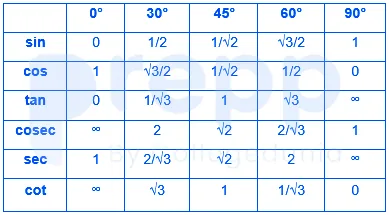 Paper & answer key PDF ↗
 Question 66archived
A person sells an article at a profit of 12%. If he had purchased it for 12% less and sold it for Rs. 9 less, he would have gained 27%. What is the original cost price of the article?
- A
Rs. 4,500
- B
Rs. 4,000
- C
Rs. 4,250
- D
Rs. 3,750
Show answer
D. Rs. 3,750Calculating Original Cost Price Using Profit and Loss Conditions
This problem involves calculating the original cost price of an article based on two different profit and loss scenarios. We will use algebraic equations to represent the given conditions and solve for the unknown original cost price.
Setting Up the Problem
Let the original cost price (CP) of the article be \( \text{Rs. } x \).
The problem provides two scenarios:
The article is sold at a profit of 12% on the original cost price.
If the article was purchased for 12% less and sold for Rs. 9 less, the profit would be 27%.
Scenario 1: Original Sale
The article is sold at a profit of 12% on the original CP.
Original CP = \(x\)
Profit Percentage = 12%
Original Profit Amount = 12% of \(x\) = \( \frac{12}{100} \times x = 0.12x \)
Original Selling Price (SP) = Original CP + Original Profit
Original SP = \(x + 0.12x = 1.12x\)
Scenario 2: Modified Sale Conditions
Under the new conditions:
New CP is 12% less than the original CP.
New CP = Original CP - 12% of Original CP
New CP = \(x - 0.12x = 0.88x\)
The article is sold for Rs. 9 less than the original SP.
New SP = Original SP - 9
New SP = \(1.12x - 9\)
Under these new conditions, the profit is 27% on the New CP.
New Profit Percentage = 27%
New Profit Amount = 27% of New CP
New Profit Amount = \( \frac{27}{100} \times 0.88x = 0.27 \times 0.88x \)
The New SP can also be expressed as New CP + New Profit Amount.
New SP = New CP + (New Profit Percentage of New CP)
New SP = \(0.88x + 0.27 \times 0.88x\)
New SP = \(0.88x (1 + 0.27)\)
New SP = \(0.88x \times 1.27\)
Formulating and Solving the Equation
We have two expressions for the New SP. We can equate them to solve for \(x\).
\(1.12x - 9 = 0.88x \times 1.27\)
Calculate the product on the right side:
\(0.88 \times 1.27 = 1.1176\)
So the equation becomes:
\(1.12x - 9 = 1.1176x\)
Now, we need to isolate the term with \(x\). Subtract \(1.1176x\) from both sides:
\(1.12x - 1.1176x - 9 = 0\)
\(0.0024x - 9 = 0\)
Add 9 to both sides:
\(0.0024x = 9\)
To find \(x\), divide 9 by 0.0024:
\(x = \frac{9}{0.0024}\)
To make the division easier, multiply the numerator and denominator by 10000 to remove the decimal:
\(x = \frac{9 \times 10000}{0.0024 \times 10000} = \frac{90000}{24}\)
Now, perform the division:
\(x = 3750\)
So, the original cost price of the article is Rs. 3,750.
Verification
Let's check if this original CP satisfies the conditions:
Original CP = Rs. 3750
Original SP = \(3750 + 12\% \text{ of } 3750 = 3750 + 0.12 \times 3750 = 3750 + 450 = \text{Rs. } 4200\)
New conditions:
New CP = \(3750 - 12\% \text{ of } 3750 = 3750 - 0.12 \times 3750 = 3750 - 450 = \text{Rs. } 3300\)
New SP = Original SP - 9 = \(4200 - 9 = \text{Rs. } 4191\)
New Profit = New SP - New CP = \(4191 - 3300 = \text{Rs. } 891\)
New Profit Percentage = \( \frac{\text{New Profit}}{\text{New CP}} \times 100 = \frac{891}{3300} \times 100 = \frac{891}{33} = 27\%\)
The calculated new profit percentage is 27%, which matches the condition given in the problem. Thus, the original cost price of Rs. 3750 is correct.
Final Answer
The original cost price of the article is Rs. 3,750.
Profit and Loss Revision Table
TermDefinitionFormula
Cost Price (CP)The price at which an article is purchased.-
Selling Price (SP)The price at which an article is sold.-
ProfitWhen SP > CP.Profit = SP - CP
LossWhen CP > SP.Loss = CP - SP
Profit PercentageProfit expressed as a percentage of CP.\( \text{Profit Percentage} = \frac{\text{Profit}}{\text{CP}} \times 100 \)
Loss PercentageLoss expressed as a percentage of CP.\( \text{Loss Percentage} = \frac{\text{Loss}}{\text{CP}} \times 100 \)
SP (with Profit)Selling price when there is a profit.\( \text{SP} = \text{CP} \times (1 + \frac{\text{Profit Percentage}}{100}) \)
SP (with Loss)Selling price when there is a loss.\( \text{SP} = \text{CP} \times (1 - \frac{\text{Loss Percentage}}{100}) \)
Additional Information on Profit and Loss Calculations
Profit and loss calculations are fundamental concepts in commercial arithmetic. They are used to determine how much money is gained or lost in a transaction.
Basis of Percentage: Profit or loss percentage is typically calculated on the Cost Price unless stated otherwise. This is because the cost price is the initial investment made.
Understanding "Less" or "More": When a new CP or SP is described as a percentage "less" or "more" than the original, it means the original amount is reduced or increased by that percentage. For example, 12% less than \(x\) is \(x - 0.12x = 0.88x\).
Solving Word Problems: For complex problems like this one, setting up equations based on the given information is crucial. Assigning variables to unknown quantities helps translate the word problem into a mathematical model.
Common Pitfalls: Students often confuse whether to calculate profit/loss percentage on CP or SP. Always remember the standard is CP unless specifically mentioned. Also, be careful with decimal calculations.
Paper & answer key PDF ↗ Question 67archived
If \(\frac{{6x}}{{\left( {2{x^2}{\rm{\;}} + {\rm{\;}}5x - 2{\rm{\;}}} \right)}}{\rm{}} = {\rm{}}1,{\rm{\;}}x > 0\) , then the value of \({x^3}{\rm{}} + {\rm{}}\frac{1}{{{x^3}}}\) is :
- A
5√17/16
- B
5√17/8
- C
3√17/4
- D
3√17/8
Show answer
B. 5√17/8Solving for \(x^3 + \frac{1}{x^3}\) from a Rational Equation
The problem asks us to find the value of the algebraic expression \(x^3 + \frac{1}{x^3}\), given the equation \(\frac{{6x}}{{\left( {2{x^2}{\rm{\;}} + {\rm{\;}}5x - 2{\rm{\;}}} \right)}}{\rm{}} = {\rm{}}1\) and the condition that \(x > 0\).
Step-by-Step Solution to Find \(x^3 + \frac{1}{x^3}\)
Analyzing the Given Equation
We are given the equation:
\(\frac{{6x}}{{\left( {2{x^2}{\rm{\;}} + {\rm{\;}}5x - 2{\rm{\;}}} \right)}}{\rm{}} = {\rm{}}1\)
Since \(x > 0\), the denominator \(2x^2 + 5x - 2\) cannot be zero. We can cross-multiply to simplify the equation:
\(6x = 1 \cdot (2x^2 + 5x - 2)\)
\(6x = 2x^2 + 5x - 2\)
Rearranging the Equation into a Quadratic Form
Move all terms to one side to form a quadratic equation:
\(0 = 2x^2 + 5x - 6x - 2\)
\(2x^2 - x - 2 = 0\)
Finding a Relation between \(x\) and \(\frac{1}{x}\)
The expression we need to find, \(x^3 + \frac{1}{x^3}\), involves terms like \(x\) and \(\frac{1}{x}\). Let's try to get a relation between \(x\) and \(\frac{1}{x}\) from the quadratic equation \(2x^2 - x - 2 = 0\).
Since we are given \(x > 0\), we know that \(x \neq 0\). Therefore, we can divide the entire equation \(2x^2 - x - 2 = 0\) by \(x\):
\(\frac{{2x^2}}{x} - \frac{x}{x} - \frac{2}{x} = \frac{0}{x}\)
\(2x - 1 - \frac{2}{x} = 0\)
Rearrange the terms to isolate the expression involving \(x\) and \(\frac{1}{x}\):
\(2x - \frac{2}{x} = 1\)
Factor out 2 from the left side:
\(2\left( {x - \frac{1}{x}} \right) = 1\)
Divide by 2:
\(x - \frac{1}{x} = \frac{1}{2}\)
This is a key relationship we have found.
Relating \(x - \frac{1}{x}\) to \(x + \frac{1}{x}\)
To find \(x^3 + \frac{1}{x^3}\), we typically use the identity \(a^3 + b^3 = (a+b)^3 - 3ab(a+b)\). In our case, \(a=x\) and \(b=\frac{1}{x}\), so the identity becomes \(x^3 + \frac{1}{x^3} = (x + \frac{1}{x})^3 - 3(x + \frac{1}{x})\). This means we need the value of \(x + \frac{1}{x}\).
We can find \(x + \frac{1}{x}\) using the value of \(x - \frac{1}{x}\) using the identity \((a+b)^2 = (a-b)^2 + 4ab\). For \(a=x\) and \(b=\frac{1}{x}\), this becomes:
\(\left( {x + \frac{1}{x}} \right)^2 = \left( {x - \frac{1}{x}} \right)^2 + 4x \cdot \frac{1}{x}\)
\(\left( {x + \frac{1}{x}} \right)^2 = \left( {x - \frac{1}{x}} \right)^2 + 4\)
Substitute the value \(x - \frac{1}{x} = \frac{1}{2}\):
\(\left( {x + \frac{1}{x}} \right)^2 = \left( {\frac{1}{2}} \right)^2 + 4\)
\(\left( {x + \frac{1}{x}} \right)^2 = \frac{1}{4} + 4\)
\(\left( {x + \frac{1}{x}} \right)^2 = \frac{1}{4} + \frac{16}{4}\)
\(\left( {x + \frac{1}{x}} \right)^2 = \frac{17}{4}\)
Take the square root of both sides. Since \(x > 0\), \(x + \frac{1}{x}\) must be positive.
\(x + \frac{1}{x} = \sqrt{\frac{17}{4}}\)
\(x + \frac{1}{x} = \frac{\sqrt{17}}{\sqrt{4}}\)
\(x + \frac{1}{x} = \frac{{\sqrt{17}}}{2}\)
Calculating the Value of \(x^3 + \frac{1}{x^3}\)
Now we use the identity \(x^3 + \frac{1}{x^3} = \left( {x + \frac{1}{x}} \right)^3 - 3\left( {x + \frac{1}{x}} \right)\). Substitute the value \(x + \frac{1}{x} = \frac{{\sqrt{17}}}{2}\):
\(x^3 + \frac{1}{x^3} = \left( {\frac{{\sqrt{17}}}{2}} \right)^3 - 3\left( {\frac{{\sqrt{17}}}{2}} \right)\)
Calculate the first term: \(\left( {\frac{{\sqrt{17}}}{2}} \right)^3 = \frac{{\left( {\sqrt{17}} \right)^3}}{{2^3}} = \frac{{\sqrt{17} \cdot \sqrt{17} \cdot \sqrt{17}}}{8} = \frac{{17\sqrt{17}}}{8}\).
Substitute this back into the expression:
\(x^3 + \frac{1}{x^3} = \frac{{17\sqrt{17}}}{8} - \frac{{3\sqrt{17}}}{2}\)
To subtract these fractions, find a common denominator, which is 8. Multiply the numerator and denominator of the second term by 4:
\(x^3 + \frac{1}{x^3} = \frac{{17\sqrt{17}}}{8} - \frac{{3\sqrt{17} \cdot 4}}{{2 \cdot 4}}\)
\(x^3 + \frac{1}{x^3} = \frac{{17\sqrt{17}}}{8} - \frac{{12\sqrt{17}}}{8}\)
Now combine the terms:
\(x^3 + \frac{1}{x^3} = \frac{{17\sqrt{17} - 12\sqrt{17}}}{8}\)
\(x^3 + \frac{1}{x^3} = \frac{{(17 - 12)\sqrt{17}}}{8}\)
\(x^3 + \frac{1}{x^3} = \frac{{5\sqrt{17}}}{8}\)
The value of \(x^3 + \frac{1}{x^3}\) is \(\frac{{5\sqrt{17}}}{8}\).
Key Steps
Equation/Expression
Result
Starting Equation
\(\frac{{6x}}{{\left( {2{x^2}{\rm{\;}} + {\rm{\;}}5x - 2{\rm{\;}}} \right)}} = 1\)
Given
Quadratic Form
\(2x^2 - x - 2 = 0\)
After rearranging
Relation \(x - \frac{1}{x}\)
\(x - \frac{1}{x} = \frac{1}{2}\)
After dividing by \(x\)
Finding \((x + \frac{1}{x})^2\)
\((x + \frac{1}{x})^2 = (x - \frac{1}{x})^2 + 4\)
Using identity
Value of \((x + \frac{1}{x})^2\)
\((x + \frac{1}{x})^2 = \frac{17}{4}\)
Substituting \(x - \frac{1}{x} = \frac{1}{2}\)
Value of \(x + \frac{1}{x}\)
\(x + \frac{1}{x} = \frac{{\sqrt{17}}}{2}\)
Taking positive square root since \(x > 0\)
Calculating \(x^3 + \frac{1}{x^3}\)
\(x^3 + \frac{1}{x^3} = (x + \frac{1}{x})^3 - 3(x + \frac{1}{x})\)
Using identity
Final Value
\(x^3 + \frac{1}{x^3} = \frac{{5\sqrt{17}}}{8}\)
Substituting \(x + \frac{1}{x} = \frac{{\sqrt{17}}}{2}\) and simplifying
Revision Table: Understanding Algebraic Identities
The solution relies heavily on algebraic identities. Here are the key ones used:
Identity
Formula
Square of sum/difference
\((a+b)^2 = a^2 + 2ab + b^2\)
Square of difference related to sum
\((a+b)^2 = (a-b)^2 + 4ab\)
Cube of sum related to sum of cubes
\(a^3 + b^3 = (a+b)^3 - 3ab(a+b)\)
In this problem, we used \(a=x\) and \(b=\frac{1}{x}\), which simplifies \(ab = x \cdot \frac{1}{x} = 1\).
\((x + \frac{1}{x})^2 = (x - \frac{1}{x})^2 + 4\)
\(x^3 + \frac{1}{x^3} = (x + \frac{1}{x})^3 - 3(x + \frac{1}{x})\)
Additional Information: Solving Quadratic Equations and Conditions
The equation \(2x^2 - x - 2 = 0\) is a quadratic equation. We could find the specific value of \(x\) using the quadratic formula \(x = \frac{{ - b \pm \sqrt{{b^2 - 4ac}}}}{{2a}}\), where \(a=2\), \(b=-1\), \(c=-2\).
\(x = \frac{{ - (-1) \pm \sqrt{{(-1)^2 - 4(2)(-2)}}}}{{2(2)}}\)
\(x = \frac{{1 \pm \sqrt{{1 + 16}}}}{4}\)
\(x = \frac{{1 \pm \sqrt{17}}}{4}\)
Since the problem states \(x > 0\), the valid solution for \(x\) is \(x = \frac{{1 + \sqrt{17}}}{4}\). We could substitute this value directly into \(x^3 + \frac{1}{x^3}\), but the algebraic method used above (finding \(x + \frac{1}{x}\) first) is significantly simpler and less prone to calculation errors involving radicals.
The condition \(x > 0\) was crucial for two reasons:
It allowed us to divide by \(x\) without worrying about \(x=0\).
It allowed us to take the positive square root when calculating \(x + \frac{1}{x} = \sqrt{\frac{17}{4}}\), ensuring \(x + \frac{1}{x} = \frac{{\sqrt{17}}}{2}\) and not \(-\frac{{\sqrt{17}}}{2}\).
Paper & answer key PDF ↗ Question 68archived
If (8x 3+ 27y 3) ÷ (2x + 3y) = (Ax 2+ Bxy + Cy 2), then the value of (5A + 4B + 3C) is:
- A
24
- B
27
- C
26
- D
23
Show answer
D. 23Solving Algebraic Expression Value Problem
The problem asks us to find the value of the expression $(5A + 4B + 3C)$ given an equation involving polynomial division.
The given equation is:
8
x
3
+
27
y
3
2
x
+
3
y
=
A
x
2
+
B
x
y
+
C
y
2
We need to simplify the left side of the equation by performing the division. The numerator, $8x^3 + 27y^3$, is a sum of cubes. We can recognize $8x^3$ as $(2x)^3$ and $27y^3$ as $(3y)^3$.
Using the Sum of Cubes Formula
The algebraic identity for the sum of cubes is:
a
3
+
b
3
=
(
a
+
b
)
(
a
2
-
a
b
+
b
2
)
Applying this formula to $8x^3 + 27y^3$ with $a = 2x$ and $b = 3y$:
8
x
3
+
27
y
3
=
(
2
x
)
3
+
(
3
y
)
3
=
(
2
x
+
3
y
)
(
(
2
x
)
2
-
(
2
x
)
(
3
y
)
+
(
3
y
)
2
)
=
(
2
x
+
3
y
)
(
4
x
2
-
6
x
y
+
9
y
2
)
Performing the Division
Now, we can perform the division:
8
x
3
+
27
y
3
2
x
+
3
y
=
(
2
x
+
3
y
)
(
4
x
2
-
6
x
y
+
9
y
2
)
2
x
+
3
y
Assuming $2x + 3y \neq 0$, we can cancel the $(2x + 3y)$ term:
8
x
3
+
27
y
3
2
x
+
3
y
=
4
x
2
-
6
x
y
+
9
y
2
Comparing Coefficients to Find A, B, and C
We are given that the result of the division is equal to $(Ax^2 + Bxy + Cy^2)$. So, we have:
4
x
2
-
6
x
y
+
9
y
2
=
A
x
2
+
B
x
y
+
C
y
2
By comparing the coefficients of the corresponding terms ($x^2$, $xy$, and $y^2$) on both sides of the equation, we can find the values of A, B, and C.
Coefficient of $x^2$: $A = 4$
Coefficient of $xy$: $B = -6$
Coefficient of $y^2$: $C = 9$
We can summarize the values of A, B, and C in a table:
Coefficient
Value
A
4
B
-6
C
9
Calculating the Value of (5A + 4B + 3C)
Finally, we need to find the value of the expression $(5A + 4B + 3C)$. Substitute the values of A, B, and C that we found:
5
A
+
4
B
+
3
C
=
5
(
4
)
+
4
(
-
6
)
+
3
(
9
)
=
20
-
24
+
27
=
-
4
+
27
=
23
Thus, the value of $(5A + 4B + 3C)$ is 23.
Revision Table: Key Steps
Step
Description
1
Identify the expression $8x^3 + 27y^3$ as a sum of cubes.
2
Apply the sum of cubes formula $a^3+b^3=(a+b)(a^2-ab+b^2)$ with $a=2x$, $b=3y$.
3
Perform the polynomial division by canceling the common factor $(2x+3y)$.
4
Equate the result of the division to $Ax^2 + Bxy + Cy^2$.
5
Compare the coefficients of $x^2$, $xy$, and $y^2$ to find the values of A, B, and C.
6
Substitute the values of A, B, and C into the expression $(5A + 4B + 3C)$ and calculate the final result.
Additional Information: Algebraic Identities
Algebraic identities are equations that are true for all possible values of the variables involved. They are very useful for simplifying expressions, factoring polynomials, and solving equations.
Some other common algebraic identities include:
Square of a sum: $(a+b)^2 = a^2 + 2ab + b^2$
Square of a difference: $(a-b)^2 = a^2 - 2ab + b^2$
Difference of squares: $a^2 - b^2 = (a+b)(a-b)$
Cube of a sum: $(a+b)^3 = a^3 + 3a^2b + 3ab^2 + b^3 = a^3 + b^3 + 3ab(a+b)$
Cube of a difference: $(a-b)^3 = a^3 - 3a^2b + 3ab^2 - b^3 = a^3 - b^3 - 3ab(a-b)$
Difference of cubes: $a^3 - b^3 = (a-b)(a^2 + ab + b^2)$
Sum/Difference of n-th powers: For odd n, $a^n + b^n = (a+b)(a^{n-1} - a^{n-2}b + \dots - ab^{n-2} + b^{n-1})$. For any n, $a^n - b^n = (a-b)(a^{n-1} + a^{n-2}b + \dots + ab^{n-2} + b^{n-1})$.
Recognizing these identities is crucial for simplifying complex algebraic expressions and solving problems like the one presented.
Paper & answer key PDF ↗ Question 69archived
What is the ratio of the total production of type A cars in 2017 and type C cars in 2014 taken together to the total production of type B cars in 2014, type C cars in 2017 and type E cars in 2018 taken together?
- A
12 : 11
- B
5 : 6
- C
2 : 3
- D
3 : 4
Show answer
D. 3 : 4Calculating Car Production Ratios from Data Table
This problem requires us to use the provided table showing the production of different types of cars over several years to calculate a specific ratio. We need to find the total production for one set of conditions and compare it to the total production for another set of conditions.
Year
2014
2015
2016
2017
2018
Car A
42
53
44
66
65
Car B
46
49
57
64
72
Car C
54
45
45
50
56
Car D
48
56
63
65
68
Car E
46
48
56
57
64
Calculating the First Total Production
The first part of the ratio requires the total production of type A cars in 2017 and type C cars in 2014 taken together.
Production of type A cars in 2017: Look at the row for 'Car A' and the column for '2017'. The value is 66 thousand.
Production of type C cars in 2014: Look at the row for 'Car C' and the column for '2014'. The value is 54 thousand.
Total production for the first part is the sum of these two values:
Total 1 = Production of Car A (2017) + Production of Car C (2014)
Total 1 = \$66 + 54 = 120\$ thousand.
Calculating the Second Total Production
The second part of the ratio requires the total production of type B cars in 2014, type C cars in 2017, and type E cars in 2018 taken together.
Production of type B cars in 2014: Look at the row for 'Car B' and the column for '2014'. The value is 46 thousand.
Production of type C cars in 2017: Look at the row for 'Car C' and the column for '2017'. The value is 50 thousand.
Production of type E cars in 2018: Look at the row for 'Car E' and the column for '2018'. The value is 64 thousand.
Total production for the second part is the sum of these three values:
Total 2 = Production of Car B (2014) + Production of Car C (2017) + Production of Car E (2018)
Total 2 = \$46 + 50 + 64 = 160\$ thousand.
Determining the Ratio of Total Productions
Now, we need to find the ratio of the first total production to the second total production.
Ratio = Total 1 : Total 2
Ratio = \$120 : 160\$
To simplify the ratio, we find the greatest common divisor (GCD) of 120 and 160. Both numbers are divisible by 10. Dividing by 10 gives \$12 : 16\$. Both 12 and 16 are divisible by 4. Dividing by 4 gives \$3 : 4\$.
Alternatively, we can see that both 120 and 160 are divisible by 40.
\$120 \div 40 = 3\$
\$160 \div 40 = 4\$
So, the simplified ratio is \$3 : 4\$.
Revision Table: Key Production Data Used
Car Type
Year
Production (Thousands)
A
2017
66
C
2014
54
B
2014
46
C
2017
50
E
2018
64
Additional Information: Understanding Ratios and Data Tables
What is a Ratio? A ratio is a comparison of two or more quantities. It shows how much of one quantity there is compared to another quantity. Ratios are often expressed with a colon (:) between the numbers or as a fraction.
How to Read Data Tables: Data tables organize information in rows and columns. To find a specific data point, locate the correct row (usually representing an item or category, like a car type) and the correct column (usually representing a variable like a year or feature). The value at the intersection of the row and column is the data point you need.
Simplifying Ratios: Just like fractions, ratios should usually be simplified to their lowest terms by dividing all parts of the ratio by their greatest common divisor. This makes the ratio easier to understand.
Paper & answer key PDF ↗ Question 70archived
If the data related to the production of type D cars is represented by a pie chart, then the central angle of the sector representing the production of cars in 2017 will be:
- A
50°
- B
81.6°
- C
75.6°
- D
78°
Show answer
D. 78°The question asks us to represent the production data for Type D cars using a pie chart and then find the central angle corresponding to the production in the year 2017.
A pie chart represents data as sectors of a circle, where the area of each sector is proportional to the quantity it represents. The total angle of a circle is 360 degrees. To find the central angle for a specific category (in this case, production in 2017 for Type D cars), we need to calculate the fraction of the total quantity that this category represents and then multiply it by 360 degrees.
Understanding the Car Production Data
First, let's look at the production figures for Type D cars from the provided table over the years 2014 to 2018. We are interested in the production of Type D cars specifically.
Year
Type D Car Production (in thousands)
2014
48
2015
56
2016
63
2017
65
2018
68
Calculating Total Production of Type D Cars
To find the fraction represented by the production in 2017, we first need the total production of Type D cars over all the years represented (2014 to 2018). We sum the production for each year:
Total Production (Type D) = Production in 2014 + 2015 + 2016 + 2017 + 2018
Total Production (Type D) = \(48 + 56 + 63 + 65 + 68\)
Let's add these values:
\(48 + 56 = 104\)
\(104 + 63 = 167\)
\(167 + 65 = 232\)
\(232 + 68 = 300\)
So, the total production of Type D cars from 2014 to 2018 is 300 thousand units.
Finding the Central Angle for 2017 Production
Now, we need to find the central angle that represents the production of Type D cars in 2017. The production in 2017 was 65 thousand units.
The formula for the central angle of a sector in a pie chart is:
Central Angle = \( \left( \frac{\text{Quantity for the Category}}{\text{Total Quantity}} \right) \times 360^\circ \)
In this case:
Quantity for the Category (Production in 2017) = 65 thousand
Total Quantity (Total Production of Type D) = 300 thousand
Substituting these values into the formula:
Central Angle for 2017 = \( \left( \frac{65}{300} \right) \times 360^\circ \)
Now, let's calculate the value:
\( \frac{65}{300} \times 360^\circ = \frac{65}{30} \times 36^\circ \)
We can simplify the fraction by dividing both the numerator and denominator by their greatest common divisor. Or, we can perform the multiplication and division. Let's simplify first:
Divide 360 by 300: \( \frac{360}{300} = \frac{36}{30} = \frac{6 \times 6}{6 \times 5} = \frac{6}{5} \)
So, the calculation becomes:
\( \frac{65}{1} \times \frac{6}{5}^\circ \)
Now, divide 65 by 5:
\( \frac{65}{5} = 13 \)
The calculation is now:
\( 13 \times 6^\circ \)
\( 13 \times 6 = 78 \)
So, the central angle representing the production of Type D cars in 2017 is \(78^\circ\).
Conclusion on Central Angle Calculation
Based on the car production data for Type D cars from 2014 to 2018, the total production was 300 thousand units. The production in 2017 was 65 thousand units. Representing this data in a pie chart, the central angle for the year 2017 is calculated to be \(78^\circ\).
Revision Table: Key Calculations for Central Angle
Calculation Step
Value/Formula
Result
Production of Type D in 2017
From table
65 thousand
Total Production of Type D (2014-2018)
Sum of 2014, 2015, 2016, 2017, 2018 production
\(48 + 56 + 63 + 65 + 68 = 300\) thousand
Fraction for 2017
Production in 2017 / Total Production
\(65 / 300\)
Central Angle for 2017
(Fraction for 2017) \(\times 360^\circ\)
\( (65/300) \times 360^\circ = 78^\circ \)
Additional Information on Pie Chart Representation
Pie charts are useful for visualizing how a whole is divided into parts. Each sector's size directly shows its proportion relative to the total. When creating a pie chart from data:
Sum up all the values to get the total.
For each category, calculate the fraction it represents out of the total.
Multiply each fraction by 360 degrees to find the central angle for that category.
The sum of all central angles for all categories should be approximately 360 degrees (any minor difference might be due to rounding).
This method allows for a clear visual comparison of the contribution of each part to the whole. In this example, we calculated the angle for the 2017 production of Type D cars relative to the total Type D production over the given years.
Paper & answer key PDF ↗ Question 71archived
In a circle with centre O, PQR is a tangent at the point Q on it. AB is a chord in the circle parallel to the tangent such that ∠BQR = 70°. What is the measure of ∠AQB?
- A
35°
- B
60°
- C
55°
- D
40°
Show answer
D. 40°Analysing the Geometry Problem
The question describes a circle with centre O, a tangent line PQR that touches the circle at point Q, and a chord AB inside the circle. We are told that the chord AB is parallel to the tangent line PQR, and the angle ∠BQR is given as $70^\circ$. We need to find the measure of angle ∠AQB.
This problem involves key concepts from circle geometry, specifically related to tangents, chords, parallel lines, and angles within a circle.
Applying the Alternate Segment Theorem
The Alternate Segment Theorem is crucial here. This theorem states that the angle between a tangent and a chord through the point of contact is equal to the angle in the alternate segment.
The tangent is PQR.
The point of contact is Q.
BQ is a chord that passes through the point of contact Q.
The angle between the tangent PQR and the chord BQ is ∠BQR.
The alternate segment with respect to the chord BQ contains angle ∠BAQ.
According to the Alternate Segment Theorem:
$$ \text{∠BAQ} = \text{∠BQR} $$
We are given that ∠BQR = $70^\circ$.
Therefore, ∠BAQ = $70^\circ$.
Utilizing Parallel Lines Property
We are given that the chord AB is parallel to the tangent line PQR (AB || PQR). There is a property related to a chord parallel to a tangent:
If a chord is parallel to a tangent, then the arcs intercepted between the point of contact and the ends of the chord are equal.
In this case:
The tangent is PQR, with point of contact Q.
The chord is AB.
The ends of the chord are A and B.
The intercepted arcs are arc AQ and arc BQ.
Since AB || PQR, it means that arc AQ = arc BQ.
Arcs subtend angles at the circumference. Equal arcs subtend equal angles at the circumference.
Arc AQ subtends the angle ∠ABQ at the circumference.
Arc BQ subtends the angle ∠BAQ at the circumference.
Since arc AQ = arc BQ, it follows that ∠ABQ = ∠BAQ.
Connecting the Angles
From the Alternate Segment Theorem, we found that ∠BAQ = $70^\circ$.
From the parallel lines property, we found that ∠ABQ = ∠BAQ.
Combining these results, we get:
$$ \text{∠ABQ} = 70^\circ $$
Calculating the Measure of Angle AQB
Now consider the triangle ▵AQB inside the circle. The sum of the angles in any triangle is always $180^\circ$.
In ▵AQB, the angles are ∠AQB, ∠QAB (which is the same as ∠BAQ), and ∠QBA (which is the same as ∠ABQ).
So, we have:
$$ \text{∠AQB} + \text{∠BAQ} + \text{∠ABQ} = 180^\circ $$
Substitute the values we found:
$$ \text{∠AQB} + 70^\circ + 70^\circ = 180^\circ $$
Simplify the equation:
$$ \text{∠AQB} + 140^\circ = 180^\circ $$
Solve for ∠AQB:
$$ \text{∠AQB} = 180^\circ - 140^\circ $$
$$ \text{∠AQB} = 40^\circ $$
Thus, the measure of ∠AQB is $40^\circ$.
Revision Table: Key Geometry Theorems
Theorem/Property
Description
Application in this problem
Alternate Segment Theorem
Angle between tangent and chord through point of contact equals angle in alternate segment.
∠BAQ = ∠BQR = $70^\circ$
Parallel Chord and Tangent
If a chord is parallel to a tangent, intercepted arcs are equal.
Arc AQ = Arc BQ (since AB || PQR)
Equal Arcs Subtend Equal Angles
Angles subtended by equal arcs at the circumference are equal.
∠ABQ = ∠BAQ (since Arc AQ = Arc BQ)
Sum of Angles in a Triangle
Sum of interior angles of a triangle is $180^\circ$.
∠AQB + ∠BAQ + ∠ABQ = $180^\circ$
Additional Information: Properties of Circles, Tangents, and Chords
Understanding the relationships between different components of a circle is fundamental in geometry. Here are a few related points:
A tangent line intersects the circle at exactly one point (the point of contact).
A chord is a line segment connecting two points on the circle.
Parallel lines have special angle relationships when intersected by a transversal. In circle geometry, parallelism often implies equality of intercepted arcs or angles.
Angles subtended by an arc at the circumference are half the angle subtended by the same arc at the centre.
Angles subtended by the same arc in the same segment of a circle are equal.
These properties, along with theorems like the Alternate Segment Theorem, are vital for solving problems involving tangents and chords.
Paper & answer key PDF ↗ Question 72archived
If \(\frac{{tan\theta }}{{1 - cot\theta }}{\rm{}} + {\rm{}}\frac{{\cot \theta }}{{1 - \tan \theta }}{\rm{}} = {\rm{}}1{\rm{}} + {\rm{}}k\) , then k = _________.
- A
cosec θ.sec θ
- B
cot θ + sec θ
- C
tan θ + sec θ
- D
tan θ cosec θ
Show answer
A. cosec θ.sec θSolving Trigonometric Identities: Finding k
The question asks us to find the value of \(k\) in the given trigonometric identity:
\[ \frac{{\tan\theta }}{{1 - \cot\theta }}{\rm{}} + {\rm{}}\frac{{\cot \theta }}{{1 - \tan \theta }}{\rm{}} = {\rm{}}1{\rm{}} + {\rm{}}k \]
To find \(k\), we need to simplify the Left Hand Side (LHS) of the equation and express it in the form \(1 + k\).
Step-by-Step Simplification of the LHS
We will simplify the expression by converting \( \tan\theta \) and \( \cot\theta \) into terms of \( \sin\theta \) and \( \cos\theta \).
Recall the basic trigonometric identities:
\( \tan\theta = \frac{{\sin\theta}}{{\cos\theta}} \)
\( \cot\theta = \frac{{\cos\theta}}{{\sin\theta}} \)
Substitute these into the LHS expression:
\[ LHS = \frac{{\frac{{\sin\theta}}{{\cos\theta}}}}{{1 - \frac{{\cos\theta}}{{\sin\theta}}}} {\rm{}} + {\rm{}} \frac{{\frac{{\cos\theta}}{{\sin\theta}}}}{{1 - \frac{{\sin\theta}}{{\cos\theta}}}} \]
Now, simplify the denominators by finding a common denominator within each fraction:
\[ LHS = \frac{{\frac{{\sin\theta}}{{\cos\theta}}}}{{\frac{{\sin\theta - \cos\theta}}{{\sin\theta}}}} {\rm{}} + {\rm{}} \frac{{\frac{{\cos\theta}}{{\sin\theta}}}}{{\frac{{\cos\theta - \sin\theta}}{{\cos\theta}}}} \]
Next, perform the division by multiplying by the reciprocal of the denominator:
\[ LHS = \frac{{\sin\theta}}{{\cos\theta}} \cdot \frac{{\sin\theta}}{{\sin\theta - \cos\theta}} {\rm{}} + {\rm{}} \frac{{\cos\theta}}{{\sin\theta}} \cdot \frac{{\cos\theta}}{{\cos\theta - \sin\theta}} \]
This gives us:
\[ LHS = \frac{{{{\sin }^2}\theta }}{{\cos \theta (\sin \theta - \cos \theta )}} {\rm{}} + {\rm{}} \frac{{{{\cos }^2}\theta }}{{\sin \theta (\cos \theta - \sin \theta )}} \]
Notice that \( (\cos \theta - \sin \theta) = -(\sin \theta - \cos \theta) \). We can rewrite the second term's denominator to match the first term's denominator:
\[ LHS = \frac{{{{\sin }^2}\theta }}{{\cos \theta (\sin \theta - \cos \theta )}} {\rm{}} + {\rm{}} \frac{{{{\cos }^2}\theta }}{{\sin \theta ( - (\sin \theta - \cos \theta ))}} \]
\[ LHS = \frac{{{{\sin }^2}\theta }}{{\cos \theta (\sin \theta - \cos \theta )}} {\rm{}} - {\rm{}} \frac{{{{\cos }^2}\theta }}{{\sin \theta (\sin \theta - \cos \theta )}} \]
Now, combine the two terms using a common denominator, which is \( \sin\theta \cos\theta (\sin\theta - \cos\theta) \):
\[ LHS = \frac{{{{\sin }^2}\theta \cdot \sin \theta - {{\cos }^2}\theta \cdot \cos \theta }}{{\sin \theta \cos \theta (\sin \theta - \cos \theta )}} \]
\[ LHS = \frac{{{{\sin }^3}\theta - {{\cos }^3}\theta }}{{\sin \theta \cos \theta (\sin \theta - \cos \theta )}} \]
Use the difference of cubes formula, \( a^3 - b^3 = (a-b)(a^2 + ab + b^2) \), where \( a = \sin\theta \) and \( b = \cos\theta \):
\[ LHS = \frac{{(\sin \theta - \cos \theta )({{\sin }^2}\theta + \sin \theta \cos \theta + {{\cos }^2}\theta )}}{{\sin \theta \cos \theta (\sin \theta - \cos \theta )}} \]
Assuming \( \sin\theta \neq \cos\theta \), we can cancel the term \( (\sin\theta - \cos\theta) \) from the numerator and denominator:
\[ LHS = \frac{{{{\sin }^2}\theta + \sin \theta \cos \theta + {{\cos }^2}\theta }}{{\sin \theta \cos \theta }} \]
Using the Pythagorean identity \( \sin^2\theta + \cos^2\theta = 1 \), we simplify the numerator:
\[ LHS = \frac{{1 + \sin \theta \cos \theta }}{{\sin \theta \cos \theta }} \]
Now, separate the terms in the numerator:
\[ LHS = \frac{1}{{\sin \theta \cos \theta }} {\rm{}} + {\rm{}} \frac{{\sin \theta \cos \theta }}{{\sin \theta \cos \theta }} \]
\[ LHS = \frac{1}{{\sin \theta \cos \theta }} {\rm{}} + {\rm{}} 1 \]
Finally, express \( \frac{1}{{\sin\theta}} \) as \( \text{cosec}\theta \) and \( \frac{1}{{\cos\theta}} \) as \( \text{sec}\theta \):
\[ LHS = \text{cosec}\theta \cdot \text{sec}\theta {\rm{}} + {\rm{}} 1 \]
Comparing LHS with \( 1 + k \)
We have simplified the LHS to \( 1 + \text{cosec}\theta \cdot \text{sec}\theta \).
The given equation is \( \frac{{\tan\theta }}{{1 - \cot\theta }}{\rm{}} + {\rm{}}\frac{{\cot \theta }}{{1 - \tan \theta }}{\rm{}} = {\rm{}}1{\rm{}} + {\rm{}}k \).
Comparing the simplified LHS with \( 1 + k \):
\[ 1 + \text{cosec}\theta \cdot \text{sec}\theta = 1 + k \]
By comparing the terms, we can clearly see that \( k = \text{cosec}\theta \cdot \text{sec}\theta \).
Conclusion
The value of \(k\) in the given trigonometric identity is \( \text{cosec}\theta \cdot \text{sec}\theta \).
Revision Table: Trigonometric Identities
Identity Type
Identity
Reciprocal Identities
\( \sin\theta = \frac{1}{{\text{cosec}\theta}} \), \( \cos\theta = \frac{1}{{\text{sec}\theta}} \), \( \tan\theta = \frac{1}{{\cot\theta}} \)
Quotient Identities
\( \tan\theta = \frac{{\sin\theta}}{{\cos\theta}} \), \( \cot\theta = \frac{{\cos\theta}}{{\sin\theta}} \)
Pythagorean Identities
\( {{\sin }^2}\theta + {{\cos }^2}\theta = 1 \), \( 1 + {{\tan }^2}\theta = {{\sec }^2}\theta \), \( 1 + {{\cot }^2}\theta = {{\text{cosec}}^2}\theta \)
Difference of Cubes
\( a^3 - b^3 = (a-b)(a^2 + ab + b^2) \)
Additional Information: Simplifying Complex Trigonometric Expressions
When simplifying complex trigonometric expressions, a common strategy is to convert all terms into \( \sin\theta \) and \( \cos\theta \). This often helps in identifying common factors or applying fundamental identities like the Pythagorean identity.
Key steps often involve:
Using reciprocal and quotient identities to express everything in terms of sine and cosine.
Finding common denominators to combine fractions.
Applying algebraic formulas (like \( a^2 - b^2 \), \( a^3 \pm b^3 \)) if applicable.
Using Pythagorean identities to simplify squared terms.
Canceling common factors after factorization (making sure the denominator is not zero).
These techniques are crucial for solving trigonometric identity problems and simplifying expressions effectively.
Paper & answer key PDF ↗ Question 73archived
In ∆ABC, AM ⊥ BC and AN is the bisector of ∠A. What is the measure of ∠MAN, if ∠B = 55° and ∠C = 35°?
- A
10°
- B
15°
- C
5°
- D
12°
Show answer
A. 10°Understanding the Problem: Angle Between Altitude and Angle Bisector
The question asks us to find the measure of the angle formed between the altitude and the angle bisector drawn from the same vertex, A, in a triangle ABC. We are given the measures of the other two angles, ∠B and ∠C.
Let's denote the altitude from A to BC as AM, where M is on BC and AM ⊥ BC. Let AN be the angle bisector of ∠A, where N is on BC. We need to find the measure of ∠MAN.
Step-by-Step Solution
We can solve this problem by first finding the measure of ∠A, then finding the angles created by the angle bisector, and finally using the properties of right-angled triangles formed by the altitude.
1. Calculate ∠A
The sum of angles in any triangle is $180^\circ$. In ▵ABC, we have:
\[ \angle \text{A} + \angle \text{B} + \angle \text{C} = 180^\circ \]
Given $\angle \text{B} = 55^\circ$ and $\angle \text{C} = 35^\circ$, we can find ∠A:
\[ \angle \text{A} + 55^\circ + 35^\circ = 180^\circ \]
\[ \angle \text{A} + 90^\circ = 180^\circ \]
\[ \angle \text{A} = 180^\circ - 90^\circ \]
\[ \angle \text{A} = 90^\circ \]
So, ▵ABC is a right-angled triangle at A.
2. Find the Angles Formed by the Angle Bisector AN
AN is the angle bisector of ∠A. This means it divides ∠A into two equal parts:
\[ \angle \text{NAB} = \angle \text{NAC} = \frac{1}{2} \angle \text{A} \]
Since $\angle \text{A} = 90^\circ$:
\[ \angle \text{NAB} = \angle \text{NAC} = \frac{1}{2} \times 90^\circ = 45^\circ \]
3. Find the Angles Formed by the Altitude AM
AM is the altitude from A to BC, so ▵AMB and ▵AMC are right-angled triangles, with $\angle \text{AMB} = \angle \text{AMC} = 90^\circ$.
In right-angled ▵AMC, the sum of angles is $180^\circ$:
\[ \angle \text{MAC} + \angle \text{C} + \angle \text{AMC} = 180^\circ \]
\[ \angle \text{MAC} + 35^\circ + 90^\circ = 180^\circ \]
\[ \angle \text{MAC} + 125^\circ = 180^\circ \]
\[ \angle \text{MAC} = 180^\circ - 125^\circ \]
\[ \angle \text{MAC} = 55^\circ \]
In right-angled ▵AMB, the sum of angles is $180^\circ$:
\[ \angle \text{MAB} + \angle \text{B} + \angle \text{AMB} = 180^\circ \]
\[ \angle \text{MAB} + 55^\circ + 90^\circ = 180^\circ \]
\[ \angle \text{MAB} + 145^\circ = 180^\circ \]
\[ \angle \text{MAB} = 180^\circ - 145^\circ \]
\[ \angle \text{MAB} = 35^\circ \]
4. Calculate ∠MAN
Now we have the angles formed by the altitude (AM) and the angle bisector (AN) with the sides AB and AC.
$\angle \text{NAB} = 45^\circ$
$\angle \text{NAC} = 45^\circ$
$\angle \text{MAB} = 35^\circ$
$\angle \text{MAC} = 55^\circ$
Let's look at the angles from side AB. We have $\angle \text{MAB} = 35^\circ$ and $\angle \text{NAB} = 45^\circ$. Since $35^\circ < 45^\circ$, AM is between AB and AN. The angle ∠MAN is the difference between ∠NAB and ∠MAB.
\[ \angle \text{MAN} = \angle \text{NAB} - \angle \text{MAB} \]
\[ \angle \text{MAN} = 45^\circ - 35^\circ \]
\[ \angle \text{MAN} = 10^\circ \]
Alternatively, let's look at the angles from side AC. We have $\angle \text{NAC} = 45^\circ$ and $\angle \text{MAC} = 55^\circ$. Since $45^\circ < 55^\circ$, AN is between AM and AC. The angle ∠MAN is the difference between ∠MAC and ∠NAC.
\[ \angle \text{MAN} = \angle \text{MAC} - \angle \text{NAC} \]
\[ \angle \text{MAN} = 55^\circ - 45^\circ \]
\[ \angle \text{MAN} = 10^\circ \]
Both approaches give the same result.
Using a Direct Formula
There is a property that states the angle between the altitude and the angle bisector from the same vertex in a triangle is half the absolute difference of the other two angles of the triangle. That is:
\[ \angle \text{MAN} = \frac{1}{2} |\angle \text{B} - \angle \text{C}| \]
Using this formula:
\[ \angle \text{MAN} = \frac{1}{2} |55^\circ - 35^\circ| \]
\[ \angle \text{MAN} = \frac{1}{2} |20^\circ| \]
\[ \angle \text{MAN} = \frac{1}{2} \times 20^\circ \]
\[ \angle \text{MAN} = 10^\circ \]
This confirms our step-by-step calculation.
Conclusion
The measure of ∠MAN is $10^\circ$. This angle is the difference between the angle the altitude makes with a side and the angle the angle bisector makes with the same side.
Revision Table: Key Concepts
Concept
Description
Application in this Problem
Sum of Angles in a Triangle
The interior angles of any triangle add up to $180^\circ$.
Used to find ∠A: $\angle \text{A} = 180^\circ - \angle \text{B} - \angle \text{C}$.
Angle Bisector
A line segment that divides an angle into two equal angles.
AN bisects ∠A, so $\angle \text{NAB} = \angle \text{NAC} = \frac{1}{2} \angle \text{A}$.
Altitude of a Triangle
A perpendicular line segment from a vertex to the opposite side.
AM ⊥ BC, forming right angles at M ($\angle \text{AMB} = \angle \text{AMC} = 90^\circ$).
Angles in a Right Triangle
In a right triangle, the two acute angles sum to $90^\circ$.
Used in ▵AMB ($\angle \text{MAB} = 90^\circ - \angle \text{B}$) and ▵AMC ($\angle \text{MAC} = 90^\circ - \angle \text{C}$).
Additional Information: Altitude and Angle Bisector Properties
In any triangle (except an isosceles triangle from that vertex), the angle bisector from a vertex lies between the altitude and the median drawn from the same vertex. The measure of the angle between the altitude and the angle bisector is always half the absolute difference of the measures of the other two angles of the triangle.
Let A be the vertex, AM the altitude, AN the angle bisector, and AD the median. If ∠B ≠ ∠C, then AN is between AM and AD (or AD is between AM and AN depending on which base angle is larger). The angle ∠MAN is given by $\frac{1}{2} |\angle \text{B} - \angle \text{C}|$. This property is very useful for solving problems like this quickly.
In our specific problem, since $\angle \text{B} > \angle \text{C}$, the altitude AM is closer to the side AC (opposite the smaller angle ∠C), and the angle bisector AN is closer to the side AC (the longer side opposite the larger angle ∠B, but more importantly, it splits ∠A evenly). Since $\angle \text{MAC} = 55^\circ$ and $\angle \text{NAC} = 45^\circ$, AN is indeed between AM and AC.
Paper & answer key PDF ↗ Question 74archived
If \(\frac{1}{{{\rm{cosec\;\theta }} - 1}}{\rm{}} + {\rm{}}\frac{1}{{{\rm{cosec\;\theta \;}} + {\rm{\;}}1}}{\rm{}} = {\rm{}}2\sec {\rm{\theta }},{\rm{\;}}0^\circ < {\rm{\theta }} < 90^\circ \) , then the value of (cot θ + cos θ) is:
- A
(√2 + 1)/√2
- B
(1 + √2)/2
- C
1 + √2
- D
(2 + √3)/2
Show answer
A. (√2 + 1)/√2Solving the Trigonometric Equation and Finding cot θ + cos θ
We are given a trigonometric equation and asked to find the value of an expression involving cotangent and cosine of the angle θ. The given equation is:
\[ \frac{1}{{{\rm{cosec\;\theta }} - 1}}{\rm{}} + {\rm{}}\frac{1}{{{\rm{cosec\;\theta \;}} + {\rm{\;}}1}}{\rm{}} = {\rm{}}2\sec {\rm{\theta }} \] for \(0^\circ < {\rm{\theta }} < 90^\circ\).
Step-by-Step Solution to Solve the Equation
Let's start by simplifying the left-hand side (LHS) of the equation by combining the fractions:
\[ {\rm{LHS}} = \frac{1}{{{\rm{cosec\;\theta }} - 1}}{\rm{}} + {\rm{}}\frac{1}{{{\rm{cosec\;\theta \;}} + {\rm{\;}}1}} \]
To combine the fractions, we find a common denominator, which is \(({\rm{cosec\;\theta }} - 1)({\rm{cosec\;\theta \;}} + {\rm{\;}}1)\):
\[ {\rm{LHS}} = \frac{({\rm{cosec\;\theta \;}} + {\rm{\;}}1) + ({\rm{cosec\;\theta }} - 1)}{{({\rm{cosec\;\theta }} - 1)({\rm{cosec\;\theta \;}} + {\rm{\;}}1)}} \]
Simplify the numerator and the denominator:
Numerator: \(({\rm{cosec\;\theta \;}} + {\rm{\;}}1) + ({\rm{cosec\;\theta }} - 1) = {\rm{cosec\;\theta }} + 1 + {\rm{cosec\;\theta }} - 1 = 2{\rm{cosec\;\theta }}\)
Denominator: \(({\rm{cosec\;\theta }} - 1)({\rm{cosec\;\theta \;}} + {\rm{\;}}1)\) is a difference of squares, which is \(\text{cosec}^2 \theta - 1^2 = \text{cosec}^2 \theta - 1\).
Using the fundamental trigonometric identity \(\text{cosec}^2 \theta - \text{cot}^2 \theta = 1\), we can rewrite the denominator:
\[ \text{cosec}^2 \theta - 1 = \text{cot}^2 \theta \]
Substitute these simplified forms back into the LHS expression:
\[ {\rm{LHS}} = \frac{{2{\rm{cosec\;\theta }}}}{{\text{cot}^2 \theta}} \]
Now, let's express cosec θ and cot θ in terms of sin θ and cos θ:
\(\text{cosec } \theta = \frac{1}{\text{sin } \theta}\)
\(\text{cot } \theta = \frac{\text{cos } \theta}{\text{sin } \theta}\)
Substitute these into the LHS:
\[ {\rm{LHS}} = \frac{{2 \cdot \frac{1}{\text{sin } \theta}}}{{\left(\frac{\text{cos } \theta}{\text{sin } \theta}\right)^2}} = \frac{{\frac{2}{\text{sin } \theta}}}{{\frac{\text{cos}^2 \theta}{\text{sin}^2 \theta}}} \]
Multiply by the reciprocal of the denominator:
\[ {\rm{LHS}} = \frac{2}{\text{sin } \theta} \cdot \frac{\text{sin}^2 \theta}{\text{cos}^2 \theta} \]
Cancel out a sin θ term:
\[ {\rm{LHS}} = \frac{2\text{sin } \theta}{\text{cos}^2 \theta} \]
We can rewrite this as:
\[ {\rm{LHS}} = 2 \cdot \frac{\text{sin } \theta}{\text{cos } \theta} \cdot \frac{1}{\text{cos } \theta} \]
Using the identities \(\text{tan } \theta = \frac{\text{sin } \theta}{\text{cos } \theta}\) and \(\sec \theta = \frac{1}{\text{cos } \theta}\):
\[ {\rm{LHS}} = 2\text{tan } \theta \text{ sec } \theta \]
Now, equate the LHS to the RHS of the original equation:
\[ 2\text{tan } \theta \text{ sec } \theta = 2\sec \theta \]
Since the domain is \(0^\circ < {\rm{\theta }} < 90^\circ\), cos θ is not zero, so sec θ is also not zero. We can divide both sides by \(2\sec \theta\):
\[ \text{tan } \theta = 1 \]
For the given range \(0^\circ < {\rm{\theta }} < 90^\circ\), the angle θ whose tangent is 1 is \(45^\circ\).
\[ \theta = 45^\circ \]
Calculating the Value of cot θ + cos θ
Now that we know \(\theta = 45^\circ\), we can find the value of (cot θ + cos θ):
\[ \text{cot } \theta + \text{cos } \theta = \text{cot } 45^\circ + \text{cos } 45^\circ \]
The values of cot \(45^\circ\) and cos \(45^\circ\) are:
cot \(45^\circ = 1\)
cos \(45^\circ = \frac{1}{\sqrt{2}}\)
Substitute these values:
\[ \text{cot } \theta + \text{cos } \theta = 1 + \frac{1}{\sqrt{2}} \]
To express this with a common denominator, we can write 1 as \(\frac{\sqrt{2}}{\sqrt{2}}\):
\[ 1 + \frac{1}{\sqrt{2}} = \frac{\sqrt{2}}{\sqrt{2}} + \frac{1}{\sqrt{2}} = \frac{\sqrt{2} + 1}{\sqrt{2}} \]
Thus, the value of (cot θ + cos θ) is \(\frac{\sqrt{2} + 1}{\sqrt{2}}\).
Summary of Trigonometric Values at 45°
Trigonometric Function
Value at 45°
sin 45°
\(\frac{1}{\sqrt{2}}\)
cos 45°
\(\frac{1}{\sqrt{2}}\)
tan 45°
1
cosec 45°
\(\sqrt{2}\)
sec 45°
\(\sqrt{2}\)
cot 45°
1
Revision Table: Key Trigonometric Concepts
Concept
Description
Relevant Identity/Property
Reciprocal Identities
Relations between pairs of trigonometric functions.
\(\text{cosec } \theta = \frac{1}{\text{sin } \theta}\), \(\sec \theta = \frac{1}{\text{cos } \theta}\), \(\text{cot } \theta = \frac{1}{\text{tan } \theta}\)
Quotient Identities
Expressing tangent and cotangent in terms of sine and cosine.
\(\text{tan } \theta = \frac{\text{sin } \theta}{\text{cos } \theta}\), \(\text{cot } \theta = \frac{\text{cos } \theta}{\text{sin } \theta}\)
Pythagorean Identities
Fundamental identities derived from the Pythagorean theorem.
\(\text{sin}^2 \theta + \text{cos}^2 \theta = 1\), \(1 + \text{tan}^2 \theta = \sec^2 \theta\), \(1 + \text{cot}^2 \theta = \text{cosec}^2 \theta\)
Solving Trigonometric Equations
Finding the values of the angle θ that satisfy a given equation. Requires algebraic manipulation and knowledge of inverse trigonometric functions and ranges.
Depends on the equation; often involves simplifying using identities.
Special Angle Values
Values of trigonometric functions for specific angles like 0°, 30°, 45°, 60°, 90°.
cot 45° = 1, cos 45° = \(1/\sqrt{2}\)
Additional Information: Understanding Trigonometric Simplification
Simplifying trigonometric expressions is a crucial skill in solving trigonometric equations and proving identities. It often involves using fundamental identities to rewrite the expression in a simpler form or in terms of a common function like sine or cosine.
Key strategies for simplification include:
Converting all functions to sine and cosine.
Using Pythagorean identities to replace squared terms (like \(\text{cosec}^2 \theta - 1\) with \(\text{cot}^2 \theta\)).
Factoring expressions (like difference of squares).
Finding common denominators when adding or subtracting fractions.
Multiplying by conjugates (not used in this specific problem, but a common technique).
In this problem, converting to sine and cosine after using the Pythagorean identity helped in recognizing that the simplified LHS could be expressed using tangent and secant, which matched the RHS of the original equation, leading to a straightforward solution for θ.
Understanding the domain of the variable (θ) is also important when solving trigonometric equations, as it determines which solutions are valid.
Paper & answer key PDF ↗ Question 75archived
The ratio of the efficiencies of A, B and C is 3 : 5 : 1. Working together, they can complete a piece of work in 5 days. A and B work together for 3 days. The remaining work will be completed by C alone in?
- A
24 days
- B
21 days
- C
18 days
- D
15 days
Show answer
B. 21 daysLet's break down this problem involving work, time, and efficiency. We are given the efficiency ratio of A, B, and C, the time they take to complete a work together, and the work done by A and B for a specific period. We need to find the time C takes to finish the remaining work.
Understanding Efficiency and Work
Efficiency is the rate at which work is done. If someone is more efficient, they can do more work in the same amount of time, or complete the same work in less time. The total work can be calculated by multiplying the combined efficiency of all workers by the time they take to complete the entire work together.
The ratio of efficiencies of A, B, and C is given as 3 : 5 : 1.
Let's assume their individual efficiencies are:
Efficiency of A = 3 units/day
Efficiency of B = 5 units/day
Efficiency of C = 1 unit/day
Note: The 'units/day' is just a way to represent the rate of work based on the given ratio. We can use any common factor, but using the ratio values directly simplifies calculations.
Calculating Total Work
When A, B, and C work together, their combined efficiency is the sum of their individual efficiencies.
Combined efficiency of (A + B + C) = Efficiency of A + Efficiency of B + Efficiency of C
Combined efficiency of (A + B + C) = $3 + 5 + 1 = 9$ units/day
They complete the entire work in 5 days working together.
Total Work = Combined efficiency of (A + B + C) $\times$ Time taken by (A + B + C)
Total Work = $9$ units/day $\times 5$ days = $45$ units
So, the total amount of work to be done is 45 units.
Calculating Work Done by A and B
A and B work together for 3 days. Let's find their combined efficiency.
Combined efficiency of (A + B) = Efficiency of A + Efficiency of B
Combined efficiency of (A + B) = $3 + 5 = 8$ units/day
Now, let's calculate the work done by A and B in the 3 days they worked together.
Work done by (A + B) in 3 days = Combined efficiency of (A + B) $\times$ Time worked by (A + B)
Work done by (A + B) in 3 days = $8$ units/day $\times 3$ days = $24$ units
Calculating Remaining Work
The total work is 45 units. A and B have completed 24 units of work.
Remaining Work = Total Work - Work done by (A + B)
Remaining Work = $45$ units - $24$ units = $21$ units
So, 21 units of work are remaining to be completed.
Time Taken by C to Complete Remaining Work
The remaining work is to be completed by C alone. We know the efficiency of C is 1 unit/day.
Time taken by C = Remaining Work / Efficiency of C
Time taken by C = $21$ units / $1$ unit/day = $21$ days
Therefore, C will complete the remaining work alone in 21 days.
Worker
Efficiency (units/day)
A
3
B
5
C
1
Summary of steps:
Determine individual efficiencies from the ratio.
Calculate the combined efficiency of A, B, and C.
Calculate the total work using combined efficiency and total time.
Calculate the combined efficiency of A and B.
Calculate the work done by A and B in the given time.
Calculate the remaining work.
Calculate the time C takes to complete the remaining work using C's efficiency.
Final Answer Calculation
Efficiency ratio A:B:C = $3:5:1$
Assumed Efficiencies: A=3, B=5, C=1 units/day
Combined Efficiency (A+B+C) = $3+5+1 = 9$ units/day
Total Work = $9$ units/day $\times 5$ days = $45$ units
Combined Efficiency (A+B) = $3+5 = 8$ units/day
Work done by (A+B) in 3 days = $8$ units/day $\times 3$ days = $24$ units
Remaining Work = $45 - 24 = 21$ units
Time taken by C to complete remaining work = Remaining Work / Efficiency of C = $21$ units / $1$ unit/day = $21$ days
Revision Table: Work and Time Concepts
Concept
Description
Formula
Efficiency
Rate of doing work (Work per unit time)
$\text{Efficiency} = \frac{\text{Work}}{\text{Time}}$
Total Work
The entire task to be completed
$\text{Total Work} = \text{Efficiency} \times \text{Time}$
Time Taken
Duration to complete work
$\text{Time} = \frac{\text{Work}}{\text{Efficiency}}$
Combined Efficiency
Sum of individual efficiencies when working together
$\text{E}_{\text{total}} = \text{E}_1 + \text{E}_2 + \dots + \text{E}_n$
Additional Information on Work and Time Problems
Work and time problems often involve calculating how quickly individuals or groups can complete a task based on their efficiency. Key ideas include:
Assuming the total work as a common multiple of times taken by individuals, or as units derived from efficiency ratios.
Understanding that efficiency is inversely proportional to the time taken to complete the same amount of work. If A is twice as efficient as B, A takes half the time B takes to finish the same work.
When people work together, their efficiencies add up to find their combined efficiency.
If someone works for a certain number of days and then leaves, the work done by them is calculated and subtracted from the total work to find the remaining work.
The remaining work is then completed by the remaining workers based on their efficiency.
Ratio of efficiency is often the key to solve these problems efficiently. By assigning unit values based on the ratio, we can easily calculate total work and work done in different phases.
Paper & answer key PDF ↗ Question 76archived
Select the most appropriate option to fill in blank No.1.
- A
for
- B
away
- C
out
- D
up
Show answer
D. upSolving the Fill in the Blank Question - Blank 1 Analysis
The question asks us to choose the most appropriate word to fill in blank No. 1 in the given passage. The sentence containing blank 1 is: "He often stayed (1)______ reading late into the night."
We need to select the word that correctly completes the phrase "stayed ______ reading late into the night". Let's examine the options provided:
Option 1: for
Option 2: away
Option 3: out
Option 4: up
Analyzing the Options for Blank 1
Let's test each option in the context of the sentence:
"He often stayed for reading late into the night." - Using "for" here does not form a standard phrasal verb or expression that fits the meaning of remaining awake or active late.
"He often stayed away reading late into the night." - "Stayed away" means not returning or not coming close. This contradicts the context, as the previous sentence mentions "There was still a light on in Mo's room," indicating he was present.
"He often stayed out reading late into the night." - "Stayed out" usually means remaining outside one's home or usual place. The passage implies Mo is in his room, making "stayed out" inappropriate.
"He often stayed up reading late into the night." - "Stayed up" is a common phrasal verb meaning to remain awake, especially later than usual. This perfectly fits the context of reading late into the night. People often "stay up" to read, work, or do other activities.
Based on the analysis, the most appropriate word to fill in blank No. 1 is "up". The phrase "stayed up reading late into the night" means he remained awake reading until late hours.
Conclusion for Blank 1
The word "up" correctly completes the sentence and makes logical sense in the context of the passage, describing Mo remaining awake to read late at night.
Blank Number
Sentence Context
Most Appropriate Word
Explanation
1
He often stayed (1)______ reading late into the night.
up
"Stayed up" means remained awake, fitting the description of reading late.
Revision Table: Reviewing Fill in the Blank Answers
Blank
Correct Word
1
up
Additional Information: Understanding Phrasal Verbs like 'Stay Up'
"Stay up" is a very common phrasal verb. Phrasal verbs are combinations of a verb and an adverb or a preposition (or sometimes both) that have a meaning different from the original verb. Understanding phrasal verbs is crucial for English comprehension.
Some other common phrasal verbs using 'stay' include:
Stay away: To not go somewhere or not come near someone. (e.g., Stay away from the wet paint.)
Stay behind: To remain in a place after others have left. (e.g., We stayed behind to help clean up.)
Stay over: To stay for the night at someone's house. (e.g., Can I stay over at your place tonight?)
Stay in: To remain inside one's home, especially in the evening. (e.g., I'm tired, I think I'll stay in tonight.)
Stay out: To remain outside one's home, especially late at night. (e.g., He used to stay out until the early hours.)
In the context of reading late into the night, "stay up" is the most natural and correct choice to describe someone remaining awake for that activity.
Paper & answer key PDF ↗ Question 77archived
Select the most appropriate antonym of the given word.
TRANSIENT
- A
celestial
- B
permanent
- C
temporal
- D
stationary
Show answer
B. permanentFinding the Antonym of TRANSIENT
The question asks us to identify the most appropriate antonym for the word TRANSIENT from the given options.
An antonym is a word that means the opposite of another word.
Understanding the Word TRANSIENT
The word TRANSIENT is an adjective. It means lasting for a short time; not permanent. Think of something that is temporary, fleeting, or brief.
For example, a transient feeling of sadness is one that passes quickly. A transient population in a town might refer to visitors or people who don't live there permanently.
Analyzing the Options to Find the Antonym
Let's look at each option and determine its meaning and whether it is the opposite of TRANSIENT.
celestial: This word means relating to the sky, or to heaven. It doesn't relate to duration or permanence. Therefore, it is not an antonym of TRANSIENT.
permanent: This word means lasting or remaining for an indefinitely long time; everlasting. This is the direct opposite of something that lasts only for a short time. Therefore, it is a strong candidate for the antonym of TRANSIENT.
temporal: This word means relating to worldly as opposed to spiritual affairs, or relating to time. While related to time, it doesn't mean lasting for a short time or its opposite. In some contexts, 'temporal' can even be considered close in meaning to 'transient' as opposed to eternal or spiritual matters. So, it's not an antonym.
stationary: This word means not moving or not intended to be moved. It relates to position or movement, not duration or permanence. Therefore, it is not an antonym of TRANSIENT.
Comparing the meanings, we can see that permanent is the clearest opposite of TRANSIENT.
Conclusion: Most Appropriate Antonym
Based on the definitions, the word that means the opposite of lasting for a short time (TRANSIENT) is lasting for a long time or indefinitely (permanent).
The most appropriate antonym of TRANSIENT is permanent.
Revision Table: Understanding Word Relationships
Word
Meaning
Relationship to TRANSIENT
TRANSIENT
Lasting for a short time; not permanent.
The main word.
celestial
Relating to the sky or heaven.
Not related in meaning.
permanent
Lasting or intended to last forever or for a very long time.
Antonym (opposite).
temporal
Relating to time or worldly affairs.
Related to time, but not an antonym of duration. Can be similar in contrast to eternal.
stationary
Not moving.
Not related in meaning (relates to position).
Additional Information: Expanding Vocabulary
Understanding synonyms and antonyms is crucial for building a strong vocabulary. Here are a few more points related to the word TRANSIENT:
Other words similar in meaning (synonyms) to TRANSIENT include:
Ephemeral
Fleeting
Momentary
Temporary
Other words opposite in meaning (antonyms) to TRANSIENT include:
Lasting
Enduring
Stable
Fixed
The word TRANSIENT can also be used as a noun, referring to a person who is staying or working in a place for a short time.
Paying attention to prefixes and suffixes can sometimes help determine word meanings. For example, "trans-" often means across or through (like transportation), but in TRANSIENT, it relates to passing through time quickly.
Paper & answer key PDF ↗ Question 78archived
Select the most appropriate meaning of the underlined idiom in the given sentence.
The heavy losses in business came like a bolt from the blue .
- A
an ominous warning
- B
an unexpected event
- C
a windfall
- D
a thunderstorm
Show answer
B. an unexpected eventUnderstanding the Idiom: Like a Bolt from the Blue
The question asks for the meaning of the underlined idiom "like a bolt from the blue" as used in the sentence: "The heavy losses in business came like a bolt from the blue."
What does "Like a Bolt from the Blue" Mean?
The idiom "like a bolt from the blue" is used to describe something that happens very suddenly and unexpectedly. It often refers to an event that is surprising and can sometimes be unpleasant or shocking, much like a lightning bolt suddenly appearing from a clear, blue sky where thunderstorms are not expected.
Analyzing the Sentence Context
In the given sentence, "The heavy losses in business came like a bolt from the blue," the phrase emphasizes how surprising and unforeseen the significant financial losses were. They were not anticipated or expected.
Evaluating the Options
Let's look at the provided options and see which one best fits the meaning of "like a bolt from the blue" in this context:
an ominous warning: An ominous warning suggests something bad is going to happen, often with some prior indication or sign. This is different from an event that happens unexpectedly without warning.
an unexpected event: This option perfectly aligns with the core meaning of the idiom. An event that is sudden and unforeseen is exactly what "like a bolt from the blue" describes.
a windfall: A windfall refers to unexpected good fortune or a sudden gain, usually financial. The sentence talks about "heavy losses," which is the opposite of a windfall.
a thunderstorm: This is a literal interpretation related to "bolt" and "blue sky," but the phrase is an idiom, meaning it has a figurative meaning, not a literal one.
Determining the Most Appropriate Meaning
Comparing the options, "an unexpected event" is the meaning that accurately captures the essence of the idiom "like a bolt from the blue," especially in the context of sudden and heavy business losses.
Therefore, the most appropriate meaning of the underlined idiom "like a bolt from the blue" is an unexpected event.
Revision Table: Key Learnings on Idioms
Idiom
Meaning
Example Usage
Like a bolt from the blue
Something sudden and unexpected (often unpleasant)
The news of the factory closing came like a bolt from the blue for the employees.
Break a leg
Good luck (used typically before a performance)
You have your play tonight? Break a leg!
Bite the bullet
To face a difficult or unpleasant situation with courage
You'll just have to bite the bullet and tell him the truth.
Additional Information on English Idioms
Idioms are phrases or expressions whose meaning cannot be deduced from the literal meanings of their individual words. They are a colourful and common part of everyday language.
Idioms add richness and nuance to language.
Learning idioms helps improve comprehension and fluency in English.
The meaning of an idiom is often culturally specific.
Understanding the context in which an idiom is used is crucial for interpreting its meaning correctly.
Paper & answer key PDF ↗ Question 79archived
Select the correct active form of the given sentence.
The hunchback was being laughed at by everyone.
- A
Everyone laughed at the hunchback.
- B
Everyone laughs at the hunchback.
- C
Everyone was laughing at the hunchback.
- D
Everyone is laughing at the hunchback.
Show answer
C. Everyone was laughing at the hunchback.Understanding Active and Passive Voice Transformation
This question asks us to convert a sentence from the passive voice to the active voice. The given sentence is, "The hunchback was being laughed at by everyone."
Let's break down the given passive sentence:
The subject of the passive sentence is "The hunchback". This person is receiving the action.
The verb phrase is "was being laughed at". This indicates a past continuous tense in the passive voice. The structure is 'was/were + being + past participle'.
The agent performing the action is "by everyone". This phrase tells us who was doing the laughing.
Steps to Convert Passive Voice to Active Voice
To convert a passive voice sentence to an active voice sentence, we generally follow these steps:
Identify the subject of the passive sentence (which was the object in the active sentence).
Identify the verb and its tense in the passive sentence.
Identify the agent performing the action (usually in a 'by...' phrase). This will become the subject of the active sentence.
Rewrite the sentence with the agent as the new subject.
Change the verb from the passive form back to the active form, making sure the tense remains the same. The new subject must agree with the verb.
The original subject of the passive sentence becomes the object of the active sentence.
Applying the Conversion Steps
Let's apply these steps to our sentence: "The hunchback was being laughed at by everyone."
Passive subject: "The hunchback"
Passive verb: "was being laughed at" (Past Continuous Passive)
Agent: "everyone" (This is who was doing the laughing)
New active subject: "Everyone"
Convert the verb "was being laughed at" back to active Past Continuous. The active form for Past Continuous is 'was/were + -ing form of the verb'. The verb is 'laugh at'. So, the active form is "was laughing at" (since 'Everyone' acts as a singular entity in this context).
Original passive subject becomes active object: "the hunchback"
Putting it together, the active sentence is: Everyone was laughing at the hunchback.
Analyzing the Options
Let's compare our derived active sentence with the given options:
Everyone laughed at the hunchback.
This is in Simple Past tense (laughed). The original passive sentence was Past Continuous.
Everyone laughs at the hunchback.
This is in Simple Present tense (laughs). The original passive sentence was Past Continuous.
Everyone was laughing at the hunchback.
This is in Past Continuous tense (was laughing). This matches the tense and meaning of the original passive sentence.
Everyone is laughing at the hunchback.
This is in Present Continuous tense (is laughing). The original passive sentence was Past Continuous.
Option 3 correctly transforms the sentence into the active voice while maintaining the original Past Continuous tense.
Understanding the Past Continuous Tense
The Past Continuous tense describes an action that was ongoing at a specific time in the past. Its active structure is Subject + was/were + verb(-ing). Its passive structure is Subject + was/were + being + verb (past participle).
In our sentence:
Passive: The hunchback was being laughed at by everyone. (Subject: The hunchback, Verb: was being laughed at)
Active: Everyone was laughing at the hunchback. (Subject: Everyone, Verb: was laughing at)
Voice
Subject
Verb Phrase
Agent/Object
Tense
Passive
The hunchback
was being laughed at
by everyone
Past Continuous
Active
Everyone
was laughing at
the hunchback
Past Continuous
The transformation correctly identifies "everyone" as the performer of the action and uses the active form of the Past Continuous tense, "was laughing at".
Revision Table: Voice Conversion Rules
Here's a quick look at how voice changes across different tenses:
Tense
Active Voice Structure
Passive Voice Structure
Example (Active → Passive)
Simple Present
Subject + verb(s/es)
Subject + is/am/are + past participle
She writes a letter. → A letter is written by her.
Present Continuous
Subject + is/am/are + verb(-ing)
Subject + is/am/are + being + past participle
She is writing a letter. → A letter is being written by her.
Simple Past
Subject + verb(ed/irregular)
Subject + was/were + past participle
She wrote a letter. → A letter was written by her.
Past Continuous
Subject + was/were + verb(-ing)
Subject + was/were + being + past participle
She was writing a letter. → A letter was being written by her.
Present Perfect
Subject + has/have + past participle
Subject + has/have + been + past participle
She has written a letter. → A letter has been written by her.
Past Perfect
Subject + had + past participle
Subject + had + been + past participle
She had written a letter. → A letter had been written by her.
Simple Future
Subject + will + verb
Subject + will + be + past participle
She will write a letter. → A letter will be written by her.
Additional Information: Importance of Active Voice
While both active and passive voices are grammatically correct, the active voice is often preferred in writing because it is generally:
More direct and clear: It clearly shows who is performing the action.
More concise: Sentences are often shorter and less wordy.
More engaging: It makes the writing more dynamic.
However, the passive voice is useful when the doer of the action is unknown, unimportant, or when you want to emphasize the action or the recipient of the action rather than the doer.
In this specific case, converting the passive sentence "The hunchback was being laughed at by everyone" to the active "Everyone was laughing at the hunchback" makes the sentence more direct by highlighting that 'everyone' was the one doing the laughing.
Paper & answer key PDF ↗ Question 80archived
Select the most appropriate synonym of the given word.
FURY
- A
fright
- B
anger
- C
sorrow
- D
cruelty
Show answer
B. angerUnderstanding the Word FURY and its Synonyms
The question asks us to select the most appropriate synonym for the word FURY from the given options. A synonym is a word that has the same or nearly the same meaning as another word.
Let's first understand the meaning of FURY.
Meaning of FURY
FURY is defined as intense, uncontrollable anger.
Now, let's examine the provided options to find the best fit.
fright: This means a sudden intense feeling of fear. Fear is a different emotion from anger. So, "fright" is not a synonym for FURY.
anger: This is a strong feeling of annoyance, displeasure, or hostility. While "anger" is a general term, FURY is a very strong form of anger. Therefore, "anger" is a very close and appropriate synonym for FURY among the choices.
sorrow: This means a feeling of deep distress caused by loss, disappointment, or other misfortune; sadness. Sorrow is an emotion related to sadness or grief, not anger. So, "sorrow" is not a synonym for FURY.
cruelty: This means indifference to or pleasure in causing pain or suffering. Cruelty is an action or a disposition, often resulting from anger or other negative emotions, but it is not the feeling of anger itself. So, "cruelty" is not a synonym for FURY.
Comparing the options, "anger" is the word that is closest in meaning to FURY. FURY is essentially extreme or intense anger.
Therefore, the most appropriate synonym for FURY among the given options is anger.
The final answer is the option that means anger.
Revision Table: Comparing Words
Word
Meaning
Relation to FURY
FURY
Intense, uncontrollable anger
The word we are defining.
Fright
Sudden intense fear
Different emotion (fear).
Anger
Strong feeling of displeasure/hostility
A closely related emotion; FURY is intense anger.
Sorrow
Deep distress or sadness
Different emotion (sadness/grief).
Cruelty
Indifference to causing pain
Often a result of anger, but not the feeling itself.
Additional Information: Exploring Synonyms and Vocabulary
Understanding synonyms is important for improving vocabulary and comprehension. Words can have slightly different shades of meaning. While "anger" is a good general synonym for FURY, other words like "rage," "wrath," or "ire" are also very close synonyms for FURY, as they also describe intense anger. However, in this question, we must choose from the provided options. Always consider the specific options given when finding the best synonym.
Vocabulary building involves learning new words and their relationships with other words, including synonyms and antonyms. Regularly practicing with synonym questions helps reinforce word meanings.
Paper & answer key PDF ↗ Question 81archived
Select one word substitution for the given words.
To give up the throne
- A
bequeath
- B
abdicate
- C
consign
- D
usurp
Show answer
B. abdicateUnderstanding One Word Substitution
One word substitution is a common part of English vocabulary exercises. It tests your ability to express a group of words or a phrase with a single word that means the same thing. This helps in making your language more precise and concise.
Analyzing the Phrase: To Give Up the Throne
The phrase "To give up the throne" refers to the act of formally resigning from one's position as a monarch (king, queen, emperor, etc.). This is a significant act involving stepping down from power and authority associated with the throne.
Evaluating the Options for Giving Up the Throne
Let's examine each of the provided options to find the single word that best fits the meaning of "To give up the throne".
Option 1: Bequeath Meaning
Bequeath means to leave property, especially personal property, by will. It is usually related to inheritance after death. It does not mean giving up a position or power.
Example: She decided to bequeath her entire library to the local school.
Option 2: Abdicate Meaning
Abdicate means to renounce one's throne or office or other high prerogative. It specifically refers to a monarch giving up the throne, or someone giving up a high position or responsibility.
Example: The king decided to abdicate in favor of his son.
Option 3: Consign Meaning
Consign means to hand over or deliver something. It can also mean to send something to an unpleasant place or situation. It does not relate to giving up a throne or power.
Example: The goods were consigned to the buyer.
Option 4: Usurp Meaning
Usurp means to take a position of power or importance illegally or by force. This is the opposite of giving up a throne; it means taking one that is not rightfully yours.
Example: The prince planned to usurp the throne while the king was away.
Conclusion: Correct Word for Giving Up the Throne
Comparing the meanings, the word that specifically means "To give up the throne" is abdicate.
Therefore, the correct one word substitution is abdicate.
Revision Table: One Word Substitutions
Phrase/Meaning
One Word
Context
To give up the throne or high office
Abdicate
Monarchs giving up power
To leave property by will
Bequeath
Inheritance, Wills
To hand over or deliver
Consign
Goods, Responsibility
To take power illegally
Usurp
Seizing control
Additional Information: Contexts of Abdication
While abdicate most commonly refers to giving up a throne, it can also be used in other contexts, though less frequently, to mean failing to fulfill a responsibility or duty.
A monarch might abdicate due to old age, ill health, political pressure, or personal reasons.
Historically, abdication has led to significant political changes in many countries.
Paper & answer key PDF ↗ Question 82archived
In the sentence identify the segment which contains the grammatical error.
Each of the girls have given an impressive dance performance.
- A
have given
- B
an impressive
- C
Each of the girls
- D
dance performance
Show answer
A. have givenUnderstanding Grammar Errors in Sentences
The question asks us to identify the segment in the sentence "Each of the girls have given an impressive dance performance." that contains a grammatical error. To do this, we need to examine the sentence structure and check for common grammatical rules, such as subject-verb agreement.
Analyzing the Sentence Structure
Let's break down the sentence:
Subject: "Each of the girls"
Verb Phrase: "have given"
Object/Complement: "an impressive dance performance"
The core subject of the sentence is the pronoun "Each". When "Each" is used as the subject, it is always considered singular, even when it is followed by a phrase like "of the girls". This is a key rule in subject-verb agreement.
Subject-Verb Agreement Rule with "Each"
According to the rules of subject-verb agreement in English grammar, a singular subject requires a singular verb, and a plural subject requires a plural verb.
In sentences where "Each" is the subject, or phrases like "each of" are used, the verb must agree with the singular nature of "each".
Correct: Each has...
Correct: Each one is...
Correct: Each of the students is...
Even though "girls" is plural, the subject is "Each", which is singular.
Identifying the Grammatical Error Segment
Let's apply the subject-verb agreement rule to our sentence:
Subject: Each (singular)
Verb Phrase: have given
The verb phrase "have given" uses the plural form of the auxiliary verb "have". For the singular subject "Each", the verb should be in the singular form, which is "has given".
Therefore, the segment "have given" contains the grammatical error. It should be corrected to "has given" to agree with the singular subject "Each".
Examining the Other Segments
Let's look at the other options to confirm they are grammatically correct in this context:
an impressive: This is an adjective phrase modifying "dance performance". "Impressive" is a valid adjective, and "an" is the correct indefinite article before a word starting with a vowel sound. There is no error here.
Each of the girls: As explained, "Each of the girls" functions as the subject phrase, with "Each" being the singular head. While it sets up the singular subject, the phrase itself is structured correctly according to grammar rules for using "each of". The error lies in the verb that follows it, not the phrase itself.
dance performance: This is a noun phrase acting as the object. "Dance performance" is a correct and appropriate phrase. There is no error here.
Conclusion
Based on the analysis of subject-verb agreement, the grammatical error is found in the verb phrase. The segment "have given" needs to be replaced with "has given" to agree with the singular subject "Each".
The segment containing the grammatical error is have given.
Revision Table: Common Subject-Verb Agreement Errors
Incorrect Sentence
Correct Sentence
Explanation
Each of the students are present.
Each of the students is present.
"Each" is singular, requires singular verb "is".
Neither of the options are suitable.
Neither of the options is suitable.
"Neither" is singular, requires singular verb "is".
Every one of the books were interesting.
Every one of the books was interesting.
"Every one" is singular, requires singular verb "was".
One of my friends live nearby.
One of my friends lives nearby.
"One" is singular, requires singular verb "lives".
Additional Information on Distributive Pronouns
Words like "each," "either," "neither," "every one," "anyone," "everyone," "no one," "someone," "everybody," "somebody," "nobody," and "anybody" are considered singular. When these words function as the subject of a sentence, or when a phrase like "each of + plural noun" functions as the subject where "each" is the head, the verb must be in the singular form.
Understanding that "each" is the true subject determining the verb, regardless of the plural noun in the "of" phrase, is crucial for avoiding this common grammar error. This rule ensures proper subject-verb agreement and makes your sentences grammatically correct.
Paper & answer key PDF ↗ Question 83archived
Select the correctly spelt word.
- A
concious
- B
complacant
- C
contemptible
- D
corigible
Show answer
C. contemptibleSelecting the Correctly Spelt English Word
The question asks us to identify the word among the given options that is spelled correctly. To do this, we need to examine each option and check its spelling according to standard English dictionaries.
Analyzing Each Option for Correct Spelling
Let's look at each option provided:
Option 1: concious
This spelling is incorrect. The correct spelling of this word is conscious. It means aware of and responding to one's surroundings, or awake.
Option 2: complacant
This spelling is incorrect. The correct spelling of this word is complacent. It means showing smug or uncritical satisfaction with oneself or one's achievements.
Option 3: contemptible
This spelling is correct. The word contemptible means deserving contempt; despicable.
Option 4: corigible
This spelling is incorrect. The correct spelling of this word is corrigible. It means capable of being corrected, improved, or reformed.
Identifying the Correctly Spelt Word
Based on our analysis of each option, only one word is spelled correctly.
Option
Given Spelling
Correct Spelling
Status
1
concious
conscious
Incorrect
2
complacant
complacent
Incorrect
3
contemptible
contemptible
Correct
4
corigible
corrigible
Incorrect
The correctly spelt word among the given options is contemptible.
Revision Table: Common Misspellings
Common Misspelling
Correct Spelling
concious
conscious
complacant
complacent
corigible
corrigible
Additional Information on English Spelling
Mastering English spelling can be challenging due to its inconsistent rules and origins from various languages. Here are some tips to improve your spelling skills:
Learn Common Patterns: While irregular, many words follow patterns (e.g., '-igh' in light, night).
Identify Root Words, Prefixes, and Suffixes: Knowing these components can help predict spelling (e.g., 'un-' + 'happy' → unhappy).
Practice Regularly: Writing and reading regularly exposes you to correct spellings.
Use Mnemonics: Create memory aids for tricky words (e.g., 'a lot' is two words, remember "a lot of space").
Utilize Resources: Dictionaries and spell checkers are helpful tools, but understand their limitations.
Focus on Commonly Confused Words: Words like 'their', 'there', and 'they're' or 'affect' and 'effect' require specific attention.
Paying attention to the correct spelling of words like contemptible, conscious, complacent, and corrigible is important for clear communication in English.
Paper & answer key PDF ↗ Question 84archived
Select the most appropriate option to fill in blank No.5.
- A
beside
- B
around
- C
behind
- D
under
Show answer
A. besideSolving the Cloze Test: Finding the Right Word for Blank 5
This question asks us to complete a passage by filling in blank number 5 with the most appropriate word from the given options. The passage describes a scene where Meggie finds comfort in her father Mo's presence when she has a bad dream. We need to determine the best word to describe the position of Mo's breathing relative to Meggie.
Analyzing Blank 5 and the Sentence Context
The sentence containing blank 5 is: "...nothing could lull (4)______back to sleep better than Mo's calm breathing (5)______ her and the sound of the pages turning."
The context is that Meggie has sought refuge with her father Mo from a bad dream. When someone seeks refuge for comfort from a parent, they are typically very close, often lying next to them.
We need a word that indicates the position of Mo's breathing relative to Meggie that provides comfort and closeness as described in the passage.
Evaluating the Options for Blank 5
Let's look at the provided options for filling blank 5:
beside
around
behind
under
Now let's consider each option in the context of the sentence:
Option 1: beside - "Mo's calm breathing beside her". If Meggie is taking refuge with Mo, she is likely lying next to him. His breathing happening "beside" her is a natural and comforting position.
Option 2: around - "Mo's calm breathing around her". Breathing is typically a specific action from a fixed point (the person's chest), not something that happens "around" another person in a general sense like an aura. This doesn't fit the physical closeness described.
Option 3: behind - "Mo's calm breathing behind her". While possible, lying beside someone is a more common and intuitively comforting position for a child seeking refuge from a bad dream than lying in front of them with their breathing behind. "Beside" implies immediate, close proximity.
Option 4: under - "Mo's calm breathing under her". This implies Meggie is somehow positioned above Mo's chest, which is highly unlikely in this context.
Based on the context of seeking refuge and comfort from a parent, lying close by is implied. "Beside" is the preposition that best describes this position of closeness and proximity, where Mo's breathing would be easily heard and felt by Meggie, contributing to lulling her back to sleep.
Identifying the Correct Answer for Blank 5
Comparing the options, 'beside' is the most fitting word to describe the location of Mo's calm breathing relative to Meggie, given the context of seeking comfort and closeness. Therefore, option 1 is the most appropriate choice for blank 5.
Completed Passage (with Blank 5 filled)
There was still a light on in Mo's room. He often stayed ______ reading late into the night. Meggie had ______ her love of books from her father. When she ______ refuge with him from a bad dream, nothing could lull ______back to sleep better than Mo's calm breathing beside her and the sound of the pages turning.
Summary of Options for Blank 5
Option
Word
Fit in Context
Reasoning
1
beside
Excellent
Indicates close proximity, suitable for seeking comfort.
2
around
Poor
Breathing doesn't occur "around" in this physical sense.
3
behind
Less likely
Possible, but "beside" is more typical for close comfort.
4
under
Incorrect
Implies an impossible physical arrangement.
Revision Table: Understanding Prepositions of Position
Prepositions like 'beside', 'around', 'behind', and 'under' are used to indicate the position or location of something relative to another. Choosing the correct preposition often depends heavily on the specific context and the meaning you want to convey.
Beside: means next to or alongside.
Around: means surrounding something or in the vicinity of.
Behind: means at the back of something.
Under: means below something.
In the context of human closeness and physical position, 'beside' often signifies being directly next to someone, which aligns well with the idea of a child seeking comfort with a parent during a bad dream.
Additional Information: Solving Cloze Tests Effectively
Cloze tests require you to fill in missing words in a passage. Success depends on understanding the context, grammar, vocabulary, and sometimes, idiomatic expressions. Here are some tips:
Read the passage once to get the overall meaning.
Read the sentence containing the blank carefully.
Look at the words before and after the blank for clues.
Consider the grammatical role of the missing word (e.g., noun, verb, adjective, preposition).
Evaluate each option provided, trying to fit it into the blank.
See which option makes the most sense in terms of meaning and grammar.
After filling in all blanks, read the complete passage again to ensure it flows logically and is grammatically correct.
Pay close attention to prepositions, conjunctions, and articles as they often rely heavily on context.
In this specific question, understanding the human element – a child seeking comfort from a parent – was key to choosing the correct preposition 'beside'.
Paper & answer key PDF ↗ Question 85archived
Select the most appropriate option to fill in blank No.4
- A
his
- B
it
- C
them
- D
her
Show answer
D. herUnderstanding the Passage and Blank No. 4
The passage describes a scene involving Mo and his daughter, Meggie, highlighting their shared love for books and the comfort Meggie finds in her father's presence when she has a bad dream. We need to fill in blank No. 4 with the most appropriate word from the given options.
Analyzing the Sentence with Blank No. 4
The sentence containing blank No. 4 reads:
"When she (3)______ refuge with him from a bad dream, nothing could lull (4)______back to sleep better than Mo's calm breathing (5)______ her and the sound of the pages turning."
The blank (4) is part of the phrase "nothing could lull ______ back to sleep". This phrase indicates that someone is being lulled back to sleep. We need a pronoun that refers to this person.
Identifying the Subject Being Lulled
Looking at the preceding part of the sentence, it says, "When she (Meggie) refuge with him from a bad dream...". This tells us that the person who had the bad dream and sought refuge is "she", referring to Meggie. The action of "lulling back to sleep" is being performed on this same person who had the bad dream.
Therefore, the pronoun needed in blank No. 4 must refer back to "she" (Meggie).
Evaluating the Options for Blank No. 4
Let's look at the options provided for blank No. 4:
his
it
them
her
We need a pronoun that is the object of the verb "lull" and refers to Meggie ("she").
his: This is a possessive pronoun or refers to a male person. It cannot refer to Meggie.
it: This pronoun usually refers to a thing or an animal. It cannot refer to a person like Meggie in this context.
them: This is a plural pronoun, referring to more than one person or thing. It cannot refer to Meggie alone.
her: This is a singular pronoun referring to a female person, used as an object. This correctly refers back to "she" (Meggie).
Choosing the Most Appropriate Option
Based on the analysis, the pronoun "her" is the correct choice because it is a singular, feminine pronoun used as an object, and it appropriately refers to Meggie, the person being lulled back to sleep.
Substituting "her" into the sentence, we get: "nothing could lull her back to sleep better than Mo's calm breathing..." This sentence makes perfect grammatical sense and fits the context of Meggie being comforted by her father after a bad dream.
Final Answer for Blank 4
The most appropriate option to fill in blank No. 4 is "her".
Option Analysis for Blank 4
Option
Pronoun Type
Refers to
Fit in Sentence
his
Possessive/Male Object
Male person or possession
Incorrect
it
Neuter/Thing Object
Thing or animal
Incorrect
them
Plural Object
Multiple people/things
Incorrect
her
Female Object
Female person
Correct
Revision Table: Pronouns and Antecedents
Understanding how pronouns relate to their antecedents (the nouns they replace) is crucial for filling blanks like these correctly.
Common Subject and Object Pronoun Pairs
Subject Pronoun
Object Pronoun
Used to Refer To
I
me
The speaker
You
you
The listener(s)
He
him
A male person
She
her
A female person
It
it
A thing or animal
We
us
The speaker and others
They
them
Multiple people or things
In the sentence, "she" is the subject (referring to Meggie). The action "lull back to sleep" is done to "her" (Meggie), making "her" the object pronoun needed.
Additional Information: Context Clues in Passages
When filling blanks in a passage, always use context clues from the surrounding sentences. In this case, the use of "she" earlier in the sentence directly indicated that a female pronoun would be needed to refer to the same person later in the sentence.
Other blanks in the passage would require similar analysis:
Blank (1) describes how Mo stayed ("up", "awake", etc.) late.
Blank (2) describes how Meggie got or received her love for books ("inherited", "got", etc.).
Blank (3) describes what she did when having a bad dream ("sought", "took", etc.) refuge.
Blank (5) describes the location or relationship of Mo's breathing relative to her ("beside", "near", etc.).
Each blank requires careful consideration of the grammatical structure and the meaning conveyed by the surrounding words.
Paper & answer key PDF ↗ Question 86archived
Given below are four jumbled sentences. Select the option that gives their correct order.
A. What can we do to avoid anger and provocation?
B. Anger and tension are prevalent due to conflicts arising out of these differences.
C. Society is full of people who think and act differently.
D. We need to develop in ourselves the capacity for conversion to turn negative experiences into positive thinking.
- A
ABDC
- B
CBAD
- C
CADB
- D
ACBD
Show answer
B. CBADUnderstanding Sentence Reordering for Comprehension
Sentence reordering questions test your ability to understand the logical flow of ideas within a paragraph. You are given a set of jumbled sentences and need to arrange them in a coherent sequence that makes sense. Let's look at the sentences provided:
A. What can we do to avoid anger and provocation?
B. Anger and tension are prevalent due to conflicts arising out of these differences.
C. Society is full of people who think and act differently.
D. We need to develop in ourselves the capacity for conversion to turn negative experiences into positive thinking.
Step-by-Step Analysis of Sentence Order
We need to find the correct sequence that connects these sentences logically. Let's analyze each sentence to see its role:
Sentence C introduces a general observation or premise about society – the existence of diversity ("people who think and act differently"). This often serves as a good starting point for a paragraph.
Sentence B talks about "Anger and tension" and attributes them to "conflicts arising out of these differences". The phrase "these differences" clearly refers back to the differences mentioned in sentence C. So, B logically follows C, explaining a consequence of the situation described in C.
Sentence A asks a question about how to deal with the problem introduced in B – "anger and provocation" (which are components of "anger and tension"). It directly addresses the issue raised in the preceding sentence. Thus, A follows B.
Sentence D offers a potential solution or a way to respond to the question posed in A. It suggests developing a capacity to handle "negative experiences" (like anger or provocation) by turning them into "positive thinking". This provides a resolution or a path forward after the problem has been identified and a question about handling it has been asked. Therefore, D logically follows A.
Determining the Correct Sentence Sequence
Based on the analysis, the sentences form the following chain of thought:
Start with the general situation: C (Society is full of diversity).
Explain a consequence of this situation: B (Diversity leads to conflict, causing anger and tension).
Ask how to deal with this consequence/problem: A (How to avoid this anger/provocation?).
Offer a solution or approach: D (Develop positive thinking to handle negative experiences).
This forms the sequence C-B-A-D.
Final Correct Order Explanation
The sequence CBAD creates a coherent and flowing paragraph:
C. Society is full of people who think and act differently.
B. Anger and tension are prevalent due to conflicts arising out of these differences.
A. What can we do to avoid anger and provocation?
D. We need to develop in ourselves the capacity for conversion to turn negative experiences into positive thinking.
This order introduces the topic (diversity), explains a problem arising from it (anger/tension), asks a relevant question about the problem (how to avoid it), and then proposes a solution (develop positive thinking). This is a clear and logical structure.
Revision Table: Sentence Reordering Practice
Practicing sentence reordering helps improve reading comprehension and logical reasoning. Consider these points when solving such problems:
Strategy
Description
Identify the opening sentence
Look for a sentence that introduces a topic, person, place, or general idea without referring to something mentioned earlier.
Look for connections
Find sentences that use pronouns (he, she, it, they), demonstratives (this, that, these, those), conjunctions (and, but, because), or phrases that refer back to previously mentioned ideas or nouns.
Find the concluding sentence
Identify a sentence that summarises the main point, offers a solution, presents a final outcome, or gives a concluding remark.
Establish cause and effect
See if one sentence describes a cause and another describes its effect.
Check chronological order
For narratives, look for time indicators or events happening in sequence.
Read the formed paragraph
Once you have a potential order, read the sentences together in that sequence to see if it flows logically and makes sense.
Additional Information: Improving Reading Comprehension and Logical Skills
Sentence reordering is a type of paragraph jumble question that assesses your ability to understand context, identify relationships between ideas, and follow a logical progression of thought. Developing strong reading comprehension skills is key to excelling in these questions. This involves:
Reading actively, trying to understand the main idea and supporting details.
Identifying transition words and phrases that link sentences.
Breaking down complex sentences to grasp their meaning.
Practicing regularly with different types of texts.
Logical reasoning skills, which are also tested here, involve the ability to infer relationships, deduce conclusions, and structure information effectively. Both skills are vital for academic success and everyday problem-solving.
Paper & answer key PDF ↗ Question 87archived
Fill in the blank with the most appropriate word.
The committee members were in ______ over the budget for the function.
- A
dissent
- B
difference
- C
deference
- D
descent
Show answer
A. dissentUnderstanding the Fill in the Blank Question
The question asks us to choose the most appropriate word to complete the sentence: "The committee members were in ______ over the budget for the function." This is a vocabulary-based question that tests our understanding of how different words are used in specific contexts, particularly in the phrase "in ______ over".
Analyzing the Options and Word Meanings
Let's look at the meaning of each option provided:
Dissent: This word means the expression or holding of opinions contrary to those previously, officially, or commonly held. It often refers to disagreement, especially among a group of people like a committee.
Difference: This refers to a point or way in which people or things are dissimilar. While committee members might have differences of opinion, the phrasing "in difference over" is not standard English usage in this context. A common phrase is "there was a difference of opinion" or "they had differences over".
Deference: This means humble submission and respect. You show deference to someone or their wishes, not "in deference over" a topic like a budget in the context of disagreement.
Descent: This word primarily refers to an act of moving downwards, or one's ancestry or origins. It has no relevance to disagreements or discussions over a budget.
Applying Vocabulary to the Committee Budget Context
The sentence describes a situation where committee members are involved in a discussion or decision-making process regarding a budget. It implies a lack of agreement among them. We need a word that fits the structure "in ______ over [something]" and conveys disagreement.
Considering the meanings and how these words are typically used:
"In dissent over the budget" correctly conveys that the committee members were in disagreement or had differing opinions about the budget. The phrase "in dissent" means expressing or holding dissenting views.
"In difference over the budget" is not a grammatically standard construction.
"In deference over the budget" makes no sense in this context of disagreement.
"In descent over the budget" is completely unrelated to the meaning required by the sentence.
Therefore, dissent is the only word that fits both the grammatical structure "in ______ over" and the context of committee members having differing opinions on a budget.
Conclusion: Filling the Blank
Based on the analysis of the options and the context of the sentence, the most appropriate word to fill the blank is "dissent". The completed sentence reads: "The committee members were in dissent over the budget for the function."
Revision Table: Vocabulary in Context
Reviewing the suitability of each word:
Word
Meaning
Fits "in ______ over budget"?
Reason
Dissent
Disagreement; differing opinions
Yes
"In dissent" is a phrase meaning in disagreement; fits the context of committee debate.
Difference
Dissimilarity
No
"In difference over" is not standard phrasing for expressing disagreement.
Deference
Respectful submission
No
Meaning is unrelated to disagreement; phrasing "in deference over" is incorrect.
Descent
Moving down; ancestry
No
Meaning is unrelated to budget discussions or disagreement.
Additional Information: Related Concepts
Understanding vocabulary in context is crucial for language proficiency. This question highlights how prepositions and specific phrases can limit the possible words that can grammatically and logically fit into a sentence. Phrases like "in ______ over" require careful consideration of which nouns or noun phrases can follow "in" and which concepts the preposition "over" is used with in combination with the preceding word.
Words like 'dissent' are often used in formal settings like meetings, committees, or political discussions where differing opinions are common and expressed openly. Other words related to disagreement include:
Disagreement
Conflict
Dispute
Contention
Division
Understanding the nuances between these words and their typical usage patterns is key to choosing the correct word in fill-in-the-blank questions.
Paper & answer key PDF ↗ Question 88archived
Select the most appropriate meaning of the underlined idiom in the given sentence.
He kicked up a row when he was denied entry to the amusement park.
- A
waited in a queue
- B
cried with sorrow
- C
kicked the guard
- D
created a fuss
Show answer
D. created a fussUnderstanding the Idiom 'Kicked Up a Row'
The task is to identify the most suitable meaning for the English idiom kicked up a row within the provided sentence: "He kicked up a row when he was denied entry to the amusement park." Idioms are phrases where the words together have a meaning that is different from the dictionary definitions of the individual words. We need to figure out what the phrase implies in the given situation.
Analyzing the Sentence Context
The sentence describes a reaction to being denied entry into an amusement park. When someone is prevented from entering a place they wish to go, their reaction might range from quiet acceptance to making a significant complaint or causing a disruption. The idiom "kicked up a row" likely describes such a reaction.
Evaluating the Options for the Idiom
Let's look at each option to see which best fits the meaning of "kicked up a row" in this context:
Option 1: waited in a queue - This action involves standing in line patiently. It does not match the likely reaction to being denied entry and is not the meaning of the idiom.
Option 2: cried with sorrow - While the person might feel sad or disappointed, "kicked up a row" suggests a more active and possibly noisy protest rather than just quiet sadness.
Option 3: kicked the guard - This is a literal interpretation of the word "kicked". While a physical act might occur, the idiom "kicked up a row" generally refers to causing a disturbance or argument, not necessarily a physical assault.
Option 4: created a fuss - This means to make a fuss, cause a disturbance, complain loudly, or make a scene. This accurately reflects a likely reaction to being denied entry to an amusement park and is the established meaning of the idiom "kicked up a row".
Conclusion on the Idiom's Meaning
The idiom kicked up a row means to cause a commotion or make a loud complaint. In the context of being denied entry to the amusement park, the person likely reacted by causing a disturbance. Therefore, the most appropriate meaning is to created a fuss.
Paper & answer key PDF ↗ Question 89archived
Select the correctly spelt word.
- A
apearance
- B
attendence
- C
abundance
- D
arrogence
Show answer
C. abundanceIdentifying Correct Spelling in Vocabulary Questions
The question asks us to identify the word that is spelled correctly among the given options. This is a common type of vocabulary question that tests our knowledge of English spellings.
Let's examine each option carefully to determine its spelling accuracy:
Option 1: apearance
The provided spelling is 'apearance'.
The correct spelling of this word is 'appearance'. It requires a double 'p' and an 'ea' followed by 'ance'.
Therefore, 'apearance' is incorrectly spelled.
Option 2: attendence
The provided spelling is 'attendence'.
The correct spelling of this word is 'attendance'. It ends with '-ance', not '-ence'.
Therefore, 'attendence' is incorrectly spelled.
Option 3: abundance
The provided spelling is 'abundance'.
The correct spelling of this word is 'abundance'. This spelling is correct.
'Abundance' refers to a very large quantity of something.
Option 4: arrogence
The provided spelling is 'arrogence'.
The correct spelling of this word is 'arrogance'. Similar to 'attendance', it ends with '-ance', not '-ence'.
Therefore, 'arrogence' is incorrectly spelled.
Based on the analysis of each option, only the word 'abundance' is spelled correctly.
Therefore, the correctly spelled word is 'abundance'.
Spelling Check Summary
Given Spelling
Correct Spelling
Status
apearance
appearance
Incorrect
attendence
attendance
Incorrect
abundance
abundance
Correct
arrogence
arrogance
Incorrect
Revision Table: Common Spelling Errors
Mastering correct spelling is crucial for effective communication. Errors often occur with suffixes like -ance/-ence or tricky letter combinations.
Commonly Misspelled Words & Corrections
Incorrect Spelling
Correct Spelling
seperate
separate
definately
definitely
licence (noun, UK/Aus)
license (verb, US) / licence (noun, UK/Aus)
maintainance
maintenance
Additional Information on Suffixes -ance and -ence
Choosing between '-ance' and '-ence' can be tricky. While there aren't strict rules without exceptions, here are some general tendencies:
Words derived from verbs ending in '-er' or '-ar' often take '-ance' (e.g., tolerate > tolerance, appear > appearance).
Words derived from verbs ending in '-ge' often take '-ance' (e.g., manage > management, but ignore > ignorance).
Words derived from verbs ending in '-y' often take '-ance' (e.g., rely > reliance).
Words derived from Latin roots ending in '-ent' or '-ant' often take '-ence' or '-ance' respectively (e.g., independent > independence, abundant > abundance).
Many words not following clear patterns simply need to be memorized (e.g., absence, evidence, difference, existence, intelligence, patience vs. distance, importance, instance, relevance).
Regular practice and exposure to correct spellings are the best ways to improve.
Paper & answer key PDF ↗ Question 90archived
Select the correct passive form of the given sentence.
Some people believe that discipline means blind submission to authority.
- A
It was believed by some people that discipline meant blind submission to authority.
- B
It has been believed by some people that discipline means blind submission to authority.
- C
It is believed by some people that discipline means blind submission to authority.
- D
It is belief by some people that discipline means blind submission to authority.
Show answer
C. It is believed by some people that discipline means blind submission to authority.Understanding the Question: Active to Passive Voice Conversion
The question asks us to find the correct passive form of the given active sentence: "Some people believe that discipline means blind submission to authority."
Understanding the voice of a verb is crucial in English grammar. Voice indicates whether the subject of the verb performs the action (active voice) or is acted upon (passive voice).
Analyzing the Original Sentence
Let's break down the active sentence:
Subject: Some people
Verb: believe
Tense: Simple Present (believe)
Object: The entire clause "that discipline means blind submission to authority". This is a noun clause acting as the direct object of the verb "believe".
The structure is Subject + Verb + Object Clause.
Converting to Passive Voice
When converting a sentence with a reporting verb (like believe, say, think, know) followed by a 'that' clause, there are generally two common ways to form the passive voice:
Using 'It' as a preparatory subject.
Making the subject of the 'that' clause the subject of the passive sentence (less common for reporting verbs like 'believe' followed by a general statement).
The first method is usually used when the 'that' clause is a statement or opinion attributed to someone. The structure is:
It + passive form of the reporting verb + that clause
In our sentence, the reporting verb is "believe" and it's in the simple present tense. The passive form of "believe" in the simple present is "is believed" (for singular 'It').
So, the structure becomes: It + is believed + that discipline means blind submission to authority.
We also need to include the original subject ("Some people") as the agent using "by some people".
Combining these parts, we get: It is believed by some people that discipline means blind submission to authority.
Evaluating the Given Options
Let's examine each option based on our understanding of passive voice transformation, especially for sentences with 'that' clauses.
Option 1: "It was believed by some people that discipline meant blind submission to authority."
This option uses the past tense passive ("was believed"). The original sentence uses the simple present ("believe"), so the passive form should also be in the present tense. Also, the verb in the 'that' clause has changed tense ("meant" instead of "means"), which is usually incorrect unless the context requires it (e.g., sequence of tenses in reported speech, but this is direct conversion). This option is incorrect.
Option 2: "It has been believed by some people that discipline means blind submission to authority."
This option uses the present perfect passive ("has been believed"). The original sentence uses the simple present ("believe"). The passive form must match the tense of the active verb. This option is incorrect.
Option 3: "It is believed by some people that discipline means blind submission to authority."
This option uses the simple present passive ("is believed"). This matches the tense of the active verb ("believe"). The 'that' clause remains unchanged ("that discipline means blind submission to authority"), which is correct. This option correctly follows the passive transformation rules for this type of sentence.
Option 4: "It is belief by some people that discipline means blind submission to authority."
This option uses the noun "belief" instead of the past participle of the verb "believe" ("believed") in the passive structure. The passive voice requires the past participle. This option is grammatically incorrect.
Based on the analysis, Option 3 is the correct passive form of the given sentence.
Summary of the Correct Passive Transformation
The active sentence "Some people believe that discipline means blind submission to authority." is converted to the passive voice using 'It' as the subject, the simple present passive form of 'believe' ('is believed'), the agent ('by some people'), and the original 'that' clause.
The correct passive sentence is:
It is believed by some people that discipline means blind submission to authority.
Feature
Active Sentence
Correct Passive Sentence
Subject
Some people
It (preparatory)
Verb (Main Clause)
believe (Simple Present)
is believed (Simple Present Passive)
Object/That Clause
that discipline means blind submission to authority
that discipline means blind submission to authority
Agent
N/A (implicit in active subject)
by some people
This table highlights the changes made during the conversion from active to passive voice.
Revision Table: Active vs. Passive Voice
Feature
Active Voice
Passive Voice
Focus
Subject performing the action
Action and the receiver of the action
Structure (Simple Present)
Subject + Verb (base form or s/es) + Object
Object (as new subject) + is/am/are + Past Participle + (by Agent)
Usage
Standard, direct expression
When the doer is unknown, unimportant, or obvious; or to emphasize the action/receiver.
Additional Information on Passive Voice with 'That' Clauses
Sentences with reporting verbs followed by a 'that' clause can often be passivized in two main ways, though the 'It is believed/said/known that...' structure is very common.
Example: People say that he is a genius.
It is said that he is a genius. (Using 'It')
He is said to be a genius. (Making the subject of the 'that' clause the new subject, often requiring an infinitive 'to be' or 'to have been').
In the given question, the second form ("Discipline is believed by some people to mean blind submission...") is also grammatically possible, but it was not provided as an option. The options clearly point towards the 'It is believed that...' structure.
Understanding these different structures helps in mastering voice transformation in English grammar.
Paper & answer key PDF ↗ Question 91archived
Select the most appropriate option to fill in blank No.3
- A
takes
- B
has taken
- C
took
- D
will take
Show answer
C. tookUnderstanding Fill in the Blanks and Verb Tenses
This question asks us to fill in the third blank in the given passage with the most appropriate word from the options provided. The passage describes a scene involving characters named Mo and Meggie and their relationship with books and reading. To fill the blank correctly, we need to look at the context of the sentence and the overall tense of the passage.
The sentence with the third blank is:
"When she (3)______ refuge with him from a bad dream, nothing could lull ______back to sleep better than Mo's calm breathing ______ her and the sound of the pages turning."
Let's examine the context provided by the sentences around this one. The passage starts with "There was still a light on..." and continues with "He often stayed reading late..." and "Meggie had her love of books from her father." These phrases, like "was," "stayed," and "had," clearly indicate that the passage is describing events or habits that happened in the past.
Now, let's look at the options for blank number 3:
takes
has taken
took
will take
We need a verb form that fits the past context of the passage. Let's analyze each option:
takes: This is the simple present tense. It is used for actions happening now or for habitual actions in the present. It does not fit the past context established by the rest of the passage.
has taken: This is the present perfect tense. It's used for actions that started in the past and continue to the present, or for past actions that have a result in the present. While it refers to a past action, the structure "When she..." often introduces a specific past event or a repeated past event described in the past narrative. Simple past is usually more appropriate here.
took: This is the simple past tense of 'take'. The simple past is used for actions that were completed at a specific time in the past. In the sentence "When she ______ refuge with him from a bad dream...", 'took' fits perfectly to describe a past instance or repeated past instances where Meggie sought comfort. This aligns with the overall past narrative of the passage.
will take: This is the future tense. It is used for actions that will happen in the future. This clearly does not fit the past context of the passage.
Based on the analysis of the verb tenses and the context of the passage which describes past events, the simple past tense verb 'took' is the most appropriate choice for blank number 3.
The completed sentence segment is: "When she took refuge with him from a bad dream..."
Full Passage with Blank 3 Filled
There was still a light on in Mo's room. He often stayed (1)______ reading late into the night. Meggie had (2)______ her love of books from her father. When she took refuge with him from a bad dream, nothing could lull (4)______back to sleep better than Mo's calm breathing (5)______ her and the sound of the pages turning.
Revision Table: Verb Tenses
Tense
Uses
Example (using 'take')
Simple Present
Habits, facts, routines, current actions (sometimes)
She takes a book to bed every night.
Present Perfect
Action started in past, continues to present; past action with present result; life experiences
She has taken many books from the library.
Simple Past
Completed action in the past at a specific time or period
Yesterday, she took a long nap.
Future (will)
Predictions, promises, spontaneous decisions
Tomorrow, she will take the book back.
Additional Information: Context Clues in Reading Passages
When filling in blanks in a passage, it's important to look for context clues. These clues help you understand the meaning, tense, and flow of the text. Some common context clues include:
Verb Tenses in Surrounding Sentences: As seen in this example, the past tense verbs like 'was', 'stayed', and 'had' strongly indicate that the entire passage is set in the past, guiding your choice for other blanks.
Time Markers: Words or phrases indicating time, such as "yesterday," "last week," "often," "sometimes," "tomorrow," can tell you about the tense or frequency of the action.
Meaning of Surrounding Words: The words around the blank often provide clues about the type of word needed (e.g., a noun, verb, adjective) and its meaning. In "she ______ refuge," 'refuge' suggests needing shelter or comfort, which pairs well with a verb like 'took' or 'sought'.
Overall Story or Description: Understanding the main idea or narrative of the passage helps you predict what kind of actions or descriptions are appropriate.
Paying close attention to these clues will help you choose the most suitable word to complete the passage accurately.
Paper & answer key PDF ↗ Question 92archived
Given below are four jumbled sentences. Select the option that gives their correct order.
A. Only the fittest creatures can survive while competing for food.
B. Why do some species survive and others become extinct?
C. His answer was that there is ceaseless struggle for life among all creatures.
D. This was the question that Darwin asked himself.
- A
ABDC
- B
BCDA
- C
ADCB
- D
BDCA
Show answer
D. BDCAUnderstanding the Order of Jumbled Sentences
The question asks us to arrange four jumbled sentences (A, B, C, D) into a coherent and logical paragraph. To solve this, we need to read each sentence carefully and identify the topic, the connections between sentences, and the natural flow of ideas.
Let's look at the sentences provided:
A. Only the fittest creatures can survive while competing for food.
B. Why do some species survive and others become extinct?
C. His answer was that there is ceaseless struggle for life among all creatures.
D. This was the question that Darwin asked himself.
Now, let's analyze the possible connections and the best starting point:
Sentence B poses a direct question: "Why do some species survive and others become extinct?" This question seems like a good way to introduce a topic related to survival and extinction.
Sentence D refers to "This was the question that Darwin asked himself." The phrase "This was the question" clearly points back to a question mentioned previously. Sentence B provides exactly such a question. Therefore, D should logically follow B.
Sentence C talks about "His answer". "His" likely refers to Darwin, who is mentioned in sentence D. Sentence C provides Darwin's answer to the question introduced in B and mentioned in D. So, C should follow D.
Sentence A presents the concept of "survival of the fittest" and competition for food. This concept is a key part of Darwin's theory of the "struggle for life" mentioned in sentence C. Thus, A logically follows C, elaborating on the idea of the struggle.
Following this chain of thought, the sequence that emerges is B → D → C → A.
Let's read the sentences in the order BDCA to see if they form a logical paragraph:
"Why do some species survive and others become extinct? This was the question that Darwin asked himself. His answer was that there is ceaseless struggle for life among all creatures. Only the fittest creatures can survive while competing for food."
This sequence makes perfect sense. It starts with the central question, attributes it to Darwin, provides Darwin's answer (struggle for life), and then gives an example or consequence of this struggle (survival of the fittest). Therefore, the correct order of the jumbled sentences is BDCA.
Step-by-Step Ordering Process
Identify the introductory sentence: Sentence B asks a question, which is a common way to start a topic.
Look for connections: Sentence D refers to "this question," linking back to sentence B. So, BD is a likely pair.
Find the answer: Sentence C provides "His answer," where "His" likely refers to Darwin (mentioned in D). So, C follows D, forming BDC.
Add the concluding or elaborating sentence: Sentence A talks about "survival of the fittest," which explains the outcome of the "struggle for life" mentioned in C. So, A follows C, completing the sequence BDCA.
Sentence
Content
Role in Paragraph
B
Question about species survival/extinction
Introduces the main topic/question.
D
Darwin asked himself this question
Attributes the question (from B) to Darwin. Follows B.
C
His (Darwin's) answer: struggle for life
Provides Darwin's answer to the question. Follows D.
A
Fittest survive due to competition
Elaborates on the result of the struggle for life (from C). Follows C.
Based on the logical flow and the connections between the sentences, the correct sequence is BDCA.
Revision Table: Jumbled Sentences Ordering
Concept
Key Points for Ordering
Identifying the Start
Look for a sentence that introduces the topic or asks a question.
Finding Connections
Look for pronouns (like "he," "she," "this"), transition words (like "however," "therefore"), or ideas that clearly follow another.
Establishing Flow
Ensure the sentences create a logical narrative or explanation when read in order.
Verifying the Order
Read the sentences in the chosen order to check for coherence and smoothness.
Additional Information: Darwin's Theory and Jumbled Sentences
This question touches upon Charles Darwin's theory of evolution by natural selection. A core idea is the "struggle for existence" or "struggle for life," where organisms compete for limited resources. Within a population, individuals have variations. Those individuals with traits that make them better suited to their environment are more likely to survive and reproduce. This concept is often summarized as "survival of the fittest." Over time, these advantageous traits become more common in the population, leading to evolution.
Solving jumbled sentences requires understanding not just individual sentence meanings but also how ideas are structured in writing. Looking for subject-verb agreement, pronoun references, cause-and-effect relationships, or question-answer structures can help in correctly sequencing the sentences.
Paper & answer key PDF ↗ Question 93archived
Select one word substitution for the given words.
A trade that is prohibited by law
- A
inapt
- B
illicit
- C
incredible
- D
illusive
Show answer
B. illicitUnderstanding Word Substitution for Prohibited Trade
The question asks us to find a single word that can substitute the phrase "A trade that is prohibited by law". This is a vocabulary question focusing on finding the precise term for an illegal or forbidden activity.
Analyzing the Given Options for Word Substitution
Let's examine each provided option to determine its meaning and suitability as a substitute for "a trade that is prohibited by law".
inapt: This word means not suitable or appropriate in the circumstances. For example, an inapt comment during a serious meeting. It does not relate to legality.
illicit: This word means forbidden by law, rules, or custom. Activities described as illicit are typically illegal or morally disapproved of. An illicit trade is one that is against the law.
incredible: This word means impossible to believe, or astonishing. It describes something extraordinary or difficult to accept as true. It is unrelated to legality.
illusive: This word means based on illusion; not real. It refers to something that is deceptive or misleading, appearing real but not actually existing. It is not related to trade legality.
Identifying the Correct Word for Illegal Trade
Based on the analysis of the options:
The phrase "A trade that is prohibited by law" specifically describes an activity that is illegal. Among the given options, the word that directly means forbidden by law is "illicit". Therefore, "illicit" is the correct one-word substitution for a trade that is prohibited by law.
Conclusion on Word Substitution
The word "illicit" perfectly captures the meaning of something forbidden by law. Hence, an illicit trade is a trade that is prohibited by law.
Revision Table: Vocabulary Check
Word
Meaning
Related to Prohibited Trade?
inapt
Not suitable or appropriate
No
illicit
Forbidden by law, rules, or custom
Yes
incredible
Impossible to believe; astonishing
No
illusive
Based on illusion; not real
No
Additional Information: Understanding Illicit Activities
The term "illicit" is often used in contexts involving illegal or forbidden activities. Examples include:
Illicit trade: This refers to the buying and selling of goods or services that are illegal, such as illegal drugs, endangered species, or counterfeit goods.
Illicit affairs: This refers to relationships that are considered morally or socially forbidden, often involving infidelity.
Illicit drugs: These are substances whose production, distribution, and possession are prohibited by law.
Understanding the core meaning of "illicit" as "forbidden by law or rules" helps in correctly using and identifying this word in various contexts, including word substitution questions.
Paper & answer key PDF ↗ Question 94archived
In the sentence, identify the segment which contains the grammatical error.
If so many catches had not being dropped, we would have won the match.
- A
won the match
- B
If so many catches
- C
we would have
- D
had not being dropped
Show answer
D. had not being droppedIdentify the Grammatical Error in the Sentence
The question asks us to find the part of the sentence that contains a grammatical error. The sentence provided is: "If so many catches had not being dropped, we would have won the match."
Let's analyze the sentence structure. This sentence is an example of a Type 3 conditional sentence. The general structure for a Type 3 conditional sentence is:
If + Past Perfect Tense (in the 'if' clause), Would have + Past Participle (in the main clause).
Analyzing the 'If' Clause
The 'if' clause is "If so many catches had not being dropped". Let's break this down:
"If so many catches" - This is the introductory part, grammatically correct.
"had not being dropped" - This part contains the verb phrase. We expect the Past Perfect tense in the 'if' clause of a Type 3 conditional. The past perfect is formed with "had" + past participle. Here, the action "dropped" is being done to "catches", indicating a passive voice construction. The passive voice in the past perfect is formed as "had been" + past participle.
The phrase used is "had not being dropped". The word "being" is the present participle form of "to be". The correct form for the passive voice past perfect should use the past participle of "to be", which is "been".
Therefore, the correct structure for the passive voice in the past perfect tense is "had been" + past participle. Since it's negative, it should be "had not been" + past participle.
The correct phrase should be "had not been dropped".
The segment "had not being dropped" contains the grammatical error because it uses "being" instead of "been" in the passive voice of the past perfect tense.
Analyzing the Main Clause
The main clause is "we would have won the match". Let's break this down:
"we would have won" - This uses "would have" + past participle ("won"), which is the correct structure for the main clause in a Type 3 conditional sentence.
"the match" - This is the object, grammatically correct.
There is no error in the main clause.
Identifying the Incorrect Segment from Options
Now let's look at the given options and compare them with our analysis:
Option 1: won the match - This is part of the correct main clause.
Option 2: If so many catches - This is a correct part of the 'if' clause introduction.
Option 3: we would have - This is part of the correct main clause structure.
Option 4: had not being dropped - This segment directly contains the incorrect verb form "being" instead of "been".
Based on our analysis, the segment with the grammatical error is "had not being dropped".
The corrected sentence would be: "If so many catches had not been dropped, we would have won the match."
Conclusion on the Grammatical Error
The error lies in the incorrect use of "being" instead of "been" in the passive voice of the past perfect tense within the conditional 'if' clause. This violates the standard grammatical rule for forming the past perfect passive ("had been + past participle").
The segment that contains this error is "had not being dropped".
Revision Table: Understanding Conditional Sentences
Type
Structure (If Clause)
Structure (Main Clause)
Usage
Example
Type 0
If + Present Simple
Present Simple
General truths, facts
If you heat water, it boils.
Type 1
If + Present Simple
Will + Base Verb
Real or likely situations in the future
If it rains, we will stay home.
Type 2
If + Past Simple
Would + Base Verb
Unreal or hypothetical situations in the present/future
If I had a car, I would drive there.
Type 3
If + Past Perfect
Would have + Past Participle
Unreal situations in the past (regrets, missed opportunities)
If they had played better, they would have won.
Additional Information: Passive Voice in Past Perfect
The passive voice is used when the action is performed on the subject. In the original sentence, the catches are acted upon (dropped). The structure for the passive voice in different tenses varies.
For the Past Perfect tense, the active voice structure is Subject + had + Past Participle + Object. The passive voice structure is Subject + had + been + Past Participle (+ by + Agent, optional).
Example Active: The fielder had dropped the catch.
Example Passive: The catch had been dropped (by the fielder).
In the sentence "If so many catches had not being dropped...", the subject is "so many catches". The verb is "had not being dropped". The intended passive voice form in the past perfect should be "had not been dropped". The use of "being" instead of "been" is a common grammatical error related to confusing present participle ("being") with past participle ("been") in passive constructions, especially in perfect tenses.
Paper & answer key PDF ↗ Question 95archived
Select the most appropriate option to fill in blank No.2.
- A
gained
- B
inherited
- C
extracted
- D
procured
Show answer
B. inheritedUnderstanding the Passage and Blank No. 2
The passage describes a girl named Meggie and her relationship with her father, Mo, focusing on their shared love for books and reading. The question asks us to find the most appropriate word to fill in blank No. 2.
Let's look at the relevant sentence with the blank:
"Meggie had (2)______ her love of books from her father."
This sentence tells us that Meggie acquired her love for books, and the source of this acquisition was her father. We need a word that describes the process of receiving or acquiring something, particularly something intangible like a love or interest, from someone else, especially a parent or predecessor.
Analyzing the Options for Blank No. 2
Let's examine each option provided:
gained: This means to acquire or obtain something. While you can "gain" a love for something, the phrase "gained... from her father" is a bit less specific about the nature of the transfer than other options might be.
inherited: This means to receive something from a predecessor, typically an ancestor, either legally (like property) or biologically/socially (like traits, characteristics, or interests). Inheriting a love for something from a parent is a common expression and fits the context of a child adopting an interest or passion from a parent.
extracted: This means to pull or draw out, often with effort or force. This word is completely unsuitable for describing how someone gets a love for books from their father.
procured: This means to obtain something, often with care or effort. While you can "procure" physical items or services, it is not typically used for intangible things like feelings or interests passed down from a parent.
Selecting the Most Appropriate Option
Comparing the options, the word that best fits the context of receiving an interest or passion, like a love of books, from a parent is "inherited". It suggests a natural transmission of the interest from father to daughter, which aligns perfectly with the sentence structure and the overall theme of the passage connecting Meggie's love of books to her father.
Therefore, "inherited" is the most appropriate word to fill blank No. 2.
Completing the Passage
With "inherited" in place, the sentence reads:
"Meggie had inherited her love of books from her father."
This sentence makes perfect sense and flows well within the narrative.
Revision Table: Key Vocabulary
Word
Meaning in Context
Suitability for Blank 2
Gained
Acquired, obtained
Possible, but less specific than 'inherited' in this context.
Inherited
Received (a trait/interest) from a parent/predecessor
Highly suitable, fits the context perfectly.
Extracted
Pulled out, removed
Unsuitable for intangible concepts like 'love'.
Procured
Obtained with effort
Unsuitable for receiving interests from a parent.
Additional Information: Understanding "Inherited"
The word "inherited" is commonly used in both literal and figurative senses. Literally, it refers to receiving property or title as an heir. Figuratively, as used in this passage, it means receiving or acquiring characteristics, qualities, or even interests and passions from one's parents or ancestors through influence, upbringing, or perhaps genetic predisposition, though the passage focuses on the influence aspect ("from her father").
Examples of figurative inheritance:
She inherited her mother's sense of humor.
He inherited a love for classical music from his grandfather.
They inherited a strong work ethic from their parents.
In the context of the passage, Meggie didn't just acquire a love for books randomly; she acquired it specifically because of her father, Mo. The word "inherited" captures this transmission of passion from parent to child effectively.
Paper & answer key PDF ↗ Question 96archived
Select the most appropriate option to substitute the underlined segment in the given sentence. If no substitution is required, select No improvement.
We must endeavour to increase women's access for education also employment .
- A
access in education also employment
- B
access to education and employment
- C
No improvement
- D
excess to education or employment
Show answer
B. access to education and employmentAnalyzing the Sentence and Underlined Segment
The sentence is "We must endeavour to increase women's access for education also employment." The underlined segment is "access for education also employment". We need to find the most appropriate substitute for this segment to make the sentence grammatically correct and clear.
Let's break down the underlined part:
"access for education": The preposition used after the noun "access" is usually "to" when referring to the thing being accessed. "Access to education" is the standard and correct phrasing.
"also employment": The word "also" is used to add an item to a list. While grammatically possible, in this context, connecting "education" and "employment" as two areas where access needs to be increased, the conjunction "and" is typically preferred for clarity and parallelism, indicating that both are equally important. "Also" might imply employment is an afterthought or secondary, which isn't the usual intention in such statements.
Understanding 'Access to' vs. 'Access for'
The phrase "access to" is used to mean the ability or right to approach, enter, or use something. For example, "access to the internet," "access to healthcare."
The phrase "access for" is less common and usually implies permission or a means provided for a specific purpose or person, e.g., "a ramp provides access for wheelchairs." It's not used to describe the object of access itself in the same way "access to" is.
In the context of gaining entry or the ability to participate in education and employment, "access to" is the correct preposition.
Examining the Conjunction
The original sentence uses "also" to connect "education" and "employment". When listing two or more items that are equally important or are part of a set, the conjunction "and" is the most appropriate choice. "We need apples, bananas, and oranges." Similarly, increasing access involves both education and employment as distinct but related goals.
Evaluating the Options for Substitution
Let's look at the provided options:
Option
Segment Proposed
Analysis
1
access in education also employment
Incorrect preposition "in" with "access". "also" is not the best conjunction here.
2
access to education and employment
Correct preposition "to" with "access". Correct conjunction "and" connecting "education" and "employment".
3
No improvement
The original sentence uses "access for" and "also employment," which are grammatically awkward and not standard usage. Improvement is required.
4
excess to education or employment
"excess" changes the meaning entirely (meaning 'too much'). "or" implies one or the other, not necessarily both, changing the intended scope.
Based on the analysis, Option 2, "access to education and employment," correctly uses the standard phrasing "access to" and the appropriate conjunction "and" to link education and employment.
Corrected Sentence
Substituting the underlined segment with the most appropriate option, the sentence becomes:
We must endeavour to increase women's access to education and employment.
This sentence is grammatically correct and conveys the intended meaning clearly.
Revision Table: Common Prepositions with 'Access'
Phrase
Meaning/Usage
Access to
Ability/right to use or approach something (e.g., access to information, access to a building)
Access for
Means provided for a specific purpose or group (less common when referring to the object being accessed directly)
Additional Information: Conjunctions for Listing
When connecting items in a list, the choice of conjunction (like 'and', 'or', 'but') depends on the relationship between the items:
And: Used to join two or more items that are added together or considered jointly. Example: "I like reading and writing."
Or: Used to present alternatives or choices. Example: "Would you like tea or coffee?"
Also: Can be used to add another item, but often works better when placed differently or with different sentence structure compared to 'and'. Example: "He is a teacher. He is also a writer." When linking two items in a list like "education" and "employment" in a goal statement, "and" is generally more fluid and standard.
In the original sentence's context, increasing access is aimed at both education and employment as dual objectives, making "and" the appropriate conjunction.
Paper & answer key PDF ↗ Question 97archived
Fill in the blank with the most appropriate word.
The old man wished to donate his ______ wealth for the upliftment of the downtrodden.
- A
immense
- B
intense
- C
elusive
- D
eminent
Show answer
A. immenseUnderstanding the Question: Donating Wealth
The question asks us to select the most suitable word to fill the blank in the sentence: "The old man wished to donate his ______ wealth for the upliftment of the downtrodden." We need a word that describes the nature or quantity of the wealth being donated, fitting the context of a significant donation for a noble cause.
Analyzing the Options for Describing Wealth
Let's look at each option and see how it fits the description of wealth being donated:
immense: This word means extremely large or great. When referring to wealth, it implies a very large amount. Donating wealth for the upliftment of the downtrodden suggests a significant sum is required, making "immense" a strong candidate.
intense: This word relates to strength, degree, or force, often used for feelings, effort, or physical properties like heat or light. It is not typically used to describe wealth in terms of its amount.
elusive: This means difficult to find, catch, or achieve. While some wealth might be hidden or hard to trace, the sentence talks about donating it, implying the wealth is available to the old man, not elusive to him.
eminent: This means famous and respected, usually used to describe a person. It is not a word used to quantify or describe the characteristic of wealth itself.
Evaluating the Best Fit
Considering the meaning of each word and the context of the sentence, where wealth is being donated for a significant cause like uplifting the downtrodden, the most appropriate word to describe such wealth is one that signifies a large quantity.
Let's compare the options:
Word
Meaning
Fits "wealth"?
Fits the context of donating for upliftment?
immense
Extremely large/great
Yes (describes amount)
Yes (suggests a significant donation)
intense
Extreme force/degree
No (not typically used for amount)
No
elusive
Difficult to find
No (doesn't describe the nature of the wealth itself, but its accessibility)
No (implies the wealth is available for donation)
eminent
Famous/respected (for people)
No (describes people, not wealth)
No
From the evaluation, "immense" is the only word that appropriately describes a large amount of wealth, which is fitting for a donation aimed at the upliftment of the downtrodden.
Conclusion on the Appropriate Word
The word that best completes the sentence, indicating a significant amount of wealth being donated for the upliftment of the downtrodden, is "immense".
Revision Table: Key Vocabulary
Word
Definition
Usage Example
Immense
Extremely large or great
The project required an immense amount of funding.
Intense
Of extreme force, degree, or strength
She felt intense pain after the injury.
Elusive
Difficult to find, catch, or achieve
The suspect remained elusive despite the widespread search.
Eminent
Famous and respected within a particular sphere or profession
He is an eminent scholar in history.
Additional Information: Synonyms for Large Wealth
When describing a very large amount of wealth, other words can be used depending on the context. Some synonyms for "immense wealth" might include:
Vast wealth
Enormous wealth
Tremendous wealth
Substantial wealth
Each word carries slightly different connotations, but "immense" is a common and effective choice to convey a very great quantity.
Paper & answer key PDF ↗ Question 98archived
Select the most appropriate option to substitute the underlined segment in the given sentence. If no substitution is required, select No improvement.
Let us not neglect important aspects of life although pursue momentary pleasures .
- A
through pursued in momentary pleasures.
- B
No improvement
- C
while pursuing momentary pleasures.
- D
by pursued moment pleasures.
Show answer
C. while pursuing momentary pleasures.Understanding Sentence Improvement and Grammar
The question asks us to select the best option to replace the underlined part of the sentence: "Let us not neglect important aspects of life although pursue momentary pleasures." We need to make sure the substituted part is grammatically correct and fits the meaning of the sentence.
Analyzing the Original Sentence Segment
The phrase "although pursue momentary pleasures" uses the conjunction "although" followed by the base form of the verb "pursue". This structure is incorrect. "Although" is typically used to introduce a clause (subject + verb) or can sometimes be followed by a phrase, but not usually just a base verb form like this when indicating simultaneous action or circumstance.
The sentence aims to convey that while someone might be engaged in pursuing momentary pleasures, they should remember not to neglect the important aspects of life. The underlined part needs to express the idea of being in the state of pursuing momentary pleasures.
Evaluating the Options for Sentence Improvement
Let's look at each option provided for improving the sentence segment:
through pursued in momentary pleasures.
No improvement
while pursuing momentary pleasures.
by pursued moment pleasures.
Analysis of Option 1: through pursued in momentary pleasures.
This option uses "through pursued". "Pursued" is the past participle form of "pursue". "Through pursued" is grammatically incorrect and doesn't make sense in the context of the sentence.
Analysis of Option 2: No improvement
As we identified earlier, the original sentence segment "although pursue momentary pleasures" is grammatically incorrect. Therefore, improvement is needed, and this option is incorrect.
Analysis of Option 3: while pursuing momentary pleasures.
This option uses "while pursuing". "While" is a conjunction often used to introduce a subordinate clause that describes an action happening at the same time as the main clause action. When the subject of the subordinate clause is the same as the main clause subject, the clause can often be reduced to "while + -ing form" (present participle). In this case, "while pursuing momentary pleasures" acts as an adverbial phrase indicating the circumstance under which one should not neglect important aspects of life.
Let's see how it fits in the sentence: "Let us not neglect important aspects of life while pursuing momentary pleasures." This sentence is grammatically correct and clearly expresses the intended meaning: During the time you are pursuing momentary pleasures, do not neglect important aspects of life.
Analysis of Option 4: by pursued moment pleasures.
This option contains multiple errors. "by pursued" is grammatically incorrect ("pursued" is a past participle). Also, "moment pleasures" should be "momentary pleasures". This option is incorrect.
Conclusion on Sentence Improvement
Comparing all options, "while pursuing momentary pleasures" is the only grammatically correct and contextually appropriate substitute for the underlined segment. It accurately conveys the intended relationship between pursuing momentary pleasures and neglecting important aspects of life.
Revision Table: Grammar Rules Applied
Original Segment
Proposed Substitution (Option 3)
Grammar Point
although pursue
while pursuing
Correct use of conjunction ("while") and participle ("pursuing") to indicate simultaneous action/circumstance. "Although" with base verb "pursue" is incorrect here.
momentary pleasures
momentary pleasures
Correct adjective form. Option 4 incorrectly uses "moment pleasures".
Additional Information: Conjunctions and Participles
Understanding how to use conjunctions like "although" and "while", and verb forms like participles (present participle, ending in -ing; past participle, often ending in -ed or -en), is crucial for correct sentence construction and sentence improvement tasks.
Although: Used to introduce a subordinate clause that expresses a contrast or something unexpected based on the main clause. Example: Although it was raining, we went for a walk. It typically connects clauses or can be followed by a noun phrase or an -ing form when meaning "despite doing something".
While: Used to introduce a subordinate clause that happens at the same time as the main clause. Example: He listened to music while he was studying. It can also be followed by an -ing form when the subject of the subordinate clause is the same as the main clause subject, creating a participial phrase: He listened to music while studying. "While" can also indicate contrast, similar to "although".
Present Participle (-ing form): Can be part of a verb tense (e.g., present continuous: is pursuing), act as an adjective (e.g., a pursuing car), or form part of a participial phrase that modifies a noun or describes a circumstance (e.g., Pursuing his dream, he worked hard.).
In the sentence "Let us not neglect important aspects of life while pursuing momentary pleasures", the phrase "while pursuing momentary pleasures" functions adverbially, indicating the situation or time frame during which the action of not neglecting should occur. This structure is a common and correct way to express simultaneous actions or circumstances in English.
Paper & answer key PDF ↗ Question 99archived
Select the most appropriate synonym of the given word.
RETICENT
- A
garrulous
- B
silent
- C
confident
- D
extrovert
Show answer
B. silentUnderstanding the Word Reticent and Finding its Synonym
The question asks us to find the most appropriate synonym for the given word, RETICENT. A synonym is a word or phrase that means exactly or nearly the same as another word or phrase in the same language.
Defining RETICENT
The word RETICENT means reluctant to reveal one's thoughts or feelings readily. It implies being reserved, not speaking much, or choosing to be silent about something.
Analyzing the Options for Reticent
Let's look at the meanings of the given options:
garrulous: Excessively talkative, especially on trivial matters. This is the opposite of RETICENT.
silent: Not speaking or making any sound. It can also mean reserved or uncommunicative. This aligns closely with being reluctant to speak or reveal thoughts.
confident: Feeling or showing confidence in oneself or one's abilities; self-assured. This relates to self-belief, not necessarily how much someone speaks.
extrovert: An outgoing, overtly expressive person. This is typically the opposite of someone who is RETICENT or reserved.
Comparing Meanings to Find the Synonym
We are looking for a word that means nearly the same as RETICENT. RETICENT describes someone who is reserved and doesn't speak much, especially about their feelings or thoughts. Comparing this to the options:
Garrulous means talkative, which is the opposite.
Confident means self-assured, which is a different quality.
Extrovert means outgoing and expressive, which is the opposite.
Silent means not speaking or reserved. This meaning is very close to RETICENT, as someone who is RETICENT is often silent about certain things or in general company.
Identifying the Most Appropriate Synonym for Reticent
Based on the analysis, 'silent' is the option that most closely matches the meaning of RETICENT, particularly the aspect of being reserved or reluctant to speak.
Conclusion: The Synonym of Reticent
Therefore, the most appropriate synonym for RETICENT among the given options is 'silent'.
Word
Meaning
Relation to RETICENT
RETICENT
Reserved, not revealing thoughts/feelings readily
The word in question
garrulous
Talkative
Antonym
silent
Not speaking, reserved
Synonym
confident
Self-assured
Unrelated meaning
extrovert
Outgoing, expressive
Antonym
Revision Table: Checking Vocabulary for Reticent
Word
Definition
Example Usage
RETICENT
Not revealing one's thoughts or feelings readily; reserved.
He was very RETICENT about his past.
Silent
Not speaking or making any sound; reserved or uncommunicative.
She remained silent throughout the meeting.
Garrulous
Excessively talkative, especially on trivial matters.
A garrulous old man who loved telling stories.
Confident
Feeling or showing confidence in oneself or one's abilities.
She felt confident about passing the exam.
Extrovert
An outgoing, overtly expressive person.
He was a natural extrovert, making friends easily.
Additional Information on Synonyms and Antonyms
Understanding synonyms and antonyms is crucial for building vocabulary and improving communication skills. Synonyms are words with similar meanings, while antonyms are words with opposite meanings. Knowing these relationships helps in choosing the right word to express specific ideas accurately.
Synonyms: Words like happy/joyful, big/large, fast/quick are synonyms.
Antonyms: Words like hot/cold, up/down, start/finish are antonyms.
For the word RETICENT, while 'silent' is a close synonym in the context of being reserved or not speaking, other potential synonyms might include reserved, quiet, withdrawn, taciturn, or uncommunicative, depending on the specific shade of meaning required. Antonyms for RETICENT would include garrulous, talkative, communicative, open, or extroverted.
Paper & answer key PDF ↗ Question 100archived
Select the most appropriate antonym of the given word.
LIBERTY
- A
slavery
- B
freedom
- C
autonomy
- D
reservation
Show answer
A. slaveryMeaning of LIBERTY
The question asks to identify the most appropriate antonym for the word LIBERTY. An antonym is a word that has the opposite meaning. First, it's essential to understand what LIBERTY means. LIBERTY signifies the state of being free from the control or influence of others, the power or scope to act or think as one wants, and freedom from oppressive restrictions.
Analyzing Options as Antonyms for LIBERTY
We need to evaluate each given option to see which one represents the opposite of LIBERTY.
Option 1: slavery
Slavery is defined as the state or condition of being owned by another person, forced to work without pay, and having no freedom. This is a state of complete restriction and lack of freedom.
Option 2: freedom
Freedom is the state of being free, without limitations or constraints. It is very close in meaning to LIBERTY and is often used as a synonym.
Option 3: autonomy
Autonomy refers to self-governance or the right to rule oneself. While it relates to freedom, it specifically concerns independence in decision-making or governing, not the general state of being free.
Option 4: reservation
Reservation means the act of reserving something, or a specific area set aside for a purpose. It does not have a meaning related to freedom or its opposite.
Determining the Correct Antonym
Based on the definitions:
Freedom is a synonym, not an antonym, of LIBERTY.
Autonomy is related to freedom but is not the direct opposite.
Reservation is unrelated to the concept.
Slavery represents the exact opposite condition of LIBERTY, signifying a total lack of freedom and imposition of control.
Therefore, slavery is the most appropriate antonym for LIBERTY among the given choices.
Paper & answer key PDF ↗ Browser storage is unavailable. You can still browse and practise; progress will last for this visit.